1 575 résultats
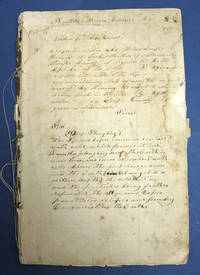
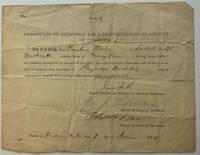
186437086Belfast Maine 1864. Printed document completed in ink manuscript oblong 10-1/4" x 8." Very Good. Signed in ink by the Provost Marshal and President of the Board of Enrollment; A.G. Crocker a member of the Board of Enrollment; and the Surgeon of the Board of Enrollment.<br/><br/> Collins's Substitute who is not named agreed to a "term of Service 3 Years. unknown books
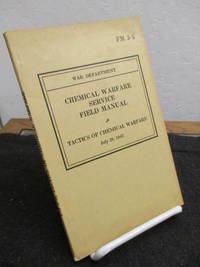
002288Washington Government Ptg Office 1941. In wrappers. Minor soiling. Photographs charts and diagrams throughout. Washington Government Ptg Office 1941. unknown books
1942281887Washington. : Government Printing Office. 1942. . PSoftcover printed wraps. . Covers lightly toned otherwise a very good copy. . 16mo. Government Printing Office. paperback books
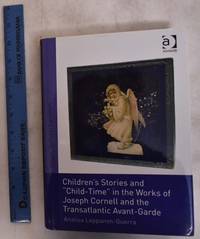
2011175066Surrey England: Ashgate 2011. Hardcover. VG--corners bumped & creased. creasing at spine top & bottoms. dj has shelf wear along its edges. black boards w/ silver spine printing. 257 pages 8 pages of color plates : illustrations. Ashgate hardcover books
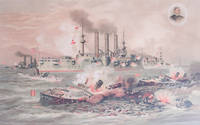
189840301Philadelphia: J. Hoover & Sons 1898. Image 27 x 17 1/2 inches. Framed and glazed. Image 27 x 17 1/2 inches. Schley was selected "at the opening of the Spanish-American War to command the Flying Squadron at Hampton Roads.when Cevera's ships reached Martinique the Flying Squadron.at 9:35 July3 1898 the Spanish ships emerged from the harbor of Santiago and turned westward Schley's flagship the Brooklyn westernmost of the blockading line."<br/><br/>Xanthus Russell Smith 1839-1929 comes from a Family of Philadelphia Artists. He was the som of Russell Smith. J. Hoover & Sons unknown books
1985170413Mexico City: Fedracion Editorial Mexicana 1985. Paperback. 63p. 5.25x8 inches illustrations text in Spanish very good first edition trade paperback in pictorial wraps. Inscribed and signed by Tejada. Actually a series of related poems co-written by five poets. A science-fiction tale set on the coast of Kamchatka in 2085. Fedracion Editorial Mexicana paperback books
1947247462Rome: Associazone Nazionale Per Il Restauro Dei Monumenti Danneggiati Dalla Guerra 1947. paperback. very good. Text by Emilio Lavagnino. Profusely illustrated with black & white photographs. 132 pages with text In Italian. Tall thin 4to printed wrappers. Wrappers are lightly yellowed with age. Rome: Associazone Nazionale Per Il Restauro Dei Monumenti Danneggiati Dalla Guerra 1947. A very good copy.<br/><br/> Associazone Nazionale Per Il Restauro Dei Monumenti Danneggiati Dalla Guerra unknown books
186523553No Place Listed: Not Published 1865. Image showing hundreds of tents guardhouses at perimeter a few soldiers and guards visible appearing to be in Union Army Civil War era uniform hilly landscape and river in background; skillfully spliced from three panels to create a panoramic view; overall approx. 5 1/4" x 22" size; dark brown cardstock mount approx. 10" x 27" no photographer or place listed; some edge tips wear to cardstock; image with spotting browning; still with plenty of detail and in good condition. Photograph. Not Bound. Good. Not Published Paperback books
192024569Germany Europe: Keystone View Co. 1920. Black and white glass plate negative approx. 6 1/2" x 7" size. Not dated circa 1920. Remains of old paper envelope with penciled identification "Conditions in Germany Eight Children of Berlin Germany sleeping in one room on a bed made of a broken bedstead a mattress a stool and a chair. This is typical of the present conditions existing in Germany." With the remains of the original Keystone paper mailing envelope. Plate broken with about 20% chipped away and lost at right margin. We have photographed this using a light-box and then inverted the image to give a positive. In fair condition. Photograph. Not Bound. Fair. Keystone View Co. Paperback books
194016249United States of America: No Publisher Noted 1940. Some of these are of U.S. military with a few of camp man with machine gun more a couple with a faint photographer's studio imprint in Melbourne Florida and a few taken when on leave in Italy; some candid family portraiture children dogs folks at home frolicking at the beach a first communion other memorable moments in their lives; average size about 3" x 4 ½" with some smaller some larger; mostly black & white; a few color done professionally & colorized; some loosely corner-mounted on old black paper album pages; some aging and wear most in very good condition. Photography. Not Bound. Very Good. No Publisher Noted Paperback books
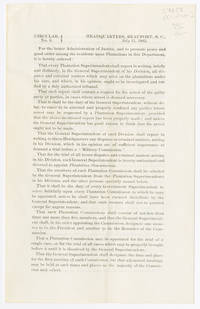
1863WRCAM54050N.p. likely Beaufort S.C. 1863. 3pp. Single folded sheet. Soft vertical center crease light wrinkling. Clean and very good. An interesting circular written by Union Brigadier General Rufus Saxton and printed on a military field press laying out the procedures for prosecuting "all disputes and criminal matters which may arise on the plantations" under his authority. At the time he issued this decree Saxton was the military governor of the Department of the South. Later during his term Saxton would direct the recruitment of the first regiments of black soldiers to serve in the Union Army. The present circular sought to "promote peace and good order among the residents upon Plantations in this Department." Perhaps bringing order and justice to the plantations was Saxton's first step towards recruiting the slaves on those plantations to fight against their captors. Rare with no results at all in OCLC. unknown books
1864WRCAM53096Richmond 1864. Broadside 18 x 12 inches. Printed in three columns. Previously folded with a couple small separations along old fold lines. Light toning and foxing. About very good. A very scarce and quite interesting broadside circular printing of the act which allowed slaves and free blacks to be used in certain tasks by the Confederate Army during the Civil War as well as instructions for the conscription and induction of those men into the armed forces. The Confederacy was loath to arm any of its slave population but by 1864 could not spare any further manpower from their infantry to perform menial tasks and the government therefore passed a law allowing slaves to be used "in certain capacities" such as the construction of fortification the production of arms and the transport of materiel. The first column of this broadside comprises a full printing of that law while the remainder sets forth the rules for the impressment of slaves into military service for their care while in service and for the compensation of their owners. <br> <br> A fascinating piece that lays bare the desperation of the Confederacy for labor and supplies in early 1864. Not in Parrish & Willingham. unknown books
1841WRCAM51074Washington 1841. 6pp. on a single folded sheet. Minor toning. Unopened and untrimmed. Very good. Incredibly scarce report filed by the Committee on the Territories on behalf of the citizens of West Florida requesting payment for losses endured in Florida by U.S. troops. The United States entered into a treaty with Spain during the cessation of Florida which detailed mutual claims against each other and payment for losses. While some of these claims were settled the Spanish citizens of Florida claim that the U.S. have used semantics to avoid full settlement specifically for damages sustained during Jackson's expedition against Pensacola in 1814. SERVIES 2681. unknown books
189241503Mecklenburg VA 1892. Sewn gatherings disbound with remanants of perished leather spine. Wear and soiling throughout; some chips occasionally causing minimal textual loss; last leaf quite ragged to inner margin significantly affecting final third of text. Writing in general legible and neat. Good condition withal. 29 leaves of lined wove paper including 4 half-leaves. Lacking first leaf pp 1 - 2 of lecture notes; 4 stubs. Inconsistently hand-numbered throughout.Manuscript notes in ink and/or pencil to recto and verso of leaves with varying amounts of writing per pg. ~1500 words. Some intratextual hand-drawn illustrations and graphs to lecture notes. 11-1/2" x 7-1/2" <br/><br/>A notebook that appears to have been intended for lecture notes kept by Presley Llewellyn Hinton Jr. during a science class at Randolph-Macon College from 1858 - 59 but that was employed for several different purposes by other members of his family during the same period and throughout the Civil War. The Hintons were slaveholders owning at least 13 slaves according to the 1860 slave schedule and longtime prominent members of the community. The lecture notes which comprise hand-numbered pp 3 - 30 and 51 - 55 are from lectures taught by B. Puryear Professor of Chemistry and Natural Philosophy; subjects covered include fairly introductory material regarding dew evaporation electricity elements of chemistry hydrogen and nitrogen gas carbon etc. and the like. Following the first section of lecture notes three pages by one of the Hinton parents we speculate Mrs. Hinton detail Presley’s service in the Confederate Army Company A 3rd Virginia Cavalry as well as that of his brother William from 1861 - 63 largely their leave-taking and visits home: “My Son William Emmet Hinton joind the Confederate Army and left home on the 14th day May 1861 to join his company Mecklinburg Cavalry at Lockets Store near Lombardy Grove. Many relatives and friends met . . . to take leave of their dear sons relations & friends who consented with cheerfulness to leave their quiet and happy homes to battle against our enemy the Yankee who are worse than Indian savages Yea to go through all the hardships privations difficulties and attending a camp life. . . . My Son Presley Lewellyn Hinton joind the Confederate Army and left home on the 26th day May 1861 . . . He would have gone on with his brother William but he was not prepared as he had just returned from the University of Virginia . . .” Approximately 15 remaining pages interrupted by the last section of Presley’s lecture notes are filled with a detailed account record of tuition charged for teaching the daughters and some sons of local families which we speculate was kept by the boys’ sister primarily because of the type of lessons taught. These included piano lessons worsted work and samplers grammar arithmetic geography the history of England and philosophy; fees for ink copy books and other supplies are also included. Another account record follows for bonds of some sort in the same hand as other and a love letter from Presley to a Miss Annie fills both recto and verso of the final leaf. Interspersed with these and sometimes written over top in pencil are the youthful scribblings and pencilled math work of James H. Palmer also of Mecklinberg dated 1892; he appears to have used the manuscript for scrap paper. All in all a uniquely faceted manuscript illustrating many aspects of the life of one Virginia family during the Civil War as well as the paper shortages that likely occasioned such thrift. hardcover books
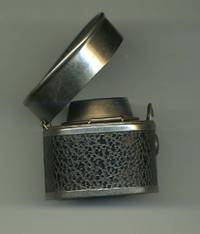
12726Civil War Antique Traveling Inkwell. The Inkwell measures 2" in diameter by 1 ½" tall and is marked on the inside lid with a double Eagle Head. The leather piece in this Civil War traveling Inkwell is in very good condition as is the glass inkwell itself. The Nickel Plated Brass Case is also very good condition including the leather. unknown books
199731000NY: Knickerbocker Press. Fine in Near Fine dust jacket. 1997. Hardcover. 1577150074 . Color plates throughout. First edition thus. Fine in an about fine dust jacket. . Knickerbocker Press hardcover books
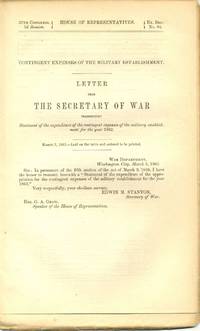
1266415 page Civil War date congressional document titled "Letter from the Secretary of War Transmitting Statement of the expenditure of the contingent expenses of the military establishment for the year 1862." Printed on short pages. The document consists of a 3 column table listing the expenses of war. Very good condition. unknown books
12666Four page Civil War date Congressional document regarding the cavalry forces of the United States. Printed on smaller size pages. 8vo In very good condition. unknown books
126654 page Civil War date congressional document titled "Report of The Secretary of War" regarding "the number of three year volunteers in the Service of the United States." Printed on short pages. Lists the number of three year volunteers and their ranks from each state. In very good condition. unknown books
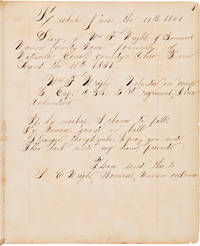
1861WRCAM56124Various places in Iowa and Missouri as described below 1861. 1022pp. approximately 16000 words. Contemporary half sheep and marbled boards. Boards detached but present worn and rubbed. Bookseller stamp on front free endpaper. Pages loosening but all present pages 33-34 with old repairs to a vertical tear running the length of the page. Occasional spots of soiling throughout but overall the text is quite clean and very easily read. Overall very good. An engaging account of the early days of the Civil War in Missouri by William F. Wright a Union volunteer from Somerset Iowa. Missouri was a highly-contested border state with both Union and Confederate supporters. It sent soldiers and arms to both sides was represented with a star on both flags maintained dual governments and featured a vicious intrastate war within the larger national war. William Wright's journal of his service in the first year of the war ably communicates the dangerous and unprecedented nature of guerilla warfare in the western theatre of the Civil War. <br> <br> Wright 1837-1905 enlisted in the 3rd Iowa Infantry Regiment in May 1861 responding to President Lincoln's first call for troops. Much of the diary centers on the months from July to September 1861 as his unit traveled back and forth across Missouri facing a guerrilla enemy with no clear battle lines. Unlike the large armies and massive battles further east Wright's regiment was frequently on the move by rail and foot often splitting off into companies squads and scouting parties prone to ambush by raiding parties with small detachments occasionally getting picked off by snipers. In addition to Confederate soldiers Wright's regiment also faced bands of pro-Confederate irregulars known as "bushwhackers." The war in Missouri was continuous from 1861 to 1865 with conflicts throughout the state. There were over 1200 distinct engagements in the state during the war; only Virginia and Tennessee exceeded this total. <br> <br> Wright is generally stoic throughout though he does admit to occasional homesickness and is justifiably distressed over a case of ague that comes on in August. When not drilling or recounting recent attacks Wright frequently mentions attending church prayer meetings and Bible study though he does not seem overly picky as to where. He attends a Catholic mass and a Presbyterian service on the same day and on another attends Episcopal Methodist and Presbyterian services on the same day. <br> <br> The diary begins on May 27 1861 as Wright puts his affairs in order and travels to Indianola where he "was sworn into the state service for three years" after which he proceeds with other recruits to Keokuk Iowa a major staging area for Union forces. His unit is officially sworn into "United States service" on June 8 receive their rifles on the 23rd and then assemble in camp on the 26th. The next day they receive word that they are heading to Missouri in the morning: "we received orders to cook enough provisions for three meals the drum would beat at 3 in the morning at which time we were to pull up stakes." They march to the docks board several steamships and head south on the Mississippi to Hannibal Missouri. Upon disembarking Wright comes across two men taken prisoner by the home guard "and I had for the first time the privilege of seeing a secession prisoner." <br> <br> The next day July 1 they board trains and head west: "I was surprised to see so many fine residences also quite a number of slaves were to be seen at work in the fields who cheered lustily as we passed.We passed several encampments of soldiers on the way who were all in good spirits. We hauled up at Utica in Livingston Co. slept in the cars." After a couple of weeks of false alarms of pending attack mysterious shots at night low rations and rumors of murdered soldiers the company was on edge. On July 18 Wright and nine other men were detailed to guard the railroad station in Utica after reports "that the enemy was going to burn it." During their watch "a spy came in with the information that from 500 to 800 men on Spring Hill were making preparations for an attack at the bridge and station simultaneously." No attack materialized however: "Daylight came and no enemy we were disappointed as we were well prepared for them and would have been pleased to have seen from 50 to 100 make their appearance." <br> <br> Tensions continued in a similar vein for the next few weeks as they shifted back east to Kirksville. Wright reports of all-night guard duty multiple nights in a row and frequently going without meals due to inadequate rations. On August 19 they received warning of a pending enemy attack which ends up as a small skirmish: "Six of our scouts were surrounded by 25 of the enemy. They killed Corporal Dix. The others made their escape after killing 3 or 4 of the enemy." Not long after they start heading south and while passing through Shelbina Missouri three of their men were shot one died by an enemy squad hidden in the brush. Circling back to Shelbina to rest they find the town partially destroyed by Rebel forces. Wright's unit then finished the task which he describes neutrally: ".the boys were allowed to go where they pleased and they took and destroyed ev'y thing in town. When ever a chicken was heard to crow a dozen men were ready to start for the place. Chickens and pigs were killed women's dresses taken children's playthings &c &c." Passing through Macon Missouri Wright and his comrades "dropped into a Brewery. There were quite a number of the boys there. Some of them were trading their shoes some shirts and others drawers for beer. I do not know whether they were their own clothes or whether they had stolen them. Saw three fights today." <br> <br> Heading west just outside of Kansas City they notice enemy scout activity. After more than two months of skirmishing and sniping the regiment saw its first pitched battle. On September 17 "3 p.m. we started from Liberty about 600 strong in the direction of the river. The enemies scouts were retreating as we went forward. The enemy killed 4 and wounded one of our men. About 4 o'clock we were fired into by the enemy which was the first that we knew of their position. We were within about 100 yds of their lines when we were fired on.We fought about an hour and 20 minutes when we were ordered to fall back as they had three men to our one and were flanking us. Four of the artillery men were kiled & four wounded which did not leave enough to man the gun and she was only fired three times when we had to haul her back by hand.we had 17 killed about 60 wounded and a number missing.it is reported that there were over 100 enemy killed and wounded." This was the Action at Blue Mills Landing also known as the Battle of Liberty. The next day Wright wrote "I have been helping to make coffins for our killed 12 bodies which will be buried in the evening.The most shocking scene that I have ever witnessed is one of the dead men whose face has been skined said to have been done by his brother-in-law." <br> <br> Wright had reported on his unit's tendency to loot earlier in the diary and now makes an interesting clarification: "When in the free State of Kansas the boys behaved very well. But since we have again come into Mo. they have began their old tricks. Last night there were quite a number of chickens stolen and a calf taken out of a man's dooryard." Perhaps in fairness to the Iowa troops they regularly went without rations or were given only flour and because they were often in hostile territory they rarely had permission to hunt or fish for their meals. <br> <br> Until this point Wright does not mention any direct encounters with African Americans but on October 18 as they depart Kansas City he notes they ".took three slaves with us who had run away from Lexington." Upon reaching Quincy Illinois "Will Newton and I went down town and got lodging for the three darkys who came from Kansas City. We left them with the supt. of the Colored Peoples Church." <br> <br> For the remainder of this diary Wright was stationed at the Benton Barracks in St. Louis; some of these entries are slightly out of order chronologically as though Wright inadvertently skipped pages. On December 1 he writes "In the evening one of Co. K was killed by accident. One of his comrades cocked his gun not knowing that it was loaded and shot the top of his head off. It was the most horrible sight that I have yet seen." Not much else happens until the end of the month when they get word that they'll be heading back out soon and start prepping their equipment. Leading up to Christmas he notes many of the men planning a big Christmas dinner: "For my part do not feel like celebrating the day. Think it will not pay here will pass it by as other days for this time." <br> <br> Wright's final entry on Christmas Day is also introspective. Having reflected on his past seven months in the army the things he has seen and how frequently he has been spared he concludes: "I do not like a sol. life. Would be far from following it from choice but believe that it is my duty as we are engaged in a just and noble cause trying to sustain one of the best governments ever formed. Co. G is not drunk to night but slightly inebriated." <br> <br> At the end of the diary Wright has transcribed a letter from a rebel which gives a sense of some the psychological warfare practiced during the conflict. Dated at Fillmore Missouri July 18 1861 it reads in part: "I hope when this letter comes to hand you may have time to read it. And I think that I shal be nearby. And then as soon as it is red I shal be near enough to nock your life out of you. I hope the time may come when the flag of the fifteen glorious states may fly over the free and independent.Instead of one thousand of us there is about 8000 of us and we are coming there as soon as we can get there." <br> <br> Wright reached the rank of sergeant in 1863 and survived to muster out in 1864. After the war he married raised a family and farmed in Kansas and Nebraska. <br> <br> A detailed and informative diary of the brutal and chaotic early months of the Civil War in Missouri. hardcover books
187842992Champion NY 1878. Leather wallet bindings black purple navy and green with gilt or marbled edges year or "Excelsior Diary" in gilt to some wallet flaps. Rubbing and wear to leather of all volumes; cracked hinge or hinges to some volumes; endpaper and one leaf removed from two volumes respectively; occasional light soiling or staining in rare cases minimally affecting readability. Good condition overall. 10 diaries one per year here offered. Smallest volume: ~ 375 unnumbered pages dates printed one entry per page plus front and rear matter. Remaining volumes: ~120 unnumbered pages dates printed 3 entries per page plus a varying number of printed pages at rear for memoranda accounting etc.; ~20 printed pages of yearly calendar tables statistics etc. to beginning of some volumes. Most entries contain writing though occasional blanks; some unused pages of back matter particularly in later diaries. Total manuscript word count conservatively estimated at 55000. Sizes vary. Smallest 4" x 2-3/4"; largest 6-13/16" x 3-1/2". Most ~5" x 3-1/4" <br/><br/>An archive of ten Civil War and Reconstruction era manuscript diaries kept by Myron E. Rose a Democrat from Champion New York whose political views during the war coincided most strongly with those of the Peace Democrats or “Copperheads.” Although Rose never self-identifies as such only as a staunch Democrat he voted for Horatio Seymour in the 1862 election for NY governor makes no secret of his loathing for abolitionists lauds the possibility of Lincoln’s capture by Confederate troops and resents a war fought to “free the n----- — it takes more men than there were negroes what works” July 19 1864. His diaries offer a near-daily if often terse portrayal of the experience of a Northern Democrat during and after the Civil War including not only notes on the progress of the war drafts and draft riots local and national politics and the deaths of friends and fellow townsfolk but also his move to Iowa following the war and efforts to homestead there his life back in Champion after the death of his wife his attendance at Spiritualist meetings and disdain for Adventists readings and his many jobs social life successes and lack thereof with women book purchases accounting and more. The diaries begin in 1859 when Rose was a 25-year-old new schoolteacher still working toward getting his teaching certificate doing a variety of additional odd jobs and seemingly more interested in dating the local women than in national events: “Went home with Cor. Hormer and went in she gave me an introduction to ‘for the cool’ confound her” Oct. 21 1859. He notes the 1860 election the next year — “Election day . . . S. A. Douglas Dem A. Lincoln Rep Bell Union Breakenridge Administration seceders. Morgan Gov Rep Kelly Dem. Quite an exciting day. . . . Lincoln Elected” Nov. 6 - 7 1860 — and mentions that one Mr. Winslow a Democrat was elected School Commissioner suggesting that there was perhaps a small concentration of Democrats in the Champion area. By 1862 the war has started to impact him: “Have been roof-boarding. Some towns will have to draft it is expected. A good many have gone to Canada. The war begins to affect sic us here now” Aug 26 1862. That November Rose notes that there has not been “a great turn out at the polls. Will be a close rub voted for Seymour” Nov 4 1862. The next year he comments: “The war progresses about the same turning out the Generals and putting in new ones &c &c. The rebels will gain their independence I guess and that by d___d Republican mismanagement” Feb 9 1863. Shortly thereafter he learns that his brother Arthur “is proclaimed a deserter”: “Harnessed up my colt single and put him on my cutter drove him down to Tylersville. John went down with me saw quite a number there Arthur also. Willard is dead died in hospital of consumption so his Captain wrote . . . Snows P. M. Arthur feels very bad” March 11 1863. In July 1863 Rose reports on the New York City draft riots : “A great riot in N.Y. City on acct. of drafting no call for men but they are giving orders for drafting by number of men a mean miserable proceeding a good many killed and a good deal of property destroyed” July 18 1863 and the next day that “the draft is postponed for the present. I am most afraid that there will be hard times all over” July 19 1863. Nevertheless he places the cause entirely on the Republican party: “A good deal of excitement in Wtn Washington so Warren says. If there are riots & murder & robbing it is the teachings of the Abolition Republican party for they have trampled the Constitution underfoot in more ways than one” July 21 1863. Rose’s views about the Republicans and “shrieking Abolitionists” never waver though he seems to relish debating politics and feels he’s a good ideological counterbalance. Nevertheless as the following passages indicate he remained strictly antiwar/ anti-Republican: - “News to night Greely & old Lincoln’s sec. have been to see Geo. Sanders & others in Canada all rebels and should go over the falls together.” July 21 1864 - “News that Atlanta is taken. I don’t care how soon they wind up the rebels and then return to something else.” Sept 3 1864 - “Staid to Mr. Knowls’s talked politics. He says that we have a king now and that it is all right — is for it until peace is obtained. He is not fit for a republic.” November 17 1864 In a curious precursor to modern politics Rose even notes that “Ohio Penn & Indiana hold their election today. As they go so goes the election next month” Oct. 11 1864. Rose makes little mention of politics after the war and in 1866 moved with his wife and his brother Arthur and his wife to Iowa where they bought 160 acres of land possibly utilizing provisions of the Homestead Act of 1862 cleared it built a house and farmed for approximately 6 years. Research indicates that Rose’s wife and newborn child died in 1872 and that he moved back to Champion shortly thereafter; aside from 1866 the diaries from these years are absent. Rose seems to have continued teaching school both in Iowa and upon his return to New York and also remarried started a cheesemaking business and attended Spiritualist meetings back in Champion as well. All in all a fascinating glimpse into the life and times of a Northern Democrat during the Civil War. hardcover books
1860D130301860s. Hardcover. Very Good. Cloth morocco backstrip; folio 400x260mm; approx. pp. 100 full of manuscript entries by a single hand with permanent instructions and headings in ink and crew member names and station designations in pencil; numerous additional blanks at rear. Nonetheless a trove of information. Lined paper listing the 614 men aboard assigning each a number gun and location Fore Castle Port Main Top Mizzen Top etc.; listing division and stations; and recording details of every situation that might occur on the ship see examples below. The ship is unnamed but it appears to be a ship of the Line or a Frigate which had 3 masts as well as some minimal amount of steam power. There were 6 African-American members of the crew all of whom were Union Sailors during the Civil War Edward Turner Joseph Davis and Thomas Mills from Maryland; Henry Andres from the West Indies; Joseph Gordan from New York; Samuel R. Whittaker from Buenos Aires. Three of these men served on the USS Minnesota which may help identify the ship. Also includes the ship's Fire Bill crew member stations of Making Sail from Single Anchor Mooring and Unmooring and much more. A rich volume worthy of further study. Cloth torn; front hinge cracked; first few signatures loose. Alittle faint waterstaining and soiling but generally nice and clean. <br/><br/> hardcover books
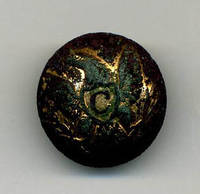
8440One Dug Civil War Gilted Eagle "C" Cavalry Button with shank in Coat size. Nice smooth chocolate brown patina with no dents pushes or repairs with nice upright shank . Gold Gilt outlining design. It does have some ground action but still a nice looking Cavalry button. Dug at battle site. unknown books
19976336Urbana: University of Illinois Press. Near Fine in Fine dust jacket. 1997. Hardcover. 0252022734 . First printing. Bumped at base of spine else fine in a fine dust jacket. . University of Illinois Press hardcover books
1966599411966. CIVIL WAR. CIVIL WAR NAVAL CHRONOLOGY 1861-1865. Part VI - Special Studies and Cumulative Index. Washington DC: Governemnt Printing Office 1966. Large 8vo. paperback wrappers illustrated. Some soil and wear to wraps slight bend to lower corner of the pages; very good clean text. unknown books