1 575 résultats
165611First Edition. paperback. illustrated. 6 volumes. 4to original printed wrappers; all spines lightly browned some lightly soiled otherwise very good. Washington: GPO 1961-1966.<br/><br/> Written by the Naval History Division Navy Department. Vols. I-V cover the period of the Civil War. Volume VI contains Special Studies and the Cumulative Index.<br/><br/> unknown books
1900753541900. CIVIL WAR PAPERS. Read before The Commandery of the State of Massachusetts Military ORder of the Loyal Legion of The United States. Boston: Printed for The Commandery by F.H. Gilson 1900. 2 volumes. 8vo. blue cloth title gilt-stamped to spine t.e.g. Ink ownership to ffep. Some rubbing and edgewear to spine and boards. Clean within. About very good to very good. unknown books
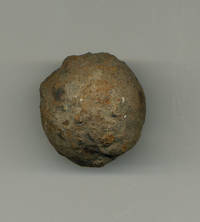
12958Civil War unexploded 1" siege ball from the U.S. Navy. Ball was found October 1970 in the side wall of Confederate Fort Huger near Suffolk Virginia. The fort was built by some 1000 slaves and free blacks in 1861. It took ten months to build and was captured 10 months later. Fort Huger was named after Thomas B. Huger CSN who had served in the US Navy for 20 years before the war. He commanded a battery at Morris Island in Charleston Harbor SC in 1861 and was on the CSS McRae in New Orleans' defense. He was mortally wounded on April 241862. Siege ball most likely fired between April and May of 1963 during the Siege of Suffolk. unknown books
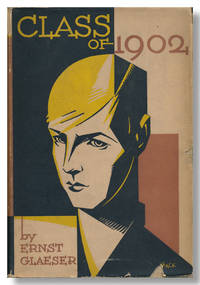
1929WRCLIT83576New York: The Viking Press 1929. Cloth. Some faint smudges on preliminary leaves else very good in rubbed and rather darkened pictorial dust jacket with a few small chips. First U.S. edition of JAHRGANG 1902 1928 translated by Willa and Edwin Muir. A widely read novel about the pre-war generation's coming of age during the war years. The Viking Press hardcover books
002290Washington Government Ptg Office 1942. In wrappers. Minor soiling. Charts and diagrams throughout. Washington Government Ptg Office 1942. unknown books
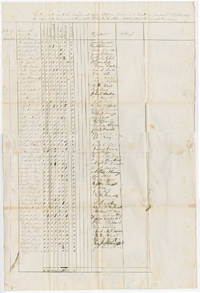
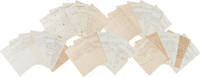
186223879.02<p><b>COMPANY D 1st VERMONT CAVALRY. CIVIL WAR.</b> Manuscript Document Signed June 1862: List of clothing distributed to 54 men including 25 caps 24 blouses 50 trousers 66 flannel shirts 15 drawers 19 bootees 69 stockings and 3 blankets. <b>Each row signed by the soldier who received the items</b>. 1 p. 15½ x 23¾ in. </p><p>"<i>We the undersigned Non Commissioned Officers Artificers Musicians & Privates of Company 'D' 1st Vt Cavalry do acknowledge to have received of Capt. A. W. Preston the articles of Clothing set oposite our respective names</i>"</p><p><b>Soldiers included:</b></p><p>Jacob Trussell Rodney Eames</p><p>Harrison B. Michell James Esdon</p><p>Josiah H. Moore Samuel L. Higgins</p><p>George P. Blair Orin S. Hendrick</p><p>George C. C. Clemment Azro H. Kinerson</p><p>Horace Ide Harvey A. Marckres</p><p>Barney Decker Arthur Murray</p><p>George A. Austin John Morse</p><p>Dan Adams Henry A. Moore</p><p>Harvey Bickford Kyron Morrill</p><p>William Buck Warren Norris</p><p>B. H. Bard Elijah C. Page</p><p>Bartlett S. Bard Francis Rowell</p><p>John A. Beaton L. S. F. Reed</p><p>George F. Bennett Curtis L. Stacy</p><p>Austin A. Bailey Edwin W. Southworth</p><p>C. W. Clifford Martin V. B. Vance</p><p>Ansen L. Chandler John Woodard</p><p>Loren Chase Jr. William Woodard</p><p>Antipas H. Curtis signed with mark John Woodbury</p><p>Milo J. Corliss Fernal H. Webber</p><p>Consealer F. Durlam William Wheaton</p><p>John S. Coombs Mark M. Wheeler</p><p>James Davis James Wright</p><p>John C. Gracy Darwin J. Wright</p><p>Joseph W. Gordon Died J. Hale Powers</p><p>Patrick C. Gilligan Charles Knapp</p> books
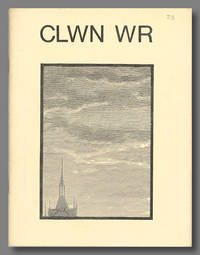
1981WRCLIT77181Brooklyn NY 1981. Whole number 23 of 31 published. Pictorial wrapper. 12mo. Very good to fine. Edited by Bob Heman. Devoted to short experimental poems/prose-poems and innovative graphics Clown War was distributed for free after issue #12. This number is devoted to short poems including work by Corman McInerney Perlman Hejinian McCauley Tarachow and Hemen. ANDERSON & KINZIE p.692. CLAY & PHILLIPS p.269. unknown books
186410189211 manuscript letters six on official letterheads of Quatermaster's or Assistant Quartermaster's offices. Archive appears to have been saved from a fire at some point as there is a bit of scorching paper a bit dry some staining darkening at some folds writing often faded a few tears at folds with some minor paper loss; otherwise in good condition. Despite the somewhat faded nature of the writing the content appears to relate mostly to transportation matters and supplies. The letters are from Louisville Columbus and Paducah mostly and provide some insight into the behind the scenes activities of the Union Army in this area. books
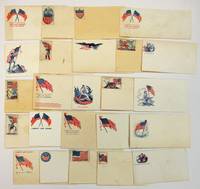
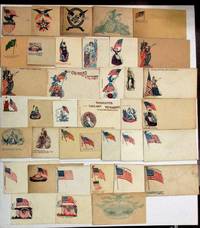
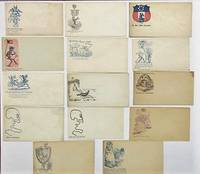
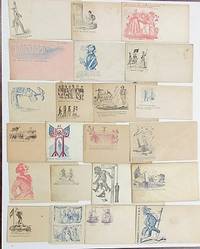
186537302n.p. 1865. All uncancelled generally 2-3/4" x 4-3/4". Occasional light dusting a blue mounting remnant frequently appears on the blank verso. Otherwise Very Good. <br/><br/> All the envelopes depict an American Flag in the left portion. Some are in the form of a shield others adjacent to a cannon or held by a cavalry soldier others with the emblematic Eagle or with Lady Liberty or held by an infantry soldier. Some are captioned e.g. "Liberty and Union Now and Forever One and Inseperable" sic or variations on that iconic slogan; "All Hail to the Stars and Stripes;" "Our Country. unknown books
186134029n.p. 1861. All uncancelled generally 3" x 5-1/2". Occasional light wear a few with short splits or chips.A few have glue remnants on flaps from prior mounting. Very Good. Variants and not in Weiss are noted. The following covers listed by Weiss citation: <br/><br/> E-R-171 - Eagle holding flag atop a shield. Caption "Liberty and Union." Printed in red and blue inks.<br/> E-R-181 - Eagle holding flag star with shield at its center below caption "NOT A STAR MUST FALL." Printed in red and blue inks.<br/> E-R-228 - Eagle inside ribbon with stars banner "Union Forever" in its beak "Not one Star." Imprint of Union Envelope. Printed in dark blue ink.<br/> E-R-247 - Eagle on shield with flag. Ribbon in its mouth with words "E. Pluribus Unum." Imprint of New York Union Envelope Depot. Printed in blue ink.<br/> F-L-8-10 variant - Flag facing left "'Shoot the first Man that attempts to pull down the American Flag!'" - Gen. John A. Dix." Buff envelope printed in red and blue inks. This variant not in Weiss.<br/> F-L-13 - The green flag of Erin with caption "Erin O Erin though long in the shade." Printed in green ink. <br/> F-L-76 - Two hands shake in front of the Constitution a flag below. Captioned "Let us repair to our churches." Printed in red and blue inks<br/> F-F-54 - Female wearing helmet with shield and flag. Captioned "Flag of the seas! On land or wave." Printed in red and blue inks.<br/> F-F-159 - Female leaning on shield with Washington's head and the word 'Union' flags in background. Printed in red and blue inks. <br/> F-F-160 - Female holding flag and waving kerchief. Captioned "True to the Stars & Stripes." Printed in red and blue.<br/> F-F-168b - Female standing and holding flag. Printed in red and blue inks.<br/> F-F-171 - Female standing and holding flag. Captioned above "Columbia Columbia to glory arise." Printed in red and blue inks. <br/> F-F-222 - Female standing on cannon ball holding Union flag. Caption above "Onward to Victory." Printed in red and blue inks.<br/> F-F-227 - Female standing on cannon ball holding the Union flag. Printed in red and blue inks.<br/> F-F-4b - Female standing on pedestal reading "Union & Constitution" holding flag. Printed in black ink. <br/> F-F-245-248 variation - Female standing holding flag wearing patriotic dress and sash. Caption above "Liberty and Union Now and Forever." Printed in red and blue inks. This variant not in Weiss.<br/> F-F-268 variation. - Female standing holding flag. Image is embossed and raised and colored in red blue and gilt. Face and arms of woman are not colored or outlined. Embossed imprint of Francis/Loutrell. This variant not in Weiss.<br/> F-SI-16 - Female seated holding shield with flag draped around her. Printed in red and blue inks. <br/> F-SI-52 - Female sitting on the back of an eagle holding a flag a banner in the eagle's beak reads "OUR FLAG FOR THE WHOLE COUNTRY." Printed in red and blue inks.<br/> F-WI-66 - Woman's face in an oval surrounded by laurel leaves. Captioned above "DEDICATED TO THE GALLANT DEFENDERS OF OUR NATIONAL UNION." The letters are done in a stars and stripes style. Imprint of Magee of Philadelphia. Printed in red and blue inks.<br/> F-SI-74 - Female sitting with an eagle at one side and a Union flag and shield at her other side. Captioned above "OUR COUNTRY." Printed in red and blue inks.<br/> F-SI-94 - Woman seated holding a shield and spear an eagle at her side a banner across the top reads "CONSTITUTIONAL UNION." Captioned below "Our Standard is 'Justice'." Printed in blue ink. <br/> F-SI-157 - Woman seated in a chair sews with a Union flag behind her. Captioned below "OUR HEARTS ARE WITH OUR BROTHERS IN THE FIELD." Printed in red and blue inks. <br/> F-ST-37 - Woman standing with sword and shield. Captioned below "Columbia Columbia to glory arise." Printed in violet ink. <br/> F-R-60 - Flag at top left corner in red blue and yellow inks. <br/> F-R-64 variant. Smaller envelope 1 ¾" x 4 ¼". Flag at left side. With verse below "We stand by our Colors." Printed in red and blue inks. This variant not in Weiss.<br/> F-R-66 - Flag at top left corner in red blue and yellow inks. <br/> F-R-88 - Flag at top left corner in red and blue inks. Caption at head "LONG MAY IT WAVE." <br/> F-R-172 - Flag at top left corner in red and blue inks.<br/> F-R-196 - Flag to left side of cover with words printed vertically up post "Stand by the Union." Printed in red and blue inks. <br/> F-R-233 - Flag coming out of the top of a globe labeled with the words "OUR COUNTRY." Printed in red and blue inks.<br/> F-R-265 - Flag to left of envelope. Printed in red and blue inks.<br/> F-R-274 - Flag and shield. Caption below "TO TRAITORS A TERROR TO PATRIOTS - GLORY." Printed in red and blue inks.<br/> F-R-382 - Flag with banner "UNION AND THE CONSTITUTION." Printed in red and blue inks. <br/> F-R-385 - variation of 382 above with added caption below "If any one attempts to haul down the American flag". Printed in red and blue inks. <br/> F-R-396 - Flag behind smoking cannon. Printed in red and blue inks. <br/> F-R-421 - Flag behind smoking cannon with caption below "OUR COMPROMISE." Printed in red and blue inks. <br/> SC-DC-13 - An image of the Capitol building in an oval border with the caption below "CAPITOL AT WASHINGTON." An eagle with its wings spread wide at the top of the oval holding a shield and a ribbon in its mouth with the words "E. Pluribus Unum." Imprinted vertically "New York Union Envelope Depot 144 Broadway." Printed in blue ink. unknown books
14072Collection of Civil War Era lead case shot balls and fragments. Fort Huger was an earthwork fortification located on Harden's sometimes called Hardy's Bluff along the James River in Virginia. The bluff is directly across the river from Newport News Virginia. Fort Huger along with nearby Fort Boykin were built in order to prevent Union forces from trying to move up the river towards the Confederate capital of Richmond. The fort was named after Major General Benjamin Huger. unknown books
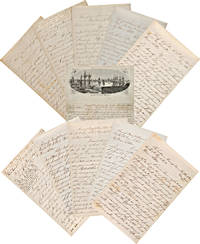
1862WRCAM55290Manchester N.H. Boston Ma. Ship Island off the coast of Mississippi and locations in Louisiana as detailed below 1862. Eleven autograph letters signed ten with envelopes totaling 36pp. Later transcriptions accompany the letters. Old folds occasional light staining and/or tanning one letter with small tears repaired with archival tape. In very good condition. A small but rich collection of early Civil War letters written by Private Aaron A. Smith of Wilton New Hampshire to his sweetheart Adaline "Addie" D. Jones of West Wilton. The letters describe Smith's training at bases in New Hampshire and Massachusetts time spent at Ship Island off the Mississippi Coast and his service in Louisiana as part of the Union occupying force in the summer and fall of 1862. Smith eventually served as a musician with his company giving an interesting perspective on his brief Civil War service. The letters continue until Smith's death in Louisiana from typhoid fever just over a year into his service. Letters from the western theater of the Civil War especially at such an early point in Union advances are uncommon. <br> <br> Smith's letters are especially informative of the conditions at Ship Island describing the poor health conditions there and the Confederate prisoners and escaped slaves he encountered. He also gives valuable information on Louisiana and New Orleans just after the Union retook the region describing the ongoing resistance efforts of Confederate soldiers and civilians. Smith also transmits his love for his hometown sweetheart and his hopes that they will meet again. <br> <br> Aaron Smith 1837-1862 enlisted on October 28 1861 and mustered into Company "B" of the 8th New Hampshire Volunteer Infantry under Col. Hawkes Fearing Jr. The 8th left Camp Currier Manchester N.H. on January 24 1862 en route for Fort Independence in Boston where they trained and drilled until transport south was available. They departed Boston for Ship Island Mississippi on February 15 aboard the E. WILDER FARLEY and finally arrived on March 15. Smith served the entirety of his comparatively brief enlistment in the Department of the Gulf as part of Gen. Benjamin Butler's Expedition. In his letters Smith details his transport to Ship Island and the conditions there and then gives descriptions of New Orleans. Smith remained at Camp Parapet just upriver from New Orleans through September before joining Gen. Godfrey Weitzel's brigade and participating in the Battle at Georgia Landing Labadieville an engagement he describes briefly in his final letter of December 10. Aaron Smith then fell seriously ill and succumbed to typhoid fever on December 22 1862 according to the REGISTERS OF DEATHS OF VOLUNTEERS. The letters are described individually below: <br> <br> Camp Currier: January 22 1862. 2pp. With envelope. Smith writes just days before he leaves for Boston. His tone is light and focuses on the personalities in his and Addie's choir in Wilton. In fact Smith writes that he's just received her letter as "Sargent sic Marshall Abiel Livermore and myself were spending the evening in singing." Smith also asks about which regiment a friend of theirs has joined in hopes that he can locate him later. <br> <br> Fort Independence: February 10 1862. 2pp. Smith is now in Boston waiting to for the ship south and his thoughts have turned more serious. He writes that he hopes his and Addie's feelings for each other will not dim since "when we shall meet again I cannot tell as separations must occur on Earth I must reconcile myself to it." He then veers into a religious vein: "The hand of God can protect us from all harm and guide us safe through many dangers I wish I had more faith in Him and more love for Him. Addie it is my deep desire and has often been my prayer that you may seek and find if not the love of God and I hope live a more consistent christian life than I have." Nevertheless no one seems to know or will tell where they are headed: "where we shall go to I think that no officer under Gen. Butler knows those that put confidence in reports believe we shall go to Ship Isl. but I do not put so much confidence in them as I did by doing so have been obliged to contradict a part of some of my letters." Smith mentions the wreck of a troop ship and marvels that more lives were not lost. Towards the end of the letter perhaps to lighten the tone upon closing Smith seems to allude to a joke between him and Addie and his mother that he was married before he was not: "I am some forgetful perhaps I never was married if I have been and you should see her his mother tell her to be of good cheer.I must close now. I send a kiss for you.As we all are past furloughs I think I shall not try to go home again to see my wife." <br> <br> On Board E. WILDER FARLEY: February 16 1862. 2pp. With envelope. This is a brief letter letting Addie know that they are almost underway to Ship Island: "We are in the greatest state of confusion possible. I am now down on the second deck trying to write a few letters or what I shall have to pass as such. There are scarcely five rays of light that can get to my paper can find a better place in our cellar or in the barn than this to write in." Still Smith is optimistic about this war: "I hope and expect not to stop more than a year as the prospects are that the war will not last long and if spared think will be back within that time." <br> <br> Ship Island: April 22 1862. 4pp. With envelope and three small seashells. Smith has arrived at Ship Island and paints a vivid picture of the pestilent sand the soldiers in camp and the various inhabitants including Confederate prisoners of war: "Our Sothern sic prisoners run about at their leisure appear to enjoy themselves very well.the ladies frequently take their work and sit out on the shady side of a building and talk with the men. Some appear to be quite friendly to the union a lady told a man in our squad.that there are one half in N. Orleans that are union people if they dare to be." But then he heard from a girl who "said she wished she could put out the eyes of the northerners with those guns with bayonets she thought the northerners were not any better than the n__s." Nevertheless illness is already a problem: "Two have died in our Reg. since we have been here it is considerable sickly.last Friday I raised some blood from my stomach but the next day I went on duty feeling as well as usual." Smith attributes this to the sand in the food but Ship Island proved to be a very unhealthy place. By the end of the war 153 Confederate prisoners and 232 Union soldiers had died due to contaminated water and related fevers and infections. Smith closes the letter somberly: "I hope and trust we shall be spared to meet again.I think I realise the danger before me hope I shall be prepar sic to meet it." <br> <br> Ship Island: May 8 1862. 4pp. With envelope. "We are here still on this desert." Things are no better on Ship Island. Smith includes some brief accounts of the Union battles in Mobile and Baton Rouge and continues his descriptions of the heat and the sand. The heat has gotten worse: "It is not very healthy from nine to three o'clock.A great many are having very bad eyes caused by the white sand reflecting to the sun's rays.Some have lost their sight and been discharged." He insists his health is fine but notes that he avoids going outdoors whenever possible. Smith also records some fascinating interactions with escaped slaves. He reports that they "frequently come over here and are quite tickled to get here. I heard one say that their masters represent us to be very cruel and tell them we will cut off an arm starve and whip them if we get them.This one said if they should get him they would hang him for the negroes were planning an insurrection and he was at the head. He said he could not get much to eat and the soldiers do not have much either his master he said was in the army and hoped we will kill him." He closes morosely with a count of the graves in the cemetery 79 as of writing ".brothers husbands sons and fathers killed and buried in such hast sic that no one can tell where they lay this is the result of war and still for one side it is just." <br> <br> Camp Parapet: May 24 1862. 4pp. With envelope. Smith is finally on the move detailing his departure from Ship Island as part of the Union occupation of New Orleans. He notes the defenses in particular the "parapet" built up by the Confederates who anticipated the Union invading from the north rather than coming up river from Fort Jackson. He also describes the efforts of locals to destroy military equipment and foodstuffs that would be of value to Yankee invaders. They even attempt to befoul the waterways by dumping sugar and molasses into the river. Smith writes "When they heard we had taken Ft Jackson and only a few gun boats had got up to N. Orleans the soldiers at this place ran in every direction some even over the parapet into the ditch of water some took off their equipments and burnt them then put on citizens clothes to prevent them being caught with soldiers uniform on.The carriages of the guns were burnt by the women the guns spiked the equipments and every thing that the soldiers left that would fall into our hands were burnt and all done by the women." Smith also includes observations on the poverty he has seen: "The destitution of the people white and black in this state and Miss. is not a fable but a reality there are not but a very few that had money enough to live comfortable.I hardly know where to stop there is so much to write about." Smith closes with some notes for his mother and chaste love for Addie. <br> <br> Camp Parapet: July 9 1862. 4pp. With envelope. This letter is less focused on combat and troop movements and is more conversational with casual thoughts about the civilian world and life in camp. Smith writes that the "4th of July was so rainy here that the Reg.'s could not appear in parade at noon and night while the 'Star Spangled Banner' and 'Hail Columbia' was to be played." in which Smith had prepared to perform. Smith is a Musician now so he has been spared the discomfort of guard duty during the heat and the rain though not the boredom of inaction in camp. He reassures Addie about his health reiterating "The blood I spit on the Isl. was caused by the sand that I had eaten and drank. It came from my stomach and was only what I spit out in three or four times. I guess my lungs are well enough now as I have got over the horid colds I caught." Smith mentions election day but does not mention much about politics focusing instead on Addie's "election cake" and how much of it he would eat if he was there. The main problem for Smith in this letter is the numerous untrustworthy peddlers selling junk at exorbitant rates and giving phony currency in change. Perhaps inspired by these experiences Smith also has some strong language about the locals: "The people here are a mixed set from most every nation in the world but those called Creoles are the most numerous ignorant and degraded.The people have not much good principals sic are much inferior to the Northerners in interlectual sic cultivation." <br> <br> Camp Parapet: August 5 1862. 4pp. Folded with envelope. Curiously Smith wrote this letter on stationery featuring an engraved view of the port of New Orleans produced by Louis Schwarz New Orleans publisher and bookseller. Prussian-born Schwarz 1819- 1893 emigrated to New Orleans and by the 1850s had a monopoly on German-language literature. By the time of Smith's letter Schwarz had helped form the mostly-German Hansa Guards Battalion which was absorbed into the 4th Regiment European Brigade of the Louisiana Militia detailed to defend New Orleans. Schwarz was made captain of Co. "B." Upon the Union victory Gen. Butler used the European Brigade briefly as a police force but then dissolved them in May 1862. For some reason in this letter Smith addresses Addie as "Addia" both in the letter and on the envelope. He begins with pleasantries about home but then shifts to discussing the draft apparently in response to Addie: "I do not care if they do have to draft I hope they will and not be so long getting the Reg.'s ready waiting for them to enlist." He continues putting a brave face on things: "I presume there are many young men now in N. Hamp. with long faces fearing they may be drafted. I should like to see them and I guess I would plague them I would laugh at them any way. The worst part is thinking about it soldiers will feel quite at home when they have been in the army six months or a year Smith has been in about ten months. Some get homesick and it wears and worries them most to death some pine away and get discharged on that account but there are not many such." Smith also reports that there have been Confederate guerrilla attacks and that they have located weapons concealed in houses in Carrollton. Units were dispatched from his regiment to assist in securing the area. Once again his role as a Musician proves to be an advantage: ".if I was not a fifer probably I should had to have gone." <br> <br> Camp Parapet: August 15 1862. 2pp. With envelope. This letter is chiefly camp news with Smith in apparently good spirits. Things are quiet however: "We soldiers are getting to be quite lazy. Particularly I am as I am a musician they cannot detail me to do work which is called policing. I have no guard duty to do so I am not up nights and exposed to the rain and heat daytimes. The musicians have to do what the major says but he very seldom has any thing for us to do out of the regular course of duty." Aside from some rambunctious officers the rest of Smith's update is quite peaceful as he and his comrades spend their days catching up on letters to friends and families baking beans and hoping for more music to sing. <br> <br> Camp Parapet: September 8 1862. 4pp. With envelope. Another quiet letter although there are rumblings of potential combat. Even so Smith muses about Addie traveling down to visit him although he's not quite sure how that could be arranged. He returns to the topic of the draft and how those avoiding the draft make it sound worse than it is: "I think folks are apt to be more scart sic than hurt. But this war is an awful occurrence. I sincerely hope it will soon end in order to have it we must have the men. Sisters must be willing to part with their brothers fathers and mothers with their sons and none try to restrain those whose duty it is to go." Smith closes with several unsettling items including news that "there are quite a large force of guerrillas very near us on the south side of the river.A few Regs. have been sent after them. I do not think we shall stop here all winter but by three or four weeks we shall be on the march after the rebels. The government have neglected to furnish the musicians with swords as the 'Army Regulations' require so I bought me a revolver to protect myself by." <br> <br> Thibodaux Camp Stevens La.: December 10 1862. 4pp. With envelope. Smith wrote this letter approximately ten days before he died. He begins by apologizing profusely for the substantial delay since his last letter; it had been over two months. Smith's regiment has relocated to Thibodaux about 70 miles from New Orleans after fighting in the Battle at Georgia Landing. Smith is definitely sick at this point: "The march was very hard for me and camping out I caught a very bad cold. At the time of the battle I was most sick but the excitement kept me along very well." Smith describes how he assisted in the hospital all night attending to Union as well as Confederate soldiers. He is less sanguine about combat now that he has seen it: "War is awful if anyone don't think so let them be in a battle and try it to have shells exploding about you and grape and canister shot and bullets whistleing about your head makes any one feel most indescribable." <br> <br> From Smith's account he seems to have contracted several of the numerous diseases that plagued soldiers on both sides. In fact two out of three deaths during the Civil War were caused by disease. Every soldier had dysentery at some point and many suffered from one or more of any number of other ailments. He writes "I have the fever and ague some so do most all." "Ague" was malaria and afflicted about 20 percent of troops. Smith would have first developed a high fever along with the "shakes" followed by debilitating weakness that would leave him bedridden for days or even weeks. The symptoms would gradually subside and he could return to duty but the fever periodically returned and the process was repeated. Smith writes that he was sick again during their stop in Tigersville and then notes that "There is a good deal of shaking among the soldiers the shakes this season I have been told by the people are very bad among all." He closes the letter hoping "I can write often now.I have several letters to answer perhaps they will think I am very sick or dead. Changes take place in the army so any one cannot be always prompt in writing." A final page of text in a different hand Addie's is added after Smith's letter. The ink is faint and the hand is difficult to read but it is dated December 27 from West Wilton N.H. and starts by explaining that Smith's mother had been by to see how his health was suggesting that his friends and family did not know yet that he had died. <br> <br> A detailed and intimate account from a soldier in the early days of the Civil War with significant content on life at Ship Island and the early days of the Union occupation of Louisiana. Andrea Mehrländer THE GERMANS OF CHARLESTON RICHMOND AND NEW ORLEANS DURING THE CIVIL WAR PERIOD 1850-1870 Berlin/New York: Walter de Gruyter 2011. REGISTERS OF DEATHS OF VOLUNTEERS 1861-1865. RECORDS OF THE ADJUTANT GENERAL'S OFFICE 1780-1917. Record Group 94. ARC ID: 656639. National Archives. Washington D.C. hardcover books
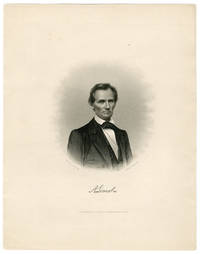
1863WRCAM49849New York 1863. Fifty engraved portraits each 9 1/4 x 11 3/4 inches. Each stored inside its own paper sleeve and housed together in two contemporary brown leather portfolios stamped in gilt. Portfolios worn and rubbed. Images in excellent condition. A wonderful contemporary collection of Civil War-related engravings. Featured personalities are mostly Union generals colonels commodores and other officers and figures of note plus presidents Abraham Lincoln and George Washington. Also includes an engraving of William Gannaway Brownlow the anti-secessionist Tennessee newspaper editor and later governor of Tennessee immediately after the end of the Civil War. At the time of the publication of this set Brownlow was a celebrity in the North for his ardent anti-secessionist stance. <br> <br> Due to the portrait poses on which the engravings are based as well as the stated ranks of the military leaders and the general selection of personalities chosen for the set it must have been published in late 1862 or 1863. Of particular note is the image of Ulysses S. Grant who was still so relatively unknown in comparison to some of the other military leaders that the publisher either erred and used the likeness of another man or could not find a suitable portrait and used a different subject. Also the portrait of Lincoln is early as it shows the president without his trademark beard. While we have seen some of these engravings before we have never seen the full set in the original leather portfolios. All engravings include the facsimile signature of the subject and credits the engraver as J.C. Buttre of New York with many also crediting the original artist or photographer whose image the engraving is based on most by Brady with others by Fredricks Appleton German Silsbee et al; the Washington image is based on a Stuart painting. This is a very rare wartime-published collection of Union officers. <br> <br> The following is a full list in alphabetical order: <br> <br> 1 Anderson Brig. Gen. Robert <br> <br> 2 Baker Col. Edward <br> <br> 3 Banks Nathaniel P. <br> <br> 4 Blenker Maj. Gen. Louis <br> <br> 5 Brownlow William G. <br> <br> 6 Buell Maj. Gen. Don Carlos <br> <br> 7 Burnside Brig. Gen. Ambrose E. <br> <br> 8 Butler Maj. Gen. Benjamin F. <br> <br> 9 Carr Col. Joseph B. <br> <br> 10 Clay Maj. Gen. Cassius M. <br> <br> 11 Corcoran Col. Michael <br> <br> 12 Cox Brig Gen. J. Dolson <br> <br> 13 Curtis Maj. Gen. Samuel R. <br> <br> 14 Dix Maj. Gen. John A. <br> <br> 15 Doubleday Brig. Gen. Abner <br> <br> 16 Du Pont Com. Samuel F. <br> <br> 17 Ellsworth Col. Elmer E. <br> <br> 18 Foot Capt. John <br> <br> 19 Foote Com. Andrew H. <br> <br> 20 Fremont Maj. Gen. John C. <br> <br> 21 Grant Maj. Gen. Ulysses <br> <br> 22 Halleck Maj. Gen. Henry W. <br> <br> 23 Hawkins Col. Rush C. <br> <br> 24 Heintzelman Brig. Gen. Samuel P. <br> <br> 25 Hunter Maj. Gen. David <br> <br> 26 Lander Brig. Gen. Frederick W. <br> <br> 27 Lincoln President Abraham <br> <br> 28 Lyon Brig. Gen. Nathaniel <br> <br> 29 Mansfield Brig. Gen. J.K.F. <br> <br> 30 McCall Brig. Gen. George A. <br> <br> 31 McClellan Maj. Gen. George B. <br> <br> 32 McDowell Brig. Gen. Irvin <br> <br> 33 Meagher Col. Thomas Francis <br> <br> 34 Mitchel Maj. Gen. O.M. <br> <br> 35 Mulligan Col. James A. <br> <br> 36 Pope Maj. Gen. John <br> <br> 37 Rosecrans Brig. Gen. W.S. <br> <br> 38 Scott Lieut. Gen. Winfield <br> <br> 39 Shields Brig. Gen. James <br> <br> 40 Sigel Maj. Gen. Franz <br> <br> 41 Slemmer Maj. Adam J. <br> <br> 42 Sprague Maj. Gen. & Gov. of Rhode Island William <br> <br> 43 Stringham Com. S.H. <br> <br> 44 Wallace Maj. Gen. Lewis <br> <br> 45 Wallace Maj. Gen. W.H.L. <br> <br> 46 Washington President George <br> <br> 47 Weber Col. Max <br> <br> 48 Wilkes Capt. Charles <br> <br> 49 Wilson Col. Henry <br> <br> 50 Wool Maj. Gen. John E. <br> <br> There is only one similar item in OCLC a collection called PORTRAITS OF CIVIL WAR OFFICERS calling for 110 plates including Lincoln's cabinet and an engraving of his childhood home also by Buttre located at the Public Library of Cincinnati & Hamilton County. That collection is bound and was likely issued as a slightly different item by the publisher than the collection presented here. OCLC 20140615. hardcover books
186110065752 folded and docketed uniform manuscript resolutions mostly 4to typically written on one side and docketed on the back includes a contemporary cover sheet that originally held resolutions together two small pictures of Lincoln and Grant included housed in modern photo album. A few with folds at the top and minor chips normal aging and browning; overall in very good condition. These resolutions were passed by the Public Aid Committee which was created by the Newark City Council at the beginning of the Civil War to advance money to soldiers' families. These resolutions would then be given to a clerk for filing. This clerk seems to have had strong anti war or Copperhead sympathies and gradually began editorializing as he wrote out the docketing on the back of each folded document. He titled the 31 March 1862 resolution "For aid to families. in the war to abolish slavery." On 2 September it was "the war for the ruin of the country." On 26 November it became "the Negro War" and 2 December it says "the Army of Abm. Lincoln to subjugate the Southern States." This obscure city clerk took things a step further after the Emancipation Proclamation. On 4 February 1863 he titled a resolution "In aid of families of volunteers. in the Nigger War!" He must have been spoken to after this remark because he drifts into sarcasm rather than outright racism. In a later resolution he states "for the benefit of our coloured fellow citizens of African decent." However by 14 September 1863 he was back to his old tricks again referring to "Lincoln's nigger war." He continued his editorializing through June 1864. These docketed resolutons were found in the included wrapper on which a a Union soldier later wrote: "The name if it can be found out of the miserable traitor who booked the within resolutions should go down in posterity as one who should receive the contempt of loyal men." The name of that Union soldier appears to be Major W. W. Morris. books
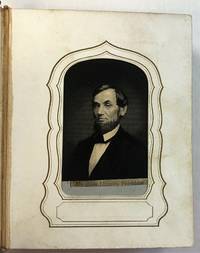
186337056New York: Elias Dexter; one by L. Prang 1863. Forty-eight handsome portrait engravings of important Civil War figures including Lincoln and Cabinet members Union Army and Navy leaders Jefferson Davis and others. Each mounted within a decorative stiff card frame with gilt border. Portraits are clear and clean most with an identifying slip the slips are loose and not pasted to the engravings only one or two with some light wear to picture. They are preceded by a decorative title page. Bound in original cloth "Album" stamped in gilt on the spine. Spine cloth chipped at head and foot slightly shaken but covers firm. The portraits are not glued in but rather placed into the frame from the bottom and the bottom then sealed. The cards have the name of the subject below the portrait and the imprint at the bottom and are in Near Fine to Fine condition.<br/><br/> The portrait of Lincoln is based on a popular photograph taken by Mathew Brady on or around May 16 1861. The remaining portraits include: Seward Stanton Chase Welles Winfield Scott Wool Commodore Davis Foote Wilkes Porter Farragut Stringham Com. Dupont Lieut. Worden McClellan Halleck Dix Gen. Grant Gen. Curtis Franklin Mitchel Burnside Pope Fitz Porter Sigel Banks Lander Heintzelman Rosecrans McDowell Buell Ben Butler Anderson Baker Shields McCook Col. Wilcox Benham Sherman Lyon Mansfield Hunter Parson Brownlow Gov. Sprague Jefferson Davis Gen. Beauregard Magruder. The imprints are from Elias Dexter with the exception of the Magruder which has the imprint of L. Prang & Co. Boston & Washington; and possibly one other.<br/> Elias Dexter 1816-1897 was an engraver publisher photographer and frame maker. He is best known for his 1862 publication The St.-Memin Collection of Portraits. Louis Prang 1824-1909 was a printer lithographer and publisher. He is sometimes called the father of the American Christmas card. Elias Dexter; one by L. Prang unknown books
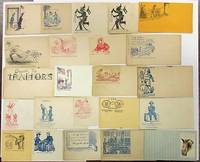
186533980n.p. 1865. All uncancelled generally 3" x 5-1/2". Occasional light wear occasional light dustsoiling. A few have glue remnants on flaps from having been mounted; most do not. Very Good. The following postal covers listed by Weiss citation: <br/><br/> C-D-7. Image of the devil depicted as a gnarled tree root. Caption below reads "The Root of Treason. Found in the 'Sacred Soil' of Virginia." Imprint below "S.C. Upham 310 Chestnut St." Printed in blue ink.<br/> C-D-8. Gentleman in tattered clothing holding a bottle of alcohol in his hand hangs on a pole with a banner in Confederate style variation chains and shackles hang from either side and a devil's head is perched upon the top. Caption below reads "'Success shall perch upon our banner.' - J.D." Printed in black ink. <br/> C-D-11. Confederate shield with image in the center stripe of the devil sitting on a bail of cotton. Caption below reads "J.D. his Crest." Printed in blue and red inks. <br/> C-D-15. The devil dances along paying a flute with his nose and tapping on a drum with a Confederate flag flying high at the end of his pointed tail. Caption below reads "The Standard Bearer of the C.S.A./ A H--- of a feller." Imprint printed vertically to left "Wm. Edenburgh 140 Nassau Street N.Y." Printed in red and blue inks. <br/> C-D-19. The devil depicted tree-like leads Confederate troops pointing down the road they travel with trees surrounding it. Caption below reads "Trees - on a hard road to travel." Imprint below image "S.C. Upham 310 Chestnut St. Phila." Printed in blue ink. <br/> C-D-24. Uncle Sam holds an ax ready to chop down a Palmetto tree with a Confederate flag flying from its trunk. The devil stands behind the tree saying "WOODMAN SPARE THAT TREE." Caption below reads "Uncle Sam cutting down the 'Secession Tree' just as it is in fall bloom against the wishes of the planter." Imprint below caption "S.C. Upham 310 Chestnut St." Printed in blue ink.<br/> C-D-25. Jefferson Davis J.D. and Gen. Beauregard Gen. B being carried away by two running devils. Caption below reads "JEFF AND BEAUREGARD on their LAST RIDE./ Traitor Jeff and his Vice Cotton. Stephens Are now driven to their last kick.- First by the night-mare of secession And then by the imps of Old Nick." Printed in blue ink.<br/> C-D-40. Image of Jefferson Davis at the end of a large spit with the devil poking him with a pitchfork pushing him into a furnace or hell. A black man watches from overhead and says "De Debil Claims His Own." Printed in black ink.<br/> C-SK-4. "Vanity Treachery & Death" over images of a peacock plume a snake and a skull. Caption below reads "SECESSION EMBLEMS." Imprint printed vertically to left "D. Murphy's Son Print. 65 Fulton & 372 Pearl-sts. N.Y." Printed in black ink.<br/> C-SK-6. A long rope twisted to resemble a skull. Caption below reads "End of Secession." Printed in blue ink.<br/> C-SK-7. Variation of the previous cover with a slightly thicker rope twisted to resemble a skull. Caption below reads in all uppercase letters" END OF SECESSION." Printed in black ink.<br/> C-SK-14. Image depicts an eye in the sky and a disembodied hand holding scales upon which the skull & crossbones of the Confederacy is outweighed by the battle-axe of the Union. Caption below reads "Weighed and found wanting." Printed in violet ink.<br/> C-SK-17. Image of a skeleton standing outside of a large wine glass in which a Confederate soldier is slumped and sleeping inside holding a small Confederate flag in his hand. Caption below reads "SECESSION WHISKEY. One dose warranted to kill at 40 rod." Imprint printed vertically to left "D. Murphy's Son Print. 65 Fulton & 372 Pearl Street N.Y." Printed in gray. Weiss has VI for violet with a note "really Lilac." <br/> C-SK-19. Image of woman wearing a bonnet and aproned dress being surprised by a skull coming up out of her teapot. Caption below reads "Virginny Mother of 'Old Dominion' Presidents and other Wise things is asked by Mrs. Davis to try a cup of Secession tea - and finds DEATH in the pot!" Imprint printed vertically to left "D. Murphy's Son Print. 65 Fulton & 372 Pearl-sts. N.Y." Printed in blue ink. unknown books
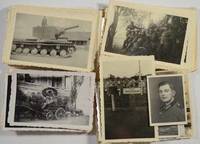
14875Collection of over 90 Gelatin silver print vintage black and white photos of German World War II soldiers on the French and Russian fronts. The photos depict life in the barracks preparing tanks for battle on the front grave sites countryside and city destruction and close up portraits of the young men. The Germans' army military was managed through mission-based tactics rather than order-based tactics which was intended to give commanders greater freedom to act on events and exploit opportunities. In public opinion the German Army was and sometimes still is seen as a high-tech army. However such modern equipment while featured much in propaganda was often only available in relatively small numbers. This was primarily because the country was not run as a war economy until 1942-1943. Only 40% to 60% of all units in the Eastern Front were motorized baggage trains often relied on horse-drawn trailers due to poor roads and weather conditions in the Soviet Union and for the same reasons many soldiers marched on foot or used bicycles. Such details appear in this photo collection. Photos come in their original envelope and have some age related foxing and creasing. Overall good condition. unknown books
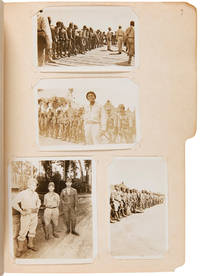
1945WRCAM55788Morotai Bougainville Green Island and other locations in the South Pacific 1945. Three clasp-bound collections of manila folders containing 113 mostly vernacular photographs occasionally captioned in pencil two divisional newsletters copies of Japanese surrender documents and numerous news clippings and assorted ephemera related to the soldier's war experiences. Minor dust-soiling to folders some toning to contents. Overall very good. An informative collection of photographs documents and clippings related to the World War II experiences of the African-American 93rd Infantry Division in the South Pacific. The 93rd Infantry Division was a segregated "colored" unit formed first during World War I and reactivated for service in 1944. The unit was shipped to the Pacific Theater where they served primarily in construction and defensive infrastructure operations. The 93rd occupied Morotai in the Dutch East Indies from April to October 1945 where they witnessed the surrender of the Second Japanese Army. <br> <br> The material in the present collection is organized in three compilations of clasp- bound manila folders with the contents of each compilation annotated in pencil on the front cover. The chief feature of the collection are the 113 photographs arranged thematically throughout the first two folders. <br> <br> Folder One contains photographs and documents pertaining to the Japanese surrender to the division's commander Major General Johnson. There are also photographs showing various Japanese troops surrendering to Australian officers including one of a Japanese officer surrendering to Gen. Thomas Blamey at Australian field headquarters in Morotai. A few photographs emanate from a Japanese hospital ship "taken over by our Div." showing "a few in the hospital." One photograph features an African-American soldier perhaps the compiler of this collection smiling in front of a line of surrendering Japanese soldiers. In the first folder there are also two copies of divisional newsletters: one from the 13th Jungle Air Force; and another titled IGUANA which was the daily newsletter for the 93rd Infantry we could locate no copies of IGUANA in OCLC. Rounding out the first folder are copies of an address on Japanese surrender delivered by Gen. Sir Thomas Blamey to Lieutenant-General Teshima Commander of the Second Japanese Army "On the occasion of the signing of their Surrender Morotai 9th September 1945" and a lithographic copy of the "Instrument of Surrender" between the two combatants. <br> <br> The front cover of Folder Two is titled in pencil "Places and People in the Netherland East Indies and Green Is. in the Northern Solomons and Bougainville." This folder contains images of Australian soldiers in Morotai; numerous pictures of indigenous Morotain people including men women and children; the entrance to the Morotai War Cemetery; photos of the 13th Australian Air Force; overhead images of an active volcano in Bougainville; pictures of Bob Hope Carol Landis a popular Hollywood actress who performed extensively for troops during the war and others on a U.S.O. mission at Bougainville; images of various aircraft including B-29 nose art and Japanese planes; a few pictures of dead Japanese soldiers in Morotai captioned "Good Japs"; photographs featuring the invasion of Morotai; and other images of the South Pacific islands where the compiler was stationed. <br> <br> Folder Three is labeled "Places I've Seen" and is composed of beer labels the compiler collected during his service along with numerous newspaper and magazine clippings memorializing his unit's service. The clippings indicate the compiler also served at Leyte in addition to Morotai Bougainville and Green Island in the Dutch East Indies. <br> <br> An interesting collection of firsthand photographs of an African-American unit's service in the South Pacific during the Second World War. unknown books
1861WRCAM55931Charleston & Morris Island S.C. 1861. Twenty-nine manuscript documents a few on Confederate military stationery the remainder on plain paper totaling 37pp. Original folds. Minor edge wear chipping to four letters resulting in minor loss. Overall very good. An uncommonly-early collection of Confederate manuscript military correspondence from the opening moments of the Civil War. The orders emanate from all levels of the Confederate military - Provisional Army Battalion and Brigade. Ten of the present orders come from Gen. P.G.T. Beauregard the commander of Confederate troops at Charleston in the spring of 1861. Beauregard led the Confederate attack on Fort Sumter on April 12 a decisive victory for the Confederacy in the first battle of the Civil War. Especially interesting are the first few orders dated between April 6 and April 11. These orders concern the movement of troops to Morris Island in Charleston harbor in anticipation of the attack on nearby Fort Sumter. <br> <br> The first order on April 6 is marked "Secret" and instructs Colonel Hagood to "establish signals for the assembling of each company in the shortest possible time and necessary arrangements made for prompt transmission of orders.Arms and equipments will be furnished on your arrival here with your command.In order to keep down any excitement consequent upon this order you are directed to execute it in as secret and quiet a manner as the nature of the case will admit of." The secrecy of the order itself and the call for swiftness and quiet movements of the troops clearly indicates an imminent attack. <br> <br> Some of the later orders also focus on the management and positioning of Confederate military units on Morris Island along with issues such as additional appointments troop inspections including the German Hussars commanded by Capt. Theodore Cordes and later in April the troops at Fort Sumter permissions for furloughs and removals movements and command transfers of officers regimental organizations and reports on troop organization and conduct. An April 23 order instructs Colonel Hagood's regiment to report to General Simons for posting "to the best advantage for the defence of the north End of the Island and Batteries from Vinegar Hill to Cummings Point." <br> <br> Most of the orders are addressed to Colonel Johnson Hagood who enlisted in the South Carolina troops as a thirty-two-year-old lawyer from Barnwell County. He was commissioned colonel of the 1st South Carolina Infantry earned a promotion to Brigadier General in July 1862 and was present at the surrender of the Confederate Army at Appomattox Court House. Besides those by Beauregard the other orders were issued by South Carolina Adjutant General States Rights Gist son of Nathaniel Gist General Simons and General Nelson. All of the orders are signed by adjutants or aides to these various officers. Still they represent a significant and important source for early Confederate military concerns around Charleston at the outset of the war. <br> <br> A typed note dated March 1956 indicates that these were found among the papers of Dr. H.M. Bassett by his descendants but there was no record of how he acquired them. <br> <br> An uncommon collection of Confederate manuscript artifacts from the opening moment of the "War for Southern Independence." unknown books
186533978v.p. 1865. All uncanceled generally 3" x 5-1/2". Occasional light wear occasional light dustsoiling. A few have glue remnants on flaps from having been mounted; most do not. Overall Very Good. The following postal covers in order by Weiss citation: <br/><br/> C-P-A-4. Printed in red ink. A man in hat and long coat a soldier turned hobo holds a bottle in his right hand and a sack on the end of a can in his left hand; a tag hangs from his hat. Caption below image: "An Officer in King Cotton's Army addressing his constituents."<br/> C-P-A-6. "A Pair of Spectacles." Image of spectacles: left lens contains scene of Jefferson Davis arriving in Washington D.C under arrest. "J.D. arrives in Washington from the 'Sunny South'" is printed beneath the left lens. The right lens depicts Davis hanging from the gallows. "J.D. departs from Washington for a warmer climate" is printed beneath the right lens. Printed in black ink. <br/> C-P-A-11. "A Blower." General Henry A. Wise blows through a tube into a contraption while McClellan looks on with sword drawn. Caption reads "Gen. McClellan. - I say Wise put that thing up; everybody knows you're a good blower but you can't fight!' Imprint of S.C. Upham 310 Chestnut St. Printed in blue ink.<br/> C-P-A-17. Confederate soldier stands in front of a door; Confederate flag atop his bayonet. The shadow he casts on the door shows him standing in the same position but with a noose around his neck. Imprint of E. Cogan No. 48 N. Tenth Street Philadelphia on verso. Printed in blue and red inks. <br/> C-P-A-19. "A New Way to pay Old Debts as practiced by the 'Southern Chivalry.'" A southern gentleman wearing a straw hat points a revolver at a well-dressed Brit. The southerner holds a cat o'-nine-tails in the crook of his left arm as does a second southern man in the background who is overseeing slaves. There is also a Confederate flag a Palmetto tree and a cotton bale in the background. Imprint of D. Murphy's Son Print. 65 Fulton & 372 Pearl Street N.Y. Printed in red and blue inks.<br/> C-P-A-20. A silhouette of a scraggly Confederate soldier in uniform boots and spurs on his feet holding a cat o' nine tails in his left hand and a bottle of "OLD. B" in his right a sword at his left thigh; initials "J.D." on his hat and "C.S.A." on his belt; Confederate flag behind him with a skull and cross bones on it. The caption reads "A member of the C.S.A. Alligator Rangers who is to make 5 of the 'Northern mudsils' run. We don't see it." Printed in black ink.<br/> C-P-A-21. Same as item C-P-A-20 above but with the imprint of D. Murphy's Son Print. 65 Fulton & 372 Pearl-sts N.Y. printed vertically to left of image. <br/> C-P-A-26. A well dressed man turns a spinning wheel with the words "Hemp for traitors North or South" written on it. A field of grain stands to his left a gallows to his right. The words "Agriculture" "Manufactures" "Fine Arts" are written below the grain man and gallows respectively. Imprint of J. Nash printed in very tiny letters under picture. Printed in black ink on orange cover.<br/> C-P-A-32. Bearded individual with a wide-brim straw hat a sword attached to his belt. He carries a rifle and drags a cannon. Caption below image "Agricultural Implements going South." Printed in black ink.<br/> C-P-C-13. Babies dressed in finery gather around a witch with a pointed hat cloak and cane. Caption below image "Commissioners of C.S.A. at the Foreign Courts." Printed in red ink. <br/> C-P-D-5. Heavy set woman wears bonnet and aproned dress one hand on her hip and the other extended. Caption below image "Didn't I tell you so Jeff. Davis." Printed in red ink. <br/> C-P-D-8. Two sets of troops march along railroad tracks. Above each is a bubble captioned "Only 9 miles to the Junction." The second bubble is missing the 'l' in 'only' as printed. Caption below image "Dedicated to the 71st Regiment and the Rhode Island Boys." Imprint printed vertically to left of image John H. Tinlgye 1524 Fulton St. N.Y. Printed in blue ink.<br/> C-P-D-11. "Death To Traitors" printed at head of envelope and across its full length; each letter made up of images such as a lynching gallows soldiers rifles and flags. In the background are several tents and more soldiers. Imprint of E. Cogan 48 N. Tenth Street Philadelphia on flap. Printed in black ink. <br/> C-P-F-3. Jefferson Davis hung by a noose soldiers standing at attention with bayonets beside a large Union flag. "Jeff. Davis" above his head. Caption below image "Fate of Traitors!" Printed in red and blue inks. <br/> C-P-G-9. Four Union soldiers chase down four Confederate soldiers who are running and stumbling two of them holding Confederate flags one fallen to his knees and one astride a donkey. The Union soldiers have a Union flag a cannon and rifles with bayonets. One Confederate soldier is poked in the behind and held in the air at the end of a Union soldier's bayonet. Second soldier is riding a donkey. The third soldier may be Robert E. Lee running with a Confederate flag. Printed in brown ink. Caption: "Grand Victorious 'Return' march of the Rebels."<br/> C-P-J-27. General Scott holds Jefferson Davis off the ground by the throat Davis' hat and sword falling. Text above reads "Jeff in a tight place he wont get off "SCOTT free". Caption below reads "Gen. Scott on being asked 'What he would do with Jeff Davis if he caught him' made no reply but slowly closed his fist with a convulsive grasp." Imprint printed vertically to left of image Dr. Murphy's Son Print. 65 Fulton & 372 Pearl-sts. N.Y. Printed in blue ink. <br/> C-P-J-30. Jefferson Davis is hoisted in the air atop three Union soldiers' bayonets poked into his bottom. Davis says "I only wanted to be let alone." The caption beneath the image says "Jeff's unbounded ambition gives him an elevated position." Printed in red ink. <br/> C-P-J-34. Jefferson Davis seated upon what appears to be a cotton bale arms folded across his chest. Caption below image "Jeff. King of the Cotton plant-nation on his throne." Imprint below caption of S.C. Upham 310 Chestnut St. Printed in blue ink. This is an interesting cover which pokes fun at one with an identical image printed by J. Mullen of New Orleans which has C.S.A. above Davis' head and says "Cotton defeated Packenham and Cotton will defeat "Ape Lincoln." <br/> C-P-J-36. Jefferson Davis chews on a root with the Confederate flag growing from it. A man kneeling in front of him with hands in praying position says "Sweet flag." The caption below reads "'He will hold on to the bitter end.' - DAVIS' SPEECH." Printed in black ink.<br/> C-P-J-54. Davis and Scott sit at a table playing chess. Davis' features appear devil-like. "Jeff. Davis" above his image; "Gen. Scott" above his image. Caption below says "Jeff Davis Checkmated." Imprint vertically to left of image "Copyright secured by Brown & Ryan New York." Printed in blue ink.<br/> C-P-J-59. A hand holds a card which reads "Jeff Davis' Passport" vertically and "Mr. Jeff. Davis and friends are permitted to leave the State of Virginia. Winfield Scott" horizontally. Imprint vertically to left of image "New-York Union Envelope Depot 144 Broadway." Printed in blue ink. <br/> C-P-J-67. "JEFF. DAVIS GOING TO WAR." Beneath the caption is Davis' face. When you turn the card upside down a second caption reads "JEFF RETURNING FROM WAR" with the image now appearing to be the head of an ass. Printed beneath image "Entered according to Act of Congress in the year 1861 by E. Rogers in the Clerk's Office of the District Court of the United States in and for the Eastern District of Pennsylvania." Printed in several colors. <br/> C-P-J-74. Elaborate scene of Davis approaching a guillotine as uniformed soldiers look on with raised swords; buildings appear in the background. Reminiscent of the French Revolution. Caption below image reads "Jeff. Davis's adieu to his foes. His last words let me alone now and I will go home and live the balance of my days on Hog Hominy Whiskey and Tobacco." Printed in blue ink. unknown books
186533979v.p. 1865. All uncanceled generally 3" x 5-1/2". Occasional light wear occasional small spot. A few have glue remnants on flaps from having been mounted; most do not. Overall Very Good. The following postal covers in order by Weiss citation: <br/><br/> C-P-O-4. Confederate soldier with dunce cap and sword a pair of boots attached to his behind. Captioned "One of the 'Flowers' of the Rebel Army provided with a pair of seven-league boots." Printed in black ink. <br/> C-P-O-5. Man in ragged clothing carrying a rope looped over his shoulder one end in his hand. In front of him is an empty noose hanging from a gallows. Caption below reads "ONE OF THE ENDS OF SECESSION." Image printed in black. <br/> C-P-O-12. Long row of gallows leading to the U.S. Capitol each with a body hanging from a noose the names of Confederates above several of them. Names read "Davis Beauregard Toombs Floyd Yancey Twiggs Rhett & Co." "Washington" printed above the building. Caption below image reads "ON THE ROAD TO WASHINGTON." Printed in blue ink. <br/> C-P-O-13. Virginia depicted as a crippled old woman with words "Old Dominion" on her dress bent over and leaning on a cane. On her back is the fighting ground of the rival armies; men carrying Union flags climbing up the right side using a ladder with the word "North" printed below them while men carrying Confederate flags climb up the left side with the word "South" printed below. Caption above reads "'You may plant your seeds in peace for Old Virginia will have to bear the brunt of battle.' Gov. Pickens." Caption below scene "Poor Old Simple Virginia." Printed in red ink. <br/> C-P-P-2. A Southern gentleman holds a sword with the letters "F.F.V." and sips a drink from a long straw a smoking cigarette also hanging from his mouth. The caption below reads "Portrait of the 'Southern Gentleman' who objected to Ellsworth's Zouaves coming into Virginia because they didn't belong to the 'First Families.'" Imprint of S.C. Upham 310 Chestnut St. below caption. Printed in blue ink. <br/> C-P-S-3. Instead of horses four soldiers ride upon the shoulders of black men. One soldier holds a sword and one a flag with skull and cross bones. A cabin is in the background. Caption below image reads "Secession Cavalry." Printed in black ink. <br/> C-P-S-14. Image of a tree with the word "Union" on the trunk and two men perched upon a branch which bears the word "Secession" one man sawing through the branch. Caption below reads "Secessionists leaving the Union." Printed in blue ink. <br/> C-P-S-20. A group of well dressed gentlemen standing arm in arm with the caption "Secession States - Present" below the image. A second image below this shows the group of men led in chains the caption "Secession State - Future" printed below it. Printed in black ink.<br/> C-P-S-23. Jeff Davis with his arms outstretched and looking astonished at seeing a Union soldier standing before him. Tents and a Confederate flag in the background. Caption below "Striking dramatic attitude assumed by Jeff. Davis on beholding one of the Union Volunteers on the 'sacred soil' of Virginia." Printed in black ink. <br/> C-P-T-8. A traveler in the rain with a sack on a stick over his shoulder approaches a sign post pointing from the way he just came with the words "To Union" on it. The caption below reads "THE FUTURE TURNING POINT. South solus - 'Lord a mercy I'm going wrong and got to walk way back again.'" Printed in blue ink.<br/> C-P-T-10a. The Union army bearing bayonets and a Union flag chase Confederate soldiers who are fleeing on foot and horseback with their cannon and flag. Caption below reads "The Flying Artillery of the C.S.A." Printed in black ink. <br/> C-P-T-31. Image of Jefferson Davis hanging in the gallows with a hood over his head and two Union flags crossed overhead. "Jef sic Davis" at head of image and caption below reads "The WRONG man in the RIGHT Place." Printed in red and blue inks.<br/> C-P-T-37. Jefferson Davis "J.D." printed above his head walks a tightrope over a waterfall heading toward the side of a cliff on which is the Capitol building a soldier and the Union flag. Behind him a man is poised to cut the tightrope with an ax. Charles Blondin Jean Francois Gravelet was a French tightrope walker and acrobat who was well-known in the United States especially for his multiple walks over Niagara Falls. The verse below reads "This modern Blondin leaves but one impression Upon the mind of every calm spectator: How easily we circumvent SECESSION Must now be clearly seen by this arch-traitor." Printed vertically to left of image "Copyright secured by Brown & Ryan 201 203 and 205 William-street." Printed in lavender ink. <br/> C-P-T-45. Image depicts a man knocked onto his back by an exploding gun labeled "Secession." The caption below him reads "The result of playing with dangerous weapons - the sure result Traitors beware!" Imprint printed vertically to left of image "D. Murphy's Son Print. 65 Fulton & 372 Pearl-sts. N.Y." Printed in gray ink.<br/> C-P-T-57. Profile view of a foppish overdressed man with well groomed hair and moustache. Caption below reads "The Man who conceived C.S.A." Printed in red ink. <br/> C-P-T-58. Two men stand on a hilltop with spyglasses; the dome of the Capitol is in the distance. The caption below reads "The Way Washington was Taken./ Jeff Davis and Beauregard are 'looking toward Washington' and have been for six months past." Printed in black ink.<br/> C-P-T-60. A Confederate officer labeled "SECESSION" hanging by his neck from a beam with a cannon labeled "The Union 34 Pounder" acting as a counterweight. He is choking with his tongue hanging out of his mouth and his eyes bulging. His hat bears a skull and cross bones; a small Confederate flag atop it has fallen from his head. Printed in black ink. <br/> C-P-U-4. Three men hang from their necks from a flag atop a broken flagpole in a fort. Initials over their heads are "B" "F" and "JD." Cannons are perched atop the fort "S. Carolina" printed beneath an exploding cannon. Caption below reads "Unexpected results arising from fall of Sumpter's flag." Printed in violet ink.<br/> C-P-V-3a. Two images of the "family" of Virginia. Above captioned "VIRGINIA IN 1776" depicts a happy well dressed mother sitting in a chair with her five young sons surrounding her; a banner with the stars and stripes hangs above them. A copy of the Declaration of Independence hangs in the background. Below captioned "VIRGINIA IN 1861" depicts a degenerate family with the mother sitting in her chair holding a bottle in her hand one son waves a Confederate flag and has a cat o' nine tails in his back pocket and stands on a slave doll one son drinking two sons playing cards and smoking and the youngest sitting on the floor with a bag with the word "STOLEN" on it. Two whips with chains and manacles hang above them. Printed vertically to left "Entered according to act of Congress by John G. Wells in 1861 in the Clerk's Office of the District Court for the Southern District of New York." Printed in blue ink.<br/> C-P-W-5. Image depicts a ragged emaciated soldier holding an empty bottle as he floats on a barrel labeled "C.S.A." from which a tattered Confederate flag hangs. Caption below reads "What they must soon come to." Imprint below caption "Wm. Ridenburgh 140 Nassau St. N.Y." Printed in black ink.<br/> C-P-Y-2. "YOUNG AMERICA." To the right an image of a child playing with a toy while his mother looks on. Caption below reads "NORTH." To the left an image of a boy sitting on a large barrel marked "COGNAC" while he smokes a cigarette. Caption below reads "SOUTH." Printed in violet ink.<br/> C-P-Y-6. Image depicts a strutting dandified Yancey with a walking stick. Printed vertically to left of image "YANCEY Commissioner from 'C.S.A.'" Imprint of Magee Stationer 2d & Chestnut on verso. Printed in blue ink. unknown books
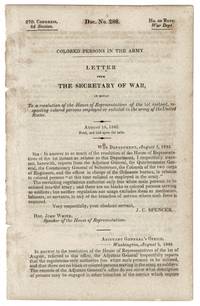
184253697Washington D.C.: G.P.O. 1842. 8vo pp. 4; unbound; lightly spotted. 27th Congress 2nd session. House Doc. no. 286. One hundred six in the Quartermaster General's office including 30 deck hands 13 firemen 7 cooks and 2 carpenters; eight in the Office of Commissary General 3 coopers and 5 laborers; 570 in the Engineer Department 545 slaves 25 "supposed free" - mostly laborers; and 28 in the Ordnance Office all slaves. While this is likely held uncatalogued in many institutions there is only one record of this title in OCLC - at Texas A&M. <br/><br/> G.P.O. unknown books
1812WRCAM12566Boston 1812. 4pp. Folio newspaper folded. Tanned rather worn else good. Much on the War of 1812 mainly ranting against it with printed memorials to the President protesting the war. unknown books
194310909New York: MacMillan 1943. Hardback. Dust jacket. VG newspaper offset to rear eps/VG some edgewear. 155 pp. Illustrated. 8vo. <br/><br/> MacMillan hardcover books
1918WRCLIT74705Philadelphia: Ketterlinus Litho Company 1918. Folio. Original color lithographed poster 19 3/4" x 29 3/4"; 50 x 76 cm. Linen-backed and rolled. Small area of loss at upper right corner a few creases and edge tears flattened when backed but generally a good to very good bright example. One of the iconic Liberty Bond posters depicting a Doughboy with his Springfield '03 with bayonet mounted in an aggressive forward stance astride the body of a dead German soldier. Whitehead was a fairly prolific poster and advertisement artist but little seems available in terms of biographical information and he is not listed in Benezit. Some copies were also produced with the imprint of Strobridge Litho Co. of Cincinnati. Ketterlinus Litho Company unknown books