[US Army]. [American Southeast] U SBiblio.com
9 442 résultats
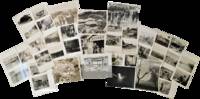
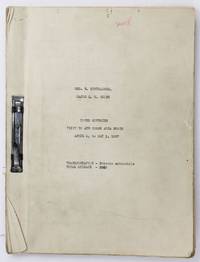
19374173N.p. 1937. Very good. 353pp. rectos only including fifty-nine vernacular sepia-toned photographs measuring 2.5 x 3.5 inches and a few maps and manuscript diagrams. Typed self wrappers brad-bound. Minor creasing and dust-soiling to wrappers. Clean internally. A profusely illustrated report with a few hand-drawn diagrams and numerous manuscript emendations focused on various U.S. Army installations in the American Southeast. The author Major George H. Schumacher of the U.S. Army's Quartermaster Corps visited several Army bases and other posts in Florida South Carolina North Carolina Alabama and Georgia in the Spring of 1937. His report includes inspection details notes on personnel recommended repairs and other information for each site he visited on his 3065-mile tour beginning with Fort Barrancas and Key West in Florida to Fort Moultrie in South Carolina to Fort Bragg and Raleigh Cemetery in North Carolina Fort McClellan in Alabama and ending with a couple of bases in Georgia. The text of the report is supplemented with almost sixty annotated photographs which are interspersed throughout. A sampling of the photographs includes the Bachelor Quarters in Key West the CCC Camp at Fort Taylor the St. Augustine Cemetery a WPA road under construction at Fort Moultrie various buildings at Fort Bragg and the Raleigh Cemetery a road and bridge at Fort McClellan and various features at Georgia forts Screven and Oglethorpe. A unique production and an informative assessment of 1930s Army installation in the American South and Southeast. unknown
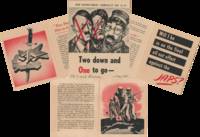
1945List2747Paris France; and Washington D.C. 1945. Six 8 x 10 inch and smaller typed pages; one 4 x 5 inch card with two tickets; one twenty-six page 4 x 5.5 inch pamphlet; one six page 6 x 8.5 inch pamphlet; six 2.5 x 3.5 photographs and two 3 x 4.5 inch photographs. Of the printed matter most is affixed to paper some small tears and folds; overall excellent; photographs near fine. Mary J. Bremer 1917–2019 was a Technician fourth grade from Grant Township Nebraska. Her correspondents here include June Miller 1920–deceased an aviation cadet from Michigan and John Melotte 1919–deceased an artilleryman from Philadelphia. Bremer and Miller were members of the Women’s Army Corps WAC. Established in May of 1942 as the Women’s Army Auxiliary Corps the WAC converted to active duty in July of 1943. The women of WAC known as Wacs served in noncombatant roles across the various theaters of World War II.<br /> <br /> Offered here is a small archive of Bremer’s documents and photographs relating to WAC: a few letters including a description of Paris the day after the Nazi surrender; two pamphlets including the War Department pamphlet Two down and One to go –; and a collection of photographs of Eisenhower’s victory parade and Roosevelt’s funeral procession.<br /> <br /> On April 12 1945 President Roosevelt died of a stroke in Warm Springs Georgia. His body was returned to Washington two days later and a military procession escorted it from the train station to the White House. Two photographs of the funeral procession are included in the archive. One showing a woman at the start of a section of the parade is identified verso as “WACs led by Capt. Machenâ€.<br /> <br /> The following month the Nazis surrendered. Bremer’s friend June Miller was stationed in Paris at the time. She wrote to Bremer the next day describing the celebration:<br /> “It began the night before when we stood on the roof and watched the flares go off all over the city--just like the 4th of July; the Sacred Couer was blazing with lights and it looked like a miniature fairy-land. Last night all the famous old buildings including the Arc d’Triumph was all lit up the fountains in the parks at Concord in front of the Trocadero--they were all going and the kids were wading and splashing around having the time of their life. It was really something to see--something the French had been waiting a long time for. “Fini le guerre†they kept saying--the end of the war!â€<br /> <br /> Miller also claims to have witnessed a bomber flying a celebratory loop through the Eiffel Tower:<br /> <br /> “When we came out of the Trocadéro the fountains were on and what a sight that is. Looking down over the water that looks like a miniature waterfall to the Eiffel Tower at the bottom of a small hill. And if I hadn’t seen it with my own eyes I would never have believed that I saw a small bomber come through the bottom but that’s just what it did--and just did clear it too. The planes seemed to be going as wild as the people on the ground--they were so thick up there that pretty soon we thought surely something would happen.â€<br /> In June Dwight Eisenhower returned from Europe and a homecoming parade was held for him in Washington D.C. Six photographs of this parade are included in the archive including a shot of his plane arriving at the airport and one where he is visible standing in the back of a Jeep.<br /> <br /> Miller notes in her letter from Paris that “you wondered what was coming next; where we would go from here ‘cause in a sense there is still a war very definitely going onâ€. In fact John Melotte who seems to be Miller’s partner writes to Bremer that he “May be slated for that place they call the CBI but don’t tell June please. She does not want me to even mention the place in my letters so I let well enough alone†July 15 1945. Hostilities would continue in the CBI—the China-Burma-India theater—until September of that year.<br /> The process by which soldiers were selected to be sent to the Asia-Pacific theater is laid out in the War Department pamphlet Two down and One to go –. The pamphlet reminds them that there are still “a couple of big jobs ahead†the primary one being to “crush†or “smash†the “Japs†and the second one being to occupy and police “conquered lands . until the peril of future aggression is gone.†It is a visually striking piece with illustrations in a bold black and red color palette; its cover is a reproduction of a caricature of Hitler Mussolini and Hirohito by Polish-Jewish artist Arthur Szyk.<br /> <br /> Also included in the archive are a card from a friend with tickets to an American League baseball game; a humorous poem congratulating Wacs Ruth O.B. and Lenore I. Nier on new work assignments; and a Christmas 1945 WAC pamphlet with a dinner menu and list of WAC officers. The pamphlet assures the Wacs with a note from Colonel Kenton Cooley “Before another Christmas you all will have returned to civilian life and each of you will take with you my appreciation and my sincere admiration for a great job well done.â€<br /> Of interest to scholars of women’s history especially in the military; and of the events leading up to the end of the Second World War. unknown
4B472Rösl München 1828. XV 501 / XIX 360 S. Textband 1 mit 40 mehrfach gefalteten gestochenen Tafeln sowie vorgeschriebene Märsche u. Trompeten-Signale zu den Unterrichten in den Waffenübungen 7 gefaltete Notentafeln / 2.Tafelband: Tafel 41-90. Fünfzig mehrfach gefaltete gestochene Tafeln orig. Halbleder etwas stockfleckig. -Enthalten: Band 1: Erster und zweyter Theil / Band 2: Dritter vierter und fünfter Theil / komplettes Quellenwerk- unknown
CA00AA-00274Government Printing Office. Collectible - Acceptable. Washington D.C.: Government Printing Office 1924. 1st edition. Vol. 1. 4to. xxii689pp. Fair book. Ex-library. Hinges split. ordnance mathematics Inquire if you need further information. NOT AVAILABLE FOR SHIPMENT OUTSIDE OF THE UNITED STATES. Government Printing Office unknown
19199403n.p.: n.p. c. 1919. fair to good. Quarto approx. 300 mimeographed sheets in paper binder large folding maps in pocket at rear pgs slightly darkened binder foxed & worn edges. Contains a summary of operations and training; G-1 G-2 and G-3 notes; Field Orders 3rd 5th and 7th Army Corps; Field Orders 90th Division; G.H.Q. Training orders; 3rd Army and 7th Corps Training Memoranda. Many of the Field Orders were marked "SECRET". Rare. n.p. unknown
18071711007London: War Office 1807. Thick folio a splendid copy with generous margins on large paper in a fine period binding of crimson straight-grained morocco all edges gilt sides panelled in gilt with greek key borders spine panelled in gilt with green leather label. <p><p>A magnificent copy of an officer's vade-mecum the who's who of the British army at a moment in time and as the entire list of British Army officers in 1807 the crucial bible for issues of promotion and preferment as well as location and secondment. This issue is of note for including a breakdown of the officers of the New South Wales Corps p. 311 serving under Colonel Francis Grose the roll call of familiar names beginning with Grose Paterson Foveaux and Johnstone spelled thus.</p> <p>Such publications were sometimes bound in magnificent style as here but do not often survive in this sort of perfect condition.</p> </p> . War Office unknown
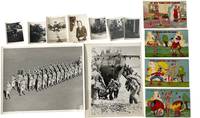
1940231951940. Women's wartime military mobilization photo archive documenting female military service across Allied wartime culture in the United States and southern France during the 1940s. Official press photographers commercial postcard publishers and private snapshot makers record women in uniform within military structures wartime publicity systems and informal social settings while the comic material makes clear that women's enlistment was also processed through satire about masculinization labor reversal and altered domestic authority. The August 22 1944 Army Radiotelephoto press photograph captioned "FRENCH WACS COME HOME" includes helmeted French women carrying rifles and duffel bags as they debark from landing craft "US 38" on the Riviera to join the liberation of their homeland placing women's military service directly within Allied invasion reporting and wartime news transmission.<br /> <br /> Photo archive of 13 silver gelatin and colored real photo postcards ranging from 10 x 8 inch press photos to smaller 3 x 2.5 inches vernacular photos United States and southern France circa 1940s. The grouping joins official press photography commercially printed comic postcards and private snapshots: women serving in uniform within military structures news agencies translating that service into public wartime narrative and vernacular photographs framing servicewomen through friendship memory and off-duty self-presentation. One large press photograph includes a WAC marching unit in tight alignment behind a guidon for a unit attached to a Naval Operating Air Station the elevated viewpoint emphasizing drill uniformity and command structure rather than individual identity. The Radiotelephoto print retains its typed verso caption identifying French WACs coming ashore in southern France. Four color comic postcards published by Beals in Des Moines turn women's enlistment into wartime humor through slogans including "WE'RE GIVING 'EM A BIG WAAC . . . " "I'M BRINGING HOME THE BACON!" "I'M GETTING A BIG BANG OUT OF THIS ARMY LIFE" and "MY HOW TIMES HAVE CHANGED." The most pointed of these "I'M BRINGING HOME THE BACON!" has a uniformed woman dragging a defeated male figure on a rope recasting military service as a comic transfer of masculine power and economic authority to women. "MY HOW TIMES HAVE CHANGED" extends that logic by imagining a man in an apron cooking and sweeping at home making domestic reversal itself the joke. The remaining cards similarly convert women's service into exaggerated spectacle through a rolling-pin attack on a caricatured Axis figure and a smiling servicewoman posed between oversized cannons. Seven small vernacular snapshots shift to individualized presence: one is signed "Love Sherry" two versos identify "Hazel" one verso reads "Golden Gate Park" and the images include women in uniform seated on an urban balustrade standing along city streets posed in landscaped parks visiting a pagoda-like garden site and appearing together outdoors in a paired portrait.<br /> <br /> Women's military service during World War II expanded through the WAAC WAC and related Allied formations while press agencies commercial print culture and snapshot photography assigned that service different public meanings; this archive preserves those overlapping channels in a single grouping. The postcards register wartime unease and fascination around women entering socially masculine roles turning military participation into jokes about strength breadwinning authority and domestic displacement. Minor corner and edge wear to the larger photographs one crease and caption wear to the Radiotelephoto print light rubbing and handling wear to the postcards and general wear curling and minor soiling to the vernacular snapshots; overall very good condition. The grouping preserves women's wartime military presence as it moved between official documentation commercial gender satire and private snapshot culture. unknown
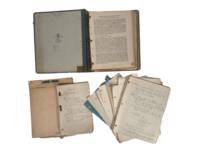
1945193511945. Witmer Richard L. Caribbean Coastal Artillery officer training archive circa 1940s documents the instructional framework and operational doctrine taught to U.S. Army Coast Artillery officers during World War II with particular emphasis on antiaircraft defense chemical warfare preparedness and logistical coordination in domestic coastal defense. This archive belonged to Captain Richard L. Witmer of York Pennsylvania an officer in the 87th Regiment of the Caribbean Coastal Artillery Command of the US Army during WWII. Its contents include 385 printed and manuscripts pages of notes lessons assignments and documents primarily from Witmer's education in officer academy.Witmer served as an officer in the 87th Regiment of the Caribbean Coastal Artillery Command a unit tasked with protecting Gulf Coast installations against aerial and maritime threats during a period of heightened concern over Axis attack on the continental United States. His notes record formalized military instruction alongside personal synthesis of tactical principles including his definition of tactics as the "Science of placing weapon so as to carry out mission" and his articulation of defensive priorities such as "Make provision to guard against a surprise" and "Take advantage of terrain for all round defense." The archive includes detailed engagement with antiaircraft gunnery where Witmer identifies primary targets as "Bombers Observation planes" and emphasizes the need for "continuous instantaneous and accurate data" and "volume of fire" demonstrating the technical and strategic demands placed on officers responsible for air defense.<br /> <br /> Witmer Richard L. Caribbean Coastal Artillery officer training archive. United States: U.S. Army Coast Artillery Corps circa 1940s. Archive comprises approximately 385 pages of manuscript and typed material primarily organized within a ring binder accompanied by three small notebooks and approximately fifteen loose leaves. Contents include notes instructional outlines assignments and technical summaries covering antiaircraft artillery ordnance ballistics supply systems transportation logistics and mess operations. Numerous pages feature hand-drawn diagrams graphs and marginal annotations. Sections devoted to weapons systems describe characteristics of artillery including "40 mm - Easily operated" "37 mm - Accurate fire" "50 cal - Rugged" and "30 cal - Simple & Rapid Min. of men." Additional material addresses chemical warfare including references to mustard gas and Lewisite with Witmer posing operational questions such as "Would the combat efficiency of my men remain high in the event of chemical attack" A formal evaluation included in the archive notes his promotion stating that he "has demonstrated outstanding ability and fitness for promotion by performing the duties of a gun battery officer" citing his leadership of an antiaircraft range section.<br /> <br /> Produced during the expansion of U.S. defensive infrastructure in World War II this archive aligns with the strategic role of the Coast Artillery Corps in safeguarding domestic installations prior to the consolidation of air defense under later Cold War military structures. The detailed instructional content reflects the Army's investment in technical specialization particularly in response to the increasing threat of aerial warfare and the lingering memory of chemical weapons deployment in World War I. Witmer's materials preserve the pedagogical methods used to train officers in integrated defense systems combining mechanical knowledge tactical planning and command responsibility. The subsequent dissolution of the Coast Artillery Corps in 1950 underscores the transitional nature of this material within the evolution of U.S. military organization. Light wear to covers with minor fading internal pages well preserved and legible with occasional handling wear; overall very good condition. unknown
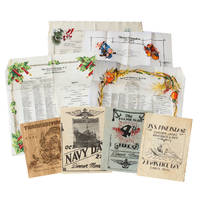
1929186831929. U.S. Army and Navy holiday dinner menus and related materials 1929 to 1945 document organized communal life ceremonial observance and institutional identity within the American military across the interwar and World War II periods. The group includes menus for Independence Day Thanksgiving Armistice Day and Navy Day situating the material within official holiday programming that reinforced morale and unit cohesion during both peacetime training and global conflict. The presence of menus from the 189th Field Artillery at Fort Sill in 1940 and later examples from the U.S.S. Pine Island including those produced at Sasebo Japan places the archive within the geographic expansion of U.S. military operations from domestic bases to overseas occupation zones. The inclusion of named rosters and autograph signatures connects these printed artifacts to specific service members documenting how collective identity and hierarchy were formalized and commemorated through shared meals.<br /> <br /> Archive of eight original military holiday dinner menus and four printed cloth napkins. United States and Japan 1929 to 1945. Menus measure approximately 7 x 5.5 inches and are printed in paper wrappers with illustrated covers. The earliest menu issued for the 189th Field Artillery at Fort Sill Oklahoma Thanksgiving 1940 includes an ornamental napkin a printed roster of personnel multiple autograph signatures and a "wooden certificate" voucher redeemable within the Cherokee Strip region. Additional menus originate from the U.S.S. Pine Island for Independence Day Navy Day and Armistice Day observances including examples produced at the Sasebo naval base in Japan. Menus list standardized holiday meals including roast turkey baked ham potatoes and pie. The archive also includes four cloth napkins from the 70th Service Squadron dated 1929 to 1931 each approximately 14 x 14 inches printed with thematic imagery such as turkeys cornucopias and holly leaves and bearing full rosters of personnel organized by rank. The 70th Service Squadron was stationed at March Field California a major Army Air Corps training installation during this period.<br /> <br /> Military holiday menus functioned as both practical documents and ceremonial objects recording foodways hierarchy and unit composition while reinforcing institutional traditions across dispersed service environments. The continuity of menu design and meal structure across years and locations reflects standardized provisioning practices while the inclusion of rosters and signatures preserves individual participation within collective settings. The presence of materials spanning prewar Army Air Corps units and wartime naval operations including occupation-era Japan provides a longitudinal view of military culture across a period of rapid organizational and geopolitical change. Light wear consistent with handling; overall very good condition. unknown
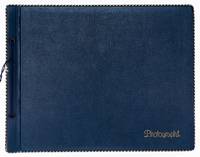
58086Manilla 1945. Oblong 4to. 26 x 34 cm. 38 leaves of black paper. Album of string-bound navy-blue leatherette containing 44 black & white photos of the Liberation of the Philippines and 5 semi-nudes approximately 9 x 11.5 cm each four to a leaf across 10 leaves one leaf with photographs to recto and verso remainder blank. The majority of the photographs display gruesome scenes of violence death and destruction. Excellent condition. The Philippines campaign Battle of the Philippines or the Liberation of the Philippines code named Operation Musketeer I II and III was the American Mexican Australian and Filipino campaign to defeat and expel the Imperial Japanese forces occupying the Philippines during World War II. The Japanese Army overran all of the Philippines during the first half of 1942. The liberation of the Philippines commenced with amphibious landings on the eastern Philippine island of Leyte on October 20 1944. The United States and Philippine Commonwealth military forces were progressing in liberating territory and islands when the Japanese forces in the Philippines were ordered to surrender by Tokyo on August 15 1945 after the dropping of the atomic bombs on mainland Japan and the Soviet invasion of Manchuria. [Manilla, 1945.] hardcover
194576270Washington D. C.: U. S. Army. Very Good. 1945. First Edition. Paperback. Softcover mounted on black wooden board with screw posts. Oblong elephant folio 18" x 12 3/4" with backing board a slight bit larger . One of 182 copies of the formally classified history of the Third Army produced by the Third U. S. Army Headquarters and the XIX Tactical Command. Classified as Secret when first published but later declassified. Volume 1 The Operations contains a monthly accounting of overall army operations in the European theater commanded by Lt. Gen. George S. Patton. Volume 2 "Staff Section Reports " not available at present is a compilation of general and special staff sections operations reports. The volume offered here "The Operations " combines narratives of specific operations with data on movements casualties and loss of materiel supplemented with maps and supporting documents. Condition is very good or better. There are some creases on the front wrap along with a signature of the former owner Maj. L. V. Frisch. Interior pages are clean and unblemished. Each section in the book is introduced by a clear acetate page. Scarce in its original edition though available in various electronic forms. 421 pp. Plus annexes 22 pp 36 pp. 66 pp and 146 pp. Large bulky and heavy--may require special shipping arrangements. . U. S. Army paperback
191811652Washington: Government Printing Office 1918. First Edition. Original cloth. Octavo. 96 pages. Near Fine. Bound in coarse tan cloth over boards with title printed in black on upper board. Contemporaneous prior owner name in ink on front pastedown. Fold-out plans tables photographs. Scarce Confidential manual on the weaponry associated with U. S. Army aircraft and pilots in World War I. Sections on the Marlin the Lewis and the Vickers aircraft machine guns synchronizing gears machine gun sights bombs bomb-release mechanism bomb sighting ammunition pyrotechnics and small arms. Three fold-out plates one of which is a detailed and colored schematic of the Lewis machine gun. Notice on the first page warns that this book ".is issued for the instruction and guidance of all concerned and contains information of military importance none of which may be copied printed or published under any conditions." <br /> <br /> Only 16 copies located in OCLC. Government Printing Office unknown
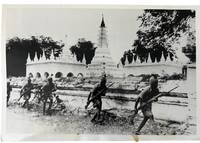
1914234921914. British Indian Army photo archive spanning both World Wars depicting colonial recruitment military training the Indian Air Force military ceremonies and Burma-front service into the final decades of British rule in India circa 1914-1945. The British Indian Army was the largest non-conscript force in history: roughly 1.3 million men were recruited during the First World War and 2.5 million during the Second. Indian troops were deployed to the Western Front Mesopotamia East Africa and Egypt during the First World War and to North Africa Italy the Middle East and Burma during the Second. British power in India had grown from East India Company conquest in the eighteenth century passed to Crown rule after the 1857 uprising and was nearing collapse during the time which these press photographs document. The Quit India movement the 1943 Bengal famine wartime censorship and anti-colonial organizing made British authority increasingly untenable even as Indian troops mobilized in record numbers. The archive records the last colonial wartime mobilizations of India before independence in 1947 and Partition remade the subcontinent.<br /> <br /> Photo archive of 31 silver gelatin photographs and four real-photo postcards various sizes ranging from 4 x 2" to 10 x 6.5 inches India France and Burma circa 1914-1945. The four French-printed real photo postcards date to the First World War and document Indian Expeditionary Force service: "1914 - Soldats anglais et indiens / Indian and English soldiers" showing a horse-drawn carriage driven by an Indian man with three uniformed soldiers seated inside; "1914 Indian Army - Attelage de Guerre / War Team" depicting a military draught team; "Indian Army Conveyer" showing an Indian soldier with four pack donkeys; and a 1919 postcard documenting the arrival of a British detachment at a colonial camp. A formal group portrait of approximately nineteen Sikh soldiers in khaki service dress and regulation dastaars stands before a row of tents at a North-West Frontier camp. Sikh troops fought throughout both World Wars in their turbans the only major military force to refuse steel helmets on religious grounds.<br /> <br /> The remaining photographs 1940-1945 document Sikh Gurkha Punjabi and other Indian troops in khaki drill tunics shorts puttees regulation turbans dastaars kullahs slouch hats pith helmets steel helmets and web belts carrying rifles at the shoulder or raised in training exercises. The combination of regulation turbans with British-style khaki uniforms was standard British Indian Army dress formally accommodating Sikh and other religious traditions within Empire military regulation. A vernacular view captioned "Some of our boys at camp Ksli India" records ten uniformed men wading through a knee-high river with rifles held across their shoulders. Troops march past Buddhist stupas in Burma kneel in brush with bayoneted rifles fire from jungle cover operate a field telescope behind sandbags and sit beside motorcycles and jeeps on a rough military road. One photograph carries the studio stamp of Mela Ram & Son Peshawar a leading early-twentieth-century North-West Frontier military photographer. Press captions identify "Punjab's in India join army" "Gurkhas open fire during a training exercise" "British troops in India prepare for Burma campaign" "Indian troops in Burma" "Burma advance" "Viceroy presents Victoria crosses to Indian heroes" "Tunisia Day celebrated in Calcutta" "Troops on the parapet of Matta Post watching the bombardment" North-West Frontier July 1940 "Supreme Commander" and "Services Sweetheart" the last identifying Miss Joy Thompson of Bombay and Sgt. A. Pickles of Leeds.<br /> <br /> British India entered both world wars by imperial decision. The same years that produced the photographs in this archive also produced the Quit India arrests of 1942 the Bengal famine of 1943 and intensified military recruitment across a country already moving toward independence. The archive preserves official publicity press distribution and soldier-level record-making from a colonial army fighting for Britain while British authority in India was approaching its end. Creasing surface wear fading caption-label remnants press stamps and occasional abrasions; overall very good condition. unknown
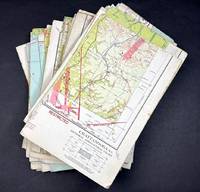
1943H40789Washington DC: Army Map Service US Army 1943. Very good. Group of 49 folding maps produced by the Army in 1942-1943 motivated by Pearl Harbor to give the US armed forces the most up to date information to help defend American cities against air raids with information on airfields commercial and municipal airports auxiliary fields seaplane bases where applicable anchorage mooring conditions lighting facilities information on radio stations beacons rotating and flashing airways restricted airways high explosive areas etc. Most of the maps measure about 45 x 24 inches some as much as 49 inches wide. In mainly very good condition a handful with more soil wear and occasionally light numerical pencil notations. The maps are of US cities and their surrounding regions and the regions all have letter-number codes which we have listed along with each map's dimensions. We have in no particular order: Washington DC T-9 35 x 24" New Orleans O-6; 44.5 x 24"; Roswell NM Q-4; 48 x 24.5"; Kansas City T-6; 44.5 x 24"; Sioux City IA V-5; 44 x 24"; Albuquerque R-4; 48 x 24" good only with a few tears and some rumpling that could possibly be ironed out; Savannah GA Q-8; 49 x 24"; San Antonio TX O-5; 46.5 x 24"; Lincoln NE U-5; 44.5 x 24"; Austin TX P-5; 49 x 24"; Beaumont TX P-6 49 x 24" with some light soil rumpling and a few pencil notations; New York U-9 45 x 24"; Aberdeen South Dakota W-5; 42 x 24" with "Property of Lt. Theodore J. Williams Nav. Crew #104" written in ink in marginal legend area below the map; Norfolk VA R S-9 42 x 26"; Winston-Salem NC S-8 47.5 x 24"; Denver T-4; 45.5 x 24"; Jacksonville P-8 35 x 24"; Dallas Q-5 49 x 24" with light wear and soil some minor pencil notes; Little Rock R-6; 47.5 x 24" with light wear and rumpling; Del Rio TX O-4 42.5 x 24"; Douglas AZ P-3 49 x 24.5"; El Paso P-4 49 x 24.5"; Salina Kansas T-5 45.5 x 24"; Tulsa S-6 34 x 24" with light wear and soil; Charlotte R-8 45 x 24"; Detroit V-8 42 x 24"; Milwaukee V-7 45 x 24"; Cheyenne U-4 45 x 24"; Duluth X-6 44 x 24"; Twin Cities W-6 45 x 24.5"; Green Bay W-7 48.5 x 24"; Salt Lake City 4U-3 4.5 x 24"; Cleveland U-8 edition of May 1947 45 x 24"; New York U-9 edition of May 11 1944 45 x 24" with some wear and general soil; Huntington WV T-8 45 x 24"; Orlando O-8 36 x 24"; Nashville S-7 46 x 24"; Dubuque V-6 42 x 24"; Mobile P-7 49 x 24"; Birmingham Q-7 April 1940 49 x 24" with some wear splitting pencil notes soil; another copy dated April 5 1945 same dimensions light wear; Casper WY V-4 44 x 24" some wear soil pencil notes; Des Moines U-6 43.5 x 24" with some wear loss etc.; Cincinnati T-7 47.25 x 24"; Miami N-8 43.75 x 28"; Mobile P-7 49 x 24" with light wear and some numeric pencil notes; Wichita S-5 45.5 x 24"; Corpus Christi N-5 48 x 24"; Cleveland U-8 Feb. 5 1942 45 x 24"; Oklahoma City R-5 47.25 x 24"; and last but not least Chattanooga R-7 48 x 24" light wear. A brief survey of what maps are currently for sale online shows dealers pricing them anywhere from $20 to $150 apiece but no one has a substantial lot of them and we have some great maps in this group! Army Map Service, US Army unknown
1945189141945. U.S. Army and Navy photographs of Okinawa 1945 document the immediate aftermath of the Battle of Okinawa and the establishment of American control over a strategically critical island at the close of the Pacific War. The images place American troops within the Okinawan interior and along coastal installations following the April 1945 landings including the secured Yontan airfield a primary objective of the invasion. The archive records the physical destruction resulting from one of the war's most intensive campaigns alongside scenes of civilian movement and return situating the photographs within the transition from active combat to military occupation.<br /> <br /> Archive of 37 black and white silver gelatin photographs. Okinawa Japan circa 1945. Photographs measure approximately 3.75 x 4.5 inches to 7 x 10.5 inches with brief handwritten captions on verso. Images depict American troops in villages farmland and near shrines as well as at Yontan airfield. Several photographs show destroyed aircraft including a crashed Japanese plane and associated debris along with damaged infrastructure and equipment. Naval activity is represented through images of American ships in harbor and offshore including a landing ship dock LSD transport vessel. An aerial photograph shows a harbor with multiple wrecked ships and flattened industrial areas. One image documents a column of civilians carrying belongings captioned "civilians returning to homes."<br /> <br /> The Battle of Okinawa fought from April to June 1945 resulted in extensive military and civilian casualties and widespread destruction of the island's infrastructure. The subsequent American occupation transformed Okinawa into a major U.S. military base in the western Pacific a status it retained even after reversion to Japanese administration in 1972. These photographs document both the operational objectives of the invasion and the conditions encountered in its aftermath including the displacement and return of local populations. The archive provides material for examining military strategy occupation practices and the impact of large-scale warfare on civilian landscapes in the Pacific theater. Light wear consistent with handling; overall very good condition. unknown
1856MITpoUNI14Philadelphia: Henry Carey Baird & London: Trübner & Co. 1856. 1856. folio. pp. xx 1 leaf 11-428. 25 plates 1 double-page 2 folded. original blind-stamped cloth spine ends damaged edges & corners frayed tears in 1 plate repaired no loss. ownership entry of American industrial metallurgist and academic Cyril Stanley Smith. The reports the majority of which were submitted by W.Wade as superintendent of weapons casting and experiments conducted at the government foundries date from March 1844 to July 1855. Including pp. 305-322 Description of the testing machine hydrometer and other instruments designed by Wade employed in testing metals 1854 plates 12-21. Other reports were written by George Bomford T.J.Rodman and L.A.B.Walbach. Philadelphia: Henry Carey Baird & London: Trübner & Co., 1856. hardcover
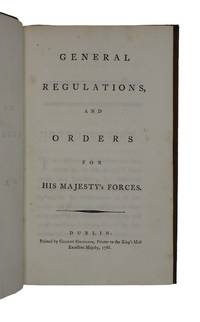
1786AQ22809Dublin: Printed for George Grierson 1786. vii 1. 248pp. Contemporary sprinkled calf tooled in gilt and blind contrasting red morocco lettering-piece. Rubbed and a trifle marked upper joint split lower joint starting spine dulled. Gatherings C and H browned scattered spotting. A rare survival of a Dublin-printed edition of the revised official standing orders of the British Army compiled by Adjutant General Henry Pigot 1750-1840 in order to 'remove the various Defects in Discipline which may have been introduced either through Negligence or Prejudice and confirmed by long Practice' in both English and Irish regiments. ESTC records copies at just two locations NLI and Queen's University of Belfast. ESTC T184243. 8vo. Printed for George Grierson unknown
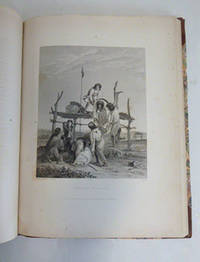
51-6493Philadelphia: Lippincott Grambo & Co. 1853. Large 4to. 23 x 31cm. Half goatskin and marbled paper boards by the artisan biner Sasha Mosalov.Plates with minor to major foxing in the margins.iii-v 3 9-84 pp. With 26 steel-engraved plates from drawings by Seth Eastman including the frontispiece plus steel-engraved added title; plain protective interleaves for the plates. .A series of detailed engravings after drawings by Seth Eastman who was stationed along with his wife Mary at Fort Snelling Minnesota from 1841 through 1848. These depict such revealing aspects of Native American life as transportation of wounded the medicine dance of the Winnebagoes spearing fish from a canoe an Indian woman dressing a buffalo skin etc. Wagner-Camp cautions that the work "should not be confused with Mrs. Eastman's later work published in 1854 as Chicora and again as American Annual. Mrs. Eastman's Portfolio consists of twenty-six engravings from Captain Eastman's paintings of Indian life each with a guard sheet and a short explanatory essay of two or three pages." Field 477n; Wagner-Camp 222c.; Howes E-17; Sabin 21682; Wagner-Camp-Becker 222a; OCLC Number / Unique Identifier:1870490: 84 pages 25 unnumbered leaves of plates : illustrations portrait ; 33 cm— Seth Eastman was a painter and soldier best known for his depictions of the everyday life of Dakota and Ojibwe people around Fort Snelling in the 1840s.OCLC Number / Unique Identifier:1870490: A selection of plates from volumes 1-3 1851-1853 of: Schoolcraft Henry Rowe. Historical and statistical information respecting the history condition and prospects of the Indian tribes of the United StatesAdded engraved title page: The American aboriginal port folio. With vignette "Engraved by Illman & Sons."Cover title: Eastman's aboriginal portfolioCollation: 1ⴠ2-10ⴠ11² $1 signed; 42 leaves pages i-iii iv-v vi-viii viii blank 9 10-84 25 plates each preceded by a bound-in guard sheetPlates engraved by Charles K. Burt James Smillie John C. McRae C.E. Wagstaff & J. Andrews and Alfred JonesFirst plate a portrait of Red Jacket bound as frontispieceIssued in blue cloth stamped in gold; all edges gilt Philadelphia: Lippincott, Grambo, & Co., [1853] hardcover
1852rbr1wam396From the Title Page: "Illustrated by numerous beautiful plates from drawings taken on the spot also A Reconnoissance of a New Route Through The Rocky Mountains and Two Large and Accurate Maps of That Region.<br /><br />Separate folder containing 2 large folding maps is present. The two maps are hand colored Salt Lake less so. Many tears along folds on both maps.<br /><br />The hardbound volume has 487 pages - 589 lithography plates. Howes S-884<br /><br />Please see photos for condition. Stanbury's Expedition with the Folder with the 2 Maps. Lippincott, Grambo & Co. hardcover
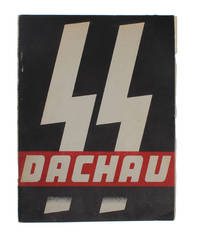
194560292USA 1945. Some minor wear to edges and covers-overall very good. Illustrated by black and white photos. 68 pp. Attached letter to Whom It May Concern from Waldemar Westergaard Chief United States Office of War Information Copenhagen and a letter from Berlingske Tidende from 01.05.80 to Fonsmark. Composition - Major Alfred L. Howes. Art Work - T/Sgt. John S. Denney. Copy Preparation - T/3 Chas W. Denney. Photographs - 163d Signal Photo Company. Printing - 649th Topo Battalion. <br/><br/><em>First edition of the "Dachau US Army Report" is a compilation of reports photographs and documents related to the liberation of the Dachau concentration camp by American troops during World War II. Dachau the first concentration camp built by Nazi Germany was operational from 1933 to 1945. The book includes eyewitness accounts of the atrocities committed by the Nazis at the camp as well as information on the history and organization of the camp. This report is based on two days and primarily focuses on one aspect of life in Dachau - the internal organization of the camp the evidence of self-administration among the prisoners the emergence of special control and pressure groups and the position of various social political and national groups within this organizational framework. It was intended to serve as a historical record of the events at Dachau and as a warning against the dangers of fascism and genocide. </em> unknown
MA09A-06211United States Government Printing Office. Collectible - Good. Washington: United States Government Printing Office 1927. 8vo. ix845pp. Illus. Good book. Spine ends worn. Top half of spine cover and top corners of both boards are slightly dampstained. Back board scuffed. Board corners bent and slightly frayed. Signed by Brigadier General George H. McManus on front free endpage; he is mentioned on p. 738 as a recipient of the Distinguished Service Medal. Lower corner of textblock slightly bumped in first portion of book. Top page edges a bit warped. Inquire if you need further information. United States Government Printing Office hardcover
MRMktGER84np: Printed by Witek & Suchy 18-. 8vo. pp. 2 p.l. 205. 5 folding plates & 150 text diagrams many full-page. manuscript text: lithographed throughout. contemporary bds. with centre portion of original illus. wrs. mounted on covers rubbed some staining & soiling to mounted wrs. np: Printed by Witek & Suchy, [18-]. unknown
1964ZB626365London: Royal Air Force Museum 1964-2008. volumes 42-46 48 50-53 55-78 80-86 all complete volumes in original paper wrappers very good. - If you are reading this this item is actually physically in our stock and ready for shipment once ordered. We are not bookjackers. Buyer is responsible for any additional duties taxes or fees required by recipient's country. Photos available upon request. London: Royal Air Force Museum unknown
1911381165Washington: Government Printing Office 1911. Hardcover. Very Good. First edition. Two volumes. 62d Congress 1st Session 1911. 1. Portfolio House Document No. 76: 19pp. stapled and 31 large folding maps numbered 0-30. Complete as issued in cloth portfolio with cloth tie. Light soiling to the portfolio box and topedge of the folded maps very good. 2. Octavo House Document No. 81: 55pp. and 10 large folding maps and charts numbered 1-10. Complete as issued in cloth also very good. Each volume with a shelf numbered spine. A topographical and engineering survey and report prepared under the direction of the Secretary of War by the U.S. Army Corps of Engineers. A handsome set scarce in the trade. Government Printing Office hardcover
1921381472Washington: Government Printing Office 1921. Softcover. Very Good. First edition. Two volumes: the 1913 topographical and engineering survey and the 1921 Federal Power Commission report undertaken to determine the feasibility of constructing a hydroelectric power plant at Great Falls on the Potomac River now a protected National Park. The 1913 survey was issued as House Document No. 1400 62d Congress 3d Session. Portfolio. 143pp. 1 folding chart bound in linen cloth wrappers and 64 loose folding maps and plans complete as issued in the original publisher's cloth portfolio box with cloth tie. Moderate soiling to the portfolio very good. Prepared under the direction of the Secretary of War by the US Army Corps of Engineers. The 1921 report was issued as Senate Document No. 403 66th Congress 3rd Session. Quarto. 179pp. 28 numbered folding maps folding color chart and plates. Also complete as issued in the original publisher's cloth. A very good or better set scarce in the trade with the many folding maps in the portfolio and bound volume in fine condition. Government Printing Office unknown