INDIA ARMY, GENERAL STAFF BRANCHBiblio.com
9 442 résultats
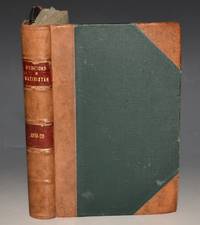
97688Calcutta Superintendent of Government Printing 1921. Tall 8vo. Contemporary half calf green cloth sides gold-stamped red spine labels. Size 10 x 6.5 inches In good condition. Some minor rubbing on edges two small nicks on spine labels. Corners a little bumped a few minor marks on cloth boards. Military inscription on front endpaper. Inside some foxing else generally clean & tight. X 187 Pages 1 pp. With frontispiece 31 plates 7 maps 3 in pocket on inside of back board and 8 panoramas mostly folding. First edition of the British-Indian army s official account of the 1919-20 Waziristan campaign marked "Confidential" on the title-page. The operations followed unrest that arose in the aftermath of the Third Anglo-Afghan War; they were conducted in the mountainous region of Waziristan now in Pakistan by British and Indian forces against the fiercely independent Waziri and Mahsud tribesmen that inhabited it. Since the 1870s the British government agencies were assiduous in compiling internally published histories of their military frontier operations with the intention of providing a "valuable guide" to such British commanders and policy makers as "might have future dealings with these turbulent neighbours" as the Punjab Government phrased it in 1866. Calcutta Superintendent of Government Printing 1921 hardcover
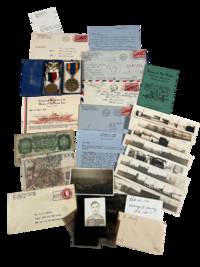
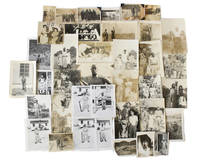
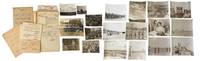
1945229161945. WWII Lt. Colonel Henry L. Hively U.S. Army Air Forces correspondence and war archive 1945 comprising medals letters documents photographs negatives and ephemera including Panama Canal Zone tourist booklet wartime train-journey photo strips through France namely Grenoble and Valence aerial transport photographs and extensive emotional correspondence from Oakland and San Francisco at the end of World War II. Archive includes 4 letters 5 envelopes two foreign currency bills a Panama tour guide a donation certificate six medals and ribbons and over 30 very small photographs. This substantial personal archive documents the long U.S. Army career of Lt. Colonel Henry L. Hively 1915-2010 beginning with his formative early-career service tied to the U.S. Army's border militarization and expeditionary presence in Mexico during the opening decades of the twentieth century when American forces pursued Pancho Villa and asserted federal authority along the U.S.-Mexico border. That experience-rooted in mobile warfare logistics and hemispheric military infrastructure-prefigures the global operational networks that would later define American power during World War II. Hively's career thus bridges early twentieth-century expeditionary service in Mexico with his later World War II service across the European and Pacific theaters and the immediate postwar demobilization period.<br /> The archive is anchored by an extraordinary run of intimate 1945 letters from Hively's girlfriend Mrs. Dorothy "Dottie" Rishel a civilian hospital worker at Green's Eye Hospital in San Francisco and later Oakland. Her correspondence chronicles daily life wartime anxiety women's labor Bay Area domestic arrangements and-most critically-the immediate civilian reaction to the atomic bomb and the end of the war. On August 10 1945 Rishel wrote: "I'm so confused over the state of affairs regarding the war and probable termination of it I don't know what to say. Without reservation Hank what's your personal opinion of this atomic bomb Its destructive power absolutely floors me." Only one day later as news of Japan's surrender became imminent she added "Allow me to say 'Happy V-J Day to you.' The war will absolutely be over tomorrow so the radio says. Golly I'm so thrilled I can't even concentrate on anything." These letters provide rare real-time reactions from a young working woman confronting the moral and emotional consequences of nuclear warfare.<br /> <br /> Materially the archive includes Hively's medals-among them a boxed Army of Occupation Medal ribbon bars and a boxed U.S. Air Medal-alongside his wartime photographic portrait labeled "Henry L. Hively 2nd Lt. Sig C." The photographic material consists of mostly very small vernacular silver-gelatin prints about 1' x 1" in rows of about 5 with a few larger images and a few negatives. several stamped on the verso "March 1945" showing Hively with other U.S. soldiers during the final months of the war including soldiers disembarking from U.S. Army aircraft traveling by rail through Europe gathering around Army jeeps and socializing outdoors. One image records a street-level view of a building in Grenoble France situating the archive geographically within southeastern France during the Allied occupation period. Additional prints show European landscapes rivers military encampments and aircraft on runways. Also present is the USO pamphlet Panama in Your Pocket: What to Do Where to Go While on the Isthmus reflecting the Pacific transit network anchored by the Canal Zone alongside foreign currency from France and England and photographic negatives documenting off-duty military life. A later handwritten note identifying "Ret Lt. Col. Henry L. Hively 1915-2010 - 94 yrs old" aligns with his published obituary confirming his long military career and postwar administrative service. The correspondence between Hively and Rishel forms the emotional core of the archive documenting female wartime labor emotional resilience and the uncertainty of demobilization. Rishel's account-"The work here in the hospital is absolutely fascinating. this hospital has been doing an awful lot of experimental work on cornea transplantation"-captures women's medical labor during WWII while her September 21 1945 letter reflects anxiety surrounding separation and discharge: "they have decided to send all eligible officers to their separation centers sometime in the next two months." Together these materials articulate the psychological and social transition from global war to fragile peace. Letters well preserved and legible with expected toning and folds; envelopes present with postmarks and Army Postal Service stamps. Photographs and negatives crisp some very good and a few over exposed. Medals well kept in original boxes with ribbons and devices. Overall very good condition. unknown
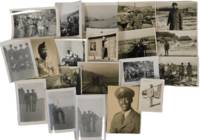
1951191891951. African American U.S. Army soldiers photographed during the early Korean War era document Black military service during the first years following the formal desegregation of the United States armed forces. Twenty photographs dating from approximately 1950 to 1952 depict African American soldiers in uniform at military bases and in field conditions associated with Korean War deployment. Several images also show Black and white soldiers posing together providing visual documentation of the Army during the first phase of racial integration ordered by President Harry S. Truman through Executive Order 9981 in 1948. Inscriptions on several photographs including one signed portrait reading "Joe Moddin 1951" identify individual servicemen and record personal messages written during active service.<br /> <br /> Twenty black and white photographs depicting African American soldiers in U.S. Army uniforms during the early 1950s. Photographs include scenes of soldiers standing with military trucks traveling along roads in Korea and posing with fellow servicemen at military installations where barracks structures are visible in the background. Several images show troops operating or stationed in rough winter terrain consistent with Korean War conditions. Three photographs contain extended inscriptions on the verso dated December 1951 and January 1952. Another photograph is a portrait image signed and dated "Joe Moddin 1951." The images collectively portray daily military life including group portraits transportation scenes and base environments during wartime deployment.<br /> <br /> The Korean War fought between 1950 and 1953 became the first major conflict in which the United States attempted to implement racially integrated military units following Truman's desegregation order. African American soldiers had served in segregated formations throughout World War II and their wartime service contributed to growing national pressure to dismantle racial segregation within the armed forces. By the early years of the Korean War the Army began integrating many units in training and field operations bringing together soldiers of different racial backgrounds in combat and support roles. Historians estimate that roughly 600000 African Americans served in the armed forces during the Korean War and Black servicemen accounted for a significant portion of U.S. casualties during the conflict. These photographs provide ground-level visual documentation of soldiers serving during the transitional period when formal military segregation was being dismantled but integration remained uneven in practice. Twenty photographs. Minor handling wear typical of mid twentieth century vernacular photographs. Overall condition very good. unknown
18802080502106503665Not Available 1880. Soft Cover. Fine. Volume: 1 Not Available paperback
19449019469n.p. 1944. Hardcover. Very good. Bound in the publisher's original black cloth with spines and covers stamped in gilt. Cloth is worn at the extremities and gilt has faded from the spine on some volumes but is still legible. Volume 1 covers primary operations for the period and contains introduction reorganization of the first army plans operations conclusions and 10 fold-out situation maps. Volumes 2 - 7 contain annexes 1 - 20. All volumes have map illustrated endpapers and additional fold-out maps charts and illustrations throughout the set. Ex-library with the usual markings. Stamped withdrawn from Fort Monmouth New Jersey. <br/><br/> n.p. hardcover
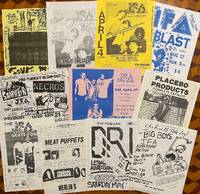
4311Very good. A quantity of eight flyers promoting JFA concerts in Phoenix Los Angeles and elsewhere between 1982 and 1986 photomechanically reproduced on 8.5" x 11" sheets of white pink or yellow paper. PLUS: "JFA Songbook" see below. Overall the material is very clean having been stored in a filing cabinet free from light and handling for forty years. PLUS: five newspaper skateboard mags 1977-1980 newsprint folded for many years and toned. PLUS: two surfer mags 1973-1974 newsprint toned. A FINE AND EARLY ARCHIVE OF SKATE PUNK FLYERS DOCUMENTING THE ROLE OF THE BAND JODY FOSTER'S ARMY JFA AND THEIR CONTEMPORARIES IN THE SKATE CULTURE IN THE EARLY 1980s. SEVERAL FLYERS ARE ICONIC AND ARE NOW UNFINDABLE IN FRESH MUSEUM QUALITY AS HERE HAVING BEEN STORED IN A FILING CABINET FOR EXACTLY FORTY YEARS TO WHICH IS ADDED A SMALL QUANTITY OF NEWSPRINT SKATEBOARD MAGS 1977-1980 AND RELATED EPHEMERA. <br /> <br /> Two cultural phenomena of the 1970s and 80s continue to exert a tremendous impact on the youth of twenty-first century: skateboarding particularly skate-punk and hip-hop both of which began as expressions of disaffected "outsiders" who were unwilling or unable to participate in mainstream America and did so in a completely DYI manner. Today both phenomena have been co-opted and commercialized worldwide particularly in terms of music linguistics fashion art and culture. We are able to offer a small but very interesting "time capsule" of the former. <br /> <br /> Concerning skate-punk band JFA: "With roots in the Arizona and Southern California skateboard scenes JFA was formed in 1981 nineteen days after the failed attempted assassination of Ronald Reagan by John Hinckley Jr. an obsessed fan of Jodie Foster. The original lineup of vocalist Brian Brannon guitarist Don "Redondo" Pendleton bassist Michael Cornelius and drummer Mike 'Bam-Bam' Sversvold developed a faster more focused sound that combined the nascent hardcore of Black Flag and The Germs with the twangy guitar that defined The Ventures and Dick Dale. With lyrics and imagery steeped in the lifestyle JFA appealed to skaters who saw themselves taking surf culture to the streets." johnson rare books and archives from whom we acquired the present collection. <br /> <br /> HIGHLIGHTS OF THE COLLECTION: <br /> <br /> Flyer of the very important May 18 1984 concert with skate punk pioneers The Big Boys Austin TX at the Stardust Ballroom in Hollywood. Billed as "L.A.'s First All Skate Gig!" and sponsored by Powell & Peralta Tracker and other skateboard manufacturers it also included performances by JFA Aggression Faction Ill Repute and Tales of Terror. We know it was a great show because we were there. ~ May 26 1986 flyer for DRI Dirty Rotten Imbeciles et al. in Dallas and on the other side JFA et al. ~ Aug. 17 1982 flyer for Meat Puppets "new album due anytime now from SST Records" and JFA in Tempe AZ ~ Catalogue of Placebo Products / Placebo Records JFA label 4 pp. ~ Promotional flyer for JFA skateboard two shapes three sizes generally 10.5" x 30.5" ~ Calendar for Sept. 1986 punk rock shows at the Downtown Danceteria in Minneapolis MN promoting shows by the Circle Jerks Liveskull and others ~ Nov. 21 1983 flyer for Samhain JFA Necros et al. at Stardust Ballroom Hollywood ~ 3 flyers from JFA 1986 "Fifth Anniversary" tour including Denver ~ "The JFA Songbook" zine together 8 ff. stapled as issued containing "Lyrics to all known and remembered ballads" interspersed with photocopy cuttings and drawings. A worn copy of this item sold on for $139 Dec. 12 2022. <br /> <br /> PROVENANCE: Archive of Richard Bishop guitarist of the Sun City Girls Phoenix AZ an experimental rock band. Statement by Bishop "Each one was collected before the date of the show and have been in a filing cabinet ever since." <br /> <br /> ADDED: Seabreeze: Voice of the Western Surfing Association. San Diego CA 1973-1974. Together two issues newsprint: Nov. / Dec. 1973 vol. 1 no. 6 30 2 pp. July / Aug. 1974 vol. 2 no.1 pp. 3-32 lacking front cover thin vertical portion of spine area on p. 3 very lightly abraded. IN THIS INNOCUOUS 1974 SURFING NEWSPRINT TRADE MAGAZINE IS A VERY EARLY ADVERTISEMENT FOR BAHNE SKATEBOARDS TOGETHER WITH CADILLAC URETHANE WHEELS WHICH REVOLUTIONIZED SKATEBOARD TECHNOLOGY. Frank Nasworthy is notable in the history of skateboarding for introducing polyurethane wheel technology to the sport in the early 1970s. Due to the infancy of skateboarding at this time Nasworthy sold his wheels directly to surf shops along the coast of California and placed some tentative advertisements featuring a young Gregg Weaver in surfing magazines. In 1973 or 1974 Nasworthy licensed his wheels to Bahne and Co. of Encinitas California and Bahne skateboards were packaged with Cadillac wheels. SEE: Ken Harrison "Birthplace of skateboarding: Encinitas and Carlsbad; Forget about Santa Monica" 2019 online. <br /> <br /> ADDED: Assorted cheap skateboard publications 1977-1980 including Skateworld Journal vol. 1 no. 1 1977 with O.G. Dogtowner Marty Grimes on the front cover inside: an ad declares "Profit from the coming boom in Skateparks!" ~ Zero Gravity 1977 with George Orton on the front cover in color and other photos we've never seen being a veritable time capsule of early vertical skateboarding ~ Skat'n News vol. 1 no. 10 1979 with photos from Reseda SkaterCross skatepark some news items circled in pen ~ Skat'n News vol. 2 no 1 1980 "Special Issue" primarily with photos and typewritten captions some news items circled in pen ~ Skat'n News vol. 2 no. 8 1980 with Eric Grisham on the cover and many other excellent photos of the Reseda contest. Plus: The Argonaut Marina Del Rey CA 1981 with Christian Hosoi on the cover and an article on the closing of the Marina Del Rey skatepark. Plus: 5 pieces of related ephemera including two copies of the CHIP Skateboarders' Safety Handbook. unknown
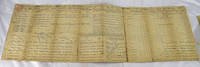
18632604050021United States Army 1863. First Edition. Manuscripts & Paper Collectibles. Very Good. Signed. Large two sided document. Printed with manuscript names filled in. The first name listed is Colonel Eli Long. This document shows the Colonel Captains Sergeants Lieutenants and the privates. This document shows the pay from October 31st 1863 to December 31st 1863. <br> According to NPS: "On February 23 1863 Long was appointed colonel of the 4th Ohio Cavalry a regiment which recently had surrendered to the Confederate raider Brigadier General John Hunt Morgan. Long improved the morale of the regiment and led it in the Tullahoma Campaign. He commanded the regiment's brigade the 2nd Brigade 2nd Division Cavalry Corps of the Department of the Cumberland between March 1863 and August 20 1864 including service at the Battle of Chickamauga. Long was wounded in the left side at the Battle of Farmington Tennessee October 7 1863. He was distinguished in the Atlanta Campaign where he suffered a head wound at the Battle of Jonesboro Georgia August 20 1864 and wounds in the right arm and right thigh at the Battle of Lovejoy's Station Georgia August 21 1864. Long received brevet grade appointments as major lieutenant colonel and colonel in the Regular Army of the United States for "gallant and meritorious services" at the Battle of Farmington and Battle of Fort Sanders Knoxville in Tennessee and Battle of Lovejoy's Station in Georgia respectively. Between November 16 1864 and April 2 1865 Long commanded the 2nd Division of the Cavalry Corps of the Military Division of Mississippi under Major General James H. Wilson. On April 2 1865 during Wilson’s Raid Long was severely wounded in the head at the Battle of Selma Alabama. During that battle he led the 2nd Division in a charge upon the entrenchments that resulted in the capture of that town. During the Civil War Long was wounded five times and also cited for gallantry five times. On January 13 1866 President Andrew Johnson nominated Long for appointment to the brevet grade of major general of volunteers United States Army unknown
19972403210016TVA 1997. Interior is excellent. in metal spiral binding with plastic cover TVA unknown
194639921Washington DC: GPO 1946. First Edition. First Printing. good. 526 total 3-vol. set illus. many fold-out maps stamped "Restricted" on front board. Dornbusch #306. Primary report volume xvii 95 pages and two volumes of annexes 1-8 222 pages 9-14 209 pages. GPO unknown
2083002116207134bottom margin Army Reserve Academy N.A. Soft Cover. Fine. The book is in fine condition. (bottom margin) Army Reserve Academy paperback
19872091502135705346Army School History Compilation Committee 1987. Soft Cover. Fine. The book is in fine condition. Army School History Compilation Committee paperback
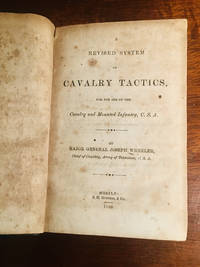
18631214<p>Rare Confederate Imprint:</p><p>24 mo. 5 1/2 by 3 3/4 inches 1 preliminary leaf ii </p><p>Three parts in one volume: "Cavalry Tactics For Single Line Formation" 220 pages</p><p>"Evolutions of a Regiment" 104 pages</p><p>"Skirmish Drill for Mounted Troops" 47 pages</p><p>"Bugle Signals" pages 97-108 among them: "To Arms" "The Charge" "Reveille" "Retreat" "Dinner Call" and "Tattoo" all with musical notation</p><p>"Table of Contents" plus Index and "Skirmish Drill For Mounted Troops" xiv pages</p><p>38 plates some folded: diagrams tables and charts.</p><p>Good condition collated perfect in green paper covered boards old blue cloth re-backing with worn black paper label mild foxing to some pages – not affecting contents.</p><p>"Fighting Joe" Wheeler was a cavalry general in the Confederate States Army. He was the senior cavalry general in the Army of Tennessee and fought in most of its battles in the Western Theater.</p><p>He earned his nickname on the Western frontier where he distinguished himself in skirmishes against Native Americans.</p> S. H. Goetzel, & Co. hardcover
1908819801908. U.S. ARMY. The Uniform of the Army of the United States. October 1 1908. Compiled by the Authority of the Secretary of War Under the Supervision of Brigadier General J.B. Aleshire Quartermaster General U.S.A. Washington DC: The Eichert Lith. Co. and A.B. Graham Co. Lith. 1908. 1st ed. Portfolio of 126 chromolithographic plates all issued chromolithographic title plate 1 plate of text. Orig. 3/4 red leather portfolio marbled endpapers red leather label on front board. Top left and bottom right corners from title page are chipped else very good or better. An extremely scarce collection of prints showing all uniform parts of the time from full dress uniforms to sock and underwear. Rank insignia brass collar and sleeve insignia hats cords shoes dress and field uniforms etc. Eighteen of the plates were deleted prior to issue because their subjects had become obsolete. "The decision to proceed with the present publication was dictated by two major considerations: the unquestioned position of Henry Alexander Ogden as a military artist and the inaccessibility of the original work to collectors and historians." Ogden had prepared for the office of the Quartermaster General 70 paintings depicting official army uniforms from 1776 to 1907. Forty-four of these represented the more colorful uniforms in use from 1776 to 1888. "In 1890 the Quartermaster General published these 44 paintings together with a text covering the history and regulations. At the same time the plates were privately published along with an illuminating text by Henry Loomis Nelson. It is the latter edition that forms the basis for the present publication. Ogden rendered greater service to historians of the American Army uniform than any man in history" Publisher's Note. unknown
194612885Various locations 1946. 58 leaves illustrated with 114 photographs generally two per page tipped in on rectos. Octavo. Contemporary plain paper photograph album bound in brown textured cloth with decorative stamping on spine and front board. Minor wear. Internally quite clean. Very good plus. A tidy and informative collection of photographs memorializing the wartime stateside training of numerous women serving in Company 7 of the Women's Army Auxiliary Corps. The photographs are largely individual and group portraits of the women training at various locations throughout the country including Fort Oglethorpe in Georgia as well as Alpine Texas; Fort Devens in Massachusetts; Des Moines Iowa; and Mapleton Maine. The album is partially annotated with manuscript captions on many of the margins or on the verso many dated and identifying the women in the images or the location. The women identified in the captions include Corporal Kaiser Elaine Flaherty Lt. Tapajina Lt. Haggard Private Rosalyn Caley T-4 Ethel O'Brian Capt. Lawson Sgt. Boomer Florence McClure and Capt. Chapman providing a valuable record of the women serving in the WAAC at this time. One group shot of WAACs at Fort Devens is captioned on the verso with the last names of all ten women and a few other portraits are captioned the same way White Melin Phillips etc. A handful of the images picture the women in the midst of training including images of a retreat parade raising the American flag working in the barracks and climbing a rope ladder. The album was apparently compiled by a WAAC named Almena L. Belyea according to a laid-in note from a former owner of the album. Almena L. Belyea 1902-1963 served in the WAAC as a Technician Fifth Grade during the war. Afterwards she apparently never married and lived a quiet life in Maine where she is buried in Presque Isle. unknown
19458784Headquarters-U.S. Army Air Forces. Revised May 1945. Punch and clipbound in stylized titled coloured pictorial wrappers. Small 4to. Classified "Restricted" and marked as such on each page. Introduction by General Hap Arnold Commanding General of the Army Air Forces Profusely illustrated with photographs drawings schematics diagrams some fold-out cutaways etc. Arguably the most famous aircraft of the Second World War the Boeing B-17 Flying Fortress was the spearhead of the American daylight bombing offensive in Europe from beginning to end as well as serving in every other theatre of war. No single aircraft type contributed more to the defeat of the Luftwaffe which enabled tangible expression to be given to the controversial U. S. policy for the strategic assault of Germany by day in the face of formidable political argument as well as desperate enemy opposition. Few other aircraft of the war gained the universal affection of their aircrew over so long an operational periods did the B-17 Green . This manual served the dual purpose of training checklist and working handbook for B-17 pilot airplane commanders. Graphically intensive the manual covers all aspects of the Flying Fortress from operational duties and command to construction flight navigation weaponry emergencies etc. A very rare highly prized memento of aviation and military. history Owners ink signature to front cover. Ink stamp of Salem Army Airdrome HQ dated 1945 to title Page and inside rear cover. Usual rust offset from metal binding pins to front and rear inside covers.Binding pin protruding slightly onto front cover. Mild sporadic soiling to rear cover.Light wear to edges. A crisp bright Very Good copy of this original rare relic of Aviation History. Headquarters-U.S. Army Air Forces. unknown
1940186881940. African American MilitarySegregation African American soldiers' photograph archive from the 1940s and 1950s documenting Black military service in the Philippines and Korea during the transition from segregated World War II units to the early implementation of desegregation under President Harry S. Truman's 1948 Executive Order 9981. 38 images showing African American servicemen stationed in Southeast Asia and East Asia at a time when U.S. global military invention was further complicated by racial segregation and gradual integration. The archive reflects the lived experience of Black soldiers deployed abroad in the immediate postwar period illustrating their service within the American imperial presence in the Philippines following its 1946 independence and during the outbreak of the Korean War in 1950.<br /> <br /> Archive of thirty-eight vernacular silver gelatin black and white photographs with sepia tone 1940s to 1950s most measuring approximately 5 x 3 inches with minor size variation. The majority of images depict African American soldiers in what appear to be predominantly all-Black units consistent with pre-1948 segregation policies while one snapshot shows a racially mixed unit encamped in snow likely Korea suggestive of early desegregation implementation. Several photographs portray soldiers stationed in the Philippines amid dense jungle foliage and village settings socializing with local residents and posing with women; one captioned image identifies three well-dressed soldiers as "Kee" of Youngstown "Haynes" of Philadelphia and "Borom" of Gary Indiana pictured with three Asian women. Additional images include formal and informal portraits soldiers standing guard on base with helmet and rifle and scenes of leisure and camaraderie that complicate narratives of isolation and discrimination.<br /> <br /> The archive spans the crucial transitional years between World War II segregation Philippine independence in 1946 and the Korean War era when approximately 600000 African Americans served in the armed forces and the implementation of Executive Order 9981 unfolded unevenly across units. The photographs track gradual emergence of integrated units mirroring broader civil rights struggles unfolding on the American home front. They also document the role of Black soldiers on U.S. military bases in the Philippines and in early Cold War Asia offering material evidence of African American participation in postwar American global intervention. Minor edge wear and occasional slight bends with light surface handling visible on several prints; images remain clear and well defined. Overall condition very good. A substantial visual record of African American military life abroad during the pivotal transition from segregation to integration in the United States Army. unknown
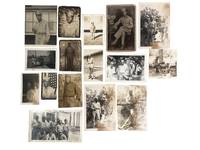
1942231081942. African American Military Archive of 16 original vernacular photographs depicting African American servicemen in the U.S. armed forces from World War II through the Korean War including studio portraits candid camp scenes and informal snapshots several with manuscript captions and identifications en versos. The group documents Black military life under segregation. Identified individuals include "Sgt. Darnell Givens U.S. Army / Indiaana" and "Pvt. Solomon Johnson . Co A 276 QM Bn Camp Stoneman / Pittsburg Calif / To Judy Johnson" situating part of the archive within Quartermaster Corps service-one of the primary branches in which Black soldiers were assigned. A group portrait captioned "The P.O. staff" here understood to denote "Petty Officer staff" suggests a naval or naval-adjacent administrative unit broadening the archive's scope beyond a single branch and reflecting the varied roles Black servicemen occupied across the armed forces. The images collectively support research into African American military participation and the lived experience of Black servicemen prior to and during early desegregation efforts following 1948.<br /> <br /> Arphive of 16 silver gelatin photographs various sizes ranging approximately from snapshot to larger studio formats depicting individual and group portraits and informal camp scenes. Several images show soldiers in uniform posed in studio settings with painted backdrops while others document outdoor environments including barracks areas wooded camps and roadside settings with military vehicles. A group photograph titled in manuscript "The P.O. staff" shows a cohort of Black soldiers gathered outside a building indicating a group of petty officers in a Black unit. Additional images depict a soldier operating a typewriter at a field desk dated "1940" men gathered around cooking equipment and a civilian scene with a woman posed beside a uniformed serviceman and automobile suggesting furlough or home-front interaction. One portrait captioned en recto "To Betty With Love / "Korea" 53-54" and en verso "With Lots of Love Always / Joe" and another with an extended caption reading in part "I am sending you this to let you see how they turn out" give insight in soldier's personal lives while abroad.<br /> <br /> The archive documents African American servicemen during a period when the U.S. military remained institutionally segregated with Black soldiers frequently assigned to support roles such as logistics transport and supply as reflected in the Quartermaster identification. The presence of named individuals and unit references provides a basis for further archival and genealogical research while the combination of formal portraits and candid scenes offers insight into self-representation camaraderie and everyday military life. Emphasis on leisure portraiture and technical work such as typing and communications underscores the range of responsibilities and identities within segregated service structures. Moderate edge wear creasing emulsion loss and staining visible across several photographs with some images exhibiting significant surface damage; overall condition good. A cohesive and research-relevant visual record of Black military life spanning World War II through the early Cold War period. unknown
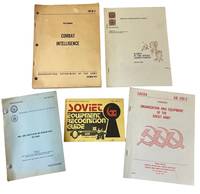
235111973. Cold War U.S. military instruction archive of government-produced manuals and intelligence studies showing how the Army trained soldiers to recognize enemy weapons report battlefield information and classify Soviet military power. The archive includes a U.S. Army field manual which explains how battlefield reports became military intelligence. The Soviet weapons guide was produced to teach soldiers how to identify AKM rifles RPG-7 launchers Sagger missiles SA-7 antiaircraft missiles mortars and antitank guns in the field. Major Mitzi D. Leibst's DIA study Women in the Soviet Armed Forces broadens the archive from weapons to manpower showing how U.S. intelligence counted Soviet women's military service as part of the enemy's total fighting capacity.<br /> <br /> Five U.S. Army and Defense Intelligence Agency manuals and studies on combat intelligence Soviet equipment recognition small arms identification Soviet force organization and women in the Soviet armed forces. Washington D.C.; Fort Monroe Virginia; Charlottesville Virginia; Fort Leavenworth Kansas; Department of the Army Defense Intelligence Agency U.S. Army Training and Doctrine Command U.S. Army Foreign Science and Technology Center and Combined Arms Combat Developments Activity 1973 to 1978.<br /> <br /> 1 United States Department of the Army. FM 30-5 Combat Intelligence. Washington D.C.: Headquarters Department of the Army 30 October 1973. Chapters cover intelligence functions collection processing dissemination order of battle counterintelligence maps and aerial imagery. Approximately 200 pages.<br /> <br /> 2 United States Army Training and Doctrine Command. TC 30-3 Soviet Equipment Recognition Guide. Fort Monroe Virginia: U.S. Army Training and Doctrine Command 11 April 1975. A soldier's pocket-style recognition guide using photographs cartoons role labels and specifications to teach Soviet weapons identification. 50 pages. <br /> <br /> 3 Johnson Harold E. Small Arms Identification and Operation Guide Free World. DST-1110H-163-76. Washington D.C.: Defense Intelligence Agency December 1976. A DIA intelligence product prepared by the U.S. Army Foreign Science and Technology Center and approved for public release with an August 1976 information cutoff. 316 pages.<br /> <br /> 4 Leibst Mitzi D. Women in the Soviet Armed Forces. DDI-1100-109-76. Washington D.C.: Defense Intelligence Agency March 1976. Prepared for the Ground Forces/MBFR Branch Soviet/Warsaw Pact Division the study identifies gaps in data on Soviet women's strength service and quality of service while compiling law history and personnel evidence. 19 Pages.<br /> <br /> 5 United States Army Combined Arms Combat Developments Activity. HB 550-2 Organization and Equipment of the Soviet Army. Fort Leavenworth Kansas: Threats Division Concepts Doctrine and Literature Directorate Combined Arms Combat Developments Activity 31 July 1978. Prepared to assist battle simulations and standardize Soviet-type organizational and equipment data. Approximately 60 pages.<br /> <br /> The archive records the practical underside of Cold War intelligence where enemy knowledge moved into manuals for soldiers analysts and training commands. Its strongest pairing is the DIA women's study and the Soviet Equipment Recognition Guide: one expands Soviet force analysis into gender law and manpower while the other teaches ordinary soldiers to identify enemy weapons in the field. Wrappers show toning handling wear staining creasing staple wear punch holes and light soil; interiors remain legible with tables captions illustrations photographs and institutional markings intact. Overall in good condition. The group preserves how U.S. military institutions taught personnel to recognize report and classify Soviet military power during the Cold War. unknown
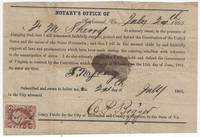
1890010590Virginia 1890. Unbound. Very good. This lot consists of three items related to former Confederate Army Captain F. M. Sherry: </p> <br /> <br /> <p style="margin-left:5%; margin-right:10%;">“An 1865 Richmond Loyalty Oath Certificate. The certificate is dated 24 July 1865 and measures 6.25†x 4.25â€. It is franked with a 5-cent Internal Revenue Certificate stamp Scott #R24. In signing the document Sherry swore that he would<br /> <br /> <p style="margin-left:10%; margin-right:10%;">““Henceforth faithfully support protect and defend the Constitution of the United States and the union of the States thereunder; and that he will . . . abide by and faithfully support all laws and proclamations which have been made during the existing rebellion with reference to the emancipation of slaves. . .â€<br /> <br /> <p style="margin-left:10%; margin-right:10%;">He also swore that he would<br /> <br /> <p style="margin-left:10%; margin-right:10%;">“Uphold and defend the Government of Virginia as restored by the Convention which assembled at Wheeling on the 11th day of June 1861.â€<br /> <br /> <p style="margin-left:10%; margin-right:10%;">The oath was countersigned by C. P. Bigger “Notary Public for the City of Richmond and County of Henrico in the State of Va.â€<br /> <br /> <p style="margin-left:5%; margin-right:10%;">An 1890 “Grand Monument†certificate - The certificate is dated 29 September 1890 and measures 9.25†x 5.75â€. The certificate which bears a serial number No. 761 was issued by the Confederate Soldiers and Sailors Monument Association of Richmond Virgina recognizing his contribution of ten dollars <br /> <br /> <p style="margin-left:10%; margin-right:10%;">“To the fund for the erection of a Grand Monument to the memory of the Soldiers and Sailors of the Confederate Army and Navy on Libby’s Hill Marshall Park Richmond VA. / D. C. Richardson President / Carlton McCarthy Secretary / Wm. H. Cullingworth Treasurerâ€<br /> <br /> <p style="margin-left:10%; margin-right:10%;">The monument certificate is enclosed in a very scarce advertising cover for the Old Dominion Building & Loan Association that features a ‘picture frame collar’ surrounding the 2-cent Washington stamp Scott #220 that was used for postage. It bears a Richmond duplex postmark. F. M. Sherry a Richmond citizen served as Captain in the Confederate Army specifically in the defense of his city while assigned to George Washington Custis Lee’s Brigade and later within the Richmond Local Defense Troops during the final collapse of the Confederacy.</p> <br /> <br /> <p>By December 1863 it had become clear that the Union which had already occupied wide swaths of the Confederacy needed to plan for the likely reintegration into the Union of former members of its armed forces. On the 8th of that month President Lincoln drafted an Oath of Allegiance which if signed by a former rebel would restore their U. S. citizenship and allow them to vote in elections. Following the war his draft was variously modified into loyalty oaths by the reconstituted governments of the Southern states. The document in this lot is Virginia’s version.<br /> <br /> <p>The Confederate Monument Association was formed in 1888 to raise a memorial to the Confederate veterans of the Civil War. The monument which featured a Confederate soldier standing atop a Corinthian column was designed by Wilfred Cutshaw to resemble Pompey’s Pillar in Egypt. It was built at a cost of $30000 and remained in place at the intersection of North 29th Street and Libby Terrace until Democratic Mayor of Richmond Levar Stoney used “emergency powers†citing public safety concerns regarding the ongoing nationwide protests and riots that occurred at the height of the “cancel culture†frenzy that followed the death of George Floyd to order the removal of all Confederate monuments from the city in 2020. <br /> <br /> <p>For more information see “F. M. Sherry†at the American Civil War Research Database President Lincoln’s “Proclamation of Amnesty and Reconstruction†at the Freedmen and Southern Society Project website and Mayor Stoney’s official decree ordering the removal of Richmond’s Confederate monuments available online at YouTube.<br /> <br /> <p>Very scarce Virginia Reconstruction era documents. At the time of listing no other examples of them are available for sale in the trade. The Rare Book Hub shows none have appeared at public auction. OCLC shows no Richmond loyalty certificates are held by institutions; however it is likely some are contained within four other personal papers collections at the University of Virginia. It also shows no monument association donation certificates are held by institutions although it is almost certain that at least one is within the association’s papers collection which is held by the Virginia Historical Society. unknown
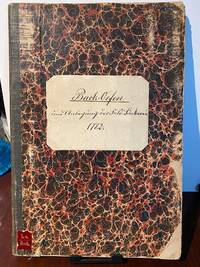
17821054<b>BAKING MANUSCRIPT GERMAN MILITARY. </b><i>Back-oefen und Anlagung der feld=Bacherey. 1782. </i>Original Manuscript. Folio old marbled boards edges worn cloth back pp. 53. N.p. Germany or Austria 1782. German military back-oven regulations. <br /> hardcover
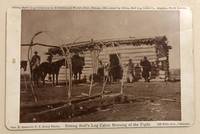
189353398Chicago: World's Columbian Exposition 1893. 1893. First edition. Original Photograph of Sitting Bull's log cabin where Sitting Bull was shot and killed December 15 1890. Cabinet Card. Image: 5.5"x3.875". Mount: 6.5"x4.25". Photograph shows Sitting Bull's log cabin with 6 men and three horses in front of or beside the cabin. All are dressed in coats with one man holding a rifle and another holding a pistol. All appear to be white men and likely soldiers or officers at Standing Rock Agency Fort Randall or Fort Yates. Printed across the blank top edge of the mount is the following: Sitting Bull's Log Cabin now on Exhibition at World's Fair Chicago 1893 owned by Sitting Bull Log Cabin Co. Mandan North Dakota." Across the bottom blank edge of mount is "Geo. E. Spencer U.S. Army Photo. Sitting Bull's Log Cabin Morning of the Fight. 7520 Ellis Ave. Chicago." Verso has scuffing to five 1" spots from past attachment and previous owner's name and address. Printed along top edge is "World's Columbian Exposition Chicago 1893. At bottom edge is printed "Agricultural Building." The Indian Agent for Standing Rock was James McLaughlin. With fears of Sitting Bull's intentions to join the rapidly growing Ghost Dance Craze McLaughlin ordered the Indian Police to go to Sitting Bull's cabin at dawn of December 15 1890 arrest him and return him to the agency. Following those orders 39 Indian Police surrounded Sitting Bull's cabin at dawn with the 3 officers knocking on the door before entering the cabin. They awoke Sitting Bull and informed him of their plans for his arrest and taking him to the agency. Eventually taking him outside in the interim many of Sitting Bull's supporters gathered to defend him. As the police attempted to force Sitting Bull to mount a horse a supporter shot the head officer Lt. Bull Head who in turn shot Sitting Bull in the side of the chest. As gunfire broke out 2nd Sgt. Red Tomahawk shot Sitting Bull in the back of the head. Within minutes Sitting Bull's supporters had killed or mortally wounded 6 of the police including 2 of the 3 officers. The Indian Police had killed Sitting Bull and 7 of his supporters. The police moved to the corral area for defense and awaited the arrival of the Army forces in order to safely return to the agency. As noted on the cabinet card Sitting Bull's cabin was disassembled and then moved to the World's Fair Exhibition in Chicago in 1893. Image is clean and clear in near fine condition. World's Columbian Exposition, 1893. unknown
196483035Washington DC: Department of the Army Headquarters 1964. Presumed First Edition First printing. Disbound three hole punched held together with a binder clip. Some of the punch holes are torn. Fair. Format is approximately 9 inches by 11 inches. Approximately 50 pages plus many tabs. Rare surviving original copy. Table of Contents includes: Introduction including Instructions for the use of the nuclear play calculator Strike Assessment Procedures including sections for cannons free rockets missiles air delivered weapons atomic demolition munitions and partisan atomic demolition munitions and new Aggressor weapons; Damage Determination References and Nuclear Play Calculator Aids in envelope. The Aids are present. This manual includes 11 tables in Chapter 2 and 15 tables in Chapter 3. This manual provides guidance on procedures and techniques for evaluation the nuclear play of aggressor forces during tactical exercises. This manual provides the necessary aids for the Aggressor to determine the damage to United States and Allied forces from nuclear strikes. The weapons systems in this manual are based on material contained in the Handbook on Aggressor Military Forces FM 30-102. Chapter 2 contains the tables for Aggressor strike assessments from nuclear weapons. Chapter 3 contains the damage radii tables from the nuclear weapons employed by the aggressor forces. Large Strategic Weapons 20MT-100MT were not included. Source date were extracted from FM 101-31-1. Aids envelop includes 8 plastic sheets of horizontal dispersion templates scaled 1:50000 and 1:25000 for cannons free rockets and Guided missiles and air delivered weapons and Damage circle templates for 1:50000 and 1:25000. Plastic sheets show wear and loss of text. The nuclear play calculator is a device for applying performance probabilities to nuclear delivery systems. The horizontal dispersion template is an aid used to determine the actual ground zero of a nuclear weapon. The damage circle template is an aid used in conjunction with the damage letters to evaluate the damage to personnel and equipment. The target element table describes target categories and the damage to be expected within each letter damage circle. The Damage circle radii tables are a series of tables showing the damage radii based on the height of burst and the weapon yield. Pagination is i; Chapter 1 1-1 to 1-3; Chapter 2 2-1 through 2-13 with tabs for Cannons Free Rockets Guided Missiles Air-Delivered Weapons and Atomic Demolition Munitions; Chapter 2 3-1 through 3-29 with tabs for 0.1 kt 0.5kt 1 kt 2 kt 5 kt10 kt 20 kt 50kt 100 kt 500 kt 1 mt 2 mt 5 mt Appendix is A-1 through A-2. Last page unpaginated is a distribution list. The envelop with the aids is affixed inside the back cover. Among the Aggressor weapons address were the 203-mm gun/howitzer 240-mm mortar 310-mm gun 400-mm mortar Nerono and Kolosso free rockets Tondro Fulmo Supro Sago and Aglo missiles Pafago Detruizo and Forviso air delivered weapons and atomic demolition munitions. This manual reflects the state-of-the-art the state of knowledge the state of training and the state-of-tactical nuclear weapons employment during the height of the cold war after the Cuban Missile Crisis and before the focus of the Army shifted to ground combat in Vietnam. Department of the Army, Headquarters unknown
194425953USA: N.P. 1944. 7 Volumes. 13"x9&1/4". Volume I stamped 'Secret" at top. Other volumes have "Secret" scratched out. Boards worn and scuffed. Operations Annexes 1 thru 20 in 6 subsequent volumes. Stamped "unclassified" with handwritten designations of declassification. Other occasional stamps. Two volumes have stamps at base. Library pocket at rear of two volumes. One also has date due form tipped in. Small stain at base to several backings for maps in Volume I. "Classification of Report. Report of operations Hq First U.S. Army for period 20 October 1943 - 1 August 1944 is classified as "Secret" until conclusion of hostilities with Germany at which time the classification will be changed to "Confidential". By Command of Lieutenant General Bradley:.". Hard Cover. Good/No Jacket. N.P. Hardcover
1942233621942. Army Air Forces B-25 pilot training at Columbia Army Air Base is documented through 2nd Lt. Floyd J. Good's flight records B-25 questionnaire training papers base photographs and an associated TB-25 cockpit checklist marked "Horg L. M. / 45-B / C-1." Good's file places him in the 376th Squadron 309th Bombardment Group with records tracking day and night flying first pilot time instructor time combat crew entries and related duty. One later flight sheet notes that Good was "killed in accidental explosion July 1944" while the Horg checklist dated January 26 1945 carries working cockpit procedures for takeoff single-engine drills supercharger use landing and shutdown.<br /> 1943 to 1945 chiefly Columbia Army Air Base Columbia South Carolina. Mixed archive of 66 items including 17 Individual Flight Record sheets 29 black-and-white photographs Good's Pilot's Information File and related training status medical and administrative papers a multi-page "B-25 Questionnaire" with handwritten answers and one folding "TB-25 CHECK LIST" with printed procedures and pencil notes. Good's flight records and training papers 1943 to 1944. Seventeen Individual Flight Record sheets and related forms record Good's progress through B-25 training including aircraft type flight hours instructor time medical classification and duty status. The B-25 questionnaire includes handwritten answers on hydraulic pressure emergency brakes landing gear flaps bomb bay doors and cockpit procedure.<br /> Columbia Army Air Base photographs circa 1943 to 1944. Twenty nine photographs record classroom instruction before a chalked airfield diagram formation drill band and flag ceremony barracks leisure barbering reading room interiors B-25 activity on the field and aircrew posed in flight gear before aircraft. Several versos carry crop measurements or layout marks.<br /> Also includes a wartime B-25 flight checklist dated January 26 1945 documenting cockpit procedure while B-25s were still in active combat service rather than training. Horg L. M. "TB-25 CHECK LIST." Folding cockpit checklist marked "HORG" and "Horg L. M. / 45-B / C-1" with sections for pre-inspection starting engines taxi single-engine stopping and starting drills before takeoff climb landing and stopping procedure. Its pencil reminders including "BOOSTERS ON / WHEELS DOWN" "LEARN" and "150 FLAPS" show use as a working pilot's reference at the height of the final wartime training cycle when Army Air Forces pilots were still being prepared for medium-bomber operations for 7 months before Japan's surrender. This gives the archive a direct war-date cockpit component connecting Good's stateside B-25 training file to the procedural discipline required of pilots flying an aircraft still central to Allied tactical bombing anti-shipping and ground-support missions.<br /> Columbia Army Air Base trained medium bomber pilots for an aircraft used in tactical bombing anti-shipping strikes airfield attacks and ground-support missions across the Mediterranean and Pacific theaters. Good's file records the institutional threshold for that work through flight time medical status instructor approval and technical examination while Horg's checklist records the cockpit habits expected of a pilot moving toward operational flying: single-engine control at 140 m.p.h. supercharger use above 11000 feet booster pump commands landing-gear timing and radio calls. The archive connects the classroom personnel office flight line and cockpit preserving the chain between stateside instruction and the emergency procedures required of Army Air Forces B-25 pilots. Documents and checklist with toning filing holes creasing soiling and handling wear; photographs with light fading silvering and occasional surface abrasions. Overall good condition. unknown
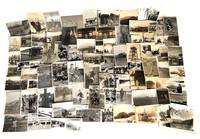
1947196441947. 11th Airborne Division paratroopers photographed during the early American occupation of Japan document airborne training and daily military life within one of the most distinguished U.S. Army airborne units of the Second World War. More than two hundred photographs dating primarily from 1947 depict members of the 11th Airborne Division conducting parachute jump training weapons drills and daily base activities while stationed in Japan after the end of the Pacific War. The photographs appear to have been assembled by a soldier identified through accompanying material as Jeff C. Wall likely assigned to a military government team in Yamagata Prefecture. The images capture the division during the transitional period between wartime combat service in the Pacific and the emerging American military presence in East Asia that characterized the early Cold War.<br /> <br /> Archive contains 217 Silver Gelatin photographs ranging from approximately 2.25 x 2.5 inches to 4.75 x 6.5 inches depicting paratroopers of the 11th Airborne Division in Japan. The archive includes twelve photographs documenting parachute jump training sequences from aircraft exit through descent and landing as well as several images of fully equipped paratroopers lined up before boarding troop carrier aircraft. Numerous photographs show soldiers around transport planes and other aircraft on base airfields. Additional images depict artillery and machine gun training exercises paratroopers assembled outside a command building displaying the slogan "Shape Up or Ship Out" and informal scenes of soldiers gathered around barracks or posing in groups. The photographs also record elements of base life including an enlisted men's club ticket associated with the Yamagata Military Government Team women service personnel including a nurse playing cards with soldiers and views of the surrounding Japanese landscape. Approximately fifteen photographs show Mount Fuji and nearby terrain around the camp in northern Japan.<br /> <br /> The 11th Airborne Division earned distinction during World War II through its combat operations in the Pacific theater particularly during the campaign for Luzon in the Philippines in 1945 where the division conducted airborne assaults and participated in the liberation of Manila. Units of the division also carried out a well known raid that freed Allied prisoners from the Los Baños internment camp. Following Japan's surrender in 1945 the division became part of the U.S. occupation force tasked with maintaining security and administrative control across parts of Japan. The 1947 photographs document airborne training and routine service during this occupation period when American military forces remained stationed throughout the country while the geopolitical tensions of the emerging Cold War began reshaping U.S. global military deployments. In later years the division was reassigned to Alaska where its airborne operations in Arctic environments led to the nickname "Arctic Angels." Minor handling wear typical of vernacular military photographs. Overall condition very good. unknown