34 339 résultats
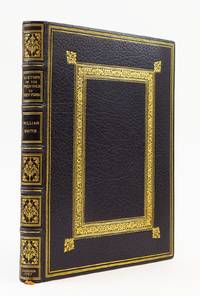
1757ST17682London: Printed for Thomas Wilcox 1757. FIRST EDITION. 257 x 197 mm. 10 1/8 x 7 3/4". xii 255 pp. <br/> HANDSOME DARK BLUE MOROCCO GILT BY THE CLUB BINDERY stamp-signed and dated 1898 on front turn-in covers with French fillet border central panel framed with plain and dotted rules enclosing an intricate floral roll oblique floral spray cornerpieces raised bands spine compartments with floral spray centerpieces floral sprigs at corners gilt lettering turn-ins repeating the floral frame from covers marbled endpapers top edge gilt. With a folding frontispiece engraving "The South View of Oswego on Lake Ontario." Verso of front free endpaper with engraved bookplate of Edwin B. Holden see below. Church 1023; Howes S-703; Sabin 84566; Streeter Sale 871. Text lightly washed and pressed in keeping with bibliophilic fashion at the time of binding plate with insignificant short closed tear to head edge of one fold A2 with expertly repaired and barely discernible curving tear into text minor foxing and browning on the majority of leaves a handful with more overall toning other trivial defects but a nevertheless pleasing copy the text extremely smooth and clean and the beautifully decorated luxury binding lustrous and unworn.<br/> <br/> This classic first history of New York was bound for an eminent Americana collector and founding member of New York's Grolier Club by the bindery he helped organize. According to Larnard this history "ranks with Smith’s Virginia and Hutchinson’s Massachusetts as one of the worthiest examples of historical literature produced in later colonial times." Sabin notes that Smith based this work "chiefly on the Provincial Laws the Minutes of the Council the Journals of the General Assembly and other government records" and drew heavily on the works of Charlevoix and on Colden's "History of the Five Indian Nations. About three-quarters of the text is devoted to the colony's history up to the year 1732 while the rest describes the territory and provides geographical demographic and political information. The son of one of New York's most prominent lawyers judges and legal educators Smith 1728-93 showed an early talent for writing. At age 24 he compiled the first collection of the "Laws of New-York from the year 1691 to 1751 inclusive" 1752 with his friend William Livingston and the following year he co-produced New York's first magazine "Independent Reflector." According to the Dictionary of Canadian Biography the present history "served him well over the years giving him a wide reputation as an authority on the colony and he was often referred to as 'the historian of New York'; 20 years later he began a second volume published posthumously." A Loyalist during the American Revolution Smith emigrated to Canada after the war. Former owner Edwin Holden 1861-1906 was a prominent American bibliophile who collected Americana English literature 16th and 17th century printed books and French illustrated books. After the Grolier Club was established in 1884 it soon became apparent that the country's few established hand binders were overtaxed in providing repairs and rebinding for the club members' rapidly accumulating acquisitions. As a consequence in 1895 Grolier members led by Robert Hoe and Holden along with other wealthy collectors instituted the Club Bindery in order to attract European craftsmen to provide close to home fine quality binding work rivalling what was available abroad. The Club Bindery was in operation until 1909 with Hoe being its most influential manager and client. It provided bindings that tended to be traditional in style--though frequently with elaborate decoration--and that lived up to its patrons' expectations in terms of excellence. The first members of the staff of the Club Bindery were the Englishmen R. W. Smith and Frank Mansell. They were subsequently joined by a number of French binders chief among them being Leon Maillard who had worked previously for Cuzin Gruel and Marius-Michel. Holden served as president of Grolier Club in 1906 and was the first president of the Club Bindery. Printed for Thomas Wilcox unknown
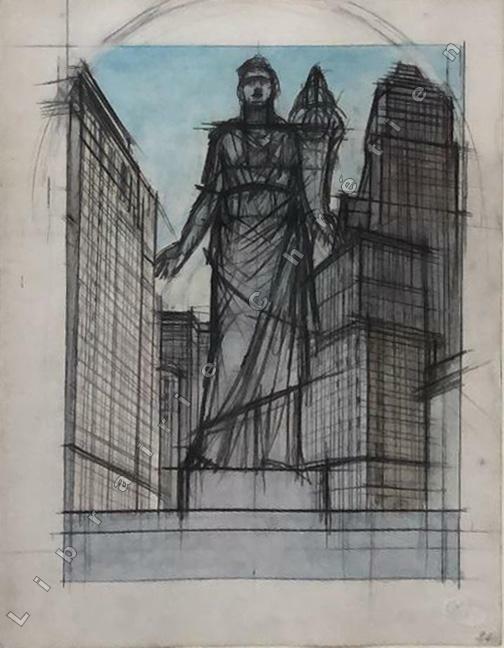
1928240241928 1 Aquarelle et mine de plomb contrecollée sur papier fort, dessin préparatoire pour la State Bank de Chicago, 1928, 28.5 x 23 cm., encadrée.
1851008968Philadelphia: Lippincott Grambo & Company 1851. Book. Good. Decorative Cloth. Signed by Authors. First Edition. Folio - over 12" - 15" tall. "Collected and prepared under the direction of the Bureau of Indian Affairs per Act of Congress of March 3d 1847." Presentation Copies of Parts I III and IV only each part a First Edition 1851 1853 and 1854 published by Lippincott Grambo & Company Philadelphia . Part I SIGNED AND INSCRIBED "Prof. George Howe with respect of H.R. Schoolcraft" at front paste down in tidy secretatial hand. Parts III and IV SIGNED AND INSCRIBED alike "Rev. George Howe with respects of H.R. Schoolcraft". George Howe 1802-1883 was an ordained minister and professor at Presbyterian Theological Seminary in Columbia S.C. and the author of History of the Presbyterian Church in South Carolina published 1870-1883. Provenance: Part I additionally SIGNED AND INSCRIBED at front paste down "Presented to Joseph Hyde Pratt by Prof. George Howe University of North Carolina". Prof. George Howe 1876-1936 was the grandson of George Howe and was a longtime professor of Latin and the Classics at UNC. He was also the nephew of President Woodrow Wilson. Joseph Hyde Pratt 1870-1942 was State Mineralogist and State Geologist of North Carolina a longtime professor at UNC and a WWI hero. Parts III and IV with Pratt's ownership signature at front end page. The three volumes are complete with all plates. Part I xviii 13-568 p. 76 plates; Part III xviii 19-635 p. 45 plates 3 of which are listed as appearing in Vol. IV; Part IV xxvi 19-668 p. 41 plates. A good set in unsophisticated original decorative cloth bindings Part I with damping at fore edge margins worn at corners cloth at spine torn and separating from front joint cloth chipped at head of spine. Part III cloth torn and peeling from top and bottom of spine corners worn; Part IV rear hinge starting corners worn holes in cloth along top half of front joint 1/4" loss of cloth at head of spine. Scattered toning and end papers soiled throughout the set Presentation Copy with distinguished provenance. of three of the first four volumes of Schoolcraft's six volume massive contribution to the history of Native Americans. Lippincott, Grambo & Company Hardcover
1930010937NY. Unpublished notebook 9" x 11 1/4" containing original artwork and designs official documents orders and correspondence pertaining to regimental coats of arms and distinctive insignia for the period 1922-1930. Notebook opens with three pages of formal guidelines for regimental colors and devices then begins in earnest with original signed Adjutant General order No. 244 October 1922 calling Falls "to active duty without pay or allowances for service in connection with submission of coats of arms for colors distinctive badges insignia etc." The notebook contains 2 full-page original watercolors and 16 original crest and shield drawings in color pencil State National Guard Headquarters and 7 regiments - 10th 14th 71st 105th 106th 107th 108th Infantry along with correspondence blueprints design approval documents and finely printed samples for some designs. There is detailed correspondence on Falls' New York State "Half Moon" design when the Quartermaster Corp of the War Department in Washington severely altered his original conception. Author artist military general and New York City socialite DeWitt Clinton Falls 1864-1937 was an authority on military heraldry and uniforms and a designer of military insignia. His papers are held by the New York Public Library and the American Numismatic Society. This Notebook includes: Original watercolor "Half Moon" Nov 1922; 2 letters Dec 1922; Memorandum from the Secretary of War Dec 1922 approving the design; Original watercolor "Regimental Colors for New York National Guard" 1922; Correspondence with Adjutant General's Office and the War Department with 2 blueprints; Copy of "First Design submitted by War Department for emblem of State of New York. Disapproved by Adjutant General Oct 1922"; 2 letters to Falls from Adjutant General's Office Apr 1923 with a proof copy of the QM's altered "Half Moon" crest; Reply by Falls Apr 1923 that the Quartermaster' altered design "is awful and under no circumstances should be accepted"; 2 page detailed letter from Adjutant General's Office to Quartermaster General War Department Apr 1923 noting QM's five major and several minor deviations from Falls' original which had been approved by the General Staff; Reply by War Department May 1923 that the Quartermaster Corps drawing was done in accordance with what was shown and described in "The Hudson Fulton Celebration 1909" submitted in a report to the NY State legislature in 1910 and that revisions to the drawing would be made if the State of New York "does not consider the report as being historically correct and will so state and furnish evidence which it considers authentic"; AG letter May 1923 to Falls requesting he draft a second endorsement; Falls' June 1923 reply that "it was not so much the historical points that he criticized about the QM design "as the faulty drawing and bad proportions of many of the details." He points out technical and aesthetic weaknesses with the eye of an artist of the Quartermaster drawing that can be easily resolved.; Letter and enclosures to Falls from Adjutant General's Office June 25 that they are in receipt of Quartermaster revisions and asking him to review; Falls June 28 reply "it is about as near right as we can get it and same can be returned approved"; Original color pencil drawing "Headquarters Device" with 1 page description. Undated; Original color pencil drawing "10th Infantry" Approved Nov 1923 War Department with letter of approval. Notation: "This design not being satisfactory to the regiment permission was given Jan 1926 to submit new design"; 2 original color pencil drawings - one for crest and one for shield with a printed sample of shield in use "10th Infantry" with 1 page description. Approved W.D. June 1926 with letters of approval for each. 2 original color pencil drawings - one for crest and one for shield "14th Infantry" with 1 page description. Approved W.D. May 1925 with 2 letters of app . Very Good. Hard. 1st. 1930. unknown
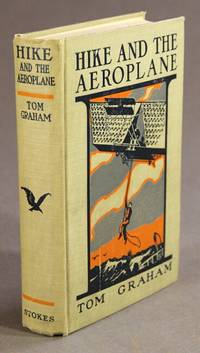
191244902New York: Frederick A. Stokes Co 1912. First edition of the author's first book 8vo pp. 12 275; 4 duotone plates by Arthur Hutchins; small piece of the corner missing on the last page of text 1912 Xmas inscription in ink on front free endpaper very light scratch on the front cover illustration otherwise fine and bright and unusual thus. Sinclair Lewis's pseudonymous debut novel. In a new quarter morocco clamshell box green morocco label lettered in gilt on spine. <br/><br/> Frederick A. Stokes Co unknown books
191244902New York: Frederick A. Stokes Co 1912. First edition of the author's first book 8vo pp. 12 275; 4 duotone plates by Arthur Hutchins; small piece of the corner missing on the last page of text 1912 Xmas inscription in ink on front free endpaper very light scratch on the front cover illustration otherwise fine and bright and unusual thus. Sinclair Lewis's pseudonymous debut novel. In a new quarter morocco clamshell box green morocco label lettered in gilt on spine. Frederick A. Stokes Co unknown
195530198Stockholm: Albert Bonniers 1955. First Swedish edition printed in a limited but unspecified number this is copy no. 155 signed by Lindbergh 8vo pp. 8 483 1 10; photographic portrait frontispiece 11 illustrations on rectos and versos of 3 plates 7 pages of maps and graphs at the back; fine copy in original full blue morocco by Nylén & Co. gilt-stamped upper cover and spine publisher's slipcase. This copy additionally inscribed to "Lucile Wright from the Royal Swedish Aero Club in appreciation of her contribution to aviation. Stockholm 6.9.1957 Nils Stirnberg." Lucile M. Wright was a famous American woman aviator one of the original Ninety-Nines pioneer women aviatrixes as assembled by Amelia Earhart in 1929 and the Lucile M. Wright Air Museum in Jamestown New York is named after her. This book an account of the first solo nonstop flight between the United States and Europe in 1927 won for Lindbergh the 1954 Pulitzer Prize for Autobiography. This is the only limited signed edition published outside the United States. <br/><br/> Albert Bonniers unknown books
195530198Stockholm: Albert Bonniers 1955. First Swedish edition printed in a limited but unspecified number this is copy no. 155 signed by Lindbergh 8vo pp. 8 483 1 10; photographic portrait frontispiece 11 illustrations on rectos and versos of 3 plates 7 pages of maps and graphs at the back; fine copy in original full blue morocco by Nylén & Co. gilt-stamped upper cover and spine publisher's slipcase. This copy additionally inscribed to "Lucile Wright from the Royal Swedish Aero Club in appreciation of her contribution to aviation. Stockholm 6.9.1957 Nils Stirnberg." Lucile M. Wright was a famous American woman aviator one of the original Ninety-Nines pioneer women aviatrixes as assembled by Amelia Earhart in 1929 and the Lucile M. Wright Air Museum in Jamestown New York is named after her. This book an account of the first solo nonstop flight between the United States and Europe in 1927 won for Lindbergh the 1954 Pulitzer Prize for Autobiography. This is the only limited signed edition published outside the United States. Albert Bonniers unknown
1901100107AG1901. Laeken / Brussels Château de Laeken Palace of Laeken 1901 - 1906. 16 pages of MLS Manuscript Letters signed on 10 leaves of Leopold's official stationery "Château de Laeken" and "Palais de Bruxelles". The leaves with different sizes 135 cm x 9 cm and 18 cm x 115 cm. Excellent condition. Unsigned. Tremendously rare to find original letters by Leopold II on the open market in which the Colonial Free State and the protection against inquisitive visitors is discussed in such clear and instructive fashion. Leopold's correspondence with Adolphe de Cuvelier shows how he is very much trying to still protect and influence the narrative of his Colonial Slavery Outpost even in the final years of his life. Adolphe de Cuvelier 1860-1931 Secretary General of the Ministry of Foreign Affairs of the Congo Free State President of the Syndicate for Studies and Enterprises in Congo. He was given the title of knight in 1893 and baron in 1908 each transferable at first birth. Wikipedia _______________________________ Leopold II French: Léopold Louis Philippe Marie Victor; 9 April 1835 17 December 1909 was the second King of the Belgians from 1865 to 1909 and through his own efforts the owner and absolute ruler of the Congo Free State from 1885 to 1908. Born in Brussels as the second but eldest surviving son of Leopold I and Louise of Orléans he succeeded his father to the Belgian throne in 1865 and reigned for exactly 44 years until his deaththe longest reign of any Belgian monarch. He died without surviving legitimate sons. The current Belgian king descends from his nephew and successor Albert I. Leopold was the founder and sole owner of the Congo Free State a private project undertaken on his own behalf as a personal union with Belgium. He used Henry Morton Stanley to help him lay claim to the Congo the present-day Democratic Republic of the Congo. At the Berlin Conference of 18841885 the colonial nations of Europe authorized his claim and committed the Congo Free State to him. Leopold ran the Congo using the mercenary Force Publique for his personal gain. He extracted a fortune from the territory initially by the collection of ivory and after a rise in the price of natural rubber in the 1890s by forced labour from the native population to harvest and process rubber. Leopold's administration of the Congo Free State was characterised by atrocities and systematic brutality including torture murder and the amputation of the hands of men women and children when the quota of rubber was not met. In 1890 George Washington Williams used the term "crimes against humanity" to describe the practices of Leopold II of Belgium's administration of the Congo Free State. Colonial accounts typically emphasized Leopold's modernizing changes in the Congo and not the mass death he facilitated. These and other facts were established at the time by eyewitness testimony on-site inspection by an international commission of inquiry and the 1904 Casement Report. Modern estimates range from 1 million to 15 million Congolese deaths with a consensus growing around 10 million. Some historians argue against these figures citing the lack of reliable censuses the enormous mortality caused by smallpox and African trypanosomiasis and the fact that there were only 175 administrative agents in charge of rubber exploitation. In 1908 the reports of deaths and abuse and pressure from the Congo Reform Association and other international groups induced the Belgian government to take over the administration of the Congo from Leopold as a new territory Belgian Congo. Wikipedia unknown
63116V.p. 1996. All first editions unless noted; all 8vo or 12mo unless noted. All dust jackets present unless noted. Condition ranges from good to fine. Marya was not a book collector. She was the youngest child of a popular novelist and the books show the casual wear and tear of a childhood gathering. Marya Manfred 1949-2022 grew up and attended elementary school in Bloomington Minnesota. With her parents she moved to Luverne at age 10 and graduated from Luverne High School on 1967. She later moved to Colorado for a year to study singing music composition and piano performance. She then finished her bachelor's degree majoring in Art at the University of Minnesota. She later worked for the Consumer Survivor Network at Marshall before becoming a Certified Peer Specialist at Southwestern Mental Health Center in Worthington and Luverne where she taught art therapy. Marya is survived by her sister the poet Freya Manfred and her husband the screenwriter Thomas Pope both of Stillwater Minnesota and two nephews Nicholas Bly Pope and Ethan Rowan Pope both of the Twin Cities. She was preceded in death by her parents and her brother Frederick Manfred Jr. 1. Mulder Rodney J. & John H. Timmerman. Frederick Manfred: A bibliography and Publishing History. Sioux Falls: Center for Western Studies 1981. "For Marya on her birthday December 5 with love from Dad." 2. The Golden Bowl. Saint Paul: The Webb Publishing Company 1944. First edition of the author's first book. Inscribed "8-3-1966 Dear Marya daughter - This book fresh from a package I moved for you is still as green as this ink. I remember the day when I got the very first one from the bindery - Your Dad Frederick Manfred. Mulder & Timmerman A-1. 3. The Golden Bowl . Introduction by John R. Milton. Vermillion: University of South Dakota 1969. First published in 1944 this is the 25th Anniversary Edition. Signed by Manfred on the front free endpaper. Mulder & Timmerman A-1e. 4. Boy Almighty. Saint Paul: Itasca Press 1945. First edition "To yet another queen one named Marya Feikema Manfred who is already doing on her piano what Eric only dreamed of doing while lying on his back. Your father Frederick Feikema Manfred 8-17-1963." Also signed by Manfred on the title page. Mulder & Timmerman A-2. 5. This is the Year. Garden City: Doubleday & Company Inc 1947. Dust jacket worn with tears but complete. "Christmas 1968 My dear daughter Marya This new first edition I've saved for you all these years as you truly would learn about Siouxland. Love Dad." Also signed by Manfred on the title page. Mulder & Timmerman A-3. 6. This is the Year . With a new introduction by Max Westbrook. Boston: Gregg Press 1979. Originally published in 1947. "Dear Marya This tells of an old triumph as well as an old lament - the loss of love and the subsequent search for it. Dad. 12-31-1983." Mulder & Timmerman A-3c. 7. The Chokecherry Tree. Denver: Alan Swallow 1961. Revised edition. Corner bumped boards bowed. "Given to my daughter Marya Manfred this day 4-7-1966 with all love for her flowering spirit- Frederick Manfred." Mulder & Timmerman A-4d. 8. The Chokecherry Tree . Introduction by Delbert E. Wylder. Albuquerque: University of Mexico Press 1975. Trade paperback. Short tear at the bottom of the front wrapper. Mulder & Timmerman A-4f. 9. Lord Grizzly. New York Toronto London: McGraw-Hill Book Company Inc. 1954. Dust jacket worn. "To my lovely daughter Marya Manfred who has straight-seeing eyes and who has fingertips that speak- your father - Frederick Manfred 3-4-1962 The year of the great snow." "With love - Frederick F. Manfred 9-6-1954" on dedication page. Mulder & Timmerman A-8. 10. Lord Grizzly. New York: Signet Classics 1964. No inscriptions. 11. Lord Grizzly . With a new introduction by Joseph M. Flora. Boston: Gregg Press 1980. First published in 1954. Issued as vol. 2 in The Buckskin Man Tales. Signed by Manfred on the title page. Not in Mulder & Timmerman. 12. Lord Grizzly. Lincoln and London: University of Nebraska Press 1983. Trade paperback. First Bison Book printing. Corners curled. "12-5-1983 For Marya from Dad." Also signed by Manfred on the title page. Not in Mulder & Timmerman. 13. Morning Red. Denver: Alan Swallow 1956. Dust Jacket lacks front flap and is worn with tears. "Christmas 1968 my dear daughter Marya A small story of not so small people. Or it is more a not so simple a story about simple people Love Dad." Also signed by Manfred on the half-title. Mulder & Timmerman A-9. 14. Riders of Judgement. New York: Random House 1957. "Christmas 1968 My darling Marya daughter- When I was a boy I dreamed of the day when I'd write the "really real" story about cowboys - since I wasn't allowed to "go west" and become one myself - Love Dad." Also signed by Manfred on the half-title page. Mulder & Timmerman A-10. 15. Riders of Judgement . With a new introduction by Priscilla Oaks. Boston: Gregg Press 1980. First published in 1957. Issued as vol. 5 in The Buckskin Man Tales. Signed by Manfred on the title page. 16. Riders of Judgement. Lincoln and London: University of Nebraska Press 1982. Trade paperback. First Bison Book printing. Corner bumped. "12-5-1983 For Marya from Dad." 17. Conquering Horse. New York: McDowell Obolensky 1959. " To my darling daughter Marya Manfred who has her own priceless utterly distinct reactions to life around her. Your father Frederick Manfred." Mulder & Timmerman A-11. 18. Conquering Horse. New York: Signet Classics 1965. Trade paperback fifth printing. Signed by Marya with underlining and annotations by her throughout. 19. Conquering Horse . With a new introduction by John R. Milton. Boston: Gregg Press 1980. First published in 1959. Issued as vol. 1 in The Buckskin Man Tales. Signed by Manfred on the title page. Not in Mulder & Timmerman. 20. Conquering Horse. Lincoln and London: University of Nebraska Press 1983. Trade paperback. First Bison Book printing. "12-5-1983 For Marya from Dad." Also signed by Manfred on the title page. Not in Mulder & Timmerman. 21. Arrow of Love. Denver: Alan Swallow n.d. "8-3-1966 Marya Manfred little daughter here are three little cakes for your dessert some evening your dad Frederick Manfred." Mulder & Timmerman A-12. 22. Wanderlust. Denver: Alan Swallow 1962. Binding skewed; dust jacket wrinkled. "8-12-1967 Dear daughter Marya At last you are ready to read about Thurs The Composer since You are a beginning one yourself. There is your brother in spirit if not quite in fact Have a good time reading it - and a deep time in life. Love Dad Frederick Manfred." Mulder & Timmerman A-13 23. Scarlet Plume. New York: Trident Press 1964. "Christmas 1968 Dear Marya girl This book is 'all about Blue Mound' which you as a little girl explored in all directions including ponds with slippery edges. If you read this carefully you will ever after in quotes 'ha'uts' on the mounds especially in the evening after the sun sets. Love Fred." Also signed by Manfred on the half title. Mulder & Timmerman A-14. 24. Scarlet Plume . With a new introduction by Ted N. Weissbuch. Boston: Gregg Press 1980. First published in 1964. Issued as volume 3 in the Buckskin Man Tales. Signed by Manfred on the title page. Not in Mulder & Timmerman. 25. Scarlet Plume. Lincoln and London: University of Nebraska Press 1983. Trade paperback. First Bison Book printing."12-5-1983 For Marya from Dad." Also signed by Manfred on the title page. Not in Mulder & Timmerman. 26. The Man Who Looked Like the Prince of Wales. New York: Trident Press 1965. "12-5-1965 This little book I give to my queenly daughter Marya Manfred on her sixteenth birthday with the added suggestion that she accept most things from her father cum gratis solis so that she may strike out on her own a free spirit of the arts and thus a free child of God. Frederick Feikema Manfred." Mulder & Timmerman A-15. 27. Winter Count. Minneapolis: James D. Thueson 1966. Edition limited to 250 copies signed by Manfred this no. 7. "To Marya Manfred my daughter and my Valentine. Frederick Manfred 2--14-1969." Mulder & Timmerman A-13a sic. 28. Winter Count. Berkeley: Thorp Springs Press 1977. Second edition trade paperback; corner bumped and creased. "For my darling daughter Marya for all she's done for me heart & Love Dad. Old year tonight 1983." Mulder & Timmerman A-13b sic. 29. King of Spades. New York: Trident Press 1966. "Christmas 1968 Dear Darling Marya - This was the book I was working on when you were at Rocky Ridge and I was writing pages 144-208 when you asked me to come and get you - and I said I couldn't. I hope these pages will help me to be forgiven. Love Dad." Also signed on the title page by Manfred. Mulder & Timmerman A-17. 30. King of Spades . With a new introduction by the author. Boston: Gregg Press 1980. Corner bumped slightly skewed. Signed by Manfred on title page. First published in 1966. This edition issued as volume 4 in The Buckskin Man Tales. 31. Apples of Paradise and Other Stories. New York: Trident Press 1968. Dust jacket with a couple of short tears. "6-5-1965 My dear Marya- May I have the privilege of someday exploring your musical landscape as you herein explore Siouxland Love Dad. Frederick Manfred." Mulder & Timmerman A-18. 32. Eden Prairie. New York: Trident Press 1968. "11/13/1965 To Marya Manfred Sweet daughter who already knows she has 'a perfect right to be just what she is' Love Dad. Frederick Manfred." Mulder & Timmerman A-19. 33. "Sinclair Lewis' Funeral." As contained in South Dakota Review Vermillion 1970. Winter 1969-70 Vol 7 No 4. Special Issue: Sinclair Lewis / Frederick Manfred. Inscribed by Manfred at his contribution on p. 54: "South Dakota Review / Winter 1969-70. Vol. 7 no. 4. Special issue: Sinclair Lewis / Frederick Manfred." Not in Mulder & Timmerman. 34. "Sinclair Lewis' Funeral." Vermillion: South Dakota Review 1970. Another copy of the above. Spine faded and chipped. Signed by Marya Manfred. Not in Mulder & Timmerman. 35. "The Voice of the Turtle" as contained in the South Dakota Review Vermillion 1973. Some underlining but not on Manfred's submission. Not inscribed. 36. Conversations with Frederick Manfred. Salt Lake City: University of Utah Press 1974. "12-5-1974 For my lovely daughter Marya all sweetness and light for the rest of your life- Dad." Also signed by Manfred on the half title. Mulder & Timmerman A-20. 37. The Manly-Hearted Woman. New York: Crown Publishers Inc. 1975. "1-25-76 For my daughter Marya Manfred who drew a map of our The Blue Mounds which helped me much in the making of this book. Love Dad. Frederick Feikema Manfred." Mulder & Timmerman A-21. 38. Milk of Wolves a novel. Boston: Avenue Victor Hugo 1976. Trade paperback. Covers a little worn and spine chipped. "Hope you are busy making music and poetry these days. Hope to see you soon. With much love Dad. 4-13-1976." Mulder & Timmerman A-22. 39. Wright Robert C. Frederick Manfred. Boston: Twayne Publishers 1979. "For Marya from dad on her birthday." Mulder & Timmerman p. 91. 40. The Wind Blows Free. Sioux Falls: The Center for Western Studies 1979. Dust jacket torn at the top of the spine no loss. Signed by Manfred on the front free endpaper. Mulder & Timmerman A-24 41. The Wind Blows Free. Sioux Falls: The Center for Western Studies 1979. "To Marya My darling daughter who gets the very first book out of the box with much love Dad 1979." Also signed by Manfred on the title page. Mulder & Timmerman A-24. 42. Sons of Adam. New York: Crown Publishers Inc 1980. Back flap of dust jacket missing. "1980 For my wonderful prescient daughter Marya with love from Dad." Mulder & Timmerman A-25. 43. King of Spades. Foreword by Max Westbrook. Lincoln and London: University of Nebraska Press 1983. Trade paperback. First Bison Book edition. "12-5-1983 For Marya from Dad." Also signed by Manfred on the title page. 44. Dinkytown. Minneapolis: Dinkytown Antiquarian Bookstore 1984. Edition limited to 500 copies printed by Allan Kornblum at the Toothpaste Press. "For my beloved daughter Marya Manfred from Dad Easter 4-22-1989." Laid in is a to-do list for going to Minneapolis likely Marya's. 45. Winter Count II. Minneapolis: James D. Thueson 1987. Edition limited to 300 copies signed by Manfred this no. 79."For Marya who is valiant and most gifted and my daughter Dad." 46. Prime Fathers. Salt Lake City: Howe Brothers 1988. First edition wrapper issue. "For Marya who is climbing over one obstacle after another. Dad 5-4-1988." Also signed by Manfred on the title page. 47. Flowers of Desire. Salt Lake City: Dancing Badger Press 1989. First edition wrapper issue. Corners curled. "For Marya daughter for her birthday 12-5-1989." Laid in is a note from Marya "For Bob Deb Whoever would like to read it. I'll loan it to you. I've got to get it back because it's a signed copy and signed for me by my Dad. Thanks Marya." 48. No Fun on Sunday. Norman and London: University of Oklahoma Press 1990. "For Marya- gifted and volatile daughter - much love - Fred." Also signed by Manfred on the title page. 49. Of Lizards and Angels. A Saga of Siouxland. Norman and London: University of Oklahoma Press 1993. First edition wrapper issue. "For Marya- Love Dad." Also signed by Manfred on the title page. 50. Duke's Mixture. Sioux Falls: The Center for Western Studies 1994. Trade paperback. Coffee stain on fore-edge. Signed by Manfred on the title page. 51. The Frederick Manfred Reader. Duluth: Holy Cow! Press 1996. Wrappers. No inscription. unknown
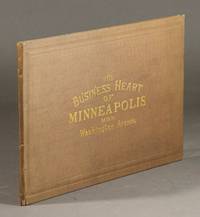
188257546New York: Charles Hart lithographer 1882. Large folding color lithograph panorama of the east and west prospects of Washington Avenue in Minneapolis from 8th Avenue South to Fourth Avenue North the whole in an oblong quarto binding original brown cloth gilt lettering on upper cover. The panorama extends to a total length of 30 feet 15 feet for each side of the avenue; each building is identified in the margins and the bustle of everyday city life is captured in the many people horses carriages etc. depicted throughout. Neat professional repair and strengthening of several folds on verso one small hole in a cloudy sky but on the whole very good and attractive. <br/><br/> Charles Hart, lithographer hardcover books
19432091502135500690Not Available 1943. Soft Cover. Fine. Number of pages: 882p 14p Thick book size: A4 size large size 21x29 cm Not Available paperback
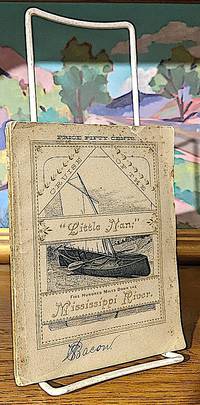
186952169N.p. Saint Paul 1869. Large plate albumen photograph approx. 12" x 21" mounted on a printed card approx. 16" x 21"; slight toning; very good. A large and unusual photograph by an unnamed photographer showing the steamer Buckeye towing what was at the time the largest raft ever run on the Mississippi River from Read's Landing in Minnesota to St. Louis Missouri. <br/><br/> unknown books
198750894Minneapolis: Vermillion Editions 1987. Edition limited to 40 copies consisting of 5 printer's proofs and 35 in the edition this copy no. 11; 4to 10 unbound sheets printed on rectos only and contained in a black cloth-covered portfolio with printed paper label on spine and pictorial pastedown on upper cover. Rathman's first book printed at Vermillion Editions under the guidance of Steve Anderson. Gerald Lange of the Bieler Press and Norman Fritzberg of the Hansestadt Letterfoundry were responsible for the typographic design and composition. The portfolios were constructed by the Campbell-Logan Bindery. "Mythological in conception and Nigerian in origin.the linocut illumination that accompanies the text exhibits such regimented verve that it almost seems as if a scourge has been placed upon each page. The jags curves and swirls of the elemental naturalistic borders take on pantheistic qualities as they move organically into the inner sanctum . harbors dangerous disorderly creatures alongside humans with their primitive and fantastic accoutrements. Gesture posture and facial expressions of beasts trees and humans.exhibit a stunning force of feeling and an atavistic quality that illuminates meaning and emotion." Pamela Sund in Artscape Volume 2 no. 4. <br/><br/> Vermillion Editions hardcover books
188610165Huron Dakota: Huronite publishing house 1886. Second Edition. Very good. 12mo 88 1 pages. original pictorial wrappers portrait and plates. -- Light wear to tips of the spine corners bumped bottom lightly top corner has a diagonal crease corners of pages themselves top lightly bumped bottom hardly at all. Internally clean and tight. A few pages with small foxed spots to the extremities. --- Overall condition for this fragile & rare book. "Not in Allen's Dakota Imprints. Wilkins had an adventurous time after leaving Fort Snelling. He gives some interesting anecdotes of the Sioux Uprising and the mass hanging of the thirty-eight Sioux at Mankato".-rarebookhub: Rare Book Transaction History one listing found in a dealers catalog @$125.00; source year 1953. Huronite publishing house unknown
186952169N.p. Saint Paul 1869. Large plate albumen photograph approx. 12" x 21" mounted on a printed card approx. 16" x 21"; slight toning; very good. A large and unusual photograph by an unnamed photographer showing the steamer Buckeye towing what was at the time the largest raft ever run on the Mississippi River from Read's Landing in Minnesota to St. Louis Missouri. unknown
17379900042889Amsterdam: Zacherie Chatelain 1737. Leather Bound. Tall folio. Bound in full contemporary calf with seven raised bands and the spine ornamented in gilt. The binding shows minor wear but is otherwise strong and the contents are in remarkable condition. There is an elaborate engraved plate preceding the formal title page printed in red and black. Measures 47 x 29.5 cms. Zacherie Chatelain d.1723 was the father of Henri Abraham 1684-1743 and Zacherie Junior 1690-1754. They worked as a partnership publishing this atlas under several different Chatelain imprints depending on the Chatelain family partnerships at the time of publication. The original atlas was published in seven volumes between 1705 and 1720 with a second edition appearing in 1732. The maps were accompanied by information pertaining to cosmography geography history chronology genealogy topography heraldry and costume of the world. The maps in the Atlas Historique were based on those of the French cartographer Guillaume De L'Isle but were presented by the Chatelains in an encyclopedic format. The text is in French and is printed in two columns on the page with maps and other illustrations interspersed. Each map and table is numbered consecutively see MapHist dot com. Our offering is described as 'Tome II Seconde Partie ou Tome III' of the 'Nouvelle Edition' which has been 'Revue corrigee & considerablement augumentee'. It covers Great Britain Ireland Switzerland Savoy Lorraine and the Republic of Venice. It contains 26 folding maps and ten genealogical tables or charts. Zacherie Chatelain unknown
191050307n.p. n.d. Saint Paul 1910. Oblong folio containing 100 silver print photographic postcards each with Bromley's stamp in the right margin; printed index of the photographs "from negatives made by Whitney Tuttle Illingworth Zimmerman and others" is mounted inside the upper cover; original black cloth with one of the images mounted on the front cover; spine spotted the whole lightly rubbed; very good sound and complete. Images run the gamut from city scenes architecture Native Americans steamboats views of Fort Snelling the Mississippi River etc. Not found in OCLC but there is a set of these photographs at Minnesota Historical. A similar album exists for Minneapolis. <br/><br/> hardcover books
191050307N.p. n.d. Saint Paul 1910. Oblong folio containing 100 silver print photographic postcards each with Bromley's stamp in the right margin; printed index of the photographs "from negatives made by Whitney Tuttle Illingworth Zimmerman and others" is mounted inside the upper cover; original black cloth with one of the images mounted on the front cover; spine spotted the whole lightly rubbed; very good sound and complete. Images run the gamut from city scenes architecture Native Americans steamboats views of Fort Snelling the Mississippi River etc. Not found in OCLC but there is a set of these photographs at Minnesota Historical. A similar album exists for Minneapolis. unknown
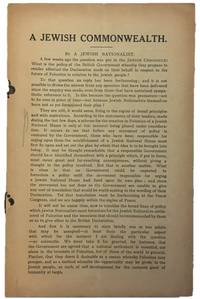
15910Three important writings from the first half of the 20th century on Zionism and the founding of the state of Israel. These documents chronicle some of the earliest support for establishing a Jewish state in Palestine and the growing Zionist movement as anti-Semitism spread in Europe between World War I and II. Includes:<br/><br/>"The Jewish Commonwealth" by Louis J. Gribetz a representative for the New York Zionist Organization c. 1918. Gribetz analyzes the earliest statement in support of Zionism from a major international power: the Balfour Declaration in which the British government issued a statement in support of a Jewish homeland. There are no copies of this document at any institutional collection worldwide as per OCLC Worldcat for this very rare publication. <br/><br/>A signed first edition of "The case for the Jews: An interpretation of their rights under the Balfour declaration and the mandate for Palestine" Louis J. Girbetz. New York: Bloch Publishing Co 1930. "The Case for the Jews" is an indictment of British rule in Palestine. This first edition was inscribed by the author to friend and fellow activist Louis Lipsky then-President of the Zionist Organization of America: "To a keen lucid fearless intelect - Louis Lipsky; whose name and will do honor to a great epoch in our history and will forever thrill and instruct - Louis J. Gribetz." Books signed by Gribetz are uncommon; and this copy's provenance is remarkable for its connection to two important leaders.<br/><br/>"The Jewish Problem a Report By the Executive Committee of the League of Nations Union Together with an Appendix Containing Suggestions Concerning Refugees Generally". London: League of Nations 1943. This final piece examines the fate of international Jewish Refugees during World War II; the report covers Jewish persecution and anti-Semitism in Europe a two-state solution in Palestine general recommendations for international refugee crises and details the "best solution" possible: creating a Jewish national home in Palestine. Minor rust to bindings of booklets. Light wear to extremities. All in good to very good condition. A remarkable collection following the earliest support for the state of Israel to the humanitarian crisis which prompted its founding amongst international support. unknown books
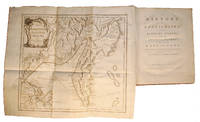
176415085Glocester: R. Raikes for T. Jefferys 1764. First Edition. Hardcover. Near fine. Quarto pp. 8 280 8 with 7 engraved maps and plates 4 folding. Contemporary calf boards with new complementary calf spine in six compartments. Some edgewear to boards; minor foxing to endpapers; text and plates exceptionally clean and bright. Bookplate of Sir Joseph Copley on front pastedown. An abridged translation of the Russian edition of 1755 which offered "The first reliable descriptions of Kamchatka based on the observations of the author and his companions during the Russian expedition to the far north 1734-43 a part of Bering's Great Northern Expedition" Arctic Bib. 9264 9265. It describes the customs morals religion and languages of the inhabitants of the Kamchatkan peninsula. In addition the the author had access to the notes made by pioneering German botanist George Steller during his travels to North America with Bering's expedition and the second part of the narrative includes much on the natural history of the region. Steller's observations "are an important part of this work and constitute one of the earliest accounts of Alaska and the Aleutian islands" Hill 948. R. Raikes for T. Jefferys hardcover books
Very Good Turkish, Ottoman (1500-1928) Original manuscript paper. Double elephant folio. (79 x 58 cm). In Ottoman script. Hegira: [1]233-[1]234 = Gregorian: 1818. Burdurlu Dervish Mehmed Pasha, who was grand vizier held office under Mahmud II between the years of 1818-1820. Dervis Mehmed Pasa had gained a reputation among the 'vüzerâ' (Grand-viziers) would be the grand vizier as previously planned by Sultan Mahmud II according the 19th-century historian of Sânîzâde. He dealt with like cases the Aleppo revolution, confusions in Diyarbekir and Çildir, conquest of the Castle of Dir'iye, the center of the Wahhabis by Ibrahim Pasha, the son of Kavalali Mehmed Ali Pasha, the governor of Egypt and confusions in Sivas city. (Türkiye Diyanet Vakfi Islâm Ansiklopedisi). Buyuruldu (or Buyrultu, Buyurildi, Buyurdu etc.) is the order of an Ottoman grand vizier, vizier, beglerbegi , defterdâr , or other high official to a subordinate. The term is derived from the word 'buyuruldi', it has been ordered, in which the order usually ends and which gradually developed into a conventional sign. Buyuruldus are of two main types: a) decisions written in the margin (der kenâr) of an incoming petition or report, often ordering that a fermân (firman) (or berât , etc.) be issued to a certain effect... (Brill, Encyclopedia of Islam). "Menzils" were early post organization in the Ottoman Empire before Reform period. In the Ottoman Empire, every 35 kilometers - the distance one could travel in a day - on the main roads, there were buildings called "menzil" or "menzilhane" (destination, post station). Surrounded by walls, these yards had a hostelry, barn, market, bath and restaurant. Hosted at the complex for free, travelers shopped, took baths and fed their animals and continued their journeys the following day. At the complex, officials - registered and paid by the state - served the guests. Within time, menzils turned into bazaars where locals sold their products. Then, villages and towns started pop up around them. Commodities needed by the army for expeditions were preserved at menzils and soldiers were accommodated at these facilities if needed during expeditions. Mailmen operating between two faraway destinations changed their horses with those waiting at menzils and went on their route without losing time. (Source: Ekrem Bugra Ekinci). This huge sized budget paper (defter) written on paper with 'ahar'. Used black and red inks. It's written from Harmancik qaza (district) in Bursa vilayet (city) and sent to court of Istanbul for grand vizier confirmation. It's a budget defter of Harmancik 'menzil'. Apprx. 250-300 articles (registers) in notes as expenses like Tatar postmans, horses, Kütahya beglerbegi (beylerbeyi), qadis (judges) and other ones. At the end of registers, there is qadi signature (seal), qadi's name is Mehmed es-Seyyid Samed (?). He was probably Turkish judge in its period in that menzil of Bursa, Harmancik. Budget registers start as '[1]233 senesi Saban-i Muazzama'nin gurresinden [1]234 senesinin Saban-i Serif'inin menzil kuyudu'. Registers had been sent to the Ottoman court for approval from Bursa to Istanbul. Grand vizier's hand writing is in 'diwanî' script. An extremely rare autograph manuscript about the earliest postal history as well.
Very Good Turkish, Ottoman (1500-1928) Original manuscript autograph handwritten document sealed 'Hüsrev Mehmed' sent to (and responded by) Serkâtib Mustafa. Written in special paper with 'ahar'. 39x21 cm. In Ottoman script. Slightly tear on folded place and slightly stains. Otherwise a very good manuscript paper. The document was written in accordance with the Ottoman state correspondence tradition prior to modernization. However, it is an indication of modernization that it is written to the serkâtib of Humâyûn (head clerk of the Ottoman / Turkish court) and not to the Sultan directly. The importance of this document is that it has many hints of modernization movements of the last period of Empire, depiction of the division of the first modern Ottoman army (Asakir-i Mansure-i Muhammediye) that's before one year of Egyptian Campaign by Koca Husrev Pasha and before eight years of proclamation of Reform (Tanzimat) and after only 22 years of Turkish Magna Carta (Sened-i Ittifak). Husrev Pasha was 'serasker' (commandant and head) of Assakir-i Mansure-i Muhammediye Army in that year. Husrev's text starts as 'Devletlü, inayetlü, atufetlü, oglum.." in 'Elqab'. In the Ottoman diplomacy, first person who used 'oglum' [i.e. my son] in elqab of the documents was Koca Hüsrev Pasha. (Source: Osmanli Arsiv Belgeleri, Orhan Sakin). Koca Hüsrev Pasha (Khosrew Pasha) was an Ottoman Kapudan Pasha ("Grand Admiral") of the Ottoman Navy and statesman who reached the position of Grand Vizier rather late in his career, between 2 July 1839 and 8 June 1840 in the reign of Abdülmecid I. However, during the 1820s, he occupied key administrative roles in the fight against regional warlords, the reformation of the army, and the reformation of Turkish attire. In 1801, Hüsrev Pasha commanded the 6,000 Ottoman troops who assisted the British in removing the French from Rashid (Rosetta). For this, he was made governor of Egypt Eyalet (province), in which position he was charged with assisting Hüseyin Pasha in the killing or imprisoning the surviving leaders of the Mamluks. Many of these were freed by or fled with the British, while others held Minia between Upper and Lower Egypt. [.] He was later made governor again by Muhammad Ali for 2 days [.] After Diyarbekir and Salonica, in 1806 he was governor of Bosnia Eyalet, before being reappointed as governor of Salonica in 1808. Hüsrev Pasha held the rank of Kapudan Pasha of the Ottoman Navy from 1811 to 1818. He was then appointed governor of the Eyalet of Trabzon twice, during which time he conducted for the Black Sea region of Turkey the struggle the central Ottoman state was waging against local feudal rulers (Derebeys). During the Greek War of Independence, he was appointed Kapudan Pasha again in the end of 1822. In 1826, Husrev Pasha played vital roles both in the Auspicious Incident (the annihilation of the Janissary Corps in 1826) and in the formation of the new "Mansure Army" modeled after those of European Powers. Appointed as seraskier (commander the army) of the Mansure in May 1827, Husrev reformed and disciplined the corps. Himself ignorant of modern military methods, he assembled a staff of foreign experts and other personnel to assist him, the "Seraskeriye", which constituted the first staff in Ottoman history. Due to his early championing of military reform and virtual control over the new Ottoman army, Husrev was able to install many of his protégés in senior military positions. Husrev Pasha was also instrumental for the near-abandonment of the turban and the adoption of the fez as a universal headgear for Muslim men of the Ottoman Empire (excluding the religious classes) under Sultan Mahmud II. (Wikipedia). Möltke talks about him in famous book includes his personal letters as 'he is more powerful than sultan'. Following the suppression of the Janissaries in 1826, Sultan Mahmud II transferred the functions of the old Agha of the Janissaries to the seraskier.
1509Pharsale-Lucain-1509Édition rare et authentique de la Pharsale de Lucain, en format in folio, reliée en plein vélin blanc d’époque. Dos à 5 nerfs, reliure Janséniste, titré à la main au dos. Toutes tranches mouchetées, très frais. Petit trou d'envol au mors du plat supérieur arrière, trois dernières pages fendues en bas de marge, ainsi qu'un petit trou dans la marge. Rousseurs en marge sur le dernier cahier. Texte sur deux colonnes, lettrines.
185723389.07<p><strong>Rare New York Senate Print of Proposed State Law to Combat the <em>Dred Scott</em> Decision</strong></p><p>"<em>Every slave … who shall come or be brought or be involuntarily in this state shall be free.</em>"</p><p>SLAVERY AND ABOLITION—NEW YORK STATE.</p><p>New York Senate. "An Act To secure Freedom to all persons within this State" Edward M. Madden April 9 1857 Passed the Assembly on April 17; failed in the Senate. Printed with numbered lines for the use of the Senate. 1 p. 6.5 x 11.5 in. </p><p><strong>Excerpts</strong></p><p>"<em>Neither descent near or remote from an African…nor color of skin shall disqualify any person for being or prevent any person from becoming a citizen of this state; nor deprive such person of the rights and privileges of a citizen thereof.</em>"</p><p>"<em>Every person who shall hold or attempt to hold in this state in slavery…under any pretence or for any time however short shall be deemed guilty of felony and on conviction thereof shall be confined in the state prison at hard labor for a term not less than two nor more than ten years.</em>"</p><p><strong>Historical Background</strong></p><p>In 1799 the New York legislature passed "An Act for the gradual abolition of slavery" that indentured and would eventually free slave children born after July 4 1799. In 1817 it passed a law freeing those slaves in 1827. But non-residents and part-time residents could still bring their slaves into the state temporarily.</p><p>On March 14 1857 New York Assemblyman Samuel A. Foot introduced resolutions declaring that the U.S. Supreme Court through its decision in <em>Dred Scott v. Sanford</em> "has in effect declared slavery to be national" and calling for the creation of a joint committee of three senators and five assemblymen to "consider and report what measures if any the Legislature of this State ought to adopt to protect the constitutional rights of her citizens." The resolution passed by a vote of 49-24 and the Senate concurred on April 2.</p><p>On April 9 Edward M. Madden introduced this bill in the Senate. Simultaneously Foot introduced this bill #24129 and three resolutions #23389.08 in the Assembly. Eight days later the Assembly with 81 Republicans 38 Democrats and 8 American Party members passed the bill 72 to 38. In the Senate with 17 Republicans 9 American Party members Know Nothings and 4 Democrats attempts to move the bill to the Committee of the Whole were evenly divided. Lacking the two-thirds majority required for this procedure the bill died.</p><p>Very similar language appeared in an 1859 bill which also failed; New York passed no new Personal Liberty Law during the decade before the Civil War.</p><p>The New York Senate had thirty-two members in 1857 so it is likely no more than fifty copies of this bill were printed for Senate consideration. We can find no evidence that any other copies have survived.</p><p><strong>Edward M. Madden</strong> 1818-1885 was born in Orange County New York and began work at a cotton factory at age nine. He worked as a merchant and then opened a saw factory in Middletown. He entered politics as a Democrat and was a delegate to the 1852 Democratic state convention. He joined the new Republican Party and served as a member of the New York Senate in 1856-1857 1872-1873 1875 and 1880-1881. He also served as a delegate to the 1864 and 1876 Republican National Conventions.</p>