8 059 résultats
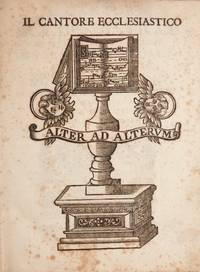
171339799Padova: Stamperia del Seminario . Appresso Giovanni Manfrè 1713. Small quarto. Modern half faux vellum with marbled boards. 1f. recto fine full-page woodcut verso blank 1f. recto title with fine large woodcut device verso blank 5-164 vii Index i blank pp. With numerous woodcut musical examples.<br /> <br /> With a striking full-page woodcut to preliminary leaf depicting a book of plainchant on a cantor's lectern and a large woodcut illustration of a Guidonian hand on folding plate between pp. 34-35.<br /> <br /> Binding very slightly worn. Light uniform browning; slightly cockled; occasional foxing to margins. A very good crisp copy overall. Second edition of the work first published in 1698. Cortot p. 79 1698 edition. Gregory-Bartlett p. 97 1698 edition. Hirsch I p. 66 1698 edition. RISM Écrits p. 330 one copy only in the U.S. <br /> <br /> An important treatise on ecclesiastical chant. Stamperia del Seminario ... Appresso Giovanni Manfrè unknown
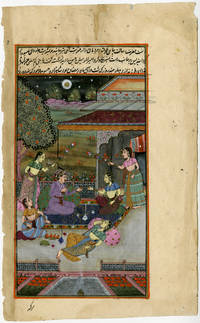
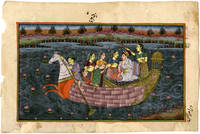
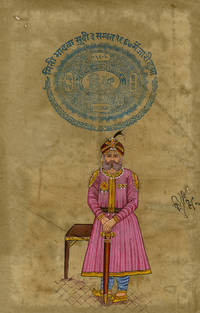
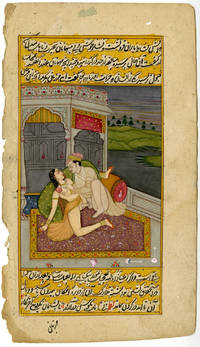
9171750. Gouache and ink with heightening in gold on lightweight brown laid paper 10 x 6 1/4 inches 254 x 159 mm the full sheet. Some scattered light areas of discoloration and age related toning small edge losses and scattered handling tear along the left sheet edge well outside of the image area. Extensive hand inscriptions in black and red ink on the verso. Colors are exceptionally bright and fresh with good saturation. Mirza Nur-ud-Din Muhammad Salim 30 August 1569 - 28 October 1627 known by his imperial name Jahangir "Conqueror of the World' was the fourth Mughal Emperor who ruled from 1605 until his death in 1627. He was the third and only surviving son of Akbar and his chief empress Mariam-uz-Zamani born to them in the year 1569. He was named after the Indian Sufi saint Salim Chishti. <br /> <br /> -Singh Pashaura; Fenech Louis E. eds. 2014. The Oxford handbook of Sikh studies. Oxford University Press. p. 647. ISBN 978-0-19-969930-8. unknown
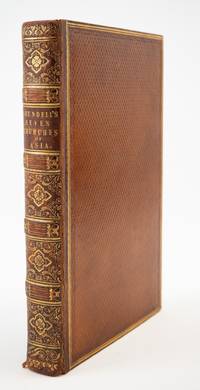
1828ST20535-01London: John Rodwell 1828. FIRST EDITON. 217 x 138 mm. 8 1/2 x 5 1/4". iv 339 1 pp. <br/> Contemporary diced russia raised bands spine attractively gilt in an arabesque style gilt-rolled turn-ins pink moiré endpapers all edges gilt. With a folding map of the travel routes and 23 pages reproducing inscriptions three of these folding. Front flyleaf inscribed in ink: "Juliana Calvert / from A. C. / 1838." Blackmer 48; Weber I 159. Joints and extremities a little rubbed tiny crack just beginning at top of front joint two tiny chips to foot of spine very minor offsetting and foxing to map a couple of patches of marginal foxing but INTERNALLY AN ESPECIALLY FINE COPY--unusually clean fresh and surprisingly bright--in a good-looking well-preserved binding.<br/> <br/> In especially desirable condition this is quite a scarce travel account by the English antiquary explorer and clergyman Francis Vyvyan Jago Arundell 1780-1846 who visited the so-called Seven Churches of Asia also called the Seven Churches of the Apocalypse and the Seven Churches of Revelation locations in present-day Turkey of central importance to St. John and the Book of Revelation. In that book John who was a threat to Roman officials as leader of the new Christian religion in Asia had been banished to Patmos where he was visited by an apocalyptic vision directing him to write to the churches at Ephesus Smyrna Pergamum Thyatira Sardis Philadelphia and Laodicea commending their successes pointing out their failures and prevailing upon them to repent. These seven Turkish churches reflect a surprisingly significant role in the region's early Christian history with some scholars maintaining that as many as 18 of the 27 New Testament books were written there--and Arundell's narrative would have helped to raise the popular understanding of this importance. Following his marriage to the daughter of the British consul-general at the Levant Company in Constantinople Arundell became chaplain to the company's trading center in Smyrna now Izmir in 1822. From there he embarked on a series of tours through Asia Minor including places that according to DNB "until then had for the most part not been described by any European traveller." The present work is the product of the author's first tour which included two separate excursions between March and September of 1826. Despite being a clergyman Arundell's interest in these sites was primarily archaeological and historical and this work includes his firsthand descriptions of the ruins he encountered facsimiles of Greek inscriptions found there and narratives of the arduous journeys between sites that were well off the beaten path. This work is surprisingly scarce in commerce suggesting that copies were often read with avidity. John Rodwell unknown
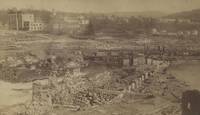
1887List1424Lebanon: C.E. Lewis 1887. Albumen photographs measuring 7 ¾ x 4 ½ on larger mounts. Some marks and scuffs to mounts some writing to versos images with excellent contrast and some light foxing very good overall. Very Good. One of the most destructive fires in New Hampshire in the 19th century broke out in the Mead Mason and Co. factory the morning of May 10 1887 and destroyed eighty buildings in a space of ten acres fully destroying the manufacturing industry in Lebanon. According to a contemporary article in the New York Times six hundred people were left unemployed and sixty-five were left homeless. These five images by the Lebanon photographer C.E. Lewis capture the aftermath of the fire and show the extent of the destruction. We find little record of the photographer C.E. Lewis but according to the records of the National Stereoscopic Association he lost his studio in the fire as well. We only find records of three of these images at the New Hampshire Historical Society. C.E. Lewis unknown
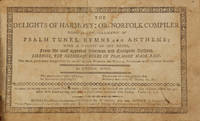
180536825Dedham MA: H. Mann for the Author 1805. Oblong octavo. Contemporary leather-backed blue/gray paper-covered wooden boards. <br /> <br /> 1f. recto title printed within decorative border verso copyright iii Preface dated "New-Canaan Con. October 1805" iv "To the Teachers of Music and Choristers in the United States: v-xi "Concise Rules of Psalmody" xii "Musical Dictionary" xiii-xv "List of Subscribers" xvi 17-95 printed music i index pp.<br /> <br /> The list of subscribers includes persons resident in New Canaan Norwalk Wilton Winchester Weathersfield Ridgbury and Colebrook Connecticut; Dedham Massachusetts; and New York. Signature of "J.I. Miller Ghent N.Y. Jan. 24 1883" and "Property of Emma M. Sherman Ghent N.Y." in pencil to front pastedown.<br /> <br /> Contains 67 compositions 65 American including one anthem four set-pieces and one canon by Austin Capt. S. Belknap S. Capen A. Ellis S. Hanford G. Holbrook O. Holden S. Holyoke Ingalls W. Janes S. Jenks O. King A. Knapp Rev. C. Lee Madan A. Munson Newcomb S. Raymond T. Swan S. Way Dr. Wetmore and R. Wilcox with 34 identified first printings. <br /> <br /> Binding worn with paper lacking to both boards wood lacking to upper portion of lower board; hinges cracked; endpapers lacking. Somewhat worn browned and foxed; some dampstaining; vertical crease to title; portion of final leaf lacking with loss of several measures to recto "Resolution" and text to verso "Index to the Music" Third edition. ASMI 289. <br /> <br /> Jenks a composer and tunebook compiler taught singing-schools in New England and New York state and developed a network of both pupils and fellow teachers whose compositions he went on to publish. The Delights of Harmony contains his Sorrow's Tear 1804 perhaps the earliest American setting of a poem by Thomas Moore as well as his Evening Shade and North Salem both of which are still frequently performed by southern shape-note singers who preserve the singing-school tradition.<br /> <br /> "Stephen Jenks' music is representative of the type of music being written at that time in rural New England America a cappella and an interest in melodic writing. However his music contains striking harmonic progressions unusual dissonances and cross relations. In "Weeping Nature" The Delights of Harmony 1804 for example Jenks seems to revel in the clash of the E major / minor chord or in the song "Sorrow's Tear" filled with cross relations between C sharp / C natural. Although many of these result from his use of modal harmony and as previously mentioned strong melodic writing for the individual parts his use of these relations is not simply random they are used to express the text being set." Wikipedia. H. Mann for the Author unknown
2240452 x 40 mm. With Beham's initials in the plate to upper left. <br /> <br /> A fine impression on laid paper with thread margins. A rare contemporary version in reverse of the print first published in ca. 1537. Pauli: Hans Sebald Beham Ein Kritisches Verzeichnis 191a. Bartsch 190. Kinsky: Music in Pictures p. 80 no. 2 the original version. unknown
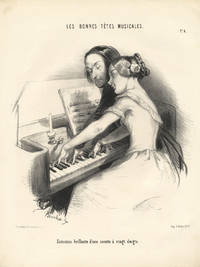
184729827Paris: Aubert & Cie 1847. 267 x 225 mm. good margins sheet size 324 x 250 mm. Printed on wove paper. Signed by the artist in the stone. A very good impression. <br /> <br /> This humourous print depicts a young lady playing a piano duet with a somewhat Liszt-like gentleman. <br /> <br /> Remants of mounting tape to right edge and upper corners of verso. Bibliothèque Nationale Inventaire du Fonds Français après 1800 no. 70. No. 4 in the series Les Bonnes Têtes Musicales. Aubert & Cie unknown
53484Mainz. Hardcover. Good. Three works bound in one volume 48mo: an amulet and two devotional manuals printed in the late 17th/early 18th century. Contemporary calf. Well-thumbed with two clean horizontal tears at leaves B6 and B7 in the third work affecting one of the woodcuts. A good complete set of scarce ephemeral works:<br /> <br /> 1 A-B12 = 24 leaves. 48pp. Geistlicher Schild gegen geist- und leibliche Gefährlichkeiten allzeit bey sich zu tragen darin sehr kräftige Segen und Gebethe so theils von Gott geoffenbaret von der Kirchen und h. h. Vätern gemacht und von Urbano VIII. Röm. Papst approbiret worden: zum Trost aller Christglaubigen sonderlich deren so zu Wasser oder Land reisen damit sie durch die Kraft dieses bey sich tragenden Schilds vor vielen Gefahren erhalten werden. Cum licentia Ord. Cens. Trevir ibidem An. 1647. impressum. Gedruckt zu Maynz. A note on the final page suggests this was printed in 1674 or later: "Ex libello de effectu Numismat. S. Bened. Fuldae impress. A. 1674." This work is plainly advertised to offer protection by means of "powerful blessings and prayers" against mental and physical dangers especially for travelers.<br /> <br /> 2 A-B12 = 24 leaves. 48pp. Andächtige Weis dem Amt der H. Mess nützlich beyzuwohnen. In Betrachtung des bittern Leidens und Sterbens unsers Herrn und Seeligmachers Jesu Christi. Samt beygefügten Morgen- und Abend-Gebetlein. Das thut zu meiner Gebächtnus Luc. 22. no place or name of publisher; undated. Contemplation of the Passion of Christ with morning and evening prayers.<br /> <br /> 3 A-C12 = 36 leaves. 72pp; 24 woodcut vignettes including the first title-page Main title: Geistliche Schild-Wacht darinnen der Mensch ihm für eine jegliche Stund sowohl des Tags als bey der Nacht einen besonderen besondern Patron aus den Heiligen Gottes auserwehlet. Welchen er mit einem Gebetlein anruffet daß er in der Stund seines Absterbens gleich aufstehen und wachen wolle damit er nicht von den arglistigen Anfechtungen des bösen Feindes überwunden werde. Gedruckt im Jahr Christi 1705 no place or name of publisher. A briefer title precedes with a large woodcut vignette in a format similar to the illustrations appearing throughout the rest of the work. The 24 woodcut illustrations of saints provide the chance for prayer at each hour of the day.<br /> <br /> The first work has been attributed to Martin of Cochem 1630-1712 who was a professor of theology and priest in the Archdiocese of Trier who worked with plague victirms and wrote many popular religious books in German on church history the lives of saints and contemplation during the mass. A discussion appears on A11v and A12r of the first part in which the Blessing of Saint Zacharias in the form of symbols cross and letters which represent the lines of the blessing is said to prevent the plague when worn on the body. hardcover
1870822261870. 19TH CENTURY. TUDOR WHARVES ICE: THE SHIPS ANAHUAC LUCY S. WILLS AND ANNA DECATUR. Photographer unknown. ca. 1870. Matted framed original photograph matted to 11 x 17 inches. Diagonal vista: The ships Anahuac Lucy S. Wills and Anna Decatur load ice at the Tudor Wharves Charlestown Massachusetts. The first two ships were East Boston-built and Boston-registered; the latter was built and registered in Portsmouth New Hampshire. Charlestown Bridge is in the foreground with one lone spectator observing the shipyard docks. Frederick Tudor known as "The Ice King" combined two trades without much apparent connection ice and sawdust and by using the sawdust for insulation was able to create a shipping industry in New England that reached the far East and South America. Some vertical bands of toning faintly apparent from original wood backing. 338-9 Bunting "Portrait of a Port: Boston 1852-1914. unknown
9251750. Gouache and ink with gold heightening on lightweight cream laid paper 6 x 86 inches 137 x 274 mm the full sheet. Some scattered light surface soiling along with age related toning and some handling creases minor edge tears and losses repairs verso and scattered inscriptions in ink and graphite. Extensive inscriptions in red and black ink on the verso and in the margins on the recto. The color is exceptionally fresh rich and saturated. Mirza Nur-ud-Din Muhammad Salim 30 August 1569 - 28 October 1627 known by his imperial name Jahangir "Conqueror of the World' was the fourth Mughal Emperor who ruled from 1605 until his death in 1627. He was the third and only surviving son of Akbar and his chief empress Mariam-uz-Zamani born to them in the year 1569. He was named after the Indian Sufi saint Salim Chishti. <br /> <br /> -Singh Pashaura; Fenech Louis E. eds. 2014. The Oxford handbook of Sikh studies. Oxford University Press. p. 647. ISBN 978-0-19-969930-8. unknown
9231750. Gouache and ink with gold heightening on lightweight cream laid paper 8 1/4 x 6 inches 210x 153 mm the full sheet. Some scattered light surface soiling along with age related toning and some handling creases minor edge tears and losses and scattered inscriptions. Extensive inscriptions in red and black ink on the verso and in the margins on the recto. The color is exceptionally fresh rich and saturated. Mirza Nur-ud-Din Muhammad Salim 30 August 1569 - 28 October 1627 known by his imperial name Jahangir "Conqueror of the World' was the fourth Mughal Emperor who ruled from 1605 until his death in 1627. He was the third and only surviving son of Akbar and his chief empress Mariam-uz-Zamani born to them in the year 1569. He was named after the Indian Sufi saint Salim Chishti. <br /> <br /> -Singh Pashaura; Fenech Louis E. eds. 2014. The Oxford handbook of Sikh studies. Oxford University Press. p. 647. ISBN 978-0-19-969930-8. unknown
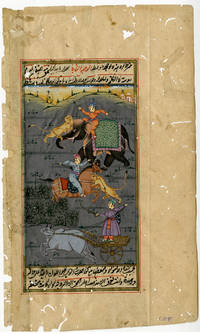
9131690. Gouache and ink with heightening in gold on lightweight brown laid paper 10 1/4 x 6 1/8 inches 260 x 156 mm the full sheet. Extensive insect damage in the unpainted areas primarily in the margins. Extensive hand inscriptions in black and red ink on the verso. Colors are exceptionally bright and fresh with good saturation. Mirza Nur-ud-Din Muhammad Salim 30 August 1569 - 28 October 1627 known by his imperial name Jahangir "Conqueror of the World' was the fourth Mughal Emperor who ruled from 1605 until his death in 1627. He was the third and only surviving son of Akbar and his chief empress Mariam-uz-Zamani born to them in the year 1569. He was named after the Indian Sufi saint Salim Chishti. <br /> <br /> -Singh Pashaura; Fenech Louis E. eds. 2014. The Oxford handbook of Sikh studies. Oxford University Press. p. 647. ISBN 978-0-19-969930-8. unknown
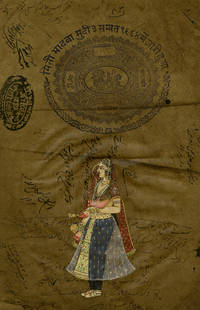
189013381890. Ink and gouache with yellow heightening on fibrous brown laid paper with a Jaipur Court Fee tax stamp in blue ink 13 1/2 x 8 3/4 inches 343 x 222 mm. Toning handling creases and minor scattered surface soiling throughout. There are scattered coeval Hindi inscriptions in ink on the recto. Raja Mahan Singh Mirpuri 1810 - 1844 was a famous general in the Sikh Khalsa Army. He was conferred by Maharaja Ranjit Singh the title of Raja for his conquests of Haripur Nowshera and Peshawar. The town of Mansehra derives its name from him. Singh was murdered by his own soldiers in 1844 when mutiny broke out in the Sikh Khalsa Army. His death was avenged by his son Chhattar Singh who was himself killed soon after.<br /> <br /> The first revenue stamps in India were issued in the mid-nineteenth century during the Raj and they are still being issued to this day. Apart from issues for the whole of India many princely states provinces and other states also had or still have their own revenue stamp issues. Before independence Indian revenue stamps were closely modeled on similar designs from Great Britain as is the case with this carriage motif stamp from Jaipur. The stamps were issued to denote various denominations including rupees and annas. An anna or Änna was a currency unit formerly used in British India equal to 1â„16 of a rupee. It was subdivided into four old Paisa or twelve pies thus there were 192 pies in a rupee. When the rupee was decimalized and subdivided into 100 new paise one anna was therefore equivalent to 6.25 paise. This particular stamp was used as evidence of court taxes remitted for property dealings. unknown
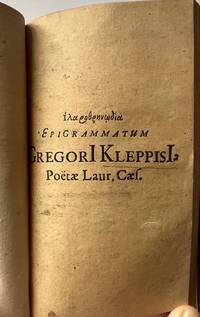
110417<strong>Two parts in one binding: Poematum is a collected volume of Latin poetry by the Dutch jurist and humanist Johannes Zevecotius containing lyrical poems elegies and epigrams in the classical neo-Latin tradition. TOGETHER WITH Kleppisi = Gregor Kleppis ca 1620 epigrams a collection of epigrams by the poet Kleppis. </strong>Later cardboard paper binding and new flyleaves duodecimo 12º edition. Interior in good condition. Titlepage a bit wrinkled and professionally restored at the back. On the titlepage in brown ink: 395.First part of Zevecotius with: Elegia elegy reflective emotional poems Tragoediae Tragedies dramatic works Silviae miscellaneoud modeled after the poet Statius' Silvae and Epigrammata Epigrams brief sharp witty poems. Text in Latin. Zevecotius was a Ghent Augustinian monk who then turned into a protestant professor of history at Harderwijk.Second part Hilaro Threnodia Epigrammatum Gregorii Kleppisii Poetae Laur. Caes by Kleppis Gregor. 45 leaves. Latin and German language. Colofon Lipsiae ex officina typographica haeredum Valentini am Ende Anno 1616.<span style=""font-size: 14.4px;"">NL Zeldzame dichtbundel van Johannes Zevecotius ook wel Johannes Zevecotus Johannes van Zevecote 1590-1642. Hij was een Nederlands jurist dichter en humanist afkomstig uit Brabant en actief in de Republiek met banden aan de universiteit Leiden. Dit is zijn verzameling Latijnse gedichten uitgegeven door Johannes Janssonius. Zevecotius is geboren in Zevecote bij Antwerpen en studeerde rechten J.U.D. = Juris Utriusque Doctor doctor in beide rechten canoniek en civiel. Hij is een representant van de Nederlandse neo-Latijnse cultuur. Gregor Kleppius ook Gregor Kleppis Kleppesius soms Kleppius is een Duitse neo-Latijnse dichter uit de 17e eeuw. Waarschijnlijk werkzaam in Silezie of Saksen en schreef hoofdzakelijk in Latijn maar in dit geval dus ook in het Duits. </span> unknown
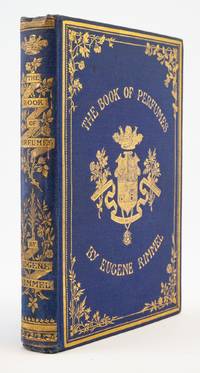
1865ST20314London: Chapman and Hall 1865. FIRST EDITION. 206 x 142 mm. 8 1/8 x 5 5/8". xx 266 pp. <br/> Very pretty publisher's royal blue cloth stamped in gilt upper cover with thick-rule frame central panel with floral spray cornerpieces central coat of arms designed by the author smooth spine with gilt title banners and sprays of flowers all edges gilt. With one chromolithograph 11 full-page engravings and 250 illustrations in the text.<br /> Front free endpaper with ink ownership signature dated 1865. Negligible wear to corners spine ends pushed in as almost always but still quite a fine copy--clean bright and fresh inside and out.<br/> <br/> In an attractive and extremely well-preserved publisher's binding this is an excellent copy of an extensive treatment of perfumes including their history uses around the world materials and modern production techniques. With the aid of copious illustrations the author describes the use of scents in Egyptian mummification Jewish rites Greek and Roman cosmetics Turkish baths Hindu worship and rituals of "uncivilized nations" and describes other cosmetics hairstyles and beauty practices across many cultures and time periods. He ends the volume with chapters on perfume manufacturing and the principal materials used in perfumery noting that most materials grow best in warmer climates--particularly the south of France. He also describes adopting novel scents found in Australia such as eucalyptus which had hitherto only been used in paint. Eugène Rimmel ca. 1820-87 was born to a French parfumier family and at a very young age established his own premises in London in 1834. According to DNB "In his laboratory Rimmel developed some of the earliest commercially manufactured beauty products" including "the first factory-made non-toxic mascara." A talented businessman and promoter he built a sizeable fortune by exporting his cosmetics and perfumes around the world. Rimmel cosmetics is still in operation today. Copies of this first edition are around but they seem all to be in unpleasant condition. Chapman and Hall unknown
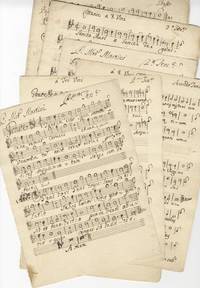
175040348Italy 1750. 5 parts. Quarto and two bifolia. Notated on 10-stave rastrum-ruled paper. Watermark letters within a circle.<br /> <br /> Contains:<br /> <br /> 1 P.rimo Ten.ore: 1 p. Text commencing "Tantum ergo sacramentum" and Genitori Genitoque" "P Mro Martini" to head.<br /> 2 P.rimo Ten.ore music different from above: 1 p. Text commencing "Tantum ergo sacramentum" and Genitori Genitoque."<br /> 3 Basso: 1 p. Text commenting "Tantum ergo sacramentum" and "Genitori Genitoque" with "Tantum &c. a 3 Voci Ripieno" to head.<br /> 4 Secondo Tenore: 2 pp. Text commencing "Pange lingua" "Nobis datus" "Verbum caro" and "Genitori Genitoque." With "à 3. Voci TT. e B." to head of first page.<br /> 5 2o. Ten.ore: 1 p. Text commencing "Tantum ergo" and "Genitori Genitoque." With "P Mro Martini" to head.<br /> 6 2o. Ten.ore: 3 i blank pp. Text commencing "Sancta Maria" "Sedes sapienti" "Regina Martyrum" and "Agnus Dei." With "Littanie a 3. Voci" to head. <br /> 7 Basso: 3 i blank pp. Text commencing "Kyrie" "Virgo potens" "Regina Angelorum" and "Agnus Dei." With "Littanie a 3. Voci" to head.<br /> <br /> A few small stains. unknown
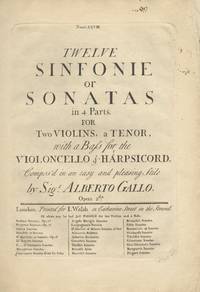
175440749London: Printed for I. Walsh in Catharine Street in the Strand 1754. Folio. Contemporary light blue wrappers. Engraved throughout. Uncut.<br /> <br /> Violino primo: 1f. recto title verso blank 12 pp.<br /> Violino secondo: 1f. recto title i blank 2-11 i blank pp. <br /> Alto viola: 1f. recto title i blank 2-9 i blank pp. <br /> Cembalo e violoncello: 1f. recto title verso blank i blank 2-10 pp.<br /> <br /> "Numb. XXVIII." printed at head of titles.<br /> <br /> With brief publisher's catalogue to foot of titles listing works "Just Publish'd for two Violins and a Bass" by Nussen Porpora Solniz Handel St. Martini Boyce St. Germain Humphries Geminiani Morigi Lampugnani Albinoni Alberti Ceruetto Torelli Purcell Mascitti Brioschi Fritz Bononcini Schickard Tibaldi Valentine Valentini Bomporti and Finger.<br /> <br /> Wrappers somewhat worn and creased with small stains spines and edges frayed and chipped with minor loss. Occasional minor soiling and small stains mainly to blank lower margins; some creasing to blank margins; lower wrapper of cembalo part detached. First Edition. Smith & Humphries 666 p. 149. BUC p. 359. RISM G260 no copies in the U.S. <br /> <br /> Little seems to be known about Alberto Gallo other than that he was a Venetian composer active in the mid-18th century. Printed for I. Walsh in Catharine Street in the Strand unknown
240PARIS VARIOUS 1900-1915. 1900-1922. 1 woodcut 1 lithograph and 6 etchings. unknown
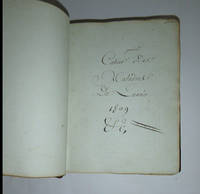
51-4707France: 1809. 8vo. 18 x 21.5cm. Ink on paper manuscript. Half morocco with original spine preserved. Preliminary pp. 5-33 followed by pp. 1-519. VÉTÉRINAIRE - MANUSCRIT. Des opérations en général. S.l. s.e. 1809; in-4environ 500 pp. reliure demi-veau d'époque dos lisse tranches non mascicotées. Belle écriture très lisible de ce texte de l'art vétérinaire. Ce texteest peut-être un cours donné dans une école ou le texte préparatoire à l'édition d'un livre France: 1809 unknown
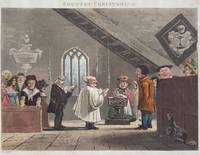
18251890London: Thomas McLean 1825. Aquatint with engraving and handcoloring in watercolor on wove paper 8 7/8 x 10 3/4 inches 225 x 272 mm wide margins. Light handling wear and four small dots of adhesive residue at each of the four corners on the verso. Coloring is extensive and fresh. Thomas McLean unknown
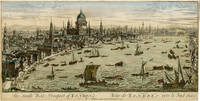
17601226London 1760. Copper plate engraving with hand coloring in watercolor on cream laid paper with a large circular watermark bearing a heart and arrow along with several Roman numerals and letters including II and S 8 1/4 x 16 3/ 8 x inches 208 x 423 mmimage area margins trimmed. Color slightly attenuated with some age tone mat tone and light scattered discoloration. Paper tape repair with in-painting at top right extreme corner paper tape support along the top sheet edge. Condition issues are consistent with age. This optic view of London and the Thames shows the north bank of the river from where Somerset House now stands in the east down to London Bridge and the Tower in the west. Also visible is the dome of St. Paul's Cathedral. Published in London circa 1760 this engraving is one of a series of images that were called optical views or perspectives. They originated in the early eighteenth century as part of the thriving topographical print market in cities such as Paris and London. As monied tourists traveled Europe these views became increasingly popular as souvenirs. After a trip abroad it was common practice among the wealthy denizens of London and Paris to produce "perspectives" after a dinner party. The views were enjoyed with the aid of a device known as a zograscope while the hosts regaled their company with travel tales. unknown
17801481780. Graphite and ink on handmade watermarked C & I Honig laid paper 8 15/16 x 6 3/4 inches 226 x 170 mm. Signed illegibly in ink lower margin. Scattered light creasing and surface soiling minor areas of rubbing all consistent with age. unknown
9201750. Gouache and ink with gold heightening on cream laid paper 9 1/8 x 5 1/4 inches 232 x 133 mm the full sheet. Some scattered light surface soiling along with age related toning and some handling creases minor edge tears and losses and scattered inscriptions. Extensive inscriptions in red and black ink on the verso. The color is exceptionally fresh rich and saturated. Mirza Nur-ud-Din Muhammad Salim 30 August 1569 - 28 October 1627 known by his imperial name Jahangir "Conqueror of the World' was the fourth Mughal Emperor who ruled from 1605 until his death in 1627. He was the third and only surviving son of Akbar and his chief empress Mariam-uz-Zamani born to them in the year 1569. He was named after the Indian Sufi saint Salim Chishti. <br /> <br /> -Singh Pashaura; Fenech Louis E. eds. 2014. The Oxford handbook of Sikh studies. Oxford University Press. p. 647. ISBN 978-0-19-969930-8. unknown
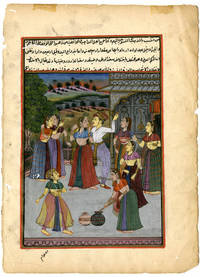
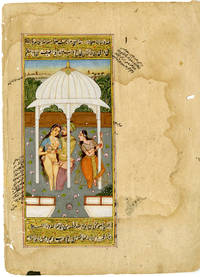
9261690. Gouache and ink with gold heightening on cream laid paper 8 1/2 x 6 1/4 inches 210 x 160 mm the full sheet. Some scattered light surface soiling along with age related toning and some handling creases minor edge tears and losses and scattered insect damage and inscriptions. Extensive inscriptions in red and black ink on the verso. The color is exceptionally fresh rich and saturated. An illuminated page from a book likely in reference to palace life during Emperor Jahangir's reign over the Mughal Empire. Mirza Nur-ud-Din Muhammad Salim 30 August 1569 - 28 October 1627 known by his imperial name Jahangir "Conqueror of the World' was the fourth Mughal Emperor who ruled from 1605 until his death in 1627. He was the third and only surviving son of Akbar and his chief empress Mariam-uz-Zamani born to them in the year 1569. He was named after the Indian Sufi saint Salim Chishti. -Singh Pashaura; Fenech Louis E. eds. 2014. The Oxford handbook of Sikh studies. Oxford University Press. p. 647. ISBN 978-0-19-969930-8. unknown
189013371890. Ink and gouache with gold heightening on fibrous brown laid paper with a Jaipur Court Fee tax stamp in gray ink and the 1889 Jaipur State Council stamp in black ink 13 1/4 x 8 3/4 inches 335 x 222 mm. Toning handling creases and minor scattered surface soiling throughout. There are scattered coeval Hindi inscriptions in ink on the recto. "A ragamala translated from Sanskrit as "garland of ragas" is a series of paintings depicting a range of musical melodies known as ragas. Its root word raga means color mood and delight and the depiction of these moods was a favored subject in later Indian court paintings. The celebration of music in painting is a distinctly Indian preoccupation. Ragamalas were first identified as a specific painting genre in the second half of the fifteenth century but their ancestry can be traced to the fifth- to seventh-century Brihaddeshi treatise which states: "A raga is called by the learned that kind of composition which is adorned with musical notes . . . which have the effect of coloring the hearts of men." Often the mood or raga is also written as poetry on the margins of the painting. These works thus evocatively express the intersections of painting poetry and music in Indian court art." <br /> <br /> -The Metropolitan Museum of Art Exhibition Overview Ragamala: Picturing Sound December 2014.<br /> <br /> The first revenue stamps in India were issued in the mid-nineteenth century during the Raj and they are still being issued to this day. Apart from issues for the whole of India many princely states provinces and other states also had or still have their own revenue stamp issues. Before independence Indian revenue stamps were closely modeled on similar designs from Great Britain as is the case with this carriage motif stamp from Jaipur. The stamps were issued to denote various denominations including rupees and annas. An anna or Änna was a currency unit formerly used in British India equal to 1â„16 of a rupee. It was subdivided into four old Paisa or twelve pies thus there were 192 pies in a rupee. When the rupee was decimalized and subdivided into 100 new paise one anna was therefore equivalent to 6.25 paise. This particular stamp was used as evidence of court taxes remitted for property dealings. unknown