[SPLINGARD A.].Livre Rare Book
1 561 résultats
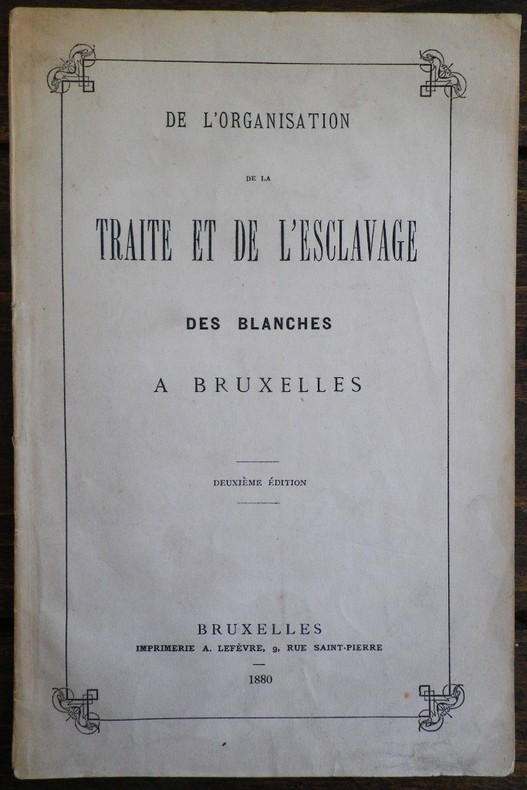
7428Bruxelles, Imprimerie A. Lefèvre, 1880, 1 plaquette in-8 (218 x 144) brochée sous couverture imprimée, de VI-32 pp. Couverture légèrement poussiéreuse, très bel exemplaire par ailleurs.
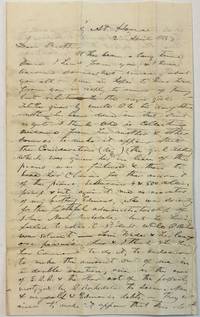
184740201Stewartsboro TN 1847. Folio 15" x 12-3/4" sheet folded to 7-1/2" x 12-3/4". 4 pp. Completely in ink manuscript integral address leave bearing Stewartsboro Tennessee April 3 1847 manuscript postal marking. mailing address on last page. The initials of the writer's name are difficult to decipher; this is our best guess. Old folds two short fold splits and a few tiny holes at fold corners. Wax seal remnant with tear at edge loss of a few letters some toning. Good to Very Good. <br /> <br /> The writer is concerned that Thomas had not responded to his letter "relating to the negro girl Tabitha given by Uncle R. to his daughter- nothing has been done in that suit as yet. I think she is collecting evidence from her mother & other sources to make it appear that the consideration viz the girl Tabitha which was given her in lieu of the piano was a failure & then to base her claim for the amount of the piano between 4 and 500 dollars princp. & int. against me as executor of my brother Edmond who was security for the faithful administrationship of John Nash Barksdale but he having failed to collect sd. debt while R. Barksdale was solvent. Levi Wade & her lawyer are persuading her. . . " He gives Thomas permission to "calculate on receiving a portion of the money for which Paulina sold. . . Negroes have advanced within 3 or 4 months but I fear one diseased as your boy Phil will command but a small price."<br /> Dr. Thomas Hill Read 1798-1874 of Tennessee settled in Macon County Illinois in 1831. He was the brother-in-law of Capt. David L. Allen one of the most prominent early citizens having married his sister. Dr. Read became known for his success in the treatment of children's ailments and was considered an expert in cholera infantum. He had a reputation for honesty and was said to have acted as administrator of more estates than anyone else in Macon County. Dr. Read was a member of the Decatur Board of Trustees in 1839 1841 1846 and 1847; County Treasurer from 1845-1846 and County Probate Judge from 1846-1849.<br /> John Nash Barksdale 1818-1844 Thomas Read's maternal cousin was born in Tennessee graduated from the University of North Carolina and became a lawyer. He practiced law in Tennessee for a few years and then moved to Columbus Mississippi and entered the law firm of his cousin Gen. William Barksdale. The Columbus bar announced that its members would wear the badge of mourning for thirty days following his death. "Death of John N. Barksdale" Republican Banner Nashville TN Dec. 6 1844 Page 2.<br /> Uncle R was likely Randolph Barksdale 1795-1844 Thomas H. Read's maternal uncle and John Nash Barksdale's father. Randolph settled in Tennessee with his father in 1808 and later established his own plantation. He was married three times and became the owner of a large estate and several slaves in Rutherford County Tennessee thanks to the wealth of his first wife. He also owned an estate near Chulahoma in Marshall County Mississippi. unknown
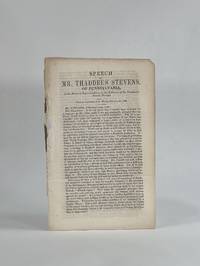
18508864Washington: Buell & Blanchard 1850. Disbound. near Very Good binding. Octavo. 8 pp. Removed from volume. Inner margin a bit irregular; horizontal creases from being folded. <br /> <br /> Stevens rails against "Southern gentlemen" who he argues have obstructed the business of Congress by speeches on the subject of slavery. The remedy Another speech on slavery. And no doubt the subject was indeed occupying Congress and the country. In fact the Compromise of 1850 and its Fugitive Slave Act was just months away from passage when Stevens took the floor with this searing speech against the institution of slavery and the Southern legislators who were holding Congress hostage. Stevens cites Mr. Clingman of North Carolina who in Stevens's words "was selected to open the debate in behalf of human bondage distinctly notified us that unless Congress as a condition precedent submitted to settle the Slavery question according to Southern demands there should be no legislation even the passage of the ordinary appropriation bills necessary to sustain the Government." A heated time indeed! Sabin 91565. Buell & Blanchard unknown
183836058Boston 1838. Hardcover. Fair. Octavo. Marbled paper covered boards with leather corners and spine. Red leather title label on the spine. Covers are worn. Toning to the end papers. Blind embossed stamp of the previous owner "Library of KJT Kevin John Twit" on the right front flyleaf. Incomplete: title page and issues for June October and December were not bound inside. Collation as follows: pages 1-240; pages 289-432; pages 481-528; 18 pages "A Sermon Occasioned by the Loss of the Harold and the Lexington Delivered at the Odeon January 26 1840 by William M. Rogers Pastor of the Franklin Street Church." Book and contents in fair condition. <br /> <br /> Articles include: "Contributions to Religious and Charitable Societies From Holders of Slaves"; "Triumphs of the Gospel in the South Sea Islands"; "Religious Notions of the North American Indians"; "The Cherokees"; "The Sandwich Islands" and more. hardcover
1951742651951 Paris, Bellenand, 1951, in 12 broché, 254 pages ; couverture illustrée.
ORD-13282N°3937 du Bulletin des Lois N°206. 15 Avril 1818. In-8 (ca 135 x 210mm) sans couverture, non rogné, tel que paru. Pages 234 et 235 du bulletin. Papier lgt bruni, rares rousseurs, bon état.
ORD-13283N°13943 du Bulletin des Lois N°1432. 12 Octobre 1847.. In-8 (ca 145 x 220mm) sans couverture, non rogné, tel que paru. Pages 929 à 935 du bulletin. Papier lgt bruni, bords de feuilles poussiéreux, rares rousseurs, assez bon état.
ORD-13285N°12587 du Bulletin des Lois N°1274. 28 Janvieer 1846. In-8 (ca 145 x 220mm) sans couverture, non rogné, tel que paru. Pages 93 à 98 du bulletin. Papier lgt bruni, rares rousseurs, bon état.
ORD-13284N°4484 du Bulletin des Lois N°224. 24 juin 1818. In-8 (ca 135 x 210mm) sans couverture, non rogné, tel que paru. Page 17 et 9 lignes du bulletin. Papier bruni, auréoles claires d'humidité dans le coin inférieur droit, sinon assez bon état.
185435390Boston: Phillips Sampson and Company 1854. 1854. Hardcover. Fair. Small octavo. 1 viii 9-256 pages 4 pages advertisements 1. Folding frontispiece map. Blue cloth hardcover with blind stamped covers. Gilt title and decoration on the spine. Folding map has some wrinkling and creases. Cloth hardcover is shelf worn rubbed at the extremities and chipped at the head and base of the spine. Lean to the binding. Light scattered toning and foxing to the contents. Fair. <br /> <br /> Graff 1079. Phillips, Sampson and Company hardcover
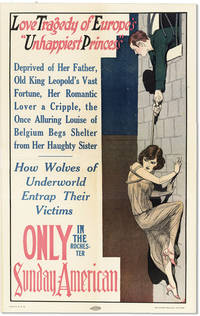
190415411Rochester: Office of the American 1904. Broadside extra lithographed in colors; 18" x 11". Single fold else fine. Colorful graphic depicting Princess Louise escaping from her asylum cell with the help of her illegitimate lover Geza Mattattich. The caption tempts readers with a White Slavery theme suggesting that Princess Louise has been lured to her ruin by a "Wolf of the Underworld." Unlocated. Office of the American unknown
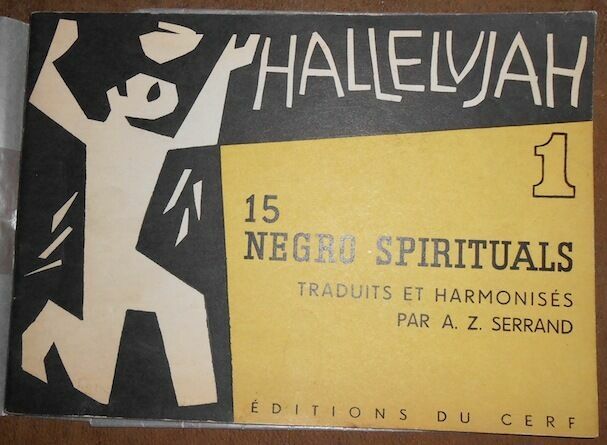
1957113871957. Paris Éditions du Cerf 1957 - Broché 13 5 cm x 19 cm 32 pages - 15 negro spirituals traduits et harmonisés par A. Z. Serrand - Bon état
1982ROD0031744Fayard. 1982. In-4. Cartonné. Bon état, Couv. convenable, Dos satisfaisant, Intérieur bon état. 96p. Nombreuses illustrations en couleurs in et hors texte.. . . . Classification Dewey : 326-Esclavage
R240049527LIBRAIRIE NATIONALE D'EDUCATION ET DE RECREATION. NON DATE. In-8. Relié. Etat d'usage, Couv. convenable, Dos satisfaisant, Papier jauni. 191 pages - 10 gravures - 2 étiquettes collées sur le 1er contre plat.. . . . Classification Dewey : 326-Esclavage
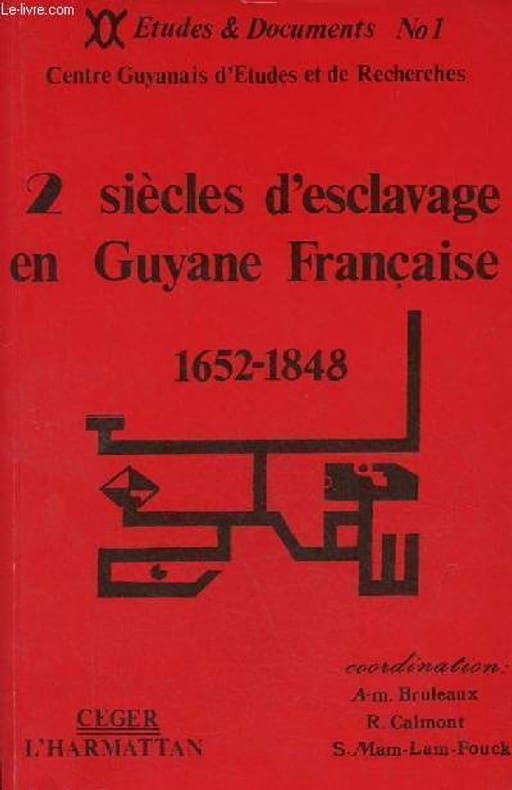
1986R100057414Ceger / L'Harmattan. 1986. In-8. Broché. Etat d'usage, Tâchée, Dos satisfaisant, Papier jauni. 341 pages - quelques illustrations, graphiques, tableaux, plans en noir et blanc dans et hors texte - mouillure sur les plats, contre plats et sur les premières et dernières pages du livre ne gênant pas la lecture.. . . . Classification Dewey : 326-Esclavage
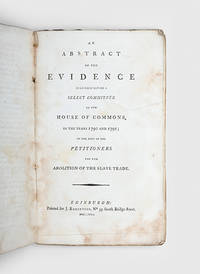
1791180598Edinburgh: Printed for J. Robertson 1791. Stepping up the campaign against slavery Second Edinburgh edition of this best-selling report on the colonial slave trade including a version of among the most famous abolitionist images the cross-section depicting the enslaved individuals transported aboard the Brookes. The Abstract is the first abolitionist work to ground its arguments not on biblical appeals or forceful rhetoric but on documented eyewitness accounts. Until 1790 the abolitionist campaign had been channelled through pamphlet and pulpit. After 1790 abolitionists turned to the new technique of mass petition campaigns against Parliament. The Abstract publishes the testimonies of the witnesses called by the petitioners arranging them thematically by chapter. Among others the select committee called planters traders naval officers and doctors. "The abolitionist petition campaign reached an apex during 1791-1792 where an unprecedented 519 abolitionist petitions coming from all over Britain were delivered to Parliament. Some 400000 persons signed these petitions 1 out of every 11 adults with Manchester alone contributing 20000 names from an adult population of about 30000" Fogel p. 212. Octavo pp. iv 128. Large folding plan of a slave ship folding map of the western coast of Africa tables in the text. Original paper wrappers spine lettered in manuscript ink edges uncut. Housed in custom orange cloth box. Contemporary presentation inscription from "Mr. Campbell" to "John White" on the front cover. Rubbing and chipping minor loss to spine and extremities browning and foxing to contents slight offsetting to plates folding plan loose: just about a very good fragile copy. ESTC N29168. William Fogel Without Consent or Contract 1989. hardcover
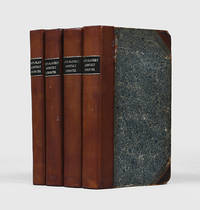
1827163198London: Printed for the London Society for the Mitigation and Abolition of Slavery in the British Dominions 1827-32. A new age of abolitionist agitation First collected editions being the full run under its original title of Zachary Macaulay's abolitionist magazine the leading organ of British abolitionist thought and campaigning. It was afterwards renamed the Anti-Slavery Reporter and has lasted under changing titles to this day. The journal "systematically collected information on the abuses of slavery" ODNB. "Highlighting the rise of abolitionist petition drives antislavery discussions in church and government venues and debates over unfree labor throughout the empire the paper celebrated a new age of abolitionist agitation" Newman pp. 44-45. The volumes collect the monthly issues from June 1825 to December 1831 with collective title pages and contents tables. 4 vols. octavo 216 x 129 mm. Contemporary half calf rebacked black morocco labels marbled sides edges speckled brown. Wear at extremities inner hinges reinforced a little browned and spotted: still very good copies. Richard S. Newman Abolitionism: A Very Short Introduction 2018. unknown
1862127191862. Front Page Headline reads "The Bill Abolishing Slavery in the District of Columbia Passed the House." Newspaper "The Detroit Free Press" April 12 1862. 19" x 26" 2 pages. Has a blow by blow account of the debate among the members of the House and the various amendments associated with the bill. It concludes "The bill was passed 93 agains 39." Also includes local national and international news as well as "News From the South." Some small tears at the left hand margin not affecting text. A diagonal crease runs across the top half of the paper and a small piece of yellow tape has adhered to the top margin. Overall in very good condition. unknown
0656338911.Ghardcover. Good. Access codes and supplements are not guaranteed with used items. May be an ex-library book. hardcover
12719Front Page Headline reads "The Bill Abolishing Slavery in the District of Columbia Passed the House." Newspaper "The Detroit Free Press" April 12 1862. 19" x 26" 2 pages. Has a blow by blow account of the debate among the members of the House and the various amendments associated with the bill. It concludes "The bill was passed 93 agains 39." Also includes local national and international news as well as "News From the South." Some small tears at the left hand margin not affecting text. A diagonal crease runs across the top half of the paper and a small piece of yellow tape has adhered to the top margin. Overall in very good condition. unknown books
18361691Boston: Isaac Knapp 1836. About very good. xvi13-238pp. 12mo. Original publisher's blue boards with black sheep spine gilt. Boards rubbed corners and spine moderately worn. Text lightly foxed. Scarce work addressing the anti-slavery work of George Thompson following his visit to America. Thompson 1804-1878 was British lecturer and reformer who worked as a commercial clerk.<br/><br/>"Thompson first came to prominence in 1831 when he was recruited by the London Anti-Slavery Society's Agency Committee as an itinerant lecturer. In the run up to the Emancipation Act of 1833 he became the most effective British anti-slavery lecturer since Thomas Clarkson. With the struggle against British slavery apparently won Thompson was instrumental in reorienting anti-slavery effort towards the Americas and particularly the United States. . In 1834 he encountered the charismatic American abolitionist William Lloyd Garrison. Recognizing Thompson's talent Garrison invited him to travel to the United States with his growing family to labour there on behalf of the enslaved people of America" - DNB. Thompson employed sarcasm and vitriol in his orations attacking anti-abolitionist sentiment across the northern states. In the process he failed to make very many friends or converts and alienated those with more moderate views.<br/><br/>"Opponents attacked him as a foreign interloper and an anti-American agitator. They also discovered a scandal in Thompson's past alleging that in 1829 he had absconded with £80 embezzled from his employer. His supporters angrily rejected this charge though Thompson later privately admitted it was true he eventually repaid the sum in full. Hostility increasingly turned violent and in fear of his life he was smuggled out of the country in October 1835 returning to a hero's welcome in Britain" - DNB.<br/><br/>This work is a rebuttal made by Thompson's American supporters aggregating information from British sources to defend his good name and abolitionist efforts after fleeing America for his homeland. It includes some of Thompson's speeches on slavery in America given before audiences in Scotland and England and discusses his work with the American Anti-Slavery Society. Though there are a handful of institutional copies the work is scarce on the market and does not appear in auction records over the pasty forty years.<br/> Sabin 9324. American Imprints 36449. Isaac Knapp unknown books
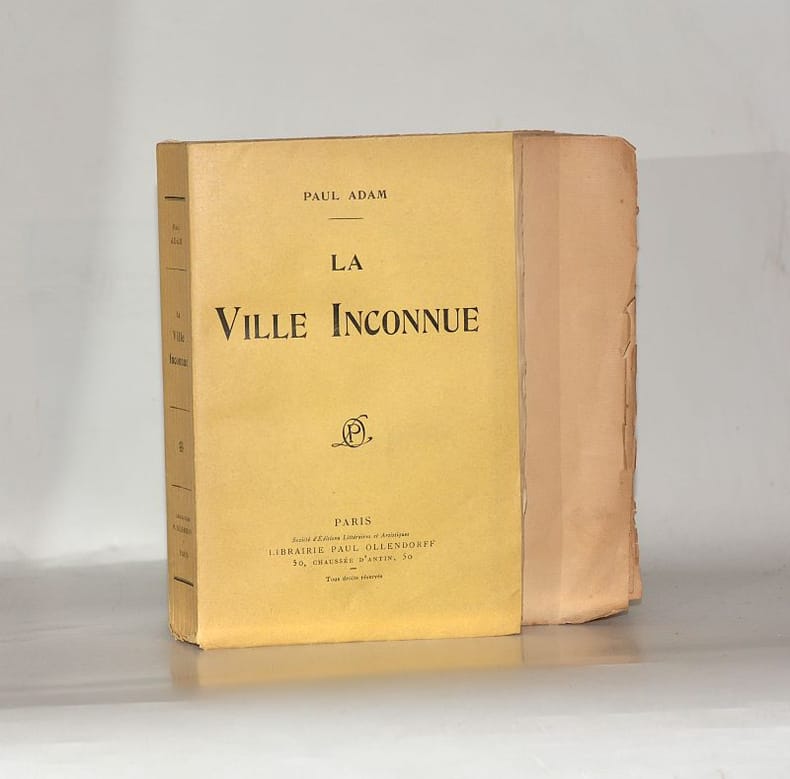
19110057141911 Paris, Ollendorff, 1911. In-12 (195 X 185 mm marges comprises) broché, couverture à rabats ; (3) ff., IX-446 pages, (1) f. Marge latérale du feuillet de titre et témoins en partie brunis, petite déchirure recollée en tête du feuillet de faux-titre.
pp. vi, 415. Large 8vo. Original full dark blue cloth binding, slightly soiled. Spine faded. Hardbound. The growth and flowering of sectionalism in America. The rise of the two conflicting American "civilizations" - North & South is described and analyzed. First Edition. SHELF W20
Book shows wear to covers. Binding is solid and square, text/interior is clean and free of marking of any kind. 265 pages. Previous owner's name or sticker in front section of the book. Contents by the above authors include: Souls of black folk, investigate lynchings, In love with Harlem, Revolt of the evil fairies, A choice of weapons, the white4 problem in America, Not poor, just broke, Why I eulogized Malcolm X, The potential of a minority revolution, etc.