1 560 résultats
GALLIMARD. 28-10-1952. In-8 Carré. Broché. Bon état. Couv. convenable. Dos satisfaisant. Intérieur frais. 550 pages TRADUIT PAR R BASTIDE- PREFACE DE L FEBVRE
1952R150223504GALLIMARD. 28-10-1952. In-8. Broché. Bon état, Couv. convenable, Dos satisfaisant, Intérieur frais. 550 pages. . . . Classification Dewey : 326-Esclavage
195227241952 NRF GALIMARD "la Crois du Sud ,traduit par R.Bastide, 1952, fort in8 br ,couv ill ,bibliographie ,glossaire
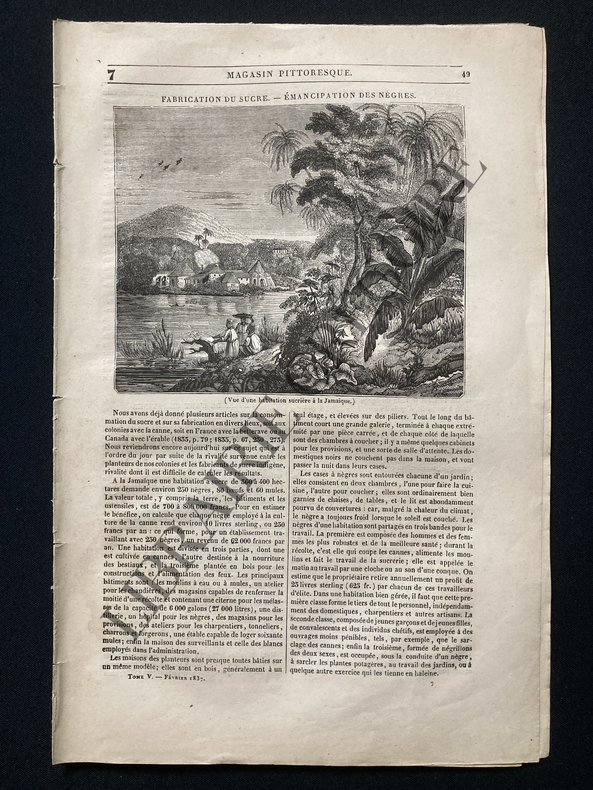
1837ABE-17094261862038 PAGES-20 CM X 30,5 CM-FABRICATION DU SUCRE-EMANCIPATION DES NEGRES, 2 PAGES, GRAVURE DEMI PAGE (VUE D'UNE HABITATION SUCRIERE A LA JAMAIQUE)-REGLES DE L'ART DE PATINER, 1P-HEIDELBERG, 1P, GRAVURE-LUTTES EN BRETAGNE, 1P, GRAVURE
in-8, 205 pp., broché, couv. Bon état. [NV-25]
1904AMA-129Paris, Alcan, 1904. in 8°,toile moderne, couverture usée conservée. XVI-396 pp.-(2)ff.
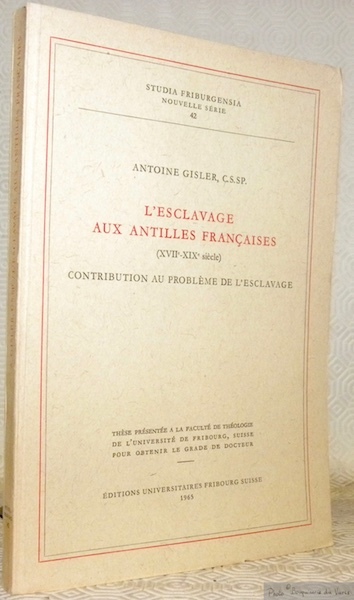
62774Fribourg, Editions Universitaires Fribourg 1965, 240x165mm, XIV- 213pages, broché. Non coupé. Exemplaire à l'état de neuf.
50641Paris, Guillaumin - Victor Lecou 1853, 180x110mm, 370pages, reliure demi-basane. Plats papier marbré. Titre doré au dos. Quelques trous de ver. Rousseurs sur tranches et parfois sur les marges. Bon état de l’ensemble.
1836216961836. Slavery & Abolition CHILD Lydia Marie. An Appeal in Favor of That Class of Americans Called Africans. New York: Published by John S. Taylor 1836. Second edition. Illustrated with 2 plates. Coleridge quote on title page. In original blue cloth boards with embossing and gilt to spine. 8vo 216 pages. Child was a vocal abolitionist women's rights activist anti-American expansionist and proponent of racial equality amongst African and Native Americans. An Appeal in Favor of That Class of Americans Called Africans was the first written by a white woman in support of the immediate emancipation of slaves without compensation to their enslavers. Child begins by writing about the history of the slave trade as well as harrowing stories on it's detrimental and immoral faculties in order to engage readers to action. One illustrated plate showcases shackles and chains used on enslaved individuals. First published in 1833 Child's work was a prominent contribution to the abolitionist movement and her writing influenced many notable figures including Harriet Beecher Stowe and Frederick Douglass. Missing frontispiece some foxing to pages some wear to covers. Small tear affecting a few words in the fist first sentence on page 127. Binding is tight and text is clean and legible. Overall very good condition. unknown
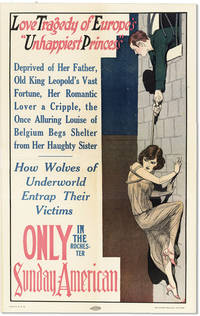
190415411Rochester: Office of the American 1904. Broadside extra lithographed in colors; 18" x 11". Single fold else fine. Colorful graphic depicting Princess Louise escaping from her asylum cell with the help of her illegitimate lover Geza Mattattich. The caption tempts readers with a White Slavery theme suggesting that Princess Louise has been lured to her ruin by a "Wolf of the Underworld." Unlocated. Office of the American unknown books
190415411Rochester: Office of the American 1904. Broadside extra lithographed in colors; 18" x 11". Single fold else fine. Colorful graphic depicting Princess Louise escaping from her asylum cell with the help of her illegitimate lover Geza Mattattich. The caption tempts readers with a White Slavery theme suggesting that Princess Louise has been lured to her ruin by a "Wolf of the Underworld." Unlocated. Office of the American unknown
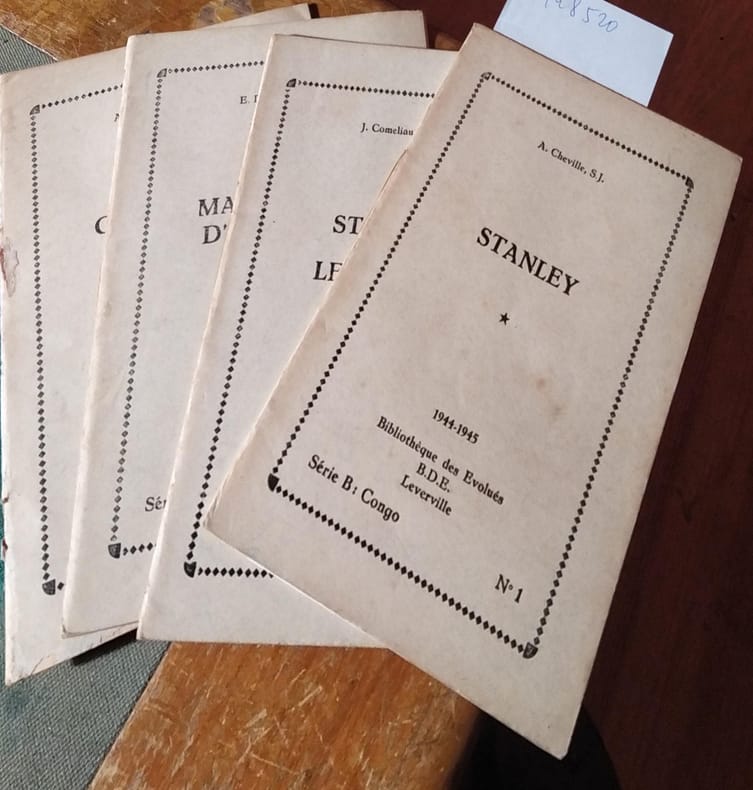
1945148520Couverture souple. 4 brochures de 32 pages. 12 x 17 cm.
60085aafLa Habana, Ed. de Ciencias Sociales, 1988, lg. in-8vo, 526 p., illustrated with 67 plates, some after photos, mainly cruel drawing, orig. clothbound, ill. jackett.
24264ONE: ‘Coloured Emigrants from United States’ Downing Street 16 October 1850. TWO: ‘Immigration’ Downing Street 30 October 1850. Two interesting items from the period leading up to the American Civil War. Both items are scarce: no other copy of either traced. In good condition lightly aged. Extracted from a volume of Parliamentary Circulars with the ownership signature "Frederick Peel" Member of Parliament from Feb. 1849 dated 1839-1851 very good condition. The context makes it plain that this Circular was sent to all Colonial Governors a gap in the text indicating where the name of a specific Governor would appear in MS. Disbound from a volume and paginated in manuscript.Both printed in copperplate font. ONE: Printed ‘Circular’ dated from Downing Street 16 October 1850. Headed in manuscript ‘Colonial Emigrants from United States’. In manuscript at end not in Grey’s hand ‘/sd/ Grey’. 2pp 8vo. Paginated in manuscript 239-240. Begins: ‘Sir / I have to acquaint you that it has been suggested to me that a desirable Class of Emigrants for the West India Colonies might be induced to come to them from among the Black and Colored Population of the United States whose arrival and location if they chose to come would I have no doubt be advantageous to themselves and to the Colonies.’ TWO: Printed ‘Circular’ dated Downing Street 30 October 1850. Headed in manuscript ‘Immigration’. In manuscript at end again not in Grey’s hand: ‘/sd/ Grey’. 7pp 8vo. Not paginated in type; paginated in manuscript 239-245. Divided into eleven numbered sections the first of which reads: ‘In the course of the long correspondence which it has devolved upon me to conduct with the Governors of the Sugar Colonies and others on the subject of the Immigration of Labourers it has been my endeavour to promote the establishment of such laws and regulations respecting Immigrants introduced at the public expence as should make the Immigration most conducive to the well being of the Immigrants themselves of the Colonists by whom their labour was required and of the Populations at large of the Colonies in which they were to be placed.’ The chief ‘descriptions of Immigrants’ discussed in the correspondence are: ‘1st Coolies brought or about to be brought from the East Indies to some of the West Indian Colonies by the aid of Colonial Revenues or Loans raised by the Colonies and guaranteed by this Country. - 2nd. Kroomen or Africans from Sierra Leone and those parts of Africa where Slavery does not exist brought to the West Indies by the same means. - 3rd. Africans taken from captured Slavers liberated under sentences of the Mixed Commission Courts and brought to the West Indies at the sole cost of this Country.’Printed ‘Circular’ dated from Downing Street 16 December 1842. Headed in manuscript ‘Crime in the high Seas’. At bottom in manuscript not Stanley’s hand: ‘/sd/ Stanley’. Twenty-nine lines in copperplate font. The first of four paragraphs reads: ‘The attention of Her Majesty’s Government has been recently called to various Laws enacted in the British Colonies for the prevention regulation or punishment of acts done in the High Seas as on the Seas within one League of the Shore of the Colonies in which such Laws have originated. After consultation with the Queen’s Advocate and the Attorney and Solicitor General Her Majesty’s Government have adopted the following conclusions on the subject.’ ONE: ‘Coloured Emigrants from United States’, Downing Street, 16 October 1850. TWO: ‘Immigration’, Downing Street, 30 Oc unknown
9546Valence, Pierre Aurel, (1791). 8 pp. in 4.
203291Clermont-Ferrand, Imprimerie d'Antoine Delcros, 1791 in-4, 12 pp., en feuilles.
ORD-13282N°3937 du Bulletin des Lois N°206. 15 Avril 1818. In-8 (ca 135 x 210mm) sans couverture, non rogné, tel que paru. Pages 234 et 235 du bulletin. Papier lgt bruni, rares rousseurs, bon état.
In 12°; due tomi in un volume: 249, (3) pp. e 4 c. di tav. fuori testo compresi l'antiporta ed il frontespizio incisi, 286, (2) pp. e 4 c. di tav. fuori testo compresi l'antiporta ed il frontespizio incisi. Bella legatura coeva in mezza-pelle scura con titolo, numeri dei volumi e filetti in oro al dorso. Un piccolo difetto alla parte bassa della cerniera del piatto anteriore. Piatti foderati con carta marmorizzata coeva, qualche strofinatura. All'interno in buone-ottime condizioni di conservazione. Traduzione di Gaspare Aureggio. Senza data ma 1825, la Libreria Viscontini non stampò nulla dopo il 1826. Prima edizione italiana, una seconda fu stampata solo nel 1853 da Borroni e Scotti, di questo romanzo "abolizionista", scritta dal noto giornalista, storico e scrittore americano, Richard Hildreth (Deerfield, Massachusetts 28 giugno 1807 - Firenze 11 luglio 1865). È meglio conosciuto per aver scritto una nota Storia degli Stati Uniti d'America in sei volumi che copre il periodo 1497-1821 che venne pubblicata nel 1840-1853. Gli storici la considerano una storia politica molto accurata della prima Repubblica ma con un forte pregiudizio a favore del Partito Federalista e dell'abolizione della schiavitù. L'autore frequentò la Phillips Exeter Academy, a partire dal 1816, e rimanendo per sette anni. Nel 1826 si laureò all'Harvard College. Dopo aver studiato legge a Newburyport, fu ammesso all'Ordine degli Avvocati di Boston nel 1830. Nel 1832, Hildreth divenne co-fondatore ed editore del quotidiano "Boston Atlas". Nel 1834, scrisse questo popolare romanzo contro la schiavitù "The Slave: or Memoir of Archy Moore" pubblicato nel 1836, poi ampliato nel 1852. Nel 1837 scrisse per l'"Atlas" una serie di articoli che si opponevano con forza all'annessione del Texas. Nello stesso anno pubblicò un importante scritto sulle banche e la valuta cartacea, opera che ha contribuito a promuovere la crescita del sistema bancario libero in America. Nel 1838 riprese i suoi doveri editoriali sull'Atlas, ma nel 1840 si trasferì, a causa della sua salute, nella Guyana britannica, dove visse per tre anni e fu redattore di due settimanali che uscivano in contemporanea a Georgetown. Nello stesso anno pubblicò in questo un volume in opposizione alla schiavitù, Dispotismo in America (2a ed., 1854). Tra il 1857 e il 1860 Hildreth lavorò per il New York Tribune e nello stesso periodo scrisse diversi trattati contro la schiavitù per il nascente partito repubblicano sotto vari pseudonimi. La cattiva salute lo costrinse a ritirarsi dalla sua carriera di scrittore nel 1860. In qualità di governatore del Massachusetts, Nathaniel Prentiss Banks e il senatore Charles Sumner, fecero pressioni per la nomina di Hildreth come console degli Stati Uniti a Trieste, carica che ottenne, nel 1861. Nel 1865 si dimise da quella posizione e si trasferì a Firenze, dove morì l'11 luglio 1865. È sepolto vicino a Theodore Parker nel Cimitero degli Inglesi, Firenze. Questa prima edizione italiana è assai rara.
S. l., S. é., 1974; in-8, 26 pp., feuilles agrafées. Reprinted of Race and Class - XVI, 2 (1974).
1974_201700958S. l., S. é., 1974 ; in-8, 26 pp., feuilles agrafées. Reprinted of Race and Class - XVI, 2 (1974).
201905214Paris, Fayard, 2009 ; in-8, 238 pp., br. Broché très bon état.
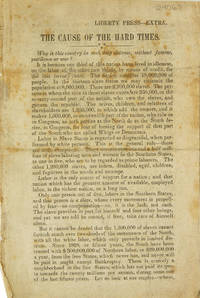
184324068Utica 1843. 4pp. 1 vols. 8vo. Disbound spotted and soiled separated along spine else a good copy of this rare piece. 4pp. 1 vols. 8vo. Rare. An "Extra" to the "Liberty Press" relating to slavery and the "deep distress" and idleness caused by slavery. The author signed "Truth-Teller" attributes most of the labor problems and many of the economic ones to the instution of slavery. He recommends allowing Florida a place in the Union as a free state and Congress guaranteeing each state a republican form of government which he feels would bring about the end of slavery. <br/><br/> unknown
1371653Abidjan: Les Nouvelles Editions Africaines, 1976 in-8, 240 pages, bibliographie, index. Reliure basane rouge, dos à nerfs, bel exemplaire.
183384791Lexington KY: Abraham Skillman 1833. First Edition. First printing. 12mo 18.5cm; original brown cloth-covered boards; viii207pp. Respined to style with facsimile printed spine label; Bookplate of the Young Men's Christian Institute New Haven to front pastedown; bookseller's ticket Williams' Bookstore Under the Old South Meeting House Boston at base of front flyleaf; pencil signature faded and illegible to front endpaper. Complete sound and Good. <br /> <br /> One of a tiny number of pre-Civil War abolitionist texts to have been written by a Virginia author. Paxton 1784-1868 was a Presbyterian minister born in Rockbridge County Virginia and educated at Princeton Theological Seminary; it is likely his mentorship there under Charles Hodge helped develop Paxton's antislavery sentiments. In 1826 after publishing an essay asserting the institution of slavery to be incompatible with the teachings of the Bible Paxton was expelled from his pastorship of Cumberland Presbyterian Church near Farmville in south-central Virginia. The present text addressed to his former congregation recounts the events of his expulsion reprints the essay in question and adds a series of epistolary essays supporting his theological position in oppostion to slavery. <br /> <br /> The existence of any abolitionist sentiment during this period in Virginia's history is remarkable in itself. For a native-born minister to willfully preach the gospel of antislavery even the relatively conservative version of abolitionism professed by Paxton before a congregation whose sentiments on the subject would have been diametrically opposed - and which doubtless included a number of slaveholding families - must have amounted to apostasy in some congregants' eyes. By publishing the present work Paxton essentially doubled down on his unpopular beliefs making him in this cataloguer's eyes a rather remarkable figure. We find it surprising that so little biographical information exists regarding Paxton. His name barely appears in the scholarly literature on the period; perhaps because no mention of abolition is made in either the title nor the sub-title of his book the work is rarely discussed in articles on the antebellum southern antislavery movement. Though reasonably available institutionally Letters on Slavery is perenially scarce in commerce having appeared at auction only three times in the current century. This a quite decent copy in a discreetly restored binding. SABIN 59264. DUMOND Antislavery Bibliography p.89. LCP AFRO-AMERICANA 7501. Abraham Skillman unknown
180158147<p>ELOQUENT ARGUMENT FOR ABOLITION OF THE SLAVE TRADE BY A WEST INDIES SLAVE OWNER - WITH A DESCRIPTION OF SUGAR PLANTATIONS</p><p>Full title: 'Letters on the Cultivation of the Otaheite Cane; the Manufacture of Sugar and Rum; the Saving of Molasses; the Care and Preservation of Stock; with the Attention and Anxiety which is due to Negroes. To these Topics are added a few other Particulars analogous to the Subject of the Letters; and also Speech on the Slave Trade the most important Feature in West Indian Cultivation.'</p><p>first edition 8vo. xvi 248 248 1 blank 249-290 291-301 prospectus with detailed contents for book on Leeward Islands 1 blankpp large folding table at p.247 modern quarter rich tan calf spine panelled by raised bands with the panels richly gilt tooled red morocco title label marbled sides scattered foxing some light old water staining to lower and fore margins most noticeable in gatherings B and L and never obtrusive else a nice copy in a very handsome binding.</p><p>SABIN 9850 Goldsmiths'-Kress no. 18156.4 Rare Books Hub records none at auction. <br />Clement Caines d. 1817-1822 trained as a barrister in London inherited his family's sugar plantations in St. Kitts around 1778 and became the largest slave owner in the island. In the General Assembly of the Leeward Islands in 1798 he advocated the abolition of the slave trade better treatment for enslaved workers and an end to the slave trade. He wrote extensively on the desirability of humane treatment for plantation slaves and the abolition of the slave trade as well as political topics including his support for the Embargo. <br />The first part of this book effectively a detailed description the workings of a West Indian sugar cane plantation benefits from Caines's first hand experience of the topic. The second part p.249-288 contains his 'Speech on the Slave Trade' delivered to the General Assembly of the Leeward Islands in March 1798 which was discussing a resolution that the abolition of slave trade 'would be oppressive to the British planter destructive to the sugar colonies and consequently to the British Revenue and of no benefit to the Africans themselves'. Caines unambiguously stated "the slave-trade ought to be abolished. It ought to be abolished immediately. It ought immediately to be abolished for the sake and benefit of the planter". Caines argued that the slave trade was injurious not only to the slaves but to their owners. Having observed the death rates from exposure overwork and disease involved in forest clearing he bluntly stated that slave labour "cements with blood the walls of every sugar-work that is raised where forests grew". He stated that his business had "never been delegated to others. The slaves who were committed to my care performed their work under my own eyes. My time was passed with them and my attention devoted to them and their condition. I could not fail then to become acquainted with their wants and sufferings - to remark their sickness disability and premature decay: - the diseases among their men the sterility of their women and the death among their children". He directly challenged his hearers for their calculation "that a hardy African can be purchased for less than a Creole infant can be reared" and their consequent failure to provide adequate housing for mothers and children. He reports that about a quarter of newly arrived slaves on discovering their situation "pine and droop linger rather than live and shortly sink into the grave". Only an end to the importation of new slaves could disrupt the planters' callous calculation that they could "run our Negroes for two or three years" in the certainty that they could be then be replaced. Caines's familiarity with the actuality of slave life and his eloquent and direct illustration of it give this work an especial power.</p><p><br />Interestingly in 1811 Caines wrote to both Thomas Jefferson and James Madison sending copies of his publications vide https://founders.archives.gov/documents/Jefferson/03-03-02-0394 .</p> Printed for Messrs Robinson hardcover