2 100 résultats
167817181678 Chez Johannes van Someren, Amsterdam, 1678. In-24, plein veau glacé (postérieur), reliure signée Abich en pied, Chiffre doré sur les plats. (4), 271, (3) pages. Titre gravé. Gravure sur bois in-texte en caractères arabiques (La Illahé Illa Alla, Muhamed Resoul Alla).Fait suite aux "Six Voyages"
19030056451903 Paris, Hetzel, [1903-1904]. Grand in-8 percaline rouge de l'éditeur ornée de fers spéciaux, titre dans le cartouche, tranches dorées (Engel Rel., d'après une plaque de C. Blancheland). ; (2) ff. de faux-titre (avec frontispice au verso) et titre, 410 pages. Rousseurs au feuillet de titre.
Very Good Turkish, Ottoman (1500-1928) Original bdg. Large roy. 8vo. (24 x 20 cm). In Ottoman script. (Old Turkish with Arabic letters). 16 p., 15 chromo-lithographed maps. Some markings on the two maps. Otherwise a very good copy. First edition of this scarce atlas for Turkish primary schools drawn and published by Turkish geographical educators and cartographers in the early Republican period of Turkey. This fine atlas was printed in London, in a period after the proclamation of the Republic, before the Letter Revolution in 1928. Duran studied in Istanbul and Paris. He worked as a geography teacher in various high schools then he became a lecturer and a manager at Ankara Gazi Education Institute for a while. He was known for his writings on various topics and especially for his works on geography. Born in the imperial period, Duran signed the first cartographic studies of the Republic of Turkey with the transition to the Republican administration. Özege 8764.
110751L'Edition d'Art H. Piazza et Cie, 1904, 1 volume in-8 de 230x170 mm environ, 261 pages, reliure signée S. de Lancker plein chagrin aubergine, dos à 5 nerfs portant titres dorés, tranche de tête dorée, gardes ornées de motifs dorés, sous étui recouvert du même papier que les gardes avec ouverture en cuir assorti et intérieur en suédine bleu clair, feuillets non rognés, couvertures et dos illustrés conservés. Exemplaire numéroté N° 185, un des 260 exemplaires sur papier vélin à la cuve, de Blanchet frères et Kléber, numérotés de 41 à 300, avec 1 dessin original non retenu pour le livre, et 63 compositions aquarellées, certains rehaussées à l'or, ainsi que quelques ornements décoratifs, par Manuel ORAZI. Dos et ouverture de l'étui insolés avec des frottements sur les mors et les coiffes et sur l'étui.
Very Good Turkish, Ottoman (1500-1928) Original color map. Folded. Oblong folio. (35 x 52 cm). In Ottoman script. Color lithograph. A very detailed and attractive Ottoman map of America. Scale: 1:12.000.000. Otherwise a very good copy. Slightly chipped extremities. Dated Hegira: 1311 = [Gregorian 1895]. Ali Seref Pasa or Hafiz Ali Esref. He was a soldier, who was schooled in Paris as a cartographer around 1862. Already in Paris he published his first atlas with 22 maps, called 'Yeni atlas'. Upon his return to Istanbul he became a chief cartographer at the Maatbaa-i amire Printing Press in Beyazit, which was the successor of the Muteferrika press from 1727. Among others he translated the large Kiepert map of Anatolia to Ottoman. He died in 1907, leaving his large project of a gigantic map of Anatolia in 100 sheets unfinished. Ali's name is often misunderstood or even listed as two different people: Ali Seref Pasa and Hafiz Ali Esref. Until the surname law adopted on June 21, 1934, Turks did not have surnames. They were born with one first name and were until the adulthood described only as sons or daughters of their parent's names. Later they were given titles such as Effendi (Sir), Bey (Chief) or Hanim (Madam) for higher classes, or they were given names according to their work or class. The names were not inherited by children until 1934, when the surname law was enforced. The map maker Ali received names Seref, the honourable, and Pasa, the dignitary. He was also known as Hafiz, the memorizer of Qur'an and Esref, Proud. So Ali Seref Pasa would have a meaning 'Honourable Dignitary Ali, and Hafiz Ali Esref, Memorizer of Qur'an, Proud Ali. Daruttibaa - Matbaa-I Amire Printing Press: The first press in the Muslim world, called Daruttibaa, was founded in Istanbul by Ibrahim Muteferrika in 1727, with a permission of Sultan Ahmeet III. It was located in Muteferrika's house. The first book was published in 1729 and until 1742 sixteen other works followed. After Muteferrika's death, the press was supressed for printing, as printed books were considered dangerous. In 1796 the press was purchased by the government and moved to Uskudar in Istanbul, and in 1831 finally to Beyazit, where it was renamed to Matbaa-i Amire in 1866. The press was closed in 1901 and was reopened in 1908 under the name 'Âmire' In 1927 the name changed to State Printing House. The press still exists and is known for publishing school and educational books. Extremely rare. Not in OCLC.; Not in TBMM Map Collection.
New English Original bdg. HC. In publisher's box. Folio. (41 x 34 cm). In English. 365 p., 187 color photographic plts. Sculptured for eternity. Treasures of Hellenistic, Roman and Byzantine art from Istanbul Archaeological Museum. Photos by Ahmet Ertug. "The Istanbul Archaeological Museum is home to some of the world's most important collections of archaeological artifacts. The text of this splendid book, whose subject is the museum's rich collections of Hellenistic, Roman, and Byzantine sculpture, was prepared by Dr. R. R. R. Smith, a professor of archaeology at Oxford University. All the works were photographed by Ahmet Ertug, whose images of such masterpieces as the Alexander, Sidamara, and Lycian sarcophagi are presented as stunning panoramic views. The photographs in this book together with facsimile reproductions of the original sculptures were exhibited in the Tuileries Gardens of the Louvre Museum in Paris in August and September 2002, an artistic event that was attended by about 50 thousand people in the course of just two months' time. 34 by 41 cms., hardbound covered with Japanese cloth, presented in a special case.". A very heavy volume. Extra shipping fee will be requested.
New Turkish Original bdg. HC. 4to. (30 x 25 cm). In Turkish. 10 volumes set: (5320 p.), many color and b/w plates. Büyük Istanbul tarihi ansiklopedisi: Antik çagdan XXI. yüzyila. 10 volumes set. Edited by Coskun Yilmaz. Encyclopaedia of the history of Istanbul. 35 kg. An oversize and very heavy set. Extra shipping fee will be requested. Set will be sent with two separate its huge original commercial boxes.
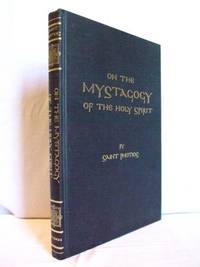
165121700London: Robert Daniel 1651. First edition. leather_bound. Contemporary Cambridge style full brown calf lacking spine label. Very good. 393 pages plus 5 leaves: Index Rerum & Verborum & Index Scripturarum. 32 x 21 cm. Translated and edited by Richard Montague. Parallel text in Latin and Greek. He is recognized in the Eastern Orthodox Church as St. Photios the Great viewed as the most important intellectual of his time - "the leading light of the ninth-century renaissance" and a central figure in both the conversion of the Slavs to Christianity. Considered by some scholars as only one of many Byzantine scholars of Armenian descent. Text generally clean and fresh. Armorial bookplate hinges cracked but firm woodcut device on title leaf Ddd browned minor marginal worming not affecting text errata. BRUNET Vol. IV p.623. WING P2136. Robert Daniel unknown books
1913055948Rodosto & Constantinopoli: Manuscript & Typescript 3-9 October 1913. 1913. No Binding. Very Good. 8vo - over 7¾ - 9¾" tall. A one-page typed letter with autograph marginal notes and a two-page manuscript report in black ink. Both are written on bifolia papers with "Renage's Mill" watermark One is "Banknote Paper" the other is "Extra Strong". "Agenzia Consolare d'Italia Rodosto" & "Consolato Generale d'Italia in Constantinopoli" letterheads. 27x21 cm. The letter is in Italian report is in French. 1 p.; 2 p. Signed. Except for the horizontal centre-fold in very clean condition. A letter written by the Italian Consul General in Constantinople to the Italian chargé d'affaires accompanied by a historically significant report from the Consular Agent in Rodosto provides valuable first-hand information about the outbreak of epidemic diseases such as cholera and typhus among humans and anthrax and bubonic plague among animals in the Ottoman Empire in 1913. It also sheds light on the authorities' failure to address these public health crises while offering significant insights into the Muslim immigrants arriving in convoys to the region during the ongoing Balkan Wars. This is an invaluable firsthand account of the Sixth Cholera Pandemic in the Ottoman Empire "a time when the Empire's foundations were shaken by the Balkan War military defeats territorial losses the plight of refugees and immigrants and the dreadful calamity of the cholera epidemic between 1911 and 1913 during which no reliable official records exist regarding the exact number of cholera cases and deaths". Unat. The manuscript report opens by stating the number of direct death cases as rendered in the translation: "I believe it is my duty to inform you that on the 27th a case of cholera followed by death was reported in the town. The day before yesterday there were four other cases two of them fatal; yesterday four new ones two of which were fatal; today another case. So out of ten cases there have been five deaths." The letter goes on: "The other municipality requested a credit of 1000 piastres from Constantinople to take the measures required by the circumstances. Unfortunately no reply has been given and our local officials do not know to which authority they should turn." "Cholera is present in Kirklareli Quarante Églises Baba-Eski Babaeski à Vise Vize à Bounar-Hissar Pinarhisar à Luli Bourgaz Lüleburgaz à Ouzun Keupiru Uzunköprü and aound Krichan Kirikhan. In Tchorlou Çorlu typhus is wreaking havoc and smallpox is present here. Our entire region is devastated by an epizootic outbreak: smallpox and foot-and-mouth disease among the sheep anthrax and bubonic plague among the oxen and buffaloes. Money and serum have been requested from the Ministry of Agriculture but there has been no response. The chief veterinarian I spoke with assured me that it would be impossible to do anything until he has serum to treat the livestock and that if the epidemic disease continues to spread like this the livestock will be completely wiped out in our region." The Royal Consular Agent states that during and after the war between the Turks and Bulgarians also known as the Battle of Kirkkilise which was part of the Balkan Wars Muslim immigrants who continually flocked to Kirklareli and the surrounding areas brought cholera and other epidemic diseases to the region. "Regularly there are convoys of migrants who had left their villages in the surrounding areas of Adrianople Quarante Églises Lüleburgaz etc. before the Turco-Bulgarian War arriving from Anatolia by steamships. They are the ones who brought us cholera and the epidemic disease." He ended his manuscript report by stating there is no way to convince the authorities to have them disembark elsewhere outside the city or to prevent the arrival of these immigrants who are being directed utilizing forced requisitions to areas where cholera is spreading. This report was presented to the Italian chargé d'affaires with this letter additionally as below: "Healt <br/> <br/> Manuscript & Typescript, 3-9 October 1913. unknown
1632PHO-757Paris, chez Claude Cramoisy rue Sainct Jacques au Sacrifice d'Abel,1632. 4 parties en un vol. in-folio (sur 2), veau brun, dos à nerfs orné (reliure de l'époque). Reliure usagée, manques de cuir au dos, coins émoussés, frottés et épidermures. Seconde continuation de l'histoire des Turcs depuis l'an M.DC.XII jusques à présent. Par le Sieur de SAINCT LAZARE, historiographe. 1632. [2] ff., pp. 909-1015, [1] p. (Action de graces), [32] pp. (tables). 3 portraits (Osman Ier, Mustapha II, Amurath IV gravé sur cuivre à pleine page. Illustrations de Blaise de VIGENÈRE Bourbonnois, sur l'Histoire de Chalcondile Athénien, de la décadence de l'Empire Grec, & establissement de celuy des Turcs. 289 col. et [3] pp. (table). 2 portraits (Empereur et Patriarche) gravés à pleine page. Le Triomphe et Victoire de la Croix, contre les erreurs de Mahomet. Discours auquel les impertinences de l'Alcoran sont démonstrées, & que le signe de nostre Redemption regne encore triomphant sur le trosne de ses ennemis. [et] Observations et remarques plus notables de la providence de Dieu ; en l'accroissement de la domination des Princes Othomans, et décadence de l'Empire Grec, & autres seigneuries qu'ils possèdent à présent. Sur l'Histoire des Turcs de Laonic Chalcondile, Athénien. Par Artus THOMAS, sieur d'Embry, Parisien. 4 pp. puis col. 5-128, [2] pp. table. Plusieurs descriptions des Accoustrements tant des magistrats et officiers de la Porte de l'Empereur des Turcs, que des peuples assujectis à son Empire. Avec les figures representant le tout au naturel, tirees des Medailles antiques & descriptions de ceux qui ont frequenté parmy ces nations, ou des bons Autheurs qui en ont escrit. 54 ff. (sur 65), dont 1 feuillet titre intermédiaire, 1 page avis au lecteur et 52 (sur 62) planches de costumes gravées à pleine page (avec leur page explicative en regard). Les planches, représentant des costumes d’hommes et de femmes, ont été gravées en taille douce d'après les dessins d'après nature de Nicolas NICOLAY, gravés sur bois la première fois par Louis Danet pour l'édition des "Quatre premiers livres des navigations et périgrinations orientales" de 1567. Manque les ff. 2, 4, 7, 10, 14, 17, 22, 25, 31, 45, 63. Déch. avec manque pl. 52. Quelques ff. désolidarisés. Tableaux Prophétiques des Empereurs Severe et Leon, avec leurs epigrammes predisans la ruine de la Monarchie des Turcs. Ausquels on a adjousté l'exposition d'iceux, tirée tant de ce qui a esté cy-devant iprimé, que de plusieurs manuscrits ; avec une notable Prophetie qui se retrouve en langue Arabesque, & quelques autres à ce propos. Par Artus Thomas, sieur d'Embry Parisien. pp.65-112 pp. Manque les pp. 113-114, les 3 dernières pp. de table et la planche dépliante. 17 figures gravées à pleine page avec leur explication sur la page en regard. Mouillures et rousseurs, galeries de ver en marge int. des premiers et derniers feuillets, déchirures marginales atteignant parfois le texte ou la gravure, et plus étendues sur qqs ff., restauration de papier pp. 103-104 de la dernière partie.P2-8B
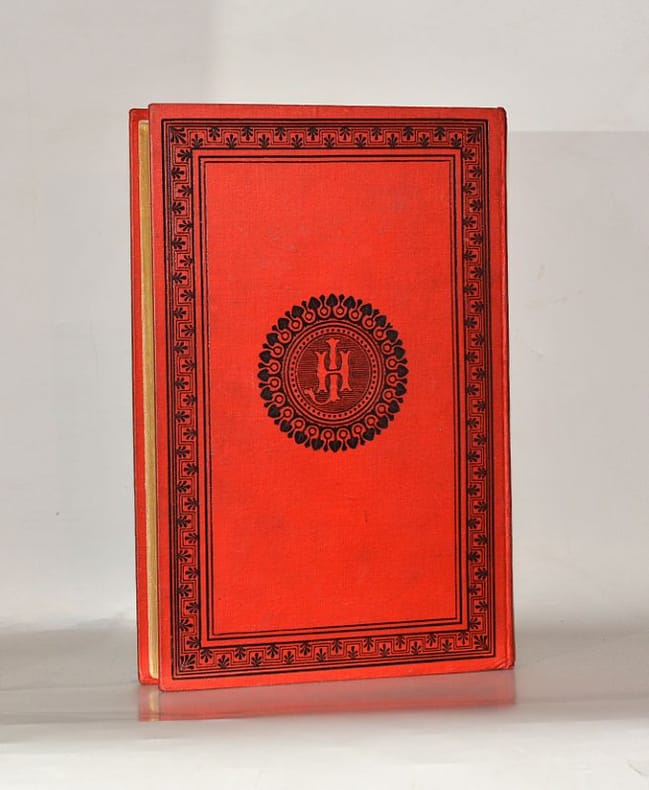
18380172621838 Peter and Jackson Hardcover
Fine English Original cloth binding. Oblong folio. (70 x 48 cm). 419 p.; 448 p. B/w photos. 500 copies were printed. From Konstantiniyye to Istanbul Photographs of the Rumeli Shore of the Bosphorus from the mid-19th to the 20th Century is comprised of the works by photography masters who practiced their art in Istanbul from the end of the 19th to the early years of the 20th century. This is a unique selection from The Suna and ¿nan K¿raç Collection of Old Istanbul photographs reveal the magnificent structures, the daily life and the intriguing personalities of an Istanbul of the past.
1766PHO-1265Paris, Robin, 1766. 3 volumes in-12, veau marbré, dos là nerfs orné (Reliure de l'époque) avec pièce de titre et tomaison , tranches rouges , ex-libris sur le contre-plat , défauts de reliure , coins et coiffes usés , début de fentes aux charnières , etc.
19101605131910. Signiert "Paoletti" wohl datiert und bezeichnet "Constantinople / (1)910". Auf Aquarellpapier, fest auf Pappe aufgezogen und unter Passepartout montiert. 19,7 x 27,8 cm.
Very Good Turkish, Ottoman (1500-1928) Original color map. Folded. Oblong folio. (35 x 52 cm). In Ottoman script. Color lithograph. It shows Sudan and West Africa, Atlas Ocean shores, Sahra Desert, and other parts of Africa. Scale: 1:15.000.000. A very detailed and attractive map. Slightly fading. Otherwise a very good copy. Dated Hegira: 1310 = [Gregorian 1894]. [EARLY OTTOMAN MAP of SUDAN] Sudan. Sâye-i Türkiye Hazret Gazi Sultan Abdülhamid Hân-i Sâni'de Maarif Umûmiye Nezâret-i Celîlesi ruhsatiyle meshur Haset tarafindan Fransa Cemiyet-i Cografya âzâlarindan mütesekkil komisyona mahsûs tanzîm edilmis oldugu son defaki atlasinin tercümesi olarak bu def'a Erkân-i Umûmiyye Dairesi Besinci Fen Subesi'ne me'mûr piyade mirlivâlarindan saâdetlü Ali Seref Pasa ve rifatlubinbasi fütûvvetlü Muhyiddin Efendi maarifetleriyle tertib ettirilmistir. Ali Seref Pasa or Hafix Ali Esref. He was a soldier, who was schooled in Paris as a cartographer around 1862. Already in Paris he published his first atlas with 22 maps, called 'Yeni atlas'. Upon his return to Istanbul he became a chief cartographer at the Maatbaa-i amire Printing Press in Beyazit, which was the successor of the Muteferrika press from 1727. Among others he translated the large Kiepert map of Anatolia to Ottoman. He died in 1907, leaving his large project of a gigantic map of Anatolia in 100 sheets unfinished. Ali's name is often misunderstood or even listed as two different people: Ali Seref Pasa and Hafiz Ali Esref. Until the surname law adopted on June 21, 1934, Turks did not have surnames. They were born with one first name and were until the adulthood described only as sons or daughters of their parent's names. Later they were given titles such as Effendi (Sir), Bey (Chief) or Hanim (Madam) for higher classes, or they were given names according to their work or class. The names were not inherited by children until 1934, when the surname law was enforced. The map maker Ali received names Seref, the honourable, and Pasa, the dignitary. He was also known as Hafiz, the memorizer of Qur'an and Esref, Proud. So Ali Seref Pasa would have a meaning 'Honourable Dignitary Ali, and Hafiz Ali Esref, Memorizer of Qur'an, Proud Ali. Daruttibaa - Matbaa-I Amire Printing Press: The first press in the Muslim world, called Daruttibaa, was founded in Istanbul by Ibrahim Muteferrika in 1727, with a permission of Sultan Ahmeet III. It was located in Muteferrika's house. The first book was published in 1729 and until 1742 sixteen other works followed. After Muteferrika's death, the press was supressed for printing, as printed books were considered dangerous. In 1796 the press was purchased by the government and moved to Uskudar in Istanbul, and in 1831 finally to Beyazit, where it was renamed to Matbaa-i Amire in 1866. The press was closed in 1901 and was reopened in 1908 under the name 'Âmire' In 1927 the name changed to State Printing House. The press still exists and is known for publishing school and educational books. Extremely rare. Not in OCLC.; Not in TBMM Map Collection.
Very Good Turkish, Ottoman (1500-1928) Modern cloth bdg. Small 4to. (26 x 19 cm). In Ottoman script (Old Turkish with Arabic letters). 24 p. First edition of this epic and historically important account, describing the siege and fall of the Byzantine Empire and Constantinople by Ottoman Sultan Mehmet II in 1453. This is one of the finest literary examples of sixteenth-century Ottoman prose. "This description of the conquest of Istanbul in 1453 is mentioned only by Ismail Pasha in his "Hediyyetü'l Arifîn". The text, which was published as a supplement to TOEM (parts 20 and 21, Istanbul 1331) is said to be taken from a manuscript owned by Halis Efendi. The introduction to Ca'fer Çelebi's life was also written by Halis Efendi. The work is written in a very elegant style, with ayets, hadith, and beyts in Arabic, Persian, and Turkish scattered throughout the text and may be considered one of the finest examples of sixteenth-century Ottoman prose writing. [.] Ca'fer's work is in some aspects a reliable source for the conquest of Istanbul. The preparation for the siege is given in this work. The council of war which was held before the siege and in particular Mehmed II's speech to the council is very detailed and the chain placed across the entrance to the Golden Horn and its history is very well described in this work as well. During the siege, the Byzantines received help from the outside. Ca'fer is specific about this and states that "four huge vessels full of provisions, soldiers and ammunition came to help of the Byzantines". After the last attack, Constantinople fell into the hands of the Ottoman army. The date given for this is 857 Cem. I. 20 Seshenbe in Ca'fer's work. The plundering and looting which occurred during the first three days of the conquest are vividly described by Ca'fer Çelebi, but the withdrawal of Justinian and his men which preceded the conquest and the death of the Byzantine Emperor during the capture of the city are omitted in this work. Ca'fer's closing lines are devoted to the conversion of St. Sophia (Ayasofya) into a mosque by Mehmed II. Ca'fer Çelebi used eyewitness accounts as well as written works. It is certain that he did not rely exclusively on any source which is not extant, for the departs from Ruhi, Enverî, Tursun Beg, Neshrî, and Asikpasha-zâde either by adding new information or giving a conflicting account." (Erünsal). Özege 11953; TBTK 7066.
057854Paris Chez Denné jeune, Libraire An VIII 1797 in 8 (22,5x14,5) 2 volumes reliures demi foncée de l'époque, dos lisses orné de guirlandes dorés, non rognés. Tome 1: VIII et 371 pages, avec une vue gravée dépliante en frontispice (La pointe du Sérail vue du palais de l'ambassadeur à Pera). Tome 2: 292 pages, avec une vue gravée dépliante en frontispice (Vue de la plaine de Troyes), et une carte gravée dépliante (Esquisse de la plaine de Troyes). James Dallaway, 1763-1834, historien et topographe britannique. Bel exemplaire
165121700London: Robert Daniel 1651. First edition. leather_bound. Contemporary Cambridge style full brown calf lacking spine label. Very good. 393 pages plus 5 leaves: Index Rerum & Verborum & Index Scripturarum. 32 x 21 cm. Translated and edited by Richard Montague. Parallel text in Latin and Greek. He is recognized in the Eastern Orthodox Church as St. Photios the Great viewed as the most important intellectual of his time - "the leading light of the ninth-century renaissance" and a central figure in both the conversion of the Slavs to Christianity. Considered by some scholars as only one of many Byzantine scholars of Armenian descent. Text generally clean and fresh. Armorial bookplate hinges cracked but firm woodcut device on title leaf Ddd browned minor marginal worming not affecting text errata. Lacks first blank free endpaper. BRUNET Vol. IV p.623. WING P2136. Robert Daniel unknown
17920044701792 Paris, Lavillette, 1792. Deux volumes in-8 (132 X 204 mm) basane fauve marbrée, dos lisse orné d'une roulette et filets dorés en place des nerfs, compartiments ornés de fers dorés, guirlande dorée en queue, pièces de titre et de tomaison maroquin rouge (reliure de l'époque). Tome I : (1) f. blanc, XVI-237 pages, (1) f. blanc - Tome II : (1) f. blanc, (2) ff. de faux-titre et titre, 256 pages, (1) f. blanc. Coiffe supérieure des deux tomes restaurée, important cerne de mouillure dans la marge latérale des huit premiers feuillets du tome I, plus discret des pages 33 à 85, puis pages 113 à 131, enfin taches brunes éparses des pages 225 à la fin de ce premier tome, taches sombres au dos du premier tome.
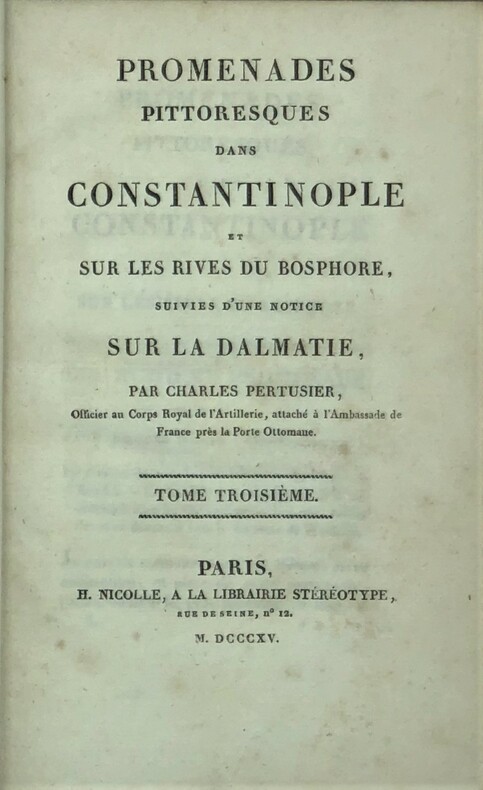
1815PHO-637Paris, H. Nicolle, 1815. 3 volumes in-8 (205x130mm), plein veau raciné,dos misse orné avec titre et tomaison en maroquin,tranches marbrées ,un plat détaché , manque aux dos , coins usés, reliure d époque ,438pp.-462pp.-476pp.
Fine Turkish Contemporary homogene black clothes. 4to. (27 x 19 cm). 5 volumes, 70 fascicles: (2884 p.), many color and b/w plates and ills. Istanbul ansiklopedisi. Vol. 1-5. [First 5 volumes of 11].
1983260207014Studion Publishers 1983. hardcover. Good. 9x6x1. Cover has light wear. Text unmarked small smudge on a few pages. Good solid binding. Ships Next Business Day. Studion Publishers hardcover
Very Good Arabic Original chromo-lithograph map in brown tones. On a special paper with an ongoing blindstamped "Regestre Robur" during the borders. Folded. 70x100 cm. In Arabic. Scale: 1 /1.000.000. Chipped on margins, split on folded traces. Slight discoloration and one stain on lower margin. Otherwise a good copy. An attractive and detailed map of Syria shows the capital (as Aleppo n that map), other cities like Damascus, Raqqa, Homs, Latakia, Ayn al-Arab, Idlib, Hama, Deir Ez-Zor, Jarabulus, et alli. And it shows Turkey on the north (as Turkey containing Hatay and Alexandrette), The Mediterranean shores of the land as well as Lebanon and Palestine (and Jerusalem) on the west, Sharq al-Urdun (Jordan) and Iraq on the south and east. It's very detailed on showing the roads spread throughout the land like railways and ancient roads from the Roman period. Additionally this roads can be followed to the other Arabic countries and regions on the map. This map was calligraphed by Kamel Al-Baba, (1905-1991), who was a Lebanese contemporary / modern calligrapher. He is the son of famous calligrapher Mokhtar Al-Baba. Cannot be found in WorldCat.; Not in Library of Congress Map Collection. Very scarce.
New New English In original bdg. In publisher's special slip-case. 13 volumes set: 366, 26 p.; 444, 28 p.; 556, 32 p.; 438, 18 p.; 567, 20 p.; 512, 20 p.; 552, 8 p.; 400 p.; 517, 26 p.; 367, 34 p.; 541, 34 p.; 521 p.; 893 p. Volume 12: Index in Armenian; Volume 13: Index in Turkish. With 13 CDs. Reprint edition. In Armenian. 500 copies were printed. Private yearbooks apart from state yearbooks are very important sources in order to understand the daily life of Armenian people of that time. In this respect, Surp Prgitch Armenian Hospital Yearbooks [1900-1910] are one of the primary sources which were just published before the Teotig [Teotig Laptchindjian] yearbooks [1907] and they are important sources in order to understand the social, academic, civil and religious life of that time.
Very Good Turkish, Ottoman (1500-1928) Original pictorial wrappers. Demy 8vo. (22 x 15 cm). In Ottoman script (Old Turkish with Arabic letters). 59 p., 23 unnumbered b/w plates. Occasionally fading on pages. Otherwise a very good copy. First edition of this extremely rare first science fiction book discusses the biological probability of the possibility of life on planets in the Solar System, with semi-fictional texts, in the light of scientific knowledge at the time of publication. Osman Nuri Eralp was a Turkish veterinarian and microbiologist. Eralp was born in Istanbul in the Ottoman Empire. He completed his university education at "Mekteb-i Tibbiye-i Mülkiye" which was the medical school of Darülfünun [i.e. House of Multiple Sciences, name of Istanbul University in Ottoman era]. To continue studying for a post-graduate qualification, he attended Sorbonne and Pasteur Institute. After graduation, he worked as a veterinarian while continuing his research studies. After the declaration of the Constitutional Regime in 1908, he worked as a full-time academic at Istanbul University and Ankara University. He lectured on histology and embryology. Eralp contributed notably to the field of bacteriology via his research on microorganisms (tuberculosis, anthrax, cholera, syphilis, gonorrhea), and the field of virology by his research on rinderpest. He wrote the first science fiction book in Turkey titled "Baska dünyalarda canli mahlûkât var midir" [i.e. Are there alive creatures in other worlds?]. (Wikipedia). Özege 1712.; TBTK 10040.; Not located in OCLC.