Zimmermann, Clemens von - 1788 Düsseldorf - München 1869Antiquariat.de

24 110 résultats
414-Eo.J. Bleistift, auf chamoisfarbenen Velin, rechts unten signiert (?) ?Zimmermann?. 14,6:22,1 cm. Insgesamt etwas fleckig; mit Nadellöchlein in beiden oberen Ecken.
162-Do.J. Schwarze Kreide, teils gewischt, auf Bütten. 21,4 : 18,5 cm. Provenienz: Sammlung Charles de Graimberg, Heidelberg. - Ecken schräg geschnitten, etwas fleckig, horizontale Mittelfalte geglättet. - Der Dargestellte weist große Ähnlichkeit mit gesicherten Porträts des französischen Revolutionärs Georges Danton (1759 - 1794) auf.
255-Eo.J. Aquarell, mit Deckweiß gehöht, über Kohleskizze, auf Karton, rechts unten signiert ?Ol. De Penne?. 12,2 x 21,2 cm.
096-Jo.J. Tuschfederzeichnung, Farbstift in Blau, Aquarellfarbe in Gelb und Grün, Deckweiß. Monogrammiert. 19,4:26,7 cm. Reproduziert in: ?Simplicissimus?. Literatur: Goldstein, S. 370; Ausst. München, 1977/78, Simplicissimus. Eine satirische Zeitschrift. München 1896-1944, SS. 405-411; Flemig, S. 112.
114-Do.J. Feder in Braun und Grau, grau laviert, mit brauner Federlinie umrandet, auf Velin, verso signiert und datiert ?Franz Kobell f 1812?. 21:27,2 cm. Papier insgesamt vergilbt und etwas fleckig, verso an den Rändern Reste einer alten Montierung.
254-Eo.J. Pinsel in Braun, über Bleistiftskizze, auf cremefarbenem Velin, verso am Oberrand mit grauer Feder bezeichnet ?Diese Skizze von meinem Vater E F Pape Sorent 1835 (sic!, muß lauten: 1845) Friedrich Pape?. 28,7:22,7 cm.
141-Do.J. Pinsel in Grau, über Bleistift, auf chamoisfarbenem Bütten mit Wasserzeichen: H blum. 38,7:24,3 cm. Papier im linken Rand unten etwas ungleich gerissen und mit Löchlein, leicht fleckig. Vergleichsliteratur: Ausst. Katalog: 3 x Tischbein und die europäische Malerei um 1800. Kassel/Leipzig/München, 2005, Nr. 48.
- Crayon sur papier Fin XIXème - Début XXème, 22 x 15,5 cm. - ANQUETIN Louis Fête villageoise - étude pour le bal champêtre Pencil on paper, Late 19th - Early 20th century, 22 x 15.5 cm. Original pencil drawing, presented under a two-colour marie-louise frame. Signed with the artist's signature stamp in the lower right corner of the work, and signed with the workshop's stamp on the back. A minor tear in the left margin. Very good condition. Provenance: artist's workshop, referenced in the Atelier Louis Anquetin catalogue (Thierry de Maigret, 28/11/08). Louis Anquetin, born in Étrépagny in 1861 and died in Paris in 1932, is an important French painter. He began his career alongside avant-garde painters such as Vincent Van Gogh and Henri de Toulouse-Lautrec. He is the inventor, with Émile Bernard, of Cloisonnism. From 1884 to 1893, Louis Anquetin never stopped exploring the new possibilities that the freedom of Impressionism brought to French painting. From 1893, following a long confrontation with the "maîtres d'autrefois" "masters of the past," he adopted a pictorial bias which would put him on the fringes of the general art movement and distance him from his friends. Dazzled by Baroque art and its creative vigour, he then thought that his childhood friends were taking a path that would lead to the death of painting. He believes in a "peinture parfaite" "perfect painting," which is embodied in the re-remembering of Michelangelo and Rubens' lessons in particular. His work, therefore, becomes more classic; he advocates the return to the profession, by proposing to reflect on the a priori conditions of any possible form of art in accordance with the rules of perspective and anatomy, as practised by the masters of the 16th and 17th century. Leaving only a few works that can be described as monumental, Anquetin proves to be prolific as a result of his many studies and sketches; he who considered that drawing was "un moyen d'expression tout puissant" "an all powerful means of expression," the obligatory foundation of all fine art. By working voluntarily in reverse of his time, Louis Anquetin made the existance of an original modern portrayal possible. Through his persistance and his passion for painting, he indeed prevented the path of the great western tradition from being completely sealed. His works can be admired in many prestigious museums, such as the Musée d'Orsay or the Louvre in Paris, in San Francisco or in Detroit, in the State Hermitage Museum in St Petersburg, in the National Gallery and the Tate in London, etc. [FRENCH VERSION FOLLOWS] Dessin original au crayon, présenté sous marie-louise bicolore. Signature du cachet de la signature de l'artiste dans l'angle inférieur droit de l'uvre, et signature du cachet de l'atelier au verso. Une déchirure sans manque en marge gauche. Très bel état de conservation.Provenance : atelier de l'artiste, référencée au catalogue Atelier Louis Anquetin (Thierry de Maigret, 28/11/08). Louis Anquetin, né à Étrépagny en 1861 et mort à Paris en 1932, est un important peintre français. Il commence sa carrière aux côtés de peintres d'avant-garde tels que Vincent Van Gogh ou Henri de Toulouse-Lautrec. Avec Émile Bernard, il est l'inventeur du Cloisonnisme. De 1884 à 1893, Louis Anquetin ne cesse d'explorer les possibilités nouvelles offertes par la libération introduite par l'Impressionnisme dans la peinture française. A partir de 1893, à la suite d'une longue confrontation avec les « maîtres d'autrefois », il adopte un parti-pris pictural qui le mettra en marge du mouvement général de l'art, et l'éloignera de ses amis. Ébloui par l'art baroque et sa vigueur créatrice, il pense alors que ses amis de jeunesse se sont engagées dans une voie qui mènera à la mort de la peinture. Il croit en une « peinture parfaite » qui s'incarne dans le re-souvenir des leçons de Michel-Ange et de Rubens notamment. Son travail devient donc plus classique, il prône le retour au métier, en proposant de réfléchir sur
- s.d. (ca 1910), 50x17,8cm, une feuille. - Dessin original à l'encre rehaussé au crayon bleu, signé "G.B." et intitulé "Rallye-Paper". Une légère ombre autour du sujet, vestige d'un encadrement ainsi que quelques traces de pliures. Tampon chiffré au dos ainsi qu'une indication manuscrite en vue de l'impression probablement dans un journal: "à la largeur de la page". [ENGLISH DESCRIPTION ON DEMAND]
- s.d. (circa 1950), Collage : 15x22,5cm / Cadre : 27,7x34,7cm, un collage encadré. - Original collage t[ca 1950] | Collage: 15 x 22.5 cm / Frame: 27.7 x 34.7 cm Original collage by Claude Tarnaud, enhanced with white painting and monogrammed in ink on the bottom right. «With Yves Bonnefoy and Jaroslav Serpan, Claude Tarnaud founded the magazine, La Révolution la nuit. Contacted by André Breton, he then joined the surrealist group and participated actively in the 1947 International Exhibition of Surrealism, and the magazine, Néon, (5 issues from January 1948 to April 1949). In November 1948, after disagreeing with the exclusion of painter Roberto Matta, he broke with the surrealist group, like his friends Victor Brauner, Stanislas Rodanski and others. Next, he was associated with François Di Dio and the management of the magazine, Positions, published by Le Soleil noir, a publishing house to which he gave three books. From 1953 to 1966, he participated in the activities of the Phases movement and collaborated with the magazine of the same name. In 1966, he met Pénélope and Franklin Rosemont who founded the first surrealist group of the United States of America in Chicago.» (Bibliothèque Kandinsky) [FRENCH VERSION FOLLOWS] Collage original de Claude Tarnaud, rehaussé à la peinture blanche et monogrammé à l'encre en bas à droite. "Claude Tarnaud fonde avec Yves Bonnefoy et Jaroslav Serpan la revue La Révolution la nuit. Contacté par André Breton, il rejoint alors le groupe surréaliste et participe activement à l'Exposition internationale du surréalisme de 1947, et à la revue Néon (5 numéros de janvier 1948 à avril 1949). En novembre 1948, en désaccord avec l'exclusion du peintre Roberto Matta, il rompt avec le groupe surréaliste, à l'instar de ses amis Victor Brauner, Stanislas Rodanski et d'autres. Il est ensuite associé avec François Di Dio à la direction de la revue Positions publiée aux éditions Le Soleil noir, maison à laquelle il donnera trois ouvrages. De 1953 à 1966, il participe aux activités du mouvement Phases et collabore à la revue du même nom. En 1966, il rencontre Pénélope et Franklin Rosemont qui fondent à Chicago, grâce à lui, le premier groupe surréaliste des États-Unis d'Amérique." (Bibliothèque Kandinsky)
1903EXE-430Paris, H. Floury, 1903. In-8°, reliure de maroquin rouge cerise, ornementation géométrique, inspirée directement des illustrations de l’ouvrage; dos à cinq nerfs; tranches dorées; doublures de même maroquin avec des ornements or, avec en leurs centres une gouache originale; gardes de soie vert amande; couverture conservée; étui (Carayon). Illustré de nombreuses compositions par Léon Lebègue, dont de nombreuses vignettes et culs-de-lampe, ainsi que 7 compositions hors-texte. Tiré à 189 exemplaires, celui-ci sur papier vergé à la forme des papeteries d’Arches, bien complet de la suite en noir sur Chine. Contient deux dessins originaux à la gouache et aquarelle avec des rehauts d’or, signés, insérés chacun dans les doublures (21x14,5cm).
193420893Genève, Maurice Barraud & André Kundig, 1934. In-8 de [4]-135-[7] pages, couverture illustrée rempliée.
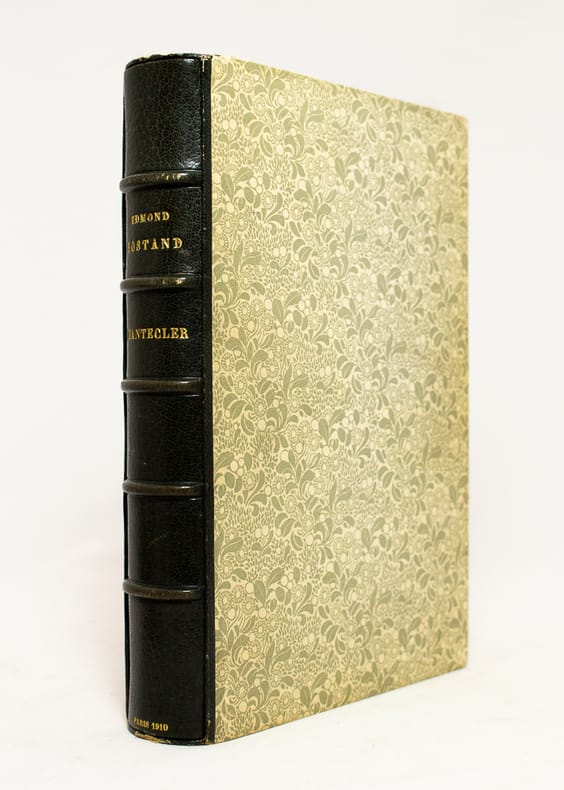
191017873Paris, Librairie Charpentier et Fasquelle, 1910. Grand in-8 de [10]-244-[2] pages, plein maroquin vert forêt, dos à nerfs, premier plat orné d'une composition mosaïquée formant un lever de soleil à travers les branches d'un arbre, en maroquin brun, beige, vert, lavande, abricot et sable; et au second plat, composition géométrique mosaïquée en maroquin marron et beige. Contreplats décorés de chauves-souris dorées aux angles agrémentés d'un petit semi d'étoiles dorées, gardes de soie moirée, couvertures conservées, tranches dorées, étui. Reliure signée des initiales G. L. R.-D.
1800097754London: The Committee 1800. Book measures 66x51.cm. Complete with 21 plates double page or folding largest plate measures 183x64.cm 6 plates partially coloured. Bound in period quarter calf marble board. Binding heavily worn both boards detached. Internally small library stamp on title page small library stamps on verso of plates i.e. not stamped on engraved side a few plates creased on edges. Generally plates in very good condition. A good copy with good clean plates. . Good Plus. Elephant Folio - over 15" - 23" tall. The Committee hardcover
690-Eo.J. Schwarze Kreide, auf Velin. 39:28,8 cm. Römische Kopie nach einer griechischen Marmorskulptur, die dem griechischen Bildhauer Leocares zugeschrieben wird, wie der Apollo von Belvedere. Sie wurde Heinrich II. von Frankreich (1519-1559) von Papst Paul IV. (1476-1559) geschenkt und befindet sich heute im Louvre in Paris.
128-Io.J. Aquarell über Bleistift, um 1850/60, auf cremefarbenem strukturiertem Papier. 16,3:20,5 cm. ? Verso mit Hinterklebung an den Rändern. Mit den Ausgrabungen der Caracalla-Thermen war 1824 unter Graf Girolamo Egidio di Velo begonnen worden, so daß davon auszugehen ist, daß Corrodi in Teilen der Ruinen um 1850/60 Studien zeichnen konnte. Die aufgelösten, geradezu impressionistisch wirkenden Pinselstriche sprechen für den Spätstil Corrodis, wie auch das feste strukturierte Papier.
426-Eo.J. Schwarze Kreide, mit Weißhöhungen, auf braunem Papier. 14,6:14 cm. Provenienz: Aus dem künstlerischen Nachlaß. Vermutlich Studie für ein Kinderbildnis.
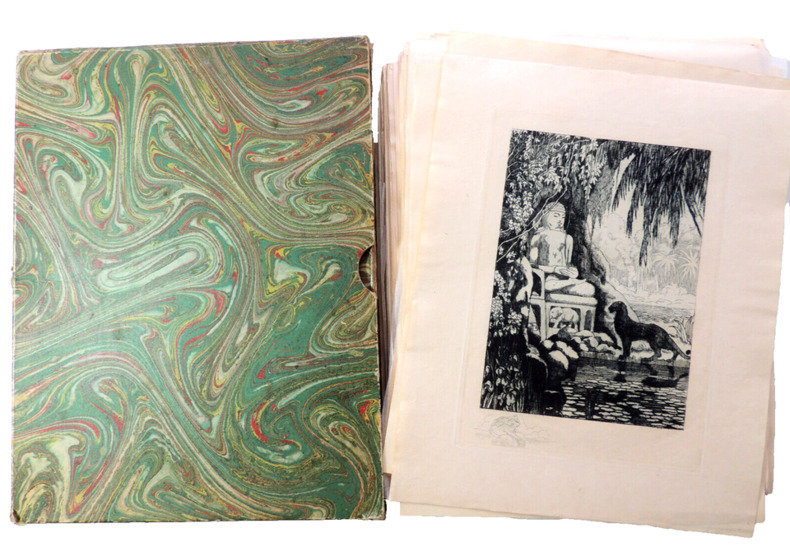
CZC-12514111 Eaux fortes originales de Maurice de Beque, pour le livre de la jungle de Kipling 16 planches signées avec tampon de Maurice Beque imprimées en deux teintes au tampon, superbes épreuves comprenant: 33 planches dim du feuillet 31x25 cm, cuivre 23,5x17,5 cm - 61 planches, dimensions cuivre 14x14cm, 14x15cm, 14x10 cm - 16 planches au format cuivre 12x7cm sur papier fort sous serpentes, quelques planches en double état, un ou deux doubles, pas d'avantage. Avec son emboitage ( avec usures). Tous les formats sont représenté sur les photos. Éditions du Sagittaire, 1924
CZC-12514111 Eaux fortes originales de Maurice de Beque, pour le livre de la jungle de Kipling 16 planches signées avec tampon de Maurice Beque imprimées en deux teintes au tampon, superbes épreuves comprenant: 33 planches dim du feuillet 31x25 cm, cuivre 23,5x17,5 cm - 61 planches, dimensions cuivre 14x14cm, 14x15cm, 14x10 cm - 16 planches au format cuivre 12x7cm sur papier fort sous serpentes, quelques planches en double état, un ou deux doubles, pas d'avantage. Avec son emboitage ( avec usures). Tous les formats sont représenté sur les photos. Éditions du Sagittaire, 1924
1823007166London: Thomas M'Lean 1823. Second Edition. Full Straight-Grained Morocco. Very Good. Folio 37 by 26.5 cm. Title one page Preface List of Plates followed by 64 leaves half of which are the hand-colored plates. Each plate accompanied on a separate leaf with an English description on the recto one in French on the verso. The plates are not merely scenery but generally genre scenes depicting Italians at play at work going about their lives. The book is far more interesting in our view then contemporaneous color plate books about costume or of scenic views. Contemporary full red morocco binding. Binding has scuffs and some abrasions but remains attractive. Spine rebacked with original spine mostly preserved and pasted onto matching red morocco used in the reback. The reback in other words is not overly conspicuous. Corners bumped slightly and typical edgewear. Light foxing within along edges generally but text and plates still bright fresh and mostly clean. Thomas M'Lean unknown
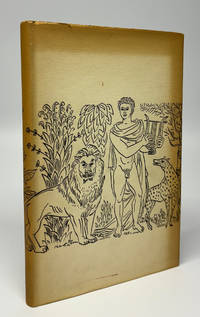
194712473Berkeley: Bern Borter 1947. Limited Edition. Very good/Very good-. Octavo 33pp. illustrated. Duncan's first book. A very good copy in the publisher's green cloth. Boards mildly soiled and the spine somewhat darkened though the gilt remains bright. This copy apparently one of three known examples with a dust jacket more on that to follow which repeats the design of the endpapers with no text. Jacket about very good unevenly toned with a large chip on the rear panel. This is number 5 of 100 limited copies SIGNED by Duncan on the limitation page alongside illustrator Mary Fabilli and with two manuscript poems in Duncan's hand written on the following leaf: "The blessed Herbert in his love does sing." and "Faithless and many minded muses.". This copy additionally inscribed by Duncan though unsigned it's clearly in his hand on a front blank to Bradley Bransford and dated in advance of publication: "for Brad 1947 July. Sometimes our feelings are so mild they are like a day when rocks seem mere extensions of the sea / these days these feelings are prehaps true undulations of love's most pleasant guise." Bransford's ownership signature appears on the front free endpaper. A lengthy typed note from bookseller Jack Shoemaker offering this book in 1976 for $850 to a collector gives some background details on the publication history some of which he was able to glean from talking to Duncan himself at the time of writing. The two manuscript poems at rear were not published until 2012 more than two decades after Duncan's death. Bertholf A1b. (Bern Borter) unknown
1926D8774Paris: Au Divan 1926. Limited Edition. Hardcover. Very Good. Original printed wraps bound in orange cloth gilt-stamped lettering in brown leather spine label; folio; pp. 8 plus 15 hand-colored illustrations. Number 97 from a limited edition of 100 copies. Boards and lightly rubbed; spine tips a little frayed and label a little chipped; original wraps toned with flattened creases; previous owner's bookplate. Contents are fine -- bright and clean. SOLD WITH two letters handwritten illustrated and signed by Fabres to a female companion Antoinette "Mi muy querida y siempre recordada amiga". Both are mostly in French with just a little Spanish both list an address of 715 Madison Avenue in New York and both are absolutely charming. The first dated 18 Mai 1951 has 5 hand-painted illustrations. The second 5 Aout 1951 has an ink doodle of a winged man flying with a heart in one hand and flowers in the other. Flattened creases from folding but displays nicely contents on the rectos only. Fabres pitches some wonderful woo. <br/><br/> Au Divan hardcover books
1926D8774Paris: Au Divan 1926. Limited Edition. Hardcover. Very Good. Original printed wraps bound in orange cloth gilt-stamped lettering in brown leather spine label; folio; pp. 8 plus 15 hand-colored illustrations. Number 97 from a limited edition of 100 copies. Boards and lightly rubbed; spine tips a little frayed and label a little chipped; original wraps toned with flattened creases; previous owner's bookplate. Contents are fine -- bright and clean. SOLD WITH two letters handwritten illustrated and signed by Fabres to a female companion Antoinette "Mi muy querida y siempre recordada amiga". Both are mostly in French with just a little Spanish both list an address of 715 Madison Avenue in New York and both are absolutely charming. The first dated 18 Mai 1951 has 5 hand-painted illustrations. The second 5 Aout 1951 has an ink doodle of a winged man flying with a heart in one hand and flowers in the other. Flattened creases from folding but displays nicely contents on the rectos only. Fabres pitches some wonderful woo. <br/><br/> Au Divan hardcover
429-Eo.J. Schwarze Kreide, doppelt umrandet. Darstellungsgröße 16,5 x 20,7 cm, Blattgröße 22,5 x 27 cm.- Alte Zuschreibung an F. Overbeck.
245-Eo.J. Aquarell, mit schwarzer Tuschlinie umrandet, auf Velin. 10,8:17,6 cm.