CERILLO.Livre Rare Book
72 688 résultats
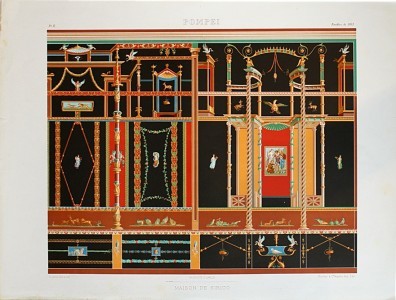
LCS-303Les peintures murales de Pompéi à travers 20 superbes chromolithographies du plus haut intérêt. Proprietà Cav. Uff. Pasquale d’Amelio, Napoli, n.d. [1886]. Grand in-folio de (1) f. de couverture, ix pp. (dont le titre lithographié orné d’une vignette), 20 pp. de texte et 20 chromolithographies numérotées. Infimes rousseurs. Conservé en feuilles, tel que paru, dans la chemise de l’éditeur. 630 x 445 mm.
19551054881955 Paris, Tériade, 1955, in-folio en feuilles 420x320mm, 158p., sous couverture et étui chemise.
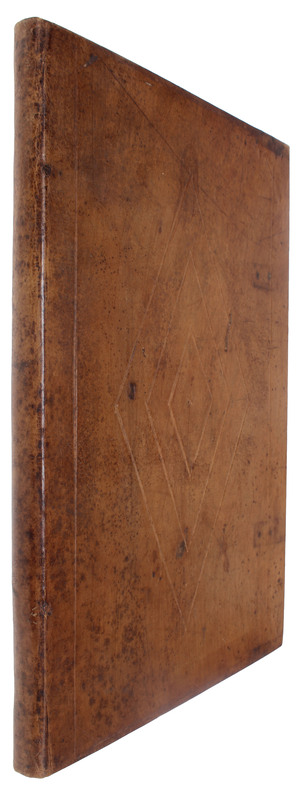
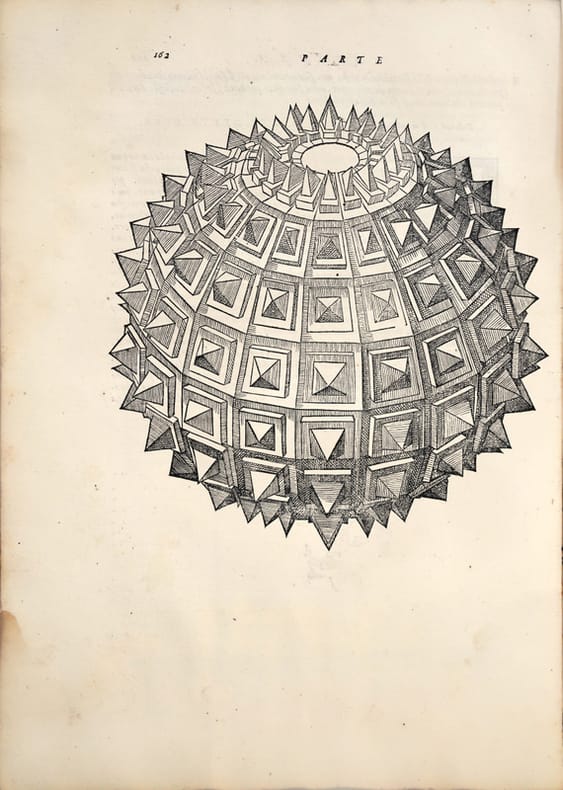
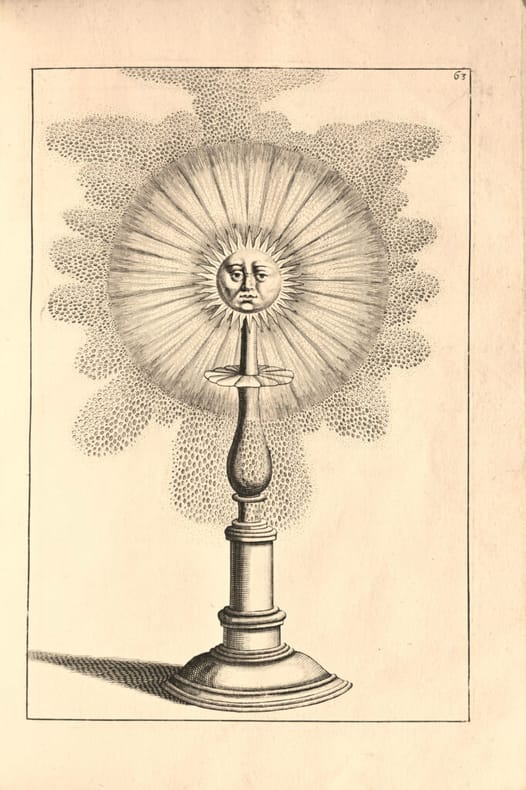
159652658Venice, Girolamo Franceschi, 1596. Folio (400x260 mm). Two parts bound in one later (presumably 19th century) sprinkled full calf with blindstamped geometrical ornamentations to boards. Leather on back board renewed. Engraved title-page neatly restored at inner margin, far from affecting imprint" old owner's inscription (""""Ex libris Ludovici A. la...""), crossed-out previous owner's name, and traces after a stamp to title-page. With Medici arms at the top and those of Sirigatti at foot of title-page, repeated on title-page of part two. As with all other copies we have been able to locate, the title-page is trimmed, affecting approximately 1 cm of the allegorical depictions in margin. Large woodcut printer's device at the end of the volume. Light occassional discolouring, but overall in very fine condition. 1 f. (allegorical frontispiece), 3 ff. (of dedication and index), 43 plates numbered with parallel text, 1 f. (large woodcut printer's device), 22 copper engraved plates (including the title-page of the second part) numbered 44-65. I.e. 65 plates in total - fully complete.
Venice, Girolamo Franceschi, 1596. Folio (400x260 mm). Two parts bound in one later (presumably 19th century) sprinkled full calf with blindstamped geometrical ornamentations to boards. Leather on back board renewed. Engraved title-page neatly restored at inner margin, far from affecting imprint " old owner's inscription (""""Ex libris Ludovici A. la...""), crossed-out previous owner's name, and traces after a stamp to title-page. With Medici arms at the top and those of Sirigatti at foot of title-page, repeated on title-page of part two. As with all other copies we have been able to locate, the title-page is trimmed, affecting approximately 1 cm of the allegorical depictions in margin. Large woodcut printer's device at the end of the volume. Light occassional discolouring, but overall in very fine condition. 1 f. (allegorical frontispiece), 3 ff. (of dedication and index), 43 plates numbered with parallel text, 1 f. (large woodcut printer's device), 22 copper engraved plates (including the title-page of the second part) numbered 44-65. I.e. 65 plates in total - fully complete.
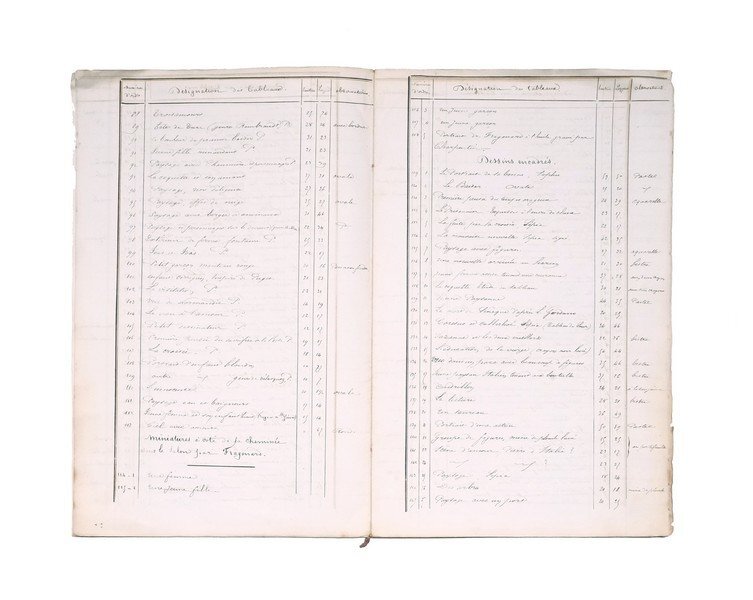
965Paris : Société la Nationale, vers 1863. LE CATALOGUE D'UNE LÉGENDAIRE COLLECTION D'ART DU XVIIIE SIÈCLE, AUJOURD'HUI DISPERSÉE
In-4°, 36 cc. nn. (compreso un foglio inserito dopo A3, che esplicita la nota contrassegnata da asterisco alla pagina successiva), 4 piccole illustrazioni nel testo e 6 grandi tavole ripiegate più volte recanti i vari progetti per la facciata incise da Curleto, Agnelli, Cotta, etc. (la tavola della facciata con tre incisioni sovrapposte ripiegate). Legatura in mezza pergamena e carta marmorizzata. Prima edizione di questo memorandum dei maggiori architetti del tempo che si esprimono attorno alla controversa questione della facciata del duomo di Milano, questione generata dall’improvviso cambio da parte di Francesco Maria Richini a Carlo Buzzi come capo della Fabbrica. Dal punto di vista strettamente architettonico il passaggio si esprimeva come un abbandono della scelta in stile “romano” fatta da Richini, sulla scorta dei precedenti progetti pensati da Pellegrino Tibaldi, e una proposizione invece di una soluzione alla “gotica”, preferita dal Buzzi. Bandendo una sorta di straordinario referendum cittadino i Deputati del Capitolo della cattedrale decisero di far incidere i progetti principali di Tibaldi, Richini, e Buzzi (con due alette removibili che mostrano la versione con e senza le torri in facciata), affinché la popolazione di Milano e non solo, potesse esprimere delle valutazioni di merito. A queste tre incisioni se ne aggiunsero poi altre tre che illustrano il progetto di Francesco Castelli, uno studente di pittura e prospettiva che doveva fornire il disegno per l’acquaforte di Tibaldi e che, completamente rapito dal problema della facciata, nel 1648 propose ai Deputati un proprio progetto “gotico”. Questo libro, stampato in seconda edizione nel 1656, riporta una serie di pareri che per essere favorevoli al Castelli fanno supporre che la pubblicazione sia stata promossa dai suoi sostenitori se non da lui stesso. Nel testo sono contenuti i pareri di architetti quali Richini, Buzzi, G.B. Baratteri, Bernini, G.B. Giattini, Sebastiano Rocca Tagliata, Benedetto Giovannelli Orlandi, Pier Paolo Caravaggio il Vecchio, Baldassarre Longhena, Vincenzo Paoli, Guido Antonio Costa, Bartolomeo Avanzini, etc, Salveraglio 196. Il parere di Bernini è l’unico suo testo stampato che si conosca, un documento in forma di lettera interessante quanto fondamentale per la conoscenza di Bernini teorico d’architettura. In-4°, 36 cc. nn. (including a sheet inserted after A3, which specifies the note marked with an asterisk on the next page) 4 small illustrations in the text and 6 large tables folded several times carrying the various projects for the facade engraved by Curleto, Agnelli, cotta, etc. (the facade table with three overlapping engravings folded). Binding in half parchment and marbled paper. First edition of this memorandum of the major architects of the time who express themselves around the controversial issue of the facade of the cathedral of Milan, issue generated by the sudden changing of Francesco Maria to Carlo Buzzi as head of the Fabbrica. From the strictly architectural point of view the passage was expressed as an abandonment of the choice of the “Roman” style made by Richini based on the previous projects designed by Pellegrino Tibaldi, and a proposition instead of a solution to the“gothic”, preferred by Buzzi. With a sort of extraordinary public consultation the Members of the Chapter of the cathedral decided to engrave the main projects of Tibaldi, Richini, and Buzzi (with two removable wings that showed the version with and without the towers on the façade), so that the population of Milan and beyond could make assessments. To these three engravings were added three others that illustrate the project of Francesco Castelli, a student of painting and perspective who was to provide the design for the etching of Tibaldi and, completely absorbed by the problem of the facade, in 1648 proposed to the Deputies his own “gothic”project. This book, printed in the second edition in 1656, contains a series of opinions that, in order to be favourable to Castelli, suggest that the publication was promoted by his supporters if not by himself. The text contains the opinions of architects such as Richini, Buzzi, G.B. Baratteri, Bernini, G.B. Giattini, Sebastiano Rocca Tagliata, Benedetto Giovannelli Orlandi, Pier Paolo Caravaggio il Vecchio, Baldassarre Longhena, Vincenzo Paoli, Guido Antonio Costa, Bartolomeo Avanzini, etc., Salveraglio 196. Bernini’s opinion is the only printed text known of him, a document in the form of an interesting letter as well as fundamental for Bernini’s knowledge of theoretical architecture.
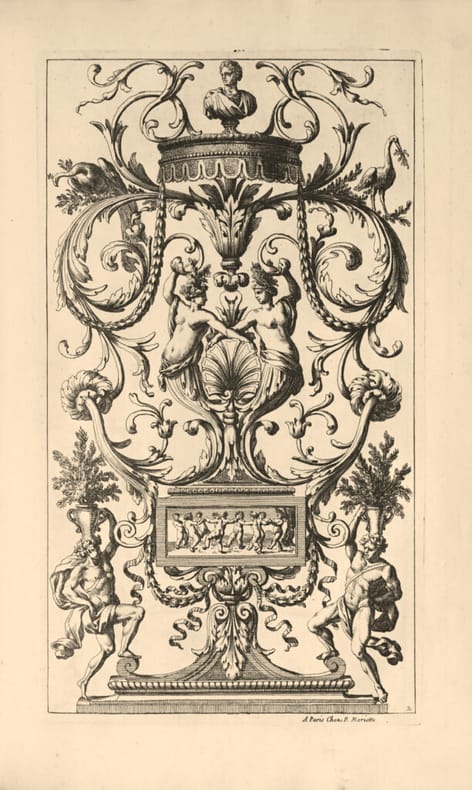
LCS-18540Très bel ensemble. Paris, Mariette, puis Jombert, 1649-1751. In-folio de 252 ff. Maroquin rouge, double encadrement de filets dorés sur les plats avec fleurons d’angles, dos à nerfs richement orné, double filet or sur les coupes, roulette intérieure dorée, tranches dorées sur marbrures. Petit success. de Simier. 320 x 208 mm.
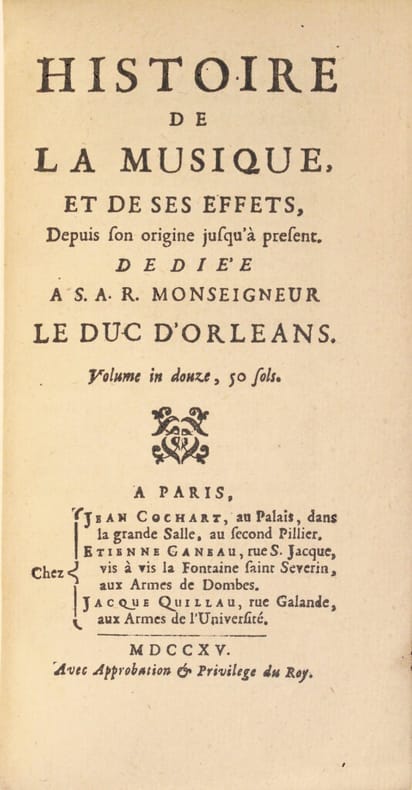
LCS-17781Cet ouvrage donne des renseignements précieux sur Lully et ses contemporains. Paris, Jean Cochart, Etienne Ganeau, Jacque Quillau, 1715. In-12 de (8) ff., 487 pp., (1) p. d’errata. Maroquin rouge, triple filet doré autour des plats, grandes armoiries au centre avec l'emblème de la Toison d'or, fleurs de lys aux angles, dos à nerfs fleurdelysé, entre-nerfs ornés du chiffre entrelacé et couronné du Régent, coupes décorées, roulette fleurdelysée intérieure, tranches dorées sur marbrures. Reliure de l'époque. 164 x 93 mm.
223-Do.J. Feder in Grau, grau und braun laviert, mit schwarzer Tuschlinie umrandet, auf Bütten mit Wasserzeichen: C & I Honig, links unten signiert und datiert ?J:P: Hackert. f. 1764.?, alte Bezeichnung im Unterrand getilgt. 33,3:51,4 cm. - Einriss im unteren Drittel des rechten Randes nahezu unsichtbar restauriert. Provenienz: Auktion Hotel Drouot, Paris, 4.03.1994; Berliner Privatsammlung; Galerie von Negelein, Kiel, 1995; Carola van Ham, Köln, Auktion 270, 21.11.2008, Nr. 374; Dorotheum, Wien, Auktion 18.04.2012, Nr. 811. Gutachten: Dr. Claudia Nordhoff, Rom, vom 15.12.2012.
LCS-18541Exemplaire d'une grandeur de marges exceptionnelles, très pur, conservé dans ses élégantes reliures de l'époque. Paris et Amsterdam, 1698. Cinq parties en 2 volumes in-folio: I/ 1 frontispice, (12) ff., 154 pp., (4) pp. de table, 1 frontispice, (4) ff., 1 pl. dépliante, (2) ff. d’errata, 312 pp.; II/ 1 frontispice, (6) ff., pp. 313 à 799, (2) ff. d’errata, rest. en marge latérale de 2 ff. Plein veau brun granité, triple filet doré autour des plats, dos à nerfs, tranches rouges jaspées, charnières frottées. Reliure de l'époque. 425 x 285 mm.
18031652361803. ARCHITECTURE - FRENCH GRAND PRIX. Recueil des grands prix d'architecture et autres productions de cet art couronnées en France reduites gravées et lavées par une Societé d'Architectes. Contents includes: manuscript half-title title and table 13 livraison each made up of 6 hand-coloured aquatint engravings printed on thick Holland paper for a total of 78 engravings. Tall folio 530 x 365 mm bound in contemporary green marbled paper covered boards original front wrapper bound in. Preserved in a modern blue half morocco folding box. Paris: Detournelle 1803. First Edition Deluxe issue from the second series of the French Grand Prix d'Architecture. A fine series of architectural aquatints tastefully hand coloured with china ink wash light pink blue yellow and green watercolour. Subjects include: 1 Normand "Colonne rostrale" 1791; 2 Dubut "Grenier publique" 1797; 3 Moitte "Arc de Triomphe" 1795; Famih "Arc de Triomphe" 1801; 5 Moreau "Colonne nationale' 1800; 6 Vignon "Tribute du paix" 1795; and others. The French Grand Prix was first approved for publication by l'Academie d'architecture in 1787 and exhibited a profound influence on contemporary European architects of the time most notably Gilly and Schinkel. The work "may also suggest ideas to the contemporary architect. Indeed it may not be gross an oversimplification to suggest that the work of Le Corbusier is still unconsciously based on some of these traditions which are kept alive in France in spite of the changes in architectural idiom" Roseneau p. 21 Spine professionally restored some marginal staining overall a fine fresh copy of a luxurious publication. PROVENANCE: Engineer Artium Geno followed by Arthur & Charlotte Vershbow with their bookplates on the front past-down. Roseneau Architectural History Vol. 3 pp. 15. hardcover books
1840030-I1840. Aquarell über Bleistift, auf cremefarbenem Aquarellkatron, links signiert, datiert und bezeichnet ?C. Werner f. 1840. Rom.? 24,3:33,1 cm. Provenienz: Galerie Arnoldi Livie, München. Wunderbar farbfrisches, charakteristisches Aquarell von herausragender künstlerischer Qualität! Vergleichsliteratur: Galerie Joseph Fach, Frankfurt am Main, Kat. 75 mit Farbabb. S. 71; Ausst. Katalog: Venedig Bilder in der deutschen Kunst des 19. Jahrhunderts. Karlsruhe/Paderborn, 2011, Seite 208, Farbtaf. 72.
178315356Amsterdam, D.J. Changuion en P. den Hengst, 1783. Folio. Bound in 2 cont. hcalf with raised bands. Gilt backs. Tome-and title-labels in red and green. Top of spine on vol. one very slightly worn. Partly uncut (39,5 x 28 cm.). On thick paper. Wide margins. Occassional brownspotting, mainly in text and margins of plates. Volume 2 dampstained more or less affecting the plates, mostly on verso of images, but on about 2o plates also seen on image, mostly as a yellowing of margins. 2 engraved title-vignettes, descriptive text to plates, 1 double-page engraved townplan and 102 double-page fine engraved plates (28 x 36 cm.).
Amsterdam, D.J. Changuion en P. den Hengst, 1783. Folio. Bound in 2 cont. hcalf with raised bands. Gilt backs. Tome-and title-labels in red and green. Top of spine on vol. one very slightly worn. Partly uncut (39,5 x 28 cm.). On thick paper. Wide margins. Occassional brownspotting, mainly in text and margins of plates. Volume 2 dampstained more or less affecting the plates, mostly on verso of images, but on about 2o plates also seen on image, mostly as a yellowing of margins. 2 engraved title-vignettes, descriptive text to plates, 1 double-page engraved townplan and 102 double-page fine engraved plates (28 x 36 cm.).
LCS-18215Séduisant exemplaire conservé dans son vélin souple du temps. L’exemplaire personnel du peintre Antoine Rivalz, avec son ex-libris manuscrit. Venetia, Camillo e Rutilio Borgominieri, 1569. In-folio de (1) f. bl., 195 pp., (6) ff. Vélin souple, titre calligraphié au dos, mouillures éparses, petites galerie de vers marginales sans aucune atteinte au texte. Reliure de l’époque. 313 x 225 mm.
Iconic preview issue of Ms. signed and inscribed by its co-founder, Gloria Steinem, upon front cover. This landmark feminist publication was "written for all women, everywhere, in every occupation and profession - women with deep, diverse ambitions, and those who have not yet had a chance to formulate ambition - women who are wives, mothers, and grandmothers, or none of these - women who want to be fully a female person and proud of it. In brief, women who want to humanize politics, business, education, the arts and sciences... in the home, the community , and the nation." - p113. Cover art by Miriam Wosk [1947-2010] depicts frantic eight-armed pregnant woman struggling to satisfy the many demands of her work, marriage and motherhood. 128 pages including such articles as: De-Sexing the English Language; Men's Cycles (They Have Them Too, You Know); Down With Sexist Upbringing; We Have Had Abortions; Why Women Fear Success; My Mother, The Dentist; How To Write Your Own Marriage Contract; The Black Family and Feminism - A Conversation with Eleanor Holmes Norton; The Sexual Revolution Wasn't Our War; Can Women Love Women; The Birth of Individual Architecture; and more. Interesting ads. Complete and unmarked with average wear. Signature and inscription appear more clearly than is indicated in our photos. A very special piece of American feminist history. Book
Oblong folio (335 x 500 mm), printed on thick laid paper, letterpress title with wood-engraved decorations, approximately 250 illustrations of architectural ornaments, including stock numbers (not in order), engraved on fifteen well executed copper plates, some printed in blue, 2 with aquatint, some light soiling, occasional spotting, a few stains, mainly to last two plates, nineteenth-century half calf, marbled boards, rubbed, foot of spine chipped, but overall a very good copy. This is not only an exceptionally rare and unrecorded provincially printed pattern book, but it is also highly unusual as being a named pattern book produced for a firm of provincial architects and builders. John Langwith Sr. (c.1723-1795) was an architect and builder who worked at Grantham in Lincolnshire. Syston Park was designed by Langwith for John Thorold, 9th baronet, and constructed between 1766-73. Syston was a fine house, built of limestone ashlar with pedimented or corniced windows. Langwith's 35-page bill for his labours survives today.1 He was also responsible for Vine House, 5 Vine Street, Grantham c.1764, as well as many local buildings of note including the George Hotel, Grantham (1780). In 1785 Langwith was one of three architects who submitted designs for the Castle Gaol at Lincoln, but those of William Lumby were accepted. By 1789, John Langwith Jr. (c. 1753-1825) was taking the lead in his father's business as a builder and surveyor at Grantham. The 1780s and early 1790s witnessed a boom in construction in Grantham. This related partly to the general economic cycle and is reflected, amongst others, in the brick tax returns. In July 1791, Langwith advertised initially for an apprentice to a carpenter and joiner and, in November, his need was for 'Twelve Journeymen joiners and carpenter wanted immediately', adding 'sober men may have constant employ.'2 He held several civic offices and eventually became an alderman, despite bankruptcy in 1803, from which he recovered. His recorded works include Grantham Vicarage, (now the Rectory) in Church Street, which he rebuilt in 1789 in a pleasant vernacular Georgian style at the cost of some 788 pounds; Barkston Rectory, Lincs., 1801; and designs (perhaps not executed) for a prison at Grantham, 1811.3 Lincoln Race Stand c.1818. Langwith was the architect and contractor for the Race Stand, this was replaced by the existing Race Stand of 1897 by William Mortimer. The architectural pattern book produced by John Langwith can thus be attributed with a high degree of certainty to John, junior, published at the height of a building boom. The location of the Manufactory is not known but is perhaps most likely to have been in the Back Lane (now Elmer Street), as an affidavit sworn by lawyer George White, dated 1836, refers to the burial of John Langwith, builder and surveyor, of Back Lane, Grantham.4 1 The invoice is summarised in Richard Wilson and Alan Mackley, Creating Paradise. The Building of the English Country House 1660-1880. (2000), p. 197. 2 Lincoln, Stamford and Rutland Mercury (LRSM), 29 July and 11 November 1791. 3 H. M. Colvin, Directory of English Architects (1995) p. 599. 4 LA: 1 FANE 11/14. Not recorded by ESTC, JISC, OCLC or any of the appropriate reference works.
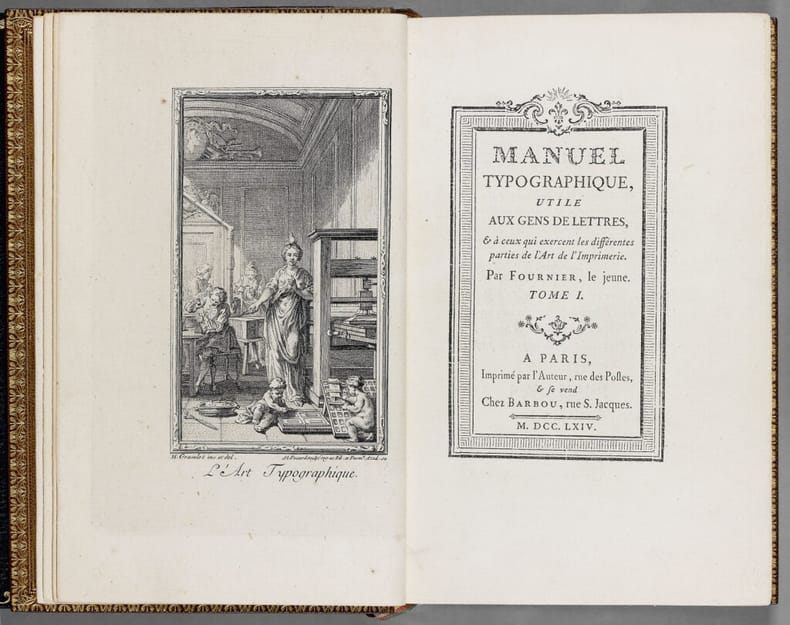
LCS-17986L’exemplaire Robert Hoe imprimé sur grand-papier. Paris, Imprimé par l’Auteur, & se vend chez Barbou, 1764-1766 [1768]. 2 tomes en 2 volumes in-8 de : I/ (2) ff.bl., 1 frontispice gravé, 1 portrait de l’auteur, xxxii pp. d’avertissement, 323 pp., (5) pp., 16 planches sur double-page ; II/ 1 frontispice, 1 titre gravé, xliv pp. d’avertissement, (2), 306 pp., 16 planches sur double-page. Reliés en plein maroquin havane janséniste du XIXe siècle, dos à nerfs ornés de filets à froid, double filet doré sur les coupes, roulette intérieure dorée, tranches dorées. Reliure signée A. Motte. 174 x 110 mm.
LCS-18427Séduisant exemplaire préservé dans sa reliure d’origine en vélin à recouvrement. Nuremberg, Paul Fursten, 1664. 4 parties en 1 volume in-folio de: I/ 1 frontispice, (3) ff., 32 pp., 4 planches; II/ (1) f., 14 pp., 44 planches; III/ (1) f., 26 pp., 116 planches dont 1 repliée (pte. déchirure à la planche repliée); IV/ (1) f.bl., (1) f., 29 pp., 36 planches. Relié en vélin rigide de l’époque à recouvrement, restes de liens en tissu, dos lisse. Reliure de l’époque. 327 x 218 mm.
LCS-14059La mosaïque du cirque d’Italica, en 22 somptueuses planches en couleurs. Paris, P. Didot l’Aîné, 1802. Très grand in-folio de (2) ff., 103 pp., 1 frontispice gravé imprimé en couleurs et rehaussé d’aquarelle et 22 planches hors texte numérotées dont 1 sur double-page. Gravures dans le texte. Qq. rousseurs. Relié en plein cuir de Russie brun de l’époque, plats richement ornés d’encadrements multiples de filets dorés et roulettes néo-classiques, dos à nerfs orné, tranches dorées. Reliure de l’époque de Ph. Selenka avec son étiquette. 680 x 510 mm.
148-Io.J. Aquarell, über Bleistiftskizze, auf festem chamoisfarbenem Zeichenkarton, rechts unten signiert ?F. Horner?. 51,4:71,3 cm. - Papier im Bereich des Himmels leicht gebräunt und mit Lichtrand an beiden Seitenrändern. Die Augustusbrücke, die über den Fluß Nera führte, war Teil der Via Flaminia. Literatur: Wird in das in Vorbereitung befindliche Werkverzeichnis von Johannes Fichter, Weisslingen/Schweiz aufgenommen.
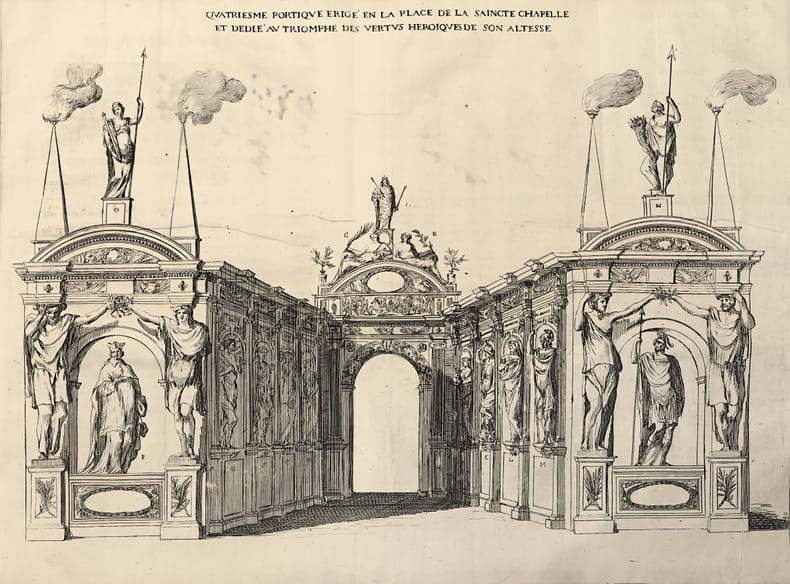
LCS-18317Précieux exemplaire d’une grande pureté, conservé dans son vélin souple de l’époque, de ce très beau livre de fêtes du milieu du XVIIe siècle. Dijon, Philibert Chavance, 1656. In-folio de 1 frontispice, (7) ff., 117 pp. avec 2 figures gravées dans le texte, 1 page avec le colophon, 6 planches dépliantes, 10 planches à pleine page, 2 planches à pleine page avec texte explicatif en regard. Soit un total de 18 planches gravées hors texte. Une toute petite déchirure anciennement restaurée dans une planche, planche de la seconde colonne anciennement renforcée au dos. Vélin souple, dos lisse, petit manque de vélin au coin inférieur du plat supérieur, dessin géométrique tracé au compas sur le plat inférieur. Reliure de l’époque. 307 x 203 mm.
1824ST17496-014Zurich: by the author and Henry Fuessli and Comp 1824-25. FIRST EDITION. 445 x 325 mm. 17 1/2 x 12 3/4". 26 leaves of descriptive text. Lacking title page and dedication.Commentary by art historian Johann Jacob Horner. <br/> Modern tan half morocco over olive green buckram raised bands spine panels with gilt ornament red morocco label. 24 FINE AQUATINT VIEWS COLORED BY A CONTEMPORARY HAND. Brunet III 357. Text pages variably foxed from a little to very but somehow THE LOVELY PLATES IN FINE CLEAN CONDITION--fresh and bright with pleasing coloring in an unworn sympathetic binding.<br/> <br/> This is a rare complete colored set of Hüber's famed views of Pompeii much sought-after by armchair travellers after excavations uncovered that urban time capsule in the late 18th century. The German-born Hüber 1787-1871 settled in Naples in his early 20s studying landscape painting with Dutch émigré painter Jacob Philipp Hackert 1737-1807 who was known for his lush scenes often featuring ruins. His arrival in the region coincided with the occupation of Naples by the French who accelerated the excavations underway at Pomepii which had been buried by the eruption of Vesuvius in 79 A.D. The rapid burial of the city in volcanic ash had captured a moment in time and the opportunity to see a well-preserved example of life in the ancient Roman Empire caught in medias res drew eager travellers on the Grand Tour of the Continent. Hüber's well-executed views often picture these tourists and their contemporary dress contrasts sharply with the classical ruins. Lord Napier in his "Notes on Modern Painting at Naples" 1855 credits Hüber for introducing the use of watercolors to the meticulously drawn landscapes then being produced. This innovation is displayed in the hand-colored plates here which were also issued in uncolored state. Napier was correct to appreciate the value of adding colors which increases both the drama of the views and the pleasure of the viewer. Because the attractive sets with color were often broken up complete volumes of the colored plates are rarely seen for sale: we could trace just three such copies sold at auction as listed in RBH and ABPC the two best ones were the Feltrinelli copy which sold for $14330 in 2001 and the Donaueschingen copy fetching $13750 in 2014. Ours does not have the distinguished provenance attached to those copies and it lacks two preliminary leaves but the text is present and most important the lovely colored plates are in fine condition. by the author and Henry Fuessli and Comp unknown
vol I TAVV. 54, II 96 (di cui 12 ripiegate), III 89 (di cui 17 ripiegate), IV 108 (di cui 14 ripiegate), V 83 (di cui 12 ripiegate), VI 100 (di cui 11 ripiegate e 1 doppia contata 2), VII 91, VIII 100 (di cui 11 ripiegate), IX 104 (di cui 13 ripiegate), X 100 (di cui 13 ripiegate) , XI 94 (di cui 17 ripiegate), XII 91, XIII 93 (di cui 13 ripiegate e 3 doppie ognuna contata 2, XIV 89, TOT 1292. Legatura in mezza pelle verde con angoli e titolo impresso in oro al dorso. In buone condizioni, non bruniti e privi di foxing.
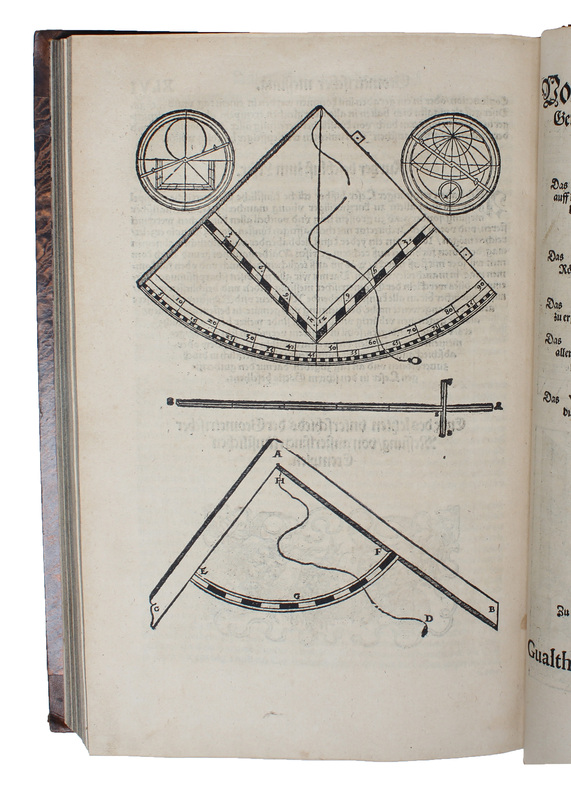
155856142Nürmberg, Gabriel Heyn, 1558. Folio. Bound in a nice later (around 1840) hcalf. Raised double bands. Gilt spine. Gilt lettering. Marbled endpapers. Stamps on foot of title-page. A sort of frontispiece (full-page) is printed on the verso of the title-page, depicting the Putto as the spirit of architecture.Title-page printed in red and black. Dedication and content (4 unnumb.lvs.) - Geometry & Perspective (Ff I-C ) - Geometrischen Büchsenmeisterei (Ff I-XLVIII.) - Befestigung (Ff I-XLIIII ) - Geometrischen Messung (Ff (4),I-XLVI,(3)) - Wag und Gewicht (Ff I-XVII) - Schnelwagen (Ff I-X) ending with colophon and woodcut printer's device. Having more than 300 (many full- and half page) fine wood-engravings executed by V. Solis, G. Pencz, H. Brosamer and Peter Floetner. Internally in extraordinary fine clean condition with only a few minor scattered brownspots. 3 leaves with a minor repair to upper right corner.