Architecture - HousingBiblio.com
72 692 résultats
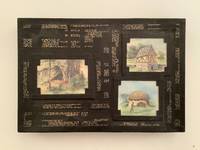
192918539AB1929. n.P. 1929 11 : 16 cm. Coloured drawings mounted on black cardboard. Loose in a black cardboard-box with three mounted drawings. Unique assamble of 60 coloured drawings about how people were living from pre-historic tmes until the 1920ties. Shows the developement of living through the centuries. The drawings are all very detailed and well done obviously made by an talented laity. Starting in the tertiary times when people were living in trees to the Wigwams of Indians continuing with stilt houses to ancient houses from Greece and Italy further on Mexican houses Aegytian houses untill skyscrapers in New York. - 16 drawings of ancient skulls those dated 1929 and monogramed HL - 11 drawings of houses in Lapland Spain Italy. - Interesting privately assambled collection. - The numbering of the plates incorrect. unknown
0102-Bo.J. Kreidelithographie über zwei Tonplatten (sämisch und oliv), 1821, auf chamoisfarbenem Velin. Darstellungsgröße 19,3:24,5 cm, Blattgröße 31,8:33,8 cm. Literatur: Dussler 10, I; Winkler 231, Nr. 16 I (von II); Gravenkamp WV 417; Wechssler 763, II (von II). - Inkunabel der Lithographie. - Selten!
65815Geneva, Typography Genevoise, 1964 Veau des Indes avec dorure et bo te en parchemin, avec 45 gravures plein page, papier pur chiffon vergeures XIIIe si cle, 43 x 30 cm.(104/250)
192630157AB(Lausanne), Mermod - Imprimé par les soins du Verseau, 1926. Folio. (50) Bl. (dv. 4 leer). Mit 7 Lithographien von René Auberjonois. Orig.-Broschur. mit Pergaminschutzumschlag.
127886aafParis, Jacques DuBreuil, prés le Puits-Certain, à la Corne de Cerf M.DCCLXXIV (1674), in-4to, 14 feuilles + 361 p. + 1 f. + 131 planches gravées (incl. titres et entre-titres). (Mit 131 (inkl. Titel u. Zwischentit.) ganzs. Kupferst. 14 Bl. + 361 S. + 1 Bl. Relié plein veau, dos à quatre nerfs richement orné, coiffes restaurées. Bel exemplaire.
19104486CB2 Mappen. 1910-1911. Aquarelle mont. in Mappe gebunden.
19415217BBZürich, A(rmin) Grossenbacher, 1941. 4°. (2) Bl., 80, (1) S., (1) Bl. Mit 1 ganzs. sign. orig. Aktzeichnung in Blei, 18 in Blei sign. Radierungen u. 1 rad. Titelvignette von Heinrich Müller. Roter priv. Lederbd. mit Deckelillustr. von Heinrich Müller, Stehkantenvergoldung u. Kopfgoldschnitt in lederverbrämt., gefütt. Pappschuber (dieser fleckig).
59479aafParis, (David pour) Alexandre Corréard, 1825, in-folio, 84 p. + 121 planches lithographiques (1 à 119, plus 42bis, 54bis) dont 18 planches doubles, qqs pet. tâches, généralement frais, reliure en demi-cuir olive, dos sobrement orné.
1935ARCHITEC001002Johnan Shoin Tokyo. c 1935. First edition. Preface by Elie Faure. Square quarto. 29 pages of text followed by 104 pages of illustrations. Spiral-bound cloth-covered card with large title-label. Raymond was a Czech American architect who was one of the founders of modern architecture in Japan.Covers dusty and slightly marked. Very good. Johnan Shoin, Tokyo. hardcover
1745016558London: Printed for and sold by S. Harding 1745. Second Edition. . Calf. Very Good. 22 pages lacking pp. 17/18 200 plates. engraved by Thomas Langley dated 1738/9 & 1741. Brown calf with 5 raised bands to spine blind tooled decoration to boards gilt titling to spine later endpapers.Some bumping wear to covers split to spine at head blind stamp of Derek Gair-Gibson to front endpaper a previous owner has bound in copies of the title page and prelims.4 leaves but copied the first edition details. small tears to some plates pp 1-4 repaired as are supplementary plates 11-14 some marginalia general age toning to pages. This is the scarce second edition with additional 14 plates not found in the first edition of 1740 Colvin 354/355. 790 Size: 290mm. x 240mm. <br/> <br/> Printed for and sold by S. Harding unknown
175619822Paris la Compagnie des libraires 1756 in-4 plein-veau deux volumes, reliure plein veau havane raçiné in-quarto (binding full calfskin)(20,5 x 26,2 cm), reliure d'époque, dos à nerfs (spine with raised bands), dos décoré or (gilt and blind stamping decoration) et à froid, titre frappé or, pièce de titre sur fond bordeaux avec filets or et filet perlé or en encadrement, Tomaison frappée or avec filets or et filet perlé or en encadrement, entre-nerfs à fleurons or dans un encadrement à filet or et filet perlé or avec rinceaux aux angles, filet à froid de part et d'autre des nerfs, anciennes restaurations aux coiffes propres, toutes tranches lisses rouges, Etiquette ex-libris : Georges Durivault ( Directeur du Jardin des Plantes de la Ville de Nantes) en noir sur fond blanc signée Bernard ROY, orné de 12 planches hors-texte gravées sur bois en noir dont deux dépliantes + 15 gravures in-texte gravées sur bois en noir + 12 Bandeaux têtes de Chapitre "Historiés"gravés sur bois en noir + lettrines et culs-de-lampes gravés sur bois en noir, [ (3 feuillets non chiffrés d'Epître au Roy + 16 pages (dont un poème de Perrault en hommage à La Qintinye) + pagination de XVII à XLVIII de p. de Préface + 4 feuillets non chiffrés de Table des chapitres + 591 pages + 1 p. de privilège) + (5 feuillets non chiffrés de Chapitres + 587 pages + 29 p. de Table générale)] pages, 1756 à Paris : la Compagnie des libraires Editeur,
19555S.l., 1694. In-4, [51] ff., vélin souple postérieur, tranchefile à passe (taches, quelques galeries de ver, pâles mouillures, restauration d'une figure, quelques petites déchirures).
0402-Bo.J. Radierung, auf Velin. 18,6:23,3 cm. Literatur: Stoll 218, II (von II), mit der gestochenen Unterschrift. - Sehr guter Abdruck, mit schmalem Rand um die Plattenkante sowie leichtem Lichtrand rundum. Im Gesamtwerk Grimms sind Architektur-Darstellungen recht selten, abgesehen von einigen italienischen Bauten, die unter dem Eindruck einer Reise nach Italien entstanden. Die vorliegende Radierung greift wohl auf eine Zeichnung zurück, die während Grimms Münchner Zeit auf einer der zahlreichen Exkursionen vor der Natur entstand. Der Tegernsee und die Quirinskapelle waren beliebte Motive der Münchener Maler.
037-Do.J. Feder in Rotbraun, grau laviert, mit brauner Feder umrandet, auf Bütten mit Fragment eines Wasserzeichens: Buchstaben FDC, verso von späterer Hand bezeichnet "Stefano De La Bella". 12:17,8 cm. - Leicht stockfleckig, verso am Oberrand alte Leimspuren. Vergleichsliteratur: M.C.Plomp, The Dutch Drawings in the eyler Museum. Bd. II: Artists born between 1575 and 1630. Haarlem/Ghent/Doornspijk, 1997, Nr. 183-1889.
11472Boulogne. Editions de l'Architecture d'aujourd'hui. " Collection de l'équipement de la civilisation machiniste ". 1938. In-4° à l'italienne, reliure cartonnage, dos toilé. Premier plat illustré d'une belle composition moderniste. 147 pages. E.O.
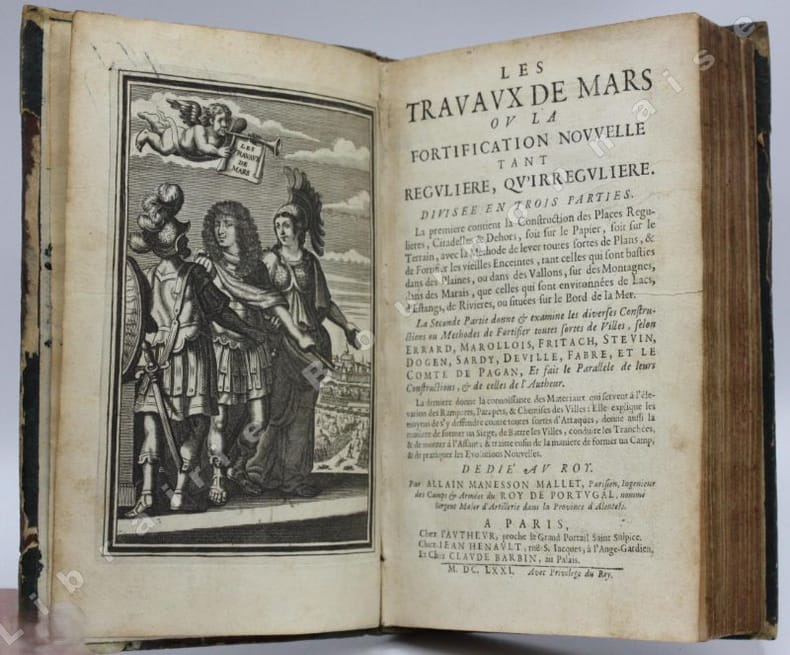
14661Paris, Chez l'Auteur, Chez Jean Henault, et chez Claude Barbin, 1671 - 1672 ; 3 vol. in-8. 1 f. bl.-12 ff. (dont frontispice, portrait de Louis XIV et portrait de l'auteur)-249 pp.-3 ff.-1 f. bl.- 106 planches / 12 ff. (dont le front. et les deux portraits)-274 pp.-3 ff.-1 f. bl. - 91 planches. / 8 ff. (dont front. et les deux portraits)-271 pp. - 101 planches. Veau brun, dos lisses ornés refaits au XIXe siècle, coins renforcés en vélin. Mouillure pâle en pied de quelques feuillets du tome 3. Ex-libris manuscrits : "de Crécy", et "Capitaine H. Carle
048-Do.J. Schwarze Kreide, mit schwarzer Feder umrandet, auf blauem Papier. 17,7 x 28,6 cm. - Eine winzige Fehlstelle links unten. Auf alten Sammlungsuntersatz aufgezogen. Mit älterer Zuschreibung an Jan Frans van Bloemen (1662-1749). Provenienz: Sotheby?s London, 1854, Uvedale Price?s Sale; Sammlung Riggal, wahrscheinlich identisch mit der Sammlung Comte Rigal, Paris, Lugt Suppl. 2139.
091-Io.J. Bleistift, auf Velin, rechts bezeichnet und datiert ?Grotta ferrata Giuglio 829? sowie ?albaner Gebirge bey Rom.?, verso von fremder Hand bezeichnet ?F. Peipers?. 22,5:30,5 cm.
141-Io.J. Bleistift, auf braunem Velin, rechts unten bezeichnet ?bei Cefalu in Sicilien?, verso Nachlaßstempel. 43,5:55,5 cm.
In -4°, tre voll., pp. XXI, (1), 400 + 21 tavv; VI, 394 + 21 tavv; (4), 362 + 12 tavv.; legatura in mezza pelle con nervi, fregi e titoli al dorso; molte delle tavole litografiche sono colorate a mano. Copia firmata della seconda edizione del noto e fortunato capolavoro di Ruskin (la prima era del 1853, qualificata come “a revolutionary success”, Pmm). A signed copy of the second edition of the notorius work by Ruskin (the first, of 1853, is qualified by Pmm as a “revolutionary success”).
1877R320150373Hermann Loescher. 1877. In-4. Relié. Etat d'usage, Tâchée, Dos satisfaisant, Intérieur acceptable. Cahier I : 8 pages de textes + 10 planches chromolithgraphiques sous serpentes (collationnées) + Cahier II : 8 pages de textes + 10 planches chromolithographiques sous serpentes (collationnées) + Cahier III : 8 pages de textes + 10 planches chromolithgraphiques sous serpentes (collationnées) - tranches dorées - coins frottés - ex dono sur la page de garde.. . . . Classification Dewey : 720-Architecture
Madrid, Petrus a Villafranca, 1663, 30 x 21,5 cm., pergamino, 3 h. incluso portada grabada + 449 págs. incluso 23 láminas grabadas en madera + 1 h. (Portada restaurada en el margen superior blanco, las dos hojas de preliminares restauradas por el margen superior afectando levemente a la aprobación y prólogo. Páginas 427-428 reproducidas en facsímil en papel antiguo. Última hoja de índice restaurada por la esquina superior afectando al texto en unos 5 renglones a varias letras. 1ª edición de la segunda parte de esta obra que se considera como independiente. Libro importante y cotizado tanto por los diversos temas y obras que contiene como por los bellos grabados que lo ilustra).
Very Good Turkish, Ottoman (1500-1928) An extremely rare litho propaganda map published as an extra supplement to the Tercümân-i Hakîkat [i.e. The Translator of Truth] newspaper just before the proclamation of Republic in Turkey in 1923 by Mustafa Kemal Atatürk (1881-1938), showing the front in West Anatolia during the War of Independence (or National Struggle) between 1919-1922 against Greek forces. The upside of the map between the note as title 'Gift to the readers of 'Tercümân-i Hakîkat', Mustafa Kemal Atatürk's portrait among decorated heroic lithographed drawings. In the lower right corner, can be seen legends of the map, scale, and mapmaker's signature. Tercümân-i Hakîkat was a daily newspaper published in Istanbul between 1878-1921 during the Ottoman Empire. Tercüman-i Hakîkat, the most important newspaper published during the reign of Sultan Abdülhamid II, was founded by novelist Ahmed Midhat Efendi, (1844-1912). In the beginning, most of the articles were written by Ahmed Midhat Efendi. It was an encyclopedic newspaper with the aim of inculcating and educating reading habits among the Turks and it played an important role in the training of many famous Ottoman journalists. Its first issue was published on June 26, 1878. After Ahmed Midhat's death in 1913, the newspaper changed owners, and the last issue was published on February 11, 1921. Ibrahim Alaettin Gövsa, (1889-1949), was an Ottoman / Turkish journalist, educator, and intellectual who supported the War of Independence the most. This propaganda map published in Tercümân-i Hakîkat, during the war in 1920 or 1921, is a propaganda tool that calls on the literate people belonging to a certain class, especially those living in Istanbul, to support the war, and aims to spread the word that Turkey is winning the war. Original lithograph map. 50x35,5 cm. In Ottoman script (Turkish with Arabic letters). Scale: 1: 250.000. Occasionally foxing and slight stains on paper, folded traces. Otherwise a very good copy.
1812q0549aLondon: Printed by L Harrison & J C Leigh for R Ackerman. G: in good condition. 20th century rebind with new eps. Covers rubbed. Some browning and set-off. 1812. First Edition. Brown hardback half-leather cover with marbled boards. 370mm x 300mm 15" x 12". xiii 330pp vi; 275pp vi plates. 83 plates 81 hand-coloured. Heavy set extra shipping needed for overseas. . Printed by L Harrison & J C Leigh for R Ackerman hardcover
1823017599London: J Taylor 1823. New Edition. . Half Morocco Marbled Boards. Very Good. Half-title 41 1 engraved plates and plans all but a few sepia aquatints ink ownership inscription ''Willm. Perkin Architect 1830'' at head of title some light spotting to text and marginal soiling modern half morocco with elaborate gilt-stamped label to upper cover spine gilt uncut. cf Abbey Life 49 1800 edition. A new edition of Plaw's third book of designs in which as usual order and symmetry are adhered to and the irregular broken effects recommended by some are forcefully rejected. Nevertheless the picturesque qualities then so fashionable are frequently expressed in thatched roofs latticed gothic windows and treet trunk columns. Many plates show designs made for specific patrons but only one in the New Forest Hants appears to have been built. Plaw c1745-1820 is recorded as an 'architect and master-builder in Westminster' and was president of the Incorporated Society of Artists 1790/91. He moved to Southampton in 1800 where he designed and built the barracks in 1806. In 1812 he emigrated to Canada where he died in 1820 and was buried at Charlottetown. Uncommon. 725 Size: 310mm. x 250mm. <br/> <br/> J Taylor hardcover