15 963 résultats
39004388-75Turner Publishing Company. Used - Very Good. Pages intact with possible writing/highlighting. Binding strong with minor wear. Dust jackets/supplements may not be included. Stock photo provided. Product includes identifying sticker. Better World Books: Buy Books. Do Good. Turner Publishing Company unknown
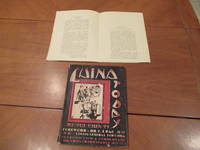
19885614Peking: No Publisher 1988. First edition / Original art work from 戊辰年五月 or the fifth month of the Wùchén year. ie. May / June 1988. Very much in the style of Guan Liang 关良 1900–1986 and his followers. The painting depicts two performers in Beijing Opera 京剧 costume. The female figure is a wudan æ¦æ—¦ A martial female role. In blue silk costume with an elaborate head dress white and red stage makeup and holding a weapon. The male figure is a laosheng è€ç”Ÿ or official/scholar type. An attractive original work signed and dated. There is slight damage to the woman's sword arm with the blue paint blurred. There are also three spots of ink / paint near to the seal. The painting is on what appears to be Chinese xuan paper 宣纸 mounted onto a grey card backing. Painting is 25cm x 25cm. The backing card is 34/5cm x 34.5cm. Blank to verso. . Première édition / Å’uvre originale datant du mois de mai de l'année Wùchén 戊辰年五月 soit mai/juin 1988. Très inspirée du style de Guan Liang 关良 1900–1986 et de ses disciples. La peinture représente deux artistes vêtus de costumes d'opéra de Pékin 京剧. Le personnage féminin est une wudan æ¦æ—¦ un rôle féminin martial. Elle porte un costume de soie bleue avec une coiffe élaborée un maquillage de scène blanc et rouge et tient une arme. Le personnage masculin est un laosheng è€ç”Ÿ c'est-à -dire un personnage de type fonctionnaire/érudit. Une Å“uvre originale attrayante signée et datée. Le bras de la femme qui tient l'épée présente un léger dommage la peinture bleue étant estompée. Il y a également trois taches d'encre ou de peinture près du sceau. La peinture est réalisée sur ce qui semble être du papier xuan chinois 宣纸 monté sur un support en carton gris. La peinture mesure 25 cm x 25 cm. Le support en carton mesure 345 cm x 345 cm. Verso vierge. No Publisher unknown
19885614Peking No Publisher 1988 Première édition / uvre originale datant du mois de mai de l'année Wùchén (?????), soit mai/juin 1988. Très inspirée du style de Guan Liang (??, 19001986) et de ses disciples. La peinture représente deux artistes vêtus de costumes d'opéra de Pékin (??). Le personnage féminin est une wudan (??) (un rôle féminin martial). Elle porte un costume de soie bleue avec une coiffe élaborée, un maquillage de scène blanc et rouge, et tient une arme. Le personnage masculin est un laosheng (??), c'est-à-dire un personnage de type fonctionnaire/érudit. Une uvre originale attrayante, signée et datée. Le bras de la femme qui tient l'épée présente un léger dommage, la peinture bleue étant estompée. Il y a également trois taches d'encre ou de peinture près du sceau. La peinture est réalisée sur ce qui semble être du papier xuan chinois (??), monté sur un support en carton gris. La peinture mesure 25 cm x 25 cm. Le support en carton mesure 34,5 cm x 34,5 cm. Verso vierge.
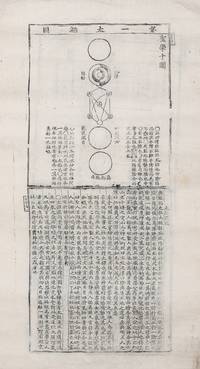
10716All sheets with woodblock diagrams. Ten woodblock-printed sheets each ca. 1045 x 580 mm. Korea: 18th or 19th century<br /> <BR> <BR> A very rare woodblock-printed broadside edition of the influential SÅnghak sipto by Yi Hwang 1501-71 “Korea’s greatest philosopher.â€â€“Pratt & Rutt Korea. A Historical and Cultural Dictionary Curzon: 1999 p. 517. Yi a child prodigy was a scholar and government official. He served four kings in a number of high positions but his integrity and stand against corruption caused him to be relieved of his posts and sent into exile a number of times.<br /> <BR> <BR> “Yi Hwang better known by his penname T’oegye is generally reputed as Korea’s foremost Neo-Confucian thinker. From the very beginning of the Yi dynasty 1392-1910 the Neo-Confucian doctrine of the Ch’eng-Chu school was the officially sanctioned ideology but with T’oegye it arrived at its full maturity on the peninsula for he was the first to present it with a fully sophisticated and integral grasp of its scope unity and implications. Consequently his teaching became a constant reference point for subsequent generations of Korean Neo-Confucians and his understanding of Chu Hsi’s Zhu Xi’s vision exercised a profound and lasting influence…<br /> <BR> <BR> “One of his last and most important works was the Ten Diagrams on Sage Learning SÅnghak sipdo which he composed for the instruction of young King SÅnjo reigned 1567-1608 in 1568 two years before his death. Considered the summation of T’oegye’s lifetime of learning the Ten Diagrams became one of the classics of the Korean Neo-Confucian tradition: during the course of the Yi dynasty it was reprinted at least twenty-four times and it now circulates in three modern Korean translations…<br /> <BR> <BR> “‘Sage learning’ is a phrase that appears frequently in Neo-Confucian works meant for the instruction of rulers reflecting the view that the essential duty of a ruler is to learn from and emulate ancient sage kings. In terms of its origin the Ten Diagrams is certainly such a work. But T’oegye’s title is ambiguous for ‘sage learning’ also means ‘learning how to become a sage’ that is a fully perfected human being. This is a kind of learning that has to do with not only kings but every human being. Thus the provenance of this work is universal and through the centuries it has served as a basic handbook for generations of serious Neo-Confucians in their endeavor to understand and cultivate the full perfection of their humanity…<br /> <BR> <BR> “This kind of ‘sage learning’ in its full scope is a distinctively Neo-Confucian development. With the Neo-tradition revival of the tradition in the Sung dynasty Confucians finally developed a metaphysical psychological and ascetical framework that could fully describe the status of sagehood and delineate it. Sagehood became a practical goal rather than a theoretical ideal. T’oegye’s object in the Ten Diagrams is to present that framework and path…<br /> <BR> <BR> “Doing this of course amounts to presenting a structured summation of the essence of Ch’eng-Chu theoretical and practical learning. One could devote a large book to this topic; T’oegye compressed it into ten chapters each brief enough to be mounted on a single panel of a ten-paneled screen. Each chapter begins with a diagram and is followed by a text. T’oegye’s own remarks are only a short portion of each chapter. As far as possible he tried to make this a compilation of diagrams and words from other authoritative sources so that the work would clearly represent the cumulative wisdom of the Confucian tradition not just his own private opinion…<br /> <BR> <BR> “The compressed format is not a concession to hasty readers or beginners needing a simple introduction. Quite the opposite; whether as a short book or a screen placed in one’s quarters T’oegye intended this as a work to be lived with and absorbed slowly through repeated reading and leisurely reflection. In that way its compressed contents would unfold gradually and become a part of oneself through the lengthy and personal effort of apprehending its full meaning. The diagrammatic format he chose is ideal for such use for the categories correspondences and relationships suggested by spatial arrangement offer food for reflective thought far beyond the content of the words themselves. T’oegye could expect that the Ten Diagrams would be approached in this way because the Neo-Confucian approach to texts emphasized this kind of repeated reading prolonged reflection and personal assimilation. The theory was that reading should be a process of self-transformation not mere information gathering. T’oegye designed his Ten Diagrams precisely as a tool to be used in such a process.â€â€“Michael C. Kalton “T’oegye’s ‘Ten Diagrams on Sage Learning’: A Korean View of the Essence of Chu Hsi’s Teaching†in The Journal of Korean Studies Vol. 7 1990 pp. 97-99–& see the rest of this wonderful article for the importance of this text which was influential in both Korea and Japan.<br /> <BR> <BR> The titles of the ten chapters are: The Diagram of the Supreme Ultimate The Western Inscription The Elementary Learning The Great Learning The Rules of the White Deer Grotto Academy The Mind Combines and Governs the Nature and Feelings Diagram of the Explanation of Humanity Diagram of the Learning of the Mind-and-Heart Diagram of the Admonition of Mindfulness Studio and Admonition on Rising Early and Retiring Late.<br /> <BR> <BR> As mentioned in Prof. Kalton’s essay these broadsides were intended to be made into a ten-panel standing screen.<br /> <BR> <BR> Fine condition and a remarkable survival. A few minor stains and a little dusty at extremities. We find no broadside edition in WorldCat. unknown
2012145677San Jose, Bender Publishing, 2012.
20162081502111906460commercial stamp office 2016. Soft Cover. Fine. The book is in fine condition. commercial stamp office paperback
19822092902141200621Qilu Book Company 1982. Soft Cover. Fine. The book is in fine condition. Qilu Book Company paperback
2081502111900218Chinese book office N.A. Soft Cover. Fine. The book is in fine condition. Chinese book office paperback
20022091502135404845Anhui Education Publishing House 2002. Soft Cover. Fine. Number of books: 1 Anhui Education Publishing House paperback
19772092902141203145University of Tokyo Book Co. Ltd. 1977. Soft Cover. Fine. Volume: 1 University of Tokyo Book Co., Ltd. paperback
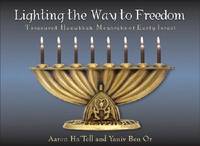
20041-1578194253Mesorah Pubns Ltd 2004. Hardcover. New. 600 pages. 10.25x7.50x1.50 inches. Mesorah Pubns Ltd hardcover
1944049447Calcutta India: The Book Emporium / Sasadhar Chakravarty / Kalika Press 1944. 1st Edition 1st Printing. Hardcover. Very Good/Good. 51 Pp. White Boards. First Printing 1944. Very Scarce Worldcat Shows Only Four Institutional Holdings. Light Usage. Dust Jacket Priced Rs 6/- 7S6d. Dust Jacket Worn Small Chips At Edges. Book Inscribed At Length By Yeh Chien-Yu And Dated April 1947 In New York City Ny With Much Additional Text In Chinese And The Artist's Red Stamp. Also With An Extra Set Of Pp. Iii-Vi The Foreword And Introduction Which Apparently Were Used As A Prospectus For The Book.Ye Qianyu Or Yeh Ch'ien-Yü; Born Ye Lunqi ; 1907 -1995 Was A Chinese Painter And Pioneering Manhua Artist. In April 1927Ye Qianyu Together With Fellow Cartoonists Huang Wennong And Lu Shaofei Released A Publication Dedicated To Manhua Called Shanghai Manhua Or Shanghai Sketch. The Original Three Joined By Eight More Artists Including Zhang Guangyu Ding Song And Wang Dunqing Formed The Shanghai Sketch Society Also Translated As Shanghai Cartoon Association In The Autumn Of 1927 China's First Association Dedicated To Manhua. The Association Successfully Relaunched The Shanghai Manhua On 21 April 1928. Ye Drew Several Covers For The Magazine And The Back Page Of The Publication Carried His Comic Strip Mr. Wang. Inspired By The American Strip Bringing Up Father And Portraying The Daily Life Of The Middle And Lower Classes Of Shanghai Mr. Wang Became One Of China's Most Famous Cartoons Eventually Being Made Into 11 Films In The 1930S And 40S. In June 1930 Shanghai Manhua Was Merged Into Modern Pictorial Of Which Ye Became An Editor While Continuing His Mr. Wang Series. When Japan Invaded China And Occupied Shanghai In 1937 Ye Qianyu Together With A Group Of Fellow Shanghai Cartoonists Formed The "National Salvation Cartoon Propaganda Corps" Which Included Well-Known Artists Zhang Leping Lu Zhixiang Te Wei And Hu Kao. Ye's Lover Liang Baibo Was The Only Female Member. It Was Funded By The Kuomintang Government. Ye Went To Hong Kong Prior To Its Fall To The Japanese In December 1941. In 1943 He Temporarily Worked For The Us General Joseph Stilwell As A War Correspondent In India. Throughout His Travels He Drew Many Sketches Of Wartime Scenes Including A Series Entitled Escape From Hong Kong. After The Surrender Of Japan In 1945 Ye Qianyu Went To The United States Where He Held A Series Of Exhibitions To Show And Sell His Artworks. In 1947 Ye Became A Professor At The Beijing Art Academy. When The Cultural Revolution Began In 1966 Ye Qianyu Was Accused Of Being A Kuomintang Kmt Agent And Was Imprisoned For Seven Years. Ye Qianyu Was Politically Rehabilitated In 1979. Ye Qianyu Was Married Three Times. In 1940 Ye Qianyu Met The Dancer Dai Ailian In Hong Kong. Dai Ailian Lived Until 2006 And Is Now Known As The "Mother Of Chinese Ballet". Ye's Last Wife Was Wang Renmei A Famous Actress Who Had Been Previously Married To The "Film Emperor" Jin Yan. Amiya Chandra Chakravarty 1901-1986 Was Literary Secretary To Rabindranath Tagore From 1924 To 1933. He Was Also A Close Associate Of Mahatma Gandhi Walking With Gandhi In The Salt March Of 1930. Following His 1933 Journey With Tagore He Left India To Study At Oxford University And In 1937 Earned A D.Phil. He Moved Back To India In 1940 To Become A Professor Of English At The University Of Calcutta. In 1948 Chakravarty Moved To The Us To Join The Department Of English In Howard University Became A Fellow Of The Institute For Advanced Study In Princeton During 1950-51 And A Professor At Many Universities. He Wrote Both Poetry And Prose And A Number Of Articles In Journals. He Wrote Many Verse Collections In Bengali. His Poetry Reflects Idealism Humanism And A Great Love Of Nature And Beauty. He Served As A Delegate To The United Nations For India Chakaravarty Edited A Number Of English Translations Of Tagore's Works. <br/> <br/> The Book Emporium / Sasadhar Chakravarty / Kalika Press hardcover
224 pages. Paints scene after scene of life in the Yukon in the thirties, forties and fifties. Reminds us that life is not really composed of great events, but rather it is a gathering of thousands of moments. Contains several colour plates. Book is unmarked and in good condition but for major leaning of the spine to the right. Book
18941399253D Cong. 2d Sess.: SED27. 1894. 101pp Disbound some pages loosened else Very Good. SED27. unknown books
1932687661.Ghardcover. Good. Access codes and supplements are not guaranteed with used items. May be an ex-library book. hardcover
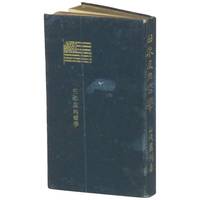
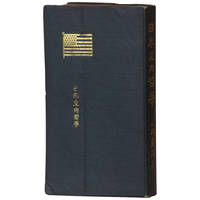
1921363193Tokyo: Nihon Shoin 1921. First Edition. A writer for the Rafu Shimpo Japanese newspaper in Los Angeles offers a satirical lexicon of Japanese American terms. The book is reminiscent of Ambrose Bierce's Devil's Dictionary. For example an early entry is for "寫眞çµå©š" shashin kekkon or Picture Marriage: "The Japanese who have always imitated foreign countries in every aspect of their lives are now the only ones in the world with this unique and original invention."<br /> <br /> Picture Marriage is just one example of Yamazaki's commentary on the anti-Japanese climate in the United States at the time. The introduction to this book is by the novelist Ubukata Toshiro.<br /> <br /> OCLC: 673765878 National Diet Library. First edition first printing. A very good copy in thin flexible boards. Boards spotted; lacking the printed white dust jacket. Nihon Shoin unknown
1921362511Tokyo: Nihon Shoin 1921. First Edition. A writer for the Rafu Shimpo Japanese newspaper in Los Angeles offers a satirical lexicon of Japanese American terms. The book is reminiscent of Ambrose Bierce's Devil's Dictionary. For example an early entry is for "寫眞çµå©š" shashin kekkon or Picture Marriage: "The Japanese who have always imitated foreign countries in every aspect of their lives are now the only ones in the world with this unique and original invention."<br /> <br /> Picture Marriage is just one example of Yamazaki's commentary on the anti-Japanese climate in the United States at the time. The introduction to this book is by the novelist Ubukata Toshiro.<br /> <br /> OCLC: 673765878 National Diet Library. First edition first printing; the book was reissued in 1922 under a slightly different title. A very good copy in thin flexible boards. Lacking the printed white dust jacket. Nihon Shoin unknown
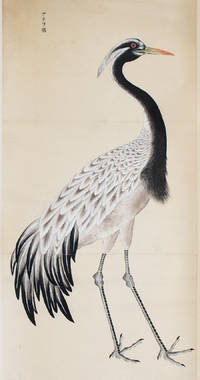
6952Scroll 420 x 12000 mm. with elaborate silk brocade endpaper at beginning. Japan: 1880-86.<br/> <br/> This beautifully rendered scroll of natural history paintings was executed with one exception by Akio or Keigu Yamamoto 1827-1903 Confucian scholar doctor botanist and highly gifted artist. He was born in Kyoto the son of the prominent doctor and botanist Boyo Yamamoto 1778-1859 the direct disciple of Ono Ranzan 1729-1810 the famous professor of botany who wrote a series of classic botanical books. <br/> <br/> Keigu “continued his father’s work in his private school in Osaka and spent his time organizing meetings that were regularly attended by both honzogaku amateurs and Japanese biologists.â€â€“Federico Marcon The Knowledge of Nature and the Nature of Knowledge in Early Modern Japan p. 301. Keigu travelled widely throughout Japan drawing plants and animals. He gave botanical instruction to the Meiji emperor and other members of the royal family. Keigu also wrote several standard works on materia medica and left many sketch books and scrolls which entered the Kyoto rare book trade in 1932; some of these were published only in the 1980s. All of his sketch books and scrolls offered valuable and unique information regarding native plants and animals as well as those that had been introduced into Japan.<br/> <br/> Our scroll contains 14 very finely executed color paintings of plants birds and animals. The paintings are quite unique in their remarkable spaciousness. For instance the image of the octopus is 1410 mm. long. The images include a most unusual morning glory three joined sheets and 1190 mm. long; an edible yellow lily two joined sheets 800 mm.; an ungei flower two joined sheets 795 mm.; a magnificent red toki a now-endangered crane species three joined sheets 765 mm.; a large akowa tsuru another species of crane three joined sheets 815 mm.; a young white crane three joined sheets 935 mm.; a sea lion umiuso painted in many shades of delicate black two joined sheets 545 mm.; a carp two joined sheets 597 mm.; an octopus four joined sheets; a chameleon three joined sheets 844 mm. dated “1880â€; a deer antler two sheets 545 mm.; a “Dutch†dog two sheets 545 mm.; a lion seen at exhibitions in Tokyo and Kyoto two sheets 640 mm. with a seal and note stating this was the work of “Ariyoshi†dated “1886“; and two camels two sheets 545 mm. long.<br/> <br/> Four of the paintings have the signature and seal of Yamamoto and another painting — the final — has the seal only. Three of the paintings have additional text by Yamamoto regarding where seen and painted alternative regional names date etc. <br/> <br/> Very fine condition preserved in a new wooden box. All but the penultimate painting are the work of Yamamoto. unknown
6952Scroll 420 x 12000 mm. with elaborate silk brocade endpaper at beginning. Japan: 1880-86. This beautifully rendered scroll of natural history paintings was executed with one exception by Akio or Keigu Yamamoto 1827-1903 Confucian scholar doctor botanist and highly gifted artist. He was born in Kyoto the son of the prominent doctor and botanist Boyo Yamamoto 1778-1859 the direct disciple of Ono Ranzan 1729-1810 the famous professor of botany who wrote a series of classic botanical books. Keigu "continued his father's work in his private school in Osaka and spent his time organizing meetings that were regularly attended by both honzogaku amateurs and Japanese biologists."-Federico Marcon The Knowledge of Nature and the Nature of Knowledge in Early Modern Japan p. 301. Keigu travelled widely throughout Japan drawing plants and animals. He gave botanical instruction to the Meiji emperor and other members of the royal family. Keigu also wrote several standard works on materia medica and left many sketch books and scrolls which entered the Kyoto rare book trade in 1932; some of these were published only in the 1980s. All of his sketch books and scrolls offered valuable and unique information regarding native plants and animals as well as those that had been introduced into Japan. Our scroll contains 14 very finely executed color paintings of plants birds and animals. The paintings are quite unique in their remarkable spaciousness. For instance the image of the octopus is 1410 mm. long. The images include a most unusual morning glory three joined sheets and 1190 mm. long; an edible yellow lily two joined sheets 800 mm.; an ungei flower two joined sheets 795 mm.; a magnificent red toki a now-endangered crane species three joined sheets 765 mm.; a large akowa tsuru another species of crane three joined sheets 815 mm.; a young white crane three joined sheets 935 mm.; a sea lion umiuso painted in many shades of delicate black two joined sheets 545 mm.; a carp two joined sheets 597 mm.; an octopus four joined sheets; a chameleon three joined sheets 844 mm. dated "1880"; a deer antler two sheets 545 mm.; a "Dutch" dog two sheets 545 mm.; a lion seen at exhibitions in Tokyo and Kyoto two sheets 640 mm. with a seal and note stating this was the work of "Ariyoshi" dated "1886"; and two camels two sheets 545 mm. long. Four of the paintings have the signature and seal of Yamamoto and another painting - the final - has the seal only. Three of the paintings have additional text by Yamamoto regarding where seen and painted alternative regional names date etc. Very fine condition preserved in a new wooden box. All but the penultimate painting are the work of Yamamoto. unknown books
1786h42110Sulzbach: Ze l ben Aharon 1786. Hardcover. Fair. 8vo 8.5 x 7 inches in amateur cloth backed boards mid-20th century fair copy with title page and next leaf in photocopy the leaf after that with damage and loss the remainder of the text in very good condition; last leaf with some edgewear and loss resulting in the loss of some letters. Over 260 leaves seems complete with quite a number of small woodcut illustrations 2.75 x 1.5 inches on average. Tseno Ureno sometimes called the Women's Bible is a Yiddish-language prose work whose structure parallels the weekly Torah portions and Haftorahs used in Jewish prayer services. The book was written by Jacob ben Isaac Ashkenazi 1550–1625 of Janów Lubelski near Lublin Poland and mixes Biblical passages with teachings from Judaism's Oral Torah such as the Talmud's Aggadah and Midrash which are sometimes called "parables allegories short stories anecdotes legends and admonitions" by secular writers. Ze l ben Aharon hardcover
1980100121911L'harmattan 1980 175 pages 13 4x1 6x21 4cm. 1980. Broché. 175 pages.
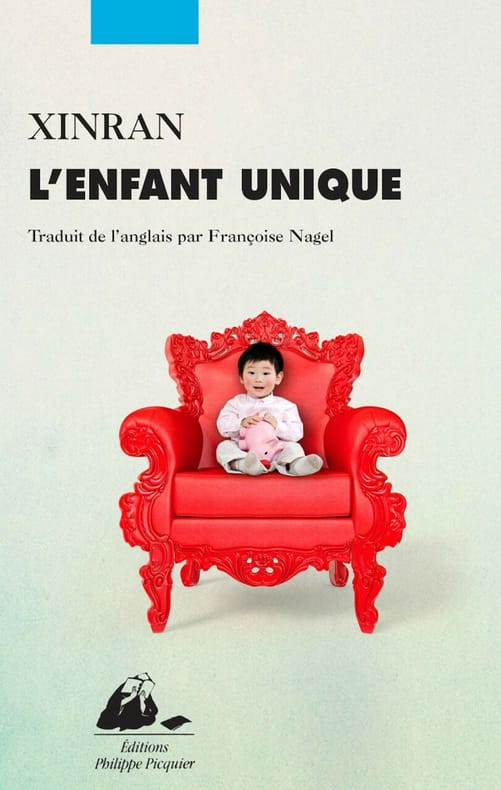
2016500089176EDITIONS PHILIPPE PICQUIER 2016 440 pages 13x3 4x20 4cm. 2016. Broché. 440 pages.
Zaragoza, 2006. 4to. mayor apaisado; 224 pp. Cubiertas originales.
Madrid, En la Imprenta de la Causa de la Venerable Madre, 1762. 8vo.; 448 pp. Encuadernación de época, en pergamino.
Valencia, en la Imprenta de Joseph de Orga, 1798. 4to.; XXVIII - 592 pp. Ejemplar carente de lámina. Ejemplar carente de encuadernación. Cubiertas provisionales.