7 654 résultats
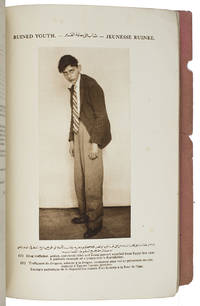
ABC_46768Cairo: Government Press 1933. Original publisher's pink paper wrappers printed letterpress. Although the book is in quires of 8 leaves unwatermarked wove paper they are not sewn but stapled through the side 3 staples. Imperial 8vo 27 x 18.5 cm. With 14 rotogravure plates printed in sepia 1 folding facsimile letter 2 folding graphs a plate with 6 pie charts and 1 illustration also in red showing schematically a smuggling box. Rare work on drug trafficking in Egypt in the 1930s and an important example of the authors "war on drugs": he was director of the Central Narcotics Intelligence Bureau. Thomas Wentworth Russell 1879-1954 sometimes better known as Russell Pasha was a police officer in service of Egypt who was appalled by the increasing drug trafficking in Egypt and the large number of drug addicts in the country. He founded the Central Narcotics Intelligence Bureau CNIB making it his mission to rid Egypt of drugs especially what he called "white drugs" cocaine morphine heroin but also of "black drugs" hashish opium. Russell was one of the most important anti-drug campaigners in Egypt in his time and after greatly raising awareness of the rising problem. Here he describes how drugs are smuggled in large quantities from abroad to Egypt. In many chapters he extensively describes the foreign sources of supply discussing not only important drug barons but also mentioning specific ships and other means of transport used to smuggle drugs notes cases where weapons were used by traffickers discusses people involved in the trade traffickers and their methods of smuggling in shoes camel saddles etc. addiction and its social effects and death rates and much more. Although 3000 copies were printed the printers code for the job is printed on the back of the title-page: 10506-1932-3000 ex. it is a scarce and outstanding example of Russell's anti-drug campaign extensively describing drug trafficking in Egypt in the 1930s being well-illustrated with photographs of drug barons users traffickers and methods of concealment. We have located only four other copies but due to ambiguity between the year covered 1932 and the year of publication 1933 three further locations are uncertain.Authors presentation copy for the English poet and dramatist John Drinkwater with an inscription by Russell on the front wrapper "John Drinkwater With compliments from the director Tho Russell 24/3/33" insciption in Arabic script" and his red stamp next to the inscription.Spine of wrapper damaged and front wrapper detached and with light water stain. A rare survival.l KVK 1 copy; WorldCat 1780146 3-6 copies. Government Press, unknown
1581ABC_47414Antwerp 1581. Large folio. Christoffel Plantin Later 17th-century blind tooled vellum with a single fillet frame and a large ornamental centre piece sewn on 5 supports corresponding with the 5 raised bands on the spine creating 6 compartments with a manuscript title in the first compartment at the head of the spine. With an engraved title-page the author's large "candore et spe" woodcut device on leaf 6r approximately 2185 botanical woodcuts in the text 8 woodcut decorated sometimes interlaced initials plus repeats 6 series and 1 typographic interlaced initial. Set in fraktur types with extensive roman and textura and incidental italic and civilité. 2 volumes bound as 1 the second in 3 parts. 10 994 2 blank "312"= 312 294 2 blank 2 blank 15 1 blank 67 1 blank pp. First Dutch edition with approximately 435 more woodcuts than Plantin's Latin edition of 1576 of one of the greatest herbals. Besides the expected herbs medical plants etc. it illustrates and discusses mushrooms a coconut corals petrified wood and what may be a fossil fern. Matthias de Lobel 1538-1616 a Flemish botanist and physician published his Stirpium adversaria nova in London in 1571 but greatly expanded it after his return to the Low Countries. Plantin bought 800 copies of the London edition and reissued it in 1576 cancelling a few leaves but printing extensive supplementary material to incorporate Lobel's further work. Lobel further expanded it for the present first edition in Dutch evidently his own translation giving the work its definitive form. The 1571 Latin edition had included about 275 woodcuts. Plantin acquired 120 of them but also added many more for his editions including many he had used for his editions of Dodoens and Clusius. The number of woodcuts therefore grew to about 1750 in the 1576 Latin edition and about 2185 in the present Dutch edition but Plantin appears to have had some new blocks cut as well. Many blocks were cut by Antoon van Leest and Gerard Janssen van Kampen after drawings by Pieter van der Borcht.With a clear purple owner's stamp "Jan Veth" and a clear 18th-century inscription "Cost 2800" on the front pastedown and some additional inscriptions on the rectos of the blank flyleaves engraved title-page and the back pastedown. With some occasional annotations in brown ink in the margins and some discrete additional manuscript shading to a few illustrations. The binding is somewhat soiled and the head and foot of the spine are slightly damaged all without affecting the structural integrity of the binding. The margins of the preliminary leaves including pastedown and flyleaves final blank flyleaves and back pastedown are somewhat water stained and have been restored. Somewhat browned throughout but the impressions of the woodcut illustrations remain clear. With some minor defects to several leaves only occasionally slightly affecting the text. Otherwise in good condition.l Arber Herbals p. 278; Belg. Typ. vol 1 1974; Bibl. Belgica L119; BM NH vol. 3 p. 1160; Carter & Vervliet 199; Nissen BBI 1219; Plesch mille et un livres botaniques p. 314; Stafleu & Cowan 4908; STCN 344385353 5 copies; STCV 12914575 9 copies incl. 4 incomplete; Voet the Plantin press 1579; Wellcome 3829; WorldCat 833674408 2 copies. hardcover
15465968Venice: Cornelio Adelkind for Daniel Bomberg 1546. First edition. Very Good. Folio 32 cm; 93 leaves. Text in Hebrew. Title within architectural border reproduced in Amram "Makers of Hebrew Books in Italy" p. 215 also in the Jewish Museum's 1989 exhibition catalogue "Gardens and Ghettos: the Art of Jewish Life in Italy" page 50. Some section headings within ornamental borders. Bound in c19 or c20 dark red crushed morocco ruled in gilt and decorated with arabesques on both boards; spine with raised bands and compartments tooled and titled in gilt; green polished leather doublures with red crushed morocco dentelles bordered in pointillé accented with arabesques; green moiré free endleaves. Edges gilt. Binding not signed. Joints and crown adroitly reinforced with Japanese paper; corners somewhat worn down. Occasional contemporary notes in manuscript in text; brief stain on leaf mem-tet and lightly along the bottom edge of leaves nun-bet and nun-gimmel. Text otherwise pristine. Title page light possibly washed. Old library ink stamps from an institution in Warsaw on title page. Red morocco ex-libris of mining magnate and philanthropist Adolph Lewisohn 1849-1938. References: Adams T-766; BM Italian 674; Steinschneider 7304 #1; Amram 215 illustration and 222. <br /><br />First printed edition editio princeps of the 11th century commentary on portions of the pentateuch by the Bulgarian poet and Talmudist Tobiah ben Eliezer. Published by the house of the seminal printer of Hebrew books Daniel Bomberg under the supervision of his scholar-in-residence extraordinaire Cornelio Adelkind. Venetian law at this time limited Hebrew publishing to Gentile printers. Bomberg a protestant from Antwerp entered this lucrative market and with Adelkind's help became its prime exponent until his death in 1549. Cornelio Adelkind for Daniel Bomberg hardcover
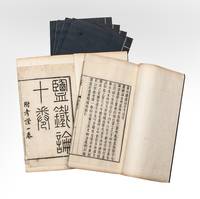
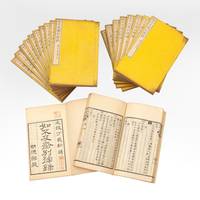
821136; 19; 20; 27; 37; 31 folding leaves neatly interleaved throughout. Ten juan in five vols. plus one vol. of commentary by Dunren Zhang. 8vo modern blue wrappers new stitching. China: 1807.<br/> <br/> A rare and important edition of this notable text; the sixth volume contains the valuable commentary and notes of Dunren Zhang 1754-1834 Qing scholar mathematician historian and book collector.<br/> <br/> After the death of Emperor Wu in 87 B.C. his successor summoned to the capital scholars from throughout the empire to discuss the most important problems of the day. Emperor Wu had “implemented a series of centralized economic measures to support his territorial expansion particularly to sustain wars with Xiongnu a confederation of nomadic tribes from Central Asia. For example the state monopolized salt iron and liquor industries; operated nationwide transportation facilities; and ran retail businesses. After the emperor died the new emperor gathered his officials and more than sixty Confucian literati to reassess these measures. The consultation turned into a lengthy debate not only on economic issues but also on topics such as agriculture border defense diplomacy legality and Confucianism…<br/> <br/> “The debate was later reconstructed under the title Yan tie fan by a Confucian bureaucrat-scholar Huan Kuan who consulted both living debaters and the historical record. The text delineates the debate in sixty episodes spanning over several days. In each episode the debaters focus on a specific issue that emerges during the debate.†You “Building Empire through Argumentation†369.<br/> <br/> As a result of the debates the monopolies on salt and iron were briefly abolished but were soon resumed only to be abolished again after the overthrow of Emperor Wang Mang in 23 A.D.<br/> <br/> “The text of this book the Yantielun has been brought in the shape of a dialogue between the opponents. Except the state monopolies the text also touches political questions of the time like the power of the nomad federation of the Xiongnu in the north or the general style of politics as a ‘rule of the law’ versus ‘rule by virtue.’ Huan Kuan’s book is an important document about the internal discussions about political affairs during the Former Han period" ChinaKnowledge.de online.<br/> <br/> Fine set preserved in a slightly worn hantao.<br/> <br/> <br /> <br> <br> References<br /> <br> <br> ChinaKnowledge.de<br /> <br> <br> Wagner Donald B. Ferrous Metallurgy. Science and Civilisation in China. Vol. 5. Part 11. Cambridge: Cambridge University Press 2008.<br /> <br> <br> You Xiaoye. “Building Empire through Argumentation: Debating Salt and Iron in Western Han China.†College English Vol. 72 No. 4 March 2010. unknown
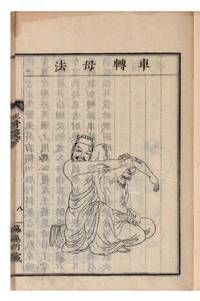
7010Many fine full-page woodcut illus. 46; 59 folding leaves. 8vo orig. yellow wrappers wrappers a little soiled orig. woodblock title-slips on upper covers labels a little soiled new stitching. Kyoto Osaka & Edo: 1808.<br/> <br/> First edition of one of the three most important Japanese works on orthopedic medicine. The book is based on Chinese medical science most notably the Sheng ji zong lu è–濟總錄 written in the 11th century and the Yi zong jin jian 醫宗金鑑 by Qian Wu active 1736-43 who also wrote the famous Yuzuan Yizong Jinjian 御纂醫宗金鑑 Imperially Commissioned Golden Mirror of Medical Learning published in 1742. Our work presents a system of surgical treatment to cure injuries to bones principally fractures and dislocations with instructions on how to stop bleeding and to bind or immobilize the injured part by bandaging. There is a substantial section on materia medica and the compounding of prescriptions considered essential to the treatment of bones in Japan.<br/> <br/> The numerous and fine woodcuts depict braces and corsets plasters manipulations bandaging techniques casts etc. Many of these techniques are clearly taken from Western medicine.<br/> <br/> Ninomiya 1754-1827 was a prominent medical doctor who laid down the foundations of orthopedic surgery in Japan. He studied in Nagasaki where he learned Western and Japanese techniques from Kogyu Yoshio 1724-1800 interpreter of Dutch and a famous physician and surgeon who had a “Western-style†room at his home in the city. After further study under a number of doctors throughout Japan including Gento Yoshiwara Ninomiya established himself in Edo where he had an extremely successful practice. After contracting syphilis as a baby from his wet nurse Ninomiya lost his nose and wore a artificial nose for the rest of his life.<br/> <br/> Nice set. Both volumes have some minor marginal dampstaining.<br/> <br/> ⧠Mestler A Galaxy of Old Japanese Medical Books III p. 152. unknown
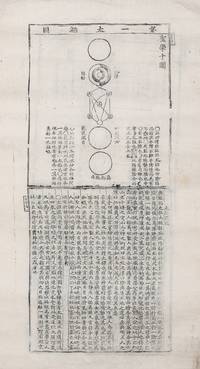
10716All sheets with woodblock diagrams. Ten woodblock-printed sheets each ca. 1045 x 580 mm. Korea: 18th or 19th century<br /> <BR> <BR> A very rare woodblock-printed broadside edition of the influential SÅnghak sipto by Yi Hwang 1501-71 “Korea’s greatest philosopher.â€â€“Pratt & Rutt Korea. A Historical and Cultural Dictionary Curzon: 1999 p. 517. Yi a child prodigy was a scholar and government official. He served four kings in a number of high positions but his integrity and stand against corruption caused him to be relieved of his posts and sent into exile a number of times.<br /> <BR> <BR> “Yi Hwang better known by his penname T’oegye is generally reputed as Korea’s foremost Neo-Confucian thinker. From the very beginning of the Yi dynasty 1392-1910 the Neo-Confucian doctrine of the Ch’eng-Chu school was the officially sanctioned ideology but with T’oegye it arrived at its full maturity on the peninsula for he was the first to present it with a fully sophisticated and integral grasp of its scope unity and implications. Consequently his teaching became a constant reference point for subsequent generations of Korean Neo-Confucians and his understanding of Chu Hsi’s Zhu Xi’s vision exercised a profound and lasting influence…<br /> <BR> <BR> “One of his last and most important works was the Ten Diagrams on Sage Learning SÅnghak sipdo which he composed for the instruction of young King SÅnjo reigned 1567-1608 in 1568 two years before his death. Considered the summation of T’oegye’s lifetime of learning the Ten Diagrams became one of the classics of the Korean Neo-Confucian tradition: during the course of the Yi dynasty it was reprinted at least twenty-four times and it now circulates in three modern Korean translations…<br /> <BR> <BR> “‘Sage learning’ is a phrase that appears frequently in Neo-Confucian works meant for the instruction of rulers reflecting the view that the essential duty of a ruler is to learn from and emulate ancient sage kings. In terms of its origin the Ten Diagrams is certainly such a work. But T’oegye’s title is ambiguous for ‘sage learning’ also means ‘learning how to become a sage’ that is a fully perfected human being. This is a kind of learning that has to do with not only kings but every human being. Thus the provenance of this work is universal and through the centuries it has served as a basic handbook for generations of serious Neo-Confucians in their endeavor to understand and cultivate the full perfection of their humanity…<br /> <BR> <BR> “This kind of ‘sage learning’ in its full scope is a distinctively Neo-Confucian development. With the Neo-tradition revival of the tradition in the Sung dynasty Confucians finally developed a metaphysical psychological and ascetical framework that could fully describe the status of sagehood and delineate it. Sagehood became a practical goal rather than a theoretical ideal. T’oegye’s object in the Ten Diagrams is to present that framework and path…<br /> <BR> <BR> “Doing this of course amounts to presenting a structured summation of the essence of Ch’eng-Chu theoretical and practical learning. One could devote a large book to this topic; T’oegye compressed it into ten chapters each brief enough to be mounted on a single panel of a ten-paneled screen. Each chapter begins with a diagram and is followed by a text. T’oegye’s own remarks are only a short portion of each chapter. As far as possible he tried to make this a compilation of diagrams and words from other authoritative sources so that the work would clearly represent the cumulative wisdom of the Confucian tradition not just his own private opinion…<br /> <BR> <BR> “The compressed format is not a concession to hasty readers or beginners needing a simple introduction. Quite the opposite; whether as a short book or a screen placed in one’s quarters T’oegye intended this as a work to be lived with and absorbed slowly through repeated reading and leisurely reflection. In that way its compressed contents would unfold gradually and become a part of oneself through the lengthy and personal effort of apprehending its full meaning. The diagrammatic format he chose is ideal for such use for the categories correspondences and relationships suggested by spatial arrangement offer food for reflective thought far beyond the content of the words themselves. T’oegye could expect that the Ten Diagrams would be approached in this way because the Neo-Confucian approach to texts emphasized this kind of repeated reading prolonged reflection and personal assimilation. The theory was that reading should be a process of self-transformation not mere information gathering. T’oegye designed his Ten Diagrams precisely as a tool to be used in such a process.â€â€“Michael C. Kalton “T’oegye’s ‘Ten Diagrams on Sage Learning’: A Korean View of the Essence of Chu Hsi’s Teaching†in The Journal of Korean Studies Vol. 7 1990 pp. 97-99–& see the rest of this wonderful article for the importance of this text which was influential in both Korea and Japan.<br /> <BR> <BR> The titles of the ten chapters are: The Diagram of the Supreme Ultimate The Western Inscription The Elementary Learning The Great Learning The Rules of the White Deer Grotto Academy The Mind Combines and Governs the Nature and Feelings Diagram of the Explanation of Humanity Diagram of the Learning of the Mind-and-Heart Diagram of the Admonition of Mindfulness Studio and Admonition on Rising Early and Retiring Late.<br /> <BR> <BR> As mentioned in Prof. Kalton’s essay these broadsides were intended to be made into a ten-panel standing screen.<br /> <BR> <BR> Fine condition and a remarkable survival. A few minor stains and a little dusty at extremities. We find no broadside edition in WorldCat. unknown
7555Ten columns per page 20 characters per column. 71 folding leaves. Two parts in one vol. 8vo 270 x 180 mm. orig. wrappers stained dark brown with fermented persimmon juice to prevent worming nevertheless wrappers a little wormed new stitching. Japan: ca. 1600-40.<br/> <br/> A rare movable type edition unrecorded by Kawase or Sorimachi and not in WorldCat. The copies at the National Diet Library and Bukkyo University Library are different movable type editions. We learn from the final paragraph on the last leaf that this edition is an exact copy of the Chinese printed edition<br/> <br/> Zhili 960-1028 was a Chinese monk of the Tiantai tradition. “In 991 he became the abbot of Ganfusi and four years later he began his residence at the monastery Bao’enyuan on Mt. Siming whence his toponym…Zhili later found himself at the center of the Shanjia Shanwai or ‘Home-Mountain/Off-Mountain’ debate that racked the Song-dynasty Tiantai school.â€â€“Buswell & Lopez The Princeton Dictionary of Buddhism p. 825.<br/> <br/> This is his commentary written in 1004 on The Essentials of the Ten Gates of Non-Duality by Jingxi Zhanran 711-82 the putative ninth patriarch of the Tiantai zong and one of the great revitalizers of the Tiantai tradition. “From the Song forward orthodox Tiantai doctrine has been based upon Zhili’s doctrinal elaborations on Tiantai teachings. Zhili was best known for his interpretation of the thought of Zhanran…who commanded great respect and imperial patronage in the Tang Dynasty…<br/> <br/> “Zhili’s doctorial elaboration on Zhanran’s teachings was generated during debates with other Tiantai monk-scholars over Zhanran’s works. The victorious faction led by Zhili was retrospectively known as the Home Mountain shanjia Teaching in contrast to their opponents labeled the Off Mountain shanwai Teaching. In the present work Zhili criticized his opponents’ interpolation of Huayan and Chan thought in Tiantai doctrine…<br/> <br/> “Zhili’s interpretation was canonized other interpretations were left in oblivion. Tiantai orthodoxy for the following centuries was defined during the Song Dynasty.â€â€“Shin-yi Chao “Chinese Religion in the Song and Alien Dynasties†in Nadeau ed. The Wiley-Blackwell Companion to Chinese Religions pp. 106-07.<br/> <br/> Zhili’s text is preceded by a Preface by his friend and fellow priest Zunshi 964-1032 who was the other pivotal figure in the Tiantai revival.<br/> <br/> A very good and crisp copy preserved in a most attractive chitsu. With some worming mostly confined to the gutter or lower margins occasionally touching a few characters. A few of the final leaves have some worming. unknown
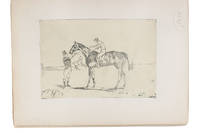
1835H1EFLHU1E5LWEngland and/or Sweden 1835. 4to 24.5 x 18 cm. Each drawing mounted on or occasionally drawn on a card loose in a Swedish blind-blocked textured red cloth portfolio ca. 1860 title in gold on front board decorated endpapers purple on white red cloth ties. 36 pencil drawings of English thoroughbred race horses 7.5 x 11.5 to 11 x 16 cm 1 finished in ink washes and a few touched up with white or light brown. 36 loose ll. A collection of 36 pencil drawings of famous English thoroughbred race horses by at least three artists including one signed "Harry Hall" and several others clearly based directly or indirectly on his paintings. Some horses appear in their stables or grounds sometimes with a stable boy groom or owner others are shown carrying a jockey during a race at a track. The earliest horses shown include a beautiful pencil and ink-wash drawing of Camel 1822-1844 who raced from 1825 to 1827 and won the 1826 Port Stakes at Newmarket. He is better known as the sire of Touchstone 1831-1861 also shown one of the most famous thoroughbreds of all time who raced from 1833 to 1837. In very good condition with only some minor wrinkles in one drawing and faint stains in another. Portfolio good. A charming collection of horse drawings mostly from the early 1850s. ABE CAT Art History hardcover
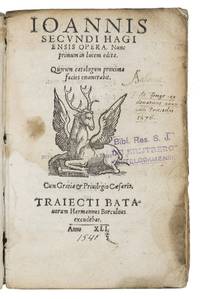
1541M23NGJ7IKRQ5Utrecht: Herman van Borculo 1541. Contemporary vellum wrapper straight-sewn on 3 tanned calf straps laced through the wrapper with the authors name in large textura lettering reading up the spine. Small 8vo 16 x 10.5 cm. With Van Borculos winged stag couchant regardant and book device on the title page and another salient regardant with 2 books on the verso of the otherwise blank last leaf; and 3 vine-leaf ornaments Vervilet 7 8 & 43. Set in an Aldine-style italic type with upright capitals; 92 mm/20 lines with roman capitals for occasional words phrases and 2-line initials. Rare first edition in the original Latin of the collected poetic works of the humanist and neo-Latin poet Janus or Joannes Secundus Jan Everaerts 1511-1536 who "ranks among the foremost poets of the world" as "the only famous 16th-century Dutch poet" Guépin p. 231: "one of the most significant and enduring poets of the Renaissance" and "the outstanding Latin love poet of the northern Renaissance" Price p. 1. Although not quite twenty-five when he died he published numerous poetic works from 1532 to 1536 but left most of his work unpublished at his premature death. Much of his poetry appeared for the first time in the present posthumous edition. Janus is most famous for his "Basia" kisses: 19 lyric love poems influenced by Catullus. Janus's three books of elegies especially the first book comprising 11 love poems to his possibly fictional first love Julia are also masterpieces of neo-Latin poetry.Although revered internationally in his own century and influential throughout the 17th and 18th centuries among his avid readers were Ronsard Fleming Huygens Milton and Goethe Janus's name has been eclipsed in the Netherlands by those of Cats and Vondel in part because they wrote in Dutch.Janus Secundus was born in The Hague. His father was a lawyer at the leading courts of the Low Countries and the family moved to Maastricht when Janus was sixteen. He studied law there and later studied at Bourges and at the University in Louvain. Though a native Dutch speaker and fluent in French Janus had learned Latin with his older brothers at an early age and corresponded with them in Latin.With 3 French verses in a near contemporary hand on the endleavesFurther with a near contemporary donation inscription on the title-page; a 19th-century bookplate on the inside front wrapper and blue ink stamp on the title-page. With the title-page somewhat worn and with stains in its margins plus a water stain in the first 10 leaves and a fainter marginal one some of the last few leaves but otherwise in good condition. The sewing supports have broken at the front hinge and the velum wrapper is somewhat soiled with a small corner of the back wrapper lost. Rare first edition of a seminal work of neo-Latin poetry by the first great Dutch poet Janus Secundus.l Adams S837 1 copy; BMC STC Dutch p. 185; G. Joos Uitgaven van Janus Secundus 10; Netherlandish books 27713 10 copies; USTC 421142 same 10 copies; Valkema Blouw Typ. Batava 2673 13 copies; not in Oberlé Poètes néo-Latins; for Secundus: J.P. Guépin "Tres fratres Belgae: brothers poets and civil servants in the sixteenth century" in: The Low Countries 8 2000 pp. 231-238; David Price Janus Secundus 1996. Herman van Borculo, hardcover
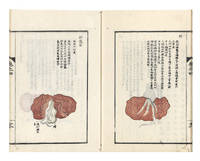
6006Numerous fine woodcut illus. 18 of which are finely handcolored. 48 irregularly paginated; 33; 39; 26; 28 3 folding leaves. Five vols. 8vo orig. wrappers some worming in upper margin of each vol. orig. block printed title label on each upper cover new stitching. Tokyo: Mankyudo Hanabusa Heikichi Preface dated 1810.<br/> <br/> First edition of one of the three most important early Japanese books on the history and technique of Chinese and Japanese acupuncture. This work is very different from all earlier Chinese and Japanese books on the subject. For the first time the illustrations are finely and realistically rendered and are anatomically accurate clearly influenced by European medical works which had circulated in Japan. Another important aspect of this book is that eighteen of the woodcuts each depicting organs of the body are finely handcolored. Also the body is described in full from head to foot and is not entirely dependent on the fourteen meridians.<br/> <br/> Kosaka was a court physician of the fiefdom of Kameyama who had studied under the famous physician Motonori Taki 1731-1801 who was himself a member of a distinguished family of doctors.<br/> <br/> The publisher of this work was the exclusive publisher for the government sponsored medical school.<br/> <br/> Very good set. unknown
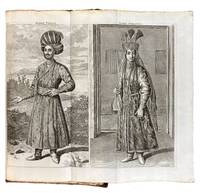
171842045Amsterdam: Chez les Freres Wetstein 1718. 2 volumes small folio. 13 3/4 x 8 1/2 inches. Half-title in volume I titles printed in red and black. Vol 1: engraved portrait of the author by G. Valck after G. Kneller engraved allegorical frontispiece by B. Picart dedication with engraved headpiece 3 engraved double-page maps 111 engraved plates numbered 1-110 plus 1 unnumbered on 52 sheets 29 double-page 7 folding 24 engraved illustrations within the text illustration on p. 164 pasted on slip as issued. Vol 2: 162 engraved plates numbered 111-262 plus 10 unnumbered on 56 sheets 33 double-page 9 folding 20 engraved illustrations within the text. Quarter calf and marbled paper boards spines with raised bands forming six compartments tooled and lettered gilt. Uncut<br/> <br/> Provenance: Princes of Liechtenstein bookplate "Ex Libris Liechtensteinianis" of Franz Joseph II 1906-1989 on front paste-downs<br/> <br/> A fine clean uncut copy of the First edition in French of Le Bruyn's important illustrated account of his voyage to Russia Persia India and Java. From the library of the Princes of Liechtenstein.<br/> <br/> In his first expedition of 1674 Dutch traveller and painter Cornelius Le Bruyn remained in the Levant for seven years travelling principally in Asia Minor Syria the Holy Land and Egypt. On his return he published his Voyages au Levant and encouraged by its success undertook a second more far-reaching expedition. "In 1701 Le Bruyn started on the second of his journeys taking a ship to the country of the Samoyeds . and then proceeding to Moscow. Travelling by way of Asia Minor he arrived in Persia where he remained for the years 1704-05. Leaving Persia he proceeded by ship to India stopping at Cochin Ceylon and the East Indies i.e. Batavia. He returned by much the same route residing in Persia between 1706 and 1707 and describing the ruins of Persepolis and Pasargades" Howgego. The numerous finely engraved illustrations include large folding panoramas of Moscow and Isfahan views of Astrakhan and the antiquities at Persepolis and many of the forts encountered on his journey as well as portraits of native peoples and depictions of the flora fish birds animals etc. Of particular note are Le Bruyn's description and images of the Samoyeds and their country among the earliest for the region. Le Bruyn also gives an account of an encounter with William Dampier in Batavia and describes the route taken by Everard Ysbrants Ides the Danish Russian ambassador to China.<br/> <br/> Brunet III:911 calls for 262 plates based on the numbering of the plate list which does not include the unnumbered plates; Chadenat II 5085; Chahine 2078; Cohen-de Ricci 610; Lipperheide Kaa 6 calls for 128 plates and 45 engraved illustrations; Howgego B177. Chez les Freres Wetstein unknown
835348 parts & one index in 20 vols. 8vo orig. yellow wrappers orig. block-printed title labels on upper covers new stitching. Kubota: Meitokukan Academy 1827.<br /> <BR> <BR> Second edition 1st ed.: 1825 and rare; this was printed in the Kubota domain in northwestern Japan. Following the death of his father in 1785 Yoshimasa Satake 1775-1815 became daimyo of the Kubota domain in Dewa Province modern-day Akita Prefecture. He instituted a number of reforms ordering the planting of extensive windbreaks to improve crop yields; encouraged the mining silk and lacquerware industries; instituted land reforms; dismissed incompetent and corrupt officials; and hired forestry management experts. He also established the domain academy the Meitokukan “House of Virtues†which developed an active publishing division.<br /> <BR> <BR> The present work is a rare example of an early publication from the school which specialized in Chinese learning and Confucian traditions. The Preface was written under the pseudonym “Rakuo†by Sadanobu Matsudaira 1758-1829 who instituted the “Kansei Reforms†of 1789-1801 which included a number of educational changes improving the quality of learning through Japan.<br /> <BR> <BR> The compiler of this work Ichimei Suzuki d. 1818 was a teacher at the Meitokukan and was encouraged by Satake referred to here by his pen name “Jofukyusai†to prepare this work. It is a list of pseudonyms of authors and other people of the Three Kingdoms era 220-80 AD in China with biographical sketches of each person. For each name Suzuki and his fellow compilers have given citations of the Chinese books in which they were able to determine the actual names.<br /> <BR> <BR> Fine and fresh set preserved in two old chitsu. With the “Kanda ke zo†seal of the Kyoto collector Kogan Kanda d. 1918 who formed a large and fine library which was inherited by his grandson Kiichiro Kanda. unknown
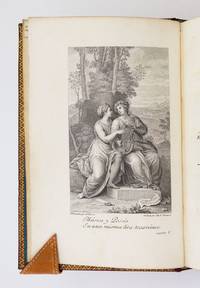
1779ST19371Madrid: Imprenta Real 1779. FIRST EDITION. 235 x 150 mm. 9 1/4 x 6". 10 p.l. 126 XL pp. 1 leaf errata. <br/> EXCELLENT CONTEMPORARY CRIMSON MOROCCO BY DEROME LE JEUNE his ticket with address of Rue St. Jacques on verso of front free endpaper covers framed with thick and thin gilt rules raised bands spine compartments with central floral sprig surrounded by a lozenge of small tools volute cornerpieces gilt titling gilt-rolled turn-ins gilt edges cobalt blue paste-paper endpapers. WITH SIX CHARMING ENGRAVED ALLEGORICAL PLATES after G. Ferre. Front pastedown with morocco bookplate of Mortimer L. Schiff and small book label with a gilt cipher on a red peach. A Large Paper Copy. Palau y Dulcet IV 107; RSIM B VI 429; MGG VI 1403 f.; Gregory-Bartlett I 129. Three minute dents to front board a hint of wear to bands and corners isolated faint foxing blank recto of frontispiece leaf and blank verso of final leaf with faint blue shadown from endpapers but all of these quite trivial and otherwise A BEAUTIFUL COPY--fresh clean and bright internally with very wide margins and strong impressions of the plates and in a lustrous binding showing with few signs of use.<br/> <br/> This is surely one of the handsomest poetical treatises on music ever produced and it is offered here in a binding done by one of the finest craftsmen working in Europe during the period of the book's publication. The work is written in the "silva" form of poetry used by persons of high rank illustrated with fine engravings and put into elegant morocco by the finest hands among the large Derome family of binders. According to Palau our first edition is "beautiful and printed on fine paper." He says further that although the strongly expressed opinions of the youthful author on contemporary composers caused the work to be "unfairly attacked" it was "appreciated by professors of music and collectors of literature in that genre" especially in Italy and America. A child of the Enlightenment Iriate 1750-91 gained entry to intellectual and artistic circles in Madrid through his uncle who was librarian to the king of Spain. He translated works by Horace and Virgil into Spanish by royal request and wrote criticism poetry and dramas. He is best known for his satirical fables on the contemporary literary scene "Fábulas literarias." There were no fewer than 18 members of the Derome family who made their livings as binders in Paris from the middle of the 17th century until the first quarter of the 19th but by far the most distinguished family member was Nicolas-Denis called "le jeune" 1731-88. Known for the gracefulness of his bindings and for being capable of "amazing delicacy" in Hobson's words Derome le jeune was simply the leading binder of the day and his work was much in demand. Because he refused to turn away customers Derome was forced to hire a number of assistants whose work he could not always supervise closely. However Thoinan says that the binder's best work is indicated by the presence of his ticket as here. The volume's provenance adds to its luster: it was in the distinguished library of American bibliophile Mortimer Schiff 1877-1931. In Dickinson's words Schiff a financier and philanthropist Schiff "brought together an unrivaled collection of decorative bindings." His library included works by great printers important illustrated books and works printed on vellum but chiefly fine and historic bindings. The "Reliures" database of the Bibliothèque Nationale de France commends Schiff for assembling "one of the most important inter-war libraries" noting that his collection was "renowned for its collection of French bindings.". Imprenta Real unknown
1938312786N.p.: Privately printed for the members of the Royal Guild of Wisconsin Fisherman 1938. First edition one of a very few copies known. Illustrations from photographs. vi 25 pp. 1 vols. 8vo. White printed wrappers stapled. Very good. Some minor wear. Green quarter morocco slipcase. First edition one of a very few copies known. Illustrations from photographs. vi 25 pp. 1 vols. 8vo. Salmon fishing during four days in the first part of July 1938 by a party of six who styled themselves the Royal Guild of Wisconsin Fishermen comprising: Evan A. Evans Louis M. Hanks Roy F. Tomlinson Theodore G. Montague William S. Kies and George I. Haight to whom authorship is attributed by the Wisconsin Historical Society. The last page of text records their catch by weights. Rare. Wetzel p. 171 tentatively ascribed to William Kies. "A rare work."; Bruns K-45 not seen; Bibliotheca Salmo Salar 105. OCLC 2 copies Princeton Wisconsin Historical Society Privately printed for the members of the Royal Guild of Wisconsin Fisherman] unknown
1748ABC_46957London 1748. Large 4to. printed for the author by John and Paul Knapton Bound by Marcus Ward & Co. founded 1833 with their bookbinder's label on the front paste-down in 19th-century calf gold-tooled and blind-tooled frame on both boards gold-tooled spine with red morocco spine label with title in gold gold-tooled board edges blind-tooled turn-ins red edges blue ribbon marker. With 42 engraved plates maps and plans all but one folding. 1 1 blank 32 1 blank 417 1 blank 2 pp. First edition of this important and popular account of the unfortunate and famous expedition of George Anson being considered as the one most sought after Borba de Moraes. It is an account of Ansons expedition to the western coast of South America to harass the Spanish trading territories and cutting off the Spanish supplies of wealth in this way after the outbreak of the War of Jenkinss Ear between Britain and Spain in 1739. Anson was the commander of 7 ships in 1740 including the Centurion but soon his expedition threatened to turn into a fiasco. His squadron was battered by storms and bad weather causing damage and shipwrecks and many of his crew died from scurvy typhus and dysentery. The remaining crew was transferred to the Centurion the last remaining vessel and Anson limped across the Pacific to Macao. In June 1743 he sailed to the Philippines were he achieved a substantial victory near Manila by capturing the Nuestra Senora de Covadonga a Spanish galleon filled with gold. After sailing around the world Anson returned to England in June 1744 and in spite of his enormous losses he returned with large profits.Ansons voyage being one of the greatest voyages in the history of exploration and naval warfare laid the foundation for British voyages and exploration of the Pacific and more specific for English trade in this area. The present account being based upon Ansons own ship journal describing this troubled expedition soon became highly popular in the 18th century and is even considered as the masterpiece of descriptive travel and the most popular book of maritime adventure of the eighteenth century Hill. With occasionally a correction of the text in brown ink and the name of Mr. Sweeting added to the list of subscribers. Binding slightly worn around the edges and with a few minor scratches on the boards some marginal foxing and staining to both the text leaves and plates especially in the first part barely affecting the plates except the map of the Pacific Ocean which is a little more stained folding lines of some plates especially all three large folding maps reinforced but sometimes still with some very small tears on the folding lines some corners of the folding plates slightly frayed but overall a copy of the first edition of this important 18th-century travelogue with all the plates which is still in good condition.l Alden/Landis 748/225; Borba de Moraes I p. 38; Cox I p. 49; ESTC T89475; Hill 1817; Howgego A-100; Kroepelien 1086; Sabin 101175 cf. 1625. hardcover
1850List1929California 1850. With thirteen letters most multi-page written from Monterey in 1850 a 7 pp facsimile transcription of a 1834 Mexican land grant on cloth measuring 11 x 14 inches and and eleven page document on paper in Spanish relating to a Monterey land grant transcribing an 1841 document. Letters heavily worn with some loss at margins but mostly legible land grant in good to very good condition transcribed document in Spanish in fair condition with water damage to margins. Fair. An interesting archive of 1850s-era material relating to the life and career of the surveyor Edward Williams which recently surfaced in the central mother lode region. The group includes his personal letters from the California Gold Rush as well as well two interesting documents form his work for the Surveyor General J.W. Mandeville in 1858 where he transcribed two Mexican land grants. <br /> <br /> Lt. Edward Williams was a member of Company E New York Volunteers under Capt. Nelson Taylor. He came to California around 1847 and found employment as a deputy surveyor later working for the Office of the Surveyor General of the Unites States for California. In 1858 Surveyor General J.W. Mandeville commissioned a report on Mexican-era California Land Grants. Mandeville had Williams copy the original documents exactly - inclusive of an ink copy on linen that is an "exact tracing" of the original documents starting with 1834 up through about 1840. These "copies" were submitted to the Surveyor General in 1858 for use in the report. Williams continued the title work by copying other documents from about 1841 though this time not as a tracing but hand copied on the usual blue paper of the 1850s.<br /> <br /> The documents illustrate the length officials went to while they investigated Mexican Land Grant titles to California properties in the 1850s. The process was difficult and involved two distinctly separate cultures and legal systems that clearly conflicted. The Mexican Government granted rights for these large land parcels in California to various people but clearly stated they could not sell parts of the property. The wording was used many times in litigation of the period in both defense of the land grants and in opposition to how the land grants were handled. The issues were actually quite simple in that the Mexican legal standards for land grants was far different from those in the United States and the two differing forms of written land ownership and use clashed. <br /> <br /> These documents reflect a parcel of land granted to Francisco Mesa at "Corral de Tierra" a large parcel in Monterrey County California. Mesa had requested land for "his personal use and that of his family." In the Grant the title papers reflect "while the land is under Francisco's possession it cannot be divided mortgaged or a levy placed on it nor handed down." These original documents help illustrate the complex story of Mexican Land Grants in California. <br /> <br /> Also included are thirteen letters from Ed aka "Ned" to various family members primarily his mother and sister Alice and vice versa. About half are from Ed the other half are written to him. The dates of the letters are; 1850: February 10th April 15th April 16th April 28th June 10th July 30th October 11th and November 17th and 1851: September 9th. One undated letter with heavy loss is written from Panama. The letters are generally readable but the condition far from perfect with water stains throughout and chips abundant along edges and significant textual loss. The letters are generally at least two pages sometimes four or more inclusive of writing in the crossed line custom to save paper. Most are datelined at Monterrey where he discusses the people the customs setting and more. <br /> <br /> Despite the condition flaws there is much to be gleaned from his correspondence. In his April 15 1850 letter . he describes his trip to San Juan Bautista from Monterrey in detail while he was on his way to San Francisco. Williams writes of his great pleasure on tasting cooked beef by the Indians that he found was the best he ever tasted as they camped on the way to San Jose with the ultimate goal Mission Dolores in San Francisco: “this the beef they put on the embers of the fire and broiled it - I never tasted anything like it before so tender so juicy…†One of his first notes on San Francisco: "There are regular streets filled with all kinds of sorts of stores… The shipping covers the water as far as you can see. And those nearest the shore are converted into store houses the rigging being taken down and the and holes cut in the sides for doors.The best houses in town are occupied by gamblers . a large saloon filled with tables on which are played all kinds of games of chance - at some of the tables are displayed immense amounts of coin and gold in lumps worth from 1 to 5000 dollars which some poor infatuated fool of a miner has at some time lost to them."<br /> In his letter of April 16th he discusses both his difficulties with women in California and his lack of fitting in back east: “The Spanish Girls are very nice and all that sort of thing but the trouble is to find one that is educated. I can’t bear an uneducated wom an and I think I shall have to come to N.Y. and bring one out here… I know one or two in N.Y. but I don’t believe they would have such an uncouth specimen of an ‘hombre’ as me…†In his next letter he describes Carmel in detail. He states: “I haven’t been to the mines nor have I any inclination to go†though he intends to settle in California permanently. In his next letter he discusses the people he’s met and how he detests the anglophone community there: “How do I like the People Those of Spanish whom I call my friends I love with all my soul - there is not much society except among them… the Eng. and Am. population I detest from the bottom of my heart. This may sound strange but you will know the por que when you arrive.†He then praises the climate and scenery of Monterey. One letter written from Panama which has unfortunately sustained heavy losses at margins offers some details of the trip on the Chagres River. The replies to Williams from his family offer details on life in New York and are similarly compromised in condition but overall there is enough to glean from the group to provide a detailed example of family correspondence from the period. <br /> <br /> Overall a very interesting and unusual archive of a young professional who moved to California during the Gold Rush period and rejected the Anglophone mining community with particular interest to historians of Monterey and of the systems of land grants that shaped Mexican and American land policy in the nineteenth century. unknown
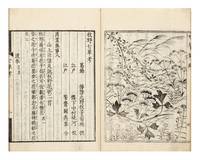
8333One full-page woodcut. .5 29 .5; 15.5 folding leaves. Two vols. 8vo orig. blue wrappers orig. block-printed title labels on upper cover later decorated wrappers later stitching. From the colophon at end of Vol. II: Edo Kyoto & Osaka: Hanabusaya Heikichi et al. 1812.<br /> <br /> <BR> <BR> with:<br /> <br /> <BR> <BR> —. Haru nanakusa ko Thoughts about Seven Herbs in Spring. Three full-page woodcuts & nine smaller woodcuts in the text. .5 36 folding leaves. 8vo orig. blue wrappers as above later decorated wrappers later stitching. From the colophon: Edo: Yamashiroya Sahei 1814.<br /> <BR> <BR> First editions a rare complete set of these two works which are concerned with two important seasonal celebrations. The first of the year is the Festival of Seven Herbs in Spring Nanakusa no sekku a traditional Japanese ritual of eating seven-herb rice porridge on the 7th of January; its consumption would bring longevity and health and ward off evil. The tradition derives from ancient China. The seven herbs are seri Japanese parsley nazuna shepherd’s purse gogyo cudweed hakobera chickweed tahirako nipplewort suzuna turnip and suzushiro daikon radish.<br /> <BR> <BR> The other is the Festival of Seven Autumn Herbs Akino nanakusa less well known then the spring celebration. These herbs are hagi bush clover obana/susuki Japanese pampas grass kuzu kudzu nadeshiko Japanese dianthus ominaeshi Patrinia scabiosifolia fujibakama Eupatorium fortunei and kikyo balloon flower. While many of them have medicinal qualities for this festival they are not for eating but for viewing and admiring.<br /> <BR> <BR> Kikuu Kitano 1762-1831 a native of Sendai came to Edo in the 1780s and opened an antiques gallery that enjoyed great success. In 1804 he purchased a large piece of land in the Mukojima section of Edo where he established a botanic garden today known as the Mukojima Hyakkaen Garden. It is Tokyo’s only surviving garden from the Edo period. There he planted a landscaped orchard of 360 plum trees and other plants including the seven herbs of both spring and autumn selected by Kitano and his literati friends both poets and painters. <br /> <BR> <BR> These works are very beautifully printed using a wide variety of character styles to express meanings and authorship. The first two volumes to be published — on the autumn festival — contain a fine full-page woodcut designed by the author showing all seven herbs. The text contains references to each herb in waka and kanshi Chinese poetry written by Japanese a guide to understanding the nuances of the poetry and the botanical literature.<br /> <BR> <BR> The spring festival volume published two years later describes each of the seven spring herbs and their uses in medicine and gastronomy with many references to the Japanese botanical literature. There is a long passage on how to prepare the springtime porridge. The woodcuts depicting each of the seven herbs are by prominent artists including Kita Busei 1776-1856 and an unidentified woman artist.<br /> <BR> <BR> PROVENANCE: With the seals of Mayori 1829-1906 and Mamichi 1866-1925 Kurokawa prominent father and son book collectors. Their collection was largely concerned with botanical and herbal books; most of the collection was destroyed in the great Kanto earthquake. Our set later entered the collection of Frank Hawley scholar and one of the most discerning collectors of Japanese books and manuscripts. His stamp appears on the first page of text. See R.H. van Gulik’s “In Memoriam. Frank Hawley 1906-1961†in Monumenta Nipponica Vol. 16 No. 3/4 Oct. 1960-Jan. 1961 pp. 434-47.<br /> <BR> <BR> Fine set preserved in a fine chitsu. With some mostly marginal worming much of which has been carefully repaired. unknown
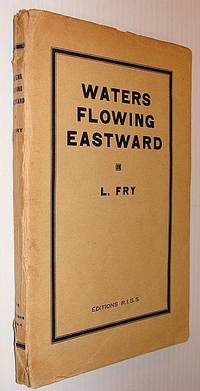
1931328c6774Paris: Editions R.I.S.S. 1931. First Edition. Paperback. Fair. 225 pages. "Beneath the great westward flow of our civilization there are undercurrents moving eastward. These are impelled by a spirit which looks back to the east to the days of tyrant and slave of luxury and misery and incidentally to the suppression of western culture. The following pages are designed to cast light on these eastern undercurrents which have undermined western states." - Preface. Black and white photographic portrait of Sergius A. Nilus who "published the first complete version of the Protocols of the Elders of Zion in Russia in 1905." - Wikipedia. In this work "the genesis of the Protocols is traced to Asher Ginzberg better known by his Hebrew pen name Ahad ha-Am who supposedly wrote the Protocols in Hebrew in 1880 while in Odessa." - Singerman 0221. Erratum list affixed inside front cover. Unmarked. Above-average wear. Age-yellowing to card covers and contents. Covers nearly detached. Binding tender.; 8vo - over 7¾" - 9¾" tall; Protocols of the Learned Elders of Zion Zionism Israel Balfour Declaration Jacob Brafmann Russia Asher Ginzberg Political Zionism Ahad ha-Am . Editions R.I.S.S. paperback
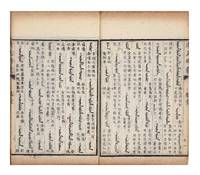
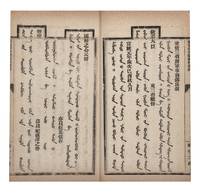
9990Eight vols. Large 8vo orig. wrappers orig. stitching. China: 1802 date of colophon.<br /> <br> <br> <br /> <br /> Second edition of this landmark Manchu-Chinese dictionary the last of the great Manchu dictionaries of the 18th century. Ihing first published his dictionary privately in 1786 the date of the Preface. We know of only one copy of this edition held at a Chinese library. All other copies in circulation are to the best of our knowledge of the second edition.<br /> <br> <br> In 1708 on the Kangxi emperor’s command a Mirror of the Manchu Language had been published at court. In 1724 Li Yanji published Ch.: Qingwen huishu 清文彙書 Ma.: Manju isabuha bithe Manchu Collected which translated the contents of the Mirror into Chinese and rearranged the entries in Manchu alphabetical order. Li’s book became outdated however when the Qianlong emperor reformed the Manchu lexicon and published a number of new lexicographical works the most important of which was the Mirror of the Manchu Language Expanded and Emended from 1772-73. Our book did to the “expanded and emended†Mirror what Li Yanji had done to Kangxi’s original: rearrange its contents in Manchu alphabetical order. Yet Ihing went further than that. He also culled words from other Manchu books published on imperial command in the preceding years including a book with phrases from pre-conquest Manchu sources and translations of the Confucian classics. The result is that Ihing’s dictionary contains words that were not in Qianlong’s expanded Mirror making it in these cases the more complete lexicographical resource. For example a term such as deyengge nimaha “flying fish†is included in our book but not in Qianlong’s Mirror. In such cases Ihing noted that the words had been announced by the Grand Secretariat on such-and-such a date.<br /> <br> <br> Our copy has slips on the outside cover of the volumes with Manchu syllables written in manuscript. The syllables indicate which word initials are covered in the volume in question facilitating searching the dictionary. There is a colophon by Fa-ke-jing-e æ³•å…‹ç²¾é¡ dated 1802. A nephew of Ihing Fa-ke-jing-e revised the book at his uncle’s request.<br /> <br> <br> Ihing Ch.: Yi-xing 1747-1809 belonged to the Bordered Yellow Manchu Banner and as a descendant of Nurhaci was a member of the imperial clan. He rose to the post of vice minister of several of the boards in the Qing secondary capital at Mukden and later served as governor of several southern provinces and as an imperial agent in Outer Mongolia. <br /> <br> <br> Very good set some light dampstaining in the final volume; preserved in a hantao.<br /> <br> <br> ⧠MÃ¥rten Söderblom Saarela The Early Modern Travels of Manchu: A Script and Its Study in East Asia and Europe 109. unknown
10493Woodblock-printed map 830 x 1715 mm. finely hand-colored. Edo: Sagamiya Tahei 相模屋太兵衞 1697.<br /> <br> <br> <br /> <br /> The 1697 printing of Ishikawa’s famous map of Japan; a less complex printing was first issued in 1691 an earlier version with a different title appeared in 1689. The series of maps published by Ishikawa an ukiyo-e artist “established a model for woodblock maps throughout most of the eighteenth century. Works based on Ishikawa's original version and published mainly in the area of Edo are referred to as RyÅ«sen-type maps of Japan. Ishikawa’s<br /> maps were both decorative and practical and they served as a combined Who’s Who and travel map. Useful information to administrators travelers and the general public included the names of feudal lords the standard productivity of the land in koku of rice and important and scenic places along the routes. Each new edition tended to expand both the informative and ornamental aspects of the work.â€â€“Kazutaka Unno “Cartography in Japan†in The History of Cartography Vol. 2 Book 2 Chicago: 1994 pp. 412-13.<br /> <br> <br> Our map is finely hand-colored showing fiefdoms and includes lists of important place names and shrines a chart of tidal variations and a chart of seasonal changes. Another chart gives distances from Nagasaki to far-away destinations such as Holland Indonesia Thailand the Philippines and several port cities of China. The main highways are shown as well as the inland and coastal sea routes. Also indicated are post stations on highways such as the TÅkaidÅ running from Edo present-day Tokyo to Kyoto and the distances between stations. Thanks to the beautiful colors and wealth of information RyÅ«sen’s maps became very popular and this style of map set the pattern for most published maps of Japan for the next century.<br /> <br> <br> In the extremities of the map small portions of China Korea RyÅ«kyÅ« and Hokkaido are shown.<br /> <br> <br> Fine copy. Short clean splits in a couple of folds. Well-backed and minor worming mended.<br /> <br> <br> ⧠Mary Elizabeth Berry Japan in Print. Information and Nation in the Early Modern Period California: 2006 pp. 2-3–The map is “so legible and packed with information that it has been revised and reissued annually since its first publication in 1689. It charts the nation’s provinces and castle towns land and water routes famous sites and scenic places. It labels every ferry crossing and every post station along the major highways listing the distances between stops in an index. Thick with social and political geography it also identifies all regional lords or daimyo with notes on the gross productivity of their domains.â€. unknown
10372Ten vols. 8vo orig. wrappers old stitching. China: 1909-12.<br /> <br> <br> <br /> <br /> An important one-of-a-kind trilingual textbook. In 1905 the Qing government took the radical move to abolish the civil service examinations which had been contested for a long time and reformed in 1901. Rather than a system of examinations supported by schools preparing students for the lowest level of the exams the court instituted a tiered system of schools from elementary to advanced with students across the country using new textbooks. Our book is a product of the extension of this new educational regime to “present-day†Inner Mongolia.<br /> <br> <br> One of the two textbooks chosen for the new Chinese schools — and the most popular — was Zuixin chudeng xiaoxue guowen jiaokeshu 最新åˆç‰å°å¸åœ‹æ–‡æ•™ç§‘書 The Up-to-Date National Language Reader for Lower Primary Schools which Jiang Weiqiao 1873-1958 and Zhuang Yu 1878-1940 published in 1905 with the Commercial Press in Shanghai. Jiang was a low-level examination graduate who had been exposed to Western learning through the publications of the Jiangnan arsenal. After a first career as a teacher in new-style schools he entered the translation department at the Commercial Press in 1903 where he planned and wrote many of the textbooks that the press published. His later career was spent in education administration at the national provincial and university levels. Zhuang was trained in geography and entered the Commercial Press on Jiang’s recommendation. He too later worked in school administration while continuing to write textbooks.<br /> <br> <br> The purpose of Jiang and Zhuang’s book was as they explained in the Preface to “provide everyone basic moral values and knowledge and enable them to learn about important thoughts of ancient sages and academics arts and skills of all countries in the world.†Like others in the genre this book “touched on a wide range of topics such as science history geography and civics†and included “the newest terms concerning every subject at the time and reflected the most recent findings of scholars†He pp. 100-01.<br /> <br> <br> As the Qing government attempted to bring the empire’s Inner Asian possessions closer to China proper in the face of foreign aggression new schools were instituted in parts of Inner Mongolia. What textbooks to use presented a problem. Ungde or Rongde who was appointed as honorary supervisor of the Fengtian Mongolian Language School in what is now the city of Shenyang was aware of this issue. Ungde also taught Mongolian at the school. He noted that the school used Gao E’s 高鶚 Lizhi jiyao åæ²»è¼¯è¦ Essentials of Administrative Discipline which TongÅ¡ui 通瑞 had translated into Manchu and Meng boo å¤¢ä¿ in turn translated into Mongolian. Gao’s text had been written sometime before his death in 1814 and it was not a textbook fit for molding an informed citizenry in the early 20th century. Ungde therefore decided to translate Zuixin chudeng xiaoxue guowen jiaokeshu into Mongolian.<br /> <br> <br> Mongolia had traditionally been administered in the two languages of Mongolian and Manchu the Qing dynastic language and not in Chinese. Accordingly most of the Mongolian pedagogical literature that circulated in China — as opposed to the Tibeto-Mongolian literature that circulated in the Buddhist milieus of Mongolia itself — contained Manchu as a bridge language between Chinese and Mongolian. Ungde felt the need to keep Manchu in the new textbook as well.<br /> <br> <br> Translating a textbook concerned with modern industrial society meant that Ungde had to invent many new terms for which there were no Manchu or classical Mongolian equivalents. Scholars who have studied this issue in reference to Manchu have pointed out new words such as “society†ba-i acan “civilization†šu genggiyen “automobile†sukdun-i sejen “machine†šurdere tetun “telephone†talkiyan-i gisun and “telegraph†talkiyan-i serkin Qu p. 62.<br /> <br> <br> Before the translation received official endorsement Ungde translated four volumes between 1907 and 1909. These four were subsequently published along with two more in 1909 for distribution to the new schools. In 1910 Volumes 5 to 8 were published. Volumes 9 and 10 appeared only at the very end of 1912 when the Manchu dynasty had already fallen and China had been declared a republic. These different printings were presented to the throne and subsequently the president’s office. Reportedly an additional eight volumes were translated but they were never printed and do not appear to have survived Li first article p. 41.<br /> <br> <br> Our copy is a later printing. The Preface contains the list of Ungde’s students who assisted by writing the fair copy of the book which is missing in the early printings Li second article p. 67. The book is rare today; we are able to only locate four copies in North American libraries Walravens no. 248 WorldCat.<br /> <br> <br> Nice set with minor browning. Preserved in two hantao.<br /> <br> <br> ⧠Li Qinpu æŽå‹¤ç’ž Man-Meng-Han sanwen hebi jiaokeshu de fanyi banxing shang 《满蒙汉三文åˆç’§æ•™ç§‘书》的翻译é¢è¡Œï¼ˆä¸Šï¼‰ Manyu yanjiu 2014 No. 1: pp. 34-42; idem “.xia†下 Manyu yanjiu 2014 No. 2: pp. 67-74; Qu Liusheng 屈å…生 “Lun Qingmo Manyu de fazhan: Jianping Man-Meng-Han sanwen jiaokeshu†論清末滿語的發展——兼評《滿蒙漢三åˆæ•™ç§‘書》 Manyu yanjiu 2004 No. 2: pp. 60-65; He Jiani “From Empire to Nation: The Politics of Language in Manchuria 1890-1911†PhD dissertation Cambridge 2018; Hartmut Walravens “Vorläufige Titelliste der Mandjurica in Bibliotheken der USA†Zentralasiatische Studien 10 1976: pp. 551-613. unknown
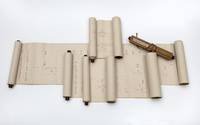
1109716 ink & brush diagrammatic illus. Five scrolls details below all with silk brocade outer front endpapers & gold speckled inner endpapers with manuscript title labels. Japan: mid- to late Edo at the end of each scroll we have the signature of Matsuura & two of his seals.<br /> <BR> <BR> Feng shui arrived in Japan from China in the 6th-7th centuries and soon became formalized by the OnmyÅryÅ Bureau of Yin-Yang which managed divination cosmology and geomancy. Over several centuries the Japanese practice of feng shui known as fÅ«sui 風水 was absorbed into native beliefs like ShintÅism using intuitive practices that stressed simplicity and mindfulness. FÅ«sui employed the geomantic concept of the “Four Divine Guardians†using this to plan buildings and cities. Each cardinal direction is protected by one of four mythological creatures: the Azure Dragon é’é¾ seiryÅ« in the east the White Tiger 白虎 byakko in the west the Vermilion Bird 朱雀 suzaku in the south and the Black Turtle-Snake çŽ„æ¦ genbu in the north. The practice of using fÅ«sui was known as kasŠ“house physiognomy†or “ecomancy†choosing not only the proper house design but also an auspicious site and placement on that location. These considerations are still widely observed today in Japan.<br /> <BR> <BR> The author of our five scrolls Matsuura Tokei 1752-1820 a ShintÅ priest was one of the leading practitioners of fÅ«sui in Osaka during a time when its use dramatically increased. He wrote a number of books on fÅ«sui and kasÅ including KasÅ zukai 家相圖解 House Physiognomy Illustrated and Described 1798 and KasÅ zusetsu taizen 家相圖說大全 Encyclopedia of House Physiognomy Illustrated and Explained 1801.<br /> <BR> <BR> The collection of texts and illustrations presented in our five scrolls:<br /> <BR> <BR> 1. “KasÅ chÅ«Å no maki†家相ä¸å¤®ä¹‹å·» “Scroll on House Physiognomy Essential Information.†Scroll 203 x 4750 mm. A general introduction to fÅ«sui and kasÅ. There are also suggestions on good and bad locations of the kitchen and the Buddhist altar room.<br /> <BR> <BR> 2. “KasÅ seiryÅ« no maki†家相é’é¾ä¹‹å·» “Scroll on House Physiognomy Azure Dragon.†Five illus. Scroll 203 x 5420 mm. This east guardian is represented by water and symbolizes spring and the element wood.<br /> <BR> <BR> 3. “KasÅ byakko no maki†家相白虎之巻. “Scroll on House Physiognomy White Tiger.†Three illus. Scroll 203 x 4460 mm. The west guardian is connected to autumn metal and a major road or path.<br /> <BR> <BR> 4. “KasÅ suzaku no maki†家相朱雀之巻 “Scroll on House Physiognomy Vermilion Bird.†Five illus. Scroll 203 x 5590 mm. The south guardian is associated with fire summer and open plains or sea.<br /> <BR> <BR> 5. “KasÅ genbu no maki†家相玄æ¦ä¹‹å·» “Scroll on House Physiognomy Black Turtle-Snake.†Three illus. Scroll 203 x 4320 mm. The north guardian is linked to winter water and protective mountains to shield from evil forces.<br /> <BR> <BR> All five scrolls are concerned in great detail with the proper placement of the well kitchen and bathing area as they are the primary sources of good or ill health.<br /> <BR> <BR> Fine condition preserved in an oldish wooden box with an inscription on the outside bottom: “owned by Takeda April 1886.â€. unknown
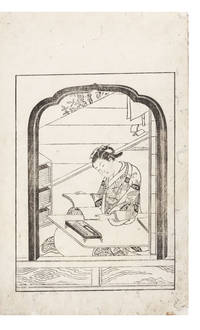
6330Edited by Yusuishi Tanaka. Woodcut frontis. & eight fine double-page woodcut illus. 21; 18 folding leaves. Two vols. Large 8vo orig. blue wrappers wrappers rather worn & rubbed orig. block-printed title labels on upper covers rubbed new stitching. Osaka Edo & Kyoto: 1749.<br/> <br/> First edition of this beautifully illustrated book; the fine woodcuts are by Sukenobu Nishikawa 1671-1750 or -51 or -54 who “counts among the foremost masters of so-called ukiyo-e primitive prints. His subject matter like that of his contemporaries revolved around images of women walking. These images are stylised lending the rhythmic movement of the sumptuous robes an almost sculptural effect. Nishikawa also did many book illustrations…Nishikawa founded a whole school and according to his family archives Harunobu 1725-1770 was a follower of his.â€â€“Oxford Art Online.<br/> <br/> This work is concerned with the education of women in its widest sense combining knowledge with taste. Four types of girls’ “play†are described and illustrated; each providing instruction in behavior and ethics. The fine woodcut frontispiece depicts a young woman reading a book surrounded symbols of knowledge and refinement: bookshelves and brushes for calligraphy. Her clothes and hairstyle are appropriate. <br/> <br/> The first volume is concerned with dolls hina. In Japan dolls are not for play but have high spiritual value which offer girls preparation for adulthood and marriage. For the Japanese dolls are living creatures possessing heart and soul from which girls can learn discipline obedience and control.<br/> <br/> Nakanishi 1634-1709 was a scholar and writer on Shintoism and the present text was edited and posthumously published by Yusuishi Tanaka who has contributed a preface. The theme of the text is instructional and written for girls and young women: there are many references to texts essential for proper behavior and ethics. Nakanishi draws on the Nihon Shoki the oldest chronicle of Japan; Man’yoshu the eighth-century anthology of Japanese poetry; the Tale of Genji; and Makura no Soshi the famous Pillow Book.<br/> <br/> There are four fine double-page woodcut illustrations in the first volume. The first illustration depicts an upper-class woman sending her dolls away in a boat thereby sending her suffering away. The second illustration depicts the hinamatsuri doll festival with dolls arranged on shelves. The following illustration depicts a young woman facing her suitor her dowry behind her all are objects of knowledge and culture: a calligraphy set fine papers in a box picture scrolls books etc. The final illustration in this volume depicts an offering made to the sky referencing tanabata the star festival. According to legend the Milky Way separates two lovers; they are allowed to meet only once a year on the seventh day of the seventh lunar month of the lunisolar calendar.<br/> <br/> The second volume is concerned with kai-awase the Japanese shell-matching game. Again there are four fine double-page illustrations each filled with deep meaning. Matching the shells symbolizes the unity of partners in a marriage. There are many references to the Tale of Genji and Lady Murasaki; scenes from this novel were often used to illustrate the shells. One of the illustrations depicts the traditional card game called uta-garuta being played by several women.<br/> <br/> A very good set and rare. Some carefully repaired worming mostly confined to the margins. The lower outer corners of many leaves are “thumbed.â€<br/> <br/> ⧠Brown Block Printing & Book Illustrations in Japan p. 131. unknown
1703B7089Paris: Chez Simon Langlois c 1703. near fine with text clean and crisp. . Edition: First Edition. Binding: Contemporary full paper boards expertly rebacked; raised spine with five 5 bands black ink title on vellum label on two; central black fleur de lis design on four. Notes: Provenance: Upper pasted endpaper with owner’s armorial bookplate: “Watkin Williams Esq of Penbedw // in the County of Denbighâ€. Concerning this name Archaeologia Cambrensis states: “1789. Watkin Williams Esq. of Penbedw in the county of Denbigh but owner of property in the parishes of Mallwyd and Llan-y-mowddwy in the county of Merioneth M.P. first for Montgomeryshire and afterwards during nearly thirty years for the Flint contributary boroughs was appointed lieutenant and custos rotulorum for Merionethshire.†Final free endpaper watermarked. <br>This edition of this Canadiana publication is unique in that we are not able to locate another copy of the same anywhere. The second last paragraph of the introduction to the priests clergy and missionaries in this edition states that this publication encloses at the end of the first part or 'Rituel' a second part entitled 'les Statuts Ordonnances & Mandemens.' instructions prepared at various times by the Church for the conduct of all including those entrusted to the clergy that these instructions may not be ignored. The recipient are advised that they are restatements of instructions previously given to be read often just as such given in the Ritual itself; they are to be followed with precisions including all the rules contained not to be lost sight of observed faithfully in all works and ones conduct. The inclusion of this paragraph is unlike the introduction of another edition published at the same time and same location but not including this paragraph or the 'Statuts.'. <br>The present work describing festivals sacraments statutes and ordinances for the use by priests in Quebec is extremely rare and was immediately followed by a second edition published the same year: Gagnon reports that in a copy of the second edition of 1703 now at the Laval University library and previously owned by Abbé Plante a note says that the first edition “would have been almost completely destroyed by the sinking of the ship …carrying it to Canada and for this reason a second edition was immediately made.†<br>On the “privilege†included as the final leaf in our first edition example it is stated that the work was registered on March 30 1703 and completed for print for the first time on March 31 1703; <br><br>Saint-Valier was a supporter of the Counter Reformation. His initial intent in the New World was to engage in the conversion of the indigenous residents. He introduced Jesuits and Recollects in an attempt to evangelize New France. Many of these missions Illinois Louisiana and Mississippi resulted in conflicts between Bishop Saint-Vallier the Jesuits and the seminary of Quebec.<br><br>His various construction projects reflect a desire to restore and renew the authority in the Catholic Church as the main institution of administrative organization. In 1697 Saint-Valier built a palace in Quebec for his clergy and as a place of hospitality. During the same year he also established a nuns monastery in Trois-Rivières Saint-Vallier’s zeal for religious activities and establishments stretched from Quebec Montreal Acadia and Louisiana. His way of life embodied that of the ideals of the Council of Trent.<br><br>The Diocese of Quebec was vast and its population diverse and widespread. It included the whole of French North America or what was called New France divided in seven colonies: Newfoundland Acadia ÃŽle Royale Louisiana Illinois Upper Country and Canada inhabited by Indigenous people and the European settlers. During the tenure of Saint-Vallier immigration from France was mostly over; the European colonists were farmers fishermen sailors merchants and ‘coureurs des bois’ overseen by a small elite of aristocratic leaders but a great demographic explosion occurred between 1685 and 1730 the white population in New France jumping from c. 12000 inhabitants to c. 41500.<br><br>During the same time the number of Amerindian fell from c. 163500 to c. 61500. That loss mainly in the tribes of Louisiana was attributed to warfare and diseases brought to the valley of the Mississippi. The number of Aboriginals compared to white settlers is one reason for the presence of so many religious orders in New France. The missions and conversions to Christianity were deemed very important.<br><br>Priests of the Missions Étrangères of Paris the Jesuits the Recollets and the Sulpicians often worked in collaboration with the nuns from different orders like the Congrégation de Notre-Dame or the Canonesses of St. Augustine of the Mercy of Jesus at l’Hôtel-Dieu de Québec. The arrival of Saint-Vallier and his strong views on what should be the duties of the priests created a shock wave in the orders especially for the Seminary of Quebec newly founded by his predecessor Bishop Laval. … Saint-Vallier's tenure as bishop was defined by interminable quarrels with governmental and religious institutions in French North America. … his active leadership style brought him into conflict with various groups who perceived him as at times domineering and micromanaging.<br>While subject to much criticism Saint-Vallier was also admired in his diocese for his dedication and self-sacrifice. Rather than staying in Quebec or Montreal he tirelessly traveled the back-country. The founding of the Hôpital Général and installation of Jesuits and Recollets at Montreal were also to his credit.<br><br>There was a very strong suspicion in the colonies and in France that the Bishop of Quebec was in fact a follower of Jansenism. . In the beginning of the 18th century the Bishop wrote 3 books; the Ritual the Catechism and the ‘Statuts et ordonnances’ – two of which are bound in the present volume. <br>…the Superior of the jesuite order decided to attack Saint-Vallier’s authority by writing a long critic of those three books seeing them as a "lapse into Arianism Pelagianism Jansenism Lutheranism and Calvinism". Father Bouvart based his accusations on different passages of the works of the Bishop … who eventually appealed to the Sorbonne to have his works rehabilitated. The doctors of the Faculty of Theology declared the Ritual and the Catechism perfectly orthodox and censured the critic of Bouvart. Nevertheless Saint-Vallier decided to re-edit in 1713 the Ritual so as to cast away all doubts about his pretended Jansenist ideas. This book remained in use in the parishes until the middle of the 19th century. The present work is the unedited original and first edition of his ritual and statuts. <br><br>The disputes with the religious orders of New France the government and the merchants gave way to a more peaceful period that lasted until his death. Austere throughout his life he became more and more humble in his way of living and turned toward contemplation and simple duties. .He also took very seriously his duties of Bishop and developed parishes in the farthest corners of the diocese.<br><br> Size: Octavo 213 x133mm. Illustration: Text in French; with some text in Latin<br>Achevé d'imprimer pour la premiere fois ce 31 mars 1703. Relié avec le Rituel du même. <br><br>Illustrated with two printer's devices representing the arms of the archdiocese of Quebec; various head and tail pieces incl. vignettes; in-text music notes on Qiiii-Si; Ggii-iiii. References: Philéas Gagnon: Essai de bibliographie canadienne: Inventaire d'une bibliothèque . Volume 1: 3138 & 3139 p.437; Archaeologia Cambrensis Volume 1 p.142. Pages: Ff. 2 bl. ill. title bl. author to priests on the use of the book 4 Fetes Observe’es 4 604 table 2 errata 3 bl.; ill. title bl. letter 3 8-146 table 2 privilege 2 bl.2; In leaf collation: bl. v A-Z8 Aa-Nn8 Oo-Rr4 iiiff. table; a1 a3-a8 e8 i8 o8 u8 aa8 ee8 ii2 oo8 uu8 aaa1 ii bl. Category: Book Canada; Book Religious Christianity; Chez Simon Langlois, hardcover
29286THWAITES Reuben Gold ed. Early Western Travels 1748-1846. A Series of Annotated Reprints of some of the best and rarest contemporary volumes of travel descriptive of the Aborigines and Social and Economic Conditions in the Middle and Far West during the Period of Early American Settlement. Edited with Notes Introductions Index etc. Cleveland: The Arthur H. Clark Company 1904-1907. 31 vols. plus folio Atlas vol. Illus. Maps. Orig. cloth. Fine set. Howes T-255. Limited to 750 copies signed by the publisher. RARELY FOUND COMPLETE. Includes the travel journals of Brackenridge Bradbury Bullock Croghan Cuming De Smet Evans Farnhaum Faux Flagg Flint Flower Franchere Gregg Harris Hulme James Long Maximilian Michaux Morris Nuttall Ogden Pattie Ross Townsend Welby Wood and Wyeth among others. unknown