542 résultats
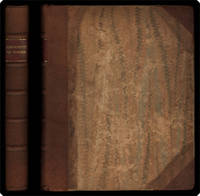
4876Six folding engraved plates. 1 p.l. xvi 322 pp.; 1 p.l. 238 pp. Two vols. 8vo cont. marbled boards orange & pale blue lettering pieces on spines. Lausanne: J. Mourer 1789. First edition. Razoumovsky 1759-1837 a wealthy Russian aristocrat spent most of his life in Switzerland Austria and Italy and wrote many noteworthy works on geological and mineralogical subjects see Zittel pp. 91 & 119. "Very scarce.First and only edition of an illustrated account of the fauna and geology of the Swiss Jura in the vicinity of Neuchâtel Murten and Biel northwest of Bern.The first volume describes the fauna according to the Linnean system. The second includes a geological description with notes on mining minerals fossils etc. The illustrations cover zoology especially reptiles entomology and geology including fossils."-Schuh Mineralogy & Crystallography: A Biobibliography 1469 to 1920 4045. Fine and attractive set. ❧ Poggendorff II 578-79. hardcover books
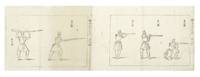
682128 folding engraved plates. 74; 86; 60; 35 folding leaves. Four vols. Oblong 8vo orig. patterned wrappers orig. block-printed title labels on upper covers new stitching. Tokyo: Government Publication issued under the Author's name Yosoda Masayoshi a pen name for Tanabe 1869. First edition in Japanese translated from an unidentified French text which according to the Preface was issued in 1863 with a sequel in 1867. Tanabe also states that this work includes information gained from the French military mission of 17 men four officers ten non-commissioned officers and two soldiers led by staff captain Charles Sulpice Jules Chanoine who came to Japan in early 1867 at the request of the Japanese Shogunate for training in Western warfare. Several of these men became deeply involved in Japanese politics unsuccessfully fighting on the side of the Shogunate. Tanabe wrote several works on military subjects including military formations 1865 a glossary of French military terms with Japanese translations 1867 military gymnastics and training exercises 1868 and our work. This is a complete work on infantry drills and tactics including training of new soldiers how to form tactical units and deploy them effectively how to operate a variety of weapons etc. The fine copper-engraved plates depict military formations tactical positions military stances etc. Fine set. unknown books
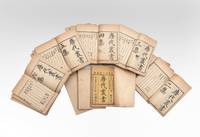
7194164 stories in six series bound in 18 vols. Small 8vo orig. wrappers new stitching. China: Bian shan lou cang ban 1806. An early edition of Tang Dynasty 618-907 fiction containing 164 stories some of which are concerned with gastronomy medicine calligraphy and tea. Others concern extraordinary events and strange spirits. Nice set. Scarce. unknown books
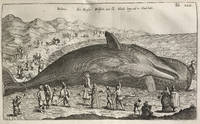
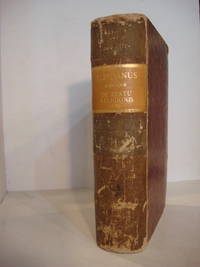
1767S13771Heilbronn:: Franciscus Josephus Eckebrecht 1767. 1767. Tall 4to. 335 x 211 mm 228 4 pp. 47 plates; text with some foxing. Original paper over boards. Housed in a custom clamshell box. Rare. FINE. An extensive work on the morphology of boned fish cartilaginous fish sharks rays skates and cetaceans. This work is illustrated with forty-seven full-page engraved plates that are executed in superb form. Plate XLII shows a beached baleen whale and its enormous size compared to the men in the engraving. A bit fanciful plate XL shows a pair of Mermen; a fish on plate XXVII has the features of a human face whilst a 'shark' on plate VII has semi-human fore-limbs. Except for these anomalies the zoological drawings are quite dramatic and relatively accurate. Jonston's works were frequently re-edited and translated into German Latin Dutch and English. Born in Poland but of Scottish origin Jonston was educated and traveled extensively. He attended St. Andrews 1623-5 studying botany and medicine at Cambridge Leiden and Frankfurt Universities. He earned degrees from Cambridge and in Leiden his M. D. in 1632 where he later practiced medicine and gained a great reputation. In 1642 he briefly taught at Frankfurt as professor of medicine. He retired to his private estate in Silesia in 1655. His "four dictionary-style works on fish birds quadrupeds and insects -- published between 1650 and 1653 with excellent illustrations -- were widely read and translated." DSB. BM Readex Vol. 13 p. 765; DNB Vol. X pp. 968-9; DSB Vol. VII p. 164-5; Nissen 2133. See Garrison and Morton 287. Franciscus Josephus Eckebrecht, 1767. hardcover books
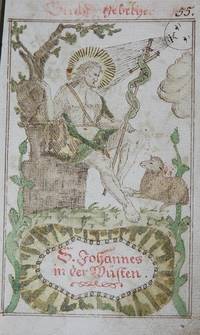
1797006602Keuth an der Crassen 1797. Full Blindstamped Calf. Good. A fine Folk Art manuscript prayer book from the late eighteenth century. 8vo. 17.5 by 10.5 cm. 516 13 1 pp. With eight full page paintings plus vignette decoration throughout much pretty floral ornamentation but also a serpent a basilisk etc. Most writing is a neat now archaic cursive but headings and the like rendered in an easily readable ornamental Fraktur Gothic. The paintings are the highlight most will find. Their subject matter is quintessential and perhaps not unusual or original -- Momento Mori St. George slaying the dragon etc. -- but the execution is done with uncommon polish. The authorship is stated but also a tad confusing. Our interpretation is that a Konrad Mueller created the book for Margaretha Pfaden-Hauerin. Condition: moderate wear to contemporary full calf binding. Unusual is a 13 page "Register" or Table of Contents in the rear. By unusual we mean for such a manuscript prayer book. Also a page of handwritten genealogical notes written on a prior blank leaf and written much later in the mid to late 19th Century. Moderate sometimes heavy soiling to margins of leaves. Corner cut out of front endpaper. Some loose gatherings. <br/><br/> unknown books
711427 folding leaves. 8vo 234 x 158 mm. orig. wrappers manuscript title label on upper cover new stitching. Japan: on final page in trans.: "Copied 1854 by Wakabayashi in today's Tottori Prefecture a member of the Shinshoken." Manipulative therapy has a long history in Japan. "Healing of the sick through rubbing of the body was known to the earliest Japanese physicians who brought the art to a high state of development. Massage was early pre-Nara period linked with the treatment of fractures and bandaging and remained one of the chief factors in the care of the body sharing with mineral baths acupuncture gymnastics and 'deep breathing' in the preliminary development of physical therapy in Japan.The achievements and learning in the practice of massage also contributed to the establishment in the latter part of the 17th century of the 'Seikotsu-Jutsu' which was a system of treatment for fractures and dislocations."-Mestler A Galaxy of Old Japanese Medical Books II pp. 484-85. Gento Yoshiwara d. 1800 was one of the three most important orthopedic specialists in Japan during the final years of the 18th century along with Bunken Kagami and Genka Ninomiya. Yoshiwara whose trade name or mark was "Kyoinsai" studied both Dutch medicine in Nagasaki and Chinese medicine and was greatly influenced by the Chinese Dao yin treatment of massage and exercise. Unlike the works of Kagami and Ninomiya Yoshiwara's most important work - "Seikotsu yoketsu" - remained in manuscript as it was restricted to students of Yoshiwara's school; the present manuscript contains a reworking of that text. The beginning of the main part of the text on the fifth leaf provides the name of Yoshiwara and the location of his school in Hizen province today's Nagasaki Prefecture and the name of two disciples Wada and Abe. The text describes 13 types of treatment in detail including treatments of dislocated shoulders fingers and jaws; spinal stretching dealing with hip problems etc. Many of these treatments have rather fanciful names: "Windmill" "Bear Hug" "Bird's Wing" "Control the Wind" "Crane Feather" "Playing with a Fish" "Worm" "Playing with a Jewel" "Tail of the Bird" "The Snail Method" "Riding on the Dragon" "Swallow's Tail" etc. Some relatively minor worming at the beginning and light marginal dampstaining. ❧ Mestler A Galaxy of Old Japanese Medical Books III p. 152. unknown books
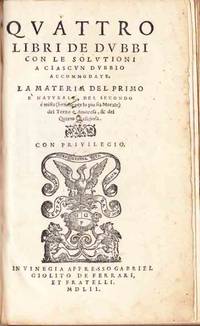
15526331Venice: Gabriel GIolito de' Ferrari 1552. First edition. Very Good/The title promises four sets of "questions and their solutions" and indeed that was the plan. Lando wrote Q&A on four topics: medical questions including dietary and aging functions ethical questions questions about religion and questions about love and sex. It was the love and sex part that raised the eyebrows of the censors and neither Lando or his publisher Giolito could get permissions to print it as the book was going to press. As Giolito himself declares in a postscript to the reader: "I promised you four books of doubts but since I haven't yet been granted a license for the doubts about love I'm forced to give you only three. Be well and enjoy as much of the book as I could give you." The license came later and the text appeared in later editions. This unfinished text with its publisher's apology represents a fascinating birthmark on the 16th-century book trade. The Q&A ranges over hundreds of topics calling upon the author's medical training much involved with the humors and temperaments associated with various organs objects and creatures his classical erudition and his training in the Augustinian order. The three sections together provide comprehensive insight into 16th century medicine and popular religious and moral thought. The odd matter of two versions of the dedication page leaf A ii is not easily explained. We suspect with some justification that Lando sought patronage for the same work in different locations knowing that Protestant Germany rarely spoke with Catholic Italy and vice versa. He might have found different backers in different markets. We know that to be the case with at least one other book of Lando's the "Sermoni Funebri" 1549 where some copies are dedicated to Fugger and others to Niccolo degli Alberti. That case is known and recorded. We find no recorded instance of the alternate dedication of "Quattro libri dei dubbi" to Fugger and no record of the author being identified by signing the dedication letter in any other copy. The "Quattro libri de dubbi" was quickly translated into French Lyon 1558 and by William Painter into English entitled "Delectable demaundes and pleasaunt questions with their severall aunswers." 1566 and again 1640. . Octavo 16 cm; 318 2 pages. Woodcut device on title page and on last page. Woodcut initials. Bound in recent vellum in period style yapp edges titled in ink on spine. Early 20th-century bibliographical note bound in. Marginal annotations in contemporary hand. Leaf a ii the dedicatory letter present in two states the cancel addressed to Johann Jakob Fugger closing with Lando's name and the original leaf addressed to Christoph Mielich and not signed as usual. Small perforation in the cancel affecting a word. Occasional light stains darker on last leaf. References: Bongi I 368; Melzi II 391; BM Italian 377 1556 ed.; Fontanini II 117. Gabriel GIolito de' Ferrari hardcover books
1713E0012Paris: Chez les T'Serstevens 1713<br /><br /> 2 volumes: i-x44816 pages with illustrations 2 folding maps and index; iv28516 pages with illustrations folding map and index. Duodecimo 6 1/2" x 4 1/4" bound early calf with labeled spines. From the Society of Writers to the Signet. European Americana 713/77 this edition not in Sabin Early French edition. Rare French edition of one of the most famous books of the period Exquemelin's account of the adventures life morals and customs of the pirates roaming the seas together with a full description of the Caribbean where they mainly operated. The French edition was just like the Dutch edition directly based on the original manuscript and was adapted by Thomas de Frontigniers. Alexandre Olivier Exquemelin called Oexmelin by the French was a chemist of French Protestant origin who spent several years with the pirates as a ship's surgeon. He took part in their daring exploits like the expeditions of the notorious English buccaneer Henry Morgan called John in the book including his raid on Maracaibo in 1669 or a year later his attack on Panama. The first edition of Exquemelin's eye witness account was published in Dutch in Amsterdam by Jan ten Hoorn in 1678 an edition so rare that it long escaped bibliographers. Exquemelin who once before in 1672 had shortly been in Amsterdam returned there in 1677 to take the 'chirurgijn' exams he sorely needed to exercise this profession at Jamaica where he had settled and in 1679 he made his last 'proof'. Meanwhile he also offered his manuscript to the publisher's Ten Hoorn who printed it in 1678. The book became immediately so polular that editions were published everywhere. The Spanish edition of 1681 probably also published in Amsterdam was long taken for the first. The first French edition was published two years before the present but both editions are equally extremely rare. In 1684 Exquemelin had sailed for France and the captain of the ship impressed with his stories saw to it that Exquemelin's manuscript was made ready for publication. The French edition altough seemingly much the same as the first Dutch edition from which most translations were made proves by closer comparison to be considerably enlarged. Several extra chapters are added mostly treating the natural history of the Spanish Americas and the romantic figure of Monbars is found here for the first time. For both the Dutch and French editions Exquemelin's manuscript had been adapted but according to De la Fontaine Verwey has kept the French edition the closest to the original. The illustrations for the French edition were newly made as well and where the Dutch edition mainly shows the portraits and atrocious acts of the pirates the plates of the French edition pay more attention to the geographical and natural historical aspects including for the fist time the plate with a buccaneer in hunting costume. Another plate shows the catching of turtles at night and the illustration in the text shows a sea-cow of which Exquemelin made a special study. The maps were also newly designed with the help of AbbBaudrand who wanted to remain anonymous; they include a map of the Isthmus of Panama drawn by Exquemelin himself. The book therefore is an important 'Americanum' as well. Of special interest are the two "Appendices" with an account of the possessions revenues and offices of the Spaniards in America including a complete list of all ecclesiastical functionaries in Spanish America together with their salaries. No book in any language was ever the parent of so many imitations and the source of so many legends and it still is popular today. The Society of Writers to Her Majestys Signet is the oldest legal society in the world. It is a private society of Scottish solicitors. The Society dates back to 1594 and is part of the College of Justice. Writers to the Signet originally had special privileges in relation to the drawing up of documents which required to be signeted but these have disappeared and the Society is now an independent non-regulatory association of solicitors most of whom are based in Edinburgh. Members of the Society. Condition: Joints begining gilt embossed stamps of the Society of Writers to the Signet on front boards 4 leaves of Volume II soiled and slightly defective along outer margins; book plates on front pastedowns 3 folding maps each with moderate browning and very short closed tears else about a very good set. . Early French Edition. Full-Leather. About Very Good. Duodecimo. Chez les T'Serstevens hardcover books
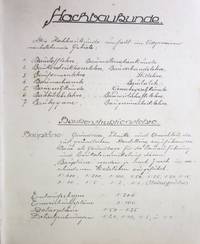
1910D6835Germany c.1910. Hardcover. Near Fine. Original black cloth; 246 x 200 mm; approx. pp. 300 handwritten in black ink throughout and demonstrating a variety of lettering styles with very fine drawings in pencil and ink most touched with color either in pencil ink or watercolor. Even when illustrating technical details our author captures the grain in the wood and gleaming metal hardware -- this is an intricately detailed and exceptionally beautiful treatise on all aspects of the construction of high-rise buildings and homes. <br/><br/> hardcover books
177233314Oxford 1772. 8vo 21.5 cm 8.5". 2 32 6 pp. <br><br>with his The history of the University of Oxford from the death of William the Conqueror to the demise of Queen Elizabeth. Oxford: Pr. by W. Jackson & J. Lister for J. & F. Rivington 1773. 4to 27.3 cm 10.75". 4 264 2 pp.<br>Â Â Â Â Bound together here are this author's first 32-page history tracing the story of education in Britain back to the Druids and his much more extensive follow-up on Oxford's development including e.g. passages on => politics religious controversies towngown contretemps and epidemics. Sir John Peshall sometimes given Pechell formerly Pearsall sixth baronet was a clergyman and antiquary known for his philanthropic activities; he was himself an Oxford man BA 1739 MA 1745.<br>Â Â Â Â Provenance: Front pastedown with bookplate of the famed Hookham Circulating Library. <br>Â Â Â Â <br>Â Â Â Â ESTC T63374 & T68757. Contemporary half calf and marbled papercovered sides rebacked and corners refurbished; marbled paper sides with surface wear. Front pastedown with bookplate as above pastedown and free endpaper with small pencilled annotations. Octavo history with small portion torn away in outer margin only of final "Additions" leaf; quarto history with dust-soiling to title-page around edges of bound-in octavo and following leaves showing impression of bind-in. Occasional light foxing only to both items mostly confined to margins; quarto with a very few early inked corrections and annotations. unknown books
15557297Strassburg: Wendelinus Rihelius 1555. First edition. 17th century boards. Very Good. Folio. ff.44691. Final leaf a blank. Colophon at bottom of f.469. Large woodcut device on title page. 18th century red boards morocco spine label spine and extremities somewhat rubbed but quite sound. Front free endpaper lacking. Old rubber stamp at lower blnk margin of title. Some minor marginal worming. Some early marginal annotations in a few sections. The scarce first edition of this famous history of the German Reformation. It was immediately controversial. The Schaff-Herzog RELIGIOUS ENCYCLOPEDIA states "Storms of protest arose against it on every side both Roman Catholic and Protestant." There are 2 issues of this work VD S6668 ours and VD S6669 which differs in having the last leaf numbered 470 and leaf 463 has an errata printed on the recto. In VD S6668 there are 469 numbered leaves and leaf 463 is blank without errata and not numbered. Wendelinus Rihelius hardcover books
186538207Washington D.C. 1865. Letterpress broadside. 24 x 8 1/2 inches. Expert restoration on verso. An unusual broadside Civil War peace proposal.<br/> <br/>A little-known but highly eccentric character Evans first made a name for himself in 1818 when he walked from New Hampshire to Detroit in the middle of winter no less backtracked to Pittsburgh and continued his walk all the way to New Orleans publishing a narrative of his pedestrian journey the following year. After a failed Congressional run in New Hampshire and a failed attempt to become secretary of the Senate he ended up practicing law in Washington. In the midst of the Civil War Evans published a series of broadside letters all known in but few examples and likely printed in small quantities. In one in which excoriated the south for their role in the war he explained that he issued his missives as broadsides since his letters had no chance of publication in the already crowded pages of the newspaper press. The present broadside by Evans suggests a 20-point proposal for peace between the North and South including the abolition of slavery the federal assumption of Confederate debt universal amnesty restoration of all confiscated property the annexation of Mexico the expulsion of the Russians from the Pacific Northwest the seizing of the Hudson's Bay and Arctic fur trade from the British inviting Canada to become part of the United States the unification of Central America and the building of a trans-Darien canal the nationalization of the mining industry universal temperance fair pay charity from the rich and more. The broadside letter concludes: "Unhappy -- deeply unhappy am I in what I am now going to say -- tears of pity grief and shame for the whole country coursing down my cheeks: -- I solemnly declare that I have no doubt and never had that the longer the South holds out the nearer she will be so absolute annihilation ." We locate only four examples extant Boston Aethenaeum American Antiquarian Society Harvard and Minnesota Historical Society. unknown books
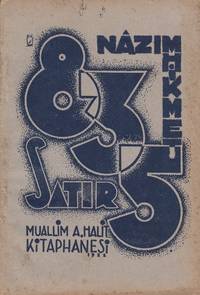
50663Istanbul: A. Halit Kitaphanesi 1932. Octavo. Original pictorial wrappers by Ali Suavi; 48 pp. Very good save for very light wear to edges. Second edition of Hikmet's first book of poetry originally published in 1929 but issued with a striking cover designed by Ali Suavi 1910 or 1913-1994 who Suavi designed most of the avant-garde-inflected covers of Hikmet's books. Little is known about Suavi who was a famous designer of books and later became known as a photographer. Nazim Hikmet 1902-1963 is considered the founder of modern Turkish poetry who transcended Ottoman versification and absorbed the influence of Russian futurist writers such as Sergei Esenin but above all Vladimir Mayakovsky. Aside from the "step-ladder" form of verse he shared with Mayakovsky his sociopolitical engagement as well as Esenin's love for the simple folk and his origins. Impressed by the 1917 October Revolution in Russia he resisted the occupying powers in Constantinple and fled to the countryside where he sought to connect with various socialist and libertarian organizations. In 1920s he traveled to Russia twice for extended periods of time where he studied in Moscow and was in close contact with Soviet Futurist poets. Upon his return in 1928 he was subject to imprisonment and harsh repressions including a ban on publishing but nevertheless garnered success with readers and created a prolific output while in prison. In 1938 he was sentenced to nearly three decades of jail but was released in 1950 and fled to Moscow exile in 1951 where he was a leading public intellectual and died in 1963. He was not published in Turkey until 1965 and remained nearly unknown in the West for much longer. See also: Saime Göksu and Edward Timms Romantic Communist: The Life and Work of Nazim Hikmet. <br/><br/>As of March 2020 no copies in North America according to KVK OCLC. unknown books
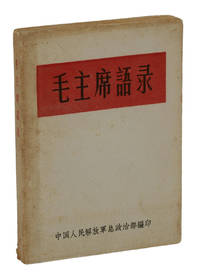
1964140939355China: General Political Department of the Chinese People's Liberation Army 1964. First Edition. Very Good. 250 pp. First edition. Printed wraps; text in Chinese with 30 chapters. The endorsement leaf by Lin Baio has been excised as is common in many copies. In promoting the Little Red Book Biao rose to prominence in Mao's inner circle with Biao becoming seen as Mao's successor. However when unsubstantiated rumors surfaced that Biao was plotting to assassinate Mao Biao was killed and subsequently the endorsement leaf was excised from remaining copies. Very Good or better with wear at foot of spine toning and light foxing occasional corner crease to pages. Following the Bible this is the most-printed text world-wide. [General Political Department of the Chinese People's Liberation Army] unknown books
1964140938964China: General Political Department of the Chinese People's Liberation Army 1964. First Edition. Red vinyl over wraps. Near Fine. 250 pp. First edition. Red vinyl covers over wraps; text in Chinese with 30 chapters. The endorsement leaf by Lin Baio has been excised as is common in many copies. In promoting the Little Red Book Biao rose to prominence in Mao's inner circle with Biao becoming seen as Mao's successor. However when unsubstantiated rumors surfaced that Biao was plotting to assassinate Mao Biao was killed and subsequently the endorsement leaf was excised from remaining copies. Near fine with light foxing to textblock edge light toning to pages. Following the Bible this is the most-printed text world-wide. [General Political Department of the Chinese People's Liberation Army] unknown books
164724501London: Printed by M. S. for H. Blunden at the Castle in Corne-hill 1647. 1st Edition variant issue Wing B-3408A. Another issue of the same year has the printer's name "Matth. Simmons. in the yeare 1647". Period full leather with modern rebacking to style. Red morocco title label in second spine compartment. Modern eps. An overall VG copy text paper beginning to brown at edges with some associated chipping/repaired hole to lower right quarter of E2 affects last few words of two lines on p 25 and first few words of four lines on page 26/occasional po marginal pencil annotation a/o check mark. 18 155 7 28 4 pp. Separate t.p. for "Clavis". Last 4 pp: 2 pp 'Catalogue of Bookes' viz. bibliographical list by Behmen 1 pp of "Faults Escaped in Printing" & a blank. Inserted table & plate imperfect lacking 'folded' left side approx. 1 - 1.5". 4to: ¢4 -¢1 a half-title a2 a3 B1 A4 -A1 C - 2B4 2C2. <br/><br/>Bohme a German philosophical mystic who had a profound influence on such later intellectual movements as idealism and Romanticism. Born of poor parents in Goerlitz Germany as a boy he tended cattle later becoming a shoemaker marrying & fathering 4 children. Boehme at the robust age of 37 in 1612 wrote his first treatise Aurora oder Die Morgenroete in Aufgang. In 1613 an unauthorized copy of the manuscript was copied and circulated by Karl von Ender. Its reception "raised him out of his homely sphere and made him the centre of a local circle of liberal thinkers considerably above him in station and culture." However the local pastor primarius of Gorlitz Gregorius Richter leveled a charge of heresy. The local muncipal council administered an admonishment to no further "meddle in such matters." This charge Boehme publicly followed for 5 years. In 1618 Boehme again started writing expository & polemical treatises. The majority of his works were written though not formally published from 1619 - 1624. A second major work Der Weg zu Christo was published in 1624 and signaled a renewal of clerical hostility. Boehem however was destined to suffer but a short period of this second persecution; he died of an illness on 17 November 1624. Boehme has been said to have a "fertility of ideas" and a "trasncendent greatness of religious insight." Boehme was studied by Sir Isaac Newton and influenced the work Henry More as well as and especially William Law 1686 - 1761. Xl Questions concerning the Soule was translated by the English mystic John Sparrow in collaboration with John Ellstone & financed by Humphrey Blunden. This the first of several works by Boehme that Sparrow & Ellstone were to translate into English between 1644 - 1662. Boehme proved to be highly popular in England where there were regular societies of Behmenists at the time. This work XL Questions went into a second edition in 1648 and a third edition in 1665. 11th EB. A scarce title in the Boehme canon. We find no copies currently offered via the major on-line databases OCLC records but 4 institional cc and the work has only appeared at auction 3 times in the last 25 years the last in 1989. Printed by M. S. for H. Blunden, at the Castle in Corne-hill hardcover books
613836 pp. Small 8vo attractive antique calf-backed paste paper boards spine gilt red morocco lettering piece on spine. Paris: Musier 1774. The uncommon sale catalogue of a distinguished collection belonging to Antoine Antonin duc de Gramont 1722-1801 who inherited the title in 1745. 106 lots thoroughly described including works by Albani Guerchin Wouwermans Jordaens Watteau etc. Nice copy despite inoffensive marginal worming to first five leaves. ❧ Lugt 2348. hardcover books
59282 p.l. 280 pp. 8vo cont. green sheep-backed marbled boards spine lettered in gilt. Paris: A. Labitte 1873. The first and most important private collection ever formed exclusively devoted to festivities; this sale catalogue has remained an indispensable work of reference to the present day. The 1200 lots are arranged under the sixteen different countries in which these festivities took place except for two amazing special sections: the first catalogues thirty-eight books published between 1515 and 1559 describing festivities and solemnities in honor of Emperor Charles V. The second describes almost 400 pieces concerning festivities held during the French Revolution offered in one lot but catalogued separately on pp. 259-277. Ruggieri d. 1885 was the last of a long line of Royal and Government "artificers" i.e. pyrotechnists which had been founded in 1730 when five Ruggieri brothers transferred themselves from Bologna to Paris. Fine and attractive copy. Original printed upper wrapper bound-in. ❧ Blogie col. 126. hardcover books
199116697New York: HarperCollins Publishers 1991. Boards. Fine/Fine. A remarkable one-of-a-kind copy of Brian Wilson's 1991 autobiography. INSCRIBED BY THE BOOK'S DEDICATEE BRIAN WILSON'S PSYCHIATRIST DR. EUGENE LANDY WHO HERE WRITES IN A BURST OF SURPRISING CANDOR: "FOR ASHLEY-- THIS BOOK TELLS WHAT & HOW I SPENT THE LAST 9 OR SO YEARS OF MY LIFE -- A GREAT CHALLENGE AND A WASTE OF TIME -- I MEET YOU RIGHT AFTER I LEFT -- I LOOK FORWARD TO OUR LUNCH LOVE EUGENE LANDY". In other words the book's dedicatee appears to be renouncing in this inscription the work he did with Brian Wilson. A sharp near-pristine copy to boot of the 1991 stated --and true-- 1st edition which correctly starts the number bar on the copyright page with "1". Tight and Near Fine to Fine in a crisp price-intact Fine dustjacket. Thick octavo written with the assistance of Todd Gold. <br/><br/> HarperCollins Publishers hardcover books
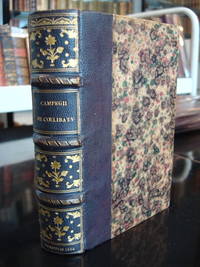
15546266Venice: Ad Signum Spei 1554. First edition. Very Good. Sm. 8vo. 1696pp. Title page with a large allegorical woodcut vignette. BOUND WITH: Campeggi Tommaso. OPUS. DE AUCTORITATE & POTESTATE ROMANI PONTIFICIS & Alia Opuscula Quae Indicantur in Sequenti Pagina. Venice: Apud Paulum Manutium Aldi F. 1555. Sm. 8vo. ff.12223. Lg. woodcut anchor & dolphin printer's device on title. Both works nicely bound together in 19th century brown morocco gilt decorated spine over marbled boards. Bookplate of James Stevens Cox on front pastedown. First editions of two of Campegii's main works. The first is his tract on celibacy the second is his treatise on the power of the Pope ff.1-116 followed by 19 other theological treatises. I. BM STC Italian p. 142. Not in Adams. II. BM STC Italian p. 142. Adams C477. Renouard ALDUS p. 164. Ad Signum Spei hardcover books
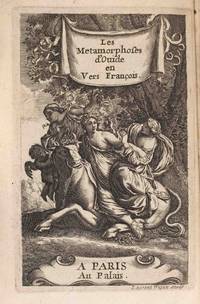
16691149Paris: Claude Barin 1669. <br/><br/>Corneille Thomas 1625 1709 translator. Ovid 43 B.C. 17 or 18 A.D. Les metamorphoses d'Ovide Traduites en vers Francois par T. Corneille. Paris: Claude Barin 1669. Original edition of the first two books of Ovid translated by Thomas Corneille. The full translation was not published until 1697. <br/><br/>12mo. Contemporary calf gilt spine with raised bands. Rubbed. Leaf with engraving on verso; leaf of title verso blank; 8pp. ded. to La Dauphin signed T. Corneille; 4pp. Av lecteur; 234pp. text with one engraving for book II on I viverso; 12pp. priv. dated 12 Aout 1668/31 Jan 1669. Collation: 1 a6 A-T6 V3 . STC French 1601-1700 O-236. An elegant edition with beautiful typography and ornamentation. <br/><br/>Thomas Corneille 1625-1709: playwright poet. To distinguish himself from his brother Pierre Corneille Thomas was known as “Monsieur Corneille.†He was one of the leading authors who began to produce plays during the Fronde and brought out even more plays than his brother Pierre: thirty-eight plays composed alone or in collaboration. His first tragedy Timocrate 1656 helped to restore the genre to popularity after the troubles of the Fronde. Although he was more attractive in manner and in conversation than Pierre he lacked Pierre's genius. Still "with Quinault he filled the interval in the history of the French drama between the zenith of Pierre Corneille and the advent of Racine" Harvey and Haseltine. <br/><br/>Although not as important a playwright as his brother Thomas wrote with great facility. He is credited with perfecting the French language as can be evidenced by this translation of Ovid begun shortly after he left school his notes to Claude Favre Vaugelas Remarques su la langue Francais 1647 his compilation of a dictionary of arts and sciences for the Academie Francaise 1694 and his editorship of Mercure galant with Donneau de Vise. <br/><br/>The artist of the two engravings fronting the books is the son of Hermann Weyen or Weyher Laurent Weyen 1643-1672 a Flemish engraver who died in Paris. Laurent also engraved illustrations for the works of Moliere. <br/><br/>Provenance: Goodspeed's Bookshop/Arthur and Charlotte Vershbow. Claude Barin hardcover books
1609WB17560London: Print. for Math. Lownes 1609. Hardcover. Very Good. 2 parts in one volume folio 286 x 188mm. Pagination: 8 1-7 1-204pp. i. e. 208; 1-218pp. 2 with final blank. Signatures: A4 3 frontis. B-R6 S5 Cc4 B-V6 some signatures missigned. Engraved title of architectonic frame pair of Roman soldiers and at top portrait of Henry Frederick Prince of Wales; through the arch a military camp on either side of a river with shore in the foreground and hills in the background Imprint details are an after addition. Full-page woodcut oval portrait frontispiece of Julius Caesar wearing laurel wreath inscribed Ivlivs Caesar Dictator Perpetvvs Veni Vidi Vici Aestatis Svae 56 present and bound in before the note to the Reader A1. 12 engraved plates of various battles military formations and encampments of Caesars Roman army including Battles with the Helvetii Ilerda and the Gallic wars one labeled Cicero Besieged all but 2 double-page or folding. Woodcut engraved chapter head and tailpieces. Dedicated to the soldier Sir Francis Vere d. 1609. Verses by William Camden Joshua Sylvester Samuel Daniel and Ben Jonson. Contemporary calf gilt scrolling arabesque centerpiece on covers manuscript binders waste remnants in front hinge; extremities somewhat rubbed spine chipped at top and missing bottom compartment lacking ties and front endpapers; light marginal dampstaining some folding plates closely cropped some marginal fraying of title and two preliminaries small crack in inner portion of plate facing p. 86 in the first part later marginal note in ink on p. 190 in second part; overall a solid copy with all plates present. Later signature of Rebecca Ayre on title verso; a person seemingly untraceable it is notable at least this name suggests female ownership over some point in the life of the volume. <br/><br/>First published in 1600 in London by Peter Short dwelling on Bredstreet hill at the signe of the Starre two new editions of the Observations upon Caesars Commentaries appeared in 1604 one issued for Mathew Lownes and one for William Ponsonby and again three more editions appeared in 1609 two are linked to the printers office of Mathew Lownes ESTC S121465 as here and ESTC S91812 and the third ESTC S121472 indicates no publisher. All of the 1609 issues have variations in the titles and imprints as common. Mathew Lownes was a prominent bookseller in London at the Bishops-head in Pauls Church-yard from at least 1595 to 1625; Lowness activity is associated with several important publications on Roman imperial history between 1604 and 1623 which likely put him into the milieu of the author Sir Clement Edmondes d. 1622 who was by 1600 also an influential government official in the House of Commons and City of London. Edmondes wrote his observations on Caesars Commentaries the Gallic and Civil Wars to propagate the ways he believed ancient Roman military tactics might aid contemporary warfare. ODNB and larger scholarship notes that Edmondes carefully molded his remarks and included additional subjective material which was later seen as an attempt to influence the readers experience. This is an important publication thus for exemplifying the intent of some Roman histories written in the early Stuart years. It was popularly received in his time and Edmondes believed his efforts to draw out the true heroism of an ancient republic would help among other ideas the question of how to deal with an invasion of England. ESTC S121465. Print. for Math. Lownes hardcover books
15616593Basil: Henricum Petri et Petrium Pernam 1561. First collected edition. Vellum. Very Good. 8vo. 2 parts in 1 each with its own title page see below. 16240;18010pp. With the final leaf of errata and colophon. Orig. limp vellum inner hinges reinforced with linen cloth strips. Later endpapers. The first part is a description of England Scotland Ireland the Hebrides and the Orkney Islands with a long English historical chronicle. The second part separately collated is the author's "Moschovia in qua Situs Regionis Antiquis Incognitus." a description of Moscow but it also includes his description of Lake Como the place of the author's birth and a text on Italian fish. VD 16 G2058; BL German STC p. 360; not in Adams. Henricum Petri et Petrium Pernam hardcover books
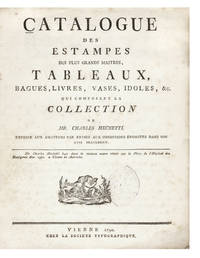
6413viii 120 pp. 4to cont. pale blue paper wrappers spine defective. Vienna: La Société Typographique 1790. The uncommon sale catalogue of the collections formed by the founder of the famous Viennese music publisher. Originally from Lucca Mechetti c. 1745-1811 encountered financial troubles and was forced to sell his collection of thousands of items primarily Italian prints and paintings. In the introduction Mechetti highlights certain pieces in his collection which was apparently not for sale by auction but rather private contract. Pages 113-20 describe a large library rich in books on the arts and history. Nice copy. This copy was inscribed on the inside front wrappers to the amateur geologist Baron de Beroldingen see Zittel. From the library of His Serene Highness Prince Fürstenberg at Donaueschingen with his stamp on title. ❧ Cicognara 4548. unknown books
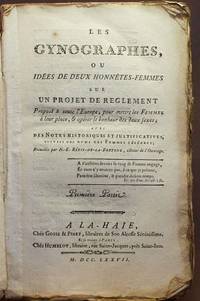
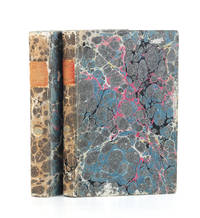
17776329The Hague but Paris: Gosse et Pinet; Humblot 1777. First edition. Fine/The collected works of Restif de la Bretonne would probably fill an entire wall case. He wrote tirelessly producing some 250 books--a considerable physical task if not the intellectual achievement of some of his contemporaries in the French siècle des Lumières. Restif was a libertine and he wrote quite a lot about sex. He also bravely ignored standard literary forms forging his own way into autobiography polemic essay pornography and fiction leaving trails that are yet to be explored. The volumes offered here in their completely original unsophisticated state form a part of an ambitious series of books that appeared over two decades under the umbrella title "Idées singulières" Modest Proposals an extensive compendium of rules and regulations for the creation of a utopia. Each title in the series proposes a reform project for a particular aspect of society. In the case of Les gynographes that aspect is the status of women in society. While not entirely a 21st-century feminist disappointingly he is unable to exceed received patriarchal attitudes Restif makes some presciently modern arguments including that gender inequality is a social construct and is not biologically determined and that education is the key to gender equality. Indeed the text betrays a disconcerting mix of statements that can be interpreted as misogynistic alongside truly revolutionary ideas about the condition of women in society. Even the 19th-century bibliographer P.L. Jacob notes that "some very singular and very original ideas" occur juxtaposed against "severe and unjust comments" about women. . 2 volumes octavo 22; viii 238; 239- 567 1 pages. Unbound untrimmed unmarked and completely unsophisticated copy in original publisher's marbled paper wraps. Pages not bright. Some dampstains and occasional spots. References: Courbin "Rétif et son oeuvre" #14595; Rives Childs XVI p. 245; Jacob XVII p. 143. Gosse et Pinet; Humblot paperback books