[no author or editor given]Biblio.com
7 654 résultats
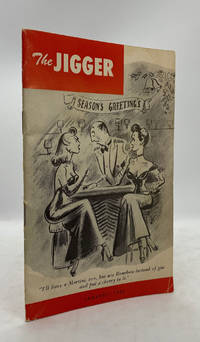
19508858Philadelphia: The Drake Press 1950. Staplebound. Near fine. 16mo 23pp. illustrated. Near fine in the publisher's stapled wraps with only very mild edgewear. A surprisingly scarce booze-centric periodical which appears to be geared towards bartenders or bar owners. Several mildly lewd comics and a number of drink recipes make up the bulk of the contents along with a few liquor advertisements. OCLC records just three partial holdings for "The Jigger" at U. of Rochester Ohio State and Virginia Tech. Scarce in commerce. The Drake Press unknown
191264223Portland OR: American Map and Reproducing Company Corner E. Stark & E. 43rd 1912. One double atlas folio colour lithograph map sized 28 x 40.5 professionally mounted on archival linen sized 32 x 45 in. w/ scale of 1:24000 minor edgewear slight age toning at fore-edges and lower corner still a VG bright copy. First edition of this very uncommon Progressive Era map of Portland Oregon in the years between the Lewis & Clark Centennial Exposition and World War I. The map depicts public lands including township range and section grids along with neighborhood and addition place names steam & electric interurban railroads and electric streetcar lines along with parks city limits and radial distances from point in downtown Portland included. Place names included Zion Town the old steel bridge built in 1888 followed by a new Steel bridge which opened later in 1912 the Plank/Old Canyon Road Laurelhurst and others. Of particular interest beyond most maps of Portland during the era this map delineates a significant portion of Vancouver Washington prior to the construction of the Interstate Bridge across Hayden Island as well as inroads into portions of Northwest Portland and Washington County in the Southwest. Fritsche 1877-1928 was an intrepid German-American photo-lithographer architect printer and later photographer who first arrived in New York before coming West to the Pacific Northwest in 1907 where he set up an architecture and engraving firm with his brother Rudolph Fritsche. Wenzel is perhaps best remembered as architect of the historic Henry C. & Wilhemina Bruening House Craftsman bungalow located at 5919 North Williams in Portland’s Humboldt neighborhood erected in 1910. However by 1914 Wenzel had returned to Manhattan with his family including one son and three daughters. Worldcat locates 5 copies U of IL Boston Pub. OHS Reed U of O. American Map and Reproducing Company, [Corner E. Stark & E. 43rd], unknown
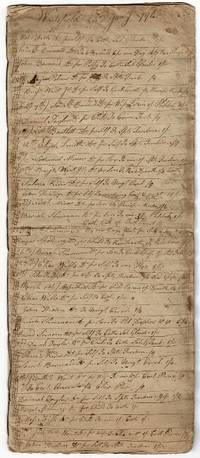
180559752Waitsfield Vermont 1805. Narrow tall folio approx. 15½" x 6¾" 112 pp. in ink five separately sewn signatures; a few pages loose some pages darkened or chipped at edges; some entries faint. This account book is the record of the practice of either Stephen Pierce or Simeon Stoddard practicing in Waitsfield Vermont between 1795 and 1806. These were the second and third physicians to have settled and practiced in Waitsfield. Most likely it is the record of Pierce who is supposed to have settled in Waitsfield in 1795. The first physician in Waitsfield Moses Heaton remained there only between 1793 and 1796. Depending on the source Pierce was the third physician to practice in Waitsfield and/or the first to practice in Moretown a settlement to the northeast of Waitsfield. He farmed as well as doctored and his farm lay mostly in Moretown his office in Waitsfield. He was a respected and successful physician who served the community in other capacities: as selectman representative delegate to the Constitutional Convention of 1814 and Assistant Judge of the County Court. One source claims that he succeeded Judge Kinne December 1 1814 and served one year and that he was a justice of the peace in Waitsfield. He died either in 1854 after living in Waterbury and Berlin Vermont or he died in Barnard in 1864. See: History of the Town of Waitsfield Vermont 1782-1908 by Matt Bushnell Jones Boston 1909 p. 182. Simeon Stoddard on the other hand was born December 12 1761 either in Saybrook Connecticut or in Waitsfield. On August 19 1784 he married Abiah Thompson who had been born in 1763 in Waitsfield. Some sources state that he moved to Waitsfield from Saybrook in 1794. He served the southwestern area of Waitsfield and died in 1841. This account book records each date of visit the householder's name the relationship of patient to householder the medicine prescribed and its price and the cost of the doctor's visit. The doctor whether it be Stoddard or Pierce treated thirty to forty patients each month and as many as fifty-six in December of 1801. He charged as little as 4 pence and as much as 42 shillings 10 pence for his services. As a comparison the tax on an acre of land in Waitsfield was 2 pence an acre. The poll tax list of 1795 showed fifty voters so the doctor seems to have treated the members of nearly every family. The diseases treated are not stated in the entries made but he seems to have prescribed antimonium tartaricum in many instances and also digitalis. Waitsfield was founded by Col. Benjamin Wait or Waite and others who were granted a charter on February 25 1782. Wait had served under Gen. Jeffery Amherst in the French and Indian Wars and had fought in the Revolutionary War. Both Waitsfield and Moretown are now somewhat renowned as the areas around Mad River a popular ski resort. Mad River has been remarkable from the settling of the area as the source of numerous sudden destructive and deadly floods. The Green Mountains the northern extent of the Appalachians rise just to the west of the town. The doctor records having treated members of the Wait family including Benjamin's wife Martha d. April 3 1804 Ezra Thomas and Gilbert. The family names of the community are listed making this a good source for early settlement history and genealogical research. Among the householders who required the doctor's services are Smolly Skinner Taylor Spalding Hitchcock Parkhurst Carpenter the family had a tannery and potash works Heaton Burdick Johnson Rider Fuller Symonds McNight Chamberlain Atherton Lyon Butterfield Barnave Osgood Foster Hobson Robinson Brun Latimer and Sherman. Many of the names appear often. unknown
18904738Portland: F. W. Baltes & Co. Printing House 1890. 12mo 16 x 10cm 1 39 1 plus 12 leaves of ruled paper for notes pagination includes covers. Printed on white and pink paper with illustrations throughout single fold out advertisement on yellow cardstock. Original blue paper boards lettered in gilt show chipping along spine and wear to edges else clean and complete. The first leaf of notepaper has been used to work on some spelling/vocabulary words and a few math story problems involving farmland and bushels of corn by the former owner. Scarce pocket business directory for Portland Oregon courtesy of Palmer & Rey Type & Founders who were advertised to have kept "the only stock of type job and Cylinder presses and printing material in the Northwest" at the time. <br /> Not in OCLC as of March 2022. F. W. Baltes & Co. Printing House unknown
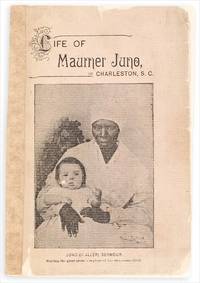
3733512<p>Atlanta: Foote & Davies 1892. Small 8vo. Frontis. 41 1pp. Pictorial wraps with later tape reinforcement to spine small tears and light soil. With a two-page introduction by William Tertsh Whilden Williamston Female College professor.</p> <p>Written through the lens of the “Lost Cause†ideology this life sketch of Juno Waller Seymour d. 1883 was crafted by a member of the Whilden family of Charleston South Carolina—possibly Ellen Ann Whilden 1822–1895 or W.G. Whilden to whom she was enslaved as a domestic servant. While presented as a memorial tribute to Seymour’s life its text blends plantation and evangelistic literature folklore and perhaps occasional kernels of biographical truth.</p> <p>According to the narrative Seymour’s given name was Cumba and she claimed her lineage as a member of West Africa’s Fula tribe and the daughter of a king. She was captured by slavers as a child and initially brought to the French colony of St. Domingue now Haiti. Amidst the tumultuous backdrop of Toussaint Louverture’s Revolution she was sold and transported to Charleston in 1800 where she came under the ownership of Bayfield Waller a city merchant.</p> <p>Seymour was subsequently given to the prominent Whilden family with Joseph Whilden Bayfield Waller’s stepson and co-founder of the City Gazette and Advertiser in 1816 serving as the family patriarch. To the Whildens she became known as “Maumer Juno†or “Maum Juno.†Apart from tending to her daily domestic duties Seymour looked after the growing family’s children and continued to do so across several generations.</p> <p>The front wrapper and frontispiece of the Life of Maumer Juno feature an identical image of Maumer Juno gently cradling a baby in her arms accompanied by the caption “Minding the great great-daughter of her first owner 1853.†Known as the “chattel Madonna formula†this visual motif was employed by 19th-century photographers to portray enslaved African American women as the benevolent care-takers to the children of their enslavers. Matthew Fox-Amato</p> <p>Support for this construct is found in elsewhere in the text but in words not images. In one passage Seymour is found to be “surprised and delighted when for the first time a tiny white babe was placed in her arms.†Seymour’s exuberant expression of joy is juxtaposed with a passage elsewhere in the text that underscores the fact that she never bore any children with her enslaved husband.</p> <p>Enlarging the “Madonna formula†further Seymour is posthumously labeled by the author as being a “saint of African birth†on the day of her funeral. This resonates with the author’s intention of depicting this faithful yet enslaved servant as deeply religious truly Christian and in fact purified as exemplified in an earlier passage where Seymour declares “I am black outside but inside I am white for every day my heart is washed in blood.â€</p> <p>Following the primary text there is an additional seven-page profile of Seymour penned by “Mrs. J.C.H.†The reliability of this white woman’s observations seem questionable as when she writes: “She Seymour told me that when first dressed in our clothing she thought she was being prepared for sacrifice and fled away hiding in an outhouse while she took off her garments tearing them almost into ribbons in her fright.†p30</p> <p>Still at least one observation may be deemed reliable such as this passage: “Of her native land she talked often and as the days of her pilgrimage lengthened her memories grew more bright and strong of her life in the far-away land. The customs of her people their worship of the new moon the wearing of cloth their method of preparing food all seemed vivid mental pictures…†p30</p> <p>LCP Afro-Americana 5921. See the image “Old Maumer selling Groundnut candy in the Streets of Charleston†taken by G.N. Barnard 1819–1902 South Carolina photographer.</p> unknown
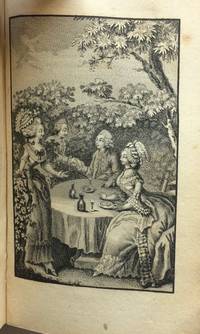
RGW22491Hardcover. Very good. 6 engraved plates one folding; 368pp; small tears at foot of title. 8vo 19th century French calf gilt spine with raised bands slight wear chipped at head of spine Volume with fine engravings from a large collection of short stories. No Jacket issued hardcover
1837626988Philadelphia: The Liberal Union 1837. xvii 2 20-118 pp. missing page 119 1. Black leather spine with gilt titling and marbled endpapers; "Printed at the Office of the National Laborer". Heavy wear and chipping to spine; boards no longer extant. Front free endpaper and first blank page detached but still extant with some chipping to corners. Some staining to bottom corner at gutter of first few pages. Some mild foxing throughout. Final page 119 no longer extant with bottom quarter of following blank missing as well. Some discoloration smoke to tail of final pages. Gatherings still held together quite securely although with some cocking to the top half of the spine. Appears to be a good candidate for recasing or rebinding with a facsimile copy of the final page. Originally published in eight parts under the title "Equality-- A Political Romance" in the Philadelphia deist magazine "The Temple of Reason" this utopian fantasy is commonly accredited to be the first utopian novel written and published in the United States. According to the historian Richard J. Twomey "Equality." marks a turning point in social critique in how it marks private property itself as the root of "social evil" rather than inherited privilege or property. Faherty and White. This scarce edition of 1837 is preceded only by the 1802 serialization. . Hard Cover. Fair. The Liberal Union Hardcover
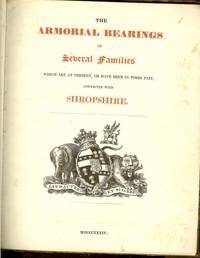
1834003452Shrewsbury: John Eddowes 1834. Hardcover. Fair. 4to - over 9¾" - 12" tall. OLIVER. VG 33 pls. In contemporary half calf over blue marbled boards corners & edges bumped & worn. Spine lacking at base gilt title edges bumped. Internally 2 24 leaves showing 9 coats of arms per leaf verso's blank followed from another work by 9 leaves of shields Royal Arms Funeral Bannesters Chiefs etc numbered 1-ix book label to fpd Fred R Jackson from Liverpool Copper plate engraver and printer Shrewsbury title page text in red and black with coat of arms vignette ink name to verso J Hirst Shrewsbury no pagination but inked in engraved by Oliver 23 Oxendeon Street Hay market printed in Shrewsbury by John Eddowes some occasional browning attributed to either WG Rowlands or the printer John Eddowes. folio 27.622 cms. Uncommon. <br/> <br/> [John Eddowes] hardcover
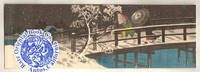
22058501Tokyo 1930-34 Watanabe. Otanzaku oblong color woodblock print 32.3 x 10.8 cm. artist's Hanko/chop "Seki" in upper in upper right corner else unsigned probably a 'knock-off' of Shotei's famous "Izumibashi No Ame" cleansolid example. . . . . A STRANGE VERY EXAMPLE ! . . . "OTANZAKU" LARGE OBLONG COLOR WOODBLOCK PRINT . . . MOST LIKELY A PERIOD "KNOCK-OFF" OF A . . . TAKAHASHI HIROAKI HIROAKI FAMOUS PRINT OF IZUMI BASHI . . . IZUMI BRIDGE ON A SNOWY NIGHT . . . A MAN HOLDING A LANTERN LEADS A KIMONO-CLAD WOMAN . . . OVER THE BRIDGE WHILE BOTH HOLD OIL-SKIN UMBRELLAS . . This unusual example is more than likely a "knock-off" of a famous print illustrated in Stephens of remarkably and very similar print by Takahashi Shotei Hiroaki executed after 1923 with title: "IZUMIBASHI NO AME RAIN ON THE BRIDGE IZUMI BASHI" The original published in Tokyo by Watanabe. See below for details. . THE SUBJECT OF THE INSPIRATION FOR OUR EXAMPLE: The male servant of a Geisha leads her across the Izumi Bridge on a rainy night while holding a paper lantern. He wears no shoes which is exceptionally strange for all Japanese wear at least Wara Zori rice straw sandals even the poorest of the poor can make from straw way-side straw. . The two people subjects bend towards the blowing snow storm he with a half-open oil-skin paper umbrella she with a wide open umbrella fighting to keep the umbrella steady. . ARTIST SEAL & TITLE: The artist's name is not found on the print. There is however the artist's red cinnabar Hanko/seal/chop reading "Seki" fount at the top right corner. . "Seki" is an elusive artist who is not listed in a the usual standard reference resources on the period and genre of Shin Hanga examples. . This exact seal is also found on our print again by "Seki" our book number 220584. listed on our website. . WHO WAS SEKI: This artist and name are a complete mystery and there are no references to him in the record. This may very well be a spuriously name used to hide the true identity of a plagiarizer seeking to take advantage of the famous Shotei. If any reader of this listing has more information on him we would be very grateful to hear from you. An alternate reading of Seki Kanji is "Kan." . OUR EXAMPLE: The first indication to us that this was not an original print but a poor copy of the original and well-known example by Takahashi Shotei Hiroaki 1871-1945: IZUMI BASHI NO AME: RAIN ON THE IZUMI was when we examined the foot wear of the man-servant. He was barefooted and did not even wear 'wara zori' sandals made of rice straw which is something every poverty-stricken Japanese of the Edo period was capable of doing by collecting road-side grass or rice straw. These could be made quickly and only for the effort. It is inconceivable that any Japanese regardless of how poor would be out walking during a snow storm on snow without any foot gear at all!. . This was a strong indication the print was bogus. While the artist "Seki" who's cinnabar-red Hanko seal/chop adorns the upper right corner after exhaustive search of the usual references we could find no reference to this artist's name nor to the Hanko. . A STUDY PIECE: Regardless of the above this example has interesting points and is worthy of study and a good source for a variant on the original work. . Color scans are posted to our website. . REFERENCE: . Amy Stephens.: THE NEW WAVE: plate 86 p.111-114 plates including 94 a & b. TAKAHASHI Hiroaki. Shotei SHIMIZU Hisao. comp. : TAKAHASHI SYOTEI HIROAKI: SHOTEI HIROAKI TAKAHASHI: HIS LIFE AND WORKS p.42 #85 1924-1927 Pinckard #114. . unknown
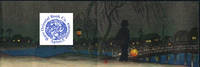
22058401Tokyo 1930-34 Watanabe . Otanzaku oblong color woodprint 32.2 x 107 cm. very good faint center fold artist cinnabar red seal exceptionally clean a bright copy obscure work seldom found excellent registry & impression. RARE EXAMPLE! . . . . AN OBSCURE EVENING VIEW OF YANAGI BASHI IN TOKYO . . . A "OTANZAKU" OBLONG PRINT FORMAT . . . BY "SEKI" . This "shadow" print was done after dark at the famous Yanagi Bashi Willow Bridge in Tokyo. . This fine print shows two willow trees along the river with the bridge in the foreground. A Kimono-clad Japanese woman holds a lantern to light the way as she walks towards the bridge. . A tall bamboo fire-watchtower is outlined against the dark grey-black sky that gradually goes into a deep green as it touches the earth. . Several small houses show lighted windows their lights reflect on the river waters. . A single lonely lantern post marks the entrance where the bridge begins. . Another similar bridge is visible in the background on this moonless night. . ARTIST SEAL & TITLE: The artist's name is not found on the print. There is however a title written in two black Kanji reading "Yanagi Bashi." Printed over the title is the artist's red cinnabar Hanko/seal/chop reading "Seki." Found at the bottom center of the print. . "Seki" is an elusive artist who is not listed in a the usual standard reference resources on the period and genre of Shin Hanga examples. . WHO WAS SEKI: This artist and name are a complete mystery and there are no references to him in the record. This may very well be a spuriously used name to hide the true identity of a plagiarizer seeking to take advantage of the famous Shotei. If any reader of this listing has more information on him we would be very grateful to hear from you. An alternate reading of Seki Kanji is "Kan." . The artwork is similar to and reminiscent of Tsuchida KOITSU 1870-1949 who was master of the dusk evening and night prints. . His skill is unquestioned when it comes to drawing and painting such difficult scenes. The overall effect is stunning and skillful his use of dark colors produces a true-to-life image of dusk and evenings. Very few artists could portray such difficult scenes at this level of expertise. . The subject of this print Yanagi Bashi is quite similar in construction to another "OTANZAKU" size by Takahashi Shotei Hiroaki found in Stephens. See our example book number 220585 posted to our website under the same author's name. . In this example the bridge is reminiscent of the Yanagi Bashi or the other unnamed bridge in the background of our example. See Stephens below. . CONDITION: This unusual size print oblong print has excellent impression and registry. There is as usual a mild center fold common to "OTANZAKU" prints of this grand length of 32.2 cm. . The verso is very clean with ample "Baren" marks a fresh clean & obscure example. . Color scans are posted to our website. . REFERENCES: . STEPHENS Amy R. ed.: THE NEW WAVE: Twentieth Century Japanese Prints From The R.O. Muller Collection. See p.111figure 86as well as other by Hiroaki. Also see previous page with Tsuchida Koitsu examples which also may have a bearing on our print p.110-114 figure 86-94 a b. . For Takahashi Shotei Hiroaki see p.111 figure 86 et al.: figures 85-94 a & b pp.111-114. . For Tsuchiya Koitsu see p.110 figure 84. . . unknown
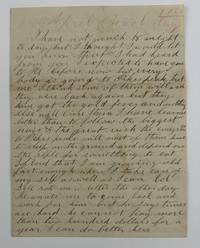
18604105Missouri: April 1 1860. Very good. 4pp. on a single folded sheet. Original mailing folds minor toning. An informative letter written by Charles H. Cram in Missouri to a friend in New England dated "April Fools Day 1860" in red pencil at the top of the first page. Cram mentions hoop skirts Pike's Peak and slavery while trying to decide whether to continue westward during the latter years of the California Gold Rush. Cram's letter reads in part: "Everybody is going to Pikes Peak but me. I think some of them will wish they were back again but they have got the gold fever and nothing else will cure them. I have learned better than to follow the biggest nois and the great rush. The emigrants to Pikes Peake will most of them will have to sleep on the ground and depend on the rifle for something to eat. I may start for Santa Fe about the first of June. I can git 15 dollars a month to drive a teem to Santa Fe. If I do cross the plains I shall go to California but if I have good health I shall stay here though I do not like to live in a slave state."<br /> <br /> In another portion of his letter Cram addresses his correspondent's question of whether slaves and freedpersons wore hoop skirts in Missouri. Cram writes: "You wanted to know if niggers wore hoops. Some do and some don't some slaves in broadcloth and silk and some go nearly naked. Slaves have there stent to do so much & if they do more they are payed for it. Most of them have a piece of ground that they call their own. What time they get they work on it. That is how they git their fine cloths. There is not a nigger in Missouri that works as hard as I do but I have consolation that I can work only when I am a mind to. You tell Albert not to start out among strangers as I did for he will find the people different in the country from them in New England."<br /> <br /> Cram then speaks to the emigrant populations he encounters out west as well as the agricultural bounty and animal life of Missouri: "The greatest difficulty I had was to learn the French and German language. I have been for weeks where I could not understand a word but now I can understand anything that comes along. But now for something else. The peach trees are in flower and the woods look green. Cattle and horses pick their living here the year round. I have not seen a barn in the country. The way to feed a horse is to tie him up to a tree and throw him a few ears of corn on the ground. I cannot rite to day much for there is half a dozen in the room talking about pikes peak or some young lady and how many negroes her father owns etc."<br /> <br /> Cram ends his letter with some advice for his friends back east: "Tell Mr. Bosworth that if he can rais $500 that he had better go to Cansas Kansas and go to farming. If you can persuade Andrew Marshall to go west it will be a good lesson for him."<br /> <br /> A mid-19th century manuscript letter with informative observations on the clothing of slaves and with notable observations of western life in Missouri. April 1 unknown
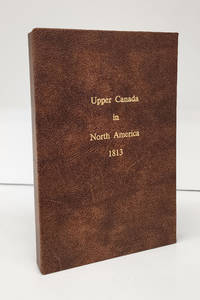
1813157227London: W. Faden Geographer To His Majesty and To His Royal Highness The Prince Regent 1813. Second Edition. Hardcover. Good. 125 p. 23 cm book in leatherette box. Chart pp. 4-10. One fold-out distance table. Book has brown cloth spine with grey paper boards the latter looking like original publisher's wraps. Worn extremities. Small tear in paper on front board. Front free endpaper loosening. Ink signature on title. <br/><br/>Second edition first was 1799 of the earliest published topographical description of the young province of Upper Canada prepared by its first surveyor-general. Smith 1764-1837 originally came to Upper Canada in 1793 serving as a quartermaster in a British regiment stationed at Niagara. That same year he was appointed to the position of surveyor-general by Gov.-Gen. Simcoe. Advertisement following the title states that the notes and gazetteer were drawn up at Simcoe's request to illustrate a separately issued map of the colony. This second edition was revised corrected and updated by Lt.-Gov. Francis Gore to accompany a new map compiled in the surveyor-general's office and published under his direction. Casey I 983. Lande 2208 with map. Morgan p. 353. Sabin 85205. TPL 736. W. Faden, Geographer To His Majesty, and To His Royal Highness The Prince Regent hardcover
1813elala1132London: Published By W.Faden Geographer To His Majesty 1813. 1813. 8vo. pp. 2 p.l. 123. folding table. contemorary half calf extremities bit rubbed. armorial bookplate of General Aylmer. Second Edition. First published in 1799 this was the earliest published topographical description of the young province of Upper Canada prepared by its first surveyor-general. Smith who had originally come to Upper Canada in 1792 serving as a quartermaster in a British regiment stationed at Niagara was appointed to the position of surveyor-general of the province in 1793 by Governor-General Simcoe. The advertisement following the title states that the notes and gazetteer were drawn up at Simcoes request to illustrate a separately published map of the colony and that this second edition was revised corrected and updated by Lieutenant-Governor Francis Gore to accompany a new map compiled in the surveyor-generals office and recently published under his direction. Casey I 983. Lande 2208 with map. Morgan p. 353. Sabin 85205. TPL 736. DCB VII pp. 811-13. London: Published By W.Faden, Geographer To His Majesty , 1813. unknown
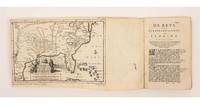
17063719Te Leyden: By Pieter Vander Aa Boekerkoper 1706. First edition. Later half-cloth boards covered with marbled paper spine with title vignette. Small wormhole affecting the first five leaves and the folding map; otherwise in very good condition. First edition. Later half-cloth boards covered with marbled paper spine with title vignette. 6 86 4 p. and an engraved folding map and 9 engraved folding plates. <p><br /> Scarce Dutch illustrated edition of the first eyewitness account of Hernando de Soto's expedition complete with a folding map of Florida and nine double-page engraved plates.<br /> <p><p><br /> Dutch abridged edition of the earliest published eyewitness narrative of Hernando de Soto's expedition to Florida and the interior of North America. The text derives from the Relaçam verdadeira dos trabalhos Évora 1557 written by an anonymous Portuguese gentleman from Elvas who participated in the expedition. That work is the first printed account of de Soto's journey and remains a foundational source for the early Spanish exploration of the southeastern regions of what is now the United States.<br /> <p><p><br /> De Soto landed in Florida in May 1539 and led a large expedition through present-day Florida Georgia the Carolinas Tennessee Alabama Mississippi Arkansas and Louisiana reaching the Mississippi River before his death in 1542. The narrative records sustained contact with Indigenous societies and documents the challenges of an extended inland expedition through the southeastern regions of North America.<br /> <p><p><br /> This Leiden edition was issued by Pieter van der Aa as part of his Naaukeurige versameling der gedenkwaardigste zee- en landreysen presenting the narrative in Dutch translation in an abridged form. It is illustrated with an emblematic engraved title a folding engraved map of Florida attributed to de Soto's discoveries and nine double-page engraved plates depicting episodes from the Spanish conquest. Van der Aa's engravings played a significant role in shaping early eighteenth-century European visual conceptions of Spanish America and its exploration.<br /> <p><p><br /> A well-preserved copy complete with the folding map and plates. An important Dutch contribution to European-Americana transmitting one of the principal sixteenth-century sources for the exploration of the North American interior.<br /> <p><p><br /> Not in Sabin. Scarce on the market; RBH records only four copies offered in the past 100 years. <br /> <p>. By Pieter Vander Aa, Boekerkoper unknown
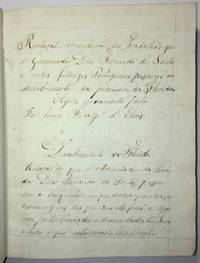
1714Portugal Second half of the eighteenth-century. Manuscript book. Written in brown ink by one or probably two neat hands. A French introduction by a different hand on the front flyleaf with bibliographical details and the addition of Fernando da Silveira’s Epigramma from the printed book and the summary of André de Burgos’ prologue. Pages ruled in pencil. In contemporary half morocco. Title lettered in gilt on spine. Corners bumped. Panels are rubbed at the extremities. Wormholes on the spine with no effect on the book. Light water stain to the upper corners of the last few leaves. Overall in fine condition. Manuscript book. Written in brown ink by one or probably two neat hands. A French introduction by a different hand on the front flyleaf with bibliographical details and the addition of Fernando da Silveira’s Epigramma from the printed book and the summary of André de Burgos’ prologue. Pages ruled in pencil. In contemporary half morocco. Title lettered in gilt on spine. ff. 189. <p>An eighteenth-century manuscript copy of the scarce Portuguese eye-witness' account on the discovery of Florida Relaçam verdadeira a narrative of Hernando de Soto’s expedition which was first published in Évora in 1557 by Andrés de Burgos.<br /> <p><p><br /> Relaçam verdadeira is the first account to be published about de Soto’s expedition and the discovery of Florida. The book was written by an anonymous gentleman from Elvas who was one of the Portuguese fidalgos accompanying the Spanish expedition crossing the southern territories of North America from Florida to the mouth of the Mississippi.<br /> <p><p><br /> De Soto the seasoned conquistador who had participated in the conquest of Peru and his men landed in Florida in May 1539 and wandered through what is now the southeastern United States Florida Georgia South and North Carolina Tennessee Alabama Mississippi Arkansas Oklahoma Texas and Louisiana. After nearly four years of unsuccessful search for gold and the death of de Soto in 1542 the three hundred survivors of the initial force of seven hundred reached the Mississippi River and returned to Mexico.<br /> <p><p><br /> Relaçam verdadeira is among the few key narratives of early Spanish efforts to explore North America and is considered as one of the major documents of sixteenth-century American history. It provides the earliest accounts of the Southern Indians and gives the first insight into their customs and religious practices.<br /> <p><p><br /> The printed book is extremely scarce IB just as USTC lists only 3 copies in New York NYPL London BL and Madrid BNE. Besides those we located two copies at Biblioteca Geral da Universidade de Coimbra and JCB. The French introduction of the present volume mentions a copy probably of which the manuscript was made after in Lisbon at Real Palacio das Necessidades however we could not verify the existence or the current location of it.<br /> <p><p><br /> References for the printed book Évora: Andrés de Burgos 1557: IB 18049 USTC 343292 Joaquim Anselmo Portugal no. 388.<br /> <p>. unknown
elala6170London: Atchley And Co. c1850. Including views of Southampton Isle of Wight Bay of Biscay Berlingas Cintra the Tagus Trafalgar Tarifa Gibraltar Algiers Panteleria Malta Alexandria Mahmoudie Canal Boulac Cairo Cemetery of the Mussulmans Dead Camel Central Station Arabs on Horseback Encampment by Night Women Drawing Water Joseph's Well Red Sea Suez Jeddah Mocha Aden Point de Galle in Ceylon Madras and Calcutta. oblong folio. 32 wood-engraved plates incl. engraved title by W.Measom H.Sears & others after drawings by the aforementioned artists. with tissue guards. 4-page folio prospectus with plate descriptions loosely inserted. original pictorial bds joints cracked & chipped spine ends damaged light foxing to few plates. inscription dated 1851 on front flyleaf. elala6170 London: Atchley And Co., [c1850] unknown
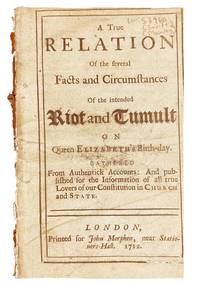
171234981London 1712. 16pp. Trimmed close minor toning. Good. Disbound.<br/> <br/> An anonymous political work that has been attributed over the centuries to both Jonathan Swift and Mary de la Rivière Manley. Most sources identify Manley as the author; she was an English author and pamphleteer who was famous for presenting political screeds disguised as romances or satire. A rare pamphlet either in institutions or the market.<br/> <br/> ESTC N45508. unknown
1775006679London; Pall-Mall: J. Dodsley 1775. First Edition . Hardcover. Good. 4to - over 9¾ - 12" tall. 1st ed G 1775. In contemporary worn half calf over worn red paper boards corners & edges bumped & worn. Spine no title some calf loss. Internally 3 vi-vii 1 1 2-88 pp book label to fpd Sir Robt. W. Vaughan Nannau water stain to margin of a few leaves small worm marks to gutter creases to final ep evidence of removed bookplate to fpd upper hinge strengthened. 200281 mm. ESTC T139793. Lowndes 2136/7. Title continues: From the invasion by the Romans until finally acceded to the Crown of England: Together with a distinct description of the Towns Harbours Villages and other remarkable places in it; and of several Antiquities relating thereto never before made public. Serving as a supplement to Rowland's Mona Antiqua Restaurata. To which are also added Memoirs of Owen Glendowr. <br/> <br/> J. Dodsley hardcover
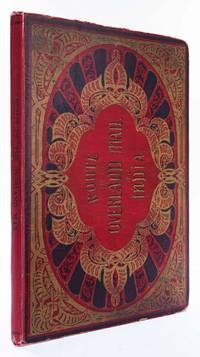
52890London: Atchley & Co. 106 Great Russel Street. Printed by Leighton Brothers c.1860. Oblong folio 42 x 28 cm. Original decorative red cloth titled on both sides spine lettered in black a.e.g. Original 4 pp. prospectus listing and describing the plates loosely tipped in. 32 full page illustrations: Southampton Isle of Wight Bay of Biscay Berlingas Cintra Tagus Trafalgar Tarifa Gibraltar Algiers Panteleria Malta Alexandria Mahmoudie Canal Boulac Cairo Cemetery Dead Camel Central Station Arabs on Horseback Encampment by Night Women Drawing Water Joseph's Well Red Sea Suez Jeddah Mocha Aden Point de Galle & Calcutta engraved on wood by Sears Heaviside Measom et al. With the small circular blind-stamp of the Library of Arts 106 Great Russell Street to title as often. Ex libris Isabel Clayton. Some time rebacked occasional spotting. Authorship has variously been attributed to John Tillotson or Joachim Hayward Stocqueler. This full title is taken from the prospectus for the work which is loosely tipped into this copy which otherwise as normal just has the short title "The Route of the Overland Mail to India" on the upper cover and and repeated on the pictorial title page. 106 Great Russell Street is the premises formerly occupied by Robert Frew 1985-2005 There are other issues with alternative publishers and in slightly different format some of which we have had with 63 pages of text. This copy appears quite complete but the only descriptive text is provided by the prospectus. London: Atchley & Co. 106 Great Russel Street***. Printed by Leighton, Brothers, [c.1860]. hardcover
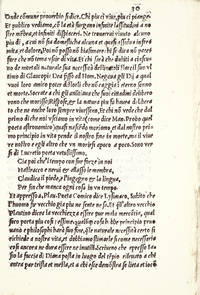
154388<p>8° mm 151x104; cc. 32. Marca tipografica al frontespizio. Margine superiore un poco rifilato. Pergamena posteriore.</p><p>Seconda edizione del dialogo albertiano - meglio conosciuto sotto il titolo di <em>Theogenius</em> - dopo quella che priva di dati tipografici ISTC cataloga come: "Florence 1500" cfr. L.B. Alberti <em>Opere volgari</em> II <em>Rime e trattati morali</em> a cura di C. Grayson Bari 1966 p. 409.</p><p>Il <em>Theogenius</em> rappresenta un capitolo poco noto della fortuna e dell'influsso dell'epicureismo nel Quattrocento. In questo dialogo infatti l'Alberti illustra diversi temi dell'etica epicurea e <strong>traduce alcuni versi del <em>De rerum natura</em> di Lucrezio </strong>S. Gambino <em>Alberti lettore di Lucrezio: motivi lucreziani nel "Theogenius"</em> "Albertiana" IV 2001 pp. 69-84.</p><p>Leon Battista Alberti's <em>Theogenius</em> revived and revised the ancient view developed in the Hellenistic age according to which philosophy aims to form rather than inform people showing them how to cultivate a specific attitude towards existence through a rational comprehension of the nature of humanity and its place in the cosmos. This view of philosophy as a way of life was challenged by the development of scholastic philosophy seen as a body of speculative doctrines and professional skills ancillary to the superior wisdom of theology. Nevertheless it survived thanks to Renaissance humanists like Petrarch Alberti Erasmus and Montaigne. <strong>On the influence of Lucretius on Italian Humanism after Poggio Bracciolini's discovery of the only surviving manuscript of <em>De rerum natura</em> 1417</strong> cf. A. Brown <em>The Return of Lucretius to Renaissance Florence</em> Harvard University Press 2010 and S. Greenblatt <em>The Swerve: How the Renaissance Began</em> London 2011.</p> Appresso Paulo Girardo, [colophon:] per Venturino Rosinello
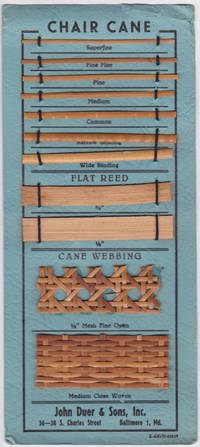
014243Baltimore MD: John Duer & Sons no date. ca. 1930s. The 9"x4" sample card contains 9 cane or reed samples and two samples of cane webbing. Blue printed stiff card; cane & reed samples are held by elastic cord and cane webbing samples are glued to the card. VG corners lightly bumped light wear. . Soft Cover. Very Good. John Duer & Sons Paperback
44028501Edo n.d. ca 1830-40's. A group of 12 color woodblock print sheets: ca. 12.3 x 9 cm.;prints: ca.11.9 x 8.4 cm.all clean showing age excellent impression & registry no marks very nice examples in old album. AN OBSCURE SHUNGA ALBUM . . . EROTIC PRINTS FROM TWO SERIES MOST LIKELY THE ART WORK . . . OF EITHER KUNISADA I OR TOYOKUNI II . . . UNSIGNED AS USUAL . The book consists of pages from two series of Shunga erotic books:. As usual no Shunga erotica or Harubon erotic books were ever signed by the author as these were banned by the Shogunate. Nevertheless there was a proliferation of these 'contraband' books & prints printed through the Edo period 1604-1868 that were commonly distributed throughout Japan. . Three prints from JUNI KA GETSU NO UCHI TWELVE MONTHS OF THE YEAR and YON SHIKI NO UCHI THE FOUR SEASONS. The second to last print has no title. All of the above are clearly Edo period color prints. The second to the last print has no title but is clearly an Edo period item. The very last color print is a Meiji period work ca. 1870's. . We believe the two series originally consisted of 12 prints in all showing the erotic scenes of each of the twelve months. The same for the Four Seasons showing three prints for each of the four seasons. . Each print is clean more than likely from an accordion folded album or a usual printed book. All but 2 have the series title cartouche and a title cartouche indicating the season or month. The last two have no titles. . Each print is gently mounted to the book using typical Ace corners in white from the 1940-1950's period. . THE ARTISTS: Being unsigned by stylistic analysis and research we believe this book to be the artistic work of the two artistes cited below. . The book consist of the works of two famous woodblock print artists: of the period KUNISADA I & TOYOKUNI II. Because Kunisada I 1786-1864 was the star pupil of Toyokuni II since age 15 his works naturally are very similar to his master's style. In 1844 he took the name Toyokuni III therefore Kunisada I is the same person. He specialized in story books & portraits. He is well collected by world libraries & museums. See Roberts below. . Toyokuni II 1777-1835 may be the artist of one of the series. He also was a star pupil of Toyokuni I. He was a Ukiyo-e painter illustrator Bijin Ga pictures of B-beauties He is well collected by world libraries & museums. See Roberts below. . The last print clearly a Meiji 1968-1912 period work was again unsigned and unattributed. . EX-LIBRIS THOMAS K. TINDALE. Tindale was a famous author of the comprehensive book THE HANDMADE PAPERS OF JAPAN concerning Japanese Washi papers. The first fly leaf of this book has his embossed "Mon" or Japanese crest blind-stamped. See our book #360633 on our website. . This was among his collection which we acquired in the 1970's now being offered for the first time. . CONDITION: The book is in excellent condition it is an accordion folding album with brown silk cloth covers containing stiff Washi paper. . The front covers have a bit of old either worming or silverfish evidence of nibbled cloth in two places. It is minor and has been colored the same as the cloth so it is not a major issue with no damage to the interior pages. There is a small amount of loss to the cloth and the cover title slip is also a bit nibbled on the right edge again of no impact to the book or the prints. . The prints are clean polychrome woodblock printed in several colors with excellent impression & registry. Lovely miniature treasures. Each print is gently inserted in American "NewAce" white paper mounting corners. The prints can be easily removed from these corners. . There is one single print mounted to the right hand side of the book. The versos of the prints are clean the rectos fronts are also clean no damage marks or issues. The colors are vivid the red made from iron has nicely oxidized into a mellow brown-rust color indicating at least 100 years old. It takes 100 or more years for this color transition to happen this is a good sign of genuine Edo period examples. . Each print has excellent impression & registry indicating an early printing off the woodblocks printed in a high quality from expert printers/publishers again lacking any identifying seal as usual. . The last print Meiji period has been re-backed folded twice and old tear mended. . Please review the color photos posted to our website for more details. . THE ARTIST & BANNED BOOKS: . During the Edo period the Shogun banned books that were not inspected and or sanctioned. Erotic books were again contraband and never showed the true name of the artist nor publisher printers seals or logos. Therefore these Shunga Harubon are difficult to attribute any artist. The only way is an "educated guestimate" based on the artist's painting style. At best it is a close of an attribution as possible. Few are listed in Shibui or other bibliographies containing Harubon. . It our best estimate that these two books were the work of either Kunisada I and or Toyokuni II based on our over 55 years of tenure and experience. . Color photos are posted to our website. . REFERENCE: . ROBERTTS Laurence P.: A DICTIONARY OF JAPANESE ARTISTS: PAINTING SCULPTURE CERAMICS PRINTS LACQUER. For Kunisada see pp. 96-97. For Toyokuni II see pp. 186-187. SHIBUI Kiyoshi: ESTAMPS EROTIQUES PRIMITIVES DU JAPON: GENROKU KOHANAGA SHU-E. . --. UKIYO-E NAISI. BIBLIOGRAPHY OF JAPANESE EROTIC ILLUSTRATED WOODBLOCK PRINTED BOOKS. HAYASHI Yoshikazu: ENBON KENKYU: RESEARCH ON EROTIC JAPANESE WOODCUT BOOKS. ILLING Richard: JAPANESE EROTIC ART: And The Life Of The Courtesan. UHLENBECK Chris. ed. et al.: JAPANESE EROTIC FANTASIES: Sexual Imagery Of The Edo Period. WINZINGER Franz: MEISTERWERKE DER EROTISCHEN KUNST JAPANS. LANE Richard: EROTIC THEME IN JAPANESE PAINTING: THE EARLY SHUNGA SCROLL. UKIYOE SHUNGA MEI HIN SHU SEI.THE COMPLETE UKIYO-E SHUNGA: The Foreign Image. An Anthology Of Writings. GROSBOIS Charles: SHUNGA IMAGES OF SPRING: Essay On Erotic Elements In Japanese Art. MANDEL Gabriele: SHUNGA: Erotic Figures In Japanese Art. EVANS Tom. et al.: SHUNGA: The Art of Love in Japan. UTAMARO Utagawa. Kitagawa: THE MERRY DRINKERS A Translation Of The EHON WARAI JOGO: A PICTURE BOOK SERIES OF SHUNGA EROTICA. . NOTE: Many of the above reference books are in our inventory please see visit our website for details search by author or title. . . unknown
1999160959Vicenza: Vicenza Oro 1999. Very nice copy. large octavo. pictorial wrappers 367pp. colour plates ÔIn the Goldsmith area for almost 20 years Vicenza Jewellery has been the International leading magazine. News insights previews fairs events exhibitions and much more about the world of precious jewel and not precious.Õ Dual text ITALIAN / ENGLISH Vicenza Oro unknown
2000160958Vicenza: Vicenza Oro 2000. As New. large octavo. pictorial wrappers 447pp. colour plates ÔIn the Goldsmith area for almost 20 years Vicenza Jewellery has been the International leading magazine. News insights previews fairs events exhibitions and much more about the world of precious jewel and not precious.Õ Dual text ITALIAN / ENGLISH Vicenza Oro unknown
14270Without place or date. From 'Punch's Almanack' London 1859. 1p.12mo. Fifty-three lines of small type. Good on lightly-aged and ruckled paper with traces of mount on blank reverse. The item begins: 'MR. PUNCH is accustomed to receive letter and treaties imploring him not to call homoeopathy fudge and some of them attempting to assign reasons why he should not. In all these communications the medical opponents of homoepathy are called "allopathists."' Later on the author comments: 'PROFESSOR HOLLOWAY is perhaps an allopathist; however he does not tell us on what principle his pills and ointments cure all diseases. The various doctors who advertise their patent medicines in the quack's corners of the newspapers of the baser sort may be allopathists also; and likewise the medical profession possibly contains a few fools or impostors who are so desirable.' The last paragraph reads: 'Mr. Punch's homoeopathic friends seem to forget that statements of facts which are contradictory to common sense and received science require rigid proof. None of them propose any method by which the active properties of an infinitesimal globule can be demonstrated. Neither homoeopathists nor mesmerists nor spiritualists either offer or accept the test of any experimentum crucis; and when Mr. Punch asks for it they answer by abuse and the comparison of themselves to GALILEO and those who laugh at them to the Inquisition.' From the papers of F. A. Bulley of the Royal Berkshire Hospital. Without place or date. [From 'Punch's Almanack', London, 1859.] unknown