542 résultats
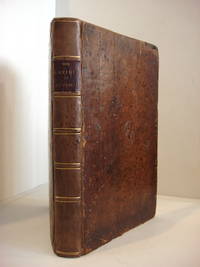
16933937London: Printed for Jacob Tonson 1693. Folio 12-3/4" x 8-3/4". 2 parts in 1 each with a title-page. Each of the satires is preceded by its own half-title and followed by explanatory notes. Orig. speckled calf worn rebacked orig. brown morocco spine label laid back down. Repair to the fore-margin of the title affecting the ruled border and one letter. Tiny bookplate on front pastedown. The first edition of the John Dryden 1631-1700 translation. Wing J1288. Printed for Jacob Tonson unknown books
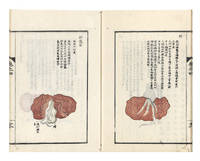
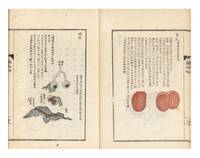
6812Eight full-page drawings & one illus. in the text. 17 folding leaves. 8vo 243 x 165 mm. orig. blue semi-stiff wrappers some dampstaining to upper portion of each leaf. Japan: mid-Edo. Kagawa 1683-1755 a member of the medical family dynasty studied in Kyoto with Ryozan Goto and Jinsai Ito from whom he learned moxibustion and the therapeutic value of the waters of hot springs. Kagawa established the successful Ippondo medical school and was one of the most enthusiastic practitioners of moxibustion of his time. There is another manuscript of this text at Kyoto University attributed to Kagawa. Some of the illustrations are very different. The introductory remarks describe the importance of the precise placement of the moxa on the skin how to measure the placements based on distance from certain bones or joints of the body and the various techniques and occasions for moxibustion applications. Following this the text precisely describes the moxibustion locations on the body and how to locate each one with references to Simiao Sun's classic text Qian jin fang Essential Prescriptions Worth a Thousand Gold Pieces compiled in 650-59. Kagawa lists many diseases and injuries for which moxibustion is appropriate. There is a most interesting section on how to treat unsuccessful moxibustion procedures application of certain ointments etc. The attractive illustrations depict moxibustion loci on an osteological background and loci on the stomach arms legs and feet. As mentioned above there is dampstaining to the upper fifth of each leaf but all the characters remain completely legible. unknown books
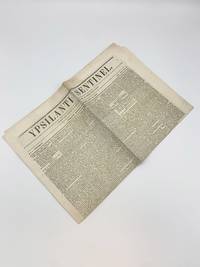
1859403850Ypsilanti MI: C. Woodruff 1859. Newspaper 22 x 16 inches. 4 pp. In fine folded condition. A fine and lengthy report from the west providing details on the gold resources of the country descriptions of the various diggings the amounts of gold taken by various companies and individuals the Gregory Diggings the abandonment of the Platte River washings the constitution convention etc. <br/><br/> C. Woodruff unknown books
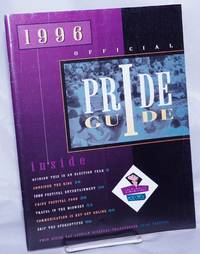
1996261148Minneapolis: GLBT Pride/Twin Cities 1996. Magazine. 104p. 8.25x10.75 inches event schedule maps ads articles news photos services and resources very good program booklet in stapled pictorial wraps. GLBT Pride/Twin Cities unknown books
1963C1354Program for the First Piatigorsky Cup: International Grandmaster Chess Tournament July 2 to 27 1963 48 pages with photographs including photographs of the contestants table and diagrams. Octavo 8 1/2" x 4 1/2" bound in original publisher's spiral binding in blue felt wrappers with black and silver Piatigorsky Cup stamped to cover. Included nine first day tickets for the cup. Signed or inscribed by all the contestants to Mrs Piatigorsky. <br /><br />The Piatigorsky Cup was a triennial series of double round-robin grandsmaster chess tournaments held in the United States in the 1960's. Sponsored by the Piatigorsky foundation only two events were held in 1963 and 1966. the Piatigorsky Cups were the strongest U S Chess tournaments since New York 1927. Jacqueline Piatigorsky was married to cellist Gregor Piatigorsky. One of the strongest woman chess players in the U S and a regular competitor in the U S Women's Chess Championship she designed the cup and was the primary organizer of the tournaments. The prize funds were among the largest of any chess tournament up to that time. Every player was guaranteed a prize and all traveling and living expenses were paid. The First Piatigorsky Cup was held in the Ambassador Hotel Los Angeles in July 1963. The tournament field of eight included players from five countries. the soviet representatives Paul Keres and World Champion Tigran Petrosian finished equal first to share the cup with a score of 8 1/2/14 receiving more than half of the $10000 prize fund $3000 for first. Keres won most of the games in the tournament six but lost twice to Samuel Reshevsky. The Cup was Petrosian's first tournament since winning the 1963 World Championship match with Mikhail Botvinnik and was one of two first prizes he shared in his six-year reign as champion. He was the first reigning champion to play in an American tournament since Alexander Alekhine at Pasadena 1932. After losing the second round to Svetozar Gligoric Petrosian was never in danger the rest of the tournament. The remainder of the tournament field included to Americans Reshevsky and Pal Benko two Argentinians Oscar Panno and Miguel Najdorf and two Europeans Gligoric Yugoslavia and Frank Olafsson Iceland. U S Champion Bobby Fischer decline an invitation after his demand for $2000 appearance fee was refused by the tournament organizers. Gligoric led halfway through the tournament with 4 1/2/7 but scored only three draws in the last seven games and finished fifth behind Najdorf and Olafsson. Petrosian finished the strongest with 5/7 in the second half. Before the last round Petrosian led with 8 points followed by Keres with 7½ and Najdorf and Ólafsson with 7. Both Petrosian and Keres had Black in the final round. Petrosian drew his game against Reshevsky but Keres beat Gligorić to result in a tie for first place with 8½ points each.<br /><br /><b>Condition:</b> Edges sunned inscriptions to front end paper and title else spiral spine cracked else very good. Piatigorsky Cup Committee paperback books
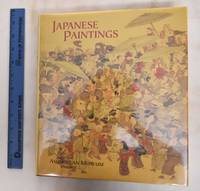
2003179099Oxford: Ashmolean Museum 2003. Hardcover. VG. shelf-wear to lower cover edges corners & textblock. square red boards w/ gilt printing. 254 pgs w/ bw & illustrations. gold & yellow pictorial dustjacket w/ protective plastic cover. Text in English and Japanese. Details 94 pieces; wonderful bright illustrations. Ashmolean Museum hardcover books
2221572<p>First edition. 7" x 9". Original stiff green wrappers stamped in white cord tie oval b/w halftone photograph of water front Tacoma. Illustrated with two fold out b/w panorama views and 17 b/w mounted halftone views on stiff grey papers. Uncommon. Very good.</p><p>Printed by Albertype Co. Brooklyn N.Y.</p> P. A. Kaufer unknown books
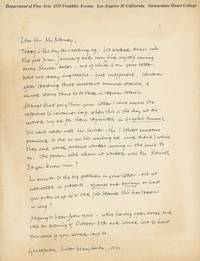
73222A holographic letter on Immaculate Heart College letterhead from the American Roman Catholic religious sister and Pop Art pioneer. Undated it was likely written in the mid-1960s prior to her return to secular life in 1968 as Corita Kent.<br/> <br/>The letter was written in reply to Eugene Anthony "Gene" McNerney Jr. 1899-80 a graduate of the Academy of Fine Arts in Philadelphia who worked as newspaper artist and magazine illustrator before embarking on a distinguished career in the Marine Corps. Attributing the delay in responding to her hectic schedule she writes "We're not really ungrateful - just inefficient . after teaching three successive summer sessions it almost seems tame to be back in regular session." Kent also makes reference to an ad she placed in Graphis Annual and two individuals associated with her work with the Department of Fine Arts concluding with an invitation to an open house and sale.<br/> <br/>Kent served as the chair of the Department of Fine Arts at Immaculate Heart College in Los Angeles. After the Second Vatican Council she transformed the college's annual Mary's Day procession into a community celebration which was part of the sister's campaign to bring secular people together. During this time Kent's work became increasingly political addressing events such as the Vietnam War and humanitarian crises. Incorporating brilliant colors and bold shapes her art was her activism. Tensions between the order and church leadership were mounting with the Los Angeles Archdiocese criticizing the college as "liberal" and Cardinal James McIntyre labeling Kent's work as "blasphemous" which hastened her departure from the order. Most sisters followed suit and the Immaculate Heart College closed in 1980. Kent continued to create spiritually-informed artwork primarily silkscreen or serigraphy which played an important role in the renaissance of the poster as a medium of communication and continues to influence graphic design well into the 20th century.<br/> <br/>One page 8 ½" x 11" folded into thirds for mailing. Some uneven toning; otherwise very good. unknown books
1998121220Moskva: Pamyatniki Istoricheskoi Mysli 1998. Hardcover. VG clean and tight but museum ex-lib. copy. Peach decorated boards with Cyrillic lettering; 219 pp. with 55 color and bw illustrations. Text in Russian. Russian chapbooks from the 17th to 19th centuries. Lovely illustrations and thorough text. Pamyatniki Istoricheskoi Mysli hardcover books
38846N.p. New York ca 2003. Handbill 11" x 8-1/2" printed in colors on both sides of a single sheet. Mild edgewear; Near Fine. Recto is a graphic depicting Latin American workers floating face-down in a glass of "Killer Cola." Text on verso attacks Arnold Schwarzenegger and Peter Ueberroth both candidates in the 2003 California gubernatorial campaign for their affiliations with the Coca Cola Corporation. Accuses Coca Cola of using murder and intimidation to suppress labor organizing activities in Latin America and of poisoning Indian water supplies with insecticides; also states that ".Coke's aggressive marketing of nutritionally worthless and damaging products to children through tie-ins with schools and Harry Potter movies hasencouraged the obesity and diabetes epidemics. unknown books
1636D6036Rome: Typis S. Cong de propag: Fide 1636. Hardcover. Very Good. 4to 230 x 170mm. xxiv 338pp. ii. Illustrated throughout with woodcut tables and charts of Egyptian characters and hieroglyphs. Contemporary vellum; intermittently browned occasional spots. <br/><br/>Father Athanasius Kircher was a 17th-century German Jesuit scholar and polymath who published around 40 works most notably in the fields of oriental studies geology and medicine. He was heralded as possessing the secret of deciphering hieroglyphics and was widely regarded as the physical embodiment of all the learning of his age. He had over 760 correspondents including scientists Jesuit missionaries and world potentates and wrote about an enormous range of interests ranging from optics to music from Egyptology to magnetism. Perhaps best known of his correspondents is Jan Marek Marci of Kronland 1595-1667 for sending Kircher a mysterious illustrated manuscript written in an unknown script famously known today as the Voynich Manuscript. In 1635 Kircher began to write his book Prodromus Coptus Introduction to Coptic Language and in the autumn of 1636 the book was printed. Kircher saw the ancient languages as an essential foundation for any pious philosophy. Kircher envisioned Rome as a unique center within to unlock the mysteries of Hermetic knowledge inscribed on the obelisks. The project of restoring Egyptian wisdom entailed nothing less than an effort to renovate the lost arts of communication that linked divine and human languages. Unfortunately while in other disciplines he made valuable discoveries his explanation of hieroglyphs was absolutely incorrect. We can probably explain it by his passion that might have sometimes blinded his reasoning. Yet Kirchers Prodomus remains an important study from a most respected scholar. Brunet III 668; Caillet II 5790. Typis S. Cong de propag: Fide hardcover books
1897WRCAM43100Circle City Alaska and on a steamer between Juneau and Seattle 1897. 12pp. typed on folio sheets of onion-skin paper plus three hand-drawn maps. A total of some 6750 words. Stapled at upper edge. Three horizontal folds. Near fine. A very interesting pair of typed letters from a young man in Alaska during the Klondike Gold Rush. The anonymous author wrote these two letters to his parents describing his journey overland and by water to the Birch Creek mining district his experiences mining for gold and his decision to go into business as a merchant. The letters are written in a detailed style that indicates an educated author. They include three manuscript sketches showing the routes traversed in Alaska and provide a great deal of information about the writer's experiences in the Klondike. These letters are typed but they were likely originally handwritten by the author who later typed them and included his manuscripts maps and sketch in order to send them to his family when he arrived in Seattle or San Francisco. <br> <br> The letter dated Nov. 10 begins with a description of the writer's boat journey from Juneau to Dyea which was a popular disembarkation point for the Chilkoot Trail to Dawson City a center of the gold rush. He arrived at Dyea on April 23 and notes that "dinner at the Dyea post was the last square meal I have had up to the present date November 10." After dinner he loaded his equipment on horses for the journey inland: <br> <br> "My outfit consisted of about 1000 lbs. of provisions guns amunition sic tools for boat building a whip-saw jack-plane cross- cut saw hand saw rip saw hatchet hammer draw knife brace and bits square etc. and clothing blankets tent sheet-iron stone and in fact I think I had about every thing that ever went down the Yukon. Altogether my outfit weighed about 1302 pounds which is much more than is usually taken into the interior." <br> <br> The author spent the next several days transporting his provisions between Dyea and Lake Linderman and he includes in his letter a sketch of the route from Dyea through the valley to the lake noting several camps along the way as well as a sketch of his sled. <br> <br> The second letter dated Feb. 17 1897 was written on board the steamer Al Ki between Juneau and Seattle. He continues the narrative of his trip inland explaining that he arrived at Lake Linderman on May 14. A month later on June 14 the author and a partner their canoe loaded with provisions departed for Circle City which they reached on June 29. There they stored most of their provisions and headed for the mines in the Birch Creek region. Mining was at its height in the middle of the summer but rather than seek out a claim on their own the author and his companion Jim Wishard decided to work for other miners earning some $10 a day. He describes working at mining from 7 p.m. until 6 a.m. the long days making the task of working at night possible. In August the author bought a claim in the Harrison Creek region but decided to forego mining in favor of establishing himself as a merchant: <br> <br> "From what I could see the miners are poorly supplied with food by the two companies and there is always a great demand for luxuries; that is something out of the ordinary and even the necessaries of life. I made up my mind last summer that I could do as well bringing in some food - in other words being something of a merchant - as in any other way to start and having a good knowledge of the country and keeping my eyes open I would undoubtedly have many good chances for speculation. It is a conceded fact that one cannot lose money taking in such an outfit. Everything brings in an average profit of 400 per cent. over the original cost and whatever any one has to sell in the 'grub' line is in demand." <br> <br> The author then describes his construction of a small cabin in Circle City and his decision soon afterward to leave Alaska for the winter. He describes the trip to Dyea undertaken in January and the hardships of winter overland travel in Alaska. Included are some very practical tips: <br> <br> "In crossing water when it is thirty or forty degrees below zero one should dip his moccasins into the water very quickly taking them out before the moccasin is wet through. They will then freeze in a mass on your feet and will serve the same purpose as rubber boots. You can then walk right through water though I would not advise any one to tempt Providence too much." <br> <br> The letter concludes with a description of a recently discovered gold strike called "Bonanza" not far from the Forty Mile camp. The author describes the high hopes around the strike and includes a manuscript map of the region indicating the location of a claim in which he himself has invested. He hopes that his mine will bring him some wealth but reiterates his belief that the way to wealth in the Yukon Gold Rush is by supplying miners with goods and that he is on his way to Seattle and San Francisco to buy provisions to resell. hardcover books
1814D1409Paris: Gide Fils 1814. Hardcover. Very Good. Red paper over boards ruled and lettered in gilt on spine; 4 volumes 8vo 5 x 8.25 inches; pp. lxxx 432; 4 494; 4 434; xv 1 139 104 tables; all volumes with half-title page and title-page. Spine tips and corners lighly chipped; boards faintly rubbed; a little faint foxing but overall nice and clean. An excellent working set. <br/><br/> Gide Fils hardcover books
6006Numerous fine woodcut illus. 18 of which are finely handcolored. 48 irregularly paginated; 33; 39; 26; 28 3 folding leaves. Five vols. 8vo orig. wrappers some worming in upper margin of each vol. orig. block printed title label on each upper cover new stitching. Tokyo: Mankyudo Hanabusa Heikichi Preface dated 1810. First edition of one of the three most important early Japanese books on the history and technique of Chinese and Japanese acupuncture. This work is very different from all earlier Chinese and Japanese books on the subject. For the first time the illustrations are finely and realistically rendered and are anatomically accurate clearly influenced by European medical works which had circulated in Japan. Another important aspect of this book is that eighteen of the woodcuts each depicting organs of the body are finely handcolored. Also the body is described in full from head to foot and is not entirely dependent on the fourteen meridians. Kosaka was a court physician of the fiefdom of Kameyama who had studied under the famous physician Motonori Taki 1731-1801 who was himself a member of a distinguished family of doctors. The publisher of this work was the exclusive publisher for the government sponsored medical school. Very good set. unknown books
7009Numerous fine woodcut illus. 18 of which are finely hand-colored. 48 irregularly paginated; 33; 39; 26; 28 folding leaves 5 folding leaves of ads. Five vols. 8vo orig. blue wrappers wrappers a bit worn occasional minor worming touching text orig. block-printed title label on covers new stitching. Tokyo: Mankyudo Hanabusa Heikichi Preface dated 1810. First edition of one of the three most important early Japanese books on the history and technique of Chinese and Japanese acupuncture. This work is very different from all earlier Chinese and Japanese books on the subject. For the first time the illustrations are finely and realistically rendered and are anatomically accurate clearly influenced by European medical works that had circulated in Japan. Another important aspect of this book is the 18 woodcuts each depicting organs of the body that are finely hand-colored. Also the body is described in full from head to foot and not entirely dependent on the fourteen meridians. Kosaka was a court physician of the fiefdom of Kameyama and had studied under the famous physician Motonori Taki 1731-1801 who was a member of a distinguished family of doctors. The publisher of this work was the exclusive publisher for the government-sponsored medical school. Fine set. unknown books
185772639New York: D. & J. Sadlier & Co 1857. First Edition. Hardcover. Good. Traces the history of Christianity in China from its earliest documented appearance with St. Thomas and the missionary rush sparked by the discovery of the Cape of Good Hope in 1488 to the Manchu-Tartar Dynasty in the sixteenth century. Abbe Huc a French Catholic priest Lazarite missionary and traveler became famous for his accounts of Qing-era China Mongolia and Tibet which was largely unknown at the time. He and his companion Joseph Gabet were the first Europeans to reach Lhasa since Thomas Manning in 1812. 358 p. and 348 p. with publisher's ads. Octavo two volumes. Ex-19th century library Nevada City Free Public Library with a bookplate to each rear pastedown two small ink date stamps and a small label to each front endpaper and a gilt-stamped accession number and label shadow to each spine. It appears a pocket was neatly removed from each pastedown. Both bindings are quite sound. The spines are sun faded with some minor bumping to the corners and tips. Scarce. D. & J. Sadlier & Co hardcover books
187828959Boston: Frank Wood Printer 1878. 34pp plus portrait frontis and original tissue guard of John Everitt who "sailed for Valparaiso from New York.to be associated with the General Superintendent at the Mines"; and large Bird's-Eye View 32" x 16" and Topographical Plan of the mines. Original printed wrappers stitched. Wrappers chipped at edges and reinforced at the spine with tape. Some chipping to several blank margins. Good.<br/><br/> The Company based in New York issued this Prospectus which includes a detailed report from its Mining Engineer W.A. Holcomb. Flagler its President was a major capitalist during the last half of the 19th century; he formed the National Tube Company and owned one of the predecessors to U.S. Steel. <br/>OCLC 1013744777 1- U IL as of November 2020. Frank Wood, Printer unknown books
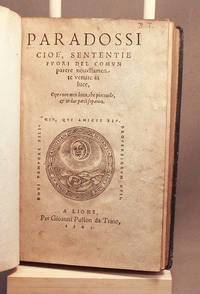
15436296Lyon: per Gioanni Pullon da Trino" i.e. Jean Pullon dit de Trin 1543. First edition. Very Good/Exquisitely rare first printing of Ortensio Lando's most famous book his first in a modern language that in later editions and in translations became a 16th-century best seller. Lando's name does not appear on the title page or anywhere in the book except in code. His real name shows up on no edition published in the 16th century. A dedicatory leaf after the colophon attributes the text to "M.O.L.M" interpreted generally as "Messer Ortensio Landi Milanese." More cryptically there is a phrase printed after the telos "SVISNETROH TABEDVL" mirror writing for "ludebat Hortensius" Ortensio has played. It is serious play. The Paradossi undertakes in the key of popular "world upside down" folklore to prove black what is commonly accepted as white. For instance it is better to be poor than rich better ugly than handsome better drunk than sober and so on. Biographical sketches of Lando are remarkable for how little information about him is available. Peer of Aretino and Doni friend to Etienne Dolet later incinerated for heresy he was a non-believer who nevertheless took Augustinian orders and later deserted them. Member of a prestigious literary club L'accademia degli elevati he was above all an outsider. All of his books landed on the Index of Prohibited Books and "I paradossi" in particular was widely banned and copies of it were confiscated. Probably the first book printed by the obscure Italian printer working in Lyon Giovanni Pullone da Trino later called "Jean Pullon de Trin". Following Pullon's modest press run the text was quickly taken up and reprinted badly by Bindoni and others in Venice twice in 1544 1545 1563 1594 etc. and translated into Latin into French by Charles Estienne 1553 and into English 1596. If you Google "Jean Pullon" you will get dozens of pages advertising pull-on jeans. . Octavo 17cm; 112 leaves signed A-O8. Printer's device on title page Ferraris 1 showing a human-faced moon in the sky reflected on the surface of the land. Bound in later 18th-century or 19th-century dark green leather in neoclassical style with gilt central losenge within gilt borders on both boards; gilt-tooled spine with leather title label. Joints reinforced but tender; light marginal stain along bottom edge; O7 torn and repaired remains of tape. Early marginalia trimmed close. Later c19 notes in French on endleaves. Pages not bright. All in all a very good copy of a very rare book. References: Ferraris "Giovanni Pullone e altri stampatori trinesi a Lione" in "Trino e l'arte tipografica nel XVI secolo." 2014 #1; USTC 116008 BM Italian 399; Grendler "Critics of the Italian World" #8; Gültlingen "Bibliographie des livres imprimés à Lyon." vol. X p. 7; Bongi "Catalogo delle opere di M. Ortensio Lando" p. xxxvi "eseguita in bel carattere rotonde cui la originalità e la bellezza danno il pregio sopre le ristampe"; not in Adams; not in Baudrier. per Gioanni Pullon da Trino" (i.e., Jean Pullon dit de Trin) hardcover books
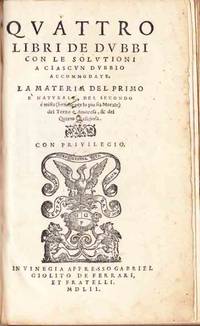
15526331Venice: Gabriel GIolito de' Ferrari 1552. First edition. Very Good/The title promises four sets of "questions and their solutions" and indeed that was the plan. Lando wrote Q&A on four topics: medical questions including dietary and aging functions ethical questions questions about religion and questions about love and sex. It was the love and sex part that raised the eyebrows of the censors and neither Lando or his publisher Giolito could get permissions to print it as the book was going to press. As Giolito himself declares in a postscript to the reader: "I promised you four books of doubts but since I haven't yet been granted a license for the doubts about love I'm forced to give you only three. Be well and enjoy as much of the book as I could give you." The license came later and the text appeared in later editions. This unfinished text with its publisher's apology represents a fascinating birthmark on the 16th-century book trade. The Q&A ranges over hundreds of topics calling upon the author's medical training much involved with the humors and temperaments associated with various organs objects and creatures his classical erudition and his training in the Augustinian order. The three sections together provide comprehensive insight into 16th century medicine and popular religious and moral thought. The odd matter of two versions of the dedication page leaf A ii is not easily explained. We suspect with some justification that Lando sought patronage for the same work in different locations knowing that Protestant Germany rarely spoke with Catholic Italy and vice versa. He might have found different backers in different markets. We know that to be the case with at least one other book of Lando's the "Sermoni Funebri" 1549 where some copies are dedicated to Fugger and others to Niccolo degli Alberti. That case is known and recorded. We find no recorded instance of the alternate dedication of "Quattro libri dei dubbi" to Fugger and no record of the author being identified by signing the dedication letter in any other copy. The "Quattro libri de dubbi" was quickly translated into French Lyon 1558 and by William Painter into English entitled "Delectable demaundes and pleasaunt questions with their severall aunswers." 1566 and again 1640. . Octavo 16 cm; 318 2 pages. Woodcut device on title page and on last page. Woodcut initials. Bound in recent vellum in period style yapp edges titled in ink on spine. Early 20th-century bibliographical note bound in. Marginal annotations in contemporary hand. Leaf a ii the dedicatory letter present in two states the cancel addressed to Johann Jakob Fugger closing with Lando's name and the original leaf addressed to Christoph Mielich and not signed as usual. Small perforation in the cancel affecting a word. Occasional light stains darker on last leaf. References: Bongi I 368; Melzi II 391; BM Italian 377 1556 ed.; Fontanini II 117. Gabriel GIolito de' Ferrari hardcover books
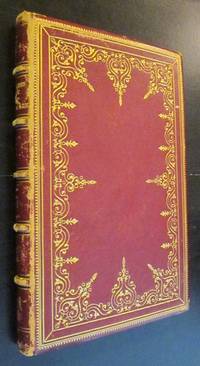
1828D2439Paris: Firmin Didot pour Lami Denozan 1828. First Edition. Hardcover. Very Good. 8vo 210 x 132mm. viii cxlvi 48pp. notes and glossary. Illustrated with hand-colored engraved title with marginal vignettes of female personifications and muses by Richard Parkes Bonington. Illustrated throughout with 10 half-page lithographs printed on chine-collé carefully hand-colored heightened in gilt and mounted; six are by Richard Parkes Bonington and four are by Henry Monnier and 15 decorative initials highlighted with colors inspired by ornaments found on the Books of Hours printed in the fifteenth and sixteenth centuries. 19th-century full red morocco decoratively tooled in gilt five raised bands gilt doublures marbled endpapers all edges gilt; lightly foxed throughout miniatures remain bright and fresh; spine slightly scuffed. Armorial bookplate of J. Austin Stevens Junior to front pastedown. First Edition of this rare and unusual book OCLC locates only four copies all in German libraries. Férdinand Langlé littérateur dramatist and occasional necromancer focused his literary interests on the nostalgic and the romantic. In 1828 he edited Les Contes du Gay-Sçavoir a witty collection of medieval ballads and fables. The text is printed in Gothic characters and illustrated to imitate the style of medieval manuscript illumination; it is followed by endnotes and a glossary printed in Roman type. The major illustrator of the work Richard Parkes Bonington was an English Romantic landscape painter who also worked in lithography. He was a close and admired friend of painters Eugene Delacroix and Antoine-Jean Gros. Gordon Ray speaking of Bonington says his importance in the development of lithography can hardly be overstated.His designs for Vues pittoresques de lEcosse and Contes des Gay-Sçavoir are by no means negligible. Boningtons career as a lithographer was short but splendid. - Art of the French illus. book pp. 173 & 176. Fine fresh and bright rare colored copy of this nostalgic work on the medieval period. Brunet III 819; Carteret III p. 172 livre tres rare; Curtis 54-60; Ray 114 <br/><br/> Firmin Didot pour Lami Denozan hardcover books
1762249483Paris: de l'Imprimeries de H.L. Guerin & L.F. Delatour 1762. 42 pp. 7 full page engraved plates. 1 vols. Folio 18 x 12 inches. Contemporary drab wrappers uncut . Fine. 42 pp. 7 full page engraved plates. 1 vols. Folio 18 x 12 inches. From Description des arts et métiers. de l'Imprimeries de H.L. Guerin & L.F. Delatour] unknown books
1976122182Milano: Rizzoli Editore 1976. Hardbound. VG/VG in VG slipcase. A large weighty book. Red maroon cloth with color pictorial glossy dustjacket all contained in a custom slipcase. Appx. 217 pp. 138 mostly color plates tipped-in to the text portion and 50 full sheet 13.5" x 16" color plates. A most impressive book both by it's content and it volumetric displacement. Vital in the study of Caravaggio. Another version of this appears to have been printed in 1971 and this edition has a few extra illustrations at least and likely some additional or revised text. Text is in Italian. Transit mass would be 272 ounces. A stunning production. Rizzoli Editore hardcover books
1961129183Milano: Rizzoli Editore 1961. Hardbound. VG/VG- light wear to extremities of dj. in VG slipcase. A large weighty book. Green cloth with color pictorial glossy dustjacket all contained in a custom slipcase. Appx. 105 pp. 115 mostly color plates tipped-in to the text portion and 42 full-sheet color plates many of them folding. A most impressive book both by its content and its volumetric displacement. Text is in Italian. Transit mass would be 272 ounces. A stunning production detailing the work of Carpaccio in the Church of San Giorgio Degli Schiavoni. Rizzoli Editore hardcover books
1977122184Milano: Rizzoli Editore 1977. second edition. Hardbound. VG/VG- small rip in lower rear dustjacket in VG slipcase. A large weighty book. Green cloth with color pictorial glossy dustjacket all contained in a custom slipcase. Appx. 105 pp. 115 mostly color plates tipped-in to the text portion and 34 full sheet 13.5" x 16" color plates many of them folding. A most impressive book both by its content and its volumetric displacement. Text is in Italian. Transit mass would be 272 ounces. A stunning production detailing the work of Carpaccio in the Church of San Giorgio Degli Schiavoni. Rizzoli Editore hardcover books
1953002951Paris: Les Hautes Etudes 1953. First Edition. Wraps. Very Good Plus/Fair. 8vo. viii 3 517 1 pp. Short closed tear of upper spine wraps. Otherwise tight clean a few leaves still uncut. Glassine torn along the spine toned by well-preserved elsewhere. <br/><br/> Les Hautes Etudes paperback books