7 654 résultats
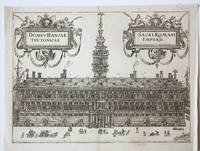
65896Appeared in the 1612 edition and later of Guicciardini's ""Beschryvinghe of all the Netherlands; ."" this plate numbered as ""8"" on the bottom right represents the Hanzehuis in Antwerp the headquarter of the Hanseatic League. In front of the building on the square figures walking riding horses and carriages. Two large ships at each side of the building.Inscribed above in two different cartouches: ""DOMUS HANSAE / TEUTONICAE"" and ""SACRI ROMANI / IMPERII"". Guicciardini Illustratus Antwerpen-Hanzehuis 2.2 p. 134. Copper engraving on paper with margins; plate mark: 238 x 320 mm total: 261 x 346 mm; state II/2; two pages joined together in the middle. Foolscap watermark. unknown
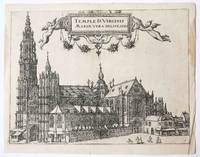
65894Appeared in the 1612 edition and later of Guicciardini's ""Beschryvinghe of all the Netherlands; ."" this plate numbered as ""6"" on the bottom right represents the Cathedral of our Lady in Antwerp. Some citizens on the bottom right are conversing with a cripple sitting in front of the church.Titled above in a panel held by two angels ""TEMPLE D. VIRGINIS / MARIAE VERA DEINEATIO"". Therefore this is the second version of the plate Antwerpen-Kathedraal 3.2 in Guicciardini Illustratus p. 137 which appeared at first in the 1612 Blaeu Dutch edition until Janssonius' in 1648. Copper engraving on paper with margins; plate mark: 237 x 318 mm total: 264 x 332 mm; two pages joined together in the middle. Light stain on the right and left margins; folding on bottom right corner. On the bottom left a small worm hole. Countermark on the right. unknown
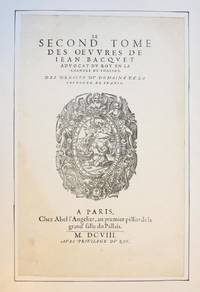
61707Title page to the second volume of works by Bacquet Jean 15.-1597 with large oval printer's device of Abel Langelier or L'Angelier 1553-1610 representing a shepherd kneeling in front of a fire and an angel coming from the sky. On the frame: 'SACRUM PINGUE DABO NEC MACRUM SACRIFICABO'. It might hint to Abel one of the sons of Adam and Eve as the first name of the publisher is Abel.Allegorical figures populate the outer frame. Monogrammed in a shield beneath the representation.Date of print: 1608 published in Paris. Letterpress and wood engraving on laid paper; total: 352 x 222 mm; despite a light pink shadow on the top left margin in good condition mounted on cardboard decorated with a line frame in black ink. unknown
2017__1433826534Amer Psychological Assn 2017. Hardcover. New. 1st edition. 1168 pages. 11.50x9.00x3.50 inches. Amer Psychological Assn hardcover
1812ZB421672Paris: Imprimerie imperiale 1812. . pour servir de suite au Traite pub. sur cette matiere; avec une notice historique et chronologique du corps sucrant; par A. A. Parmentier first edition iv 452 pp library book plate and markings later quarter leather rubbed and lightened at spine front hinge cracked after title and blank becoming loose general age toning with occasional age spotting overall a sound good copy; Parmentier eponymous with potato dishes in French food circles presents the further results of his work on developing a palatable sweet syrup from grapes to replace the cane sugar made scarce by the English blockade. - If you are reading this this item is actually physically in our stock and ready for shipment once ordered. We are not bookjackers. Buyer is responsible for any additional duties taxes or fees required by recipient's country. Photos available upon request. Paris: Imprimerie imperiale, hardcover
17227302Londini London: Impensis Richardi Sare . 1722. Folio pp. xliv 468. Parallel Greek and Latin text contemporary panelled calf neatly rebacked retaining original spine corners and end-papers renewed. Nineteenth century book label: Bishopric of Cornwall. Second century Christian author probably martyred under Marcus Aurelius. Styan Thirlbys edition is described by Dibdin as splendid and carefully executed although Dibdin is cautious regarding Thirlbys achievements as editor: ingenious but vain seems to be his opinion. Book Impensis Richardi Sare [...] unknown
20022091502133504758Soshisha 2002. Soft Cover. Fine. The book is in fine condition. Soshisha paperback
192921098London: Oxford University Press 1929. 1st. Hardcover. Very Good/Good. 10.0x6.5x0.4in. type notes tipped-in to back endpaper dust jacket edges internal reinforced with masking tape notes written on back flap. Dust jacket in clear protector. <br>Illustrated with 23 plates containing 135 figures. <br>36pp 0.68lb 10.0x6.5x0.4in Oxford University Press hardcover
0259520330.Gpaperback. Good. Access codes and supplements are not guaranteed with used items. May be an ex-library book. paperback
1965ZB584440Bologna: Zanichelli 1965. Bologna: Zanichelli 1965; 12mo xxx 226 3 pp. main text face-to-face Latin and Italian introduction and notes in Italian only issued as Classici latini 1; paper wrappers rubbed light general age toning sound and good. - If you are reading this this item is actually physically in our stock and ready for shipment once ordered. We are not bookjackers. Buyer is responsible for any additional duties taxes or fees required by recipient's country. Bologna: Zanichelli, unknown
198110274Salt Lake City: Northwest Pipeline Corporation 1981. Revised September 30 1981. Spiral bound. Very good. Tall Quarto 9-1/4"x11-1/4"165 pp. figures diagrams Maps illustration of artifacts. Northwest Pipeline Corporation unknown
1334717109.Gpaperback. Good. Access codes and supplements are not guaranteed with used items. May be an ex-library book. paperback
1334403716.Gpaperback. Good. Access codes and supplements are not guaranteed with used items. May be an ex-library book. paperback
196653678Cambridge: W. Heffer & Sons Ltd 1966. Mixed edition set. Hardcover. Very good /very good. Large octavo. 3 volumes. xix 1 250; xxviii 368; xxxii 430pp. Indices. A very nice mixed set 1st & 2nd printings uniformly bound in original brown cloth spines lettered in gilt. Dust jackets. Illustrated with numerous photographic plates drawings maps & charts some folding. Dealer's rubber stamp on front free endpapers and extremities of dust jackets lightly rubbed otherwise near fine.<br /> <br /> Contents: The study of Chinese art and archaeology in China -- The exhibition of archaeological finds in China -- Tun-huang studies in China -- Animal styles in prehistoric and Shang China -- Floral patterns in Chinese decorative art -- Yin-yang wu-hsing and Han art -- The inconstancy of character structure in Chinese writing -- Numerals in ancient China -- Appendix I. Su Ying-hui : Tun-huang studies in the past seventy years -- Appendix II. Shih Hsio-yen : new problems in Tun-huang studies -- Appendix III. Zhang Zheng-lang : an interpretation of the divinatory inscriptions in early Chou bronzes -- Appendix IV. West China Union University Museum. W. Heffer & Sons Ltd hardcover
197132742Athenai: Bibliotheke tes Boules ton Hellenon 1971. First edition. Black cloth stamped in gilt. Corners slightly bumped else fine copies in very good soiled dust jackets. 262; 275 pp. Illus. with 608 facsimiles. 4to. Prologos Vasileiou I. Krapsite Vassilios I. Krapsitis. "Incunabula and Publications of the 15th and 16th c." in the Library of the Greek Parliament. Warmly inscribed by Vassilios I. Krapsitis Secretary General to the Parliament and author of the preface to the late book dealer and Latin American scholar Maury Bromsen. Text in Modern Greek. Preface also in English. Primarily facsimiles of incunabula and early printed books of the 15th and 16th centuries. 418 pages of facsimiles 66 pages of bibliographical descriptions in Latin and Greek 16 pages of indices 6 pages of introduction and preface. Bibliotheke tes Boules ton Hellenon hardcover
195730288<p>HBDJ 1957 STATED First edition. Very near fine in like VERY NF dust jacket with small edge crease. A bright clean and well preserved copy. ; 45 pages Reinforced Yellow cloth boards with red vignette front panel </p> NY:: Dutton e.p. hardcover
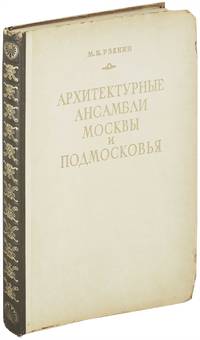
1950251371950. Hardcover. Very Good. Hardcover. Title publishing information and all text in Russian. Very good with tan cloth spine decorated with gilt designs and raised bands. Beige paper covered boards with gilt title in Russian to front cover and embossed illustration. Chipping and wear to edges of boards and corners. Browning to edges of boards. Clean bright interior which includes 150 black and white plates of Russian architecture and 77 pages of description. Quarto. 232 pages. ARCHI/072611. hardcover
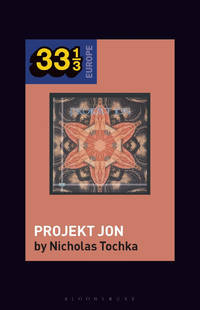
B9781501363078Hardback. New. <b>As market reforms and migration transformed Albania in the early 1990s Ardit Gjebrea began mixing traditional folk music with world music and Italian pop. The resulting album <i>Projekt Jon </i>1997 provided a new model for song—Western and cosmopolitan yet firmly rooted in the fertile soil of the nation—against a backdrop of deepening political uncertainty about the very future of Albania.</b> The Ionian Project announced itself with the frenetic beating of the <i>daullë</i> and the traditional cries of Albania’s highland shepherd. This sprawling collaboration between singer-songwriter Ardit Gjebrea folk singer Hysni Zela producer Paul Mazzolini and a team of crack studio musicians in Italy had an outsized ambition: to transcend the small postsocialist nation-state’s borders imaginatively crafting through sound a new home in Europe for its citizens. But as Gjebrea prepared to launch <i>Projekt Jon</i> violence prompted by the collapse of widespread pyramid schemes threatened to tear Albania apart. And for the intellectuals concerned about growing cracks in the symbolic foundations of the Albanian nation-state the album came to serve as a referendum on the nature of postsocialist citizenship. hardcover
1630266647.Ghardcover. Good. Access codes and supplements are not guaranteed with used items. May be an ex-library book. hardcover
19582091502135408866Dainishobo 1958. Soft Cover. Fine. Number of books: 1 Dainishobo paperback
19582110502150301281Dainishobo 1958. Soft Cover. Fine. Volume: 1 Dainishobo paperback
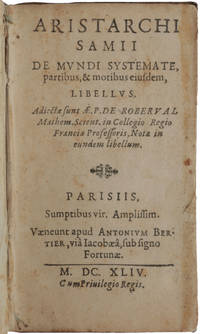
16445431Paris: Antoine Bertier 1644. First edition. <p>First edition exceptionally rare of Roberval's cosmology in which he expresses covertly his support for Copernicus and also formulates for the first time the law of universal attraction - that any two material bodies in the universe attract each other. This principle is normally ascribed to Robert Hooke who published it three decades later and to Newton in the Principia 1687.</p>. <p>THE LAW OF UNIVERSAL ATTRACTION</p> . <p>First edition exceptionally rare of Roberval's cosmology in which he expresses covertly his support for Copernicus and also formulates for the first time the law of universal attraction - that any two material bodies in the universe attract each other. This principle is normally ascribed to Robert Hooke who published it three decades later and to Newton in the Principia 1687. Roberval 1602-75 was one of the most brilliant members of Mersenne's circle. He developed indivisibles independently of Cavalieri invented an original method of drawing tangents and solved many of the problems on the cycloid that were formulated and solved by Pascal two decades later. However since almost nothing of his work was published in his lifetime he was for long eclipsed by Fermat Pascal and above all by Descartes his irreconcilable adversary. In fact Roberval himself published only two works the Traité de mécanique 1636 and the Aristarchi offered here; several of his other works appeared posthumously in the Divers ouvrages de mathématique et de physique 1693 but many remain unpublished even today. "Roberval's positivism appears in a particularly nuanced form in the book De mundi systemate of 1644 where he claimed to have translated an Arabic manuscript of Aristarchus to which he had added his own notes all of them favorable to the author. Yet he did not adhere to the system of Aristarchus to the exclusion of those of Ptolemy and Tycho Brahe. In the dedication of the work Roberval wrote: 'Perhaps all three of these systems are false and the true one unknown. Still that of Aristarchus seemed to me to be the simplest and the best adapted to the laws of nature.' It is with this reservation that Roberval expressed his opinion on the great system of the world the solar system the minor systems planetary the motions of the sun and the planets the declination of the moon the apogees and perigees the agitation of the oceans the precession of the equinoxes and the comets. Despite this reservation Roberval appeared convinced of the existence of universal attraction which-under the inspiration of Kepler-he put forth as the foundation of his entire astronomy: 'In all this worldly matter the fluid of which the world is composed according to our author and in each of its parts resides a certain property or accident by the force of which this matter contracts into a single continuous body'" DSB. Like Copernicus Aristarchus ca. 310-230 BCE maintained that the Earth rotates on its axis and revolves around the Sun. However Aristarchus's work has not survived and the Arabic manuscript which Roberval claimed to have translated almost certainly did not exist. Roberval uses it as a cover to express his support albeit nuanced for heliocentrism still a dangerous idea at the time. OCLC lists Cornell Huntington and Linda Hall in US. No other copies in auction records.</p> <br /> <p>"Gilles Personne was born in the village of Roberval near Senlis in 1602. Nothing is known about his early education; his father was a poor farmer or farmworker and the young mathematician who would later add 'de Roberval' his surname seems to have led the peripatetic life of an impoverished student passing through several universities and alternately studying and teaching. In 1628 he settled in Paris; there he got to know Mersenne who recognised his talents and encouraged him to work on the problem of the curve known as the 'trochoid' 'roulette' or 'cycloid.' In 1632 Roberval was given a teaching post at the Collège de Maître Gervais; two years later he obtained a more eminent position the Ramus chair of mathematics at the Collège Royal. He would remain in this professorship for forty-one years - a permanent fixture as it were of Parisian intellectual life - until his death in 1675. But the peculiar terms on which holders of this Ramus chair were appointed had a very negative influence on both his work and his later reputation. The chair was tenable for a period of three years; at the end of that time it was opened to a public competition in which anyone including the incumbent could apply for it. Candidates were required not only to lecture but also to demonstrate theorems and solve problems put to them by all comers. As a result the practice grew up of the incumbent trying to ensure his reappointment by proposing problems which only he could solve. Whatever were the most advanced discoveries Roberval was making at any time therefore he had an incentive to keep them secret so that he could use them to confound his competitors on these triennial occasions. One consequence was that most of his important work in his special field - geometry - remained unpublished in his lifetime. And another consequence was that Roberval would more than once become embroiled in disputes about precedence insisting that he had made key discoveries long before they were published by others; in 1646 for example he would make bitter accusations against Torricelli alleging that his analysis of the cycloid had been derived in an underhand way from Roberval's unpublished work. Even when he did allow some of his work to circulate he favoured a method of publication that was both limited and carefully monitored. As the English mathematician John Pell would later recall 'many yeares agoe some pieces of Mr Roberval were published after the old fashion. That is they were not given to a Printer; but any man that would pay for the transcribing might have had a coppy of them.'</p> <br /> <p>"Roberval was by all accounts a prickly character quick to take offence and with a high opinion of his own worth. As those were also the most prominent characteristics of René Descartes it is hardly surprisingly that a fierce enmity quickly sprang up between them. Roberval was almost ostentatiously unimpressed by Descartes' 'Géométrie' one of the essays published with his Discours de la méthode in 1637; his cool and critical comments transmitted to the author by their mutual friend Mersenne elicited an angry reaction. Relations between them were further soured by Descartes' quarrel with Fermat about the construction of tangents in 1638 in which Roberval became one of Fermat's leading defenders; not long afterwards Descartes accused Roberval of purloining his own ideas about the cycloid. Meanwhile Mersenne himself remained on the best of terms with both of these disputants. Indeed he seems to have had not only a deep admiration of Roberval's mathematical talents - he described him as scarcely inferior to Archimedes - but also a real personal fondness for him. Mersenne made a special effort to promote the writings of this far from prolific author: he added Roberval's brief treatise on mechanics at the end of book 3 of his own Harmonie universelle Paris 1636; he included material from the Latin version of that treatise in his compilation of 1644 Cogitata physico-mathematica; he encouraged and assisted the publication of Roberval's astronomical work Aristarchi Samii de mundi systemate libellus in 1644; he also reprinted that entire work in his own later compilation of 1647 Novarum observationum . tomus III. And throughout his own writings Mersenne referred to Roberval in terms both laudatory and affectionate calling him simply 'our geometer' - 'Geometra noster'" Malcolm pp. 157-8. </p> <br /> <p>"In 1644 Gilles Personne de Roberval published a small cosmological treatise entitled Aristarchi Samii de Mundi Systemate partibus & motibus eiusdem libellus. The book is attributed to the ancient Aristarchus of Samos and Roberval claims it to be an annotated translation of a recently recovered Arabic manuscript . Roberval tells the reader that the Arabic manuscript was translated under his and Mersenne's supervision at the expense of the royal counsellor. He does not explicitly defend the authenticity of the manuscript or even its origin as a true ancient source. Roberval does however imply the manuscript's authenticity at least by the style and disposition of the treatise. The epistle informs us that in addition to the translated text Roberval will also help the reader by inserting certain notes. These are given within the text are labelled as 'NOTA' and end with the abbreviation 'P.N.E.M.' 'pondere numero et mensura' the motto of the mathematicians of the Collège Royal. Usually the notes present new discoveries which were unknown by the author in order to corroborate or refute Aristarchus's opinions.</p> <br /> <p>"Not many took the book to be an authentic ancient treatise. Most philosophers mathematicians or scientists realized that the book was not authentic and that the name of Aristarchus was used just as a cover for a seventeenth century author. They were of course right. However as Heath observed more than a hundred years ago 'there was every excuse for Roberval. The times were dangerous.' Only ten years before he wrote the Aristarchi Galileo's Dialogue on the Two Chief Systems of the World was condemned. The French context was uncertain as geocentric systems were actively defended in the 1630s. In 1632 Libert Froidmond arguing against Philip and Jacob Lansbergen's heliocentric system published the Anti-Aristarchus sive Orbis-terrae immobilis. Two years later Froidmond followed up with another treatise the Vesta sive Ant-Aristarchi Vindex. Furthermore Roberval's Parisian colleague Jean Baptiste Morin had published the Famosi et antique problematis de telluris motu strongly arguing against Galileo and Copernicanism" Babeş pp. 95-97.</p> <br /> <p>In the Aristarchi Roberval not only discusses heliocentrism he gives a complete theory of the motion of the Earth Moon and planets. It is based on three principles.</p> <br /> <p>"The Sun as a cause of motion. From the very first chapter of the Aristarchi Roberval explains all motion of the system of the world by two principles. One of them is a principle of attraction stating that the fluid heavenly matter has in every one of its parts a certain property by which it tends to unite with all the other parts of matter. If the Sun would be absent from the world all heavenly matter would reunite in a perfect sphere. The second principle concerns the action of the Sun. By its heat the Sun continuously rarefies the surrounding matter. The rarefaction results in the elongation of matter which is pushed towards the extremity of the system. The sun also has an axial motion of its own by which the eviction of the rarefied matter takes place. This motion impresses upon the celestial bodies their periodical movement around the Sun. However throughout the Sun's axial rotations the ejections of rarefied matter do not have a constant flux and thus the motions of heavenly bodies around the sun are not uniform.</p> <br /> <p>"The movements of the Earth's system. As one of the planetary systems the Earth is moved around the Sun by the continuous pushing of the elongated matter coupled with the attractive property of the celestial matter. The system of the Earth retains its quasi-spherical shape due to an analogous attractive property of the elemental matter which accounts for the weight of terrestrial bodies. The terrestrial matter is however different from the heavenly matter. It is very mixed and it is unevenly disposed on the surface of the Earth. Therefore the Sun unevenly elongates the airy and fiery atmosphere surrounding the Earth and as a result the diurnal motion of the Earth is irregular. To this is added a third reason of the irregularity the influence of the Moon.</p> <br /> <p>"The periodical movement of the Moon. According to Roberval the Moon is a part of the system of the Earth. Its density is similar to that of the superior atmosphere such that it revolves together with the air and fire around the Earth. Roberval claims that the moon floats in the superior atmosphere in the same way as a submerged piece of wax floats in water. Its orbit however in not circular but oval-shaped. This shape is responsible for the ebb of the seas: at its perigee the Moon compresses the air below it which in turn exerts a pressure on the ocean. Likewise the Moon disturbs the flow of rarefied matter coming from the Sun which also affects the diurnal motion of the Earth" Babeş pp. 110-111.</p> <br /> <p>What is particularly noteworthy here is the "property of matter by which it tends to unite with all the other parts of matter" the first suggestion of the 'universal attraction' between material bodies.</p> <br /> <p>"In his System of the World Roberval asserts that each part of the fluid matter which fills the universe is endowed with a certain property that makes all parts draw together and attract each other reciprocally p. 39. At the same time he admits that in addition to this universal attraction there are other similar forces proper to each of the planets something that Copernicus and Kepler also admitted which hold them together and explain their spherical shapes .</p> <br /> <p>"Roberval's cosmology as it is presented in his System of the World . was heartily condemned by Descartes and Newton was deeply angered by Leibniz's identification of Newton's views with those of Roberval. Yet historically Roberval's work is interesting not only because it was the first attempt to develop a 'system of world' on the basis of universal attraction but also because it presented some characteristic features or patterns of explanation which or at least the analogues of which we shall find discussed later by Hooke and advocated by Newton and Leibniz.</p> <br /> <p>"Thus according to Roberval the fluid and diaphanous matter which fills or constitutes the 'great system of the world' forms a huge - but finite - sphere in the center of which is the sun. The sun a hot and rotating body exerts a double influence on this fluid matter: a It heats and thus rarefies it; it is this rarefaction and the ensuing expansion of the world-matter that counterbalances the force of the mutual attraction of its various parts and prevents them from falling upon the sun. This rarefaction also confers on the world-sphere a particular structure; the density of its matter increases with the distance from the sun. b The sun's rotating motion spreads through the whole world-sphere the matter of which turns around the sun with speeds diminishing with its distance from the sun. The planets are considered as small systems analogous to the great one which swim or place them selves at distances from the sun corresponding to their densities that is in regions the density of which is equal to their own; thus they are carried around the sun by the circular motion of the celestial matter as is the case with bodies swimming in a rotating vessel. Strangely enough Roberval - who never takes any account of centrifugal forces - believes that these bodies will describe circular trajectories!" Koyré pp. 59-60.</p> <br /> <p>The engraved plate which is repeated in this copy appears to be often lacking: it is not present in the BNF copy digitized on Gallica for example. In the reprint of the work in Mersenne's Novarum observationum . tomus III the two astronomical diagrams on the plate are printed within the text each of them several times.</p> <br /> <p>Babeş 'Roberval's scepticism in the Aristarchi Samii De Mundi Systemate' Studia Ubb. Philosophia 65 2020 pp. 95-114. Koyré Newtonian Studies 1965. Malcolm Aspects of Hobbes 2002.</p> <br/> <br/> 12mo 142 x 83mm pp. viii 148 with one engraved plate showing two astronomical diagrams bound before title and repeated at end two small paper flaws in aii affecting three letters but not the sense occasional light browning and foxing. Contemporary vellum darkened and stained. A genuine untouched copy of an extremely rare book. Antoine Bertier unknown
16437081<p>Amsterdam: Jodocum Janssonium 1643 Contemporary stiff vellum with title in manuscript on spine. Twelvemo. Engraved title-page. A few pages a little browned. Generally a very good clean copy. Scarce: OCLC lists five copies two in North America.</p> Jodocum Janssonium, hardcover
1983C1D0104693College of Law Arizona State University 1983-01-01. Unknown Binding. Very Good. Includes 1987 supplement. A very nice copy. Text in mint/unmarked condition. Cover has minor shelf rubbings. Binding is tight. College of Law, Arizona State University] unknown