TWINGO KENZO - AUTOMOBILES RENAULT. MATTOTTI (Lorenzo).Livre Rare Book
19 126 résultats
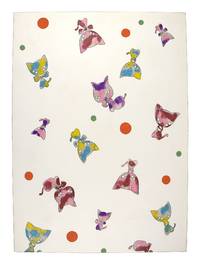
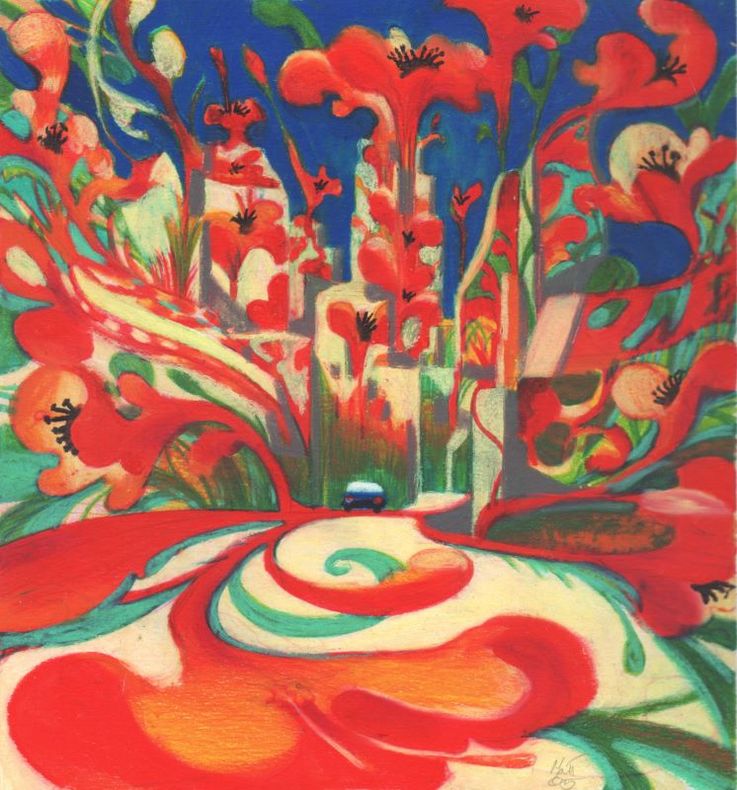
1995221441995 Dessin au crayon et pastel signé en bas à droite, 1995, 25 x 23 cm., encadré.
40915Paris Ad. Goubaud et Fils 1872-1873 2 volumes in-18, demi-chagrin rouge, plats de papier marbr, dos nerfs orns de filets dors et portant chacun deux pices de titre mosaques en maroquin vert; doublures et gardes de papier marbr, non rogns.Runion des 52 premiers numros de cette revue (manquent les n42 et 45), publis avec pagination continue du 7 juillet 1872 au 28 juin 1873. Chaque numro, qui se prsente sous la forme d'un cahier de 8 pages, est illustr d'un en-tte portant le nom de la revue et de dessins gravs sur bois et imprims en noir (dont un sur double page), et enrichi d'une gravure en couleurs sur acier imprime sur papier fort et insre en hors-texte. Notre ensemble constitue un rel tmoignage sur la mode de l'poque, dcrivant en dtail les costumes pour les adultes ou les enfants, qui variaient en fonction des occupations: promenade en ville, la campagne ou au jardin, soire en ville ou au casino, sortie la plage, mariage, quitation... On apprciera particulirement la dlicatesse des 50 planches hors texte. Bel exemplaire.
1978129241978 S.l., IDEODIS, 1978, plaquette in-8° br., couv. ill. de photographies en couleurs, (12) pp. (couv. comprise).Mouillure marginale.
18256025Volkstrachten. (Titel auf Vorderdeckel). 60 nummerierte lithogr. Tafeln. Wien, Lithogr. und zu haben bey Jos. Trentsensky, [um 1822/1825]. Gr.-4to. (31,8 x 21,7 cm). Späterer Halbleinwandband mit montiertem Titelschild.
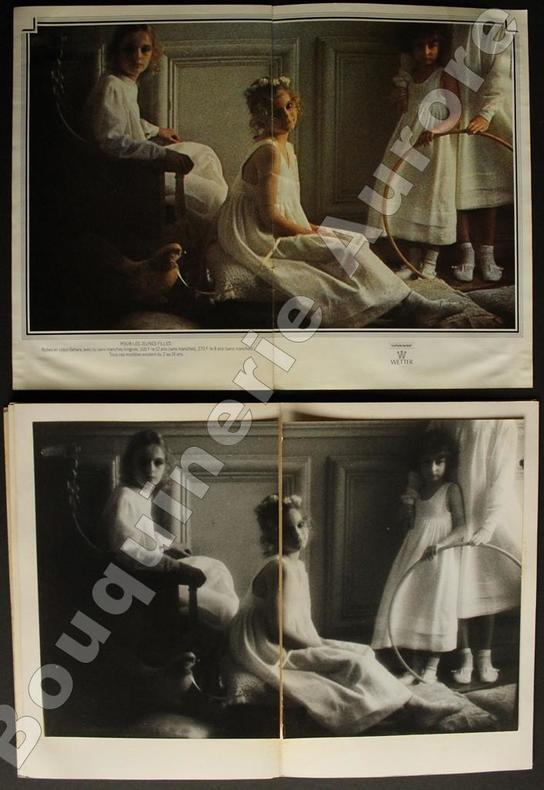
1991100042New York The Library Fellows of the Whitney Museum of American Art 1991 380x425mm 24 pages non paginées et 9 tirages originaux en couleurs 275x355mm montés en hors-textes. Tirage total de 175 exemplaires signés par les auteurs au colophon. Demi chagrin bleu à coins de l'éditeur titré au dos, étui. Tina Barney est photographe de mode, elle a participé à l'exposition Fashioning Fiction au Moma Queens au printemps 2004 (catalogue p.102-105);(100042)
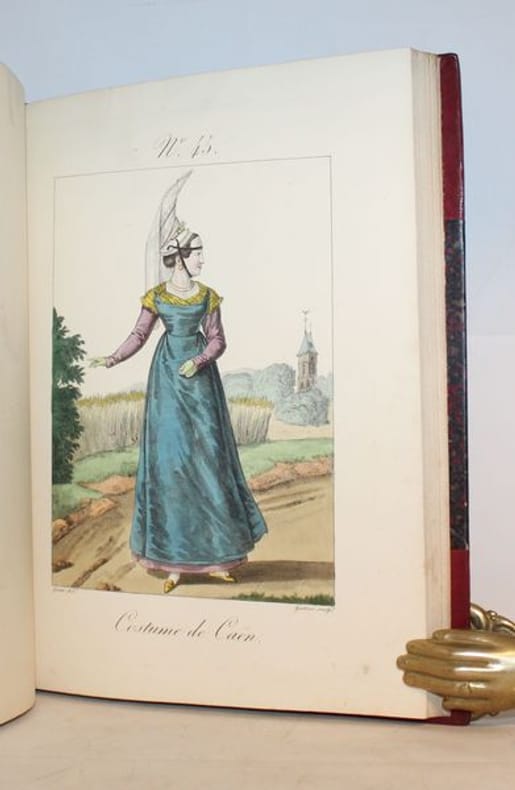
23004Paris, Durand aîné, sans date (circa 1830). In-folio de: un frontispice en couleurs et 105 planches en couleurs, gravées sur cuivre par Georges-Jacques Gatine. Les planches sont en édition originale et le titre de deuxième émission. Excellent état intérieur. Demi-maroquin rouge à coins, double filet or sur les plats, dos à nerfs richement orné de caissons fleuris, pièce de titre de maroquin olive, tête dorée. Reliure fin XIXème en bel état.
23605Paris, chez l'éditeur, 1827. In-folio de 2 frontispices en couleurs, un titre daté de 1827, 2pp. d'Observations et 23 ff. d'explications des 105 planches en couleurs, gravées sur cuivre par Georges-Jacques Gatine. Quelques rousseurs marginales aux ff. de texte, petite restauration au frontispice et en marge sup. de la pl. 97. Demi-maroquin à coins vert foncé, dos orné de filets dorés, tête dorée. Reliure anglaise postérieure. Etiquette de la librairie anglaise "Fletcher & Son/Booksellers/& Binders/Southampton." (usures à 2 coins).
(Codice EK/0528) Deux tomes in-Folio (42,5x32 cm) [4]-140, [4]-146.[4] pp. conténant les premières 6+6 livraisons. Edition originale de cette superbe revue illustrée de nombreuses vignettes et de 44 plances hors-texte de Bigot, Giuseppe De Nittis, Norbert Goeneutte, Madeleine Lemaire, Louis Leloir, A.Grevin coloriés à la main; en outre 1 fac-similé d'eau-forte de Rembrandt. Les dessins de mode proprement dits sont de petites silhouettes à la plume campées par F. de Rose. Le rédacteur « Étincelle » s'est assuré la collaboration d'Edmond de Goncourt, de Ludovic Halévy, d'Henri Meilhac, dd'Arsène Houssaye et de Réné Langlois. Papier fort, sans rousseurs; grandes marges. Belles reliures demi-peau époque, moindres frottements, solides et bien serrées, nerfs, titres et tomaisons dorés, compartiments ornés, initiales "B.M." en or. Magnifique exemplaire. ~~~ SPEDIZIONE IN ITALIA SEMPRE TRACCIATA
194033730Suzuka Japan et al. 1940. Very Good . Suzuka Japan: n.d. ca. 1940-1960. Nineteen original hand-stenciled designs ca 48x35cm; thirteen examples with rubber-stamp from two different craft shops the remaining six unattributed. Light wear and soil else a Very Good to Near Fine collection.<br /> <br /> Colorful multi-decade sampling of designs for the Japanese casual summertime cotton kimono known as yukata. The designs were almost certainly designed for children's outfits decorated as they are with baby birds puppies ducklings circus elephants bunnies musical instruments and teddy bears. The ten earliest examples all hail from the same shop and all use the same color scheme of navy blue slate blue and orange-brown. Later examples expand the color palate to much more vibrant and neon colors. One design in particular of a small child in a red bunny costume anticipates both the manga and the Hello Kitty aesthetic that became a global phenomenon beginning in the 1970s and 1980s. unknown
14995ABo.J. Housed in original cloth box.
18043442ABLondon, Printed for W. Miller by W. Bulmer, 1804. E.A. 4° XXVIII, 50 altkolorierte Bildtafeln mit Begleittexten. Dekorativer Lederbd. mit Vergoldung u. dreiseit. Goldschnitt, sehr guter Zust.
1926197291926 Paris, Marcel Guiot, s.d. (1926), broché, couverture rempliée, 10 lithographies originales, sous étui cartonné.
Cm. 35, pp. (4), 74, (2). Con 32 tavole fuori testo incise in rame ed in fine coloritura coeva di costumi e rappresentazioni popolari ed una tavola con musica della tarantella. Legatura coeva in piena pelle, dorso liscio con titoli e fregi in oro, piatti decorati a secco e con cornici dorate. Tagli colorati. Dorso restaurato. Esemplare genuino ed in ottimo stato di conservazione. Ciascuna tavola d'illustrazioni è accompagnata da un testo esplicativo in francese ed inglese. I soggetti rappresentati appartengono alla cultura popolare italiana principalmente di Roma, Napoli e del Piemonte. Il testo è opera di Buonaiuti, mentre le tavole sono incise da James Godby dai disegni originali di P. van Lerberghi. Edizione originale, non comune e celebrata dalle maggiori bibliografie (Colas, Lipperheide e Pitrè). Choix (10995): "superbes gravures... ouvrage rare. On y remarque e. a. 4 planches qui ont trait à la musique: Dance of Lazzaroni children, Dance of the Tarantella, the Street Singers, a Piedmontese Dance"; Fiammetta Olschki: "Opera importante per la storia del costume locale e popolare"; Brunet (II, 1639): "Ouvrage assez bien execute, tant dans les gravures que dans le texte".
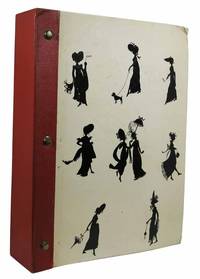
195742918Paris: Societe Paritys / Lebotys 1957. Post binder with 3 brass posts decorative screw tops. Publisher's color pictorial glazed boards blue spine and joints. Board edges rubbed and worn; short split to rear outer joint; inner joints tender paper splitting though cloth reinforcement beneath is intact. Page block foxed occasional foxing/spotting throughout; light offsetting from fabric samples to some pages. Fabric sample generally clean and bright with occasional creasing/fraying. Overall Gd. 97 pp. 16 color fashion drawings; ~ 740 pasted or tipped-in fabric samples. 16-1/8" x 12-1/8" <br/><br/>A mid-century salesman's sample catalogue from the winter collection of Parisian firm Société Paritys a haberdashery and fabric supplier established in 1946 and still in operation today. The fabric samples have been supplied by Lebotys a couture design firm in its own right and highly regarded for the quality of its textiles. As we find record of Lebotys having issued catalogues of its own collections in both the 1930s and 1960s we speculate that the two firms collaborated for a limited time possibly due to continuing post-war shortages and the need to adapt to the rapidly changing clothing market of the 1950s. The late 1950s saw a revolution in French fashion — and by extension Western fashion in general — due in no small part to the influence of material factors underlying the purely aesthetic side of the industry: availability of fabric continuing technological advances in synthetics and the surging post-war economies of America and Europe. The reluctant expansion of haute couture into the ready-to-wear market during the latter half of the century and the increasing reliance on synthetic fabrics to meet the demand would ultimately spell a major shift in the industry one that would impact fashion trends for decades to come. Some fashion houses like Dior whose “New Look” revitalized fashion at the beginning of the decade successfully managed to adapt by issuing couture ready-to-wear lines. Some however even long-established houses survived the war only to be undone by the prosperity that followed. The collaboration here of Société Paritys and Lebotys as well as the fabrics offered and styles displayed leads us to infer that the two firms were likely targeting the growing ready-to-wear market. The fabrics include a variety of silks cottons wools mohair etc. as well as nylon fibranne rayon Rhodia tergal crylor acetate and other “Matieres Synthètiques” often in blends and advertising their washable and/or antiwrinkling qualities. The styles in the illustrations still heavily influenced by the “New Look” emphasize wasp-waisted dresses hourglass silhouettes etc. No copies located on OCLC nor the major French institutions as searched on KVK. Societe Paritys / Lebotys hardcover books
195842919Paris: Societe Paritys / Lebotys 1958. Post binder with 3 brass posts. Publisher's pictorial glazed boards red cloth joints. Light extremity wear to boards; bumping to upper corner of front board; short split to front and rear joints. Page block lightly foxed foxing/spotting scattered throughout. Few white nylon fabric samples discolored by paste beneath. Fabric samples otherwise clean and bright with only minor occasional creasing/fraying. Overall VG. 80 pp. 12 color fashion drawings; ~590 pasted and tipped-in fabric samples 16-1/8" x 12-1/8" <br/><br/>A mid-century salesman's sample catalogue from the winter collection of Parisian firm Société Paritys a haberdashery and fabric supplier established in 1946 and still in operation today. The fabric samples have been supplied by Lebotys a couture design firm in its own right and highly regarded for the quality of its textiles. As we find record of Lebotys having issued catalogues of its own collections in both the 1930s and 1960s we speculate that the two firms collaborated for a limited time possibly due to continuing post-war shortages and the need to adapt to the rapidly changing clothing market of the 1950s. The late 1950s saw a revolution in French fashion — and by extension Western fashion in general — due in no small part to the influence of material factors underlying the purely aesthetic side of the industry: availability of fabric continuing technological advances in synthetics and the surging post-war economies of America and Europe. The reluctant expansion of haute couture into the ready-to-wear market during the latter half of the century and the increasing reliance on synthetic fabrics to meet the demand would ultimately spell a major shift in the industry one that would impact fashion trends for decades to come. Some fashion houses like Dior whose “New Look” revitalized fashion at the beginning of the decade successfully managed to adapt by issuing couture ready-to-wear lines. Some however even long-established houses survived the war only to be undone by the prosperity that followed. The collaboration here of Société Paritys and Lebotys as well as the fabrics offered and styles displayed leads us to infer that the two firms were likely targeting the growing ready-to-wear market. The fabrics include a variety of silks cottons wools mohair etc. as well as nylon fibranne rayon Rhodia tergal crylor lurex viscose imitation fur and other “Matieres Synthètiques” often in blends and advertising their washable and/or antiwrinkling qualities. The styles in the illustrations still heavily influenced by the “New Look” emphasize wasp-waisted dresses hourglass silhouettes etc. No copies located on OCLC nor the major French institutions as searched on KVK. Societe Paritys / Lebotys hardcover books
195942920Paris: Societe Paritys / Lebotys 1959. Post binder with 3 brass posts. Publisher's pictorial glazed boards white cloth joints. Light extremity wear to boards; short split to rear joint. Page block lightly foxed occasional foxing/spotting to margins throughout. Few white nylon fabric samples discolored by paste beneath. Fabric samples otherwise clean and bright with only minor occasional creasing/fraying. Overall VG. 108 pp. 16 color fashion drawings; ~800 pasted and tipped-in fabric samples. 16-1/4" x 12" <br/><br/>A mid-century salesman's sample catalogue from the summer collection of Parisian firm Société Paritys a haberdashery and fabric supplier established in 1946 and still in operation today. The fabric samples have been supplied by Lebotys a couture design firm in its own right and highly regarded for the quality of its textiles. As we find record of Lebotys having issued catalogues of its own collections in both the 1930s and 1960s we speculate that the two firms collaborated for a limited time possibly due to continuing post-war shortages and the need to adapt to the rapidly changing clothing market of the 1950s. The late 1950s saw a revolution in French fashion — and by extension Western fashion in general — due in no small part to the influence of material factors underlying the purely aesthetic side of the industry: availability of fabric continuing technological advances in synthetics and the surging post-war economies of America and Europe. The reluctant expansion of haute couture into the ready-to-wear market during the latter half of the century and the increasing reliance on synthetic fabrics to meet the demand would ultimately spell a major shift in the industry one that would impact fashion trends for decades to come. Some fashion houses like Dior whose “New Look” revitalized fashion at the beginning of the decade successfully managed to adapt by issuing couture ready-to-wear lines. Some however even long-established houses survived the war only to be undone by the prosperity that followed. The collaboration here of Société Paritys and Lebotys as well as the fabrics offered and styles displayed leads us to infer that the two firms were likely targeting the growing ready-to-wear market. The fabrics include a variety of silks cottons wools mohair muslin cashmere and others as well as nylon fibranne rayon Rhodia tergal crylor acetate Albène and other “Matieres Synthètiques” often in blends and advertising their washable and/or antiwrinkling qualities. The styles in the illustrations although still influenced by the “New Look” also show the influence of Dior's successor the young Yves St. Laurent who debuted his "trapeze line" in 1958. No copies located on OCLC nor the major French institutions as searched on KVK. Societe Paritys / Lebotys hardcover books
195741355Paris: Societe Paritys 1957. 1st printing thus. Publisher's color pictorial glazed boards post binder; 3 brass posts decorative screw tops. Red cloth joints. Some general extremity wear to binder with slightly bumped corners. Occasional dust soiling. Minor foxing. Overall VG with cloth samples generally VG to Nr Fine with the occasional crease to the odd sample or two. 104 pp printed in red on stiff-stock paper. 16 color fashion drawings; 897 of 898 tipped-in fabric samples. Folio. 16-1/4" x 12-1/8" <br/><br/>A mid-century salesman's sample catalogue from the summer collection of Parisian firm Société Paritys a haberdashery and fabric supplier established in 1946 and still in operation today. The fabric samples have been supplied by Lebotys a couture design firm in its own right and highly regarded for the quality of its textiles. As we find record of Lebotys having issued catalogues of its own collections in both the 1930s and 1960s we speculate that the two firms collaborated for a limited time possibly due to continuing post-war shortages and the need to adapt to the rapidly changing clothing market of the 1950s. The late 1950s saw a revolution in French fashion — and by extension Western fashion in general — due in no small part to the influence of material factors underlying the purely aesthetic side of the industry: availability of fabric continuing technological advances in synthetics and the surging post-war economies of America and Europe. The reluctant expansion of haute couture into the ready-to-wear market during the latter half of the century and the increasing reliance on synthetic fabrics to meet the demand would ultimately spell a major shift in the industry one that would impact fashion trends for decades to come. Some fashion houses like Dior whose “New Look” revitalized fashion at the beginning of the decade successfully managed to adapt by issuing couture ready-to-wear lines. Some however even long-established houses survived the war only to be undone by the prosperity that followed. The collaboration here of Société Paritys and Lebotys as well as the fabrics offered and styles displayed leads us to infer that the two firms were likely targeting the growing ready-to-wear market. The fabrics include a variety of silks cottons wools mohair etc. as well as nylon fibranne rayon Rhodia tergal crylor acetate and other “Matieres Synthètiques” often in blends and advertising their washable and/or antiwrinkling qualities. The styles in the illustrations still heavily influenced by the “New Look” emphasize wasp-waisted dresses hourglass silhouettes etc. Of particular note are the designs and fabrics for wedding dresses. No copies located on OCLC nor the major French institutions as searched on KVK. Societe Paritys hardcover books
1912145871912 P., Collection Pierre Corrard, 1912, 1 vol. petit in-4° (290 x 192 mm) en feuilles sous chemise à rabats illustrée d'un pochoir, de 9 ff. (Texte de Pierre Corrard) - XII planches au pochoir protégées par des serpentes - (2) ff. (justificatif de tirage monogrammé par Georges Lepape et achevé dimprimer). Manque les lacets de fermeture, petites rousseurs en couverture, parfait exemplaire par ailleurs.
188842BBParis, Didot, 1888. With ca. 420 plates partly iin color chromolithogrqaph, and partly in camaieu. Contemporary half calf. Tafelbände 2-5
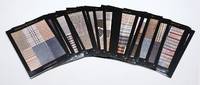
1980140454Milan: Styling Consulting Service 1980s. Rare visual reference for patterned textiles First and only edition of this visually beguiling and historically informative collection. The title leaf reports that "this photographic publication composed of pictures of original fabrics from 1903 up to 1925 taken from private files has been created to offer a proof of art and culture in the evolution of costume". We have been unable to trace any other copies. There is no indication of a printer or publisher anywhere in either volume or in the custom boxes nor any other hints as to the origin of this fascinating collection of pin-sharp colour photographs of fabric swatches. The work however is clearly of Italian origin and there is a hint of FMR in the thematic and in the precision of execution and presentation. The first volume concentrates on wool weaves; tweeds herringbones plaids and checks in a wide range of weights and colourways; the second is filled an even wider selection of patterned cottons a fabulous array encompassing design trends from the early decades of the 20th Century with inevitable hints at art deco art nouveau and sometimes brasher "jazz" influences; all kinds of stripes gingham tartans textiles suggestive of ties cravats suit linings waistcoats figured fabrics for dresses or skirts women's coats or jackets even upholstery or blinds. A painstaking and no doubt costly exercise the precision in the execution of the photography and processing bespeak a seriousness of purpose which makes the anonymity of the project even more extraordinary. 2 vols folio 297 x 210 mm. Black rough-weave cloth solander boxes with drop sides title gilt to spines and front boards explanatory title leaf to vol. I gold printed on glossy black medium card-stock the boxes containing respectively 50 and 100 loose sheets of similar card-stock each with mounted high-quality colour photographs c.180 x 180 mm to c.228 x 172 mm of fabric swatch composites between 3 and 8 samples to each lettered and numbered in gold. Slightly rubbed and a little dusty spines sunned corners bumped small neatly repaired tear at foot of spine of volume II card leaves with the occasional minor scuff but remains very good. hardcover
440-Eo.J. Feder in Braun, grau und braun laviert, auf cremefarbenem Velin. 28,4:15,9 cm. Fehlstelle im linken Rand ergänzt. Die in elegant-modische Abendrobe gekleidete Dame der Pariser Gesellschaft ist in Guys charakteristischer sicherer und schnell hingeworfener Zeichenweise bei sparsamster Kolorierung fixiert.
0150-Co.J. Radierung und Kaltnadel, 1881, auf cremefarbenem Bütten, signiert und numeriert und mit Atelierstempel. 24:32 cm. Literatur: Beraldi 35. Nr. 79 der Auflage. Sehr guter und vollrandiger Abdruck, mit Lichtrand rundum.
Tre volumi di cm. 35, con moltissime illustrazioni applicate e tavole fuori testo. Legatura editoriale in piena tela blu con titoli in oro. Tagli dorati. Esemplare in ottimo stato di conservazione con solo qualche leggera foritura marginale. Stampato su carta forte. Si tratta dell'intera opera dedicata alle trine italiane e che viene considerata (in Italia ed all'estero) il capolavoro di Elisa Ricci. I primi due volumi sono dedicati alle trine ad ago, mentre il terzo riguarda le trine a fuselli. Opera celebre e ricercata, una delle più classiche ed autorevoli sull'argomento.
Quattro volumi di cm. 25, pp. 1.700 ca. complessive. Vignetta colorata incisa a ciascuno dei quattro frontespizi e 211 bellissime tavole fuori testo di costumi in fine coloritura d'epoca (ciascuna protetta da velina). Solida ed elegante legatura coeva in mezza pelle, dorsi a nervi con titoli e fregi in oro ai comparti. Legatura firmata. Qualche rada fioritura ed una piccola mancanza alla cuffia superiore di un volume, peraltro esemplare ben conservato, con le tavole in coloritura particolarmente fresca. Opera celebre e non comune munita di un interessante apparato iconografico raffigurante una grande quantità di personaggi atti a mostrare i costumi locali d'ogni parte del mondo. Suddivisa in quattro parti principali: Europa, Oceania, Asia, Africa-America.
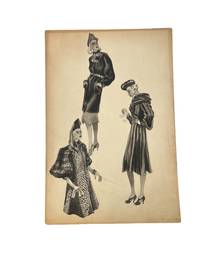
1951200661951. Fashion Women's fashion design sketches dated 1951 document the rapid transformation of female dress following the end of wartime rationing and the international adoption of Christian Dior's "New Look" silhouette. These drawings show designers experimenting with narrow waists structured bustlines wide skirts and dramatic outerwear styles that defined postwar femininity and reshaped global fashion culture in the late 1940s and early 1950s. Such instructional sketches provide visual evidence of how couture aesthetics circulated through design schools and professional training environments during a moment when fashion industries in Europe and the United States were rebuilding after World War II.<br /> <br /> Archive of fifteen original women's fashion design sketches executed on nine illustration boards measuring approximately 11 x 14 inches. Drawings are rendered in pencil ink watercolor and collage techniques and depict coats dresses trench coats and daywear ensembles characteristic of early 1950s style. Several boards include multiple designs including sheath dresses with high necklines and plunging backs bell sleeved coats trimmed with fur and children's pinafore dresses worn over blouses. One design shows a woman wearing a flight jacket cravat and pleated trousers recalling mid century women adopting traditionally masculine tailoring. One board bears the signature "Reindel" on the verso.<br /> <br /> Designs prominently feature hourglass silhouettes associated with Dior's New Look including cinched waists sloped shoulders and flared skirts. Other garments incorporate menswear inspired coats and tailored outerwear reflecting the hybridization of wartime practicality and postwar luxury. Boards show light foxing and minor handling marks. Very good condition. A visual teaching archive illustrating postwar fashion design practice during the early Cold War era. unknown