19 126 résultats
1919bf5442Corrard Pierre Modes et manières d'aujourd'hui, Sélection Abraxas-libris Inconnu 1919 "UN ÉTAT PARFAIT. UNE PROVENANCE EXCEPTIONNELLE. UN EXEMPLAIRE SANS ÉQUIVALENT. ABSOLUTELY PERFECT CONDITION. AN EXCEPTIONAL ORIGIN. AN UNPRECEDENTED COPY. Magnifique exemplaire de cette chemise de la collection ""Modes et manières d'aujourd'hui"", la publication du meilleur de la mode du début du XXe siècle, par les artistes l'ayant faite, au plus haut de leur art. Le projet est porté par Pierre Corrard, écrivain et éditeur de grand talent. Afin d'accompagner la révolution artistique et vestimentaire des années folles, il publie, en 1912, une première chemise, avec des illustrations de Georges Lepape. Devant l'accueil fait à cette première publication, il décide, chaque année, de proposer une chemise identique, avec des auteurs et des artistes différents. Arrêtée pendant la guerre, la publication reprend en 1919, et c'est à nouveau Georges Lepape qui va composer des illustrations montrant sa vision de ces années de guerre, sur un texte de Henry-Jacques. L'illustrateur va en effet proposer, dans ce qui s'apparente à douze ""stations"" (la mobilisation, la permission, les alertes, la victoire), la vie quotidienne de la femme, restée à l'arrière alors que son mari est au front. Cette chemise se présente comme toutes les autres de la série : sous un cartonnage fort, dont le premier plat est frappé des seuls titres et années, avec, en son centre, une illustration couleurs, les planches prennent place dans un ensemble de quatre rabats fait du même papier que celui illustrant la contre garde, et dont le motif a été dessiné par l'artiste réalisant les planches intérieures. L'ouvrage, en feuilles, débute par une page de titre reprenant l'illustration de couverture. Puis viennent les pages proposant le texte, et, après le colophon, les planches illustrées. Un soin tout particulier est apporté à la réalisation de ces planches, de la gravure au passage des pochoirs. La provenance de notre exemplaire est exceptionnelle : il provient directement de la famille Corrard. Stocké dans leur résidence, notre exemplaire est dans un état strictement parfait, tel que sorti de chez l'imprimeur. Il est même encore sous son papier cristal d'origine, intouché. Il est bien complet des rubans et des rabats de chemise (qui, hélas, très fragiles, manquent ou sont très abîmés sur les exemplaires courants). Les nôtres sont intacts, parfaits et magnifiques. Bien qu'il date de quasiment 100 ans, il est proprement comme neuf. Notre exemplaire est un des 271 exemplaires numérotés sur Papier Japon des Manufactures de Shidzuoka (sur un tirage total à 300 exemplaires). Livraison a domicile (La Poste) ou en Mondial Relay sur simple demande."
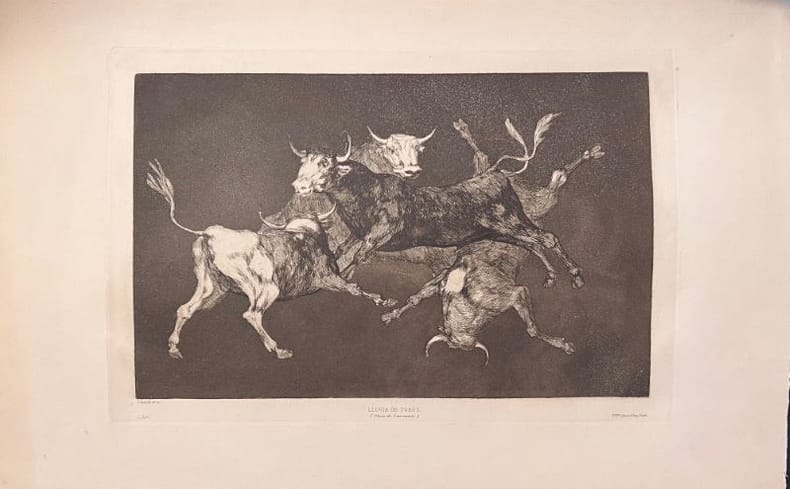
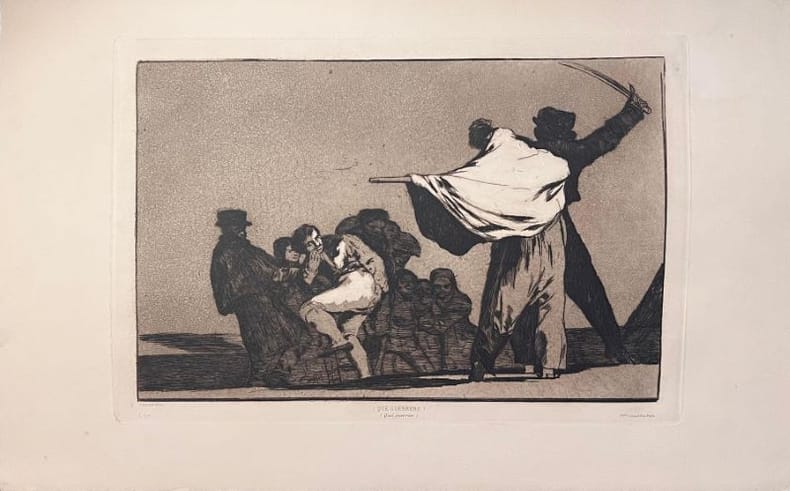
1877245531877 4 Estampe signée en bas à gauche dans la cuvette, titrée, Paris, Liénrard-L'Art, 1877, 23 x 32,5 cm. à vue, feuille 32,5 x 50 cm. (format de la feuille).
187586456Paris, Magasin des Demoiselles 1875 29 volumes. Petit in-4 26 x 17,5 cm. Reliures éditeur demi-chagrin rouge, dos à nerfs encadrés de filets et de petits fers dorés. Environ 400 pp. par volume. Plus de 400 planches hors-texte, près de 350 en couleurs, la plupart de présentations de mode avec 2 à 3 personnages, des notices pour la réalisation d'ouvrages brodés, figures dans le texte. Table à chaque volume. Reliures légèrement frottées, rousseurs marginales, intérieur frais. Très bon ensemble d’une relative rareté.
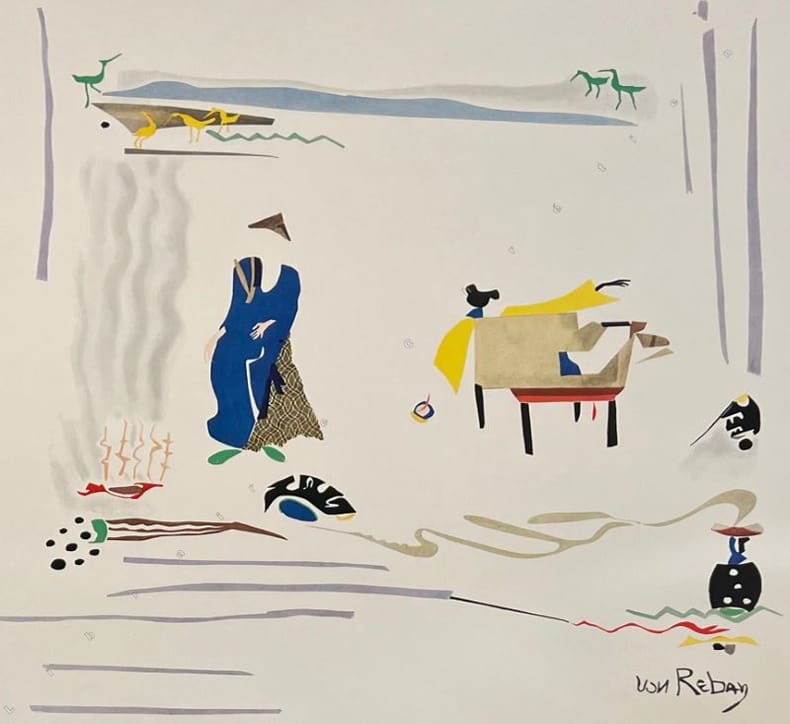
192524661Rudolf Bauer 1925 Illustrations de Hilla Rebay. Rudolf Bauer, (1925), in-folio (62 x 43.5 cm.), en feuilles, sous portfolio crème à rabats, 13 planches.
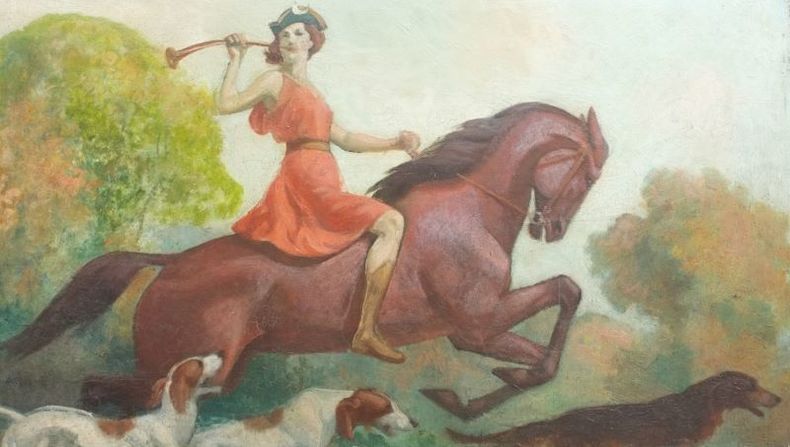
1920193481920 1 Huile sur panneau de bois, dos renforcé, (1920), 51.5 x 88 cm.
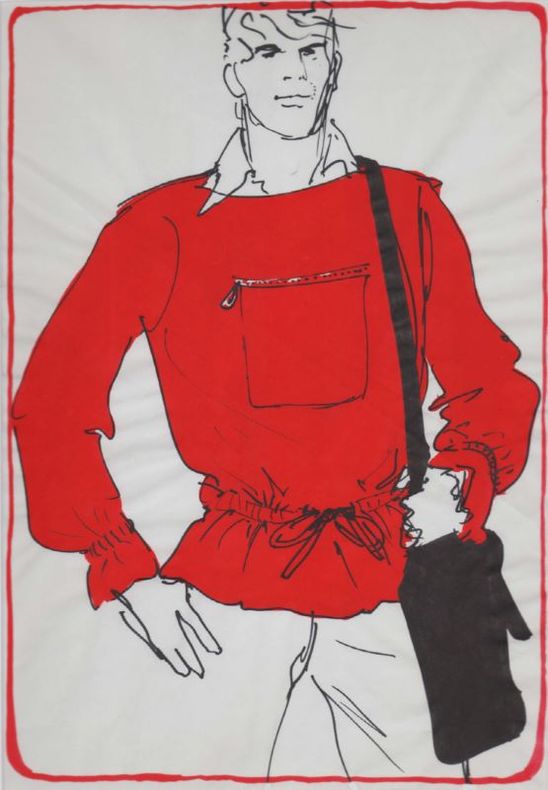
1965199171965 1 Encre de Chine, encre-feutre et gouache, (1965), 36 x 24 cm.
Cm. 29, antiporta allegorica a colori, frontespizio con vignetta centrale, pp. (6) con dedica, prefazione ed inidce delle tavole + 49 tavole finemente colorate ciascuna accompagnata da una carta di testo esplicativo. Solida legatura in mezza pelle rossa con punte, dorso a nervi con titoli in oro, tagli colorati (1900 ca.). Esemplare marginoso ed in ottimo stato di conservazione. Bella raccolta di tavole prevalentemente dedicata ai costumi e mestieri dell'Italia. Edizione originale. Cfr. Colas 444.
0621QKUC5EJLeather Bound. Paris. Very Good. Nouvelle édition marquetée polie & vernissé Printed in red 1759 in quarter leather and decorated paper over boards moderately scuffed at spine tips and corners. Scarce. 12mo. xxxviii 88 pages ; 14 cm unknown
(Codice AN/3422) Série complète: cent trente-cinq planches originales in folio (42x27 cm) illustrées de nombreuses gravures. La fabrication compléte de la soie, avec 24 pages d'explication, texte sur deux colonnes. Imprimé sur papier pur chiffon à la cuve, grandes marges. Reliure toile moderne. Page de titre du tome e faux titre gardés. Très bon état. Magnifique ensemble de gravures superbes. ~~~ SPEDIZIONE IN ITALIA SEMPRE TRACCIATA
192960768Paris, Albert Godde, Bedin 1929. mit je einer auf der Vorderdecke montierten pochoir-kolorierten Abbildung und je 28 bis 40 unpaginierten Seiten (das Dez- (Noél) Heft mit 68 Seiten) mit unzähligen s/w Werbeanzeigen überwiegend aus dem Mode-, Textil-, Schmuck- und Kosmetikbereich. Daneben mit zahlreiche farbigen, teils montierten Illustrationen, einige davon in Original-Pochoir-Kolorierung in prächtiger Farblichkeit. Den meisten Heften liegen auch zusätzliche lose Blätter mit Abonnement-Formularen und Werbe-Broschüren bei. Jedes Heft mit individuell gestalteten Vorsatzpapier. 31,5 x 24 cm, helle farbig illustrierte OBroschur in Original-Kordelbindung
179612345ABWien, Eder, 1796 - 1801. 21 : 13,5 cm. With 180 handcoloured, engraved plates. Contemporary half calf, spine richly gilt, back label. 5 volumes.
158714992ABAmsterdam, [1587?]. 26 x 35 cm. 6 Bl. mit 11 Kupferstichen. Es handelt sich um die Stiche 2, 3, 4, 6, 7, 8. Auf den Rückseiten der ersten 5 Stiche sind weitere Stiche aufgeklebt: "Dorica", "Ionica" (2 verschiedene), "Corintha" (2 verschiedene) . Neuer Kartoneinband (Softcover) in Einschlagmappe. Folge von 11 Kupferstichen. Nach sorgfältiger Restaurierung (Protokoll wird mitgeliefert) stabiler sauberer Zustand. Seiten teils stärker angefleckt, teils mit kl. angefaserten Fehlteilen., wenige im Bereich der Abb. Vorgebunden ein Blatt mit Schrift und Geheimschriftübungen in rot
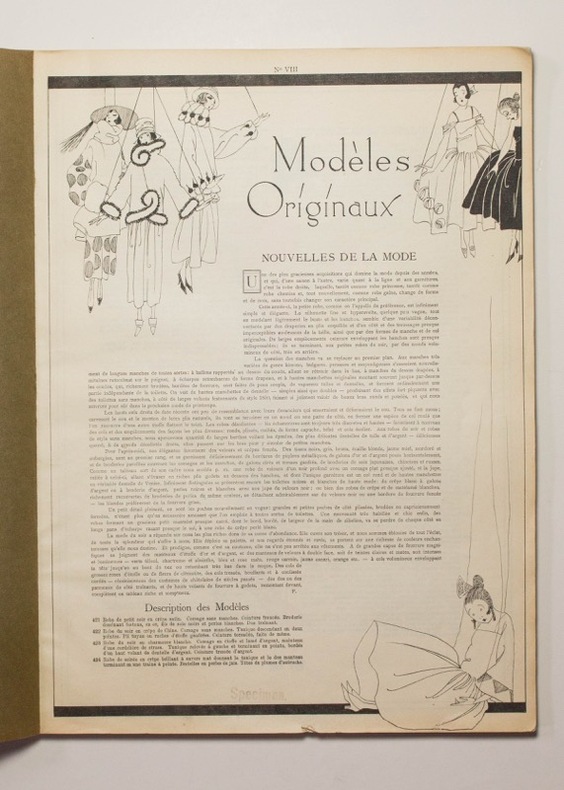
18803Vienne, Atelier Bachwitz, 1920 - 1923. 3 volumes in-folio brochés.
1877245541877 4 Estampe signée en bas à gauche dans la cuvette, titrée, Paris, Liénrard-L'Art, 1877, 23 x 32,5 cm. à vue, 30,5 x 40.8 cm. (format de la feuille).
Cartella di cm. 50, contenente 10 dispense di complessive pp. 120 di testo esplicativo. Con 10 tavole a piena pagina magnificamente illustrate in cromolitografia. Ciascuna dispensa è preservata nella bella brossura originale illustrata con al piatto l'immagine di una donna sarda e la carta geografica dell'isola (protetta da velina). Il tutto entro un'elegante cartella editoriale in piena tela blu con titoli e grande figura impressa in oro al piatto. Ottimo stato di conservazione. Elenco dettagliato delle tavole: I: Osilo (Circondario di Sassari). Costume festivo. Un costume femminile. II: Quarto Sant'Elena (Circondario di Cagliari) Costume di gala. Costume femminile. III: Desulo e Aritzo (Circondario di Lanusei) Costume di Gala. Due costumi femminili. IV: Fonni (Circondario di Nuoro) Costume di Gala. Un costume maschile e uno femminile. V: Iglesias , Costume di Massaia antica e Costume di Gala. VI: Sennori (Circondario di Sassari) Costume di Gala. Un costume maschile e uno femminile. VII: Costumi d'Azara (Circondario di Lanusei). Un costume maschile e uno femminile. VIII: Costume di Ploaghe (Circondario di Sassari). Vari costumi femminili e uno maschile. IX: Costume di Cabras. Costume femminile con altre figure sullo sfondo. X: Ballo Sardo alla Festa di S. Gavino (Porto Torres).
86-FRo.J. Radierung und Vernis mou, Paris 1867, auf Bütten mit Wasserzeichen: Arches. 65:42 cm. _ Mit Widmung ?A MMrs Edmond & Jules de Goncourt? in der Platte. Papier insgesamt gebräunt und mit Nagellöchern in den äußeren seitlichen Rändern, die von einer alten Montierung auf eine Holzplatte herrühren. Literatur: Exsteens 848. Dieses mondäne Frauenbildnis ist erschienen aus Anlaß der Veröffentlichung des Romans der Brüder Goncourt ?Manette Salomon, 1867?, der die Geschichte einer Frau im Pariser Künstlermilieu der zweiten Hälfte des 19. Jahrhunderts schildert.
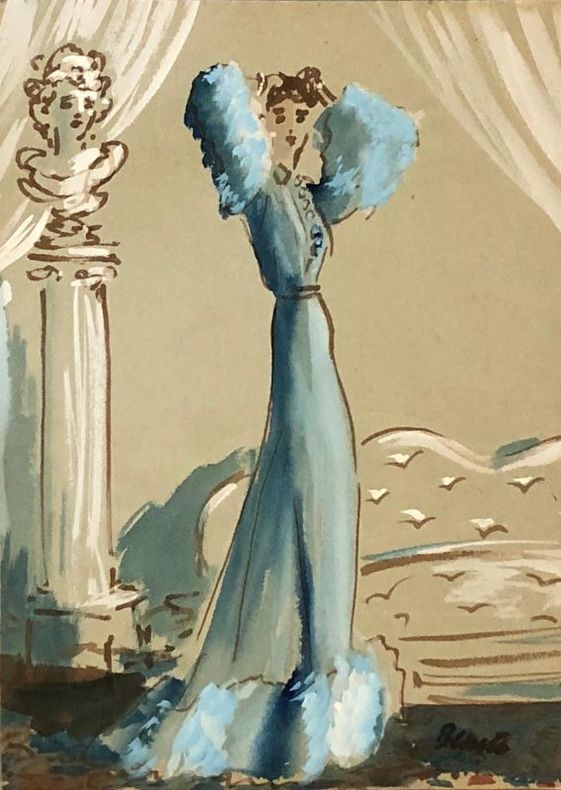
1930225801930 1 Gouache et aquarelle, signée en bas à droite, (1930), 37,3 x 27 cm., encadrée.
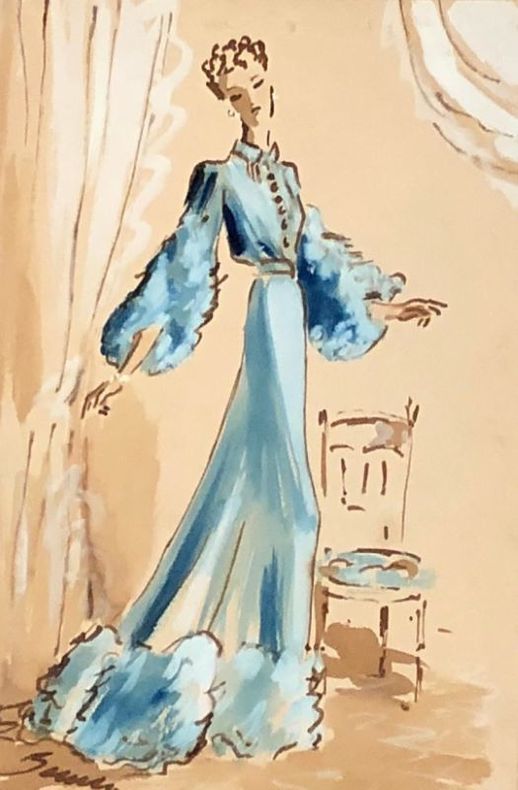
1930225811930 1 Gouache et aquarelle, signée en bas à gauche, (1930), 41,5 x 28 cm., encadrée.
186012827(Ohne Ort, Simbach ?), 1860. Deutsche Handschrift auf Papier. 1 Bl. (Text) und 17 Bll. mit montierten Gouachen. Gr.-4°. HLdr. der Zeit (bestoßen und beschabt).
D21035Near Fine. A unique and visually interesting archive of 125 original womens fashion illustrations produced by several celebrated New York designers and illustrators active during the mid-twentieth century. Together the works capture an innovative and forward thinking American fashion industry post WWII. <br /> <br />The collection is highlighted by original couture evening wear and cocktail dress designs by John Paul Bozett and Frank Perullo both internationally accomplished New York fashion designers and illustrators working in New York City during the 1940s1960s. Additional contributors include De Zine Studio Henry Antonio and others illegible but presumably associated with the citys fashion community during this period. Ephemera includes a Womens Wear Daily typed letter signed TLS a press release and a TLS employment contract for David Hart Incorporated New York. <br /> <br />Rendered in graphite and colored pencil many sophisticated and detailed. Several sheets present multiple perspectives of a single design and retain original job numbers e.g. B-14 annotations regarding color styling and techniques and a few with fabric attached. Approx. 50 with ink signatures on the recto and some with studio stamps name address and telephone on the verso. Sizes vary but approximately 8 x 11 inches. Executed primarily on tissue paper with some examples taped or mounted to heavier stock. Undated but presumably date to the c. 1950s; a few might be a bit later. <br/><br/> unknown
1888217891Leipzig Berlin Vienna etc. 1888. 66 colored plates many folding 10 black and white plates. 1 vols. Folio. Later red cloth. A few short tears and minor traces of old soiling. Generally Very Good. 66 colored plates many folding 10 black and white plates. 1 vols. Folio. Chiefly ladies fashion with among others two interesting plates of sporting fashions: a coaching scene of two young ladies with a long whip and an angling scene of two ladies with rod and net landing a fish. unknown books
1970D6222Istanbul c. 1970s. Very Good. Red card wrappers with "Gunal Erkose" stamped in gilt on front cover; two volumes 4to; unpaginated with b/w photographs 27 in one 23 in the other tipped-onto black leaves with printed frames and handwritten prices below e.g. Fob Istanbul US $34. Covers a bit scuffed; slight wave to text block. A fun time capsule of early 1970s Turkish leather fashions for men and primarily women modelling outer wear and jackets dresses and pant suits. <br/><br/> hardcover books
(Codice AB/0422) Cartella in plastica in 4*, cm 22 x 30,5, apertura a 3 falde con all'interno: Monografia, 26 pp.; Isolatore di colore (serie di 6 cartoncini fustellati); Simulatore A, B, C (3 fogli in materiale plastico opaco/trasparente); Cartella colori (pieghevole a 3 falde con campioni colore); Schede prelievo (40 campioni colore). Nel 1973 la societa' Montefibre, anche per reagire alla crisi petrolifera e dei suoi derivati, fonda a Milano il Centro Design Montefibre (CDM) che rimarra' in funzione fino al 1977, destinato alla concezione e allo sviluppo di prodotti e servizi innovativi da applicare nel campo del tessile. La direzione del settore moda e' affidata a Elio Fiorucci mentre quella del settore design a Massimo Morozzi, Andrea Branzi e Clino Trini Castelli. Le ricerche del CDM si orientano verso l'individuazione dei fattori immateriali legati ai diversi livelli percettivi che caratterizzano lo spazio e verso il controllo di tutti gli strumenti e i parametri che si pongono all'origine della progettazione tradizionale.ÂIl CDM elabora quindi varie forme scritte con l'obiettivo di diffondere nuovi e piu' efficaci parametri qualitativi e rendere comprensibili alla cultura del progetto e all'interno del processo produttivo, in special modo nell'industria pesante, le ragioni delle scelte riguardanti i colori. con l'intento di divulgare nel mondo industriale la cultura del colore, il CDM tra il 1975 e il 1977 elabora il programma di ricerca "Colordinamo" che ripensa le metodologie progettuali arricchendole di strumenti meta-progettuali, intesi come attivita' d'indirizzo, servizio e supporto nella scelta dei valori cromatici. Le tre edizioni dei manuali "Colordinamo" (Branzi, Trini Castelli & Morozzi, 1975; 1976; 1977) presentano una gamma cromatica di quaranta colori organizzati in famiglie e un apparato operativo, progettato appositamente, costituito da un isolatore e da un simulatore di colore da utilizzare per la comparazione dei colori presenti nella cartella e per la riproduzione industriale delle tinte. Questi manuali ebbero grande risonanza meritandosi molti articoli su riviste mentre il Colordinamo 1977 fu addirittura insignito del Compasso d'oro. Cfr. Oppedisano, "I colori? Scappano sempre." in: "Ais/Design. Ettore Sottsass Archives". Testi in italiano e inglese. Allegato biglietto Montefibre. OTTIMO STATO. ~~~ SPEDIZIONE IN ITALIA SEMPRE TRACCIATA
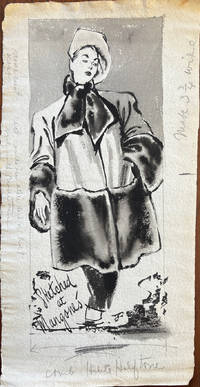
194261064Brooklyn NY: Barbara Duffy ca. 1942-1945. Seven pieces of original pen & ink art and gouache colouring and overpainting sized from 10 x 15 in. 3 up to 15 x 20 in. 3 on “Winsor & Newton’s Illustration Board 30 x 40†while the 7th piece is 9 x 17 in. executed on textured thick laid-paper pencil annotations in MS on fore-edges all pieces signed in thick black pen on versos some dustsoiling staining to fore-edges to a couple bumping to corners edgewear still a VG set of well-done exemplars. These original fashion design illustrations encompass women’s dresses hats fur coats evening wear and a post-War design by Mangone. The two dresses drawn by Duffy are reminiscent of the Claire McCardell easy to wear and comfortable dresses which emerged at the end of the War and featured a cinched-in waist floppy collars and padded shoulders retaining the influence of men’s tailoring on women’s fashions during the War. The “Toppers†are splendid examples of box or swagger coats often made in light wool cotton or rayon blends and in this case with fetching hats and cinched-in waists. The two smaller designs with mink or beaver coats include one with a matching purse and the other with a pillbox hat. The two “Paris†style Cloche hats are nicely drawn and one is fitted with a mesh veil. The exceptional Mangone design indicates it was “Sketched at Mangone’s†which was probably one of the frequent sessions the designer would put on fashion shows at the Fashion Institute or local boutiques in and around New York following World War II and features a coat trimmed in beaver fur with Cloche hat and according to Duffy was available in light and dark wool along with an ascot. Mangone 1884-1957 was not only a significant Italian-American designer who quickly adapted Paris fashion trends into his own American style and was very popular from before World War I until after World War II. Strikingly he also was a survivor of the Hindenburg disaster who managed to leap from the Zeppelin at Lakehurst NJ with his daughter and grand-daughter looking on suffering significant burns and after shock and hospitalization spent considerable time recovering. Duffy b. 1919 taught at the Jacob Gould Vocational School for girls in Prospect Park Brooklyn NY from the time she left college until after World War II after which she worked as designer in local department stores and then disappears from census and public records. Barbara Duffy, unknown
188761461887 1 Mine de plomb, monogrammée en bas à droite, 1887, 21 x 23 cm, (encadrée).