BENIGNI (Léon).Livre Rare Book
19 126 résultats
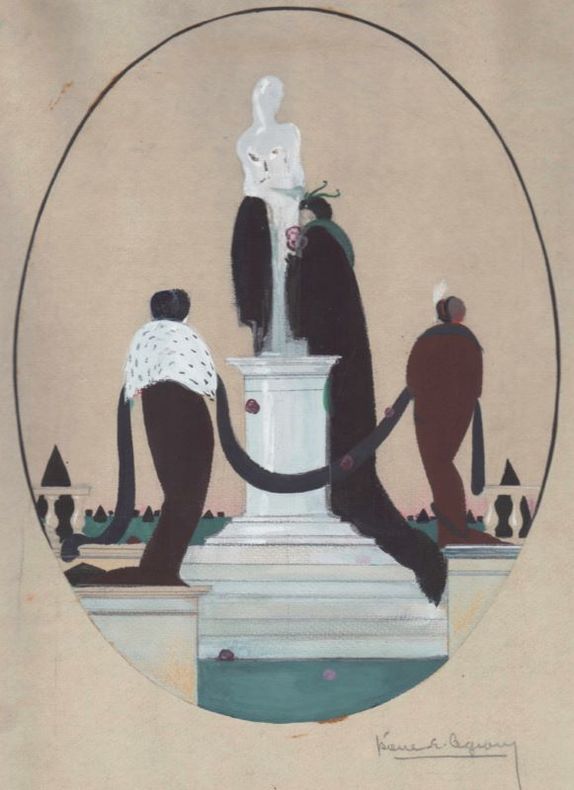
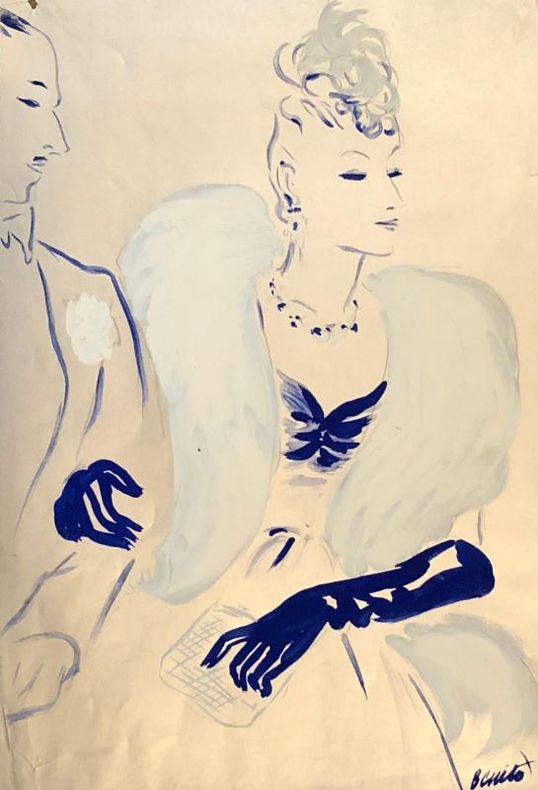
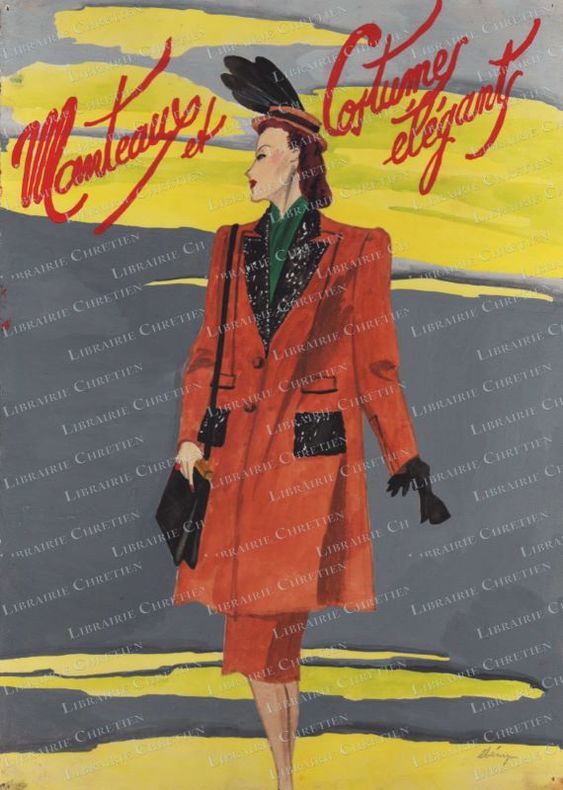
1940192151940 Gouache et mine de plomb, sur papier cartonné, signée en bas à droite, (1940-1950), 37.8 x 27 cm, encadré.
1920210741920 Gouache et mine de plomb sur papier gris contrecollé, signée en bas à droite sous le dessin, (1920), titre et signature au dos du carton d'origine, 31.5 x 24 cm.
1811KOST0189VitrWien, Joseph Eder 1800 (Teil 1) und Joseph Schalbacher 1804, 1807, 1811. 8°. (7 Bde.). Mit 4 [v. 6] gest. Titelbl. m. Vignette u. zus. 247 [v. 423] handcolorierten Kupferstich-Tafeln (Gedr. Tit. (Tl.1), 3 Bll., 220 S.; gest. Titel (Tl.1), 35 num. Tafeln (1-35), gest. Tit. (Tl.2), 35 num. Taf. (36-70); Gedr. Tit. (Tl.3), Ss.(V)-XVI, 507(1); Gest. Tit. (Tl.3), 130 num. Taf. (71-127; 92 m. 4 Tafeln); X S. (einschl. gedr. Tit. zu Tl.4), 1 Bl., 292 S.; Gest. Tit. (zu Tl.4), 47 num. Taf. (1-47); IV [recte VI] S. (einschl. gedr. Tit. zu Tl. 5), 184 S.). Einzelne Nebentitel fehlen. Schwarze Halblederbde. der Zeit m. Titel, Bandnummer u. dez. Verz. in Goldpräg., Einbände etw. berieben, Ecken bestoßen, tlw. gebräunt, vereinzelt fingerfleckig. Lipperheide Ac17,18; Brunet V,72; Colas 2782. Umfangreiche Folge aus der großartigen Kostümkunde. Das Werk erschien im Zeitraum von über 40 Jahren, und taucht fast immer nur in einzelnen Abteilungen auf. Insgesamt erschienen zwischen 1796 und 1837 zwei Abteilungen in zehn Teilen mit je einem Text- und Tafelteil in Oktav und Qu.-Folio. Unsere Sammlung ohne die erste Abteilung (Völker des Alterthums), die 1837 erschienenen Anmerkungen und Ergänzungen, ohne Tl.2 der II. Abt., den Tafelband zu Tl. 4 sowie ohne die Tafelbände im Quer-Quartformat (zusammen 84 Tafeln). - Die II. Abt. enth. die Kostüme des Mittelalters, Tl. 1 die der Gothen, Sueven, Vandalen? der Hunnen, Angelsachsen und Dänen; Tl. 2 die der Franken vom fünften Jhdt. bis in das zwölfte und die der Normänner; Tl. 3 die Geschichte des Ritterwesens im Mittelalter; Tl.4 die der geisltichen Orden u. Tl. 5 - die Trachten der Franzosen, Italiener, Niederländer, Schweizer, Burgunder und Deutschen. - Die Tafeln in leuchtendem Kolorit der Zeit.
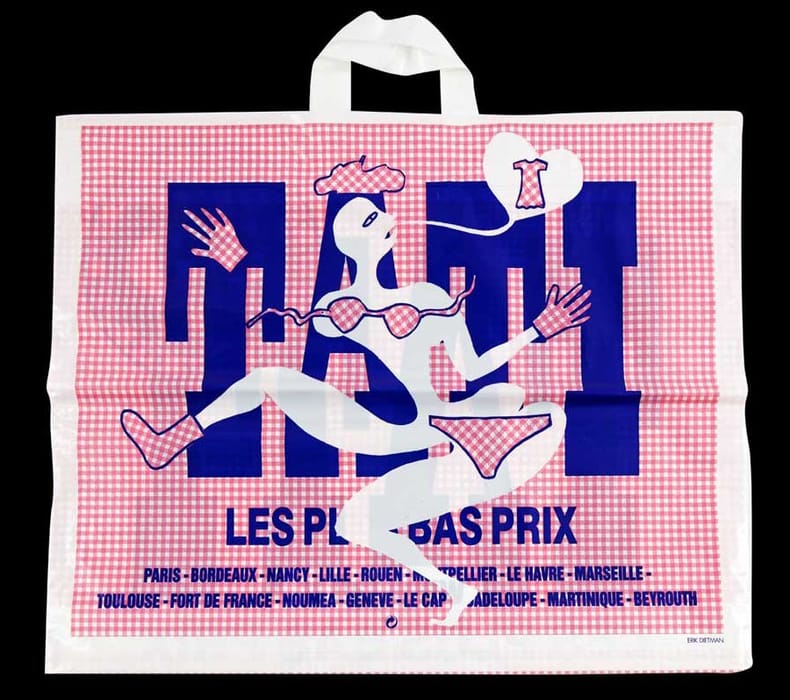
1998104504Paris Cyrille Putman / Flux Production-Diffusion 1998 1 vol. en feuilles 12 sacs en plastique illustrés (47 x 47 cm) présentés sous emboîtage cartonné de papier kraft (24 x 58 cm) avec vignette de l'éditeur contrecollée et justification à la main 18/50, lacet de fermeture. Tirage hors commerce limité à 50 exemplaires, sans doute réservés aux collaborateurs. Après la fermeture de sa galerie en 1997, Cyrille Putman monte l'agence de communication "Flux" dont l'objectif est de faire pénétrer l’art dans la communication d’entreprise. A l'occasion du cinquantenaire de la marque Tati, Putman propose à Fabien Ouaki de réaliser 12 sacs commémoratifs dessinés par des artistes contemporains. Chaque mois un nouveau sac est imprimé, dessiné par César, Erik Dietman, Mathieu Laurette, Alain Jacquet, Jean-Luc Moulène, Benoît Fougeirol, Hervé Di Rosa, Andrée Putman, Fabrice Hybert, Seydou Keïta, Garance Dindeleux & Stéphanie Gattlen (Stefou & Gargou) et Huang Yong Ping. Réunion de toute rareté.
1998104504Paris Cyrille Putman / Flux Production-Diffusion 1998 1 vol. en feuilles 12 sacs en plastique illustrés (47 x 47 cm) présentés sous emboîtage cartonné de papier kraft (24 x 58 cm) avec vignette de l'éditeur contrecollée et justification à la main 18/50, lacet de fermeture. Tirage hors commerce limité à 50 exemplaires, sans doute réservés aux collaborateurs. Après la fermeture de sa galerie en 1997, Cyrille Putman monte l'agence de communication "Flux" dont l'objectif est de faire pénétrer l’art dans la communication d’entreprise. A l'occasion du cinquantenaire de la marque Tati, Putman propose à Fabien Ouaki de réaliser 12 sacs commémoratifs dessinés par des artistes contemporains. Chaque mois un nouveau sac est imprimé, dessiné par César, Erik Dietman, Mathieu Laurette, Alain Jacquet, Jean-Luc Moulène, Benoît Fougeirol, Hervé Di Rosa, Andrée Putman, Fabrice Hybert, Seydou Keïta, Garance Dindeleux & Stéphanie Gattlen (Stefou & Gargou) et Huang Yong Ping. Réunion de toute rareté.
6288o.J. ]. Quer-Folio (25,3 x 40,3 cm). 2 Bl. Marmorierter Pappband d. Zt.
194995082Paris: Lucien Lelong 1949. First edition of this notably rare spectacular promotional brochure for Lelong's fragrances with no other copies traced. Largely forgotten today apart from amongst the couture cognoscenti Lelong 1889-1958 was enormously influential. After the First World War Lelong took charge of his parents' small fashion house which was noted for its espousal of the modern look - the chic autobiographical heroine of Colette's 1908 novella Les Vrilles de la vigne is dressed by Lelong - and continued their tradition of innovation advancing the concept of the "kinétique" clothes "constructed in such a way that their true shape would emerge in movement not at rest". Not a designer himself he employed a number of young designers who were later to strike out on their own. Christian Dior Pierre Balmain and Hubert de Givenchy all spent time developing collections for Lelong. His contribution to the success of the house was in his vision and his marketing brilliance: he redesigned his parents' salon decorating entirely in black so that it was said to resemble a black-lined jewellery box he offered discounts to society women who agreed to be photographed in his dresses and was early into the branded perfume market. The first fragrances offered by Lelong were enigmatically named A B C J and N intending to evoke a sense of mystery and romance. The artfully designed bottles were largely the work of Lelong himself. Over 30 years he created a total of 27 different fragrances. This superbly produced catalogue features ten suitably mysterious and evocative plates by Cassandre né Adolphe Jean-Marie Mouron the Ukrainian-born French painter illustrator poster designer and typographer probably best-known for his imposing poster for the great CGT liner Normandie. Octavo. With 10 chromolithographic plates after illustrations by Cassandre and similarly printed plates from photographs of the perfume bottles themselves by Réné Messager. Original plain boards in cream wrapper front panel with company device embossed within debossed cartouche. Wrappers a little rubbed and irregularly toned spine slightly chipped at ends repair to short split at head of front joint contemporary gift inscription to front free endpaper else very good. hardcover
Sei volumi di cm. 21. Il primo volume di testo di pp. xliiii, 288 (48), i seguenti comprendono le 500 tavole (anche a doppia pagina) di cui 300 in cromolitografia e 200 "en camaieu". Ciascuna tavola accompagnata da una o più carte di testo esplicativo. Solida legatura del tempo in mezza pelle a fascia larga, dorsi a nervi con titoli e fregi in oro. Taglio di testa dorato. Qualche lieve e rara fioritura marginale, ma esemplare fresco ed in ottimo stato di conservazione. Eccezionale raccolta iconografica che illustra i principali tipi di abbigliamento e di costumi, spesso rapportati agli interni delle abitazioni, di tutti i tempi e di tutti i popoli. Con numerose tavole di dettagli sul mobilio, le armi, gli oggetti di uso comune, i mezzi di trasporto, i gioielli, ecc. Opera che ha lasciato un segno importante per la storia della tipografia francese dell'Ottocento, soprattutto per il magistrale utilizzo della tecnica cromolitografica. Non comune a reperirsi completa di tutte le tavole. Cfr. Borroni 13507, Vicaire VI, 945-6 e Colas, 2471: "C'est la plus important recueil général concernant le costume...".
1900415140Paris, (ca. 1900). Fol. Tafeln lose in Mappen m. Schließbändern u. goldgepr. Deckeltitel. Mappen teilw. beschäd. (1 m. losen Deckeln). Einige Taf. leicht lichtrandig. Lediglich 1 Mappe m. dazugehör. Tafelverzeichnis. Ohne Texte.
1919nc1418Corrard Pierre Modes et manières d'aujourd'hui, Sélection Abraxas-libris Inconnu 1919 "Magnifique exemplaire de cette chemise de la collection ""Modes et manières d'aujourd'hui"", la publication du meilleur de la mode du début du XXe siècle, par les artistes l'ayant faite, au plus haut de leur art. Le projet est porté par Pierre Corrard, écrivain et éditeur de grand talent. Afin d'accompagner la révolution artistique et vestimentaire des années folles, il publie, en 1912, une première chemise, avec des illustrations de Georges Lepape. Devant l'accueil fait à cette première publication, il décide, chaque année, de proposer une chemise identique, avec des auteurs et des artistes différents. En 1919, donc, il demande à A. E. Marty de réaliser un volume couvrant à la fois le retour des soldats et la folie, immédiatement postérieure, qui va animer les arts sous toutes leurs formes : ce sont les fameuses Années Folles. Cette chemise se présente comme toutes les autres de la série : sous un cartonnage fort, dont le premier plat est frappé des seuls titres et années, avec, en son centre, une illustration couleurs, les planches prennent place dans un ensemble de quatre rabats fait du même papier que celui illustrant la contre garde, et dont le motif a été dessiné par l'artiste réalisant les 12 planches intérieures. L'ouvrage, en feuilles, débute par une page de titre reprenant l'illustration de couverture. Puis viennent les pages proposant le texte, et, après le colophon, les 12 planches illustrées. Un soin tout particulier est apporté à la réalisation de ces planches, de la gravure au passage des pochoirs. La provenance de notre exemplaire est exceptionnelle: il provient directement de la famille Corrard. Stocké dans leur résidence, notre exemplaire est dans un état strictement parfait, tel que sorti de chez l'imprimeur. Il est même encore sous son papier cristal d'origine, intouché. Il est bien complet des rubans et des rabats de chemise (qui, hélas, très fragiles, manquent ou sont très abîmés sur les exemplaires courants). Les nôtres sont intacts, parfaits et magnifiques. Bien qu'il date de plus de 100 ans, il est proprement comme neuf, mise à part l'évolution du papier. Notre exemplaire est un des 271 exemplaires numérotés sur Japon des Manufactures de Shidzuoka (sur un tirage total à 300 exemplaires). Livraison a domicile (La Poste) ou en Mondial Relay sur simple demande."
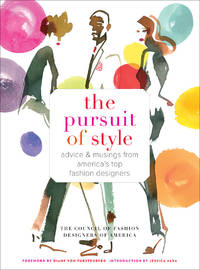
2014107544Harry N. Abrams. New. 2014. Hardcover. 1419706217 . FREE UPGRADE to Courier/Priority Shipping Upon Request - IN STOCK AND IMMEDIATELY AVAILABLE FOR SHIPMENT - Flawless copy brand new pristine never opened - -- with a bonus offer-- . Harry N. Abrams hardcover
187454872Boston: C.F. Hovey & Co. 1874. Folio. 13.5 x 11 in. 36 pp. 1 59 1 leaves. first 36 pp. incorporating title Memorandum pages several ALS letters and invoices on letterhead 8 pp. on graph paper w/ samples incorporated into the text 2 additional leaves of tissue thin manuscript copies from blotter 925 original fabric samples pinned-in glued-in and laid in sized from .5 x .5 in. up to 6 x 13 in. including a myriad of colours tartans plaids flannels silk blends cottons poplin cottons woolens etc. Original plum-coloured factory sample book purchased by Hovey from stationer P.L. Morin Paris who specialized in producing blank scrapbooks for factory sample cards printing & stationery registers w/ label mounted on front pastedown worn rubbing spine perished hinges loosed somewhat shaken still a remarkable unsophisticated exemplar preserved in folding case. This exceptional Victorian fabric sample order book assembled by a buyer for C.F Hovey & Co.’s fall fashion season furnishes an invaluable time capsule of colours textures and preferences in the 1870s. This era in women’s fashion driven by Parisian and other European design houses demanded extraordinary amounts of fabrics with an emphasis on the back of the skirt long trains and fabric draped up into bustles with an abundance of flounces and ruching. More significantly there was a tremendous growth in patterned poplin fabrics bright cotton & silk fabric blends as well as brilliant jewel colours. This order book with hundreds of different samples also offers a fantastic peek into the Victorian obsession with tartans and plaids driven by the mystique and example of Queen Victoria the ever-growing popularity with the historical romances of Sir Walter Scott celebrating the Highlanders and the poetry of Robert Burns. Tartan and plaid patterns were used in gowns dresses shawls veils hats purses and many fashion houses would often choose a particular clan pattern to celebrate and promote in their sales literature. Men’s suits coats and jackets were buttoned high on the chest the woolens became lighter weight and more durable as well of better quality and fashion designers for Hovey & Co. also incorporated rough finish woolens twills and tweeds into their clothing offered for sale. Many of the fabrics were also sold in Hovey & Co. fabric department in assorted lengths as well as ends for uses by Victorian women in home craft projects. Johnson focused on buying in the major wholesale textile dealers and markets of Europe during the 1870s including Stavert Tigomala & Co. one of the largest textile commission houses in Bradford UK; Firth Booth & Co. who specialized in bright cotton poplin plaids tartans wool blends and moire; Chamberlin Donner & Co. of Manchester one of the largest wholesale merchant houses shippers & traders in the British Empire; A. Van Bergen & Co. in Paris France whose beautifully patterned cotton and silk blends and woolens were enhanced by the award-winning dyes of Blanche at Puteaux; Les Fils de Th. Le Grand with wool blends twills and rough finish woolens. The sizes of the orders were remarkable and show the strength of Hovey’s customer base with one pair of invoices showing orders from Firth Booth & Co. totaling £ 7785 or over £ 855000 in present day value. However as evidenced by letter from Charles Kretschmann in Berlin who notes that Johnson in his June 24 1874 visit was “not pleased with the Berlin style of garments for this season and ordered only a very small lotâ€C.F. Hovey & Co. was founded by Charles Fox Hovey in 1833 as a dry goods merchant and with in a few years became a large department store located on Summer St. Through the years up to his death in 1859 he brought on many partners and was an ardent abolitionist and supporter of women’s rights establishing the Hovey Fund. After his death in 1859 Thomas Mack and Augustus De Puyster took over the running of the company and expansion through the Civil War. Johnson 1839-1927 was a Harvard grad clerk for Hovey & Co. and Civil War Veteran who rose from 1st Lieutenant in Co. H. Massachusetts 44th Infantry to Full Adjutant before mustering out right before Gettysburg. Hovey & Co. survived the massive fire of 1872 by employees soaking all the woolen blankets on the sales counters in water and placing over the roof and windows to protect the building from the flowing cinders expanded into store fronts on Chauncy and Avon Streets and was the first retailer to adopt the policy of requiring monthly payments on credit accounts. See: The History of the House of Hovey 1919; Charles Boston Looking Back at C.F. Hovey’s of Boston Shopping Days in Retro Boston May 6 2011; History of Fashion 1840-1900 Victoria and Albert Museum 2016. C.F. Hovey & Co., hardcover
183362953[Leipzig, Industrie-Comptoir / Baumgärtner etc.], (1833-1856). Small queer-folio (22 x 28,5) cm. Nice later light brown half calf from ca. 1900 with five raised bands and gilt lines to spine (Carl Petersens Enke). Slight wear to extremities. 100 engraved plates, in contemporary colouring. A bit of even browning and occasional offsetting. A few plates with more browning. Some plates with tiny holes in blank margin, from original stiching (having been vertically bound with text-leaves). Occasional light creasing. One plate with a tear (no loss). A few plates signed A. Brückner, most plates numbered and dated, and some plates having ""Extra-Kupfer"" or ""Les Modes Parisiennes Réunis"" (the last five) underneath.
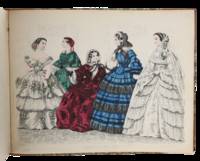
183362953Leipzig Industrie-Comptoir / Baumgärtner etc. 1833-1856. Small queer-folio 22 x 285 cm. Nice later light brown half calf from ca. 1900 with five raised bands and gilt lines to spine Carl Petersens Enke. Slight wear to extremities. 100 engraved plates in contemporary colouring. A bit of even browning and occasional offsetting. A few plates with more browning. Some plates with tiny holes in blank margin from original stiching having been vertically bound with text-leaves. Occasional light creasing. One plate with a tear no loss. A few plates signed A. Brückner most plates numbered and dated and some plates having "Extra-Kupfer" or "Les Modes Parisiennes Réunis" the last five underneath. <br/><br/><em>A lovely collection of 100 beautiful contemporarily coloured engraved fashion-plates from between 1833 and 1856 importing the highest Parisian fashion of the time to Germany. This beautiful collection magnificently documents the clothing fashion and development of two decades primarily for women but also for children and men. Also in the mid-19th-century Paris was seen as the quintessence of elegance and style. The Allgemeine Moden-Zeitung kept the German-speaking public up to date with the latest fashions from Paris. The magazine “Les modes parisiennes reunites†did the same; that too was produced for the German public despite its French title. As well as outfits for appearing in high society eg. at the theatre the fashion plates collected here show clothes and notably also accessories for almost all other parts of life - paying and receiving social calls going for walks attending different events musical siorées going out with the children etc. “As part of her evening wardrobe every fashionable lady simply had to have elegant dresses in brightly coloured silks and satins with frills and lace bows and flounces tight bodices natural waistlines and exposed shoulders which gave the female figure an hour-glass silhouette. The first thing that strikes one about these ladies’ fashions are the stiff voluminous underskirts. Horsehair crinolines invented in 1850 supported wide sweeping skirts which could measure up to two or two-and-a-half metres in diameter and made the upper body look even slimmer.†Deutsches Historisches Museum. "From the 1820s onwards and particularly under the ostentatious Second Empire 1852–1870 the classicising taste of the Napoleonic era changed completely. Instead fashion now drew inspiration from the elegance of the Rococo period so much so that the period became known as the “second Rococoâ€. The waistline returned to its natural level but was awkwardly styled – at least from a health point of view: agonisingly tight corsets emphasised the so-called “wasp waistâ€. Ostensibly guided by aesthetics on closer inspection this fashion trend also had social consequences: with styles that afforded women so little freedom of movement fashion focused on the ostentatious requirements of ladies from the upper echelons of society who didn’t have to work. Practicality was not its concern. This ostentatious and – certainly from the perspective of the 21st century – inconvenient fashion style appealed not only to the fine ladies of high society but also to women from the middle classes and the petty bourgeoisie. The expansion of the textile industry and the rise of the chemical industry made the production of dyes fabrics lace and embroidery and the processing of raw materials and textiles imported from the colonies both quicker and cheaper.†DHM </em> hardcover
1947192141947 Gouache et mine de plomb, sur papier cartonné, signée en bas à droite, datée, 1947, 38 x 30.4 cm., encadrée.
1930225831930 1 Gouache sur fond argent, signée en bas à droite, (1930), 43 x 29,5 cm., encadrée.
in-4 grande, cartella editoriale, titolo con vignetta, 1 f. di prefazione , 54 magnifiche tavole in cartoncino incise su zinco e dipinte a mano da H.Rouit com notevole eleganza. Tutte le 54 tavole ragffigurano abbigliamenti femminili a figura intera o particolari dalla capigliatura alle scarpe, di vari popoli del mondo, dai barbari avanti Christo al XIX secolo (Egitto 6 tavole, Grecia 4, Roma 2, Bisanzio 1, Europa 40). Bella pubblicazione artistica, impressa in numero limitato di copie (la presente è il n.28). Cartella editoriale in cartone (dorso sciupato).. Colas, Bibliogr. du Costume et de la Mode, n. 2583..
107-Wo.J. Gouache, auf Velin, rechts unten signiert ?M.S.M?. 25,6:13,4 cm. Das Ganzfigurenporträt zeigt eine in der Mode der Jahrhundertwende gekleidete junge Dame der besseren Gesellschaft, die sich vermutlich zur Erholung in einem Seebad aufhält.
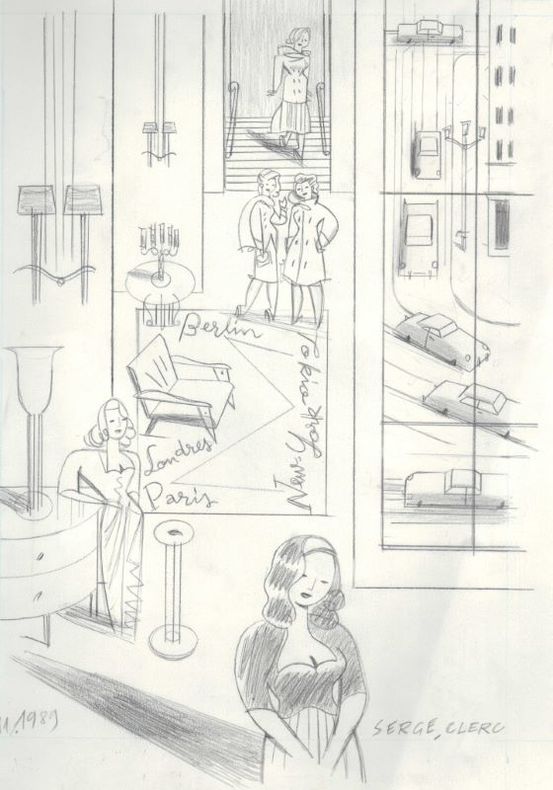
1990221191990 Mine de plomb sur papier, 1989, titrée en haut au milieu, datée en bas à droite, signée en bas à gauche.
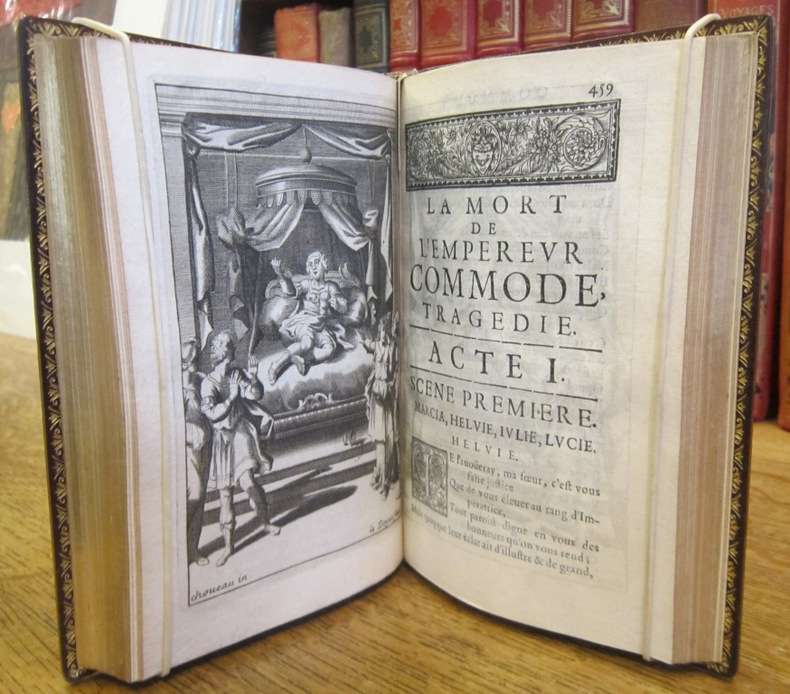
Due parti legate in un volume di cm. 25, pp. (4) 150 + (2) d'errata; (2) 183 (2). Con 55 tavole fuori testo di cui 45 a colori. Solida legatura coeva in mezza pelle rossa e cartonato rigido uniforme con piccole punte. Dorso liscio con titoli e filetti in oro. Belle sguardie colorate. Qualche trascurabile macchietta; esemplare genuino, marginoso ed in ottimo stato di conservazione. Edizione originale (una ristampa apparve nei primi dell'800 accresciuto di un ritratto dell'autore) di questo classico figurato settecentesco sul costume teatrale. Cfr. Colas 717; Cohen-De Ricci 227.
185781BBParis, Aubert, 1857 - 1869 -. Mit hunderten von kolorierten Modekupfern, Illustrationen und gefalteten Schnittmusterbogen. Halbleinenbaände der Zeit 3 Bände.
1660002130Paris Thomas Iolly 1660
177946405859À Paris, chez Duflos le jeune, graveur, croître Saint Benoît près de la rue Saint Jacques, (1779-1784) ; in-4, demi-chevrette verte, fil. dor. au dos, plats de papier vert gaufré. Superbe ensemble de portraits en pied gravés, coloriés à l’aquarelle avec des détails rehaussés d’or, chacun dans un encadrement de listel doré. Pierre Duflos, fils de Simon Duflos, est un graveur en taille-douce né à Lyon en 1742. Il s’installe à Paris en 1771 et se marie en 1780 avec Marie Thibault, elle aussi graveur à l’eau-forte. Marie a exclusivement travaillé avec son mari. Les planches de ce recueil sont le premier travail en collaboration des époux Duflos. Voir Inventaire du Fonds Français XVIIIe, tome VIII p. 91. pour Marie Duflos et p. 96 pour Pierre.Cette publication très ambitieuse fut annoncée dès 1778 dans un prospectus pour les souscripteurs. Chaque mois devait paraître un cahier de 12 estampes coloriées. La publication a été interrompue après les livraisons de 264 planches. Colas 2508 - Brunet II, 862 - Cohen 334 - Lipperheide 38.Le présent recueil renferme les 45 planches suivantes : ROBERT SORBON (Fonds Français Marie Duflos 1) - OLIVIER DE CLISSON (Fds. F. Pierre Duflos 106) - MICHEL DE L’HOPITAL (id. n° 110) - JEAN GERSON (id. 115) - PIERRE RAMUS (id. 116) - ANCIEN CHEVALIER DE L’UNIVERSITÉ DE PARIS (Marie D. n° 7) - ANNE DE MONTMORENCI (id. n°3) - HENRI DE LA TOUR D’AUVERGNE (Pierre D. n° 108) - JEAN DOUJAT (id. n° 119) - DOMINIQUE DE LA ROCHEFOUCAULD (id. n° 101) - ACHILLE DE HARLAY (Marie D. n° 5) - LOUIS PHILIPPE D’ORLÉANS (Pierre D. n° 99) - CHARLES ROLLIN (id. n° 114) - MAURICE DE SAXE (id. n° 109) - HENRY F. DAGUESSEAU (id. n° 111) - JEAN-JACQUES POUPAR (id. n° 104) - CHRISTOPHE DE BEAUMONT (id. n° 102) - OLLIVIER CROMWEL (id n° 165) - GUILLAUME LAUD (id 161) - THOMAS WOLSEY (Marie Duflos n° 24) - THOMAS HOWARD (P. Duflos 164) - EDOUARD CLARANDON (id. 171) - EDOUARD COKE (id. 173) - EDOUARD ZITTLETON (M. Duflos 26) - THOMAS CRAMER (P. Duflos 162) - LEICESTRIE (Marie Duflos 18) - GEORGE ZZELPCHINY archiprêtre hongrois (Marie Duflos 140) - ALBANAIS (id. 197) - DAMES D’INDOSTAN (id. 210) - HYDER-ALI Roy des Marattes (id. 209) - ROI DE BRAMA (Pierre D. 211) - ROI D’ANGOLA (Marie D. 239) - ROI DE BRAMA (Pierre D. 211) - NOBLE du royaume de Juida (Marie D. 241) - FAVORITE du Roy de Juida (Marie D. 37) - AMAR Roi de Juida (id. 36) - NOBLE INDIEN de la nation Ottawa (id. 41) - ALKMEY Roi de Guinée (Pierre D. 240) - CHEF DES HONDURAS (id. 253) - AKASINI Roi Dissini (id. 237) - NYAI Roi de Barsilly (id. 248) - ROI DE LA FLORIDE (id. 256).
Signed, without inscription, and numbered 894/1500 by Elgort upon first blank leaf. 109 pages. Sumptuous black and white photography throughout. Book, dust jacket and slipcase clean, bright and unmarked with negligible wear. A superb example of this photography classic. Book
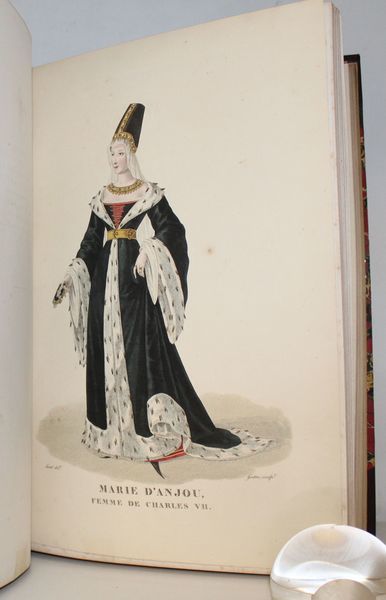
20441Paris, Chez l'éditeur, 1827. In-folio de: un faux titre, titre, 70 ff. de notices accompagnant chaque planche par La Mésangère, et 70 planches en couleurs, gravées sur cuivre et coloriées par Georges-Jacques Gatine d'après les dessins de Lanté . Légères rousseurs aux feuillets de texte et en marge de certaines planches. Demi-maroquin à long grain prune à coins, dos lisse joliment orné en long d'un décor romantique de fleurons et volutes dans un encadrement de filets dorés, tranches dorées. Note manuscrite en page de garde "Reliure de Desamblanx". Reliure postérieure.