Barbier, GeorgeBiblio.com
10 613 résultats
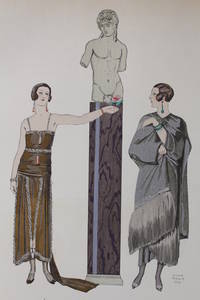
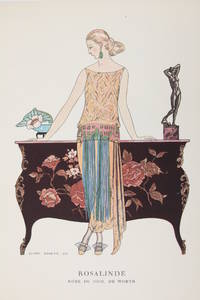
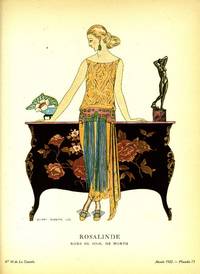
192213538Paris 1922. Print. Woman standing in front of a chinoiseries bureau with art deco sculpture and ceramics flanking her. Lithograph print with pouchoir color an intensive process that uses stencils to apply the vibrant color. 7 1/4 x 9 1/2". The "Gazette du Bon Ton" was a leading fashion magazine published from 1912 to 1925 the highlight of which were 10 colored plates in each issue. The magazine signed exclusive contracts with seven of Paris's top couture houses Cheruit Doeuillet Doucet Paquin Poiret Redfern and Worth so that the designers' fashions were shown only in the pages of the Gazette. An annual subscription was 100 francs the equivalent of over $400 today. unknown
190128opWaterlow and Sons Limited London for His Excellency the High Commissioner for South Africa 1901. First Edition. Hardcover. Very Good/No Jacket. 910 pages complete. A resolute copy. Half leather. The boards have Royal Arms and titling in gilt placid. The spine seams have been repaired with leather strips. The book is yet magisterial in appearance and purpose. The leathered corners and spine are worn rubbed scuffed. The boards have some light storage wear shelving wear and marks. They are tight and steady. The end papers are of newer vintage than the contents. The title page has user creases marks. The pages are most pleasing. They are comfortable very clean and clear certain dutiful diligent sober assured fresh-faced. fk. Our orders are shipped using tracked courier delivery services. Waterlow and Sons Limited, London for His Excellency the High Commissioner for South Africa hardcover
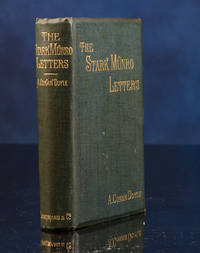
05019London: Longmans Green and Co. 1895. Mr. Stark Munro attempts to create a medical practice in partnership <br/>with the brilliant but unorthodox James Cullingworth.<br/><br/>DOYLE Arthur Conan. The Stark Munro Letters. Being a series of sixteen letters written by J. Stark Munro M.B. to his friend and former fellow student Herbert Swanborough of Lowell Massachusetts during the years 1881-1884. Edited and arranged by A. Conan Doyle. London: Longmans Green and Co. 1895. <br/><br/>First English edition. Octavo 7 1/4 x 4 7/8 inches; 184 x 124 mm. vi 346 1 printers device 1 blank pp. Publishers 24 pp catalog dated August 1895 bound in at end. Inserted frontispiece by Alice Barber Stephens with original tissue-guard. Minimal scattered marginal foxing otherwise fine.<br/><br/>Publisher's dark green cloth over beveled boards front cover and spine lettered in gilt black coated endpapers. A near fine copy.<br/><br/>7500 copies were published on 5th September 1895 priced 6/-.<br/><br/>The Stark Munro Letters is an epistolary novel that takes the form of twelve long letters written by J. Stark Munro between March 1881 and November 1884 and sent to his friend Herbert Swanborough of Lowell Massachusetts. Stark Munro is a recent graduate from medical school and the letters detail his attempts to create a medical practice in partnership with the brilliant but unorthodox James Cullingworth. The novel is in fact a thinly disguised account of Doyle's experiences with George Turnavine Budd with whom he was in partnership in Plymouth before finally setting up his own practice in Southsea Portsmouth in 1882.<br/><br/>Green and Gibson A18a. London: Longmans, Green, and Co.,, 1895 unknown books
05019London: Longmans Green and Co. 1895. Mr. Stark Munro attempts to create a medical practice in partnership <br /> with the brilliant but unorthodox James Cullingworth.<br /> <br /> DOYLE Arthur Conan. The Stark Munro Letters. Being a series of sixteen letters written by J. Stark Munro M.B. to his friend and former fellow student Herbert Swanborough of Lowell Massachusetts during the years 1881-1884. Edited and arranged by A. Conan Doyle. London: Longmans Green and Co. 1895. <br /> <br /> First English edition. Octavo 7 1/4 x 4 7/8 inches; 184 x 124 mm. vi 346 1 printers device 1 blank pp. Publishers 24 pp catalog dated August 1895 bound in at end. Inserted frontispiece by Alice Barber Stephens with original tissue-guard. Minimal scattered marginal foxing otherwise fine.<br /> <br /> Publisher's dark green cloth over beveled boards front cover and spine lettered in gilt black coated endpapers. A near fine copy.<br /> <br /> 7500 copies were published on 5th September 1895 priced 6/-.<br /> <br /> The Stark Munro Letters is an epistolary novel that takes the form of twelve long letters written by J. Stark Munro between March 1881 and November 1884 and sent to his friend Herbert Swanborough of Lowell Massachusetts. Stark Munro is a recent graduate from medical school and the letters detail his attempts to create a medical practice in partnership with the brilliant but unorthodox James Cullingworth. The novel is in fact a thinly disguised account of Doyle's experiences with George Turnavine Budd with whom he was in partnership in Plymouth before finally setting up his own practice in Southsea Portsmouth in 1882.<br /> <br /> Green and Gibson A18a. London: Longmans, Green, and Co.,, 1895 unknown
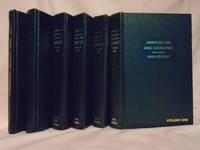
1974053580Mineola NY: American Air Mail Society 1974 1977 1978 1981 1985 1990 1974. Sixth edition . Hardcover. Fine. Five volumes plus Supplement Volume. The definitive guide to airmail flights within and in and out of the United States possessions territories and Canada. The five volumes total 2705 pages with listings of cachets descriptions values etc. The Supplement is 218 pages with updated values. All six volumes bound in original leatherette with lettering stamped in silver. A fine handsome set. <br/> <br/> American Air Mail Society [1974, 1977, 1978, 1981, 1985, 1990] hardcover
1955233936New York: Simon and Schuster 1955. First edition. 1 vols. 8vo. Cloth. Fine in almost fine dust jacket. First edition. 1 vols. 8vo. Simon and Schuster unknown books
1955233936New York: Simon and Schuster 1955. First edition. 1 vols. 8vo. Cloth. Fine in almost fine dust jacket. First edition. 1 vols. 8vo. Simon and Schuster unknown
19141260991914. Paris: Lucien Vogel 1914. <br /> <br /> Single plate. <br /> <br /> § From a spectacularly illustrated fashion magazine of the early 1900s depicting the cutting edge of style at the time. unknown
2020x-1516585224Cognella Academic Publishing 2020. Paperback. New. 304 pages. 10.00x7.99x0.64 inches. Cognella Academic Publishing paperback
2012SKU-8946AE12204176Kullyspel Press 2012. 1. Hardcover. Very Good. Signed by Alan Barber on the title page ; Very Good in a Very Good dust jacket; Hardcover; Dust jacket is clean and glossy with no tears and has not been price-clipped Now fitted with a new Brodart jacket protector; Light wear to the boards; The textblock edges are unblemished; The endpapers and all text pages are clean and unmarked; The binding is excellent with a straight spine; This book will be shipped in a sturdy cardboard box with foam padding; Medium Format 8.5" - 9.75" tall; 1.5 lbs; Tan dust jacket with title in brown and black lettering; 2012 Kullyspel Press; 312 pages; "David Kokernot: Rogue Soldier of the Texas Revolution" by Alan Barber. Kullyspel Press hardcover
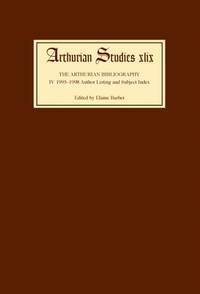
6488666Boydell & Brewer Group Limited pp. 492 . Hardback. New. Boydell & Brewer Group, Limited hardcover
2023N53333Calderini 2023. 868 col plates line drawings. 245x165mm. HB. NEW. . Text English. Presents the current state of knowledge on Italian butterflies providing detailed information on their morphology biology ecology ethology genetics distribution and conservation status. The butterflies will be covered in four volumes. This first volume includes a thorough general introduction and is dedicated to the Papilionidae Hesperidae and Pieridae. It includes identification keys to adults and preimaginal stages illustrated with colour plates and numerous line drawings. 9788850656097 Calderini unknown
2010SKU1749106Mosby 2010-08-06. hardcover. New. 8x1x12. New Book Ships with Tracking Mosby hardcover
614408772Earthscan Publications Ltd. pp. 216 1st Edition . Hardback. New. Earthscan Publications Ltd. hardcover
ria9781138759534_inpHardcover. New. New Book; Fast Shipping from UK; Not signed; Not First Edition; This collection brings together a comprehensive selection of documents from the history of US and Canadian economic thought from the 17th century through to 1900 hardcover
ria9781138759558_inpHardcover. New. New Book; Fast Shipping from UK; Not signed; Not First Edition; This collection brings together a comprehensive selection of documents from the history of US and Canadian economic thought from the 17th century through to 1900 hardcover
6580578Edward Elgar Publishing Limited pp. 360 . Hardback. New. Edward Elgar Publishing Limited hardcover
7685554-nnew. unknown
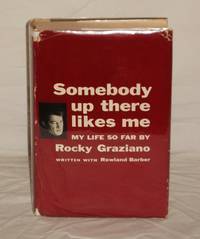
19551081<p>1955 Simon and Schuster first edition first printing.<strong><br /></strong><br /><strong>Inscribed to sportswriter Red Smith by Rocky on the front free endpaper 'To Red Smith - a real guy'. </strong><br /><br />Walter "Red" Smith was one of the most admired sportswriters of the 20th Century. Smith and Graziano were well acquainted. Ira Berkow's biography of Smith notes that the two men were occasional dinner companions with Smith regularly picking up the tab. Smith was also one of the strongest defenders of Graziano during Rocky's suspension by the New York State Athletic Commission.<br /><br />The book was acquired from the estate of journalist Harry Rosenfeld who was a colleague of Smith's at the New York Herald Tribune.<br /><br />Condition of the book is Good only. The binding is straight and sound. Inside pages are complete and unmarked. The main condition issue is old damp exposure. The bottom edge of the boards shows some loss of paper and discoloration. The spine cloth has some residual stiffness and the text block is also slightly stiff. See the listing photos.<br /><br />Condition of the dust jacket is Good. The DJ is complete not price clipped. It shows moderate shelf wear and edge wear. The DJ is protected in a new mylar cover.<br /><br />In sum a collectible and unique copy of this book that is in less than optimal condition.</p> Simon and Schuster hardcover
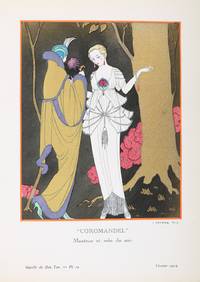
191489405Paris: Lucien Vogel éditeur 1914. Fine. Lucien Vogel éditeur Paris Février 1914 19 x 24.50 cm une feuille Original colour engraving richly heightened with gold printed on laid paper signed in the plate lower right. An original print used to illustrate the Gazette du bon ton one of the most attractive and influential 20th century fashion magazines featuring the talents of French artists and other contributors from the burgeoning Art Deco movement. A celebrated fashion magazine established in 1912 by Lucien Vogel La Gazette du bon ton appeared until 1925 with a hiatus from 1915 to 1920 due to the war the editor-in-chief having been called up for service. It consisted of 69 issues printed in only 2000 copies each and notably illustrated with 573 color plates and 148 sketches of the models of the great designers. Right from the start this sumptuous publication was aimed at bibliophiles and fashionable society Françoise Tétart-Vittu La Gazette du bon ton in Dictionnaire de la mode 2016 and was printed on fine vergé paper using a type cut specially for the magazine by Georges Peignot known as Cochin later used in 1946 by Christian Dior. The prints were made using stencils heightened in colors some highlighted in gold or palladium. The story began in 1912 when Lucien Vogel a man of the world involved in fashion he had already been part of the fashion magazine Femina decided with his wife Cosette de Brunhoff the sister of Jean creator of Babar to set up the Gazette du bon ton subtitled at the time: Art fashion frivolities. Georges Charensol noted the reasoning of the editor-in-chief: In 1910 he observed there was no really artistic fashion magazine nothing representative of the spirit of the time. My dream was therefore to make a luxury magazine with truly modern artists I was assured of success because when it comes to fashion no country on earth can compete with France. Un grand éditeur dart. Lucien Vogel in Les Nouvelles littéraires no. 133 May 1925. The magazine was immediately successful not only in France but also in the United States and Latin America. At first Vogel put together a team of seven artists: André-Édouard Marty and Pierre Brissaud followed by Georges Lepape and Dammicourt as well as eventually his friends from school and the School of Fine Arts like George Barbier Bernard Boutet de Monvel and Charles Martin. Other talented people soon came flocking to join the team: Guy Arnoux Léon Bakst Benito Boutet de Monvel Umberto Brunelleschi Chas Laborde Jean-Gabriel Domergue Raoul Dufy Édouard Halouze Alexandre Iacovleff Jean Émile Laboureur Charles Loupot Chalres Martin Maggie Salcedo. These artist mostly unknown when Lucien Vogel sought them out later became emblematic and sought-after artistic figures. It was also they who worked on the advertising drawings for the Gazette. The plates put the spotlight on and celebrate dresses by seven designers of the age: Lanvin Doeuillet Paquin Poiret Worth Vionnet and Doucet. The designers provided exclusive models for each issue. Nonetheless some of the illustrations are not based on real models but simply on the illustrators conception of the fashion of the day. The Gazette du bon ton was an important step in the history of fashion. Combining aesthetic demands with the physical whole it brought together for the first time the great talents of the artistic literary and fashion worlds; and imposed through this alchemy a completely new image of women: slender independent and daring which was shared by the new generation of designers including Coco Chanel Jean Patou Marcel Rochas and so on Taken over in 1920 by Condé Montrose Nast the Gazette du bon ton was an important influence on the new layout and aesthetics of that little dying paper that Nast had bought a few years earlier: Vogue. Lucien Vogel éditeur unknown
192455097Paris: Lucien Vogel éditeur 1924. Fine. Lucien Vogel éditeur Paris 1924 18 x 24 cm une feuille Original color print heightened with palladium printed on vergé paper signed in the plate. An original print used to illustrate the Gazette du bon ton one of the most attractive and influential 20th century fashion magazines featuring the talents of French artists and other contributors from the burgeoning Art Deco movement. A celebrated fashion magazine established in 1912 by Lucien Vogel La Gazette du bon ton appeared until 1925 with a hiatus from 1915 to 1920 due to the war the editor-in-chief having been called up for service. It consisted of 69 issues printed in only 2000 copies each and notably illustrated with 573 color plates and 148 sketches of the models of the great designers. Right from the start this sumptuous publication was aimed at bibliophiles and fashionable society Françoise Tétart-Vittu La Gazette du bon ton in Dictionnaire de la mode 2016 and was printed on fine vergé paper using a type cut specially for the magazine by Georges Peignot known as Cochin later used in 1946 by Christian Dior. The prints were made using stencils heightened in colors some highlighted in gold or palladium. The story began in 1912 when Lucien Vogel a man of the world involved in fashion he had already been part of the fashion magazine Femina decided with his wife Cosette de Brunhoff the sister of Jean creator of Babar to set up the Gazette du bon ton subtitled at the time: Art fashion frivolities. Georges Charensol noted the reasoning of the editor-in-chief: In 1910 he observed there was no really artistic fashion magazine nothing representative of the spirit of the time. My dream was therefore to make a luxury magazine with truly modern artists I was assured of success because when it comes to fashion no country on earth can compete with France. Un grand éditeur dart. Lucien Vogel in Les Nouvelles littéraires no. 133 May 1925. The magazine was immediately successful not only in France but also in the United States and Latin America. At first Vogel put together a team of seven artists: André-Édouard Marty and Pierre Brissaud followed by Georges Lepape and Dammicourt as well as eventually his friends from school and the School of Fine Arts like George Barbier Bernard Boutet de Monvel and Charles Martin. Other talented people soon came flocking to join the team: Guy Arnoux Léon Bakst Benito Boutet de Monvel Umberto Brunelleschi Chas Laborde Jean-Gabriel Domergue Raoul Dufy Édouard Halouze Alexandre Iacovleff Jean Émile Laboureur Charles Loupot Chalres Martin Maggie Salcedo. These artist mostly unknown when Lucien Vogel sought them out later became emblematic and sought-after artistic figures. It was also they who worked on the advertising drawings for the Gazette. The plates put the spotlight on and celebrate dresses by seven designers of the age: Lanvin Doeuillet Paquin Poiret Worth Vionnet and Doucet. The designers provided exclusive models for each issue. Nonetheless some of the illustrations are not based on real models but simply on the illustrators conception of the fashion of the day. The Gazette du bon ton was an important step in the history of fashion. Combining aesthetic demands with the physical whole it brought together for the first time the great talents of the artistic literary and fashion worlds; and imposed through this alchemy a completely new image of women: slender independent and daring which was shared by the new generation of designers including Coco Chanel Jean Patou Marcel Rochas and so on Taken over in 1920 by Condé Montrose Nast the Gazette du bon ton was an important influence on the new layout and aesthetics of that little dying paper that Nast had bought a few years earlier: Vogue. Lucien Vogel éditeur unknown
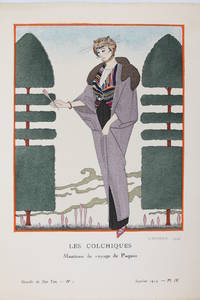
191484687Paris: Lucien Vogel éditeur 1914. Fine. Lucien Vogel éditeur Paris Janvier 1914 19 x 24.50 cm une feuille Original color print heightened with gold printed on laid paper signed at bottom right of the plate. Original engraving created for the illustration of La Gazette du bon ton one of the most beautiful and influential fashion magazines of the 20th century celebrating the talent of French creators and artists in the full bloom of Art Deco. Famous fashion magazine founded in 1912 by Lucien Vogel La Gazette du bon ton was published until 1925 with an interruption during the War from 1915 to 1920 due to the mobilization of its editor-in-chief. It consists of 69 issues printed in only 2000 copies and is illustrated notably with 573 color plates and 148 sketches representing models by great couturiers. From their publication these luxurious publications ""addressed bibliophiles and worldly aesthetes"" Françoise Tétart-Vittu ""La Gazette du bon ton"" in Dictionnaire de la mode 2016. Printed on fine laid paper they use a typeface specially created for the magazine by Georges Peignot the Cochin character adopted in 1946 by Christian Dior. The prints are created using the metal stencil technique heightened in colors and for some highlighted with gold or palladium. The adventure begins in 1912 when Lucien Vogel man of the world and fashion - he had already participated in the magazine Femina - decides to found with his wife Cosette de Brunhoff sister of Jean father of Babar the Gazette du bon ton whose subtitle was then ""Art modes et frivolités"". Georges Charensol reports the words of the editor-in-chief: ""In 1910 he observes there existed no fashion journal truly artistic and representative of the spirit of its time. I therefore thought of making a luxury magazine with truly modern artists . I was certain of success because for fashion no country can rival France."" ""Un grand éditeur d'art. Lucien Vogel"" in Les Nouvelles littéraires n°133 May 1925. The magazine's success is immediate not only in France but also in the United States and South America. Originally Vogel thus brings together a group of seven artists: André-Édouard Marty and Pierre Brissaud followed by Georges Lepape and Dammicourt; and finally his friends from the École des beaux-arts who are George Barbier Bernard Boutet de Monvel or Charles Martin. Other talents quickly come to join the team: Guy Arnoux Léon Bakst Benito Boutet de Monvel Umberto Brunelleschi Chas Laborde Jean-Gabriel Domergue Raoul Dufy Édouard Halouze Alexandre Iacovleff Jean Émile Laboureur Charles Loupot Charles Martin Maggie Salcedo. These artists mostly unknown when Lucien Vogel calls upon them will subsequently become emblematic and sought-after artistic figures. These same illustrators create the drawings for the Gazette's advertisements. The plates highlight and sublimate the dresses of seven creators of the era: Lanvin Doeuillet Paquin Poiret Worth Vionnet and Doucet. The couturiers provide exclusive models for each issue. Nevertheless some of the illustrations feature no real model but only the idea that the illustrator has of the fashion of the day. La Gazette du bon ton is a decisive step in fashion history. Combining aesthetic demands and plastic unity it brings together for the first time the great talents of the world of arts letters and fashion and imposes through this alchemy a completely new image of woman slender independent and audacious also carried by the new generation of couturiers Coco Chanel Jean Patou Marcel Rochas. Taken over in 1920 by Condé Montrose Nast La Gazette du bon ton will largely inspire the new composition and aesthetic choices of the ""small dying journal"" that Nast had bought a few years earlier: Vogue magazine. Lucien Vogel éditeur unknown
192284726Paris: Lucien Vogel éditeur 1922. Fine. Lucien Vogel éditeur Paris 1922 18 x 24 cm une feuille Original color print heightened in gold printed on laid paper signed at bottom left of the plate. Original engraving created for the illustration of La Gazette du bon ton one of the most beautiful and influential fashion magazines of the 20th century celebrating the talent of French creators and artists in the full flourishing of Art Deco. Famous fashion magazine founded in 1912 by Lucien Vogel La Gazette du bon ton was published until 1925 with an interruption during the War from 1915 to 1920 due to the mobilization of its editor-in-chief. It consists of 69 issues printed in only 2000 copies and is illustrated notably with 573 color plates and 148 sketches representing models by great couturiers. From their publication these luxurious publications ""address bibliophiles and worldly aesthetes"" Françoise Tétart-Vittu ""La Gazette du bon ton"" in Dictionnaire de la mode 2016. Printed on fine laid paper they use a typeface specially created for the magazine by Georges Peignot the Cochin character adopted in 1946 by Christian Dior. The prints are created using the metal stencil technique heightened in colors and some highlighted in gold or palladium. The adventure begins in 1912 when Lucien Vogel man of the world and fashion - he had already participated in the magazine Femina - decides to found with his wife Cosette de Brunhoff sister of Jean the father of Babar the Gazette du bon ton whose subtitle was then ""Art modes et frivolités."" Georges Charensol reports the editor-in-chief's words: ""In 1910 he observes there existed no fashion journal that was truly artistic and representative of the spirit of its time. I was therefore thinking of making a luxury magazine with truly modern artists . I was certain of success because for fashion no country can rival France."" ""Un grand éditeur d'art. Lucien Vogel"" in Les Nouvelles littéraires n°133 May 1925. The magazine's success is immediate not only in France but also in the United States and South America. Originally Vogel thus brings together a group of seven artists: André-Édouard Marty and Pierre Brissaud followed by Georges Lepape and Dammicourt; and finally his friends from the École des beaux-arts who are George Barbier Bernard Boutet de Monvel or Charles Martin. Other talents quickly come to join the team: Guy Arnoux Léon Bakst Benito Boutet de Monvel Umberto Brunelleschi Chas Laborde Jean-Gabriel Domergue Raoul Dufy Édouard Halouze Alexandre Iacovleff Jean Émile Laboureur Charles Loupot Charles Martin Maggie Salcedo. These artists unknown for the most part when Lucien Vogel calls upon them will subsequently become emblematic and sought-after artistic figures. It is these same illustrators who create the drawings for the Gazette's advertisements. The plates highlight and sublimate the dresses of seven creators of the period: Lanvin Doeuillet Paquin Poiret Worth Vionnet and Doucet. The couturiers provide exclusive models for each issue. Nevertheless some of the illustrations feature no real model but only the illustrator's idea of contemporary fashion. La Gazette du bon ton is a decisive step in the history of fashion. Combining aesthetic demand and plastic unity it brings together for the first time the great talents of the world of arts letters and fashion and imposes through this alchemy a completely new image of woman slender independent and bold also carried by the new generation of couturiers Coco Chanel Jean Patou Marcel Rochas. Taken over in 1920 by Condé Montrose Nast La Gazette du bon ton will largely inspire the new composition and aesthetic choices of the ""dying little journal"" that Nast had bought a few years earlier: Vogue magazine. Lucien Vogel éditeur unknown
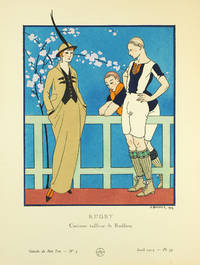
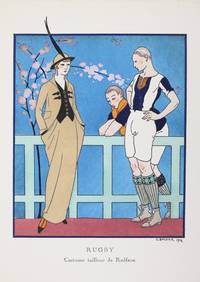
191484721Paris: Lucien Vogel éditeur 1914. Fine. Lucien Vogel éditeur Paris Avril 1914 19 x 24.50 cm une feuille Original color print on laid paper signed at lower right of the plate. Original engraving created for the illustration of La Gazette du bon ton one of the most beautiful and influential fashion magazines of the 20th century celebrating the talent of French creators and artists at the height of the Art Deco movement. The famous fashion magazine founded in 1912 by Lucien Vogel La Gazette du bon ton was published until 1925 with an interruption during the War from 1915 to 1920 due to the mobilization of its editor-in-chief. It consisted of 69 issues printed in only 2000 copies and was illustrated notably with 573 color plates and 148 sketches representing models by great couturiers. From their publication these luxurious publications ""were aimed at bibliophiles and worldly aesthetes"" Françoise Tétart-Vittu ""La Gazette du bon ton"" in Dictionnaire de la mode 2016. Printed on fine laid paper they used a typeface specially created for the magazine by Georges Peignot the Cochin character adopted in 1946 by Christian Dior. The prints were created using the metal stencil technique enhanced in colors and some highlighted in gold or palladium. The adventure began in 1912 when Lucien Vogel a man of society and fashion - he had already participated in the magazine Femina - decided to found with his wife Cosette de Brunhoff sister of Jean the father of Babar the Gazette du bon ton whose subtitle was then ""Art modes et frivolités."" Georges Charensol reports the editor-in-chief's words: ""In 1910 he observed there was no truly artistic fashion journal representative of the spirit of its time. I was therefore thinking of creating a luxury magazine with truly modern artists . I was certain of success because for fashion no country can rival France."" ""Un grand éditeur d'art. Lucien Vogel"" in Les Nouvelles littéraires n°133 May 1925. The magazine's success was immediate not only in France but also in the United States and South America. Originally Vogel assembled a group of seven artists: André-Édouard Marty and Pierre Brissaud followed by Georges Lepape and Dammicourt; and finally his friends from the École des beaux-arts including George Barbier Bernard Boutet de Monvel and Charles Martin. Other talents quickly joined the team: Guy Arnoux Léon Bakst Benito Umberto Brunelleschi Chas Laborde Jean-Gabriel Domergue Raoul Dufy Édouard Halouze Alexandre Iacovleff Jean Émile Laboureur Charles Loupot Maggie Salcedo. These artists mostly unknown when Lucien Vogel called upon them would subsequently become emblematic and sought-after artistic figures. These same illustrators created the drawings for the Gazette's advertisements. The plates highlighted and sublimated the dresses of seven creators of the period: Lanvin Doeuillet Paquin Poiret Worth Vionnet and Doucet. The couturiers provided exclusive models for each issue. Nevertheless some of the illustrations featured no real model but only the illustrator's idea of contemporary fashion. La Gazette du bon ton was a decisive step in the history of fashion. Combining aesthetic demands and plastic unity it brought together for the first time the great talents of the worlds of arts letters and fashion and imposed through this alchemy an entirely new image of woman elegant independent and bold also carried by the new generation of couturiers Coco Chanel Jean Patou Marcel Rochas. Taken over in 1920 by Condé Montrose Nast La Gazette du bon ton would largely inspire the new composition and aesthetic choices of the ""dying little journal"" that Nast had purchased a few years earlier: Vogue magazine. Lucien Vogel éditeur unknown
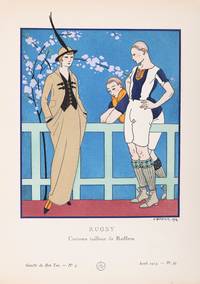
191489440Paris 1914. Fine. Paris Avril 1914 19 x 24.50 cm une feuille Original colour print printed on laid paper and signed in the plate lower right. Original engraving produced for the illustration of La Gazette du Bon Ton one of the most beautiful and influential fashion journals of the 20th century celebrating the talent of French designers and artists at the height of the Art Deco era. A celebrated fashion magazine established in 1912 by Lucien Vogel La Gazette du bon ton appeared until 1925 with a hiatus from 1915 to 1920 due to the war the editor-in-chief having been called up for service. It consisted of 69 issues printed in only 2000 copies each and notably illustrated with 573 color plates and 148 sketches of the models of the great designers. Right from the start this sumptuous publication “was aimed at bibliophiles and fashionable society” Françoise Tétart-Vittu “La Gazette du bon ton” in Dictionnaire de la mode 2016 and was printed on fine vergé paper using a type cut specially for the magazine by Georges Peignot known as Cochin later used in 1946 by Christian Dior. The prints were made using stencils heightened in colors some highlighted in gold or palladium. The story began in 1912 when Lucien Vogel a man of the world involved in fashion he had already been part of the fashion magazine Femina decided with his wife Cosette de Brunhoff – the sister of Jean creator of Babar – to set up the Gazette du bon ton subtitled at the time: “Art fashion frivolities.”  Georges Charensol noted the reasoning of the editor-in-chief: “’In 1910’ he observed ‘there was no really artistic fashion magazine nothing representative of the spirit of the time. My dream was therefore to make a luxury magazine with truly modern artists…I was assured of success because when it comes to fashion no country on earth can compete with France.’” “Un grand éditeur d’art. Lucien Vogel” in Les Nouvelles littéraires no. 133 May 1925. The magazine was immediately successful not only in France but also in the United States and Latin America. At first Vogel put together a team of seven artists: André-Édouard Marty and Pierre Brissaud followed by Georges Lepape and Dammicourt as well as eventually his friends from school and the School of Fine Arts like George Barbier Bernard Boutet de Monvel and Charles Martin. Other talented people soon came flocking to join the team: Guy Arnoux Léon Bakst Benito Boutet de Monvel Umberto Brunelleschi Chas Laborde Jean-Gabriel Domergue Raoul Dufy Édouard Halouze Alexandre Iacovleff Jean Émile Laboureur Charles Loupot Chalres Martin Maggie Salcedo. These artist mostly unknown when Lucien Vogel sought them out later became emblematic and sought-after artistic figures. It was also they who worked on the advertising drawings for the Gazette. The plates put the spotlight on and celebrate dresses by seven designers of the age: Lanvin Doeuillet Paquin Poiret Worth Vionnet and Doucet. The designers provided exclusive models for each issue. Nonetheless some of the illustrations are not based on real models but simply on the illustrator’s conception of the fashion of the day.   The Gazette du bon ton was an important step in the history of fashion. Combining aesthetic demands with the physical whole it brought together – for the first time – the great talents of the artistic literary and fashion worlds; and imposed through this alchemy a completely new image of women: slender independent and daring which was shared by the new generation of designers including Coco Chanel Jean Patou Marcel Rochas and so on… Taken over in 1920 by Condé Montrose Nast the Gazette du bon ton was an important influence on the new layout and aesthetics of that “little dying paper” that Nast had bought a few years earlier: Vogue. unknown