STEFANI Bartolomeo.MareMagnum

40 616 résultats
in-8 antico, pp. (8), 234, (10), rilegatura post. perg. antica rimontata, in moderno cofanetto. Marca tipogr. in legno ripetuta in forma diversa al colophon. Fregi e final. xilogr. Terza rara ediz. dell'opera dello Stefani apparsa per la prima volta a Mantova, per gli Osanna, nel 1662, e ancora a Venezia nel 1666. In questa edizione vi è l'aggiunta di altre ricette e accorgimenti per banchetti. Paleari p.702. Ex libris. Ottimo stato di conservaz. [226]
A HOLOGRAPH MANUSCRIPT COOKBOOK INITIALED TWICE BY FRANZ TOUSAINT (1879-1955), famed Orientalist author, poet, screenwriter, and translator. The title-page asserts that "Aucune de ces recettes ne se trouve dans un livre de cuisine". The preface (initialed by Toussaint) asserts that Toussaint's great-grandfather, the GÈnÈral Baron Toussaint (1772-1827) was friends with Grimod de la ReyniËre (they lived in the same building on the Champs-ElysÈes, a building that later became the American Embassy). Many of the recipes date to the 1820s and earlier. A later note in Toussaint¥s hand, after the preface: "Recettes relues en pleine famine, 1944." An inserted slip (dated 1949 and initialed by Toussaint) adds: "Ce carnet ne doit Ítre prÍtÈ ‡ personne, quelle que soit la personne et quel que soit le prÈtexte." 43 pages of French recipes follow, written in ink in Toussaint¥s minuscule but extremely clear and legible hand ("La seule vraie recette pour la bouillabaisse", "truffes ‡ la marÈchale", "poulet ‡ la mistral", "la bÈcasse Louis XV", and many, many others. Four blank leaves follow (obviously left blank so more French recipes could be included, if necessary. Then there are 3 pages of Turkish and Arab recipes, 2 blank leaves, and one page of rice dishes. Then a blank leaf and a tomato recipe. Then two blank leaves, then a bound-in ticket to the "Exposition coloniale internationale" held in Paris in 1931 (!), then seven more blank leaves. Then 7 pages of sauce recipes, then another blank leaf. Then 2 pages of recipes for stuffings and then 5 more blank leaves. Then a page with recipes for crËme anglaise and crËme au chocolat and then 4 more blank leaves. Then 3 pages of dessert recipes (including "PÍches en seins de VÈnus" and then another blank leaf. Then a page of recipes for "oranges confites" and "jus d'oranges [sic] confit", and then 5 more blank leaves. Then 4 pages of recipes for coctails, and then 7 more blank leaves. And finally a table of wines, followed by 2 final blank leaves. On fine Sorel-Moussel wove paper with a moleskine-type cover, with Toussaint's bookplate and inkstamp on preliminary blank. 12mo (17.5 x 11 cm). Tiny traces of wear to binding, else FINE AND BRIGHT. Unique, and worthy of publication.
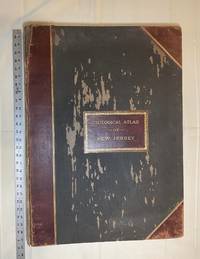
1889028277New York: Julius Bien & Co 1889. Condition of the binding is only Fair with pest damage. Leather over the spine has perished. Front and rear outer hinges cracks have been neatly reinforced with high quality clear flexible glue. Inner hinges are OK having been reinforced by the publisher/bookbinder with sturdy maroon cloth. SEE PHOTOS. Condition of all maps is NEAR FINE - FINE. NO foxing or toning. Pages are clean and unmarked. SEE PHOTOS. Includes a title page map of New Jersey Key to the System of Mapping and 19 linen-backed double page maps. Collated and complete per table of contents -- SEE PHOTOS. The maps are lithographically printed in blue red yellow and black. The double page maps open to an impressive 26.50" across by 36.50" tall. No year of publication is stated but Phillips 2149 in A LIST OF GEOGRAPHIC ATLASES Vol. 1 says 1889. The maps themselves are variously dated up to 1888. Titles of Sheets: No. 0. New Jersey State Map Geographic; No. 1. Kittatinny Valley and Mountain No. 2. Southwestern Highlands; No. 3. Central Highlands; No. 4. Northeastern Highlands; No. 5.Vicinity of Flemington; No. 6. Valley of the Passaic; No. 7. The Counties of Bergen Hudson Essex No. 8. Vicinity of Trenton; No. 9. Monmouth Shore; No. 10. Vicinity of Salem No. 11. Vicinity of Camden; No. 12. Vicinity of Mount Holly; No. 13. Vicinity of Barnegat Bay; No. 14. Vicinity of Bridgeton; No. 15. Southern Interior; No. 16. Egg Harbor and Vicinity; No. 17. Peninsula of Cape May; Unnumbered map. "New Jersey from Original Surveys based on the Triangulation of the U.S. Coast and Geodetic Survey Relief Map." Scale of first and last doublepage maps: 5 miles to an Inch. Scale of maps No. 1 to No. 17: 1 mile to an Inch. Bound in black pebble-grain cloth with gilt-stamped brown leather title label leather spine and corners leather backstrip has perished. SEE PHOTOS. The textblock could be easily rebacked or recased with no re-sewing required since all pages/maps are still securely bound together. Oversize Hardcover. 19.50" wide by 27" tall. This massive extremely heavy book will require SUBSTANTIAL extra postage at our cost based on your location. LeGear ATLASES OF THE UNITED STATES L5609. See also Schwartz and Ehrenerg's THE MAPPING OF AMERICA pp. 310-311. Phillips 2149. This massive extremely heavy book will require SUBSTANTIAL extra postage at our cost based on your location. Second Edition. Oversize Hardcover. Fair - FINE condition. Illus. by NOT a library discard. Atlas folio. Great Packaging Fast Shipping. Julius Bien & Co Hardcover
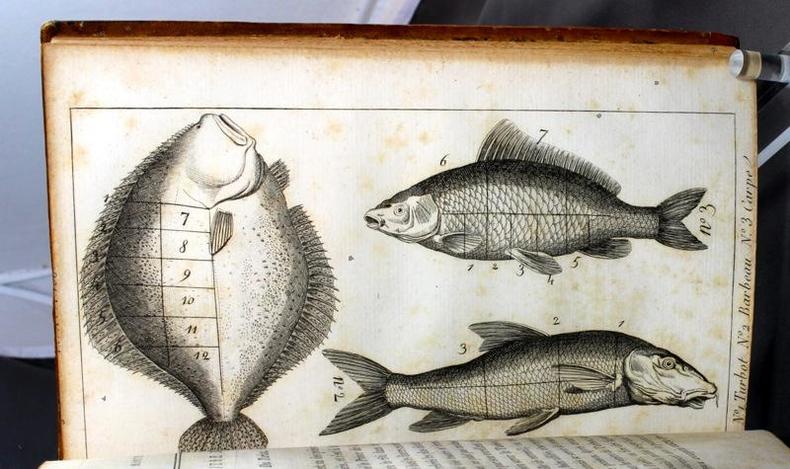
18084520Paris, Chez Capelle et Renand, 1808. In-8, plein veau raciné, roulette dorée encadrant les plats, dos lisse orné, pièce de titre rouge, 384 p.
19180002202JOBSTOWN NEW JERSEY TO THE FRONT IN FRANCE. Good. 1918. "Ernest Cook is my name/America is my nation/Jobstown NJ is dwelling place/And God is my Salvation/When I am dead and in my grave/And all my bones have rotten/This little book will tell my name/When I am long forgotten." So begins the diary on offer; a fascinating manuscript diary handwritten by a sensitive young soldier named Ernest Cook March 3 1895 - March 1972 who bravely fought on the front lines for America near the end of World War I. This 5 year diary a Christmas gift from his lady friend Alice D. Shinn as per inscription Makes for an interesting comparison between his life in each year - a life that changes dramatically with the conclusion of the War I. Beginning January 1918 we learn that Ernest is a 22-year-old member of 303rd Field Signal Battalion Company B in the US Army. Not yet on active duty they are stationed near Cook's home in New Jersey and his writings reflect monotonous days of inspections drills evenings at the YMCA with friends and visits with family. Cook is often sent to work with the horses in the stables and is no stranger to hard labor yet he is a sensitive young man as indicated by multiple entries indicating his insecurity about how friends and superiors feel about him. On January 9 1918 he writes: "Inspection Room orderly worked hard. I got very discouraged. My only comfort at home was thinking I had a few friends". Again on Valentine's Day 1919 his sensitivity and youth shine through: "Valentines from home and Violet and May. Fatigue duty very muddy. Physical exercises. Disappointed to the core. Snyder disliked me on a pass. Had a date with Alice". While he struggles to succeed at work he maintains a healthy interest in the opposite sex evidenced by his description of watching "fellows loveing couple of girls in barracks next door" and his tales of juggling multiple women such as the day he received a 'funny little letter from Ms. Kirby Riverside date with Alice and Hilda'. Things change for Ernest's Company in late February 1918 with the draft of many new men. On February 23 he describes 150 newly drafted men coming in and observes some of these new rookies as they struggle to fit in. On March 3 1918 Ernest has his 23rd birthday and just a week later he writes that there have been "rumours of moving". These rumours do not materialize until late May 1918 when Ernest's company moves to Europe. On May 26 1918 Ernest's company is called to ship out and they are on deck in "our battleship" by the afternoon of May 27. Their journey to England is treacherous. Cook describes intense sea sickness and his ship narrowly avoiding a torpedo strike. He finally arrives in England on June 8 after "sailing the Irish Sea" and here begins the most fascinating part of this diary - not just Cook's riveting tales of war but also the contrast of Ernest Cook soldier and Ernest Cook 23-year-old young man. His entries swing dramatically from militaristic on June 21st: "Took office over from the British. Had many an argument with the Townies and don't like them" to youthful on June 25th when he went "To visit a French Madammoisella". Cook's summer of 1918 is a melting pot of air raids and parties. Fighting and fun. As summer winds down Cook experiences his first major loss with the death of company member Leland S. Clancy on August 19 1918. He writes "lost L. Clancy by drowning. Very sad". He doesn't have very much time to process this loss as his company is moved out of England to France at the end of August. His company slowly makes its way to the front lines. On September 13 the horror of war creeps into his entry: "Thousands of prisoners coming in. We hike all night to try and keep up to Infantry. Heavy firing. First real sight of death of war dead men and horses". Between September 19-October 2 1918 he is on the front lines of the war and does not write anything. We find out later that is company loses many men and he is given increasing responsibility. Finally on October 3rd they are moved out of the line of fire and his writing resumes. His entry on October 3rd is simple: "Back to company moved out of the lines. Hiked all night and Hopkins lost my pack. The horse died on the road". In early November there are a pair of entries that exemplify the spirit of Ernest Cook: Nov 3 "Austrians lay down their guns" Nov 4 "Howie tied my pajamas all up in knots". Cook is in Blois France when the war ends. On November 11 1918 he writes with enthusiasm that "the Armistice signed. Howie Mac and I out in big parade everybody going wild .walked until I couldn't stand". The enthusiasm is short-lived as Cook and his company are stuck in France cold in the barracks until January 14th when they are finally given a ship to return home. Once again Cook writes about debilitating sea sickness. Finally on January 22 1919 Cook "Saw the lights of dear old N.Y. about 6pm and oh boy the cheers. I clinked to a life where I could see the dear old country and not be bothered". Then the next day: "Mayor out to meet us. Pulled in docks at 12 noon unloaded 2pm. All organizations welcomed us with eats such was great. Teleg. Mother. Up on ferry then a train to Merritt". The rest of the diary which Cook maintains until April 15 1919 details a post-war life of job offers work in Lewiston and lots and lots of new women to date! While Cook ends his diary in the spring of 1919 there is I entry he has dated 1920 that gives us the sense that he is happy in his new post-war life. This diary is a tribute to the boys and men who fought in World War I for America. It is an in-depth look at the life of a soldier both on the battlefield and off. Historians and researchers of World War I personal accounts will delight in Ernest's frank practical account of experiencing the atrocities of war and the sharing of emotional expressions on how he is affected as he comes of age. Overall G.; Manuscript; 16mo - over 5¾" - 6¾" tall; KEYWORDS: HISTORY OF ERNEST COOK JOBSTOWN NEW JERSEY WORLD WAR I 303RD FIELD SIGNAL BATTALION COMPANY B US ARMY ALICE D. SHINN WWI WORLD WAR I WW1 WORLD WAR ONE THE GREAT WAR US SOLDIERS MEN'S STUDIES GENDER STUDIES THE WAR TO END ALL WARS AMERICANA HANDWRITTEN MANUSCRIPT AUTOGRAPHED AUTHORS DOCUMENT LETTER AUTOGRAPH KEEPSAKE WRITER HAND WRITTEN DOCUMENTS SIGNED LETTERS MANUSCRIPTS HISTORICAL HOLOGRAPH WRITERS AUTOGRAPHS PERSONAL MEMOIR MEMORIAL PERSONAL HISTORY ARCHIVE DIARY DIARIES JOURNAL LOG PRIMARY SOURCE FIRST HAND ACCOUNT SOCIAL HISTORY PERSONAL STORIES LIVING HISTORY ANTIQUITÉ CONTRAT VÉLIN DOCUMENT MANUSCRIT PAPIER ANTIKE BRIEF PERGAMENT DOKUMENT MANUSKRIPT PAPIER OGGETTO D'ANTIQUARIATO ATTO VELINA DOCUMENTO MANOSCRITTO CARTA ANTIGÜEDAD HECHO VITELA DOCUMENTO MANUSCRITO PAPELBIOGRAPHY BIOGRAPHICAL AUTOBIOGRAPHICAL AUTOBIOGRAPHY PERSONAL NARRATIVES . unknown
1858LL 701<p><strong><em>"Nuevo Cocinero Americano en forma de diccionario que contiene todos los procedimientos empleados en la alta mediana y pequeña cocina la lista normal de los platillos que deben componer la distintas comidas que con variedad de nombres se hacen en el dia el método de aderezar los platos y de disponer los diferentes servicios de una mesa y los mas selecto de las artes del pastelero del bizcochero del confitero del destilador y del nevero con todo lo relativo a la repostería.—Encontrándose en él todos los artículos importantes de las obras de esta clase que se han publicado en castellano y otros nuevos relativos tanto a la cocina Mexicana como a la Francesa tomados estos últimos del cocinero real de las obras de Beauvilliers de los tratados de Carême del diccionario de Mr. Burnet de la nueva cocina económica y de otros autores. "</em></strong></p><p>4 1008 pages 6 unnumbered leaves of plates one of them in color: illustrated colored frontispiece with a detailed kitchen scene and hand colored salad arrangements below.</p><p>Probably the most popular nineteenth-century Mexican cookbook. This edition was preceded by an 1845 edition done in Mexico by Cumplido with a slight title variation. This is considered the true first edition. Rare cornerstone work.</p><p><strong><u>Bibliographical "mystery"</u></strong><u>:</u> Both Palau 196443 and OCLC describe this work with a different title "<em>Nuevo Cocinero Mexicano</em>" but with the same publisher pagination and illustrations as ours. As later editions changed the title to "<em>Nuevo Cocinero Americano</em>" this might be a unique copy or a proof title page of the first edition with the "new" title that the publisher planned to use in later editions.</p><p>As Dan Strehl says in the introduction to Encarnación's Kitchen: "<em>In Mexico the printing of cookbooks began in the 1830s with large comprehensive books authored mostly by men. By that time Mexico possessed a highly evolved cuisine combining distinctive Spanish Indian and French influences. This is documented in the first cookbook printed in Mexico in 1831 El cocinero mexicano. El Cocinero mexicano has had a remarkably long and important life in Mexican culinary literature. In 1845 the 1834 edition was rearranged in alphabetical order by Mariano Galván Rivera and published throughout the nineteenth century with reprints through the twentieth century</em>"</p><p>The editor of this edition reviews the history of this cookbook and others and explains the rationale for the present edition. He states that over 3000 copies of his own cookbook have been sold since it first appeared in 1831 in addition to the many others both produced domestically and imported from abroad. He further remarks that he has thoroughly edited the text removing some unpopular recipes and adding others especially in light of the fact that "<em>la cocina francesa ha invadido nuestros comedores</em>" thereby making Mexican cooking more cosmopolitan. In recipe revisions or new introductions however the recipes have been suited to Mexican tastes and ingredients.</p><p>The publisher also remarks specifically on the lithographs which he remarks have been included to clarify points and demonstrate how things are actually done. Finally he observes that he has kept the price low so that the book is "<em>al alcance aun de las personas de poca fortuna</em>." In keeping with the national character of the text under the article "Bien-me-sabe" he notes: "<em>Con este nombre podia disignarse todas las confectiones y condimentos de que se trata en este Diccionario…."</em></p><p>In an interesting typographical nod to the contents most of the type on the title page is set in the shape of a glass.</p><p># WorldCat U.S.Libraries: Berkeley San Diego BPL San Antonio with a slight different title page see above.</p> LibreriÌa de Rosa y Bouret
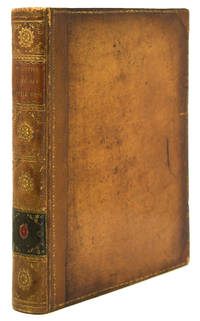
1788310845London: Printed for G. Nicol and G. G. J. and J. Robinson 1788. First edition. Frontispiece portrait. xvi 527 1 pp. 1 vols. 4to. Contemporary speckled calf boards with later morocco spine. Light foxing and offsetting to frontispiece some toning and scattered foxing but a clean copy overall. First edition. Frontispiece portrait. xvi 527 1 pp. 1 vols. 4to. FIRST BIOGRAPHY OF COOK. The first edition of this highly influential first English biography of Cook by the Anglican clergyman Kippis one of the leading biographers of his day. In addition to describing the three great voyages in depth Kippis also deals with Cook's earlier experiences including his duties aboard the Mercury during the siege of Quebec and his Newfoundland and Labrador surveys. Most of Samwell's narrative of Cook's death is included as well.<br/>While Kippis did not appear to be entirely insensitive to the long-term effects of European contact with Pacific peoples he championed Cook's humanitarian cultural and intellectual mission in the circumnavigation of the globe. In a study of European exploration of the Pacific Lynne Withey concluded that this volume by Kippis became a prominent justification for the involvement of Europeans in the Pacific islands for years after Cook's death Withey 406-407. <br/>The second appendix includes "The Moral an Ode" by the British poet novelist and religious dissenter Helen Maria Williams an old family friend of Kippis. Hill 935; Sabin 37954; Beddie 32; Holmes 69; Kroepelien 647; Lada-Mocarski 40; Howes K179 "aa."; Forbes 149. Provenance: John Thornhill armorial bookplate; The Beaufoy Library bookplate Printed for G. Nicol and G. G. J. and J. Robinson unknown books
2005BRG-22_5_961HarperSanFrancisco 2005-10-25. paperback. Very Good. 6x1x9. Very Good condition.Crisp pages. Clean cover and pages. Book shows minimal shelf wear. No highlighting/marking. Not Satisfied Contact us to get a refund. HarperSanFrancisco paperback
2 volumi in-8° (mm 162x93). Pagine (6), 500, (24); 496, (32). Marca tipografica, incisa su legno, a entrambi i frontespizi. Testatine e iniziali silografiche. Nel primo tomo 11 tavole incise fuori testo, di cui sei ripiegate (minimo restauro al margine inferiore bianco dell'ultima tavola). Legatura coeva uniforme in vitello moucheté. Dorso a cinque piccoli nervi, scomparti decorati con ferri floreali in oro, titolo in caratteri dorati. Lieve usura alle cerniere. Tagli spruzzati in rosso. Bella edizione che conferma il grande successo del manuale del grande cuoco francese Massialot, grande classico dell'alta gastronomia francese, corredato di nitide tavole a illustrare l'arte di disporre i coperti in tavole dalle forme più diverse. Ottimo esemplare, qualche leggera e occasionale brunitura. Nel primo Tomo, lieve gora al margine interno bianco di alcuni fascicoli. Ai contropiatti anteriori ex libris ‘Ex Bibliotheca Gastronomica Claudio Benporat'. . .
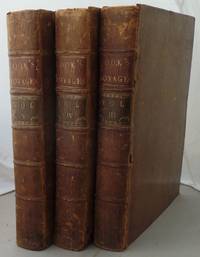
1785Q34GLTBRN9J<p>3 volume set in uniform contemporary full calf with gilt titles to spine labels - including Vol. III IV & V to spines. This was previously paired with another separate work by Cook with all 5 volumes bound in uniform bindings to create a larger set by a previous owner. 2nd edition 1785. 4to. Complete with 24 engraved plates maps and charts. Volume 1: x xcvi 421pp. 7 plates and charts. Volume 2: xiv 548pp. 11 plates and charts. Volume 3: xiv 556pp. 6 plates and charts. Bindings rubbed and cracked heraldic bookplate of Benjamin Clay on front free end-papers in each volume. Lacking the Atlas volume printed to accompany these volumes. A rather splendid set. A heavy set additional postage will be required for tracked orders outside the UK. q34</p> W. Strahan ; T. Cadell ; G. Nichol hardcover
10051P., Firmin-Didot, 1822. Deux volumes in 8 demi-chevrette, dos lisses ornés (reliure de l’époque), 4 ff. non ch.-IV pp., 348 pp.-2ff., 282 pp., 1 f. (errata). Frontispice, une planche montrant les costumes des cuisiniers, 8 planches dépliantes et 25 tableaux dépliants (plus un en double).
210638Montpellier, J.-G. Tournel, 1813 in-8, 180 pp., broché sous couverture d'attente de papier rose, dans emboîtage cartonné moderne.
album in -16, ff 16+1 cartolina; broch edit fig. Prima edizione di questa rara monografia didattica sul caffè, illustrata dalle fotografie di Margaret Bourke-White. La pubblicazione si compone di tre pagine di testo (con una guida su come realizzare un libro sul caffè), 11 fotografie a p. pag ed una a m. pag. in bianco e nero, una carta del Sud America con evidenziate le piantagioni di caffè ed una cartolina di risposta all'editore, il tutto presentato come se uscisse da una scatola di caffè. Fu ideato per i bambini, che avrebbero dovuto ritagliare i testi e le fotografie della Bourke per realizzare il proprio ''Coffee project book'' e rispondere poi a due test sulla produzione del caffé. La Bourke-White fu il primo fotografo straniero ad avere il permesso di scattare foto in URSS, la prima corrispondente di guerra donna e la prima donna fotografa per il settimanale Life, che utilizzò un suo scatto per la copertina del primo numero, il 23 novembre 1936. L'American Can Company era la più grande produttrice di lattine, tra cui quelle per il caffè: le fotografie fuoriescono da un contenitore sottovuoto. A causa del suo carattere effimero e deperibile, questa pubblicazione è rarissima.. .
1604NM005<p>ET successivement exécutés par le Commodore BYRON le Capitaine CARTERET le Capitaine WALLIS & le Capitaine COOK dans les Vaisseaux le DAUPHIN le SWALLOW & L"ENDEAVOU; traduite de l"angloi. Tomes premier second troisieme quatrieme cinquiéme sixiéme. A PARIS. Chez SAILANT et NYON rue de Saint-Jean-de-Beauvais; PANCOUCKE Hôtel de Thou rue des Poitevins. M. DCC. LXXIV. 1774 AVEC APPROBATION ET PREVILEGE DU ROI.</p>_x000d_<p>6 volumes encadernados em 3 in 8.º de 20x135 cm. Com iv lxxx 327 i; iv 347 i; iv 447 i; iv 462 ii; iv 374 ii; iv 312 págs. Encadernações inteiras de pele cansada com rótulos nervos e ferros a ouro em casas fechadas nas lombadas. Apresentam folhas de guarda decorativas e os cortes das folhas marmoreados em tons semelhantes. Incluem fitas marcadora de seda encontrando-se a do primeiro volume solta. Obra impressa sobre papel de linho avergoado.</p>_x000d_<p>Ilustrados com tabelas cabeções e florões de remate. Apresenta algumas notas impressas à margem.</p>_x000d_<p>Exemplares com marcas de degaste principalmente na cabeça e no pé das lombadas e nos cantos das pastas. Contêm no verso das folhas de rosto o ex libris de «O Conde da Ponte».</p>_x000d_<p> </p> I-51-E-8 unknown
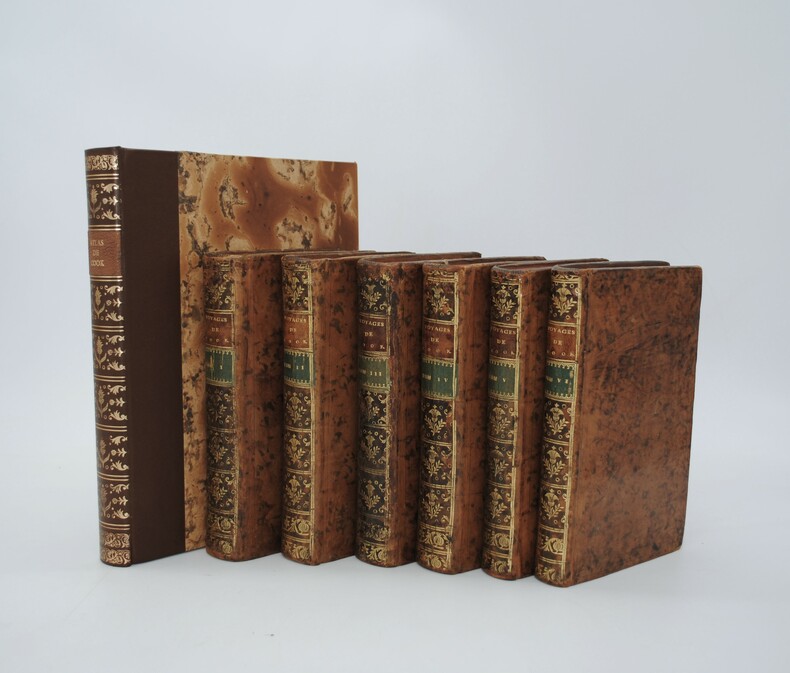
1778PHO-434Paris, Hôtel de Thou, 1778. 6 volumes in-8, veau marbré, dos lisse orné , pièce de titre et tomaison , tranches rouge (rel. de l'époque) avec son ATLAS (260x220mm) , relié demi cuir (reliure moderne) illustré de 65 planches H.T., nombreuses dépliantes,bords brunis , déchirure à une carte sans manque. Traduction française par Suard du récit du deuxième voyage de Cook (1772-1775), depuis l'Angleterre jusqu'aux îles de Pâques. Les Observations de Forster forment les deux derniers tomes. Ex libris C. Du Mesnil.
In-4 gr. (mm. 350x228), p. pergamena coeva, dorso a cordoni con tit. oro su tassello, pp. (2),V,582,(2),583-738; al frontespizio stemma del Cardinale Imperiali inc. in rame, testo su due colonne, ornato da grandi capilettera figurati inc. su legno. "Prima edizione" dell’importante catalogo riguardante la celebre biblioteca del Cardinale Giuseppe Renato Imperiali (1651-1736). “Patrizio bibliofilo, nei primi anni del Settecento aveva acquisito un ruolo di primo piano nel mondo romano proprio grazie alla sua biblioteca, raccolta nel giro di pochi anni ma rapidamente affermatisi tra le maggiori a Roma. Nel 1711 quando il suo bibliotecario, Giusto Fontanini ne pubblicò il catalogo, la biblioteca Imperiali comprendeva più di 15.000 volumi con una prevalenza di testi di diritto, filosofia e letteratura, ordinati alfabeticamente per autore (nalla prima parte) e per argomento (nella seconda). La biblioteca comprendeva anche importanti opere di gastronomia in una sezione dedicata a "De Re Culinaria". Vi figurano: Apicius Gavius (”De Re Culinaria”, Lugduni 1541) - Cervio Vincenzo (”Il trinciante”, Venetia, 1581) - Varenne François (”Le cuisinier François”, Paris, 1654) - Scappi Bartolomeo (”Dell’arte di cucina”, Venezia, 1570) - Platina i.e. Sacchus Baptista (”Historia de vitis..”, Colonia, 1625)”. Così Diz. Biografico Italiani,LXII, p. 306. Con fiorit. e lievi uniformi arross. ma certamente un buon esemplare.
Original menu card for the celebration dinner at the Waldorf Astoria Hotel in New York, on the occasion of John Fritz’s 80th birthday and the 1st bestowal of the »John Fritz medal«, awarded annually since 1902 by the American Association of Engineering Societies for outstanding scientific or industrial achievements. The menu is personally signed by John Fritz, who also was the 1st recipient of the medal. - The menu card was designed by Thomas A. Sindelar (1867-1923), also bearing his signature on the cover (blind stamped monogram) and on one of the plates (printed full name). Sindelar, an illustrator and designer of Bohemian origin had studied in Paris, presumably with Alfons Mucha, before he settle in the U.S. He remains best known for his elaborate, allegorical and symbolic designs for menu cards, e.g. for the »Lotos Club«, a New York men’s group of distinguished professional, literary, and academic pursuits. - Cover worn, in parts rusty and with little folds, inside very well preserved indeed. - Miloslav Rechcigl: Encyclopedia of Bohemian and Czech-American Biography, vol. 2 (2016).
169022238Leipzig und Gotha, Augustus Boëtius, 1690. 7 Bl., 263 (recte 259) S., 13 Bl. Mit gestochenem Frontispiz. 8° (16,5 x 10,5 cm). Pergament der Zeit.
16260044501626 Lyon, Barthelemy Vincent, 1626. Deux ouvrages reliés en un volume petit in-8 (115 X 179 mm) vélin souple à coutures apparentes, titre calligraphié au dos à l'encre noire (Reliure de l'époque); (4) ff. dont feuillet de titre, 342 pages (dont une planche à pleine page p. 338), (1) f. de planche et privilège au verso, (7) planches dépliantes - 313 pages, (4) pages de table. Petites restaurations à la reliure et au feuillet de titre.
Prima edizione in lingua italiana Restauro professionale al margine superiore delle prime carte, manca l'ultima carta bianca finale, nel complesso esemplare molto bello, assai fresco. La princeps latina è del 1581.
27231Genève Gérald Cramer 1950 in 4 (29x23) 1 volume broché, couverture rempliée illustrée en couleurs, 116 pages, avec 11 reproductions hors-texte en couleurs contrecollées, serpente légendée en regard, chemise et étui de l'éditeur. Ces 11 menus illustrés de dessins aquarellés furent conçus par Gauguin à Tahiti, ils sont reproduits ici en fac-similé d'une remarquable qualité. Tirage limité à 450 exemplaires sur vélin pur fil du Marais, celui-ci un des 50 exemplaires hors-commerce numérotés en chiffres romains. Paul Gauguin 1848-1903. Très long et bel envoi signé de l'auteur. Bel exemplaire ( Photographies sur demande / We can send pictures of this book on simple request )
in-4, pp. (2), 622 su 662 (mancando l'indice), legatura moderna in mezza pelle e angoli. Completo delle 32 tavole f.t. con oltre 300 disegni, eseguiti personalmente dal Vialardi, che conferiscono un'immediatezza didascalica sconosciuta nei manuali dell'epoca. Frontespizio incorniciato da vignette con immagini di vivande, arredi da tavola e cacciagione, il tutto stampato in oro. Edizione originale di questo noto ricettario in cui per la prima volta si utilizzano misure e pesi espressi con il sistema metrico decimale (p. 1). Il trattato fu particolarmente innovativo anche perché conteneva numerose ricette per bambini e promuoveva la conservazione dei cibi sottovuoto. Sono inoltre frequenti le ricette piemontesi, valdostane, nizzarde, genovesi e sarde, cioè di quelle aree che facevano parte del Regno di Sardegna. Il Vialardi si dimostra esigente nel raccomandare ingredienti freschi di prim'ordine, e abile nell'organizzare pranzi serviti alla francese o alla russa, completati dai vini più raffinati. Il presente lavoro fu composto dal Vialardi subuto dopo essere andato in pensione nel 1753 dopo trent'anni al servizio alla Corte Sabauda di Carlo Alberto e Vittorio Emanuele II. E' conservata , seppur con mancanze agli angoli, l'elegante brossura anteriore, impressa in oro su fondo nero, che riprende la bordura del frontespizio.. B.I.N.G. 2039. Westbury 222..
17849032664Dublin: H. Chamberlaine W. Watson Potts Williams et al. 1784. 1st. Hardcover. Very Good. First Irish Edition of Cook's third voyage. Lacks atlas. Volumes I and II written by Captain James Cook Volume III written by Captain James King. Bound in tree calf. Volume III has a fold-out table of comparative language for multiple islands intact and without damage. Text blocks are clean and bright. First and last few pages of each volume have minimal sunning and foxing last 80 pages of volume I has very light stain to top outside corner. Wear to extremities spine edges and heads through calf. 5 1/4 x 8 1/4 inches. 1529 total pages. <br/><br/> H. Chamberlaine, W. Watson, Potts, Williams, et al. hardcover
200414360Young Writers 2004. Paperback. Used: Acceptable. Paperback - 2004 - good condition 1-84460-611-2 - - . Isbn 1844606112. Young Writers paperback
Cm. 20, cc. (8) 288 (3). Marchio tipografico al frontespizio, testate, bei capolettera e molte figure nitidamente incise in xilografia nel testo. Legatura strettamente coeva in piena pergamena floscia con nervi passanti e titoli ms. al dorso. Qualche rado segno a matita nel testo. Esemplare assai genuino ed in ottimo stato di conservazione. Si tratta della migliore edizione italiana cinquecentesca di questa celebre opera che tratta di agricoltura, lavori in genere della campagna, arbocoltura, vino e viticoltura (tutto il secondo libro riguarda le qualità e i tipi di vino, i tipi di uva, descrive i vini più famosi, da consigli sulle cantine e le botti), gli animali domestici e loro malattie, gli alimenti, le proprietà delle erbe e loro utilizzo in medicina e nella cucina. Cfr. Paleari 787.