122 150 résultats
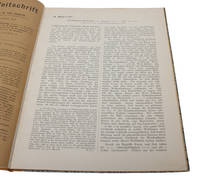
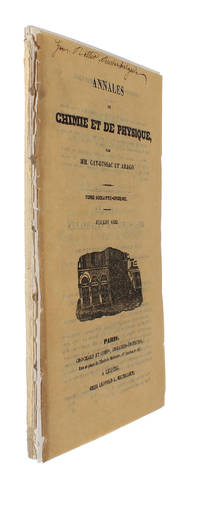
183944903Paris Crochard et Comp. 1839. Orig. printed yellow wrappers no backstrip. In 'Annales de Chimie et de Physique' 2e series Volume 71 Juillet- issue pp. 225-352 entire July-issue offered with orig. wrappers and titlepage to vol. 71. Arago's paper: pp. 313-340. <br/><br/><em>First printing of probably the first the Juillet issue of Annales official announcement of Daguerre's invention of the photographic process. The paper offered here preceeded the official report in Comptes Rendues which was published at the end of 1839 in the July-December issue. The first report of on the discovery was presented to the Royal Academy on January 7 1839 and delivered in full on August 19 1839 and printed in the July-Dec. issue of Comptes Rendues. The paper also preceeded Daguerre's own publication of 1839 "Historique et description du daguerréotypie."In 1839 Arago took a personal interest in announcing and popularizing the inventions of Niepce and Daguerre who were awarded government pensions as a result of Arago’s recognition of their inventions’ potential significance."In 1829 Daguerre went into partnership with Niepce who had managed to produce images by the action of light some three years earlier but had failed to make the process really practical. Daguerre carried on and began to use copper plates on which silver salts were deposited. ight was made to focus upon that and an image was formed. The light portions of the image darkened the salts while the shadowy portions left them unaffected. The unchanged salt was dissolved away by sodium thiosulfate a process that had been suggested by John Herschel and a permanent image of sorts was left behind."Asimov.Together with JEAN CHARLES PELTIER "Mémoire sur la Formation des Tables des Rapports qu'il y entre la Force d'un Courant électrique et la Déviation des aiguilles des multiplicateurs; suivi de Recherches sur la Causes de Pertubation des couples thermo-électriques." pp. 225-313. </em> unknown
175650678London N. Gibson 1756. 8vo. Contemp. full calf. Raised bands. Titlelabel with gilt lettering. Blindtooling to covers. A neath repair at upper compartment. Spine slightly rubbed. VIII4764 pp. A very faint dampstain to lower right corners. A few scattered brownspots. Printed on good paper. <br/><br/><em>Very scarce first edition in English a translation of the relevant part of Chr. V's Danske Lov 1683 relating to the Danish West Indies. All laws and regulations on St. Thomas St. Croix and St. John were based on this lawcomplex in the period of the Danish possession of these islands.Sabin No 18501. </em> hardcover
190747457Leibzig Johann Ambrosius Barth 1907. 8vo. Contemp. hcalf. Spine gilt. Title-and tomelabels with gilt lettering. Slightly rubbed. In "Annalen der Physik" Vierte Folge Band 23. VIII1000 pp. a. 4 plates. The entire volume offered. Einstein's paper: pp.371-384. A small stamp on titlepage Gmelin.Institut. Internally clean and fine. <br/><br/><em>First edition of the first explicit statement of Einstein's energy-mass equation E=mc2.Nearly all descriptions of Einstein's scientific work state that the mass-energy equivalence E=mc2 was first formulated in Einstein's 1907 review paper 'Über das Relativitätsprinzip und die aus demselben gezogenen.' published in 'Jahrbuch der Radioaktivität und Elektronik' see Weil no. 21 and Dictionary of Scientific Biography vol. 4 pp.323 for examples. However in his paper 'Über die von Relativitätsprincip geforderte Trägheit der Energie' the offered paper which predates the former mentioned by six months Einstein gave a clear statement of the mass-energy equivalence E=mc2. See Lanczos: The Einstein Decade pp.149-150 and 153 as well as Volume 2 of 'The Collected Papers of Albert Einstein' pp. 428.Einstein's first paper regarding the relation E=mc2 is his fourth 1905 paper 'Ist die Trägheit eines Körpers von seinem Energieinhalt abhängig'. In this short paper Einstein showed that a body releasing the energy E in the form of radiation will have its mass decreased by E/c2 and concluded that the mass of a body is a measure of its energy content e.g. that all energy has mass. The next time Einstein returns to the subject is in his 1906 paper 'Das Prinzip von der Erhaltung der Schwerpunkts Bewegung und die Trägheit der Energie.'. Here Einstein concluded that one must either ascribe the inertial mass E/c2 to any form of energy E or else give up the fundamental law mechanics regarding conservation of the motion of the center of gravity. Then finally in the 1907 paper 'Über die von Relativitätsprincip geforderte Trägheit der Energie.' the offered paper Einstein makes the decisive step of assuming that all mass has energy. On page 382 Einstein considers the total energy of a moving mass point as the sum of its kinetic energy and its rest energy. In classical mechanics it is most convenient to set the second term to zero but in relativistic mechanics one obtains the simplest expression by setting the rest energy equal to mc2. Einstein then continues to show that this stipulation cannot lead to a contradiction in any relativistic argument. In a footnote on page 382 Einstein states for the first time the equation E=mc2 and mentions that this equation is the expression of the principle of the equivalence of mass and energy - see Volume 2 of 'The Collected Papers of Albert Einstein' pp. 428.The volume contains another paper by Einstein "Bemerkungen zu der Notiz von Hrn. Paul Ehrenfest: "Die Translation deformierbarer Elektronen und der Flächensatz"" pp.206-208. - Weil No. 18.Collected Works Doc. 45. Weil 19. Boni 19. </em> unknown
180545129London W. Bulmer and Co. 1805. 4to. No wrappers as extracted from "Philosophical Transactions" 1805. With titlepage to Phil. Transactions Part I. Pp. 186-197. Having also the titlepage to the volume Part II 1805. A few scattered brownspots and very faint browning to outer margins otherwise fine and wide-margined. A small stamp to verso of titlepage. <br/><br/><em>First printing of probably the first work to discover and correct for the errors of the compass caused by the iron in ships by the first circumnavigator of Australia."Captain Matthew Flinders RN 16 March 1774 - 19 July 1814 was one of the most successful navigators and cartographers of his age. In a career that spanned just over twenty years he sailed with Captain William Bligh circumnavigated Australia and encouraged the use of that name for the continent which had previously been known as New Holland. He survived shipwreck and disaster only to be imprisoned for violating the terms of his scientific passport by changing ships and carrying prohibited papers. He identified and corrected the effect upon compass readings of iron components and equipment on board wooden ships and he wrote what may be the first work on early Australian exploration A Voyage to Terra Australis."Wikepedia </em> unknown
159355259Slesvig Nicolai Wegener 1593. 4to. Helpergamentsbind fra 1600-taller. Ved ombindingen er bagerst indsat ca. 100 blanke blade. Forgyldt titeletiket i skind på ryg. Etiketten med lidt tab. Gl. ejernavn Bille Brahe Hvedholm. 129 blade. På titelbladet er 2 linier som var trykt med rødt overskrevet med sort. Blad 1b med stort træsnit af Danmarks våben. Blad 2a med helsides træsnit Christian IV's portræt. Gl. ejernavn på titelbladet. Rent eksemplar trykt på kraftigt skrivepapir og med talrige samtidige tilskrifter i en net hånd. <br/><br/><em>Yderst sjældent forekommende anden udgave den første trykt af Brandis 1486 af den plattyske oversættelse af Jyske Lov ved Blasius Eckenberger. Der eksisterer kun en lille håndfuld bevarede eksemplarer i privat ejerskab. Det foreliggende eksemplar er en af varianteksemplarerne som er beskrevet af Lauritz Nielsen Dansk Bibliografi p.348 no.1072 og som gør sig bemærket ved flere udeladelser. Således er udeladt oversætterens eneretsprivilegium dedikationen fra oversætteren Chr. IV's autorisation m.v. = læg 2 og 3. I dette eksemplar starter teksten med "Vörrede" som har arksignatur D og slutter med blad 139 b som er et helsides træsnit af oversætterens bomærke. Repertoriet som Eckenberger udgav 1594 sammen med loven er heller ikke tilstede.Lauritz Nielsen 1072. - Thesaurus I 167. </em> unknown
186043085Leipzig Johann Ambrosius Barth 1860. Contemp. hcalf raised bands gilt spine. A few scratches to spine. In "Annalen der Physik und Chemie. Hrsg. von J.C. Poggendorff" Bd. 109. X660 pp. and 4 folded engraved plates. Kirchhoff's papers: pp. 275-301 and pp. 148-150. Internally clean and fine. Small stamps to verso of titlepage and plates. <br/><br/><em>First printing of a milestone paper by "The Grandfather of Quantum Theory" in which he formulates the law named after him "KIRCHHOFF'S LAW" which was the "key to the whole thermodynamics of radiation. In the hands of Planck Kirchhoff's successor to the Berlin chair it proved to be the key to the new world of the quanta well beyond Kirchhoff's conceptual horizon."DSB VII p.382."Kirchhoff's Law of Thermal Emission was formulated in 1859 Über das Verhältnis. - the paper offered. It is at the same time the simplest and least understood law in physics. Kirchhoff's law states that given thermal equilibrium with an enclosure the radiation inside will be always black or normal in a manner which is independent of the nature of the walls or the objects they contain. This is known as the concept of universality. That is that radiation within an enclosure can always be described by a universal function dependent only ontemperature and frequency. This universal function was first given us by Max Planck in 1900. Kirchhoff's law STANDS AT THE HEARTH OF ALL MODERN ASTROPHYSICS. It is the basis for setting the temperature of the stars for the gaseous model of the Sun and for believing that we now know the temperature of the entire universe."Pierre-Marie Robitaille.The research background for the paper was his unexpected observation that if the intensity of the solar spectrum increased above a certain limit the dark D lines were made much darker by the interposition of the sodium flame. he instantly felt that he had got hold of "something fundamental". These observations are described in the second paper offered here "Über die Frauenhofer'schen Linien." which was published first in 1859 in Monatsschrift der Berliner Academie.The volume contains many other importent papers in physics and chemistry by C.F. Schönbein Zöllner H. Fizeau Eisenlohr W. Heine Knoblauch K.G. Neumann W. Siemens etc. </em> hardcover
176053320Sorøe Jonas Lindgren 1760. Samtidigt hldrbd. Ryggen med blindtrykte dekorationer. Rygtitlen slidt. Hjørner lidt stødte. 83831 pp. samt 2 kobberstukne plancher. Spredte brunpletter og lettere brugsspor.Contemp. hcalf. Blindtooled decorations on spine. Titlelabel worn. Corners a bit bumped. Scattered brownspots and light traces of use. <br/><br/><em>Scarce first edition of this pioneering work by leading historians of ethnology considered the true beginning of scientific ethnology and anthropology. </em> unknown
177256743Hafniæ Godiche N. Möller 1772-92. - VIII 1834 og Registerbind IX 1878. Folio. Bind 1-7 i samtidige hellædrbind i flammet kalv. Ophøjede bind. Rig rygforgyldning. Forgyldte tome- og titelfelter i skind. Nogle kapitæler slidte. Bind 8 som ikke udkom i samtiden men først 1834 er i originalt papbd. med shirtryg. Bind 9 som først udkom 1878 er i nyere hfableabd. De 7 første bind indeholder en del foldetabeller kobberstukne faksimiler af håndskrifter kobberstukne foldekort etc. Disse 7 bind har tilhørt retshistorikeren J.L.A. kolderup-Rosenvinge. <br/><br/><em>The largest collection of Danish medieval texts. In 1834 - 30 years later - a supplementary volume was published called Vol. VIII this is present here together with the Index-volume published more than 100 years after the first volume. - From vol. IV P.F. Suhm was editor after the death of Langebek. </em> unknown
178644923Paris Moutard 1786. 4to. Contemp. full sprinckled calf with 5 raised bands on spine. Richly gilt compartments title-and tomelabels with gilt lettering. A small nich to leather at middle of front hinge. A small tear to rear hinge at upper compartment. "Mémoires fe Mathematique et de Physique Présentés à l'Academie des Sciences par divers Savans" Tome XI. 4198682 pp. Wide-margined fine and clean. <br/><br/><em>This collective work is the French Academy's monumental treatise on the chemistry and the production of Salpetre a topic of great importence for the war-industry in making gunpowder. The volume contains papers by Macquer Darcy Lavoisier Sage Baumé de la Rochefoucault Clouer and an anonymous report on experiments made in England CAVENDISH'S on the composition of nitric acid.papers by Cornette Thouvenel and Thouvenel Le Lorgna Gavinet and Chevrand de Beunie Romme Clouet and Lavoisier de Rochefoucault etc.Partington III p. 467 n."The Regie des Poudres et Salpetres had the monopoly of refining salpetre from 1775 until it was suppressed during the Revolution. Until his retirement in 1791 the leading light in it was Lavoisier who seems to have written its publications. - In 1775 the Academy offered a prize of 4000 livres for a process for procuring an abundant supply of salpetrethe announcement being written by Lavoisier. Altogether 66 papers were received and the prize was finally awarded in 1782 to the brothers Thouvenel who gave a full account of nitre plantations. The material was published in 1786 in one volume by the Academy. In it Lavoisier describes 'Experiences sur la décomposition du nitre par le charbon' said to have been made in 1784."Partington III pp. 466 ff."Peu de temps après que Lavoisier eut été nommé régisseur des poudres et salpêtres il suggéra à Turgot alors contrôleur général des finances l'idée de charger l'Académie des sciences de décerner un prix au meilleur mémoire sur la formation du salpêtre. 'Académie nomma une commission dont Lavoisier fut le rapporteur ; c'est lui qui examina tous les mémoires présentés au concours en fit l'analyse et quand l'Académie publia en 1786 un volume contenant l'histoire du prix du salpêtre et les mémoires présentés au concours c'est encore Lavoisier qui en fut le rédacteur. Ce volume fait partie du Recueil des mémoires de mathématiques et de physique présentés à l'Académie royale des sciences par divers savants et lus dans ses assemblées tome XI contenant le Recueil des mémoires sur la formation et la fabrication du salpêtre à Paris de l'imprimerie Moutard DCCLXXXVI. Sauf les mémoires des concurrents et un mémoire du duc de la Rochefoucault ce volume est tout entier de la main de Lavoisier. Il est formé de deux parties ; la première est intitulée : Histoire de ce qui s'est passé relativement au prix proposé sur la formation du salpêtre ; la seconde partie comprend les mémoires présentés au concours ainsi que des mémoires de Lavoisier et Clouet un mémoire sans signature mais qui appartient à Lavoisier le manuscrit autographe a été conservé le mémoire du duc de La Rochefoucault et les expériences de Lavoisier sur la décomposition du nitre par le charbon." </em> hardcover
186743456London Taylor and Francis 1867. 4to. No wrappers as extracted from "Philosophical Transactions" Vol. 157 - Part I. Titlepage to volume 155 and pp. 49-88. Titlepage with minor light browning at corners. Internally clean. A small stamp on verso of titlepage. <br/><br/><em>First appearance of this seminal paper in its full version from "Transactions" representing the announcement of Maxwell's final "Theory of Gases" and introduces the "Maxwell Distribution" in its final form a statistical means of describing aspects of the kinetic theory of gases a theory together with his electromagnetic theory are considered to be SOME OF THE GREATEST ADVANCES IN PHYSICS OF ALL TIMES. Everett considers this paper 1868 to be Maxwell's greatest single paper. Maxwell's discoveries laid the foundations of special relativity and quantum mechanics.One of Maxwell's major investigations was on the kinetic theory of gases. Originating with Daniel Bernoulli this theory was advanced by the successive labours of John Herapath John James Waterston James Joule and particularly Rudolf Clausius to such an extent as to put its general accuracy beyond a doubt; but it received enormous development from Maxwell who in this field appeared as an experimenter on the laws of gaseous friction as well as a mathematician.In 1866 he formulated statistically independently of Ludwig Boltzmann the Maxwell-Boltzmann kinetic theory of gases. His formula called the Maxwell distribution gives the fraction of gas molecules moving at a specified velocity at any given temperature. In the kinetic theory temperatures and heat involve only molecular movement. This approach generalized the previously established laws of thermodynamics and explained existing observations and experiments in a better way than had been achieved previously. Maxwell's work on thermodynamics led him to devise the Gedankenexperiment thought experiment that came to be known as Maxwell's demon. </em> unknown
190952692Leipzig S. Hirzel 1909. 4to. Bound with orig. printed wrappers in fine later hmorocco. Bound by Anker Kyster Eftf. 1968. Titlelabel in leather with gilt lettering on frontcover. Offprint Sonderabdruck from "Physikalische Zeitschrift" 10. Jahrgang. No. 3. Seite 104-111 here paginated as offprint pp. 1-8 and with textfigs. Clean and fine. <br/><br/><em>First edition - in the scarce offprint-issue - of this milestone paper where Minkowski was the first to conceive that the relativity principle formulated by Lorentz and Einstein led to the abandonment of the concept of space and time as separate entities and to their replacement by a fourdimensional "space-time" THE SPACE-TIME CONTINUUM. In the opening passage Minkowski declared: "Henceforth space by itself and time by itself are doomed to fadeaway in the shadows and only a kind of union of the two will preserve an independent reality."The work was simultaneously published in "Jahresberichte der Deutschen Mathematiker-Vereinigung". Leipzig 1909 in "Verhandlungen der Gesellschaft Deutscher Naturforscher und Ärzte". Leipzig 1909 a shorter version and as here.The paper was read 20th of September 1908 at a Conference in Cologne only a few months before his death. Here "he introduced the notion that made possible the expansion of the Relativity Theory of Einstein from its specific to its general form. The technical description of Minkowski's hypothesis is the four-dimensional Space-time continuum. Minkowski's space-time hypothesis was in effect a restatement of Einstein's basic principle in a form that greatly enchanced its plausability and also introduced importent new developments. Hitherto natural phenomena had been thought to occur in a space of three dimensions and to flow uniformly through time. Minkowski maintained that the separation of space and time is a false conception; thet time is itself a dimension comparable to lenght breadth and height: and that therefore the true conception of reality was constituted by a space-time continuum possessing these four dimensions. This strongly reinforced Einstein's objections to absolute concepts and supported his view of the relativity of events in nature." PMM No. 401. </em> hardcover
188946232Wiesbaden J.F. Bergmann 1889. Contemp. hcalf. Raised bands gilt titlelabel in leather with gilt lettering. Compartments richly blindtooled. A small crack to backhinge board still holding. VIII13191 pp. 5 lithographed plates numb. I-V No. I in chromolitography and 1 folded woodengraved plate Tafel A. Internally fine and clean but with some pencil undrlinings easy toremove and some underlinings in ink on the last leaves from p. 304 ff. <br/><br/><em>First edition of Nitze's important monograph on cystoscopy which revolutionized the surgery of the bladder. The first edition is of renowned scarcity."The invention of the cystoscope by Nitze revolutionized endoscopy but his true genius lay in his lifelong pursuit of better methods to diagnose and treat patients with urological diseases and in teaching others the practical use and value of cystoscopy. He also designed the first operating cystoscope took the first endoscopic photographs and published the first textbook in urology. The legacy of discovery of Max Nitze established the specialty of urology and a legitimate claim as the father of urology" Harry W. Herr.Garrison & Morton: 4184. </em> hardcover
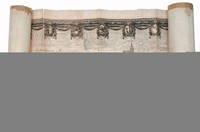
169632611Nürnberg 1696. The large engraving of the procession through Stockholm being composed of 13 engraved plates joined together measuring 30x450 cm. Plates numb. 1-13. Some mostly marginal dampstains some marginal tears some brownspots mainly marginal. Upper margin of plate 3 partly gone. Margins strenghtened at verso with brown paper. Some variation to paperquality but in general in good strong impressions. <br/><br/><em>The procession gives a panoramic view through Stockholm with the Swedish battleships salute-firing in the harbour. The engraving was published together with Pufendorf's work De rebus a Carolo Gustavi gestis.Nürenberg 1696. The procession was drawn by Erik Dahlberg who was an eyewitness and engraved by different engravers. </em> unknown
188548215Paris Gauthier-Villars 1885 a. 1886. 4to. No wrappers. In: "Comptes Rendus Hebdomadaires des Séances de L'Academie des Sciences" Tome 101 No. 17 102 No. 9 15 a. 103. No. 18. Titlepages to vol. 101 102 a. 103. Pp. 765- 848 459-529 835- 886 777- 840. Four entire issues offered. Pasteur's papers: pp. 765-772 459-469 835-838 a. 777-785. A stamp to verso of titlepages. <br/><br/><em>First printing of these groundbreaking papers in Immunology where Pasteur describes his rabies vaccine and the results he attained with it gave further proof of the value of attenuated virus as a protective inoculum against infective diseases in man and animals. THIS IS CONSIDERED PASTEUR'S GREATEST TRIUMPH Garrison & Morton No. 2541."The central problem in establishing a science of immunology was to discover methods of lowering the pathogenicity of the antigens while preserving their immunogenicity. In the case of smallpox Jenner this was done according to the accepted interpretation by utilizing strains accidentally attenuated through animal passage. In the present paper famous paper the first paper offered Pasteur shows how for a disease of wide distribution among mammals attenuation may be accomplished artificially."Hall "A Source Book in animal Biology" pp. 528 ff."Pasteur revealed the enormous medical and economic potential of experimental biology. He himself developed only one treatment directly applicable to a human disease - his treatment for rabies - but his widely publicized and highly successful efforts on behalf of the germ theory were immediately credited with saving much money and many lives. It is for this reason above all that he was recognized and honored during his lifetime and that his name remains a household word." DSB.Garrison & Morton No. 2541. - Parkinson "Breakthroughs" 1885 H. </em> unknown
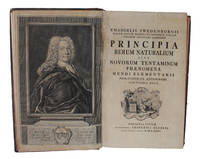
173450434Dresden et Leipzig Frederik Hekelius 1734. Folio. Contemp. full mottled calf. Upper half of spine rebacked. Raised bands. Lower part of spine gilt. A crack to leather at lower part of fronthinge cover not loose. Engraved portrait. 16452 pp. and 28 engraved plates on 26 sheets. A dampstain in upper part of inner margins throughout otherwise clean and wide-margined. The plates with some browning. <br/><br/><em>Scarce first edition of Swedenborg's main scientific work. The volume also form part one of his "Opera Philosophica et Mineralia"."In his Principia rerum naturalium Leipzig 1734 probably conceived as a counterpart to Newton’s Principia he sought a comprehensive physical explanation of the world based on mathematical and mechanical principles. While remaining faithful to the general principles of Cartesian natural philosophy which he had learned while studying at Uppsala Swedenborg elaborated upon them. According to his cosmogony the physical reality has developed from the mathematical point which was an entity between infinite and finite. Through a vortical movement implanted on the point a series of material particles developed the "first finiata "the second finita"and so on that eventually led to the cosmos in its present state. In contrast to Descartes Swedenborg believed that the planets had developed from the chaotic solar mass through expansion of its surrounding shell which finally joined to form a belt along the equatorial plane of the sun. It then exploded forming the planets and the satellites. Although the basic construction of Swedenborg’s thought heralded the later planetary theories of Buffon Kant and Laplace there is nothing to indicate that it exerted any direct influence on posterity." DSB.In 1738 Swedenborg's magnum opus was placed on the "Index Librorum Prohibitorum". </em> hardcover
186058334London War Office 1860-70. All of the large maps are lithographed one signed "lith. James Ferguson" with positions in colour. The measures given are paper sizes comprising: 1. Movements of the two Armies after the Repulse of Marshal Massena's Attack upon the Position of Busaco. 68 x 82 cm.- 2. Battle of Talevera de la Reyna fought on the 27th & 28th July 1809. 113 x 68 cm. - 3. Battle of Busaco. General Position of the French and allied Armies on the 26th September 1810. 68 x 100 cm. - 4-6. Battle of Fuentes D'Onoro Fought on the 3rd and 5th May 1811. Map 1-3. each 68 x 100 cm. - 7-15. all with the heading title Massena's Retreat No. 1-3 and 5-10 each around 51 x 67 cm. At end one untitled map. Some foldings strenghtened with tape. <br/><br/><em>We have been unable to decide whether these maps are a part of a series or just published separately.The Peninsular War was a military conflict between Napoleon's empire and Bourbon Spain for control of the Iberian Peninsula during the Napoleonic Wars. The war began when the French and Spanish armies invaded and occupied Portugal in 1807 and escalated in 1808 when France turned on Spain previously its ally. The war on the peninsula lasted until the Sixth Coalition defeated Napoleon in 1814 and is regarded as one of the first wars of national liberation significant for the emergence of large-scale guerrilla warfare. </em> unknown
165349198Leiden Joannis Maire 1653 - Amsterdam Ioannes Blaeu 1650. 4to. One contemp. full vellum. Contemp. handwritten titles weak to spine. First title in red/black with large engraved titlevignette. 81541 pp. Ars Historica 1653 - 169414 pp. Grammatistice etc. 1650 - 88315 pp. De Philologia 1650 - 1646733 pp. De Universae Mathesios. 1650. Fine and clean. <br/><br/><em>First edition of "De Qvattuor Artibus." which includes "De Universae Mathesios" with separate titlepage and second edition of "Ars Historica"The mathematical work: Poggendorff II 1235. "de Mathesios.": "According to prof. Cantor it is the first history of mathematics in its widest sense". Honeyman Coll. 3081. </em> hardcover
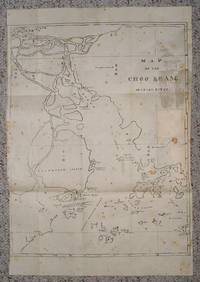
26060301N.p.ca 1800-1810 n.p. Single sheet map 32 x 47 cm.a bit of mild foxing old verso repairs English and Romanized Chinese place names old folds as is some very minor loss right & left edges else solid. EARLY AND OBSCURE WORK. RARE . . . . A VERY EARLY PRINT OF THE PEARL RIVER ESTUARY . . This is clearly an early and most obscure area map. It shows Canton at the upper left corner with the various confluenc- es of the Pearl River Choo Keang or now Zhu Jiang as it meanders down to the Great Western Channel and all of the islands around Hong Kong: Keangshan Island Lantao Lintin Lemma Channel Macau and the islands near it. Essentially all islands from the Pacific Ocean as it enters the whole estuary. . This work is basically a map of the Canton and the whole estuary showing virtually all of the islands and coastal lines. It also uses such early names as the "Bogue" aka Boca Tigris and shows a good number of Chinese characters for place names with the associated tanslated Romanization so the map can be read by foreigners as well as Chinese. translating. . Although undated this map appears to be made in an early time as Hong Kong while cited is not central and of no significance and is in fact to the extreme right and barely noticeable. The map was clearly done before Hong Kong had any role of importance indicating an early work. This was likely done during the time of Canton trade so it was more of a navigational guide rather than one used to point out any specific areas other than the Canton Estuary. . Because of its clarity and use of Chinese characters one could also ascribe the use to navigators who employed Chinese pilots to assist in sailing though the islands into the Pearl River to Canton and Whampoa or to Macau and its passages to Canton. . . unknown
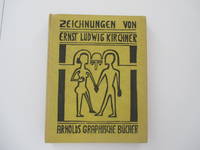
192510316AB1925. Dresden Arnold 1925. 275 : 21 cm. 38 pages 4 leaves with 18 original woodcuts 3 illustrations in the text and 100 partly coloured plates by E.L. Kirchner. Original cloth with original woodcut by Kirchner on the front cover. One of the most beautiful books of the German expressionism. Numbered copy of a small edition. Contains the following original woodcuts by E.L. Kirchner: Dube 355832833 835 -849. Extensive overview of the drawings of Kirchner until 1924. The whole book was designed by Kirchner. - With inscription of Mary Wigman on the first blank leaf. - "Ihrem Charakter nach verteilt sich die Gesamtheit der Zeichnungen auf vier Gruppen deren Grenzen ziemlich einwandfrei festzustellen sind und die man sämtliche nebeneinander in den drei Perioden nachweisen kann: Zeichnungen nach der Natur Zeichnungen aus dem Gedächtnis Studienzeichnungen und fertige Bildzeichnungen" from the introduction by W. Grohmann page 16f - Arnold Graphische Bücher Zweite Folge 6. - Spine a bit faded. - Schauer II 20. hardcover
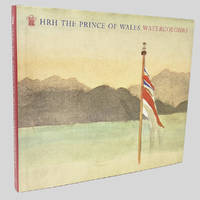
205<p>First Edition. Oblong quarto bound in original grey cloth stamped in silver with royal emblem to upper board original pictorial dust jacket with colour illustrations throughout pp. 160. Published by Little Brown and Company London 1991.</p><p>A signed presentation copy from the King to Julian Bicknell inscribed by the King on the half-title page:</p><p><em>"For Julian - </em></p><p><em>With very best wishes for Xmas 1991 from </em></p><p><em>Charles"</em></p><p>Some light wear to the dust jacket and a touch of toning to the flaps a little toning to the page edges as usual very light finger soiling to the bottom right corner of the half-title page; a near fine example.</p><p>Provenance: Julian Bicknell born 1945 is a new classical architect and perhaps most famous for designing the Palladian Henbury Hall Cheshire. At the time the King presented Mr Bicknell with this book he was deeply involved in the Prince's Institute of Architecture as a trustee. He was also a member of their academic board a tutor in London and the summer schools in both France and Italy.</p><p>Art is one of the King's great passions and he wrote in the introduction to this work:</p><p>"I have tried in these pages to convey something of the part that painting plays in my life. In many ways it helps to keep me reasonably sane and if it doesn't appeal to the critics then it's just too bad! I only hope that those who are rash enough to thumb through this book may be helped to discover what infinite beauty and delight there is in the details of God's creation".</p><p>The Queen Mother wrote the preface for the book. In part the Queen Mother wrote:</p><p>"I am delighted that this book is being published and it is nice to think that a wider audience will now have a chance to see some of the watercolours painted by my grandson in many different parts of the world. Ever since he was a small boy Prince Charles has taken an interest in his surroundings and has developed his powers of observation to the point where painting became a necessary and vital expression of that interest."</p><p>The money raised from sales of the book was given to the Prince of Wales's charities.</p><p>Please contact us for shipping costs if ordering from outside the UK.</p> Little, Brown and Company. hardcover
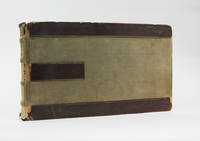
184361919-1920. Large format oblong ledger 49cm x 30cm. 500 printed pages filled out in ink manuscript each with three entries per side providing the name address age ethnicity birthplace birthplace of parents literacy and occupation of each person charged followed by the allegation time and place Inside/Outside/Saloon/Dance Hall - delete as appropriate! name and address of the complainant name of the arresting officer a detailed written description of the crime and finally the action taken by the court. Completely filled all in the same hand presumably the desk officer at the station. Typed title label to the front pastedown states: "7th Detective District. / Number 1 / Opened 12-01 AM January 1 1919 / 1925 Bathgate Avenue / Closed 12 Mid. June 26th 1920." Contemporary half calf over cloth boards. Very good the binding cracked at the front inner-hinge and with wear and loss to the spine and extremities. The contents with the first page loose and clipped loosing an entry column on either side one other page detached and a little ragged at the edges and with the occasional mark or nick elsewhere are otherwise entirely complete and in very good order. A fascinating and historically valuable insight into life in the Bronx at the end of the First World War. The cases include murder rape assault robbery from prams to diamond rings hit and runs drug smuggling forgery desertion from the army abandonment of one's wife and children possession of weapons abduction "seduction" and "malicious mischief". Those involved reflect the predominantly working class nature of the district as well as its ethnic diversity with a great range of nationalities and occupations represented. There are also a surprisingly high number of children as young as eight and of both genders charged with offences usually forms of robbery/burglary for which they often operated in groups. Included are accounts of people being stabbed in the back in pool rooms impersonating police officers numerous bank robberies resulting in "5 years in Sing Sing" shootings in saloons escaped fugitives a woman selling home-brewed whisky that caused drinkers to go blind a ten year old boy reported by his own mother for stealing $30 from her bedroom and a father accusing his daughter of "remaining away from her home at night and keeping company with immoral and vicious persons". From 12 year old Sigmund Rydyesky setting fire to his classroom landing him in the catholic protectory and 75 year old Hugh Doon throwing milk bottles at children playing in front of his house "discharged into the custody of his daughters" to organised crime exploding safes sexual abuse and the desperation of poverty the book moves in turn between the amusing the thrilling and the deeply tragic. The structural injustice commonly encountered by women in particular is highly apparent with charges such as "procuring criminal abortions" appearing throughout as well as the note "discharged" being commonly found in the "final action of court" box in rape cases. Indeed in one case a fifteen year old girl is sent to a juvenile asylum for being "incorrigible" while her abuser is handed a suspended sentence. Containing an immense wealth of information the log forms a rare survival and a fantastic piece of New York's history showing the life of the city in all its diversity and providing a window into the stories of thousands of lives. Further details and images for any of the items listed are available on request. Lucius Books welcomes direct contact with our customers. 1919-1920 hardcover
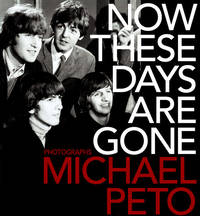
57682Guildford: Genesis Publications 2006. Rock/pop. SIGNED LIMITED EDITION DELUXE ISSUE number 296 of 350 copies. Large quarto 32 x 28cm pp.256. Printed in Milan on 200gsm matt-art paper illustrated throughout with photographs reproduced in duotone with image varnishing. Elaborately bound in full scarlet hide blocked in gold and white to upper red endpapers all edges gilt housed in original leather-edged cloth slipcase with four black and white photographs of each Beatle laid down to upper the whole protected in a printed black felt drawstring bag. Signed by Sir Alan Langlands custodian of the Michael Peto Collection and Richard Lester pioneering director of The Beatles' films. DELUXE issues were bound in full leather rather than a quarter binding and include three separate hand-numbered photographs showing John Lennon and comedian Peter Cook during the filming of 'The Pipesucker Report' for the BBC show 'Not Only But Also' 1966. Regular copies were not signed by Lester. A fine copy in fine slip-case and original printed draw-string bag. While The Beatles were shooting their second feature film Help! Michael Peto was working for The Observer Sunday newspaper - then the UK's most prestigious publication for photojournalists. His position ensured access to The Beatles over the course of a year and his limited edition book 'Now These Days Are Gone' features nearly 300 pictures of The Beatles that have never been published before. Guildford: Genesis Publications, 2006 unknown
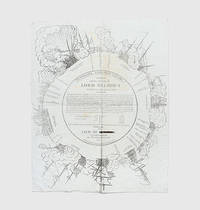
1799183885London: printed by J. Adlard 1799. An immersive experience of Nelson's victory A key to one of Robert Barker's popular panoramas depicting and explaining the course of the battle fought just one year prior. The destruction of Brueys's flagship the Orient is evocatively rendered in the upper left corner while HMS Vanguard is depicted in the lower right. The captions name each ship her captain and her arms. Barker 1739-1806 invented the concept of the panorama in the mid-1780s while walking on Calton Hill in Edinburgh. In 1787 he took out a patent for his "Nature à Coup d'Oeil" a circular building with light entering from the ceiling only. The walls would be covered with a continuous painting stretching around all 360 degrees of the circle such that the viewers would be fully immersed in the scene. After successful trials in Edinburgh and Castle Street Barker erected a rotunda in Leicester Square in 1792. It housed two panoramas each on a separate floor such that one could be replaced while the other was still open for public view. Visitors to the Barker's rotunda were able to buy keys to the paintings which "gave detail to what the audience were seeing. This included names of landmarks and people and sometimes historical context. The circular designs. allow the viewer to engage with the scene by rotating the paper. Later designs sadly ditched the circular aesthetic and instead used simple rectangular panoramas" Gehrmann. In many cases these keys are the only records of the designs. Nelson reportedly met Barker in Palermo in 1799 thanking him for prolonging the popularity of his victory. Single sheet 410 x 330 mm watermarked "1797" woodblock on one side only edges untrimmed. Framed glazed and mounted 548 x 463 mm. "Margate" crossed out in black ink. Creased where sometime folded lightly foxed a few repaired closed tears and holes along fold lines otherwise bright: a very good copy. Leif Gehrmann "The Cyclorama: Virtual Reality in the 1800s" 2024. unknown
170763Denver: Alekos Records / Wax Trax Records 1981. Birdbrain runs the World! Birdbrain is the ultimate product of Capitalism A vinyl recording of Ginsberg's first foray into punk-rock this copy inscribed on the front sleeve "for Carolyn & John Allen Allen Ginsberg NYC 5/2/83". The recipients were Carolyn Cassady wife of the late Neal Cassady and her son named in honour of Ginsberg and Kerouac. Side A records Ginsberg reading his anti-Reagan poem "Birdbrain" backed by Mike Chapell's Denver-based band the Gluons with the band's "Sue Your Parents" on the B side. There were reportedly five pressings of 1000 copies each with a number of sleeve variations; the earliest were screen-printed in colour this example is from the later black & white issue. Original vinyl disc 175 mm diameter with red labels printed in black black and white sleeve 185 x 183 mm. Sleeve lightly creased from handling else a fine example. Morgan F82. unknown
1936LAWRENCE004483The Golden Cockerel Press London. 1936. First edition. Quarto. Two volumes: I The Thesis pp 56; II The Letters pp 62. Quarto. Photographs and facsimile reproductions of maps drawings etc. Half morocco with cloth sides. Top edges gilt. One of 1000 numbered copies. Loosely inserted is the pocket with the two maps.Cloth of second volume slightly marked and dusty. A very good set indeed. The Golden Cockerel Press, London. hardcover