184 824 résultats
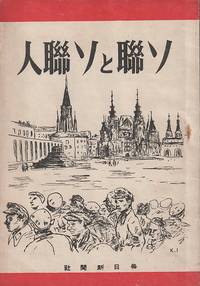
1946215693大阪. Osaka.: 每日新聞社. Mainichi Shinbusha. Showa 21 1946. Map 1 photographic illustration 64pp 18 x 12.6cm black and white line illustration on upper cover light even browning wrappers very lightly soiled and worn but overall a very good copy in original wrappers. This booklet on the Soviet Union published in June 1946 discusses various topics including the new Five-Year Plan Stalin and socialism and characteristics of the Russian people. Overall socialism and Soviet social planning are portrayed positively with the Soviet Union described as a bright morning star. . 每日新聞社. [Mainichi Shinbusha]. unknown
1937218484東京. Tokyo.: 名誉蔵. Meiyokura. Showa 12 1937-1939. Sixteen delightful small porcelain spinning tops measuring 2.0 x 1.7cm in size each accompanied by ten handsome colour printed product labels heightened in gilt with soft purple cord ties 8.3 x 6cm. An intriguing collection of sake advertising ephemera in very good condition. These sake promotional giveaways and accompanying die-cut cards in the shape of the Order of the Golden Kite are advertisements associated with Meiyo-gura a sake brand sold in Nihonbashi Tokyo. <br> <br>The advertisement describes a koma spinning top attached beneath the bottle top which could also serve as a small entertainment item. Each koma was hexagonal and could be used as a dice or a novelty accessory for drinking games. The value printed on the koma could be redeemed if customers presented both the koma and the accompanying medal card. <br> <br>These redemption promotions were available between 1937 and 1939. However in June 1941 the rationing of sake was introduced firmly ending such promotional schemes. The product labels which were finely printed as these are also informed customers about how to claim these discounts further enhancing the appeal of the product during its promotional period. <br> <br>A curious example of the everyday cultural impacts of Japanese militarism - the Order of the Golden Kite was an award exclusively for military service and was not available to the civilian public. Over the course of the Second Sino-Japanese and Pacific Wars the order would be awarded over 140000 times dwarfing all previous conflicts and reflecting the frenetic nature of Japan's total mobilisation. . 名誉蔵. [Meiyokura]. unknown
1997KOS02201271TBD 1997. Soft Cover. Fine. KOS02201271 TBD paperback
1997KOS050300194TBD 1997 Soft Cover Fine
19872091502133537350Gomashobo 1987. Soft Cover. Fine. Number of books: 1 Gomashobo paperback
20122090202120806916Not Available 2012. Soft Cover. Fine. Volume: 1 Not Available paperback
194613981Lodzsh: Tsentraler Yidisher Historisher Komisye baym Tsentral-Komitet fun Poylishe Yidn 1946. 1st edition. Later cloth with original dramatic photgraphic cover mounted on front 8vo 70 1 pages 1 l. includes facsimiles. 21 cm. Poems. "Oysgabes fun Der Tsentraler Yidisher Historisher Komisye baym Tsentral-Komitet fun Poylishe Yidn. Serye yidishe literatur 1." <br> A committee dedicated to recording the fate of Polish Jews published this book length poem by Simkhah Szajewics. Written in the Lodz Ghetto it appeared immediately after the war in 1946; Szajewicz perished in a concentration camp in 1944" from the permanent exhibit at the National Yiddish Book Center which houses their copy in their Rare Book Collection. <br> The book actually includes two long poems: "Lekh-lekha" and "Friling 702 " as well as letters and other related material. <br> See David Roskies interesting reflection on this work and it's stunning photographic cover at jtsa.edu/torah/go-forth-the-grammar-of-remembrance. <br> For more about the author-poet see Chava rosenfarb's essay on Shayevitch in Tablet Magazine at tabletmag.com/sections/arts-letters/articles/the-last-poet-of-lodz. SUBJECTS: Jews -- Persecutions -- Poland -- Lódz. Holocaust Jewish 1939-1945 -- Poetry. Jews -- Correspondence. Expertly rebound in attractive black cloth with the original photographic front cover mounted on the front. Very Good Condition. B HOLO2-110-36-CCALX-'emm H-40-10. Lodzsh: Tsentraler Yidisher Historisher Komisye baym Tsentral-Komitet fun Poylishe Yidn unknown
aly1290np: Olympiad-80 Organising Committee in cooperation with Martini international club 1979. Official Olympic Calendar. 26 1/2" x 18 1/2" 67.2 x 46.8cm. 15 leaves. text in Russian English & French. photo offset lithograph curled edges tattered first leave completely detatched with few short tears throughout edges [np: Olympiad-80 Organising Committee in cooperation with Martini international club, 1979] unknown
PLEASE NOTE: This item is overweight. We may ask for extra shipping costs.
2620131 October 1931. On letterhead of 24 Holland Park Road Kensington W. London. See the two men’s entries in the Oxford DNB. In good condition on the first leaf of bifolium. There are extensive pencil annotations in a later hand on the second leaf. Very neatly written. Addressed to ‘J. G. Wilson Esqre.’ and signed ‘Anstey Guthrie’. He has ‘much pleasure’ in answering Wilson’s question. ‘‘Shut Out’ is a short story of mine which was published in Longmans Magazine about 1895 or 6 afterwards included in a volume of short stories under the title of “The Talking Horseâ€. I think published by Messrs. Smith & Elder - but now long out of print. “The Talking Horse†is included in “Humour & Fantasy†but not “Shut Outâ€.’ See Image. 31 October 1931. On letterhead of 24 Holland Park Road, Kensington, W. [London] unknown
2453214 October no year but before 1958. On letterhead of ‘Percy Merriman / Lecturer and Entertainer / 37 Parliament Hill / London / N.W.3’. From the Macqueen-Pope papers see his entry in the Oxford DNB. Merriman was accorded the honour of an episode of the BBC’s Desert Island Discs in 1964. 2pp 12mo. Signed ‘Percy’ and addressed to ‘Dear Popie’. In good condition lightly aged with one dog-eared corner and folded twice for postage. Begins: ‘Am not of course seeking any publicity over your book on St. James Theatre published in 1958 only wish I could help more. / You know of course Allan Ainsworth sic for ‘Aynesworth’ is alive the doyen of the Garrick Club! He played often with George. Alexander. - in Pinero & Wilde. In the Prisoner of Zenda 1896 he was the young artist - charming looking young man. Another lovely young woman was in cast. Lily Hanbury! H. M. Vernon sic for W. H. Vernon was Col. Sapt & Franklin Dyall young Fritz Von Tarlenheim Dyall was in fact ‘Josef’ while ‘Von Tarlenheim’ was played by Arthur Royston / There was a marvellous duel in prologue - . G. A. very fine swordsman’. He ends after a short paragraph beginning ‘What a play!’: ‘Cherio old man. No reply wanted’. 14 October [no year, but before 1958]. On letterhead of ‘Percy Merriman / Lecturer and Entertainer / 37 Parliament Hill / Lond unknown
25793Letter ‘Postmark: Belfast’ dated 30 October 1929. Newspaper cutting of Hood’s letter to The Times dated 28 October 1929. Undated anonymous note from 19 Sutton Court Road Chiswick London. Hood was married to the harpist Helen Patuffa Kennedy-Fraser 1889-1967 daughter of Marjory Kennedy-Fraser 1857-1930 the celebrated collector and singer of Hebridean songs. The two items are in good condition lightly aged. ONE: Manuscript Letter Signed by ‘Ulster Scot.’ 1p 8vo. Begins: ‘Dear Rev Sir / Glad to see you took up the “cudgels†on behalf of the “Ulster Scot.â€â€™ The writer of the letter considers that the part played by this group ‘in building industry &c.’ was surpassed by their efforts ‘in cristainising sic and civilising the nations of the world’. Descending into sectarianism he continues: ‘The Roman Catholic Hierarchy judging from their public speeches would have us believe the very opposite. Like many another Scott I read with delight your article to the “Times†and on behalf of myself and others I return you my sincerest thanks’. TWO: Unsigned Note 1p 8vo addressed from ‘19 Sutton Court Road. / London. Chiswick. W.’ Clearly written by Roman Catholic businessman W. Vance Packman who corresponded from this address at the time. Reads: ‘It is a pity that you have failed to point out that all the above were Celtic Catholics in communion with Apostolic See’. Annotated by Hood: ‘My answer to this was that I was confining myself to facts.’ Laid down at the centre of the page is a newspaper cutting of a letter to The Times from ‘REV. J. C. F. HOOD The Vicarage Garstang Lancashire’ headed ‘Points from Letters / The Ulster Scott’. Begins: ‘Your columns lately have dealt with the achievements of Ulster Scots in the sphere of government law literature and science. May I extend the record into the sphere of religion It is sometimes forgotten that the foundations of civilization in Great Britain were laid to a great extent by men of that breed.’ Letter (‘Postmark: Belfast’) dated 30 October 1929. Newspaper cutting of Hood’s letter to The Times dated 28 October 1929. unknown
2410712 May 1908. On letterhead of 14 Hanover Square W. London. See his entry in the Oxford DNB. 2pp 12mo. Bifolium. In good condition lightly aged. Folded once. The valediction reads ‘Yours alway faithfully / Arthur W. Pinero’ and it is written with quite a flourish: the ‘y’ of ‘faithfully’ hooks downwards in a long squiggle exrending downwards past the right of the termination of Pinero’s signature which rises upwards being dotted above and below the signature’s underlining. He feels that her ‘kind letter is all the more welcome inasmuch as it gives signs’ that she is recovering from her recent illness. ‘We have indeed been greatly concerned at the bad news we have heard of you. I hope that the present fine weather will set you up completely.’ He thanks her for what she says about his play ‘The Thunderbolt’: ‘I fear it is rather too serious an affair for the taste of the ordinary playgoer; but we shall see.’ He ends with ‘repeated acknowledgments’. 12 May 1908. On letterhead of 14 Hanover Square, W. [London.] unknown
2419029 November 1820. Hatton near Warwick. An almost miraculously legible example of Parr’s normally atrocious hand. His entry in the Oxford DNB states that ‘Parr was flogged only once at Harrow for bad handwriting and to no effect. His writing remained atrocious all his life so much so that on an occasion when he wrote to ask for 'two lobsters' his friend read the words as “two eggsâ€.’ On one side of blank card. In envelope with indistinguishable seal in red wax addressed by Parr to ‘Keeling Greenway Esqr / Mayor of Warwick’. Reads: ‘Dr Parr presents his respectful Compliments to the Mayor of Warwick & would have been happy to do himself the honour of dining with him on Tuesday the fifth of December if he had not been previously engaged for that Day at Guy’s Cliff - / Hatton Novr. 29th. / 1820.’ See image. 29 November 1820. Hatton [near Warwick]. unknown
243375 May 1896; on leterhead of 130 Edgeware Road London W. See his entry in the Oxford DNB. The Church Army still active today was founded in 1882 as a Church of England equivalent to the Methodists’ Salvation Army. From the papers of the recipient Wilfred Seymour De Winton of Haverfordwest. 3pp 12mo. On a bifolium of grey paper. In good condition lightly aged. Signed ‘W Carlile / Hon. Chief Sec.’ To the left of the signature in the bottom-left of the recto of the second leaf is a purple ink stamp of the following: ‘WRITTEN BY ONE OF OUR POOR STRUGGLING LABOUR HOME BROTHERS’. He begins what is undoubtedly one of many such letters he had to write: ‘Dear Mr De Winton / The Vagrant Criminal and Inebriate Classes a seething mass of our fellow men look to us as the hand of the Church held out to give them a last chance.’ While many could ‘get a fresh start in life after 2 or 3 months staying in one of our Labour Homes the lack of funds compels us day by day to refuse numbers of genuine helpable persons’. He stresses that the homes ‘are not Shelters and are limited to 25 Inmates men women and youths all received irrespective of creed’. He states that 51 1/2 per cent of those who passed through the institutions in the year 1895 ‘obtained a fresh start’ and that the organisation requires ‘£100000 annually’. ‘The financial burdens come heavily on us who nearly all work without any pay.’ He asks if De Winton can help them ‘regain by labour & religion many rapidly sinking into the vortex of crime and misery.’ 5 May 1896; on leterhead of 130 Edgeware Road, London W. unknown
25523Inscription by the Tichborne Claimant dated 6 March 1893. Inscription by Phelps dated 9 December 1890. The Tichborne Case was very possibly the greatest scandal of Victorian England. See the entry for ‘Tichborne claimant’ with subheading for ‘Arthur Orton’ in the Oxford DNB. Trained as a civil engineer Major-General Arthur Phelps 1837-1920 civil engineer was a prominent homeopath anti-vaccinationist and anti-vivisectionist who promoted his views as proprietor and editor of the Citizen newspaper. Each inscription is on one side of a single 11.5 x 18.5 cm piece of gilt-edged wove paper presumably extracted from an autograph album. In good condition lightly aged with small patch of minor discoloration at the foot. In the claimant’s distinctive hand at the head of the verso: ‘Norwich. / March 6th/93 / Yours truly / R. C. D. Tichborne’. And on the recto: ‘Inoculating one disease in a child in order to prevent his taking another is like sowing dandelion seeds on the lawn to prevent weeds from growing on it. / A. Phelps / 9th. December 1890.’ Between the signature and date in a contemporary hand: ‘Major-General of the Indian Army’. See Image. Inscription by the Tichborne Claimant dated 6 March 1893. Inscription by Phelps dated 9 December 1890. unknown
263704 June 1883; 4 Inverness Terrace Broadstairs Kent. See his entry and Blewitt’s in the Oxford DNB. 2pp 12mo. On bifolium. In good condition on lightly aged laid paper with thin strip of tape from mount on reverse of second leaf. Thirty-seven lines of text. Addressed to ‘Octavian Blewitt Esq.’ and signed ‘G. L. M. Strauss’. He begins by describing his situation: ‘I venture to solicit your kind friendly advice. You know that two years ago a well nigh fatal illness compelled me to leave The Charterhouse on an out pension of a guinea a week - an exchange which I bet to assure you I have no reason or wish to regret.’ During his eighteen months of illness he ‘received only nine pounds a quarter - fifty-four pounds in all - from the institution. Even the kindness of my friends could not then altogether shield me from incurring some pecuniary liability to enable me to live through this period of more than usual expense’. Since his recovery he has written his reminiscences which have ‘yielded me only seventy pounds for the copyright’. The letter continues with further news and he ends by asking Blewitt whether he should appeal to the committee of the Royal Literary Fund. 4 June 1883; 4 Inverness Terrace, Broadstairs, Kent. unknown
25462The Clarendon Hotel Bond Street London. The entries all said to date from 1831. The Clarendon Hotel was once - as ‘Routledge’s Popular Guide to London’ stated in 1862 - ‘the most fashionable place in London’ and the present collection of autograph signatures from its guestbook all of them said to date from 1831 bear witness to the fact that - as ‘Gilbert’s Visitor’s Guide to London’ 1851 states - it was ‘frequented by the Nobility and Gentry and Foreigners of rank’. Its reputation had been made during the Regency period and in 1820 ‘Leigh’s New Picture of London’ stated that it ‘and Jaquiers are now one hotel’. The hotel’s fame is indicated by the fact that two years after the date of the present collection in 1833 the its pretensions were ridiculed from Scotland by ‘Blackwood’s Magazine’: ‘“I hope†said M‘Goul “it’s a goot house - no sand crunching upon the floor nor the rafters plack with peat reek.â€â€™ Walter Besant provides information regarding the hotel in his ‘Survey of London’ 1911 ‘At No. 169 on the west side of Bond Street was the Clarendon Hotel formerly the town house of the Dukes of Grafton and afterwards the residence about 1741 of the elder Pitt. The hotel was closed in 1877 and replaced by a row of shops.’ The revised ‘Survey’ 1980 provides more information. The present collection of material consists of a large number of autograph signatures on gilt-edged leaves extracted from the Clarendon Hotel guestbook: a total of seven full leaves dating from between 15 October and 2 November 1831 and nine slips cut from leaves seven of them dating from the April 1831. The material is in good condition with minor signs of age. Accompanying the material are two Typed Letters Signed to Mrs I. McArthur of Croydon from the City of Westminster Public Libraries. The first from the City Engineer and Surveyor W. W. Ratcliff 28 January 1953 refers her to the author of the second written three days later from the Archivist G. F. Osborn which states: ‘The Clarendon Hotel was situated on the west side of New Bond Street. Its number in 1831 was 169 but the building of that date covered the approximate frontage now taken up by Nos. 173-178 New Bond Street. At one time in the 1830s but not I think as early as 1831 it extended backwards and included No. 20 Albemarle Street.’ An autograph postscript reads: ‘Asprey corner of Bond St. & Grafton St. is 165 New Bond St. It must have been between Grafton St & the Bond St. entrance of the Royal Arcade backing on to what is now the Royal Institution 21 Albemarle St.’. Also present is a meticulous collection of manuscript material relating to the autographs presumably the work of Mrs. McArthur or associate including a four-page transcription of the material not entirely accurate dated by the writer to the year 1831 in a neat close hand an alphabetical index of names 2pp 4to and six pages of biographical information 6pp 4to relating to signatories. There are around 180 entries of names and titles with addresses occasionally added in another hand. A small percentage for example Talleyrand and Admiral Sir Thomas Hardy are clearly NOT the signatures of the parties named in these cases apparently entered by the same hotel staff who added the addresses but the range of variation between the different entries coupled with some spot-checking indicates that most are genuine signatures of the parties named although on some occasions the names of women are given in the hand of the ‘head of the family’. A few individuals for example the Count of Montara Sir Brook Taylor and the future prime minister Palmerston sign several times. An entire list of the names is as follows: the first four among the non-signatures Lord Southampton; Lord Godrich; Prince de Talleyrande; ‘Mr Wood 13 <> St.’; Lt. Colonel Henry Webster; Lord Palmerston; Mr Ashley; Sir Robert Chester; Sir George Seymour; Sir Charles <Dalbias> Inspector General of Cavalry; Major Sullivan 3rd Dragoon Guards ‘Aidecamp’; Earl Bathurst; Viscount Villiers; ‘The Lord Chancellor’; ‘Koscheleff’; Sir James Graham; Vice Admiral Sir Edward Codrington; Mr Bradshaw; Earl of Jersey; Mr A Vail; Sir Gore Ouseley; General Viscount Combermere; Sylvain Van De Weyer; ‘Colonel Hill Royal Horse Guards’; the following two not signatures Sir John Elley; Lord Cavendish; the following three marked as ‘not autographs’ Marquis Salisbury; Sir A. W. Clifford; Lord W. Russell; note in French by ‘Le Docteur de <Florn> 93 Strand corner of Beaufort Buildings’ paying compliments to ‘S. E. le Comte d’Orloff’; Major General Sir John Macdonald; Mr George Villiers; Lieut General Sir James Kempt; Earl of Beverley; Le Comte de Rochechouart; Lieut. General Sir Hudson Lowe; ‘Lord Grosvenor 15 Grosvenor Sq’; the following five on a slip headed ‘Clarendon Hotel Friday October 14th.’ ‘Le Baron Hy. de Bode general Major et Commandeur de l’Arsénal de St. Petersbourg’ ‘Major Wernick <> Russian Vice Consul / 44 Great <> Street Hanover Square’ ‘Mrs Stuart 13 Bolton Row Piccadilly’ ‘The Marquess of Winchester 27 Cavendish Square’ ‘Earl of Albemarle North Britain’; Sir Brook Taylor ‘55 Portland Place’; Earl of Erroll; Earl of Munster ‘13 Belgrave Street’; ‘His Royal Highness The Duke of Sussex’ ‘Kensington Palace’; Le Baron de Ralamb Charge d’Affaires de Suede et de Norvege’; ‘Lt Colonel Fox Gren. Guards ‘Kensington Square’; Alexy de Wahl; Count Rechberg; second signature ‘Lt Colonel Fox Gren. Guards Ecuyer de S M’; Baron de <>; Cher. d’A<> L<>; Lord Burghersh; Lord Fitzroy Somerset; second signature Alex sic de Wahl; ‘Miss S. Wyngard Kensington Palace’; Captn Sir Geoarge Seymour RN; Dr Francis Seymour Guards; Earl of Morley; Marshal Lord Beresford; Sir William Fremantle; Lady Mary Taylor; both in same hand ‘Earl of Albemarle / Countess of Albemarle’; Lt. Colonel Webster; ‘Duchess Dowr. of Richmond’; Marchioness of Winchester; Countess Bathurst & Lady Georgiana Bathurst; ‘Le Comte D’Aglie Ministre de Sardaigne’; Captain a Court RN; Cte Dietrichstein; second time Marshal Lord Beresford; Cte Donkoff; Earl of Carnarvon; the following three in the same hand and not that of Sir Thomas Hardy Lady Hardy; The Miss Hardy; Sir Thomas Hardy; ‘Mr C W Chastin’; Earl of Denbigh; Earl and Countess of Carlisle; Lord Hill; all in one hand ‘l’ambassadeur des Pays Bas et Md. Falck / le Baron de <> de Wynvelt / Ambassadeur des Pays bas pres de la Sublime porte / la Barone. de Zuylen’; ‘Le Ministre d’Espagne et Mme. de <> B<ermudez>; The Marchioness of Stafford; following two in same hand Countess Gower; Earl Gower; Countess of Sandwich; following two in the same hand Lord Dover; Lady Dover; ‘Lord & Lady William Russell; ‘Lord & Lady Fitzroy Somerset.’; Lord St Helens; Baron de Bode; Lady Mary Fox; Sir Robert Chester; Countess Mengden; Lord Palmerston; ‘Mr. de Gersdorft Ministre-Resident de S. M. le Roi de Saxe’ Mr Temple; ‘The Bavarian Minister & Baroness de Cetto’; Lod Wharncliffe; Lord Clanwilliam; Lord Dudley; Lord Lothian; Ld Stuart de Rothesay; Lady Wharncliffe; Earl Bathurst; Marquess of Landsdowne; Le Baron de Neumann; Lord Falkland; next two in same hand Lord Frederick FitzClarence; Lady Frederick FitzClarence; Lord Holland; next two in same hand Marquis of Clanricarde; Marchioness of Clanricarde; ‘Colonel Porter Aide de Camp to H R H the Duke of Cumberland’; M de <>; next three in same hand Lord Beverley; Countess of Beverley; Lady Louisa Percy; Count de Mortara; Colonel Trench; Sir Stratford Canning; Countess Cowper; Earl Cowper; Lady Ann Beckett; Lord Arthur Lennox; Le Chevalier du Zea Bermudez; Sir V<> L<ambe>; next two in same hand Viscount Falkland; Viscountess Falkland; next two in same hand Lady Frederick FitzClarence; Lord Augustus FitzClarence; Count Mandelsloh; next two in same hand Countess of Grey; Earl of Grey; ‘L’Ambassadeur de France / La Duchesse de Dino’; next two in same hand Lord Lilford; Lady Lilford; next three in same hand Earl of Beverley; Countess of Beverley; Ladies Percy; Earl of Mulgrave; The Marchioness of Stafford; ‘Le Prince Frederic de Hohenlohe Oehringen’; ‘Le Baron Bockelberg Chamberllan de S M. le Roi de Preuss sic’; Lord Howard of Effingham; Earl of Burnley; second Le Comte de Mortara; Lord Arthur Lennox; second ‘The Chevalier du Zea Bermudez’; ‘Sir F: <Lambe>; P. Esterhazy; second ‘Prince Frederic de Hohenlohe Oehringen’; second ‘Le Baron de Bockelberg Chambellan de S. M. le Roi de Prusse’; third Le Comte de Mortara; second Sir Brook Taylor; ‘the Bavarian Minister’; Le Prince de Leiven; Sir John Brooke Pechel; ‘Lt. Col. Greenwood / 2nd Life Guards’; Count Ruhberg; third Prince Frederic de Hohenlohe Oehringen’; third ‘Le Baron de Bockelberg’; fourth Le Comte de Mortara; ‘le Comte Michele Woronzow’; Mr John Talbot; fifth Le Comte de Mortara; third Sir Brook Taylor; Lady Frederick Bentinck; Mrs. L. Fox; ‘Marquess & Marchss. of Westminster’; ‘Le Baron et la Baronne de Bülow’; ‘Le Baron de Neu<>; second Sir John Brooke Pechel; Lord Marcus Hill; ‘Benkhausen’; ‘Tolstoy’ father of the novelist; second Prince Esterazy; ‘Major Genl. Sir George Quentin Kerr’; second Count Mandelsloh; second le Prince de Lieven; ‘<M:> de Paliansky gentilhomme de la Chambre de S. Mé. L Empereur de toutes les Russies’; ‘Le Comte de Ruhberg’; ‘Le Comte De Morel’; ‘Count Danneskiold-Samosoè’; sixth Le Comte de Mortara. The Clarendon Hotel, Bond Street, London. The entries all said to date from 1831. unknown
2434620 July 1870. High Harrogate Yorkshire. See his entry in the Oxford DNB which characterizes him as ‘the most remarkable pulpit orator of his time’ and that of his father. 3pp 12mo. On bifolium. Somewhat aged and with the recto of the first leaf grubby but with text clear and complete with thirty-three lines of text in Parsons’ close and neat hand. Signed ‘James Parsons’ and addressed to ‘Revd. J. Rawlinson’. He ‘must reluctantly decline to comply’ with Rawlinson’s request. He wonders whether he has ‘seen or heard of an announcement in “the Leeds Mercury†with reference to my intended retirement from my Pastorate in York’. He does not know how it got there ‘but the fact is that at the close of October fifty years will have passed since I first preached in York and then my purpose is to relinquish my Charge’. He continues with reference to his deacon his ‘heavy’ labours and the ‘decisive step’ he is taking. In the last paragraph he notes that he has ‘taken no engagement from home except one for more than two years and I must yet persevere in the same course’. 20 July 1870. High Harrogate [Yorkshire]. unknown
26361‘The Raven Hotel / Droitwich / Ap. 6. 87 1887’. According to Russell’s entry in the Oxford DNB while reporting on the Civil War he was described by one American newspaper as ‘the most famous newspaper correspondent the world has ever seen'. The inscription on his memorial in St Paul’s Cathedral calls him ‘'the first and greatest of War Correspondents'. He coined the phrase ‘thin red line’ was instrumental in the sending of Florence Nightingale to the Crimea and is said to have written the report that inspired Tennyson to write ‘The Charge of the Light Brigade’. Like Broadley whose omission from the DNB is as scandalous as his career Russell was an active freemason. 2pp 12mo. In trimmed windowpane mount. In good condition lightly aged with slight glue staining on reverse. Folded once. Signed ‘W H Russell’. The subject is freemasonry Russell is not known to have shared Broadley’s other interests. Begins: ‘dear brother Broadley / I am pickling here in the hope that I may be fit for exportation anon & I shall not be in London till my course is over on 17th’. In consequence he will be unable to attend ‘the junction of Bros. Lawson Peters & Toole & the promotion of Brs Prince Helwig & Lord Delamere’. Broadley a distinguished autograph-collector also merited a long entry in Wikipedia for his other activities. ‘The Raven [Hotel] / Droitwich / Ap. 6. 87 [1887]’. unknown
2433616 February 1884; 24 Avenue Victor Hugo Paris on letterhead of the New Club Boulevard Malesherbes. According to Russell’s entry in the Oxford DNB while reporting on the Civil War he was described by one American newspaper as ‘the most famous newspaper correspondent the world has ever seen'. The inscription on his memorial in St Paul’s Cathedral calls him ‘'the first and greatest of War Correspondents'. He coined the phrase ‘thin red line’ was instrumental in the sending of Florence Nightingale to the Crimea and is said to have written the report that inspired Tennyson to write ‘The Charge of the Light Brigade’. The recipient was the proprietor of the Hotel and Restaurant Henry IV Saint-Germain-en-Laye which according to an advertisement in Galignani’s ‘New Paris Guide for 1879’ was ‘The only Hotel on the Terrace. / Highly recommended and old-established / Louis XIV. was born in this House on the 5th Sept. 1638.’. The present item is 2pp 12mo. In fair condition aged and worn with thin strip of glue from mount along the gutter. Folded twice. Signed ‘W H Russell’. He enquires after ‘un petit apartment libre pour le lundi ou mardi en cas de besoin’ at a price ‘convenable à ma fortune’. He describes the specifications he requires before noting that M. de Blonetz ma dit ce que j’ai entendu avec plaisir que vous avez garde des souvenirs aimables de moi depuis cet temp terrible 70. 71’. In a postscript he expresses anxiety that ‘il y aura une grande foule à St Germain le lundi pour les courses’. It may be that Russell attended the racing with the future King Edward VII: he was as the Oxford DNB states ‘a member of the Prince of Wales's circle though his relationship with the prince fluctuated and he deplored the depravity and obscenity of some of his set’. 16 February 1884; 24 Avenue Victor Hugo [Paris], on letterhead of the New Club, Boulevard Malesherbes, unknown
262281 June 1910; on embossed letterhead of Tower House Tower Street Portsmouth. See his entry in the Oxford DNB. 1p 16mo. In good condition lightly aged. Folded once for postage. Signed ‘W. L. Wyllie.’ He is sorry that he will be unable to avail himself of ‘the kind invitation to dinner sent me by the Master of the Salters Company’. He is starting for Norway on the last day of the month and will not return until the end of July. 1 June 1910; on embossed letterhead of Tower House, Tower Street, Portsmouth. unknown
25574LETTERS: 9 July 1953 and 11 May 1954. NOTE: 14 July 1953. All three items on letterheads of the Royal Courts of Justice Strand London WC2. The third letter gives an excellent indication of Birkett’s pride in his use of language. See his entry in the Oxford DNB. The recipient Vere Henry Collins 1872-1966 was an author and grammatical stickler. All three signed ‘Norman Birkett’. In fair condition lightly aged and little grubby. The first letter with a small hole to one corner and the two leaves of the last letter held together with a pin. ONE: ALS 9 July 1953. 1pp 4to. He is adding Collins’s book to his ‘select library on “wordsâ€â€™. ‘I am afrait that “finalise†is in frequent use as “I was sent to finalise the arrangements†and it is often used by witnesses in court and sometimes not without protest from me by barristers.’ He ends: ‘But the purpose of this letter is to thank you if somewhat belatedly for the interest you took in the subject of my address and for your kindness in writing to me.’ TWO: ANS 14 July 1953. 1p 4to. He has no objection if Collins adds the note he sends him ‘to the book now at the printers’. He will get ‘One Word and Another’ when it is published. THREE: ALS 11 May 1954. 3pp 4to. He will read the book Collins has sent him with great pleasure ‘for as you know anything written about words has a great fascination for me’. Turning to Collins’s ‘criticism of some remarks of mine uttered in the course of an after-dinner speech’ which have appeared without Birkett’s knowledge or consent he is for the most part in agreement ‘but I take it a little hard that the unpremeditated effusion of the moment should be treated as though it were a carefully prepared essay. I will say no extempore speech can survive a scrutiny such as the scrutiny you send to me.’ With regard to Collins’s seven points he feels he should ‘keep in mind the difficulties of extempore speaking. The perfect word does not always come readily to the tongue. The sentences do not always flow as one could wish and the “verbal expert†seated in his comfortable study might make a little allowance for human frailty!’ In the following paragraph he turns the tables on Collins analysing his use of language in his letter to Birkett. With a veiled criticism of Collins he explains how ‘the lover of words as I am can become a “tiresome pedant†’ Collins’s criticism has clearly hit home as Birkett adds a fourteen-line postscript in his distinctive close hand ending: ‘I cannot even be sure that the reporter took down accurately what I did say: I had no notes and never dreamt that what I said would receive this unwanted publicity and subject me to the criticism of lovers of good English!’ LETTERS: 9 July 1953 and 11 May 1954. NOTE: 14 July 1953. All three items on letterheads of the Royal Courts of Justice, Strand, unknown
25468'232 Piccadilly London / Septem 28. 56' 1856. At the time of writing Gordon-Cumming’s trophies were being exhibited at this Piccadilly address having previously formed part of the Great Exhibition. The recipient Henry Charles Angelo 1806-1866 was a member of the celebrated family of fencing masters and was at this time teaching the art at the Cavalry College Richmond. 2pp 12mo. On the rectos of the two leaves of a bifolium with the recipient’s name written lengthwise on the verso of the first leaf: ‘H. C. Angelo Esqr’. In good condition lightly aged. Folded twice. The sort of bold and forceful hand and ebullient signature one might expect from a big game hunter. Reads: ‘Dear Sir / I have forwarded your letter to Sir Alexander. his address is Altyre. Forres. if you send a pampered menial last two words underlined to my house-keeper Mrs Lee at the museum and shew this note she will give him the portrait you require. / Yours faithfully. / Gordon Cumming’. '232 Piccadilly [London] / Septem 28. 56' [1856]. unknown
247867 February 1829. Dublin. Within a couple of years of his death Norbury’s nickname was given as ‘the hanging judge’ see ‘The Georgian Era’ vol.2 1833 and yet no mention is made of the fact in his entry in the Oxford DNB. The present document is 1p 4to. On the recto of the first leaf of a bifolium. In fair condition lightly aged. The declaration in a secretarial hand reads: ‘We the undersigned have pleasure in recommending Alexander Hawthorne of Sackville Street Glover as a person worthy of being honored with the commands of their Excellencies the Most Noble The Duke & Duchess of Northumberland having known him for many years to be an honest industrious respectable tradesman & one of the best Glove Manufacturers in Dublin’. Beneath this the Bishop of Meath writes: ‘45 Great Georges Street North / Feby 7th 1829 As far as I have knowledge I believe Alexander Hawthorne of Sackville Street to be an honest Man and a good Tradesman - Nathl: Meath’. And beneath that: ‘I know the bearer & know him a respectable Glover - 9 Gardiners row Norbury’. Norbury’s signature is largely written and heavily-inked. See Image. 7 February 1829. Dublin. unknown