51 760 résultats
1830FF2548London:: Printed for T. Cadell; and E. Moxon 1830 1834. 1830. 2 volumes. 8vo. ITALY: vii 284 pp. POEMS: vii 284 pp. Engravings throughout. Bound ca. 1890/1905 in full olive brown crushed morocco gilt corner decorations dentelles a.e.g. marbled endleaves. Bookplates of Alfred Trapnell and Oscar Ehrhardt Lancaster both owned fore-edge paintings. ITALY: p. 273/4 torn and mended. ITALY has only the Trapnell bookplate as the books had been separated for many years in the past. Very good. Each volume with a vertical fore-edge painting of a large porcelain urn or vase with a plant. The painting is not signed or dated – the evidence of ownership Trapnell suggests these two paintings were made before 1910. PROVENANCE: Alfred Trapnell bookplate his library sold in NY ca. 1910 "997" "998" label. The fore-edge was painted before Trapnell bought possibly as a commission from him the book. The ITALY was from the Phoebe Jane Easton collection of fore-edge paintings Jeff Weber bought a clear companion to the other volume also with Trapnell's bookplate. Alfred Trapnell was a famous collector of porcelains. Unstated Provenance: Matt Wyse. LANCASTER did not have both of these volumes his bookplate appears only in the one book. It was Matt Wyze who bought the stray volume and then I recognized it and married the two back together again – probably apart for more than 30 or 40 years. ITALY: From the Phoebe Easton collection of fore-edge paintings. SIDE NOTE: Professor Carl J. Weber visited Lancaster on May 1 1954 and inscribed a copy of his book 1001 Fore-edge Paintings Waterville 1949 on fore-edge painting to him. Lancaster b.1887 who was a patent lawyer from Pennsylvania also a book collector and had a collection of fore-edge paintings. See: Frederick Litchfield Albert Amor. The Trapnell collection. An appreciation. ca.1912. 19 pp.; An Illustrated Catalogue of Chinese Porcelain and Pottery Forming the Collection of Mr. Alfred Trapnell. Bristol 1901. Printed for T. Cadell; and E. Moxon, 1830, 1834. unknown
1775FF2385Glasgow:: Printed by A. Adam for Morison and MacCallum 1775. 1775. 8vo. vii 1 xi-xiii 1 368 miss-numbered 268 pp. Original full red polished calf gilt tooled with decorative border and center device raised bands gilt dec. spine dark title spine label a.e.g.; hinges a bit worn. Former ownership name removed from title. Very good. This volume has a DOUBLE FORE-EDGE PAINTING by the American Doubler painter with scenes of New York and Philadelphia painted sometime after WWII and before November 1965 a date in the back of the book shows that time presumed to be a bookseller's mark. JWRB Printed by A. Adam, for Morison and MacCallum, 1775. hardcover books
155Erotic painting of a couple copulating. Tantra position from the Kama Sutra. 10 3/4 x 7. Framed. unknown books
2091502135300256Not Available N.A. Soft Cover. Fine. Volume: 1 Not Available paperback
- Les cahiers du Cap , Paris 1928, 14x18,5cm, broché. - First edition of the issue of this magazine directed by Marcel Hiver and which intends to lambast and wage war on "the traffickers of art and criticism" Spine and boards slightly discoloured, discrete restorations on the board margins, Precious handwritten presentation signed by Marcel Hiver: "A Antonin Artaud dont j'ai lu avec le plus vif intérêt la rayonnante réponse aux surréalistes. En signe de très sincère estime intellectuelle." "To Antonin Artaud, whose radiant response to the Surrealists I have read with the greatest interest. A sign of utmost intellectual respect." We also attach a printed carte de visite by Marcel Hiver on which he added these words for the attention of Antonin Artaud: "Il faudrait un «Marat» de la critique, n'est-ce pas ?" "It would take a "Marat" of criticism, right?" in reference to the role of Jean-Pierre Marat played by Antonin Artaud in Abel Gance's 1927 film "Napoléon". [FRENCH VERSION FOLLOWS] Edition originale du premier numéro-manifeste de la nouvelle série de cette revue dirigée par Marcel Hiver, sous-titré « Message à nos amis au sujet de notre situation, de nos projets et des buts de notre action » et qui entend fustiger et faire la guerre "aux trafiquants de l'art et de la critique". Dos et plats marginalement décolorés, léger accroc sur le premier plat, déchirure en pied et tête du dos. Précieux envoi autographe signé de Marcel Hiver : "A Antonin Artaud dont j'ai lu avec le plus vif intérêt la rayonnante réponse aux surréalistes. En signe de très sincère estime intellectuelle." En juin, Artaud avait en effet publié À la grande nuit ou le bluff surréaliste en réponse Au Grand jour, dans lequel, Breton et ses amis l'excluaient du groupe et le conspuaient violemment après son refus d'adhérer au Parti Communiste. Nous joignons également une carte de visite imprimée de Marcel Hiver sur laquelle il a ajouté à l'attention d'Antonin Artaud ces quelques mots autographes : "Il faudrait un "Marat" de la critique, n'est-ce pas ?" en référence au rôle de Jean-Paul Marat créé par Antonin Artaud dans le film de 1927 d'Abel Gance "Napoléon". Fascinante dédicace d'un des plus grands contempteurs de la modernité artistique à celui qui, à lui seul, manifesta la rupture la plus radicale avec les fondements de la société et de l'art traditionnel. Véritable manifeste contre « la mafia des marchands et des critiques, petite conspiration internationale des fripons », ce premier numéro, entièrement rédigé par Marcel Hiver, est une étonnante synthèse des scléroses intellectuelles héritées du XIXe siècle et d'une idéologie totalitariste émergente. Le « Bulletin mensuel d'art et de littérature » de Marcel Hiver n'est pas à l'origine un organe purement réactionnaire. La Revue s'enorgueillit, au contreplat de la couverture, d'avoir accueilli, depuis sa fondation en 1924, de prestigieux rédacteurs comme Antonin Artaud, Robert Desnos, les communistes Georges Altman et Lucien Scheler, les surréalistes Claire et Yvan Goll et le futur fondateur du Musée National D'Art Moderne, Jean Cassou. La revue défendit également quelques grands précurseurs de l'art Moderne comme Van Gogh et Gauguin, mais aussi des artistes contemporains dont Foujita et Modigliani. Or, en 1927, cette revue d'actualité artistique se veut entièrement consacrée à la dénonciation de cette effervescence de la création, non par une prise de position en faveur d'une autre école - aucun artiste n'est mentionné positivement dans ce numéro - mais par une surprenante assimilation de ce bouleversement esthétique insufflé par Picasso et Apollinaire à toutes les grandes évolutions politiques postrévolutionnaires, du suffrage universel au libéralisme économique, et à leurs alternatives, l'Anarchie et le communisme. Cependant la violence de Marcel Hiver contre le bouleversement esthétique insufflé par Picasso et Apollinaire, prend ici une tournure très différente de la position réactionnaire et tradi
- Paris s.d. (circa 1954), 24,2x31,1cm, une feuille. - Original view of Nicolas de Staël's atelier Paris n.d. (circa 1954), 24,2x31,1cm, one leaf. Original silver print photograph of Nicolas de Staël's atelier by Denise Colomb. Traces of folds, small pieces of paper missing in the lower left corner. Splendid "still life" in large format of the painter's Parisian atelier rue Gauguet, taken one year before his death. His masterpieces are jumbled together with firewood and numerous pots of paint. The photograph was taken by Denise Colomb, great portraitist of the 20th century, known for her portraits of Antonin Artaud, Giacometti, Picasso, Soulages and Miro in their studio. "It is said that his workshop was the cave of a palaeontological potter. With sediment, layers of paleo... A crucible, a large material well, riddled with pigments, paintbrushes, pots of plastered trowels, buckets, rags. In a strong smell of turpentine. A workshop covered, soiled, stained with dirt, with masonry clay. Its wingspan, its strength, its topsail height springs into this crater of Vesuvius. Slightly disoriented, he leans, he pours. To paint, for him, is to be prey to vertigo, to unpredictable, accidental, chance junctions. (Patrick Grainville, Les Yeux de Milos). [FRENCH VERSION FOLLOWS] Photographie de l'atelier de Nicolas de Staël en noir et blanc, par Denise Colomb, en tirage argentique d'époque. Traces de plis, infimes manques dans le coin inférieur gauche. Superbe "nature morte" en large format de l'atelier du peintre, au 7 de la rue Gauguet à Paris, prise un an avant sa fin tragique. Ses chefs d'oeuvres sont entreposés pêle-mêle avec le bois de chauffage et les nombreux pots de peinture. La photographie fut prise par Denise Colomb, grande portraitiste du XXe siècle, qui immortalisa Antonin Artaud, ainsi que les artistes Giacometti, Picasso, Soulages et Miro dans leurs ateliers. "On dit que son atelier était une caverne de potier paléontologique. A sédiments, couches du paléo... Un creuset, un grand puits matériel, criblé de pigments, de pinceaux, de pots de truelles plâtrées, de seaux, de chiffons. Dans une forte odeur de térébenthine. Un atelier gorgé, souillé, empanaché de crasses, des pâtes de la maçonnerie. Son envergure, sa force, sa hauteur de hunier s'élançent dans ce cratère de Vésuve. Légèrement déboussolé, il incline, il verse. Peindre, pour lui, c'est être en proie au vertige, à des bifurcations imprévisibles d'accident, de hasard." (Patrick Grainville, Les Yeux de Milos).
- Paris s.d. (circa 1954), photographie :17,3x12,2cm ; feuille : 24x18,2cm, une feuille. - Original view of Nicolas de Staël's atelier with his palette and three paintings Paris n.d. (circa 1954), photo:17,3x12,2cm ; leaf: 24x18,2cm. Original silver print photograph of Nicolas de Staël's atelier by Denise Colomb. Small trace of rust on the upper right corner. Charming view of the painter's atelier, 7 rue Gauguet in Paris, taken one year before his death. Featuring his palette as well as two paintings from his Flowers series (1952-1953), and an abstract composition on the right. Taken by Denise Colomb, great portraitist of the 20th century known for her portraits of Antonin Artaud, Giacometti, Picasso, Soulages and Miro in their studios. "It is said that his workshop was the cave of a palaeontological potter. With sediment, layers of paleo... A crucible, a large material well, riddled with pigments, paintbrushes, pots of plastered trowels, buckets, rags. In a strong smell of turpentine. A workshop covered, soiled, stained with dirt, with masonry clay. Its wingspan, its strength, its topsail height springs into this crater of Vesuvius. Slightly disoriented, he leans, he pours. To paint, for him, is to be prey to vertigo, to unpredictable bifurcations of accident, of chance. (Patrick Grainville, Les Yeux de Milos) [FRENCH VERSION FOLLOWS] Photographie de l'atelier de Nicolas de Staël par Denise Colomb, en tirage d'époque. Petite trace de rouille au coin supérieur droit. Beau cliché de l'atelier du peintre, au 7 de la rue Gauguet à Paris, prise un an avant sa fin tragique. On peut apercevoir sa palette ainsi que deux de ses toiles : une issue de sa célèbre série d'une vingtaine d'huiles intitulée Fleurs, réalisée de 1952 à 1953, ainsi qu'une composition abstraite sur la droite. La photographie fut prise par Denise Colomb, grande portraitiste du XXe siècle, qui immortalisa Antonin Artaud, ainsi que les artistes Giacometti, Picasso, Soulages et Miro dans leurs ateliers. "On dit que son atelier était une caverne de potier paléontologique. A sédiments, couches du paléo... Un creuset, un grand puits matériel, criblé de pigments, de pinceaux, de pots de truelles plâtrées, de seaux, de chiffons. Dans une forte odeur de térébenthine. Un atelier gorgé, souillé, empanaché de crasses, des pâtes de la maçonnerie. Son envergure, sa force, sa hauteur de hunier s'élançent dans ce cratère de Vésuve. Légèrement déboussolé, il incline, il verse. Peindre, pour lui, c'est être en proie au vertige, à des bifurcations imprévisibles d'accident, de hasard." (Patrick Grainville, Les Yeux de Milos).
- Paris s.d. (circa 1954), photographie :17,3x12,2cm ; feuille : 24x18,2cm, une feuille. - Original view of Nicolas de Staël's atelier with his palette and brushes Paris n.d. (circa 1954), photograph :17,3x12,2cm ; leaf : 24x18,2cm. Original silver print photograph of Nicolas de Staël's atelier by Denise Colomb. Intimate view of the painter's atelier, 7 rue Gauguet in Paris, taken one year before his death. In the background is one of his paintings from his famous series Flowers (1952-1953). Taken by Denise Colomb, great portraitist of the 20th century known for her portraits of Antonin Artaud, Giacometti, Picasso, Soulages and Miro in their studios. "It is said that his workshop was the cave of a palaeontological potter. With sediment, layers of paleo... A crucible, a large material well, riddled with pigments, paintbrushes, pots of plastered trowels, buckets, rags. In a strong smell of turpentine. A workshop covered, soiled, stained with dirt, with masonry clay. Its wingspan, its strength, its topsail height springs into this crater of Vesuvius. Slightly disoriented, he leans, he pours. To paint, for him, is to be prey to vertigo, to unpredictable bifurcations of accident, of chance. (Patrick Grainville, Les Yeux de Milos) [FRENCH VERSION FOLLOWS] Photographie de l'atelier de Nicolas de Staël par Denise Colomb, en tirage d'époque. Admirable détail de l'atelier du peintre, au 7 de la rue Gauguet à Paris, pris un an avant sa fin tragique. La photographe a mis en opposition la palette de l'artiste et ses nombreux pinceaux, avec le bois de chauffage sur le même plan. Au second plan, on aperçoit une de ses toiles issue de sa célèbre série d'une vingtaine d'huiles intitulée Fleurs, réalisée de 1952 à 1953. La photographie fut prise par Denise Colomb, grande portraitiste du XXe siècle, qui immortalisa Antonin Artaud, ainsi que les artistes Giacometti, Picasso, Soulages et Miro dans leurs ateliers. "On dit que son atelier était une caverne de potier paléontologique. A sédiments, couches du paléo... Un creuset, un grand puits matériel, criblé de pigments, de pinceaux, de pots de truelles plâtrées, de seaux, de chiffons. Dans une forte odeur de térébenthine. Un atelier gorgé, souillé, empanaché de crasses, des pâtes de la maçonnerie. Son envergure, sa force, sa hauteur de hunier s'élançent dans ce cratère de Vésuve. Légèrement déboussolé, il incline, il verse. Peindre, pour lui, c'est être en proie au vertige, à des bifurcations imprévisibles d'accident, de hasard." (Patrick Grainville, Les Yeux de Milos).
- s.d. (circa 1912), 9x13,9, une carte. - Carte postale autographe signée du peintre Pierre Bonnard autorisant la Gazette des beaux-arts à reproduire le tableau La Terrasse. Une carte postale à en-tête de l'Académie des beaux-arts. "J'autorise la Gazette des Beaux-Arts à photographier et à reproduire le tableau intitulé La Terrasse que j'expose au Salon d'Automne (n°191) (Signature :) Bonnard. Il doit y avoir des photographies chez Bernheim 25 boulevard de la Madeleine" [ENGLISH DESCRIPTION ON DEMAND]
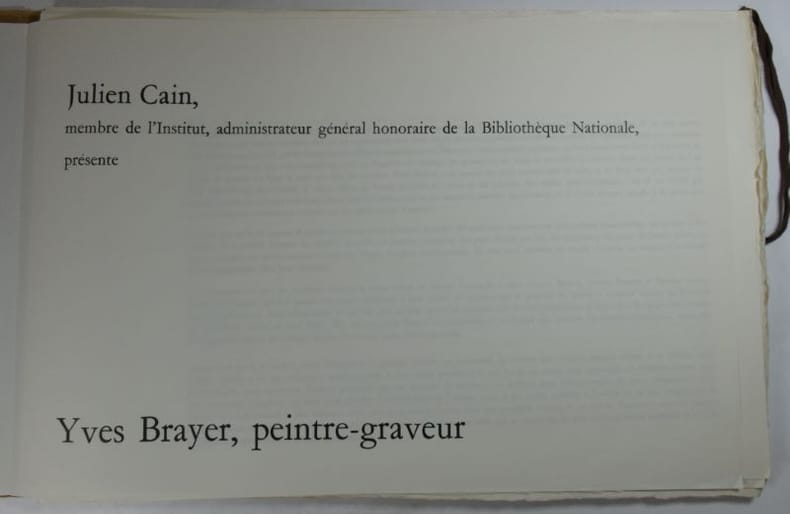
19717500Genève, Pierre Cailler, 1971. Portefeuille oblong de 330 x 495 mm, (6) ff. : titres, texte, 12 eaux-fortes et pointes sèches d'Yves Brayer justifiées au crayon VI/XX et signées dans la plaque par l'artiste, (2) ff. table des gravures et achever d'imprimer, format oblong, en feuilles sous chemise demi-toile à lacets, minime tache ou altération de la toile de la chemise, très bel état (état parfait). Tirage à 100 exemplaires, un des 20 (n° VI) sur papier Japon nacré avant 80 ex. sur vélin d'Arches, l'achevé d'imprimer signé par l'artiste et l'éditeur. Très bel exemplaire.
- Les cahiers du Cap, Paris s.d. (circa 1925), 13x18cm, trois feuilles. - Three publicity leaflets for Les Cahiers du Cap, an anti-Semitic and anti-modern magazine: "Matisse, is Bernheim! Picasso is Rosenberg!" - "Living art is a new Panama scandal" - "Trafficking of modern painting is nothing but a snatch-and-grab robbery" Les Cahiers du Cap | Paris [ca 1925] | 13 x 18 cm | three leaflets First edition of each of these scarce publicity leaflets presenting the magazine created and led by Marcel Hiver in 1924 Les Cahiers du Cap: - Picasso, c'est Rosenberg !" "Matisse, is Bernheim! Picasso, is Rosenberg!" - "What Mr. André Salmon, the prince of the mumblers of contemporary criticism, baptized with astonishing insolence: "Living Art" turns out, finally, to be a disgusting combination of merchants and critics, to the detriment of an audience of incredibly ignorant and sheep-like snobs. The sterile fury of pictorial anarchy ultimately ends with this "Thermidor" of the traffickers, the exclusive empire of the merchant and the enrichment of a small band of astute Phoenicians. "Living Art" is a new "Panama Scandal" and this time, there is no canal at all!" - "Trafficking of modern painting, as it is currently practiced, is nothing but a diminished form of snatch-and-grab robbery." Incredible synthesis of the intellectual fossilization inherited from the 19th century and an emerging totalitarian ideology. Marcel Hiver's Bulletin mensuel d'art et de littérature is not, however, a purely reactionary body and, since its foundation in 1924, it welcomed writers such as Antonin Artaud, Robert Desnos, the communists Georges Altman and Lucien Scheler, the surrealists Claire and Yvan Goll and the future founder of the Musée National d'Art Moderne, Jean Cassou. The magazine also defended some of the great forerunners of Modern Art, such as Van Gogh and Gauguin, and also contemporary artists including Foujita and Modigliani. Yet, in 1927, the publicity leaflets of this artistic current affairs magazine are entirely devoted to denouncing this effervescence of artistic creation, not by taking a position in favor of another school, but by an impressive assimilation of all of the major fears that have marked French civilization: Revolution, Anarchism, liberal economic... All of these allegations are mainly carried by an anti-Semitism undeclared but revealed by the simple highlighting of the gallery owner's name, the implicit reference to the merchants of the temple and, through the Panama scandal, the allusion to the Jewishness of the financier Jacques de Reinach. However, Marcel Hiver's violence against the aesthetic disruption inspired by Picasso and Apollinaire takes a very different turn here from the reactionary and traditionalist position of the usual despisers of Modernity. The expression: "Thermidor of the traffickers", like this small note once addressed to Antonin Artaud: "It would take a Marat of Critisicm" does not testify to a nostalgia of the Ancien Régime but to a fascination for Terror established by Robespierre, arrested and beheaded on 9 and 10 Thermidor, by the Convention members. Champion for the Reign of Terror, refusal of liberalism, anti-Semitic hatred, diatribe against "degenerate art" and defamatory propaganda, Marcel Hiver's leaflets are not a nostalgic testimony of a disappeared world, but the French vanguard of an ideology that, on the other side of the Rhine, prepares for war. Scarce collection of these flyers. [FRENCH VERSION FOLLOWS] Edition originale pour chacun de ces tracts publicitaires présentant la revue créée et animée par Marcel Hiver en 1924, "Les cahiers du cap" : - "Matisse, c'est Bernheim ! Picasso, c'est Rosenberg ! " - "Ce que monsieur André Salmon, ce prince des bafouilleurs de la critique contemporaine, a baptisé avec une étonnante impudence : "l'Art Vivant" s'avère, finalement, comme une dégoûtante combine de marchands et de critiques, au détriment d'un public de snobs incroyablement igna
- S.n., s.l. 23 septembre 1940, 16,5x20cm, une feuille. - Lettre autographe signée de Moïse Kisling adressée depuis son exil de Lisbonne à Carlo Rim, 45 lignes à l'encre noire, lui donnant des nouvelles de son état de santé défaillant : "Je voulais vous envoyer une jolie carte avec des jolis bateaux de Lisbonne et je suis réduis à vous écrire sur cet horrible papier de l'hôpital ou je suis depuis mon arrivée - C'est pas mal comme arrivée ! Parlons-d'autre chose que l'hopital et mon sdalaus de foie qui me fait connaître des hopitaux de Lisbonne." Lorsqu'il sera rétabli, Moïse Kisling envisage de voyager mais reste encore indécis sur la destination qu'il choisira : "... bientôt j'espère un grand bateau m'emmenera à La Havane ou plustot le clipper aux Etats-Unis. J'hésite encore entre ces deux pays " et s'inquiète pour son ami de la situation du cinéma français en ces temps de guerre : "... je n'ose pas penser par quels emmerdements vous devez passer en ce moment - Mais que faire ? Attendre ? N'as-tu pas pensé qu'en France pour le cinéma ça va être très dur. As-tu une idée ce que tu penses faire ? ..." En dernier lieu, le peintre semble opter pour les U.S.A. et Hollywood : "... le type que j'ai rencontré chez toi et qui est parti à Hollywood... Il m'a dit qu'il part là bas et que son frère a beaucoup de succès malgré la crise qui sévit la bas." Pliures inhérentes à la mise sous pli. Carlo Rim fut un écrivain provençal, auteur notamment de "Ma belle Marseille", un caricaturiste, un cinéaste : "Justin de Marseille", "L'armoire volante", "La maison Bonnadieu", et fut notamment l'ami de Fernandel, de Raimu et Marcel Pagnol mais aussi de Max Jacob et André Salmon qu'il rencontra à Sanary. [ENGLISH DESCRIPTION ON DEMAND]
- John & Charles Watkins, London s.d. [1865], 6,5x9,6cm, une photographie. - [PHOTOGRAPH] Photographic portrait of the English painter John Everet MILLAIS John & Charles Watkins, London 1865 (n.d., but circa), 6.5 x 9.6 cm, photograph Original photograph on albumin paper showing the painter John Everet Millais in visiting card format, laid down on card from the studio of John & Charles Watkins, marked on reverse. Pencil annotation to verso. A standing portrait with top hat. [FRENCH VERSION FOLLOWS] Photographie originale sur papier albuminé représentant le peintre John Everet Millais, au format carte de visite, contrecollée sur un carton du studio John & Charles Watkins, avec la marque au dos. Annotation au crayon au dos du cliché. Portrait en pied au chapeau haut-de-forme.
- Pajol & Cie, Paris 1900, 15,2x22cm, broché. - Albert PAJOL & Adolphe COUTURET & Charles JACOUTOT & Félix VALLOTTON Operetta's lyrics « Ah ! La pé... la pé... la pépinière !!! » Pajol & Cie | Paris 1900 | 15.2 x 22 cm | original wrappers Rare first edition of the operetta's lyrics "Ah! La pé... la pé... la pépinière !!!». Cover by Félix Vallotton. Very fresh condition. [FRENCH VERSION FOLLOWS] Rare édition originale des paroles de l'opérette "Ah! La pé... la pé... la pépinière !!!" en deux actes et quatre tableaux, jouée au concert de la Pépinière ("près la gare St Lazare"). La couverture est réalisée par Félix Vallotton. Superbe état de conservation.
- Galerie E. Druet, Paris 1909, 13x18,5cm, agrafé. - Galerie E. Druet, Paris 1909, 13 x 18,5 cm, stapled Rare first edition of the catalogue of Paul Sérusier's work presented at the Galerie E. Druet from 18 to 30 January 1909. Small light marks at the foot of the second wrapper, otherwise a beautiful copy. Rare catalogue illustrated with an original lithograph by Paul Sérusier on the first wrapper. [FRENCH VERSION FOLLOWS] Rare édition originale du catalogue des oeuvres de Paul Sérusier présentées à la Galerie E. Druet du 18 au 30 Janvier 1909. Petites taches claires en pied du second plat, sinon bel exemplaire. Rare catalogue illustré d'une lithographie originale de Paul Sérusier sur le premier plat.
- J. Goodwin, London 1825, In-4 (20,5x28,5cm), 287pp., relié. - Nouvelle édition après la première parue en 1768. Impression sur papier velin fort. Un frontispice, un titre gravé et 76 vignettes en en-tête gravées par Corbould et Dent. Reliure anglaise en plein maroquin vert sapin à longs grains d'époque. Dos à faux nerfs plats très richement orné de 3 compositions décoratives complexes et de divers filets, roulette en queue et tête. Titres dorés. Pastille en queue de maroquin rouge portant un numéro de bibliothèque. Large frise à froid et doré d'encadrement sur les plats, séries de filets à froid et dorés. Tranches dorées. Traces de frottement. Un léger accroc en coiffe de tête. Plusieurs rayures sur les plats. Pâles rousseurs sur le frontispice et le titre sinon le reste parfaitement frais et exempt de rousseurs. Très bel exemplaire. Commentaire des oeuvres de Hogarth. Le sous-titre de l'édition parue en 1768 était rédigé ainsi : With an explanation, pointing out the many beauties that may have hitherto escaped notice; and a comment on their moral tendency. Calculated to improve the minds of youth, and, convey instruction, under the mask of entertainment. Now first published, with the approbation of Jane Hogarth, widow of the late Mr. Hogarth. [ENGLISH DESCRIPTION ON DEMAND]
190698022Henry Frowde. London. 1906. Henry Frowde. 1906. Reprint. DOUBLE FORE-EDGE PAINTING depicting two stately home scenes. Original faux red morocco decorated gilt borders all edges gilt. Spine slightly faded pages slightly browned otherwise clean and sound in a green clam shell box. lettered in gold pen. unknown
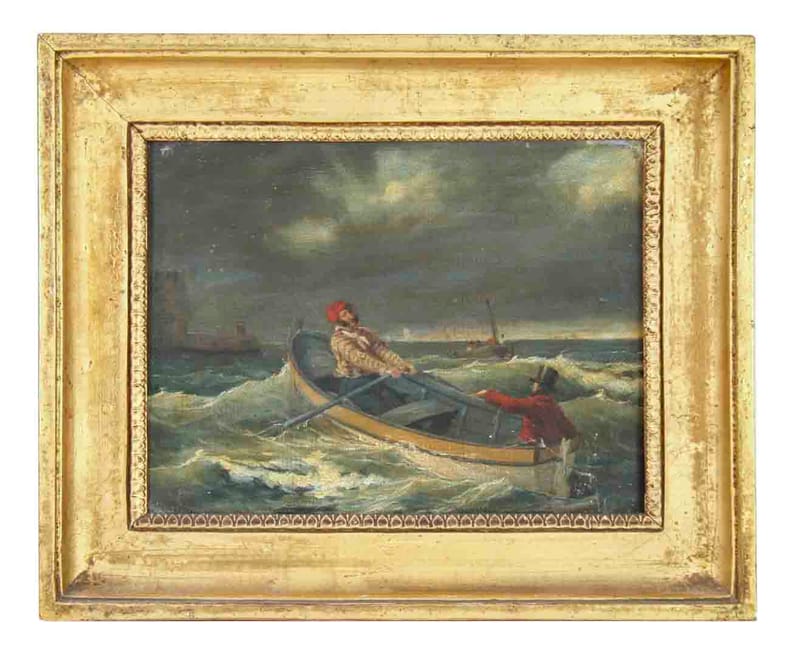
138315aaf1823, 16x21,5 cm (sans cadre), C’est un sujet inhabituell pour l’artiste français Etienne Bouhot. Signé au dos du tableau “Bouhot 1823”. dans un cadre doré d’epoque, 23,5x28,5 cm.
125865aafTorino, Istituto di scienze ed arti grafiche della Facoltà di Architettura del Politecnico di Torino, 1965, in-folio, (43 x 31 cm), 144 p., avec 34 grands illustrations à pleine page de A. Fabbrei, par des peintures d’Agenore Fabbri, Un des 357 exemplaires num. no. 157, reliure en cuir originale, étui original. Bel exemplaire.
100425aafS.d., XIXe siècle, 10 x 15 cm, aquarelle origiale, signée ‘A. H.’, encadrement en bois doré (17 x 22.5 cm).
90142aafParis, 1930, 15 x 15 cm. (18x18), gouache originale avec blanc opaque et or, sur carton crème, cachet au dos ‘M. BARRE & J. DAJEZ’ ‘cédé tout droit de reproduction’ / signée et datée : Paris 14 - 5 - 30, sous passepartout. /(1 feuille avec déchirures.)
0529000 in 4 (31x24,5) 1 photographie en noir et blanc. Tirage époque début XXème siècle de format: 29,5 cms x 23 cms. Camille Pissarro 1830-1903. Portrait reproduit en frontispice du tome 2 du Catalogue critique des peintures - Critical catalogue of paintings (Skira - Wildenstein Institute Publications 2005). Provenance: ancienne collection Claude BONIN-PISSARRO (1921-2021). Bel exemplaire
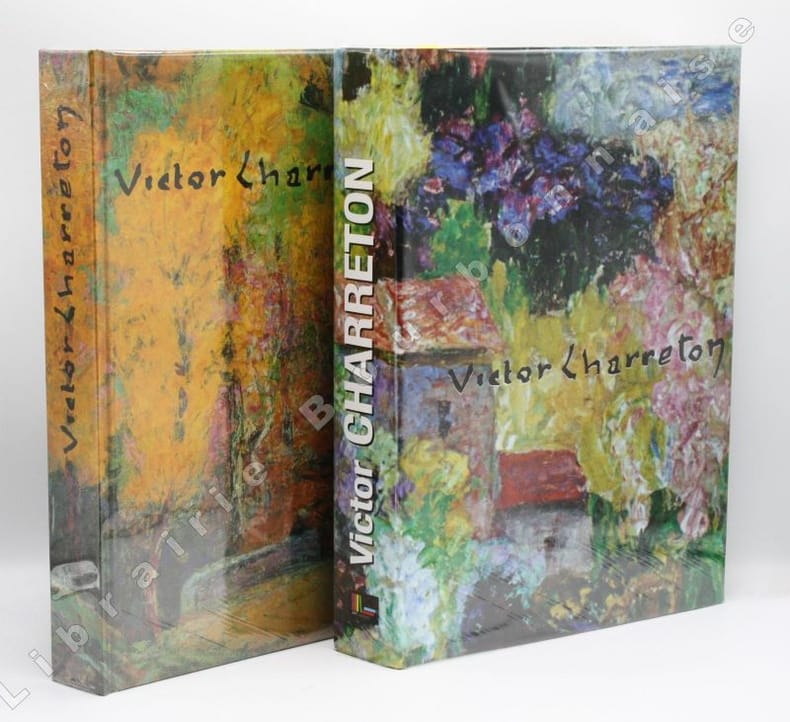
13210[La Sauvetat], Robert Chatin, Imprimerie Vatel à Brioude, 1995 - Paris, Art inprogress Editions, 2007 ; 2 forts vol. in-4. 597 pp.-1 f. / 733pp. Cartonnages illustrés de l'éditeur, avec une jaquette couleurs por le second volume. Exemplaires neufs.
Barcelona, Polígrafa, 1979. Reproducció de dibuixos, litografies i aiguaforts d'Antoni Tàpies. 96 p. Foli. Tela editorial estampada. Molt bon exemplar. 1ª edició. Primera edición. 1st edition. First edition. Exemplar corresponent als 500 exemplars d'edició de luxe, numerats del 76 al 575, enquadernats en tela i signats pels autors. Muy ilustrado con litografías originales y la encuadernación con aguafuerte original sobre tela con gofrado. De una edición total de 1500 ejemplares, el nuestro de los 500 con la encuadernación especial y la justificación firmada por ambos artistas. En nuestro ejemplar también sendas dedicatorias autógrafas a lápiz firmadas y fechadas por los dos pintores.
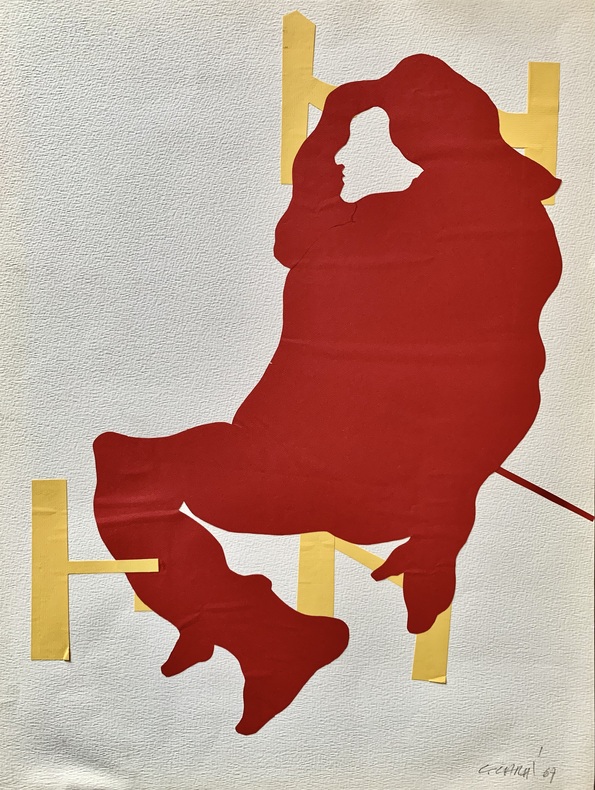
awd-1012Collage original de papier jaune et rouge sur Canson à grains, daté 1969 et signé en bas à droite (50/65 cm).