25 427 résultats
177420170Rome 1774. Copper engraving on two joined sheets by Ottaviani after drawings by Savorelli and Camporesi printed in light brown coloured ink with contemporary hand-colouring. Neat marginal restoration. A stunning plate from "Logge di Rafaele nel Vaticano": with contemporary colouring of the highest quality from the golden age of the hand-coloured print. The main panel shows the moment during the Last Supper when Jesus announces that one of the twelve disciples will betray him.<br/> <br/>A very fine image from the second part of a work titled "Loggie di Rafaele nel Vaticano" depicting the decorative work executed by Raphael and his assistants between 1518-1519 in the Vatican. They were drawn by Gaetano Savorelli a Roman painter and draughtsman best known for his Raphael drawings and Pietro Camporesi a Roman architect who worked for Pope Clemens XIII and Pius VI on rooms for the Vatican Museum. The first to illustrate the famous frescoes these beautiful plates were probably planned as early as 1760 but were not executed until 1772 to 1776. The plate is remarkable not only as the first important visual record of Raphael's work but also for the quality of the hand-colouring - the work on this image is in our opinion some of the greatest to be produced in Europe during the whole of the eighteenth century: the golden age of the hand-coloured print. They were remarkable not just for their size and magnificent colouring but also because of the influence they had on contemporary taste. The decision was made to "borrow" elements from Raphael's Vatican tapestries and insert them where the original frescoes were in too poor a state to be legible. The finished plates therefore represented an amalgam of design elements presented with a crisp freshness of colour that held enormous appeal and did much to stimulate the taste for the "grotesque" in the Neo-classical period. A year after the death of his principal patron Julius II Raphael succeeded Donato Bramante in 1514 as the official Vatican architect. Having previously adorned the "Stanze" or chambers of Julius on the second floor of the papal apartments in the Vatican palace he was commissioned by Leo X in 1517 to decorate the adjacent Logge. He designed an elaborate cycle of ornamental frescoes for the room's ceiling vaults doors and auxiliary pillars which were executed by his assistants Giulio Romano and Giovanni da Udine. Twelve of the quadrilateral ceiling vaults were adorned with murals of familiar Old Testament scenes and one with a scene from the New Testament while the more decorative frescoes painted on the pilasters by Udine were covered with imaginative compositions of 'grotesque' motifs like foliage fruit and chimerical beasts.<br/> <br/>Cf. Brunet IV 1110 & 1111; cf. Berlin "Kat". 4068 & 4066; "Raphael Invenit: Stampe da Rafaello" 1985 Ottaviano 22; cf. "Raphael: Reproduktions-graphik aus vier Jahrhunderten" Coburg 1984 104 & no. 245. unknown books
177420168Rome 1774. Copper engraving on two joined sheets by Ottaviani after drawings by Savorelli and Camporesi printed in light brown coloured ink with contemporary hand-colouring. Neat marginal restoration. A stunning plate from "Logge di Rafaele nel Vaticano": with contemporary colouring of the highest quality from the golden age of the hand-coloured print. The main panel shows Moses coming down from Mount Sinai holding the tablets bearing the ten words of the Covenant his face "horned from the conversation of the Lord". Aaron and the children of Israel seeing the face of Moses "horned" are afraid to come near.<br/> <br/>A very fine image from the second part of a work titled "Loggie di Rafaele nel Vaticano" depicting the decorative work executed by Raphael and his assistants between 1518-1519 in the Vatican. They were drawn by Gaetano Savorelli a Roman painter and draughtsman best known for his Raphael drawings and Pietro Camporesi a Roman architect who worked for Pope Clemens XIII and Pius VI on rooms for the Vatican Museum. The first to illustrate the famous frescoes these beautiful plates were probably planned as early as 1760 but were not executed until 1772 to 1776. The plate is remarkable not only as the first important visual record of Raphael's work but also for the quality of the hand-colouring - the work on this image is in our opinion some of the greatest to be produced in Europe during the whole of the eighteenth century: the golden age of the hand-coloured print. They were remarkable not just for their size and magnificent colouring but also because of the influence they had on contemporary taste. The decision was made to "borrow" elements from Raphael's Vatican tapestries and insert them where the original frescoes were in too poor a state to be legible. The finished plates therefore represented an amalgam of design elements presented with a crisp freshness of colour that held enormous appeal and did much to stimulate the taste for the "grotesque" in the Neo-classical period. A year after the death of his principal patron Julius II Raphael succeeded Donato Bramante in 1514 as the official Vatican architect. Having previously adorned the "Stanze" or chambers of Julius on the second floor of the papal apartments in the Vatican palace he was commissioned by Leo X in 1517 to decorate the adjacent Logge. He designed an elaborate cycle of ornamental frescoes for the room's ceiling vaults doors and auxiliary pillars which were executed by his assistants Giulio Romano and Giovanni da Udine. Twelve of the quadrilateral ceiling vaults were adorned with murals of familiar Old Testament scenes and one with a scene from the New Testament while the more decorative frescoes painted on the pilasters by Udine were covered with imaginative compositions of 'grotesque' motifs like foliage fruit and chimerical beasts.<br/> <br/>Cf. Brunet IV 1110 & 1111; cf. Berlin "Kat". 4068 & 4066; "Raphael Invenit: Stampe da Rafaello" 1985 Ottaviano 22; cf. "Raphael: Reproduktions-graphik aus vier Jahrhunderten" Coburg 1984 104 & no. 245. unknown books
177420165Rome 1774. Copper engraving on two joined sheets by Ottaviani after drawings by Savorelli and Camporesi printed in light brown coloured ink with contemporary hand-colouring. Neat marginal restoration. A stunning plate from "Logge di Rafaele nel Vaticano": with contemporary colouring of the highest quality from the golden age of the hand-coloured print. In the main panel the Lord appears to Isaac and tells him not to go down into Egypt but to stay in Gerara.<br/> <br/>A very fine image from the second part of a work titled "Loggie di Rafaele nel Vaticano" depicting the decorative work executed by Raphael and his assistants between 1518-1519 in the Vatican. They were drawn by Gaetano Savorelli a Roman painter and draughtsman best known for his Raphael drawings and Pietro Camporesi a Roman architect who worked for Pope Clemens XIII and Pius VI on rooms for the Vatican Museum. The first to illustrate the famous frescoes these beautiful plates were probably planned as early as 1760 but were not executed until 1772 to 1776. The plate is remarkable not only as the first important visual record of Raphael's work but also for the quality of the hand-colouring - the work on this image is in our opinion some of the greatest to be produced in Europe during the whole of the eighteenth century: the golden age of the hand-coloured print. They were remarkable not just for their size and magnificent colouring but also because of the influence they had on contemporary taste. The decision was made to "borrow" elements from Raphael's Vatican tapestries and insert them where the original frescoes were in too poor a state to be legible. The finished plates therefore represented an amalgam of design elements presented with a crisp freshness of colour that held enormous appeal and did much to stimulate the taste for the "grotesque" in the Neo-classical period. A year after the death of his principal patron Julius II Raphael succeeded Donato Bramante in 1514 as the official Vatican architect. Having previously adorned the "Stanze" or chambers of Julius on the second floor of the papal apartments in the Vatican palace he was commissioned by Leo X in 1517 to decorate the adjacent Logge. He designed an elaborate cycle of ornamental frescoes for the room's ceiling vaults doors and auxiliary pillars which were executed by his assistants Giulio Romano and Giovanni da Udine. Twelve of the quadrilateral ceiling vaults were adorned with murals of familiar Old Testament scenes and one with a scene from the New Testament while the more decorative frescoes painted on the pilasters by Udine were covered with imaginative compositions of 'grotesque' motifs like foliage fruit and chimerical beasts.<br/> <br/>Cf. Brunet IV 1110 & 1111; cf. Berlin "Kat". 4068 & 4066; "Raphael Invenit: Stampe da Rafaello" 1985 Ottaviano 22; cf. "Raphael: Reproduktions-graphik aus vier Jahrhunderten" Coburg 1984 104 & no. 245. unknown books
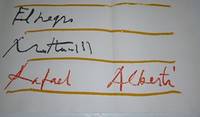
51-5819Bedford Village NY: Tyler Graphics. 1983. Folio. 38 x 38cm. Sheets loose as issued in original cream cloth portfolio. Edition of 51 signed by Motherwell. The following lithographs are present: Dorothy Belknap nos.:268 269 270 271 272 291.The title "El Negro" is stamped on the front cover in black. The spine of the book is stamped "'El Negro' Alberti·Motherwell/Tyler Graphics Ltd." and includes the publisher's logo.<br /> Typeface Bodoni Bold: typography by Antony Drobinski and Roberta Savage Emsworth Studios New York; typesetting by Stamford Typesetting Corporation Stamford Connecticut.PAPER:White TGL handmade bound in natural buckram-covered clamshell boxSIGNATURE:Signed “Robert Motherwell†in black ink lower left on colophon page.In response to a poem written by Spanish poet and painter Rafael Alberti Motherwell created a sequence of nineteen lithographs. Motherwell and Kenneth Tyler collaborated from 1981 to 1983 in the design and creation of the artist's book or 'livre de peintre' known as El Negro Motherwell. Motherwell made his images on prepared mylar and acetate sheets using Paintstiks grease pencils a alcohol tusche he applied with brushes or a bamboo pen. These images were transferred to aluminum plates and then the lithographs were printed on a flat bed offset press onhandmade paper. Bedford Village, NY: Tyler Graphics. 1983 hardcover
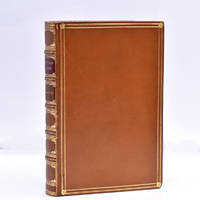
312476London: Stanley Paul & Co. et al. vd. 19 vols. various sizes. Bound in full polished brown calf gilt spines red leather title-pieces t.e.g. for Hatchards Piccadilly. Fine. 19 vols. various sizes. Stanley Paul & Co. et al. unknown
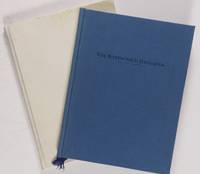
200055264London: Facsimile Editions 2000. Limited edition. Hardcover. vg to fine. 1/400 Quarto. Unpaginated 78 1pp. White goatskin vellum with companion volume in blue paper boards with black lettering on cover and spine. Signed certificate of authenticity from the Israel Museum and the publisher laid in. Copy #42 from a limited edition of 400 plus 150 numbered I to CL handwritten in pencil on the colophon sheet laid in at the front of the facsimile volume.<br /> <br /> This gorgeous facsimile edition of the unique Rothschild Haggadah is according to its publishers statement bound in vellum "printed on specially milled parchment paper in up to nine colors" and decorated with gold metal foil and gold metal powder by craftsmen to reproduce the flat gold and burnished gold of the original manuscript. The Haggadah is considered among the most exquisite sections of the larger compendium manuscript known as the Rothschild Miscellany originally created in Northern Italy in 1479. It is acclaimed as among the most lavish of all Hebrew illuminated manuscripts and its parent volume a manuscript of unrivaled in richness and scope. The compendium is currently held in the collection of the Israel Museum.<br /> <br /> Accompanying the facsimile volume is companion volume containing a full English translation of the Haggadah text along with critical and scholarly analysis.<br /> <br /> In Hebrew and English. <br /> <br /> Minor smudges the bindings. Bindings in very good to near fine interiors in fine condition overall. Facsimile Editions hardcover
211707Signed Raphael Soyer lower left inscribed Kelekian center right. 1 vols. 14 x 9.25 inches. Fine. In frame. Signed Raphael Soyer lower left inscribed Kelekian center right. 1 vols. 14 x 9.25 inches. Kelekian 1868-1951 one of the most important art/antiquites dealers of the modern era. Known to his peers as the "dean of antiquities" Kelekian's connoisseurship of the ancient art of the Near East opened the eyes of many Americans to a heritage hitherto unknown and unappreciated. Kelekian was born in Kayser in modern-day Turkey began his career in Constantinople opened a gallery in Paris in 1891 and moved to New York shortly after the 1893 Chicago World's Fair. Very quickly Kelekian's gallery developed clients among America's wealthiest families e.g. the Havermeyers John D. Rockefeller Jr. the Astors the Walters of Baltimore et. al. Kelekian ws primarlily responsible for building the Coptic Early Christian and Classical collections of Henry Walters later founder of the Walters Art Museum in Baltimore and the Gothic collection of financier and Metropolitan Museum of Art president George Blumenthal. Kelekian was equally well known as an early champion of modern art and began collecting and promoting such artists as Henri Matisse André Derain and Pablo Picasso at a very early date. Boisterous expansive a friends to many artists he died in his eighties at his hime in New York with world-wide reputation. for a sketch of his life and career see the excellent sketch by Hrag Vartanian for the Armenian General benevolent Fund http://www.agbu.org/agbunews/display.aspA_ID=69. unknown books
211707Signed Raphael Soyer lower left inscribed Kelekian center right. 1 vols. 14 x 9.25 inches. Fine. In frame. Signed Raphael Soyer lower left inscribed Kelekian center right. 1 vols. 14 x 9.25 inches. Kelekian 1868-1951 one of the most important art/antiquites dealers of the modern era. Known to his peers as the "dean of antiquities" Kelekian's connoisseurship of the ancient art of the Near East opened the eyes of many Americans to a heritage hitherto unknown and unappreciated. Kelekian was born in Kayser in modern-day Turkey began his career in Constantinople opened a gallery in Paris in 1891 and moved to New York shortly after the 1893 Chicago World's Fair. Very quickly Kelekian's gallery developed clients among America's wealthiest families e.g. the Havermeyers John D. Rockefeller Jr. the Astors the Walters of Baltimore et. al. Kelekian ws primarlily responsible for building the Coptic Early Christian and Classical collections of Henry Walters later founder of the Walters Art Museum in Baltimore and the Gothic collection of financier and Metropolitan Museum of Art president George Blumenthal. Kelekian was equally well known as an early champion of modern art and began collecting and promoting such artists as Henri Matisse André Derain and Pablo Picasso at a very early date. Boisterous expansive a friends to many artists he died in his eighties at his hime in New York with world-wide reputation. for a sketch of his life and career see the excellent sketch by Hrag Vartanian for the Armenian General benevolent Fund http://www.agbu.org/agbunews/display.aspA_ID=69. unknown
12036Soyer Raphael. Soyer Raphael. WOMAN DRYING HERSELF. Drawing charcoal and watercolor on laid paper circa 1940. Inscribed and signed lower right in ink. 19 x 12 1/2 inches sheet. This drawing is closely related to Soyer's color lithograph "Young Woman Drying Herself" of 1940 Cole 57a. and is likely a preparatory study for it. Sensitive and exquisite the drawing is superior to the lithograph in both its draughtsmanship and in the coloring. In excellent condition but with instructions for framing or reproducing written in Soyer's hand at the bottom of the sheet just below the image. unknown
191477730Santiago de Chile: Imprenta Universitaria 1914. Presumed First Edition First printing thus. Hardcover. Good. THIS WORK IS IN SPANISH. 59 5 pages. Footnotes. This appears to be a 1914 reprint of a portion of a larger work as the title page states Publicado en "La Revista Chilena de Historia y Geografia" Tomos XI y XII. Inscribed by the author on the third page. Cover has some wear and soiling. Front and back boards show some weakness. This appears to have been bound by the publisher and has El P. M. Lacunza in gilt on front cover. Rare item possibly unique with the author's signature. Manuel De Lacunza S.J. July 19 1731 - c. June 18 1801 was a Jesuit priest who used the pseudonym Juan Josafat Ben-Ezra in his main work on the interpretation of the prophecies of the Bible which was entitled The Coming of the Messiah in Majesty and Glory. In 1790 Lacunza completed the three volumes of his major work "The Coming of the Messiah in Glory and Majesty" La venida del Mesías en gloria y majestad. Recognizing that royal patronage was the surest guarantee that his work would be published and that he would be protected against his enemies he made repeated attempts to obtain approval by the Spanish court but in this he was unsuccessful. However his book circulated in manuscript form in Spain and in the whole of South America. In September 1824 Pope Leo XII placed it on the Index of Prohibited Books. Lacunza's various works are valuable as a record of the experience of exile and intellectual persecution which results from religious belief. Imprenta Universitaria hardcover
1970mon0000018247Macmillan Co. 1970-01-01. Paperback. Good. in x in x in. 1970 COPYRIGHT Macmillan Co. paperback
1970mon0000071408Macmillan Co. NY 1970-01-01. Paperback. Acceptable. in x in x in. Creased cover. Some pages creased. Some writing. Macmillan Co. NY, paperback
88002802Paris 1918 Laurens. Brown paper over cloth tall folio index of of painters general table glossary 497 black & white gravures 30 x 41 cm. very good clean solid copy. RARE FIRST & ONLY LIMITED NUMBERED EDITION OF 550 COPIES . . . THE FIRST MONOGRAPH ON THE MUSTARD SEED GARDEN . . . IN A EUROPEAN LANGUAGE . This is a wonderful work with superb detail coverage of the JIE ZI YUAN HUA ZHUANG HUA NIAO PU: MUSTARD SEED GARDEN. GUIDE TO PAINTING a Chinese classic by Li Li-Ong & Wang Kai in 1679. . This work discusses and illustrates a great portion of the original with additional commentaries. Hailed as the most important Chinese book on painting ever issued it has been a continual source of instruction for Chinese and Japanese as well as for Western artists over the centuries. This covers landscapes flowers flowers birds and figures with critical notes on the principles and technical advice on painting. . Useful analyses of the methods of drawing for landscapes and for flower & birds. This superb work was begun in 1677 and finished in 1679. It has become a classic of Ming & Ch'ing painting and a guide to both scholars & artists throughout China. . A major European reference on this great Chinese classic few works in Western languages were written about this book therefore this is the one single and most copious of any resource. Issued in a huge folio size 30 x 41 cm. over all in heavy rag paper a monumental work ! . End of the book description. . . . NOTES ON THE SEPARATE ENGLISH TRANSLATION TYPED MANUSCRIPT: . TITLE: THE CHINESE PAINTERS This is a typed manuscript from the Justin D. Metzgar collection. This translation consists of the following parts from the original book in French. This is the only known translation excerpt to have been don't on this classic title . This item is sold separately from the above described book. . Preface Part I: THE TECHNIQUE: 1. Tools of the painter 2. The representative of forms 3. The division of subjects 4. Inspiration . Part II 1. Origins 2. Chinese painting before the coming of Buddhism 3. The intervention of Buddhism 4. Chinese painting in the T'ang Epoch 7th-10th centuries 5. Painting in the Sung epoch 10th to 13th centuries 6. Chinese painting in the Yuan epoch 13th to 14th . centuries 7. Chinese painting in the Ming epoch 14th to 17th . centuries 8. Chinese painting in the Ch'ing epoch 17th to 20th . centuries . 9. Conclusions . INDEX OF PAINTERS by dynasty epochs per above. . The above is the excerpt is the only translated part into English. A useful resource. . See spine.jpg photo posted to our website for the title page of this item. Other photos are of the Petrucci book. . End of typed manuscript item. . BIBLIOGRAPHY . K. Toda: THE RYERSON COLLECTION OF JAPANESE AND CHINESE ILLUSTRATED BOOKS p.406-410. J. Needham SCIENCE AND CIVILIZATION IN CHINA: vol.3 p.596 et al for more details. SZE Mai-Mai: THE TAO OF PAINTING: A Study of the Ritual Disposition of Chinese Painting. With Translation of the Chieh Tzu Yuan Hua Chuan or Mustard Seed Garden Manual of Painting 1679-1701. Please inquire with us as we may have this in stock. RAWSON Jessica. ed. et al.: THE BRITISH MUSEUM BOOK OF CHINESE ART.: page 124. . unknown
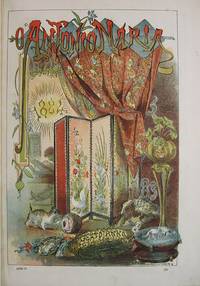
1879LL1<p><strong>Portugal's First Great Political Satirical Magazine a Complete Set</strong></p><p><strong>Includes Portuguese Poetry </strong></p><p>6vols; small folio; 315 issues COMPLETE. Contemporary half leather bindings red brown and green.2 color title pages and two chromolithographic cartoons; three full-page chromolithographic caricatures; black and white lithographs throughout.</p><p>O António Maria was Portugal's first great political satire magazine directed by Portugal's first great political cartoonist Rafael Bordalo Pinheiro 1846-1905.</p><p>The title meant as an exclamation expropriated the first half of the name of the reigning Portuguese Prime Minister António Maria Fontes Pereira.</p><p>Like Puck O António Maria usually devoted its first last and center pages to cartoons. The text pages also were dotted with cartoon art. Among the contributors were the poet Guilherme de Azevedo "João Rialto" Ramalho Ortigão "João Ribaixo" Alfredo Morais Pinto "Pan-Tarantula" João Broa Emílio Pimentel Enrique Casanova António Ramalho Ribeiro Cristino Columbano Bordalo Pinheiro Manuel Gustavo and others. Initially the magazine struck a balance between cartoons and text but as it matured the text took a subservient position to cartoons and comic strips.</p><p>Pinheiro used satire and irony in the pages of his magazine to oppose those in power and denounce the selfishness and corruption of the elites. All of Portugal's leading politicians and heads of first families appeared in caricature at one time or another in the weekly In 1884 the government revised the criminal code which seriously limited freedom of the press. It was in this repressive environment against which journalists generally adopted a passive attitude that led Pinheiro in his final issue to explain: "<em>When in a meeting of journalists' I proposed an 18-day publishing moratorium to protest the shameful situation in which the Portuguese government has placed the Portuguese press it was pointed out that O António Maria as a weekly sheet would not be seriously affected by the resolution. So I take the execution of my proposal one step further: O António Maria closes its doors forever in a sign of mourning</em>."</p><p>#WorldCat: 2 copies in US Libraries.</p>
02-01991783. Woodcut print after Raphael. Four color blocks: light yellow green medium green dark green very dark green. 300 x 178 mm. Nagler 15. Le Blanc 15. Kennedy 179. 1783. unknown
02-02001783. Woodcut print after Raphael. Four color blocks: light green medium green dark green very dark green. 213 x 280 mm. Nagler 4. Le Blanc 4. Kennedy 165. 1783. unknown
1962118703Buenos Aires: La Arboleda Perdida 1962. Brossura wrappers. Ottimo Fine. Bella dedica e firma autografe dell'Autore Inscribed and signed by the Author. <strong>Un disegno originale dell'Autore in copertina</strong> ogni volume reca un disegno diverso. Stampato in occasione del sessantesimo compleanno del poeta. 8vo. pp. 14. Bella dedica e firma autografe dell'Autore Inscribed and signed by the Author. Ottimo Fine. Prima edizione di 29 esemplari numerati e firmati dall'Autore First edition of 29 copies numbered and signed by the Author. <em>Empujan en fin vientos de libertad marina a la poesí";a de Rafael Alberti llevándola a explorar todos los espacios de la historia de la mitología o de la experiencia humana: ''Yo te miraba oh Cádiz bahía de los mitos / . / Canas de antigüedad tus estelares fábulas / tus solares historias / oh gaditano mar de los perdidos / Atlantes vesperales jardines de la espuma / islas desvanecidas del Ocaso!'' Los pobres pescadores que salen del Guadalete hacia el mar son los mismos que arribaban a Tarsis en busca de oro y plata y estaño. El mar resume la historia y el mar compendia el sueño. ¿Qué escenario mejor podría soñarse para el encuentro amoroso de Venus y Príapo que el escenario del mar de Cádiz Uno de los más formidables poemas amorosos de la literatura universal de ese Diálogo entre Venus y Príapo acontece en esa bahía: «Amor! La noche se desvae. / Nos baña el mar. Oh luz!. El mundo canta. / Cae la luna. El viento.»"</em> La Arboleda Perdida, unknown
010653Leconte de Lisle, Poèmes barbares. Paris, A Romagnol, 1914. Grand in-8 (29*21cm), 426p. Magnifique édition illustrée par Raphaël Freida. Tirée à 301 exemplaires, celui-ci un des 78 sur japon ou vélin Van Gelder contenant normalement 3 états des gravures, second papier avec 12 exemplaires réimposés in-4. Le nôtre, n°52, sur japon. Freida n'illustra que cinq ouvrages. Le prospectus est illustré de 100 compositions de Freida, 19 hors-texte (dont le frontispice) et 81 en-tête de sonnets. Exemplaire enrichi de deux prospectus sur papier japon reliés en fin d'ouvrage, papiers légèrement différents. Notre exemplaire ne contient qu'une seule suite, l'eau-forte pure, en feuilles. Curieusement, il semble que de la quasi-totalité des exemplaires parmi ces 78 devant contenir trois suites n'en ont qu'une ou deux. De fait, de ce tirage, mis à part un exemplaire qui était enrichi de nombreuses suites (dont une sur parchemin), les cinq autres que nous avons identifiés, en plus du nôtre, n'ont qu'une ou deux suites sur les trois. Talvart & Place (XII, 81) indique la mise en vente eut lieu en décembre 1918. La guerre a donc aussi eu des effets sur l'édition en elle-même. Reliure signée Bernasconi, plein maroquin janséniste noir doublé de maroquin rouge, tranches dorées sur témoin, couvertures et dos conservés, étui bordé. Légers défauts. La suite est présentée dans une épaisse chemise cartonnée qui devait contenir à l'origine le texte. Cette chemise est donc trop épaisse pour la suite. Superbe ouvrage, superbe exemplaire, le chef-d'ouvre de Freida.
197248380Valencia.: Galeria Val i30 en Colaboracion con Juana Mordó. 1972. Pasted as issued into original publisher's blue portfolio with elastic fastening white screenprint label with title to front cover with additional details in black. Small 4to. 210 x 228 mm. A single sheet pasted into the wrapper at both ends with screenprint recto only and folded to form 20 pages the pages featuring 14 numbered silkscreen compositions conceived either as single pages or double-page spreads final verso with details of the compositions reproductions of the authors' / artists' photographs with eyes blacked out their fingerprints signatures and other details; sheet size: c.200 x 4444 mm. The extraordinary scarce Pop artist book by the influential Spanish art collective 'Equipo Crónica'.Issued in the form of a film storyboard - even the cover reproduces the blue folder of a storyboard or screenplay - 'Seria Negra' is a monochromatic screenprint composition of individual frames printed in a lush chocolate and cream. 'Equipo Crónica' the collective that produced the book were a Pop-influenced duo of Manolo Blasco Valdés and Rafael Solbes a third member had departed in 1967 founded in Valencia in 1964. Early exhibitions with Clavé Saura Tàpies and others prompted Valdés and Solbes to form first 'Estampa Popular' a broader looser grouping with shared artistic aims and then the smaller more focussed 'Equipo Crónica'.'Equipo Crónica' despite its use of seemingly bland and decontextualised American-influenced Pop imagery was always subversive but artists had to be subtle in Franco's Spain and the collective's oeuvre was rarely overtly so. The present artist book with its 1930s /1940s film noir imagery of gangsters shakedowns molls and gangland hits all against bizarre found backgrounds Lichtenstein's work seems to feature heavily is disorientating but highly original.Monochrome paintings with added colour and large screenprints of some of the images were also issued and each of these feature a large multi-coloured vignette not present in the book versions.'The Spanish artist's group Equipo Crónica chronicled social and political concerns through a satirical art. While their themes referred to Spain's government and institutions and to its great - but stifling - artistic past the group also took aim at American imperialism and military might.' Weitman / Wye pg. 115.OCLC reports copies at MoMA and the Fairleigh Dickinson Library only; we can trace no further copies.see Wye & Weitman's 'eye on europe: prints books & multiples / 1960 to now' MoMA 2006; Galeria Val i30 en Colaboracion con Juana Mordó. unknown
1969C91020Weidenfeld & Nicolson. As New. 1969. Hardcover. FREE UPGRADE to Courier/Priority Shipping Upon Request - IN STOCK AND IMMEDIATELY AVAILABLE FOR SHIPMENT - AS NEW THE TEXT BLOCK IS PRISTINE CLEAN UNMARKED AND IN EXCELLENT CONDITION - - 128pp. Pages; 64 color plates 379 black and white illustrations. Catalogue Raisonne Catalog Raisonné Complete Works Life and Work Raisonnee -- with a bonus offer-- - May be EITHER: out of print OOP and extremely rare in this pristine condition; signed by author or contributor; or a first or special edition; inquire for details . Weidenfeld & Nicolson hardcover
2005C87162Lanoo. As New. 2005. Hardcover. FREE UPGRADE to Courier/Priority Shipping Upon Request - IN STOCK AND IMMEDIATELY AVAILABLE FOR SHIPMENT - Flawless copy brand new pristine never opened -- Text in Dutch. 198 pages; illustrated. Catalogue Raisonne Catalog Raisonné Complete Works Catalogus Het Complete Oeuvre Raisonnee -- with a bonus offer-- - May be EITHER: out of print OOP and extremely rare in this pristine condition; signed by author or contributor; or a first or special edition; inquire for details . Lanoo hardcover
0012102Havana Cuba Matanzas: Cuban Slave Trade Emancipated Slaves African Slave Deaths. Good with no dust jacket. Non-Book. On offer is a remarkable archive of four Cuban government manuscript documents related to the deaths of African slaves or emancipated slaves in Cuba between 1852 and 1885. Each of the four documents discusses the passing of a different Black man or woman who had been working in Cuba. The first document dated 1852 reports that the body of a Lucimi African slave was found drowned in the reefs. It is signed by Pedro Ferrea and is stamped by the local municipality. The second document is dated 1853 and reports on the death of Rafaela a 46-year-old slave from the Macua African nation. The note states that Rafaela has not yet received the proper sacrament. It is signed by one Rafael Torres. The third document is dated 1880 and is a longer document of three pages stamped by the cemetery indicating that a black tobacconist is being buried in the cemetery of Christopher Columbus. He was likely emancipated. It is signed in Havana by Massino Rodriguez . The final document is dated 1885 which is a year after slavery was completely abolished in Cuba meaning that this Black man was likely emancipated at the time of his death. This document reports that José de Orta of Africa 90 years old died as a poor man. It is signed by Sebastian Ferrero. Taken together this archive demonstrates multiple aspects of Cuban slavery culture. It shows change over time in how African people were referred to in government documentation between 1852 and 1885 as well as indicating how deaths of African slaves and Black men were handled over the years in Cuba. How we treat and discuss our dead in a society says a lot about how we value our people. Cuba had a great need for inexpensive labour to support their sugar industry. While America and Britain signed a treaty in 1814 to abolish the African slave trade it took many years for complete global abolition. The African slave trade was not ended in Cuba until 1886 despite it being formally abolished in 1867 Yun & Laremont 2001. During the Chinese coolie trade 1847-1874 African slaves often worked alongside Chinese indentured labourers. The documents vary slightly in size all measuring approximately 6x8 inches. All documents exhibit age toning and some have minor rips tears and folds. All Spanish language. All overall Fair to Good. ; Manuscripts; 8vo 8" - 9" tall; Signed by Author . Cuban Slave Trade Emancipated Slaves African Slave Deaths unknown
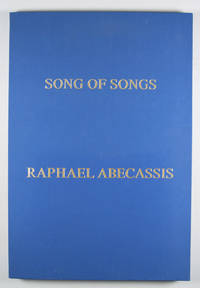
45532Jerusalem: Safrai Gallery 1989. Limited edition. Hardcover. vg to fine. 141/240 numbered and signed in pencil by Abecassis on each serigraph 17 1/4 x 12 1/4" on 22 x 15 1/4" handmade paper. 9 double pages including title page holding eight original serigraphs housed in original blue cloth portfolio with gilt lettering on cover.<br /> <br /> Abecassis rendering of the Song of Songs a conversation of two lovers and in Jewish tradition held as an allegory of the bond between god and the Jewish people is an exquisite example of artistic Biblical interpretation. Divided into the traditional eight chapters with printed b/w illustrations accompanying each text page the serigraphs feature bold colors and forms presented in a generous color palette with no fewer than twelve colors and overprinted in gold. Serigraphs uncut at top. Portfolio with light wear and rubbing minor smudge on title page else in fine condition. Raphael Abecassis born in 1953 in Morocco immigrated to Israel as a young child. He attended the Beer Sheva College of Education. Many of his works recount Biblical stories in a colorful refreshing way. He was awarded prizes for an Independence Day poster in 1986 a Ministry of Education Award for his "Psalms of David" as well as the illumination of President Chaim Herzog's speech at the Western Wall commemorating Israel's 40th birthday. Safrai Gallery hardcover
17868168London: Published by J. R. Smith No. 83 Oxford Street 1786. Coloured mezzotint. In good condition with the exception of some faint soiling in upper margin. Bottom margin outside platemark is coated with white paint. Water stains on verso of sheet not noticeable on front of sheet. Image size: 14 3/4 x 17 inches. Plate size: 17 7/8 x 19 5/8 inches. Sheet size: 19 5/8 x 20 inches. A wonderful mezzotint after Rev. Matthew William Peters by one of the finest eighteenth century engravers.<br/> <br/>This charming print is engraved after a painting by Rev. Matthew William Peters and is a fascinating example of this period in British printmaking. Matthew Peters was trained in London under the portraitist Thomas Hudson. He quickly became a prominent member of the Society of Artists exhibiting portraits in oil and pastel and attracting a number of prominent aristocratic patrons including the Duke of Manchester the Marquess of Granby and Lord Grosvenor for whom he painted some of his most controversial pictures. Urged by his patrons Peters painted a series of quasi-erotic character studies of courtesans which at that time were quite unusual in Britain. These controversial pictures were eagerly reproduced by industrious printmaker/publishers such as Smith and caused a flurry of curious customers to hurry to London print-shops. Following his ordination in 1781 Peters quickly denounced his early erotic pictures as immoral. Upon being appointed Honorary Chaplain to the Royal Academy Peters expressed a profound regret "that he ever devoted his talents to such subjects". With this in mind this picture becomes extremely interesting. In this work Peters continues to observe and appreciate charming subjects in fancy costumes but eliminates the erotic overtones present in his earlier works. Instead he has chosen to depict an age-old moral subject fortune-telling an institution in western art since the Renaissance. This print which is expertly engraved by one of the finest eighteenth century printmakers is a fascinating view into a turbulent period in Peters' life when he struggled to produce images that would appeal to his viewers while remaining true to his moral beliefs.<br/> <br/>D'Oench Copper into Gold: Prints by John Raphael Smith 1751-1812 p. 224 No. 274; Smith Catalogue No. 135 & 136; Ackermann 1802 p. 9 described as companion prints; Chaloner Smith British Mezzotinto Portraits Ward 97 Smith 186; Frankau An 18th Century Artist and Engraver: John Raphael Smith 146. Published by J. R. Smith, No. 83 Oxford Street unknown books
194570421945. Soyer Raphael. Soyer Raphael. CASTING OFFICE. Lithograph 1945. Cole 65. 9 3/4" x 12 3/4" signed and titled in pencil. From the AAA edition of 250. unknown