29 262 résultats
Dmitry Buriak's Collection, 2010. In English and Russian. Rilegato con copertina rigida e cofanetto. Spedizioni tracciabili con raccomandata entro 24 ore dall'ordine. Hardback cover with slipcase in fine conditions, no inscriptions or markings inside. Worldwide delivery.
193125353TOLMER 1931 1 Paris, Tolmer, 1931, petit in-4, broché, cartonnage éditeur noir et jaune sous étui, couverture en couleurs illustrée.
1938894341938. DESIGN HAPPODO publisher/printer. KOKUGA OGI. Kyoto Happodo N.D. other sources indicate a date of 1938 Very large oblong brocade porfolio 36.5 x 59.0 cm. Contains an undated Happodo colophon and 50 design prints 49 in color and one as a textual calligraphic introduction to the work A source indicates the designs were done by Yamaoka Chinpei. The prints are extraordinarily lavish with sprinkled metal flakes overprinting metallic inks etc. A wonderfultribute to the Neo-Rimpa and Deco sensibilities of the age. The case has been restored the prints are quite clean. unknown
1938894341938. DESIGN HAPPÔDÔ publisher/printer. KOKUGA ÔGI. Kyôto Happôdô N.D. other sources indicate a date of 1938 Very large oblong brocade porfolio 36.5 x 59.0 cm. Contains an undated Happôdô colophon and 50 design prints 49 in color and one as a textual calligraphic introduction to the work A source indicates the designs were done by Yamaoka Chinpei. The prints are extraordinarily lavish with sprinkled metal flakes overprinting metallic inks etc. A wonderful tribute to the Neo-Rimpa and Deco sensibilities of the age. The case has been restored the prints are quite clean. unknown books
1934849061934. DESIGN Kamisaka SEKKA. UTA-E Kyoto & Tokyo: Unsodo Showa 9 1934. 1 volume 31 x 22 cm cloth ribbon bound covers paper label. 25 color full page images after designs by Sekka. As Sekka's last work it crowns his remarkable career with a lovely evocation of Koetsu's Saga-bon. For more on this important work see Hillier's description on p.976 of the second volume of his ART OF THE JAPANESE BOOK. The condition is a bit better than average with relatively little of the offsetting from the prints to the poems that is usual in this book. Slight foxing and slight edgewear. The printing is very good the colors lovely. It is a very good copy overall. Housed in the original professionally repaired chitsu case with title label that shows general soiling all over and is lacking its clasps. One volume complete:. unknown books
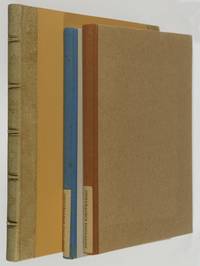
192755266Offenbach am Main: Verlag des Herausgebers Doktor Guggenheim 1927. First edition. Hardcovers. 1/300. Quarto. 97 1pp. Rebound in 3/4 beige pebbled leather over tan buckram retaining original printed stiff brown paper front cover. Gilt-stamped tooling ruling and raised bands on the spine. Publisher's device in red on the title page. <br /> <br /> The scarce first edition of the acclaimed illustrated Haggadah produced by Dr. Siegfried Guggenheim 1873-1961 in Offenbach Germany. Printed in a limited edition of 300 copies this gorgeous Passover Haggadah contains hand-colored woodcut illustrations by artist Fritz Kredel 1900-1973 including two illustrated maps of the Holy Land. German text throughout is printed in "Bible Gothic" type font specifically created for this publication by acclaimed German type designer and calligrapher Rudolf Koch 1876-1934 who was an early teacher of Kredel's at the Offenbach School of Art and Design. Includes text printed in black as well as orange color with many sections of musical notation and lyrics to Passover prayers and songs with printed in German translation as well as transliterations from the Hebrew. <br /> <br /> Guggenheim was initially inspired to produce the work as a result of his need to spark his passion for Jewish traditions in his own children and by extension the need to create a new and visually engaging work to inspire the younger generation of German Jews. It was compiled from a huge number of stories anecdotes and songs collected by Guggenheim over a 14-year period. These were eventually paired down into the final work which was so-named in order to tie it to the rich history of past printed Haggadah in the city dating back to at least the early 18th century.<br /> <br /> Text throughout in German and Hebrew.<br /> <br /> Binding with minor smudging to the beige leather. Gilt of the Star of David motifs on the spine has been mostly rubbed away. Interior with sporadic minor to light foxing to pages throughout though mostly in the margins. Most images throughout are clean and vibrant. Binding in very good interior in very good- condition overall. vg- to vg.<br /> <br /> WITH<br /> <br /> Offenbacher Haggadah. New edition BLACK & WHITE EDITION Published by Dr. Guggenheim Flushing N.Y. in commission at Otto Harrasowitz Wiesbaden. 1/500. Quarto. 133 1pp. Blue half cloth over gray paper boards. Black lettering on tan paper label pasted on the spine. This second edition of the acclaimed Offenbacher Haggadah originally published in 1927 saw the book printed in the America in a slightly shorter and thinner format. From an edition of 500 copies with b/w illustrations. In the years preceding the Second World War the two most central figures in the production of the original edition publisher editor and compiler Dr. Siegfried Guggenheim 1873-1961 and illustrator Fritz Kredel 1900-1973 had both emigrated to the United States fleeing the Nazis.<br /> <br /> This edition replaces Kredel's original woodcut illustrations for the 1927 edition with many more numerous newly created images by the artist especially for this edition which are here lithographically printed in black. Additionally the original gothic type font created by Rudolf Koch for the first edition has been replaced here by a more standard font and more passages in Hebrew have been added. All of the text content of the original edition has been faithful preserved here including all of the sections of musical notation and lyrics to Passover prayers and songs with printed in German translation as well as transliterations from the Hebrew. A newly written foreword for this edition by publisher Siegfried Guggenheim is included along with his foreword from the first edition. Text throughout in German and Hebrew. Binding with minor to light rubbing/bumping to corners and some very minor smudges and scratches to the front boards. Very light stains to blue cloth along spine. Binding in very good- condition interior in near fine condition overall.<br /> <br /> AND WITH<br /> <br /> Offenbacher Haggadah. New edition COLOR EDITION Published by Dr. Guggenheim Flushing N.Y. in commission at Otto Harrassowitz Wiesbaden. 1/600. Quarto. 133 1pp. Brown half cloth over beige paper boards. Black lettering on tan paper label pasted on spine. The second edition of the acclaimed Offenbacher Haggadah originally published in 1927 in a slightly shorter and thinner format. 1 of an edition of 600 copies with colored illustrations by the Schauer & Silwar coloring company in Darmstadt. Near fine condition overall. Verlag des Herausgebers Doktor Guggenheim hardcover
196354664Bratislava: Mladé letá 1963. First edition. Hardcover. Very good to near fine condition. 1/5000. Large quarto. Unpaginated. 72pp. Original off-white cloth with abstract illustration of a human heart on front cover red lettering on spine in original photo-illustrated dustjacket black lettering on spine red on cover protected by modern mylar. Photo-illustrated endpapers. "The book is one of the most unusually edited and designed and also rarest postwar photo books by Karol Kállay." Czech and Slovak Photoo-Publications p. 316<br /> <br /> This rare and poignant photo-essay by Slovak photographer Karol Kállay present seventy-two sheet-fed gravures. Divided into two parts: A selection of photographs showing Bratislava children playing together or walking through a neighborhood under construction in part one and part two documents the everyday life of surgeons and nurses dedicated to save lives at the Bratislava Children's University Hospital where children are seen undergoing open-heart surgery while anxious parents wait and hope for a positive outcome. <br /> <br /> Text in Czech. Dustjacket lightly rubbed along edges slightly more pronounced at top of front foredge and minor chips at tail of spine. Binding age-toned along top and bottom edges. Interior in near fine condition. Karol Kallay 1926-2012 was a citizen of the world a photographer with blue blood running in his veins who in the educational spirit of the First Republic remained a sworn Czechoslovak even after the breakup of Czechoslovakia in 1993. He was born a Hungarian aristocrat on the 26th of April 1926 in Cadca in Czechoslovakia’s First Republic where right from the republic’s beginnings the use of aristocratic titles - distinguishing those with “blue blood†from the mere mortals - was officially banned. Despite this his distinction conspicuously radiated out of him all his life. He always wanted to be a photographer. Perhaps it was because at the age of sixteen he won a gold medal in a Slovak photo contest. But it was also thanks to the excellent education he got from his older friends in the Trencin amateur photographic club Halasa Hajduch Farkas which was one of the many Slovak photographic societies started after the war by Jiri Jenicek an officer of the Czechoslovak army and a brilliant and enthusiastic amateur photographer. Kallay’s wise father didn’t want to impede his son’s “comedian career†as he regarded the photographic profession but he had one condition - his son had to study something proper first. And so Karol after the end of the Second World War studied commercial engineering and law in Bratislava. He worked for a construction company in Zilina and Sucany and in his free time he devoted himself to photo reportage as an associate of a photo weekly Domov and Svet. That brought him to Prague where he meet two eminent photographers: Karel Hajek the shining star of reportage photography and Jan Lukas whose recently published book Zeme a lide not only impressed him but practically predetermined his future photojournalistic direction in the spirit of humanistic photography. “Through Jan Lucas I discovered magazines - "Life" "Paris Match" "Illustrated London News" including fashion magazines such as "Vogue" and "Harper’s Bazaar"; articles and the opinions of the aesthetician Alexander Libermann and the artistic direction of Alexey Brodovitch - it was all important learning for me because we didn’t have that in Slovakia†he remembers. And so Kallay’s specific bipolarity as an excellent fashion and advertising photographer was basically the source of his income with excellent reporting constantly mapping out the people’s lifestyles that he found on his frequent travels all over the world. Thanks to the Bratislava weekly magazine "Moda" to which he was a regular contributor he could leave his regular job in 1956 and become a freelance photographer. That opened the way for him to contribute to the most important foreign fashion magazines - mainly "Jardin des Modes" in Paris and "Saison" and "Sybille" in Berlin. And because of this at home he became forever known as a successful photographer of fashion who brought the freshness and the dynamism of live photography into his work. In other words: he stopped photographing models as stiff coat hangers. In addition he traveled published books and did reportages for prestigious magazines such as "Geo" "Stern" "Spiegel" "Focus" "Merian" "Sports International" "Paris Match" and "Illustré" of which at that time the world behind the iron curtain knew practically nothing about. And thanks to this talent Karol Kallay became a photo reporter like none other in Czechoslovakia. Mladé letá hardcover
18993100FBKyoto, Verlag Yamada Unsodo [Yamada Naosaburo], Meiji 32 [1899]. 2°. 37 x 25,5 cm. [22] Blatt. Original-Broschur nach Blockbuchart gebunden und mit seidenem Titelschild.
1890249781New York 1890. Approximately 34 items on various stock including George D. Thompson letterhead. Various sizes generally 7 x 3 1-2 in to 11 x 8 1/2 in. Some toning some designs show signs of previous mounting on verso generally very good. Approximately 34 items on various stock including George D. Thompson letterhead. Various sizes generally 7 x 3 1-2 in to 11 x 8 1/2 in. Watercolor designs in Classical Romantic and Chinoise styles for leather screens manufactured by George D. Thompson & Co. The company letterhead advertises "Hand tooled and painted chair leathers and wall panels . Period designs still life flower bird & fruit panels hand painted bellows trays humidors book covers." Some designs give dimensions and prices on verso. unknown
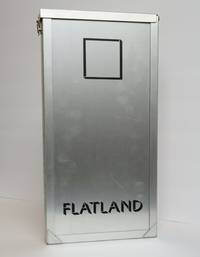
1405941San Francisco California: Arion Press 1980. Limited Edition #100/275. Hardcover. Tall quarto unpaginated. In Very Good minus condition. Double-sided accordion fold binding encased in aluminum boards and encased in a latching aluminum frame. Frame has mild general scuffing hinge lacking its pin. Aluminum boards have moderate general scuffing especially along the edges. Textblock head and tail edges dyed black and moderately scuffed fore and rear edges have mild age-toning and soiling. Signed flat by Ray Bradbury at the conclusion of introduction. Signed flat by Andrew Hoyem beneath the colophon. GH Consignment. Shelved Case 9 3/4. Andrew Hoyem's Arion Press edition of FLATLAND by Edwin Abbott Abbott originally published under the tongue-in-cheek pseudonym "A Square" in 1884 by London's Seeley & Co. FLATLAND satirizes socioeconomic class structures following the various strata of geometric shapes who must traverse a two-dimensional world. Barely successful upon release FLATLAND slowly earned its cult status in the science fiction canon following Albert Einstein's publication of his general theory of relativity. Einstein not unlike Abbott posited the concept of a fourth-dimension and elaborated upon the importance of time affecting Earthly phenomena. Afterwards Abbott's work was perceived as almost prophetic albeit fictional. Throughout the 1960s several writers produced work inspired by FLATLAND including Norton Juster. Released two decades later the Arion Press edition is the truest attempt to contain Abbott's text in a form reflective of its content. Laid out in its entirety the double-sided accordion fold spans 30 feet and contains unique die-cuts that illustrate the world of FLATLAND. 1405941. Shelved Dupont Bookstore. Arion Press hardcover
1890249781New York 1890. Approximately 34 items on various stock including George D. Thompson letterhead. Various sizes generally 7 x 3 1-2 in to 11 x 8 1/2 in. Some toning some designs show signs of previous mounting on verso generally very good. Approximately 34 items on various stock including George D. Thompson letterhead. Various sizes generally 7 x 3 1-2 in to 11 x 8 1/2 in. Watercolor designs in Classical Romantic and Chinoise styles for leather screens manufactured by George D. Thompson & Co. The company letterhead advertises "Hand tooled and painted chair leathers and wall panels . Period designs still life flower bird & fruit panels hand painted bellows trays humidors book covers." Some designs give dimensions and prices on verso. unknown books
1967008323New York: Holt Rinehart and Winston 1967. RARE Review Copy of this groundbreaking behind-the-scenes look into the New York art scene of the 1960s. With four 8" x 10" B&W glossy photos from the book laid in; George Segal's "Couple at the Stairs"; Andy Warhol in his studio; Marcel Duchamp in his Manhattan apartment; and Lee Bontecon relaxing in her studio first 3 photos Fine last photo small faint spot bottom margin and faint bottom corner crease. The book is Near Fine small prior owner name 2nd front end page slight bowing to boards. In a Very Good dust jacket 1/4" chip across head and 1 1/2" chip base of spine narrow chip at top edge front flap fold several small closed edge tears. Original photographs from this New York collection are uncommon at auction.RBH. While these four are not originals they would be striking framed as a set. . First Edition. Cloth. Near Fine/Very Good. Tall 4to - over 9¾" - 12" Tall. Review Copy. Holt, Rinehart and Winston Hardcover books
1965013433Philadelphia: Institute of Contemporary Art University of Pennsylvania 1965. 1st Edition. Hardcover. Near Fine. Catalog of Warhol's first museum show with the compliments card of Sam Green who curated it. 8vo illustrated stiff covers black cloth backstrip perfect bound 27 full page illustrations. Housed in a phase box with an enameled medallion - with the Warhol image of Campbell soup cans similar to the cover of the catalog - in a round silver mount on the front slot designed and crafted by Wesley Tanner. Institute of Contemporary Art, University of Pennsylvania hardcover
Die wichtigste Zeitschrift für Gebrauchsgraphik nach 1945 mit zahlreichen Beiträgen aus allen Bereichen. Lückenlose Folge der Jahrgänge von 1949 bis 1966; es fehlen lediglich 1949 Heft 5 und 1966 Heft 2.
1910891951910. DESIGN Ogino Issui designer. ZUAN HYAKUDAI. 3 Vols. Kyoto Unsodo Meiji 43 1910 An orihon in 3 volumes 27 X 19 cm with woodblock printed covers all in a later fitted clasped cloth chitsu case. Unsodo outdid itself in this early design effort. Dozens of double page horizontal designs which become large prints the paper size being 37.5 x 27 cm as well as circular and fan-shaped and single page designs too. Most in the neo-Rimpa style which Unsodo artists pioneered at the beginning of the last century - bold and lovely. A bit of browning and fading the covers show some wear but overall very good condition a very nice impression of this important set. Complete. One of the very best of the Unsodo design books which is very good indeed. unknown
193490303a<p>DESIGN Ôzu Dôjin design group. <b>HIMEKESHI REISHUN</b>. Uchida Bijutsu Kyoto Showa 9 1934 .x. cm. Orihon in brocade covers with printed paper title label all in the original publisher's clasped chitsu with title label. There are 32 pages 16 double page printes in color woodblock of flower and botanical based designs. Beautifully printed by Uchida masters of their craft in the 1930s. About fine in fine impressions and colors.</p><p><br /></p> Uchida Bijutsu books
1910891951910. DESIGN Hagino Issui designer. ZUAN HYAKUDAI. 3 Vols. Kyoto Unsodo Meiji 43 1910 An orihon in 3 volumes 27 X 19 cm with woodblock printed covers all in a later fitted clasped cloth chitsu case. Unsodo outdid itself in this early design effort. Dozens of double page horizontal designs which become large prints the paper size being 37.5 x 27 cm as well as circular and fan-shaped and single page designs too. Most in the neo-Rimpa style which Unsodo artists pioneered at the beginning of the last century - bold and lovely. A bit of browning and fading the covers show some wear but overall very good condition a very nice impression of this important set. Complete. One of the very best of the Unsodo design books which is very good indeed. unknown books
1917891151917. DESIGN NAKAGAWA Yoshinaga designer. NAKAGAWA ZUANSHÛ. Nagoya Fukada Zuan Kenkyûsho Taishô 6 1917. Wonderful portfolio of lithographed designs in a Deco idiom. Reminiscent of the early work of Sugiura Hisui but with its own unique quirky sense of boldness and fun. Animal and vegetal themes for the most part. Very unusual. Complete as issued. unknown books
1912855151912. DESIGN Sugiura HISUI. KODAKARA. Tokyo: Mitsukoshi Gofukuten Meiji 45 1912. 29 x 23.5 cm. decorated boards and cloth in decorated dustwrapper and original tied decorated portfolio covers. A lovely package designed and illustrated by Hisui 1876-1965 the head designer for Mitsukoshi for the first half of the 20th century and one of the most important commercial designers of his day. Profusely illustrated throughout in color lithographs and relief prints. The text was written by Iwaya Sazanami this wonderful book was created for the new mothers of the burgeoning middle class who were buying their baby clothes and furnishings at Mitsukoshi. It was meant as a child's diary of development. from birth to the age of seven. Originally published in 1909 this second printing is nearly perfect there is some spotting to the tied outer covers and original and as such very scarce and desirable. See pp. 70-71 for more on this book in the Hisui special issue of the magazine HANGA GEIJUTSU #140 Summer 2008. Near fine. unknown books
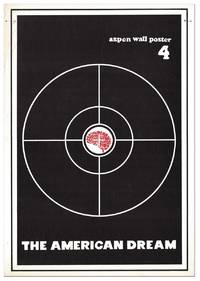
7992Aspen: The Aspen Wallposter / Meat Possum Press Ltd 1970. First Edition. First Printing presumed one of 500 copies. Large bifolium measuring 57.25cm x 40.25cm closed and 57.25cm x 80.25cm with text and illustrations offset printed in black and red on thick white stock; 4pp; illus. Mild handling and a small ink arrow at upper left corner of front cover with two thin black ink marks on p.2; Near Fine.<br /> <br /> Fourth installment of seven in the Aspen Wall Poster series this one a double issue. Articles include "Aspen Summer of Hate 1970 Will the Sheriff be Killed" "Weird Picnic in Boulder" "Wisdom from a Leading Citizen" "Open Letter to Ned Vare" "Homage to Raoul Duke" "Fat City Fun Girl #1 vs "My Lai 4" "Memo to the Homefolks on Independence Day" "Food Stamps and the Red Menace." Masthead titled "Better Living Through Jimson Weed" and lists Thompson as editor along with Tom Benton. It also shows Oscar Acosta as the L.A. bureau representative and Ralph Steadman as the London bureau representative. Page 3 reprints the "Jilly" nude from the Evergreen Review. Shoaf notes a reliable source reporting a second printing of 500 copies identical to the first which we are compelled to mention here for the sake of accuracy. Shoaf A5. The Aspen Wallposter / Meat Possum Press, Ltd unknown
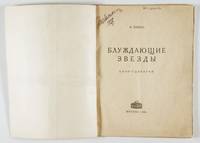
192654867Moscow МоÑква: Kinopechat Кинопечать 1926. First edition. Softcover. Good to very good condition. Octavo. 80pp. Dark blue and white wrappers with constructivist typography on the front cover housed in modern blue heavy paper portfolio with printed typographic design of original cover pasted to cover flap. Publisher's device on title page. This scarce published screenplay for the film adaptation of Sholem Aleichem's novel "Wandering Stars" by the acclaimed Russian-Jewish novelist playwright and journalist Isaac Babel 1894-1940. The film was premiered in Kiev on January 4th 1927 and was directed by Grigori Gritscher-Tscherikower 1883-1945. It was produced by VUFKU studios the national film studios of the Ukrainian SSR.<br /> <br /> This book contains the entirety of the film's screenplay accompanied by three striking b/w illustrations by Soviet artist and designer Alexander Bykhovskii 1888-1978 who likely also created the striking cover. The final three pages contain publisher's ads listing other work on the topic of cinema.<br /> <br /> The story tells of the love between Leibel the son of a wealthy shtetl family and Reizel a poor cantor's daughter in Bessarabia. The two run off to join a traveling Yiddish theater group. They are later separated with each becoming successful in their own right only to eventually reunite in America. The work was first serialized and originally appeared in the Warsaw newspapers between 1909 and 1911. It has come to be seen as the third in an unofficial trilogy of novels by the writer centering on musicians or performers preceded by Stempenyu 1888 and The Nightingale 1889.<br /> <br /> In 1925 the Moscow State Jewish Theater suggested that the Goskino the Soviet State Film Studio produce a film adaptation of Sholem Aleichem’s novel. The order was commissioned to Isaac Babel for translation and adaptation from the book's original Yiddish language to Russian for the screenplay. During this period Babel had been working on other translations of Yiddish literature into Russian including the collected works of Sholem Aleichem and work by David Bergelson. According to Babel's foreword printed here he faced a number of difficulties adapting the novel including the modification of petty bourgeoisie motifs as well as the changes of film directors and their differing requirements. Because of certain elements in the script of which the main committee of the Goskino did not approve the film's production had to ultimately be switched to VUFKU studios in Odessa. In a letter during the period of production Babel apparently wrote: “I will have to be present on the set. if I am not there the director will ruin everything" and later upon hearing of further changes made by Gritscher-Tscherikower wrote that "it is more profitable for me not to participate in this shameful productionâ€. Regardless of Babel's opinion of the final product the film was well received by Soviet audiences at the time.<br /> <br /> Text in Russian. Portfolio with minor wear. Wraps partially restored with minor wear. Previous owner's names and date at top of title page one near gutter. Light water staining along right half of bottom edge of first 30 pages reappearing from pages 40 to end though along lower part of foredge more pronounced on pages 75/76 and light fraying along foredge from pages 67 to 76. Block lightly age-toned. Kinopechat (Кинопечать) unknown
192915275Waterbury CT: The Waterbury Metal Wares Co. ca. 1929. First Edition. Wraps. Very good. Large 8vo. commercial album. Limp leather wraps over metal ring binding. Printed catalogue with 75 added leaves holding 85 professional black-and-white photographs loosely corner-mounted. Some stamped on verso with company name. With numerous additional manuscript notations and dozens of sketches. An unmodified copy of the print catalog a supplemental catalog and various related scrap and ephemera additionally laid in. General wear. Overall sound. Very good. <br/><br/>Draft production binder used in creation and revision of a 1929 catalogue of electric lighting fixtures and accessories belonging to Lauritz W. Andersen industrial designer and owner of The Waterbury Metal Wares Co. Andersen was a prominent inventor and designer of electrical socketry in the early 20th century; his career can be traced through patent office records where over 60 items bear his name. He was with the firm of Plume and Atwood for approximately 25 years leaving in 1915 to form Waterbury. The firm specialized in fixtures and other components for lamps and lighting — including earlier methods candles lanterns. Sconces candelabras floor and desk lamps as well as more specialized piano drafting much in evidence. The clear professional photographs as well as sketches and notes within the binder provide a thorough glimpse into the early industrial design and marketing of electrical lighting. The Waterbury Metal Wares Co. paperback books
50199Tokyo: Shueisha 集英社 1971. New edition. Hardcover. vg- to near fine. Large oblong folio. 15x21". Unpaginated. All content housed inside the publisher's original cardboard shipping box with printed label pasted on the front. Binding protected in original a white cloth portfolio with red lettering on the front cover and lavishly decorated interior flaps. Black suede-covered boards with mutli-colored illustration mounted on the front cover. Decorative endpapers. Engraved stainless-steel plate showing Mishima's face mounted on black paper preceding the title page.<br /> <br /> The deluxe and lavishly printed new bilingual edition of the acclaimed and eroticly-charged work also know as "Killed by Roses" by Japanese photographer Eikoh Hosoe b.1933. It gained notoriety and elicited controversy when it was originally released in 1963 and won the Japan Photo Critics Association's writer award. The main photographic subject of the book the acclaimed and controversial writer Yukio Mishima 1925-1970 wrote the preface to the original edition and also writes the preface for this new edition both are included here. Mishima's acclaimed works include the famous and controversial novels "Confessions of a Mask" 1949 and "The Temple of the Golden Pavilion" 1956. Hosoe's striking high-contrast b/w photographs are all printed in high-quality photogravure retaining all the power and atmosphere of his original images. In comparison with the first version of the work this edition features the content having been noticeably re-edited with one image added a few others removed. The images have been thematically re-organized into five new chapters with the names "Sea & Eyes" "Eyes & Sins" "Sins & Dreams" "Dreams & Death" and "Death" respectively. Influential artist and graphic designer Tadanori Yokoo b. 1936 oversaw all of the design and layout aspects of the book and also created its additional illustrated elements most of which comprise the first chapter of this new edition.<br /> <br /> While Hosoe was still completing work to prepare this new edition of "Ordeal by Roses" the notorious "Mishima Incident" occurred November 25th 1970 which culminated in the ritual suicide of Yukio Mishima by seppuku. The incident shocked the nation and in its wake the photographer was quite unsure of how to proceed regarding the publication of the book. Not wanting to seem like an opportunist taking advantage of the controversy and the publicity surround Mishima's death he contemplated shelving the project but was later persuaded by Mishima's widow Yoko who said that her husband would have wanted it to be released. It was finally release only a few months later on January 30th 1971.<br /> <br /> Text in Japanese and English throughout.<br /> <br /> Portfolio with foxing to the white cloth including the front cover and the interior but the illustrations on the flaps are still clean. Suede binding clean and protected in modern mylar. Light foxing to the edges of the book block. Interior with all pages and images clean and vibrant save for a few sporadic instances of the most minor stains or smudges on the blank versos a few pages. The verso of the final photographic plate and the page opposite have a bit more foxing. Portfolio in very good- binding and interior in very good to near fine condition overall. Alternate title: 細江英公写真作å“. Shueisha (集英社) hardcover
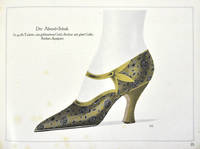
88077Leonhard Zeh und Georg Driesch München 1924/25 Winter . Landscape folio 30 x 21 cm.pp 54 25 chromolithographed plates image size 21.5 x 18 cm. all with descriptive text and captions 11 small crayon shoe designs 18.5 x 14 cm on tissue paper and one black and white photograph inserted loose bound in original grey wrappers title lettered in gilt tied with green silk thread slightly stained on lower wrapper; overall a very attractive collection.<br /> This unusual album of shoe designs contains designs for both men and women. <br /> Leonhard Zeh und Georg Driesch, München 1924/25 Winter unknown
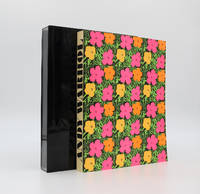
29745Stockholm: Moderna Museet. 1969. Deluxe edition. Deluxe edition. The catalogue for Andy Warhol's first major European retrospective. Illustrated card covers with a design after Warhol's 'Flowers' silk-screen. All edges gilt. Housed in the original perspex slipcase as issued. 614 black-and-white reproductions divided into three sections: black-and-white reproductions of Warhol's work followed by two sections of photographs of Warhol and his associates by Billy Name and Stephen Shore. A fine copy the binding square and tight without fading loss or tears. The contents are clean throughout and without previous owner's inscriptions or stamps. The notoriously fragile perspex slipcase remains solid and in original condition with only a few light scratches. An exceptional example of this landmark Warhol publication offered here in its most desirable form. The deluxe issue of Warhol's legendary Stockholm Exhibition Catalogue. Some copies were also signed by Warhol this example is not. It is unknown exactly how many were issued in this gilt edged deluxe edition most estimate around 50 copies and others possibly as many as 100. All deluxe issues were made from the second edition. Whatever the number intact examples of this issue in attractive original condition are rare in commerce. Parr & Badger: The Photobook II p.144-145. Further details and images for any of the items listed are available on request. Lucius Books welcomes direct contact with our customers. Stockholm: Moderna Museet. 1969 unknown