Multiple ContributorsBiblio.com
8 932 résultats
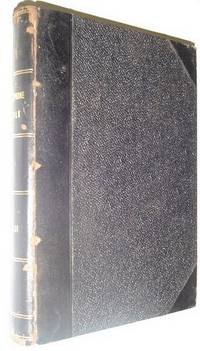
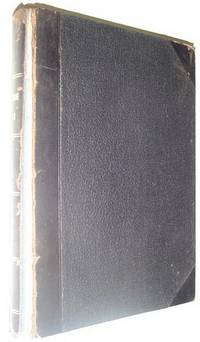
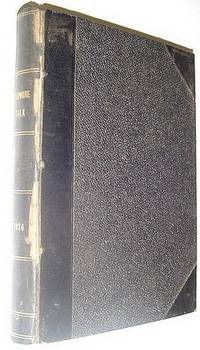
194473aa1968British Columbia: British Columbia Telephone Company. Fair. 1944. First Edition. Hardcover. Half-leather binding. Telephone Talk was the glossy bimonthly publication of the British Columbia Telephone Company. It was written by employees for employees to present information of interest to those engaged in the plant traffic commercial operating accounting and other departments of the service. Each issue is replete with black and white photos and information on topics such as: company industry and technological news traffic levels expansion plans personnel announcements publicity and social events deaths weddings lists of exchanges and more. As such these issues serve as a vital preserve of rare and fascinating British Columbia history. This volume covers topics including: "All circuits are busy; I will call you" - the phrase of operators dealing with heavy traffic; Good-bye to the Seymour and Trinity manual offices - photos; Photo of the ladies of the Nelson small bore rifle club; adding switching equipment in Victoria; Gas masks helmets and more in Alma operating room - photo; Action photo of the First Vancouver Cadet Training Corps; Record load of telephone calls handled in B.C. in 1942 - article and photos; George Friend - Alma plant man - article and photos; Second birthday of the Van-Tel Credit Union; A few lines from the front lines - parts of letters from phone men on active service; John Jessop dies - photo and article; Back cover wartime announcement "Be Careful What You Say"; Photos of females filling in for males in the Vancouver Engineering department; Victory Bond ad.; Wire Shortage - here's why; "Behind the Lines!" - by George Matthew Adams; Wartime Problems of Telephone Business set forth in Annual Report; Great Cheque mystery solved by new payroll machine - 2 pages of photos and text; Popular traffic official dies - Robert A Henderson; Honour Roll World War II; Honour Roll World War I; Credit Union article; Letter by operator Elsie Forman; variety of photos emphasizing wartime parts shortages and recycling; Victory Bond ad.; E.E. Slim Sinden wire chief at Chilliwack; Operator's form association; Roland Arthur Chute former Kamloops Manager retires; John Sowerby - survived fire and earthquake to become a phone man - article and photos; P.J. Pete McCormick retires; Illustrated letter from G.R. Peakes Major-General G.O.C.-in-C. Pacific Command saluting the telephone industry; Many additional war photos/content; Using phones to report forest fires; Article on operator 'Quiz Kids' - information operators; honour roll of employees who have joined the war effort; Oliver Plant man Reuben Echlis retires; article from Reader's Digest arguing for wartime wage and price controls; James D. Baker passes away; William Henry Cooke retires; Update from Pipe-Major Edmund Esson in Sicily; Ex-operators rally to aid of telephone company including newspaper ad.; Miss Leonie Michaud retires; Hockey star and telephone man Leslie Steel dies in Vancouver; many wonderful Victory Garden photos; war bond ad; Victory Loan depends on the Phone; Introducing Jack Veitch; Ads showing the wartime contributions of operators; in memory of Henry G. E. Goult; Victoria construction gang at work in photos; Photo of Victoria's operators at work; Farewell to Ernest F. Helliwell; Cranbrook operator Minnie Egan retires; Edward Dawson dies suddenly; Sergeant James Clark R.C.A.F. reported a missing; Ernest S. Harris bids farewell; Cover photo of Pilot Officer Gordon Heselton the first B.C. man to win a decoration in WWII with story inside; photo of '25 club' war savings stamp booklet; 40 miles of phone bills - many photos; Record long distance load in 1943 but local calls show decline; John D. Johnston general commercial manager; Full page instructions with the heading "Strict Conservation of Paper now a Necessity"; Jim Baigent and Arthur Pop Harness retire; "Lick Stamps to Lick Hitler" on back cover of one issue; Telephone Talk is shrunk to conserve paper; Net Revenue decrease in 1943; Full-page article o; 8vo - over 7¾" - 9¾" tall; Telus History British Columbia Telephone Company Telephony Telephone Talk Internal House Magazine Periodical and technological news traffic levels expansion plans personnel announcements publicity and social events deaths weddings lists of exc . British Columbia Telephone Company hardcover
193173aa1974British Columbia: British Columbia Telephone Company. Good. 1931. First Edition. Hardcover. Half-leather binding. Telephone Talk was the glossy bimonthly publication of the British Columbia Telephone Company. It was written by employees for employees to present information of interest to those engaged in the plant traffic commercial operating accounting and other departments of the service. Each issue is replete with black and white photos and information on topics such as: company industry and technological news traffic levels expansion plans personnel announcements publicity and social events deaths weddings lists of exchanges and more. As such these issues serve as a vital preserve of rare and fascinating British Columbia history. This volume covers topics including: Cover photo of the Victoria Exchange; Company launches employee sales plan; feature on Leo Griggs with photos; Ladner forges to the front as a farming district - with photos; Important changes in Prince George; Mission and Revelstoke; Remodelling Victoria Exchange; Our Trans-Canada Link is growing; - 3 pages with photos; Record holiday load handled by Vancouver toll office; Vancouver-Victoria Cable line severed by Dredge; Engineeers walking all over the province - 4 pages with photos and text; Proper posture; Statement of Development - a table listing the number of operating phones in towns across the province; Campbell River - Cape Lazo Cable is big job for this month - 2 pages; Keeping pace with Schedule on Trans-Canada Line; Philip Creagh - Nanaimo wire chief; Centralized billing system now in effect; Breaking of insulators may have serious consequences; Ocean Falls joins our system and receives first toll service - great photo; Powell River - Cape Lazo Cable successfully laid - 3 pages with photos; Harvey Sauder; A P.A.B.X. is now serving the B.C. Electric Railway Co.; Cover photo of the Victoria exchange; Victoria traffic and commercial staffs now under same roof - text and great art deco photos; One-Fourth of Work on Trans-Canada line completed; C. Whitmore Halford; new phone system in Powell river - 2 pages with photos; All Canadian route from Vancouver to Winnipeg; Trans-Canada construction photos; Vancouver talks with Berlin; Coal Harbour Regatta broadcast from radiotelephone ship; A telephone man in Turkey; Thrilling events preceded opening of Ocean Falls service - with photos; The Huntingdon System is Acquired; The Municipality of Maple Ridge; N.J. Dunlop; A telephone man in South America; Telephone Co-operators; Cover photo of Vancouver fire alarm switchboard; Telephone to the rescue when fire threatens; Great photos of laying cables across Victoria Harbour; Selling Telephone Service; A telephone man in India; Three Nanaimo phone men attempt to save three children in Nanaimo River; Gerald C. Clarke; Two-Thirds of Trans-Canada line complete; Prince George visits plant where our dial equipment was made in Lancashire; Successful picnic; Princeton to be important link in Trans-Canada line; Wiring plans; The Modern Mouse must have a Telephone House mouse moves into pay phone; Bigger phone directory - 2 pages with interesting photos; Phone poles go over mountains - several photos; Ervin J. Davis; Trans-Atlantic service growing; Herman A. Nicholson; and more. Average wear. Ink stamp of company executive E.P. LaBelle upon top edge of text else unmarked. Binding intact.; 8vo - over 7¾" - 9¾" tall; Telus History British Columbia Telephone Company Telephony Telephone Talk Internal House Magazine Periodical and technological news traffic levels expansion plans personnel announcements publicity and social events deaths weddings lists of exc . British Columbia Telephone Company hardcover
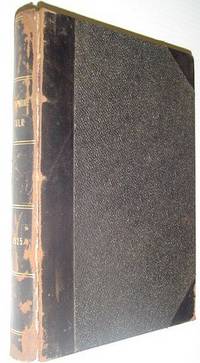
192573aa1979British Columbia: British Columbia Telephone Company. Fair. 1925. First Edition. Hardcover. Telephone Talk was the glossy bimonthly publication of the British Columbia Telephone Company. It was written by employees for employees to present information of interest to those engaged in the plant traffic commercial operating accounting and other departments of the service. Each issue is replete with black and white photos and information on topics such as: company industry and technological news traffic levels expansion plans personnel announcements publicity and social events deaths weddings lists of exchanges and more. As such these issues serve as a vital preserve of rare and fascinating British Columbia history. This volume covers topics including: Some of the troubles repairmen encounter - 6 pages with photos; Uses of the ringing macine - text and photo; Rope for many purposes made at Sapperton factory - 5 pages with great photos; Repairs made to San Juan Cable; Test calls made to eastern centers; Misues of toll circuits is costly Statement of Development - chart of # of telephones in service in towns throughout the province; Great full-page photo plus article on the "Aorangi" - largest motorship in the world arriving in Vancouver; Increasing importance of Australasia; How much power is required to operate a phone - 6 page article with photos; San Juan Cable pulled out of place; Central Information Office - 3 pages; New Douglas exchange relieves pressure on Seymour office; Accounting department story; The ladies take up ice hockey - 2 pages; Crude carbonic acid is wooden conduit's elixir of youth - with photo; Fred Meloche; Great cover photo of a trainload of coal leaving the Extension Mine on Vancouver Island; Revenue Accounting group photo plus office shots; 5-page mining industry feature with great photos; Change to Stub system successful; Traffic Fundamentals - 3 pages; fantastic Victoria Harbour photo including the new Princess Marguerite and the Princess Kathleen; 4 page article with photo - 'diplomats' at the adjustment counter; 5 page feature on the cement industry with photos and operating details of the Bamberton plant; Cable laid across Saanich Inlet - photos; 9 page Fraser River feature with many photos; Company's underground program largest in years - 4 pages with photos; Six page feature of Victoria's Crystal Garden - many great photos; Supplies Department - 3 pages with photos; How the phone was brought to far off lands; Qualifications and duties of a Chief Operator; wonderful interior photos of the new Princess Marguerite and Princess Kathleen; Mount Benson Forestry lookout served by telephone - 2 photos including view of Gulf of Georgia Strait; CNRV photos and article; Toll dispatch system adopted; Six passenger steamers added to coastal fleets of B.C.; Company again using clay conduit; An Agent's responsibilities; New Collingwood exchange; Operation of building department explained; Company cafeteria system; Cuba talks to Vancouver; Bent Plugs system; Gymnasium class for company men; The Longest Cable in the World - New York to Chicago; George McCartney goes touring again; Photos by phone opens a vast field; Six-page features on Kerrisdale with many great photos plus additional sensational 2 page centerfold of great Kerrisdale homes; Common battery system installed in Trail; New toll testing equipment provided at Vancouver; New test used in cutting over working lines in cables; Advice on thrift; North Shore prospects enhanced by the New Lion's Gate Bridge - 9 page article with fantastic photos and illustrations; The Old Toll Desk recalls some telephone history - 5 pages; Phone stories from abroad; Excellent 11 page article on the Telephone Toll Trails of Vancouver Island - with many great photos; Electric drills and rats are enemies of cables; Safeguarding the career of the microwatt; and more. Half-leather binding. Average wear overall with the exception of backstrip which shows significant wear and is almost entirely loose. Ink stamp of company executive E.P. LaBelle up; 8vo - over 7¾" - 9¾" tall; Telus History British Columbia Telephone Company Telephony Telephone Talk Internal House Magazine Periodical and technological news traffic levels expansion plans personnel announcements publicity and social events deaths weddings lists of exc . British Columbia Telephone Company hardcover
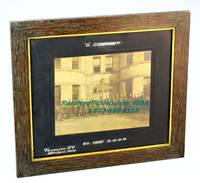
1908618j2654Vancouver British Columbia: The Duke of Connaught's Own Rifles 6th Regiment. Very Good. 1908. First Edition. Photograph. Vintage framed photograph of "G" Company of the 6th Regiment D.C.O.R dated 25 April 1908. Taken in front of the Beatty Street Armoury now Drill Hall in Vancouver the photo includes thirty-two men about half of whom hold rifles. Formed in 1883 the Regiment is Vancouver's oldest military unit. The image itself is 19.5 x 24cm and its contemporary wooden frame is 38.5 x 43.3 cm. A magnificent graphic artifact of Vancouver's early military history. Please note: watermark which appears in our photo is not present on the physical item. ; Folio . The Duke of Connaught's Own Rifles, 6th Regiment unknown
1987422a7852Canada: Seal Books/McClelland-Bantam Inc. Fine in Fine dust jacket. 1987. First Printing. Hardcover. 0770421962 . Signed and briefly inscribed by Jimmy Pattison. "No other Canadian has 'gone for it' with more impressive results. Jimmy did it all himself." - Peter C. Newman. The autobiography of legendary Canadian businessman Jimmy Pattison. 300 pages. Clean bright and unmarked with very light wear. Dust jacket now preserved in archival-grade Brodart. An excellent copy.; 8vo - over 7¾" - 9¾" tall; Jummy - An Autobiography Canadian Business Leaders British Columbia Neon Sign Overwaitea Save-on Foods Metro Toyota; Signed by Authors . Seal Books/McClelland-Bantam Inc. hardcover
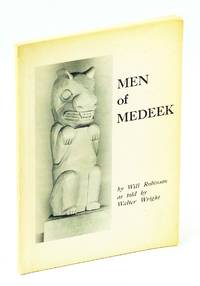
1962732h6045Kitimat BC: Northern Sentinel Press. Very Good. 1962. First Edition. Paperback. "Will Robinson first met Chief Walter Wright of the Kitselas Band in Terrace B.C. in 1928. They developed a friendship over the years during which Chief Wright gradually shared more and more insight into the life and history of his people. In 1935 or 1936 Chief Wright said he planned to tell Robinson his 'Story' so it could be written down. By late 1936 Robinson had typed 40000 words and the history of Medeek from its beginnings in the dim ages of mythology had been written down to some ninety years ago. The history is in two parts. Close questioning led to a reasonable assumption that the first part ended some 600 to 700 years ago. This book contains the first part. It deals with the basic myths with life in the legendary city of Tum- L. - Hama with a westerly migration that ended on the rocky cliffs of the Kitselas Canyon some 100 miles up the Skeena River from Prince Rupert. 'Men of Medeek' looks to the east; back to the land of the ancestors. Only once - the raid down the Pacific coast does the narrative deal with the peoples of the sea-board. 'Wars of Medeek' still remains to be written." - paraphrased from Preface. 93 pages. Black and white photo of each author. Map of Skeena River and central B.C. coast inside back cover. Clean and unmarked with light wear. Binding intact. A quality copy of this precious history. Edwards & Lort 4105; 8vo - over 7¾" - 9¾" tall; Men of Medeek Native Peoples Northwest Coast British Columbia Kitselas Canyon Skeena River Prince Rupert Tum - L - Hama Kitimaat . Northern Sentinel Press paperback
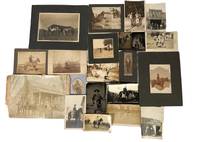
1880194771880. Western Americana Cowboy photograph archive documenting armed riders ranch labor rodeo culture and frontier mobility across the American West between the 1880s and 1920s. Images capture working cowboys on horseback cattle branding scenes and interactions with Native American families during the late frontier period when cattle ranching and horse culture formed the backbone of Western rural economies. These photographs provide visual documentation of occupational practices such as branding long distance riding and mounted travel through difficult terrain during the closing decades of the open range era and the early twentieth century transition toward modern ranching systems.<br /> <br /> Archive of twenty original photographs in multiple photographic formats including tintypes albumen prints and silver gelatin photographs. Images date approximately from the 1880s through the 1920s and depict cowboys riding horses working cattle participating in rodeo competitions and traveling across rugged Western landscapes. Several photographs show armed riders carrying pistols or rifles including one large albumen print showing a mounted cowboy with a rifle across his lap. One photograph depicts cowboys branding livestock with a caption reading "Brother Manzer Branding his Cow." A real photo postcard dated circa 1910 shows several cowboys on horseback crossing a large river with water rising to the horses' necks. Another image shows a cowboy with a Native American family wearing traditional clothing in rocky badlands terrain. Photographs illustrate the working environment and material culture of Western cattle operations including ranch yards feed lots and livery stables. Rodeo imagery reflects the transformation of working ranch skills into organized public competitions during the early twentieth century. Image sizes vary. Overall minor wear consistent with age. Very good condition. A cohesive visual record of cowboy labor frontier mobility and Western ranching culture across four decades of the American West. unknown
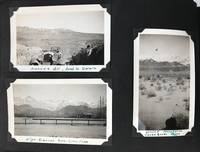
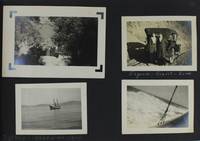
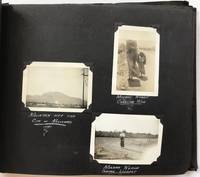
19321252Various locations in California 1932. Very good. 219 photographs on fifty leaves most 3 x 5 inches; plus six real photo postcards. Oblong octavo. Original black cloth string-tied. Light wear to covers. Images crisp and clear. Many images with typed captions. A wonderful photo album documenting road trips taken in the Eastern Sierra and western Nevada in the area in and around Owens Valley. The photographer and his friends explored numerous mines and mining towns in the region braving the desert in their car. The album winds from Owen's Lake to the National Soda Products Company and the Estelle Mine to the tiny town of Keeler where they celebrated Easter. They continue on to the mining camps of Panamint City and Ballarat both now ghost towns. There are photographs of the town of Lone Pine the Cerro Gordo Mine Darwin and in Nevada the towns of Lida and Goldfield. They take an extended trek through Big Pine California staying in Glacier Lodge Canyon and spend time in Onion Valley. There is also a lengthy series of photographs taken out at Lone Pine California documenting the Universal Pictures film "Oh Promise Me" with images of the actors and sets and crew. An altogether fascinating album documenting the region of the Eastern Sierra and Owens Valley. unknown books
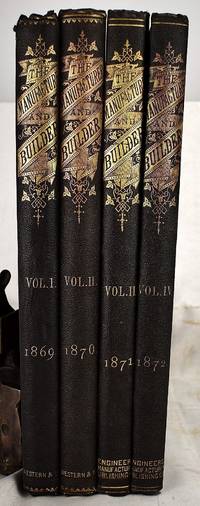
18692301180062Engineers Manufacturers Publishing Co; Western & Company 1869. First Edition. Hardcover. Like New. The Dawn of Computing and communications technology: Industrial Arts: A four year run of this rare magazine in particularly fine condition 4 volumes containing 48 monthly issues printed 1869-1872. 35 cm. Bound in publisher's brown cloth with gilt lettering and decoration. Exceptionally clean and white pages. iv 380; iv 380; iv 288 12; 2 iv 288 8 pages. Lovely illustrations numerous ads. <br> The 1869 issue has a cover article on the invention of the telephone six years before Alexander Graham Bell's famous call to Mr. Watson. "This invention may in its present state have no direct practical application . . . but who can say that it does not contain the germ of a new method of working the telegraph" page 129. The August 1870 issue discusses "Calculating by Machinery" with an illustration of "the Swedish calculating machine at Albany N.Y." page 225. Lomazow 768. Engineers Manufacturers Publishing Co; Western & Company hardcover
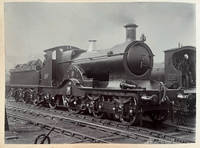
190558599London England: Great Western Railway ca. 1905. Oblong 4to. 11 x 8 in. 48 pp unpaginated. on thick card stock all leaves mounted on linen hinges w/ 38 original albumen & silver gelatin photographs mounted all sized from 6 x 8.25 in. and all with very strong contrast and bright images. Contemporary embossed green cloth over beveled boards ruling in blind minor shelfwear light bumping to couple corners very light occasional interior toning still NF exemplar. This exceptional Edwardian factory photo album offers contemporary images of several classes of steam locomotives purchased and operated by the Great Western Railway under the direction of both William Dean and G.J. Churchward. The images primarily focus on the 4-4-0 Express engines including the “City Class†‘Badminton Class†GWR 4100 “Atbara Class†“Bulldog Class†and the “Saint Class.†Photos depict such storied locomotives as the William Dean No. 100 built in 1902 and fore-runner of the 4-6-0 locomotives on the Great Western Railway which were 2-cylinder machines built with parallel boilers; the Vanguard 4-4-0 later renamed Cunard was designed at behest of Churchward and based on the William Dean design with coned boilers and by 1905 19 further similar locomotives had been purchased. Also present is a photo of the La France No. 102 a 4-4-2 locomotive built in 1903 by Societe Alsacienne de Construction Mecaniques Works Number 5409 purchased by Churchward to evaluate French locomotive engines and compounding practices. In actuality the La France did not offer any significant improvement to Albion No. 171 Churchward’s prototype 4-6-0. The “City Class†locomotives are represented here by the Bath No. 3433 Bristol No. 3435 Birmingham No. 3434 Chester No. 3436 and London 3439 all constructed in 1903 and most remaining in service until 1929-1931. The “Atbara Class†4-4-0 locomotives were built from 1898-1905 and these used names in the public eye during Great Britain’s colonial wars but all were relegated to non-express following 1922. Represented in these photos are the Kitchener No. 3377 a 4-4-0 built in 1900 Kimberley No. 3379 Ladysmith No. 3380 Ondurman No. 3384 Brisbane No. 3396 and Cape Town No. 3397. Two photos show the tragic Mafeking No. 3382 which was withdrawn from service in Sept. 1911 after a severe accident at Henley-in-Arden with both images showing the same 4-4-0 configuration. The “Bulldog Class†engines feature the Albert Brassey No. 3414 built in 1902 and the Reading No. 3449 built in Oct. 1903 and later renumbered 3387. The “Saint Class†locomotives designed by G.J. Churchward often have the 4-4-2 configuration before many were rebuilt from 1907-1912 as 4-6-0 Express Locomotives. These include the Albion Quicksilver Robins Bolitho Lord Palmer Winterstroke Robertson Kirkland the Coeur de Lion and the Lalla Rookh. Of additional interest are the Nos. 103 “President†and 104 “Alliance†built by French de Glehn-du Bosquet as 4-cylinder locomotives purchased in 1905 and similar to the Paris-Orleans 3001 Class. One of the photos shows the Kennet No. 3015 which was the express locomotive involved in the June 16 1900 Slough Rail Accident which resulted in killing 5 passengers and injuring over 35. The accident also forced the adoption of improved vacuum brake systems on locomotives and rolling stock in the United Kingdom. See: David Wragg GWR Handbook: The Great Western Railway 1923-47 2006; Laurence Waters Great Western Railway Gallery: A Pictorial Journey Through Time 2018; John Daniel The Great Western Archive 2013. Great Western Railway, hardcover
193673aa1972British Columbia: British Columbia Telephone Company. Fair. 1936. First Edition. Hardcover. Telephone Talk was the glossy bimonthly publication of the British Columbia Telephone Company. It was written by employees for employees to present information of interest to those engaged in the plant traffic commercial operating accounting and other departments of the service. Each issue is replete with black and white photos and information on topics such as: company industry and technological news traffic levels expansion plans personnel announcements publicity and social events deaths weddings lists of exchanges and more. As such these issues serve as a vital preserve of rare and fascinating British Columbia history. This volume covers topics including: Service to Japan Hawaii and the Philippines now available; Anchors foul cable 4 times within 10 days - Burrard Inlet; Classified system will be extended to remainder of territory - includes full-page rate sheet; Company gains telephones in 1934 after 3 year decline presumably due to the Great Depression; Company architect Hugh D. Simpson; Our overseas service kept growing last year; Employee Sales Team Results; Statement of Development 1 January 1935 - show # of phones per community; System suffers heaviest storm damage in history - January 1935 - 8 pages with photos; New exchange for the Albernis; John C. Miles succeeds John Johnston as Building Head; World Telephone network now includes 60 countries; Billy Palliser - champion salesman for Victoria Plant; Sechelt Company picnic; New phone system for thriving Alberni area - 4 pages with photos; Record 19000 mile call from Vancouver to Perth Australia; Dog's bark in Vancouver heard in Scotland; Round the world telephone talk sets record; Telephony's part in Canada's Jubilee celebration - 2 pages with photos; Parksville Exchange has Dial Unit at Qualicum Beach; Arthur R. Harness - garden awards; New switchboard handled by sightless operator - article with photos; PNE float details and photo; 2-page bio. with photo of Eugene P. LaBelle the company's General Superintendant of Plant MR. LABELLE'S NAME IS STAMPED ON THIS COPY; Carrier circuits established between Vancouver and Calgary; Number of phones increased last year; Miss Elizabeth Murray Vancouver's first chief operator dies; New radio stations established; Fraser telephone building remodelled; Conference calls link Canadian cities by long distance !; Operator school reopened; George E. Pittendrigh of Cloverdale BC - installed Vancouver's first telephones; Telephone folks to the rescue; New Long Distance developments embrace Howe Sound Points; Key to Safety on the Job; New radio link serves Quesnel and adjacent mining area; Vancouver's first emergency phone calls; Newcastle Island Picnic; C.A. Charlie Price - Queer theories prove that people read the 'Yellow Pages"; James Welsh - our first formen; Article on the challenges of information operators; Seymour operating room photo; Mr. W.F. Salsbury - helped pave the way for our present telephone system; CARICATURE OF E.P. LABELLE and other company executives; Vancouver Arena fire damage quickly repaired; PNE float photo and details; Long Distance developments this year; Dominion Telephone organization meets in Victoria; Ex-policeman Ernest A. Harris recalls use of telephone in 1891; Monte Butler wins more rowing laurels; and more. Average wear. Ink stamp of company executive E.P. LaBelle upon fore- and top edges and inside front board else unmarked. Half-leather binding intact. Backstrip loose along front edge.; 8vo - over 7¾" - 9¾" tall; Telus History British Columbia Telephone Company Telephony Telephone Talk Internal House Magazine Periodical and technological news traffic levels expansion plans personnel announcements publicity and social events deaths weddings lists of exc . British Columbia Telephone Company hardcover
19952090502126802393Rinsen Bookstore 1995. Soft Cover. Fine. Number of books: 6 Rinsen Bookstore paperback
1875006209Maine: Original Manuscript Book 1875 1875-1876. Being the records of the Western Union Telegraph Company with the stubs recording dates who the message was addressed to and the message sent. Includes Oct. 6 1875: To Capt. Henry Rice in Hampden / Will you be here today / shipper anxious to unload off / answer. Nov. 3 1875: To Perkins & Job / Best offer Brick and Lumber / fifty five per thousand gold. To JS Emery in Boston: Close Banks / spruce boards from wharf Palmer's Mill / Fall River / three dollars / no danger of ice / answer. To Boardman Bros: T. Field will board at Bangor for Providence / three dollars. May 16 1876: J. S. Emery / Cannot offer anything today / Mills not at work / river high. May 26 1876 / To Capt.Wm McKay in Camden / Do not know of any one that will buy today. June 28 1876 / to A. R. Buck / Can sell your ice for fifty / delivered weighed in New York / responsible parties. This being a partial sampling of entries. Bound in half cloth and paper over boards with binding and hinges tight. Paper on covers show some chips and peeling. 5-1/4 inches tall by 3-1/8 inches wide. Original Manuscript Book hardcover
1920List515Various Places 1920. Oblong folio cloth over cardstock 15 x 11 inches. Photographs and realphoto postcards most measuring around 5 x 3 1/2 inches mounted to pages. The system of national parks was created at first in a somewhat piecemeal fashion with the Department of the Interior holding responsibility for establishing each park individually. Chief White Calf of the Blackfeet famously negotiated the sale of the bulk of the lands that would form Glacier National Park in 1895 with the agreement being that the US Government would allow for Blackfoot hunting Chief White Calf’s son Chief Two Guns White Calf would later travel to Washington in protest of the government’s subsequent actions. The establishment of the National Park Service in 1916 coincided roughly with the dawn of American motor tourism. <br /> <br /> This album dates from that early period of National Park recreation and bears evidence as to the recreation that happened around the early part of the century. The album shows scenery in three national parks by noted photographers including some iconic photographs of Yellowstone by Frank J. Haynes first taken in the and several scarce images of Blackfoot attributed to the noted photographer T.J. Hileman who was the official photographer of Glacier National Park during this period. The album begins with twenty-eight photographs by Haynes who printed copies of his classic Yellowstone photographs first taken in the 1890s from his St. Paul Minnesota studio. The next group shows twenty realphoto postcards of Mt. Rainier National Wilderness Area taken by Frank Jacobs. Some images show the architecture of the lodges some of which were later designated as national landmarks due to their exemplification of National Park Service rustic-style architecture. Surrounding these images are a series of photographs presumably of the family responsible for the album showing a young family picnicking beside their automobile. This section also includes interestingly a realphoto Christmas Card from Mr. and Mrs. Mark Frederick Jukes. Jukes was a notable photographer based in Elko Nevada during this period. <br /> <br /> The next section which represents the most uncommon images in the album shows a series of images of Glacier National Park. The group includes ten realphoto postcards by or attributed to T.J. Hileman some with his copyright mark who was at that time the park’s staff photographer and famously took photographs of the Blackfoot people living in the eastern portion of the park. Included are two portraits of Two Guns White Calf and a portrait of Chief Three Bears neither of which we find records of in the trade. Following the Hileman images are twenty-one images taken by Fred Kiser of Glacier National Park each measuring 3 x 3 â… inches showing captioned scenes throughout Glacier National Park in Kiser’s distinctive cursive writing. Kiser began photographing western mountain landscapes on his own in 1905 following the death of his brother and his photographs of Glacier and its environs were reproduced during the park’s early days. Eight amateur photographs follow showing camping scenes in an unidentified Western landscape. The remainder of the album - 29 pictures - show the family at home and are most notable for a series of white children dressed up in faux- American Indian costumes. <br /> <br /> Overall a somewhat extensive and iconic representation of early automobile-age Western travel with the grand western scenery and zeitgeist of the time on full display. Images generally in fine condition with a few stray creases album with some light normal wear. <br /> <br /> Offered in partnership with James Arsenault & Company. unknown
1920List515Various Places 1920. Oblong folio cloth over cardstock 15 x 11 inches. Photographs and realphoto postcards most measuring around 5 x 3 1/2 inches mounted to pages. The system of national parks was created at first in a somewhat piecemeal fashion with the Department of the Interior holding responsibility for establishing each park individually. Chief White Calf of the Blackfeet famously negotiated the sale of the bulk of the lands that would form Glacier National Park in 1895 with the agreement being that the US Government would allow for Blackfoot hunting Chief White Calf's son Chief Two Guns White Calf would later travel to Washington in protest of the government's subsequent actions. The establishment of the National Park Service in 1916 coincided roughly with the dawn of American motor tourism. <br /> <br /> This album dates from that early period of National Park recreation and bears evidence as to the recreation that happened around the early part of the century. The album shows scenery in three national parks by noted photographers including some iconic photographs of Yellowstone by Frank J. Haynes first taken in the and several scarce images of Blackfoot attributed to the noted photographer T.J. Hileman who was the official photographer of Glacier National Park during this period. The album begins with twenty-eight photographs by Haynes who printed copies of his classic Yellowstone photographs first taken in the 1890s from his St. Paul Minnesota studio. The next group shows twenty realphoto postcards of Mt. Rainier National Wilderness Area taken by Frank Jacobs. Some images show the architecture of the lodges some of which were later designated as national landmarks due to their exemplification of National Park Service rustic-style architecture. Surrounding these images are a series of photographs presumably of the family responsible for the album showing a young family picnicking beside their automobile. This section also includes interestingly a realphoto Christmas Card from Mr. and Mrs. Mark Frederick Jukes. Jukes was a notable photographer based in Elko Nevada during this period. <br /> <br /> The next section which represents the most uncommon images in the album shows a series of images of Glacier National Park. The group includes ten realphoto postcards by or attributed to T.J. Hileman some with his copyright mark who was at that time the park's staff photographer and famously took photographs of the Blackfoot people living in the eastern portion of the park. Included are two portraits of Two Guns White Calf and a portrait of Chief Three Bears neither of which we find records of in the trade. Following the Hileman images are twenty-one images taken by Fred Kiser of Glacier National Park each measuring 3 x 3 ⅝ inches showing captioned scenes throughout Glacier National Park in Kiser's distinctive cursive writing. Kiser began photographing western mountain landscapes on his own in 1905 following the death of his brother and his photographs of Glacier and its environs were reproduced during the park's early days. Eight amateur photographs follow showing camping scenes in an unidentified Western landscape. The remainder of the album - 29 pictures - show the family at home and are most notable for a series of white children dressed up in faux- American Indian costumes. <br /> <br /> Overall a somewhat extensive and iconic representation of early automobile-age Western travel with the grand western scenery and zeitgeist of the time on full display. Images generally in fine condition with a few stray creases album with some light normal wear. <br /> <br /> Offered in partnership with James Arsenault & Company. unknown books
191361776Tumalo & Portland OR: Bureau of Reclamation Olaf Laurgaard 1913-1915. Oblong folio. 14 x 9.25 in. 98 pp unpaginated. on thick black paper stock. First 60 pp. with 139 silver gelatin photographs tipped-in w/ black corners or mounted at two corners many w/ negative number w/in negative at lower fore-edge a couple w/ captions w/in negative nearly all w/ bright strong contrast a few w/ creasing from poor storage a couple w/ closed tears. Contemporary limp black cloth Housh Co. post-binder label on rear pastedown punch-sewn at gutter margin w/ black silk braid gilt lettering stamped on lower front cover corner minor edgewear sunning to fore-edges minor bumping to corners a few photos removed by family still a VG bright exemplar. These historic photographs trace the efforts to revive and expand a troubled irrigation system constructed largely by private enterprise from the end of the 19th-Century through to 1905 after the failed Carey Act project was taken over by the US Bureau of Reclamation and the State of Oregon. Unscrupulous land promotion companies and developers such as the Columbia Southern Irrigation Co. had acquired the rights to the Tumalo Creek water flow from the Three Sisters Irrigation Co. and local landowners with the Union Pacific claiming that 18000 acres were tillable but by 1905 less than 1000 acres were supplied with enough water and far too much settlement in the Upper Deschutes River Basin. Within five years Bend is incorporated Laidlaw later Tumalo is platted and unfortunately for the latter the railroad completes to Bend by 1912 bypassing Laidlaw and settlers were incensed. One of the photographs shows a “Good Roads†protest parade by Tumalo residents as they began urging the State of Oregon to improve connections to Tumalo and the roads. The State and Bureau of Reclamation draft noted Civil Engineer Olaf Laurgaard 1880-1945 and transfer him from Okanogan WA where he has been competing roadbuilding and irrigation projects in order to improve and enlarge the Tumalo Project irrigation and canal system as well as build a new reservoir and dam at Wimer Flat. The first part of the album focuses on the survey crews surveying the route the rugged terrain in the area with shots of camp tents hunting mess tents original holding ponds and reservoirs mill wheels falling apart with need for repairs and occasional side trips to the Deschutes River. In addition the Tumalo Project office and Laurgaard’s office building is shown the barn filled with project supplies and other town scenes. These are followed by engineering crews digging and expanding irrigation ditches and canals building wooden water flumes crossing fields and through steep canyons well-digging equipment to reach aquifers and horse teams grading earth with Fresno scrapers. By the close of the album the project is nearing completion wooden flumes stretch across grain fields irritation ditches such as the “Finished Ditch in Howard Canyon†appear in the images and Laurgaard and his crew survey several of the finished areas. Unfortunately even with the newly enlarged canal system and the new well-built dam the new Tumalo Reservoir failed to hold water. By the time this was fully realized Laurgaard had moved onto new projects and become the City of Portland Engineer by 1917. He is perhaps best remembered for construction of the Columbia Slouth drainage channel improving the Ross Island Bridge widening Sandy Blvd. and entirely upgrading and developing the decaying Portland municipal wooden docks and port areas with concrete piers and abutments. In the following decades the Tumalo Irrigation District failed with additional diversion dams and still more canals to the point that it was recommended to the Federal and State Governments to not expend further funds while the City of Bend continued to expand and buy up local Water Rights. Later in the 20th Century the Bureau of Reclamation rebuilt the dam and reservoir at Crescent Lake. The Library of Congress holds copies of 59 prints from the files at the Tumalo Irrigation District offices HAER OR-151 but with only a few overlaps in this album; this cataloguer could find no similar contemporary record; See: McLaughlin Ewing & Powers Report on the Agricultural and Economic Phases of the Deschutes County Municipal Improvement District â€Tumalo Project†1928; Tumalo Irrigation District About Us Our History 2024; Winch Tumalo Irrigation District Oregon Encyclopedia 2024. Bureau of Reclamation, Olaf Laurgaard, hardcover
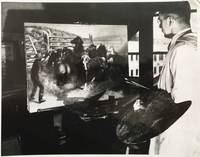
194957035Portland OR & Santa Barbara CA: E.B. Quigley 1949-1966. 1st -- 8 silver gelatin photos sized 8 x 10 in. some w/ photographer’s stamp on verso others w/ pencil and/or ink MS marking; 2nd -- 8vo. 12 pp unpaginated. illustrated self-printed softcovers pencil annotations back cover; 2 copies of 6 pp unpaginated. triptych illustrated; 4 pp unpaginated. brochure Rancheros logo by Joe de Yong on front cover creased from fold; 3rd -- 4to. 5 leaves broadsides photo illustrated 1 on stationery 1 signed by Ed Quigley; 4th -- 12mo. 4 x 5 in. 3 illustrated Christmas Cards 4 pp unpaginated. bifolium illustrated by Quigley 1 ALS on verso of front flap; 5th -- 4to. 1 leaf broadside of Quigley’s cabin in Sandy OR; 6th -- Oblong 8vo. to 4to. Approx. 100 pieces of illustrated & printed stationery invoices & envelopes on laid paper; 7th -- 4to. 8.5 x 10.25 in. 142 2 pp. Title printed in silver & black w/ colour and black & white photo illustrations & plates throughout 1 colour map text illusts. by Joe de Yong. Half-burgundy cloth over printed boards illustrated endpapers w/ d.j. wraparound cover art photo by Karl Obert 1 closed tear back cover NF/VG copy; 8th -- Small group of artifacts including 8 rawhide leather ribbons personalized to Quigley stamped w/ De Yong illust. including the Los Vigilantes badge for them to be attached to as well as personalized badge for dam dedication all from the library of Ed Quigley. This captivating archive offers a number of items documenting the storied career of noted Western artist Ed Quigley 1895-1984 including photographs catalogues broadsides and printed pieces as well as souvenirs from his participation with Los Rancheros Visitadores riding club in Santa Barbara CA. The photographs open with an image of him completing a painting of a cowboy working with mustangs in a corral with Quigley holding his palette and glimpses of Portland OR through the studio window in the background; another two show him and his smartly dressed friends during the 1930’s while he was painting for the Works Progress Administration Federal Artist’s program; and five additional photos by Santa Barbara photographer Karl Obert depict him riding with others at the Los Rancheros Visitadores in 1958. The exhibit catalogues include his June-July 1949 exhibition at the Maryhill Museum of Fine Arts which also included a number of his original woodcarvings; the 1962 Western Art Exhibits sponsored by Los Rancheros Visitadores which featured works by Quigley Charley Russell Will James Edward Borein Joe De Yong Olaf Wieghorst Frank Tenney Johnson and others; and the 1964 gallery showing of Oil Paintings and Wood Carvings at the Oregon Society of Artists Gallery in Portland OR including a photo of the artist carving sculptures. The several sales broadsides include one signed by Quigley for his bronzes with the verbiage that he had intended to cast 20 but there were only 10 and these include “Unloaded†“Indian Scout†and “Bronc Rider.â€Quigley expanded his career through the 1930’s and 1940’s by gaining inspiration from Yakama Indians in and around Toppenish while visiting horse trader Frank Green and would often return there. He writes in one of the undated Christmas cards that he had just “spent 3 interesting weeks with a couple of mustangers and the Indians on wild horse round-ups on the Yakima Reservation. Got a lot of good material and have 2 - 30†x 40†paintings finished.†The stationery included here all reproduce paintings by Quigley of mustangs on the Palouse as well as pen & ink drawing of the cabin built by the artist on Cedar Creek near Mt. Hood and Sandy Oregon. The prolific and popular Western artist focused on cowboys and Native Americans working in rugged landscapes often with pastoral themes as a native of the Pacific Northwest who also was an active member of many riding clubs including Los Rancheros Visitadores. Los Rancheros Visitadores was founded as an invitaiton-only riding club which included such members as founder Ed Borein along with Will James Joe De Yong Walt Disney Gary Cooper Montie Montana Clark Gable Philip Wrigley Charlie Russell Chuck Yeager Max Baer and Ronald Reagan. The rides usually center on the Los Prietos Ranch in the Santa Ynez Valley often include a visit to Santa Ynez Mission and for over four decades their rides participants and activities were documented by famed Santa Barbara photographer Karl Obert 1897-1976. No copies of the exhibition catalogues or broadsides are located in Worldcat; See: Phoebe Oelheim Artist Edward Quigley’s Romantic Vision of the West Oregon Cultural Heritage Commission 2002; Graham Sharkey Boots & Spurs The Capital Journal July 20 1950 p. 10. E.B. Quigley, paperback
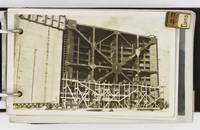
19192655Various locations including Wyoming Nebraska and Iowa 1919. Very good plus. Forty-two original black-and-white photographs and real photo postcards most with manuscript annotations bound into a two-ring leather binder. Two additional postcards laid in. Minor occasional dust soiling but overall in excellent shape. An intriguing pocket-sized binder containing a collection of photographs and real photo postcards documenting large-scale construction projects in the American West mostly involving concrete projects such as dams drainage reservoir infrastructure railroads and more between about 1913 to 1920. All of the projects occur on or west of the Mississippi River in locations such as Keokuk Iowa; Ardmore South Dakota; Grand Island Nebraska; and Arminto Wyoming. The projects cover a wide range of subject matter from a simple base for a railroad mail sack crane to entire dam wall construction and seem to feature several involving sprayable concrete commonly known as gunite. This material was rather new in the 1910s but is still widely in use to the present day.<br /> <br /> The majority of the images are captioned in manuscript identifying the project or location or often both. These include a power-generating dam in Keokuk; reinforcement of a reservoir dam near Lysite Wyoming; widening of a cut for the Chicago Burlington and Quincy Railroad through Arminto; memorializing a concrete crib wall for the same railroad at the Bancroft St. Vincent Omaha; the installation of an eighteen-inch wall casting and sinking the Kelly well in Grand Island; documenting frost action on a brick chimney and water tank and also picturing a "concrete gun" in Worland Wyoming; and others. The images are organized into two sections with small tabs one reading "Dams" and the other "Miscellan."<br /> <br /> The compiler of the pictures is not identified but he or she was most likely involved in the operational aspects of the construction projects. One of the captions is initialed at the bottom "JRH" which may help scholars identify the compiler with further research. The binder itself was produced in Kansas City which may be an additional clue to the compiler's identity. A small but focused collection featuring major western construction projects from the early-20th century. unknown
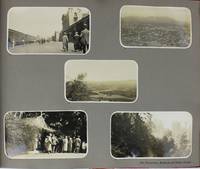
19153536Various locations 1915. Very good. 288 original sepia toned photographs measuring 1.5 x 1.5 to 3.5 x 5.5 inches. Oblong large octavo album; photos affixed directly to album leaves with manuscript captions in pencil. Occasional minor wear. An expansive photo album kept between the early 1900s and the 1920s of various trips in California Alaska and Mexico both touristic and military many were taken by a sailor probably from Napa California while cruising on the U.S.S. Saturn. Many of the photos not taken on shipboard show groups of people posing around 1920s model cars and their homes in Napa. The family is featured on beaches throughout California and various other locations in Napa including Napa State Hospital. One member of the family was involved with shipbuilding and was part of the crew and maintenance of multiple vessels including the U.S. S. Milwaukee and the U.S.S. Saturn. The latter was deployed to Mexico as a means of protecting the United States while Mexico was in the midst of its civil war. There are numerous photos throughout the album of the mission including Mexican generals towns and onboard activities of the crew. The Saturn was later sent to Alaska as communications support providing radio service to keep Alaska in touch with bases in the continental United States. These photos include the working of the radio station along with exterior shots of the building a photo of a band playing on board dubbed the Saturn's "orchestra" and a silly photo of men falling from a rail car which reads "end of a joyride." The Saturn also made stops in Honolulu seen here with shots of palm trees and beaches as well as a trip through the Panama Canal. unknown
19254849Various locations in the American Southwest West Coast and Pacific Northwest 1925. Very good. 30 leaves illustrated with 270 photographs of various sizes including two multi-panel panoramic photographs each leaf with a single printed caption identifying the subjects or location. Contemporary red leather gilt titles on front cover. Oblong folio. Some scuffing and abrading to covers a few short edge tears. Internally clean. A handsome annotated photograph album produced to commemorate a railroad trip by a well-to-do party of travelers from Kansas City through New Mexico Arizona Colorado California and up the West Coast to British Columbia and Alberta in 1925. The first photograph in the album is a panorama of a large group of well-dressed men and women at the Mission Hills Country Club in Kansas City captioned in the negative indicating the traveling party emanated from Kansas City as part of the "N.E.L.A. Red Special Delegation to San Francisco Convention" who were "Guests of K.C.P and L Co" presumably the Kansas City Power & Light Company. The second and much larger panoramic photograph is comprised of fifteen 5-x-8-inch photographs picturing the travelers posed outside the numerous Pullman cars that comprise the Red Special. The preponderance of the photographs are organized by location generally five or six photographs per page with a single printed caption per page mostly indicating the location. The body of photographs begins with facing pages of images featuring the travelers and some scenery in Colorado Springs and Garden of the Gods in Colorado. A sampling of subsequent groups of photographs feature the travelers at Pike's Peak Albuquerque the Grand Canyon San Bernardino Redlands Los Angeles Santa Barbara Del Monte Yosemite Valley Glacier Point Mariposa Grove San Francisco Shasta the Columbia River Victoria Vancouver Canadian Rockies Lake Louise Lake Agnes Moraine Lake Johnson's Canyon Banff and other locations. The album closes with four pages of photos picturing "Fellow Travelers Here and There" and a group photo of "The Train Crew." The latter photograph is the only one featuring African Americans who were likely working as Pullman porters on the Red Special. A wide-ranging series of photographs featuring much of the American and Canadian West before the Great Depression. unknown
1955617G1233Seattle WA: University of Washington 1955. Book. Illus. by Rumely John H.; Janish Jeanne R. Very Good. Hardcover. First Edition. 4to - over 9¾" - 12" tall. Uniform and handsome in beige cloth. Volume 5 printed in 1955 Volume 4 in 1959 Volume 3 in 1961 Volume 2 in 1964 and Volume 1 in 1969. Umarked with light wear and sound bindings. An excellent first edition example of this magnificent work. Please note: Very heavy. Special shipping considerations may apply. University of Washington Hardcover
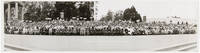
1955WRCAM56693Oakland Ca.: Utsumi Studio 1955. Panoramic silver gelatin photograph 8 x 30 1/4 inches. Minor edge wear a few soft creases mild surface soiling. Very good plus. An appealing panoramic photograph featuring the attendees of the 1955 conference of the Western Young Buddhist League. The photograph captures a few hundred finely- dressed Japanese-American men and women posed in a courtyard in Oakland California. Various delegates to the conference hold handwritten signs indicating their home cities and regional organizations which include Marysville Palo Alto San Mateo San Francisco Fresno Oakland Sacramento Delta Pasadena and numerous other smaller California cities and locales. There are also banners for attendees from the Stockton Chapter of the Y.B.A. the Coast District of the Young Buddhist Association and the Central California Young Buddhist Association. The elders of the organization sit in chairs in front of the young Bussei. Interestingly this photograph was taken by Oakland photographer Kinji Utsumi a photographer in the Bay Area both before and after World War II. Utsumi bought his photo studio in 1941 but was forced to close at the outset of the Japanese-American internment period. He then became one of the official photographers at the Topaz internment camp in Utah; he is mentioned in the RAMBLINGS yearbooks for Topaz High School during the internment period. After the war Utsumi returned to Franklin Street in Oakland and opened another photographic studio. A rare image of a large organization of young Japanese-American Buddhists in California in the middle of the Eisenhower years with no copies reported in OCLC. Utsumi Studio unknown books
192473aa1980British Columbia: British Columbia Telephone Company. Fair. 1924. First Edition. Hardcover. Telephone Talk was the glossy bimonthly publication of the British Columbia Telephone Company. It was written by employees for employees to present information of interest to those engaged in the plant traffic commercial operating accounting and other departments of the service. Each issue is replete with black and white photos and information on topics such as: company industry and technological news traffic levels expansion plans personnel announcements publicity and social events deaths weddings lists of exchanges and more. As such these issues serve as a vital preserve of rare and fascinating British Columbia history. This volume covers topics including: Great cover photo of Duncan operating room; Several photos of new interior plant equipment at Duncan; Sensational 9-page feature on Duncan and district with great photos of the area including Duncan Station Maple Bay Genoa Bay and an aerial view; Fire deprives downtown Vancouver of service - photos and text; Grand Forks office and staff; Table showing "Exchanges in order of Per Cent Good Calls Out"; Statement of Development as of 1 January 1924 showing number of phones per community; Cover photo of steamer Jacques Cartier; Nice full-page showing two views of Vancouver Harbour with many ships in port; 7 page feature on the Port of Vancouver with several great photos; Possibilities of both radio and wire telephony; Exchanges in order of percent good out calls; Excellent full-page photo of Ballantyne pier Burrard Inlet; Take advantage of company's new savings plan; Fine addition to shipping facilities on Burrard Inlet - Ballantyne Pier - 5 great photos with text; Greater Vancouver will benefit by reduced telephone rate; Repair shop has greatly expanded in recent years - 6 pages with nice photos; nice full-page photo of the Empress of Australia in port; Greater Vancouver Inter-Exchange Telephone Service; Fold-out map of Vancouver area exchanges complet with great statistics; Telephone extenstion to Campbell River; 8 page feature on the flow of commerce through Canada's western port with many absolutely smashing photos; Cover photo of Glenburn office; 6-page feature on the B.C. Herring fishery with excellent photos re: sea lions contains the following quote "The government is undertaking to greatly lessen the numbers of this prey animal"; archival photo of laying the first underground cable in Vancouver; Statement of Development - # of phones operating in each community; Cover photo of Milner office; photo mosaic of 5 lower valley exchange offices; Wonderful 8 page feature on the great supply district i.e. the lower Fraser Valley of BC coastal cities - excellent photos including a shot of the only remaining original Hudson's Bay Company building at Langley; New Gordon Head Exchange cut over; New Point Grey office under way; new observation office aids efficiency; Electrical Communication Development; Full-page photo of sailors from the battleship H.M.S. Repulse marching through Vancouver; Multiple photos of British warships docked at Victoria; Article and photos of the visit of the Royal Navy to Vancouver; The Traffic Department and the Public it serves; Tennis Tournaments; Printing a phone directory; Great feature on Ship Salvors Salvagers with many photos; A motoring trip through the U.S. with photos; Biggest cable will cross False Creek; Oxygen Farms; Cornelius Vanderbilt writes of his long distance call from Alberni to Los Angeles; P.B.X. serves interesting purposes - 5 pages with photos; Early motor tourists to B.C. with photos; Full-page photo of the Empress of Canada; 5 page illustrated article on the reclamation of the Sumas; The switchboard as a newspaper; Health secrets of the telephone pole - 3 illustrated pages; new Victoria equipment; Bayview library proves popular; cover photo of a long-distance operator timing a call with a calculagraph; Billing toll and inter-exchange calls keeps eight clerks busy - 3 pages with photos; 7 page a; 8vo - over 7¾" - 9¾" tall; Telus History British Columbia Telephone Company Telephony Telephone Talk Internal House Magazine Periodical and technological news traffic levels expansion plans personnel announcements publicity and social events deaths weddings lists of exc . British Columbia Telephone Company hardcover
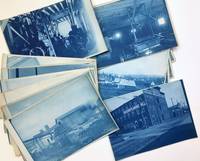
1915901Portland 1915. Very good. Sixteen cyanotypes approximately 5 x 7 inches. Minor wear and toning at edges images generally sharp with nice contrast. Sixteen cyanotypes depicting the activities of the lumber industry in Oregon taken by an unidentified photographer. The images include scenes of the premises of the Oregon Planing Mill in Portland Globe Mills and a more rural lumber yard and timber camp in the Pacific Northwest. The Oregon Planing Mill was located at 224 2nd Street in Portland and was active in the 1910s and 1920s leading us to a date for the group of images. Two photographs are of the planing mill one showing the outside and the other the interior. Another set of images shows the exterior and interior works of the Globe Mill. Two images show tidy rows of houses which may be a logging camp or an early rural development. The remaining ten images are industrial in nature depicting large buildings and lumber yards full of cut timber planks. All the images have good contrast and are quite sharp with an eye for composition and detail. An interesting group of particularly fine cyanotypes. unknown books
1938917Various Places including Mexico Wyoming Nevada Arizona and California 1938. Very good. 296 photographs in corner mounts on fifty-five leaves. Oblong quarto. Original cloth boards string tied. Cloth worn and frayed at edges. A few leaves loose. Photos generally crisp and neat; about half with manuscript captions on leaves. A travel album of nearly 300 original images of alluring and uncommonly high quality the preponderance of which chronicle a series of road trips made by a group of young men crossing the United States and Mexico by car in 1936 and 1937. The subjects were likely students at Worcester Polytechnical Institute. Approximately 250 of the images depict their trips across North America in the midst of the Depression with locations in the east including Mt. Katahdin in Maine; Washington D.C.; Lookout Mountain Tennessee; Lake Michigan; and Niagara Falls. In the West they drove through Texas and Mexico to Mexico City. They toured the Mexican capital and also stopped in Monterrey where they saw a bullfight. After re-crossing the border at Fort Stockton they traveled through New Mexico Arizona Nevada Wyoming and California with a series of photographs depicting their experiences in Yellowstone and Yosemite. Indeed many of the photos depict their stops in national parks across the West and demonstrate an interest in the major water engineering project being undertaken at that time. The remainder of the images show the aftermath of the 1938 hurricane on Bellows Falls Vermont likely the hometown of the album's compiler and scenes on the campus of WPI. An excellent visual account of Depression-era car travel. unknown books