9 081 résultats
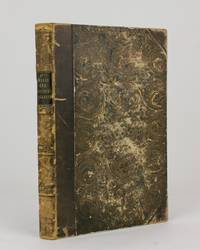
1843116285London: Longman Brown Green and Longmans 1843. First Edition. Hardcover. Very Good. London Longman Brown Green and Longmans 1843. Large octavo 364 pages. Early half calf and marbled papered boards a little scuffed with minor wear to the corners; mild signs of age and use including light tidemarks to the leading margin of some leaves; a very good copy. This would appear to be all twelve unnumbered and undated issues of the cumulative edition of Volume 1 of the magazine. The editor's 'Farewell Address' see pages 359-363 indicates there will be no more: 'as regards the success of my project it is a failure'. Edward Villiers Rippingille c.1790-1859 'was an English oil painter and watercolourist who was a member of the informal group of artists which has come to be known as the Bristol School. In that group he was a particularly close associate of both Edward Bird and Francis Danby' Tate website. Longman, Brown, Green, and Longmans hardcover
1981022928Sydney: Royal Botanic Gardens Sydney 1981. VERY HEAVY. 27 issues ranging from approx 100-300pp each. Num bw ills references folding maps. Ex-forestry library with 1 or 2 small stamps on each issue otherwise a very nice run of this important botanical and ecological magazine complete for the period from 1981-2001. Includes several issues detailing the plant ecology of the Sydney region. Periodical. Soft Cover. Very Good. 4to. Royal Botanic Gardens Sydney Paperback
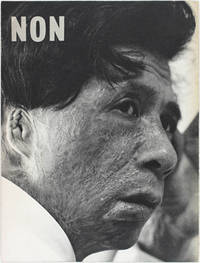
196919076Tokyo: Gendai Shokan 1969. Near fine in photo-illustrated wrappers. Uncommon publication: no copies listed in OCLC. First Edition. Quarto. The first of only two volumes of this short-lived annual Japanese protest magazine: Non. Edited by Akio Tamura Takao Iida and Kenji Asano. Printed in a deep gravure. Volume 1 has images of Mimamata and sections on various protests. Tokyo: Gendai Shokan unknown
195758175Hagerstown IN: The Perfect Circle Corporation 1957-1963. 25 vols. 4to. Approx. 400 pp all issues separately paginated. With 100’s of photo illustrations throughout text illustrations plates. Self-printed softcovers cover art typically in orange & black w/ photo illustrations illustrated ads on back covers some in colour all w/ center crease fold from original mailing slight shelfwear NF set. First editions of 25 original issues of the Perfect Circle Piston Ring company’s in-house magazine which was mailed to auto suppliers and dealers across the country. Often featuring in-depth historical transportation articles these were mixed with cheesecake pin-up photos of comely models and other auto and aviation business news. Founded originally in 1894 as a bicycle manufacturer by Charles Teetor the company moved to manufacturing small gas engines after 1895 and by 1918 had become the Indiana Piston Ring Company. Perfect Circle was adopted by the company in 1926 with Dan Teetor in charge eventually becoming the undisputed leader in piston ring technology for aircraft automobiles and ships through World War II. Worldcat locates 4 groups of the periodical of varying completeness Indiana Hist. Soc. Indiana State Library Harvard U of MO St. Louis. The Perfect Circle Corporation, paperback
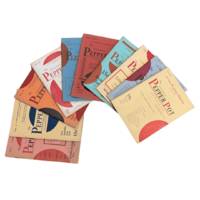
19296905Casper WY: Emmett Fuller 1929. First editions. 10 volumes 20x14cm. Photos illustrations advertisements. Each staple bound in colorful printed wrappers generally in very good condition with occasional minor chipping at corners or spines. No. 12 with some damp staining along edges. <br /> <br /> A broken run of this very uncommon bimonthly regional magazine from Wyoming which began publication in May of 1929 and went through at least April of 1930 with 24 issues in Volume I. After 1930 we find no mention of the publication so it seems to have ceased after just 1 year. According to his obituary in the Casper Star-Tribune from 1960 editor Emmett Fuller was a merchant and newspaperman in Casper before publishing the Pepper Pot which folded due to a limited audience in the state. He then went on to publish a similar magazine Western Progress in Denver in 1932 and The New Mexico Engineer in Albuquerque in the 1940s. <br /> <br /> The Pepper Pot's mission was to "inform to entertain and to assist in the more rapid and proper development of the state. by bringing forth Wyoming literary talent; Wyoming scientific inventive and business genius; and through wholesome discussion of matters important to the state." Perhaps the most well-known name and one which appears frequently throughout these issues is that of Lora Webb Nichols 1883-1962 with articles stories and poems. Nichols was a photographer from Encampment Wyoming whose bold Western images captured the spirit of pioneer life in and around the copper mining town. She would loan her cameras to cowboys and other passers-through asking them to return photographs which she would then develop in her studio. <br /> <br /> Other names which appear in these pages are Tim J. Mahoney Doris Garst Perry W. Jenkins Daphne Rowell Christy MacManus Sheila Hart Sylvia Oldman Upwall and others. <br /> <br /> OCLC cites holdings for scattered issues only at the Universities of Wyoming and Brown.<br /> <br /> <br /> . Emmett Fuller unknown
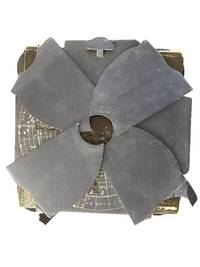
19981004<p><em>CUBE.</em> Modena Italy: Sartoriacomunicazione 1998. First edition limited to 999 copies this being hand-numbered 446/999. Two spiral bound booklets the other being a study of Harri Peccinotti's photographic legacy.</p><p>A bold and highly experimental publication <em>CUBE</em> exemplifies the avant-garde spirit of late 1990s art fashion and underground culture. Produced in Modena Italy this edition of the biennial <em>CUBE</em> magazine is an immersive multimedia experience blending graphic design photography street culture and conceptual art in a strikingly unconventional format. Encased in a rare folding book jacket resembling a celestial chart the publication unfolds into an elaborate interactive structure with die-cut panels and metallic printing. The magazine's eclectic content includes contributions from major figures in streetwear music and contemporary art including a letter from legendary streetwear designer Shawn Stussy graffiti artist Futura 2000 and hip-hop magazine <em>Stress</em>.</p><p>Inside <em>CUBE 999</em> explores a wide range of cultural topics from the aesthetics of Burning Man 1998—complete with a map of Black Rock City—to the intersection of hip-hop urban fashion and underground publishing. An entry on Takashi Murakami highlights his early works and the emergence of his "Superflat" aesthetic while another section dissects the visual language of <em>The Source</em> and <em>Vibe</em> magazines critiquing their commodification of hip-hop culture.</p><p>Includes a secondary booklet of the work of British photographer Harri Peccinotti. Peccinotti's eroticized styel ins combined with critical takes on race and representation in fashion history with the statement: "Until the middle of the 60's there were no Black models and no nipples." The magazine's raw collage-like aesthetic—filled with bold typography layered textures and graphic compositions—reflects its DIY ethos and underground credibility.</p><p>Spiral-bound with mixed-media pages and housed in an intricate folding celestial-inspired case with metallic printing. Exterior case is beginning to separate but is still instact. Some rubbing and light edgewear to book minor handling wear to interior pages but overall very good condition. A highly collectible artifact from the late 1990s experimental design scene <em>CUBE 999</em> captures a moment when fashion street culture and digital media were converging into a new visual language.</p> Sartoria Comunicazione hardcover
192832694New York: Street & Smith Corporation 1928. Mild tanning to text paper light wear and closed tears to yapp edges of cover slight paper loss at base of spine several light scratches to front cover upper corner of last page torn away not affecting any text and upper left third of rear cover missing a very good copy. 32694. Octavo single issue pictorial wrappers. Pulp magazine. Fiction by Agatha Christie "The Solving Six and the Golden Grave" - Miss Marple Johnston McCulley Edgar Wallace J.S. Fletcher Christopher B. Booth and others. Reference: Cook Mystery Detective and Espionage Magazine pp. 148-151. Street & Smith Corporation unknown
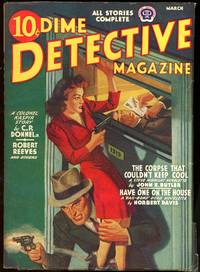
194227936Chicago: Popular Publications Inc. 1942. Text paper tanned but supple spine a bit darkened a fine copy. 27936. Octavo single issue pictorial wrappers. Pulp magazine. Stories by Robert Reeves John K. Butler Norbert Davis and others. Reference: Cook Mystery Detective and Espionage Magazine pp. 168-170. Popular Publications, Inc. unknown
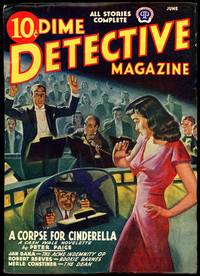
194227937Chicago: Popular Publications Inc. 1942. Text paper tanned but supple a fine copy. 27937. Octavo single issue pictorial wrappers. Pulp magazine. Stories by Robert Reeves Peter Paige Jan Dana and others. Reference: Cook Mystery Detective and Espionage Magazine pp. 168-170. Popular Publications, Inc. unknown
193422105Chicago: Popular Publications Inc. 1934. A little edge wear to right overhang a nearly fine copy. 22105. Octavo single issue cover by John Howitt pictorial wrappers. Pulp magazine. Reference: Cook Mystery Detective and Espionage Magazine pp. 168-170. Popular Publications, Inc. unknown
193322100Chicago: Popular Publications Inc. 1933. A little edge wear several tiny closed tears a nearly fine copy. 22100. Octavo single issue cover by William Reusswig pictorial wrappers. Pulp magazine. Fiction by Carroll John Daly Frederick C. Davis and others. Reference: Cook Mystery Detective and Espionage Magazine pp. 168-170. Popular Publications, Inc. unknown
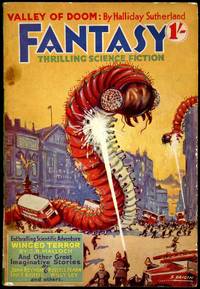
193927912London: George Newnes Ltd 1939. Text paper tanned but supple mild edge wear some paper loss at head of spine stains at staples some loss at lower rear cover a very good to nearly fine copy. 27912. Octavo single issue cover art by S. Drigin pictorial wrappers. The second issue of this short lived British magazine which was in the planning stage for a number of years but it took the appearance of Tales of Wonder to get it finally published. It lasted only three issues with the outbreak of the war Newnes cut back many titles. Includes stories by Eric Frank Russell John Benyon John Russell Fearn and others. Reference: Tymm and Ashley Science Fiction Fantasy and Weird Fiction Magazines pp. 254-256. George Newnes, Ltd unknown
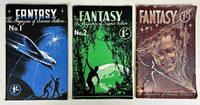
194631566London: Temple Bar Publishing Co. London Ltd. 1946-1947. All have mild darkening to text paper issues one and two are nearly fine issue three is very good with mild wear and creases closed tear repaired with clear tape to lower left front corner. 31566. Octavo three issues pictorial wrappers stapled. Digest magazine. All three issues of Britain's first digest size science fiction magazine. Some highlights are first printings of "Last Conflict" by John Russell Fearn and Technical Error" by Arthur C. Clarke issue one "Relic" by Eric Frank Russell and "Castaway" by Arthur C. Clarke writing as Charles Willis issue two and "The Fires Within" by Arthur C. Clarke writing as "E. G. O'Brien" issue three. A short lived magazine that could not hang on due to the paper shortages after WWII reportedly only 6000 copies were printed and all sold out. Reference: Tymn and Ashley eds Science Fiction Fantasy and Weird Fiction Magazines pp. 256-57. Temple Bar Publishing Co., London, Ltd. unknown
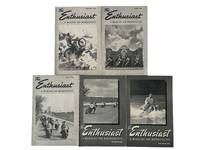
1950217641950. The Enthusiast a monthly publication produced by the Harley-Davidson Motor Company chronicling American motorcycle culture at mid-century. Milwaukee WI: Harley-Davidson Motor Co. February-November 1950. Archive of five issues each 23 pages and measuring 9" x 6". Each issue covers racing club news technical updates reader-submitted photographs and interestingly the emergence of women as motorcycle enthusiasts in an otherwise male dominated hobby. Includes February April May October and November 1950 issues. Printed by the George Banta Company.<br /> Originally founded in 1916 The Enthusiast is widely regarded as the longest continuously published motorcycle magazine in the United States. As the official mouthpiece of Harley-Davidson it functioned both as brand promotion and as a grassroots record of American motorcycling with emphasis on club activity national races and the patriotic connotation of riding Harley-Davidson machines in postwar America. These 1950 issues capture the post-WWII resurgence of motorcycling as both a recreational and competitive pursuit particularly among returning veterans and increasingly among women. Visually rich the covers feature dramatic photographic scenes: the February 1950 issue shows a rider mid-wheelie over rocky terrain on a 1949 Harley-Davidson 125 captioned "Cross-country on a 1949 Harley-Davidson 125"; the April cover depicts the Wroten Family of motorcyclists lined up at "Rose Park" titled "Hydra-Gliding with the Wroten Family." In May a parade of riders cruises down a tree-lined highway under the banner "Cruising Down the Highway." The November issue highlights a rider fording a stream in full gear the water splashing dramatically beneath his machine.<br /> <br /> Coverage of female riders is notably present in this period. The April 1950 issue introduces the Motorettes Motorcycle Club of Chattanooga Tennessee whose members appear in matching uniforms of white shirts dark skirts and caps. The caption names each woman: "Lou Riggsby Betty Hollingsworth Mary Joe Pate Fay Tate and Clara Voiles. Second row from left: Clara Manasco Mabel Huggins Alice Hollingsworth Shirley McPherson and Elizabeth Jones." In the same issue the "Fair Feminine Fans" column celebrates women riders like "Miss Virginia Lane of Florence Alabama" and "Miss Lorna Lamb of Chicago" the latter pictured on a Harley-Davidson 45 "heading into the mountain trails to her favorite fishing streams." One particularly revealing note appears in a section reporting on the Buccaneer Motorcycle Club's "Reliability Run" in Corpus Christi Texas. There "a girls' division" is highlighted: "Top honors went to Ollie Lee Houser. second Olliene Earls and Dolly Smothers third." A photograph shows the three women standing beside a flathead Harley-Davidson 45 with trophy in hand. The magazine's inclusion of competitive female riders "very attractive Motorettes" underscores the growing visibility of women in the motorcycle world.<br /> <br /> Also included is a full spread on the September 1950 Langhorne 100-mile National Speedway Championship won by Billy Huber on a Harley-Davidson: "He finished in 69 minutes 20.69 seconds a scant 27.24 seconds slower than the record set by Jim Chann in 1949." The spread includes detailed action shots and rider commentary reflecting The Enthusiast's deep engagement with the national racing circuit. Light wear to spines and corners with minor handling marks and creases. Interior pages uniformly clean and supple. Very good condition overall. A vivid and culturally significant group of early postwar issues of The Enthusiast reflecting the expanding role of women in motorcycling the popularity of Harley-Davidson racing and the brand's deeply embedded identity in American civic life-captured in documentary photographs riders' testimonials and grassroots club culture. unknown
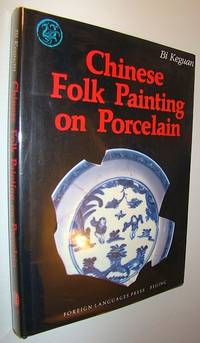
1991854c9829Beijing: Foreign Languages Press 1991. Book. Fine. Hardcover. First Edition. Folio - over 12" - 15" tall. 192 pages. Index. Vivid colour photography throughout. "The author's in-depth study of thousands of ancient porcelain shards has produced information and conclusions valuable to research in the history of fine arts and the history of pottery and porcelain aesthetics and archaeology. His views corroborated by abundant evidence challenge some of the established conclusions in the domain of fine arts." - from dust jacket. Book fresh clean and unmarked with negligible wear. Light wear to dust jacket which is now handsomely preserved in a glossy new archival-grade Brodart cover. A high quality of this important work. Foreign Languages Press Hardcover
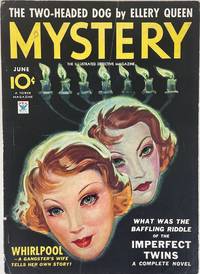
193415696Dunellen N.J.: Tower Magazines Inc. June 1934 volume 9 number 6. Small chip from upper spine end several minor spine tears mended a very good or better copy with bright front cover. Uncommon. 15696. Large octavo single issue cover by Charles de Feo pictorial wrappers. Contributors include Ellery Queen "The Two-Headed Dog" a weird mystery story later collected with others in THE ADVENTURES OF ELLERY QUEEN Francis Beeding Stuart Palmer Henry Lacossitt Carl Mattison Chapin his full-length novel THE IMPERFECT TWINS and others. A large format densely illustrated bedsheet-sized pulp. "The fiction emphasized the woman's point of view was often narrated by a woman and featured as many feminine as masculine detectives. In the rear of the magazine flowered all the usual departments of a more conventional woman's publication . That this magazine would publish much fiction of interest seems improbable. But without effort it contrived to be superb. ILLUSTRATED DETECTIVE selected outstanding writers who had made their mark in the 1920s and mingled these with rising writers of the 1930s. Over the years the magazine would publish work by top names in the mystery field including Ellery Queen Stuart Palmer Sax Rohmer Arnold Kummer Hulbert Footner Vincent Starrett and H. Bedford-Jones. The fiction was polished often strongly compressed and good enough for a large amount of it to appear later between book covers. The magazine appeared monthly for almost six years sixty-nine issues at ten cents a copy. After three years the title was changed to THE MYSTERY MAGAZINE . Covers were tasteful bright and uneventful relying heavily on the faces of self-confident women. Inside was an astonishing amount of material: eight to ten pieces of fiction four or more crime-fact articles and up to ten continuing departments about half of these slanted directly toward women. When the magazine was at its peak in the early 1930s it offered material carefully calculated to appeal to most tastes and both sexes . MYSTERY was as meticulously planned as an orchestral score. Its careful variations played upon every shade of reader interest. It was consciously polished self-consciously feminine. A curious pared sound rang in its fiction as if the stories had been edited with a chain saw but the prose flashed with a bright nickel glitter. Slick the magazine may have been and often over illustrated but it was also considerably interesting and for years excellent." - Cook Mystery Detective and Espionage Magazines pp. 287-90. Tower Magazines, Inc. unknown
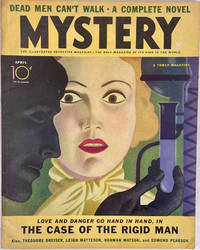
193515699Chicago Illinois: Tower Magazines Inc. April 1935 volume 11 number 4. Mild dust soiling to covers a bright nearly fine copy. Uncommon. 15699. Large octavo single issue cover by John Atherton pictorial wrappers. Fiction by Belden Duff Whitman Chambers Hulbert Footner Helgo Walter Norman Matson Mary Plum and Edward Acheson his full-length novel DEAD MEN CAN'T WALK; articles by Henry LaCossitt Leigh Matteson Edmund Pearson and Theodore Dreiser "I Find the Real American Tragedy". A large format densely illustrated bedsheet-sized pulp. "The fiction emphasized the woman's point of view was often narrated by a woman and featured as many feminine as masculine detectives. In the rear of the magazine flowered all the usual departments of a more conventional woman's publication . That this magazine would publish much fiction of interest seems improbable. But without effort it contrived to be superb. ILLUSTRATED DETECTIVE selected outstanding writers who had made their mark in the 1920s and mingled these with rising writers of the 1930s. Over the years the magazine would publish work by top names in the mystery field including Ellery Queen Stuart Palmer Sax Rohmer Arnold Kummer Hulbert Footner Vincent Starrett and H. Bedford-Jones. The fiction was polished often strongly compressed and good enough for a large amount of it to appear later between book covers. The magazine appeared monthly for almost six years sixty-nine issues at ten cents a copy. After three years the title was changed to THE MYSTERY MAGAZINE . Covers were tasteful bright and uneventful relying heavily on the faces of self-confident women. Inside was an astonishing amount of material: eight to ten pieces of fiction four or more crime-fact articles and up to ten continuing departments about half of these slanted directly toward women. When the magazine was at its peak in the early 1930s it offered material carefully calculated to appeal to most tastes and both sexes . MYSTERY was as meticulously planned as an orchestral score. Its careful variations played upon every shade of reader interest. It was consciously polished self-consciously feminine. A curious pared sound rang in its fiction as if the stories had been edited with a chain saw but the prose flashed with a bright nickel glitter. Slick the magazine may have been and often over illustrated but it was also considerably interesting and for years excellent." - Cook Mystery Detective and Espionage Magazines pp. 287-90. Tower Magazines, Inc. unknown
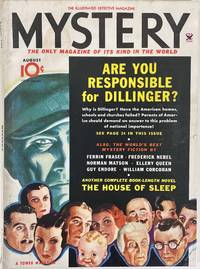
193428771Chicago IL: Tower Magazines Inc. 1934. Spine slightly rolled with some spotting small tear to base of spine small closed tear to right edge a very good copy. 28771. Large octavo single issue pictorial wrappers. Fiction by Frederick Nebel Ellery Queen Norman Matson Guy Endore and others. A large format densely illustrated bedsheet-sized pulp. "The fiction emphasized the woman's point of view was often narrated by a woman and featured as many feminine as masculine detectives. In the rear of the magazine flowered all the usual departments of a more conventional woman's publication . That this magazine would publish much fiction of interest seems improbable. But without effort it contrived to be superb. ILLUSTRATED DETECTIVE selected outstanding writers who had made their mark in the 1920s and mingled these with rising writers of the 1930s. Over the years the magazine would publish work by top names in the mystery field including Ellery Queen Stuart Palmer Sax Rohmer Arnold Kummer Hulbert Footner Vincent Starrett and H. Bedford-Jones. The fiction was polished often strongly compressed and good enough for a large amount of it to appear later between book covers. The magazine appeared monthly for almost six years sixty-nine issues at ten cents a copy. After three years the title was changed to THE MYSTERY MAGAZINE . Covers were tasteful bright and uneventful relying heavily on the faces of self-confident women. Inside was an astonishing amount of material: eight to ten pieces of fiction four or more crime-fact articles and up to ten continuing departments about half of these slanted directly toward women. When the magazine was at its peak in the early 1930s it offered material carefully calculated to appeal to most tastes and both sexes . MYSTERY was as meticulously planned as an orchestral score. Its careful variations played upon every shade of reader interest. It was consciously polished self-consciously feminine. A curious pared sound rang in its fiction as if the stories had been edited with a chain saw but the prose flashed with a bright nickel glitter. Slick the magazine may have been and often over illustrated but it was also considerably interesting and for years excellent." - Cook Mystery Detective and Espionage Magazines pp. 287-90. Tower Magazines, Inc. unknown
193416185Chicago IL: Tower Magazines Inc. 1934. Mild edge rubbing some small cover rubs slight loss at head of spine mild damp stain to contents. A very good copy. Uncommon. 16185. Large octavo single issue pictorial wrappers. "Four Men Who Loved a Woman" by Ellery Queen. Also Stuart Palmer Hildegarde Withers Maurice Level Hulbert Footner and others. A large format densely illustrated bedsheet-sized pulp. "The fiction emphasized the woman's point of view was often narrated by a woman and featured as many feminine as masculine detectives. In the rear of the magazine flowered all the usual departments of a more conventional woman's publication . That this magazine would publish much fiction of interest seems improbable. But without effort it contrived to be superb. ILLUSTRATED DETECTIVE selected outstanding writers who had made their mark in the 1920s and mingled these with rising writers of the 1930s. Over the years the magazine would publish work by top names in the mystery field including Ellery Queen Stuart Palmer Sax Rohmer Arnold Kummer Hulbert Footner Vincent Starrett and H. Bedford-Jones. The fiction was polished often strongly compressed and good enough for a large amount of it to appear later between book covers. The magazine appeared monthly for almost six years sixty-nine issues at ten cents a copy. After three years the title was changed to THE MYSTERY MAGAZINE . Covers were tasteful bright and uneventful relying heavily on the faces of self-confident women. Inside was an astonishing amount of material: eight to ten pieces of fiction four or more crime-fact articles and up to ten continuing departments about half of these slanted directly toward women. When the magazine was at its peak in the early 1930s it offered material carefully calculated to appeal to most tastes and both sexes . MYSTERY was as meticulously planned as an orchestral score. Its careful variations played upon every shade of reader interest. It was consciously polished self-consciously feminine. A curious pared sound rang in its fiction as if the stories had been edited with a chain saw but the prose flashed with a bright nickel glitter. Slick the magazine may have been and often over illustrated but it was also considerably interesting and for years excellent." - Cook Mystery Detective and Espionage Magazines pp. 287-90. Tower Magazines, Inc. unknown
193416186Chicago IL: Tower Magazines Inc. 1934. Some rub marks to right front edge. A very good copy. Uncommon. 16186. Large octavo single issue pictorial wrappers. Fiction by George Harmon Coxe Guy Endore Hulbert Footner and others. A large format densely illustrated bedsheet-sized pulp. "The fiction emphasized the woman's point of view was often narrated by a woman and featured as many feminine as masculine detectives. In the rear of the magazine flowered all the usual departments of a more conventional woman's publication . That this magazine would publish much fiction of interest seems improbable. But without effort it contrived to be superb. ILLUSTRATED DETECTIVE selected outstanding writers who had made their mark in the 1920s and mingled these with rising writers of the 1930s. Over the years the magazine would publish work by top names in the mystery field including Ellery Queen Stuart Palmer Sax Rohmer Arnold Kummer Hulbert Footner Vincent Starrett and H. Bedford-Jones. The fiction was polished often strongly compressed and good enough for a large amount of it to appear later between book covers. The magazine appeared monthly for almost six years sixty-nine issues at ten cents a copy. After three years the title was changed to THE MYSTERY MAGAZINE . Covers were tasteful bright and uneventful relying heavily on the faces of self-confident women. Inside was an astonishing amount of material: eight to ten pieces of fiction four or more crime-fact articles and up to ten continuing departments about half of these slanted directly toward women. When the magazine was at its peak in the early 1930s it offered material carefully calculated to appeal to most tastes and both sexes . MYSTERY was as meticulously planned as an orchestral score. Its careful variations played upon every shade of reader interest. It was consciously polished self-consciously feminine. A curious pared sound rang in its fiction as if the stories had been edited with a chain saw but the prose flashed with a bright nickel glitter. Slick the magazine may have been and often over illustrated but it was also considerably interesting and for years excellent." - Cook Mystery Detective and Espionage Magazines pp. 287-90. Tower Magazines, Inc. unknown
43077WORCESTER MAGAZINE. The Worcester Magazine and Historical Journal. Volumes I and II. Worcester MA 1825-1826. 384; 390pp. Later cloth. A very good untrimmed set. The first volume contains general scientific and historical material in addition to a "History of Worcester County" and other essays on matters of local interest. The second volume contains articles on various towns in Worcester County. unknown
1989145a7646USA: Kodansha 1989. Book. Fine. Hardcover. Reprint. 4to - over 9¾" - 12" tall. 303 pages. Index. "Here for the first time in any language is a full documentation of one of the world's most inventive and exciting dyeing techniques.The 104 color and 298 black-and-white plates include a photographic gallery of shibori examples based upon Japan's largest collection of traditional shibori fabrics. Included also are a detailed guide to basic natural dyes used in Japan the making and care of an indigo vat and a list of suppliers in the United States as well as a glossary and bibliography." - from dust jacket. Clean bright and unmarked with negligible wear. Dust jacket in new archival-grade Brodart cover. Beautiful copy. Kodansha Hardcover
199342803508USA: Preservation Publishing Company 1993. Book. Fine. Hardcover. First Edition. 4to - over 9¾" - 12" tall. 744 pages including index. The result of more than 20 years of research this is the first major book to evaluate the light fading and dark fading/yellowing characteristics of color transparency films color negative films and color papers. Glossy illustrated boards. Clean bright and unmarked but for a few hand-written page references atop front free endpaper. Negligible wear. Superior copy of this very substantial tome. Preservation Publishing Company Hardcover
19892091502133529895Handa City Aichi Prefecture 1989. Soft Cover. Fine. Number of books: 3 Handa City, Aichi Prefecture paperback
20052081502111902036chinese youth 2005. Soft Cover. Fine. The book is in fine condition. chinese youth paperback