[KANGAROO] WARD, Reverend SamuelBiblio.com

7 620 résultats
17754402888London: F. Newberry 1775. Twelve duodecimo volumes with 117 engraved plates of 118 lacking plate XXVII 'Black tiger male panther and lynx'; preliminaries thumbed title of one volume perforated and another significantly browned one leaf of text ink-stained general foxing and offsetting; original sheep leather binding scuffed with split hinges; worn as is often the case with juvenile literature of this period but a charming set. <p><p>A comprehensive natural history encyclopaedia for young people based on Pennant's system of classification. Animals are arranged according to quadrupeds fish birds and insects and each of these classifications is separately indexed. Besides the more usual natural history descriptions of animals vegetables and minerals this work is the first to describe for children Australia's most famous marsupial -- the kangaroo. The entry under the Jerboa vol. III p. 172 reads "Mr. Banks brought home the skin of an animal which he calls the kanguroo sic which from its general outline and the most striking peculiarity of its figure greatly remembers the jerboa yet it entirely differs in size and in many of those minute distinctions which point out the general ranks of nature. The kanguroo is often known to weigh above fifty pounds."</p> <p>The kangaroo was first seen by both Banks and Cook on 24 June 1770 and the first description of it appeared in Hawkesworth's Account of the Voyages published in 1773: "I should have taken it for a wild dog if instead of running it had not leapt like a hare or a deer. Mr. Banks also had an imperfect view of this animal and was of opinion that its species was hitherto unknown." During the remainder of the exploration of the east coast of Australia Cook records that both he and Banks shot and ate kangaroo on several occasions. He records two in particular that weighed eighty pounds and fifty-four pounds the skins of which Joseph Banks took back to England with him.</p> <p>Illustrations of over four hundred animals finely engraved in copper complete this charming eighteenth-century work intended solely to be used by children.</p> </p> . F. Newberry unknown
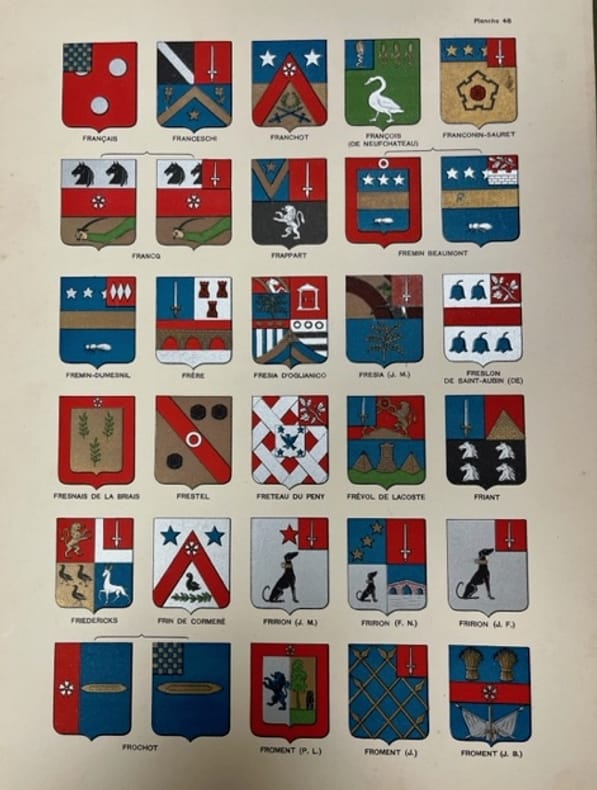
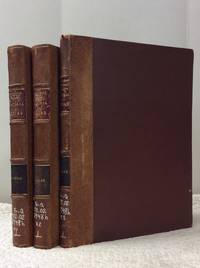
223838Paris, Au Bureau de l'Annuaire de la Noblesse-Picard, Paris, Champion, 1894-1911 4 vol. pet in-4 et 1 album petit in-folio, 128 planches de blasons en couleurs, bradel toile verte pour les 4 volumes, demi-toile verte à coins de l'éditeur pour l'album (reliure de l'époque). Dos passé, quelques feuilles détachées dans les volumes de texte, partiellement débrochés. Ex-libris Jacques Jourquin.
[Ippologia-.Giolito] (cm.20,4) Buona piena pergamena dell'epoca, semirigida. cc.34nn., pp.969 + 1 p. con il registro + 1c. con al recto la marca tipografica del Giolito con la fenice. Elegante corsivo, vari capolettera figurati e ornati. E' questo uno dei più completi e importanti trattati di ippologia che mai sia stato stampato, una specie di enciclopedia ippica. I primi due libri sono dedicati alla storia del cavallo nella letteratura e nell'arte, gli altri trattano della natura del cavallo, allevamento, maneggio, equitazione igiene, malattie, e relative cure. Cicognara 4596 la definisce: "opera la più vasta che conosciamo in questa materia". e Bongi: "vi si trova raccolto tutto ciò che era già stato scritto sul cavallo dagli storici, poeti, naturalisti, maniscalchi e cavallerizzi di ogni età e nazione". la prima edizione apparve nel 1566, questa nostra ricorretta e ampliata, è assolutamente rarissima, manca a molti repertori consultati, compreso Adams, Bm.Stc, Choix, Graesse, Brunet, nonchè ad Huth "bibliog.of Hippology" e a Mennesier De La Lance "Bibliogr. hippique". Lievissima traccia di alone al margine di qualche carta altrimenti esemplare molto bello, nitido e genuino. Il Census nazionale Iccu registra solo 9 copie nelle biblioteche italiane. Unica citazione bibliografica: *Bongi II p. 395 in nota. Libro
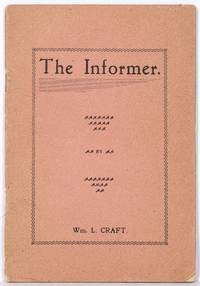
1900592001Savannah 1900. Softcover. Very Good/Near Fine. First edition. Frontispiece portrait of Craft. 16mo. 24pp. With five illustrations. Stapled in rose-colored printed wrappers. Loose chip from one rear corner laid in light wear at the edges including a few shallow chips and light creases. A pamphlet published by Rev. William L. Craft field secretary of The National Baptist Young Peoples Union Board used for recruitment efforts in the early 1910s. It provides a brief history of the church from its foundation as the Negro Baptist Church by George Leile in 1777 to the then present day under the leadership of Rev. Richard Henry Boyd; lists the organization's various presidents board members and officers; provides an overview of domestic and international missionary work; and prints a selection of various "don'ts" from spreading gossip and chewing tobacco to casting judgment and harming others. Also of interest is a small section on the importance of the number seven "a mystical and symbolic number in the Bible" likely to attract the attention of fellow African descendants who still retained spiritual belief in numerology. A rare pamphlet that we've not seen before. OCLC locates no copies. unknown
17753730London: Printed for T.Lowndes 1775 1775. First edition. 4to. 265x210mm. pp. iv 764 10 index. Ten engraved plates frontispiece portrait of the author and a further nine. The verso of the second leaf of preliminaries is numbered vi. Some foxing in places but otherwise internally very good with the plates in excellent condition. Handsomely bound in slightly later red straight-grained morocco upper and lower covers decorated with two double fillet borders in gilt enclosing a continuous "drawer-handle" design in blind and framing a continuous swag and drop border in blind. Spine with five double raised bands decorated in gilt and blind and lettered in gilt to the second and fifth compartment. Edges of the boards decorated in gilt. Turn-ins decorated in gilt with a wavy dotted line and ears of wheat with a flower motif in the corners. All edges gilt. The binding is of a very high standard. It is unsigned but the tooling and overall design conforms to the work of the German emigré binders and we would tentatively attribute the binding to either Christian Kalthoeber or John Bohn and date it to the 1790s or the very early years of the 1800s. A previous owner has inscribed the verso of the front free endpaper "Bound by Edwards of Halifax ". This seems unlikely but it is possible given the subject matter of the book and the links between Edwards and the German emigré binders that this copy did pass through Edwards's hands. John Watson 1723-1783 was that perfect eighteenth-century combination of clergyman and antiquary. He was the curate of Halifax between 1750 and 1754 and retained links with the town throughout his life. Starting with Druidical remains and moving through Roman affairs Watson brings the reader up to the eighteenth century. He covers the history of Halifax and provides details of the main buildings in the town as well as exploring fascinating byways such as "Remarks on the Dialect of Halifax""Vocabulary of Uncommon Words used in Halifax" and "A Catalogue of Plants Growing in the Parish of Halifax". London: Printed for T.Lowndes 1775 hardcover
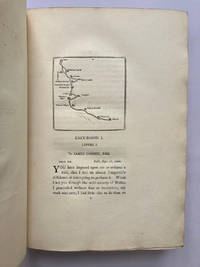
18013865<p>A scarce book of country excursions taking in some of the most striking landscapes and great houses within a day's journey of Bath. Three excursions are presented in the course of four letters with each excursion illustrated with a small part-page engraved map. The author describes in detail the landscapes cities and great houses along the way with plentiful information about the history of the towns gardens and architecture visited. Of particular note are Longleat Stourhead Fonthill and Wardour Castle. 'I am now to introduce you to one of the most splendid mansions in the kingdom Fonthill the seat of Mr. Beckford; where expence has reached its utmost limits in furniture and ornaments; where every room is a gold mine and every apartment a picture-gallery' p. 119. The description of Beckford's library is alas rather brief: 'The library is a large room filled with choice and expensive books; and decorated with appropriate paintings on the ceiling' p. 126.</p><p>Warner also visits 'new' Wardour Castle - it was built in the 1770s - and gives a room by room commentary of the architecture furniture and paintings. Or particular interest is his description of the chapel: 'From this apartment we are carried into the western gallery of the <em>chapel</em>; a structure that displays superlative taste and magnificence. Crimson furniture and gilded ornaments produce an immediate striking <em>coup d' œil; </em>but when the decorations are examined individually the splendour and expence become more perceptible. Three immense pictures by Rubens cover the southern wall of the chapel; and one by this artist and another by Guido of the same majestic size are their opposite companions. The altar-piece is a Dead Christ by Cades. A large gallery is constructed at the western end superbly fitted up for Lord Arundel and his party; a second at the east end of the north side for the choir; and a third at the east end of the north side for the accommodation of visiters sic. Benches occupy the middle of the chapel for the reception of the domestics and such of the villagers as profess the Romish faith; for there is a Catholic seminary here the pupils of which punctually attend at morning and evening prayers. The eastern end of the chapel recedes into a semi-circular form through the windows of which light is admitted; but as these are placed high and consist of coloured glass the effect is extremely striking and solemn. The central window exhibits Angels and the awful Tetragrammaton from which is an emanation of glory. Brought forward from the eastern end sufficiently to allow the processions around it stands the Altar a most costly piece of workmanship fixed on a splendid sarcophagus of ebony; and constructed of porphyry agate and amber. A magnificent crucifix of silver surmounts the altar; and two censers of solid gold embossed with silver suspended over it pour through the chapel odiferous clouds of ever-burning frankincense. Every thing around indeed evinces that the Romish ritual is observed here with the utmost vigour and magnificence; and doubtless the celebration of its higher offices amid such seducing objects must act with infinite force upon the imagination. The effect produced by the <em>externals</em> of worship every man experiences who attends our Cathedral service which has not been stripped of so much of its <em>lace</em> as the common parochial ritual; how much then must this be increased when aided by exquisite examples of sculpture and painting; amid the strains of angelical music the glare of unnumbered lights and the Hallelujahs of numerous multitudes! The tamest fancy must be roused by such a scene and the coldest heart warmed into transport … It is but proper to add that the attendance of strangers at the service in Wardour chapel is considered as a compliment and every convenience provided for their accommodation' pp. 137-141.</p><p>Richard Warner was an antiquary and an Anglican clergyman originally from the coastal town of Lymington in Hampshire. He became curate to Wililam Gilpin whose influence can be clearly seen in the present work dedicated to walking and the natural beauties of the west country. Warner obtained his first position in Bath in 1794 and remained there for some years writing a number of topographical works and a gothic novel <em>Netley Abbey</em> 1795 inspired by local ruins. He was a friend of Wordsworth who collected Warner's picturesque writings alongside those of Gilpin and who is known to have dined with him in Bath. In his lifetime Warner was mostly known for his controversial pacifist sermons and writings: it is thought that Blake was referring to Warner in the lines 'ask him if he is Bath or if he is Canterbury' in Jerusalem as claimed by David Erdman.</p><p>Although this copy is in a later nineteenth century binding and was bound without the half-title a previous owner - possibly from the 1840s or 1850s perhaps contemporaneous with the binding and the newspaper cutting - has added an engraved portrait a Latin celebration of Bath an engraving of Farleigh Castle and a newspaper cutting referring to Paul Methuen of Corsham.</p><p>OCLC lists BL University of Edinburgh the Natural History Museum and the Rubenianum in Antwerp only.</p> Crutwell & G.G. and J. Robinson
19290001398CHAMBERSBURG PENNSYLVANIA PENN PA. Good. 1929. On offer is an original grouping of four 4 manuscript diaries dated 1929 through 1931 handwritten by Reverend John C Stuff and Isabelle Gish later Stuff written during a period when John was in seminary and Isabelle was working in Chambersburg PA. Historians and researchers interested in the development and growth of a young man seeking a life in Christian outreach with all the passions doubts and difficulties that occur with youth and young love will find a unique treasure trove having a pair of diaries from both sides of the relationship. With great charm we initially read a card at the front of one diary: "Each time you record life's happenings here will you think of someone else who is recording her events Let us strive to make each day better. Your devoted fiancee Isabelle". John has written that they were engaged on April 6 1928 formally announced the engagement at Thanksgiving and spent their first Christmas together in spirit and truth as an engaged couple. While the diaries are interesting on a number of levels the story of their increasing love and subsequent marriage are really the stars here. John writes: "I took Isabelle to the Chb'g train this PM. It is hard to watch the train pull out but thro the lingering last smile and the sparkle of the eye is the hope that cannot be lost but lives til the train brings her again to me. I resolve to read more and take Sem. life more conscientiously. I resolve to stand on my own feet self confident and courage equal to all others. To try to be more helpful and make my dearest happier." John's diary is fascinating reading as he considers his religious training in light of the real world around him and expresses his interest in some of the new religious developments such as the writings of Rutherford and Russel Jehovah's Witnesses and "this interesting age and life of Industrialism and Science." John's diaries unlike many more mundane diaries of clerical types are a study of real humanity as he struggles with the balance between his calling and his culture and the difficulties of life in modern times. Here is a snippet: "Mother William and I left for State College this AM at 7:00. Car wasn't working. Arrived 11:00 AM Will was registered and boarding at Criterion Club. I'm sure he will like it and get much from it. We came back thru Dry Run stopped at Esther's for 6:30 dinner. I was hungry and tired. Home about 10 pm. Esther and Jacob seem to be very happy. Probably a good thing that she was tired of teaching before marriage. That valley surely has its moral problems." "Tried to sleep this AM but couldn't. Got an interesting reaction from Isabelle. Today I don't see why she read the meaning into it that she did. We are both too sensitive and too easily upset by things which don't apply to us. Saw "Hallelujah" this pm I was a bit disappointed with the picture of negro life. Worked tonight again. Good radioing but getting very cold." "Left at 8:30 for Sem again. Arrived here. Went to 11:00 am class. Many boys not back yet. Several sick. Hill not back yet. I wish M Tozer were here this year. I think he would be a good companion. Miller and I saw "Gold Diggers" tonight. Very good show. Thank the Lord Isabelle isn't a gold digger; for ministers don't have - gold." "Rev Honch asked me to assist him in communion service this AM. I read scripture. Mk 10:12-26 and administered sacrament of wine. Little nervous at first but very good experience." "Cold coming up from Hotel. Slept from 10-1 pm today. Dinner with waiters. Slept this PM. Worked at hotel tonight. didn't eat till about 10 pm. Read NT and Listing to Dr Smith of Illinois. Preacher. My dear called from Ardmore tonight. I am so glad she called for it made me feel so much better in every way. Put new life into my work and thinking. Perfect understanding is a much desired thing." "Letter from Sem today. I'm ready to go back and wasn't to room alone. Began fixing the bed springs. Helped JN to refill silo this pm. Hard work and hot. Went to Mill. Has been reading Judge Rutherford - Russelism -he thinks more than the average man." Judge Rutherford was a leader of the Jehovah's Witness movement and Russelism was an early name for the tenets of the Watchtower Society. "Read H Spirit book went downtown and bought 3 bottles of ginger ale. The idea of bringing them up to Sem. was amusing." "Tonight we played cards til 8:30 then I read HS book and went to bed at 10:30 pm. Just a week ago I was relaxing with ease and comfort in Isabelles room and we were having a splendid visit. I wish I were there this weekend for I surely enjoy going down to see her and be with her if only the cost wasn't so great." "Wrote Isabelle felt like quitting and going down to her. Heartache for her. Studied Greek felt better after Chapel worked late." Here are snippets from Isabelle's diaries: Jan 1: "My first diary. Had the last vacation date with John tonight. It seems hard to part but time will pass and soon we will be together always. Dad sick in bed with the flu. Came back to Ardmore. What a thrill after such a nice vacation. John took me to Chambersburg for the train. 4:22 was almost starred and nothing in the apartment to eat. Chatted a while and went to bed. First day teaching. Taught three music classes for Miss Metzger. Unpacked fruit that came from home. Guess I'll do no more tonight. Too much talking. How glad I am its Friday. Made out some final tests today and wrote 3 letters. Sort of have the blues reaction setting in from vacation. Must iron some hankies then retire for a much needed sleep.Got weighed lost 3 lbs weigh 137. Henrietta gained 1 lb. Taught 2 B Art for Miss Rodgers. Held one of the pupils on my lap coming in on the bus route. Mrs Arterburn looked at me and said they had bugs. Makes me feel itchy. Mr Goos told Henrietta to take Ep. Salts for cold. Washed my hair. Taught two art classes today again. Was put on hall duty today. Another new job. Adeline Crouse invited me to a bridge party Feb 8th. Have a boil on my face. Kelly called Helen again. Gave Frank Cappella a taste of the ruler. Another boil on my face. Went up to Metzgers to see Henrietta's sister and Ismine. Insurance agent came. Helen met her at the door Judge jumped behind screen and I leaped to the bedroom. No time for such folks. Ma said we should take our paper downstairs everyday. She is afraid of fire. Judge shed some tears. Washed and ironed as usual. Carrie Miller was out in the afternoon. Rest went to Chambersburg. John and I practiced some music then went to see Will Rogers in "Lightning" Good light comedy. Had a long epistle from Henrietta. Made out marks. Had a letter from John. He made an appointment for vocal on Friday night. Someone took his hat on Sunday night. Went up to have Pauline Hege give me some q's on vocal but she wasn't home." Here is a specific breakdown of each book: Diary 1 is a Wanamaker diary for 1929 red binding used by Isabelle. The pages are firmly attached but the front cover and spine are starting to separate from the binding. However the book is in very good condition for its age and is solid. The diary is very full of writing and extra things are glued in on some pages. Diary 2 is a small National diary for 1929 used by John. It is very full and the writing is very easy to read. Diary 3 is a personalized Day by Day diary used by John with a lock on the strap that holds the diary closed. It is very full and is in excellent condition. John's name is embossed on the cover. Diary 4 is a Wanamaker diary for 1931 used by Isabelle. It is not as full as the other diaries. It was used almost daily until mid May after which it is blank. Overall they are G.; Manuscript; 12mo - over 6¾" - 7¾" tall; KEYWORDS: CHRISTIAN OUTREACH CHAMBERSBURG PENNSYLVANIA REVEREND EDUCATION BACKSLIDING STUFF GISH DEPRESSION DEPRESSION ERA RUSSELLISM JEHOVAHS WITNESS CULTS RUTHERFORD AND RUSSELL POST SUFFRAGE WOME'S STUDIES GENDER STUDIES SOCIOLOGY SOCIAL STUDIES SEMINARY LIFE SEMINARIANS HANDWRITTEN MANUSCRIPT DOCUMENT LETTER AUTOGRAPH DIARY JOURNAL LOG KEEPSAKE WRITER HAND WRITTEN DOCUMENTS SIGNED LETTERS MANUSCRIPTS HISTORICAL HOLOGRAPH WRITERS DIARIES JOURNALS LOGS AUTOGRAPHS PERSONAL MEMOIR MEMORIAL PERSONAL HISTORY antiquité contrat vélin document manuscrit papier Antike Brief Pergament Dokument Manuskript Papier oggetto d'antiquariato atto velina documento manoscritto carta antigüedad hecho vitela documento manuscrito Papel . unknown
Intossicazioni acute. Veleni, farmaci e droghe di R. O. Kent (a cura di) Editore: Springer Verlag Edizione: 2 A cura di: R. O. Kent Traduttore: Della Puppa T. Data di Pubblicazione: 2009 EAN: 9788847007093 ISBN: 8847007097 Pagine: 648 Formato: brossura Descrizione del libro Questa seconda edizione viene pubblicata a dieci anni di distanza dalla prima. In questo periodo, il manuale si è confermato un utilissimo ausilio per i medici che devono affrontare quotidianamente le emergenze tossicologiche. Il testo affronta infatti tutti gli aspetti clinici, diagnostici e terapeutici delle intossicazioni acute, con la descrizione dettagliata delle sostanze tossiche (farmaci, tossine naturali, droghe d'abuso, sostanze chimiche e industriali, potenziali armi chimiche per aggressioni personali o per attacchi terroristici) e degli antidoti o farmaci utilizzati per il loro trattamento; tratta inoltre alcuni aspetti di tossicologia clinica, difficilmente reperibili su altri testi di medicina o di specialità mediche. In questa edizione, oltre a essere stati apportati aggiornamenti sull'uso di nuovi antidoti e sulle caratteristiche dei più recenti farmaci della farmacopea tradizionale, vengono presentate le nuove conoscenze sui prodotti delle medicine "non convenzionali" che in questi anni hanno avuto ampia diffusione.
1894572637Paris, Champion, 1894-1911. 1894 12 vol. in-4, rel. pleine toile vert d'eau, (demi-basane de même couleur pour les 2 derniers vol.), titre doré, tête dorée, couv. conservées + Album in-folio, en feuilles, sous chemise à lacets de l'éditeur, (20 pp. de texte et 117 pl. de blasons chromolithographiés).
1894593545Paris, Champion, 1894-1911. 1894 6 vol. in-4, rel. de l'ép. demi-chagrin chocolat, dos lisse, titre doré, couv. conservées (sign. Franz) + Album in-folio, demi-chagrin de même couleurs, dos à nerfs finement orné aux fers dorés, tête dorée ; 20 pp. de texte, [11]+117 pl. de blasons chromolithographiés, le tout monté sur onglet. Ex-libris gravés.
1731048653Lisboa: Officina Herreriana 1731. Second Edition. Hardcover Full Leather. Very Good Condition. Attractively bound in later but old acid calf with gilt spine. Light wear remains of old paper label to spine inner joint slightly cracked but binding quite firm; marbled endpapers later blank endpapers. Small section with a bit of worming in the lower margin not really touching any text slight creasing to text. A bright attractive copy of the second Spanish language edition. 18 252pp<br /> <br /> Related to Portuguese poet and historian de Faria y Sousa's planned history of the Portuguese in all the parts of the world of which Asia Portuguesa Europa Portuguesa and Africa Portuguesa appeared posthumously . The first edition of this work appeared in 1642 but without de Faria y Sousa listed as the author. Palau 86689 Brunet V 272 1642 ed<br /> <br /> Provenance: Jose da Silva Santos Porto bookplate or bookshop ticket; Dorothy Willard Straight bookplate Size: Folio. Quantity Available: 1. Shipped Weight: Under 1 kilo. Inventory No: 048653. Officina Herreriana hardcover
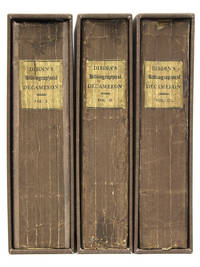
1817306781London: Printed for the author by W. Bulmer and Co. Shakespeare Press 1817. First edition. Hundreds of engravings and examples of type etc. Slip announcing vol. IV of Typographical Antiquities inserted before half title of Vol. I. 3 vols. Imperial 8vo. Original drab boards printed spine labels untrimmed. Old clean repairs to the joints of vol. I; joints of vol. III a bit rubbed. Ownership signature of Mary Curteis Dec. 29 1817 on pastedown in each volume; bookplate of Charles Sarolea and his signature on title page; small morocco label; printed label of Claude Smith on flyleaf. Very good. Cloth slipcases. First edition. Hundreds of engravings and examples of type etc. Slip announcing vol. IV of Typographical Antiquities inserted before half title of Vol. I. 3 vols. Imperial 8vo. Windle & Pippin A28; Jackson no.40; Hart no.186; Bigmore and Wyman pp. 169-70 Printed for the author by W. Bulmer and Co. Shakespeare Press unknown books
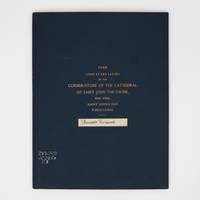
1892376201New York: Feast of Saint John the Evangelist 1892. Printed on pure vellum. Title page with seal printed in red. Vignette of eagle at head of first page of service. Artist's rendering of the cathedral on last page. 6 pp. Printed by the DeVinne Press. 1 vols. 4to. Blue cloth upper cover titled in gilt with paper label for J. Roosevelt Roosevelt lower cover with eagle in blind a.e.g. Fine. Bookplate of General Theological Seminary. Printed on pure vellum. Title page with seal printed in red. Vignette of eagle at head of first page of service. Artist's rendering of the cathedral on last page. 6 pp. Printed by the DeVinne Press. 1 vols. 4to. Order of service for the start of the construction of the New York City landmark. <br /> Just a few copies were printed on vellum.<br /> With a presentation inscription from the original owner "To the Rev. Howard C. Robbins Dean of the Cathedral of St. John the Divine J. Roosevelt Roosevelt May 16 1922"<br /> James Roosevelt Roosevelt 1854-1927 was half brother of Franklin Delano Roosevelt.<br /> Uncommon and beautiful. Feast of Saint John the Evangelist unknown
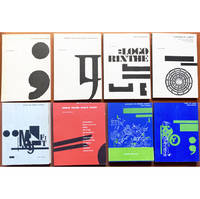
19681375<p>Baruchello Gianfranco. <strong>La Quindicesima Riga.</strong> marcalibri / 1</p><p>Pignotti Lamberto. <strong>Istruzioni per l'uso degli ultimi modelli di poesia.</strong> marcalibri / 2</p><p>Torricelli Gian Pio. <strong>Coazione A Contare.</strong> marcalibri / 3</p><p>Bonito Oliva Achille. – Maurizio Calvesi. <strong>Teatro delle mostre.</strong> marcalibri / 4</p><p>Zannino Adriano. <strong>Superegg.</strong> marcalibri / 5</p><p>Mussio <strong>Magdalo. In Pratica.</strong> marcalibri / 6</p><p>Buonfino Giancarlo. <strong>L'alibi di scorta.</strong> marcalibri / 7</p><p>Buckminster Fuller <strong>R. Education Automation.</strong> marcalibri / 8</p><p>Bartolucci Giuseppe. <strong>La scrittura scenica. </strong>marcalibri / 9</p><p>Sandri Giovanna. <strong>Capitolo Zero.</strong> marcalibri / 10</p><p>Accame F. <strong>Parta Labore.</strong> marcalibri / 11</p><p>Chiari Giuseppe. <strong>Musica Senza Contrappunto.</strong> marcalibri / 12</p><p>Giorgi Rubina. <strong>La Riflessione Simbologica.</strong> marcalibri / 13</p><p>Saffaro Lucio. <strong>Teoria de l'Est.</strong> marcalibri / 14</p><p>Bory Jean-François. <strong>Logorinthe. - post-romanzo.</strong> marcalibri / 15</p><p>Caruso Luciano - Giovanna Polara. <strong>Iuvenilia Loeti.</strong> marcalibri / 16</p><p>Verdone Mario. <strong>Teatro del tempo Futurista. </strong>marcalibri / 17</p><p>Mussio Gianmaria. <strong>Mare Verde Mare Rosso.</strong> marcalibri / 18</p><p>Carrega Ugo. <strong>Poemi per Azione.</strong> marcalibri / 19</p><p>Mussio Magdalo. <strong>Praticabile per memoria concreta.</strong> marcalibri / 20</p> Lerici editore paperback
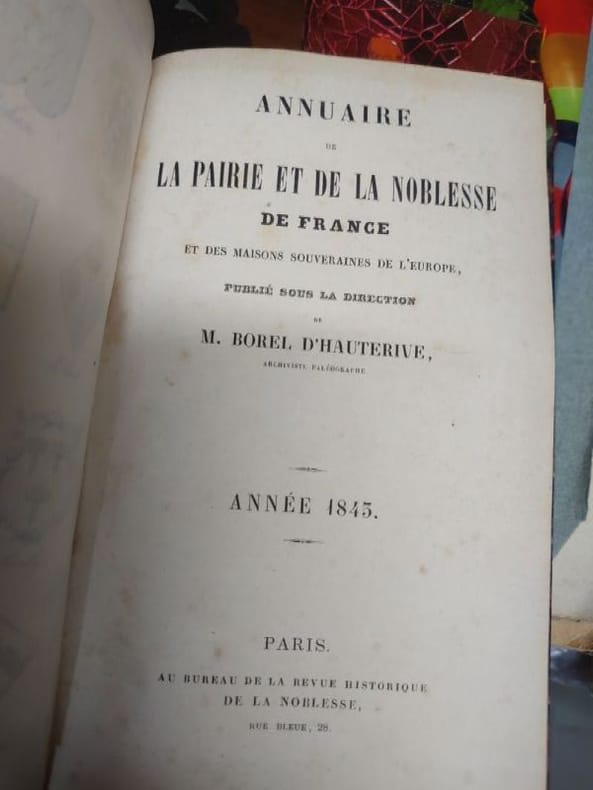
7299Paris, Au bureau de la revue historique de la noblesse, Au bureau de la publication, 1843-1904, 62 années en 60 vol. 62 volumes reliés In-16°. Demi-maroquin bordeaux. Dos à 5 nerfs généralement insolés. Les années sont illustrées de planches de blasons en noir ou en chromolithographies. Notre collection comprend les 62 premières années (1843-1904) en 60 volumes. En très bel état de conservation. RARE COLLECTION DES 62 PREMIÈRES ANNÉES.
7299Paris, Au bureau de la revue historique de la noblesse, Au bureau de la publication, 1843-1904, 62 années en 60 vol. 62 volumes reliés In-16°. Demi-maroquin bordeaux. Dos à 5 nerfs généralement insolés. Les années sont illustrées de planches de blasons en noir ou en chromolithographies. Notre collection comprend les 62 premières années (1843-1904) en 60 volumes. En très bel état de conservation. RARE COLLECTION DES 62 PREMIÈRES ANNÉES.
In-folio, (8), 291pp, (1), legatura in pergamena coeva, buono stato. Comprende anche il Canticum Moysi in exodo. Glosse in greco ai margini. In-folio, (8), 291pp, (1), contemporary vellum binding, good condition. It also includes the Canticum Moysi in exodo. Glossae in Greek at the margins.
149291Paris, Champion, 1911 in-folio, 20 pp., XI et 117 planches chromolithographiées en feuilles, sous chemise demi-percaline verte à coins à lacets (rel. de l'éditeur).
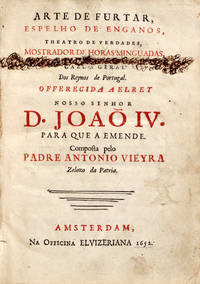
2004CS005<p>Dos Reynos de Portugal. OFFERECIDA A EL REY D. JOAÕ IV. PARA QUE A EMENDE. Composta pelo PADRE ANTONIO VIEYRA Zelozo da Patria. AMSTERDAM aliás Lisboa Na Officina ELVIZERIANA 1652 aliás 1743-4.</p>_x000d_<p>In 8º de 205x145 cm. Com xxiv 512 págs. aliás 508.</p>_x000d_<p>Encadernação da época inteira de pele com nervos rótulo vermelho e ferros a ouro na lombada. Cortes de folhas carminados. </p>_x000d_<p>Impressão em papel de linho muito alvo a folha de rosto impressa a preto e vermelho. Salto de numeração por erro tipográfico da página 192 para 197 em todos os exemplares do qual resulta a falta de duas linhas no final do capitulo XXI que se encontram manuscritas na época no presente exemplar: '<strong>que se saiba ate onde se podem estender e aonde he bem que se encolhão</strong>.'</p>_x000d_<p>Exemplar com assinatura de posse coeva rasurada na folha de rosto e leves picos de traça marginais.</p>_x000d_<p>Raríssima primeira edição de uma obra clássica da literatura barroca portuguesa que embora descreva os vários tipos de furtos da época por meio de exemplos práticos é sobretudo um tratado de ética e moral para estadistas e governantes portugueses e espanhóis da época da Restauração da Independência de Portugal.</p>_x000d_<p>Obra atribuída a Manuel da Costa entre outros foi escrita em 1652 e circulou manuscrita clandestinamente até que foi publicada nesta primeira edição sob o nome do P. António Vieira com local data de edição e nome do impressor falsos. Foi proibida pela Inquisição portuguesa e espanhola. A autoria desta primeira impressão é atribuída ao genovês João Batista Lerzo.</p>_x000d_<p>P. António Vieira O «Imperador da Língua Portuguesa» como disse Fernando Pessoa.</p>_x000d_<p>EN In octavo. 20.5x14.5 cm. xxiv 512 pp. i.e. 508.</p>_x000d_<p>Contemporary full calf binding with raised bands red label and gilt tools on spine. Red edges. </p>_x000d_<p>Printed in very white linen paper with the title page printed in red and black. There is a jump in the page order from page 192 to 197 in all copies resulting into the loss of two lines on chapter XXI that were handwritten at the time in this copy: <strong><em>'que se saiba ate onde se podem estender e aonde he bem que se encolhão.'</em></strong></p>_x000d_<p>Copy with a scratched contemporary ownership signature on title page and small wormholes.</p>_x000d_<p>A rare first edition of a classic of the Portuguese Baroque literature which although describing several types of burglary of that time with practical examples it is mainly a treatise of ethics and moral for Portuguese and Spanish statesmen and rulers at the time of the Restoration of the Independence of Portugal.</p>_x000d_<p>Work was attributed to Manuel da Costa among others and was written in 1652 the manuscripts secretly circulating until this first edition was published with the name of P. António Vieira with false local edition date and name of the printer. It was forbidden by the Portuguese and Spanish Inquisition. This first print was probably made by the Genoese João Batista Lerzo.</p>_x000d_<p>P. António Vieira The «Emperor of the Portuguese Language » according to Fernando Pessoa.</p>_x000d_<p>Ref.: Inocêncio I 287. P. ANTONIO VIEIRA homem innegavelmente grande e um dos maiores ingenhos que Portugal ha produzido nasceu em Lisboa a 6 de Fevereiro de 1608 e foi baptisado na freguezia da Sé a 15 do dito mez. M. na cidade da Bahia de Todos os Sanctos então capital dos estados da America portugueza.</p>_x000d_<p>Inocêncio I 307. A Arte de Furtar foi prohibida em Hespanha por édito da Inquisição de. de Janeiro de 1755 e ahi se declara ser falsamente attribuida ao P. Antonio Vieira. Passou depois para o corpo dos Indices Expurgatorios do mesmo Tribunal e ainda no ultimo impresso em Madrid 1790 a encontro a pag. 277 com a mencionada declaração. Excluida assim a idea de que a obra fosse de Vieira restava indagar a qual dos escriptores seus contemporaneos poderia attribuir-se com maior verosimilhança. Alguns criticos tractando este ponto talvez com nimia prudencia não quizeram arriscar a respeito delle uma opinião decisiva. Segundo os autores destes estudos a Arte de Furtar tem sido atribuída aos seguintes literatos: P. António Vieira João Pinto Ríbeiro por Ferreira Gordo Diogo de Almeida por Alves Sinval Tomé Pinheiro da Veiga por Cunha Rivara Duarte Ribeiro de Macedo citado por Camilo C. Branco Alexandre de Gusmão por Teófilo Braga António de Sousa de Macedo por Solidónio Leite. Estas opiniões baseiam-se em conjecturas aceitáveis umas e outras refutáveis. </p>_x000d_<p>BNP apenas regista um exemplar / BNP has just one registered copy.</p>_x000d_<p>Ref. BNP: Bismut R. Arte de furtar A Cusati M.L. Problema di bibliogr. "Arte de furtar" A Inocêncio 1 306-308; 8 330; 22 433 2993 Santos M. Bibliogr. geral 3 7769 com pag. errada mas texto completo! Soares E. Hist. grav. 1 524 527 e 679 NOTAS: Autoria atribuída a Manuel da Costa António Vieira Tomé Pinheiro da Veiga António de Sousa de Macedo entre outros Pé de impr. forjado; segundo bibliogr. deve tratar-se de impr. de Lisboa eventualmente de João Baptista Lerzo datável entre 1743 e 1744 Ambos os retr. do Pe. A. Vieira insertos nos exemplares da BN foram publ. noutras obras; legendas dos retr. subscritas: G. F. L. Debrie sculp. 1745; Dominicus Pauner sculp. Bar Assin.: //8 //4 A-Z//8 Aa-Hh//8 Ii//6; 4a f. dos cad. Z e Ii assin. Z//6 e Ii//6 respectivamente Pag. errada salto da p. 192 para 197; Cap. XXI incompleto faltando 2 últimas l Rosto a negro e vermellho.</p>_x000d_<p> </p> M-9-D-34 hardcover
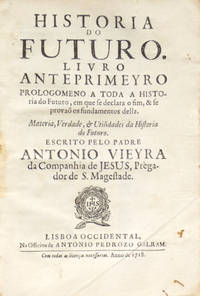
2412PG007<p>LIVRO ANTEPRIMEYRO Prologomeno A Toda A Historia do Futuro em que se declara o fim & se provaõ os fundamentos della. Materia Verdade & Utilidades da Historia do Futuro. Eescrito Pelo Padre ANTONIO VIEYRA da Companhia de JESUS Prègador de S. Magestade. LISBOA OCCIDENTAL. Na Officina de ANTONIO PEDROZO GALRAM. Com todas as licenças necessárias. Anno de 1718.</p>_x000d_<p>De 21x155 cm. com xxxvi 379 i em br. págs. Encadernação da época inteira de pergaminho flexÃvel com o apelido do autor e o tÃtulo escritos à pena na lombada.</p>_x000d_<p>Exemplar com ex libris de António Cupertino de Miranda colado no interior da encadernação e com assinatura de posse em letra coeva de Arthur Alberto Ferreira de . na frente da folha de guarda anterior.</p>_x000d_<p>Folhas preliminares sem numeração contêm censuras de Fr. José de Sousa e de P. Fr. António de Santo Elias pelo Santo OfÃcio de Fr. José Pereira de Lacerda pelo Desembargo do Paço e as licenças. De páginas 339 a 379 contém um Ãndice das citações das sagradas escrituras e outro Ãndice das coisas notáveis.</p>_x000d_<p>Obra dividida em doze capÃtulos que trata da definição do espÃrito profético classifica as profecias em canónicas e não canónicas e demonstra que o Reino de Portugal desde a sua fundação fora um dos temas prediletos dos diversos profetas do antigo testamento entre os quais IsaÃas pode ser considerado como um «cronista dos descobrimentos de Portugal». É uma exaltação da pátria portuguesa escolhida entre todas as nações do Mundo para propagar a fé cristã predestinada a «descobrir o mundo ao mesmo mundo».</p>_x000d_<p>Vieira dedicou uma parte muito importante do seu esforço à s obras proféticas que considerava a parte mais importante da sua produção literária. Algumas das ideias expostas mereceram a desconfiança da Inquisição que deteve o P. António Viera durante largo tempo e que se viu obrigado a ir a Roma pedir uma intervenção do papa em sua defesa.</p>_x000d_<p>Actualmente esta parte da obra Vieiriana que era pouco considerada pelos anteriores estudiosos tem sido cada vez mais valorizada.</p>_x000d_<p>PADRE ANTÓNIO VIEIRA Lisboa 1608 - Salvador Brasil 1697 O maior escritor português autor de uma vasta obra em português latim e italiano sendo definido lapidarmente por Fernando Pessoa como o «Imperador da lÃngua portuguesa». Ao mesmo tempo desenvolveu com brilhantismo visão e coragem actividades polÃticas e diplomáticas na defesa de Portugal durante a Guerra da Restauração tendo entrado em conflito aberto com a Inquisição que venceu com o apoio do Papa.</p>_x000d_<p>Mais importante ainda foi a sua prolongada e dedicada actividade missionária em que se distinguiu pela defesa da liberdade dos Ãndios e pela condenação da escravatura dentro dos moldes possÃveis na sua época pelo que chegou a ser expulso pelos colonos que tratavam mal os escravos oriundos de Ãfrica e queriam escravizar os Ãndios apesar das leis régias em contrário que obteve de D. João IV e de D. Pedro II.</p>_x000d_<p>Vieira conseguiu conciliar um grande realismo polÃtico com uma crença arraigada no Sebastianismo começando por identificar D. João IV como o Desejado do mito Sebastianista que havia de ressuscitar. Apesar de Vieira dar grande valor e se ter dedicado prolongadamente à s suas obras teológicas e proféticas foram os sermões que o consagraram como grande orador e escritor. A sua forte personalidade e capacidade oratória atraÃam multidões para ouvi-lo pregar mas foi a possibilidade de se ter podido consagrar a rever e a acompanhar a publicação dos sermões que os tornou obras literárias de grande valor e não apenas o frio registo das suas capacidades oratórias.</p>_x000d_<p>É também uma figura tutelar e fundadora da cultura brasileira paÃs onde viveu e actuou com a maior coragem metade da sua vida e onde decidiu viver os seus últimos dias. Hoje a sua obra é muito influente e estudada no Brasil sendo oriundos desse paÃs alguns dos maiores especialistas em Vieira tais como: Alcir Pécora Adma Muhana João Adolfo Hansen a par dos portugueses Margarida Viiera Mendes Arnaldo do EspÃrito Santo Ana Travassos Valdez e os referidos mais abaixo.</p>_x000d_<p>Foi para a BaÃa com a famÃlia em 1614 onde Vieira frequentou o Colégio da Companhia de Jesus. Relativa a esta época chegou até aos nossos dias uma lenda que refere ter o jovem Vieira dificuldades da aprendizagem mas um certo dia repentinamente ultrapassou todas as suas dificuldades dando nas vistas pelas suas capacidades intelectuais e linguÃsticas tendo sido escolhido pera redigir o relatório anual em 1625 com apenas 17 anos sendo este facto conhecido como o «Estalo de Vieira».</p>_x000d_<p>Em 5 de Maio de 1623 iniciou o noviciado na Companhia e durante ele passou algum tempo na Missão do EspÃrito Santo onde aprendeu a lÃngua tupi e entrou em contacto com a cultura e a psicologia dos Ãndios que haveria de defender durante toda a sua vida.</p>_x000d_<p>Em 6 de Maio de 1625 proferiu os primeiros votos e logo a seguir como refirimos acima foi encarregado de redigir a carta ânua relativa aos anos de 1624 e 1625 e começou a ensinar retórica no Colégio de Olinda tendo sido ordenado sacerdote em 10 de Dezembro de 1634. Durante este perÃodo tornou-se notada a sua capacidade oratória e fez muitas pregações em casa da ordem em missões e fazendas tendo a primeira pregação oficial ocorrido no 4.º Domingo da Quaresma de 1634 na Igreja da Conceição da BaÃa.</p>_x000d_<p>Em 27 de Fevereiro de 1641 acompanhou a Lisboa o filho do Marquês de Montalvão Vice-rei do Brasil começando um perÃodo de actividade polÃtica como conselheiro de D. João IV e diplomática missões em Paris e Haia de 1646 a 1648 Roma em 1650 e outra vez Roma de 1669 a 1675 onde tentou reactivar o processo de canonização do Beato Inácio de Azevedo e obter o apoio do Papa que lhe concedeu isenção perante a Inquisição Portuguesa pelo breve de 17 de Abril de 1675. Em Roma tinha começado a rever os seus sermões e o primeiro volume foi publicado em Lisboa em 1679. Em 27 de Janeiro de 1681 partiu para o Brasil tendo vivido até ao momento da sua morte perto da BaÃa ocupado na revisão dos seus sermões e em especial na redacção da sua obra de teologia e profética: <em>Clavis Prophetarum</em>.</p>_x000d_<p>Ref: Padre António Vieira. Bibliografia. BNP. 1999. Nº 1187 Azevedo e Samodães 3516 II Volume página 743. Inocêncio I 291.</p> M-9-D-46 unknown
1817261849London: Printed for the author by W. Bulmer and Co. Shakespeare Press 1817. First edition with half-titles and errata. Hundreds of engravings and examples of type etc. some tinted in red and blue and slip of gold printing with directions to binder slip at vol. II p. 417. 3 vols. Imperial 8vo 9-3/4 x 6 inches. Bound in contemporary three quarters blue pebbled morocco spine gilt and marbled boards and edges. Fine small bump to some pages in Vol. I. Bookplate of The Right Hon. Charles Abbot prob. Charles Abbot 1st Baron Colchester in Vols II & III. First edition with half-titles and errata. Hundreds of engravings and examples of type etc. some tinted in red and blue and slip of gold printing with directions to binder slip at vol. II p. 417. 3 vols. Imperial 8vo 9-3/4 x 6 inches. Windle & Pippin A28; Jackson no.40; Hart no.186; Bigmore and Wyman pp. 169-70 Printed for the author by W. Bulmer and Co. Shakespeare Press unknown books
1817261849London: Printed for the author by W. Bulmer and Co. Shakespeare Press 1817. First edition with half-titles and errata. Hundreds of engravings and examples of type etc. some tinted in red and blue and slip of gold printing with directions to binder slip at vol. II p. 417. 3 vols. Imperial 8vo 9-3/4 x 6 inches. Bound in contemporary three quarters blue pebbled morocco spine gilt and marbled boards and edges. Fine small bump to some pages in Vol. I. Bookplate of The Right Hon. Charles Abbot prob. Charles Abbot 1st Baron Colchester in Vols II & III. First edition with half-titles and errata. Hundreds of engravings and examples of type etc. some tinted in red and blue and slip of gold printing with directions to binder slip at vol. II p. 417. 3 vols. Imperial 8vo 9-3/4 x 6 inches. Windle & Pippin A28; Jackson no.40; Hart no.186; Bigmore and Wyman pp. 169-70 Printed for the author by W. Bulmer and Co. Shakespeare Press unknown
1880130343Mexico: J. M. Andrade 1880. First edition. 535p; 177p; 65p Complete set with the third volume being the complete atlas volume of 66 engraved plates. Ex-library: numbers painted on spines; bookplates; library stamps on endpapers - title pages - foredges. Bound with leather spines and cloth boards. Corners of covers worn; leather spine labels wearing off slightly. Pages of Vols. I-II are yellowed but otherwise unmarked and clean. Volume III shows evidence of water damage and many pages have a severe dark stain. Three pages have some loss to the margins but the images of the plates are completely intact. A history of Indians of the new world detailing their life and culture at the time of the Spanish Conquest. A classic and important study of Native American culture and offered here in a damaged but still useful example of the rare first edition. J. M. Andrade unknown
576745No place: The Author 1990. Softcover. First edition. Octavo. 8 leaves printed rectos only. Stapled black card wrappers with applied printed labels. Taped and stapled to rear wrapper is an unopened condom as issued. Inscribed by the author: "To my friend P.J. from Pedro. 38-E. 594-5058." The author is unknown to us. The slim volume came from the library of a noted African-American scholar and the rhymes are reminiscent of rap lyrics but alternatively there is some reason to believe it might be the work of Nuyorican poet and playwright Pedro Pietri. Rare. OCLC locates a single copy SUNY Buffalo. The Author unknown
189339492London England: Seeley & Co. Limited. As New. 1893. Hardcover. FREE UPGRADE to Courier/Priority Shipping Upon Request IN STOCK AND IMMEDIATELY AVAILABLE FOR SHIPMENT - TEXT PRISTINE - 15 stories including "The Brothers" and The Girl of Andros" by Menander "The Shipwreck" by Diphilus and "The Buried Treasure" by Philemon -- with a bonus offer-- . Seeley & Co. , Limited hardcover