10 351 résultats
1963JH1151489New York: Harper & Row 1963. Hardcover. . Very good condition./Very good moderatly edgeworn and rubbed dust jacket. . Not price clipped $3.50. Signed by author Best Wishes Martin Luther King Jr. Gift inscription by Kivie Kaplan who was a member of the NAACP and elected a member of the board in 1954. He certainly would have know Martin Luther King Jr. Wake up White Americans letter laid in. It mentions Kivie Kaplan as a jew who raises money for the NAACP. Philosophy Phl New York: Harper & Row hardcover
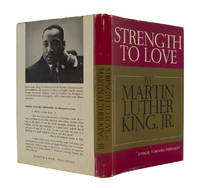
196368866New York: Harper & Row Publishers 1963. Full Description:<br> <br> KING Martin Luther Jr. Strength to Love. New York: Harper & Row Publishers 1963.<br> <br> Signed by King on front free end paper "Best Wishes/Martin Luther King". In publisher's dust jacket. Octavo 8 3/8 x 5 5/8 inches; 212 x 144 mm. x 2 146 2 blank pp. Below the signature is an ownership stamp reading "Golden State Mutual Life Ins. Co."<br> <br> Publisher's quarter black cloth over black paper boards. Spine lettered in gilt. In publisher's non-price clipped dust jacket. Jacket with some rubbing along edges and at the top of front panel. Top of jacket spine with some very minor chipping. Bottom of jacket spine with a one-inch closed tear. Overall a very good jacket and an about fine book.<br> <br> This copy's provenance is particularly interesting being that is was once part of the art collection of the Golden State Mutual Life Insurance Company the insurance company renown for being one of the largest Black-owned insurance companies in the Western United States and one of the few places in the 1920s that would insure Black people.<br> <br> "Golden State Mutual founder William Nickerson Jr. moved to Los Angeles from Texas in 1921 as an official representative of the Texas-based insurance company American Mutual Benefit Association. When he arrived in California he soon discovered that the state's existing insurance agencies viewed its 40000 Black citizens as either uninsurables or extraordinary risks. Black residents were only accepted at discriminatory premium rates or denied insurance coverage altogether." Online Archives of California.<br> <br> "The Golden State Mutual Life Insurance Company was founded on July 23 1925 in Los Angeles by William Nickerson Jr. George A. Beavers Jr. and Norman O. Houston. Their mission was to provide dignified employment for African Americans and to provide them with insurance protection. Golden State Mutual operated for eighty-four years and grew to become one of the largest Black-owned companies in the United States." Online Archives of California.<br> <br> "The Golden State Mutual Life Ins. Co. owned a significant collection of artwork by African American artists acquired and curated by one of their employees artist William Pajaud. As art historian Kellie Jones states the company had 'committed itself to supporting black creativity' since its founding but Pajaud 'moved Golden State to a new level of support for artists'.6 Employed in 1957 Pajaud worked initially as art director in design for the company and then ran the public relations department but as a trained artist had a knowledge of art and connections with many fellow artists. He proposed starting a company collection in 1965 to celebrate the company's fortieth birthday and with a small budget acquired over 200 works of art over the next twenty or so years. The collection was auctioned in 2007 when the company went out of business." Wikipedia.<br> <br> Strength to Love is the second book written by Martin Luther King Jr. and it is a collection of his sermons. This first edition was published in 1963 the same year he organized the nonviolent protests in Birmingham Alabama and organized the March on Washington where he gave his most famous "I Have A Dream" speech. He was awarded the Nobel Peace Prize the following year.<br> <br> HBS 68866.<br> <br> $10000. Harper & Row Publishers unknown
1729041022Leipzig Johann Heinrich Zedler/Register: Leipzig Bernhard Christoph Breitkopf 1729-1733/1740 1729. Hardcover. Very Good. Des Theuren Mannes Gottes D. Martin Luthers Sämtliche Theils von Ihm selbst Deutsch verfertigte theils aus dessen Lateinischen ins Deutsche übersetzte Schriften und Werke Welche aus allen vorhin Ausgegangenen Sammlungen zusammen getragen Und Anietzo in eine bequemere und nach denen Materien eingerichtete Ordnung gebracht nach denen ältesten und besten Exemplarien mit Fleisz übersehen und verbessert mit verschiedenen in denen Altenburgischen und andern Tomis ermangelnden Schrifften vermehret und mit nöthigen Vorberichten versehen. WITH in Volume XXII: M. Johann Jacob Greiffs Pastoris in Mölbis Vollständige Register über die XXII Leipziger Theile der gesammten Schriften Des seligen D. Martin Luthers Nebst einem auf die Wittenbergischen Jenischen 1740. 22 volumes in 22 bound vellum bindings. Marble endpapers. Interior very good pages evenly browned. Leipzig Johann Heinrich Zedler/Register: Leipzig, Bernhard Christoph Breitkopf 1729-1733/1740 hardcover
196365890Atlanta: np 1963. 8pp. Mimeographed on rectos only bound with single staple. Tanned overall else in very good condition. One of an unknown but no doubt small number printed for colleagues attendees and the press. Provenance upon request. "Dr. King discusses the issues of segregation poverty and discrimination within the City of Atlanta in this 1963 speech at the Pilgrimage for Democracy. He explains that although Atlanta was thought to be a place of "racial harmony" the reality of glaring discrimination in Atlanta's schools restaurants and housing has left the local Negro community "tired" and hungry for change." www.thekingcenter.org.<br /> <br /> We locate only one other example in the King papers at Stanford University. np unknown
176820419Nürnberg Nuremberg: In Verlegung der Johann Andrea Endterischen Handlung 1768. Later edition. Hardcover. Very good. Three parts folio 17 3/4 x 12". 4: engraved title; main title 12: Preface to the 1736 Second Edition 2: Note to the Christian Reader on this New 1768 Edition 16: Preface to the 1640 i.e. 1641 Edition 2: List of Saxony's Electors pages 11 full-page engraved portraits of the Electors 1: full-page portrait of Martin Luther leaves 8: Short Introduction and Instruction Regarding the Holy Scriptures 2: Calendar 13: General Index 26: Name Index 11: Chronology 1: Personalities in the Maccabean and Herodian Eras 7: Explanations on the Old Testament 5: Charts of calandars weights money measures and distance in biblical times 4: Chronological Order of the Books of the Bible 7: Register/Table of the Old Testament 3: Martin Luther's Preface to the Old Testament; 740 Pentateuch; Former Prophets; Writings; 512 Latter Prophets and Apocrypha; 472 New Testament 473-480 Gospel Harmony 14: Creeds and Augsburg Confession pages. Text in German Gothic script; text within ruled borders marginal column for printed side notes; woodcut initials and ornaments; elaborate woodcut half titles in imitation of calligraphy at verso of initial text leaves for the second and third parts Prophets and New Testament. Complete with 48 copperplate engravings: 12 full-page portraits in the preleminaries Electors and Martin Luther; a full-page depiction of the construction of Noah's Ark; 27 full-page sectional illustrations 20 vignette compositions; 9 portraits of Prophets and Evangelists; 8 double-suite plates biblical lands from Egypt to Babylonia; Egypt and Canaan noting tribal allotments; Canaan in the New Testament era; Greece and Asia Minor with vignettes of the Temple; encampment of the Israelite tribes in the wilderness; bird's eye view of Jerusalem after Adrichem; view of Jerusalem in the New Testament era; Diet of Augsburg with legend.<br /> <br /> Contemporary calf lightly rubbed at extremities with some light scratching at rear board elaborately tooled in gilt depicting a neo-classical sanctuary on both boardsTetragrammaton in pediment on the front a cross in pediment on the rear; exquisite gauffered fore-edges ornamented in gilt against forest green wash depict a sunburst with architectural motifs; gilt turn-ins. Rebacked retaining original spine; endpapers renewed. 15 cm clean tear through text at leaf C4 in the New Testament reparable; final text leaf chipped at bottom edge not affecting text; tears at Diet of Augsburg plate and final text leaf expertly repaired at versos. Overall pages crisp and fresh with mild intermittent toning very occasional light stains and smudges and just a touch of damptstain at fore-edge in later leaves of the New Testament. A very good copy with clean plates in a beautiful magnificent binding complete with the folding plate of the Diet of Augsburg often lacking. Housed and protected in a modern custom red cloth slipcase.<br /> <br /> Final edition of the sumptuously illustrated Kurfürstenbibel Electors' Bible with a full apparatus of introductory and historical materials. Also known as the Weimar Bible it was compiled under the auspices of Ernst I Duke of Saxe-Gotha and Altenburg. Beginning in 1641 all editions were published by the prominent German printing dynasty of Endter. The maps views and illustrated divisional titles by Jacob van Sandrart and others made their first appearance in the edition of 1686. In this latest version the illustrated sectional titles are signed by Johann Chrisopher Claussner and most of the other views lack the signatures found in the 1686 edition. The earlier forewords by Salomon Glass ed. 1641 and Ernst Solomon Cyprian ed. 1736 are reprinted in the present edition.<br /> <br /> The preliminaries feature eleven full page engravings of Saxony's Electors from Friedrich III to Bernhard der Große followed by an engraved portrait of Martin Luther. Often lacking the final fold-out engraving depicts the Holy Roman Emperor and representatives of the German states in a large reception hall during the Diet of Augsburg. Participants are identified in the legend on the facing page. The conference was assembled by Charles V so that the Princes and Free Territories in Germany might explain their religious convictions in an attempt to restore religious and political unity in the Holy Roman Empire and rally support against the Turkish invasion. The consensus of the assembly is expressed in the Augsburg Confession the primary confession of faith of the Lutheran Church and one of the most important documents of the Reformation era. Written in both German and Latin the Confession was presented at the Diet of Augsburg on 25 June 1530; it is the fourth document contained in the Lutheran Book of Concord. References: Bibelsammlung Stuttgart E777; Delaveau & Hillard 16; Cf. Darlow & Moule 4217 note on ed. 1641; 4234 ed. 1736.<br /> <br /> Full title: Biblia Das ist die gantze Heilige Schrift Altes und Neues Testaments. Verdeutscht von Herrn Doctor Martin Luther: Und auf gnädigste Verordnung Des Durchlauchtigsten Fürsten und Herrn Herrn Ernsts Herzogen zu Sachsen Fülich Kleve und Berg von etlichen reinen Theologen dem eigentlichen Wort-Verstand nach erkläret wie hiervon weiter in der Vorrede gehandelt wird. daher über die gewöhnliche mit Fleiß verbesserte Biblische Register unter anderem zu finden ein Bericht von Vergleichung der Jüdischen und Biblischen Monden Maaß Gewicht Müntz und Elen mit den Unserigen: Sowohl auch eine Beschreibung der Stadt Jerusalem samt unterschiedlichen neuen Land-Tafeln und andern schönen Kupffer-Figuren und derselben Beschreibung: Welches alles dem Christlichen Leser zu mehrerm Verstand der Schrifft gute Anleitung geben kan. Zu Ende ist auch nebst den Christlichen Haupt-Symbolis die unveränderte Augspurgische Confession mit beygedruckt worden. Von neuem mit Fleiß übersehen durch fernere sowohl den Verstand als Lutheri Ubersetzung betreffende Anmerckungen erläutert auch mit einer kurzen Anweisung zur Erklärung der Heil. Schrift und andern Einleitungen vermehret. Mit königl. polnischem und Chur-Fürstl. Sächsischem Privilegio. In Verlegung der Johann Andrea Endterischen Handlung hardcover
154538532(Leipzig, Nikolaus Wolrab), 1549 (im Kollophon: 1544 bzw. 1545). Fol. Titeln in Rot u. Schwarz m. Titelholzschnitt bzw. m. breiter figürl. Holzschn.-Bordüre. Mit zahlr. Textholzschnitten von Hans Brosamer. 4 Bll., 382 num., 10 Bll. (das letzte weiß); 1 nn., 69 num., 4 nn. Bll. (das letzte weiß); 6 nn., 281 num., 7 nn. Bll.; 6 nn., 88 num., 1 nn. Bll., Blindgepr. Schweinsldr.-Bde. d. Zt. über Holzdeckeln a. 4 Bünden m. goldgepr. Rückenschild sowie blindgepr. Deckeltitel (?Postil sumer teyl und fest? bzw. ?Postil winter Teill?, dat. ?1550?) u. 2 Schließen.
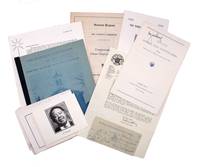
352443Vp 1990. Together 11 items as listed below. Together 11 items as listed below. The present group comes from the papers of Alfonso and Lucy Campbell. The Campbells attended Dexter Avenue Baptist Church and became friendly with the King family. Both became deeply involved with the Montgomery Improvement Association and during the bus boycott Alfonso served as co-chair the Montgomery Improvement Association's Transportation Committee and chair of the Purchasing Committee. In 1964 the Campbells moved from Montgomery to Virginia when Alfonso became Assistant Dean of Men and Lucy a staff librarian at Hampton Institute.<br /> <br /> Included are the following in chronological order:<br /> <br /> 1. Souvenir Program. The Citizen's Committee Presents Congressman Adam Clayton Powell of New York. Alabama State College Gymnasium . November 3 1955. Montgomery AL: 1955. 12 pp. Original printed stiff staple-bound self-wrappers. Unrecorded in OCLC.<br /> <br /> 2. Ten Times One is Ten Club Presents Dr. Ralph J. Bunche Undersecretary of the United Nations. Alabama State College Gymnasium . May 27 1956. Montgomery:1956. 4pp. Unrecorded in OCLC. The program included a solo by Coretta Scott King.<br /> <br /> 3. The Eightieth Anniversary of the Dexter Avenue Baptist Church. Montgomery: 1957. 30pp. 4to. Blue printed wrappers. Later tape along the spine. Official printed booklet for the 80th anniversary celebration of the Dexter Avenue Baptist Church featuring a history of the Church a biography of Dr. Martin Luther King Jr. a program of events printed photographs of the church's various members and groups including Dr. King the Deacons and Trustees the Missionary Society Scholarship Committee the Choir Social Political Actions Committee and others as well as dozens of printed ads of congratulations and compliments from Montgomery's businesses and individuals. OCLC records a single copy at Swarthmore.<br /> <br /> 4. The Dexter Avenue Baptist Church Presents The First in a Series of Youth Programs . October 25 1959. Montgomery: 1959. 1p. single 4to sheet. Stamped signature of Martin Luther King Jr at top "M.L. King Jr; "Dexter Avenue Baptist Church School/J.T. Alexander Superintendent" rubber-stamp at bottom in purple ink and signed in pen by Enrollment Secretary Eileen Jones. Unrecorded in OCLC.<br /> <br /> 5. The Dexter Avenue Baptist Church Montgomery Alabama Presents A Salute to Dr. & Mrs. Martin Luther King . January 31 1960. Montgomery: 1960. 4pp. 8vo. Self-wrappers. Folds. Printed program for the farewell celebration for Dr. King at the Dexter Avenue Baptist Church featuring the banquet menu program of events and tributes and the various committees and their members. Unrecorded in OCLC.<br /> <br /> 6. Partially-printed check accomplished and signed by Alfonso Campbell issued to Martin Luther King Jr. in the amount of $10. Montgomery: February 1 1960. Endorsed on verso secretarially. Campbell donates to King the day after the testimonial dinner after his leaving Dexter Avenue Baptist.<br /> <br /> 7. A season's greeting card inscribed by Coretta Scott King to the Campbells signed "'The Martin Luther Kings' Coretta Martin Yoki Marty & Scotty. Atlanta: December 29 1961. With the original mailing envelope.<br /> <br /> 8. A printed season's greeting card send from the King family to the Campbells with the original mailing envelope. Atlanta: December 1965.<br /> <br /> 9. A printed season's greeting letter from the King family with printed signatures below with the original mailing envelope. Atlanta: December 19 1967. 1p.<br /> <br /> 10. The Twenty-sixth Annual Fall Convocation and the Dedication of Martin Luther King Hall. Ogden Hall . September 26 1968. Hampton Institute: 1968. Signed on the upper cover by Benjamin Mays. 8pp. <br /> <br /> 11. Typed letter secretarially signed by Coretta Scott King to Alfonso Campbell thanking him for a donation. Atlanta: July 1 1985. 1p.<br /> <br /> 12. A printed card from the Abernathy family thanking the Campbells for the sympathy. Atlanta: June 28 1990. unknown
15564183Wittenberg:: Georg Rhau 1542 1556. Octavo:. 15 x 10 cm. I. a-h8; A-Z8 Aa4 lacking blank Aa4. II. A-L8 with blank L8 Bound in contemporary alum-tawed pigskin over wooden boards one clasp defective binding soiled and mildly worn and with small defects. The boards are ruled and tooled in blind signed and dated “IPN 1556â€. The contents are in excellent crisp condition one leaf working loose marginal tear in margin of leaf E5 no loss. With a historiated woodcut title border to the “Apologiaâ€. Woodcut coat-of-arms to verso of final leaf of the “Confessio†and fine woodcut initials in the Saxon Confession. Text of second work in Latin and German. With 16th c. notes on the f.f.e.p. This is the authorized text of the Augsburg Confession 1st ed. 1531 approved by Luther edited by and with the "Apologia" of Philip Melanchthon. It was printed by Georg Rhau who also printed the first editions both in Latin and German of the “Confessio†and “Apologiaâ€. The “Apologia†of this 1556 edition is dated 1542 see VD 16 ZV 31340. This edition was printed in the wake of the agreement reached in 1555 between the Lutheran princes and Charles V known as the Peace of Augsburg which granted Lutheranism legal status within the Holy Roman Empire. Bound into this copy is the 1553 Leipzig edition of the Saxon Confession which was drawn up by Melanchthon and intended for presentation at the Council of Trent; it presented the doctrinal status of the Lutheran Church of Germany as of 1552 and was the basis for the signing of the Peace of Augsburg. The Augsburg Confession: "On January 21 1530 the Emperor Charles V issued letters from Bologna inviting the German diet to meet in Augsburg on April 8 for the purpose of discussing and deciding various important questions. The far-seeing Landgrave of Hesse hesitated to attend the diet but the Elector John of Saxony who received the writ March 11 directed Luther Jonas Bugenhagen and Melanchthon to meet in Torgau and present a summary of the Protestant faith to be laid before the Emperor at the diet. This summary has received the name of the "Torgau articles". On April 3 the Elector and the reformers started from Torgau and reached Coburg on April 23. There Luther was left behind. The rest reached Augsburg May 2. On the journey Melanchthon worked on an "Apology" using the Torgau articles and sent his draft to Luther at Coburg who approved it. "The Emperor had ordered the confession to be presented to him on June 24. The evangelical princes however declared that they would not part with the confession until its reading should be allowed. The 25th was then fixed for the day of its presentation. In order to exclude the people the little chapel of the Episcopal palace was appointed in place of the spacious city hall. The two Saxon chancellors Bruck and Beyer the one with the Latin copy the other with the German stepped into the middle of the assembly and against the wish of the Emperor the German text was read. "Although the emperor prohibited the printing of the evangelical confession without his special permission during the diet six German editions and one in Latin were published. Their inaccuracy and incorrectness induced Melanchthon to prepare an edition to which he added the Apology. Thus originated the so-called 'editio princeps' of the Augustana and the Apology which was published in the spring of 1531." Schaff-Herzog "Melanchthon drafted the ‘Confession’ in both German and Latin using the Torgau Schwabach and Marburg Articles. The intention of the German Protestants was to present a single creed. Since they could not all agree on one several versions were presented to the Diet meeting at Augsburg. Of these it is the ‘Augsburg Confession’ that is remembered today; the others have long been forgotten. The presentation of the ‘Augsburg Confession’ was probably Melanchthon’s finest hour as a theologian. He had written a theological document that presented a reasonable compromise in the ongoing religious disputes in Germany. Luther himself said that he could never have ‘trod so lightly’ in treating such matters. The ‘Confession’ has come to be the standard Lutheran statement of faith and was included in the ‘Book of Concord’ of 1580."Kessler I. VD 16 ZV 31340; II. VD 16 C 4807 Georg Rhau, 1542, unknown books
2j5116Hans Krafft Wittenberg 1576. 14 nn./392 num. /447 num. Bl. Mit 2 Titelbordüre 1 Porträt des Herzogs zu Sachsen ganzseitigem Holzschnitt von Hans Brosamer und 216 Textholzschnitten meist von Johann Teufel und vielen Holzschnitt-Initialen. Original Leder-Einband mit 5 Schmuckbünden und 8 verzierten Kupferbeschlägen Rücken restauriert/Einbanddecken wurmstichig/Schließen fehlen/alte Anmerkungen auf Vorsatz/1 Titelbordüre u. Porträt mit hinterlegten Randläsuren u. etwas Bildverlust/20 Bl. mit kleinen Eckausrissen dadurch wenige Seiten mit unerheblichem Textverlust/teilw. knapp beschnitten mit leichtem Buchstabenverlust der gedruckten Marginalien/etwas fleckig/teils randfleckig/alte Marginalien. - Zweite Ausgabe der Krafftschen Bibel mit den zahlreichen eindrucksvollen Holzschnitten des Meisters Johann Teufel. Hans Brosamer 1495 in Fulda - 1554 in Erfurt war deutscher Maler Kupferstecher und Formschneider nach Lucas Cranach dem Älteren bei dem er Schüler war war er der zweite Illustrator der Luther-Bibel. Die Holzschnitte in der Ausgabe von 1576 sind identisch mit der ersten illustrierten Auflage von Brosamer aus 1550 - unknown
176636853Halle: Waysenhaus 1766. 4to 22.2 cm; 8.75". 10 2 1079 1 308 4 pp. <br><br>This Bible was specifically designed and printed for the reader to annotate: the pages measure 8.5" x 6.75" and the text area only 5.5" x 2.875" leaving 1.5" to 2.25" of margin for notes on either side and 1" in the upper margin with 2" in the lower. => An early owner did just that not heavily but here and there in both the Old and New Testaments. It was owned by a member of an American scholarly and clerical family that had not one but two generations of association with the city of Halle which was a mecca and fount of the Pietism that drove so much of the early German religious migration to America.<br>Â Â Â Â Provenance: Signature of G. Henry Muhlenberg dated 1784 on the front free endpaper; later ownership signature of Jacob Strein 1814 on same. Gotthilf Heinrich Ernst Muhlenberg 17531815 was the son of Heinrich Melchior Muhlenberg one of the founders of the German Lutheran church in the U.S. and a pastor of Pietist background whose first post after completing his studies was a teaching position at the Francke Foundation's Historic Orphanage of which the Waysenhaus that printed this volume was the working press. His son born in Trappe PA and recorded above as owner of this book was sent to be educated in Halle starting in 1763 entering the University in 1769. After his return to Pennsylvania in 1770 he was ordained a Lutheran minister and later received a Doctor of Divinity degree from Princeton University while becoming known as a significant American botanist; in 1787 he was made the first president of Franklin College now Franklin & Marshall College. Strein was a fellow Lancaster County pastor.<br>Â Â Â Â => Of this scholar-serving production of this scholarly press in its hyper-scholarly city we find but three library copies reported all in Germany. <br>Â Â Â Â <br>Â Â Â Â Darlow & Moule 4251. Contemporary plain brown calf rebacked original spine retained with modest ruling at cover edges rubbed and abraded with offsetting to edges of first and last leaves from the leather; round plain spine with five raised bands and no label leather lost at top and bottom with rear joint opening and leather wanting to peel over spine generally. A little foxing with in a few signatures a bit more than that. => A good overall solid and clean copy of a Bible having multiple points of significance. Waysenhaus hardcover books
xvi, 498 pages. Index. Forty-nine black and white photos and illustrations. Map of India. Frontis portrait of author. "The subtle but definite laws by which yogis perform miracles and attain complete self-mastery are explained with a scientific clarity." - Dust jacket. "His unusual life document is certainly one of the most revealing of the depths of the Hindu mind and heart, and of the spiritual wealth of India, ever to be published in the West." - Preface. Selected as one of the "100 Most Important Spiritual Books of the Twentieth Century" by a committee led by Philip Zaleski on behalf of HarperSanFrancisco. Included in the book "50 Spiritual Classics" by Tom Butler-Bowdon. Unmarked with moderate wear to beige publisher's cloth. Binding sound. Above-average wear to dust jacket now preserved in archival-grade Brodart. Steve Jobs thought so highly of this work that departing attendees of his memorial service were each given a copy. Book
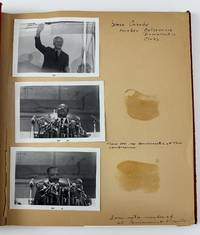
19675899Chicago and New Orleans: September 1967. 21 leaves illustrated with ninety-nine photographs mostly black-and-white but some in color. All ninety-nine images with a printed caption in the margin reading "Sep 67."Square folio. Contemporary red leatherette stamped in gilt on front cover string tied. Minor wear some images loose. Very good. An important photographic record of a notable moment in the interplay between the Civil Rights Movement the Black Power Movement and 1960s white liberalism documenting the 1967 National Conference on New Politics NCNP in Chicago. Simon Hall in his 2003 article in Journal of American Studies entitled "On the Trail of the Panther: Black Power and the 1967 Convention of the National Conference for New Politics" described the event as "one of the most ambitious attempts to forge a broad political alliance of antiwar organizations New Left insurgents and the radical wing of the Civil Rights Movement in 1960s America." The album is captioned on the inside front cover: "The National Conference on New Politics Aug. 31 - Sept. 4 1967 Palmer House Chicago." Seventy-five images document the conference many captioned on the album leaves identifying speakers attendees and settings or providing commentary.<br /> <br /> Chief among the delegates to the conference was Dr. Martin Luther King Jr. who delivered the keynote address on the first night. The title of the speech was "The Three Evils of Society" which King defined as “the sickness of racism excessive materialism and militarism.†The present album includes five candid shots of King from that night. These include four shots of King at the microphones during his keynote address three with captions that read "There are no communists at this conference" "I am not a member of 60 communist fronts" and "We do not believe in violence but rather civil disobedience on a vaster scale than ever before" respectively. The fourth photograph of King shows him sitting with Ralph Abernathy and Michael Wood this image captioned "Center: Michael Wood of the Nat'l Student Assn who blew the whistle on the CIA."<br /> <br /> In addition to the photographs of Dr. King the album includes dozens of candid shots of conference participants that reads like a who's-who of civil rights and Black Power activists of the moment including members of SCLC SNCC CORE and the Black Panthers. These portraits memorialize the conference participation of Julian Bond Dick Gregory Ralph Abernathy one of which catches him sleeping during King's speech and is humorously captioned "The alert audience of ML King" Hunter Pitts "Jack" O'Dell Floyd McKissick James Foreman Lois Allen Vietnam War protester Private Ronald Lockman and a woman from the "Mississippi Freedom Democratic Party" who appears to be Victoria Jackson Gray Adams.<br /> <br /> The album also pictures white members of the New Left or sympathetic supporters of the civil rights movement such as Dr. Benjamin Spock Dr. Donna Allen Women's Strike for Peace Simon Casady influential California Democrat William Pepper Executive Secretary of NCNP Clark Kissinger National Secretary of the Students for a Democratic Society and Robert Scheer publisher of the radical Ramparts magazine. The album also includes some shots of other unnamed notables and additional attendees views from the main conference floor a display of posters featuring "Heroes of the National Liberation Movement" such as Che Guevara Malcolm X and Stokely Carmichael and book displays by vendors such as the Progressive Labor Party Marxist publisher Lou Diskin CADRE Chicago Area Draft Resistors and the Student Mobilization Committee.<br /> <br /> An additional twenty-four color images picture H. Rap Brown Jamil Abdulla al-Amin and various scenes in New Orleans during Brown's trial for weapons charges in September 1967. Brown was a fiery activist who was that time serving as the fifth chairman of SNCC a post he held from May 1967 to June 1968. Incongruously Brown was a controversial head of SNCC for his constant calls for violent political action and even served a dual role as the head of SNCC and as Minister of Justice for the Black Panther Party in 1968. The first page of images featuring Brown in the present album is captioned: "Rap Brown in New Orleans. Arraigned on carrying a weapon in interstate while under criminal indictment in Maryland for inciting to riot & arson" referring to the riot in Cambridge Maryland earlier that summer. Seventeen of these images show Brown and his lawyers talking to reporters outside the courthouse then continuing to do so as Brown walks down the street and gets into a car. Seven of the images show various street scenes around New Orleans. Brown's trial was going on at the same time as the National Conference in Chicago. As such a handful of the latter images show James Foreman of SNCC who according to the manuscript caption "spoke for H. Rap Brown" at the conference. At the time Foreman was the International Affairs Director for SNCC.<br /> <br /> The conference was an odd combination of white liberals Civil Rights legends and Black Power advocates which according to a contemporary source "brought black militants and much of the white left into occasional dialogue and frequent chaos." A retrospective "This Week in History" piece in the Chicago Sun Times in 2021 set the scene of the conference and detailed Dr. King's keynote speech: "A haven for liberal politicians and supporters the National Conference for New Politics took place over Labor Day weekend in 1967. The Chicago Sun-Times extensively covered the conference where politicos activists and anti-war advocates mixed and mingled to excite their base and prepare for the upcoming election season. The highlight of the convention came on Aug. 31 when Dr. Martin Luther King Jr. took to the stage to deliver the keynote address to 4000 people at the Chicago Coliseum. 'The promise of a Great Society has been shipwrecked off the coast of Asia on the dreadful pinnacle of Vietnam' he told conference-goers. The war he said 'has torn up the Geneva agreement seriously impaired the United Nations exacerbated the hatreds between continents and worse still between races: it has frustrated our development at home.If the will of the people continues to be unheeded all men of good will must create a situation in which the 1967-68 elections are made a referendum on the war' he said. 'The American people must have an opportunity to vote into oblivion those who cannot detach themselves from militarism.' King’s speech touched on more than the Vietnam War. He called for a national employment agency noting that capitalism 'was built on the exploitation and suffering of Black slaves and continues to thrive on the exploitation of the poor -- both Black and white -- both here and abroad.' The activist referred to racism as 'that corrosive evil that will bring down the curtain on Western civilization.' King received a standing ovation after his speech. September unknown
1963140945155np: No Publisher 1963. Very Good. Original felt pennant from the March on Washington August 28 1963. Red felt with white stenciled lettering measuring 11" x 28. Very Good with light staining light creases and minor wear. <p>An historic event in the battle for civil rights when an estimated 250000 people showed up to this iconic event demanding civil and economic rights for African Americans. There Dr. Martin Luther King delivered his famous "I Have a Dream" speech in front of the Lincoln Memorial. [No Publisher] unknown
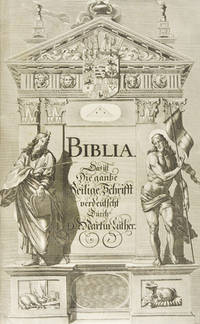
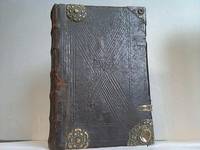
1748D9092Nuremberg: In Verlegung der Johann Andrea Endterischen Handlung Endter MDCCLXVIII 1748. Hardcover. Very Good. Large format folio 424 x 274 x 125mm. 144 740pp. 2 512 480 16pp. Additional engraved title of architectural motif with heraldry of Saxe-Gotha-Altenberg and the flanking figures of Moses and Christ with their attributes in niches below signed by J. C. Clausener. Illustrated with 45 plates including title most of them full-page few double-page engravings depicting biblical scenes and prophet portraits as well as some double-page maps and plans temples and Holy Land maps most illustrations also signed by Clausener. With the rare double-page engraving in rear showing royalty and court members in a large reception hall Bischöffliche oder Fürstliche Saal during the Confessio which took place in Augsburg in 1530 under Charles V. This plate is usually missing. Persons and part of the architecture in hall are indicated on the actual plate with small numbers 1-47 opposite page lists each number with name and title of person depicted and explanations of parts of the architecture. Engraved titles and decorated initials throughout. Text in German. Gothic script. Contemporary blind-tooled pigskin over beveled boards with brass corner pieces and bosses clasps and catches restored; marginal soiling with age few dampstains or light wear not overwhelming the large work in the least engravings wholly intact with only minor folds or stains only map of Israel with wide marginal tear otherwise an excellent survival. Formerly in the Evangelical Lutheran Church in America early clippings of poetical quotations c.1910 found in hinge of first quire. <br/><br/>Endters Kurfürstenbibel of 1748 an influential Luther Bible with exceptional engravings produced by the Gotha court. First published in 1641 under the authorization of Duke Kurfürst Ernst I of Saxe-Gotha. This is the so-called Kurfürstenbibel or Elector Bible because some of the engravings show various Dukes from the 16th and 17th centuries. At the realization of this major project prominent Lutheran theologians such as Johann Gerhard Solomon Glassius and Johann Michael Dilherr among others contributed to the work. This Bible was published with a glossary and added in-text explanations of Luthers original translation for the enlightenment of ordinary people. For nearly two centuries from 1613 to 1792 the successful family of Endter of Nuremberg printed the text of Luthers Bible. Specifically the Kurfürstenbibel was produced from 1641 to 1758 in fourteen editions. Today the large-format folio expenditures are amongst the most commonly encountered family Bibles from the 17th but especially the 18th century. The Gotha courts significant pool of sources as well as favor of the market place in Nuremberg gave rise to such an important project. Large-format and heavyweight in every sense of the word it remains a visually stunning work with its numerous portraits of princes in woodcuts and engravings this Elector Bible treated both theological aspects as well as those of the courtly self-understanding. In Verlegung der Johann Andrea Endterischen Handlung [Endter], MDCCLXVIII hardcover
1748D9092Nuremberg: In Verlegung der Johann Andrea Endterischen Handlung Endter MDCCLXVIII 1748. Hardcover. Very Good. Large format folio 424 x 274 x 125mm. 144 740pp. 2 512 480 16pp. Additional engraved title of architectural motif with heraldry of Saxe-Gotha-Altenberg and the flanking figures of Moses and Christ with their attributes in niches below signed by J. C. Clausener. Illustrated with 45 plates including title most of them full-page few double-page engravings depicting biblical scenes and prophet portraits as well as some double-page maps and plans temples and Holy Land maps most illustrations also signed by Clausener. With the rare double-page engraving in rear showing royalty and court members in a large reception hall Bischöffliche oder Fürstliche Saal during the Confessio which took place in Augsburg in 1530 under Charles V. This plate is usually missing. Persons and part of the architecture in hall are indicated on the actual plate with small numbers 1-47 opposite page lists each number with name and title of person depicted and explanations of parts of the architecture. Engraved titles and decorated initials throughout. Text in German. Gothic script. Contemporary blind-tooled pigskin over beveled boards with brass corner pieces and bosses clasps and catches restored; marginal soiling with age few dampstains or light wear not overwhelming the large work in the least engravings wholly intact with only minor folds or stains only map of Israel with wide marginal tear otherwise an excellent survival. Formerly in the Evangelical Lutheran Church in America early clippings of poetical quotations c.1910 found in hinge of first quire. <br/><br/>Endters Kurfürstenbibel of 1748 an influential Luther Bible with exceptional engravings produced by the Gotha court. First published in 1641 under the authorization of Duke Kurfürst Ernst I of Saxe-Gotha. This is the so-called Kurfürstenbibel or Elector Bible because some of the engravings show various Dukes from the 16th and 17th centuries. At the realization of this major project prominent Lutheran theologians such as Johann Gerhard Solomon Glassius and Johann Michael Dilherr among others contributed to the work. This Bible was published with a glossary and added in-text explanations of Luthers original translation for the enlightenment of ordinary people. For nearly two centuries from 1613 to 1792 the successful family of Endter of Nuremberg printed the text of Luthers Bible. Specifically the Kurfürstenbibel was produced from 1641 to 1758 in fourteen editions. Today the large-format folio expenditures are amongst the most commonly encountered family Bibles from the 17th but especially the 18th century. The Gotha courts significant pool of sources as well as favor of the market place in Nuremberg gave rise to such an important project. Large-format and heavyweight in every sense of the word it remains a visually stunning work with its numerous portraits of princes in woodcuts and engravings this Elector Bible treated both theological aspects as well as those of the courtly self-understanding. In Verlegung der Johann Andrea Endterischen Handlung [Endter], MDCCLXVIII hardcover books
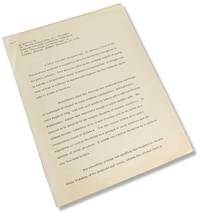
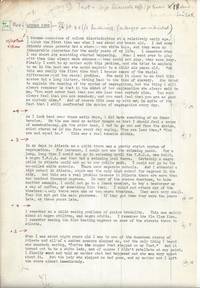
16360Martin Luther King Jr. King discusses color discrimination segregation equality police brutality Montgomery and his struggles in this pre-publication original typescript. Martin Luther King's interview with John Freeman was broadcast on 29 October 1961 in the BBC series 'Face to Face'. The present typescript of the interview is from the papers of the program's producer Hugh Burnett and is edited for publication as the section on 'The Rev LUTHER KING' in the book 'Face to Face Edited and introduced by Hugh Burnett' London: Jonathan Cape 1964. On two leaves stapled together. Published by Undated but prepared for publication in 1964. <br/><br/>In this remarkable typescript King talks about his mother's influence on King's beliefs: "I first became conscious of color discrimination at a very early age. I think the first time I was about six years old." King states relating how the white children next door never wanted to play. "Finally I went to my mother with this problem and she tried to explain to me in the best way she could explain to a child of six years old . She tried to explain to me the meaning of the system of segregation but the thing I will always remember is that in the midst of her explanation she always said to me "You must never feel that you are less than anybody else. You must always feel that you are somebody and you must always fee that you are as good as anybody else." King continues "On the one hand my mother taught me that should feel a sense of somebodiness on the other hand I had to go out and face the system which stared me in the face everyday saying "You are less than" "you are not equal to." King goes on "I remember as a child seeing problems of police brutality . in Montgomery Alabama we get no protection from law enforcement agencies." And yet King explains commitment to a moral ideal allows him to be courageous in the face of danger: I have been threatened many many times. There was a time that we received as many as thirty and forty threatening calls a day and of course I received numerous threatening letters .In Montgomery our home was bombed twice . We have had crosses burned on our lawn."<br/><br/>"I don't think anyone in a situation like this can go through it without confronting moments of real fear. But I have always had something that gave me an inner sense of assurance and an inner sense of security and in the final analysis even in moments of loneliness something ultimately came to remind me that in this struggle because it is basically right because it is a thrust forward to achieve something not just for negro people but something that will save the whole of mankind and when I have come to see these things I always felt a sense of cosmic companionship. So that the loneliness and the fear have faded because of a greater feeling of security because of commitment to a moral ideal. There have been times I have had to send my wife and family away for safety . my wife happens to be one of those very strong persons . I can remember a time when I sent her away for safety and a few days later she was back home because she wanted to be there." In fair condition lightly aged and worn. unknown books
196356230Philadelphia: American Friends Service Committee 1963. First Printing dated May 1963. 15pp. Just slightly rubbed and tanned with a light tiny crease to the edge of the rear else a near fine copy in publisher's stapled wraps Written by King while he was imprisoned in Birmingham Alabama the letter responds to a statement made by eight white clergymen who had criticized the civil rights protests and called for patience and calm. King argued that the protests were necessary for the civil rights movement and that the clergymen's call for patience was actually a call for inaction in the face of injustice. He also argued that the segregation laws in Birmingham were unjust and violated the principles of Christianity. <br/><br/> American Friends Service Committee paperback
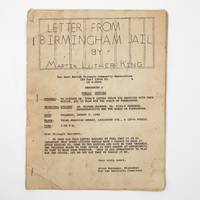
1963372454Harlem New York 1963. 14pp. duplicated typescript. 8vo. Stapled at gutter margin. 14pp. duplicated typescript. 8vo. Unrecorded printing of MLK's Letter from Birmingham Jail distributed by indefatigable community organizer and advocate Alice Wragg Kornegay 1932-1996 founder of the East Harlem Triangle Community Association. Kornegay produced this mimeographed version in preparation for an Association meeting to discuss the Letter three weeks before the March on Washington in August 1963. In her printed note on the first page she wrote "We send you this letter because we feel that it is so important that every citizen should have a chance to read it. After reading it come to the meeting and give up your thoughts. The Triangle plans to take action in this moment of opportunity. We want to hear from everyone. This is our opportunity to plan for the future let no one say that we passed it by."<br /> <br /> King's non-violent Birmingham campaign protesting racism and racial segregation in Birmingham began on April 3 1963. Arrested and jailed on Good Friday April 12 for violating an Alabama injunction against demonstrating that same day a group of white clergyman published a letter in a Birmingham newspaper denouncing King's campaign. King details the writing of his famous Letter from Birmingham Jail in his Why We Can't Wait: "Begun on the margins of the newspaper in which the statement by the white clergyman appeared while I was in jail the letter was continued on scraps of writing paper supplied by a friendly black trusty and concluded on a pad my attorneys were eventually permitted to leave me."<br /> <br /> "Without notes or research materials King drafted an impassioned defense of his use of nonviolent but direct actions. Over the course of the letter's 7000 words he turned the criticism back upon both the nation's religious leaders and more moderate-minded white Americans castigating them for sitting passively on the sidelines while King and others risked everything agitating for change. King drew inspiration for his words from a long line of religious and political philosophers quoting everyone from St. Augustine and Socrates to Thomas Jefferson and then-Chief Justice of the United States Earl Warren who had overseen the Supreme Court's landmark civil rights ruling in Brown v. Board of Education. For those including the Birmingham religious leaders who urged caution and remained convinced that time would solve the country's racial issues King reminded them of Warren's own words on the need for desegregation 'justice too long delayed is justice denied.' And for those who thought the Atlanta-based King had no right to interfere with issues in Alabama King argued in one of his most famous phrases that he could not sit 'idly by in Atlanta' because 'injustice anywhere is a threat to justice everywhere'" Barbara Maranzani "Behind Martin Luther King's Searing 'Letter from Birmingham Jail'" https://www.history.com/news/kings-letter-from-birmingham-jail-50-years-later.<br /> <br /> In early May mimeographed drafts of the letter were circulated to King's close associates and important community leaders and clergy extant in at least . After the New York Times chose not to publish the letter extensive excerpts were published from one of the mimeographed drafts without King's consent on May 19 1963 in the New York Post Sunday Magazine; other newspaper and magazine printings followed in June. Within days of the New York Post printing however the American Friends Service Committee received King's permission to publish 50000 copies in pamphlet form with an iconic wrapper title with jail bars in the background - the first separate printing of the Letter.<br /> <br /> A critical text of the Civil Rights movement in an unrecorded printing which speaks its immediate impact and use as a rally cry ahead of the March on Washington. Not recorded by the Martin Luther King Papers Project unknown
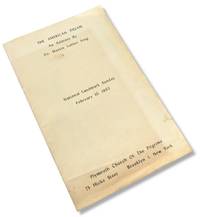
196365889Brooklyn: Plymouth Church of the Pilgrims 1963. 13pp. Offsetting to wraps some foxing throughout else a very good example. Provenance upon request. On February 10 1963 Dr. Martin Luther King Jr. came to Brooklyn Heights. He delivered an address at Plymouth Church that he called “The American Dream.†Dr. King worked on the piece and it evolved into his historic “I Have a Dream†speech delivered later that year on August 28 in Washington D.C.<br /> <br /> OCLC locates no examples. Plymouth Church of the Pilgrims unknown
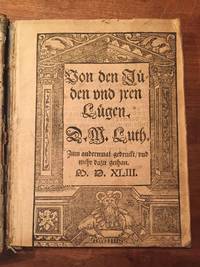
1543Boston2Von den Jüden und iren Lügen Zum andernmal Gedruckt vnd mehr dazu gethan.Wittemberg Lufft 1543. 128 pages. 18.5 cm. Bound in a 15th century leaf. 17th century inscription on the inside board. This is Panzer 3425.This work is printed in the same year as the first edition but enlarged as the title indicates. Title page lower margin cut. Else good. <br /> German religious reformer and founder of the Lutheranism movement Martin Luther grew increasingly hostile towards the Jews following their refusal to accept his religious reformations. <br /><br /> In the present work the most virulent of Luther's anti-Semitic attacks he subjects the Jews to a torrent of vile abuse. His practical suggestions range from forced labor to outright banishment: "First their synagogues should be set on fire and what ever does not burn up should be covered over with dirt so that no one may ever be ale to see a cinder or stone of it. Secondly their homes should likewise be broken down and destroyed.And this ought be done for the honour of God and of Christianity in order that God may see that we are Christians and that we have not wittingly tolerated or approved of such public lying cursing and blaspheming."<br /><br /> Due to Luther's vituperative anti-Jewish polemics the Lutheran church retained all the superstitious abhorrence of the Jews inherited from the medieval Catholic church.On Luther's conception of the Jews in this work see J. Trachtenberg The Devil and the Jews- The Medieval Conception of the Jew and its Relation to Modern Anti-Semitism 1983 p.183 et<br /><br /><br /><br /><br /><br />
168110510Wittenberg Christian Schrödtern 1681-1682. 3 volumes 52 1189 2378 columns 28 601 1202 columns 1 32 524 1048 columns 28 688 1376 columns 1 48 602 1204 columns 26 751 1502 columns 96 1 p. Blind-stamped Leather with 5 raised bands each board equipped with 5 brass studs Folio Facsimile Edition of the famous Bach Bible in 3 volumes all kept in a perfectly fitting wooden case decorated with gilt. The set contains a true and complete reprint of Bach's Bible being a German Bible with extensive commentaries by Abraham Calovius founded on the writings of Martin Luther. This is the first complete facsimile-edition of Bach's Bible published by the Dutch publisher Uitgeverij Van Wijnen after the original being preserved in Concordia Seminary Library St. Louis. Each volume contains Bach's handwritten monogram on the title page and the set contains a total of 348 additions by Bach. Among which many underlined passages -both in red and black ink- various corrections of typographical and grammatical errors but most importantly his comments in the margins. A unique glimpse into Bach's personal beliefs and how he understood his vocation. Wittenberg, Christian Schrödtern hardcover
LCS-1864037
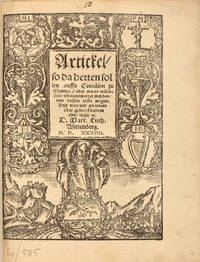
1538LCS-1864037<p><strong>The Smalkalde Articles written by Luther in 1536 in preparation for the Council of Mantua.</strong></p><p><strong>"<em>Schmalkaldic Articles</em></strong><em> <strong>are one of the confessions of faith of Lutheranism</strong></em><strong>".</strong></p><p>4to of 32 ll. Half-vellum flat spine brown morocco lettering piece. <em>20th century binding</em>.</p><p>191 x 151 mm.</p><p>Rare first edition of the "Articles of Smalkalde" written by Luther in 1536 and which offer a synthesis of his doctrine.</p><p>Graesse <em>Trésor de livres rares</em> 306.</p><p>Luther's attacks on the papacy were repeated and virulent. In 1535 Pope Paul III wearily proposed convening a council. The Protestants of the Smalkalde League meeting in assembly nevertheless made demands to take part. The council was convened in Mantua for May 1537. Immediately Luther compounded what would later be known as the Smalkalde articles in which he exhibited the essential points of his doctrine. The Council was postponed and did not take place until 1545 in the city of Trent.</p><p>" In 1534 Alessandro Farnese was elected as Pope Paul III with a clear message of internal church reform. To further this mission and to respond to the rise of Protestantism he called for an ecumenical church council to meet at the Italian city of Mantua in 1537. Given the importance of this council for Christian unity and the future of reformed forms of worship the elector of Saxony asked Luther to prepare an official statement of doctrine that would both represent his views and indicate where negociation might be possible. Luther agreed and with some imput from his Wittenberg colleagues carefully laid out what he saw as the central pillars of Christian teaching. Yet these doctrinal statements or articles were never presented at the council which was delayed a number of times finally meeting in Trent beginning in 1545. Instead they were discussed at a general meeting of the Protestant Schmalkaldic League although even here the collected princes and theologians declined to affirm them due mostly to concerns that they were too exclusionary and divisive especially the statements on the Eucharist and papacy. Luther then published the articles in 1538 adding a preface but leaving their structure and content otherwise intact. As these articles offered a clear and comprehensive summary of Luther's doctrine they would be extremely important as a Lutheran confession of faith and in 1580 would be incorporated into the authoritative collection of fundamental Lutheran documents known as the 'Book of Concord'" The Essential Luther 23.</p><p><strong>"Schmalkaldic Articles</strong> are one of the confessions of faith of Lutheranism written by Martin Luther in 1536. The articles were prepared as the result of a bull issued by Pope Paul III calling for a general council of the Roman Catholic Church to deal with the Reformation movement. The council was actually postponed several times until it met in Trent in 1545. John Frederick I Lutheran elector of Saxony wished to determine what issues could be negotiated with the Roman Catholics and what could not be compromised. He asked Luther to review earlier statements of faith by the reformers to determine what was absolutely essential to the faith. After Luther prepared the articles he invited several reformers to Wittenberg to discuss them and after some minor changes eight theologians signed them. They were then sent to the elector in January 1537.</p><p>In February 1537 the Protestant secular heads of state who were members of the Schmalkaldic League met with several theologians at Schmalkalden to decide how to deal with a council of the Roman Catholic Church. Luther became ill and could not attend but John Frederick I presented Luther's articles to the gathering. Because of Luther's somewhat controversial doctrine of the Lord's Supper Philipp Melanchthon urged that the Augsburg Confession and its Apology previously presented to Emperor Charles V adequately presented the reformer's faith and that additional statements should not be added. This decision was adopted and the Schmalkaldic Articles were not officially accepted. They were however circulated and read and 44 theologians signed them as an expression of their personal faith. Subsequently they were included in the <em>Book of Concord</em> 1580.</p><p>The Schmalkaldic Articles are divided into three sections. The first discusses the unity of God the Trinity the Incarnation and Christ and on these subjects Luther believed there was no real controversy between Roman Catholics and Protestants. The second section dealt with Christ and justification by faith. According to Luther "<em>On this article rests all that we teach and practice against the pope the devil and the world.</em>" This section also discusses the mass monastic orders and the papacy. The third section discusses 15 articles that could be considered by Roman Catholics and Protestants. It includes such subjects as sin the Law repentance the sacraments confession the ministry and a definition of the church".</p><p>FRANCAIS</p><p><strong>Les articles de Smalkalde rédigés par Luther en 1536 en vue du concile de Mantoue.</strong></p><p>In-4 de 32 ff. Demi-vélin dos lisse pièce de titre de maroquin brun en long. <em>Reliure du XXe siècle</em>.</p><p>191 x 151 mm.</p><p>Rare édition originale des " articles de Smalkalde " rédigés par Luther en 1536 et qui offrent une synthèse de sa doctrine.</p><p>Graesse <em>Trésor de livres rares</em> 306.</p><p>Les attaques de Luther contre la papauté sont réitérés et virulents. En 1535 de guerre lasse le pape Paul III propose de réunir un concile. Les protestants de la ligue de Smalkalde réunis en assemblée posent quand même des exigences pour y participer. Ce concile est convoqué à Mantoue pour le mois de mai 1537. Aussitôt Luther compose ce qu'on dénommera plus tard les articles de Smalkalde où il expose les points essentiels de sa doctrine. Le concile sera reporté et n'aura lieu qu'en 1545 dans la ville de Trente.</p> H. Lufft
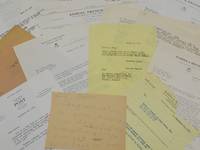
19681409452171968. Very Good. An archive of fourteen documents of various sizes mostly pertaining to the publication of Martin Luther King Jr.'s Stride Toward Fredom which was published September 17 1958 several documents regarding the State of Alabama's audit of King and one document pertaining to "Strength to Love". Very Good overall. One document Remittance Advice December 23 1953 with a 1"x3 area of loss from the publisher's letterhead. <br /> <p>Stride Toward Freedom is King's historic account of the 1955-1956 Montgomery bus boycott. The book describes the conditions of African Americans living in Alabama during the era and chronicles the events and participants' planning and thoughts about the boycott and its aftermath. The boycott sparked Rosa Parks' refusal to give up her seat to a white rider and catapulted King to the prominent leadership position of the civil rights movement.<br /> <p>Shortly after the end of the boycott King hired two literary agents Marie F. Rodell and Joan Daves of the first Marie Rodell and Joan Daves Inc. Rodell and Daves would soon sign a contract with Harper & Brothers for King to write his memoir or the Montgomery Bus Boycott with a working title of A Moment in History. The book would be published under the title Stride Toward Freedom. <br /> <p>The archive contains:<p>-A carbon copy of the 'Remittance Advice' from Harper Brothers to Rodell and Daves in the amount of $2000 payable on signing. This was an advance against all monies accruing under the terms of the contract signed October 17 1957 forA Moment in History; this is dated December 23 1957.<br /> <p>-A typed letter signed by Eugene Exman of Harper & Harper and Brothers to Marie Rodell dated May 21 1958 regarding the first carbon of the "edited" first chapter.<br /> <p>-A typed letter signed by Frank Elliot of Harper & Brothers to Joan Daves dated May 21 1958 in regarding the selection and clearance of photographs to be used in Stride Toward Freedom. Elliot concludes the letter by stating that Daves should be receiving galley proofs of the book next Monday. Elliot was an editor for the Religious Books Department at Harper & Brothers.<br /> <p>-A Photostat copy of a contract dated May 22 1958 from Frank Elliot at Harper & Brothers to Jay Leviton for the rights to use one of Leviton's photographs in the publication of Stride Toward Freedom. Leviton was paid $50 for use of his image.<br /> <p>-A typed letter unsigned dated June 9 1958 from Frank Elliot to Joan Daves reguarding the final revision of the last chapter and when page proofs could be expected. The letter includes several manuscript notes in an unknown hand.<br /> <p>-A small handwritten note from Rodell and Daves used to write text for a congratulatory text to King on the publication of the book care of the Statler Hotel. "Congratulations on your publication day & yours marathon radio & TV performances We'll have to see you tomorrow or Friday Joan & Marie" followed by "Sent 9/17/58 3:10 pm". Three days following this King was stabbed with a letter opener at a book signing; it was then from his hospital bed he confirmed his belief in the "redemptive power of nonviolence."<br /> <p>-A typed unsigned letter dated June 19 1959 from the Editorial Dept. at Samuel French to Marie Rodell rejecting the dramatization rights for Stride Toward Freedom as they feared there would not be much of a market for it among the amateur producing groups. <br /> <p>-A two-page-typed contract dated August 14 1965 for the Japanese rights to Stride Toward Freedom. with Kinseido Ltd. Signed by the publisher only likely Joan Daves' retained copy. Staple no longer holding at top corner.<br /> <p>-A carbon copy of a typed unsigned letter sent to Martin Luther King dated April 13 1960 from Dolores Gentile of Marie Rodell and Joan Daves Inc. This was the cover letter for a carbon copy of the Marie Rodell and Joan Daves Inc.'s report of King's 1958 earnings for Stride Toward Freedom to the State of Alabama. <br /> <p>-A photostat on State of Alabama letterhead dated January 4 1960 with signatures from Martin Luther King Jr. and his wife Coretta S. King addressed to "All Banks and Banking Institutions" giving them authority to allow Lloyd D. Hale Agent State Department of Revenue Income Tax Division to inspect all the King's records in their possession.<br /> <p>-A typed letter signed by Lloyd D. Hale on State of Alabama letterhead dated April 12 1960 addressed to Marie S. Rodell and Joan Dandes Inc. requesting King's literary agency's records of the date and net amount received by King for the years 1956 1957 and 1958. The letter references the authorization from the Kings noted above as an attachment.<br /> <p>-A typed unsigned letter dated April 19 1960 from Joan Daves to Lloyd D. Hale outlining a report of payments made to King. The general consensus was that the State's audit was largely a sham in an effort to legally prosecute MLK and defeat the civil rights movement.<br /> <p>-A typed letter signed by E. N. Brandt of The Saturday Evening Post dated December 22 1960 written to Marie Rodell stating that Martin Luther King declined to write a piece entitled "Is It Moral To Break An Unjust Law" King used this theme extemsively in his Letter From a Birmingham Jail in 1963.<br /> <p>-A retained contract for Strength to Love for British publisher Hodder and Stoughton Limited dated August 1th 1968 signed by the publisher. unknown
1963118239Boston: The Beacon Press 1963. First edition of this collection of interviews done by Kenneth B. Clark. Octavo original half cloth. Boldly signed by James Baldwin on the half-title page. Near fine in a near fine dust jacket. With a talk with Kenneth B. Clark and with a note about the interviews by Henry Morgenthau III. Bookplate. Interviews recorded for National Educational Television in May-June 1963. Conversations with James Baldwin Malcolm X and Martin Luther King with Kenneth B. Clark as the moderator. The Beacon Press hardcover books