53 304 résultats
105306 numéros (dont un double, le n° 5-6) ont paru en 5 livraisons, de mars 1924 à mars 1925. (Destribats, 219) // Collection complète, du n° 1 (mars 1924) au n° 5-6 (mars 1925). 1/12 sur pur fil. [1 japon / 1 hollande / 1 madagascar / 12 pur fil]. Tous les numéros de notre collection portent le n° 4. Sont jointes : la tables des articles parus dans les numéros de la première (et seule) année, et un bulletin d'abonnement. Très rare collection complète sur grand papier. En très bon état.
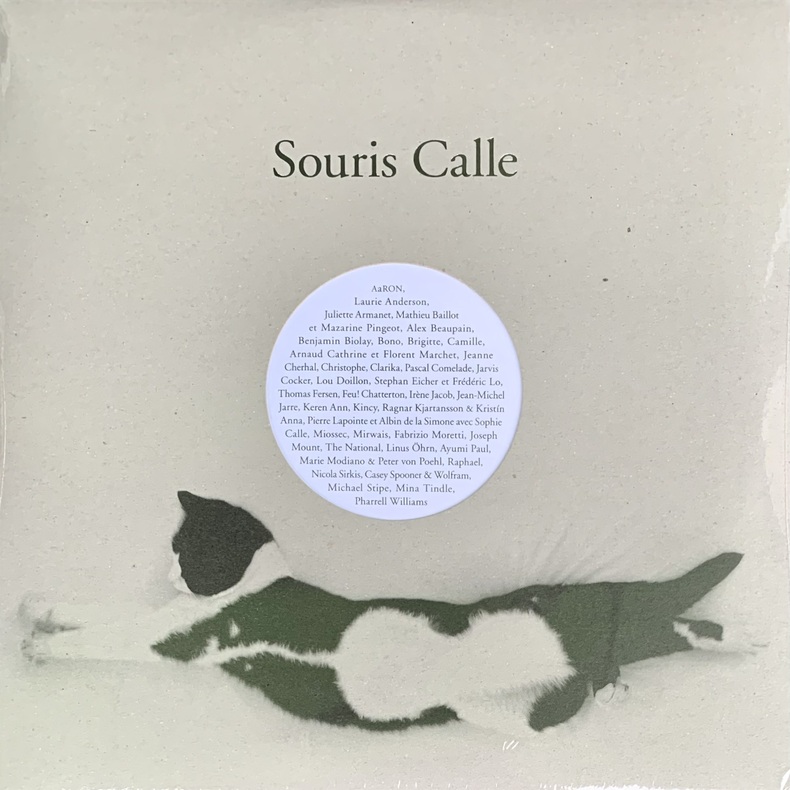
awd-1071Paris, Perrotin, 2018. Picture disc vinyle 45 t. à l’effigie du chat de l’artiste en étirement et dans son linceul († 2014), contenant une chanson et un texte parlé. Présenté dans un cadre vitré en bois sur fond amovible. Tirage à 100 ex. numérotés et signés.
H854Weimar Landes-Industrie-Comptoirs 1815. 8vo. VI 210 S. mit 1 gefalteten Karte: "Charte der zwischen Schiraz und Constantinopel gelegenen L‰nder.im Jahr 1801 verzeichnet sind." Leinenband der Zeit leicht stockfleckig in gutem Zustand. James Morier 1782-1849 britischer Orient-Reisender. Er war Sekret‰r der britischen Gesandtschaft in Persien. Im Mai 1809 verliefl er Teheran um seinen R¸ckweg nach Europa ¸ber Armenien und Klein-Asien zu nehmen. "Dieser Teil der Reise wurde geographisch der wichtigste da M. das so k¸mmerlich bekannte Gebiet zwischen T‰bris und Erzerum mit einigem Licht versah." Henze. Auch hat er als Erster die Architektur der Kˆnigsgr‰ber von Amasia Beachtung geschenkt. - Henze III 538; Howgego II M57. unknown
37378Paris René Girard, Editeur 1927 in 4 (29x22,5) 1 volume in 4 reliure demi chagrin maroquiné brique à coins, dos lisse, couverture conservée, portrait de Max Jacob par Kisling en frontispice, 58 pages [1], avec et 9 dessins hors-texte de Max Jacob. Edition originale. Tirage limité à 525 exemplaires, celui-ci un 475 exemplaires numérotés sur Vélin d'Arches à la forme. Ex-libris du peintre Marcel Parturier. Cet exemplaire est enrichi d'un beau dessin original à la plume à pleine page signé et accompagné d'une belle dédicace de Max Jacob à son ami Marcel Parturier. Bel exemplaire ( Photographies sur demande / We can send pictures of this book on simple request )
173565511London W. Lewis 1735. First Edition. Hardback. Full contemporary aniline calf professionally and sympathetically re-backed. Raised bands with a dark morocco gilt-blocked label. Board edges only very slightly rubbed. An exceptional copy - scans and additional bibliographic detail on request. ; 461 pages; Description: 8 p. L. 461 p. 1 l. 21 cm. Notes: Signatures: A-Z8; Aa-Gg8. Form/Genre: Tragedies. Subjects; Literature--English--18th Century. Literature--Early Works to 1800. London, W. Lewis hardcover
3508606Short description: In Russian. Tschudi, Johann Jacob. Travels to South America. St. Petersburg: M. O. Wolf, 1867. You are welcome to reach out to us for a detailed description of the copies currently available. Delivery of this book may take longer than usual including extended processing and pre-shipping time, no expedited shipping is available. Please advise us if you have a set date or a deadline to receive your order.SKU3508606
3508606Short description: In Russian. Tschudi Johann Jacob. Travels to South America. St. Petersburg: M. O. Wolf 1867. The image is provided for reference only. It may reflect condition of one of the available copies or only help in identifying the edition. Please feel free to contact us for a detailed description of the copies available. SKU3508606 unknown
19360001914EUSKIRCHEN GERMANY. Good. 1936. On offer is a superb 1936 manuscript relic titled 'Fahrt: Lieder und Bilder' being one German soldier's patriotic paean to forgotten German wars and heroic songs. Handwritten by Jacob Winkel in Euskirchen Germany the soldier presents a very historical German perception of war and the songs of conquerors. This soldier had a passion for the very historical Lion of Brabant which has a history dating back to the 11th century. This may also be a clue to his background as in WWII the Brabant Lion was associated moreso with the Flemish Lion which is understandable as many Belgium produced many troops and even SS soldiers for Germany. They were incredibly anti-communist so most went to serve at the Russian Front. There are more contemporary and lost songs all in the context of the upcoming World War II. The notebook has 26 well filled pages and is illustrated by hand with historical notes which include the drawing of the sword and the harp with the words Platoff refers to Count Platoff general in chief; Hetman of the Don Cossacks refers to Matvei Platov who was the leader of the Don Cossacks and a feared commander of cavalry. Platov's tactics became famous in the 1812 French invasion of Russia when his men lived off the land and constantly harried the much stronger French forces. Using the harsh Russian winter to its best advantage Platov continually punished the beleaguered French infantry on its retreat from Moscow. There is a real photo postcard tucked in the notebook which we can assume was the author himself. A note on the back which we cannot translate may confirm. Overall the 7½ x 5 inch book is G.; Manuscript; 12mo - over 6¾" - 7¾" tall; KEYWORDS: HISTORY OF JACOB WINKEL EUSKIRCHEN GERMAN GERMANY GERMANIC PATRIOTIC SONGS HEROIC SONGS BRABANT LION PRE WORLD WAR II WWII WW1 FAHRT: LIEDER UND BILDER HANDWRITTEN MANUSCRIPT AUTOGRAPHED AUTHORS MANUSCRIPT DOCUMENT LETTER AUTOGRAPH KEEPSAKE WRITER HAND WRITTEN DOCUMENTS SIGNED LETTERS MANUSCRIPTS HISTORICAL HOLOGRAPH WRITERS AUTOGRAPHS PERSONAL MEMOIR MEMORIAL PERSONAL HISTORY ARCHIVE DIARY DIARIES antiquité contrat vélin document manuscrit papier Antike Brief Pergament Dokument Manuskript Papier oggetto d'antiquariato atto velina documento manoscritto carta antigüedad hecho vitela documento manuscrito Papel . unknown
1996620541996. Arch. Europ. Lexikographie Abt. 3: Geschichte der Medizin; 20. - Erlangen Harlad Fischer Verlag 1996. 17903 pp. und 40 Tafeln auf 179 Mikrofisches. Silber negativ. Die Gesamtedition enthält die folgenden auch einzeln lieferbaren Ausgaben: Bibliotheca medico-practica. 4 Bde. Genf 1695 - 1698. 4.397 Seiten auf 46 Mikrofiches Bibliotheca anatomica. 2. Auflage 2 Bde. Genf 1699. 2.418 Seiten auf 26 Mikrofiches Bibliotheca chemica curiosa. 2 Bde. Genf 1702. 1.852 Seiten und 40 Tafeln auf 20 Bibliotheca pharmaceutico-medica. 2 Bde. Köln 1703. 2.215 Seiten auf 24 Mikrofiches Bibliotheca chirurgica. 4 Bde. Genf 1721. 2.483 Seiten auf 28 Mikrofiches Bibliotheca scriptorum medicorum veterum et recentiorum. 4 Teile in 2 Bde. Genf 1731. 2.686 Seiten auf 29 Mikrofiches. "Il compilait compilait compilait!" "Unter diesen fiktiven aber durchaus treffenden Leitsatz stellte ein Kritiker des 19. Jahrhunderts rückblickend das Lebenswerk des Genfer Arztes Jean-Jacques Manget. Tatsächlich eröffnen die "Bibliothecae" Mangets bereits von ihrem Umfang her eine ganz neue Dimension in der Geschichte der medizinischen Lexikographie. In 18 großformatigen und teilweise mehr als tausend Seiten umfassenden Bänden wurde hier dem Leser ein umfassender Überblick über das medizinische Wissen der Zeit vermittelt unter Einschluß der "Hilfswissenschaften" Anatomie Al- Chemie Pharmazie und medizinische Bücherkunde. Neu und auch für die Geschichte der medizinischen Lexikographie in der Folgezeit einzigartig ist zugleich die kompilatorische Anlage des Werks. Manget bemühte sich nicht wie dies später bei Enzyklopädien dieses Umfangs üblich und notwendig war um die Mitarbeit von Kollegen sondern bezeichnete seine "Bibliothecae" stolz als sein eigenes Werk; lediglich für die "Bibliotheca anatomica" von 1685 firmiert Daniel Le Clerc als Mitverfasser. Um sein umfangreiches lexikographisches Unternehmen bewältigen zu können entschloß sich Manget zu einem anderen Verfahren: seine Mitautoren waren fast alle bereits tot und die Beiträge die er in seine "Bibliothecae" aufnahm waren weitestgehend für andere Zwecke verfaßt worden selbst wenn sie von lebenden Zeitgenossen stammten die diese bloß zum Abdruck zur Verfügung stellten. Nur sehr begrenzt gelangte auch bisher unveröffentlichtes Material zum Abdruck vereinzelt Manuskripte von Kollegen und aus der Feder Mangets einleitende oder Textauszüge überbrückende Passagen sowie Beiträge die er selbst zu manchen Gegenständen verfaßte. Die große Masse des Textes aber bilden oft recht ausgedehnte Ausschnitte und zuweilen sogar vollständige Abhandlungen anderer insbesondere früherer Autoren die Manget in geeigneter Weise zusammenstellte. Entscheidende logistische Grundlage für diese Kompilationen war die recht ausgedehnte Sammlung medizinischer Werke an deren Aufbau sich Manget als erfolgreicher und entsprechend wohlhabender praktischer Arzt in Genf recht intensiv bemühte; allein der "Bibliotheca anatomica" lagen rund 80 verschiedene anatomische Traktate zu Grunde. In der heutigen Situation müßte Mangets Vorgehen selbstverständlich als ziemlich absurd erscheinen und Ähnliches hätte schon für das ausgehende 18. Jahrhundert gegolten: angesichts des immer stärker beschleunigten Zuwachses an medizinischen Erkenntnissen und Erfahrungen wäre eine derart verfaßte medizinische Enzyklopädie bereits bei ihrem Erscheinen hoffnungslos veraltet und unbrauchbar. In der Zeit um 1700 aber hatte ein solches Werk durchaus auch seine wissenschaftliche Berechtigung. Medizinisches Wissen war damals noch weit überwiegend Buchwissen und stützte sich auf das Gewicht einer jahrhundertealten Tradition. Wenn auch allmählich an einzelnen Orten eine praktische klinische Ausbildung das Medizinstudium zu ergänzen begann so gründete ärztliches Handeln und der wissenschaftliche Anspruch der Medizin doch weiterhin vor allem in der eingehenden Kenntnis der medizinischen Literatur - daher auch die Bedeutung der medizinischen Bücherkunde. Mangets eigener Lebensweg veranschaulicht dies sogar in besonders plastischer Weise hatte er doch zunächst auf Wunsch seiner Eltern Theologie studiert sich anschließend sein medizinisches Wissen ausschließlich im Selbststudium aus Büchern erworben und ohne ordentliches Studium auf der Grundlage dieses Selbststudiums 1678 in Valence die medizinische Doktorwürde erlangt. Lediglich Anatomie und Physiologie bildeten in Hinsicht auf diese geringe Innovationsgeschwindigkeit eine gewisse Ausnahme denn hier hatte gerade das 17. Jahrhundert zahlreiche neue Entdeckungen gebracht. Folgerichtig führt Mangets und Le Clercs "Bibliotheca anatomica" hier fast aus- schließlich Werke der jüngeren und jüngsten Zeit an. Auf die anerkannte Brauchbarkeit und Nützlichkeit von Mangets "Bibliothecae" für den gelehrten Arzt des ausgehenden 17. und frühen 18. Jahrhunderts verweist im übrigen nicht zuletzt der offenbar beachtliche Verkaufserfolg den die einzelnen Teile des Werkes trotz des großen Umfangs und des damit zwangsläufig einhergehenden hohen Preises erzielten. Die "Bibliotheca anatomica" die "Bibliotheca medico-practica" und die "Bibliotheca pharmaceutico-medica" erschienen jeweils in zwei Auflagen oder Ausgaben. Von der "Bibliotheca anatomica" ist zudem eine englischsprachige gekürzte Fassung in drei Bänden aus dem Jahr 1711 überliefert und von der "Bibliotheca chemica curiosa" ein deutschsprachiger Auszug von C. Horlacher aus dem Jahr 1707. Nur bei den beiden letzten Werken der "Bibliotheca chirurgica" und der "Bibliotheca scriptorum medicorum" blieb es also bei einer einzigen Auflage. Inwieweit Manget von vornherein plante die gesamte Medizin im Rahmen einer - wie er später wörtlich formulierte - "Encyclopaedia medica integra" zu behandeln ist rückblickend nicht mehr mit Sicherheit zu klären. Es fällt auf daß die "Bibliotheca anatomica" von 1685 noch nicht der lexikatypischen alphabetischen Anordnung folgt sondern vielmehr eher im Sinne eines anatomischen Lehrbuchs nach dem Vorbild der älteren anatomischen Literatur den menschlichen Körper von Kopf bis Fuß behandelt; und auch die "Bibliotheca chemica curiosa" von 1702 verzichtet auf eine Angleichung an die in den anderen Werken benutzte "forma Dictionarium" wofür allerdings ein alphabetischer Index entschädigt. Beide Werke bilden also insofern einen gewissen Fremdkörper im Gesamtkonzept dieses Archivs wurden aber aus Gründen der Vollständigkeit und weil auch Manget sie als Teil seiner Gesamtenzyklopädie begriff und auf sie zurückverwies mitreproduziert. Für den historisch interessierten heutigen Leser und Benutzer erweisen sich Mangets Bibliothecae in mehrerlei Hinsicht als nützliches Hilfsmittel. Obschon viele Schriften die hier von Manget zusammengestellt wurden zumindest schon etwas älteren Datums waren spiegeln sie doch in der Regel das autoritative medizinische Wissen um 1700 wenn auch mit gewissen Widersprüchen im Detail als Ausdruck eines wachsenden medizinischen Pluralismus. So bieten die Bände in ihrer Gesamtheit ein einmalig umfassendes und getreues Abbild der zeitgenössischen Medizin und zwar dank zahlreicher Fallgeschichten und konkreter Handlungsanweisungen durchaus auch in praktischer Hinsicht. Gleichzeitig findet der Leser in oft sehr ausführlichen Auszügen wenn nicht gar vollständig abgedruckt in einer verhältnismäßig handlichen Zusammenstellung und in klarer thematischer Anordnung zahlreiche Traktate der abendländischen medizinischen Literatur aus der Zeit vor 1700. Manche davon zählen heute wie W. Harveys "Exercitatio de motu sanguinis" zu den Klassikern der medizinischen Literatur und sind in diversen Ausgaben leicht erhältlich. Andere von Manget herangezogene Werke aber von bekannten und weniger bekannten Autoren verfaßt sind heute vielerorts wenn überhaupt nur unter großen Schwierigkeiten zugänglich. Gewiß wird zumindest der professionelle Historiker nach Möglichkeit stets das Original vorziehen oder Mangets Extrakte zumindest anhand des Originals kontrollieren wollen. Doch selbst ihm erleichtern Mangets Kompilationen auf jeden Fall den thematischen Zugriff auch auf seltenere Werke erlauben eine erste und durchaus ins Detail gehende Orientierung über deren Inhalte und werden im Falle vieler weniger verbreiteter Werke die Suche nach geeigneten Quellen erheblich erleichtern. Die vier Bände der "Bibliotheca seriptorum medicorum vetorum et recentiorum" schließlich erscheinen wenn auch damals durchaus als praktisches Hilfsmittel für den wissenschaftlich gebildeten tätigen Arzt konzipiert nach heutigem Verständnis ohnehin von vornherein als historiographisches Instrument. Mit gut 4.000 Einträgen handelt es sich um die erste umfassende Bio-Bibliographie der führenden insbesondere literarisch hervorgetretenen Ärzte der abendländischen Medizingeschichte. Auch zahlreiche heute kaum mehr vertraute Namen finden sich hier verzeichnet und das Werk kann heute noch als wichtiger Fundbehelf bei der Identifizierung unbekannter Autoren Werke und Auflagen dienen. Daß in diesem Pionierwerk wie spätere Kritiker wiederholt anmahnten so manche Eintragung noch lücken- oder fehlerhaft war muß dabei freilich - darauf sei hier noch warnend hingewiesen - in Kauf genommen werden." Michael Stollberg unknown
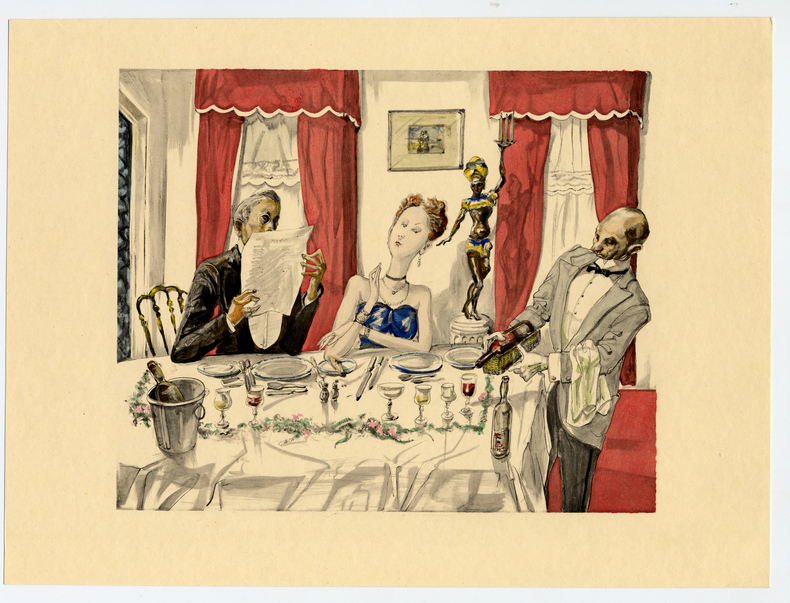
19521387Paris, Bernard Klein éditeur,1952. In-folio,en feuilles, 200 pages, couverture illustrée en couleurs, étui-chemise de l'éditeur. Édition originale et premier tirage des illustrations de Jacques Villon, Raoul DUFY (2), SEGONZAC (3), Max JACOB (2), André DERAIN (2), Jean COCTEAU, Gen Paul (2), FOUJITA, KISLING (2), UTRILLO (2), VLAMINCK, mises en couleurs par Daniel Jacomet. Avec des textes de Textes de Duhamel, Jacob, Vitrac, Ponchon, Derème, Louis Juvet, Colette, Mac Orlan, Héron de Villefosse, Fleuret, Fombeure et Valéry et une partition de Honegger. Ex. sur papier du Japon nacré non numéroté, enrichi d'une suite sur papier de Chine, d'une SUITE EN NOIR et une SUITE EN COULEURS sur papier d'Arches, 4 épreuves sur papier du Japon et une gravure aquarellée par Jacques Villon et signée au premier plat de couverture. Véritable édition originale et premier tirage des illustrations et gravures rehaussées aux pochoirs.
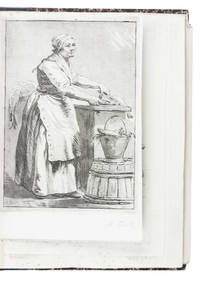
18181418Rotterdam 1818. 4to or cut down folio. J. Immerzeel Mid-19th-century half maroon sheepskin chemical-marbled sides shell-marbled endpapers manuscript spine label. A series of 32 of 33 numbered full-page aquatint and stipple-engraved costume and profession prints engraved by Matthias de Sallieth after drawings made ca. 1790 by Perkois and Prins including folk musicians with their instruments. Lacking plate 5 which has been replaced by an aquatint of a woman cleaning fish by Hermanus Fock with his name in pencil at the foot. With 2 extra prints loosely inserted: colour-printed versions inked a la poupée of plates 20 and 25. 33 engr. ll. An aquatint and stipple-engraved print series of costumes and professions. They were drawn by Perkois 1756-1804 and Prins 1757-1806 ca. 1790 and engraved by Sallieth 1749-1791 as models for young artists to follow. The 1818 publication indicates that they had previously been issued individually but never before collected for publication in book form. The two loosely inserted prints have the exposed skin of the faces necks arms and hands printed in a soft shade of red with the rest in black inked a la poupée. With a tear in one plate not affecting the image repaired with tape 3 plates foxed and a few others with minor foxing but still in very good condition.l Cat. Kunsthist. Bibl. Rijksmuseum Amsterdam II p. 777; Colas 2311; Landwehr Colour plates 389; Lipperheide Gb 46 note. ABE CAT Art History ABE CAT Costumes & Uniforms unknown
1917113288London: Constable & Co Ltd 1917. Signed by the illustrator Signed limited edition number 506 of 525 copies signed by Rackham. "Here is an ideal conjunction of author and artist - the fairy and folk tales of the Brothers Grimm could not have a more fitting illustrator than Arthur Rackham nor he more suitable authors to illustrate" The Bookman. Large quarto. Mounted colour frontispiece and 12 other plates 43 black and white illustrations within the text. Original light grey cloth spine lettered in gilt pictorial gilt titles on a white ground to front board pictorial endpapers white silk bookmark top edge gilt others untrimmed. Extremities slightly rubbed a few marks to cloth front joint tender rear joint cracked but holding endpapers lightly tanned and with a couple of light dampstains light offsetting from plates. A very good copy. Latimore & Haskell p. 46. hardcover
172645427Leipzig: Christoph Zunkel for the author 1726. Hardcover. Very Good. Theatrum Pontificiale Oder Schau-Platz der Brucken und Brucken-Baues : das ist: Eine deutliche Anweisung Wie man nicht nur auf mancherley Arth uber Graeben Baeche und Fluesse gelangen auch so gar in Wassers-Noth mit gewissen Machinen und besondern Habit sein Leben retten kan ferner nach aller Begebenheit und Zufaellen bequeme und bestaendige Bruecken so wohl hoeltzerne auf Jochen oder steinern Pfeilen als ohne dieselben mit Heng- und Spreng-Wercken ingleichen gantz steinerne nach der Kunst mit Vortheil und Bestand zu erbauen : dan nauch wie vielerlen Urthen von Fahren Fliegenden Sturm-Feld und vergleichen Bruden anqugeben; Alles mit vielen Srempeln und denen vornehmsten Bruchten in und ausser Deutschlandes absonderlich aber Mit einer vollkommenen Beschreibung derer Pontons vorgestellet und in 60. Kupffer-Platten erlautert. First edition of the 6th book in his Theatrum Machinarum Series. Folio 10" x 15.25". Published as an independent work however after his death became Vol. VI of his works 10 vols total. Paper backed boards unlettered spine. Speckled edges. Rubricated title. 16 153 pp. 5 60 numbered copper plates I-LVII with IIA XVIA XLA. Woodcut initials head- and tailpieces. Plate XXII depicts the London Bridge. First three plates are picturesque images of equipment needed for working in and on the river. Wear to extremities rubbing and foxing to boards. Small chip to fore edge of p. 76. Small perforations and some staining to gutter of plates LVI and LVII illustration not affected. Ink smudges to top margin of pp. 100-101 text not affected. Some offsetting from text throughout otherwise remarkably clean with little foxing. Bookplate of Mark Edward Andrews loosely inserted. Jacob Leupold 1674-1727 was a German physicist mathematician instrument maker and engineer who was credited as an early inventor of the air pump. Leupold started his work on the Theatrum Machinarum in 1720 which was the first systematic analysis of mechanical engineering. This volume deals with bridge construction and was the first book on bridge building published in Germany. The first major treatise on bridge building was by French engineer Hubert Gautier Traité des Ponts 1716 which was the standard book for bridge building for 70 years Britannica. Leupold builds on this work with a more comprehensive treatment including increased explanation of long-span timber bridges. Christoph Zunkel, for the author hardcover
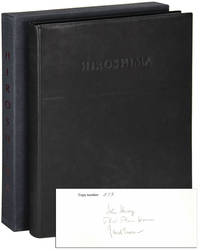
323989New York: The Limited Editions Club 1983. Edition limited to 1500 numbered copies signed by Hersey Warren and Lawrence. With 8 color silk-screens by Jacob Lawrence. 1 vols. Folio. Full black aniline calf lettered in blind. Fine in black silk over boards slipcase. Lawrence Jacob. Edition limited to 1500 numbered copies signed by Hersey Warren and Lawrence. With 8 color silk-screens by Jacob Lawrence. 1 vols. Folio. Printed at the Wild Carrot Letterpress with the silkscreens printed at Studio Heinrici Ltd. The Limited Editions Club unknown
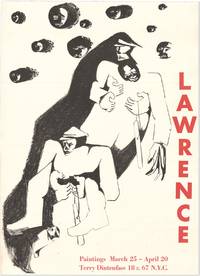
196382862New York: Terry Dintenfass 1963. First Edition. Original lithographed poster with text and illustrations printed in dark red and black on thick cream laid paper measuring 48cm x 66.25cm 18 7/8" x 26 1/8". Mild handling a few faint creases from being rolled with a half-dozen foxed spots; unbacked; Near Fine.<br /> <br /> A striking poster by Lawrence designed to promote his first solo exhibition at Terry Dintenfass Inc. in New York. The illustration was derived from Lawrence's 1963 tempera painting "Two Rebels" "showing four white policemen carrying two black men. The heads of some fifteen witnesses crowd in. In the poster that number was reduced to ten heads that float like moons of light above a protester and his police handlers with their billy clubs dangling from their wrists" Over the Line: The Art and Life of Jacob Lawrence pp.174-175. Paintings like "Two Rebels" "Soldiers and Students" and "Four Students" were almost certainly triggered by news photos and television images of the immediate events of 1960-62 in the South. The poster is not separately listed in OCLC though a signed and numbered lithograph of the image edition of 50 is held at the LC. 82862. Terry Dintenfass unknown
1847M12984Philadelphia:: American Medical Association 1847/8. 1847. Offprint. Series: Transactions of the American Medical Association. Sm. 8vo. 18 pp. Contemporary plain brown wrappers probably as issued; extracted from a bound volume thus a remnant residue affecting spine. Front cover library withdrawal rubber stamp possibly: "Concord Free Public Library". Very good. First SEPARATE OF BIGELOW ON ANESTHESIA the journal form has an entirely different pagination being pages 197-214 in the 1847 issue. We believe this is the original offprint form of this paper by Bigelow. There are several clear differences between this offprint form and the journal issue is 1 the pagination for the offprint is 1-18 for the journal it is 197-214 and 2 the journal issue has "C.-1. at the head of the paper and foot of the page has no page number – whereas the offprint form adds the line "Extracted. . . raises the title text higher on the page and includes a page number "1" at the bottom left margin. There is no known textual difference. <br /><br /> "The committee considered in detail the various anesthetic agents. According to the report some surgeons were afraid to use anesthesia in their surgical operations feeling that the advantages afforded by the relief of pain might be offset by the risks involved. However even at this early date authors of this report felt that a large group of surgeons were wholly in favor of anesthesia. The authors did however admit that some surgeons would restrict the use of these agents to severe operations after the introduction of ether anesthesia in Boston it was not until several months later that the method became generally popular in other communities in the United States. The favorable reports of its use in Boston and in Europe made for the more extensive use in American communities in 1847 and 1848. The dangers of etherization were also considered. In some cases it was thought that convulsions prolonged stupor intense cerebral excitement alarming depression of the vital powers and asphyxia apparently were caused by the inhalation of ether and chloroform. Secondary effects attributed to inhalation in a few cases were bronchitis pneumonia and inflammation of the brain. Interestingly enough according to this report p. 190 ether was considered to be a safer drug than chloroform" Keys pp. 36-47. <br /><br /> "Dr. Bigelow was the unflinching advocate of sulphuric ether as the only safe anesthetic: and his unshaken opinion had a very wide and lasting influence. Bigelow instituted important and productive experiments in anesthesia. He inhaled new and untried anesthetic agents. He made practical and original studies of asphyxia and thoroughly established the fact that insensibility from the inhalation of nitrous oxide gas is largely due to asphyxia. He was also the first to show that anesthesia by nitrous oxide could be accomplished with certainty only by the use of a large volume of gas; and thus made the way plain to Colton and others for its successful adoption in tooth-pulling and in brief surgical operations" Mayo p. 603. <br /><br /> Bigelow 1818–1890 born in Boston studied at Harvard from 1833 and became a prominent surgeon and Professor of Surgery at Harvard University. "His 1846 article 'Insensibility during Surgical Operations Produced by Inhalation' detailed the discovery of ether anesthesia and was selected by readers of the New England Journal of Medicine as the 'most important article in NEJM history' in commemoration of the journal's 200th anniversary." "He was a vocal opponent of vivisection and was best known for his description of the hip joint and for a technique for treating patients with kidney stones." – Wikip. REFERENCES: Keys Thomas The History of Surgical Anesthesia Park Ridge IL: Wood Library Museum of Anesthesiology 1996; Fulton & Stanton Anesthesia VII p. 191; Mayo William J. "In the Time of Henry Jacob Bigelow." JAMA Vol. 77 No. 8. 1921. 597-603 pp. American Medical Association, [1847/8]. unknown books
1847M12984Philadelphia:: American Medical Association 1847/8. 1847. Offprint. Series: Transactions of the American Medical Association. Sm. 8vo. 18 pp. Contemporary plain brown wrappers probably as issued; extracted from a bound volume thus a remnant residue affecting spine. Front cover library withdrawal rubber stamp possibly: "Concord Free Public Library". Very good. First SEPARATE OF BIGELOW ON ANESTHESIA the journal form has an entirely different pagination being pages 197-214 in the 1847 issue. We believe this is the original offprint form of this paper by Bigelow. There are several clear differences between this offprint form and the journal issue is 1 the pagination for the offprint is 1-18 for the journal it is 197-214 and 2 the journal issue has "C.-1. at the head of the paper and foot of the page has no page number – whereas the offprint form adds the line "Extracted. . . raises the title text higher on the page and includes a page number "1" at the bottom left margin. There is no known textual difference. <br /><br /> "The committee considered in detail the various anesthetic agents. According to the report some surgeons were afraid to use anesthesia in their surgical operations feeling that the advantages afforded by the relief of pain might be offset by the risks involved. However even at this early date authors of this report felt that a large group of surgeons were wholly in favor of anesthesia. The authors did however admit that some surgeons would restrict the use of these agents to severe operations after the introduction of ether anesthesia in Boston it was not until several months later that the method became generally popular in other communities in the United States. The favorable reports of its use in Boston and in Europe made for the more extensive use in American communities in 1847 and 1848. The dangers of etherization were also considered. In some cases it was thought that convulsions prolonged stupor intense cerebral excitement alarming depression of the vital powers and asphyxia apparently were caused by the inhalation of ether and chloroform. Secondary effects attributed to inhalation in a few cases were bronchitis pneumonia and inflammation of the brain. Interestingly enough according to this report p. 190 ether was considered to be a safer drug than chloroform" Keys pp. 36-47. <br /><br /> "Dr. Bigelow was the unflinching advocate of sulphuric ether as the only safe anesthetic: and his unshaken opinion had a very wide and lasting influence. Bigelow instituted important and productive experiments in anesthesia. He inhaled new and untried anesthetic agents. He made practical and original studies of asphyxia and thoroughly established the fact that insensibility from the inhalation of nitrous oxide gas is largely due to asphyxia. He was also the first to show that anesthesia by nitrous oxide could be accomplished with certainty only by the use of a large volume of gas; and thus made the way plain to Colton and others for its successful adoption in tooth-pulling and in brief surgical operations" Mayo p. 603. <br /><br /> Bigelow 1818–1890 born in Boston studied at Harvard from 1833 and became a prominent surgeon and Professor of Surgery at Harvard University. "His 1846 article 'Insensibility during Surgical Operations Produced by Inhalation' detailed the discovery of ether anesthesia and was selected by readers of the New England Journal of Medicine as the 'most important article in NEJM history' in commemoration of the journal's 200th anniversary." "He was a vocal opponent of vivisection and was best known for his description of the hip joint and for a technique for treating patients with kidney stones." – Wikip. REFERENCES: Keys Thomas The History of Surgical Anesthesia Park Ridge IL: Wood Library Museum of Anesthesiology 1996; Fulton & Stanton Anesthesia VII p. 191; Mayo William J. "In the Time of Henry Jacob Bigelow." JAMA Vol. 77 No. 8. 1921. 597-603 pp. American Medical Association, [1847/8]. unknown
1768WB18898New York: Hugh Gaine 1768. First American Edition. Hardcover. Near Fine. With the printed designation of "seventh edition" the first six editions appeared in London. A stunning copy in its original binding. A number of early ownership signatures. <br/><br/> Hugh Gaine hardcover
37Printed by Furman and Loudon Opposite the City-Hall New York: 1801. Near Fine. Printed by Furman and Loudon Opposite the City-Hall New York: 1801.First edition. Copies of this imprint are found at the Library of Congress and at the New York Historical Society. 22 pages 6 7/8 in x 3 7/8 in; quarto; A1-4; B1-4; C1-3. Published by the order of the Common Council Robert Benson Clerk. Printers mark of a phoenix rising from flames with the printers motto Protection on the title page. This copy lacks the final blank with the printers advertisements on the verso. Shaw and Shoemaker 1023.Furman and Loudon were located at the corner of Broad and Wall Streets in New York City in 1800 opposite the City Hall. Small repair of paper loss to title-page without any loss of text. This copy is sewn into a plain wrapper and trimmed.This rare title is remarkable for the progressive compassion articulated in the provisions of governance and in the vision of its authors for the self-help solutions articulated for the paupers cared for by this early public assistance institution.Jacob de la Montagnie was a judge and held various elected positions as an elected representative of the people of New York. Notably in 1804 he served on the committee overseeing the funeral arrangements for Alexander Hamilton and for the hiring of Col. John Trumbull to paint a full-length portrait of Hamilton as a general for the sum of five-hundred dollars. Richard Harrison was one of the first three lawyers and the only lawyer from New York admitted to practice before the Supreme Court the first day it opened in New York in February 1790. Printed by Furman and Loudon, Opposite the City-Hall, [New York]: 1801. books
6306New York: The Limited Editions Club 1983. Limited Edition. A masterful production by The Limited Editions Club of Hersey's 1946 book chronicling the stories of six survivors of the atomic bomb dropped on Hiroshima. Hersey's work comprised the entirety of the August 31 1946 issue of The New Yorker and was subsequently published in book format a few months later by Alfred A. Knopf. In addition to a new afterword by the author and a poem by Robert Penn Warren "New Dawn: Hiroshima" this edition features eight full-page silkscreen prints by renown African American painter Jacob Lawrence. In his artist's note he mentioned going into mental retreat after reading the book. "Because this book is such a strong statement of man's inhumanity to man I found this work to be a most challenging book to illustrate. In my attempt to meet the challenge I read and reread Hiroshima several times and in doing so I began to see the great devastation in the twisted and mutilated bodies of humans birds fishes and all the other animals and living things that inherit our earth. The flora and the fauna and the land that were at one time alive were now seared mangled deformed and devoid of life. And I thought what have we accomplished over these many centuries We have produced great geniuses in music the sciences the arts dance literature architecture and oratory among many other disciplines. And we have in the meantime developed the means to destroy in a most horrible manner that life that is our God-given right." LEC Bibliography No.535. One of 1500 numbered copies specially bound and signed by all contributors this being copy no.573. Quarto 32.75cm; full black aniline leather with title embossed onto front cover; all edges stained black; publisher's original black cloth slipcase; unpaged; illustrated throughout with eight silkscreen prints by Jacob Lawrence printed in 11 colors each with an interleaved tissue guard. Fine in a Near Fine slipcase with some light external wear and some minor separation to the inner cloth lining around the lower opening. The Limited Editions Club unknown
1768598411768. The Dawn of the "Self-Help" Legal Genre in the New World Jacob Giles 1686-1744. Every Man His Own Lawyer: Or A Summary of the Laws of England In a New and Instructive Method Under the Following Heads Viz. I. Of Actions and Remedies Writs Process Arrests and Bail. II. Of Courts Attornies and Solicitors Therein Juries Witnesses Trials Executions &c. III. Of Estates and Property in Lands and Goods And How Acquired Ancestors Heirs Executors and Administrators. IV. Of the Laws Relating to Marriage Bastardy Infants Ideots Lunaticks. V. Of the Liberty of the Subject Magna Charta the Habeas Corpus Act and other Statutes. VI. Of the King and his Prerogative the Queen and Prince Peers Judges Sheriffs Coroners Justices of Peace Constables &c. VII. Of Publick Offences Treason Murder Felony Burglary Robbery Rape Sodomy Forgery Perjury &c. and Their Punishment. All of Them so Plainly Treated of That All Manner of Persons May be Particularly Acquainted With Our Laws and Statutes Concerning Civil and Criminal Affairs And Know How to Defend Themselves and Their Estates and Fortunes An All Cases Whatsoever. Corrected and Improved With Many Additions from Lord Raymond Comyn Strange Foster And with the Statute Law Down to 4 Geo. 3. Inclusive. New-York: Printed by Hugh Gaine 1768. iv 289 13 pp. Octavo 7-1/4" x 4-1/2". Contemporary sheep blind fillets and decorative blind tooling to boards. Moderate rubbing to extremities some chipping to spine ends corners bumped and lightly worn a few minor scuffs to boards hinges cracked light browning to text. Early owner signature to rear pastedown interior otherwise clean. $2000. First American edition designated the seventh on the title page in reference to the prior six editions published in London. Before the Revolution access to legal knowledge was often guarded by the elite. Giles Jacob one of the 18th century's most prolific legal minds sought to change that. While his peers wrote for the bench and bar Jacob wrote for "All Manner of Persons." He was a legal idealist who believed that a society is only as just as its citizens are informed-a philosophy clearly reflected in this landmark publication. While the work saw ten successful editions in London between 1736 and 1788 this 1768 New York printing marks a pivotal. unknown
1859721591859. JACOB John G. The Life and Times of Patrick Gass Now Sole Survivor of the Overland Expedition to the Pacific under Lewis and Clark in 1804-5-6. Also a Soldier in the War with Great Britain from 1812 to 1815 and a Participant in the Battle of Lundy's Lane. Together with Gass' Journal of the Expedition Condensed; and Sketches of Some Events Occurring During the Last Century in the Upper Ohio Country Biographies Reminiscences etc. Wellsburg VA: Jacob & Smith Publishers and Printers 1859. 1st ed. 280 pp. Portrait frontis. 3 plates. Orig. blindstamped cloth. A very good copy. HOWES J-31 "aa." Wagner-Camp 6:10. Graff 2183. Gass outlived all others of the Lewis and Clark expedition dying in 1870 aged 99. This biography not only records much from his recollections and journal of the expedition but is also of interest for his career as a soldier in the War of 1812 and an account of life in Ohio in the early part of the 19th century. Very scarce. unknown
189944062Cleburne TX: A.H. Yeager publisher T. L. Saunders printer 1899. 12mo.; 129pp. Original printed gray wrappers some wear to spine; text paper somewhat browned but a very good copy. First edition. Autobiographical story of a Confederate soldier from Washington County Tennessee; Civil War experiences include his capture at Kennesaw Mountain in June 1864 his incarceration as a prisoner of war at Camp Douglas Illinois his journey home and after reflecting on his childhood in east Tennessee how he came to join an infantry company as the war began. Yeager 1842-1940 served with the 29th Tennessee Infantry Confederate until his capture; though not included in this autobiography his post-Civil War years were spent first as a lawyer in Tennessee then as a newspaperman and farmer in Johnson County Texas. Rare. OCLC locates ten copies but only one in Tennessee Knox County Public. Not in Nevins Eicher or Broadfoot. Not in Sam Smith's TENNESSEE HISTORY: A BIBLIOGRAPHY. <br/><br/> A.H. Yeager, publisher (T. L. Saunders, printer) unknown books
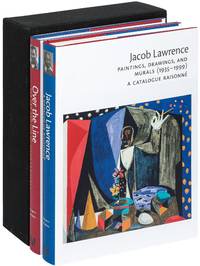
515088Seattle: University of Washington Press / Jacob and Gwendolyn Lawrence Foundation 2000. Hardcover. Fine/Fine. First edition Signed issue. Two volumes. Quartos. 287 344pp. Heavily illustrated. Both volumes fine in fine dust jackets. N.B. aside from a small binding error on the topedge of one of the boards resulting in a short section cloth to be improperly folded at the pastedown. Housed in a fine slipcase with a couple of small faint spots. Signed by Lawrence on the limitation page of Volume I. Over The Line edited and with an introduction by Peter T. Nesbett and Michelle DuBois and essays by Patricia Hills Paul J. Karlstrom Leslie King-Hammond Lizzetta LeFalle-Collins Richard J. Powell Lowery Stokes Sims Elizabeth Steele and Elizabeth Hutton Turner. Catalog Raisonné by Peter T. Nesbett and Michelle DuBois with assistance from Stephanie Ellis-Smith. A handsome production the result of six years of work issued Signed in a small limitation. University of Washington Press / Jacob and Gwendolyn Lawrence Foundation hardcover
1646046444Hoorn: Arent Jansz Chalon 1646. First Edition. Hardcover Vellum. Very Good Condition. Contemporary overlapping vellum modest discoloration and soiling but sound. Spine darkened remains of labels bookplate on pastedown and endpaper. Two works in one the second unpaginated and dated 1647 on the separate title; printed in a mix of black letter and Roman type faces. 8 252 60pp. <br/><br/>The first edition of a popular and much reprinted book of moral tales about violence. 15 engravings in the first work 3 in the second and a vignette on the title and an extra engraved title to Gulden-Spiegel. As here it was often paired with Mayvogel's life of Amnon apparently present here in the second edition first published in 1646. No other copies of the first edition located in OCLC or auction records. Size: Octavo 8vo. Quantity Available: 1. Shipped Weight: Under 1 kilo. Category: Philosophy; Antiquarian & Rare. Inventory No: 046444. Arent Jansz Chalon hardcover books