53 307 résultats
197949497BASTEI-LÜBBE 04/1979. 2. softcover. Titanen BASTEI-LÜBBE paperback
198950329BASTEI-LÜBBE 07/1989. 2. softcover. Inkarnation der Unsterblichkeit Die BASTEI-LÜBBE paperback
1843660591843. Kefvinge bei Stockholm 23.VI.1843. 1 1/2 S. gr.4°. Mit Blindsiegel und Adresse. Jöns Jakob Freiherr von 1779-1848 schwedischer Chemiker; begründete die quantitative Analyse organischer Verbindungen führte die chemischen Symbole ein und entdeckte mehrere Elemente. An den Chemiker Théophile-Jules Pelouze Mitglied der Académie des sciences in Paris wegen der Zusendung einer "collection du Journal de l'Ecole polytécnique". ". Ne connoissant point à quelle personne j'aurois pu m'adresser par une lettre officielle je vous prie de vouloir bien de ma part présenter les remercimens de l'Académie au lieu dû et annoncer que l'envoie est arrivé. Les Numeros 1 9 & 10 y manquèrent. Je suppose que la raison en est que ces numeros ne se trouvent plus. Il y avoit l'Analyse mathématique appliquée de La g r a n g e ." Der Empfänger Théophile-Jules Pelouze 1807-1867 war ein französischer Chemiker er bestimmte mit sehr hoher Genauigkeit das Atomgewicht mehrerer Elemente. Ferner entwickelte er einen Sprengstoff und exprimierte mit der von Christian Friedrich Schönbein entdeckten Schießbaumwolle. Ascanio Sobrero und Alfred Nobel waren seine Schüler. unknown
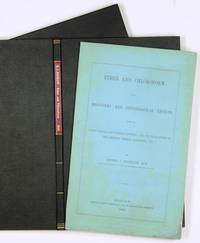
1848206001848. From the Boston Medical and Surgical Journal; And the Transactions of the American Medical Association Vo. 1. - Boston: David Clapp Printer .184 Washington Street 1848 8° 1 Bl. 27 pp. 18 pp. Orig. Broschiert. FIRST EDITION of one of the most significant early papers on anesthesia! This is a very good to fine copy in the original rare blue wrappers as the copy in the NLM. The first article was originally published in the Boston Medical Surgical Journal in 1846. The second article is from the Transactions of the American Medical Association Vol. 1. "Bigelow's speedy publication of Morton's discovery and his subsequent advocacy of ether assured its adoption throughout the civilized world. The above work deals with the priority claims in general and with a defense of Morton's claim in particular" and contains detailed information on their surgical use dangers and history." Garrison & Morton Bigelow had great concern for the suffering of surgical patients and was interested in finding an ideal agent which could be used as an anesthetic. Ether had the potential to be of use though there was concern over its flammability. Bigelow used ether and published his observations on use of vapors from sulphuric ether in the Boston Medical Surgical Journal in 1846. In the present report Bigelow discusses the pros and cons on using ether vapors or chloroform and compares this in the second article with other anesthetic agents. This clinical research was a major advancement for surgical operations where pain to the patient was greatly minimized or not felt during the surgery. Henry Jacob Bigelow 1818-1880 the Boston surgeon is noted for important contributions to surgery and for having published the first account of the use of ether in a surgical operation. He attended the Boston Latin School entered Harvard at the age of fifteen years and was a graduated with the class of 1837. He then studied medicine with his father as preceptor and attended lectures at the medical schools of Harvard and Dartmouth. In 1838 and 1839 he served as a house surgeon at the Massachusetts General Hospital and obtained the degree of doctor of medicine from Harvard Medical School. Bigelow also made important surgical contributions. Through his Boylston Prize essay Manual of Orthopedic Surgery 1844 he directed attention to a field of surgical endeavor until then neglected in America. In 1869 he described the iliofemoral ligament and its mechanism and demonstrated the importance of the structure in reducing dislocations of the hip by the flexion method which had been advocated earlier by William W. Reid. Bigelow also improved an instrument lithotrite for crushing stones of the bladder and perfected an evacuator of large caliber for immediate removal of the fragments. He designated the operation "litholaplaxy". Rare - RLIN locates 4 copies some evidently without the original wrapper with its collective title. Garrison & Morton No. 5730 unknown
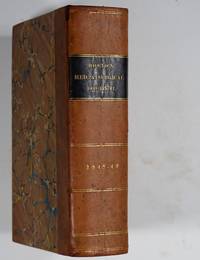
1848648941848-1849. Boston Med. Surg. J. 3839. - Boston David Clapp February 1848 to August 1848 8° 532 pp.; August 1848 to February 1849 8° 548 pp. half leather with marbled boards; fine. First Edition! HENRY JACOB BIGELOW 1818-90. - "As the dangers of surgical anesthesia became more well known Bigelow wrote a series of articles detailing these problems. To clarify some of the questions concerning the hazards of surgical anesthesia Bigelow also prepared a report for presentation to the members of the American Medical Association. This series of papers was later reprinted as a monograph entitled Ether and chloroform; their discovery and physiological effects Boston: D. Clapp 1848 G-M 5730." Rutkow Bigelow's speedy publication of Morton's discovery and his subsequent advocacy of ether as an anesthetic assured its adoption throughout the civilized world. The above work deals with the priority claims of Morton and Charles Thomas Jackson with Bigelow taking Morton's side in the dispute. Further of interest: REUBEN DIMOND MUSSEY 1780-1866: Chloroform in surgical operations pp.194-195. Chloroform pp.520-521. "Mussey was professor of surgery at the Medical College of Ohio in Cincinnati at the time he wrote these two letters to the editor of the Boston medical and surgical journal. As the clinical use of surgical anesthesia increased there was a growing controversy both in America and Europe over the efficacy of chloroform versus ether. Mussey had had extensive experience with chloroform and noted that his operations proceeded "without a single unpleasant effect in any case." Rutkow JONATHAN KNIGHT 1789-1864 & DAVID ATWATER TYLER 1818-85: Popliteal aneurism successfully treated by compression pp.293-296. "The present paper contains an account of the first reported cure of aneurism by the method of digital compression." Rutkow JONATHAN PARKER MAYNARD 1817-98: Discovery and application of the new liquid adhesive plaster pp.178-183. "His article describes the first known use of collodion as a surgical dressing. Collodion is a term used to describe a solution of pyroxylin or soluble gun cotton cellulose treated with nitric acid dissolved in alcohol and ether. Flexile collodion is made by adding castor oil and turpentine." Rutkow Rutkow ANp28293132 GSp8384 hardcover
1841440591841. Samuel Thomas von Sömmerring vom Baue des menschlichen Körpers 6. - Neue umgearbeitete und vervollständigte Original-Ausgabe.- Leipzig Verl. v. Leopold Voß 1841 8° XXIV 1048 2 pp. 32 Abb. 5 Taf. Pappband. d.Zt.; Rücken erneuert. First Edition! Many of the histological discoveries of Friedrich Gustav Jakob Henle 1809-1885 are described in the above. He classified tissues histologically. Gefässnerven p.510 690. Demonstration of the presence of smooth muscle in the endothelial coat of small arteries". Garrison & Morton No. 543; 7094 unknown
1785307291785. Viennae Apud Rudolphum Graeffert 1785 8° 338 16 pp. Titerlkupfervignette Ledereinband d.Zt.; St. a.Tit. Rücken erneuert; feines Expl. Seltene Erstausgabe der frühen Schrift zu den Vergiftungen und deren Gegenmittel! Joseph Jacob von Plenck 1733-1807 Professor der Chirurgie Chemie und Botanik lehrte an der Wiener Josephs-Akademie. Er ist der Verfasser seiner Zeit sehr beliebter Kompendien über verschiedene medizinische Teilgebiete die sich durch übersichtliche und anregende Darstellung auszeichnen. "Plenck war eine hochbegabte Natur er vermochte sich rasch in jede Materie hineinzuarbeiten und dieselbe derartig zu beherrschen das sie klar übersichtlich und wohlgeordnet vortragen konnte." Puschmann Erst 30 Jahre nach der vorliegenden Abhandlung Plencks erschien 1815 in Paris das erste moderne Standartwerk der Toxikologie von M.J. Orfila. First Edition of Plenck's famous textbook on toxicology. Plenck was one of the last great medical writers to publish all of his principal works in Latin. Plenck provided the first classification of poisons based on origin: 1. Animal poisons. 2. Vegetable poisons. 3. Mineral poisons. 4. Poisonous vapors gases and dust. The popularity of his writings was such that they were soon translated into other modern languages. Wellcome IV p.402; Blake NLM 18th Century p.356 Selten. Nicht in der umfangreichen Plenck-Sammlung der Josephinischen Bibliothek zu Wien. unknown
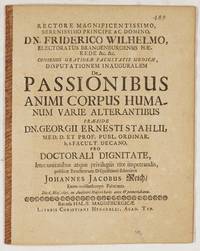
1695419751695. Halae Magdeb. Literis Christiani Henckelii 1695 Kl.4° 16 6 pp. orig. Broschur. Erste Ausgabe zweiter Abdruck! Die hier vorliegenden "Disputatio de passionibus animi" "Über den mannigfaltigen Einfluß von Gemütsbewegungen auf den menschlichen Körper" zeigt daß es Stahl schon zum Beginn seines Wirkens in Halle seit 1694 also um das Problem der psychophysischen Wechselwirkung gegangen ist. Er hat seine Bedeutung seine Auswirkung in der Praxis beobachtet. Man findet hier die Grundlagen der medizinischen Psychologie. Es werden Beispiele für den Einfluß seelischer Erregungen auf den menschlichen Organismus angeführt. In der Einleitung wird hervor gehoben: "So leiten sich von den Leidenschaften des Gemütes in ihrer vielfältigen Bestimmung Leitung oder Änderungen der Bewegungen des menschlichen Körpers auch viele Krankheitsanzeichen her." Die Mehrschichtigkeit seelischer Alterationsstufen das Unverlierbare besonders tiefe Eindrücke wird in der Vorahnung späterer Erkenntnisse Freudausgesprochen: Zugegeben sei "daß der im Erbgang geprägte Prototyp der Leidenschaften und Neigungen des Gemüthes in gewohnheitsmäßiger Festigung nicht ganz umgekehrt werden kann" so vermag doch "die domminierendende Leidenschaft durch eine ihr entgegengesetzte Gewohnheit an die zweite oder gar dritte Stelle verdrängt werden wo sie zwar noch innerhalb der Ordnungen steht gleichwohl ihre Rangstufe wechselt." Es liegt dem in nuce die Idee von der Verdrängung zugrunde. Es wird schließlich empfohlen die psychologischen Beobachtungen bei der Behandlung der Patienten nützlich anzuwenden und zu verwerten indem man den Kranken "viele Ausbrüche des Erschreckens der Furcht des Zornes anhebender Ängstlichkeit durch guten Zuspruch und durch vertrauenserweckende Sicherheit" benimmt. So zieht die Arbeit die Folgerung: "Seelenleiden die von Verletzungen des Körpers herrühren sind oft mit schwerwiegenden und dauernden Folgen verbunden. Doch sie sind zu vertreiben mit der Heilung der Körperschäden." Die Lehre von den symptomatischen Psychosen wird im Ansatz vorweggenommen wenn auch die Terminologie auf einen noch neuen Begriffsterain vortastet. Es sind Gehversuche auf einem noch dunklem Gebiet in der ärztlichen Praxis. Man kann die "Disputatio" als eine frühe Arbeit bezeichnen die sich aus der Sicht des Arztes mit dem Problem psychisch verursachter Störungen von Krankheitsabläufen beschäftigt. Es handelt sich hierbei nicht um Geisteskrankheiten. Es geht vor allem um die körperlichen Einflüsse transitorischer Seelenzustände die man heute in der Lehre von den Neurosen und ihren verschiedenen Erscheinungsformen zusammenfassen würde. Die seit der Antike beknatte Verbindung zwischen Knostitution und Charakter wird auch nach der therapeutischen Seite hin erwogen und berücksichtigt. Es ist der Geist einer naturwissenschaftlichen Betrachtungsweise der sich durch diese Arbeit hindurchzieht. Es zeigt wie vorbeitreffend die Annahme war den STAHL'schen Animismus nur religiös zu interpretieren." "In dem an zweiter Stelle stehenden "Propempticon inaugurale" - es ist eine dem Doktoranden JOHANN JACOB REICH gewidmete Abschiedsrede STAHLS mit angeschlossener Vita REICHS - nimmt STAHL zu dem Thema "De synergeia naturae in medendo" Stellung. Man findet hier alle Merkmale des STAHLschen Systems und erkennt wie sehr der aus der Erfahrung schöpfende Psychologe den Vorrang gehabt hat. So wird eine tiefe Kenntnis des Eigenrhythmus biologischer Abläufe in dem Gedanken ausgesprochen: "Die Natur hat ihr eigenes Zeitmaß und verwendet dieses bei den rhythmischen Vorgängen des Lebens von längerer Zeitdauer so bei der Embryonalentwicklung bei der Geburt Zahnung Pubertät". Die Synergie der Organe unter der Direktion der Lebenskraft enthält im Krankheitsfalle das ärztliche Problem die nützlichen Bewegungen der Naturheilkraft von den eigentlichen Krankheitsbewegungen zu unterscheiden. Der Arzt muß vor allem die Bewegungen erkennen die auf einen nützlichen Zweck abzielen. Theoretische Fragen werden aus dieser Sicht kurzerhand beiseite geschoben und in der für STAHL typischen Art das Leib-Seele-Problem zu einem biologischen Postulat'gemacht : "Es handelt sich nicht um eine Annahme sondern wir beweisen a priori mit der Vernunft daß im Menschen von einer einzigen Seele alle diese Akte und Bewegungen vollzogen werden können. Erfahrung und Vernunft zeigen a posteriori daß diese Zusammenhänge zwischen Leib und Seele in der Tat vorliegen." In diesem Problem sieht STAHL den Inhalt seiner Lebensarbeit: "Darauf werfe ich mich mit ganzer Seele. Dem gilt meine ganze Arbeit. Weder Mühe noch Neid können mich dabei verdrießlich machen. Ich hoffe vielmehr mit dem Problem in würdiger Weise fertig zu werden. Möge die Medizin dann wieder auf ihr rechtes Fundament gestellt sein"!" Diese beiden Texte "vermitteln so ein interessantes Bild der ärztlichen Persönlichkeit STAHLS ihres Temperamentes und ihrer Suche nach den biologischen und psychologischen Gesetzen einer wirksamen Therapie. Er gibt sich mit der Vorstellung einer nur mechanistischen Arzneiwirkung nicht zufrieden. Er nennt die besondere "Chronometrie" biologischer Abläufe das Gesetz der Ganzheit den Begriff des allen Einzelerscheinungen übergeordneten Organismus den Einfluß seelischer Erregungen auf die Vitalbewegungen desselben. Die psychophysische Wechselwirkung wird dem Arzt als praktisch wichtiges Problem gestellt. Jedenfalls hat STAHL bereits im Jahre 1695 alle wesentlichen Gedanken seines medizinischen Systems dargelegt. Die Ansicht er habe erst durch CHRISTIAN WOLF gewichtige Anregungen erhalten ist nicht mehr haltbar. Bereits 12 Jahre vor dem Erscheinen seiner "Theoria medica vera" hat die Forschungsrichtung STAHLS ihr wesentliches Ziel gehabt. Wenn man die Geschichte der medizinischen Psychologie überdenkt so wird man GEORG ERNST STAHL auf Grund der Einsichten in die ärztliche Bedeutung des Psychischen wie schon KORNFELD mit Recht ausgeführt hat an den Anfang einer Erschließung dieses Fachgebietes stellen dürfen. Die Leitsätze am Schluß der "Disputatio" enthalten das historische Fundament dieser neuen erst in unserer Zeit zur Anerkennung gekommenen Wissenschaft." B.J. Gottlieb G.E.Stahl Sudhoffs Klassiker der Medizin pp.18-21 23-47 unknown
19280001575BOSTON CAMBRIDGE MASSACHUSETTS MASS. Very Good. 1928. On offer is a super manuscript relic of medical education at the Harvard Medical School in the 1930s. The notebooks 2 are compiled by Dr. Jacob J. Longacre M.D. 1907 - 1976 while a student. There are copious notes and hand drawn illustrations charts in the hand of a young man who would become a nationally renowned clef palate and facial surgery specialist who practiced in the Cincinnati Ohio area. Headings include Clinical Pathology and Parasitology in one book and the second book is almost entirely medical illustrations of organs and other parts of the body. The 3-ring binders measure 9 x 7 inches and are about 1 inch thick. Overall VG.; 9 X 7 in.; KEYWORDS: HISTORY OF HARVARD MEDICAL SCHOOL MEDICINE DOCTORS SURGEONS SURGERY CLEF PALATE FACIAL SURGERY PATHOLOGY LONGACRE PLASTIC SURGERY AMERICANA HANDWRITTEN MANUSCRIPT DOCUMENT LETTER AUTOGRAPH DIARY JOURNAL LOG KEEPSAKE WRITER HAND WRITTEN DOCUMENTS SIGNED LETTERS MANUSCRIPTS HISTORICAL HOLOGRAPH WRITERS DIARIES JOURNALS LOGS AUTOGRAPHS PERSONAL MEMOIR MEMORIAL PERSONAL HISTORYantiquité contrat vélin document manuscrit papier Antike Brief Pergament Dokument Manuskript Papier oggetto d'antiquariato atto velina documento manoscritto carta antigüedad hecho vitela documento manuscrito papel. . unknown
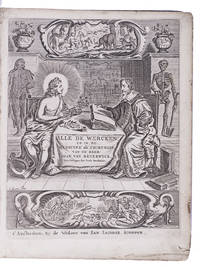
1672KBJA62HZUVCNAmsterdam 1672. 4to. widow of Jan Jacobsz. Schipper Contemporary vellum. With engraved frontispiece 28 engravings in volume one 29 engravings in volume two including one on the title-page and 20 engravings including one on the title-page plus 1 woodcut in volume three. 3 volumes bound as 1. 18 252; 8 127 1 328 48; 8 278=276 12 pp. Penultimate edition of the most influential medical work in the Low Countries during the 17th-century the collected works of Johannes Van Beverwijck 1594-1647. It was very popular partly through the inserted poems by Jacob Cats and its illustrations. The three main parts contain a general survey of the several elements of medicine varying from medical folklore and herbal knowledge to anatomy and chirurgy. At the end of the third part "Heel-konste" letters from and to Van Beverwijck as well as some other important letters are issued. Among these are letters of Descartes on the motion of the hart written ca. 1637-1643 to and from Anna Maria van Schurman ca. 1640 and William Harvey. Van Beverwijck was a very well-read man and all his writings include many references to ancient and contemporary authors on the subject. With owners' inscriptions on flyleaf and some modern underscoring and annotations in pencil. Front board and spine detached from bookblock a few tiny wormholes a couple tears in the foot margin otherwise in good condition.l BMN I p. 387; Krivatsy 1191; STCN 840960328; Wellcome II p. 159. hardcover
1840F2KA3EDGC1WVGroningen: J. Oomkens 1840. Original publisher's printed paper wrappers with at the back an advertisement for 6 other works by Van Cleeff. 8vo. Rare first edition of a schoolbook on navigation in the form of questions and exercises by Jacob van Cleeff 1788-1862 lecturer in mathematics engineering and navigation at the maritime academy at Groningen known as the Academie Minerva. The work was meant to be used together with Jan Carel Pilaar's Handleiding tot de beschouwende en werkdadige stuurmanskunst first published in 1831. A second edition of the present work appeared in 1846 and a third in 1859.With a library stamp of "Kon. College Zeemanshoop" on title-page and an owner's stamp of Dr. P.J. Kaiser on the title-page and wrappers. Title-page and paste-downs foxed. Spine of the wrappers gone and a few small chips along the edges. Good copy most of the quires with the bolts unopened.l Crone Library 844 cf. 916 third ed.; NCC 1 copy; WorldCat 5 copies incl. that in the NCC; cf. Bierens de Haan 874 second ed.; Cat. NHSM p. 694 third ed. J. Oomkens, unknown
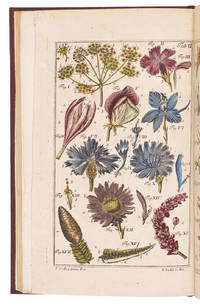
1759K79FEANEEDP9Regensburg 1759. 8vo. F. Zunkel Modern reddish brown cloth title in gold on spine. With engraved illustration on title-page and 4 hand-coloured engraved plates. 12 96 8 pp. Rare first and only edition of a botanical work by the German clergyman-naturalist Jacob Christian Schaeffer 1718-1790. "His first botanical publication was an Isagoge in botanicam expeditiorem 1759 a preliminary to his Botanica expeditior of 1760. This guide to botany consists of an enumeration of all genera in tabular form followed by extensive synonomy. The books brings little new but is interesting because it is one of the first few German works in which the Linnaean generic reform taxonomic as well as nomenclatural if fully accepted" Stafleu. The present work includes a chapter explaining the classification systems of Tournefort Rivinus and Linnaeus. The fore-edge margin of one of the plates slightly soiled and some spots on the title-page but otherwise in very good condition.l Pritzel 8110; Soulsby 638; Stafleu & Cowan 10470; Stafleu Linnaeus and the Linnaeans p. 254. hardcover
191861380Portland OR: Shope Brick Co. Columbia Commercial Studio 167 Fourth Ave. ca. 1918. Oblong 4to. 11.5 x 8.25 in. With 41 original linen-backed silver gelatin photographs sized 9.5 x 8 in. nearly all w/ neat type-written captions on versos all w/ photographer’s stamped imprint on verso. Contemporary flexible calf post-binder three nickel-plated screwposts at gutter margin rounded corners yapp edges gilt title stamped on front cover some fraying to the linen-backing at fore-edges minor edgewear some scuffing a few images w/ nearly indistinguishable perforated slices not penetrating linen still an exceptional exemplar w/ former ownership markings of Koch Schmidt on first image margin. An outstanding salesman sample photo album recording the use of Shope’s patented brick facades for homebuilding apartment buildings commercial buildings and interiors in the Pacific Northwest during World War I. The album opens with a 1914 award certificate from the Manufacturers & Land Products Show which remained on permanent exhibit at the Pacific International Exposition Building for over 10 years. This is followed by photographs shot of such buildings as the newly completed Aetna Apartments Printing Office at 21st & Sandy; the Utah-Idaho Motor Co. Maxwell dealership in Pocatello ID; the Golden Rule store in the Morris Block in Lewiston ID; the Miller Wood Fuel Co. in Portland OR with Chief Gasoline pump in front; the King Albert Apartments in Portland OR finished in 1918; together with many splendid examples of PNW Arts & Crafts homes. The featured homes include a stately residence on 49th & Belmont the Dr. Tamiesie House porch piers and tile floor in Laurelhurst now the Sisters of Social Services Home; the Nash home on Sunnyside; Armstrong residence on Council Crest; striking residences in Rose City Park Irvington and Alameda. Also featured are Craftsmen homes in Walla Walla Pocatello Corvallis Spokane and in other areas of Portland. Fourteen of the photographs depict the ornamental Arts & Crafts brick facades for fireplaces with interior shots. The main fireplace in the furnished Dr. Tamiesie home the DeKeater residence the fireplace finished in 1916 for the East Side Business Men’s Club in Portland and others. Founded originally in 1910 in the City of Portland by David Shope 1862-1948 having developed his specialized brick-making machinery for clay & concrete bricks as featured in the final photograph the company’s products quickly proved popular with Arts & Crafts architects in the Pacific Northwest. Shope used a patented process to achieve what he termed the “Red Wire Cut†and “Old Gold Rough Texture†for commercial facades and also used concrete cast stone to achieve special effects and sold his licensed machinery to contractors as well. By 1922 he heavily marketed the fact that the Shope facades were the only ones to mostly survive the 1922 Astoria fire. He also aggressively protected his patents suing competitors on a regular basis. After 1923 he sold out to the Eugene Concrete Pipe Company and returned to Lake City MN where he lived with his daughter Birdie. Gensler 1873-1968 was a German-American photographer in San Francisco CA who operated Columbia Commercial Studio from about 1915 through World War II before moving back to Alameda CA and in two of the photos he has proudly displayed his 1915 Harley-Davidson V-Twin motorcycle in the foreground. We could find no similar album or collection of photographs in any holdings for the Shope Brick Co. Shope Brick Co., [Columbia Commercial Studio, 167 Fourth Ave.], unknown
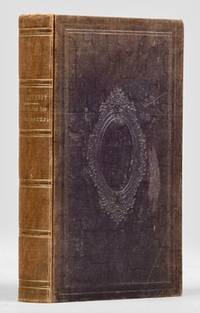
1860BB2705Basel: Druck und Verlag der Schweighauser'schen Verlagsbuchhandlung 1860. Decorative Cloth. Fine. First Edition of this classics of Renaissance historiography from the library of Otto Wesendonck patron of the composer Richard Wagner. Demy 8vo 221 x 133mm: 4576pp. Original moire-pattern purple cloth covers blocked in blind with intricate oval device spine lettered and ruled in gilt brown patterned end papers. Wesendonck's engraved book plate to front paste-down with his contemporary ownership inscription to front free fly-leaf and blind library stamp to tile page . Basel postage stamp laid in. Spine lightened a degree or two very occasional foxing otherwise an exemplary example tightly bound pages remarkably fresh and bright virtually pristine. PMM 347. This milestone of cultural history written by Burckhardt between 1855 and 1858 cast a "powerful spell . . . upon such widely different writers as Ruskin Nietzsche and Gobineau as well as upon innumerable lovers of the most magnificent period of European history." Lord Acton called it "The most penetrating and subtle treatise on the history of civilization." PMM Divided into six parts: the State as a Work of Art Development of the Individual Revival of Antiquity Discovery of the World and of Man Society and Festivals and Morality and Religion. A two-volume English translation appeared in 1878. Otto Wesendonck's 1815-1896 success as a silk merchant made him a generous patron of the arts and enabled him to provide significant financial support to one of his favorite composers Richard Wagner throughout the 1850s. For a time the Wagner's lived in a villa on Wesendonck's estate in Zurich and Otto would eventually purchase the copyright of the four Ring operas. Wagner became infatuated with Wesendonck's wife the poet Agnes Mathilde Luckemeyer 1828-1902. She exerted considerable influence over his music and provided the words to the Wesendonck Lieder song cycle. Their passionate relationship whether platonic or otherwise came to an end in 1858 when Minna Wagner accused them of adultery. N. B. With few exceptions always identified we only stock books in exceptional condition carefully preserved in archival removable mylar sleeves. All orders are packaged with care and posted promptly. Satisfaction guaranteed. Fine Editions Ltd is a member of the Independent Online Booksellers Association and we subscribe to its codes of ethics. Druck und Verlag der Schweighauser'schen Verlagsbuchhandlung unknown
172615776Nürnberg, Peter Conrad Monath, 1726. Petit in-4 de [10]-226-[18] pages, cartonnage du temps recouvert de papier à la colle (Kopylov, papiers dorés d'Allemagne).
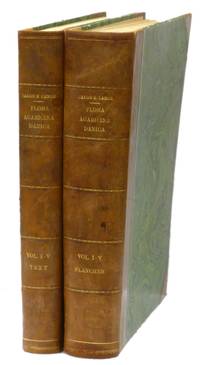
115052Copenhagen 1935-40. Large 4to. 4 XXIV 5-90 6; 105 7; 96 8; 119 9; 105 7 pp; 4 pp. 200 colour chromolithographic plates. Slightly worn contemporary half calf gilt spines and with green marbled board papers. Two volumes. Owner’s signatures of Harry G. Svensson and Anders & Karin Bohlin Volbracht 1124. Uellner 927. Nissen 1132. Stafleu 4187. The â€Flora agaricina Danica†by the danish mycologist J. E. Lange 1864-1941 is described by Ainsworth as both scientifically invaluable with more than a thousand species described and a superb example of modern printing p. 56. Contains descriptions of over 1100 species. Collaborators were N. F. Buchwald M. P. Christiansen C. Ferdinandsen Poul Larsen F. H. Møller Ø. Winge et al. Anders Bohlin 1936-2020 var botaniker och mykolog författare till bl.a. â€Halle- och Hunnebergs floraâ€. Han var tillsammans med hustrun Karin välkänd som svampkännare och ledare av svampexkursioner. unknown
1774183732Berlin. : Christian Friedrich Himburg. 1774. 1st edition. Contemporary half mottled calf over decorative paper boards gilt spine title. Very good light shelfwear some toning to pages and map. 8vo. 19.8x12 cm. . German text. Important early mineral survey of Bohemia by the noted Swedish mineralogist. weight: 0.5 lb. One color folding map one folding plate. Christian Friedrich Himburg. hardcover books
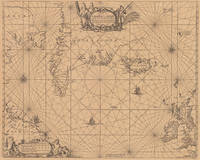
166215989Amsterdam: Jacques & Gasper Anthoine 1662. Other. A strong impression in excellent condition. 426 by 533mm 16¾ by 21 inches. Rare seachart by Jacobsz Theunis of the North Atlantic showing prominent Greenland Iceland and parts of the North American continent. The map is decorated with a large figurative title cartouche in the upper center as well with compass roses ships and an allegoric ornated decorative milage scale. Derived from the Goos 1650 this charts progenitor was actually by his father Theunis Jacobsz c. 1649. Centred on the North Atlantic it concentrated on providing information on the approaches to the North West Passage. Terra Nova is omiited as it was on the Goos. At first Jacob adopted his fathers name being known as Jacob Theunisz. Later with his brother Caspar in association they applied the noun Lootsman to their name to avoid confusion. In 1666 Jacob Lootsman published the first known edition of the Nieuwe Water-Werelt Ofte Zee-Atlas which also encluded this map. -Burden #372. Our copy of the map here can be dated c. 1662 it was bound with a collection of seacharts French text edition of his atlas Le Grand & Nouveau Miroir ou Flambeau De la Mer. by J. Theunis the engraved title was definitly dated 1662. Burden #372 2nd state of 4; Koeman IV pp. 223-4 & 231 Jac. 1.9 & Jac. 19B.25 Jacques & Gasper Anthoine unknown
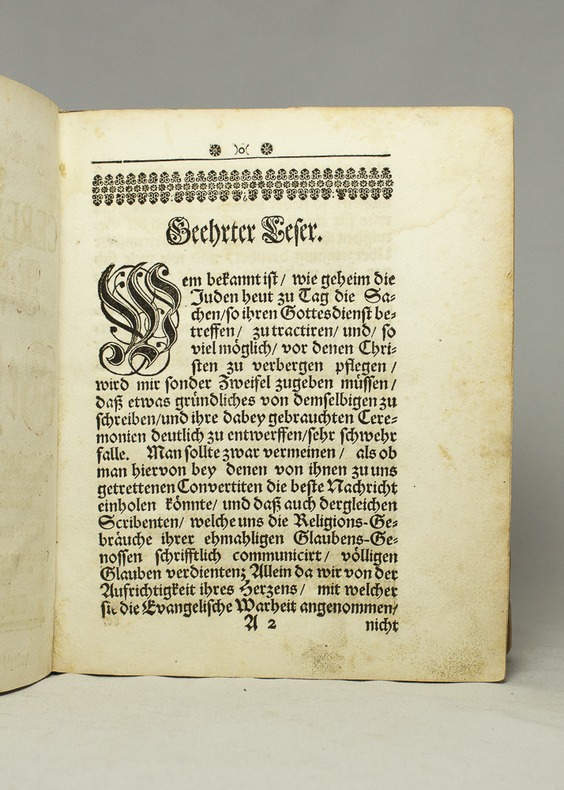
166424197Johann Andreas & Wolfgang Endters Nürnberg 1664 1664. priv. Pappband . 477s Register. 7 Tafeln. Fraktur. in gutem Zustand AZC91. HC Johann Andreas & Wolfgang Endters, Nürnberg 1664, unknown
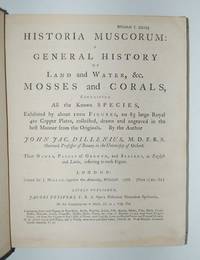
38095London: Printed for J. Millan 1768. Second edition second issue large 4to 295 x 230 mm 2 13 1 10pp. followed by 85 copper engraved plates some light toning to text plates general nice and clean bound in a handsome cont. full calf joint cracked at head and foot spine tooled in gilt with an attractive floral design contrasting red morocco label lettered in gilt. Dillenius Johann Jakob Dillenius 16871747 was was contemporaneous with both Ray and Linnaeus and this is regarded as "his greatest work."DNB. First published in 1741 this 1768 edition is a re-issue of the original plates with explanatory text it covers mosses liverworts lycopods and algae - the illustrations all drawn and engraved by the author. Provenance: Small previous owner stamp of William T. Doyle at head of title. Nissen BBI 491; Stafleu & Cowan 1472; Henrey III 642. London: Printed for J. Millan, 1768 unknown
184254602Philadelphia: published at the Assay Office of the Mint 1842. First edition 4to pp. 4 iv 1 6-220; inserted half-title printed in silver on glazed paper and 16 composite plates printed on glazed paper; original brown cloth stamped in gilt on the upper cover; small snag at the top of the spine and the cloth binding a little dull; the plates are all bound at the back of the volume in 4 sequential gatherings and the bulk of the plates has caused these gatherings to become extended; otherwise a complete copy with a clean text block and an interesting provenance: on the front free endpaper is the first owner's inscription "Rud. F. Kelker / April 21 1843 / bot. of Eckfeldt & Dubois / United States Mint" and on the top of the title page "Rud. F. Kelker / April 21 1843 / bot. of Eckfeldt & Dubois / United States Mint / paid $5.00." Bookplate of Rudolph F. Kelker Harrisburg Pa. A landmark work in American numismatics. The authors were assayers of the U.S. Mint in Philadelphia. For nearly two decades it was the only practical guide available to American coin collectors. It was also the first work to illustrate the 1804 dollar and was one of the earliest works to combine photography electrotyping and the metal rolling machine for illustrative purposes. Sabin 21787. <br/><br/> published at the Assay Office of the Mint hardcover books
184254602Philadelphia: published at the Assay Office of the Mint 1842. First edition 4to pp. 4 iv 1 6-220; inserted half-title printed in silver on glazed paper and 16 composite plates printed on glazed paper; original brown cloth stamped in gilt on the upper cover; small snag at the top of the spine and the cloth binding a little dull; the plates are all bound at the back of the volume in 4 sequential gatherings and the bulk of the plates has caused these gatherings to become extended; otherwise a complete copy with a clean text block and an interesting provenance: on the front free endpaper is the first owner's inscription "Rud. F. Kelker / April 21 1843 / bot. of Eckfeldt & Dubois / United States Mint" and on the top of the title page "Rud. F. Kelker / April 21 1843 / bot. of Eckfeldt & Dubois / United States Mint / paid $5.00." Bookplate of Rudolph F. Kelker Harrisburg Pa. A landmark work in American numismatics. The authors were assayers of the U.S. Mint in Philadelphia. For nearly two decades it was the only practical guide available to American coin collectors. It was also the first work to illustrate the 1804 dollar and was one of the earliest works to combine photography electrotyping and the metal rolling machine for illustrative purposes. Sabin 21787. published at the Assay Office of the Mint unknown
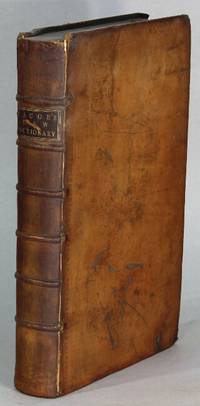
173664429London: in the Savoy: printed by E. and R. Nutt and R. Gosling assigns of Edw. Sayer Esq; for J. J. and P. Knapton D. Midwinter A. Bettesworth and C. Hitch et al. 1736. Folio pp. 774; collating pi2 a2 B-9H2 9I1; lexicon in double column 4; full contemporary calf red morocco label on spine; upper joint cracked top of spine chipped level with text block label with single scratch affecting the letter 'A' in "Law" otherwise a very good copy. Includes "the history and antiquity of the law and our manners customs and original government collected and abstracted from all dictionaries abridgments institutes reports yearbooks charters registers chronicles and histories published to this time." Alston XVIII 198; Vancil p. 119; not in Zischka. in the Savoy: printed by E. and R. Nutt, and R. Gosling, (assigns of Edw. Sayer, Esq;) for J. J. and P. Knapton, D. Midwinter, A unknown
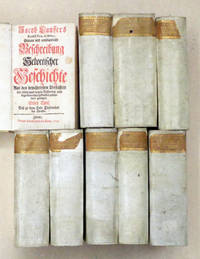
90583Zürich Conrad Orell und Comp. 1736 - 1738; Register: 1739. Kl.8° Titelbl. jeweils in Rot und Schwarz; 12 Bl. 347 S. 5 Bl. 348 S. 3 Bl. 351 S. 3 Bl. 360 S. 8 S. Verlagsanzeigen 3 Bl. 360 S. 5 Bl. 334 S. 3 Bl. 376 S. 6 Bl. 331 S. 5 Bl. 343 S. 5 Bl. 338 S. 4 Bl. 340 S. 3 Bl. 352 S. 3 Bl. 342 S. 3 Bl. 342 S. 3 Bl. 327 S. 5 Bl. 320 S. 5 Bl. 302 S. 4 Bl. 360 S.; Register: 190 S. Priv.-Pgt. d. Zt. m. goldgepr. Rückenschildchen. 3 Schildchen m. Verlusten jew. neuerer Stempel a. flieg. Vs. Teile 1 u. 2 tlw. gebräunt Titelbl. u. folgende Bl. von Teil 3 wasserrandig tlw. etw. stockfl.; allg. gutes Ex. Jeweils EA. Jeweils mit gestochenen Exlibris von «Diethelm Lavater / M. Dr.» gez. von N. N. Schellenberg auf Innendeckel. Enth.: 1. Teil: Biss zu dem Tode Clodoväus des Grossen; 2. Teil: Biss zu Berchtold dem Fünften dem Stiffter der Löbl. Stadt Bern; 3. Teil: Biss zum Entsatz der Stadt Laupen; 4. Teil: Biss zur Einnahme des Argaus; 5. Teil: Biss zum Anzug Carls von Burgund; 6. Teil: Biss zu dem Frieden mit dem Bund von St. Jörgen Schild; 7. Teil: Biss zum Anfange der Reformation; 8. Teil: Biss zu dem Feld-Zug der Berner in die Waat; 9. Teil: Biss zu dem Frieden von Chateau-Cambresis; 10. Teil: Biss zu dem Borromäischen Bund; 11. Teil: Biss zur Schleiffung der Vestung St. Catharina; 12. Teil: Biss zu dem Frieden mit Savoyen; 13. Teil: Biss zur Unterdruckung der Rhätier durch die Oesterreicher; 14. Teil: Biss zu dem Mantuanischen Kriege; 15. Teil: Biss zur Wiedereroberung des Veltlins; 16. Teil: Biss zu dem Rechtsstand des Zehen-Gerichte-Bundes wegen Besetzung der Landes-Aemter; 17. Teil: Biss zu der Empörung der Bauren; 18. Teil: Biss zum Ende des Rapperschweiler-Krieges. - «Johann Jakob Lauffer 25.7.1688 Bleienbach - 23.2.1734 Bern ref. von Zofingen. . Stud. der Theologie an der Berner Akad. sowie an den Univ. Halle und Utrecht Bildungsreise nach Deutschland Holland Frankreich. 1718 Prof. der Geschichte und Eloquenz in Bern. 1724 erhielt er vom Berner Rat den Auftrag die bern. Chronik fortzusetzen. L. begann im Altertum kam bis 1657 als er infolge eines Sturzes starb. 1736-39 erschien das Werk in Zürich in 18 Teilen unter dem Titel "Genaue und umständl. Beschreibung Helvet. Geschichte". Es regte Johann Jakob Bodmer und Johann Jakob Breitinger an ein ergänzendes Werk zur Schweizer Geschichte zu veröffentlichen. L. nahm den Stoff meist aus zweiter Hand nicht aus ursprüngl. Dokumenten. Mehr Wert als auf Quellenforschung legte er auf eine schöne Form. Er bot die Ereignisse vom Standpunkt der Herrschaft aus. Stoffl. Wert besitzt sein Werk nicht mehr ausser für die Zeit ab 1630» HLS. 010 Zürich, Conrad Orell und Comp., 1736 - 1738; Register: 1739 unknown
59862Frankfurt Johannes David Zunner 1680 1690. 4° Fronti. Kupferstich Titelblatt mit Kupfer in schwarz u. rot 7 Bl. 778 S 16 Bl. Index 33 Kupferstichblättern je 12 Wappen pro Blatt; Titelblatt mit Kupfer in schwarz u. rot 6 Bl. 368 S. 35 Bl. Index 23 Kupferstichblatt ca. 1780 Abbildungen der von heraldischen Symbolen Tiere wie Bären Vögel Greife Reiher Fische Hunde; Bäume Blätter Früchte Lilien Helmen Kartuschen Wappenverzierungen etc. OPerg. der Zeit m. goldgeprägten Rückenschild Einband gebrauchspurig und mit kleinen Fleckchen Vorsätze m. kleinen Randfehlstellen. Innen: Erstes Titelblatt hinterlegt 250 Bl. m. Wasserrand am unteren Steg. Trotzdem ein gutes Exemplar des seltenen Werkes. Beide Bände in E.A. Philipp Jacob Spener 1635-1705 im Elsaß geboren und aufgewachsen Begründer des Pietismus studierte an der Straßburger Universität Philosophie Geschichte und Theologie. Er promovierte bereits mit 18 mit einer gegen Thomas Hobbs gerichteten Disputation studierte dann in Basel und Genf wurde Prediger in Straßburg und später nach Frankfurt am Main berufen; 1691-94 als Propst und Konsistorialrat in Berlin tätig ab 1694 an der Gründung der Universität Halle an der Halle maßgeblich beteiligt. In seinen theologischen Schriften prangerte er nicht nur die Mißstände innerhalb der Kirche an sondern schlug auch ein Reformprogramm für die evangelische Kirche vor. Spener beklagt immer wieder in seinen Aufsehen erregenden Schriften den Mangel an wahrem lebendigem Glauben plädierte für Judenbekehrung und Aufhebung der katholischen Kirche. Neben seiner vielfäligen theologischen Arbeit beschäftigte er sich mit Geschichte und Heraldik und gilt heute durch das vorliegende Werk als wissenschaftlicher Begründer der Heraldik. In seinen beiden wahrlich umfassenden Werken stellt er nicht nur anhand von ca 280 Wappen den europäischen Adel nahezu vollständig vor. Im Text von Band II befasst er sich mit den Ursprügen und den Systemen der Wappen anhand der ca. 1780 gestochenen Beispielen auf den Tafeln.Zu Spener siehe: ADB 35 104ff; Wikipedia. 010 Frankfurt, Johannes David Zunner, 1680, 1690 unknown