BRUN, JJ (BRUUN, JOHAN JACOB). J JBiblio.com

1 825 résultats
18059453Kbhvn. G.L. Lahde 1805. Tv-folio. Smukt senere hldrbd. Anker Kyster med rig rygforgyldning og rhombeformet forgyldt skindtitel på forperm. Beskrivende tekst på dansk og tysk. Med 24 kobberstukne prospekter af danske Slotte fra Bruun's ikke fuldendte værk "Novus Atlas Danicus" som af Lahde i 1805 blev genoptrykt med de originale plader og for slottenes vedkommende samlet under denne titel. De sidste 4 med lidt brunpletter. unknown
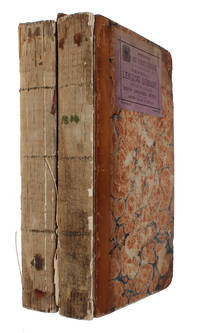
181346988London, Robert Baldwin, 1813 a. 1814. 8vo. 2 contemp. hcalf. Marbled boards. Spines lacks and boards detached. In: ""Annals of Philosophy"" or Magazine of Chemistry, Mineralogy, Mechanics... By Thomas Thomson"". Vol. II and Vol. III. Entire volumes offered. Berzelius' papers: pp. 276-284, 357-368 (the first paper in vol. II), pp. 443-454 (vol. II) a. pp. 51-62, 93-106, 244-257 a. 353-364. (vol. III). Internally fine and clean.
181346988London Robert Baldwin 1813 a. 1814. 8vo. 2 contemp. hcalf. Marbled boards. Spines lacks and boards detached. In: "Annals of Philosophy; or Magazine of Chemistry Mineralogy Mechanics. By Thomas Thomson". Vol. II and Vol. III. Entire volumes offered. Berzelius' papers: pp. 276-284 357-368 the first paper in vol. II pp. 443-454 vol. II a. pp. 51-62 93-106 244-257 a. 353-364. vol. III. Internally fine and clean. <br/><br/><em> First printing of these milestone papers in the history of chemistry where Berzelius introduced his famous chemical symbolism whereby an element is generally represented by the first letter of its Latin name or in the event of elements having the same first letter by the first two letters. Even though his atomic symbols were introduced in 1813 see the note on p. 359 in the first paper it was quite a few years before Berzelius's symbols were adopted by the chemistry community. But once accepted they became the new international language of chemistry.Berzelius "contributed more to the development of the atomic theory and to the setting up of accurate values of the atomic weights than did any other worker of the time. Of his contributions moreover to the development of the atomic theory and the advancement of chemical science not the least valuable was the introduction of a chemical symbolism which with slight modification is in use at the present day. By giving his symbols a quantitative meaning - the symbol of an element representing one atomic proportion by weight - it was possible "to show briefly and clearly the number of elementary atoms in each compound and after the determination of their relative weights present the results of each analysis in a simple and easely retained manner". This symbolism was speedily adopted on the Continent but in England only after some considerable time."Findlay "A Hundred Years of Chemistry" p. 14.Parkinson "Breakthroughs" 1813 C. - Leicester & Klickstein "A Source Book in Chemistry" p. 258 ff. - Holmberg 1813:28 a. The volume contains other notable papers THOMAS THOMSON "On the Discovery of the Atomic Theory" pp. 329-338. and JOHN DALTON "Remarks on the Essay of Dr. Berzelius on the Cause of Chemical Proportions" pp. 174-180 Vol. III. </em> hardcover
18166007Berlin, Nicolaischen Buchhandlung, 1816-1818. 2 tomes en 1 volume in-8 (202 x 115 mm), XXXVI-464 pp. et XX-380 pp. Reliure d'époque demi-basane, dos lisse orné, coiffe sup. absente, mors et coiffe inf. frottés, bon exemplaire.
183570114Boston:: Nathan Hale 1835. First edition. publisher's embossed tan cloth with printed paper label on front panel. . There is a narrow strip of cloth about 7 x 1/8" missing from the front joint underlying structure largely sound; otherwise this is a beautiful copy. . 8vo. Delivered before the Massachusetts Medical Society at their annual meeting May 27 1835. Garrison-Morton 2212: this work "did more than any other work or essay in our own language to rescue the practice of medicine from the slavery of the drugging system which was a part of the inheritance of the profession" -- Oliver Wendell Holmes. Reprinted from the Medical Communications of the Massachusetts Medical Society. Nathan Hale, hardcover
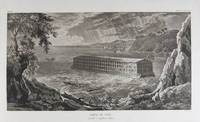
183318856Milano: Fortunato Stella e Figli 1833. First Italian edition. Hardcover. f to vg. Oblong folio 12 6/8 x 18 1/2". 1 leaf Title 38 leaves Plates 1 leaf List of content. Original half morocco over burgundy paper covered boards. Gold lettering and tooling on spine. Rare first Italian edition of Paul-Louis-Bernard Drach's atlas volume of his "Sainte Bible de Vence" a series which was originally published in 27 volumes in Paris from 1827 to 1833. The striking 38 engraved plates featured in this atlas are composed of 13 maps by A. R. Fremin and 25 engravings signed by Falkeisen Angelini and Lanzani. The engraved plates have been laid down on beautiful hand-made paper and describe the following: 1. Map of the place of Eden Mesopotamy and Persian Gulf; 2. Noah's Arch construction; 3. Noah's Arch; 4. Map of the land divided among Noah's sons; 5. The Babel Tower; 6. Map of the Land of Canaan; 7. Map of Jews' Pilgrimage; 8. The Jerusalem Sahnedrin; 9. The Temple of Jerusalem plans and sections; 10. The Temple of Jerusalem square plan; 11. Map of ancient Jerusalem; 12. The Temple of Salomon; 13. The Temple's foundations; 14. The East Gate; 15. The Buildings of the Temple; 16. Musical Instruments of the Jews; 17. Hebrew Alphabet; 18. Jew's Vestments and worship's objects; 19. Two Menorah; 20. High Priest's vestments and Golden Menorah; 21. Moses' Tabernacle; 22. The Loaves of Proposition; 23. Plan and section of the Tabernacle; 24. The encampment of the Israelites; 25. Map of the Holy Land South; 26. Map of the Holy Land North; 27. Map of Syria; 28.Map of Israel under Salomon; 29. Plan of the House of the Forest of Lebanon; 30. The House of the Forest of Lebanon; 31. The Bronze Sea; 32. The Washings; 33. The Altars of the Holocausts; 34. Map of the Persian Empire; 35. Map of the Land of Canaan according to Ezechiel; 36. Map of Herod's Reign; 37. Zachary's Vision; 38. Map of the travels of Saint Peter and Saint Paul. The plates measure appr. 12 1/2 x 18 1/4" image size appr. : 9 1/2 x 14 6/8". Binding rubbed on covers and along edges. Head and tail of spine chipped. Previous owner's Ex-libris Calvin Bullock on inside of front cover. Minor and sporadic foxing along paper margin not affecting plates. Title and captions in Italian. Binding in overall fair interior in very good plates in near fine to fine condition. About the author: "David Paul Drach aka Paul-Louis-Bernard Drach after his conversion 1791-1865 was a Catholic convert from Judaism and librarian of the College of Propaganda in Rome. Drach received his early education from his father who was a rabbi. After spending some time in various Talmudic schools he became a teacher at Rappoltsweiler though only sixteen years of age. The love of the secular sciences brought him to Paris where he was welcomed by his coreligionists and became tutor in a wealthy Jewish family. His reputation as a teacher brought him Christian pupils; and this may have had some influence on his subsequent conversion; in fact he had always manifested some leaning toward Christianity. Drach had already begun the study of Greek and Latin so as to become acquainted with the Christian doctrines in their original sources. Struck by the accusation of some of the Fathers that the Jews had corrupted the Hebrew text he began a comparative study of the Hebrew and the Septuagint which study he continued in spite of the remonstrances of the president of the Central Consistory. Drach was received into the Catholic faith in 1823 together with his two daughters and his son Paul who afterward became a priest and a distinguished Biblical scholar. In 1827 Drach accepted the position of librarian of the Propaganda in Rome which position he held until the year of his death." From the Jewish Encyclopedia. Fortunato Stella e Figli hardcover
1890288516Scribner's 1890. Hardcover . Good. 304 pp.slight fraying to the crown and base of spine covers soiledfirst free end paper slight tear Muck raking work exposing the despair and harsh conditions of life among the poor in NYC. Includes chapters on Jew Town The Color Line the Italians and other groups. Led to major reforms includes floor plans for tenements to improve the lot of the immigrants. Monumental work in the reform movement. First Edition with matching dates of 1890 on the title and copyright pages. Also with "Trow's Printing and Bookbinding Company New York" printed at the bottom of the copyright page.OCLC Number: 457949205 Scribner's hardcover
187833773Columbus Oh: Studer 1878. First Edition. 152 16pp. illus. 190 colored plates most with tissue guards. Contemp. half mo. with gold stamped spine and new endpapers. The colored plates represent upwards of seven hundred different species and varities of North American birds including a popular account of their habits and characteristics"-The title page. Studer was a painter lithographer and popular orinthologist in Columbus. He was sometimes referred to as " The poor man's Audubon". The plates are really very nice. Studer unknown books
187866490Göttingen, in der Dieterichschen Buchhandlung, 1840-1878. 8°. Zus. ca. 5.400 S., HLdr.-Bde. d. Zt. m. goldgepr. Rückentiteln.
182516744Dresden, Arnoldischen Buchhandlung, 1825-31. Uncut in 8 orig. blue boards. Printed on good paper. A wormtrack on cover of volume IV:2, only effecting cover and halftitle. With all 13 folded engraved plates, showing chemical apparatus. Titles with rubber-stamps.
182516744Dresden Arnoldischen Buchhandlung 1825-31. Uncut in 8 orig. blue boards. Printed on good paper. A wormtrack on cover of volume IV:2 only effecting cover and halftitle. With all 13 folded engraved plates showing chemical apparatus. Titles with rubber-stamps. <br/><br/><em>This German translation of Berzelius main work contains many additions by the author not found in the swedish original. "Berzelius's work on the science of Chemistry in general is universally known. He mastered the whole of Chemistry as no one else has ever done since his time and he created something new in all the spheres in which he worked." </em> hardcover
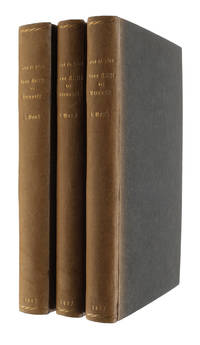
180761857Heidelberg Muhr und Zimmer 1807. 8vo. Uniformly bound in three recent card-board bindings with gilt lettering to spine. Spines with sunning. Ex-libris Philosopher Carl Henrik Koch pasted on to pasted down front front end-paper. Verso and recto of front and back free end-paper in vol. 1 closely annotated in contemporary hand. With light occassional brownspotting throughout a nice set.2 L 347 pp.; 327 pp.; 392 pp. <br/><br/><em>The very rare first edition of Fries seminal work on psychology. “In his earliest writings Fries generally referred to the science of psychology as “empirical psychologyâ€. However by 1807 in Neue Kritik der Vernunft he preferred to call his own psychology “philosophical anthropology†and in 1820 under the influence of G. E. Schulze he changed the title of his psychology to “psychic anthropologyâ€. In the second edition of Neue Kritik der Vernunft 1828-31 in which he again used the title of “psychic anthropology†Fries explained why he had avoided the use of the term “psychologyâ€: “Although this science is usually called psychology we will deviate from this terminology for several reasons. The word «psyche» or soul has been used in philosophy to designat the metaphysical persisting simple and immortal essence of the spirit and its use therefore''implies certain assumptions which we cannot now entertain. We are only concerned with developing a doctrine of the nature of the human soul based upon "inner experienceâ€. Thus we will deal only with inner anthropology. In thus narrowing our scope to the human spirit we arrive at the topic of empirical psychology or psychic anthropology. But our present task differs from empirical psychology which is an experimental physics of inner life eine innere Experimentalphysik which remains forever fragmentary. We will not be satisfied with such a science. We want to achieve a unified theory of inner life a doctrine of inner nature which will provide for the study of our inner psychic nature what 'the philosophy of nature now provides for physics. This part of psychic anthropology we want to call philosophical anthropology From the introduction to Vol. 1 p. 36. “Thus Fries called his psychology “psychic anthropology†both to avoid the metaphysical assumptions of the old rational psychology and to indicate his dissatisfaction with the current « fragmentary » and mechanical empirical psychology. On the first account in rejecting the old metaphysics of the soul Fries accepted Kant's critique of rational psychology; on the second in rejecting the merely empirical status of psychology he disagreed with Kant's evaluation of the limited epistemological possibilities of psychology. Instead he maintained that psychology need not be “merely empirical†that it can attain the true status of a science and in other words that its phenomena can be rationally organized according to metaphysical criteria. Kant 1786; trans. 1970 had denied this possibility claiming that the metaphysical principles of natural science were not applicable to psychology. Fries agreed that the principles which Kant referred to as “the metaphysical principles of natural science†could not be used in psychology but he pointed out that these principles were really « metaphysical principles of outer nature » not natural science per se and that another set of metaphysical criteria was possible.†Leary T he Psychology of Jakob Friedrich Fries 1773-1843: Its Context Nature and Historical Significance p. 231 </em> unknown
180761857Heidelberg, Muhr und Zimmer, 1807. 8vo. Uniformly bound in three recent card-board bindings with gilt lettering to spine. Spines with sunning. Ex-libris (Philosopher Carl Henrik Koch) pasted on to pasted down front front end-paper. Verso and recto of front and back free end-paper in vol. 1 closely annotated in contemporary hand. With light occassional brownspotting throughout, a nice set.(2), L, 347 pp. 327 pp." 392 pp.
1843S13870London:: Published for the author by Holtzapffel & Co. . . . 1843 1846 1850 1878 1884. 1843. Complete Five volumes. 8vo. vol. I xiv 2 462; II xx 457-1025 3 8; III viii 8 1026-1477 2 16; IV xix 1 592 12; V xxi 1 652 6 pp. Profusely illustrated 2575 figures in all incl. 78 'plates' figs. plates indexes ads. Original full blind- and gilt-stamped dark brown cloth; vols. 1-2-3-5 each neatly restored preserving the original covers spines laid down. Bookbinder's tickets of J. & J. Thomson Manchester Westleys & Co. and Westleys & Clark London. Handsome set. Very good. GEORGE ELLERY HALE'S COPY WITH HIS SIGNATURE 1910. First edition of the greatest work in English on the lathe and its accessories. The set was published for the author. It is rare today and when found often either incomplete mixed issues or rather worn. The series was proposed to be issued in 6 volumes but only 5 volumes were ever published. / SUB-TITLES: Vol. I. Materials their differences choice and preparation; various modes of working them generally without cutting tools. Vol. II. The principles of construction action and application of cutting tools used by hand; and also of machines derived from the hand tools. Vol. III. Abrasive and miscellaneous processes which cannot be accomplished with cutting tools. Vol. IV. The principles and practice of hand or simple turning. Vol. V. The principles and practice of ornamental or complex turning. / Holtzapffel Charles 1805–1847 mechanical engineer and technical writer was born on 28 December 1805 in London where he was baptized at St Martin's in the Fields on 13 May 1806 the son of John Jacob Holtzapffel and his wife Ann. His father who was from Strasbourg settled in London in 1792 as a tool and lathe maker and was naturalized as a British subject. In addition to a thorough training in workshop practice Holtzapffel received a good general education and by assiduous study and practice became a skilled mechanical engineer. He married on 9 September 1830 Amelia Vaux Dutton 1803–1889 of Islington with whom he had three daughters and three sons. In 1838 he published his New system of scales of equal parts applicable to various purposes of engineering architecture and general science followed by List of Scales of Equal Parts suitable for his system. His principal work Turning and mechanical manipulation intended as a work of general reference and practical instruction on the lathe was designed to fill six volumes but only five were published. The first three volumes appeared in 1843 1846 and 1850 posthumously published by Holtzapffel's widow. The final two volumes were completed by his son John Jacob Holtzapffel. The family business was Holtzapffel & Co. 64 Charing Cross Road London. They made lathes and other machines and published a number of works in connection with woodworking. They also marketed an amateur printing press about which they published a number of booklets. / In his writing Holtzapffel throughout displayed a masterly knowledge of technical art and of the scientific principles underlying it. He was a member of the Institution of Civil Engineers and a member of its council. He was for a time chairman of the mechanics' committee of the Society of Arts. He died on 11 April 1847 at 127 Long Acre Covent Garden London of chronic abscesses of the liver and was buried at St Marylebone. – DNB. / His son John Jacob II was eleven years old when his father died. Twenty years later in 1867 he became head of the firm which he ran until 1896. He completed Vol. 4 "The Principles and Practice of Hand or Simple Turning" which was published in 1879. He also made the 750 woodcut illustrations that it contains. Vol. 5 "The Principles and Practice of Ornamental or Complex Turning" was published in 1884. PROVENANCE: Signature and armorial bookplate of John Hick 1815-1894 "Omne Bonum" Desupee Bolton – vol V Charles possibly S. or E. Fletcher Aug. 1844sic and again 1884 on half-title – signature of George Ellery Hale 1868-1938 astronomer Jan 1910. Hick's bookplate is mounted on the half-title. NOTE: John Hick JP DL 1815-1894 of Bolton was a wealthy English industrialist art collector and Conservative Party politician who sat in the House of Commons from 1868 to 1880 he is associated with the improvement of steam-engines for cotton mills and the work of his firm Hick Hargreaves and Co. universal in countries where fibre was spun or fabrics woven. "His final years at Mytton Hall were devotedto compiling an elaborately illustrated catalogue of the collection; some of these works were auctioned by Christie's during June and July 1909 following Rebecca Hick's death in 1908. The Hick library at Mytton Hall was dispersed at Capes Dunne & Co. Manchester in November 1909." Wikip. See: Sinkankas 3008–3010. Published for the author, by Holtzapffel & Co., . . . 1843, 1846, 1850, 1878, 1884. hardcover
18591405300056Wellsburg Va. Jacob & Smith 1859-01-01. First Edition. Hardcover. Very Good. 12mo. viii 9-280 p. front. port. ill. 3 pl. 19 cm. Bound in publisher's dark brown cloth. Gilt lettering on spine. Good binding and cover.Fading to gilt on spine. Chipping and loss to head and tail of spine. Fraying to middle of spine of front cover. Wear to extremities. Contemporary owner's name on FEP of Luther Haymond 1880. Clean unmarked pages with minimal tanning. New endpages added though original endpages are present. Pg 107 is loose. Graff 2183; Howes J31; Streeter 3067; Wagner-Camp 6:10; Usiana J31. <br><br>The first biography of any member of the Lewis and Clark expedition containing an abridgement of his journal kept while crossing the continent. Patrick Gass is perhaps the fourth most famous member of the expedition after Lewis Clark and Sacajawea; his Journal published in 1807 was the first detailed account of the Lewis and Clark expedition to appear in print and his long life he died in 1870 at age 99 added further to his fame. citing PBA Galleries June 30 2005 Wellsburg, Va., Jacob & Smith hardcover
18119912London: John Nichols and Son for J. Johnson 1811. First Edition Primera edición. Hardcover Tapa dura. 266x217mm. 10½x8½". London John Nichols and Son for J. Johnson 1811. En folio menor 266 x 217mm. xiii-407 36 10 pp. 13 mapas y láminas 3 de ellas plegadas. Encuadernación de época en holandesa con puntas restos de etiqueta adherida a la lomera. Primera edición de este viaje por Adalucía a través de las 57 cartas escritas por Jacob entre 1809 y 1810. Incluye un mapa plegado de Cádiz un grabado de la Inquisición y 11 aguatintas. William Jacob político y comerciante llegó a Andalucía durante la Guerra de la Independencia; escribe a su familia largas misivas en las que relata los pormenores de lo que ve siente y piensa sobre los españoles. Aparecen aquí las 57 cartas remitidas a su familia acompañadas de un prólogo absolutamente comprometido y solidario con los españoles y sus intereses en el conflicto armado. Es importante anotar que Jacob aún cuando habla de la guerra y recoge las preocupaciones políticas de su época dedica si cabe más lugar en sus cartas a las gentes de Andalucía: "los labriegos muleros soldados españoles y británicos oficiales de ambos cuerpos mujeres y niños de todos los rincones de Andalucía aparecen retratados en primer plano" Plaza Orellana Las poblaciones que visitó en los seis meses que duró su viaje son: Sanlúcar de Barrameda Cádiz Puerto de Santa María Jerez Lebrija Sevilla Chiclana Gibraltar San Roque Estepona Marbella Mijas Fuengirola torremolinos Málaga Vélez Viñuela Alhama Granada Santa Fe Loja Antequera Alora Casarabonela el Burgo Zahara y Gaucín. Ligero óxido generalmente marginal como es habitual. Referencias: Palau 122598; Foulché-Delbosc 244; Farinelli III pp. 50; García-Romeral 887 John Nichols and Son for J. Johnson hardcover
186036183Basel, 1860. 8vo. A little later green half cloth with a recent printed paper title-label to spine. Brownspotting to some leaves. Some underlinings and maginal annotations, all in pencil. Near contemporary annotations/description pasted on to verso of dedication-leaf. (4), 576 pp.
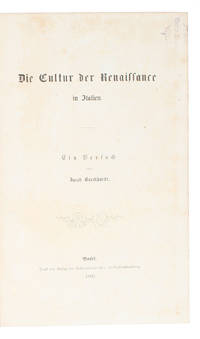
186036183Basel 1860. 8vo. A little later green half cloth with a recent printed paper title-label to spine. Brownspotting to some leaves. Some underlinings and maginal annotations all in pencil. Near contemporary annotations/description pasted on to verso of dedication-leaf. 4 576 pp. <br/><br/><em>The scarce first edition of Burckhardt's main work the groundbreaking work on the culture of the Renaissance which helped found the historical study of this previously much overlooked era. " "The most penetrating and subtle treatise on the history of civilization" in Lord Acton's words "a mere essay" as Burckhardt himself called it "The Civilization of the Renaissance in Ittaly" has for more than a century determined the general conception of thirteenth- to fifteenth-century Italy." PMM p. 210This classic of Renaissance historiography is of the greatest importance to the development of the history of the Renaissance and of history of art and culture in general. More specifically Burckhardt here establishes the fact that the Renaissance came first in developing the human individuality to the highest degree. He places the earliest signs of "the modern European Spirit" in Florence which was a great contributing factor to the comprehension of this city as representing one of the highlights of European culture.The Swiss historian of art and culture Jacob Chrisoph Burckhardt 1818-1897 contributed seminally to the historiography of these two fields. He is considered the discoverer of the Renaissance and with his main work he founded the study of thirteenth- to fifteenth-century Italy and thereby the historical study of the Renaissance the society of which he dealt with all aspects of. In general Burckhardt's works all constitute an original historical approach to the study of art culture social institutions etc. As a highly respected scholar of Greek civilization Burckhardt with his original historiographical approach was highly admired by Nietzsche who also attended his lectures. The two kept in contact and corresponded frequently. Like Nietzsche Burckhardt was a great admirer of Schopenhauer and he greatly opposed the Hegelian interpretations of history.". as in the case of other great historians such as Gibbon Ranke Macaulay no criticism of details can detract from the powerful spell which Burckhardt's book has exercised upon such widely different writers as Ruskin Nietzsche and Gobineau as well as upon innumerable lovers of the most magnificent period of European history." PMM.Printing and the Mind of Man 347. </em> hardcover
181347139Harrisonburg: Printed for the Author: By Davidson & Bourne 1813. 1st edition American Imprints 28029; Field 199; Harris Collection p. 42; Sabin 8787; Wegelin 889. Period full brown sheep binding with red leather gilt stamped title label to spine with 7 horizontal rules to same speckled edges. General wear to binding. Usual age-toning & foxing to paper; ffep lacking lower quarter. Prior owner signatures one dated 1858 of Jacob and Emeline Ritner. A solid VG copy. 252 12 pp. "List of Subscribers" last 12 pages which lists names in 3 columns per page ~ 60 names / column from 11 states: Virginia 7 pp Kentucky 3 pp Tennessee 1 page Ohio 2/3 page & Pennsylvania Maryland New York South Carolina Connecticut North Carolina & Louisiana comprising the last 1 columns. Of particular interest today is the large number of women so listed throughout this early 19th C. subscriber list providing strong evidence of their literary interests & financial wherewithal easily an academic project to research these women and gather additional demographics for this group. 12mo. 6-1/2" x 4" <br/><br/>From Harris we learn the author was born in Virginia served as a State Senator and subsequently as Postmaster at Georgetown. Captain Jacob Ritner a self-styled "MOUNTAIN MUSE" in his hand under his signature to the front paste-down played a role in "most of the major military events of the Western Theater: Wilson's Creek Vicksburg Chattanooga and Lookout Mountain the Atlanta Campaign including the Battle of Atlanta Sherman's March to the Sea the Occupation of Savannah and the Carolina's Campaign." Perhaps he viewed himself as a mid-19th Century Daniel Boone A nice copy of this heroic poem centered on one of America's frontier icons. Printed for the Author: By Davidson & Bourne hardcover books
1814248076West Bloomfield NY 1814. 1 p. plus integral address leaf. 4to on a folded folio sheet. Old fold lines minor soiling; near fine. In a green half morocco and cloth clamshell case. 1 p. plus integral address leaf. 4to on a folded folio sheet. A hasty note written by Major General Jacob Brown to New York politician Nathan Williams requesting more arms and equipment for the siege of Fort Erie currently underway. The Americans led by Brown captured Fort Erie on July 3 1814. British forces led by Lt. General Gordon Drummond engaged the Americans at the bloody Battle of Lundy's Lane on July 25th where Brown was wounded; the Americans retreated to Fort Erie and Brown was sent off to convalesce. After repeated sorties and engagements the American commander General Gaines was gravely wounded and Brig. General Eleazer Ripley - who thought the whole operation was doomed to failure - took command. Brown though not quite recovered from wounds taken at the battle of Lundy's Lane the previous month was sent to replace the pessimistic Ripley as the commander of the Fort. Brown had made a name for himself at the battles of Sackett's Harbor and Lundy's Lane and his actions at the Siege would cement his position as a national hero winning him the Congressional Gold Medal in November 1814. Brown jotted this note before setting out to command the troops at the Fort. He writes:<br/> <br/>"My dear Sir I am so far on my way towards Buffalo. The militia turn out better than was expected. We shall I fear be deficient in arms. You will jump into your easy carriage and ride to Rome as fast as possible upon the receipt of this and see that the keeper of the arsenal there forwards fifteen hundred stand with equipments compleat with all the rapidity possible. Your attention is of much importance."<br/> <br/>A wonderful letter written by Major General Jacob Brown on his way to the battle that would ensure his lasting fame. unknown books
1859017587Wellsburg VA: Jacob & Smith 1859. Book. Very good condition. Hardcover. First Edition. 12mo - over 6¾" - 7¾" tall. 280 pages of text. Original brown stamped cloth binding with moderate rubbing to the extremities and fraying along the hinges with some edges re-attached and with original backstrip remaining intact; protected in custom stiff archival mylar. Illustrated with a frontisportait of Gass and three plates pg.59 pg.108 pg.248 as well as other vignettes; complete. Minor spotting to the closed page edges scattered light soiling to numerous page edges and a few pages with small spots of staining and a few that have the corners creased. Overall an attractive unrestored example of this memoir of the last survivor of the Lewis & Clark Expedition. Title continues ".Together with Gass' Journal of the Expedition Condensed; and Sketches of Some Events Occurring During the Last Century in the Upper Ohio Country Biographies Reminiscences etc." Previous owner's ink name mostly erased from original colored front endpapers. Retains both front and rear sets of the original colored endpapers as well as two additional white endpapers at the front and three additional white endpapers at the rear. Howes J-31aa. Wagner Camp 6:10. Streeter 3067. Graff 2183. Sergeant Gass lived to age 99 outliving all other members of the Lewis and Clark Expedition. Jacob & Smith Hardcover books
18792558331879. With watercolours photos etc. 4to. Quarter contemporary morocco gilt spine and marbled boards a.e.g. Minor rubbing some pages have been excised. With watercolours photos etc. 4to. Front free endpaper has charming small watercolour of house tipped in with legend in pencil "I believe this is the first dwelling after marriage Rainham Kent. G.T.N. ordained 1806 preached at Romsey.<br/><br/>2. Lumley Lodge Richmond pen and ink drawing. Laid in.<br/><br/>3. Watercolour : "House & chapel built by him of Dr César Malam Prè du Champs- Geneva<br/><br/>4. Pencil drawing "Birthplace of Phillip George de Grand Jacob: Roath Court was left for Somerton in 1808." Signed in picture "Roath Court Frant. July9-39."<br/><br/>5. 2. Lumley Lodge Richmond pencil drawing<br/><br/>6. Crawley Rectory 1832 by A.S.J. Pencil drawing<br/><br/>7. Crawley Rectory and grounds by ASJ<br/><br/>8. Wash drawing of "Abbey Close Winchester" identified lower left<br/><br/>From hence mostly photographs. unknown books
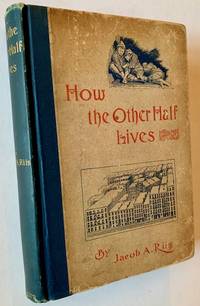
189021441New York: Charles Scribners Sons 1890. Pictorial boards. Very Good. A solid very presentable copy of the 1890 true 1st edition of this seminal study of poverty on New York's Lower East Side with its pictorial boards over navy-blue cloth and with the matching "1890" dates at the title and copyright pages. Tight and VG with light spotting and offseting along the top-edges and a touch of light wear to the spine ends and the fore-edges. Thick 12mo bright gilt-titling at the spine. 43 illustrations -- many of them pictorials-- complementing Jacob Riis's timeless text. Charles Scribners Sons unknown
185950742Wellsburg: Jacob & Smith Publishers and Printers 1859. 1859. First edition. First Edition. Beautifully rebound in Full Red Leather. iv-viii 280pp. Frontispiece. Illustrations. Soldier and Explorer Patrick Gass played a significant role in many events in America's early history. "A Soldier in the War with Great Britain From 1812 to 1815 and a Participant in the Battle of Lundy's Lane. Together With Gass' Journal of the Expedition Condensed; and Sketches of Some Events Occurring During the Last Century in the Upper Ohio Country Biographies Reminiscences Etc." Gass is best known for being the first member of the Lewis & Clark Expedition to publish his journal; nine years before the official journal was published. Wagner-Camp 6:10: "Gass became one of the best-known members of the expedition for several reasons: his key role as sergeant brought his name up frequently in the journals of Lewis and Clark his account was the first to be published he was the first to have a biography written about him and finally he outlived the other members of the Corps of Discovery by decades dying at the age of ninety-nine in 1870." Some occasional light foxing light soiling and minor damp staining to text block. A handsome copy with raised bands on spine with LIFE OF GASS in gilt and attractive blind-stamping. Protected in a clamshell box with decorative internal endpapers and title in gilt on leather label on spine. Jacob & Smith, Publishers and Printers, 1859. hardcover
1859017587Wellsburg VA: Jacob & Smith 1859. Book. Very good condition. Hardcover. First Edition. 12mo - over 6¾" - 7¾" tall. 280 pages of text. Original brown stamped cloth binding with moderate rubbing to the extremities and fraying along the hinges with some edges re-attached and with original backstrip remaining intact; protected in custom stiff archival mylar. Illustrated with a frontisportait of Gass and three plates pg.59 pg.108 pg.248 as well as other vignettes; complete. Minor spotting to the closed page edges scattered light soiling to numerous page edges and a few pages with small spots of staining and a few that have the corners creased. Overall an attractive unrestored example of this memoir of the last survivor of the Lewis & Clark Expedition. Title continues ".Together with Gass' Journal of the Expedition Condensed; and Sketches of Some Events Occurring During the Last Century in the Upper Ohio Country Biographies Reminiscences etc." Previous owner's ink name mostly erased from original colored front endpapers. Retains both front and rear sets of the original colored endpapers as well as two additional white endpapers at the front and three additional white endpapers at the rear. Howes J-31aa. Wagner Camp 6:10. Streeter 3067. Graff 2183. Sergeant Gass lived to age 99 outliving all other members of the Lewis and Clark Expedition. Jacob & Smith Hardcover