BOSSE, AbrahamBiblio.com
26 503 résultats
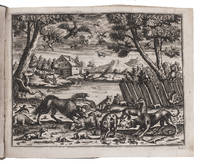
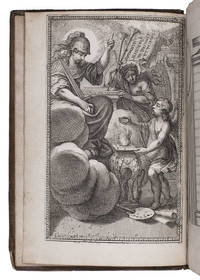
16679027Paris 1667. 8vo 17.5 x 12 cm. Abraham Bosse Sprinkled calf ca. 1700 sewn on 5 cords 3 attached to the boards the other 2 cut flush with the bookblock richly gold-tooled spine with black morocco spine label gold-tooled board edges brown sprinkled edges. With engraved allegorical title-print 45 full-page plate size mostly ca. 13.5 x 8.5 cm and 1 double-page ca. 16.5 x 15 cm engraved plates of faces hands feet ears and other parts of the human body a camera obscura battles landscapes perspective drawings human bodies and skeletons all intended as models for artists to follow. 47; 30; 4; 4; 11 2 added engraved prints. Highly interesting collection of five 17th-century print series one a set of plates for an illustrated book all in the field of art drawing and ornamentation. They seem likely to have been printed together sometime around or soon after 1688.Ad 1: A beautiful print series intended as plates for a manual to learn the art of drawing and painting ranging from images of the human body to battle fields by the famous French artist Abraham Bosse 1602-1676. In the event the plates were published on their own and the makeup varies from set to set. Ad 2: A numbered series of 30 engravings of ornamentation that could be used in sculptural architectural art and book illustration including putti grotesque masks garlands etc. Paolo Farinati 1524-1606 worked mostly in his native city of Verona. Ad 3: A series of 4 prints showing artists at work intended to illustrate art technique. Two are devoted to drawing and the other two are devoted to painting. These prints are often considered part of the larger series described here separately as ad 1.Ad 4: A beautiful series of 4 prints representing the four elements in the form of two male and two female figures elegantly dressed with various items related to the relevant element. Blum tentatively dates the series to 1630 making it one of Bosse's earliest mature works.Ad 5: A complete set of the plates made to illustrate the first and only edition of Pierre Bullet's work on surveying Paris 1688. With a few plates primarily in ad 2 spotted but otherwise a good copy. The binding is somewhat worn and the front hinge cracked.l BAL 494 ad 5; Berlin Kat. 4355 ad 2 1736 ed.; A. Blum L'oeurve gravé d'Abraham Bosse 358-387 ad 2 940-943 ad 4 1101-1152 ads 1 3; for Bosse: Thieme & Becker IV pp. 402-403. ABE CAT Architecture ABE CAT Art History hardcover
2010CBS-9780470278154John WileyExclusive 2010. New. John Wiley(Exclusive) unknown
2010CBS-9780470278154John WileyExclusive 2010. New. John Wiley(Exclusive) unknown
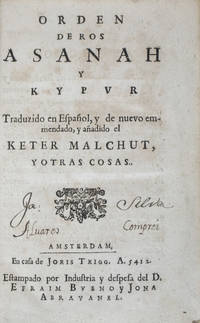
43935Amsterdam: En Casa de Joris Trigg/ D. Efraim Bueno y Jona Abravanel 5412. Hardcover. g- to vg-. Duoecimo. 7x4.5". 478pp. Original dark brown leather with blind-stamped ruling and tooling on the covers and spine. Raised bands on the spine. Metal clasps. Red-speckled edges of the book block. An early Spanish-language edition of the complete Jewish High Holiday prayer book Machzor based on the original translation by Abraham Usque originally printed in Ferarra Italy in 1553. This edition contains some added material not previously present including most prominently Solomon ibn Gabirol's famed philosophical poem "Keter Malkhut" Royal Crown which over the years has come to be read as part of the Yom Kippur service in some Jewish traditions. <br /> <br /> Published by Dr. Efraim Bueno and Jona Abravanel to serve members of the then sizable Sephardic Jewish community in Amsterdam. A significant portion of the community were former Conversos Jews who had outwardly converted to Catholicism during the inquisition in Spain who then emmigrated and were able to reestablish their Jewish identity and thus were unable to read Hebrew hence the text's publication in Spanish. As stated in the foreword this edition includes some additions to the text not included in previous versions and omits some material deemed to have been unnecessary. The prayer book starts with the penitential prayers Selichot p.3-47 which includes decorative head and endpeices. This section is followed by the Rosh Hashanah service p.48-195 and then the Yom Kippur service including the "Keter Malkhut" p.254-289. Title page is has a decorative vignette printed in woodblock and is printed with the Hebrew date "5412". Pages 305-352 are misprinted as "321-368" with their correct numbers handwritten above in ink. All text in Spanish. <br /> <br /> Binding with some rubbing and scratches to extremities and to the covers. Front hinge starting to split slightly at the head and tail of the spine. Missing one of the metal clasps on the back cover. Starting at interior covers. Some minor to light sporadic damp staining and foxing throughout the text. Period signature of the previous owner "Silva" in ink on on the title page and p.200. Name of another previous owner in ink on the interior back cover. Book block tight overall. Binding in good- interior in very good- condition overall. Quite scarce. Dr. Efraim Ephraim Bueno aka Martin Alvarez 1599-1665 was a Portuguese-born Jewish physician in Amsterdam of the famed Iberian-Jewish Bueno medical dynasty and prominent member of the city's Sephardic community. He served for many years as the personal physician to famed artist Rembrandt van Rijn who in fact depicted Bueno in two of his works one an etching and the other a painted portrait. He received his medical education and degree in Bordeaux and was known to have practiced medicine in Amsterdam until the time of his death. In addition to his medical practice Bueno was an accomplished biblical scholar who along with Jona Abravanel published numerous Jewish works the on the bible and Jewish Law. <br /> <br /> Jona Abravanel 1593-1667 was a Sephardic Jewish poet in Amsterdam from the prominent Abravanel family. He was the nephew of Famed Portueguse-Dutch Rabbi and printer Menasseh ben Israel. Together with his uncle and Dr. Efraim Bueno he was responsible for publishing numerous works of Judiaca in the 17th century.<br /> <br /> In this edition the title page was mistaken printed with the word "Kuyper" which was then correct via a scrap of paper pasted on top. References: KAYSERLING 1890 p. 7 31 61 under Abravanel Bueno and Liturgy PALAU 1923 under 202415 with an incorrect dat of 1662 PEETERS 1933 1037. <br /> <br /> This publication follows an edition with same title also from Amsterdam in 1630 but printed by David Pardo and Salom ben Yosseph Menasseh ben Israel with different pagination. En Casa de Joris Trigg/ D. Efraim Bueno y Jona Abravanel hardcover
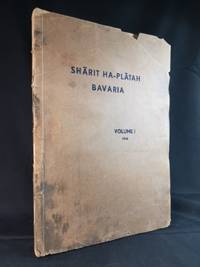
657021Dachau: Central Committee of Liberated Jews in Bavaria 0.J. 1945. Band I der Liste mit den Namen der Überlebenden der Konzentrationslager die in den DP-Lager und Lazaretten von Dachau Freimann Landsberg Schleisheim Penzing St. Ottelia Neustift Feldafing Pasing Buchberg Mittenwald Garmisch waren. Dazu aufgeführt auch die Namen Geburtsjahre und Geburtsorten von Rumänen. In deutscher und englischer Sprache. - Umschlag und Rücken mit Fehlstellen und etwas fleckig die letzten zwei Blätter mit kleinen randlichen Fehlstellen KEIN Textverlust gering wellig. --- Sharit Ha-Platah auf Deutsch Holocaust-Überlebende oder wörtlich Der Rest der Überlebenden wurde veröffentlicht als eine umfassende Liste von Überlebenden der Nazi-Tyrannei. Deborah Dwork schreibt über die Entstehungsgeschichte: Der Titel Sharit Ha-Platah der gerettete Rest verweist auf eine Wendung im Buch der Chronik des Tanach mit der die Überlebenden der Zerstörung des Königreiches Israel durch die Assyrer bezeichnet werden. Frei übersetzt bedeutet er so viel wie "Überlebende des Holocaust". Die Erstellung dieser umfangreichen aber unvollständigen Liste von Überlebenden war eine Idee des amerikanisch-jüdischen Militärseelsorgers Abraham Klausner als dieser im gerade befreiten Konzentrationslager Dachau dessen vielfältige Bevölkerung sah unter der sich auch eine erhebliche Zahl an Juden und auch wenige Jüdinnen befanden. Das Projekt erstreckte sich schnell auf die DP-Lager in ganz Bayern und wurde durch Überlebendenlisten aus anderen Orten ergänzt. Zwischen Mai und Oktober 1945 wurden fünf Bände veröffentlicht. Im Zuge ihrer Veröffentlichung wurden laufend weitere Listen erstellt. Das Zentralkomitee der befreiten Juden in der amerikanischen Zone veröffentlichte Anfang 1946 in München einen umfangreichen sechsten Band mit Ergänzungen. Die US-amerikanische Armee hatte die Bedeutung dieser Veröffentlichung erkannt denn sie besorgte den Druck auf eigenen Buchpressen und auf eigene Kosten. Nachdem zuerst die Kommunikationswege abgeschnitten und dann Menschen in riesigen Zahlen deportiert worden waren gefolgt schließlich von Nachrichten über Massenmorde waren Millionen Menschen auf der Suche nach ihren Familien und Freunden. Wo waren sie Was war ihnen zugestoßen Die Überlebenden in Europa erschlossen sich eigene Kommunikationswege um so schnell wie möglich Angehörige ausfindig zu machen oder von diesen gefunden zu werden. Dabei wählte jede und jeder für sich eine jeweils eigene Vorgehensweise und stellte seine oder ihre Fähigkeit zum eigenständigen Handeln unter Beweis. Viele tausende Überlebende warteten nicht darauf dass eine Organisation tätig wurde und unternahmen im Rahmen ihrer Möglichkeiten selbst Schritte um eine Zusammenführung zu erreichen. Das Büro des gerade gegründete Zentralkomitees der befreiten Juden in Bayern das sich im ausgebombten Deutschen Museum eingerichtet hatte bot bald den Rahmen für diese Tätigkeiten. Da dort viel Betrieb herrschte war es nur folgerichtig dort nach Informationen zu suchen. "Eines Tages kam ein Jude an diesen Ort der nasskalten Flure an dem das Komitee seine Arbeit aufgenommen hatte und schrieb seinen Namen auf die weiße Wand" erinnerte sich der amerikanische Militärseelsorger Abraham Klausner. "Vier Monate später war die Wand schwarz vollgeschrieben mit den Namen derer die auf der Suche nach ihren Männern oder Frauen hier durchgekommen waren." Zu diesem Zeitpunkt - im Sommer 1945 - machte sich niemand mehr Hoffnung Kinder finden zu können. Klausner war in Memphis geboren worden und war am Hebrew Union College zum Rabbiner ordiniert worden. Er war 30 Jahre alt als er zu einem einmonatigen Sondereinsatz mit dem "116th Evacuation Hospital" einem mobilen Krankenhaus in das am 29. April 1945 gerade befreite Konzentrationslager Dachau entsandt wurde. Seinem Vorgesetzten war völlig klar dass die geringe Anzahl jüdischer Soldaten in dieser Einheit bei weitem nicht den Einsatz eines Rabbiners rechtfertigen konnte. Er ging aber davon aus dass sich unter den Überlebenden in Dachau Juden befinden würden sodass Klausners Dienste gebraucht würden. Wie groß diese Dienste Klausners sein würden davon hatte er allerdings keine Vorstellung. Das mobile Krankenhaus versorgte die Kranken in Dachau an und zog danach weiter. Ohne Klausner. Der war so formulierte es sein Kollege der Militärseelsorger Abraham Hyman zu einem "herumreisender Rabbiner in Uniform geworden der sich irgendwie selbst eine Ausnahme von den Armeevorschriften genehmigt hatte und niemandem mehr Rechenschaft schuldete außer sich selbst". Aus Sicht Klausners waren die Bemühungen der Überlebenden ihre Verwandten ausfindig zu machen von grundlegender Bedeutung für die Zurückerlangung ihrer Identität. "Wird nicht ein jeder von uns erst durch seine Beziehungen zu Eltern Familie und Land er selbst" Diese Verbindungen seien gleichsam Fäden "die sie die Überlebenden zurück in die ihnen einst vertraute Realität einweben würden". Klausner hatte seine Aufgabe gefunden. Umgehend begann er sein Vorhaben eine Liste der Überlebenden zu erstellen. "Ich schlug vor dass wir als erste Reaktion auf die Befreiung feststellen sollten wer am Leben war dass wir eine Zählung vornehmen sollten derer die in Dachau waren und sie in einer Liste nach Name Alter und Geburtsort führen sollten" erinnerte er sich. Er stellte Papier Bleistifte und Schreibmaschinen zusammen und brachte alles zu den Bewohnern des DP-Lagers. Sie sollten so seine Bitte gemeinsam mit ihm an der Erstellung eines umfassenden Verzeichnisses der jüdischen Überlebenden in Dachau mitwirken: Name Geburtsjahr letzter Wohnsitz derzeitiger Aufenthaltsort. Die amerikanische Armee verwandelte Dachau schon bald in ein Internierungslager für Kriegsverbrecher in dem höherrangige Mitglieder der SS der NSDAP und der deutschen Armee festgehalten wurden. Die verbleibenden früheren KZ-Gefangenen wurden an andere Orte gebracht. Klausner zog nach Feldafing um. Dorthin ließ er sich die von den in den bayerischen DP-Lagern untergebrachten Holocaust-Überlebenden erstellten Listen senden. Die Angaben wurden dort von ihren Glaubensbrüdern in das alphabetisch geführte Verzeichnis übernommen. Klausner wurde die ganze Bedeutung dieser Listen bewusst als er in einem aus einer einzigen Baracke bestehenden DP-Lager am Brennerpass auf eine Gruppe jüdischer Frauen aus Ungarn traf. Als er ihnen eine Abschrift anbot "fielen sie über die Blätter her und suchten jammernd und weinend nach einem Namen der für sie eine Verbindung zu den Lebenden schaffen würde." Eindeutig mussten die Listen veröffentlicht und verteilt werden. Klausner machte umgehend einen Drucker ausfindig und bestellte tausend Exemplare obwohl es verboten war für andere als militärische Zwecke zu drucken. Für das veröffentlichte Verzeichnis wählte er den Namen Sharit Ha-Platah aus "der gerettete Rest". Mit diesem Begriff bezeichnete sich das Zentralkomitee der befreiten Juden in der amerikanischen Besatzungszone selbst. Für den Rest der Welt waren sie jüdische Überlebende DPs oder Flüchtlinge. Aber sie selbst sahen sich als Sherit Hapleita als diejenigen die Leid und Verlust biblischen Ausmaßes erlitten hatten wie in Klausners Verzeichnissen unterstrichen wurde. "Diese Seiten enthalten einen Teil der Namen des Überrestes des Volkes Israel der über die DP-Lager in Bayern verteilt ist" erläuterte Klausner im Vorwort des ersten im Juli 1945 veröffentlichten Bandes. "Schnelligkeit war bei der Erstellung wichtiger als Genauigkeit. Daher sind die Listen nicht systematisiert" machte er deutlich und erläuterte weiter: "Zum größten Teil sind sie alphabetisch nach Lager und nach Abteilung im jeweiligen Lager sortiert". Des Weiteren wies er darauf hin dass "diese Liste nur die Region Bayern abdeckt". Am wichtigsten allerdings: es waren weitere Bände in Vorbereitung. Der zweite Band wurde am 20. Juli veröffentlicht und der dritte am 1. August. Es folgten die Bände 4 und 5. Diese Bände waren bald so hoch anerkannt dass die US-amerikanische Armee Klausners zusammengefasste Ausgabe mit sämtlichen in den Bänden 1 bis 5 enthaltenen Namen - insgesamt 30.000 - im Dezember 1945 veröffentlichte. Der Titel der Veröffentlichung nannte ihren Zweck: Sharit Ha-Platah: Eine umfassende Liste der Überlebenden der Nazi-Tyrannei - veröffentlicht damit die Verlorenen gefunden werden und die Toten in uns fortleben können Site der Bundeszentrale für politische Bildung. - 0 0 0 Dachau: Central Committee of Liberated Jews in Bavaria 0.J. (1945). unknown
2021__111953030XWiley 2021. Hardcover. New. 8th edition. 8000 pages. 18.50x12.00x9.75 inches. Wiley hardcover
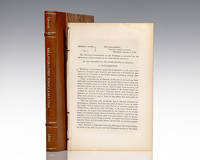
1863149486Washington: Government Printing Office January 2 1863. Rare first War Department and fifth overall printing of the Emancipation Proclamation. Twelvemo General Orders No. 1 extracted from the larger volume of orders for 1863 4 pages disbound. President Lincoln had intended to issue the order earlier in 1862 but deliberately delayed its release until after the Union's strategic victory at Antietam at which point he announced the Preliminary Emancipation Proclamation. General Order No. 139 September 22 1862 which declared that all slaves held in rebelling states would be forever free from the first day of January 1863. The text of the final Emancipation Proclamation present in this order is noted for its direct and decisive language: "By the President of the United States of America . That on the first day of January in the year of our Lord one thousand eight hundred and sixty-three all persons held as slaves within any State or designated part of a State the people whereof shall then be in rebellion against the United States shall be then thenceforward and forever free; and the Executive Government of the United States including the military and naval authority thereof will recognize and maintain the freedom of such persons and will do no act or acts to repress such persons or any of them in any efforts they may make for their actual freedom." The first printing for the War Department of General Orders No. 1 was distributed to various military outposts and bureaus throughout the United States. Based on the extensive research of Charles Eberstadt the copy for the War Department was the fifth time the final version of the Emancipation Proclamation appeared in print on January of 1863 following three hastily prepared issues for the State Department and another for Lincoln's hometown Illinois States Journal newspaper in Springfield Illinois. A copy of the War Department Printing was included in the Grolier Club's One Hundred Influential American Books Printed before 1900. Eberstadt 12; Grolier Club One Hundred Influential American Books 71; Streeter 1751. In near fine condition. Housed in a custom half morocco case. A scarce work. The Emancipation Proclamation issued by President Abraham Lincoln on January 1 1863 represented a pivotal moment in the trajectory of the American Civil War and the broader struggle over the institution of slavery. Although it did not immediately free all enslaved individuals the proclamation declared that all persons held as slaves in states or parts of states still in rebellion against the United States were to be henceforth free. This executive order grounded in Lincoln's war powers as commander-in-chief was intended primarily as a military measure to weaken the Confederacy by undermining its labor force and discouraging foreign powers from recognizing or supporting the secessionist cause. The proclamation also signaled a significant shift in Union war aims reframing the conflict from a struggle solely to preserve the Union to one explicitly linked to the abolition of slavery. While its immediate legal impact was limited to areas outside Union control the Emancipation Proclamation laid the groundwork for the eventual passage of the Thirteenth Amendment which formally abolished slavery throughout the United States. Government Printing Office unknown
186222179<p>"<i>We cannot escape history… In giving freedom to the slave we assure freedom to the free… We shall nobly save or meanly lose the last best hope of earth.</i>"</p><p>One month before signing the Emancipation Proclamation the president proposes colonization and his plan for compensated emancipation discusses foreign affairs reports on progress of the Pacific Railroad the war and finance. This rare "<i>Sentinel Extra</i>" broadsheet apparently unrecorded in OCLC has other news of the day on the verso including a fantastic article quoting General Meagher's reaction to the resignation of several officers after McClellan was removed.</p> <b>ABRAHAM LINCOLN.</b>Broadsheet <i>"Sentinel Extra"</i> place unknown ca. December 2 1862 9⅛ x 24 in. 2 pp.<p><b><br /></b></p><p><b>Excerpt:</b></p><p>"<i>The suspension of specie payments by the banks… made large issues of United States notes unavoidable. In no other way could the payment of the troops and the satisfaction of other just demands be so economically or so well provided for… A return to specie payments however at the earliest period … should ever be kept in view. Fluctuations in the value of currency are always injurious… Convertibility prompt and certain convertibility into coin is generally acknowledged to be the best and surest safeguard against them; and it is extremely doubtful whether a circulation of United States notes payable in coin and sufficiently large for the wants of the people can be permanently usefully and safely maintained…</i></p><p><i>There is no line straight or crooked suitable for a national boundary upon which to divide…Among the friends of the Union there is great diversity of sentiment and of policy in regard to slavery and the African race amongst us… emancipation will be unsatisfactory to the advocates of perpetual slavery but the length of time 37 years in Lincoln's compensated emancipation proposal should greatly mitigate their dissatisfaction. The time spares both races from the evils of sudden derangement… while most of those whose habitual course of thought will be disturbed by the measure will have passed away before its consummation. They will never see it. Another class will hail the prospect of emancipation but will deprecate the length of time. They will feel that it gives too little to the now living slaves. But it really gives them much. It saves them from the vagrant destitution which must largely attend immediate emancipation in localities where their numbers are very great and it gives the inspiring assurance that their posterity shall be free forever… Let us ascertain the sum we have expended in the war since compensated emancipation was proposed last March and consider whether if that measure had been promptly accepted by even some of the slave States the same sum would not have done more to close the war than has been otherwise done…</i></p><p><i><b>Fellow-citizens we cannot escape history.</b> We of this Congress and this administration will be remembered in spite of ourselves. No personal significance or insignificance can spare one or another of us. <b>The fiery trial through which we pass will light us down in honor or dishonor to the latest generation. We say we are for the Union. The world will not forget that we say this. We know how to save the Union. The world knows we do know how to save it. We—even we here—hold the power and bear the responsibility. In giving freedom to the slave we assure freedom to the free—honorable alike in what we give and what we preserve. We shall nobly save or meanly lose the last best hope of earth.</b></i>"</p><p><b>Additional Content Below Lincoln's State of the Union</b></p><p>Three news items cover the bottom half of the third column verso.</p><p>The first discusses the three top western cities as grain shippers Chicago Milwaukee and Toledo. The numerical measurements of the grain are counted in bushels. Chicago tallied a total export of <i>Wheat Corn Oats Rye and Barely</i> which amounted to <i>55526816</i> bushels. Milwaukee totaled <i>14869625</i> bushels. Toledo totaled <i>18667817</i> bushels.</p><p>The second re-prints news from <i>Liverpool Journal of Commerce</i> published on November 11th regarding the British government's adherence to neutrality policies.</p><p>The third reports on Gen. Thomas Meagher's reaction to the resignation of some of his officers after Gen. McClellan was removed from his command of the Army of the Potomac:</p><p>"<i>Commanding a brigade composed principally of Irish soldiers the Brigadier-General considers it not out of place to remind them that the great error of the Irish people in their struggle for an independent national existence has been their passionate and blind adherence to an individual instead of to a principle of cause. Thus for generations their heroic efforts in the right direction have been feverish and spasmodic when they should have been continuous equable and consistent.</i>"</p><p><b>Thomas Francis Meagher</b> 1823-1867 was an Irish nationalist and leader of the Young Irelanders in the Rebellion of 1848. After being convicted of sedition he was first sentenced to death but received transportation for life to Van Diemen's Land in Australia. In 1852 he escaped and made his way to the United States where he settled in New York City. At the beginning of the American Civil War Meagher joined the U.S. Army and rose to the rank of brigadier general. He was most notable for recruiting and leading the Irish Brigade U.S. 69th Infantry Regiment New York State Volunteers and encouraging support among Irish immigrants for the Union. He had one surviving son from his first wife.</p><p>Following the Civil War Meagher was appointed acting governor of the Montana Territory. In 1867 Meagher drowned in the swift-running Missouri River after falling accidentally from a steamboat at Fort Benton.</p> books
1619119435Honolulu: Bishop Museum Press 1916-1917. Rare complete first edition set of Fornander's foundational work on Hawaiian history and legend. Quarto 9 parts in 3 volumes bound in three quarters 20th century calf with red morocco spine labels lettered in gilt gilt ruling and stamping to the spine in six compartments within raised bands original wrappers bound in. In fine condition. A rare and desirable complete first edition set. In 1831 Swedish-born ethnologist Abraham Fornander emigrated to America where he soon joined the whaleship Ann Alexander which departed from New Bedford Massachusetts in 1841 a five-year campaign in the Pacific Ocean. In 1844 he deserted the ship in Honolulu and soon became a citizen of the Kingdom of Hawaii marrying a Hawaiian chiefess from Molokai named Pinao Alanakapu in 1847. After founding several publications in Hawaii Fornander was appointed to the circuit court a position that allowed him to do extensive travel within the islands and learn a great deal about Hawaiian mythology and language. Fornander paid special attention to legends and genealogies that he thought preserved the history of the Hawaiian islands after their settlement--their external and internal wars dynastic quarrels and eventually their contact by Captain James Cook and George Vancouver. On his death in 1887 his voluminous research passed to the Bishop Museum who eventually ensured their publication. Bishop Museum Press hardcover books
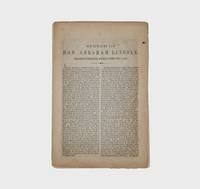
15859Lincoln Abraham. The Republican Party Vindicated--The Demands of the South Explained. Speech of Hon. Abraham Lincoln of Illinois at the Cooper Institute New York City February 27 1860. 16 pages caption title as issued. Lincoln's Historic Cooper Union discourse which catapulted him to serious presidential consideration and provided a cogent and widely-publicized argument that slavery was and always had been contrary to American values. <br/><br/>Lincoln's great Cooper Union speech argues that the Framers and early Congresses contemplated a narrow role for slavery. Examining the constitutional and early Congressional debates he demonstrates that contemporary statements viewed slavery "as an evil not to be extended but to be tolerated and protected only because of and so far as its actual presence among us makes that toleration and protection a necessity." Lincoln's argument received wide press coverage; it catapulted him into presidential contention for its great contribution placed the new Republican Party at the center of American constitutional and legal thought rather than an unacceptable extreme paving the way for his 1860 presidential win on the Republican ticket. An unusual 16-page issue of Lincoln's Cooper Union discourse followed at the middle of page 9 by John Hickman's July 24 1860 campaign speech. Page 16 prints Stephen Douglas' endoursement of the Dred Scott Decision and criticisms of his doctrine of Popular Sovereignty. Most copies print Lincoln's speech only in 8 pages. Scattered foxing dusting blank margin chipped not affecting text. Very good copy of this historic speech by Abraham Lincoln presaging his presidential nomination. unknown books
51-5965Amsterdam: Chez Michel Charles le CeÌne libraire chez qui l'on trouve un assortiment general de musique. MDCCXXVII. 1727. Folio 314 x 193mm. 2 vols. contemporary calf spines gilt with morocco lettering labels spines rubbed with small loss to 2 labels and spine ends; half-titles privilege leaf engraved additional pictorial title titles printed in red and black engraved portrait 44 engraved plates maps and plans 31 folding one of Goa with a few old paper repairs on verso and very small loss to one corner a few small damp spots on one plate large engraved illustrations one shaved in the text pp.134/5 slightly shorter and re-inserted occasional light spotting or page toning . Cordier Sinica 2077; Cordier Japonica 367-68; Lust 343. OCLC Number / Unique Identifier:30797326: Half title v. 1 : Voyages du Sr. Jean Albert de Mandelslo considerablement augmentez en cette derniere edition et divisez en deux parties Vol. 2 : Voyages du Sr. Jean Albert de Mandelslo. Tome secondEdition statement follows "Divisez en deux parties."Translation of: Morgenländische Reise-Beschreibung / Johann Albrecht von Mandelslo. Schleszwig : J. Holwein 1658. Wicquefort's translation appeared first as the 2nd part of "Relation du voyage de Moscovie Tartarie et de Perse . tr. de l'allemend du Sieur Olearius augmenteÌe de plus d'un tiers particulierement d'une 2de partie contenant le Voyage de Jean-Albert de Mandelslo ." Paris 1659 and Leyde P. van der Aa 1719. The present edition consists of the same sheets as the Leiden van der Aa 1719 edition with a new title page cf. NUC pre-1956 v. 358 p. 434Vol. 1: 28 p. 440 columns 4 p. 28 leaves of plates some folded; v. 2: 445-808 columns 72 p. 13 leaves of plates some folded.Errors in pagingSignatures: -3â´ 5² A-Zâ´ 2A-2Zâ´ 3A-3Nâ´ 3Oâ´ -3O4Vignette on title pages.Some leaves of plates form two-page. illustrations.Includes index. Amsterdam: Chez Michel Charles le CeÌne, libraire, chez qui l'on trouve un assortiment general de musique., MDCCXXVII. [1727] unknown
19035344Beautiful full morocco with gilt detailing and rule; 5 raised bands. Elaborately designed doublures with gilt dentelles. Silk fly sheets. "The Delphic Edition of The Breviary Treasures consists of 475 copies printed on French hand-made paper of which this copy is Number 94." xii 214 pp. 6 3/4 x 9 1/4 inches. Nathan Haskell Dole hardcover
1709KAHFNW706ETUNürnberg 1709. 8vo. Johann Leonhard Buggel Contemporary but not uniform vellum sewn on 3 cords with a hollow back vol. I with dark blue edges with a manuscript title in Latin at the head of the spine: Tractatus de insectis aliisque animalibus nocivis extirpandis; vol. II with a manuscript title in German at the head of the spine: Von schadliechen Ungedierter Außrottung II. Each volume with a folding illustrated engraved title-page and a folding letterpress title-page a larger folding engraved plate in volume II woodcut tailpieces and decorated initials headpieces built up from typographic ornaments. Set in fraktur types with incidental Schwabacher and roman types. 2 volumes. 22 699 = 697 23; 38 944 48 pp. plus 2 folding letterpress title-pages and the 3 engravings. First edition rarely found complete of a detailed account of animals that are harmful to people and to their livestock the treatment of bites illnesses and poisonings they cause and instructions for their extermination. It covers animals on land in water in the air and underground. The large folding plate in vol. II shows 38 insects including 14 caterpillars and the two engraved title-pages for volumes I and II show well over 50 vol. I about 25 vol. II animals not counting a large group of ants and many birds in the distance in the former. The book also provides information about uses of the dead harmful animals for making clothes and medicines and includes many medicinal recipes. The animals discussed include wolves foxes mad dogs birds including birds of prey snakes frogs toads rats mice moles beetles caterpillars bed bugs lice fleas and other insects spiders snails and other molluscs various kinds of worms and even a dragon and basilisk the latter illustrated in the engraved title-page to volume I: it looks more cock-like than snake-like so most people would now call it a cockatrice but the two have long been used almost interchangeably. Krafft notes that dragons are rarely or never found in Germany but says one was found in Bohemia a few years ago and that they are more common in Nubia Libya and the largest ones in "Indien" probably meaning the East Indies and perhaps based on reports of the Komodo dragon.With an owner's inscription of Stefan von Clodt 1674-1737 Vicar General and Provost of Michaelsberg in Fulda on the title-page of vol. I. Somewhat browned vol. I only slightly and with an occasional small stain but still in good condition. The binding of vol. I is in very good condition with only a few small worm holes in the hinges; vol. II is rubbed and damaged lacking the lowest 3 cm of the backstrip. A very detailed source of information on animals regarded as pests from both a medical and a farming and gardening perspective.l Lindner Jagdliteratur 11.1171.01 & 11.1173.01; VD18 11041935 = 90643208 & 90643224; cf. Horn & Schenkling 12340 with 1713 ed. of vol. I. ABE CAT Agriculture hardcover
1616ABC_48242Amsterdam 1616. Oblong 4to ca. 16 x 21 cm. Abraham Goos in de Kalverstraet 19th-century quarter calf with a manuscript number on the spine "32" sprinkled paper sides. With an engraved title page signed by P.Serwouter scul. bottom right after D.Vinck Boons bottom left 23 full page maps several decorated woodcut initials and woodcut tailpieces. 7 "305" =294 2 1 blank pp. Rare first edition of one of the first atlases of the Low Countries with 23 very detailed maps. It is the only atlas published by the mapmaker Abraham Goos himself. At the time the present atlas was published the Seven United provinces The Northern Netherlands were still together with the 10 provinces of the Spanish or Habsburg Low Countries. The atlas includes two maps of the Low Countries as a whole one map of each of the seventeen provinces except Drenthe which is included in the map of Overijssel four additional maps of Holland and one additional map of Brabant. Gooss maps were also used for the Atlas Minor published by Johannes Janssonius in 1628.The maps are elegantly designed with decorative title cartouches finely engraved and set in a decorative oval rectangular frame while the corners are decorated in a Renaissance style. The work was reprinted by Janssonius in 1625 and Doncker in 1685. Only the first edition was printed by Goos himself. Koeman recognizes only one Goos issue but Van der Krogt's reissue of Koeman's Atlantes Nederlandici distinguishes two of which ours is the second. The two issues are nearly identical but the second can be recognised by the imprint which includes Goos's new address "inde Kalverstraet" and the addition of the text "cum privilegio" to the maps which Goos added after receiving his privilege for this atlas on 24 December 1615 and an honorarium of 120 guilders from the States General on 8 January 1616. Generally 20 of the 23 maps of the second issue have this addition but in the present copy it is 17: the text is not present on maps 3-5 8 and 11-12.The text was written by the poet and translator Reinier Telle 1559-1618 who based it mainly on Ludovicos Guicciardinis Beschrijvinghe van alle de Nederlanden translated by Telle in 1613. Telles text was in turn the main source for the text in De Vyerighe Colom; finally that text was again used for a new edition of Guicciardinis work published by Jacob van Meurs in 1660.Abraham Goos ca. 1590-before 1643 was born in Antwerp as the son of Margaretha van den Keere the sister of the famous mapmaker Hendrik van den Keere. In 1600 Goos moved to Amsterdam where he soon was employed and trained by the Hondius family and by Willem Jansz. Blaeu. He had his own shop named "In t vergulde Caertboeck" first located op den Dam later around 1615 in the Kalverstraat. Pieter Goos Abrahams son later became famous for his sea atlases and pilot guides.With an erased ownerships entry at the head of the half-title and 18th-century annotations on pp. 136-138. The edges and corners of the boards are scuffed the boards have been rubbed with some loss of material. The first few leaves are somewhat browned a repaired hole in the lower margin of the title page false folds in the half title some marginal small tears small holes in 2 leaves with some loss of text a repaired tear in the last leaf a water stain in the outer half of the last few leaves. Otherwise in good condition.l Krogt P. van der Koemans Atlantes Neerlandici IIIB § 363 pp. 612-615 no. 363:01B; Koeman Atlantes Neerl. II p. 121 Goo 1; STCN 853385556; USTC 1032942; cf. for the text: Fontaine Verwey H. de la Reinier Telle hekeldichter pamfletschrijver vertaler in: Uit de wereld van het boek III pp. 55-86 esp. 68. hardcover
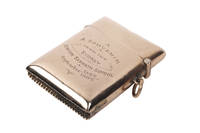
19055000696Sydney 1905. In exemplary original condition. 9 carat gold matchbox 15 gr; 45 x 30 mm; monogrammed on the back with interwoven letters "M.A.C." <p><p>A remarkable memento of the pioneer Jewish educator Maurice Moses Abraham Cohen 1851-1923. Objects from the Australian Jewish community at the start of the 20th century prior to the great waves of Jewish immigration are very scarce. The monogrammed initials on this attractive presentation piece identify it as a gift from the Sydney Jewish Sabbath School to M.A. Cohen the School's first principal.</p> <p>Born in Ukraine to a Sephardic family Cohen was a talented linguist. Educated in England after spells in India and Afghanistan he travelled to Australia in 1887 where he took up a role as the first headmaster of the Jewish Sunday School just then established in Sydney within the Great Synagogue Australia's finest synagogue. He went on to become head of the NSW Jewish Board of Education. At one time he was editor of Sydney's first Jewish weekly newspaper the Australian Jewish Weekly as well as a lecturer on Hebrew at a number of theological colleges in Australia. </p> <p>Cohen was one of the first European Australians to call attention to the plight of the Australian Aboriginal peoples and to argue for compensation and land rights even risking his position as editor of the Australian Hebrew Newspaper with his fiery opinion pieces on the subject. He also argued for increased non-discriminatory immigration drawing from all cultures and vehemently opposed the White Australia Policy. The Australian Jewish Historical Society "The First Jewish Educator for Sydney": online resource.</p> <p>So-called "Vesta" cases named for the Roman goddess of fire and the hearth are small portable boxes made to contain matches and keep them dry. More commonly made of tin or sometimes enamel or silver with later examples sometimes carrying advertising or being highly decorated gold examples from this period represent a high standard and were very suitable for presentation pieces; this fine example was perhaps made to join a pocket watch on its gold chain.</p> </p> . unknown
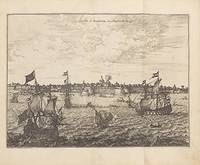
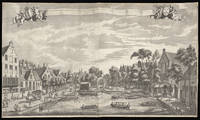
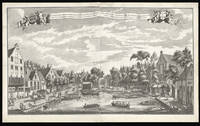
172014400Amsterdam: Leonard Schenk c1720. 550 by 960mm 21.75 by 37.75 inches. Etching with engraving on two sheets joined. A view of the Overtoom in the eighteenth century. By the eighteenth century numerous country villas had been built along the Overtoom one of the main canal's linking Amsterdam with river Schinkel as well as pleasure gardens and numerous ale houses and shops. The Overtoom gained its name from the machine for moving a boat from one body of water to another where the level varied. Rather than with the aid of a lock in other canal systems the boat would be physically pulled across the land. The machine is depicted to the right of the print consisting of two large wheels it can be seen pulling a small boat onto the canal. Proof before letters with part of title in manuscript in a contemporary hand. Leonard Schenk fl.1720-1746 engraver mapmaker and publisher in Amsterdam. Abraham Rademaker 1677 21 January 1735 was an 18th-century painter and printmaker from the Northern Netherlands. Rademaker was born in Lisse. According to the RKD he was a versatile artist who painted Italianate landscapes but is known mostly for his many cityscapes and drawings of buildings that were made into print. R.W.P. de Vries auction 1925: 288. Leonard Schenk, unknown
25123Folio 4 108 pag. Gebonden in eigentijdse geheel perkamenten band. Geillustreerd met portret en 6 grote gravures Delft Den Haag en Scheveningen door Philippe en Mathem naar Toorenvliet. Gebonden met: Rob. Keuchenius 'Anglia triumphans sive in inaugurationem . Caroli II . poemation. Den Haag Vlacq 1660 36 pag. unknown
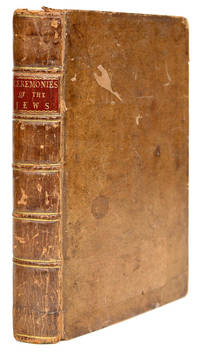
94056London Printed for J. Wilcox 1738. . First edition 8vo 20.5 x 13 cm; xiv 96; 291 7 pp.; contemporary polished calf gilt contrasting red morocco lettering-piece early inked initials letters and shelfmark to front pastedown nineteenth-century ink inscription to rear pastedown; slightly rubbed with a small chip to head of spine and some light scuffing to boards one or two paper-flaws to page numbers small hole to I2 barely touching a single character of text occasional mark light damp-staining to rear endpapers else a very crisp and clean copy. <br /> The earliest translation to English of the Jewish prayer-book.<br /><br />This comprehensive and occasionally rather critical study of Jewish life and practices is dominated by the first English translation of any part of the Siddur the definitive Jewish prayer-book. Translated by Abraham Mears under the pseudonym of Gamaleil Ben Pedahzur according to Roth an apostate member of the English Ashkenazi community it was intended as an exposition of Judaism rather than a service book but in providing phonetic translations of the Hebrew title of each prayer Mears explicitly promotes its use 'to Beginners in the Hebrew Tongue' and 'all Persons that resort to the Synagogues'. The transliterated Hebrew title for each prayer is found in the margins enabling the curious non-Hebrew reading Christian to attend and follow a synagogue service. The transliteration of the Hebrew characters provides a clue as to how Hebrew was pronounced in the eighteenth-century Ashkenazi community of London.<br /><br />The book was not intended for liturgical use but rather for scholarly readership so it is not in effect a prayer-book. It reflects the growing interest in Judaism on the part of non-Jewish Englishmen of the eighteenth century.<br /> ESTC T86072; Roth B8:6. London, Printed for J. Wilcox, 1738. hardcover
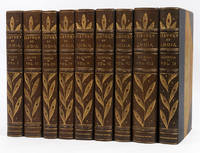
119698London The Grolier Society 1906-07. . The extra-illustrated 'Connoisseur Edition' no. 3 of 200 copies; 9 vols 4to 26.5 x 19.5 cm; extra-illustrated with numerous plates and illustrations some colour edges untrimmed; original half green morocco marbled boards spines lettered in gilt and decorated with gilt foliage motif top edges gilt spines a touch faded one small chip to head of vol. 5 otherwise a fine set.<br /> A beautifully bound set of this survey of Indian history. This limited edition is extra-illustrated with many of the plates duplicated in black & white or colour. Each volume has its own author: vol. I by Romesh Chunder Dutt; vol. II by Vincent A. Smith vols III & IV by Stanley Lane-Poole vol. V by Sir Henry Miers Elliot vols VI & VII Sir William Wilson Hunter vol. VIII by Sir Alfred Comyn Lyall and vol. IX by A.V. Williams Jackson.<br /><br />Abraham Valentine Williams Jackson 1862-1937 was an American specialist on Indo-European languages particularly those in Zoroastrian manuscripts. He visited India in 1901 and was received warmly the Parsees.<br /> London, The Grolier Society, 1906-07. hardcover
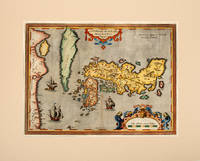
112503Antwerp Christopher Plantin for the author 1598. . Double-page copper engraved map with later hand-colouring centre fold as issued cartouches for title and scale French text on verso; sheet size: 42 x 53 cm. Minor stains to fold. <br />Mounted size: 52cm by 65.5cm.<br /> Well-preserved example of Ortelius' map of Japan taken from the fifth final and most complete French edition of Theatre de l'Univers. Enriched with decorative cartouches and ships.<br /><br /><br />Abraham Ortelius 1527-1598 was a cartographer and publisher he was born and died in Antwerp.<br /> Koeman III Ort 32. Antwerp, Christopher Plantin for the author, 1598. unknown
172014403Amsterdam: Leon Schenk Abraham Rademaker c1720. 560 by 960mm. 22 by 37.75 inches. Engraving with etching on two sheets joined. A view of the Overtoom in the eighteenth century. By the eighteenth century numerous country villas had been built along the Overtoom one of the main canal's linking Amsterdam with river Schinkel as well as pleasure gardens and numerous ale houses and shops. The Overtoom gained its name from the machine for moving a boat from one body of water to another where the level varied. Rather than with the aid of a lock in other canal systems the boat would be physically pulled across the land. The machine is depicted to the right of the print consisting of two large wheels it can be seen pulling a small boat onto the canal. Leonard Schenk fl.1720-1746 engraver mapmaker and publisher in Amsterdam. Abraham Rademaker 1677 21 January 1735 was an 18th-century painter and printmaker from the Northern Netherlands. Rademaker was born in Lisse. According to the RKD he was a versatile artist who painted Italianate landscapes but is known mostly for his many cityscapes and drawings of buildings that were made into print. R.W.P. de Vries auction 1925: 288. Leon Schenk, Abraham Rademaker, unknown
2017Atlantic-9780128046777Elsevier 2017. 1. Hardcover. New. Elsevier hardcover
2017Atlantic-9780128046777Elsevier 2017. 1. Hardcover. New. Elsevier hardcover
1858376861Springfield IL 1858. 8pp. printed in double columns. 8vo. Unbound. Minor toning. Housed in a cloth box. 8pp. printed in double columns. 8vo. The only separate printing of this address given by Lincoln at Springfield Illinois. Lincoln's speech which preceded his debates with Douglas puts forth the great themes that marked his political philosophy during the last ten years of his life. More importantly it firmly placed Lincoln as against the expansion of slavery and Douglas on the opposite side of the issue. By targeting Douglas a strategy that resurrected Lincoln's political career he made his fellow Illinoisan out to be the embodiment of the wicked forces safeguarding slavery's expansion . This speech is Lincoln's opening salvo against Douglas for the 1858 senate campaign: 'Free men of Illinois - free men of everywhere - judge ye between him and me'" Abraham Lincoln: His Life in Print p. 67<br /> <br /> Urging that slavery be placed on course for "ultimate extinction" he repeats his "House Divided" warning first given at the State Republican Convention a month earlier. He insists that the Kansas-Nebraska bill was "the beginning of a conspiracy" to nationalize slavery. Attacking Douglas and defending himself against the charge that he would "invite a war of sections" he stands on "the principles of our Declaration of Independence." Though African Americans are not the equal of whites "in all respects" the Declaration "does mean to declare that all men are equal in some respects; they are equal in the right to 'life liberty and the pursuit of happiness.'" Most significantly "In the right to put into his mouth the bread that his own hands have earned he is the equal of every other man white or black."<br /> <br /> A scarce Lincoln speech. Monaghan 12; Byrd 2960 unknown
184238683Hamilton Ontario: Ruthven's Book and Job Office 1842. 8vo. English and Mohawk text on facing pages. viii 456pp. Contemporary blue calf flat spine ruled and lettered in gilt.<br/> <br/>A fine copy of a scarce Book of Common Prayer in Mohawk.<br/> <br/>"Rev. Abraham Nelles archdeacon of Brant Ontario was born at Grimsby Ont. December 25 1805 and died December 20 1884. He was chief missionary of the New England Company to the Six Nation Indians for 53 years being first appointed as assistant missionary in 1829" Pilling. The Collects Services of Baptism etc. etc. translated by John Hill Junr. appear in Mohawk for the first time in this edition of the prayer book. Nelles proposed this edition for the use of the Grand River Mohawks. "This is the most complete of all editions of the Mohawk Prayer Book" Wright. Scarce.<br/> <br/>Pilling 2735; Sabin 6352; TPL 1st Supplement 5228; Wright Early Prayer Books of America p.40. Ruthven's Book and Job Office unknown books