26 503 résultats
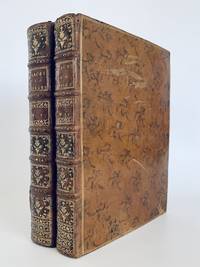
1672ABC_50310Amsterdam 1672. 8vo. Jacobus Wagenaar 18th-century sprinkled paper over contemporary gold-tooled calf with a brown paper label lettered "Hobbes" on the foot of the spine mottled edges. With an engraved frontispiece a woodcut vignette on the title page an engraved portrait of Thomas Hobbes and a folding table on the classification of sciences. 16 744 64 pp. First Dutch edition of the seminal work by Thomas Hobbes 1588-1679 one of the most original political philosophers of his era. Written during his exile in Paris amidst the English Civil War 1642-1651 Leviathan presents the state as a vast artificial monster composed of individual men whose authority is necessary to protect citizens from the natural state of war. Hobbes argued that survival property and power drive human behaviour making submission to a strong sovereign preferable to the chaos of anarchy. The present Dutch translation was made by Abraham van Berkel 1630-1688 who was closely associated with the Dutch freethinking circles around Spinoza. For this translation van Berkel wrote an important preface explicitly stating the political aims of publishing his Dutch Leviathan at that particular moment in Dutch history. A close reading of the Dutch text reveals several telling deviations from the English original one of which may represent a deliberate reinterpretation of Hobbes meaning presumably intended to adapt Hobbesian ideas more effectively to a Dutch context.With 2 stamps of the Breslau library on the verso of the title page and a later pencil annotation on p. 722. The boards are rubbed the spine is worn with a tear and loss of material at the head. The leaves are somewhat browned and foxed.l Graesse III 311 u; Knuttel Verboden Boeken 185; STCN 095379150 4 copies; USTC 1808932 5 copies; cf. PMM 138 English ed. hardcover
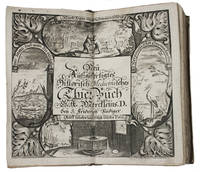
1714A5FCO31WXHODNuremberg 1714. 8vo. Johan Friedrich Rüdiger Contemporary vellum author and title in gold on spine. With a double-page engraved frontispiece engraved by Johan Lorentz Hönnig a double-page letterpress title-page printed in red and black and 95 engraved plates each depicting several animals. 26 732 72 pp. Second edition of a pre-Linnean zoological work describing in 4 parts the names appearance characteristics qualities and habitats of quadrupeds birds fishes and invertebrates together with their medicinal qualities and uses by the German physician Georg Abraham Mercklein 1644-1702. He frequently cites classical authorities in the fields of medicine and natural history like Galenus and Aristotle. Also included are some mythological animals including several kinds of unicorn p. 28 and a dragon p. 611. Ten pages are devoted to the characteristics of the silkworm pp. 678-687. At the end an index of the animals illnesses and cures.With an early owner's inscription on first flyleaf. Slightly browned some marginal thumbing or minor stains but still in very good condition. Binding slightly soiled but in good condition.l Nissen ZBI 2790; VD18 12232300; cf. Krivatsy 1772. hardcover
15950044291595 [Anvers], Ortelius, 1595. Deux cartes (51 X 39 cm) et (50 X 33 cm) sous cadres en pichepin.
1728ABC_48146Amsterdam 1728. 4to. Isaak Tirion Contemporary gold-tooled red morocco with the author and title lettered in gold on the spine with an ornamental border on both boards gold-tooled board edges and turn-ins gilt edges marbled endpapers. With an engraved title page in each part and 300 numbered engraved half-page views. 2 parts in 1 volume. 76; 76 ll. Beautifully bound complete copy of Abraham Rademaker's celebrated series of 300 views of famous sights and buildings in the Netherlands and Cleve. These fine engravings include views of Amsterdam Hoorn Egmond Haarlem Rynsburg Leiden Delft with the ruins of Koningsveld Abbey and the Cartusian monastery Spangen Dordrecht Gorinchem IJsselstein Montfoort Utrecht Arnhem Nijmegen Kleve and Emmerik. The plates are predominantly dated between 1573 and 1720. However these dates do not indicate when the plate was made but correspond instead to the condition of the depicted towns and buildings in those respective years.Abraham Rademaker 1679-1735 was a versatile painter and engraver known mostly for his many views he made of villages towns churches monasteries castles and manor houses sometimes in ruins in the Netherlands and the area around Kleve. Apart from the various editions of his Kabinet he also published series of views in De zegepraalende Vecht 1719 and Spiegel van Amsterdams zomervreugd 1728.The present copy was owned by Adam Mansfieldt de Cardonnel Lawson of Cramlington Northumberland; 1746-1820 a historian from Scotland who is the author of a book similar to Rademakers Kabinet: Pituresque antiquities of Scotland 1788-1793 etched by Adam de Cardonnel. The work was then inherited by his granddaughter Lucy Anna de Cardonnel Elmsall.With the bookplates of Adam Mansfieldt de Cardonnel Lawson of Cramlington Northumberland; 1746-1820 and Lucy Anna de Cardonnel Elmsall 1828- after 1867 mounted on the front pastedown and an ownership annotation by the former on the title page "Lawson 1802". The boards are very slightly rubbed. The title page of the first part is somewhat soiled occasional mild soiling in the margins. Otherwise in very good condition.l De Buck no. 584; STCN 300275331 5 copies; cf. Tiele 892 other ed.; Wurzbach II p. 375 other ed. hardcover
2226Le Blond 1636. Etching. A good impression on paper without a watermark. Trimmed just showing the platemark all around. 259mm x 324mm. G.D. 1080 Blum 154 only state Paris/Tours 2004 No. 128. unknown books
CBS 9780470278154USA Edition . New. Brand New! Fast Delivery US Edition and ship within 24-48 hours. Deliver by FedEx and Dhl & Aramex UPS & USPS and we do accept APO and PO BOX Addresses. Order can be delivered worldwide within 6-10 days and we do have flat rate for up to 2LB. Extra shipping charges will be requested if the Book weight is more than 5 LB. This Item May be shipped from India United states & United Kingdom. Depending on your location and availability. unknown
2091202133208619Henri Abraham Chatelain N.A. Soft Cover. Fine. Number of books: 1 Henri Abraham Chatelain paperback
17794612Neuchâtel, Chez Samuel Fauche, 1779-1783 / 1787. 18 volumes in-8, [II]ff., XLVIII-363 p. + [II]ff., IV-361 p. 1 ff. d’errata + [II]ff., II-264 p. + [II]ff., 464 p. + [II]ff., 468 p., + [II]ff., 550 p., [II]ff. d’errata + [II]ff., XXVIII-364p., [II]ff. d’errata + [II]ff., 539p. + [II]ff., 644 p. + VI-392 p. + [II]ff., 400 p. + [II]ff., 499 p., [II]ff. d’errata + [IV]ff., 319 p. + [II]ff., XXXVI-340 p. + [II]ff., XIV-496 p., [I]ff. d’errata + [II]ff., 538 p., [I]ff. d’errata + XXXII-352 p., [I]ff. d’errata + [II]ff., 376 p., [I]ff. d’errata, 88 p. (ouf c’est fini!), demi veau brun, dos lisse orné de filets et grecque dorée, étiquette de titres rouge et beige, tranches vertes.
30892 p.l. viii 236 pp. 8vo attractive antique calf double gilt fillet round sides flat spine gilt uncut. Paris: veuve Tilliard et Fils 1805.<br/> <br/> The rare sale catalogue of the library rich in oriental books and manuscripts of Anquetil-Duperron 1731-1805 French orientalist and brother of the historian Pierre Anquetil. Abraham Hyacinthe had a fascinating early life: while unsuccessfully studying for the priesthood in Paris and Utrecht he developed a passion for Hebrew Arabic Persian and other languages of the East. He travelled to India as a private soldier in 1754 in order to search for the works of Zoroaster. Granted free passage he learned modern Persian in Pondicherry and Sanskrit at Chandernagore. When war broke out between France and England Anquetil-Duperron travelled widely throughout India on foot learning further languages and studying the antiquities and sacred laws of the Hindus. <br/> <br/> He returned to Europe in an English vessel ultimately arriving in Paris in 1762 with 180 oriental manuscripts. He devoted many of the following years to scholarship editing and publishing many important oriental texts. The French Revolution seems to have greatly affected him: during that period he abandoned society and lived in voluntary poverty on a few pence a day. <br/> <br/> A fine copy. 1600 lots and priced throughout in a contemporary hand. From the library of Jean Viardot. <br/> <br/> ⧠Gustave Brunet Dictionnaire de Bibliologie Catholique col. 408–“Ce catalogue est curieux surtout pour les livres en langues étrangeres.†Grolier Club Printed Catalogues of French Books Auctions…1643-1830 458. Peignot p. 77. unknown
1864D16155Baltimore: Cushings & Bailey 1864. First Edition. First and only edition extra-illustrated with approximately 65 inserted portraits. Full red pebbled morocco gilt dated 1882 on the spine rebacked with the original spine laid down the covers panelled in gilt the spine tooled and lettered in gilt with the initials "W.H.W." at the foot. 10 x 8 inches 25.5 x 21 cm; with lithographed title and approximately 65 mostly engraved or lithographed portraits inserted three are original drawings including one of Julia Ward Howe xi lithographed contents 200 pp. lithographed fascsimiles of the handwriting of the authors. Intermittent foxing the inserted portraits have offset to the text leaves opposite rebacked as noted and lightly rubbed. <br/><br/>This volume produced at the time of the 1864 Baltimore Sanitary Fair contains what is considered the first reproduction of the Gettysburg Address in Lincoln's hand. The facsimile was made from what is now known as the "Bliss Copy" of the address the fifth and final manuscript copy of the address that Lincoln executed at the request of the editors of this volume. Other authors represented here include Emerson Poe Melville Hawthorne and many other notables of the period. Cushings & Bailey unknown
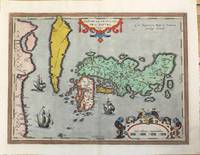
1601M10202Antwerp 1601. Very Good. Notes: Latin text on verso.<br>Rare map of Japan. Korea is depicted as an elongated island. Size : 355x480 mm 13.98x18.90 Inches Coloring: Original Hand Coloring Reference: Marcel P. R. van den Broecke #165. Category: Maps Asia Far East Japan & Korea; unknown
30892 p.l. viii 236 pp. 8vo attractive antique calf double gilt fillet round sides flat spine gilt uncut. Paris: veuve Tilliard et Fils 1805. The rare sale catalogue of the library rich in oriental books and manuscripts of Anquetil-Duperron 1731-1805 French orientalist and brother of the historian Pierre Anquetil. Abraham Hyacinthe had a fascinating early life: while unsuccessfully studying for the priesthood in Paris and Utrecht he developed a passion for Hebrew Arabic Persian and other languages of the East. He travelled to India as a private soldier in 1754 in order to search for the works of Zoroaster. Granted free passage he learned modern Persian in Pondicherry and Sanskrit at Chandernagore. When war broke out between France and England Anquetil-Duperron travelled widely throughout India on foot learning further languages and studying the antiquities and sacred laws of the Hindus. He returned to Europe in an English vessel ultimately arriving in Paris in 1762 with 180 oriental manuscripts. He devoted many of the following years to scholarship editing and publishing many important oriental texts. The French Revolution seems to have greatly affected him: during that period he abandoned society and lived in voluntary poverty on a few pence a day. A fine copy. 1600 lots and priced throughout in a contemporary hand. From the library of Jean Viardot. ❧ Gustave Brunet Dictionnaire de Bibliologie Catholique col. 408-"Ce catalogue est curieux surtout pour les livres en langues étrangeres." Grolier Club Printed Catalogues of French Books Auctions.1643-1830 458. Peignot p. 77. unknown books
1862WRCAM54585Washington D.C.: War Department Adjutant General's Office 1862. Three volumes with over 300 individual imprints. 12mo. Uniformly bound in contemporary three- quarter roan and marbled boards gilt leather labels. Wear to leather and edges boards somewhat rubbed front hinges tender. Contemporary ownership inscriptions and binder's tickets on front endpapers of second and third volumes; later bookplate on front pastedown of first volume. Light toning in places otherwise internally clean. Very good. A uniformly-bound set of General Orders issued by the Adjutant General's Office of the War Department in Washington D.C. previously owned by Brig. Gen. John Pope Cook. The orders cover 1861 and 1862 and comprise a nearly complete run of orders for the Union Army during the first two years of the Civil War. Undoubtedly the most significant General Order in this collection is a preliminary printing of the Emancipation Proclamation. <br> <br> A handful of the orders are signed in ink by the various adjutant generals. The Emancipation Proclamation bound in the third volume is as follows: <br> <br> GENERAL ORDERS No. 139. THE FOLLOWING PROCLAMATION BY THE PRESIDENT IS PUBLISHED FOR THE INFORMATION AND GOVERNMENT OF THE ARMY AND ALL CONCERNED: BY THE PRESIDENT OF THE UNITED STATES OF AMERICA A PROCLAMATION caption title. Washington D.C.: War Department Adjutant General's Office ca. September 24 1862. 3pp. This work is one of the earliest printings of the Preliminary Emancipation Proclamation issued to regimental commanders in the field during the Civil War in the week after President Lincoln's official manuscript version was finished. Here the third paragraph rings out with Lincoln's timeless words: "That on the first day of January in the year of our Lord one thousand eight hundred and sixty- three all persons held as slaves within any State or designated area of a State the people whereof shall then be in rebellion against the United States shall be then thenceforward and forever free." <br> <br> Following the Seven Days Battle and Gen. McClellan's retreat from the Peninsula at the end of June 1862 President Lincoln realized that there would be no early end to the war and found himself "as inconsolable as it was possible for a human to be and yet live." Anxious for news from the army and needing to escape the constant interruptions at the White House he frequently visited the telegraph office in the War Department building to await dispatches. It was during one such visit early in July that he asked the chief of the telegraph staff Maj. Thomas Thompson Eckert for some paper to "write something special" and began the first draft of the Emancipation Proclamation completing it in a few weeks. <br> <br> Lincoln had long hoped to resolve the slavery issue through a congressional act of emancipation compensating slave owners for their loss of "property" but that approach was roundly rejected by representatives from the border states leaving the President who had decided upon the necessity of emancipation with a presidential proclamation as the only option. The extraordinary document he conceived would announce the liberation on January 1 1863 of all slaves in those states still in rebellion against the Union and promised compensation to slave owners in those states that returned to the fold before that time if they adopted "immediate or gradual abolishment of slavery." This proclamation would be followed by a final proclamation issued on the 1st of January identifying those states still in rebellion and confirming the liberation of all slaves therein. <br> <br> On Tuesday July 22 Lincoln presented his draft to the Cabinet telling them that he had resolved firmly upon the course of action it specified and asking them not for advice but suggestions. The only observation he had not anticipated came from Secretary of State Seward who proposed that it might be best to wait for a military victory before issuing the Proclamation as it could otherwise seem like "the last measure of an exhausted government." Immediately recognizing the wisdom of the suggestion Lincoln held back. On September 17 after an anxious wait of nearly two months he received the victory he needed at the bloody Battle of Antietam. Completing his final draft Lincoln presented it to his cabinet for refinement on September 22. Following the meeting Seward took the amended draft with him to the State Department where a formal manuscript copy was made then signed by Lincoln and Seward. <br> <br> The first edition of the Preliminary Emancipation Proclamation Eberstadt #1 a small three-page circular intended for distribution within the government and to the local press was likely printed on September 22. At the time that Charles Eberstadt published his study of the Proclamation 1950 he was able to locate only one copy which he himself owned and as nearly as we have been able to determine no other copies have come to light since then. <br> <br> Eberstadt #2 is a supposed second edition no copy of which Charles Eberstadt was able to locate whose existence he inferred from the standard State Department practice of printing a folio edition consisting solely of the text of the proclamation followed by another printing consisting of the text of a letter of transmittal from the Secretary of State as well as the text of the proclamation. While there may be a copy of Eberstadt #2 in the National Archives as he speculated it is not recorded in their online catalogue nor have we been able to find a copy in any other online catalogue including OCLC the Library of Congress and the Abraham Lincoln Library. <br> <br> Eberstadt's third printing of the Preliminary Emancipation Proclamation is without a doubt the earliest obtainable printing. It consists of Secretary of State Seward's one-page letter of transmittal addressed "To the Diplomatic and Consular Officers of the United States in foreign countries" and the text of the proclamation. Eberstadt located a total of only five copies in institutions at the Library of Congress the National Archives Yale the Clements Library and Brown. OCLC does not record any additional copies nor is it recorded in Monaghan. This firm sold a copy several years ago. <br> <br> The present copy of GENERAL ORDERS No. 139 is Eberstadt's fourth printing of the Preliminary Emancipation Proclamation dated in print on September 24. Charles Eberstadt surmises that this field order printing could have been accomplished as late as September 29 or 30 and produced in as many as 15000 copies. It is however rather uncommon in the market and this is the first copy of this printing of the Preliminary Emancipation Proclamation offered by this firm. <br> <br> "From the first days of the Civil War slaves had acted to secure their own liberty. The Emancipation Proclamation confirmed their insistence that the war for the Union must become a war for freedom. It added moral force to the Union cause and strengthened the Union both militarily and politically. As a milestone along the road to slavery's final destruction the Emancipation Proclamation has assumed a place among the great documents of human freedom" - National Archives. "The proclamation has been called by responsible persons one of the three great documents of world history ranking with Magna Carta and the Declaration of Independence" - Eberstadt. <br> <br> Besides including about 300 orders on all manner of Union military activity at the outset of the Civil War the present collection also contains the 1861 printing of REGULATIONS FOR THE UNIFORM AND DRESS FOR THE ARMY OF THE UNITED STATES. Set out in GENERAL ORDERS No. 6 this twenty-four-page printing of the Army dress regulations was the first to set out uniform requirements for the Union during the conflict. The first sentence of the first section requires officers to "wear a frock coat of dark blue cloth." Thus the Blue and the Gray begins. <br> <br> This set was collected and bound by John Pope Cook who began the Civil War as a colonel in command of the 7th Illinois Volunteer Regiment. He was promoted to brigadier general after his troops played a key role in the Union victory at Fort Donelson early in 1862. After his promotion he was transferred to a command in the Department of Iowa and Dakota Territory where he remained until early 1863 conducting campaigns against the Sioux from his base in Sioux City Iowa. These orders must have been bound near the end of this period since contemporary labels note the binder one William F. Kiter as being from relatively close by Council Bluffs. <br> <br> A very early printing of one of the most important political acts in the Civil War and indeed in American history contained in a set of General Orders contemporaneously assembled by a significant Union Army commander. EBERSTADT LINCOLN'S EMANCIPATION PROCLAMATION 4. War Department, Adjutant General's Office hardcover books
6915London 1783-1816: George Eyre and Andrew Strahan Printers. Hard Cover. Folio 12" X 18 ½". The first four volumes are as follows; Vol. #1-382 leaves Vol. #2-450pp.Vol. #3- 570pp. index vol. Vol. #4-635pp. supplement vol. All are handsomely bound in 19th century ¾ calf over marbled boards raised bands with contrasting red morocco labels gilt. Joints of two volumes expertly repaired; an exceptionally nice set and quite scarce as such. There are 26 blank leaves in volume one with a few leaves containing portions of text or text on the verso. It would appear that these leaves were left blank for illustrations which evidently never took place perhaps because of the cost and manpower it would take to make it possible. The projected cost and labor is noted in volume 3. It does contain the later inserted title pages and contents leaves and the four facsimile leaves are present in the last volume the supplement two displaying hand coloring. The first two volumes are printed on hand-made laid paper watermarked "J. Whatman" and coat-of-arms with the King's Initials "GR". The last two volumes printed on hand-made wove paper by Balston & C. all uncut and wide margined. The last page cvii of the general introduction of the third volume states: "It was not however till after 1770 that the work was actually commenced. It was completed early in 1783 having been ten years in passing through the press. The type with which it was executed was destroyed in the fire which consumed Mr. Nichols' printing-office in the month of February 1808." The book itself was proposed by Mr. John Nichols and executed by Mr. Joseph Jackson and printed by George Eyre and Andrew Strahan. While title pages were added later and dated 1816 printed on the last page of volume three is the printers' names and date1811 and volume four is dated 1816. The Domesday Book was commissioned in December 1085 by William the Conqueror who invaded England in 1066. The Domesday Book project was a major undertaking employing many transcribers of the manuscripts and type makers to design the special type used. It is one of the most ancient records of England and represents an amazing accomplishment. It is the Register from which judgment was to be given upon the value tenure and services of the land. Another point on which the Domesday Survey throws considerable light is the history of the ancient Castles which William erected everywhere. By the completion of this survey the King acquired an exact knowledge of the possessions of the crown. It afforded him names of the land holders and the means of ascertaining the military strength of the country. It also pointed out the possibility of increasing the revenue in some cases and of lessening the demands of the tax collectors in others. The Domesday Book also left exact records behind which give historians today much data about Norman English life and the first appearance of English names. At the end of the introduction to volume four pertaining to the "Bolden Book" is a section considered to be the most important work of the supplement; it is from the Laud MSS. 542. Contained herein is a manuscript note stating; "This account of the 'Bolden Book' was written by me; I also transcribed MS. Laud collated it with the others & prepared the whole for the press as it appeared in that volume. signed Adam Clarke. Adam Clarke was a noted commentator and theological writer who lived in London after 1805. He wrote English translations and new editions of other men's books a bibliographical dictionary in six volumes and many other very important works during his lifetime. He was also a member of the Society of Antiquaries of London. Our only reasoning for this note is the fact that while Clarke transcribed the Laud MS. his name was not acknowledged as the transcriber and does not appear within the text. Only those either of high office or directly involved in its publication had their names included. see DNB Vol iv p. 413 Provenance: Hudson Gurney of Keswick 1775-1864 his book with his signature on the front free endpaper of the first volume. <br/><br/> George Eyre and Andrew Strahan, Printers hardcover books
1864D16155Baltimore: Cushings & Bailey 1864. First Edition. First and only edition extra-illustrated with approximately 65 inserted portraits. Full red pebbled morocco gilt dated 1882 on the spine rebacked with the original spine laid down the covers panelled in gilt the spine tooled and lettered in gilt with the initials "W.H.W." at the foot. 10 x 8 inches 25.5 x 21 cm; with lithographed title and approximately 65 mostly engraved or lithographed portraits inserted three are original drawings including one of Julia Ward Howe xi lithographed contents 200 pp. lithographed fascsimiles of the handwriting of the authors. Intermittent foxing the inserted portraits have offset to the text leaves opposite rebacked as noted and lightly rubbed. <br/><br/>This volume produced at the time of the 1864 Baltimore Sanitary Fair contains what is considered the first reproduction of the Gettysburg Address in Lincoln's hand. The facsimile was made from what is now known as the "Bliss Copy" of the address the fifth and final manuscript copy of the address that Lincoln executed at the request of the editors of this volume. Other authors represented here include Emerson Poe Melville Hawthorne and many other notables of the period. Cushings & Bailey unknown books
1667D14109Venice: Scipion Banca 1667. Hardcover. Very Good. Early-20th century vellum lettering hand-painted in black and red on spine very pretty; 8vo 131x92mm. Include half-title title with vignette 108 engraved maps. Vellum a little dust-smudged else fine. D7 torn and repaired; gathering I and K transposed; trimmed a bit close at inner margin. Provenance: Francesco Baranelli di Sinigaglia early ownership signature on half-title; discreet gilt-lettered bookseller's label on front paste-down "C. E. Rappaport Libri Rara Roma." <br/><br/>Third Italian edition of a so-called Epitome Theatrum the desirable "pocket" version of Ortelius's Theatrum Orbis Terrarum. Enormously popular this version of Ortelius's atlas was primarily used by travelers students and others for whom the folio edition would be inconvenient. Copies were eagerly sought and usually received considerable wear. The atlas was published by varying printers and engravers through to the 18th-century. Koeman III Ort 71. Scipion Banca hardcover books
13956Walkowitz Abraham American born Russia 1878-1965. UNTITLED BATHING FIGURES. Watercolor on paper not dated. Signed within the image lower right. 5 1/4 x 8 3/4 inches the full sheet framed to 11 3/4 x 16 3/4 inches. Provenance: James R. Bakker Antiques Inc. Cambridge Massachusetts February 12 1988 lot 96 to Private Collection Rye Beach New Hampshire. In excellent condition with faint traces of old hinging adhesive top verso. A vigorous 20th Century Modernist composition with the colors fresh.Walkowitz is best known for his many studies of the dancer Isadora Duncan. unknown
199393592Davaco Publishers. New. 1993. Hardcover. 9070288834 . FREE UPGRADE to Courier/Priority Shipping Upon Request - IN STOCK AND IMMEDIATELY AVAILABLE FOR SHIPMENT - Flawless copy brand new pristine never opened -- TWO 2 VOLUME SET. Text in English. Many illustrations including 38 color plates. Catalogue Raisonne Catalog Raisonné Complete Works Life and Work Raisonnee -- with a bonus offer . Davaco Publishers hardcover
1631126711631 un volume, reliure d'époque plein-vélin vieil ivoire parcheminé in-folio (28X41 cm) (jansenist's binding full vellum old ivory in-folio), dos long (spine without raised band) muet (without title), plat à fermoirs à lacets de cuir avec un lacet restant sur quatre, tranches lisses (smooth edges) lisières des pages abimées avec une usure en arrondi (écorné) en haut à droite sur toute les pages, déchirures légères en marge mais nombreuses,ex-libris manuscrit à l'encre brune : " ....Nail Tailleur de pierre et architecte à Angers..." , orné de 40 planches gravées sur Bois (engraving-wood) en noir par Francini dont le portrait de Francini signé " Bosse fecit" parAbraham Bosse, présence de léger trous en marge de la dernière gravure , cicatrices de mouillures (scars of waterstains), manque marginal de papier sur la page n'atteignant à aucun moment la gravure (lack of paper, but the engraving is intact), sans pagination (unpaginated) (1 p.), 4 pages de texte, 40 planches gravées, 1631 A Paris, Chez Melchior Tavernier, Graueur & Imprimeur du Roy pour les Tailles douces Editeur,
46404270A la lectµre de ces lettres, toutes relatives à l'édition des ouvrages d'Alexandre Weill, Couronne, Emeraude, Guerre des Paysans et Mismorimes, on devine aisément ce que le pétulant écrivain devait avoir d'insupportable dans ses exigences et son ignorance en matière d'imprimerie. L'échange tourna au cauchemar pour l'éditeur qui abandonna sur le plancher la composition en cours des Mismorimes. Combien Poulet-Malassis dut faire preuve de patience et de courage face à ses auteurs, désinvoltes ou exigeants, pinailleurs, souvent insupportables, toujours prêts à discuter leurs émoluments ou à quémander la sempiternelle avance. Pour qui veut être renseigné sur l'art d'éditer, ces lettres constituent un témoignage précieux. Weill réclame et s'irrite au point que Malassis ne l'appelle plus que «Mon cher Ouragan Weill », le salue comme un" homme de salpêtre et de pétarades » quand il n'ajoute pas en guise de post-scriptum « ce qu'il y a,de meilleur en vous, c'est votre femme, voilà mon opinion ». Durant la composition d'Emeraude, Poulet-Malassis lui écrit même: «je suis content d'éditer Emeraude mais si toutefois vous trouvez un éditeur qui peut publier votre livre plus à votre convenance pour le temps, vous pouvez vous entendre avec lui. Considérez moi comme votre éditeur pis-aller, jeune homme pressé, et si vous mettez la main sur l'éditeur illico, ne vous gênez pas » (10 septembre 1858). Lorsqu'il sollicite de son auteur un manuscrit, redoutant ses tergiversations il lui écrit « ayez soin de me bien spécifœr pour ce dernier le format et le papier car vous êtes un terrible homme quand vous ne faites pas vous même toutes vos affaires. Mettez moi les points sur les i ... ». Il s'agit du manuscrit des Mismorimes que Weill aurait publié avec un s supplémentaire sans la perspicacité de Malassis qui poursuit: « je prendrai la liberté de vous faire observer que Mismorismes par un Nazaréen aura l'air terriblement charabia. - Et vous savez l'observation qu'on afaite depuis longtemps sur les mots en isme à partir de gargarisme (. .. ) » 29 juillet 1859). A l' épreuve de la casse - pour plagier Babou -l'éditeur redoutable de patience et, non sans sarcasmes, prodigue à cet hystérique de la modifïcation ce qu'il peut d'enseignement. En vain. En décembre 1858, harassé, excédé, Malassis l'envoie se faire éditer ailleurs: « je m'empresse de renoncer à imprimer les Mismorimes, quoique l'achat du papier soitfait, et ce papier même donné, car je reconnais qu'il n'y a rien de plus difficile que les affaires avec un homme qui ne sait jamais ce qu'il veut. Je ne m'amuserai pas à vous faire épreuve de tous les caractères de mon imprimerie pour la bonne raison qu'après en avoir choisi un vous l1J'en demanderez un autre le lendemain, ou que vous me direz comme vous l 'aviez fait pour Emeraude, que ce n'est pas le caractère de Couronne: j'en ai assez comme cela et ne veux plus en entendre parler. Il résulte de cela que vous avez toujours les livres les plus mal imprimés du monde, parce que vos tracasseries sontfaites pour dégoûter un imprimeur de métier. Le caractère de votre Guerre des Paysans est un caractère presque neuf et excellent, cent fois supérieur à celui de la première édition, oùj'ai relevé engénéral2fautes par pages (il s'agit de l'édition Amyot de 1847),faite sans soin, confuse, désordonnée de typographie [. .. ] Comment voulez-vous que je marche de l'avant et avec réussite sur votre livre quand l'aller et venir de la première feuille dure depuis plus de 15 jours et que vous demandez une Sème épreuve pour quatre fautes ou corrections insignifiantes en marquant les caractères qui écartent dans la composition en paquet, chose stupide, puisque les caractères se joignent mal n'étant liés qu'avec des ficelles, comme toujours en paquets. C'est ce que vous appelez des caractères accouplés, sans doute. Vous ferez bien aussi de me trouver une fonderie où les caractères se fondent du même jet. Les caractères en questions viennent de la meilleure fonderie de Paris, la fonderie générale rue Madame [. .. ] Vous n'aurez votre seconde feuille que quand vous aurez renvoyé la première, définitive. Et vous comprendrez que je ne prenne pas sur moi de corriger des répétitions, ne sachant jamais si ces répétitions sont ce que vous appelez des effets de style. » (12 décembre 1859) Les Mismorimes parurent chez Dentu, en 1860. Malassis ne se contenta plus que de rééditer les ouvrages de Weill qui, dans l'ensemble, se vendirent très bien. C.E.B.A. n° 141.
2009Atlantic-9781847870445Sage Publications 2009. Hardcover. New. Sage Publications hardcover
177876402à Neuchâtel: Chez Samuel Fauche 1778. Fine. Chez Samuel Fauche à Neuchâtel 1778 19 x 25 cm 2 volumes reliés First and only quarto edition the most sought-after issue due to its substantial enlargement. The original octavo edition of 1730 was thoroughly revised corrected and enriched with the latest discoveries by the scholarly editor responsible for this edition. Ruchats work was supplemented with Abraham Stanyans Account of Switzerland London 1714 together with additional texts relating to Switzerland. Illustrated with 81 engravings and maps after Merian including 2 allegorical frontispieces 68 plates depicting city views and notable sites and 11 maps. Binders instruction leaf present at the end of each volume. Contemporary full mottled tan calf. Spine with raised bands and gilt decoration. Beige morocco lettering and volume labels. Double fillet border on covers. Small loss of leather at the head of volume II. Lower joint of volume I split at the head with minor loss and split at the foot along the final compartment. Two corners rubbed. A few scratches to the upper cover of volume II. Marginal loss to plate 5 in volume I; on p. 428 plate numbered 33 loss measuring approximately 1.5 x 3 cm affecting the engraving. General rubbing. Ownership stamp of Bibliothèque Jules Barotte on the versos of certain plates and on the title-pages. Good clean and remarkably fresh copies. A celebrated and detailed geographical historical and political monograph on Switzerland. Chez Samuel Fauche hardcover
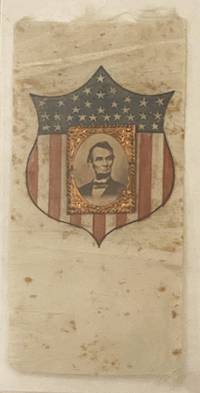
1864BB_Lincoln_badge<p><strong>LINCOLN</strong> Abraham 1809–1865</p><p><em><strong>PHOTO BADGE</strong></em> in copper frame with silk <strong>Campaign Ribbon</strong> circa 1864</p><p>Framed Albumen Portrait measures 1 x ¾ inches; Ribbon imprinted Chicago: North Western Flag & Banner Co. L. 4 inches.</p><p>The portrait by Anthony <strong>BERGER</strong> of Matthew Brady's Gallery the image taken in Washington DC 9 February 1864</p><p>Reference: C Hamilton and L Ostendorf: <em>Lincoln in Photographs</em> 109</p> North Western Flag & Banner Co.
18642547081864. very good-. This historic and rare black printed broadside presents the platforms of both parties the Republicans having convened in Baltimore in June and nominated Abraham Lincoln for President and Andrew Johnson for Vice President and the Democrats having convened in Chicago in August and nominated George B. McClellan for President and George H. Pendleton for Vice President. This copy measures 29 x 23 cm is double columned and with the imprint "For sale by all News Agents. Price $1 per 100." Very light foxing at the bottom margin more visible on the verso. Fraying at the margins as usual. Sabin 63348 Exceedingly scarce.<br/> <br/> unknown