26 503 résultats
1767JC14337London: Printed by T. Jones. and Sold by T. Payne. / Printed by W. Oliver. and Sold by T. Payne and Son. et al 1767-8. First Edition. Hardcover. Very Good. Contemporary specked calf ornate gilt-stamped border on boards gilt-stamped lettering and ornament in spine compartments 5 raised bands; complete set of 9 volumes published and bound as Volume I Parts i-ii Volume II Parts i-iii Volume III Parts i-iv 8vo; pp. xlvi 384; 384; 315; 335; 540 3 blank errata; 403; 432; 462; 505 1 errata. Volumes I-II bound as the first 5 volumes of this set printed by T. Jones 1768 and with the armorial bookplate of Reverend John St. John of Farley; Volume III the last 4 volumes of this set printed by W. Oliver 1767. Several boards detached. Nevertheless a nice set of the rare first edition difficult to find in a straight run. Images available upon request. <br/><br/> Printed by T. Jones... and Sold by T. Payne... / Printed by W. Oliver... and Sold by T. Payne and Son... [et al] hardcover
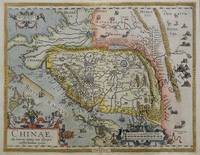
158461175<p>hand-coloured copper engraving. verso: Spanish text. EXTREMELY RARE.</p><p>The first European map of China appeared in Abraham Ortelius's atlas " Theatrum Orbis Terrarum" showing the area of Canton Mindanao no Luzon some islands to the North but only CuboCebu is marked and part of Japan – Spanish edition. An extremely important map for the Philippines here in the first state: there is no indication yet of' 'Las Philippinas' as will be shown later in the second state on the long elongated island just north of Borneo in the position and orientation of Palawan but apparently not based on Spanish knowledge.<br />Ortelius was a notable Dutch cartographer and the publication of this atlas in 1570 marked an epoch in the history of cartography. It was the first uniformly sized systematic collection of maps of the countries of the world based only on contemporary knowledge since the days of Ptolemy & in that sense may be called the first modern atlas; although that term itself was not used until 20 years later by Mercator. The Theatrum was re-issued in 42 editions with 5 supplements with text in Latin Dutch German French Spanish Italian & English between the years 1570-1612. The protrusion of a Southern landmass initially called 'Beach' by Marco Polo is shown South of "Java Major" alluding to Australia. Reference: Tooley Mapmakers S.38; Koeman III Ort 29 B; Walter Japan Nr. 11F; Karrow Mapmakers Nr. 1/152; Landmarks of Mapmaking pict. p. 21; Phillips Atlases 396; OAG Japan a cartographic vision pl. 11F; Suárez: Early Mapping… p. 170-1; Karrow Mapmakers p. 479; Lietz Insulae Indiae Orientalis 36th IMCoS Symposium Manila 2018 Gallery of Prints & Ayala Museum p.12.</p><p>Condition: Very good.</p> published in Antwerp.
15778Folio half perkament 20 100 14 30 6 20 p. ill. Titelpagina van het derde werk mist verder goed exemplaar. Lit: Tiele 51 als Hollandsche Arkadia Drie van de topografische plaatwerken van Rademaker met resp. 100 30 en 20 gravures. Alle drie in eerste druk met mooie frisse drukken. Alle drie werken hebben uitvoerige gedichten door G. Tysens met beschrijvingen van de afgebeelde gebouwen. Er bestaan herdrukken uit de 18de eeuw en in 1807 verscheen nog een verzameluitgave van dertien werken van Rademaker Stoopendaal De Leth Brouërius van Niedek e.a. onder de titel ‘Hollandsche Arkadia in 600 en meer afbeeldingen van land- en watergezichten. Dit betrof: 1. Overtoom; 2. De Amstel; 3. De Vechtstroom; 4. Het Watergraafs- of Diemermeer; 5. De trekvaart van Amsterdam tot Polanen; 6. Alkmaar; 7. Het zegepralent Kennemerlant; 8. Rhijnland; 9. Oudewater; 10. Den Haag; 11. Vlaardingen; 12. Delft; 13. Dordrecht. unknown
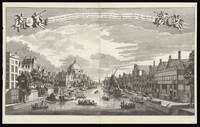
172014409Amsterdam: Leonard Schenk c1720. 558 by 950mm 22 by 37.5 inches. Engraving with etching on two sheets joined. The most prominent feature of the of this view is The Ronde Lutherse Kerk or Koepelkerk is a former Lutheran church. The church was built in neo-classical style and has a characteristic copper dome. It was built in 1671 by Dutch Golden Age architect Adriaan Dortsman who also built Museum Van Loon a magnificent private residence at the Keizersgracht. When the Lutherans left the building in 1935 it became a concert hall. In 1993 the interior and characteristic green-colored copper dome were destroyed by fire. After a renovation period of 16 months the church was fully restored. Further down the canal the imposing Roonports tower can be seen. Leonard Schenk fl.1720-1746 an Jan Schenk 1698-1752 were brothers working as engravers and publisher's in Amsterdam. Abraham Rademaker 1677 21 January 1735 was an 18th-century painter and printmaker from the Northern Netherlands. Rademaker was born in Lisse. According to the RKD he was a versatile artist who painted Italianate landscapes but is known mostly for his many cityscapes and drawings of buildings that were made into print. R.W.P. de Vries auction 1925: 284 Leonard Schenk, unknown
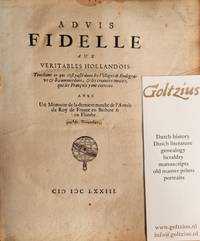
#[54630]4° 2202 pag. contemporain perkament geillustreerd met 8 geetste platen over twee pagina's de laatste twee met elk 2 afbeeldingen door Romeyn de Hooghe. Enkele wormgaatjes in bovenmarge. C2020 l Landwehr 30; Hollstein 90-96; Willems 1874 De Hooghe's schitterende prenten in het 'Advis fidelle' behoren niet alleen tot de hoogtepunten van zijn werk maar ook tot de artistieke hoogtepunten van dit tijdperk. Ze tonen de wreedheden waaraan Franse solda unknown
172390242Eugène Henry Fricx Thomam Johnson Mathieu Roguet | Bruxelles La Haye 1723-1725 | 18.5 x 24.5 cm | 3 volumes reliés en 1
175747855London.: Printed for and sold by the author near the George in Portland Street Cavendish Square; by Mr. Brotherton over against the Royal-Exchange; Mr Buckland at the Buck in Pater-Noster Row; H. Piers and Partner at the Bible and Crown in High Holborn. 1757 - 1758. Later calf-backed marbled boards spine with compartments and black morocco label bearing titles in gilt board edges tooled in gilt. 3 vols. in 1. Folio 400 x 260 mm. Two vols with Title page Preface and a Description of the Plates each followed by 60 full page copper plate engravings all plates numbered signed and with imprints dated '1757'; final vol with Title page Introduction iii - viii Description of the plates beginning 'Of the Orders in General' pp. 1 - 16 followed by 65 numbered plates. PROVENANCE: Label of Doddington Library to front pastedown. Abraham Swan's extensive two volume study of domestic architectural designs 'A Collection of Designs' bound here with his seminal work on staircases 'The British Architect . ' .The two volume 'Collection of Designs' - the second of three pattern books published by Swan a carpenter and joiner - was his attempt to provide an inexpensive pattern book of inexpensive designs. Swan made his intentions of quantity over quality clear in his Preface: 'I hope that whatever defects may be observed in any of them will be candidly excused considering what a number of designs are contained in these two volumes and that they are all of my own contriving and drawing.' 'The first volume contains 4 engravings of the staircase at Blair Castle Perthshire which Swan designed for the Duke of Atholl 1757. Two Chinese Bridges for the grounds at Blair appear in the second volume. Swan's designs belong to the 'rococo' taste popular in the mid-18th century'. Weinreb.Swan's comprehensive work 'The British Architect' - first published 1745 here in the 3rd edition - was destined to be the first architectural book published in America. The title page of the earlier edition described the author as 'Abraham Swan Carpenter' later changed to 'Abraham Swan Architect.' The work includes the following: 'I. An easier more intelligible and expeditious Method of drawing the Five Orders than has been hitherto been published by a Scale of Twelve equal Parts free from those troublesome Divisions call'd Aliquot Parts. Shewing also how to glue up their Columns and Capitals.II. Likewise Stair-Cases those most useful ornamental and necessary Parts of a Building though never before sufficiently described in any Book Ancient or Modern; shewing their most convenient Situation and the Form of their Ascending in the most grand Manner: With a great Variety of curious Ornaments whereby any Gentleman may fix on what will suit him best there being Examples of all Kinds; and necessary Directions for such Persons as are unacquainted with the Branch.III. Designs of Arches Doors and Windows.IV. A great Variety of New and Curious Chimney-Pieces in the most elegant and modern Taste.V. Corbels Shields and other beautiful Decorations.VI. Several useful and necessary Rules of Carpentry; with the Manner of Truss'd Roofs and the Nature of a splay'd circular Soffit both in a streight and circular Wall never published before. Together with Raking Cornices Groins and Angle Brackets described.' From the title-page.Across all three volumes the title page imprint has been altered Meadows and Hitch and Hawes erased and replaced in ink manuscript with 'Mr Brotherton' and 'Buckland at the Buck'.'This is one of the books that had great influence on the builders and architects of eighteenth-century America.' Fowler.Park 80 / 79 first edition 1745 but citing other eds. including the present; RIBA Early Printed Books 3220; Fowler 341 second American edition 1794; Weinreb 1:166; Millard Architectural Collection Vol. 2 82; Berlin 2285. Printed for and sold by the author, near the George in Portland Street, Cavendish Square; by Mr. Brotherton, over against the Ro hardcover
188139061New Haven Conn. J.D. & E.S. Dana 1881. 8vo. Extracted from "The American Journal of Science" Third series vol. XXII Numb. CXXVIII pp. 87- 166. With title-page to the entire volume. Title-page with a faint rubberstamp. The Michelson-paper: pp. 120-129. Two leaves with small tear to the margin. <br/><br/><em>The seminal first edition of the first description of the first version of a series of experiments with the Interferometer which was built by Michelson and with which he planned to measure the relative speeds of light-waves moving at right angles to each other - an experiment that would ultimately lead to the special theory of relativity. The series of experiments ended with the so-called "Michelson-Morley experiment" the results of which were published 6 years after Michelson's first experiment the item offered here. The 1887 paper written together with Morley constituted an improved attempt of the 1881- version of the experiment. The experiments were designed to calculate the effect of the earth's motion on the passage of light rays through the "luminous ether" which was believed to surround the earth. The experiments were negative and as such led to the introduction of relativity."Michelson tried to determinate the relation of ether drift and the velocity of light effect of extremely minute values.no drift could be found and the "negative result held revolutionary implications which led directly through Lorentz and Einstein to the acceptance of new standards of reference of time and space from geometry an cosmometry."Dibner.In 1919 Einstein met Michelson in California. At a dinner given in honor of them both Einstein said in a speech "You Michelson uncovered an insidious defect in the ether theory of light as it existed and stimulated the ideas of H.A. Lorentz and Fitzgerald out of which the Special Theory of Relativity developed. Without your work this theory would today be scarcely more than an interesting speculation." In an interview in 1842 Einstein said: "It is no doubt that Michelson's experiment was of considerably influence upon my work insofar as it strengthened my conviction concerning the validity of the Principle of relativity.On the other side I was pretty much convinced of the validity of the principle before I did know this experiment and its result. In any case Michelson's experiment removed practically any doubt about the validity of the principle in optics and showed that a profound change of the basic concepts of physics was inevitable."Michelson was awarded the 1907 Nobel Prize "for his optical precision instrument the inteferometer and the spectroscopic and metrological investigations he has carried on."Dibner: Heralds of Science: 161 the 1887-experiment - Vide PMM: 378410408. </em> unknown
188139061New Haven, Conn., J.D. & E.S. Dana, 1881. 8vo. Extracted from ""The American Journal of Science"", Third series vol. XXII, Numb. CXXVIII, pp. (87-) 166. With title-page to the entire volume. Title-page with a faint rubberstamp. The Michelson-paper: pp. 120-129. Two leaves with small tear to the margin.
1867376997Washington D.C.: Government Printing Office 1867. Frontispiece portrait. 2XXX930pp. 4to. Original full brown turkey morocco elaborately stamped in gilt repair to front joint. Frontispiece portrait. 2XXX930pp. 4to. One of only 100 specially-bound copies of this official government printing reproducing in its totality the foreign correspondence and declarations of sympathy received from foreign governments and diplomats across the world in response to Lincoln's assassination. <br /> <br /> Congress' resolution for the publication of this work is printed within: "Resolved by the Senate and House of Representatives of the United States of America in Congress assembled That in addition to the number of copies of papers relating to foreign affairs now authorized by law there shall be printed for distribution by the Department of State on fine paper with wide margin a sufficient number of copies of the Appendix to the Diplomatic Correspondence of 1865 to supply one copy to each senator and each representative of the Thirty-ninth Congress and to each foreign government and one copy to each corporation association or public body whose expressions of condolence or sympathy are published in said volume; one hundred of these copies to be bound in full Turkey morocco full gilt and the remaining copies to be bound in half Turkey morocco marble edged." <br /> <br /> The text organizes the messages of sympathy alphabetically by source country and contains an extensive and detailed index to the correspondents within. The frontispiece reproduces the famous Darby & Miller engraved portrait of Lincoln. Monaghan mentions that a small number of copies were bound with Carpenter's portrait as the frontispiece. Monaghan 881; Sabin 41174 Government Printing Office unknown
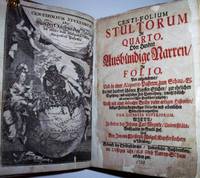
17091Vienna: Christoph Lercher 1709. First edition. Fair. Johann Christoph Weigel. The date of publication is revealed from the chronosticon given on the title page completed here with bracketed letters. Johann Ulrich Megerle July 2 1644 December 1 1709 is also known as Gautentius Hilarion Hilarius von Freudberg Theophilus Mariophilus. First edition emblem book 20.5 cm x 16cm quarto; engraved allegorical frontispiece; title-page in black and red letter; vi; 404; iv 101 leaves of full-page engravings. Johann Christoph Weigel / Kupfferstechern in Nürnberg caption legends engraved or hand-written under each image. Errors of pagination: p. 188 is missing the page number; p. 192 reads as 912; p. 307 reads as 407; p. 318 reads as 218; p. 320 reads as 230; p. 374 reads as 274; p. 376 reads as 176; p. 378 reads as 278; p. 403 reads as 401.This copy is bound in contemporary quarter vellum on light-gray marbled paper boards with a hand-lettered spine. The title-page has been repaired and reinforced with heavier paper as are some of the introductory pages and plates. Plate No. 48 is printed on very heavy paper with a handwritten legend. The other plates have engraved legends. The edges of the first nine pages have been expertly reinforced. Apart from a crack in the uppermost front hinge this binding is in fair condition. Inside the back cover is a triangular stamp reading in part ZUR AUSFUR FREIGEGEBEN. Pencil annotations inside the front cover are a title index of the emblem plates and the calculus of the chronosticon.Extremely rare complete. Old repairs noted this is a good bright tight copy. Not in Praz or Landwehr. See Gerhard Dünnhaupt F5.1.; Bertsch 52a 1; Goedeke III 240 26. See also William Sallochs Catalog 365 Sept. 1980: 100 fools with their occupations preoccupations and vanities described and illustrated by Weigel. An old booksellers catalog entry pasted down on the verso of the initial blank states: In 150 Exemplaren gedruckt als Festgabe für die Gesellschaft der Bibliophilen. The last plate is blank intentionally to provoke the reader. Christoph Lercher hardcover books
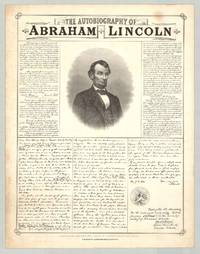
3389Boston: James R. Osgood & Co. 1872. Broadside 24.5†x 19†plus margins; portrait and text in five columns. CONDITION: Torn through upper right the tear affecting the portrait restored backed with Japanese tissue. <p>The first separate printing and first separate facsimile of Lincoln’s famed autobiographical sketch originally composed in response to a request from his friend Jesse Fell printed with a brief account by Fell of the circumstances under which it was written and extracts from a few of Lincoln’s speeches.</p> <p>Lincoln and Fell became acquainted during a session of the Illinois State Legislature in the winter of 1834–35. Lincoln was serving as a representative and Fell as a lobbyist for MacLean County Illinois. The two became political friends and saw much of each other in subsequent years. In 1858 when Lincoln came to prominence as a result of his debates with Stephen Douglas Fell who had recently returned from a trip east where the public was hungry for information about Lincoln approached his friend as he came out of the Bloomington Illinois courthouse one afternoon and asked him for a biographical sketch. Lincoln initially resisted but the following year gave in composing a brief autobiography as well as a letter of explanation both of which he mailed to Fell on December 20th 1859.</p> <p>Delighted that Lincoln had finally complied and eager to promote his cause Fell forwarded Lincoln’s autobiography to his friend Joseph J. Lewis in Pennsylvania who used it for an article that was published in the Chester County Times PA on February 11th 1860. Lewis’s article was reprinted in many newspapers and “became the first widely read biographical sketch of Lincoln and served as a basis for the first three Lincoln campaign biographies in book form†Sage. In 1872 while preparing his biography of Lincoln for publication Ward H. Lamon wrote to Fell asking him to forward Lincoln’s sketch and its accompanying letter to his publisher James R. Osgood & Co. for consultation and facsimile publication. Placing no particular value on the original manuscripts when he first received them Fell had not requested their return but now retrieved them in response to Lamon’s request. He then forwarded the biographical sketch but not Lincoln’s letter of explanation substituting instead his own cover letter. Since Lincoln’s sketch was neither addressed to Fell nor signed Fell included with his letter clippings in Lincoln’s hand reading “Hon. J. W. Fell†and “Yours very truly/A. Lincoln†which were then pasted onto Lincoln’s sketch. Also added was an emblem and statement testifying to the authenticity of the manuscript signed by David Davis Lyman Trumbull and Charles Sumner dated at Washington D.C. March 20th 1872. The facsimile was included in Lamon’s biography and published separately in the form of the broadside offered here.</p> <p>Rare. OCLC records only four copies.</p> <p>REFERENCES: Not in Monaghan; Stern Collection 4792; Sage Harold K. Jesse W. Fell and the Lincoln Autobiography in The Journal of the Abraham Lincoln Association Vol. 3 Issue 1 1981 pp. 48–58. </p> Boston: James R. Osgood & Co., 1872 unknown
30651 p.l. 4 viii 108 2 slip of errata mounted on final blank leaf. 8vo attractive antique panelled calf some light foxing throughout spine lettered in gilt. London: Printed by W.P. and sold by F. Fayram et al. 1725. First edition. Employing the mortality statistics gathered by Edmund Halley in the 1690s de Moivre formulated the theory of annuities. "De Moivre's contribution to annuities lies not in his evaluation of the demographic facts then known but in his derivation of formulas for annuities based on a postulated law of mortality and constant rates of interest on money. Here one finds the treatment of joint annuities on several lives the inheritance of annuities problems about the fair division of the costs of a tontine and other contracts in which both age and interest on capital are relevant. Ths mathematics became a standard part of all subsequent commercial applications in England."-D.S.B. IX p. 454. Very good copy. ❧ Garrison-Morton 1690. Stigler The History of Statistics pp. 70-85. unknown books
1658B6453Frankfurt a. M: J. Bayern J. W. W. Serlin 1658. Covers and spine worn and reinforced; otherwise generally very good. . Binding: Contemporary blind full calf; spine with four 4 bands and embossed title on two. Notes: Text in German. Gothic Script; with Latin inserts in Roman script.<br>Final and most extended edition with 67 plans. <br>This is the most expanded edition and therefore most desirable edition of this work by Saur; the first was published in 1581 the ones that followed under varying titles and the present revised work in 1658. Size: small quarto 201x115mm. Illustration: Illustrated title copper printed title with printer's device rubricated initials at openings; head and tailpieces; sixty-seven 67 city plans at 2 54 88 109 166 173 188 201 207 241 265 291 309 400 463 494 500 523 538 545 557 583 587 597 703 762 779 837 880 885 935. 4 23 37 69 76 84 93 113 117. 2 25 46 102 107. 60. 29. 10 17 74. 15 28 50 56 73. 51 84 119. 36 47 64 89 148 173 188 195. 16. Two of the plans are full-page Jerusalem/Hierosolyma and Rom/Roma; all remaining are half-page in size and comprise Aach/Aquisgranum Aix La Chapelle. Antorff/Antwerpen Augusta/Augspurg Basel Braunschweig/ Brunopolis Breszlau Bruessel Burgos Bremen Calaris Cassel Coelln/Colonia Constantinopel Dreszden Erdfurt/Erffurt Franckenberg Franckfurt am Mayn Franckfurt an der Oder Freyburg in Briszgaw Friedberg in der Wetterau Fulda Geneva/Genff Gandavum/Gent Genua Groeningen Hamburg Hanaw Heydelberg/Budoris Jena Koenigsperg Landeshut in Baeyern Leipzig Leon/Lugdun/Lion Lisabona/Ulixibona Londen/London Loeven/Lovanium Luebeck Lueneburg Luettich/Leodium/Liege Magdeburg/Meydenburg Marpurg/ Martisburgum Meintz/ Moguntiae Muenchen/Abadiaum Muenster/Monasterium Nuernberg/Norinberga Osnabruck Palma Parisz/Lutetia Parisiorum Prag/Praga Regenspurg/Ratisbona Riga Roan/Rouen/Rohmagus Rostock/Rhodopolis/ Laciburgum Schweinfurt Speyer/Nemetum Straszburg/ Argentoratum Trier/Treveris Tuebingen Venedig/Venetia Ulm/Rhetia Wien/Fabiana/Fabana/Faviana Wittenburg/Wittenberg Wormbs/ Wormatia Wuertzburg/Erebipolis/Herbipolis Zuerch/ Tigurum/Turegum. References: Graesse VI 276; Bachmann Pages: Ll: bl. 2 939 bl.; collated as: Bl.2; i-iv with illustrated title printed title dedication and to the reader; A1 -Zzzzz4 Aaaaaa1 - Eeeeee4 Ffffff1-2 A1-R4 S; A1-O4 At1-It4; Aï“1- Dï“4 Eï“1-3; aA1- mM4 nN1-2; Aa1-Ll4; An1-Rn4; ∞a1-∞z4 ∞aa1-4 bb1-3; A1-C4 bl. Category: Book Atlas & Cartography; Book Europe Germany; J. Bayern, J. W., W. Serlin unknown
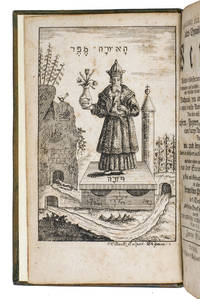
1760ABC_48609Leipzig: Lankischens Buchhandlung 1760. Modern silver- and blind-tooled greenish-brown leather with a red morocco title label lettered in silver on the spine red edges. 8vo. With an engraved frontispiece 15 numbered full-page engravings numerous woodcut illustrations in the text woodcut decorated initials and woodcut head- and tailpieces at the beginning and end of each part. 2 parts in 1 volume. Including: IDEM. Donum dei Samuelis Baruch des Juden Rabbi. Second enlarged edition of a scarce alchemical work supposedly copied from the manuscript from which Nicolas Flamel 1340-1418 gained his skill. The beautifully illustrated work discusses the basics of alchemy and the creation of the philosopher's stone. It also contains 156 rules and canons relating to the philosopher's stone which are exclusive to the second edition. The work rarely appears on the market as we have only been able to find four other copies in sales records of the past hundred years the last complete copy being offered in 1998.In the preface editor Julius Gervasius von Schwarzburg dates unknown states that the present work was transcribed from a highly sought after manuscript known as The Book of Abraham the Jew which was allegedly owned by Flamel. This manuscript was a principal source on alchemy as Abraham de Jew or Abraham Eleazar had copied the notions and illustrations in it directly from the copper tables of Tubal-Cain the first blacksmith from the Bible. However this manuscript has never been found and the current consensus is that the present work was written by Gervasius himself. Both the first 1735 and second edition of his work are relatively scarce especially complete. The beautiful alchemical plates capture the imagination and are therefore often removed and sold separately. The present copy however contains all illustrations.The leather is scratched on the back with a few green stains. The work is somewhat browned throughout with annotations in the margins of some of the leaves lacking the final blank leaf. Otherwise in very good condition.l Brüning 4844; Caillet I 31 part 1 and 32 part 2; Duveen p. 1; Ferguson I pp. 2-3; VD18 10213538 part 1; VD18 1053881X part 2; WorldCat 493643101 5043078 311551310 1046410976. Lankischens Buchhandlung, hardcover
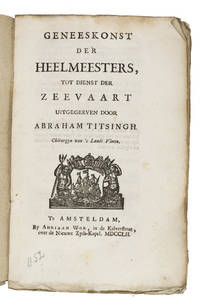
1752ABC_49307Amsterdam 1752. 8vo. Adriaan Wor Contemporary marbled wrappers with a 19th-century paper label on the spine with the author and title in manuscript. With a woodcut vignette on the title page and two decorated woodcut initials. 8 662 pp. First and only edition of a very scarce work on naval medicine. This practical handbook was written by doctors who served on Dutch war ships that sailed from the Netherlands to Curaçao. It includes numerous case studies of sick sailors on these ships during the 1740s along with commentary from Abraham Titsingh 1684-1776 who was a surgeon to the admirality. The work is very rare as it has only been recorded in four libraries and we have only been able to find one other copy in sales records.The numerous case studies presented in the work are incredibly detailed and describe cases on board the ships Middelburg Maarssen Tylingen De Beschermer and Hartekamp primarily in the years 1743 to 1750 but with references to earlier voyages. They give a fascinating picture of illnesses and their treatment during voyages to the Americas. The work covers not only the principal illnesses facing the sailors fevers scurvy diarrhoea dysentery and dropsy but also wounds surgery amputations etc. Each account of sicknesses and treatments during a voyage with names dates and details of the procedures and of the exact composition of medicines given is followed by a lengthy commentary apparently in part by Titsingh who compiled the work. The present copy comes from the library of Dutch physician and zoologist Jan van der Hoeven 1801-1868.With the bookplate of Jan van der Hoeven mounted on the front pastedown. The wrappers are damaged around the spine with some loss of material around the joints the edges of the wrappers are slightly frayed. The work is uncut with a water stain in the head margin throughout not affecting the text. Otherwise in good condition.l Cat. NHSM p. 1020; STCN 314896082 1 copy; WorldCat 907608682 4 copies. unknown
19035344Beautiful full brown leather with gilt detailing and rule to boards and spine; decorative red labels to boards and spine; 5 raised bands. Elaborately designed doublures with gilt dentelles. Silk fly sheets. "The Delphic Edition of The Breviary Treasures consists of 475 copies printed on French hand-made paper of which this copy is Number 94." xii 214 pp. 6 3/4 x 9 1/4 inches. Nathan Haskell Dole hardcover books
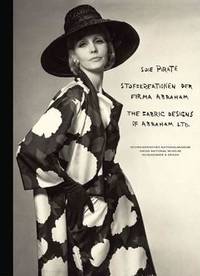
2010129734Verlag Scheidegger & Spiess AG / University of Chicago Press Distributor. New. 2010. Hardcover. 3858813133 . - IN STOCK AND IMMEDIATELY AVAILABLE FOR SHIPMENT - Flawless copy brand new pristine never opened -- TWO 2 VOLUMES including ISBN: 9783858813138. Vol. 1 The History of Abraham Ltd. : 208 pages; over 200 illus. ; in German ; Vol. 2 Stoffreaktionen der Firma Abraham/ The Fabric Designs of Abraham Ltd. : 216 pages; 396 illus. ; English and German. From the publisher: "One of the major players in Switzerland's silk trade has been Abraham AG Abraham Ltd. The company's history dates back to 1878 when Jakob Abraham became a partner in a Zurich-based business. Under the direction of Gustav Zumsteg who had joined as a partner in 1943 the business became a firm part of post-war Paris Haute Couture as supplier of silk fabrics to the leading fashion houses. The 1960s-80s were the heyday of Abraham AG with the close and personal collaboration between Zumsteg and Yves Saint Laurent from 1961 onwards. This equally successful and glamorous period was followed by a slow but steady decline eventually leading to the company's bankruptcy and liquidation in 2002. 'Soie Pirate: The History and Fabric Designs of Abraham Ltd.' .Is a comprehensive history of this fascinating enterprise. Volume one tells the company's story and investigates its importance in the international business of high fashion and in the context of time. Volume two presents a wealth of designs patterns and samples of the beautiful fabrics designed by Abraham AG but also of the elegant dresses and spectacular gowns the great couturiers like Cristobal Balenciaga Coco Chanel Christian Dior Hubert de Givenchy Yves Saint Laurent or Emanuel Ungaro have created using Abraham's products. Together both volumes bring to life a chapter in the history of high fashion worldwide" - with a bonus offer-- . Verlag Scheidegger & Spiess AG / University of Chicago Press (Distributor) hardcover
16082092902141700962Not Available 1608. Soft Cover. Fine. Volume: 1 Not Available paperback
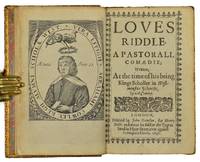
41959Londini: Impensis Henrici Seile 1638. First edition A-F8 48 leaves 96pp. 2 works bound in one small 8vo 141 x 88 mm a few edges of fore-margins a little chipped small tear in margin of C3 front marbled endpapers lightly damp-stained small ticket of Upham and Beet booksellers later mid-nineteenth century full brown morocco Abraham Cowley 1618-1667 English poet and essayist. Cowley was admitted to Trinity College Cambridge as a pensioner on 21 April 1636 and became a scholar on 14 June 1637. Here on 2 February 1638 his Latin comedy Naufragium joculare was acted by members of his college before a university audience and published subsequently; the same year saw the publication of an English pastoral comedy Love's riddle apparently written at the age of sixteen.OXFORD DNB. Pforzheimer 227 228; STC 5904 5905; Wither to Prior 221 222. Londini: Impensis Henrici Seile, 1638 unknown
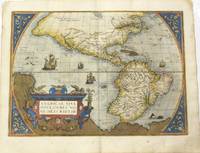
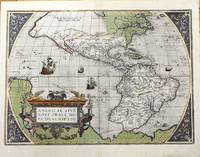
1592M8829Antwerp 1592. Very Good. Notes: Latin text on verso. L5. <br><br>A highly decorative map of the Americas. It is considered as the most beautiful map of the Western Hemisphere of the 16th century with a bulge on the coast of South America.<br>This map of the Americas by Ortelius came to be one of the most influential maps of this area having a large impact on European perspectives of the new continent. Ortelius was able to obtain cartographic information from both Spanish and Portuguese sources. From the Theatrum Orbis Terrarum by Abraham Ortelius which was the first atlas produced that uniformly covered the world with similarly sized and styled maps. Burden 39.<br><br><br><br><br><br> Size : 362x500 mm 14.25x19.69 Inches Coloring: Original Hand Coloring Reference: Burden 39. Van Den Broecke #11. Category: Maps North America; Maps South America Continent; unknown
1584M11280Antwerp Belgium 1584. Very Good. Notes: Decorative and famous early map of the Americas.<br>The map shows North and South America and the Great Southern Continent extending northward to include New Guinea. The title is in a strapwork cartouche and the sea area is decorated with four ships and a sea creature.<br>Latin text on verso. <br>Abraham Ortelius April 1527 – June 1598 was a Flemish cartographer geographer and cosmographer from Antwerp in the Spanish Netherlands. He is recognized as the creator of the first modern atlas the Theatrum Orbis Terrarum Theatre of the World. Along with Gemma Frisius and Gerardus Mercator Ortelius is generally considered one of the founders of the Netherlandish school of cartography and geography. He was a notable figure of this school in its golden age approximately 1570s–1670s and an important geographer of Spain during the age of discovery. The publication of his atlas in 1570 is often considered as the official beginning of the Golden Age of Netherlandish cartography. Size : 362x500 mm 14.25x19.69 Inches Coloring: Original Hand Coloring Reference: Marcel P. R. Van Den Broecke #10.<br> Category: Maps North America; Maps South America Continent; unknown
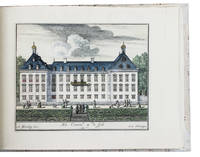
16833691Amsterdam 1683. Oblong 8vo. Modern half vellum floral chintz paper sides. With 16 numbered engraved views ca. 13 x 16 cm tipped onto blank leaves 17 x 23 cm all hand coloured. 16 ll. with engravings. Extraordinary rare first state of a very fine print series of the Honselaarsdijk palace and gardens at Honselersdijk near Naaldwijk complete with all 16 views. They are all signed numbered and captioned in Dutch and have been coloured by hand. We have not been able to find any other copies of the complete series in the first state.The monumental palace of Honselaarsdijk was built between 1621 and 1647 on the orders of the stadholder Frederik Hendrik 1584-1647 who - together with his wife Amalia van Solms and in the context of their ambition to enhance the position and power of the House of the Dutch stadholder possibly to a Royal status - was involved in a project to build a number of new prestigious castles and manor houses in and around The Hague Huis Ten Bosch Rijswijk and Honselaarsdijk as well in the country Soestdijk Het Loo Dieren etc. He financed the building of Honselaarsdijk mainly with the money coming from the "Silverfleet" captured from the Spaniards by Piet Hein in 1629. A number of important architects were involved with the Honselaarsdijk-project among others the famous Jacob van Campen 1596-1657 and Pieter Post 1608-1669. French garden architects were hired for designing the gardens. King William III further embellished the gardens under the direction of the architect Jacob Roman 1640-1716. As early as 1671 William III was personally involved with the rebuilding of the water supply system at Honselaarsdijk as evidenced by a letter of Christiaan Huygens to his brother Lodewijk. The palace later became known as "Little Versailles". After the death of William III in 1702 the estate was neglected and ultimately demolished in 1815. All that still remains is a part of the garden and parts of the coach-houses.Abraham Blooteling 1640-1690 a pupil of Cornelis Van Dalen II 1636-1664 was a Dutch engraver draughtsman and print seller. His dated prints begin to appear in 1665 and they include portraits biblical mythological and genre subjects as well as six views of Amsterdam after Jacob van Ruisdael and two of the Jewish burial-ground in Ouderkerk 1670 also after van Ruisdael. From 1672-78 he worked in London with Gerard Valck. His major contribution was in the development of the new technique of mezzotint specifically the invention of the rocker the tool used in the technique. In England the technique was adopted with such success that it later became known as the "English Manner". Blooteling was again in Amsterdam by September 1678 when he acted as godfather to his nephew Abraham Valck but he kept up his contacts with London.Between 1681 and 1685 his presence in The Hague is recorded. During these years he engraved a major view of Honselaarsdijk 385 x 482 mm after the design by Abraham Begheyn alias Bega 1637-1697. It is likely that he engraved our 16 views in the same year probably also after the drawings by Abraham Bega. However both the 16 views and the bird's eye view are now exceptionally rare. In fact the present 16 views were until now only known in their second state the reissue by Gerard Valck 1651/2-1726 in his Veues et perspectives de Loo Honslardyck et Soestdyck chasteau & maison de plaisance du Roy de la Grande Bretagne 1695. The views in the second state are numbered differently and lack Blooteling's name.Some of the views have been cut a few millimetres short on the right hand side two of the blank leaves with a crease and two pinprick holes in the bottom margin. Otherwise a fine hand coloured copy.l Hunt & de Jong The Anglo-Dutch garden pp. 136-7; cf. Hollstein II p. 216 no. 117 bird's eye view of Honselaarsdijk by Blooteling after A. Bega dated 1683 & XXI p. 267 nos. 95-16 same print-series by G. Valck dated 1695; Thieme/ Becker IV pp. 139-40; not in Springer. hardcover
172164835Nürnberg, Christoph Weigel, 1703 (recte um 1721). Fol. Mit 101 Kupfertafeln von Caspar Luyken. 2 nn. Bll., Späterer blindgepr. Lwd.-Bd. m. etw. Rückenverg. u. goldgepr. Deckeltitel.