[Abraham Lincoln] [Louis Mauer?]Biblio.com
26 503 résultats
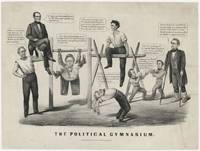
186060001<p><strong>Scarce iconic & fantastic lithograph Abraham Lincoln cartoon <em>The Political Gymnasium</em></strong></p><p>Abraham Lincoln Louis Mauer <strong><em>The Political Gymnasium</em></strong>. New York: Currier & Ives 1860. Lithograph broadside 18 x 13-1/2 inches.</p><p>This scarce and iconic lithograph is a detailed humorous "parody on the field of presidential candidates and their supporters in the 1860 campaign." Bell and Everett for the Constitutional Union Party are there: Bell a muscle man holds Everett aloft on a barbell. Horace Greeley struggles to do a pull-up in his effort to gain the New York governorship while Lincoln is easily astride his own bar wooden rails offering helpful advice: "You must do as I did Greely get somebody to give you a boost. I'm sure I never could have got up here by my own efforts." The New York Courier's James Watson Webb does a backward somersault in the foreground.</p><p>The broadside evidently issued after the parties' nominating Conventions because Seward is depicted as a cripple "on crutches and with bandaged feet." Breckinridge and Douglas "the two sectional Democratic candidates compete in a boxing match."</p><p>Auction records for the last couple of years show a colored example with trimmed right margin selling for $8125 and a nice but sooty uncolored example for $5250. Both sold by Heritage. Measures 18 x 13-1/2 in. and is an ideal candidate for framing. Overall Near Fine. Professionally cleaned & mended. Closed tear crosses most of Seward's midsection.</p> Currier & Ives
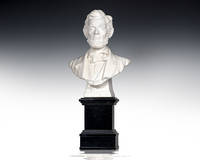
1909148487c. 1909. Painted plaster bust of Abraham Lincoln mounted on a wood pedestal base. After Raffaello Gironi for The Boston Sculpture Company. Signed faintly on reverse of integrated plaster pedestal "R. Gironi." An unpainted plaster of this sculpture is in the collection of the Canadian Museum of History Ottawa. In fine condition. The piece measures 21 inches by 9.5 inches. Abraham Lincoln served as the 16th President of the United States from March 1861 until his assassination in April 1865. He led the United States through its Civil War and in doing so preserved the Union of the United States of America abolished slavery and strengthened the federal government. In his Address at the Sanitary Fair in Baltimore Maryland in April of 1861 Lincoln stated: “The world has never had a good definition of the word liberty and the American people just now are much in want of one. We all declare for liberty; but in using the same word we do not all mean the same thing. With some the word liberty may mean for each man to do as he pleases with himself and the product of his labor; while with others the same word may mean for some men to do as they please with other men and the product of other men’s labor. Here are two not only different but incompatible things called by the same name liberty. And it follows that each of the things is by the respective parties called by two different and incompatible names…liberty and tyranny.†unknown
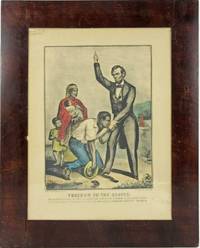
186538499New York: Currier & Ives 1865. Color print 11-3/4" x 15-1/2" by sight. A black man newly freed from slavery kneels at Lincoln's feet his shackles broken. He kisses Lincoln's hand. His wife and babies stand behind him. Lincoln's right arm is raised and pointing heavenward. Light uniform toning but brightly colored. Two blank margin tears at lower right corner one blank margin tear at upper left corner. Framed in wood a few small dings to overall size 16" x 20." Very Good.<br /> <br /> "This commemorative print was issued soon after the assassination of President Lincoln to comfort his supporters. The semi-allegorized representation portrayed the former president as the emancipator of enslaved African Americans guided by divine principles" Description online at The Met. <br /> Entering Richmond in 1865 Lincoln was met by many former slaves who kneeled before him. Lincoln told them to stand and thank God not Lincoln for their freedom. A decade later the Colored People's Educational Monument Association headed by the African-American abolitionist Henry Highland Garnet. created a memorial to Lincoln. The result was a sculpture erected in 1876 in Lincoln Park near Capitol Hill depicting a supplicant slave and a towering Lincoln. Known as the Emancipation Memorial or the Freedmen's Memorial it generated some contemporary criticism for its depiction of the inferior position of the black man. <br /> Gale 2311. Not in LCP Reilly or Weitenkampf. OCLC 1292616124 1- OH Hist. Connection 870219805 1- IN Hist. Soc. as of May 2024. AAS also owns a copy. Currier & Ives unknown
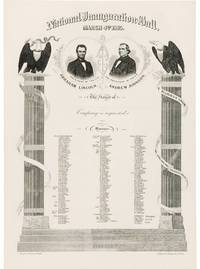
186540934Washington: Designed & Drawn by Bruff. Engraved by Dempsey & O'Toole 1865. Engraved broadside invitation 10-1/2" x 7-1/2" printed on heavy card stock engraved by Dempsey & O'Toole Designed & Drawn by Bruff to the Ball celebrating the second inauguration of President Abraham Lincoln and the inauguration of Vice President Andrew Johnson. The name of the invitee is not filled in. Fine.<br /> <br /> The attractively engraved invitation has detailed engraved portraits of Lincoln and Johnson flanked by two iconic American Eagles perched atop Corinthian columns. The Eagle on the left holds a rattlesnake in its beak reminiscent of the "Dont Tread on Me" flag. The pillars rest on three steps labeled "1777-83" "1812-15" and "1860-65." Beneath the portraits a three-column list of Managers is printed including prominent political and military figures of the time such as outgoing Vice President Hamlin Generals Grant Sherman Thomas Sheridan Doubleday Winfield Scott Hancock and Admirals Farragut and Porter. "E Pluribus Unum" and "We Are One and Indissoluble" are inscribed on banners wrapped around the columns<br /> The 1865 Inaugural Ball was held on March 6 1865 not March 4 at the Patent Office in Washington D.C. now home to the Smithsonian American Art Museum and National Portrait Gallery.<br /> OCLC records about ten locations under several accession numbers as of May 2025. Designed & Drawn by Bruff. Engraved by Dempsey & O'Toole unknown
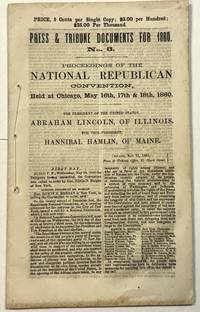
186041812Chicago: Press & Tribune Office 1860. Caption title as issued. 44pp. Stitched. Widely scattered light foxing. Near Fine. At head of title: "PRICE 5 Cents per Single Copy; $3.00 per Hundred; $25.00 Per Thousand."<br /> <br /> The "stenographic report" Monaghan of the country's most significant political convention with a record of all activities including speeches platform and the balloting for President and Vice President. Unlike modern conventions the winner of this one was far from clear. Several formidable candidates-- including Seward Chase Bates and Fremont--- stood in Lincoln's way. Although he had planned his strategy with great intelligence Lincoln was a true 'Dark Horse.' <br /> "Instead of attending in person Lincoln was represented by his friend and campaign manager Illinois judge David Davis whose initiative and deal-making skills despite his candidate's disapproval of such behind-the-scenes maneuvering is widely credited with his eventual nomination. Davis did however follow Lincoln's instruction in forming their general strategy as he maneuvered throughout the building nicknamed The Wigwam. <br /> "To make up for his meagre resume compared to Seward and Chase his team thought it prudent to not go on the attack against the frontrunners and instead become 'everybody's second choice.' through the convention's ranked voting system. His campaign also used the convention to start forging Lincoln's image as the Rail-Splitter a reference to his working-class background and a potential golden opportunity to appeal to the common laborers in the industrial Northern states who stood to benefit the most from the Republicans' Free Soil ideology. They also made direct appeals to delegates from the critical swing states of Pennsylvania and Indiana. When voting began on the 18th Davis and his allies felt confident in their chances to pull ahead. The first ballot placed Seward predictably with the highest vote total of 173.5 but not enough to win a majority while Lincoln followed with a total of 102. The second round bumped Lincoln's total number of votes to 181. The momentum on Lincoln's side continued to surge into the third round where Lincoln received a total of 231.5 votes still not enough to be nominated until David Cartter leader of the Ohio delegation announced his decision to switch support from Chase to Lincoln making him the 1860 Republican nominee for President" American Battlefield Trust 'Inside the Wigwam'.<br /> Ante-Fire Imprints 504. Monaghan 76. Sabin 65894. Press & Tribune Office unknown
152353327Venice: Daniel Bamberg 1523. Daniel Bamberg unknown
186095830c. 1860. Rare original painting of the 16th President of the United States Abraham Lincoln. After a photograph by Civil War photographer Alexander Gardner. Scottish photographer Alexander Gardner immigrated to the United States in 1856 where he became best known for his photographs of the American Civil War President Abraham Lincoln and the execution of the conspirators to Lincoln's assassination. In near fine condition. In a period frame. The entire piece measures 20.75 by 16.75 inches. Rare and desirable. Abraham Lincoln served as the 16th President of the United States from March 1861 until his assassination in April 1865. He led the United States through its Civil War and in doing so preserved the Union of the United States of America abolished slavery and strengthened the federal government. Lincoln began constructing his cabinet on election night and sought to create a cabinet that would unite the Republican party. His eventual cabinet would include his primary rivals for the Republican nomination and although his appointees held differing views on economic issues all were opposed to the expansion of slavery into the territories of the United States. The most senior cabinet post of Secretary of State was appointed to William Seward who had recently failed to win the 1860 Republican presidential nomination and Lincoln's choice for Secretary of the Treasury was Ohio Senator Salmon P. Chase Seward's primary political rival and the leader of a radical faction of the Republican party that sought the immediate abolition of slavery. unknown books
186095830c. 1860. Rare original painting of the 16th President of the United States Abraham Lincoln. After a photograph by Civil War photographer Alexander Gardner. Scottish photographer Alexander Gardner immigrated to the United States in 1856 where he became best known for his photographs of the American Civil War President Abraham Lincoln and the execution of the conspirators to Lincoln's assassination. In near fine condition. In a period frame. The entire piece measures 20.75 by 16.75 inches. Rare and desirable. Abraham Lincoln served as the 16th President of the United States from March 1861 until his assassination in April 1865. He led the United States through its Civil War and in doing so preserved the Union of the United States of America abolished slavery and strengthened the federal government. Lincoln began constructing his cabinet on election night and sought to create a cabinet that would unite the Republican party. His eventual cabinet would include his primary rivals for the Republican nomination and although his appointees held differing views on economic issues all were opposed to the expansion of slavery into the territories of the United States. The most senior cabinet post of Secretary of State was appointed to William Seward who had recently failed to win the 1860 Republican presidential nomination and Lincoln's choice for Secretary of the Treasury was Ohio Senator Salmon P. Chase Seward's primary political rival and the leader of a radical faction of the Republican party that sought the immediate abolition of slavery. unknown
18642547081864. very good-. This historic and rare black printed broadside presents the platforms of both parties the Republicans having convened in Baltimore in June and nominated Abraham Lincoln for President and Andrew Johnson for Vice President and the Democrats having convened in Chicago in August and nominated George B. McClellan for President and George H. Pendleton for Vice President. This copy measures 29 x 23 cm is double columned and with the imprint "For sale by all News Agents. Price $1 per 100." Very light foxing at the bottom margin more visible on the verso. Fraying at the margins as usual. Sabin 63348 Exceedingly scarce.<br/><br/> unknown books
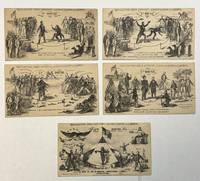
186141884New York: J.H. Tingley 1861. Five postal covers each oblong 3-1/4" x 5-7/8." The recto of each is an engraving of a Round of the boxing match. Near Fine.<br /> <br /> From the U VA description: "Five envelopes in the Champion Prize Envelope set depict a boxing match between Lincoln and Davis in which the latter is easily defeated and Winfield Scott commands the Union armies. Smaller vignettes in the corners depict dogs guarding southern cotton and then fleeing; liberated slaves Union artillery advancing firing and marching home; Union and Confederate politicians commenting on the fight including John Minor Botts who is seen as keeping Virginia in the Union; European countries commenting on the fight; and the Union eagle and Liberty victorious with Lincoln the champion of all sections."<br /> 1st Round: Standing around a boxing ring Lincoln and Davis in the middle are a group of civilians Soldiers cannon. two dogs guarding a bale of cotton and a Confederate flag a group of slaves three men on a globe Capitol and American flag in the background. In the ring Davis cowers before Lincoln who says "I use no more force than necessary." Davis: "Let me alone!"<br /> 2nd Round: The same group encircles the ring. Lincoln: "Go back you dog to the junction I'll call on you there soon." Davis: "Beauregard Lets fall back on Richmond." From the crowd of civilians: "Secession is looking smaller" and "We shall soon strip it." Other comments are also uttered.<br /> 3d Round: Lincoln: "I will soon smother those pirates." From the same encirclement anti-Confederate comments such as "General That's secession's last kick" rebel soldiers saying "Let's go home boys." The cotton bale and Confederate flag are missing.<br /> 4th Round: Seward and Scott are in the ring. Seward: "General where is secession now" Scott : "Don't you see that greasespot" Comment: "Virginia and Kentucky may now be heard in behalf of the whole Union."<br /> 5th Round: Lincoln with "The Champion Belt": "You shall all have my impartial constitutional and humble protection." He is surrounded by the iconic Screaming Eagle; a triumphant West North East and South; and Lady Liberty who says "I still live." <br /> Not in Reilly or Weitenkampf. AAS and the University of Indiana own all five envelopes. OCLC 277634667 1- U VA 14953428 2- CT Mus. Hist. Culture U IL as of June 2026. J.H. Tingley unknown
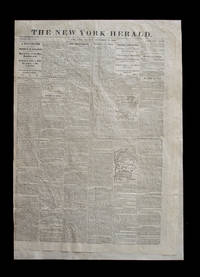
186268870New York: The New York Herald 1862. Full Description:<br> <br> LINCOLN Abraham. Emancipation Proclamation."A Proclamation by the President of the United States. Operations of the Confiscation Act. All Slaves in States in Rebellion January 1 1863 to Be Free." New York. Published in: The New York Herald Tuesday September 23 1862. Whole No. 9506.<br> <br> The publication of Lincoln's Emancipation Proclamation in James Gordon Bennett's pro-Democratic New York Herald and one of if not the first official public announcements of the preliminary Emancipation Proclamation.<br> <br> Broadsheet folio one large leaf folded along top to make four pages two leaves printed on recto and verso. Six-column format. 22 x 15 1/2 inches; 560 x 395 mm. Light creases down the middle in both directions. Some nearly invisible repaird along top margin and edges. Some of the repairs just touching a few letters in the headline. Still a very good copy of this important declaration. We could only find 3 copies of this at auction and it is not mentioned in Eberstadt. Eberstadt mentions that his Third edition of the Emancipation has a publication date somewhere between September 24th and 26th therefore putting the current copy before this. Eberstadt's first and second edition are the official state department editions printed the day of the declaration September 22nd just the day before this New York Herald was printed.<br> <br> Abraham Lincoln issued the preliminary Emancipation Proclamation on September 22 1862 stating that if the rebelling states did not cease fighting and rejoin the Union by January 1 1863 the slaves in those states would be set free. The New York Herald issued this front-page top left corner early printing of Lincoln's Proclamation the very next day appearing under the headline: "All Slaves in States of Rebellion January 1 1863 to Be Free."<br> <br> "Lincoln read the first draft of what came to be known as the Preliminary Emancipation Proclamation to his cabinet on 22 July 1862. Given the criticism directed at Lincoln for moving too slowly on the issue of emancipation it is worth noting that this first reading took place just sixteen months after he had pledged not to 'interfere with the institution of slavery in the States where it exists.' He continued to revise the document throughout the summer and following the Union victory at Antietam he issued the preliminary proclamation-which managed to balance daring with prudence-on 22 September. This first proclamation essentially gave the Rebel States one hundred days to return to the Union after which period any slaves within their borders would be "then thenceforward and forever free." Any rebellious states that returned to the Union in the interim would be able to adopt immediate or gradual-and compensated-abolition of slavery within their borders." Sotheby's.<br> <br> The front page of this newspaper also contains two maps and reports of the campaigns in Kentucky.<br> <br> HBS 68870.<br> <br> $3500. The New York Herald unknown
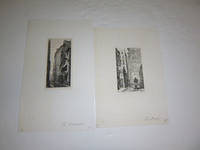
51-5352Paris: Cadart & Luquet circa 1860s. Etchings on rag paper and chine collé.Mostly in the range of 37 x 26 cm. to 49 x 32 cm. For the etchings that are dated after 1850 the etcher used his own drawings as the source. For the ones dated in the 1830s and 1840s the etcher followed the drawings of the following artists:After drawings from the 1830s and 1840s by Pierre Toussaint Bonnaire 1813-1882; Louis Lemet 1779 - 1832; Paul Delaroche1797-1856; Horace Vernet 1789-1863; Adolphe Varin 1821-1897.Adolphe Martial Potémont aka A.-P. Martial Paris 10 February 1828 - Paris 14 October 1883 was a pupil of the painters Leon Coignet and Felix Brissot de Warville followed a general training in landscape painting but also studied historical painting and portraits. He exhibited his work at the Paris Salon in 1846 and 1882. He Is mainly known for his etchings notably his views of Paris and its inhabitants before the city was transformed by Haussmann during the 1860s. Reference: Beraldi II nos. 1 & 2. Paris: Cadart & Luquet , circa 1860s. unknown
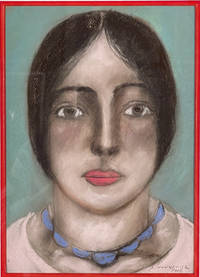
13927Walkowitz Abraham American born Ukraine 1878-1965. PORTRAIT OF ISADORA DUNCAN. Pastel on paper 1928. Signed lower right. 12 x 8 1/4 inches framed to 17 x 13 inches. The verso of the frame also has a label signed by Walkowitz. Walkowitz grew up in New York; in 1906 he went to Paris to study painting at the Academy Julien. The painter Max Weber introduced him to Isadora Duncan in Rodin's studio. His interest in Duncan as a subject began then and lasted beyond her death in 1927; he made more than 5000 drawings and paintings including more than a few pastel portraits like this one and a great many pieces of her performing. As with this piece done after her death it is likely that many of the works were done from memory rather than from life. "He was also able to draw from the same subject repeatedly and extract a different experience with each observation" Wikipedia article. In this his use of Duncan as a subject seems similar to Giorgio Morandi's repeated use of a handful of cups bottles and bowls to create a large number of still-life paintings drawings and prints each of which has something new to offer.Walkowitz was at the center of American Modernism part of Stieglitz's circle at 291 from 1911 to 1917 and a participant in the Armory Show.The following from the Wikipedia article on Walkowitz is a discussion of his Duncan drawings:In 1927 Isadora Duncan echoed the lines of Walt Whitman in her essay I See America Dancing writing "When I read this poem of Whitman’s I Hear America Singing I too had a Vision: the Vision of America dancing a dance that would be the worthy expression of the song Walt heard when he heard America singing."4 Duncan was the quintessence of modernism shedding the rigid shackles of the balletic form and exploring movement through a combination of classical sculpture and her own inner sources. She described this search: "I spent long days and nights in the studio seeking that dance which might be the divine expression of the human spirit through the body’s movement."5 For Duncan dance was a distinctly personal expression of beauty through movement and she maintained that the ability to produce such movement was inherently contained within the body.Abraham Walkowitz was one of many artists captivated by this new form of movement. The Duncan drawings can be interpreted as representations of Walkowitz's loftiest goals. Composing thousands of these drawings would prove to be one of the most effective outlets for his artistic agenda due to the similarities between the artistic ideals and preferred aesthetic shared by Walkowitz and Duncan. He was also able to draw from the same subject repeatedly and extract a different experience with each observation. Sculptors most readily recognized this trait in Duncan; there was a particular quality of her dance which appeared readily artistic yet not static. Dance critic Walter Terry described it in 1963 as "Although her dance inarguably sprang from her inner sources and resources of motor power and emotional drive the overt aspects of her dance were clearly colored by Greek art and the sculptor’s concept of the body in arrested gesture promising further action. These influences may be seen clearly in photographs of her and in the art works she inspired."6Isadora Duncan #29 c. 1915In each drawing a new observation is recorded from the same subject. In the Foreword to A Demonstration of Objective Abstract and Non-Objective Art Walkowitz wrote in 1913 "I do not avoid objectivity nor seek subjectivity but try to find an equivalent for whatever is the effect of my relation to a thing or to a part of a thing or to an afterthought of it. I am seeking to attune my art to what I feel to be the keynote of an experience."7 The relaxed fluidity of his action drawings represent Duncan as subject but ultimately reconceive the unbound movement of her dance and translates the ideas into line and shape ending with a completely new composition.His interest in recording the "keynote" of experience rather than producing an objective representation of a subject is central to the composition of the Duncan drawings. The fluidity of the lines function simultaneously as recognizable shapes of the human body but also trace the pathways of the dancer's movements. Duncan herself wrote in 1920 ".there are those who convert the body into a luminous fluidity surrendering it to the inspiration of the soul."4 Placed into a different context this passage could function as a description of Walkowitz's art; it is in fact taken from her essay The Philosopher’s Stone of Dancing wherein she discusses techniques to most effectively express the purest form of movement.Walkowitz's dedication to Duncan as a subject extended well past her untimely death in 1927. The works reveal shared convictions toward modernism and breaking links with the past. In 1958 Walkowitz told Lerner "She Duncan had no laws. She did not dance according to the rules. She created. Her body was music. It was a body electric like Walt Whitman. His body electrics. One of our greatest men America's greatest is Walt Whitman. Leaves of Grass is to me the Bible."8 unknown
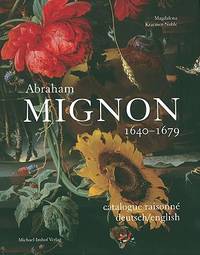
200887145Michael Imhof Verlag. New. 2008. Hardcover. 3865681441 . FREE UPGRADE to Courier/Priority Shipping Upon Request - IN STOCK AND IMMEDIATELY AVAILABLE FOR SHIPMENT - Flawless copy brand new pristine never opened -- Text in German and English. 296 pages; 145 illustrations. Catalogue Raisonne Catalog Raisonné Complete Works Leben Und Werk Oeuvre-Katalog Kritischem Oeuvrekatalog Raisonnee Michael Imhof Verlag hardcover
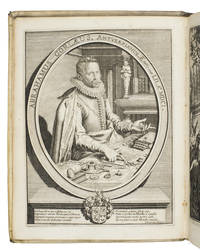
1601ABC_46116Leiden 1601. 4to. Petrus van de Aa Contemporary limp vellum manuscript title on spine. With 2 different engraved allegorical title-pages reflecting the themes of rings and intaglio-carved gems 2 letterpress title-pages in red and black with one of Van der Aas engraved allegorical devices Minerva/Athena books a cock and Hercules/Heracles with motto "studio et vigilantia" a portrait of the author by Jacques de Gheyn with a calligraphic verse by Hugo de Groot below 138 engraved plates: 196 numbered illustrations of ancient rings with carved gems shown at actual size on 101 engraved plates and 148 numbered illustrations of carved gems alone on 37 engraved plates. 2 volumes. 22 28 16 16 pp. plus 109 plates; 64 32 pp. plus 173 plates. The second much enlarged edition by the Dutch classical scholar Jacobus Gronovius of the first extensive repertory of Greco-Roman rings with intaglio-carved gems by Abraham Gorlaeus Van Goorle; 1549-1608 which Gorlaeus had published in 1601 with the title Dactiliotheca seu annulorum sigillarium quorum apud priscos tam Graecos quam Romanos usos 1601 as a catalogue of engraved gems in his cabinet of curiosities.The present edition is also remarkable as one of the earliest books too incorporate - at the end of vol. 2 pp. 1-32 - a medieval treatise on precious stones by Marbodi the bishop of Rennes ca. 1035-1123: Marbodaei Galli Poetae vetusti Carmen de gemmis sive lapidibus pretiosis. The poem is written in exquisite Latin metre and each of the 63 sections is devoted to a single gem explaining its formation appearance etymology exotic origins medical properties and preparations. In his prologue Marbodi says it is partly based on a work on the subject by the first century Arabian King Evax addressed to Emperor Tiberius.With three inserted pages with titles in German translation written by a 19th-century hand and one leaf inserted with 43 tracings of rings etc. from the book also in a 19th-century hand-writing. Bindings a little dust-soiled otherwise in very good condition.l Brunet II 1671; Ebert 8711; Kockel-Graepler Daktyliotheken Kat. 2006 pp. 111-112; Simoni G126; Sinkankas 2470; Ter Meulen & Diermanse 247; STCN 5 copies incl. 2 incomplete; Vinet 1609; cf. Ciconara 2871; J. G. van Gelder Notes on the royal collection - IV: the 'Dutch gift' of 1610 to Henry Prince of Wales'. in: The Burlington Magazine 105 December 1963 pp. 541-545; David Jaffé Aspects of gem collecting in the early seventeenth century Nicolas-Claude Peiresc and Lelio Pasqualini in: The Burlington magazine 135 February 1993 pp. 103-120; Sinkankas 2472; P. & H. Zazoff Gemmensammler pp. 31-34; for the author: NNBW 5 1921 cols. 209-210. hardcover
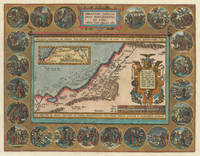
161230715Antwerp: Balthasar Moretus 1612. Other. A very strong impression. In excellent condition. 353 by 457mm 14 by 18 inches. Original copper engraving published 1612 in the famous historical atlas Parergon Latin text-edition by Abraham Ortelius. Finely later hand colored in wash and outline. The map shows the travels and life of Abraham. More else this highly decorative map is surrounded by 22 fine engraved medallions which are showing episodes of the life of the Patriach Abraham. The map was published 1592 for the first time in Abraham Ortelius edition of theTheatrum Orbis Terrarum. Ortelius who created this map used as cartographical source for this map information from Ptolemy and from the bible particulary for the illustrations of Abrahams life depicted in 22 medallions. Broe. 182 Balthasar Moretus unknown
2003CBS-9780471370321John Wiley Original 2003. New. John Wiley (Original) unknown
2003CBS-9780471370321John Wiley Original 2003. New. John Wiley (Original) unknown
177031502AB1770. Dublin Thomas Ewing 1770 - 1790. Octavo 135 cm wide x 215 cm high. Pagination: Volume I contains Numbers I II III IV: Frontispiece-Portrait XIV 6 unnumbered pages of "Contents" 636 pages 2 pages with the contents-page misbound 2 and 24 pages on "The Brehon Laws of Ireland" to the rear of the Volume. Volume I includes three illustrations including the Large Folding-Map of Meath/ Volume II contains Numbers V VI VII VIII IX: 562 pages and 10 illustrations including the Large Folding-Plan of the City of Kilkenny / Volume III contains Numbers X XI XII: LXX 682 pages with one illustration being the Large Fold-Out-Map of "Antient Ireland" by William Beauford and VI Tables on two large sheets in the rear of the Volume containing Orthography/Names of Numbers in different Languages Names of Numbers of some of the Indians of America etc. etc. compared to the antient Irish / Volume IV contains Number XIII of Collectanea de Rebus Hibernicis and "A Vindication of the Ancient History of Ireland" by Charles Vallancey": LX 161 pages being the end of Number XIII plus Pagination for "The Vindication of the Ancient History of Ireland": Frontispiece-Map of Europe and Asia XLVIII 551 pages followed by 16 unnumbered pages of an Index for "The Ancient History of Ireland" followed by X 10 Plates mainly fold-out plates with numerous illustrations for the "Ancient History of Ireland" aslo included is a text-illustration "Inscription in the Cave of New Grange page 212. / Volume V of Collectanea de Rebus Hibernicis: 368 pages plus Hardcover / Original 19th century full-leather with gilt lettering and ornament to spine. Very good condition with only minor signs of wear. Spine of Volume Three is coming apart. From the library of Cork Antiquarian Abraham Abell with an inscription and original manuscript letter by his friend and "Brother Antiquarian" John Bennett 9 Academy St. 18th September 1841. Volume One contains Number I of the Collectanea de Rebus Hibernicis: "A Chorographical Description of the County of West - Meath - Written A.D.1682 by Sir Henry Piers of Tristernaght Baronet" This Section on West-Meath has its own 5-page Index Table of Contents for the description of West Meath listing Advantages of Draining Bogs Athlone Ballimore Battle of Rochonnell Brehon Law called "Bearded Owen's Law" Causes why the Irish were not sooner reduced by the English / Connagh worm Deel River / Degenerate English their forstering and marriages / Kilkenny-West / Landlords oppressors / Marriages of the Irish / Swimming of Cattle on the first Sunday in Harvest / Springs running east and west a proof that this country is seated on the highest ground of Ireland / Wakes described / etc. _________________________________________________________________________________________________________ Volume One contains Number II of the Collectanea de Rebus Hibernicis: I.A Letter from Sir John Davis to the Earl of Salisbury II. Original and first Institution of Corbes Erenachs and Termon-Lands. By Archbishop Ussher. III. An Account of two ancient Instruments lately discovered illustrated by a drawing. _________________________________________________________________________________________________________ Volume One contains Number III of the Collectanea de Rebus Hibernicis: "A Critico-Historical Dissertation concerning the Ancient Irish Laws or National Customs called Gavel-Kind and Thanistry or Senior Government" Part I - The Natuire and primitive Intent if these Laws Part II - A short Sketch from the Leabhar na Geeart or Book of Rights" of the Subsidies which were furnished by the Provincial Kings of Ireland etc. The whole intended as an Essay towards furnishing some Lights for future Enquiries into the Origin of the antient Irish Natioin _________________________________________________________________________________________________________ Volume One contains Number III of the Collectanea de Rebus Hibernicis: "A Critico-Historical Dissertation concerning the Laws of the ancient Irish - Part II" - containing: "The Tanistic Law of Senior Succession illustrated in an Historical and Genealogiocal Account of the Kings of Munster" - being "An Essay on the General History of Munster from the beginning of the third century to the year 1541 when Morrogh O Brien surrendered his Title of King of Munster to Henry VIII. and was created Earl of Thomond and Baron of Inchiquin" / _________________________________________________________________________________________________________ Illustrations included in Volume I: Three 3 Illustrations in total: 1. Frontispiece - Portrait of Charles Vallancey 2. The large fold-out "Map of the County of West Meath - Divided into Baronies and Parishes with the Principal Roads" 3. The small fold-out-Illustration: "Antiquities turned up by the plough in a field near Tipperary" hardcover
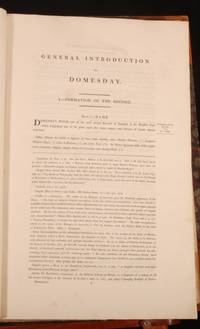
1783SET21-A-1London: Not Stated 1783; 1811-1816. Leather. Good Only. 18" by 11". None. The 1783 Domesday Book with 1816 Additional Volumes. The text of this work is in Latin with 'Introductions' in English. Whilst title pages for Volumes I and II were issued in 1816 these volumes are bound without as usual. Publication Information for Volumes I and II from the ESTC. Citation number: T97297. System Number: 006367139 Volume III includes the informative 1816 'Introduction' by Henry Ellis an English librarian. He was educated at the Mercers' School and St John's College Oxford where he acted as an assistant at the Bodleian Library. He was first appointed to a position at the British Museum in 1800 and was chief librarian from 1827 to 1856. Ellis was knighted in 1833. An important work normally commanding £3000- £4000. We have discounted these to allow for the rebinding they deserve. With two interesting ink inscriptions concerning the text including one from 'the eminent antiquarian' David Turner in Volume III. The Domesday Book is the record of the great survey of England completed in 1086 executed for William I of England otherwise known as 'William the Conqueror'. It was written in Latin although there were some vernacular words inserted for native terms with no previous Latin equivalent and the text was highly abbreviated. Abraham Farley d.1791 was a lifelong civil servant who was appointed deputy chamberlain of the Exchequer in 1736 and soon became involved with the public records at the Chapter House of Westminster Abbey. First amongst these was the Domesday Book of which Farley became custodian granting visiting antiquaries access to the Book and making transcripts for a fee. In later life Farley was to produce the first printed edition of Domesday Book. Following a Parliamentary order in 1767 Farley was appointed co-editor of the Domesday printing project in 1770 alongside Charles Morton of the British Museum. Sir Henry Ellis 1777 1869 was an English librarian. He was educated at the Mercers' School and St John's College Oxford where he acted as an assistant at the Bodleian Library. He was first appointed to a position at the British Museum in 1800 and was chief librarian from 1827 to 1856. Ellis was knighted in 1833. He edited various works on antiques and wrote an Introduction to Domesday Book. In a half calf binding with marbled paper-covered boards. Externally a trifle rubbed resulting in small loss to leather on spine volumes I and IV. Backstrip partially detached to volume II missing to volume III. Boards detached. Internally generally firmly bound. Pages bright and clean with scattered spotting. Pages occasionally age toned to edges. Nameplates and institutional labels to front pastedowns. Good Only Not Stated hardcover
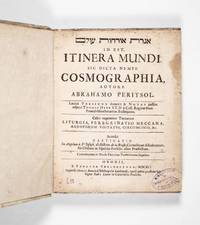
169048858Oxford: Sheldonian Theatre; Henry Bonwick 1690. First edition. Hardcover. Very Good -. Two parts quarto published in 1690 and 1691. A-Z4 pi4 b4 Aa4 Bb/CC4 Dd-Gg4 = 124 leaves. 16 196; 4 31 1 blankpp. Text in Hebrew and Latin in parallel columns. De Turcarum liturgia with separate title page dated 1690 and pagination. Contemporary vellum neatly rebacked. Old library stamp at bottom margin title front blank endleaf detached occasional oxidation spot and mild toning else a very good copy crisp and amply margined.<br /> <br /> First Hebrew-Latin edition of the first modern Hebrew work on geography the author’s most famous and important book. Abraham Farissol or Peritsol was a learned Jew from Avignon who compiled his cosmographical works at the court of the Estes in Ferrara. The present text was composed in 1524-25 and first published in Hebrew at Venice in 1586. The Latin translation and notes in the present edition were prepared by the English orientalist and librarian Thomas Hyde 1636-1703 with the assistance of R. Isaac Abendana working from a manuscript which Hyde located in the Bodleian Library. “Each of its 30 chapters deals with a certain geographical area or subject. In addition many cosmological and historical matters are also treated. The author collected all the evidence he could regarding Jewish settlements in each country. The inclusion of a description of the New World makes Farissol the first Hebrew writer to deal in detail with the newly-discovered America. The 14th chapter of Iggeret Orhot Olam which deals mainly with the settlements of the Ten Lost Tribes is of special interest. According to Farissol’s introduction to this chapter it is clear that what moved him to undertake this investigation was the appearance in Italy in 1523 of David Reuveni many of whose descriptions are included in this work†EJ 6.1185. Reuveni was "an adventurer who aroused messianic hopes in the early 16th century" EJ 14.114. The appended work is a tract on Islamic customs by Albert Wojciech Bobowski a Polish Christian who converted to Islam after his capture by the Ottoman Turks. Adopting the name Ali Ufki Bey he served as translator court musician at Topkapi and as a notator of Ottoman classical music. Bell F26. Christian Hebraism Cat. Harvard 1988 no. 39. ESTC R27480. Fürst Bibliotheca Judaica 1.276. Heller 17th Century pp. 1176-1177. Sabin 60934. Smitskamp PO 372. Vinograd Oxford 4. Wing F-438. Cf. Alden European Americana 1.187 Venice 1586; Heller 16th Century pp.732-733 ed. 1586. Full title beginning in Hebrew: ×גרת ×רחות על×<br /> Id est Itinera mundi sic dicta nempe cosmographia. Latinâ versione donavit et notas passim adjecit Thomas Hyde. Calce exponitur Turcarum liturgia peregrinatio Meccana aegrotorum visitatio circumcisio etc. Sheldonian Theatre; Henry Bonwick hardcover
186136386Philadelphia: Published by F. Bouclet 1861. Rare beautifully colored 20" x 25-3/4" lithograph printed on wove paper titled "Presidents of the United States". Displays all the Presidents through a beardless Lincoln surrounding a vignette of Lady Liberty the American eagle a steamboat and the Capitol the dome complete as anticipated though still under construction. Published by F. Bouclet and lithographed by A. Feusier. In superb condition with just a hint of toning from previous framing. Fine.<br/><br/> "A large patriotic print probably issued around the time of Abraham Lincoln's inauguration. Columbia stands before the U.S. Capitol holding a shield and a staff with a liberty cap. On her brow she wears a laurel wreath with a single star. Beside her is an eagle holding a streamer with the motto "E Pluribus Unum." A steamship is visible in the background left. The central scene is framed by oval portraits of the first sixteen presidents of the United States with George Washington at the top and a beardless Abraham Lincoln at the bottom" Reilly.<br/> The print "commemorates Lincoln's election and recognizes the challenges and opportunities facing the 16th president. In this image a portrait of Lincoln completes an unbroken ring of portraits depicting the 15 presidents who preceded him. The illustration calls to mind a quote from Lincoln's first inaugural 'Perpetuity is implied if not expressed in the fundamental law of all national governments'. By commemorating Lincoln's election and illustrating the troubled and complex scene he faced this chromolithograph encapsulates the spirit of Lincoln's presidency" Mast 'A Closer Look at Presidents of the United States 4 President Lincoln's Cottage page 2 2009. <br/>Reilly 1861-13. OCLC 41119329 2- Lib. Cong. MN Public School District as of November 2019. The print is also included in the Jay Last Collection at the Huntington. Published by F. Bouclet unknown books
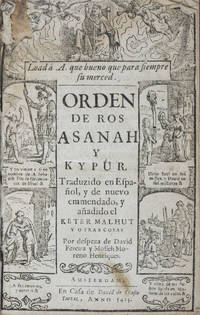
43956Amsterdam: David Fereira y Mosseh Moreno Henriques/ David de Crasto Tartaz David de Castro Tartas 5423. Hardcover. g- to g. Duodecimo. 6.5x4.5". 479pp. Original brown calf boards with gilt-stamped motifs and raised bands on the spine. Blue ribbon marker. Edges of the book block in red. Marbled endpapers. The title page is illustrated with copper plate engravings in the form of small vignettes of biblical scenes surrounding the text. This is an early Spanish-language edition of the complete Jewish High Holiday prayer book Machzor based on the original translation by Abraham Usque originally printed in Ferarra Italy in 1553. This edition contains some added material not previously present including most prominently Solomon ibn Gabirol's famed philosophical poem "Keter Malkhut" Royal Crown which over the years has come to be read as part of the Yom Kippur service in some Jewish traditions. <br /> <br /> This edition of the Machzor was published by David Fereira and Mosseh Moreno Henriques to serve members of the then sizable Sephardic Jewish community in Amsterdam. A significant portion of the community would have been ex-Marranos Jews who had outwardly converted to Catholicism during the inquisition in Spain who then immigrated and were able to reestablished their Jewish identity and thus were unable to read Hebrew hence the text's publication in Spanish. As stated in the foreword this edition includes some additions to the text not included in previous versions and omits some material deemed to have been unnecessary. The prayer book starts with the penitential prayers Selichot p.3-47 which includes decorative head and endpeices. This section is followed by the Rosh Hashanah service p.48-195 and then the Yom Kippur service including "Keter Malkhut" p.254-289. The title page is illustrated with scenes from the biblical stories of King David Saul and Goliath and contain small captions underneath with corresponding biblical passages in Spanish. <br /> <br /> There are a number of pagination printing errors including: p.45-46 are misprinted as 54 and 36 p.264 is misprinted as 164. p.450 is misprinted as 350 p.414 is misprinted as 144. Like in the case of the earlier 1652 edition of the work pages 305-352 are misprinted as "321-368" but in this copy the leaf containing p. 353-354 directly following "368" seems to be missing. Overall this edition follows very closely the 1652 edition of the same work in terms of pagination content and organization. Includes large initials throughout the text. All text in Spanish. <br /> <br /> Binding with rubbing scratches and abrasions to the covers spine and extremities. Some chipping to the head and tail of the spine. Interior front covers with some starting and the loosening of the endpapers. Title page with starting light creases stains and and light chipping on the top left corner resulting in slight loss of image. Some light water staining along the top edge of the pages with some other sporadic light staining throughout. Page 365 torn along the side edge with no loss of text. Starting at a number of pages throughout the book. Binding in good- interior in good condition overall. Binding protected with modern mylar. David ben Abraham de Castro 1630-1698 was a French-born Portuguese Jewish printer/publisher in Amsterdam. Between 1662 and 1701 his press printed the "Gazeta de Amsterdam" a newspaper for the exiled Sephardic Jewish community in Amsterdam. He started his printing career as a typesetter at the printing house of Menasseh Ben Israel a printer and leading Rabbi in community who printed the earliest Amsterdam edition of this work in 1630. Castro started his own business in 1662 making this edition among his earliest publications. <br /> <br /> References: RODRIGUEZ 1781 p. 643 KAYSERLING 1890 p. 62 PALAU1923 202416 PEETERS1933 1038. David Fereira y Mosseh Moreno Henriques/ David de Crasto Tartaz (David de Castro Tartas) hardcover
1735EBS100373Erfurt: Augustinus Crusius 1735. 2nd Edition. Hardcover. Good/No Jacket. BREATHTAKING ALCHEMICAL WOODCUTS IN SOUGHT AFTER TREATISE. Claus Priesner Ambix Vol. 63 No. 1 February 2016 pp 1-27 attributes this work to the probably pseudonymous Julius Gervasius who connects the work to Nicolas Flamel. Supposedly the Werckh manuscript was written by a Rabbi Abraham Eleazar while the Donum Dei manuscript is attributed to a Rabbi Samuel Baruch who is supposed to have received his alchemical knowledge from Tubal-Cain said to be the grandson of Adam. BOOK DETAILS AND CONDITION: First Edition 16.5 X 9.5 cm. ½ leather over boards very considerable wear including losses to leather on spine: frontispiece 30 122 14 pp; 2 87 25 1; In the first part Werckh there are 6 of 7 allegorical plates and numerous in-text woodcuts one full-page on p 49 that are both allegorical and depict apparatus; In the second part Donum Dei there 8 allegorical plates the first 7 each divided into 2 figures 1-14 and the final plate is figure15. The frontispiece and the title pages are dusty but the remainder of the book internally is VG-. Missing plate in the Werckh is number 7 and is likely to have been omitted rather than removed. In this copy Figure 7 provided loose in facsimile on antiquarian paper. Gerhard Gruber Catalogue 130 Jan. 2007 has this edition lacking 2 plates. PROVENANCE: From the Arthur C. Greenberg History of Chemistry Library. Bookplate of Women s College of Frederick Maryland inside from board light library stamp on first page of text and small library pocket envelope inside rear board. REFERENCES AND RARITY: The first edition in Duveen collection absent in Neville Cole Ferguson which includes the 1760 edition. Duveen 1f; Ferchl 1; Ferguson I 3 Anm.; Caillet 31 Anm. Bolton p 980: This work is of great rarity. OCLC lists 10 copies in the world's libraries - none in the United States. Nine copies of this work sold at auction in the last century RBH. FULL TITLE: Uraltes Chymisches Werck. Welches ehedessen von dem Autore Theils in Lateinischer und Arabischer theils auch in Chaldaeischer und Syrischer Sprache geschrieben Nachmals von einem Anonymo In unsere Deutsche Mutter-Sprache übersetzt. Erfurt: Augustinus Crusius hardcover
166964891669 Amstelodami, sumptibus Andreae Frisii, [Amsterdam, Andrea Frisi], 1669. 3 parties en 1 vol. in-4: 18.5 x 24.5 cm [5] ff., [4] pl. grav. dép, 96 pp., [6] ff. d'index, [4] ff., 96 pp. Troisième et meilleure édition de ce curieux ouvrage, d'après Brunet, avec les gravures de la Table Isiaque d'après Enea Vico, absentes de précédentes éditions. Notre exemplaire comporte 43 gravures en taille-douce. Un frontispice gravés par Blooteling, 8 planches à pleine page, 26 figures dans le texte et 8 des 11 sections de la Table Isiaque réalisées par Giacomo Franco d'après les gravures de Vico parues en 1559, ces 8 sections sont regroupées en 4 grandes pl. dép. Il manque les 3 sections de la bande centrale de la table. Reliure de l'époque en parchemin. Dos lisse avec titre manuscrit à l'encre noir. Bel exemplaire