ROCHEFOUCAULD-LIANCOURT, Francois Alexandre Frederic, duc de la; Abraham BRADLEY (1767-1838)Biblio.com

394 résultats
179912534Paris: Du Pont 1799. Three engraved maps 465 by 420 mm 550 by 340 mm and 530 by 350 mm respectively with fine contemporary hand-colour in full old folds. These maps from the library of the Rochambeau family were published in the first edition of Rochefoucauld-Liancourt's travels in the United States 'Voyage Dans les États-Unis D'Amérique Fait en 1795 1796 et 1797 " Paris 1799 annotated in an early 19th-century hand after Abraham Bradley Junior's 1796 map 'A Map of the United States. Exhibiting Post Roads & Distances'. They are reduced copies of the 1796 first edition of Bradley's map and are therefore the first French edition of these maps. The Comte de Rochambeau 1725-1807 was a battle-hardened French general chosen by King Louis XVI in 1780 to command the expeditionary corps in the United States under the orders of General George Washington. Their combined success at the Siege of Yorktown on the 19th of October 1781 ended the Revolutionary War and secured American independence. 1."Carte générale des États-Unis de l'Amérique Septentrionale divisée en ses 17 provinces" annotated in an early 19th-century hand numbering each of 16 states giving the location of Native American tribes providing a key showing the major post roads from Main to South Carolina all after Abraham Bradley's map of 1796 acknowledged by the inscriber who has replaced the imprint with "par Abraham Bradley Jun.r" This map of the East Coast extends from Quebec south to include part of East and West Florida; the western boundary of Georgia extends to the Mississippi River; a strip of land extending westward between Georgia and Tennessee is designated "United States Territory" having been ceded back to the United States in 1787 from South Carolina; another strip between Georgia and West Florida is "Land claimed by the united states" referring to the ongoing dispute between the United States and Spain; all the land to the west which would become the Louisiana Purchase is "Spanish Territory Louisiana." English captions and French title. Manuscript ink annotations in French indicating the names of the 17 states and the position of the Indian tribes. Ink manuscript inscription to verso "IK 403" shelfmark of Rochambeau family library and as "Etats-Unis en 17 provinces." 2. The "Carte des États-Unis Provinces méridionales" shows Kentucky Virginia Tennessee North and South Carolina Georgia a strip of land between Tennessee and Georgia as "United States Territory" and to the south of Georgia "Land claimed by the united states". 3. The "Carte des États-Unis provinces Septentrionales" shows the states from Main sic to Maryland and Delaware. François Alexandre Frédéric duc de La Rochefoucauld-Liancourt 1747-1827 was a French writer and courtier. A social and scientific reformer he was elected to the Estates-General and pushed for changes to the absolute monarchy of France. Rochefoucauld-Liancourt was the first to warn Louis XVI of the fall of the Bastille; when the king called it a revolt Rochefoucauld Liancourt replied "No sire it is a revolution". Despite being sympathetic to the original aims of the Revolution and serving as the first president of the Constituent Assembly he opposed republicanism and secretly tried to arrange for the escape of the king. Following the storming of the royal palace in August 1792 and the beginning of the September Massacres later that same year precipitated his flight from France and he went into self-imposed exile in America. From London in September 1794 Angelica Schuyler Church wrote to her brother-in-law Alexander Hamilton with a glowing introduction. Liancourt made his was to Philadelphia in November and travelled extensively from "le Haute-Canada" above Lake Ontario to Charleston South Carolina taking notes on everything from the economy to slavery to agriculture. After returning to France in 1799 when Napoleon took power he published his analysis as an eight-volume work in which these maps were published. Related Letters and Historic Background Angelica Church to Alexander Hamilton September 19 1794: "My dear Brother I have very particular and very good motives to ask your kindness for the Duke de Liancourt. he loved Liberty with good sence and moderation; and he meant so well towards his country as to introduce into France a better system of Agriculture and to soften the situation of the Lower class of people there: Virtue has not found its reward for in the many scenes of distress that has afflicted his unfortunate country he like many more good men has been obliged to leave his possessions and seek an Asylum in this country. He goes to America and goes there without a friend unless my dear Brother who is always so good will extend to Monsieur de Liancourt his ease. besides many good Qualities this gentleman is the friend of the Marquis de La Fayette. Angelica Church." On April 10 1795 Liancourt wrote to Hamilton in a letter docketed by the recipient and then later by his widow Elizabeth Schuyler Hamilton. Rough translation from French: "You have allowed me to count on your interest Monsieur and this without complaint a hope for which I am flattered. I am herewith asking you to prove it which I hope will be one for you interest since it seems to me not being a stranger to you. I am at the point of leaving for a voyage that will take me as far as Canada. I will enter the United States through the province of Maine from there for another voyage in the east There are introduction letters to principle places that I am due to visit that I would be more pleased to get from you rather than anyone else. If you agree as I think you will to give them to me would you please send them to General Knox in the province of Maine where I will be until the end of July. I flatter myself that you will excuse my importunity!." Although France and the United States had been allies since 1778 political developments in both countries damaged the relationship. The French Revolution was viewed by Federalists like Alexander Hamilton as a dangerous precedent; and the ensuing wars between Britain and France placed the neutral United States in a precarious position. Relations deteriorated further on the signing of Jay's Treaty 1794 with Great Britain. France ordered the seizure of American ships carrying British goods and in 1796 the French refused to admit American diplomats. This impasse led to the XYZ Affair which provoked Congress in turn to suspend commercial relations with France and to authorize American warships to seize armed French vessels. This undeclared naval war lasted for three years with the United States capturing about eighty-five French vessels Du Pont, unknown
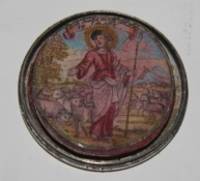
1733004823Amsterdam 1733. The panorama or concertina was made we believe in 1732 or 1733 or close to that date. The silver "shraubthaler" or outer casing we assume was made separately at a later date but not long afterward. unknown
1732004823Amsterdam 1732 or 1733. The panorama or concertina was made we believe in 1732 or 1733 or close to that date. The silver "shraubthaler" or outer casing we assume was made separately at a later date but not long afterward. <br /><br /> books
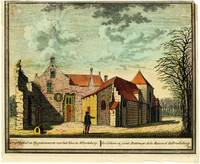
17301611Amsterdam 1730. Engraving with extensive hand coloring in watercolor on laid paper with a partial heraldic watermark 6 3/4 x 7 3/4 inches 171 x 197 mm; sheet 6 3/8 x 8 1/8 inches 163 x 206 mm; margins unevenly trimmed at the top plate mark and 1/4- inch below the bottom platemark. Condition consistent with age including a repaired vertical tear extending 2- inches downward into the image area from the top right sheet edge and several tabs of non archival tape on the verso. There are some light areas of toning. Color is vibrant and fresh. unknown
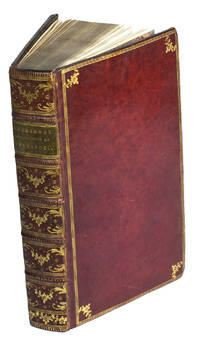
1728ABC_48146Amsterdam 1728. 4to. Isaak Tirion Contemporary gold-tooled red morocco with the author and title lettered in gold on the spine with an ornamental border on both boards gold-tooled board edges and turn-ins gilt edges marbled endpapers. With an engraved title page in each part and 300 numbered engraved half-page views. 2 parts in 1 volume. 76; 76 ll. Beautifully bound complete copy of Abraham Rademaker's celebrated series of 300 views of famous sights and buildings in the Netherlands and Cleve. These fine engravings include views of Amsterdam Hoorn Egmond Haarlem Rynsburg Leiden Delft with the ruins of Koningsveld Abbey and the Cartusian monastery Spangen Dordrecht Gorinchem IJsselstein Montfoort Utrecht Arnhem Nijmegen Kleve and Emmerik. The plates are predominantly dated between 1573 and 1720. However these dates do not indicate when the plate was made but correspond instead to the condition of the depicted towns and buildings in those respective years.Abraham Rademaker 1679-1735 was a versatile painter and engraver known mostly for his many views he made of villages towns churches monasteries castles and manor houses sometimes in ruins in the Netherlands and the area around Kleve. Apart from the various editions of his Kabinet he also published series of views in De zegepraalende Vecht 1719 and Spiegel van Amsterdams zomervreugd 1728.The present copy was owned by Adam Mansfieldt de Cardonnel Lawson of Cramlington Northumberland; 1746-1820 a historian from Scotland who is the author of a book similar to Rademakers Kabinet: Pituresque antiquities of Scotland 1788-1793 etched by Adam de Cardonnel. The work was then inherited by his granddaughter Lucy Anna de Cardonnel Elmsall.With the bookplates of Adam Mansfieldt de Cardonnel Lawson of Cramlington Northumberland; 1746-1820 and Lucy Anna de Cardonnel Elmsall 1828- after 1867 mounted on the front pastedown and an ownership annotation by the former on the title page "Lawson 1802". The boards are very slightly rubbed. The title page of the first part is somewhat soiled occasional mild soiling in the margins. Otherwise in very good condition.l De Buck no. 584; STCN 300275331 5 copies; cf. Tiele 892 other ed.; Wurzbach II p. 375 other ed. hardcover
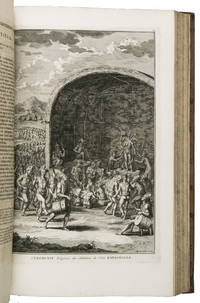
17275737The Hague 1727. Folio. Rutgert Christoffel Alberts vols. 1-3 and Isaac van der Kloot vols. 3-4; Amsterdam Hermannus Uytwerf; Rotterdam Jan Daniel Beman Contemporary gold tooled mottled brown calf with red and black morocco title and volume labels lettered in gold each volume with a central lozenge-shaped ornament on both boards surrounded by two decorative borders gold tooled board edges marbled edges. With an engraved frontispiece 8 title-pages 6 in red and black each with one of 3 different engraved vignettes plus 3 part-titles with a woodcut decoration 224 full-page engraved plates including 1 folding and 38 double-page plates an engraving on the dedication leaf in vol. 1 and a few engravings in the text. Further with several engraved headpieces woodcut tailpieces and a few woodcut decorated initials. 6 volumes vols. 3 4 & 6 in 2 parts each bound as 7. First Dutch edition of Picart's famous and richly illustrated work on religious customs ceremonies and costumes from all over the world. With its six volumes it is the most sumptuous publication ever on the religions of the world richly and beautifully illustrated with large and sometimes double-page or even folding engraved plates by the French engraver Bernard Picart 1673-1733 who lived in Amsterdam from 1708. The text was compiled from a wide range of sources including R. Simon J. Abbadie Dupin Thiers P. le Brun Boulainvilliers and Reland and edited by the Amsterdam publisher Jean Frederic Bernard for a French edition titled Ceremonies et coutumes religieuses de tous le peuples du monde first published in 1723. It was translated into Dutch for the present edition by Abraham Moubach.The first two volumes discuss the religion of the Jews and Roman Catholics including a double-page engraving of the interior of the Portuguese synagoge in Amsterdam. The third and fourth volume deal with the religions of the "heathens" in the Americas including Mexico India Ceylon the Brahmans in India China Japan Africa and the Persians in Iran. The fifth volume concerns the Greek orthodox church and the several groups of Protestants. The last volume describes the Anglicans and smaller groups such as Quakers Mennonites Adamites Freemasons and finally Islam. Altogether the most important 18th-century survey work on the world's religions and their customs lavishly illustrated with very finely executed plates.From the library of Frederick H. Rindge 1859-1905. The boards are somewhat rubbed. The works are slightly browned and foxed throughout with the final leaves of volume 3 affected more than the others. Otherwise in good condition.l Alt-Japan-Katalog 1149; STCN 191420778; cf. Cordier Japonica col. 435; Lipperheide 1808; Sabin 62600 all French ed. hardcover
17816457Dordrecht 1781. 8vo. Abraham Blussé and son colophon: printed by Johan Joseph Besseling Utrecht Contemporary red morocco richly gold-tooled spine gold-tooled boards triple fillets with floral ornaments in each corner board edges and turn-ins gilt edges. Bound by the Dutch court bookbinder Abraham van Rossum active in Amsterdam 1812-1854 one of the major binders Storm van Leeuwen of that period with his letterpress ticket on paste-down A.v. Rossum hof-boekbinder. 2 works in 1 volume. 5 1 339 5; 68 pp. Rare first and only edition of the much expanded Dutch translation of a philosophical treatise for law students on natural morality as the basis for all law together with the second edition of the same treatise in the original French. The Monthly review vol. LII 1775 p. 596 praises the author's "penetration wit and erudition" but on the other hand the original treatise "is one of those productions which even an attentive reader totally forgets the very moment he has done perusing it". The Dutch translation is followed by four other philosophical treatises by the author also concerning natural law discussing the problems of divine law moral obligations moral sense and the question whether the existence of God can be proved by reason.Abraham de Perrenot 1726-1784 was a Swiss lawyer of Huguenot-descent who worked as councillor for the Prince of Orange in the Netherlands.With the bookplate of Thomas Otho Travers 1785-1844 friend of Stamford Raffles. With some minor waterstain at the foot of the French treatise and the corners slightly bumped otherwise in very good condition and well bound.l Dekkers Bibl. Belg. juridica p. 133 no. 5; STCN 4 copies; WorldCat 6 copies incl. 3 the same; ad 2: cf. Dekkers p. 133 no. 4 1779 ed.; Quérard VII p. 63 1775 ed.; for Perrenot: V.d. Aa XV p. 205; for the binder: J. Storm van Leeuwen 1725-1830 Bookbinding on www.bibliopolis.nl. hardcover
172390242Eugène Henry Fricx Thomam Johnson Mathieu Roguet | Bruxelles La Haye 1723-1725 | 18.5 x 24.5 cm | 3 volumes reliés en 1
1742008267Amsterdam: Jan Roman 1742. Hardcover. Very Good/No Jacket. 16mo. Full contemporary calf red calf spine label with gilt lettering gilt stamped compartments. 16 540 pp. Engraved half-title. Title in red and black. 50 half-page copper engravings by C.Luyken engraved endpieces. Professionally rebacked. Wear to calf worse at edges loss of most of the outer edge dentelle. Ink notations and pencil scribbles to front pastedown pencil notations to rear pastedown. Ink inscription to head of title page. Staining to interior. Abraham a Sancta Clara born Johann Ulrich Megerle1644-1709 was an Augustinian monk and author of popular devotional books. New Advent Catholic Encyclopedia. Jan Roman hardcover
176333871763. : 75 Hole in first blank. Part 1: 2 Blank pages / 1 Blank pages / 2 NNP / 268 Pages / 2 Blank pages / 1 Engraved Plates Part 2: 2 Blank pages / 1 Blank pages / 316 Pages / 36 NNP / 2 Blank pages Binding: Contemporary Full Leather Sextodecimo 16mo Height cm: 159 CM Width cm: 10 CM Thickness cm: 52 CM hardcover
173741768London: Chez Jean Brindley Libraire de S. A. R. Monseigeur le Prince de Galles dans New Bond-street 1737. Folio. 20 3/4 x 14 1/4 inches. Second edition deluxe large paper issue with wide margins. 43 double-page engravings after Abraham van Diepenbeke including 42 numbered 1-42 and the unnumbered 1658 title with Anvers imprint. Engraved head-piece to first dedication. Numerous woodcut illustrations throughout the text and woodcut historiated and inhabited initials head- and tail-pieces and printer's ornaments. 12 1-236. 248 pp. Letterpress title with London imprint and four dedications to Henriette Cavendishe-Holles the King of Grande-Bretagne Charles Vicomte de Mansfield and to Cavaliers. Avertissement avant-propos four livres plus an Abbrege de la Cavalerie conclusion additions table des chapitres. With incisive manuscript commentary pencilled in the margins in both French and English. Text in French. Bound to style in eighteenth-century half leather over eighteenth-century comb marbled paper-covered boards and marbled endpapers<br/> <br/> Deluxe large paper issue of Cavendish's classic 1737 treatise on equestrianism with 43 splendid double-page engravings: "The illustrations are among the most beautiful to ever grace equestrian literature." Ramsay<br/> <br/> Though considered a country of horse lovers England only produced one early master of classical riding: William Cavendish Duke of Newcastle who was a Royalist living in exile until the restoration of King Charles II. During his exile Cavendish opened a riding school in Belgium and wrote the present work La Méthode et Invention Nouvelle de Dresser les Chevaux. This text was the first of Cavendish's two important books on breeding and training horses and was translated into French from his English manuscript and published in Antwerp in two issues: 1657 and 1658 though many of the 1657 title-pages have been altered by hand to read 1658. The first printing was largely incinerated by a fire in the bookseller's shop and is all but impossible to acquire. Brunet Offered here is the deluxe large paper issue of the second edition of Cavendish's first book a work long cherished by bibliophiles for its typographical excellence and the masterful quality of its illustrations. It is a work that has been esteemed by countless generations of horsemen and revered by such master riders as La Guérinière Comte d'Aure and Steinbrecht. It is a landmark of equestrianism. Steinkraus Cavendish's book has been called the only really outstanding work on the subject written by an Englishman. Toole-Stott In it Cavendish discusses a wide variety of equine subjects including the recognition of the age and disposition of a horse; the characteristics of various types of horses such as the Spanish the Barb the English horse and the Arabian; methods of maintenance; and instructions on proper riding: "You must in all Airs follow the strength spirit and disposition of the horse and do nothing against nature; for art is but to set nature in order and nothing else." Of the 43 wonderful double-page engraved plates after Abraham van Diepenbeke 24 depict the multiple stages Cavendish and his assistant Captain Mazin employed in training horses in complicated maneuvers. The quality of the impressions in the present 1737 edition surpasses even those of the original edition. Steinkraus This was the first edition of La Méthode et Invention Nouvelle de Dresser les Chevaux to be published in England with engravings pulled from the original 1658 copperplates which were acquired by the publisher Jean Brindley.<br/> <br/> Brunet I 1700. Graesse II 93. Huth 23. Lowndes 1663. Mennessier de la Lance II p. 250. Nissen ZBI 848. Podeschi Mellon Books on the Horse and Horsemanship pp. 26 49. Ramsay "Early Dressage Literature to 1800" IOBA 6.9.03. Steinkraus Introduction to A General System of Horsemanship 2000. Toole-Stott Circus and the Allied Arts: A World Bibliography 84. Wing N884-87. Chez Jean Brindley, Libraire de S. A. R. Monseigeur le Prince de Galles, dans New Bond-street unknown
173740577London: Chez Jean Brindley Libraire de S. A. R. Monseigeur le Prince de Galles dans New Bond-street 1737. Folio. 17 7/8 x 11 1/4 inches. Complete second edition. 43 double-page engravings after Abraham van Diepenbeke including 42 numbered 1-42 and the unnumbered 1658 title with Anvers imprint. Engraved head-piece to first dedication. Numerous woodcut illustrations throughout the text and woodcut historiated and inhabited initials head- and tail-pieces and printer's ornaments. 12 1-236. 248 pp. Letterpress title with London imprint and four dedications to Henriette Cavendishe-Holles the King of Grande-Bretagne Charles Vicomte de Mansfield and to Cavaliers. Avertissement avant-propos four livres plus an Abbrege de la Cavalerie conclusion additions table des chapitres. Text in French. Contemporary brown full morocco paneled blind with gilt filets on board edges and gilt dentelles seven raised bands forming eight compartments on a richly gilt spine with gilt-lettered red morocco titling-pieces in second and third compartments and gilt foliate tooling in rest marbled endpapers on laid paper all edges gilt<br/> <br/> Cavendish's classic 1737 treatise on equestrianism with 43 splendid double-page engravings: "The illustrations are among the most beautiful to ever grace equestrian literature." Ramsay<br/> <br/> Though considered a country of horse lovers England only produced one early master of classical riding: William Cavendish Duke of Newcastle who was a Royalist living in exile until the restoration of King Charles II. During his exile Cavendish opened a riding school in Belgium and wrote the present work La Méthode et Invention Nouvelle de Dresser les Chevaux. This text was the first of Cavendish's two important books on breeding and training horses and was translated into French from his English manuscript and published in Antwerp in two issues: 1657 and 1658 though many of the 1657 title-pages have been altered by hand to read 1658. The first printing was largely incinerated by a fire in the bookseller's shop and is all but impossible to acquire. Brunet Offered here is the second edition of Cavendish's first book a work long cherished by bibliophiles for its typographical excellence and the masterful quality of its illustrations. It is a work that has been esteemed by countless generations of horsemen and revered by such master riders as La Guérinière Comte d'Aure and Steinbrecht. It is a landmark of equestrianism. Steinkraus Cavendish's book has been called the only really outstanding work on the subject written by an Englishman. Toole-Stott In it Cavendish discusses a wide variety of equine subjects including the recognition of the age and disposition of a horse; the characteristics of various types of horses such as the Spanish the Barb the English horse and the Arabian; methods of maintenance; and instructions on proper riding: "You must in all Airs follow the strength spirit and disposition of the horse and do nothing against nature; for art is but to set nature in order and nothing else." Of the 43 wonderful double-page engraved plates after Abraham van Diepenbeke 24 depict the multiple stages Cavendish and his assistant Captain Mazin employed in training horses in complicated maneuvers. The quality of the impressions in the present 1737 edition surpasses even those of the original edition. Steinkraus This was the first edition of La Méthode et Invention Nouvelle de Dresser les Chevaux to be published in England with engravings pulled from the original 1658 copperplates which were acquired by the publisher Jean Brindley.<br/> <br/> Brunet I 1700. Graesse II 93. Huth 23. Lowndes 1663. Mennessier de la Lance II p. 250. Nissen ZBI 848. Podeschi Mellon Books on the Horse and Horsemanship pp. 26 49. Ramsay "Early Dressage Literature to 1800" IOBA 6.9.03. Steinkraus Introduction to A General System of Horsemanship 2000. Wing N884-87. Chez Jean Brindley, Libraire de S. A. R. Monseigeur le Prince de Galles, dans New Bond-street unknown
174665781746 A Berne: De l'imprimerie de Leurs Excellences, 1746. 1 vol. pt. in-4: 17 x 21 cm, 3 ff., 122 pp., 34 ff.. non.chiff. de table générale. Reliure en demi-parchemin. Dos lisse avec titre manuscrit à l'encre. Plats recouverts de papier marbré. Reliure frottée, papier uniformément piqué. Exemplaire toutefois solide.
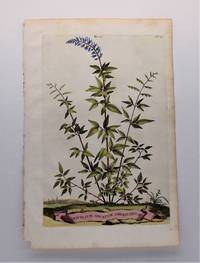
1702W1935Amsterdam: Lugduni Batavorum 1702. Original hand-colored engraving on hand-made laid paper. Size: 15" X 9 5/8". Plate #220 from Phytographia Curiosa by the Dutch botanist and botanical artist Abraham Munting 1626-1683 published in Amsterdam and Leyden in 1702 and referenced on page 123 of Sitwell's Great Flower Books. The plates were drawn by Munting and engraved by Jan Baptist; coloring was added later. This engraving like the other plates in the monumental and scarce work portrays the plant larger than life with an almost whimsical title ribbon. The print is in very good condition with some browning limited to the blank margins. First Edition. Single Sheet. Very Good. Illus. by Abraham Munting and Jan Baptist. Folio - over 12" - 15" tall. Fine Art Print. Lugduni Batavorum
1772846T91London: T. Cadell 1772. Leather. Very Good Indeed. 7.5" by 5". None. The second volume of the select works of Mr Abraham Cowley. Second volume only. A collection of works by Mr Abraham Cowley including: Of Liberty Of Obscurity The Garden The Shortness of Life and Of Myself. Written by Abraham Cowley an English poet and essayist considered a leading English poet of the 17th century with 14 printings of his "works" published between 1668 and 1721. Edited with a preface by R. Hurd Bishop of Worcester 1781-1808. Bound by Riviere. Bound by Riviere in half red crushed morocco with red cloth boards and marbled pastedowns and endpapers. Externally very smart with light rubbing to the extremities. Internally firmly bound. Pages are very bright and clean with the odd spot. Very Good Indeed T. Cadell hardcover
1710SET25-C-5London : Tonson et al. 1710-1711. Leather. Good. 8" by 5". None. Three volumes of Abraham Cowley's works. With separate title pages for 'The Mistress' 'Pindarique Odes' 'Davideis' 1707 and 'Cutter of Coleman-Street' but with continuous pagination as called for. From the antiquarian library of Christopher Rowe. Christopher Rowe was a schoolmaster in Norwich and then in Bristol. Throughout his career he inspired many to love literature history and music. He was a specialist on 17th century printer and bookseller Humphrey Moseley and began his unfortunately unfinished PhD dissertation on him. Nineteen plates to volume I ten plates to volume II and none to volume III. Volumes I and III have been tripped more closely than volume II resulting in it being a slightly larger volume. It would appear that volumes I and III were originally part of a set and the previous owner purchased volume II separately. Volume I is lacking one plate volume II is lacking one plate and Volume III is lacking two plates compared to the same editions found on Eighteenth Century Collections Online. Collated this set comprises of I and II of an original two volume set with the third volume which was added later. The eleventh edition of volume I and II and the ninth edition of volume III. Abraham Cowley was an English poet of the seventeenth century. He was one of the leading poets of his time. In calf bindings with gilt stamping to spines. Volume II has been rebacked in a similar style to the original spines with original boards preserved. Externally sound with slight rubbing to spine to volumes I and III. Loss to the head and tail of spines to volumes I and III.Front joint to volume I is starting but firm. Small crack to front joint to volume III. Boards to volume II are heavily rubbed. Crack down the entire spine of volume I affecting internal binding it is tender and may cause a split if handled too much. Bookplate of one Christopher Rowe to front pastedown of volumes I and III. Prior owner's signature to title page of both volumes I and III Hammond. Both hinges are slightly strained but firm to all volumes. Internally both volumes are generally firmly bound though strained in places. Pages are generally bright slightly age toned to edges as expected. A few spots to first and last few pages. The odd spot throughout. Good Tonson et al. hardcover
17977225Boston:: S. Hall 1797. First Edition. Near Fine. Near Fine. With folds as issued faint offset from folded image. Darkened along folds. Professionally cleaned with small edge tear repairs. Laid down on cotton. A very nice solid copy of an early desirable map. Copperplate engraving on laid paper. Sheet size: 40 x 21 cm. A fine example of Early American Mapmaking by Abraham Bradley Jr engraved by S. Hill prior to the Louisiana Purchase showing the Southern Parts of the United States from the coast of Virginia at Norfolk down to St. Augustine across the Gulf to the Mississippi River and up through to the Ohio River in Kentucky. Highly detailed with mountain ranges water tributaries dozens of native territories and United States claim line divided by Western Georgia and Chactaws Territory. Alexander Bradley Conn. 1767-1838 lawyer then judge in Pennsylvania who became assistant postmaster general and supervised the move of the general post office from Philadelphia to Washington DC. Known for his excellence in detailed mapmaking as well as his knowledge of postal routes he created to the first official map used by the US Postal Department which became the standard by 1825. In 1803 Thomas Jefferson wrote to Bradley requesting an early copy of one such map. Howes 839; Ristow 70-1; Sabin 50923 https://founders.archives.gov/documents/Jefferson/01-41-02-0206 single sheet S. Hall, unknown
179334890Newburyport: Printed by Blunt and Robinson 1793. 34 2 blanks pp with the half title. Disbound rubberstamp in blank upper corner of half title. Good.<br /> <br /> A scarce Sermon. "The constitution of man is truly mysterious." <br /> Evans 25835. ESTC W15570 recording nine institutional locations as of April 2018. Printed by Blunt and Robinson unknown
179334890Newburyport: Printed by Blunt and Robinson 1793. 34 2 blanks pp with the half title. Disbound rubberstamp in blank upper corner of half title. Good.<br/><br/> A scarce Sermon. "The constitution of man is truly mysterious." <br/>Evans 25835. ESTC W15570 recording nine institutional locations as of April 2018. Printed by Blunt and Robinson unknown books
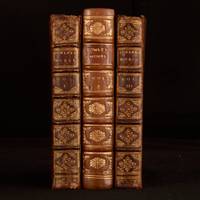
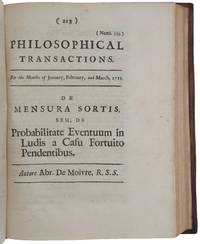
17126431London: Printed for H. Clements . and W. Innys . and D. Brown 1712. First edition. <p>First edition published in the Philosophical Transactions and de Moivre's first published work on probability-the earliest original contribution to the subject to appear in Britain. This pioneering paper laid the groundwork for his later masterpiece The Doctrine of Chances 1718 the definitive English-language textbook on probability theory for over a century. As Hald notes "Nearly all of De Mensura Sortis was later incorporated into The Doctrine of Chances . the most important textbook on probability theory until the publication of Laplace's Théorie Analytique des Probabilités 1812."</p>. <p>THE FOUNDATION OF THE DOCTRINE OF CHANCES</p> . <p>First edition contained in a complete volume of the Phil. Trans. of de Moivre's first published work on probability and the first original work on the subject published in Britain a precursor to his Doctrine of Chances which appeared seven years later. "De Moivre's work on the theory of probability surpasses anything done by any other mathematician except Laplace. His principal contributions are his investigations respecting the Duration of Play his Theory of Recurring Series and his extension of the value of Daniel Bernoulli's theorem by the aid of Stirling's theorem" Cajori p. 245. "The only systematic treatises on probability printed before 1711 were Huygens' De ratiociniis in ludo aleae 1657 and Pierre Rémond de Montmort's Essay d'analyse sur les jeux de hazard 1708. Problems which had been posed in these two books prompted de Moivre's earliest work and incidentally caused a feud between Montmort and de Moivre on the subject of originality and priority" DSB. "Nearly all of De Mensura Sortis was later incorporated into de Moivre's book The Doctrine of Chances 1718 1738 1756 which was the most important textbook on probability theory until the publication of Laplace's Théorie Analytique des Probabilités 1812. In the preface de Moivre states that he began his work on probability theory at the exhortation of Francis Robartes who asked him to solve the division problem for two gamesters playing bowls and also to find the probability of getting certain given faces as the outcome of a given number of throws with a die. He also states that he had previously read the books by Huygens and Montmort 'but these distinguished gentlemen do not seem to have employed that simplicity and generality which the nature of the matter demands.' Furthermore he writes that 'while they suppose that the skill of the gamesters is always equal they confine this doctrine of games within limits too narrow.' Finally his remarks about Montmort may be read as if Montmort had used only the method of Huygens on some new examples. These rash remarks naturally provoked a dispute with Montmort" Hald 1984 pp. 230-1. "The most remarkable of de Moivre's contributions in De mensura sortis are his derivation of the ruin probability in Huygens' fifth problem; his use of the Poisson approximation to solve the binomial equation Bc n p = ½ with respect to n; his solution of the occupancy problem by means of the method of inclusion and exclusion and the algorithm for the continuation probability in the duration of play for the ruin problem. Furthermore he gives without proof the probability of getting a given number of points by throwing any given number of dice and the probability of ruin when one of the players has infinitely many counters. The only contemporary evaluation of these impressive results is the critical review given by Montmort in a letter of 5 September 1712 to Nicholas Bernoulli about a month after Montmort had received a copy of the paper from de Moivre . Montmort recognizes de Moivre's priority to the Poisson approximation to Robartes' problem and to the algorithm for finding the continuation probability in the problem of the duration of play" Hald 2003 pp. 403-4. No copies in auction records.</p> <br /> <p>Provenance: Toft Hall in Cheshire England seat of the Leycester family since the 14th century bookplate on front paste-down.</p> <br /> <p>De Moivre's interest in probability was awakened by Francis Robartes 1649-1718 Member of Parliament and scion of an aristocratic family. In 1692 Robartes wrote a manuscript on two probability problems that he presented to the Royal Society but never published and in the following year he succeeded in publishing another paper on probability. In 1710 Robartes helped John Harris with his article entitled "Play" in Harris's scientific dictionary Lexicon Technicum. Robartes devised an algorithm that Harris used to extract the appropriate terms in a binomial expansion in order to solve the problem of the division of stakes. At some point over the years 1708 to 1710 Robartes received a copy of Montmort's Essay which he showed to de Moivre. He also gave de Moivre three challenge problems of his own devising to work on. "Once de Moivre had solved the first problem within a day of Robartes posing it Robartes gave de Moivre the other two problems to work on while at the same time encouraging him to write on probability. The encouragement proved fruitful. De Moivre finished his manuscript on probability during a holiday that he spent at a country house possibly Robartes's. On June 11 1711 de Moivre submitted his manuscript to the Royal Society. The Society's Journal Book quietly marked the beginning of a new era for probability in England with the note 'Mr. De Moivre presented a Treatise Intituled de Probabilitate Eventum in Ludo Alea This Treatise was Ordered to be printed in the Transactions.' The treatise with the title De Mensura Sortis or 'Of the measurement of lots' comprises an entire issue Number 329 of Philosophical Transactions. At 52 journal pages it is more than three times longer than anything else de Moivre had written to that date" Bellhouse p. 70.</p> <br /> <p>De Moivre begins De Mensura Sortis with two basic definitions from which many of his results are derived. The first comes directly from Huygens's De ratiociniis. For two players A and B contending for a stake of value a A has p chances to win and B has q. The expected value for each player follows what Huygens obtained: ap/ p q for A and aq/ p q for B. The second definition may have come from Edmond Halley or Francis Robartes. If an event can happen in p ways and fail to happen in q and a second event can happen in r ways and fail to happen in s then all the chances for events happening or failing are in the product p qr s or pr qr ps qs. For example pr is the number of ways both events can happen and ps is the number of ways that the first event happens and the second fails. This is the approach that Halley used in evaluating joint life annuities in his 1693 paper on mortality data from the city of Breslau .</p> <br /> <p>"De Moivre finishes the introduction by saying that if the first event is repeated n times then the total number of chances in the game is given in the binomial expression p qn. When this expression is expanded it may be written as a sum containing terms of the form piqn-imultiplied by an appropriate coefficient where i represents the number of times the event happens and n - i represents the number of times it fails the sum of the first c terms of this expansion is denoted Bc n p . The binomial expansion becomes the motif for the paper . At the beginning nine of the first ten problems there are some simple variations on the use of the expansion of p qn and then at the end the last seven problems the expansion is used to solve a very complex problem the problem of the duration of play. In the middle there are several solutions to a number of challenge problems taken from various sources including the three from Robartes" Bellhouse p. 73.</p> <br /> <p>Problems 1 3 and 4 are relatively straightforward applications of the binomial distribution. Problem 1 is to find the chance of throwing an ace two or more times in 8 throws with a single die. Problem 3 is to determine the chances of A and B winning a single game supposing that A can give B two games out of three. Problem 4 is similar.</p> <br /> <p>In problems 5 to 7 de Moivre considers the problem of finding the number of trials that gives an even chance for getting at least one success but fewer than some given number of successes c say. This means he has to solve the equation Bc - 1 n p = ½ for n when c and p are given. De Moivre considers the two extreme cases p = ½ and p tends to 0 of which the first is easy by symmetry. De Moivre shows that as p tends to 0 Bc - 1 n p tends to e-mmultiplied by the sum of the first c terms in the series expansion of em in powers of m where m = np/1 - p de Moivre was not able to express the result this way because our notation for the exponential function had not yet been invented. This result the 'Poisson approximation' to the binomial distribution played a very important role in later developments. "There has been some discussion of whether it is reasonable to contend that de Moivre found the Poisson distribution" Hald 1984 p. 231 more than a century before Simeon-Denis Poisson. </p> <br /> <p>Problems 2 3 4 and 10 are on the division of stakes or 'problem of points'. "Consider a series of games with two players A and B where in each game A has probability p and B probability q = 1 - p of winning a point. If play stops when A lacks a points and B lacks b points in winning how should the stake be divided between them De Moivre proves that A's probability of winning equals the sum of the last b terms of the expansion of p qab-1 and B's probability of winning equals the remaining a terms. This result had already been derived by Johann Bernoulli in 1710 in a letter to Montmort but it was not published until 1713 . In Problem 8 de Moivre generalizes to k players say and gives the solution as the sum of the appropriate terms of the multinomial pl p2 . pknl-k n being the total number of points lacking. He points out that certain terms have to be divided among the players depending on the permutation of the p's.</p> <br /> <p>"In Problems 16 and 17 he gives the solution of Robartes's problem: the division problem for two gamesters playing bowls. In each game B say gets a number of points equal to the number of his bowls which is nearer to the jack than any of A's bowls. By combinatorial methods de Moivre finds the probability of getting i points in a single game assuming that the players have the same number of bowls and are of the same skill. The division problem is then solved by recursion" Hald 1984 pp. 231-2.</p> <br /> <p>Problems 11 12 and 13 are related to the first two of the five problems Huygens posed at the end of his De ratiociniis. "In these problems the players take turns in a specified order until one of them wins. De Moivre gives the solution as the sum of an infinite series" ibid. p. 232.</p> <br /> <p>Problem 15 is 'Waldegrave's problem' James Waldegrave 1684-1741 later the first Earl Waldegrave was a British diplomat living in Paris who himself published nothing in mathematics. "Let there be n 1 players A1 . An1 of equal skill. Players A1 and A2 play a game and the loser pays a crown to a common stock and does not enter the play again until all the other players have played; the winner plays against A3 and the loser pays a crown to the stock and so on. If the winner of the first game beats all the rest the play is finished; if not the play goes on each player coming in again in turn until one player has beaten in succession all the other players and he then receives all the money in the stock.<br /> The problem is to determine</p> <br /> <br /> the probability of each player winning the stock;<br /> the expectation of each player; and<br /> <br /> the probability of a given duration of the play.<br /> <br /> <p>"In a letter to Bernoulli of I0 April 1711 Montmort writes that the problem has been proposed to him and also solved by Waldegrave for three players. Independently de Moivre formulated and solved the problem for three p1ayers in De Mensura Sortis 1712" Hald 2003 p. 378. "De Moivre solves this problem by means of conditional expectations. First he supposes that A beats B in the first game. On this assumption the play may end with A as winner in the second fifth eighth . game. The probabilities of A for reaching these games and winning are ½ ½4 ½7 . Hence the expected stake plus fines may be found and subtracting A's expected fine his conditional expectation results. Under the same assumption B's expectation is obtained. The unconditional expectation is then found as the average of the two conditional expectations" Hald 1984 p. 232.</p> <br /> <p>Problems 18 and 19 are 'occupancy problems' the third type of problem posed to de Moivre by Robartes: Find the probability pn that f specified faces occur at least once in n throws with a die having k faces. De Moivre calculates pn by means of the method of 'inclusion and exclusion'. In Problem 19 he solves the equation pn = ½ under the assumption that f is small compared to k.</p> <br /> <p>Problem 9 is a generalization of the 'gambler's ruin problem' the fifth of Huygens's problems in De ratiociniis. "Consider two players A and B having a and b counters respectively. In each game A has probability p and B has probability q = 1 - p of winning and the winner gets a counter from the loser. The play continues until one of the players is ruined. What is the probability of A being ruined Huygens's fifth problem is obtained for a = b = 12" ibid. Problems 20-26 are a continuation of the discussion of the ruin problem: what is the probability that the play ends at the nth game or before Problem 25 is the case when A has infinitely many counters; de Moivre states the result without proof.</p> <br /> <p>"Although the publication date is given as 1711 De Mensura Sortis was not in print until 1712. Shortly after its publication de Moivre sent copies of the issue to several people in England including Edmond Halley Isaac Newton and de Moivre's fellow chess player at Slaughter's Coffeehouse the Earl of Sunderland. De Moivre's friend Pierre des Maizeaux handled several copies that were bound for the Continent. Using his connections in the Republic of Letters des Maizeaux sent copies of De Mensura Sortis to Abbé Jean-Paul Bignon at that time the French minister of state with responsibility for the Académie Royale des Sciences. Bignon wrote to des Maizeaux on September 24 1712 saying that the copies he received had been distributed. He also enclosed a letter from Montmort to de Moivre thanking him for his treatise; the letter has not survived. Whatever he thought personally about de Moivre's treatise Montmort was adhering to the code of civility in the Republic of Letters by sending the letter of thanks. Other people on the Continent receiving copies were Nicolaus Bernoulli Johann Bernoulli and Pierre Varignon. Johann Bernoulli received his copy via William Burnet a younger son of Gilbert Burnet Bishop of Salisbury; Bernoulli had asked Burnet to obtain a copy for him" Bellhouse p. 71.</p> <br /> <p>Abraham Moivre stemmed from a Protestant family. His father was a surgeon from Vitry-le-François in the Champagne. From the age of five to eleven he was educated by the Catholic Péres de la doctrine Chrètienne. Then he moved to the Protestant Academy at Sedan were he mainly studied Greek. After the latter was forced to close in 1681 for its profession of faith Moivre continued his studies at Saumur between 1682 and 1684 before joining his parents who had meanwhile moved to Paris. At that time he had studied some books on elementary mathematics and the first six books of Euclid's elements. He had even tried his hand at Huygens' 1657 tract without mastering it completely. In Paris he was taught mathematics by Jacques Ozanam who had made a reputation from a series of books on practical mathematics and mathematical recreations. Ozanam made his living as a private teacher of mathematics. He had extended the usual teachings of the European reckoning masters and mathematical practitioners by what was considered fashionable mathematics in Paris. Ozanam enjoyed a moderate financial success due to the many students he attracted. It seems plausible that young Moivre took him as a model he wanted to follow when he had to support himself. After the revocation of the Edict of Nantes in 1685 the Protestant faith was no longer tolerated in France and hundreds of thousands of Huguenots who had refused to convert to Catholicism emigrated to Protestant countries. Amongst them was Moivre who arrived in England in 1687. There he began his occupation as a tutor in mathematics. He also added a 'De' to his name probably because he wanted to take advantage of the prestige of a pretended noble birth in France in dealing with his clients many of whom were noblemen. An anecdote from this time which goes back to de Moivre himself tells that he cut out the pages of Newton's Principia of 1687 and read them while waiting for his students or walking from one to the other - the main function of this anecdote was to demonstrate that de Moivre was amongst the first true and loyal Newtonians and that as such he deserved help and protection in order to gain a better position than that of a humble tutor of mathematics. In 1692 de Moivre met with Edmond Halley and shortly afterwards with Newton. Halley ensured the publication of de Moivre's first paper on Newton's doctrine of fluxions in the Philosophical Transactions for 1695 and saw to his election to the Royal Society in 1697. Newton's influence concerning university positions in mathematics and natural philosophy persuaded de Moivre to engage in the solution of problems posed by the new infinitesimal calculus. In 1697 and 1698 he published the polynomial theorem a generalization of Newton's binomial theorem together with application in the theory of series. In 1704 de Moivre began a correspondence with Johann Bernoulli but Bernoulli's letters showed de Moivre that he lacked the time and perhaps the mathematical power to compete with a mathematician of this calibre in the new field of analysis. De Moivre ceased his correspondence with Bernoulli after he was made a member of the Royal Society commission to adjudicate in the priority dispute between Newton and Leibniz over the invention of calculus - continuing the correspondence may have made him appear disloyal to the Newtonian cause. When the Lucasian chair in mathematics at Cambridge was given in 1711 on Newton's recommendation to Nicholas Saunderson de Moivre realized that this only option was to continue his occupation as a tutor and consultant in mathematical affairs in the world of the coffee houses where he met his clients; additional income he could draw from the publication of books and from translations. He therefore turned to the calculus of games of chance and probability theory which was of great interest for many of his students and where he had few competitors in England.</p> <br /> <p>Hald 'A. de Moivre: De Mensura Sortis or On the Measurement of Chance' International Statistical Review 52 1984 pp. 229-262. Hald History of Probability and Statistics and their Applications before 1750 2003. Bellhouse Abraham de Moivre 2011. Cajori A History of Mathematics 1894.</p> <br/> <br/> 4to 218 x 168 mm pp. vi 555 with 13 plates a little browning and foxing. Contemporary calf sides decorated in blind with corner fleurons a little rubbed joints starting spine label mostly missing. A handsome copy with no restoration. Printed for H. Clements ... and W. Innys ... and D. Brown unknown
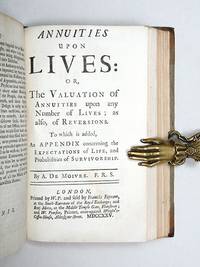
1725153270London: Printed by W. P. and sold by Francis Fayram Benj. Motte W. Pearson 1725. Life expectancy as probability First edition of a founding work of actuarial science de Moivre's influential study of annuities based upon the mortality statistics gathered in the 1690s by Edmund Halley. De Moivre was perhaps the first to develop probability theory extensively and the first to use probability theory to write a comprehensive work on life contingencies. In Annuities upon Lives de Moivre formulated that among a body of persons over a certain age the successive annual decreases by death are nearly equal. He applied the theory of probability to the systematic investigation of problems concerning annuities upon lives. "De Moivre's contribution to annuities lies not in his evaluation of the demographic facts then known but on his derivation of formulas for annuities based on a postulated law of mortality and constant rates on money. Here one finds the treatment of joint annuities on several lives the inheritance of annuities problems about the fair division of the costs of a tontine and other contracts in which both age and interest on capital are relevant. This mathematics became a standard part of all subsequent commercial applications in England" Ian Hacking in the Dictionary of Scientific Biography. The work is bound with five others: i YORKE Charles. Some considerations on the law of forfeiture for high treason. The third edition further corrected and enlarged. London: J. and J. Rivington 1748. Yorke's principal legal work first published in 1745 when his father was Lord Chancellor and is a defence of one of his father's judgments against the Young Pretender. ii STORY Joseph. An essay concerning the nature of the priesthood. Dublin: George Faulkner 1749. First edition. iii ROBINSON Christopher. Considerations on the late bill for payment of the remainder of the national debt in which the occasion of inserting the clause relative to His Majesty's consent and The Arguments in Support of such Right in the Crown are impartially stated. Dublin: n.p 1754. First Dublin edition published in London the same year. iv ROBINSON Christopher. A short essay on the publick judgments of the Romans. Dublin: n.p 1739. First edition. v Anonymous. Considerations on the case of the bakers in Dublin. Dublin: Printed for George and Alexander Ewing 1757. Later edition first published 1752. Six works bound in a single vol. octavo 197 x 120 mm. Contemporary half calf spine lettered in gilt paper sides. Contemporary manuscript contents list to front pastedown early bookplate of Wolfe De Forenaughts to same crossed out early ownership inscription to title page of the first pamphlet. Slight rubbing superficial splits along joints contents fresh. A very good copy. ESTC T33056; Garrison & Morton 1690; Hanson 3492; Institute of Actuaries p. 39; Kress 3595; Norman 1530; McCulloch p. 250; not in Goldsmiths'. unknown
1776133671Milan: Giuseppe Galeazzi 1776. First edition in Italian of part of de Moivre's early and important contribution to the calculus of games of chance and probability theory one of the first instructional texts on the subject which together with the works of Montmort and Bernoulli was one of the most important books written on the subject in the early eighteenth century. His introduction contains an overview of main concepts such as probability conditional probability expectation dependent and independent events the multiplication rule and the binomial distribution. The translator Roberto Gaeto of the University of Pavia translates the parts of de Moivre's work dealing with the application of the doctrine of chance to annuities tontines life expectancies and mortallity tables. Gaeta has added an introduction notes and appendices comparing other European writers on lifetime annuities such as Deparcieux Kersseboom Süssmilch and Bernoulli with a useful bibliography of works of mortality tables and statistics pages lix-lxviii. Two works bound in a single vol. octavo 207 x 130 mm. Printer's woodcut device on title tables and vignettes in the text. Contemporary half mottled calf and sprinkled boards rebacked preserving the original spine red morocco label sprinkled edges. Spine neatly repaired and lined where split recased with new endpapers board edges worn. Second work has the half title cut away. Pale damp mark to lower margin extending into the text in places occasional light foxing marginal worming to last 4 leaves of the second work; good copies of two scarce works. hardcover
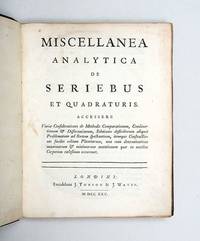
1730153282London: J. Tonson and J. Watts 1730. Binomial expansion First edition containing Moivre's first published attempt at approximating the terms of a binomial expansion. "Moivre's discovery greatly clarified the concept of probability in his own time and became the most fruitful single instrument of discovery used in probability theory and statistics for the next two centuries" Norman. Quarto 243 x 191 mm. Contemporary calf red morocco label red speckled edges. 18th-century armorial bookplate of Thomas Turton to front pastedown. Neat restoration to joints and extremities some scratches to covers light running staining in gutter and at head contents otherwise unmarked. A very good copy. ESTC T96683; Norman 1531. unknown
1718327872London England: W. Pearson for the Author 1718. First edition. Hardcover. Acceptable. London: "Printed by W. Pearson for the Author" MDCCXVIII 1718. Rare first edition of the first textbook on probability. Original boards endpapers and spine. Tooled boards are whole but detached and rubbed heavily at corners. Spine is missing 2 1/2 panels of 6 lightly treated with leather preservative to mitigate flaking. Endpapers are present front endpaper is chipped at front edge. Text block is sound light darkening to edges of pages top and front edges from use- else good copy paper and print quality. Artists engraved creative 'armorial' bookplate of Josiah M.Montague Goodall 1828-1893 of Charles Goodall and Son Card Maker Master Employing 500 People. The book's title came to be synonymous with probability theory and accordingly the phrase was used in Thomas Bayes' famous posthumous paper "An Essay Towards Solving a Problem in the Doctrine of Chances" wherein a version of Bayes' theorem was first introduced. W. Pearson for the Author hardcover
173144795Dublin: re-printed by and for Samuel Fuller 1731. Second edition "corrected" 8vo A-R4; woodcut initials head- and tail-pieces text diagrams and tables throughout; 20th-century green cloth gilt-lettered spine; ex-Northwestern National Life Ins. Co. Minneapolis with their rubber stamps; some shallow losses to front endpaper edges textblock foxed else very good and sound. An early actuarial treatise by one of the founders of the science of life-contingencies which was first published in 1725 and dedicated to the Earl of Macclesfield see DNB XIII p. 536. See Morrison 1690 for the first edition. <br/><br/> re-printed, by and for Samuel Fuller hardcover books