LEGRAND D'AUSSY (Pierre-Jean-Baptiste).Livre Rare Book
387 résultats
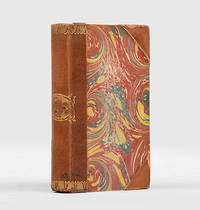
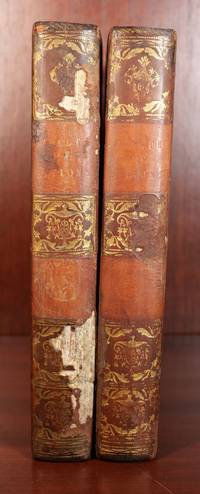
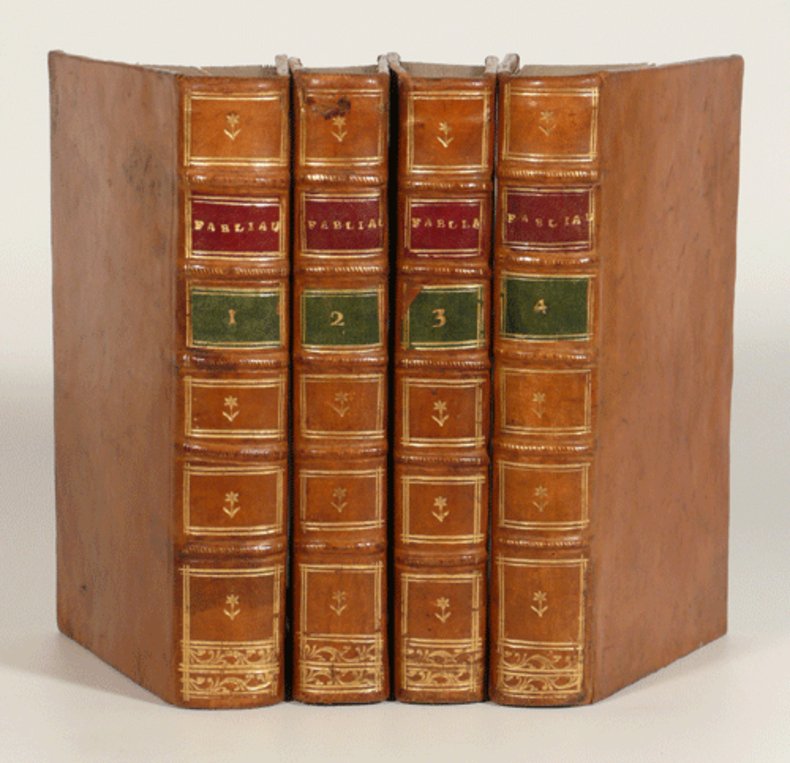
17790030421779 Paris, Eugène Onfroy, 1779-1781 & Paris, Chez l'Auteur et Dufour, 1781. Quatre volumes in-8 (130 X 197 mm) basane fauve, dos cinq nerfs ornés, caissons dorés avec fleuron central, pièces de titre et de tomaison maroquin grenat et vert, coupes filetées (reliure de l'époque). Tome I : (2) ff. de faux-titre et titre, CIX pages, (1) page et (1) f. d'errata, approbation et privilège, (1) f. avec une figure, 414 pages, (1) f. de table - Tome II : (2) ff. de faux-titre et titre, 430 pages, (1) f. d'errata - Tome III : (2) ff. de faux-titre et titre, 468 pages - Tome IV : (2) ff. de faux-titre et titre, XLVI pages, (1) page d'errata, 400 pages - "Observations sur les troubadours par l'éditeur des Fabliaux": (2) ff. de faux-titre et titre, 68 pages. Petit accroc restauré dans le caisson supérieur du tome II.
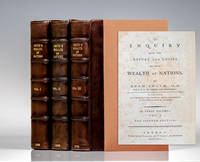
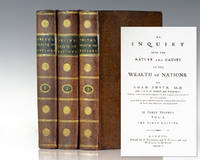
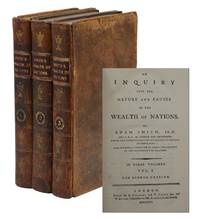
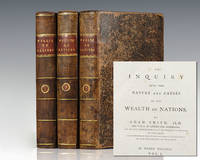
179367815ìThe First and Greatest Classic of Modern Economic Thoughtî SMITH Adam. An Inquiry into the Nature and Causes of the Wealth of Nations. In Three volumes. The Seventh Edition. London: Printed for A. Strahan; and T. Cadell 1793. Seventh edition. Three octavo volumes 8 1/4 x 5 1/8 inches; 210 x 130 mm. x 499 1 blank; vi 518 5 appendix 1 blank; v 1 blank 465 1 blank 49 index 1 colophon pp. Full contemporary speckled calf. All board edge stamped in blind. Each volume with a red morocco spine label lettered in gilt and a small green morocco volume number label printed in gilt. Top edges dyed brown others speckled red. Outer hinges of each volume with a few tiny wormholes. Boards a bit rubbed. Inner hinges of volume III a bit cracked but firm. Paper flaw to lower outer margin of leaf T4 of volume III but not affecting text. Overall a very good and internally very clean set. Adam Smith 1723-1790 spent ten years in the writing and perfecting of The Wealth of Nations. ìThe book succeeded at once and the first edition was exhausted in six months.Whether it be true or not as Buckle said that the ëWealth of Nationsà was ëin its ultimate results probably the most important that had ever been writtenÃ.it is probable that no book can be mentioned which so rapidly became an authority both with statesmen and philosophersî D.N.B. ìThe history of economic theory up to the end of the nineteenth century consists of two parts: the mercantilist phase which was based not so much on a doctrine as on a system of practice which grew out of social conditions; and the second phase which saw the development of the theory that the individual had the right to be unimpeded in the exercise of economic activity. While it cannot be said that Smith invented the latter theory . . . his work is the first major expression of it. He begins with the thought that labour is the source from which a nation derives what is necessary to it. The improvement of the division of labour is the measure of productivity and in it lies the human propensity to barter and exchange . . . From the working of the economy Smith passes to its matter -- ëstockà -- which compasses all that man owns either for his own consumption or for the return which it brings him. The Wealth of Nations ends with a history of economic development a definitive onslaught on the mercantile system and some prophetic speculations on the limits of economic control . . . The certainty of its criticism and its grasp of human nature have made it the first and greatest classic of modern economic thoughtî Printing and the Mind of Man. Einaudi. Goldsmiths' 15565. Kress 2618. Printing and the Mind of Man 221. Sabin 82303. HBS 67815. $3000 Printed for A. Strahan; and T. Cadell hardcover books
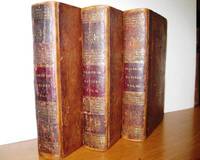
1789149720London: Printed for A. Strahan and T. Cadell in the Strand 1789-1793. Mixed early edition set of Adam Smith's magnum opus and cornerstone of economic thought. Octavo 3 volumes bound in one quarter modern calf over cloth-covered boards with gilt titles and five raised bands to the spine. Volumes I and III are seventh editions 1793 Vol. II is a fifth edition 1789. In near fine condition. An attractive set. Adam Smith's masterpiece first published in 1776 is the foundation of modern economic thought and remains the single most important account of the rise of and the principles behind modern capitalism. "The history of economic theory up to the end of the nineteenth century consists of two parts: the mercantilist phase which was based not so much on a doctrine as on a system of practice which grew out of social conditions; and the second phase which saw the development of the theory that the individual had the right to be unimpeded in the exercise of economic activity. While it cannot be said that Smith invented the latter theory.his work is the first major expression of it. He begins with the thought that labour is the source from which a nation derives what is necessary to it. The improvement of the division of labour is the measure of productivity and in it lies the human propensity to barter and exchange.Labour represents the three essential elements-wages profit and rent-and these three also constitute income. From the working of the economy Smith passes to its matter -'stock'- which encompasses all that man owns either for his own consumption or for the return which it brings him. The Wealth of Nations ends with a history of economic development a definitive onslaught on the mercantile system and some prophetic speculations on the limits of economic control.The Wealth of Nations is not a system but as a provisional analysis it is complete convincing. The certainty of its criticism and its grasp of human nature have made it the first and greatest classic of modern economic thought" PMM. Printed for A. Strahan and T. Cadell, in the Strand hardcover
17931356061Dublin: printed by William Porter for G. Burnet L. White W. Wilson P. Byrne W. McKenzie J. Moore and W. Jones 1793. Fifth Edition. Hardcover. Octavos Two Volumes. In Very Good condition. Bound in modern brown patterned cloth with green labels gilt titling and gilt tooling to spines. Complete with both half-titles. Some tide-marks Volume 1 with bottom half of text block for the first half of the volume then expanding to cover the entirety of the leaves. Volume 2 the top half of the text block for the first few gatherings then reducing to just the top edge and upper gutter. Removed bookplate to rear pastedowns. Front free end page and rear free end page of Volume 1 bound in upside down. Shelved case 5. Smith's masterpiece being "the first and greatest classic of modern economic thought" PMM - was first published in 1776 in London with the first Dublin edition published that same year. ESTC: T95114. 1356061. Shelved Dupont Bookstore. printed by William Porter, for G. Burnet, L. White, W. Wilson, P. Byrne, W. McKenzie, J. Moore, and W. Jones hardcover
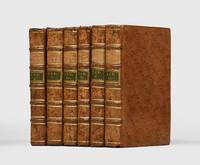
1781159019Yverdon: De Felice 1781. An attractive set Second edition in book form of Blavet's translation of The Wealth of Nations the earliest obtainable. Jean-Louis Blavet 1719-c.1809 was librarian for the prince du Conti; he had already published a translation of The Theory of Moral Sentiments in 1774-75. Blavet later claimed that Smith personally requested he translate The Wealth of Nations and sent him a copy. Blavet's translation was first published periodically in the Journal de l'agriculture from February 1779 to December 1780 and in book form in Paris earlier in 1781 in an edition of only 20 copies offprinted from the Journal de l'agriculture appearance. Only two copies of that edition are now known Carpenter p. 33. This edition was printed in Switzerland and apparently distributed largely outside France. Blavet claimed to not have been involved but "evidence suggests otherwise" ibid. p. 36. The Wealth of Nations was first published in French in 1778-79 by an unknown translator; Carpenter notes it as full of errors. Blavet's translation marks the second appearance in the language. 6 vols duodecimo 161 x 95 mm. Contemporary mottled calf twin orange and green spine labels marbled endpapers red edges. Contemporary annotation to vol. V p. 240. Slight wear at extremities slight worming to spines still a very attractive set contents clean. Tribe 24. Kenneth E. Carpenter The Dissemination of the Wealth of Nations in French and in France 1776-1843 2002. unknown
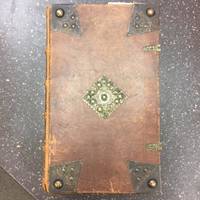
17831277019Augsburg Bavaria Germany: Joseph Wolffischen 1783. Hardcover. folio 750pp. 24pp. index 136pp.; VG; bound in brown leather paneled spine with no lettering; front board decorated with metal in the four corners diamond in the center; remnants of two clasps present two metal hooks on fore edge of front board two torn leather strips bound into rear board; moderate rubbing to boards; newer endpapers; title page has had a strip of paper approximately 1.25 inches 3.5cm. high torn off of the bottom primarily including the entirety of the publication information. It has been repaired with the backing of another sheet on that portion. There is a small tear in the middle of the page that is backed by a piece of paper on the verso and so barely impacts the legibility of the words; complete collation: endpaper title page 2pp. table of contents 4pp. 750pp. 24pp. index title page 6pp. 136pp.; separate title page with separate pagination; page 110 misprinted as 100 160 as 142 217 as 21 271 as 217 523 as 532 524 as 534 554 as 454 732 as 571 only the page number impacted; small repairs on pages 165/166 571/572 633/634 649/650 687/688 701/702 705/706 719/720 1/2; illustrated pages beginning parts two and three on pages 165 and 567. The pagination between pages 566-571 appear to be missing a page as is usual with this edition; ffep partially detached; profusely illustrated with over 800 black and white woodcut illustrations including genre scenes individual plants and animals and distilling apparatus; <br /> <br><br /> <br><br /> Adam Lonicer was a German botanist who studied at Marburg and the University of Mainz obtaining his Magister degree at sixteen years of age. After becoming a Doctor of Medicine in 1554 he became the town physician in Frankfurt am Main. His true interest though was herbs and the study of botany. His first important work on herbs the Kräuterbuch was published in 1557 with a large part dealing with distillation. He married Magdalena Egenolff the daughter of Christian Egenolff his Frankfurt publisher and a printer who specialized in herbals. The work that made his name famous is this popular herbal the Kräuterbuch. Lonicer provides us with one of the early descriptions of local flora as well as being one of the first to differentiate deciduous trees from conifers.<br /> <br /> shelved case 4. 1277019. Shelved Dupont Bookstore. Joseph Wolffischen hardcover books
17831277019Augsburg Bavaria Germany: Joseph Wolffischen 1783. Hardcover. Folio 750 pages 24 pages 136 pages. In Very Good condition. Bound in brown leather with blank paneled spine. Front board with metal corner pieces and metal diamond-shaped ornament to center of board. Remnants of clasps present: two metal hooks on fore edge of front board and two torn leather strips affixed to rear board. Boards moderately rubbed. Front free end paper partially detached. Title page shows 1.25 in-long area of damage to lower edge repaired but resulting in loss of publication information. Title page also shows small tear repaired to center of page minimally impacting legibility. Minor repairs to pages 165/166 571/572 633/634 649/650 687/688 701/702 705/706 719/720.<br> <br> Plates preface Parts Two and Three pp. 165 and 567 respectively. Profusely illustrated with over 800 black and white woodcut illustrations including genre scenes individual plants and animals and distilling apparatus. Shelved in Case 4. Adam Lonicer was a German botanist who studied at Marburg and the University of Mainz obtaining his Magister degree at sixteen years of age. After becoming a Doctor of Medicine in 1554 he became the town physician in Frankfurt am Main. His true interest though was herbs and the study of botany. His first important work on herbs the Kräuterbuch was published in 1557 with a large part dealing with distillation. He married Magdalena Egenolff the daughter of Christian Egenolff his Frankfurt publisher and a printer who specialized in herbals. The work that made his name famous is this popular herbal the Kräuterbuch. Lonicer provides us with one of the early descriptions of local flora as well as being one of the first to differentiate deciduous trees from conifers. <br> <br> Complete collation: page 110 misprinted as 100 160 as 142 217 as 21 271 as 217 523 as 532 524 as 534 554 as 454 732 as 571. Pagination consistent with this edition. 1277019. Shelved Dupont Bookstore. Joseph Wolffischen hardcover
17751240791775. AMERICAN REVOLUTION BURKE Edmund TUCKER Josiah D.D. An Humble Address and Earnest Appeal to Those Respectable Personages in Great-Britain and Ireland Whether a Connection with or a Separation from the Continental Colonies of America Be Most for the National Advantage and the Lasting Benefit of these Kingdoms. Gloucester: R. Raikes Sold by T. Cadell 1775. Slim octavo period-style half brown morocco and marbled boards raised bands; pp. 1-3 4-93 3. $3200.First corrected edition second overall issued within days of the same year's first edition of the ""important and influential"" British economist's seminal rebuke of Edmund Burke charging him with a crucial misunderstanding how the political economics of self-interest would best prevent further ""Disturbances and Disputes"" with America urging Britain in 1775 to ""separate totally from the Colonies to enter into Alliances of Friendship and Treaties of Commerce as with any other sovereign independent States"" handsomely bound.""A controversial figure during his lifetime"" particularly in his views on the economics of Britain's stance toward the American colonies Tucker was well known to Adam Smith and Founding Fathers Madison and Jefferson who each owned copies of his writings. ""Increasingly recognized as an important and original 18th-century theorist"" ODNB Tucker was ""espousing the cause of American separation as early as 1766 before the Americans themselves had considered this eventuality with any seriousness"" To key scholars ""Tucker analyzed the American conflict more accurately than his contemporaries yet so different were his views from all those around him that he has been noted as a 'visionary' Trevelyan or a 'fanatic' Clark"" Rashid ""Tucker's Proposal"" in Journal of the History of Ideas V43 No.3 439. His assessment of American independence was not motivated ""by any sympathy for the Americans."" Instead ""their rapid economic growth and dislike of regulation would he believed eventually lead them to separate from Britain through self-interest and the developing American crisis over taxation touched upon all Tucker's major interests: the need to maintain a mutually self-interested and beneficial trade between Britain and her colonies his dislike of war and mock patriotism and his distrust of political radicalism"" ODNB. ""Central to Tucker's philosophy of economy is the concept of 'self-love' which became part of Adam Smith's concept of the 'invisible hand' Tucker regarded trade as Britain's glory and went so far as to suggest that the colonies should be detached from Britain to allow greater freedom of trade a view which brought him into conflict with Edmund Burke"" Dictionary of 18th-Century British Philosophers V2:898.When Burke attacked Tucker in the famed March 22 1775 Speech on Conciliation with America Tucker quickly responded with Humble Address. Here he marshals arguments and evidence to counter claims that Britain would lose its profitable commerce if America broke free. Tucker contended the ""greater part of the colonial trade was motivated by self-interest and it was a simple corollary that neither shipping nor navigation could be hurt by the independence of the colonies."" To further support his position he details ""customs-house figures from 1765-72 to show that it was not Americans but Germany and Holland who purchased more British exports than the Americans"" Rashid 454. To F.P. Lock ""Tucker anticipated one of Adam Smith's shrewdest insights that regulations and restrictions impeded commerce rather than protecting it. For Tucker imperialism was uneconomic Let the Americans be independent and they will continue to trade with Britain as long as British goods are competitive Thus Tucker like Smith denied the economic value conventionally attributed to the possession of colonies. Burke disagreed in the 1770s Burke still held to the mercantilist belief that exclusive or preferential trade with its colonies benefits the home country"" Edmund Burke I:388. Copies of Tucker's works ""including those on the colonies are found to be in Adam Smith's library"" Rashid 456 and works by Tucker in Jefferson's library included Humble Address ""initialed by Jefferson"" Sowerby 3061. ""Second Edition Corrected"" on title page. With folding chart of exports; rear advertisement leaf. Engraved ornamental initials heading and tailpiece. Preceded by the November 1775 first edition. ESTC T36739. Adams American Controversy 75-144b. Sabin 97350. Goldsmith's 11300. Kress 7174. A fine copy. hardcover
1716250718001Ulm Germany: Daniel Bartholomew 1716. 2nd Edition. Hardcover Vellum & Calf. Good. <p>TRANSLATED TITLE<br /> <br /> A complete herbal book and artificial representations of trees shrubs hedges herbs crops spices etc. with an accurate description of their names in German Greek Latin French Italian and Spanish as well as their form natural strength and effect; including a detailed account of the art of distilling as well as the construction of gardens and planting of trees; as well as of the most important animals of the earth birds fish and worms; . metals ore precious stones rubber . formerly reviewed by Mr. Petro Uffenbachio . enlarged . and provided with . indexes . With an encore accompanied by Balthasar Ehrhart.<br /> <br /> IMPORTANCE & COLLECTIBILITY</p> <br /> <p>SCARCE 2nd Ulm Edition - earliest of the desirable ULM edition currently available for sale. World-famous herbalist book containing 800 fantastic and beautiful woodcuts of hundreds of plants species but also hundreds of illustrations of land animals aquatic life and birds mythical beasts like unicorns and dragons alcohol distillation a cadaver study genre and Biblical scenes like of Adam and Eve in the Garden of Eden and more. Quite exceptional! 800 woodcuts with thousands of distinct images. By Adam Lonicer<br /> <br /> Overall condition: GOOD <br /> <br /> BOOK INFO<br /> <br /> Published in 1716 in Ulm Germany by Daniel Bartholomew. 2nd Ulm edition. In full contemporary vellum likely original with a slightly later added gilded spine covering of calf over the vellum. Folio 13.25" x 8" x 2.25" thick. Collated and complete: 4 750 24. 800 woodcuts comprising thousands of images. Plentiful decorated initials. Several head- and tail-pieces. Title page with printer device. A richly illustrated work throughout! All edges stained black. <br /> <br /> ABOUT THE AUTHOR & BOOK <br /> <br /> Adam Lonicer Adam Lonitzer or Adamus Lonicerus October 10 1528 -- May 29 1586 was a German mathematics professor and botanist who studied at Marburg and the University of Mainz obtaining his Magister degree at sixteen years of age. After becoming a Doctor of Medicine in 1554 he became the town physician in Frankfurt am Main. His true interest though was herbs and the study of botany. He married into the prominent German printing family Egenolph in 1554 which was famous for printing herbals like the Kr uterbuch. Lonicer first published his important and highly influential work on herbs the Kr uterbuch in 1557. The Kr uterbuch is an early example of a bestsellerthe book remained in print in various forms from 1557 through 1783 which is a testament to its lasting appeal and use. Although the name Kr uterbuch literally translates to herb book and most of it is indeed about plants a great deal of the book is devoted to describing the natures and uses of animals metals gemstones and distillation. In this work Lonicer provides us with one of the early descriptions of local flora as well as being one of the first to differentiate deciduous trees from conifers. It is also noted for its woodcuts and descriptions of mythical beats including unicorns dragons gryphons and phoenixes.<br /> <br /> CONDITION REPORT<br /> <br /> GOOD for a 300-year-old folio. Collated and complete with all textual pages. Without a few blank flyleaves. <br /> <br /> Exterior and binding - a later spine covering of richly gilded calf covers contemporary possibly original full vellum. Leather spine covering is heavily worn and fraying with much of the spine gilding rubbed away. The vellum is aged shrunken with time discolored in areas and soiled and worn along the edges. Fading to the black stain and an ink spill on top edge. Front hinge cracked binding holding firm. <br /> <br /> Interior: Grubby heavily soiled endpapers. A few words of antique writing on the endpapers and title page. Oxidation of much of the text block. Light foxing overall heavier in a few areas. Signs of handling over the centuries: ink spills marginal thumbing and smudging creases. Raggedy page edges in areas and some paper loss to endpapers. Some larger creases on title page.</p> . Daniel Bartholomew hardcover
1748GT1007Glasgow: Robert & Andrew Foulis 1748. 1st Edition . Hardback. Vg. 12mo. iv 148pp. With a preface by Adam Smith. Original speckled full calf and ORIGINAL 18TH CENTURY marbled end-papers. The binding is rubbed with some loss to the surface of the rear cover and mottled to the front. A fine gilt decorated original spine with raised bands and gilt decoration to the compartments A fine original red calf gilt label to the spine with no repairs. A small contemporary paper scrap of a dove has been lightly pasted above the letter E in the title 3cms. The boards are attached and have double-ruled gilt border line front and band. Nice wide margins to the printed sheets. AN EXCEPTIONAL COPY IN UNRESTORED STATE OF A RARE ITEM IN ORIGINAL STATE.158x100mm <br/> <br/> Robert & Andrew Foulis hardcover
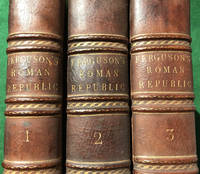
178358904<p>FINE COPY IN A CONTEMPORARY BINDING - PROBABLY BY HENRY WALTHER</p><p>first edition 3 vols. large 4to. 28.3 x 23.5 cms. 12 461 1 blank; 4 548; 8 574pp. 6 engraved maps 4 folding contemporary rich tan lightly-diced russia calf over thick boards gilt fillet border on sides spines panelled by double gilt bands highlighted by gilt fillets and with a twisted gilt roll between them one panel with a dark brown morocco title label and another direct gilt numbered deep turn-ins on the doublures decoratively gilt rolled board edges with a double gilt line and twining frond gilt roll marbled endpapers edges dyed yellow minor paper flaw in the lower marginal corner of vol. 3 L4 slight rubbing to joints and a circa 6 cm. crack at foot of joints of vol. I a few minor scuffs at spine ends else a remarkably well preserved and internally fresh copy.</p><p>Ferguson 1723-1816 Professor at Edinburgh first of Natural Philosophy and later of Moral Philosophy was a significant member of the important eighteenth century Scottish school of enlightenment philosophers. He was a friend of such as David Hume Adam Smith Dugald Stewart and Black.<br />Ferguson's 'An Essay on the History of Civil Society' 1767 established his "reputation as a British and a European historian with a Scottish edge. It enabled him to deal with questions which concerned Enlightenment thinkers throughout Europe: the nature of political society differences between nations reflecting temporal and geographical variations patterns of progress and decline types of government and the tension between the 'private' man involved in commerce and polite conversation and 'public' man the politically active citizen. It made its author famous throughout Europe" O.D.N.B.<br />His "'History of the Progress and Termination of the Roman Republic' narrating the rise and fall of the republic as a story of civic virtue and its corruption appeared in 1783 . It won praise from Edward Gibbon and went through two more English-language editions in 1799 and 1813. In the mid-nineteenth century it was still favourably mentioned by John Stuart Mill and reissued in the United States where Ferguson's spirited discussion of Rome's republican heyday appealed to two generations of readers. Two French translations appeared in Paris in 1784–91 and in 1803–10. A German translation appeared in Leipzig in 1784–6. . Although the fame of his Roman Republic was short-lived . it did more than any of Ferguson's books to determine its author's image as latter-day Roman a worthy if somewhat quaint lover of virtue and liberty in their classical republican sense. Contemporaries and posterity came to view him as a moralist of stout but old-fashioned Stoic convictions" O.D.N.B.<br />The binding is not signed but is certainly a contemporary English one probably the work of Henry Walther fl. 1775-1815 as it has his very characteristic double raised bands on the spines. Walther was one of the group of highly skilled emigré German binders' who worked in Britain at this period. He had in his earlier years in London worked for J. Baumgarten another member of that group before he set up there on his own as a high quality binder. In this binding the boards project about 7 to 8 mm. beyond the text block at the top and bottom to expose the gilt rolled tooling on the turn-ins. The double raised bands themselves are separated by 8 mm. are defined by a gilt fillet above and below the pair have a narrow gilt roll along their tops and have a twisted-pair gilt roll in the space between the two bands. The binding was probably intentionally designed to echo the spirit of its content - serious sombre magisterial and definitely not showy.</p> Printed for W. Strahan, T. Cadell ,,, and W. Creech in Edinburgh hardcover
1795126439Dublin: Printed for Messrs. Wogan Byrne J. Moore and 5 others in Dublin 1795. First Dublin edition same year as the first London edition. The Essays were published five years after Smith's death and edited by the Scottish philosopher Dugald Stewart 1753-1828. Stewart's "Account of the Life and Writings of Adam Smith" is one of the earliest biographical notices of Smith and "until Stewart's Biographical Memoir of 1811. formed the basis upon which everyone drew for the biographies of Smith that began to appear in the early 19th century" Tribe. The editors Joseph Black and James Hutton state that Smith's essays were intended as parts of "a connected history of the liberal sciences and elegant arts" but that Smith "long since. found it necessary to abandon that plan as far too extensive". The essays range over philosophy aesthetics and the history of science. Most were probably written before the appearance of the Theory of Moral Sentiments in 1759 but were withheld from publication as part of Smith's "extensive plan". Kress lists the Dublin printing first and calls the London "another issue" while Tribe calls the Dublin edition a piracy. Neither is correct. Dublin booksellers at the time had a well-established exemption from the copyright laws and could legally reprint any new publication first published in London without having to pay for copy. The London edition precedes this legal Dublin reprint. Scarce: neither Einaudi nor Goldsmiths' list this Dublin edition. Octavo 205 x 125 mm. Early 19th-century tan calf and marbled boards neatly rebacked using a piece of diced Russia gilt roll decoration to head and tail of spine gilt device stamped around the spine. Ownership stamp of William Brough to rear free endpaper. Somewhat inelegantly rebacked with diced russia salvaged from another binding inner hinges cracked but firm corners worn some toning to leaf edges and a few small spots; overall a good copy. Jessop p. 172; Kress B.3037; Tribe 56; Vanderblue p. 43. hardcover
1782143496London: Printed for J. Murray 1782. First edition of this anonymously published epistolary account in 72 letters written during the course of a trip to India dealing largely with the government and economies of the East Indies and with notes on Adam Smith's Wealth of Nations. At the Cape of Good Hope in April 1799 one Daniel Barwell lent the author his copy of Adam Smith's Wealth of Nations - 'a work of great labour and ingenuity; I had heard of it and anxiously desired to see it because it treated of such commercial and political matters as have long furnished a subject of speculation in my solitude. It is a performance that every statesman and legislator should study and digest. - Yet I have presumed to differ in opinion in a few instances from that great source of knowledge' I 206-7. The 'Observations' written 'on a cursory reading' of Smith are provided in an lengthy two-column appendix in volume II pp. 432-479 which juxtaposes quotations with insightful commentary especially on the relationship of labour and value and real and nominal prices. Macintosh presented a copy of his Travels to Smith 'With Mr. MacIntosh's compliments. Mr. M - having been abroad when these letters were printed had not an opportunity of transmiting sic them in manuscripts'. The Travels' authorship although attributed by DNB Halkett & Laing Kress and Allibone to William Thomson 1746-1817 who was a clergyman in Perthshire until October 1778 and whose role was most probably editorial has also been credited to the Irish-born British politician and pamphleteer Sir Philip Francis 1740-1818 who was also the chief antagonist of the first Governor-General of Bengal Warren Hastings. It is however generally accepted as being William MacIntosh's: "the author was given out to be one Macintosh whose name occurs in Philip Francis's Indian journal. But it runs so minutely into defence of Francis and vituperation of his enemies especially of Hastings. that some assigned the authorship of these portions of it to Francis in person" Parkes. In his Memoirs of Sir Philip Francis 1867 Parkes notes "some people indeed denied the existence of Macintosh altogether. But one of Captain Price's grotesque pamphlets describes him as 'a swarthy and ill-looking man'. of colour born in the West Indies" p. 206. These Travels were translated into German Des Herrn Macintosh's Reisen in 1785 and twice so in French: 1786 and 1792. This copy has the crested bookplate of the banker Thomas Coutts "Strand London" one of the wealthiest men in Britain to the front pastedowns transposed over from an earlier binding. 2 vols octavo 211 x 126 mm. Recent quarter calf red and green morocco labels marbled sides vellum tips. Bindings fine interior remarkably clean and fresh occasionally foxed; a very good copy. ESTC T97734; Goldsmiths' 12256; Kress B.523; Mizuta "Adam Smith's Library" 1660; Joseph Parkes "Memoirs of Sir Philip Francis K.C.B." vol. 2 pp. 205-6; Sowerby E.M. Catalogue of the Library of Thomas Jefferson 3934; Zachs 314; not in Vanderblue. hardcover
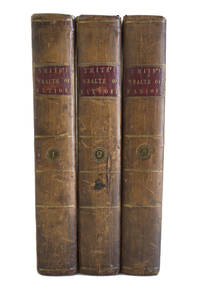
1799137589London: A. Strahan and T. Cadell 1799. Early edition of Adam Smith's magnum opus and cornerstone of economic thought. Octavo 3 volumes bound in full calf gilt titles to the spine morocco spine labels. In near fine condition rebacked. An exceptional set of this classic work. Adam Smith's masterpiece first published in 1776 is the foundation of modern economic thought and remains the single most important account of the rise of and the principles behind modern capitalism. "The history of economic theory up to the end of the nineteenth century consists of two parts: the mercantilist phase which was based not so much on a doctrine as on a system of practice which grew out of social conditions; and the second phase which saw the development of the theory that the individual had the right to be unimpeded in the exercise of economic activity. While it cannot be said that Smith invented the latter theory.his work is the first major expression of it. He begins with the thought that labour is the source from which a nation derives what is necessary to it. The improvement of the division of labour is the measure of productivity and in it lies the human propensity to barter and exchange.Labour represents the three essential elements-wages profit and rent-and these three also constitute income. From the working of the economy Smith passes to its matter -'stock'- which encompasses all that man owns either for his own consumption or for the return which it brings him. The Wealth of Nations ends with a history of economic development a definitive onslaught on the mercantile system and some prophetic speculations on the limits of economic control.The Wealth of Nations is not a system but as a provisional analysis it is complete convincing. The certainty of its criticism and its grasp of human nature have made it the first and greatest classic of modern economic thought" PMM. A. Strahan and T. Cadell unknown
179630670Philadelphia: Thomas Dobson 1796. 412; 430; 387 1 blank 55 pp. Contemporary tree calf some chipping rebacked with remnants of original spines laid down. Toned scattered foxing lightly worn. Good. <br /> <br /> The second American edition the first having issued in 1789 also published by Dobson. 'Printing and the Mind of Man' describes this work as "the first and greatest classic of modern economic thought." <br /> Evans 31196. PMM 221 London 1776. Kress 3288. Thomas Dobson unknown
1796140940161London: A. Strahan; and T. Caddell jun and W. Davies 1796. Eighth Edition. Very Good. The Eighth Edition. Complete in three volumes bound with half-title present by Pigge of Lynne with a small circular binder's label to front pastedown of each volume; in contemporary full tree calf with smooth spines divided into compartments with double gilt rule lettered on new red goatskin labels and numbered in a new small circular green goatskin label with gilt stamped urns of trophies to top compartment. Binding worn at corners and spine ends; outer joints cracked though binding remains firm. Previous owner names at front pages toned occasional crease occasional foxing heaviest at preliminary and terminal pages. Small dampstain to upper corner of last few pages of Volume II. An early set published in the late 18th century in a charming contemporary binding. A. Strahan; and T. Caddell jun and W. Davies unknown books
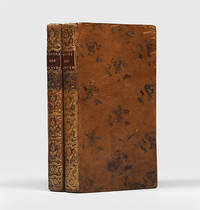
1774146600Paris: Chez Valade 1774-75. First edition of the second French translation of Scottish moral philosopher and economist Adam Smith's ground-breaking first work The Theory of Moral Sentiments London 1759 in an attractive contemporary binding. This work introduced the concept of the "invisible hand" guiding individuals to advance community interest laying the philosophical ground work for his Wealth of Nations. Smith evidently dissatisfied in the quality of the first French translation Metaphysique de l'ame Paris 1764 made by Marc-Antoine Eidous and based on the second English edition is reported by the translator of this edition as having been "mortified" by the first attempt. Jean-Louis Blavet 1719-1809 translator and librarian of the Prince de Conti was recommended to Smith by Madame des Boufflers the Prince's mistress and duly undertook this entirely new translation from the third English edition of 1767 adding an extensive table of contents. The work was far from a commercial success which according to Dugald Stewart Smith blamed on Blavet leading to the eventual commission of a third French translation by Sophie de Grouchy the prominent salon hostess during the early French Revolution and under Napoleon and was the wife of the philosopher the Marquis de Condorcet. 2 vols duodecimo 168 x 97 mm. Contemporary cat's paw calf titles in gilt to red morocco spine labels floral motifs tooled in gilt direct to spine French curl marbled endpapers blued mottled edges. A hint of wear to extremities the bindings otherwise firm and unrestored very occasional faint damp staining else internally fresh; a very good set indeed. Tribe 7; Vanderblue p. 41. unknown
17897269Philadelphia: Thomas Dobson 1789. First American Edition Volumes II & III Only. First American Edition Volumes II & III ONLY. Measuring approximately 6.5" x 4" with 430 and 387 numbered pages respectively. Bound in contempory full leather.<br /> <br /> Both volumes are in good condition. Heavy wear and chipping to the original leather boards. Front pastedowns have come away from the boards. Both front endpaper versos with the name stamp "Jack Cunningham". Page 61-62 in Volume II has a large tear with no loss. Pages 23-26 in Volume III are detached.<br /> <br /> Please view the many other rare titles available for purchase at our store. We are always interested in purchasing individual or collections of fine books.<br /> <br /> Inventory #P11-15. Thomas Dobson unknown
179234586London: A. Strahan T. Cadell and others 1792. 2 volumes 8vo. iii-xv 1 488; iii-viii 462pp. Lacks half-titles. Expertly bound to style in half russia and period marbled paper covered boards.<br/> <br/>Eighteenth century edition of Adam Smith's first published work.<br/> <br/>Adam Smith's first published work first printed in 1759 would lay the basis for The Wealth of Nations and establish his reputation as a philosopher of note.<br/> <br/>ESTC T121726; Alston III.829; Goldsmiths 15514. A. Strahan, T. Cadell [and others] unknown books
179648831Philadelphia PA: Thomas Dobson 1796. Second American edition. Hardcover. Very good/No jacket issued. Philadelphia PA: Thomas Dobson 1796. 3 vols. Second American edition. 412; 430; 387; Index pp. Hardcover. 12mo. Professionall y rebound in period style full brown calf; spine elaborately decorated in gilt with contrasting lettering labels; front and back covers with central blind-stamped devices. Marbled endpapers. New additional endpapers; interior quite toned throughout. Very good/No jacket issued. Multiple volumes - extra shipping charges apply Insurance required to ship this item. Thomas Dobson hardcover books
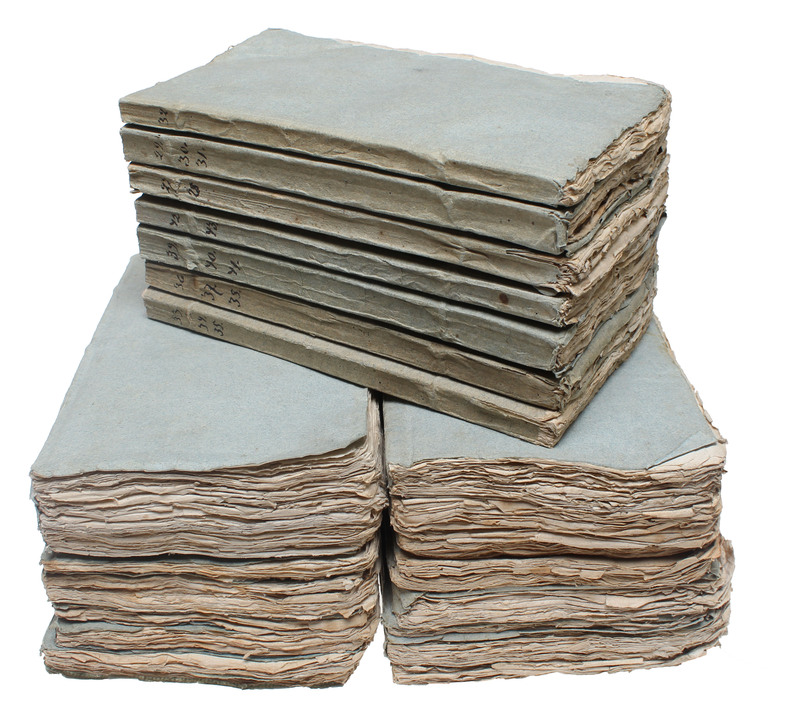
179753615Stockholm, Henrik A. Nordström, 1797-1801. 8vo. Uncut, partly unopened in the original wrappers. In 22 volumes as issued. Last volume name written on title-page, otherwise an exceptionally fine, clean and untouched set rarely seen in this condition. (4),102 pp." (2),182 pp. (2),107 pp. (2),157,(1) pp. (2),176,(4) pp. (4),138,(2) pp. (2),205,(1) pp. + 1 folded table (2),188 pp (2),190 pp. (2),89,(4) pp. (4),135,(1) pp. (2),116,(1) pp. (2),157 pp. (2),120 pp. (2),151,(1 blank,10) pp. + 1 folded map (2),215 pp. + 1 folded table (2),131,(5) pp. (4),207 pp. (2),183,(1) pp. + 1 folded table (2),218 pp. (2),144,(4) pp." (6),449,(1) pp. + 5 folded plates.""Om Beskatning"", Part: 36, 37, 38:Pp. 145-177""Om Jordbrukets förfall i Europa, efter Romerska Väldets undergäng"", Part: 27, 28. Pp. 93-120""Om Handelsbalancen"", Part: 25,26. Pp. 92-114""Om Jordbruks-systemet I en Rikshushållning, samt om Economisterne I Frankrike"", Part: 25-26. Pp. 43-92""Om Pappers-myntet I Norr-Amerika Kolonierne, före Revolutionen"". Part: 27-28. Pp.57-62""Om Krono-jord"". Part: 29,30,31. Pp 139-146.""Theorien för statsskulder"". Part: 44, 45, 46, 47, 48, 49 & 50. Pp. 151-161.
175556661Kiöbenhavn, uden ang. af trykker, 1755-80. 4to. 11 samt. ensartede hellæderbind af flammet kalv. Rig rygforgyldning og ophøjede bind på rygge. Tome-og titelfelter i skind. Forgyldte bordurer på permer. Kapitæler på nogle få bind bind lidt slidte, nogle hjørner lidt stødte. 10 kobberstukne titelblade og 1 bogtrykt. Trykt på svært skrivepapir. Indvendig ren og frisk. Pragteksemplar af ""Fundationerne"" som har tilhørt Adam Gottlob Moltke til Bregentved og til hvem flere af bindene er dediceret. På alle for-og bagpermer er Moltke's store forgyldte, kronede hjerteskjold.
175556661Kiöbenhavn uden ang. af trykker 1755-80. 4to. 11 samt. ensartede hellæderbind af flammet kalv. Rig rygforgyldning og ophøjede bind på rygge. Tome-og titelfelter i skind. Forgyldte bordurer på permer. Kapitæler på nogle få bind bind lidt slidte nogle hjørner lidt stødte. 10 kobberstukne titelblade og 1 bogtrykt. Trykt på svært skrivepapir. Indvendig ren og frisk. Pragteksemplar af "Fundationerne" som har tilhørt Adam Gottlob Moltke til Bregentved og til hvem flere af bindene er dediceret. På alle for-og bagpermer er Moltke's store forgyldte kronede hjerteskjold. <br/><br/><em>Komplet eksemplar af Hans de Hofmans store værk som indeholder en del plancher i form af portrætter kort og genealogiske tabeller bl.a. portræt af Tycho Brahe store vignetter m.m. </em> unknown
179753615Stockholm Henrik A. Nordström 1797-1801. 8vo. Uncut partly unopened in the original wrappers. In 22 volumes as issued. Last volume name written on title-page otherwise an exceptionally fine clean and untouched set rarely seen in this condition. 4102 pp.; 2182 pp.; 2107 pp.; 21571 pp.; 21764 pp.; 41382 pp.; 22051 pp. 1 folded table; 2188 pp; 2190 pp.; 2894 pp.; 41351 pp.; 21161 pp.; 2157 pp.; 2120 pp.; 21511 blank10 pp. 1 folded map; 2215 pp. 1 folded table; 21315 pp.; 4207 pp.; 21831 pp. 1 folded table; 2218 pp.; 21444 pp.; 64491 pp. 5 folded plates."Om Beskatning" Part: 36 37 38:Pp. 145-177"Om Jordbrukets förfall i Europa efter Romerska Väldets undergäng" Part: 27 28. Pp. 93-120"Om Handelsbalancen" Part: 2526. Pp. 92-114"Om Jordbruks-systemet I en Rikshushållning samt om Economisterne I Frankrike" Part: 25-26. Pp. 43-92"Om Pappers-myntet I Norr-Amerika Kolonierne före Revolutionen". Part: 27-28. Pp.57-62"Om Krono-jord". Part: 293031. Pp 139-146."Theorien för statsskulder". Part: 44 45 46 47 48 49 & 50. Pp. 151-161. <br/><br/><em>First however partial translation of Adam Smith's Wealth of Nations in Swedish rarely seen in this condition thus making it the very first opportunity for Swedish speakers to study Adam Smith. A more lengthy translation was made in 1909 - 1911 but to this day a full Swedish translation has not been made."Von Schulzenheim nobleman physician country squire and politician also published shorter articles in the review 'Läsning I blandade ämnen' an organ of the opposition to the absolutist and obscurantist regime of Gustavus IV Adolphus. The editor of the review was count Georg Adlersparre an army officer and a political writer who in 1809 was to become one of the prime-movers behind the dethronement of the king. Adlersparre to was an admirer of Adam Smith. In 1799-1800 he published in the 'Läsning' his own Swedish translation of several selections from Wealth of Nations. In some cases Adlersparre added footnotes making it easier for the readers to apply Smith's ideas to Swedish conditions. Those translations to the best of my knowledge were the first ones of Wealth of Nations in Sweden. They were followed by translations of other parts of Wealth of Nations published in 1800 amd 1808. This time the translator was Erik Erland Bodell an official of the Swedish Customs and thus if you like a colleague of Adam Smith." Cheng-chung Adam Smith Across Nations. Despite the comparatively late translation into Swedish it still had a profound influence not on economists since they were well aware of the original work in English but upon politics and public opinion in general: "There are few things more striking to the modem student of the history of ideas in Sweden than the negative phenomenon that Sweden was almost entirely uninfluenced by this fact and thus remained almost unaffected by English economic thought during a period when its superiority was most evident. As far as I am acquainted with the Swedish economic discussion and our popular economic literature of the 1860's and 1870's there is almost no trace of any influence from English writers. .Of Adam Smith we have still only one abbreviated translation of his famous work and that was published as late as during this century; and as far as I know nothing of Ricardo's or Malthus' exists in Swedish nor do any of the major economic works of J.S. Mill." Heckscher A survey of economic thought in Sweden 1875-1950.The journal was preceded by Adlersparre's "Läsning för landtmän" 1795-96. The content is a mixture of literature agriculture law philosophy and politics. Apart from the many contributions by Swedish authors "Läsning i blandade ämnen" also contains texts by Kant Gibbon and De Lolme OCLC lists copies at Yale Minnesota and Texas. </em> unknown
1799124769London: A. Strahan and T. Cadell 1799. Rare 18th century edition of Adam Smith's magnum opus and cornerstone of economic thought. Octavo 3 volumes. Bound in full contemporary tree calf gilt titles to the spine morocco spine labels. In very good condition. A very nice set of this classic work. Adam Smith's masterpiece first published in 1776 is the foundation of modern economic thought and remains the single most important account of the rise of and the principles behind modern capitalism. "The history of economic theory up to the end of the nineteenth century consists of two parts: the mercantilist phase which was based not so much on a doctrine as on a system of practice which grew out of social conditions; and the second phase which saw the development of the theory that the individual had the right to be unimpeded in the exercise of economic activity. While it cannot be said that Smith invented the latter theory.his work is the first major expression of it. He begins with the thought that labour is the source from which a nation derives what is necessary to it. The improvement of the division of labour is the measure of productivity and in it lies the human propensity to barter and exchange.Labour represents the three essential elements-wages profit and rent-and these three also constitute income. From the working of the economy Smith passes to its matter -'stock'- which encompasses all that man owns either for his own consumption or for the return which it brings him. The Wealth of Nations ends with a history of economic development a definitive onslaught on the mercantile system and some prophetic speculations on the limits of economic control.The Wealth of Nations is not a system but as a provisional analysis it is complete convincing. The certainty of its criticism and its grasp of human nature have made it the first and greatest classic of modern economic thought" PMM. A. Strahan and T. Cadell unknown books