42 895 résultats
1700000819Boston Massachusetts MA 1700. On offer is a superb and important piece of Americana specifically a handwritten deed concerning the very important geographic area of Fort Warren which defends the harbor in Boston Massachusetts and has done so from 1861 through the end of World War II. To buffs of the Civil War it was also the location where the famous Union marching anthem 'John Brown' was written using a tune from an old Methodist camp song 'Glory Glory Hallelujah!' and signed by Isaac Addington who served on the Salem Witch Trial Grand Jury and Adam Winthrop the son of John Winthrop First Governor of Massachusetts. John Winthrop 1588-1649 is perhaps best remembered for the famous sermon in which he likened the Massachusetts Bay Colony to a 'city upon a hill' a model to the world of social and religious order." Ref: Wikipedia. This manuscript document is dated Boston 27 Dec 1700. Folded into thirds Calligraphic initials. SIGNED BY ADAM WINTHROP son of John Winthrop First Governor of Massachusetts and ISAAC ADDINGTON clerk of the Grand Jury during the Salem Witch Trials. This is the original deed referenced by Holmes Abiel 1763-1837. Cambridge : Hilliard and Brown 1829. from the Coll. Mass. HiM. Soc. iii. 299. which states: "In 1700 Adam conveyed the island to his son-in-law and daughter to be transmitted to their descendants. The Indenture handsomely written on parchment is now before me. It covenants and grants the island to "John Wainwright and to Ann his wife during the term of their natural lives and afterward to the use and behoof of the heires of their two body. begotten or to be begotten forever." The island was next owned by their son John Winthrop Professor of Mathematics and Natural Philosophy In Harvard College; and next by his sons Hines and William of Cambridge lately deceased. James purchased of William his share and a few years since sold to the United States about five acres in two parcels at the east and west end of the island with a passage way rota the one to the other for the purpose of fortifications. On the west end has been erected Fort Warren which defends the entrance of the harbour." CONDITION: signatures are strong and legible majority of the deed legible though with age-wear sometimes serious rubbing and fading discoloration some holes; certainly not in the presumed fine condition when Abiel Holmes held the document in 1829 but certainly very presentable with the red wax seal still intact. This document is a wonderful tapestry comprised of the strands of early Colonial history. Inherited by his son Adam it links the famous Winthrop name from his namesake Grandfather Adam Winthrop 1548-1623 an English lawyer and famous Puritan reformer in the Elizabethan and Jacobean periods through his great grandson Professor John Winthrop who was intimately connected to Harvard University's early history. The document is also witnessed and signed by Isaac Addington the first Secretary of the Mass. Bay Colony from 1692 to 1714 who additionally served on the grand jury in the Salem witch trials. The trials famously resulted in the executions of 20 people 14 women 6 men. PROVENANCE: Most recently from a private collector the present condition suggests this deed has long been in private hands and not an institutional archive. While in the 1820s the deed was possibly present in the archives of the Mass Historical Society it did not remain in the archives long thereafter and entered less protected private circulation. That stated Mr. Jeremy B. Dibbell of the Massachusetts Historical Society has kindly confirmed that this document like others that have entered private hands is not the property of the Massachusetts Historical Society. . Good. Atlas Folio - over 23" - 25" tall. Manuscript. unknown
84028Paris, Nicolas de POILLY l'Ancien , 37x30cm, demi-vélin, plats papier, pièce de titre, DETAIL DES 127 PLANCHES : CHATEAU DE VERSAILLES (42 planches) : Grande et petite écurie et les deux cours - La fontaine de l'estoille - Le char de triomphe de Palasse - La salle des Danses - Le labyrinthe où l'on voit les fables d'Esope - Trianon de Versailles - Trianon du côté du jardin - Trianon du côté du canal - Cascades du Trianon - La venue et le château de Versailles - L'arc de triophe de Versailles - Château du côté du jardin - Bassin d'Apollon et Canal de Versailles - Bassin de Cérès représentant l'été - La galerie d'eau - La colonnade de Versailles - Château de Versailles avec le parterre d 'eau du côté du jardin - L'orangerie - Parterre d'eau du jardin et canal de Versailles - Les trois bassins de Versailles - La ménagerie de Versailles (planches présentant des taches) - la ménagerie côté canal - le labyrinthe dans les bosquets de Versailles - La ville de Versailles en général - La grande pièce d'eau - L'allèe des fontaines dorées - Château de le Grotte de Versailles - Dragon et cascades de Versailles - Le bassin de l'Encelade - Parterre d'eau des trois fontaines - les sources d'eau de Versailles - Vue générale de la ménagerie - Vue du marais d'eau - Les fontaines dorées (fontaine des enfants) - La grande écurie - Les nouvelles cascades de Versailles - Théâtre d'eau - L'île royale - Bassin de Latone - Vue du château depuis le jardin - Vue de la Girandolle - Vue de la salle des festins. CHATEAU DE MARLY (5 planches) : Entrée du Château de Marly - La nouvelle rivière au Château de Marly - La machine de Marly - Vue du Château de Marly. CHATEAU DE NOISY-LE-ROI ( 2 planches) : Du côté de l'entrée proche de Versailles - Du côté jardin. SAINT-CLOUD (5 planches) : Château et canal de Saint-Cloud - Cacades du Château de Saint-Cloud - Trianon de Saint-Cloud du côté du jardin - Château et canal de Saint-Cloud (autre angle) - Château et cascade de Saint-Cloud. CHATEAU DE MEUDON (4 planches) : L'entrée du Château - Château côté jardin - Pièce d'eau et orangerie - La grotte. CHATEAU DE CHILLY (2 planches) : L'entrée - Vue côté jardin. CHATEAU DE SAINT-GERMAIN-EN-LAYE (4 planches) : L'entrée du château - Côté jardin - Perspective du château - Jardin de Saint-Germaim-en-Laye et de l'avenue pour aller au château de Maison. (Maisons-Laffitte). CHATEAU DE MAISON : Vue depuis le jardin. CHATEAU DE CHANTILLY (9 planches) : Vue du château du côté de l'entrée et du cheval de bronze (taches et rousseurs) - Canal des jardins et du château - Bassin du pavillon des étuves - Serre de l'orangerie et partie de la galerie des cerfs - Petites cascades - Grand bassin - Grande cascade - Vue latérale de l'entrée - Grand jet d'eau (planche tachée). MAISON DE RAINCY (taches sur la planche). CHATEAU DE FONTAINEBLEAU (11 planches ) : Entrée du côté des cuisines - Cour des cuisine à Fontainebleau - Le jardin, l'étang et la cour des fontaines - Cour du cheval blanc - Grand parterre du Tibre et derrière du château - Cour ovale où est le logement du Roi - L'orangerie - Parterre du Tibre, les cacades et le canal - Cour des fontaines et galerie d'Ulysse - Cour des fontaines, l'étang et jardin de la Salle du Conseil - Cascades et partie du grand Canal. CHATEAU DE MONTCEAUX : Vue et perspective du château. CHATEAU DE CLAGNY (2 planches) : Du côté de l'entrée - Du côté du jardin. PALAIS DU LUXEMBOURG : Vue du Palais côté jardin (planche tachée) CHATEAU ROYAL DE CHAMBORD: Vue du château CHATEAU ROYAL DE VILLERS-COTTERETS : Vue et perspective du château. CHATEAU DE LIANCOURT (5 planches) : Vue et perspective de l'entrée du château de Liancourt -Vue du château depuis le jardin - Jardins et cascades - Vue des chandeliers - Vue des 25 fontaines. CHATEAU DE VERNEUIL EN HALATTE : Vue du côté de l'entrée. CHATEAU DE VAUX-LE-VICOMTE (6 planches) : Vue du côté de l'entrée - Du côté du jardin - Perspective du jardin - La fontaine de la couronne - La grotte du château - Les cascades du jardin. PALAIS DES TUILERIES (3 planches) : Vue et perspective de l'entrée - Vue du palais depuis les jardins - Vue des Tuileries et du Jardin. CHATEAU DE VINCENNES : Vue du château. L'EGLISE DE LA SORBONNE: Vue de la place et de l'église. VAL DE GRACE : Vue du côté jardin. L'HOTEL DE MARS DIT LES INVALIDES (2 planches) : Vue générale - Vue du dôme. LE PALAIS ROYAL : le palais vu du côté jardin. PARIS (17 planches) Le Pont-Neuf - Le Louvre - La place Dauphine - La Porte de la Conférence - Vue et perspective depuis de le Pont-Neuf - L'Arc de Triomphe du Faubourg Saint-Antoine - La Porte Saint-Antoine et la Bastille - Ile de Notre-Dame et la Porte Saint-Bernard - Pont de la Tournelle et la porte Saint-Bernard - Vue de derrière l'église Notre-Dame. Vue du mail et de la pointe de l'île - L'Hôtel de Ville - La porte Saint-Denis - La porte Saint-Martin- La porte Saint-Honoré et le dôme des filles de l'Assomption - La place des Victoires - La place Louis le Grand.
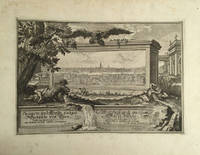
3379Aug. Vind. Augsburg : J.A. Pfeffel 1719. Oblong folio half calf and original speckled brown paper over boards recently re-backed raised bands with gilt floral ornaments in seven compartments. 29 of 30 leaves comprising 2 engraved titles and 27 plates; lacking typographic privilege leaf as is often the case. <p>An unusually handsome wide-margined copy of this marvelous collection of views of early eighteenth-century Vienna.</p> <br /> <br /> <p>The series begins with a beautifully designed allegorical plate consisting of a panoramic view of the city in the form of a relief panel on a monument surmounted by an eagle with two figures nearby leaning on overturned urns from which water flows in cataracts to the bottom of the scene. Subsequent plates depict façades squares monuments great houses gardens etc. These include "Der Schotten Platz" "Prospect des Wienerischen Neu-Marckts" "Die Furste Lichtenstainische Pallast" "Prospect eines Wienerischen Platzes der Hoff genannt" "Prospect des Hohen Marckts zu Wien" "Prospect von dem Lust-Gebäude und Garten" "Prospect des Lust-Gebäudes bey Dornbach Neu-Waldeck genannt" and others. Nearly every plate is richly detailed and teeming with figures engaged in all manner of activities: a winter parade with sleighs market scenes bears with their trainers cooks roasting meat on spits gamboling dogs performers on a stage rearing and kicking horses and so on.</p> <br /> <br /> <p>Most of the plates are after architect Joseph Emanuel Fischer von Erlach 1693-1742 and three after his more famous father Johann Bernhard Fischer von Erlach court architect to the Hapsburgs and one of the towering figures of baroque architecture. Joseph Emanuel honed his skills in his father's atelier working on several of his commissions and assisting him in the compilation of Entwurff einer Historischen Architectur 1721 published in London as A Plan of Civil and Historical Architecture 1737 an important comparative study of world architecture. A fine architect in his own right who obtained many important commissions and ultimately succeeded to his father's office of court architect Joseph has nevertheless remained in his father's shadow. Johann Adam Delsenbach 1687-1765 studied portrait engraving with Augustin Fleischmann and attended the Nuremberg Academy of Painting. In 1710 he went to Vienna in response to Johann Bernhard Fischer von Erlach's call for engravers to work on his Entwurff for which Delsenbach engraved many of the plates. He was subsequently appointed court engraver by Anton Florian Prince of Lichtenstein.</p> <br /> <br /> <p>CONDITION: Good moderate wear offsetting from leather corners to endpapers occasional light foxing and soiling. The luxurious wide margins of this copy make it especially appealing.</p> Aug. Vind. [Augsburg] : J.A. Pfeffel, [1719] unknown
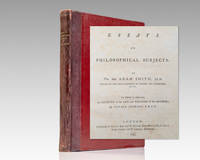
1795151270London: Printed for T. Cadell Jun. and W. Davies 1795. First edition of this important collection of Smith's essays featuring the important first publication of his History of Astronomy. Quarto bound in quarter calf with gilt titles to the spine. One of 1000 copies. Containing the first publication in book form of Dugald Stewart's Account of the Life and Writings of Adam Smith which had appeared in the Transactions of the Royal Society of Edinburgh in 1794. Stewart's Account "formed the basis upon which everyone drew for biographies of Smith that began to appear in the early 19th century" Tribe 55. Goldsmith 16218. Kress B3038. Rothschild 1902. In very good condition. Though Essays on Philosophical Subjects appeared five years after Smith's death most were likely written before the publication of his Theory of Moral Sentiments in 1759. Essays was compiled by his literary executors physicist Joseph Black and geologist James Hutton. Prior to his death Smith "instructed them to destroy his manuscripts but allowed them at their discretion to publish a set of essays" Berry Cambridge Companion 116. As noted herein Smith had begun work early in his career on "a connected history of the liberal sciences and elegant arts" but "found it necessary to abandon that plan as far too extensive." These writings thus represent Smith's longstanding attempts at such a "connected history" and range over philosophy aesthetics and the history of science. A biographical Account of Smith and his work is followed by the extensive History of Astronomy which was the only writing Smith did not want destroyed; indeed he specifically arranged for its posthumous publication. Black and Hutton used their authority to incorporate its momentous first publication into this collection. Astronomy "was probably begun decades before Smith's death perhaps as early as 1746 and was at one time intended to form a chapter of a much larger work… Astronomy purports to explain what drives 'philosophers' to ask the questions they do and to seek explanations for the things they observe" Otteson Adam Smith 22-3. Astronomy "has occasioned much scholarship… Just as The Wealth of Nations was titled an enquiry into its 'natures and causes' so Smith says at the end of the preliminary section of Astronomy that the design of the essay is to consider the 'nature and causes of the three sentiments"—identified by him as "Wonder Surprise and Admiration." Citing Galileo Copernicus Kepler Newton Descartes and others Astronomy aims "to illustrate how philosophy is an activity that addresses itself to the imagination" Berry 116-117 123. Also included in this volume are his essays on "Ancient Physics" "Ancient Logics and Metaphysics" and the "Imitative Arts" along with a concluding essay on perception in the five "External Senses." Printed for T. Cadell Jun. and W. Davies unknown
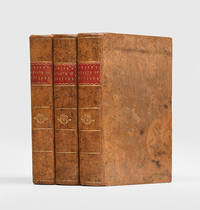
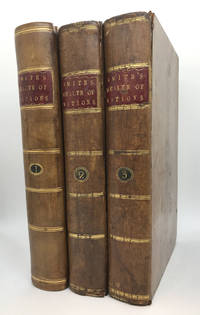
109065London Printed for A. Strahan; and T. Cadell 1793. . Seventh edition 3 vols; 8vo 22 x 14 cm; armorial bookplate to front pastedown of each vol. statistical tables vol. I with ads. to third & fourth editions appendix to end vol. II index and final page ad. to end of vol. III; contemporary tree calf ruled in gilt gilt spine with contrasting red morocco lettering-pieces edges stained yellow joints repaired extremities slightly rubbed spine ends chipped minor wear to panels internally very good; x 496; vi 518 6; v 1 465 51pp.<br /> A handsome set of Adam Smith's d.1790 pivotal work of economic theory and political philosophy. The Wealth of Nations 'begins with the thought that labour is the source from which a nation derives what is necessary to it. The improvement of the division of labour is the measure of productivity and in it lies the human propensity to barter and exchange. The Wealth of Nations ends with a history of economic development a definitive onslaught on the mercantile system and some prophetic speculations on the limits of economic control' PMM.<br /> ESTC T95380; Goldsmiths' 15565; Kress B.2618; Tribe 49. London, Printed for A. Strahan; and T. Cadell, 1793. unknown
1797AQ20001Cambridge: Printed by Benjamin Flower: for J. Deighton et al. 1797. 4 290pp 2. With a final publisher's advertisement leaf not recorded by ESTC. Contemporary dark green calf-backed marbled boards ruled and lettered in gilt. Extremities worn loss to head of spine. Head of title page shaved sadly to remove an early ownership inscription foxed. The rare first edition of the first work of economics in English consciously intended for use as a textbook. As the author himself notes in a preliminary 'advertisement' which heaps justifiable praise on the magnum opus of Adam Smith the work was designed to be 'found convenient as a text book in those institutions of liberal education in which the "Wealth of Nations" makes an essential branch of their letters'. A lucid abridgement by English radical Jeremiah Joyce 1763- 1816 of Scottish philosopher Adam Smith's monumental Wealth of nations it condensed the two thick quartos of the original edition London 1776 - or the by then well-known bulky triple-decker octavo editions of the late eighteenth-century - into a single convenient octavo volume. As Joyce himself notes in a footnote to the final page of text the developments suggested by Smith relating to alleviating the national debt by introducing the British system of taxation to 'all provinces of the empire' were superseded by events in America during the 1770s and any hope for the 'discharging of the national debt' brought even more into doubt by the 'present melancholy situation of Ireland'. ESTC locates only 11 copies in the UK and just 12 further elsewhere. ESTC T95379. First edition. 8vo. Printed by Benjamin Flower: for J. Deighton et al. hardcover
1791188047London: Printed for A. Strahan; and T. Cadell 1791. An appealing copy in tree calf Sixth edition of Smith's magnum opus and the first to be published after his death in 1790. "The first and greatest classic of modern economic thought" PMM first published in 1776 offers a persuasive manifesto for free markets and free trade. It is no exaggeration to say that all major economic works which followed were written to advance or challenge the principles of Smith. 3 vols octavo 208 x 129 mm pp. 2 x 499 1; 2 vi 518 6; 2 v 1 465 51: collates complete with initial blanks. Contemporary tree calf red morocco labels volume numbers in gilt to spines. Joints and extremities neatly restored a few marks to calf splash mark to volume I p. 19 scattered light foxing else clean and fresh. A very attractive copy. ESTC T95383; Goldsmiths' 14612; Kress B.2209; Tribe 41; Vanderblue p. 3. See Printing and the Mind of Man 221 first edition. unknown
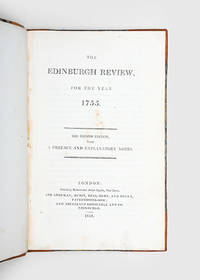
1818171057London: for Longman Hurst Rees Orme and Brown and Archibald Constable and Co. Edinburgh 1818. Identifying Smith's earliest published work Second edition a facsimile reprint of both issues of the Review incorporating the earliest published work by Adam Smith. The Edinburgh Review only ran for this single year from 1755 to 1756 yet its contributors included Adam Smith and William Robertson and it had the fortune to coincide with Rousseau's Discourse on Inequality and Johnson's Dictionary. Both works are covered here by Smith. The journal aimed to review every publication originating in Scotland but this belied a deeper manifesto of social economic and cultural reform. In the preface Alexander Wedderburn 1733-1805 later Lord High Chancellor of Great Britain wrote that the review aimed towards "the progressive state of learning in the country" ODNB. This second edition was supervised by Sir James Mackintosh 1765-1832 a jurist politician and a leading figure in early 19th-century Whiggish history. Mackintosh provides a 12-page preface and explanatory notes in which he puts names to the originally anonymous articles. Provenance: Professor Arnold Heertje 1934-2020 with his engraved bookplate fixed to the front pastedown. Octavo 208 x 133 mm pp. ii-xvi 2 vi 135 1; lacking half-title. Contemporary half calf rebacked and re-cornered spine ruled and decorated in gilt and with red morocco label lettered in gilt contemporary marbled paper sides edges sprinkled red. Bookseller's ticket of J. Seacome Chester to front pastedown. Infrequent light foxing: a very good copy indeed. Goldsmiths' 22015; Vanderblue p. 46. unknown
19962373TIME-LIFE BÜCHER 1996. 1. hardcover. Maloftege! LANDESTYPISCHE KOCHREZEPTE UND KULINARISCHE IMPRESSIONEN TIME-LIFE BÜCHER hardcover
110201The second edition corrected. London Printed for John Starkey and Thomas Basset 1669. Folio. 20 316 6 232 9 1 blank pp. Additional engraved title-page. 2 engraved portraits. 6 engraved folding maps 2 with neatly repaired tear. Contemporary vellum. Red labels. Joints skilfully repaired. New endpapers. . <br/><br/><em>Originally published in 1662. This is the second English edition. </em> hardcover
199322794GREVEN 1993. 11. softcover. Neuer Koelnischer Sprachschatz Sirmkovrilo! Skatolo! Mit Anhang: Altkölnisch - Kölnisch-Ripuarisch Suchhilfe! Maloftege! GREVEN paperback
197712747PABEL/MOEWIG VERLAGSUNION 1977. 2. hardcover. Abenteuer der Seefahrt George Abercombie Fox Sirmkovrilo! PABEL/MOEWIG VERLAGSUNION hardcover
176455358E-08: A. Millar Et Al. Very Good. 1764. Hardcover. Leather. Folio 10-1/2 by 17 inches. A. Millar et al London. 1764. Two volumes. Xxxiv 500 pages; 434 pgs. With large folding hemispheric map of the world and two other maps. Bound in contemporary full brown calf leather with burgundy morocco spine labels raised bands. Boards have wear present to the extremities of the boards. No ownership marks present. Text is clean and free of marks. Binding tight and solid. First edition of this important authoritative history of commerce with a focus on Britain's acquisition of "new American markets" as well as the greater consequences of "the very extraordinary actions of the year 1720" when the South Sea Bubble burst. Within this impressive two-volume work are extensive references to treaties parliamentary acts the substantive contributions of economic texts and thorough statistical accounts of currency population and wealth. "In the year preceding Anderson's death appeared his great and only work An Historical and Chronological Deduction. Coming down from the earliest times to the year 1762 Anderson's work is a monument of stupendous industry. Composed in the form of annals it is not merely a record of commercial progress and colonial enterprise but a history of the political industrial and social development of all civilised countries and especially of Great Britain and Ireland. Abstracts of all treaties acts of parliament and pamphlets in any way bearing on commerce or kindred matters are added together with statistical accounts of the national finances of prices currency and population. In the introduction to his work Anderson showed himself in advance of his time and exposed several of the fallacies of the mercantile system. He condemned industrial monopolies and advocated the naturalisation of foreign protestants and a uniformity of weights measures and coinage for all the nations of Christendom." E-08; Folio 13" - 23" tall . A. Millar, Et Al, hardcover
1804011225Oliver D. Cooke 1804. Book. Fine. Full-Leather. 1st Edition. 4to - over 9¾ - 12" tall. 1804 2 Volume EditionNew Edition. Beautiful Contemporary Leather with 6 Raised Bands.Internally Very Fresh.Very Rare Edition.Gorgeous Copy With Red Labels. Oliver D. Cooke Hardcover books
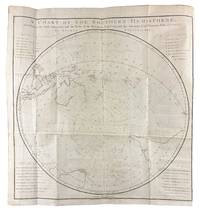
177741959London: Printed for B. White Fleet-Street; J. Robson Bond Street; P. Elmsly Strand; and G. Robinson Pater-noster Row 1777. Two volumes. 4to. 11 3/16 x 8 1/2 inches. First edition. Volume I: A4 a4 b2 B-4G4 4H2. i-xviii 2 1-602 2. 624 pp. Title Preface Contents Engraved Folding Chart Chapters I-IV Errata. Volume II: A2 B-4H4. 4 1-607 1. 612 pp. Title Contents Errata Chapters V-VIII. Contemporary tan calf maroon morocco lettering pieces marbled endpapers<br/> <br/> First edition with Forster's large folding chart of the Southern Hemisphere.<br/> <br/> This the first published account of Cook's second voyage 1772-1775 was published six weeks before Cook's official version. Forster's work is substantial even though it was speedily produced to rival Cook's work. The German naturalist Forster and his father Johann Reinhold Forster 1729-1798 had served as the official botanists aboard the HMS Resolution during the second voyage. When the Royal Admiralty decided to withdraw their offer to have the elder Forster contribute to the official report due to a controversy over his emoluments George produced his own publication. The Admiralty had commissioned Cook to undertake his second voyage in the wake of the success of his first. It was perhaps the most important of Cook's three voyages. The purpose of the second voyage was to circumnavigate the globe as far south as possible searching for any unknown southern landmasses which the Royal Society still believed could exist. But Cook proved beyond a doubt that a fabled Terra Australis Incognita which was supposed to lie between South America and New Zealand did not exist. His two ships became the first to traverse the Antarctic Circle doing so three times discovering and re-discovering islands in the Pacific including New Zealand New Caledonia Palmerston the Norfolk Islands Easter Island the Marquesas New Hebrides Tonga and the Sandwich Islands. An enormous amount of scientific and ethnographic information was garnered from the expedition and as a result of the new techniques Cook employed not one crew member died of scurvy a remarkable achievement for which Cook was awarded the Royal Society's Copley Medal. Forster though young proved a knowledgeable and adept observer; his book is the essential supplement to the literature of the second voyage. The lively elegant prose and critical detail of his account based loosely on both his father's journal and though unacknowledged Cook's own work make it one of the finest examples of eighteenth-century travel literature. It is of prime importance too in the history of European contact with Pacific peoples. The Forsters' publications reveal the sophistication and enthusiasm they brought to their interactions with Polynesian peoples as well as a sensitivity to the moral ambiguities of contact. "For all the controversy A Voyage Round the World is an interesting and important account that complements the official one with facts and astute observations on the human side of the voyage." Rosove Its confident visionary style incorporates a good deal of polemic particularly in its criticism of the treatment of islanders by Cook's crew. It is a thrilling account of life aboard one of Cook's vessels.<br/> <br/> BCJC 1247. Beddie 1247. Cox I p. 60. Davidson pp. 61-62. ESTC T155479. Hill 625. Hocken pp.16-17. Holmes 23. Kroepelien 450. O'Reilly-Reitman 382. Rosove Antarctic 132. Sabin 25130. Spence 464. Printed for B. White, Fleet-Street; J. Robson, Bond Street; P. Elmsly, Strand; and G. Robinson, Pater-noster Row unknown
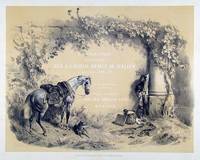
1851E429P001U79OMunich 1851. Royal oblong folio 62.5 x 45.5 cm. Cotta Plates loose in a contemporary red cloth slipcase with a silk lining. With tinted lithographed title dedication leaf to Radetzky preface and 24 lithographed plates. With 24 ll. of explanatory text printed on blue paper. 24 ll. First edition of a monumental commemorative work to mark the campaigns of the Austrian army in Italy during the years 1848-49. The plates lithographed by Ernst and Franz Adam and printed by Julius Adam depict the street riots assaults cavalry battles and sieges near Milan Santa Lucia Vicenza Custozza Volta Mortara Novara Malghera and elsewhere during the suppression of the Italian revolt by the Habsburgs. The war correspondent Friedrich Wilhelm Hackländer 1816-77 wrote the extensive explanatory texts most in both German and French for each plate. Austria won this first Italian War of Independence; a decade later however Italy was an independent state.From the library of Duke Maximilian Joseph in Bavaria 1808-1888 father of Elisabeth Empress of Austria 'Sisi'. Some minor browning and foxing. Frayed edges. Very good set of lithographs depicting military scenes during the first Italian Independence War.l Hiler p. 6; Lipperheide Qe 20. hardcover
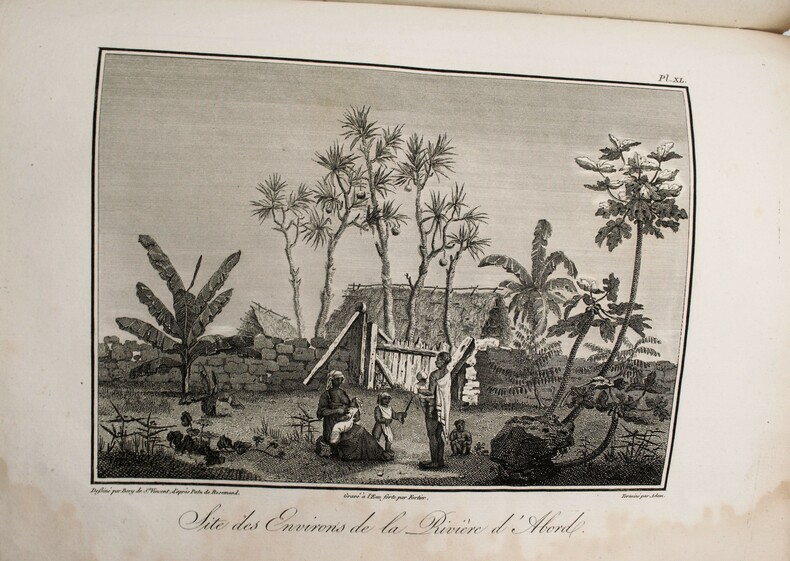
1804PHO-1187Paris, F. Buisson, 1804. 3 vol. in-8 de texte et 1 atlas de planches .Texte : I/ xv-[1]-408 pp. ; II/ [2] sq., 431 pp. ; III/ [2] sq., 473 pp. ; Atlas de 4 pp., 58 planches et cartes , relié demi basane époque (atlas reliure moderne) , coiffes usées, mouillure et quelques rousseurs dans l'atlas . Édition originale avec l'atlas complet des 58 cartes et planches dont 1 en couleur ,gravées en taille douce par Adam, Blondeau, Fortier, Dorgez, B. Tardieu d'après les dessins de l'auteur.
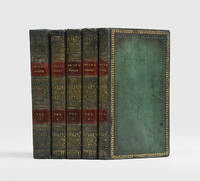
1822186529London: Printed for J. Richardson and Co. Thomas Tegg & 8 others in London A. Allardice Edinburgh and R. Griffin and Co. Glasgow 1822. The birth of modern economics Second collected edition the first in duodecimo following the octavo of 1811-12 and including the Wealth of Nations and the Theory of Moral Sentiments among other works. Smith's powerful argument for free markets and free trade remains a cornerstone of economic thought. 5 vols duodecimo 174 x 101 mm. Contemporary green calf twin red morocco labels spines gilt in compartments covers bordered with gilt and blind rolls gilt turn-ins green endpapers marbled edges. A few minor pencilled notes. Top label of vol. I peeling slightly a little rubbed light wear at extremities with tips recoloured and strengthened some light foxing to contents minor running stain at foot towards end of vol. III. A very good copy. Tribe 133. unknown
58068Venedig, Johann von Köln u. Johann Manthen, 27. August 1478. Fol. Mit eingemalten Alinea-Zeichen alternierend in Rot und Blau sowie eingemalter Kopfzeile in Rot und Blau. 228 nn. Bll. (das erste weiß; Rom. Type mit griech. Einsprengseln, 37 Zeilen, Blindgepr. Ldr. d. 20. Jhds. auf 5 Bünden m. goldgepr. Rückentitel.
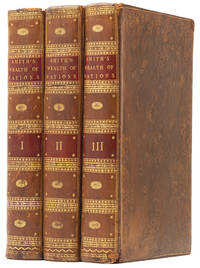
2196-21London Strahan u. Cadell 1786. The fourth edition. 3 vols. 8°. VIII 499; VI 518 3 ll.; V 465 pp. 25 ll. Ldr. d. Zt. mit goldgeprägten Rückenschildchen u. Bandnummer. Kapitale leicht berieben Ecken bestoßen. Stellenweise wasser- bzw. stockfleckig.Titelbll. je mit Namenzug in Tinte. vgl. Carter-Muir 408; Kress B1129 - Vierte dreibändige Auflage von Adam Smiths 1723-1790 berühmtem ökonomischen Hauptwerk das erstmal 1776 erschienen ist. "An inquiry into the nature and causes of the wealth of nations" gilt als Grundlage für die englische Nationalökonomie. " Smith describes the evolution through feudalism into a stage of society requiring new institutions such as market-determined rather than guild-determined wages and free rather than government-constrained enterprise. This later became known as laissez-faire capitalism; Smith called it the system of perfect liberty". Encyclopedia Britannica "Adam Smith". Dritter Band mit Index und Begriffsbeschreibungen. "The first and greatest classic of modern economic thought" PMM. London, Strahan u. Cadell 1786. unknown
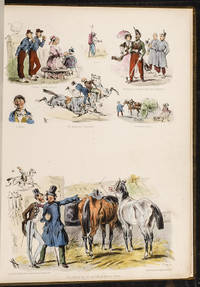
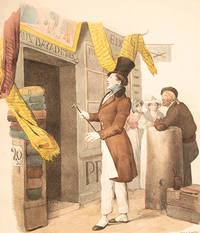
04860Paris: Hautecoeur Frères 1840. Parisian and Country Tribulations<br/>The Humorous Side of Distress Trouble Misery Anguish Agony Grief and Wretchedness.<br/><br/>ADAM Albert illustrator. Tribulations Parisiennes et Campagnardes. Par Albert Adam. Paris: Hautecoeur Frères ca. 1840.<br/><br/>First edition. Folio 12 7/8 x 9 7/8 inches; 328 x 251 mm. Lithographed pictorial title-page and Thirty-two plates hand-colored lithograph plates heightened with gum arabic on sixteen sheets. Several of the plates have more than one image depicted. Tiny piece of lower corner of title-page and plate 10 torn away small piece of lower inner margin of plate 16 torn away - nothing affecting any images. Some light marginal soiling and toning otherwise an excellent copy of this extremely scarce title.<br/><br/>Bound to contemporary style in full dark green straight-grain morocco. Covers elaborately decorated in gilt and blind spine with five raised bands decoratively tooled and lettered in gilt in compartments decorative gilt turn-ins gold marbled end-papers. This is the first time in over fifty years that I have seen this very amusing title which depicts the humorous side of distress trouble misery anguish agony grief and wretchedness. especially plate 12 the top image "Arrcheur de Dents sans douleur" pain-free teeth remover. <br/><br/>The Plates:<br/>1. Un Chien emporté / Culbute à la Marche<br/>2. Désagrément du Macdam / Le Pot de fer et le Pot de terre<br/>3. Une Famille d'Allemands / Touché !!! / Deux blaguers / Il l'aura . il l'aura pas! / Le Repas<br/>4. Ces Messieurs s'amusant. / C'est celle-là ! qui est une bête de premier mérite<br/>5. Une branche de salut / Une belle Famille<br/>6. Un accident imprévu / Marchands d'oranges etc<br/>7. Voiture à l'usage des amateurs de culbutes / Le Dejeuner interrompu<br/>8. Arrosement public et gratis / La Ruade<br/>9. Gentlemans au Bois / Visite désagréable<br/>10. Train de plaisir à l'heure / not titled<br/>11. Départ du Roulage / Position très désagréable<br/>12. Arrcheur de Dents sans douleur / Le bon père de Famille<br/>13. Concurrence monstre. - Route de Passy / Cheval qui a un défaut marquant<br/>14. Une glissade / not titled<br/>15. L'Artiste culbuté / Cheval antropophage<br/>16. Un Mosieur qui n'a pas l'habitude etc / Noouvelle course au Clocher<br/><br/>Very scarce: According to OCLC there are just five copies located in libraries and institutions worldwide Morgan Library NY; UCLA CA; Library of Congress DC; Clark Art Institute MA and Harvard Univ. Houghton Library MA.<br/><br/>Albert ADAM 1833-1900 was the son of Caricaturist and lithographer Jean Victor Adam 1801-1867 whom he often assisted with his commissions. Paris: Hautecoeur Frères, 1840 unknown books
04860Paris: Hautecoeur Frères 1840. Parisian and Country Tribulations<br /> The Humorous Side of Distress Trouble Misery Anguish Agony Grief and Wretchedness.<br /> <br /> ADAM Albert illustrator. Tribulations Parisiennes et Campagnardes. Par Albert Adam. Paris: Hautecoeur Frères ca. 1840.<br /> <br /> First edition. Folio 12 7/8 x 9 7/8 inches; 328 x 251 mm. Lithographed pictorial title-page and Thirty-two plates hand-colored lithograph plates heightened with gum arabic on sixteen sheets. Several of the plates have more than one image depicted. Tiny piece of lower corner of title-page and plate 10 torn away small piece of lower inner margin of plate 16 torn away - nothing affecting any images. Some light marginal soiling and toning otherwise an excellent copy of this extremely scarce title.<br /> <br /> Bound to contemporary style in full dark green straight-grain morocco. Covers elaborately decorated in gilt and blind spine with five raised bands decoratively tooled and lettered in gilt in compartments decorative gilt turn-ins gold marbled end-papers. This is the first time in over fifty years that I have seen this very amusing title which depicts the humorous side of distress trouble misery anguish agony grief and wretchedness. especially plate 12 the top image "Arrcheur de Dents sans douleur" pain-free teeth remover. <br /> <br /> The Plates:<br /> 1. Un Chien emporté / Culbute à la Marche<br /> 2. Désagrément du Macdam / Le Pot de fer et le Pot de terre<br /> 3. Une Famille d'Allemands / Touché !!! / Deux blaguers / Il l'aura . il l'aura pas! / Le Repas<br /> 4. Ces Messieurs s'amusant. / C'est celle-là ! qui est une bête de premier mérite<br /> 5. Une branche de salut / Une belle Famille<br /> 6. Un accident imprévu / Marchands d'oranges etc<br /> 7. Voiture à l'usage des amateurs de culbutes / Le Dejeuner interrompu<br /> 8. Arrosement public et gratis / La Ruade<br /> 9. Gentlemans au Bois / Visite désagréable<br /> 10. Train de plaisir à l'heure / not titled<br /> 11. Départ du Roulage / Position très désagréable<br /> 12. Arrcheur de Dents sans douleur / Le bon père de Famille<br /> 13. Concurrence monstre. - Route de Passy / Cheval qui a un défaut marquant<br /> 14. Une glissade / not titled<br /> 15. L'Artiste culbuté / Cheval antropophage<br /> 16. Un Mosieur qui n'a pas l'habitude etc / Noouvelle course au Clocher<br /> <br /> Very scarce: According to OCLC there are just five copies located in libraries and institutions worldwide Morgan Library NY; UCLA CA; Library of Congress DC; Clark Art Institute MA and Harvard Univ. Houghton Library MA.<br /> <br /> Albert ADAM 1833-1900 was the son of Caricaturist and lithographer Jean-Victor Adam 1801-1867 whom he often assisted with his commissions. Paris: Hautecoeur Frères, 1840 unknown
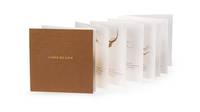
CNAP087San Francisco: The Arion Press 2009. New. Kiki Smith. The book is 13-7/8 inches square with 16 printed panels and two blanks in concertina format. The paper is Mohawk Superfine cover. The type is Scotch Roman handset using 24-point for the text and other sizes for display and subsidiary material printed by letterpress. The graphic art was printed by photo-offset lithography in tri-tone: brown-black tan and yellow-orange inks. The boards and box containing the book are covered in Japanese cloth of an iridescent brown with gold titling. The edition is limited to 75 numbered copies for sale. All copies are signed by the artist. "I Love My Love" a ballad by Scottish-born poet Helen Adam is based on a traditional Celtic interpretation of the Medusa theme. <br /> <br /> The book features sixteen images by artist Kiki Smith derived from her own hair. Helen Adam would have been 100 years old in December 2009. She was a prominent member of the San Francisco literary scene that profoundly altered the course of American poetry in the 1950s and 1960s. Among the avant-garde she was seen as an anomaly seemingly old-fashioned but regarded as a direct link to ancient poetic tradition.<br /> <br /> In Adam’s unsettling ballad the bridegroom is first embraced then ensnared by his bride’s lavish golden tresses. After he murders her the hair continues to grow and avenges itself upon the guilty bride-groom who tried to free himself from the constrictive bonds of love. <br /> <br /> The book is bound in concertina format in an accordion-fold of eighteen panels. Images of the artist’s hair are printed lithographically in three colors alternately above and below the text with the hair flowing outward from the left margin of each panel. The result is an artist book that stretches out flat to over twenty feet. It can be displayed on a shelf or table spread out to twelve feet or less in the accordion mode. It can also be viewed two pages at a time as in a conventional codex. The artist’s hair has been used to create a graphic parallel to the poetry. <br /> <br /> ___POSTAGE: Please note that this is an unusually large and heavy volume and additional postage may apply; please inquire for details.<br /> <br /> ___Swan's Fine Books is pleased to be a member of the ABAA ILAB and IOBA and we stand behind every book we sell. Please contact us with any questions you may have we are here to help. The Arion Press unknown
05978Paris: Sazerac et Duval Engelmann Langlumè & Brossier 1824. First Edition of the Illustrator's First Book<br /> One Year in the Life of a Young Man<br /> Depicted in Seventeen Hand-Colored Lithograph Plates <br /> <br /> ADAM Victor. Un An de la Vie d un Jeune Homme. Histoire véritable en 17 Chapitres. Escrits par lui-même et Lithographiés par Victor Adam. Paris: Sazerac et Duval Engelmann Langlumè & Brossier 1824. <br /> <br /> First edition. Folio 13 9/16 x 10 3/8 inches; 345 x264 mm. Lithograph title-page and seventeen superb hand-colored lithograph plates printed by Langlumé. Some occasional light marginal foxing plate 10 with two neatly repaired small closed tears to lower blank margin. All plates with the blind stamp of the publisher Sazerac et Duval in lower blank margin. Small circular library stamp of Bernard Franck at foot of title-page and also on front free endpaper.<br /> <br /> Contemporary quarter dark-green scored calf over green paper boards. Smooth spine ruled in gilt tan morocco label lettered in gilt board edges worn. With the bookplate of celebrated collector Bernard Franck on front free endpaper. <br /> An excellent example of a very rare suite of hand-colored lithographs by Victor Adam. <br /> <br /> Victor Adam 1801-1865 is better known for his later works of pictorial journalism or for his many lithographs of military history than for his early works of fashion and society life. "His immense production contains many amusing albums concerning the life of the time such as Un an dans la vie de jeune homme. This series is a sort of bourgeois rake's progress. A young man from the country comes to Paris to sample its pleasures. He acquires a new wardrobe; buys a horse; is duped by gamblers makes a conquest of a pretty lady; exclaims 'Jasmin! she seemed so artless' as he lies recovering from the resulting malady; is imprisoned for debt; writes at last to 'the old one' a buxom woman of means; and is accepted by her in the final plate. The series is unusual among the albums of the time in that it tells a consecutive story and it certainly has more spirit and finish than Adam's usual work" Ray. A lovely copy of the first book by this gifted painter and illustrator. Very scarce. <br /> <br /> Bernard Franck 1849-1924 Born in Paris Franck was a veteran of the 1870 Franco-Prussian War during which he was awarded the Medaille Militaire. He was an industrialist specializing in the manufacturing of military equipment. His success in business enabled him to become an inveterate collector. He amassed his vast collection over 45 years from 1875 to 1920. The collection consisted of 18th Century and early 19th Century objects - miniature portraits many emphasizing military subjects medals and decorations armory uniforms paintings engravings a variety of bibelots. Besides the miniature portraits especially noteworthy was Franck's collection of Carnets de Bal dance cards. He sold this collection to J.P. Morgan around 1910. Before doing so he had the collection reproduced in an album entitled "Collection de 124 carnets de bal du XVIIIe siecle/formee par M.Bernard Franck a Paris de l'annee 1875 au 23 avril 1902". Only 20 albums were produced of which one is in the Watson Library of the Metropolitan Museum and one in the Morgan Library autographed by Franck to Morgan. Franck died in 1924. The collection that follows has been held within the family since that time. me.<br /> <br /> The Plates:<br /> 1. J'arrive! I arrive!<br /> 2. Je ne me reconnais plus. I do not recognize myself anymore.<br /> 3. C'est superbe! It is superb!<br /> 4. Elle me regarde! Dieu quel bonheur! She's looking at me! God what happiness!<br /> 5. C'est une femme honnête. She is an honest woman.<br /> 6. Je ne pouvais pas aller à pied. I couldn't walk.<br /> 7. C'est à qui m'aura. Who's going to get me<br /> 8. Comment Docteur! How Doctor!<br /> 9. Jasmin!.elle avait l'air si ingénu!! Jasmine! . she looked so ingenuous !!<br /> 10. Quel guignon! What a mess!<br /> 11. Des mémoires! Fi donc. Memories! Fi then.<br /> 12. Je le savais. I knew it.<br /> 13. St. Pelagie.charmant séjour! St. Pelagie. lovely stay!<br /> 14. Quels inhumains! Me mettre dehors! What inhumans! Kick me out!<br /> 15. Aux grands maux les grands remédes. To great ills great remedies.<br /> 16. La simpiternelle serait ma bisaïeule. The simpiternal would be my grandmother.<br /> 17. Il faut faire une Fin! Je lépouse. We must make an End! I marry him.<br /> <br /> <br /> . Paris: Sazerac et Duval, Engelmann, Langlumè & Brossier, , 1824 unknown
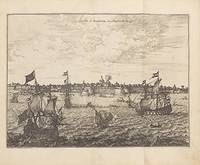
51-5965Amsterdam: Chez Michel Charles le CeÌne libraire chez qui l'on trouve un assortiment general de musique. MDCCXXVII. 1727. Folio 314 x 193mm. 2 vols. contemporary calf spines gilt with morocco lettering labels spines rubbed with small loss to 2 labels and spine ends; half-titles privilege leaf engraved additional pictorial title titles printed in red and black engraved portrait 44 engraved plates maps and plans 31 folding one of Goa with a few old paper repairs on verso and very small loss to one corner a few small damp spots on one plate large engraved illustrations one shaved in the text pp.134/5 slightly shorter and re-inserted occasional light spotting or page toning . Cordier Sinica 2077; Cordier Japonica 367-68; Lust 343. OCLC Number / Unique Identifier:30797326: Half title v. 1 : Voyages du Sr. Jean Albert de Mandelslo considerablement augmentez en cette derniere edition et divisez en deux parties Vol. 2 : Voyages du Sr. Jean Albert de Mandelslo. Tome secondEdition statement follows "Divisez en deux parties."Translation of: Morgenländische Reise-Beschreibung / Johann Albrecht von Mandelslo. Schleszwig : J. Holwein 1658. Wicquefort's translation appeared first as the 2nd part of "Relation du voyage de Moscovie Tartarie et de Perse . tr. de l'allemend du Sieur Olearius augmenteÌe de plus d'un tiers particulierement d'une 2de partie contenant le Voyage de Jean-Albert de Mandelslo ." Paris 1659 and Leyde P. van der Aa 1719. The present edition consists of the same sheets as the Leiden van der Aa 1719 edition with a new title page cf. NUC pre-1956 v. 358 p. 434Vol. 1: 28 p. 440 columns 4 p. 28 leaves of plates some folded; v. 2: 445-808 columns 72 p. 13 leaves of plates some folded.Errors in pagingSignatures: -3â´ 5² A-Zâ´ 2A-2Zâ´ 3A-3Nâ´ 3Oâ´ -3O4Vignette on title pages.Some leaves of plates form two-page. illustrations.Includes index. Amsterdam: Chez Michel Charles le CeÌne, libraire, chez qui l'on trouve un assortiment general de musique., MDCCXXVII. [1727] unknown