FERGUSON, ADAM.Livre Rare Book
42 895 résultats
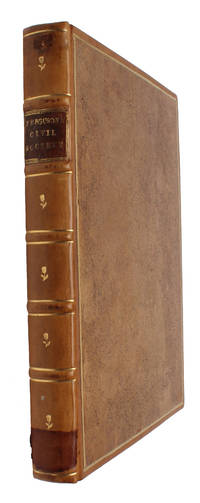
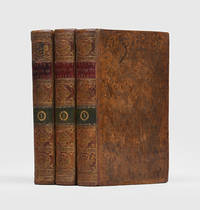
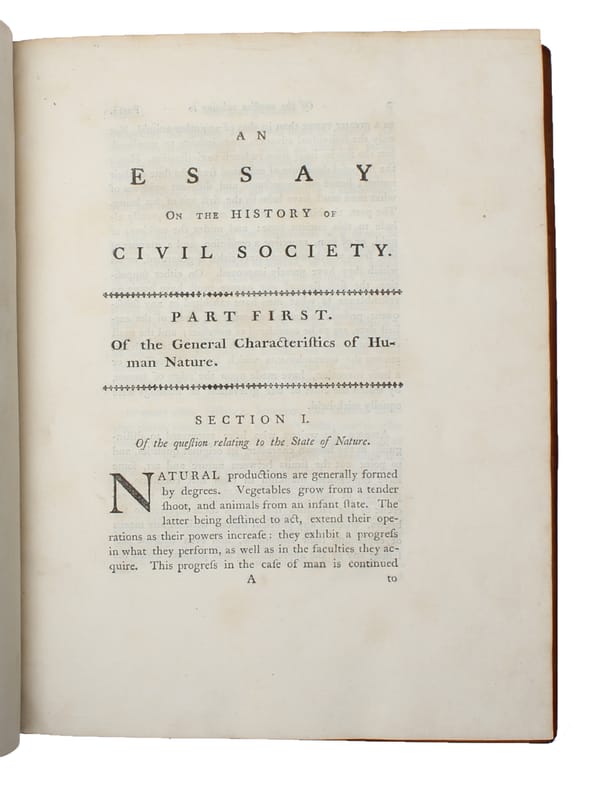
176761031Edinburgh, 1767. Large 4to. Recased preserving the contemporary marbled leather boards with a gilt line-frame over a more recent light brown full calf binding with five raised bands and gilt ornamentations to spine. The contemporary gilt title-label also preserved in second compartment of the spine. A later leather-onlay to the lower compartment, presumably covering an earlier library-marking. All edges of boards gilt. Inner hinges re-enforced. A good, solid, and sturdy copy. Library stamp (Freie Universität Berlin) to verso of title-page, along with a deaccession-stamp, as well as to blank lower margin of p. 48. Apart from the stamps, internally extremely well preserved, clean, and fresh, with only light occasional brownspotting. A very wide-margined copy on good paper. Leaves measuring 27x21 cm. VII, (1), 430 pp.
176761031Edinburgh 1767. Large 4to. Recased preserving the contemporary marbled leather boards with a gilt line-frame over a more recent light brown full calf binding with five raised bands and gilt ornamentations to spine. The contemporary gilt title-label also preserved in second compartment of the spine. A later leather-onlay to the lower compartment presumably covering an earlier library-marking. All edges of boards gilt. Inner hinges re-enforced. A good solid and sturdy copy. Library stamp Freie Universität Berlin to verso of title-page along with a deaccession-stamp as well as to blank lower margin of p. 48. Apart from the stamps internally extremely well preserved clean and fresh with only light occasional brownspotting. A very wide-margined copy on good paper. Leaves measuring 27x21 cm. VII 1 430 pp. <br/><br/><em>The uncommon first edition of this pioneering classic of the Enlightenment a magnum opus in the history of political thought. The Essay became extremely influential and established Ferguson’s reputation in Britain and the rest of Europe. The work was also taught at the University of Moscow causing Voltaire to praise Ferguson for “civilizing the Russiansâ€. Marx was also directly influenced by the work as were numerous of the great political and sociological theoreticians. “Adam Ferguson's Essay on the History of Civil Society first published in 1767 is a classic of the Scottish - and European - Enlightenment. Drawing on such diverse sources as classical authors and contemporary travel literature Ferguson offers a complex model of historical advance which challenges both Hume's and Smith's embrace of modernity and the primitivism of Rousseau. Ferguson combines a subtle analysis of the emergence of modern commercial society with a critique of its abandonment of civic and communal virtues. Central to Ferguson's theory of citizenship are the themes of conflict play political participation and military valour. The Essay is a bold and novel attempt to reclaim the tradition of active virtuous citizenship and apply it to the modern state.†Cambridge University Press. â€A pioneering work of the Scottish Enlightenment in the field of “philosophical history†or what we would today call sociology. It deals with the social political economic intellectual and legal changes which accompanied societies as they made the transition to modern commercial and manufacturing society.†OLL – Online Library of Liberty </em> hardcover
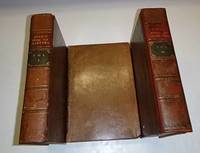
177648982Leipzig Weidmann 1776-78. 8vo. Bound in two nice uniform contemporary half calf bindings with five raised bands and gilt lettering to spine. Ex-libris pasted on to pasted down front free end-papers and a small embossed stamp to front free end paper on volume 1 "Buchhändler u. Antiquar Carl Helf". Stamp to p. 1 of both volumes. Spines with light soiling and capital on volume 1 lacking a small part of the leather. A few light brown spots throught. A fine set. VIII 632 pp; XII 740 pp. <br/><br/><em>First German edition also being the very first overall translation of Adam Smith's ground-breaking main work the "Inquiry into the Nature and Causes of the Wealth of Nations". This seminal first translation of the work was undertaken by J.F. Schiller who finished the first part of the translation in time for it to appear as soon as 1776 the same year as the original English edition. The second part appeared in 1778 the same year as the exceedingly scarce first French translation. This first German translation has been of the utmost importance to the spreading of Smith's ideas throughout Europe and after the true first this must count as the most important edition of the work."The influence of the Wealth of Nations . in Germany . was so great that 'the whole of political economy might be divided into two parts - before and since Adam Smith; the first part being a prelude and the second a sequel." Backhouse Roger E. The Methodology of Economics: Nineteenth-Century British Contributions Routledge 1997."The first review of the translation which appeared in the Göttingische gelehrte Anzeigen for March 10 1777 by J. G. H. Feder professor of Philosophy at the University of Göttingen was very favorable. In the words of the reviewer: "It is a classic; very estimable both for its thorough not too limited often far-sighted political philosophy and for the numerous frequently discursive historical notes" but the exposition suffers from too much repetition." Lai Cheng-chung. Adam Smith Across Nations: Translations and Receptions of The Wealth of Nations Clarendon Press UK 2000.Until 1797 . the work of Adam Smith received scant attention in Germany. While Frederick II was living Cameralism held undisputed sway in Prussia and the economic change which began with the outbreak of the French Revolution had still not gained sufficient momentum to awake the economic theorists from their dogmatic slumber." Lai Cheng-chung. Adam Smith Across Nations: Translations and Receptions of The Wealth of Nations Clarendon Press UK 2000.Various German economist read the german translations and was inspired by it."Christian Garve . must be considered as among the important contributors to the spread of Smith's views. Himself a popularizer of philosophical doctrines he was early attracted by the Scotch writers and became one of their foremost exponents in Germany." In 1791 Garve began a second translation of the Smith's work and in the introduction to the the translation he wrote: "It Smith's work attracted me as only few books have in the course of my studies through the number of new views which it gave me not only concerning the actual abject of his investigations but concerning all related material from the philosophy of civil and social life". Georg Sartorius August Ferdinand Lueder and perhaps the most important economist of the period Christian Jacob Kraus were all important figures in the spread of Smith's thought. "The most significant of Kraus' works and that also which shows his conception of economic science most clearly is the five-volume work entitled State Economy. The first four volumes of this work are little more than a free paraphrase of the Wealth of Nations". Kraus was: "to a large extent responsible for the economic changes which took place in Prussia after 1807 in so far as they can be ascribed to Smithan influence." Lai Cheng-chung. Adam Smith Across Nations: Translations and Receptions of The Wealth of Nations Clarendon Press UK 2000.Kraus wrote of the present volume: "The world has seen no more important book than that of Adam Smith. Certainly since the times of the New Testament no writing has had more beneficial results than this will have. Smith's doctrines form the only true great beautiful just and beneficial system." Fleischacker Samuel A Third Concept of Liberty Princeton University Press 1999._____________Hailed as the "first and greatest classic of modern thought" PMM 221 Adam Smith's tremendously influential main work has had a profound impact on thought and politics and is considered the main foundation of the era of liberal free trade that dominated the nineteenth century. Adam Smith 1723-1790 is considered the founder of Political Economy in Britain mainly due to his groundbreaking work the "Wealth of Nations" from 1776. The work took him 12 years to write and was probably in contemplation 12 years before that. It was originally published in two volumes in 4to and was published later the same year in Dublin in three volumes in 8vo. The book sold well and the first edition the number of which is unknown sold out within six months which came as a surprise to the publisher and probably also to Smith himself partly because the work "requires much thought and reflection qualities that do not abound among modern readers to peruse to any purpose." Letter from David Hume In: Rae Life of Adam Smith 1895 p. 286 partly because it was hardly reviewed or noticed by magazines or annuals. In spite of this it did evoke immense interest in the learned and the political world and Buckle's words that the work is "in its ultimate results probably the most important book that has ever been written" and that it has "done more towards the happiness of man than has been effected by the united abilities of all the statesmen and legislators of whom history has preserved an authentic account" History of Civilisation 1869 I:214 well describes the opinion of a great part of important thinkers then as well as now. Kress S. 2567Goldsmith 11394Menger 521Not in Einaudi </em> hardcover
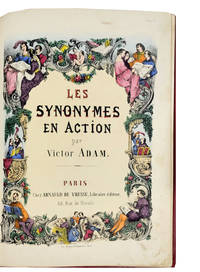
18501702701850. ADAM Victor. Les Synonymes en Action. Contents include: hand-coloured lithographed title and twenty-four hand-colored lithographed plates heightened with gum arabic W X & Y on one plate. Folio 337 x 250 mm. bound in publisher's blind stamped red cloth over boards front cover decorated and lettered in gilt expertly rebacked to style. Paris: Chez Arnauld de Vresse 1850. A rare and attractive Abécédaire by the keen Parisian societal observer and illustrator Victor Adam. Each letter of the alphabet is represented by a series of colourful and imaginative vignettes on subjects including costume animals trades and many others. OCLC lists only a copy at NYPL. Minor rubbing to extremities. Short marginal tears to plate numbers 11 12 19 & 21 minimal marginal foxing and soiling otherwise an excellent copy of this scarce series of plates. PROVENANCE: Small bookplate of J.J. Coudera on front pastedown. hardcover
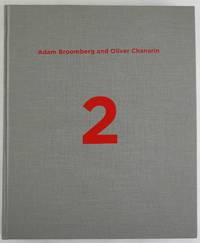
5307Mack 2011. First Edition First Printing. Hardcover. As new. SIGNED COPY. MACK 2011. Hardcover. First Edition First Printing. Limited to only 100 individually numbered copies of which this is #53/100 SIGNED by both photographers on the front end page. 4to.11.5 x 9.5 inches. Unpaginated with circa 180 pages with color and black and white photographic images throughout. 85 black-and-white photographs printed in offset each with a new photographic reproduction partially pasted over it by hand. Broomberg & Chanarin concerned with the proliferation of imagery relating to the 'War on Terror' that began with 9/11 have taken copies of the 1998 first English edition of Brecht's War Primer as the starting point for this revised version. Keeping the original captions intact they have partially overlaid the original photographs selected by Brecht with contemporary imagery from both sides of the recent conflict drawn from online sources. The URL for each image is provided with a caption in a new set of notes screenprinted over the originals. Cited in The Photobook: A History III p285. War Primer 2 is in the permanent collection of the Museum of Modern Art and was awarded the Deutsche Börse Photography Prize 2013. BOOK CONDITION: Near Fine; a solid clean copy with black cloth reinforcement along title page gutter as issued showing some shallow bends to front cover that are only noticable on the cover verso. Overall a very solid clean copy of the rare limited 1st edition. SIGNED.<br /> <br /> Originally released in 2011 as a limited edition hardback this book is in the permanent collection of the Museum of Modern Art and gained Adam Broomberg and Oliver Chanarin the 2013 Deutsche Börse Photography Prize. War Primer 2 appropriates the first English-language version of Bertolt Brecht's remarkable 1955 Kriegsfibel in which Brecht combined press photographs from the World Wars with four-line poems. Compiled intermittently over three decades Brecht's book was a visual and lyrical attack on war and its propagandists under modern capitalism. Shifting the critique to contemporary narratives perpetuated by the so-called 'War on Terror' Broomberg and Chanarin strategically overlay the pages of Brecht's War Primer with images culled from the internet and generated by the actors propagators and reporters of the contemporary conflict. Mack hardcover
194545143Wels Austria: NP 1945. First edition. Pamphlet. fair to vg-. Large quartos. 16 16 16 20 26 4 2pp. Mimographed staple-bound typescript pamphlets. First issue reproduced in facsimile. This scarce weekly journal was produced by liberated Hungarian holocaust survivors at the Alpenjäger camp in Wels Austria in the summer of 1945. Printed in Hungarian and edited by György Láng 1908–1976 and István Ãdám 1914– the issues contain camp news literature including short stories and poems medical advice entertainment reviews and crossword puzzles among other content. Of particular interest are unusual stories found in the section of police news reports on smuggling theft burglary and forgery and even murders at the camp or others in the surrounding areas. This periodical was published for only 5 issues plus a "Special" and a "Farewell issue" for a total of 7 issues issued June 14 - July 12 1945. Here issue #1 is missing.<br /> <br /> The editors and the readership were Hungarian former inmates of various local concentration camps who had been moved to the Alpenjager camp after liberation. The camp was a former infantry barracks which had been turned into a DP camp by the Americans. Little is known about Istvan Adam but György Láng was a successful writer and journalist and composer who wrote a number of biographies of famous classical composers before and after the war including Bach Bartok and Beethoven. He himself composed a piece titled "Concerto Ebraico" during the Holocaust which was performed in Budapest after the war.<br /> <br /> Text in Hungarian.<br /> <br /> Some bindings and some leaves loose. Some smudges water stains light soiling to a number of pages. In most of these instances the text is mostly decipherable. Markings in pencil throughout from the original owner. Some light closed tears and/or light chipping to extremities. Issues in overall fair to very good- condition overall. Extrmely Scarce. NP unknown
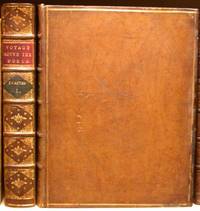
1777elala682London: Printed for B.White J.Robson P.Elmsly and G.Robinson 1777. 1777. 2 Volumes. 4to. pp. xviii 2 602; 2 p.l. 607. without the errata leaf at the end of Vol. I. folding engraved map frontis. An attractive set in contemporary sprinkled calf neatly rebacked corners renewed spines tooled in gilt Vol. I title-leaf professionally remargined at lower edge & upper outer corner with small repair marginal repair to GG2-3 affecting part of headline occasional spotting. First Edition of this important account of Cooks second voyage which preceded the publication of the official record by some six weeks. The author and his father Johann Reinhold served as naturalists on the expedition. While the elder Forster was originally to have written the account he was forbidden to do so because of a dispute with the Admiralty concerning his emoluments. It is based on his journal and also draws from Cooks own although no acknowledgement is given. Humboldt said that he was indebted to this work more so than to any other for his early love of nature and tropical beauty. On his second and historically most important voyage Cook determined that the Terra Australis Incognita which supposedly lay between New Zealand and South America did not exist and accomplished the first crossing of the Antarctic Circle. Cook revisited New Zealand and discovered or re-explored and charted many of the islands in the Pacific including Easter Island the Marquesas Tahita and the Society Islands the Tonga Islands the New Hebrides and New Caledonia. A vast amount of scientific and ethnographical information was gathered and as a result of new techniques developed by Cook not one crew member on the voyage died from scurvy a remarkable achievement for the time and for which Cook was awarded the Copley gold medal. Beddie 1247. Cox I p. 60. Hill p. 108. Hocken pp. 16-17. Holmes 23. Kroepelien 450. OReilly-Reitman 382. Sabin 25140. Spence 464. 1st Edition. Hardcover. Very Good. London: Printed for B.White, J.Robson, P.Elmsly, and G.Robinson, 1777. hardcover
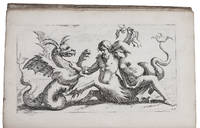
164519076Croissant 1645. Small folio 26.5 x 18.5 cm. Adam Philippon Contemporary limp sheepskin parchment. Ad 1: with a wholly engraved print series consisting of a title-page dedication privilege and 50 plates. The leaves are numbered 1-42 followed by 10 plates with their numbers changed by hand and the privilege. Ad 2: a series of 6 numbered engraved plates each with two friezes. 2 series in 1 volume. 59 ll. Ad 1: rare series of engravings of Roman art and architecture after drawings made by the French draughtsman Adam Philippon during his travels in Italy. "Adam Philippon was Jean Le Pautre's teacher and the present suite was in part etched by Le Pautre after his master. It is thus among Le Pautre's earliest work. . The remains of the present suite was apparently etched by another of Philippon's pupils Gabriel la Dame The number 26 is given by Guilmard as the number of plates for which Le Pautre was responsible but the exact number for which Le Pautre was responsible remains uncertain. In 1640 Philippon had been one of a group of artists sent to Rome with Roland Fréart by Louis XIII to try to persuade Nicolas Poussin and other artists to return with them to France. It is probable that the young Le Pautre travelled with him" BAL. Ad 2: very rare early impression of a series of 6 plates each with two designs for friezes decorated with acanthus scrolls tritons and other figures by the most important and imaginative ornament engraver of the 17th century the famous French architectural designer Jean le Pautre 1618-1682. With some pencil drawings owner's notations in ink on the verso of the dedication and a crude copy in red ink of a drawing on the back of the plate facing plate 34. The right corner of the opening flyleaf torn-off and lacking the closing flyleaf. The last plate slightly wrinkled some minor thumbing throughout and a minor waterstain in the margins of the first and last few leaves otherwise in good condition. The binding slightly soiled and wrinkled with a couple minor smudges and tears but still firm.l Ad 1: BAL 2519; Berlin Kat. 312; Guilmard 72; Millard I no. 98 vol. 1.2; WorldCat 7 copies with varying number of plates; ad 2: Fuhring Ornament prints in the Rijksmuseum 953-957; lacking plate 5; cf. BAL 1833.8; Berlin Kat. 313.8. ABE CAT Architecture ABE CAT Art History unknown
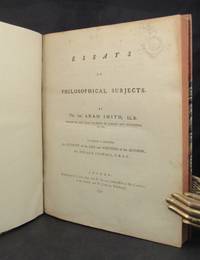
179523048London: For T. Cadell Jun. and W. Davies and W. Creech in Edinburgh 1795. First Edition. 4to in a handsome and correct period style binding of three-quarter calf over marbled boards. The spine with raised bands gilt ruled and with chain device in gilt red morocco label ruled stippled and lettered in gilt additional gilt lettering in two other compartments edges dyed. xcv 244 pp. xcv 1 blank 244 pp. A4 a4-l4 B4-Z4 AA4-II2 A fine fresh copy quite clean and crisp the binding in excellent condition small and unobtrusive blank embossed exlibris on the top corners of several signatures. SCARCE FIRST EDITION of the posthumously published essays of Adam Smith. Though thought of today primarily as an economist due to the fame of his WEALTH OF NATIONS these essays demonstrate the diverse range of philosophical sciences to which Smith applied himself. They were arranged and edited by his close friends James Black and William Hutton. Black and Hutton had attended to Smith in his old age and had made his literary executors. Shortly before his death Smith had forced them to burn the vast majority of his unpublished papers over sixteen volumes worth of manuscripts. These few which remained were intended according to the editors as “parts of a connected history of the liberal sciences and elegant arts" but that Smith had "long since . found it necessary to abandon that plan as far too extensive". The range over fields as diverse as philosophy aesthetics the history of science astronomy physics metaphysics music and sensory perception. Most of them were originally written prior to 1759 long before his remarkable success with WEALTH OF NATIONS.<br> Stewart’s account of Smith’s life was the first biography written of him and remains an important source. It was originally delivered as a series of lectures at the Royal Society of Edinburgh. For T. Cadell Jun. and W. Davies, and W. Creech in Edinburgh hardcover
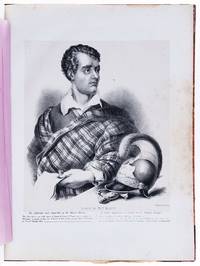
61168London & Paris: A. Friedel 1825 -1827. Folio. 44 x 34 cm. 24 full page lithographed plates printed on india paper. Contemporary half burgundy calf over marbled boards. Without title as usual. 24 fine lithographic plates all with pink tissue guards. Some of the tissue guards rather wrinkled and a bit short occasional marginal spotting binding lightly rubbed generally a very nice set. Adam Friedel or Adam Friedel von Friedelsburg c.1780 – 1868 was a Danish military man philhellene and buccaneer. He is known for the portraits he painted of the heroes of the Greek War of Independence. He travelled in Greece from 1821 to 1824 and was at Missolonghi for a while with Byron whose portrait appears in this publication carrying it is said a lithographic press on his back. During his time in Greece Friedel met many fighters of the Greek War of Independence in person such as Theodoros Kolokotronis Nikitaras Petrobey Mavromichalis Markos Botsaris Demetrios Ypsilantis Ioannis Kolettis Alexandros Mavrokordatos etc. "There is some confusion as to Friedel's origins. He is supposed to be a Danish philhellene and was apparently passing himself off as a baron. St. Clair tells us that Friedel carried a lithographic press on his back though Greece that he was at Missolonghi for a while with Byron and that he married the sister of John Hodges one of Byron's artificers. A letter from Byron introducing Friedel to the notice of the London Greek Committee is known. Whatever the actual facts Friedel seems to have been in Greece from about 1821 to mid-1824. He settled in England and his first lithograph Mavrocordato appears with the date September 1824" Blackmer. The portraits comprise: -Germanos -Chourchid Pasha -Andrea Miaoulis -Aly Bey Captain Pacha -Balestra -Lord Byron -Madon -Johannes Collettis -Constantine Canares -Odysseus Tritzo -Panutzos Notaras -Pappa Flesh -Johannes skandalidys -John Logotheti -Johannis Mavromichaeli -Ali. Vizier of Albanie also called Pacha of Jannina -Notis Constantine Botzaris -Alexander Mavrocordato -Prince Demitrios Ypsilantis -Theodore Colocotroni -Bobolina -Photuius Carapano -Nikytas -Prince Petro Mavromichaeli Cf. Blackmer 633. [London & Paris: A. Friedel, 1825 -1827]. hardcover
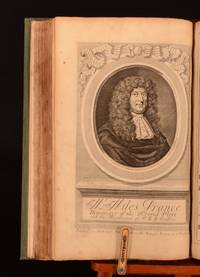
1679605L18London: Various 1679-1680. First edition. Leather. Very Good. 12.5" by 8". None. A selection of very scarce pamphlet publications emphasising the anti-Catholic sentiment and hysteria caused by the 'Popish' plots against the British Monarchy in the seventeenth century. Eight extraordinarily scarce works on the Popish Plot with several not seen at auction since the 1970's. Comprising of eight works bound as one. The first five pamphlets regard Titus Oates William Bedloe and Miles Prance with their fictional 'Popish Plots'. These gentleman worked hard to convince the monarchy and general public that the Catholics and Jesuits intended to assassinate the King Charles II implicating many innocent people who lost their lives. The final three works focuses solely on Elizabeth Cellier an accused Catholic who was imprisoned for her involvement in the so-called 'Meal-Tub Plot' against James II Charles II's successor. Titus Oates also known as Titus the liar was an English perjurer who fabricated the 'Popish Plot'. This plot was a supposed Catholic conspiracy to assassinate Charles II. The first work to this book 'A True Narrative.' is the first edition and is Oates asserting and declaring this plot which led to the executions of at least 22 men. He was requested to publish his own narrative of the conspiracy which then took this form. Oates took advantage of the already existing Anti-Catholic sentiment which had flared from the King's marriage to the Catholic princess Catherine of Portugal. Oates and William Bedloe even tried to implicate the Queen in this plot. It later transpired that this plot was false and Oates was tried for perjury. 'A True Narrative of the Horrid Popish Plot.' is lacking the frontispiece and the first three leaves after title page work begins on the third page of the dedication to Charles II. 'The King's Evidence Justified.' is another work by Oates in the same year where he further defends his stance regarding this conspiracy. The ESTC notes that this work is a reply to Roger Palmer The Earl of Castlemaine a prominent Catholic who came under suspicion regarding this plot. Castlemaine was tried for treason and represented himself before becoming acquitted. 'A Modest Vindication of Titus Oates.' by Adam Elliot forms as the clergyman's memoir. He knew Oates from their time at Cambridge together and had some turbulence in their relationship. Oates had thrown some accusations around regarding Elliot to help undermine him as a witness in a legal case. He also created a lawsuit against Elliot accusing him of misdeeds during their Cambridge years. This memoir written by the Church of England Clergyman demonstrates how specious Oates's accusations against the Jesuits had been and refutes those accusations against himself. 'A Narrative and Impartial Discovery of the Horrid Popish Plot' is the account of one William Bedloe an English fraudster who chose to corroborate the previous claims of Titus Oates and continue the tale of a supposed plot made by the Catholics against the King. He claims that he knew the details of the supposed murder of magistrate Sir Edmund Berry Godfrey giving names of men he claims that he saw commit the crime stating that it was related to the 'Popish Plot'. For this information he was awarded £500. This work is Bedloe's chief writing and explores in detail his numerous allegations. The Oxford DNB notes that 'Bedloe was an opportunistic rogue fraud and criminal. His rambling evidence led to the deaths of a number of innocent people. Although he was less odious except to his victims than Titus Oates Bedloe's imposing personality and opportunism seem to have led his dupes not to see through his elaborate and to a neutral eye improbably lies until it was too late'. This work has an engraved portrait of Bedloe. 'A True Narrative and Discovery of Several Very Remarkable Passages' is a work by Miles Prance one of the men accused by William Bedloe for murdering Sir Edmund Berry Godfrey. Prance was committed to Newgate for this crime. Whilst in prison Prance confessed and then recanted. He then confessed again implicating several other innocent people in the murder which lead to their arrests and deaths. He gave evidence at the trial against these men and shared the reward money given with Bedloe. He also informed on many more Catholics under the influence of Titus Oates and William Bedloe. It was not until James II's reign that Prance was found guilty of perjury. This work is Prance's testimony regarding the murder of Godfrey and also includes information regarding a conspiracy to murder the Earl of Shaftsbury. This work has an engraved portrait of Prance. 'The Tryal and Sentence of Elizabeth Cellier' is the principal contemporary account of the notable Catholic midwife's treason trial for the alleged 'Meal-Tub Plot'. Cellier was innocent of this charge and was later acquitted. This work is the proceedings of Cellier's trial with information on the jurors and the court proceedings verbatim. Pagination to this work begins on C1r as called for. The 'Meal-Tub Plot' was given its name as this was the location incriminating documents were found. 'Malice Defeated' is Elizabeth Cellier's vindication of herself following her release from prison after being accused of plotting to murder James II. The work gives her account of events attacks her accuser Thomas Dangerfield and also discusses the treatment or torture of prisoners in Newgate prison she witnessed. This then led to her being put on trial for libel. Cellier gained a nickname as the 'Popish Midwife' from her enemies. She was a witty forthright woman who worked hard to advance the field of midwifery. 'Tho. Dangerfield's Answer to a Certain Scandaloud Lying Pamphlet' is a response to Elizabeth Cellier's 'Malice Defeated'. In this Dangerfield regards Cellier as a liar. Dangerfield's unreliability as a witness allowed Cellier's acquittal from her initial trial. Dangerfield published several pamphlets over time such as 'Dangerfield's Narrative'. Bound in a quarter calf binding with cloth covered boards. Externally generally smart with rubbing to the joints and to the extremities. Small cracks to the front joint at the head and tail. Minor loss to the head and tail of spine due tor rubbing. Internally firmly bound. 'A True Narrative of the Horrid Popish Plot.' is lacking the frontispiece and the first three leaves after title page work begins on the third page of the dedication to Charles II. Title page of 'A True Narrative of the Horrid Popish Plot' is spotted. Tidemarks from water damage to pages 11-32 of 'A True Narrative' to the outer margin resulting in a small loss to the bottom corner of pages 19-20 not affecting text. 'The King's Evidence Justified' is age toned with occasional spots. 'A true narrative and discovery' is mispaginated with page 21 being mislabelled as 23 and page 24 being mislabelled as page 22 as is called for the work is complete. Ink offsetting to page 28 of 'The Tryal and Sentence' to the margins not affecting text. 'The Tryal and Sentence' 'Malice Defeated' and 'Tho Dangerfield' are slightly damp-stained with tidemarks to the page edges which are cockled not affecting text. Minor chips to the edges of 'Tho. Dangerfield's Answer'. Pages are generally bright with slight age toning to the edges. Light scattered spotting throughout heavier to the page edges. Very Good Various hardcover
181036285London 1810. Watercolor on card first drawing signed lower right. 1 vols. 10 x 7-1/2 inches images. Framed and glazed. Watercolor on card first drawing signed lower right. 1 vols. 10 x 7-1/2 inches images. "Buck Adam 1758-1833 portrait painter elder son of Jonathan Buck a silversmith of Castle Street Cork was born there in 1759. With a younger brother Frederick he studied art from an early age and acquired some repute in youth in his native city as a painter of miniature portraits in water-colour. Coming to London in 1795 he settled at 174 Piccadilly and soon gained popularity. He not only continued to paint miniature portraits in water-colour but produced many portraits in oil and crayon of larger size. Between 1795 and 1833 the year of his death he exhibited at the academy as many as 171 pictures. He also exhibited ten other works at the British Institution and at the Society of British Artists in Suffolk Street. But the pictures that he exhibited represent a small proportion of his labours. Numerous pictures by him were reproduced in coloured engravings mostly in stipple and had a wide circulation. Of extant coloured engravings after his pictures the originals of as many as forty or fifty are not known to have been exhibited. Among his sitters were the Earl of Cavan the Duke of York Sir Francis Burdett Major Cartwright John Cam Hobhouse and John Burke author of the Peerage' and his family. His portraits were carefully finished although they were stiff in treatment and design.<br/>Buck was at the same time busily employed as a teacher of portrait painting and in 1811 he brought out a volume entitled Paintings on Greek Vases' which contained a hundred designs not only drawn but also engraved by himself. This work which was planned to continue a similar compilation by Sir William Hamilton is now extremely scarce.<br/>In 1807 he moved from Piccadilly to Frith Street Soho and after several changes of residence died at 15 Upper Seymour Street West in 1833. Buck was married and left two sons Alfred and Sidney; the latter followed his father's profession.<br/>A miniature portrait of Buck by himself dated 1804 is in the Sheepshanks gallery of the Victoria and Albert Museum London. " - DNB. unknown books
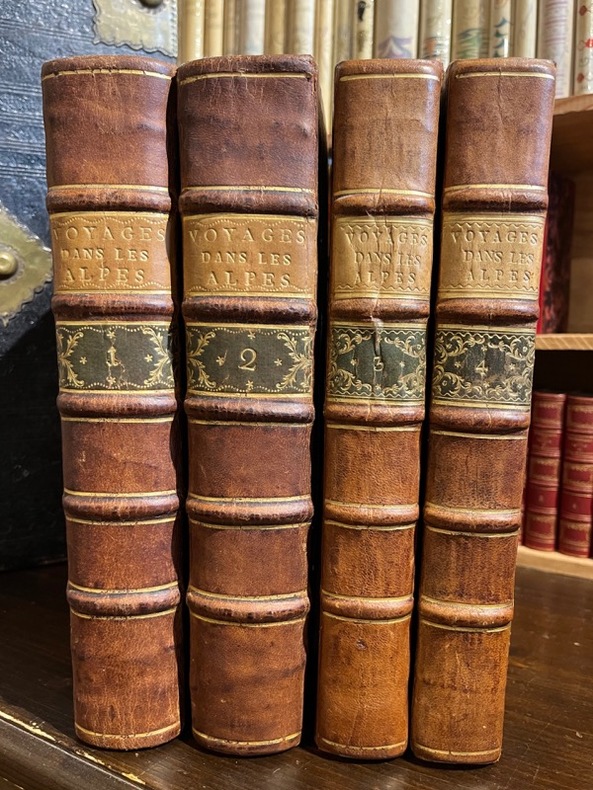
179619158Neuchâtel, Samuel Fauche, 1779, [et] Genève, Barde, Manget et Compagnie, 1786 [et] Neuchâtel, Louis Fauche-Borel, 1796. 4 volumes in-4 de [4]-XXXVI-540-[2]; [4]-XVI-641-[3]; [4]-XX-532-[2]; [4]-594-[4] pages. Demi-veau brun à coins, dos à nerfs ornés de filets dorés, pièces de titre et tomaison beiges et vertes, tranches mouchetées.
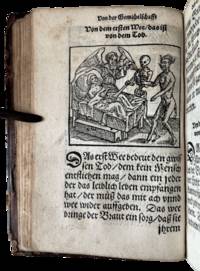
15724221Dillingen: Sebald Mayer 1572. 8vo 153 x 120 mm. Collation: A-Z8 a4 -a4 blank. 7 173 7 leaves. Title printed in red and black within 4-part metalcut border repeated on title verso shoulder notes; 121 woodcuts of which 17 flanked by type-ornament borders; the cut on f. 113v roughly colored. One-inch tear to title first few leaves loosening and slightly softened some minor soiling a few short marginal tears. Contemporary blind-tooled calf over wooden boards covers with border of a Fides-Justitia-Prudentia-Spes roll approx. 166 x 14 mm. not in Haebler or the Einbanddatenbank pair of metal fore-edge clasps and catches plain endpapers rubbed knife slashes to front cover by an anti-Catholic. Provenance: partially legible early signature on back flyleaf Ex libris Andreas Zwy---; inscription in a different early hand on front flyleaf: ich läbte lebte und weiss nit wie / ich stirb und weiss nich wän / ich fahr und weiss nit wohin†this popular German saying incorrectly attributed to Martin von Biberach was called by Luther the “rhyme of the godlessâ€.<br /> <br /> First Edition of Walasser’s modernized adaptation of a late medieval allegorical romance of the soul’s marriage to Christ in an illustrated pocket edition from the first press of Dillingen. <br /> <br /> The compiler Adam Walasser was not a cleric but a writer for hire who worked as “content producer†editor and proofreader for Sebald Mayer from the time the press was founded in 1550 until 1573 when along with Mayer’s son Johann Walasser helped the Tegernsee Benedictines set up their own monastic press. His charge for Mayer was to produce copy by editing translating reworking or completing existing printed or manuscript works in order to further the Counter-Reformation program of the press’s patron and eventually owner the Cardinal-Prince-Bishop of Augsburg Otto von Waldburg. The hard-working Walasser who also had experience as a printer also produced a few works of his own and left dozens of works of Catholic religious devotion Counter-Reformation polemics and a couple of books on German heraldry and language.<br /> <br /> The Büchlein der geistlichen Gemahelschaft a didactic allegory in rhyming couplets by one “Konrad of Vienna†identified as the Viennese Franciscan Konrad Spitzer d. 1380 circulated in manuscript in the late 14th and 15th centuries. A prose version written ca. 1418-1430 known in a few illustrated manuscripts was printed in Augsburg by Johann Bämler in 1477-1478 GW 5666-5668 and later by Johann Schönsperger GW 5669. Bämler used the title Buch der Kunst dadurch der weltliche Mensch mag geistlich werden "the Book of art by which the worldly person can become spiritual" hence the word Kunstbüchlin usually reserved for practical manuals in Walasser’s title. Walasser used one of the Bämler editions as his copy-text. In his dedicatory letter to the powerful Abbess of the Imperial Abbey of Buchau Maria Jakoba from the noble family of von Schwarzenberg und Hohenlandsberg he describes his labors after receiving an “old book†from an “honorable person in Konstanze†who suggested that he republish it; it “delighted him as if it were a noble precious treasure†for he found it filled with the Gold and Silver of Christ’s teachings fol. A6r-v. Walasser followed the Bämler text modernizing the language omitting a few words and phrases and adding others and added chapter numbers and a final table.<br /> <br /> The tale of seven virgins one of whom is chosen to marry the King is an allegory of the eternal struggle between good and evil God and Satan. The bride is led through temptation and is accompanied on mystical visits by the allegorical figures of Hope Faith and Wisdom. The latter teaches her “the theocentric worldview†Verfasserlexikon through seven secret words. The final magnificent wedding prepared by ten more virtuous maidens represents the unification through baptism of the soul with God. The symbolic meanings of the plot developments are helpfully spelled out in printed shoulder notes. The story is used as a framework for teaching the basics of Christian doctrine of Creation the Passion and the Sacraments. Using this old tale for Counter-Reformation messaging was a way to beat the Protestants at their own vernacular game by instructing while diverting the literate lay reader unversed in Latin often a woman. <br /> <br /> The many woodcut illustrations are smaller copies some in reverse of the cuts used in Bämler’s editions. Whereas Bämler used some of his blocks more than once there are no repeats in Mayer’s edition and while the cuts showing the virgins in action are all copied from the incunable editions there are some divergences in the sections on the Passion and other “generic†passages. A few of the woodcuts which are more heavily shaded than the others and/or are narrower than the text-block may have come from Mayer’s stock and been used in other works. The cut on 51v stylistically different from the others is signed BP; this monogrammist’s woodcuts appeared in other books by Walasser cf. Nagler Monogrammisten I:1992. <br /> <br /> No doubt in part because of the rarity of the Dillingen editions the source of this work does not seem to have been previously recognized. Although four more editions appeared during the next 30 years all are rare with none represented in American libraries. <br /> <br /> USTC 703501; VD16 ZV 2620; Otto Bucher Bibliographie der deutschen Drucke des XVI. Jahrhunderts. I: Dillingen Bibliotheca Bibliographica I 648; cf. Bäumker Wilhelm "Walasser Adam" Allgemeine Deutsche Biographie 40 pp 640-643. Sebald Mayer unknown
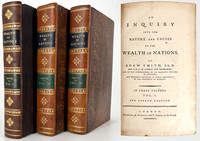
178667London: A. Strahan and T. Cadell 1786. 4th edition. Near Fine. 3 volumes 4to; 8 1/4 x 5 inches 210 x 140 mm; Vol. 1: vii 499 errata; Vol. 2: vi 518 5 Appendix errata; Vol. 3: v errata 465 49 Index 1 ad pp. Printed on handmade cream laid paper pages clean supple and unmarked with some offset; small wormhole on bottom corner of latter sheets in vol. 3 not affecting the text; offset to edges of flyleaves. Contemporary full mottled brown calf bindings darker for vol. 1; all 3 volumes professionally rebacked with gilt decorations on spines and gilt title on morocco labels; bindings square and tight. <br /> Armorial bookplate of John Pitcairn pasted inside front cover of each volume. A indecipherable snippet of manuscript with a date 1793 was as a bookmark between pages 204 and 205 of vol. 2. <br /> <br /> PMM 363; ESTC T96679. A BEAUTIFUL SET of this SEMINAL WORK on ECONOMICS "The first and greatest classic of modern economic thought." Printing and the Mind of Man 221 "Although Adam Smith did not create the study of political economy The Wealth of Nations coming at a point when 'natural liberty' was being widely debated had a decisive influence both on the study of national economy and on the freeing of economic policy from the artificial restraint of the mercantilist system. Smith's statement that labour is the source of a nation's commodities and that the variations in 'stock' values are due to the interaction of wages profits and rent formulated the doctrine of the classic school of economic thought and round it all modern economic discussion has revolved." <br /> <br /> This set is an early printing and only the second in 8vo format issued only 10 years after the first two-volume quarto edition; this is the last edition with any changes and includes a new preface never before printed. In the 'Advertisement' leaf in volume I to this edition Adam Smith writes 'In this fourth edition I have made no alterations of any kind. I now however find myself at liberty to acknowledge my very great obligations to Henry Hop of Amsterdam. To that Gentleman I owe the most distinct as well as liberal information concerning a very interesting and important subject the Bank of Amsterdam; of which no printed account had ever appeared to me satisfactory or even intelligible.' Adams seems to have been very involved with this printing of his work. He wrote to his publisher Andrew Strahan in February 1786 'I beg you will employ one of your best compositors in printing the new edition of my book. I must likewise beg that a compleat copy be sent to me before it is published that I may revise and correct it. You may depend upon my not detaining you above a week.'. A. Strahan and T. Cadell unknown
176455620London: for the Author 1764. First edition. Modern full morocco. Very good. Large folio 53.0 by 38.0 cm. iv 7 subscribers' list 1 blank 33 1 blank pp; 53 of 54 leaves comprising 60 of 61 engraved plates 7 double-suite 6 folding each numbered according to the descriptive list on pp. 19-33. Plate I serves as frontispiece; five leaves each contain two or three smaller plates. Plate VI a floor plan of the palace restored is lacking. Recent full speckled light brown morocco boards lightly rubbed at extremities gilt dentelles spine with raised bands and gilt morocco lettering piece. A touch of mild soiling at the title; light foxing and staining almost exclusively confined to the margins throughout; adhesive at the joins in the large folding plates sometimes a bit darkened. A very good amply-margined copy.<br /> <br /> First edition of this magnificently illustrated work with views elevations sections and architectural details of the emperor Diocletian's palace at Spalato today known as Split. While the modern town was built into the ruins of the palace precinct the two temples the inner peristyle and most of the encircling walls remain. <br /> <br /> The origin story of the work is notable. Upon the death of William Adam 1689-1748 the leading architect in Scotland Robert Adam 1728-1792 and his two brothers succeeded to their father's practice. In order to remedy his deficiencies in architectural understanding Robert decided upon a Grand Tour of the monuments of classical antiquity so as "to acquire a proper manner and taste and an elegant style of drawing" Millard. Being the only significant unexplored classical sites in southern Europe Spalato would prove ideal for such a project. After meeting Charles-Louis Clérisseau 1721-1820 in Florence in 1755 Adam chose to engage the young French architect as guide and drawing instructor for the next two years. Clérisseau accompanied Robert Adam during the five weeks of the summer of 1757 devoted to exploring Spalato. The engravings were probably based on drawings by Clérisseau six of which are preserved in the Hermitage Museum who would also go on to supervise much of the engraving. The Critical Review October 1764 offered high praise for these illustrations which exhibited "a taste and execution that has never been equalled in this country." In his Decline and Fall chap. 12 Edward Gibbon offered a pithy critique: "There is reason to suspect that the elegance of his designs and engravings has somewhat flattered the objects which it was their purpose to represent."<br /> <br /> Adam clearly hoped the project would generate publicity as he sought to emulate the success of such works as Dalton's Antiquities and Views in Greece and Egypt 1751-1752 and Robert Wood's The Ruins of Palmyra 1753. The format of the present work is in fact modeled on Palmyra though Adam has included a far greater proportion of picturesque views than appear in Wood's opus. "The plates engraved by F. Bartolozzi E. Rooker F. Patton P. Santini A. Walker K. Cunego J. Bassire and Antonio Zucchi are of interest not only as fine examples of architectural engraving but as showing the source of some of the motives of the Adam style" Fowler. Adam's cousin the scholar and historian William Robertson wrote the proposal the dedication and the preface. Digital Cicognara Library 3567; ESTC T46923; Fowler 2; Millard British Books 1. for the Author unknown
18501716611850. ADAM Victor. Charades alphabet. 25 coloured and gummed lithographic plates. 268 x 340 mm. Publisher's blue moiré percaline boards in a new cloth folding box. Paris: Aubert ca. 1850. A truly spectacular large scale alphabet with the stunning plates by Victor Adam exquisitely hand coloured. The book was clearly intended for export with the plates bearing the names of English and American publishers. This copy is clearly as published and is without title-page or text. Extremely rare with OCLC listing Princeton UCLA Amsterdam American Antiquarian Society and BN hardcover
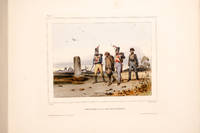
05603Paris: Chez Dero-Becker 1840. The Military Costumes of France<br /> Forty-Two Superb Hand Colored Lithographs by Victor Adam<br /> <br /> ADAM Victor. Collection des Costumes Militaires Armée Francaise 1832 Représentés dans des Sujets de Genre. Lithographie par V. Adam. Paris: Chez Dero-Becker ca. 1840. <br /> <br /> First edition. Oblong folio 10 7/8 x 14 1/4 inches; 278 x 362 mm. Forty-two superb hand colored lithograph plates all heightened with gum arabic. <br /> <br /> Bound by the Atelier Bindery for Charles Scribners Sons in three-quarter red morocco over red cloth boards. Spine with five raised bands lettered in gilt in second compartment marbled endpapers. Original pictorial lithograph wrapper on front paste-down.<br /> <br /> A fine complete copy of Adam's military costumes of France with superb original hand-coloring. This rare French work on military costume was issued without text save for a wrapper title a portion of which appears with this copy mounted to the front pastedown. The composition of the subjects is superb but the chief glory of the work is its exceptionally beautiful hand-coloring. Colas describes the work which should contain 42 plates as "Tres rare complet".<br /> <br /> OCLC & KVK locate just four complete copies in libraries and institutions worldwide: Brown University RI US; Union Catalogue of Belgian Libraries; Austrian National Library; Universitats- und Landesbibliothek Darm Germany.<br /> <br /> The Plates:<br /> 1. Garde Nationale.<br /> National Guard.<br /> 2. Dragons.<br /> Dragoons.<br /> 3. Marechal de Camp.<br /> Camp Marechal.<br /> 4. Hussards.<br /> Hussars.<br /> 5. Lanciers. Cavalerie de la ligne.<br /> Lancers. Line cavalry.<br /> 6. Artillerie de la la Ligne.<br /> Artillery of the Line.<br /> 7. Carabiniers.<br /> Carabineros.<br /> 8. Lanciers 1er régiment.<br /> Lancers 1st regiment.<br /> 9. Corps Municipal de la Ville de Paris. Garde á cheval grande tenue petite tenue et tenue d'ecurie Garde á pieds grande tenue.<br /> Municipal body of the City of Paris. Horse guard full dress light dress and stable outfit Foot guard full dress.<br /> 10. Infanterie de Ligne. Grenadier Voltigeur Soldat du Centre.<br /> Line Infantry. Grenadier Voltigeur Soldier of the Center.<br /> 11. Infantrie Officiers.<br /> Infantry officers.<br /> 12. Artillerie a Pied. Grande tenue.<br /> Foot Artillery. Great outfit.<br /> 13. Cuirassiers. Cavalerie de réserve.<br /> Cuirassiers. Reserve cavalry.<br /> 14. Chasseurs.<br /> Hunters.<br /> 15. Garde Nationale de Paris. Sapeur. Voltigeur. Chasseur. Musicien et Tambour-Major.<br /> Paris National Guard. Sapper. Voltigeur. Hunter. Musician and Drum Major.<br /> 16. Gendarmes des Départemens. Grande et petite tenue.<br /> Departmental Gendarmes. Big and small outfit.<br /> 17. Sapeurs-Pompiers de la Ville de Paris. Grande et petite tenue.<br /> Firefighters of the City of Paris. Big and small outfit.<br /> 18. Train des Equipages.<br /> Crew Train.<br /> 19. Infanterie Legère.<br /> Light Infantry.<br /> 20. Marins.<br /> Sailors.<br /> 21. Dragons Officiers et Trompette.<br /> Dragoons Officers and Trumpet.<br /> 22. Gendarmes a Pied des Départemens.<br /> Departmental Foot Police.<br /> 23. Officiers de Hussards.<br /> Hussar officers.<br /> 24. Chirurgiens de l'Armèe.<br /> Army surgeons.<br /> 25. État Major de la Garde Nationale.<br /> General Staff of the National Guard.<br /> 26. Sapeurs du Génie Officiers et Soldat. Grande et petite tenue.<br /> Engineers Officers and Soldiers. Big and small outfit.<br /> 27. Infanterie Légére.<br /> Light Infantry.<br /> 28. Officiers d'Artillerie Grande et petite tenue.<br /> Artillery officers full and small uniform.<br /> 29. Officier Supérieur de Chasseurs Trompette et Soldat.<br /> Senior Officer of Hunters Trumpet and Soldier.<br /> 30. Général de Division.<br /> Division general.<br /> 31. Carabiniers. Grande et petite tenue.<br /> Carabineros. Big and small outfit.<br /> 32. Vétérans et Officiers d'Invalides.<br /> Veterans and Disabled Officers.<br /> 33. Cuirassiers. Cavalerie de Reserve.<br /> Cuirassiers. Reserve Cavalry.<br /> 34. Ecoles de Cavalerie St. Cyr et Polytechnique.<br /> Cavalry Schools St. Cyr and Polytechnique.<br /> 35. Régiments des Zoabes. Armées Français d'Affrique 1832.<br /> Zoabe regiments. French Armies of Africa 1832.<br /> 36. Lanciers et Chasseurs. Armées Françaises d'Affrique 1832.<br /> Lancers and Hunters. French Armies of Africa 1832.<br /> 37. Artillerie Légère.<br /> Light Artillery.<br /> 38. Garde Municipale. Officier Garde à cheval Capitaine Garde à pied petite tenue.<br /> Municipal Guard. Horse Guard Officer Foot Guard Captain small uniform.<br /> 39. Hussards en Campagne.<br /> Hussars in the Campaign.<br /> 40. Garde Natle. et Pompier de la Banlieue.<br /> National Guard and Suburban Firefighter.<br /> 41. Intendant Militaire.<br /> Military Intendant.<br /> 42. Officiers de Marine.<br /> Naval officers.<br /> <br /> Bobins IV 1204; Colas 34; Hiler p. 6; Not in Lipperheide; Vinet 2259 36 plates only. Paris: Chez Dero-Becker, 1840 unknown
53216Edited by Aida Craig Truxall for the U. of Pittsburgh Press comprising 44 autograph letters signed by Adam Bright 27 July 1861 - 14 April 1864 and 34 autograph letters signed by Michael Bright 22 October 1861 - 26 July 1863 most of each group to their uncle Emanuel Stotler at home in Alleghany County Pennsylvania; accompanied by the publisher's file of working manuscripts and other material. 8vo. 296 total pages approximately 30000 words; some of the letters with a patriotic letterhead most are addressed to their uncle some to his wife a few to "family" and several are from Adam to Michael most accompanied by mailing envelopes. The following are also included:_1 Truxall's original ribbon typescript for her transcriptions of the letters 4to 148 pages rectos only some pages with editorial markings._2 Truxall's original ribbon typescript of her manuscript for the book including her preface notes to the text and other material as submitted for publication with many corrections additions and deletions by her editor at the University of Pittsburgh Press 4to 152 pages rectos only._3 Truxall's copy of the published book 8vo 96 pp. illustrated cloth and boards dust jacket very good with the signature "Truxall" at the head of the front flap of the dust jacket._4 File of Truxall's notes toward the project genealogical material historical material concerning various Pennsylvania military units serving in the Civil War 1950s-era Civil War battlefield leaflets three topographical maps of the Pittsburgh Pennsylvania area and a few related newspaper clippings._5 Carte-de-visite photograph of Corporal Adam Bright 3 1/2 x 2 1/4 inches mounted on a slightly larger card in uniform sitting in a studio probably from 1864 with the backmark: "R.W. Addis / Photographer / 308 Penna Avenie / Washington D.C." All of the letters folded. Some foxing and a little staining to a few of the letters one repaired with tape the envelopes worn and variously soiled and stained; some postage stamps still affixed. Adam Bright enlisted in the 9th Pennsylvania Infantry in early 1861 and served with his unit in the various campaigns of the Army of the Potomac until the unit was mustered out of service in April 1864; he returned to civilian life in western Pennsylvania. His brother Michael enlisted in the 77th Pennsylvania regiment later in 1861 and served with that unit in the various campaigns of the Army of the Cumberland until killed in action on the first day at Chickamauga in September 1863._"The accounts of camp living the primitive practices of the army the methods of handling the distribution of rations the rumors of the immediate end of the war always erroneous and probably the result of wishful thinking on the part of the soldiers and the enlisted men's evaluations of the generals are all very interesting. But the most fascinating picture that emerges is that of two ordinary young men performing a duty that patriotism required of them in spite of the perils of battlefield and camp life while fighting the silent and lonely battle of homesickness which has always been the bane of soldiers" from Harry R. Beck 's review in The Western Pennsylvania Historical Magazine vol. 46 no. 1 Jan. 1863. <br/><br/> hardcover books
16-4625London: Adam Islip F. Kingston & R. Young 1631-1632. Folio. 3 vols. 23.2 x 34.5 cm. 19th century calf repaired and slightly rubbed.OCLC Number: 8813906.Collation: Vol. 1:124 1034pp. Vol 2: 2 5-788pp; Vol. 3: 2 1028; A Continuation: 14 106 108pp.Numerous woodcuts. Volume 1 title within woodcut border 3 of 4 woodcut plates folding woodcut table repaired with small loss on recto and larger loss on verso final leaf with all margins renewed woodcuts in text vol. 1 title renewed in inner margin; volume 2 with folding woodcut of Windsor Castle final 2 leaves repaired in margins with loss of a few letters lacks A2 vol. 2 ends at p.788; volume 3 title cut round and mounted a few corners worn a few small repairs e.g. p.601 with loss of a few letters 1 folding woodcut plate at p. 503 occasional spotting soiling and discoloration final leaf laid down. London: Adam Islip, F. Kingston & R. Young , 1631-1632 unknown
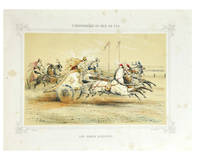
1840F6LCN62N0MKRParis: A. de Vresse 1840. Original publishers gold-blocked blue cloth. With a bookseller's ticket. Oblong 1mo full-sheet leaves or oblong Royal folio 30 x 42 cm. With 16 hand-coloured lithographed plates each with a caption and decorative border. Lacking the title-page. A fine example of Adam's expertise in lithography. The plates depict a variety of unusual equestrian racing scenes including chariot racing with women driving and monkeys riding horseback.Victor Adam 1801-67 was originally employed as painter for the Museum at Versailles but in the 1840s he decided to concentrate on the art of lithography. The present scarce album is typical of his work.Ten plates with some mostly marginal spotting; one plate with a 1 cm marginal tear not affecting the plate paper on front paste-down wrinkled. Overall an attractive copy.l WorldCat 3 copies; not in Colas; Lipperheide; Schwerdt. A. de Vresse, hardcover
1978199318New York: Abaris Books 1978. Hardcover. VG to Good Some covers have minor wear. Vol 18 and 141 are Ex-lib copies Vol 89 Has long tear down center of spine. Many of these volumes are in shrinkwrap. Brown cloth boards with gilt lettering on front cover and spine. Contains the following volumes 1 2 2.1 commentary 3 3 commentary 4 5 6 6 commentary 7 8 8.1 Commentary pt 1 9 9.2 commentary pt 2 10 10 Commentary 11 12 13 13 Commentary 14 15 16 17 18 19.1. 19.2 20.1. 20.2 21 23 24 24 commentary pt 1 2 3 4 25 25 commentary 26 27 28 28 commentary 29 30 31 32 33 34 3535 Commentary pt.1 36 37 38 39 40 40.1 commentary 41 42 43 44 45 45 commentary 46 46 commentary 47 47.1 commentary 47.2 commentary 47.3 commentary 48 51 supplement 52 supplement 53 supplement 55 supplement 70.1 70.2 70.3 70.4 All are supplements 71.1 71.2 71.3 72.1 72.2 80 supplement 81 supplement 82 supplement 83 supplement 84 supplement 85 supplement 86 supplement 87 supplement 88 supplement 89 Supllement 90 commentary 121.1 121.2 both are suppplements 141 141 commentary 161 suplement 162 supplement 163 supplement 164 supplement 165 Supplement 166 Supplement. Contents of entire series as follows:. Commentary./ Includes bibliographical references and indexes.Volumes will be verified upon ordering. A total of 104 physical volumes Contents of entire series as follows: v. 1-7. Netherlandish artists. --v. 8-9. Early German artists -- v. 10-11. Sixteenth century German artists -- v. 12. Hans Baldung Grien. Hans Sprnginklee. Lucas van Leyden engravings and etchings. Woodcuts -- v. 13. Sixteenth century artists -- v. 14-17. Early German masters -- v. 18-20. German masters of the sixteenth century -- v. 21 formerly v. 9 pt. 4. German masters 1550-1600 -- v. 23. German and Netherlandish masters of the fifteenth and sixteenth centuries --v. 24-25. Early Italian masters -- v. 26-27. The works of Marcantonio Raimondi and of his school -- v. 28-29. Italian masters of the sixteenth century -- v. 31. Italian artists of the sixteenth century -- v. 32-33. Italian artists of the sixteenth century School of Fountainbleau -- v. 35-37. Antonio Tempesta. Italian masters of the sixteenth century -- v. 38. Italian artists of the sixteenth century -- v. 39. Italian masters of the sixteenth century 2 v. -- v. 40. Italian masters of the sixteenth and seventeenth centuries.<br /> <br /> v. 43-47. Italian masters of the seventeenth century -- v. 48. Italian chiaroscuro woodcuts -- v. 50 Suppl. Rembrandt Harmensz. Van Rijn -- v. 51 Suppl. Ferdinand Bol -- v. 52. Netherlandish artists -- v. 53. Netherlandish school pre-Rembrandt etchers -- v. 55 suppl. Dirck Volkertsz. Coornhert -- v. 56. Netherlandish artists -- v. 70 suppl. Johan Sadeler I 4 v. -- v. 71 suppl. Raphael Sadeler I 3 v. --v. 72. Aegidius Sadeler II 2 v. -- v. 73 pt. 1 suppl. Justus Sadeler -- v. 73 pt. 2 suppl. Justus Sadeler -- v. 80-87 88 suppl. German book illustration before 1500 -- v. 89. German book illustration before 1500 part 8: anonymous artists 1492 -- v. 90. German book illustration through 1500 : herbals through 1500 -- v. 121. Dominique Vivant Denon French Masters of the nineteenth century 2 v. -- v. 141. James Ensor -- v. 161. Anonymous artists .001-.400 -- v. 162. Anonymous artists .401-.735 -- v. 163 suppl. German single-leaf woodcuts before 1500 anonymous artists: .736-.996-2 -- v. 164 suppl. German single-leaf woodcuts before 1500 anonymous artists: .997-.1383 -- v. 166 suppl. German single-leaf woodcuts before 1500 anonymous artists: .1594-.1782.2 --. Abaris Books hardcover
172730277Amsterdam: Michel Charles le Céne 1727. 2 volumes in 1 small folio. 12 1/8 x 7 5/8 inches. Titles printed in red and black. Engraved portrait frontispiece 44 engraved maps plans and views 31 folding 19 in-text engraved illustrations. Contemporary calf spine with raised bands in seven compartments red and green morocco lettering pieces in the second and third the others with a repeat decoration in gilt marbled endpapers and edges.<br/> <br/>A lovely copy of a noted illustrated work on Asia including maps and views of India China and Japan.<br/> <br/>"Johann von Mandelslo was a friend of Adam Olearius and a former page of the Duke of Holstein-Gottorp. Together Mandelslo and Olearius were sent by the Duke on an embassy to the Russian Czar and to the Shah of Persia for the purpose of initiating trade relations with Russia Tartary and Persia. Mandelslo was authorized to leave the embassy in Persia and to continue his travels to the Far East. He went to Surat Agra and Goa in India where he received great kindness from the English merchants and he also visited Ceylon. He gives long accounts of the other parts of the Far East which he did not visit personally. His return was made to England by sea via the Cape of Good Hope which he visited in 1639" Hill. Mandelslo's narrative contains substantial information on the Far East. "Before his death Mandelslo had entrusted his rough notes to Olearius who subsequently published them bound with his numerous official accounts of the embassy" Howgego. Following the first publication Olearius added additional information to subsequent editions. A new edition in French translated by Wicquefort included still more additional material including an account of the travels of Henri de Feynes to China Formosa and Japan. The present edition published in Amsterdam in 1727 is a re-issue of the Van der Aa edition of 1719 published in Leiden; both are celebrated as the best editions being the most complete and with the largest number of illustrations. The plates include views and plans of London Amsterdam Brussels Antwerp Capetown Goa Surat Jedo Tokyo St. Helena Mauritius Madagascar the Canary Islands Java Congo and elsewhere.<br/> <br/>Brunet IV 178; Cordier Japonica 367-368; Cordier Indosinica 883; Cordier Sinica 2076-77; cf. Hill 1073; Howgego M-38; Lust 342. Michel Charles le Céne unknown books
1650B5834Paris: : Mariette c. 1650-1700; . Rare example in near fine condition with repaired tear to the 151st plate small marginal hole on the 36th plate and occasional marginal spots. . Edition: First or Early Binding: 18th century black half-calf with marbled boards spine flat with horizontal gilt dentelles creating five 5 compartments; all edges speckled brown. Notes: Captions in French This is a rare attractive example of views of French topography engraved by the accomplished members of the Perelle family and published as collection in an oblong album; the present work may therefore not necessarily have another matching or comparative album containing the same plates. Size: oblong quarto 193x 305 m Illustration: With illustrated title page and 178 etched plates from various suites by the Perelle family including Gabriel Perelle 1603-77 Nicolas b.1631 and Adam 1638-1695 predominantly landscapes but including a set of the 12 months of the year a set of six illustrating fountains of Fontainebleau and The Château de Saint-Cloud four illustrating the seasons numerous Mediterranean harbour views and maritime scenes and many othersetchings on laid paper various watermarks throughout probably mid to late 17th century. Provenance: unobtrusive blind stamp on lower free endpaper “Neatham Mill Library// TW// 228†References: William Roberts 'Perelle's Topographical Albums: Problems and Solutions' Relations & Relationships in Seventeenth-Century French Literature Portland State University 2004 pp. 163-176; Berlin Kat. 2483 2675; cf. Fowler 245 and Millard I 136-37; Category: Book Europe France; Book Plate Books General; Mariette, hardcover
1789178702London: Printed for A. Strahan; and T. Cadell 1789. Political economy at the time of the French Revolution Fifth edition the last to be published in Smith's lifetime of this foundational work of political economy. "The Wealth of Nations had no rival in scope or depth when published and is still one of the few works in its field to have achieved classic status meaning simply that it has sustained yet survived repeated reading critical and adulatory" ODNB. The work "begins with the thought that labour is the source from which a nation derives what is necessary to it. The improvement of the division of labour is the measure of productivity and in it lies the human propensity to barter and exchange. The Wealth of Nations ends with a history of economic development a definitive onslaught on the mercantile system and some prophetic speculations on the limits of economic control" PMM. Smith's ultimate aim was to provide legislators with a set of principles to guide their regulation of commerce. Some of these principles advocated improvements in existing policies others aimed to alter the overall climate within which these policies operated. 3 vols octavo 205 x 126 mm. Tables in the text. Contemporary tree calf spines ruled and decorated in gilt and with red and green morocco labels edges yellow. Extremities professionally restored and labels replaced. With 20th-century bookplate of "T & M James" to front pastedowns. Light rubbing and scuffing very minor foxing and offsetting to contents: a very good copy. Goldsmiths' 13794; Kress B.1722; Tribe 33 Vanderblue p. 3. See Printing and the Mind of Man 221 first edition. unknown