Garstin, WBiblio.com
30 547 résultats
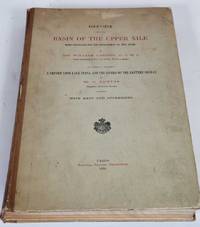
1904165Cairo: National Printing Department 1904. First. Orig. Printed Boards. VG spine torn. with proposals for the improvement of that river. to which is added a report upon Lake Tsana and the Rivers of the Eastern Soudan by Mr. Dupuis. 196 pp. Profuse ill. folding maps and folding plans folding ill. plus large section of appendices. National Printing Department unknown
197512285San Francisco CA: Scrimshaw Press 1975. First edition . Hardcover. Fine. Darius and Tabitha May Kinsey. Volume One is titled "The Family Album & Other Early Work." Volume Two is titled "The Magnificent Years." 305 pages of stunning photographs taken in Washington state shortly before and after the turn of the century. Both volumes bound in original buckrum cloth with large photographic labels on front covers. Both copies fine within fine original slipcase as issued. <br/> <br/> Scrimshaw Press hardcover
1858005067London and New York: London Printing and Publishing Co 1858. Hardcover. Very Good . Illustrated with Battle Scenes Views of Places Portraits and Maps Beautifully Engraved on Steel." 2 volumes: 8 2 vii 1 647 1 p.; 4 viii 663 1 p. frontispiece and added engraved title page in each volume and 77 leaves of additional engraved plates including double-leaf map; 28 cm. Modern leather rebacking with gilt-tooled spine titles; original maroon pebble-cloth over boards. No date of publication; History of the Indian Mutiny was issued in parts in 1858 and 1859. Each volume contains the London Printing and Publishing Co. title page with as appropriate vol. I or vol. II; vol. 1 also contains a title page for S.D. Brain stating "Copyright Edition." Inscription on blank leaf preceding vol. 1 frontispiece indicating that this was given by James W. Leonard to John H. Bowman in 1939. Heavy; for international shipping they will have to be sent by international priority. In Very Good Condition: lacking pp. 11-12 vol. 2; old repair to lower corners of several leaves in vol. 1 without loss of text; old repair to closed tear from lower edge of one plate without impact on caption or image; foxing primarily in margins of plates; otherwise clean and bright. London Printing and Publishing Co hardcover
1835004378London: H. Fisher R. Fisher & P. Jackson 1835. Hardcover. Very Good. 2 volumes in 1: 68 64 p. 64 leaves of steel-engraved plates including 2 frontispieces 1 a color frontispiece engraved and printed by G. Baxter and 2 added engraved title pages with imprint: Fisher Son & Co. London 1835; 29 cm. Contemporary full polished maroon calf with five spine compartments between wide raised bands. Gilt-tooled title in second compartment; gilt-tooled decoration on wide raised bands and blind-tooled decoration on remaining compartments. Triple gilt-ruled borders with elaborate blind-tooled borders within on both boards. Gilt-rolled edges and turn-ins. All page edges gilt. Marbled endpapers. Emma Roberts 1794-1840 was an English travel writer and poet who lived in India for several years. Her text accompanies the beautiful engravings based on drawings by Commander Robert James Elliot who travelled from 1822 to 1824 in India Canton Guangzhou and the Red Sea area. Inscription on front free endpaper verso indicating that the book was given by Samuel Fennell on his engagement to Anabella Groom about 1837; she was the granddaughter of Hannah Lightfoot; later Anabella gave it to her friend Henry Plumptre Ramsden "lest it should in her own words fall into unworthy hands"; she died in 1882 and was buried in Trumpington Churchyard near Cambridge. The Rev. Henry Plumptre Ramsden 1848-1901 was the rector at Cottingham Yorkshire Eng. In Very Good Condition: edges somewhat rubbed; front board partially detached; occasional foxing generally light and in margins of plates; otherwise clean and bright. Because of the weight for international shipping it will have to be sent by international priority. H. Fisher, R. Fisher & P. Jackson hardcover
1904221020Theodor Riedel Dupont München 1904. Softcover Zustand: mit Kennungen einer Privatbibliothek. Rücken Ecken Kanten größtenteils gut bis sehr gut. Die Beiheftungen sind unberührt vollständig. Theodor Riedel (Dupont), München, paperback
189258733ABWien, Hölder, 1892. XVIII, 877 S. Mit Porträt-Frontispiz, 179 teils ganzseitigen Illustrationen und 2 großen farbigen Faltkarten. Illustr. Orig.-Leinwand.
1804216800Mäckensche Buchhandlung Reutlingen. Christoph Friedrich Bürglen Augsburg 1804. Hardcover kartoniert. Zustand: Exemplar einer Privatbibliothek mit Kennungen keine Beschädigungen Rücken Ecken Kanten bestoßen. Innen sauber. Mäckensche Buchhandlung, Reutlingen. Christoph Friedrich Bürglen, Augsburg, hardcover
Hoch- und Querformat. (ca. 11,5 x 8,9 cm). 10 Photographien. Original-Photographien mit teils schwarzem Bildrand, Rückseiten vereinzelt mit Notat. Photographien gut erhalten, leichte Gebrauchsspuren. Altersentsprechend guter Zustand. Die Aufnahmen haben sämtlich das selbe Format und fotografische Bildqualität, auch der schwarze Bildrand ist identisch. Eine der Aufnahmen enthält auf der Rückseite den Stempel: "Oelpalme Vorwerk Muanga". Die anderen Aufnahmen enthalten leider nur Ziffern oder in einem Fall die Bemerkung "Doppel". Muanga wird in zeitgenössischen Schriften in einem Zuge mit den Orten rund um das Kamerungebirge genannt. Konkret wird der Ort mit der 'Westafrikanischen Pflanzungsgesellschaft Victoria' in Verbindung gebracht. Diese koloniale Pflanzungsgesellschaft war in Kamerun tätig. Da die Photographien zudem aus einer privaten Sammlung stammen, welche sich insbesondere auf Südkamerun konzentrierte, ist hier höchstwahrscheinlich von Plantagengebieten im Süden Kameruns auszugehen. Die historischen Aufnahmen stammen aus der deutschen Kolonialzeit selbst. Erst mit Kriegsverlauf ab August 1914 wurden die Gebiete enteignet und anderen Kolonialmächten übergeben, wobei auch die genannte Pflanzungsgesellschaft in den 1920er Jahren die verlorenen Plantagen teils zurückkaufen und fortgesetzt bewirtschaften konnte. Die sehr interessanten Ansichten zeigen Pflanzungen, zahlreiche hohe Palmen, Flüsse und Gewässer, teils mit kleinen schmalen Booten. Auf mehreren Aufnahmen sind auch afrikanische Arbeiter auf den Plantagengebieten zu sehen. Hervorhebenswert und für weitere Auseinandersetzung sicher auch aufschlußreich ist jene Aufnahme, welche koloniale Gebäude entlang von Bahnschienen zeigt. Es sind hierauf mehrere Arbeiter neben kleinen Containern (kippbar) zu sehen. Hier handelt es sich wohl um eine zur Plantage gehörende Kleinbahn, im Falle der Westafrikanischen Pflanzungsgesellschaft wäre dies die sogenannte Victoria-Pflanzungsbahn. Historische Bilder mit konkreten Bezügen zur Kolonial- und Wirtschaftsgeschichte im heutigen Kamerun!
18985077Berlin, Reimer, 1898. X, 116 S., 1 Bl. (Berichtigungen) mit 20 Textabb. 1 Porträt und 86 Tafeln in Lichtdruck, 3 (1 mehrfach gefalt.) farbige Karten. Gr.-8°. OLwd. (bestoßen und berieben).
1970540931 tapuscrit de 182 feuillets thermocollés, s.n. [circa 1970-1975 ] avec qq. corrections manuscrites
18459568Paris-Alger FORTIN-DUBOS FRÈRES 1845 1 in-12 Paris, Fortin, Masson et Cie, Langlois et Leclercq, et Alger, Dubos Frères, 1845, in-12, demi-basane, dos orné, 338 pp.
Una bella mappa dell'Africa Meridionale, a sud dell'equatore, che incluso tutto il Madagascar, con due interessanti inserti del Capo di Buona Speranza, negli angoli in basso. La carta si basa sulla mappa di Visscher del 1710.Incisione in rame in perfette condizioni, ricca di dettagli e con colorazione originale. A fine map of Africa south of the Equator including all of Madagascar, with two interesting insets of the Cape of Good Hope. At left is a plan of Table Bay with an elevation of Table Mountain, and at right is a large plan of the Cape Colony with extensive detail and fairly accurate topographical information including the names of early landowners. The main part of the map includes the various native kingdoms of the interior and what was known then of the coastline, much of which is fictitious. The cartography is based on Visscher's map of 1710.
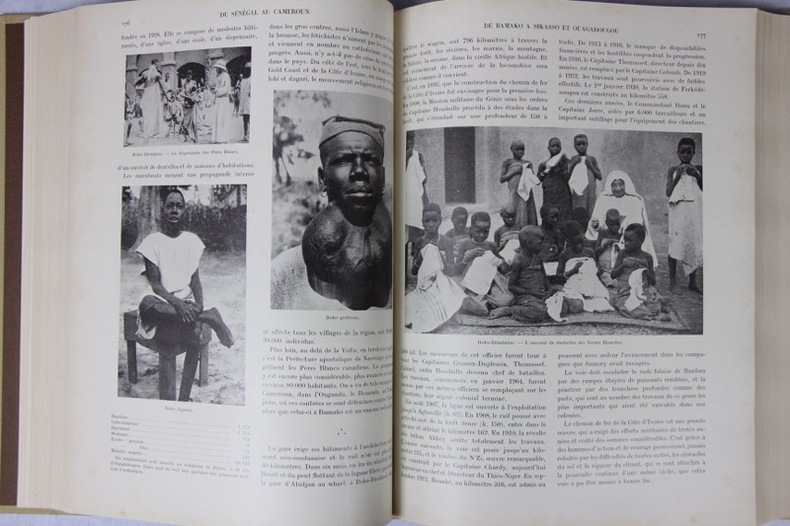
190851896ABJena, Fischer, 1908. Folio. 2 Bll., 436 S. Mit 20 photogr. Tafeln in Heliogravure, 6 Karten und 200 teils ganzseitige Textabbildungen. Orig.-Halbleinwand.
189111238ABGotha, Justus Perthes, ( ca 1891). 8. Aufl. Folio. 198 S. Mit 95 dpblgr. Ktn. 95 double- page size maps. HLdr. Verg. Rü.-u. Deckeltit., Rü.-Verg. Ber. u. bestossen, l. fl. Ansonsten schönes Expl. Half calf. Gilt title on spine and boards. Gilt spine. Nice copy. 8
- Imprimerie Impériale, Paris 1809-1829, 71x53,5cm, une feuille. - Original, unshaved, full-page etching from the "Imperial edition" of the Description de l'Égypte, or 'Recueil des observations et recherches faites en Égypte pendant l'expédition française, publié par les ordres de Sa Majesté l'Empereur Napoléon le Grand [A Collection of the observations and research carried out in Egypt during the French expedition, published on the orders of his Majesty the Emperor Napoleon the Great]'. Produced between February 1802 and 1830 on the orders of Naopleon Bonaparte and published between 1809 and 1828, 1,000 copies were printed and distributed to institutions, on vergé paper with an 'Égypte ancienne et moderne' watermark, visible when held up to the light. Light marginal spotting not touching image, otherwise in very fresh, fine condition. An engraving from the Description de l'Egypte, one of the masterpieces of French printing and the birth of a new field: Egyptology. A gigantic survey of Egypt at the time of Bonaparte's conquests in 1798 and 1799, the work is divided into 13 volumes of engravings making up 892 plates, of which 72 colored, as well as presenting the splendors of the Egypt of the Pharaohs in 9 volumes. The other volumes discuss natural history and present a fascinating portrait of Coptic and Islamic Egypt as it was seen by Bonaparte's Eastern Armies. The 'Egyptian campaign', militarily a disaster, demonstrates, through the engravings of the Description d'Egypte, the scientific success it nonetheless became thanks to the 167 expert members of the Commission of the Sciences and Arts of the Institut d'Egypte [Egyptian Institute] who followed Napoleon's army. The Institut gathered together in Egypt the mathematician Monge, the chemist Berthollet, the naturalist Geoffroy Saint-Hilaire as well as numerous artists, engineers, architects and doctors. They were tasked with re-discovering modern and ancient Egypt and displaying its natural treasures as well as the know-how of its inhabitants. This edition, the so-called "Imperial" edition of the plates for the Description de l'Egypte was printed in four large formats, two of which were specially created for it and christened "Moyen-Egypte" and "Grand-Egypte". A special press was built to print it, the process extending over 20 years, from 1809 to 1829. The "Imperial" edition proved so popular that a second edition, this time in black and white and without the "Egypte ancienne et moderne" watermark - known as the "Royal Edition" - was published during the Restoration by the printing house of C.-L.-F. Panckoucke (Paris). The engravings of the Description d'Egypte owe a great deal to Baron Dominique-Vivant Denon, illustrator, diplomat, collector and later Director of the Musée Napoléon (the Louvre). His exploration of the South of Egypt gave Bonaparte the idea of sending the experts of the Institut there, thus creating a faithful and complete portrait of the area. This was the research gathered together from 1802 in the mammoth Description de L'Egypte. Denon embarked on this story of archeological exploration at the age of 51, reaching first Alexandria and then Cairo before exploring Upper Egypt. Along with the members of the Institut d'Egypte, the Natural History Museum's painter H.J. Redouté (brother of Pierre-Joseph Redouté, author of Roses), the mineralogist Dolomiue, and the draughtsman Joly, Denon then explored the Nile Delta and Lower Egypt. When, however, he joined the 21st Light Infantry Regiment as it marched across Upper Egypt in pursuit of the retreating Mameluks in November 1798, he found himself the only civilian. In the very midst of the battle itself, he reeled off sketches of the works of art that peppered his path right up to the threshold of the Sudan. He said that he had crossed "a country that is, apart from its name, entirely unknown to Europeans, and therefore everything was worth describing" (Voyages dans la Basse et la Haute Egypte pendant
- Imprimerie Impériale, Paris 1809-1829, 71x53,5cm, une feuille. - Original, unshaved, full-page etching from the "Imperial edition" of the Description de l'Égypte, or 'Recueil des observations et recherches faites en Égypte pendant l'expédition française, publié par les ordres de Sa Majesté l'Empereur Napoléon le Grand [A Collection of the observations and research carried out in Egypt during the French expedition, published on the orders of his Majesty the Emperor Napoleon the Great]'. Produced between February 1802 and 1830 on the orders of Naopleon Bonaparte and published between 1809 and 1828, 1,000 copies were printed and distributed to institutions, on vergé paper with an 'Égypte ancienne et moderne' watermark, visible when held up to the light. Light marginal spotting not touching image, otherwise in very fresh, fine condition. An engraving from the Description de l'Egypte, one of the masterpieces of French printing and the birth of a new field: Egyptology. A gigantic survey of Egypt at the time of Bonaparte's conquests in 1798 and 1799, the work is divided into 13 volumes of engravings making up 892 plates, of which 72 colored, as well as presenting the splendors of the Egypt of the Pharaohs in 9 volumes. The other volumes discuss natural history and present a fascinating portrait of Coptic and Islamic Egypt as it was seen by Bonaparte's Eastern Armies. The 'Egyptian campaign', militarily a disaster, demonstrates, through the engravings of the Description d'Egypte, the scientific success it nonetheless became thanks to the 167 expert members of the Commission of the Sciences and Arts of the Institut d'Egypte [Egyptian Institute] who followed Napoleon's army. The Institut gathered together in Egypt the mathematician Monge, the chemist Berthollet, the naturalist Geoffroy Saint-Hilaire as well as numerous artists, engineers, architects and doctors. They were tasked with re-discovering modern and ancient Egypt and displaying its natural treasures as well as the know-how of its inhabitants. This edition, the so-called "Imperial" edition of the plates for the Description de l'Egypte was printed in four large formats, two of which were specially created for it and christened "Moyen-Egypte" and "Grand-Egypte". A special press was built to print it, the process extending over 20 years, from 1809 to 1829. The "Imperial" edition proved so popular that a second edition, this time in black and white and without the "Egypte ancienne et moderne" watermark - known as the "Royal Edition" - was published during the Restoration by the printing house of C.-L.-F. Panckoucke (Paris). The engravings of the Description d'Egypte owe a great deal to Baron Dominique-Vivant Denon, illustrator, diplomat, collector and later Director of the Musée Napoléon (the Louvre). His exploration of the South of Egypt gave Bonaparte the idea of sending the experts of the Institut there, thus creating a faithful and complete portrait of the area. This was the research gathered together from 1802 in the mammoth Description de L'Egypte. Denon embarked on this story of archeological exploration at the age of 51, reaching first Alexandria and then Cairo before exploring Upper Egypt. Along with the members of the Institut d'Egypte, the Natural History Museum's painter H.J. Redouté (brother of Pierre-Joseph Redouté, author of Roses), the mineralogist Dolomiue, and the draughtsman Joly, Denon then explored the Nile Delta and Lower Egypt. When, however, he joined the 21st Light Infantry Regiment as it marched across Upper Egypt in pursuit of the retreating Mameluks in November 1798, he found himself the only civilian. In the very midst of the battle itself, he reeled off sketches of the works of art that peppered his path right up to the threshold of the Sudan. He said that he had crossed "a country that is, apart from its name, entirely unknown to Europeans, and therefore everything was worth describing" (Voyages dans la Basse et la Haute Egypte pendant
- Imprimerie Impériale, Paris 1809-1829, 71x53,5cm, une feuille. - Original, unshaved, full-page etching from the "Imperial edition" of the Description de l'Égypte, or 'Recueil des observations et recherches faites en Égypte pendant l'expédition française, publié par les ordres de Sa Majesté l'Empereur Napoléon le Grand [A Collection of the observations and research carried out in Egypt during the French expedition, published on the orders of his Majesty the Emperor Napoleon the Great]'. Produced between February 1802 and 1830 on the orders of Naopleon Bonaparte and published between 1809 and 1828, 1,000 copies were printed and distributed to institutions, on vergé paper with an 'Égypte ancienne et moderne' watermark, visible when held up to the light. Light marginal spotting not touching image, otherwise in very fresh, fine condition. An engraving from the Description de l'Egypte, one of the masterpieces of French printing and the birth of a new field: Egyptology. A gigantic survey of Egypt at the time of Bonaparte's conquests in 1798 and 1799, the work is divided into 13 volumes of engravings making up 892 plates, of which 72 colored, as well as presenting the splendors of the Egypt of the Pharaohs in 9 volumes. The other volumes discuss natural history and present a fascinating portrait of Coptic and Islamic Egypt as it was seen by Bonaparte's Eastern Armies. The 'Egyptian campaign', militarily a disaster, demonstrates, through the engravings of the Description d'Egypte, the scientific success it nonetheless became thanks to the 167 expert members of the Commission of the Sciences and Arts of the Institut d'Egypte [Egyptian Institute] who followed Napoleon's army. The Institut gathered together in Egypt the mathematician Monge, the chemist Berthollet, the naturalist Geoffroy Saint-Hilaire as well as numerous artists, engineers, architects and doctors. They were tasked with re-discovering modern and ancient Egypt and displaying its natural treasures as well as the know-how of its inhabitants. This edition, the so-called "Imperial" edition of the plates for the Description de l'Egypte was printed in four large formats, two of which were specially created for it and christened "Moyen-Egypte" and "Grand-Egypte". A special press was built to print it, the process extending over 20 years, from 1809 to 1829. The "Imperial" edition proved so popular that a second edition, this time in black and white and without the "Egypte ancienne et moderne" watermark - known as the "Royal Edition" - was published during the Restoration by the printing house of C.-L.-F. Panckoucke (Paris). The engravings of the Description d'Egypte owe a great deal to Baron Dominique-Vivant Denon, illustrator, diplomat, collector and later Director of the Musée Napoléon (the Louvre). His exploration of the South of Egypt gave Bonaparte the idea of sending the experts of the Institut there, thus creating a faithful and complete portrait of the area. This was the research gathered together from 1802 in the mammoth Description de L'Egypte. Denon embarked on this story of archeological exploration at the age of 51, reaching first Alexandria and then Cairo before exploring Upper Egypt. Along with the members of the Institut d'Egypte, the Natural History Museum's painter H.J. Redouté (brother of Pierre-Joseph Redouté, author of Roses), the mineralogist Dolomiue, and the draughtsman Joly, Denon then explored the Nile Delta and Lower Egypt. When, however, he joined the 21st Light Infantry Regiment as it marched across Upper Egypt in pursuit of the retreating Mameluks in November 1798, he found himself the only civilian. In the very midst of the battle itself, he reeled off sketches of the works of art that peppered his path right up to the threshold of the Sudan. He said that he had crossed "a country that is, apart from its name, entirely unknown to Europeans, and therefore everything was worth describing" (Voyages dans la Basse et la Haute Egypte pendant
- Editions Privat, Toulouse 1979, 16,5x24cm, agrafé. - Edition originale de ce tiré à part. Rare et émouvant envoi autographe daté et signé de Germaine Tillion sous son pseudonyme de résistante, Kouri, à son amie la résistante Denise Vernay, surnommée Myarka dans la Résistance, avec qui elle fut internée en camp de concentration : "Pour Myarka, le premier exemplaire en priorité. Kouri." Agréable exemplaire malgré une trace de pliure angulaire en tête du premier plat. [ENGLISH DESCRIPTION ON DEMAND]
1939132216Firmin-Didot, 1939 1939 2 volumes in-4, dem-maroquin brun, dos à nerfs, plats toilés beige, couvertures ill. et dos cons.,2 743- X- pp. 744 à 1549 pp. Texte sur deux colonnes. Portrait, 5 cartes hors-texte, très nomb. figures et photogravures dans le texte. Très bel exemplaire.
26553OXFORD UNIVERSITY PRESS 1939. 1ST EDITION. FOLIO WITH 10 PLATES IN COLOUR AND 47 IN MONOCHROME. LIMITED TO ONLY 250 COPIES OF WHICH THIS IS NUMBER 39.VERY GOOD IN ORIGINAL BEIGE CLOTH GILT. EXTRA POSTAGE WILL BE REQUIRED. OXFORD, UNIVERSITY PRESS, 1939 hardcover
189074685Librairies-Imprimeries Réunies 1890 In-4. Reliure demi-maroquin rouge cerise à coins, dos à nerfs, tranches dorées, 520 pp., 20 planches hors-texte dont 13 profils de nivellement et 7 cartes sur double page, dont une en couleurs, nombreuses illustrations dans le texte. Reliure légèrement frottée, intérieur très frais.
1863218979Wilhelm Bruamüller Wien 1863. Hardcover Leinen Zustand: keine Beschädigungen Exemplare einer Privatbibliothek mit Kennungen. Rücken Ecken Kanten bestoßen. Innen leicht braunfleckig. Wilhelm Bruamüller, Wien, hardcover
1805236613J.E. Seidelsche Kunst- und Buchhandlung Nürnberg 1805. Softcover 14 Tabellen. Zustand: keine Beschädigungen keine Eintragungen. In der Mitte längs gefalzt. Der erste und der letzte Plan haben Knickspuren kaum Randläsionen. Die Mappe hat Einrisse die Tabellen selbst sind sauber und fleckenfrei. J.E. Seidelsche Kunst- und Buchhandlung, Nürnberg, paperback
18666123Furne, Jouvet et Cie 1866 Petit in-4 reliure demi-chagrin, dos à 4 faux-nerfs, fleurons dorés, 687 p. 23 planches hors-texte sous serpente, deux grandes cartes dépliantes couleurs in-fine Une des cartes avec restauration et désolidarisée de l’ouvrage. Corps du livre avec pales rousseurs marginales. Signet. Bon état. Bel exemplaire/.
182879798Firenze: Batelli 1828. gebunden. Batelli unknown