19 576 résultats
179658008ABMadrid, En la Imprenta de la Viuda é Hijo de Marín, 1796. 36,8x27 cm. 8 h., 679 p.; 2 h., 369 p., 4 h. indice general. Plena Piel de la época, cada uno con contraportadas en rojo, doradura en contra portada, con lomo grabado en oro y guardas marmoradas. (Lomos restaurados). 2 tom.
39171In-12 (120 x 80 mm), vélin souple cordé de réemploi (reliure moderne), (32), 374 feuillets, bandeaux, culs-de-lampe et lettrines historiées gravés sur bois. Lyon, François Didier [Imprimé à Lyon, par Estienne Brignol], 1580.
236770Paris, Charpentier, 1836 4 vol. in-8, maroquin prune à grain long, dos lisse orné en long, large bande de filets dorés en encaddrement sur les plats, fleurons en écoinçon, fer doré dans les angles, monogramme P. F. de P. au centre des plats, tranches dorée, roulette intérieure, gardes de moire blanche à décor floral (Simier r. du Roi).
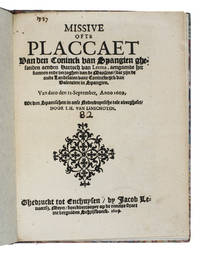
1609ABC_46561Enkhuizen 1609. 4to. Jacob Lenaertsz Meyn Modern marbled paper over boards new endpapers. With an ornamental woodcut title vignette and a woodcut initial. 3 ll. First edition of the Dutch translation by Jan Hughen van Linschoten ca. 1563-1611 of a proclamation decreed on 9 April 1609 by King Philip III of Spain 1578-1621 ordering the Duke of Lerma Francisco Gómez de Sandoval y Rojas 1552/53 - 1625 to expel the Moriscos Spanish muslims who were forced by the Spanish crown and Roman Catholic church to convert into Christianity from Spain. The present decree which was adopted gradually by several Spanish territories first Valencia then Aragon Catalonia Andalusia et cetera provided the Duke of Lerma free reign to carry out the expulsion of the Moriscos by whatever means they see fit to confiscate all their lands and goods and to set an example for everyone who was sympathetic to the Moors. Expelling the Moriscos from Spain however was a real mistake and contributed to the decline of the Spanish reign. The expulsion of the Moriscos led to depopulation and therefore to economic collapse. The present proclamation was therefore of great importance for the Dutch as during the Twelve Years' Truce 1609-1621 the Dutch military war with Spain changed into an economic war. An important decree in the history of the Eight Years' War 1568-1648 between the Dutch Republic and Spain.With some numbers in manuscript on the first two pages. Lacking the blank leaf A4. With a few very minor spots on the first two leaves very slightly browned but overall in good condition.l Knuttel 1630; STCN 830501231; Tiele 790. hardcover
1803WRCAM40396Madrid: En la imprenta de la Viuda de Ibarra 1803. 2xxxvi19498pp. Folio. Contemporary Spanish calf spine gilt leather label. Lightly rubbed at extremities boards lightly scuffed. Contents bright and clean. Near fine. Administrative regulations for Spanish colonial rule in the Americas and the Philippines. These laws represent the last ditch efforts of the Spanish monarchy to bring reform to the administration of their colonial holdings in the Americas. Six years later in 1809 the first declaration of independence from Spanish rule would be signed in Quito in modern Ecuador which would be the first spark of the movement for independence across Spain's American colonies. With this ORDENANZA Spain hoped to restructure and reform colonial rule in such a way to prevent that from happening. A nice piece of Spanish-American history. MEDINA BHA 5971. PALAU 202973. En la imprenta de la Viuda de Ibarra hardcover books
18495749Madrid: La Viuda de Burgos 1850 i.e. 1849. 8vo signed in 4s 22.1 cm 8.65". 761 1 blank pp. <br><br>Bound for presentation by Queen Isabella. Complete budgetary accounting for the year 1850 issued by the Spanish government printed by a woman printer of Madrid and here in an early example of the work of noted Madrid binder Ginesta.<br>Â Â Â Â Binding: Signed presentation binding by Miguel Ginesta II of Madrid of oxblood straight-grain morocco covers framed in double gilt fillets surrounding gilt-stamped arabesques and the gilt-stamped coat of arms of Queen Isabella II of Spain; spine with gilt-stamped title and arabesques. Board edges and turn-ins gilt-stamped pink moiré endpapers all edges gilt.<br>Â Â Â Â Provenance: Infante Duc de Montpensier sixth son of King Louis Philippe husband of the Infanta Maria Louisa Queen Isabella's sister with his bookplate. <br>Â Â Â Â <br>Â Â Â Â Palau 236716. Binding as described above covers showing only very minor wear spine slightly faded. Front pastedown with bookplate described above. Pages gently age-toned a few showing mild foxing but most clean. Very attractive. La Viuda de Burgos unknown books
1930186311930 Huile sur toile, signée en bas à droite, (1930), titrée "Madrid", 97 x 81 cm, encadrée.
188586Toulouse, Privat, Paris, Reinwald, 1889-1908 20 vol. gr. in-8, planches, demi-chagrin brun, dos à nerfs orné de filets dorés, tête marbrée (reliure de l'époque). Rousseurs.
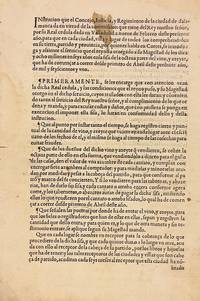
16013683Salamanca: S.n. 1601. First edition. Signed at foot by a municipal officer Diez de la Puente. One-page contemporary manuscript on p. 3 relating to the administration of the tax. Unbound as issued. Pinholes at gutter some edge chipping and small dents brown stain affecting the upper portion throughout. Otherwise a good well-preserved copy. First edition. Signed at foot by a municipal officer Diez de la Puente. One-page contemporary manuscript on p. 3 relating to the administration of the tax. Unbound as issued. 4 last 2 blank p. <p><br /> Unrecorded 1601 ordinance from Salamanca enforcing the Armada-era servicio de millones Spain’s foundational fiscal levy.<br /> <p><p><br /> Printed ordinance issued by the municipal council of Salamanca implementing the royal tax known as the servicio de los dieciocho millones. In accordance with the royal cédula of 9 February 1601 the Concejo Justicia y Regimiento instructs subordinate towns and villages to collect an eighth part of all wine and olive oil sold to be remitted through a chain of local receivers. The text regulates how wine and oil must be measured recorded and taxed forbids additional repartimientos and orders prompt transfer of funds to the city’s main treasury. Dated at Salamanca 10 March 1601 and naming four municipal commissioners appointed for its execution it represents the earliest stage of local enforcement of Philip III’s fiscal scheme transforming the national levy into a functioning municipal excise. A contemporary handwritten endorsement below the text signed by Diez de la Puente attests its execution. Accompanying the printed ordinance is a contemporary manuscript headed on p. 3 “Dudas que se ofrecen en la administración de las sisas†listing practical questions concerning the execution of the tax—registration and measurement of goods roles of administrators and receivers form of payment penalties and conditions of tax farming arrendamiento.<br /> <p><p><br /> The servicio de los dieciocho millones formed part of the broader system of millones taxes created by the Cortes of Castile to meet the Crown’s desperate financial needs after the prolonged wars of Philip II. The servicio de millones had first been introduced by royal request and approved by the Cortes on 4 April 1590 conceived to raise eight million ducats over six years to finance the royal expenditure associated with the Armada campaign against England and other military commitments. Rather than remaining temporary it evolved into a regular levy on six staple items—wine oil vinegar meat soap and tallow candles—collected through local sisas and eventually forming the backbone of Castile’s fiscal structure. By 1600–1601 under Philip III the scheme was renewed and expanded to eighteen million ducats its collection entrusted to municipal governments such as Salamanca’s Concejo Justicia y Regimiento. As described in Bartolomé Yun Casalilla’s Sobre la transición al capitalismo en Castilla this marked a transition from feudal income to a centralized fiscal system financed through municipal taxation embedding local economies within the machinery of the Habsburg war state. The present ordinance captures this process of consolidation—when the monarchy sought tighter control over municipal revenues demanded proper accounting and remittance of surpluses and aimed to prevent arbitrary over-taxation—reflecting both the fiscal strain and administrative centralization characteristic of early-seventeenth-century Spain.<br /> <p><p><br /> Reference: Yun Casalilla B. 1987. Sobre la transición al capitalismo en Castilla: EconomÃa y sociedad en Tierra de Campos 1500–1830. Valladolid: Junta de Castilla y León ConsejerÃa de Educación y Cultura.<br /> <p>. [S.n.] unknown
1950219431950 Gouache, envoi signé et daté en bas à droite, (1950), 65 x 100.05 cm.
1868256369Paris Deyrolle 1857/1868. cclxxvi, 140 [2],463 [1], 295, 284 S., zus. 303 Taf. (davon 292 koloriert u. 11 s/w Taf.) Gr 8° HLdr. Bde 1+2: beide Deckel lose, Rücken nur fragmentarisch vorhanden bzw.Bruchstücke lose beiliegende, Bd 3: bereits neuaufgebunden* Text und Tafeln schön und frisch*.
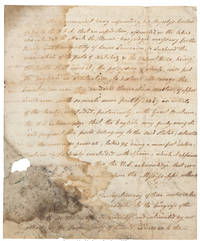
1797List2522New Orleans 1797. Three pages of a bifolium 8 x 9 ½ inches New Orleans; May 31 1797. Fair only with moisture damage and some text illegible. Fair. An interesting document from the period following the Treaty of San Lorenzo and before the eventual surrender of Natchez to the Americans in 1798 in which the governor of Louisiana and West Florida Francisco Luis Hector de Carondelet issues a statement regarding the delayed withdrawal of Spanish troops from the region. Carondelet is concerned with the British presence in the area and notes that it is a violation of “the treaty concluded with Spain†- or Pinckney’s Treaty which opened up navigation rights of the Mississippi to the United States. The letter describes the possibility of escalating hostilities between the United States Great Britain and Spain as a result of an impending American mission against the Illinois the motives of which Carondelet questions as he notes that “These hostile dispositions can naturally only concern these provinces because the U.S. are in peace with all the savages…†He raises the possibility of British invasion of Louisiana and potential danger to the city of New Orleans and states that the Spanish will maintain their presence at Natchez and Walnut Hills unless the American soldiers withdraw. This is a copy of Carondelet’s speech in the hand of Lieutenant Piercy Smith Pope and we find no other record of it. A full transcription follows:<br /> <br /> “The Government being informed by his Majesty’s Ambassador to the U.S. that an expedition assembled on the lakes was intended to attack the Illinois has judged necessary for the surety and tranquility of Lower Louisiana to suspend the evacuation of the posts of Natchez & the Walnut Hills being the posts that cover it; the possession of which will put the English in a situation to disturb and ravage the country in case they rendered themselves masters of upper Louisiana with so much more facility as by an article of the treaty concluded posteriously with Great Britain the U.S. acknowledge that the English may freely navigate and frequent the posts belonging to the said States; situated on the river in general lakes &c being a manifest contradiction to the treaty concluded with Spain which it appears. because by this the U.S. acknowledge that no other nation can navigate upon the Mississippi without the consent of Spain.<br /> <br /> . the legitimacy of these motives the .presented to the Congress of the U.S. with all the necessary veracity and intimated by our orders in the Commissary of Limits as well as to the Commandant of the Detachment of American troops now at Natchez. We are now informed that a detachment of the army of the U.S. cantoned on the Ohio are on their way by Holstein towards Natchez while the Militia of Cumberland are intimated to hold themselves ready to march at the first notice.<br /> <br /> These hostile dispositions can naturally only concern these provinces because the U.S. are in peace with all the savages the anterior menaces of the Commissary of Limits & the Commandant of the detachment of Americans now at Natchez; the immediate rupture & if the American Gazettes are to be believed already effected between France our intimate ally and the U.S. engage us to be on our guard to defend our property with that valor & energy which the inhabitants of these Provinces have manifested on all occasions with the advantage and superiority which a knowledge of our local situation will procure and that confidence which right and justice inspires. If the Congress of the U.S. had no hostile intention against these provinces they will either leave the post of Natchez or Walnut Hills the only bulwarks of Lower Louisiana that can stop the courses of the English or that they give us security against the article of the Treaty with Great Britain which exposes lower Louisiana to be pillaged and destroyed down to the Capitol. We will then deliver up the said posts and lay down our arms which they have forced us to take up by arming their Militia in time of peace and sending a considerable body of troops by round about ways to surprise us.<br /> <br /> New Orleans 31st May 1797 <br /> <br /> A copy of the Baron de Carondelet’s Proclamation. <br /> P. Popeâ€<br /> <br /> Overall a document of significance in United States / Spanish relations in the period following Pinckney’s Treaty worthy of further study for scholars of the diplomatic history of the period. unknown
1795689451795. Madrid 1795. Folio 11-3/4" x 8". Madrid 1795. Folio 11-3/4" x 8". King Carlos IV Organizes Spain's Lucrative Silver Mines of Potosi Spain. Real Banco de San Carlos de Potosi. Real Cedula de Incorporacion de el Banco de Potosi a la Real Hacienda y Ordenanzas Para su Regimen y Gobierno: Con Arreglo a las Leyes de Indias y Demas Reales Disposiciones que al Margen se Citan: de Orden de S.M. Madrid: En la Imprenta de Don Benito Cano 1795. xii 67 107 pp. Final 107 un-numbered pages are charts and tables 4 folding. Folio 11-3/4" x 8". Contemporary tree sheep gilt fillets to boards gilt fillets to spine recased endpapers renewed. Moderate rubbing to extremities with some loss to gilding spine abraded corners bumped and lightly worn. Light toning to text somewhat heavier in places faint dampstaining to preliminaries and a few other leaves light edgewear to one of the folding tables. A handsome copy $2500. Only edition. The Bank of Potosi was organized to manage the network of mines in Potosi a mountain in present-day Bolivia. Worked by a brutally exploited force of indigenous workers later supplemented by African slaves these mines were one of the greatest sources of Spain's wealth for nearly 200 years. The Real Cedula de Incorporacion prints the certificate of incorporation granted by King Carlos IV and the charter outlining the bank's purpose organization and regulation. OCLC locates 12 copies in North America 1 in a law library Library of Congress. Sabin A Dictionary of Books Relating to America 68224. unknown books
1783WRCAM15744Bilbao 1783. 10pp. Quarto. Modern half morocco and marbled boards. Very good. A rare Spanish edition of the preliminary articles of peace between Spain and England which ended their conflict in the American Revolution. The primary impact of this treaty was to return the Floridas to Spain thus setting the stage for conflicts between the United States and Spain on its southern and western borders and ending twenty years of British control of the Floridas which had effectively been lost when Galvez seized Pensacola in 1781. DAVENPORT 170. SERVIES 597 Madrid ed. hardcover books
8248Bilbao, La Gran Enciclopedia Vasca, 1972-1979. 16 vol. in-8 reliés simili-cuir brun. Dédicace de l'auteur dans le vol. 1. Nombreuses ill. Tomo I. Diccionario Ilustrado De Mitología Vasca Y Algunas De Sus Fuentes - II. Eusko-Folklore - III. Ikuska 1o (Artículos Y Conferencias) - IV. Ikuska 2o. Monografias De La Vida Popular - V. Ikuska 3. Monografias De La Vida Popular (Continuación). Conferencias, Comunicaciones, Intervenciones en Congresos, etc. - VI. Ikuska 4. Artículos Y Comunicaciones A Congresos Científicos - VII. Vasconia Antigua. Tras Las Huellas Del Hombre - VIII. Vasconia Antigua. Tras Las Huellas Del Hombre (II). IX. Vasconia Antigua. La Cueva De Santimamiñe - X. à XVI. Vasconia Antigua. Tras Las Huellas Del Hombre (IV) - (V) - (VI) - (VII) - (VIII) - (IX) - (X). Très bon état (mais 9 dos abîmés et renforcés). Les 16 premiers vol. sur 22.
210205Paris, Louis Bilaine, 1661 in-8, [2] ff. n. ch. (titre, avis au lecteur), 592 pp., un f. n. ch. de privilège, (saut de page sans manque pages 384-387) maroquin cerise, dos à nerfs orné de pointillés, guirlandes et caissons richement ornés, dorés, encadrement de triple filet doré sur les plats, double filet doré sur les coupes, tranches dorées sur marbrure, large guirlande intérieure en encadrement sur les contreplats (Brany).
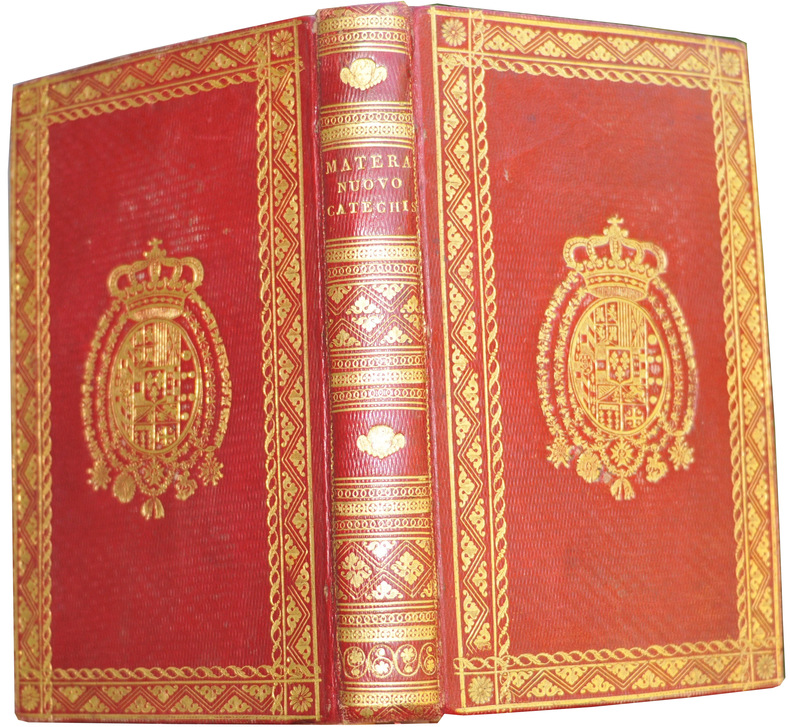
182746401033Napoli, Angelo Coda, 1827 ; in-12, plein cuir de Russie rouge, large encadrement de guirlandes et dentelles dorées, armes dorées sur les plats, dos recouvert d'un décor doré, tranches dorées (reliure de l'époque) - Frontispice gravé, 276 pp. PRECIEUX CATECHISME AYANT APPARTENU A LA REINE MARIE CHRISTINE D'ESPAGNE. Le volume est en italien parce que cette princesse née Marie Christine de Bourbon était fille du Roi de Naples. En 1827, l'année de la parution du volume elle venait d'épouser le sanguinaire roi d'Espagne Ferdinand VII. Celui-ci mourut en 1833 et la reine Marie Christine gouvernera comme régente avec Isabelle II de 1833 jusqu'en 1843. Le volume est relié aux armes royales et porte l'ex libris gravé de la Reine : M. C. Ra de Ea (Maria-Christina Reina de España).
1826003361Paris, Lugan.8 volumes in-32 (105 x 65 mm.), 380 p, 386 p, 387 p, 403 p, 446 p + 1, 450 p, 455 p, 443 p. Reliure veau glacé vert-olive encadrant les plats, filet de, dos à quatre nerfs orné de filets or et à froid et d'un ornement à froid entre les nerfs, filet or et dentelle à froid encadrant les plats, filet sur les coupes et dentelle intérieure, tranches dorées, fine reliure d'époque signée Duplanil (dos légèrement éclairci) Ouvrage illustré d'un portrait de l'auteur en frontispice du tome I et 15 gravures par Dulompré, Paul Legrand d'après les dessins de Chasselat, Paul Legrand, Tassaert
200343659ABMadrid, Espasa-Calpe, 1935-2003. 4to. Mit zahlreichen Abbildungen. Orig.-Leinwand mit Orig.-Umschlag (55 Bände) und Orig.-Leinwand (13 Bände).
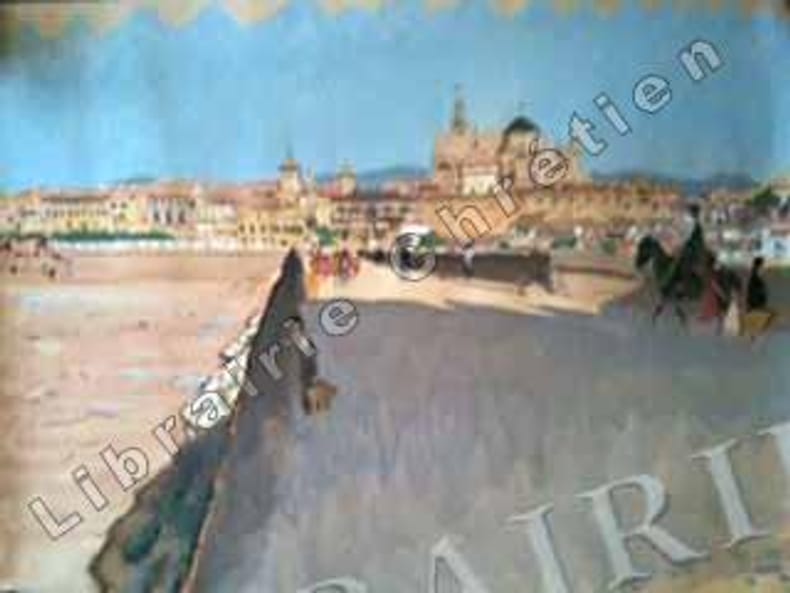
185222882du nom de la Reine qui l'a inauguré en 1852 (le 23 février) ; commencé en 1845, il enjambe le Guadalquivir, est le premier pont fixe de Séville et remplace le pont flottant. C'est en 1824 qu'il est envisagé de construire un pont permanent et que sa construction est encouragée par un décret royal.
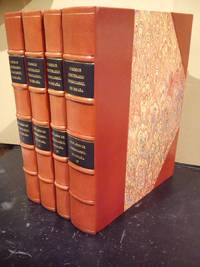
194828761EDICION DE LUJO NUMERADA.- Madrid: Edita el Ministerio de Obras Públicas Se imprimió en la imprenta Editorial Magisterio Español 1948.- 4 VOLS. 3 h. X p. 1 h. 441 p. = 4 h. 437 p. 2 h. = 3 h. 394 p. 2 h. = 3 h. 585 p. 1 h.: Vol. 1º. con retrato fotográfico de Franco a plena página tras la portada fotografías del archivo de Tomás Magallón y un mapa de Puerto Rico por Roberto Ferrer / Vol. 2º. con fotografías del archivo de Tomás Magallón planos y mapas de Roberto Ferrer / Vol 3º. fotografías del Marqués de Santa María del Villar planos gráficos y mapas de Roberto Ferrer / Vol. 4º. Con reproducción de acuarelas en láminas a todo color de Carlos Saenz de Tejada y dibujos intercalados en el texto a dos colores por Lorenzo Goñi. Los 4 vols. con artísticas letras capitulares grabadas en madera por José Antonio Marín; 4º mayor 295 x 235 cm.; Magistralmente encuadernado en Media Piel chagrén a puntas de color rojo lomera dorada con 5 nervios y 2 tejuelos.- EDICION DE 1200 EJEMPLARES en diversas series siendo el 1º el Nº CXLV el 2º el Nº 109 el 3º el Nº 562 y el 4º el Nº 111 / CONTIENE: Vol. 1º. Maximiano García Venero: Historia anecdítica del ferrocarril en España; J. Gimeno Lassala: Los ferrocariles españoles en Filipinas y Puerto Rico; Enrique Castillo: Los ferrocarriles españoles y las organizaciones internacionales de transportes / Vol. 2º. José María Rovero Aguilar y Otero: Han pasado cien años; Carlos Fernández Casado: Las vias de comunicación españolas en la iniciación de los ferrocarriles; Francisco Wais: Nacimiento desarrollo y constitución de la red española; Manuel M. Arrillaga: La iniciativa y actividad españolas en sus ferrocarriles; Carlos Botín: Los ferrocarriles de vía estrecha; Alejandro Mendizabal: Explotación de ferrocarriles por el Estado.; Agustín M. Aleixandre: Automotores; Ramón Mª. Serret: La energía en la red de los ferrocarriles españoles su importancia presente y futuro; José R. Mencos: Aplicaciones de la electricidad en los ferrocarriles; Juan L. de Chicheri y Federico Escario: Servicio de los trenes; Pablo Fraile Gabarret: El material movil. / Vol. 3º. Mariano Tortosa: La vía; Casimiro Juanes: Los puentes; Manuel Villar Lopesino: La locomotora de vapor; Mario Viani: La iniciación de la tracción eléctrica en los ferrocarriles españoles y la electrificación de la sección Barcelona-Mataró; Julio Nogués Caiz: Las instalaciones de seguridad señales y enclavamientos; Gregorio Pérez Conesa: Construcción de nuevos ferrocarriles; Miguel Otemendi: Los ferrocarriles metropolitanos; Federico Valenciano: Los tranvías en España; José de Aguiinaga: Ferrocarriles de montaña; Conde de Guadalhorce: El porvenir del ferrocarril; José Mª. García-Lomas: El ferrocarril y la economía nacional. / Vol. 4º. Jacinto Benavente: Viajes y viajeros; W. Fernández Florez: Contribución al estudio del viajero; Eugenio D'Ors: Mente y Tren; Alfredo Marqueríe: Anécdota y poesía del equipaje; Gerardo Diego: El ferrocarril en la poesía; Enrique Jardiel Poncela: Las 5 clases de nuestros vagones ferroviarios; T. Llorente Falcó: Los ferrocarriles levantinos; Natalio Rivas: El ferrocarril de la Andalucía oriental; Luis Antonio de Vega: Los ferrocarriles del Protectorado; José María Pemán: Trenes por Andalucía; Federico García Sanchiz: Ventanillas del tren; G. Marañón: Extremadura; José Filgueira Valverde: Galicia; Concha Espina: Caminos de hierro; Pío Baroja: El tren y el paisaje en la tierra vasca; Ricardo del Arco y Raray: Aragón; Francisco de Cossío: Castilla La Vieja; Pedro Mourlane Michelena: Meditación en Castilla La Nueva sobre el paisaje y los jardines; José Pla: El paisaje del Camino de hierro Barcelona-Mataró; Lorenzo Riber: Itinerario Lírico de Mallorca; F. J. Sánchez Cantón: El ferrocarril en las bellas artes españoles. En excelente estado de conservación con magnífica encuadernación. FERROCARRILES TRANSPORTES RED VIARIA Y OBRAS PÚBLICAS EN GENERAL Libro en español [Edita el Ministerio de Obras Públicas ?] Se imprimió en la imp hardcover
Three volumes, complete. ALL THREE VOLUMES ARE SIGNED FIRST EDITIONS. GOYTISOLO RARELY SIGNS BOOKS, AND THIS SET MAY BE THE ONLY COMPLETE SIGNED SET EVER OFFERED FOR SALE. This trilogy established Goytisolo as a major modern writer and remains his greatest accomplishment. SeÒas de identidad was published in Mexico City in 1966 in an edition of 4100 numbered copies. Don Julian was published in 1970, also in Mexico City, in an edition of 5000 numbered copies. Juan sin tierra was published in 1975 in Goytisolo's native Barcelona. 8vo. First two volumes near fine in publisher's cloth, with very good djs. Third volume very good in publisher's wraps. SeÒas de identidad signed by Goytisolo on half-title, with prior owner's signature on front free endpaper. ReivindicaciÛn signed and inscribed by Goytisolo on front free endpaper. Juan sin tierra signed by Goytisolo on title-page, with prior owner's signature underneath. ALL THREE VOLUMES WERE SIGNED IN TANGIER IN AUGUST, 2013. Included with this set: a great digital photograph of Goytisolo signing the the books.
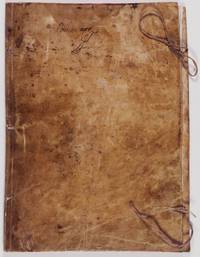
171150903Alagon Zaragoza Spain 1711. Hardcover. Folio. 12x9". 8 leaves the final leaf backed in paper. Manuscript bound in limp vellum. Protected with 2 paper leaves and 2 maroon silk sheets bound and encased within plain contemporary paper-backed vellum covers with cloth string ties. Contains 2 leaves with gorgeous full-page illustrations elaborately hand-colored in ink and gilt the first depicting the family arms of García the second with the royal arms of Don Felipe within decorative borders. Fine clear cursive hand in black ink within two sets of double-ruled borders 25 lines per page; 7 gold capitals superimposed on a landscape within square black borders mark the sub-sections of the text followed by initial lines in gilt letters. Text and illuminations fine and clean; vellum covers lightly soiled. Text block now loose within covers.<br /> <br /> Early eighteenth-century illuminated "carta de hidalguia" manuscript a patent of nobility for one Alonso García an inhabitant of Montejo de la Vega de la Serrezuela in the Spanish province of Segovia Castilla and León. The motto appearing on his arms reads: García De Arriba Nadie Diga May No One Speak from Above. The royal decree of King Felipe V is dated 5 May 1711; the document was notarized on 12 June 1711 in Alagón a municipality located in the Spanish province of Zaragoza. In addition to the notarial stamp of the king Yo el Rey at least four witnesses have signed the manuscript on the final page. The document concludes with the formula: "El Mgd. Majestad hace merced à Alonso García vecino y natural del lugar de Montejo de la Vega de que por los días de su Vida pueda gozar; y ser reputado en la dicha Villa y demas partes que residiere por hijodaldgo y obtener las preheminencias que por ello le tocaren." The Majesty grants Alonso García a resident and native of Montejo de la Vega that he may enjoy for the days of his life and be well-regarded as a noble in that town and other places in which he may reside and obtain the privileges to which he is entitled. References: Revista de historia y de genealogía española 1912-1931 p.102: Alonzo García is noted in a list of those ennobled in the State of Castilla Castile since the year 1710. hardcover
1609WRCAM33906The Hague: Hillebrant Iacobz 1609. 11pp. Large vignette on titlepage. Modern marbled boards. Very good. The original edition of the official Dutch text of the "Twelve Years' Truce" between the United Provinces and Spain. There are thirty- eight articles of which nine deal with foreign trade. The present issue undoubtedly the first contains a few errors which were corrected in later issues. By this treaty the Dutch agreed to stay out of Spanish controlled possessions in the New World. However it conceded the right of the Dutch to trade in the East Indies and on the basis of this and the breathing room the treaty gave them they were able to rout the Spanish in the 1620s. Savelle calls the Twelve Years' Truce "a great international triumph for all the challengers of the Hispano-Portuguese monopoly" on New World colonization since it marked the first explicit recognition of the right of any non- Iberian people to sail to the Americas. Spain tacitly recognized the right of the Dutch to own colonies in the New World a right which the Dutch French and British vigorously pursued in the ensuing decades. An important treaty and quite scarce. OCLC locates three copies. Not in EUROPEAN AMERICANA. DAVENPORT 28. KNUTTEL 1589. SAVELLE THE ORIGINS OF AMERICAN DIPLOMACY pp.31-34. OCLC 8525118 17751928. Hillebrant Iacobz hardcover books
178311426ABLeipzig, Kummer, 1783. 19 : 11 cm. 7 hojas, 106 páginas, 3 hojas, páginas (107) - 206 Con una lámina grabada, plegada. Encuadernado en medio pergamino en estilo de época. 2 partes en 1 tomo. Segunda muy aumentada edición.