79 524 résultats
14930005337Nuremberg Germany: Anton Koberger 1493. First edition. Very Good. Woodcuts by the Workshop of Michael Woldgemut & Wilhelm Pleydenwurff. Folio conjoined leaves measuring approximately 455mm by 320mm very minor breaks at fold minor soiling matted but not glazed or framed. <br/><br/>LIBER CHRONICARUM is the most famous travel book of the 15th century and the most exhaustively illustrated book of the incunable era. The complete work contains 1809 woodcuts of which only 29 are double-page town views:: these conjoined leaves is one of those 29 town views specifically "Colonia" i.e. Cologne Germany. The verso of leaf XCI is a half-page view of "Augusta" i.e. Augsburg Germany with descriptive text. Also smaller portraits of historical personages including Cleopatra Alexander the Great Herodias L. Pomponius Leoneus and M. Agrippa. et alios Notes: this is from the Latin edition. The German-language edition DAS BUCH DER CHRONIKEN has different woodblock portraits for Pomponius Leoneus and Agrippa. Also the view of Augsburg is only the left half of the scene which is one of the double-page views. Goff S-307; Hain - Cop 14508x; Klebs 889.1; Oates 1026; Procter 2084; BMC II 437 . Woodcuts by the Workshop of Michael Woldgemut & Wilhelm Pleydenwurff. Anton Koberger unknown
174529755-zf6Augspurg [Augsburg]: Johann Andreas Pfeffel, gedruckt von Christoph Peter Delefssen 1745. Frontispiz und 11 Blatt sowie 182 Seiten nebst 8 Blatt und 70 Tafeln. Neuerer Pappband (ein Riß im Frontispiz unterlegt, vier Tafeln mit Randläsuren, die Tafeln 70 lose, eine Tafeln mit einem Einriß, sonst gutes und sauberes Exemplar). 2° (35,2 x 22,4 cm). fest gebunden
31374-zz8o.J. [Ein Farbabplatzer bei der linken Birne, der Firnis etwas nachgedunkelt, der Rahmen mit wenigen schwachen Kratzern, sonst wohlerhalten]. [3 Warenabbildungen]
85282aafo.J. (um 1965), quer in-Folio, 19 Bl. festes Albumpapier mit 17 Fotos im Format 21x16 cm (davon 10 in Farbe) und zahlreichen farbigen Original-Tuschezeichnungen, Titelseite und auch Beschriftungen der Bilder in kalligrafischer Goldschrift von Hand gezeichnet, guter Zustand, Orig.-Halbleinenfotoeinband mit Ecken u. Leinenschnur, Vorderdeckel mit Kratzspuren, sonst guter Zustand.
76104aafin-8vo, Titel + 2 Bl. (Einleitung) + 284 S., hs. auf Vorsatz: meinen beiden Freunden Georg und Fritz Poppenhusen Leineneinb. mit goldgepr. Titel auf Vorderdeckel.
Amsterdam, (hacia 1640), bello mapa montado sobre cartulina de 45 x 54,5 cm., de la región de Frankfurt en colores de época, con figuras y escudos nobiliarios rodeando el mapa. (Contiene 34 escudos de armas de los magistrados de Frankfurt en los márgenes. En el margen superior las personificaciones de la justicia, Concejo y Paz, el primero con las armas del Sacro Imperio Romano y el último con las armas de la ciudad de Frankfurt).
177474141774 Paris, St, Julien, Boudet, 1774. Un volume in-4 plein veau d'époque, dos à nerfs, caissons ornés, pièce de titre de maroquin brun, triple filet en encadrement, reliure aux armes du Marquis de Clugny Thénissey (deux clefs entretenues), tranches dorées, [1] f., page de titre gravée, [1] f., 20 pp., 24 tableaux, 13 cartes rehaussées. Coins émoussés, mors fendus, rousseurs éparses.
32439P., Morel, 1859-67, 8 volumes in folio reliés demi-chagrin marron, dos à faux nerfs ornés ; très nombreuses gravures hors-texte ; petits défauts d'usage ; des rousseurs et qq. rares mouillures (sauf au Tome 5 : large mouillure en pied et tête de toutes les pages) ; reliures frottées.
1974List3157St. Petersburg Florida: unpublished 1974. Ninety-four typed and photocopied pages measuring 8 ½ x 11 inches in a soft binding. Binding with wear; pages generally excellent to Near Fine. Overall excellent to Near Fine. Annemarie Bliwernitz 1905–2005 née Entz was born in Notzendorf East Prussia. In 1952 after surviving both World Wars she and her husband Bruno 1900–1992 immigrated first to Canada and then to the United States. Offered here is Annemarie’s unpublished memoir written between 1972 and 1974.<br /> <br /> Bliwernitz grew up in a wealthy land-owning country family which she remembers lived far west enough that they did not have to flee the Russians during World War I and was less affected by the postwar economic situation than were city residents. Most of the memoir is taken up by Bliwernitz’s remembrances of World War II and life leading up to it. Of Hitler’s rise she writes:<br /> <br /> “During these years conditions got worse in Germany . A new name came up ‘Adolf Hitler.’ – It was not hard for him to find followers now by the thousands and soon by the millions. He dared to stand up against the Communists with his brown uniformed S.A. men and a new wind seemed to blow over our illfated land. No wonder young people looked up to him and followed the new star nobody had much to lose. . Bruno and brother-in-law Willy after some meetings attended showed up in the new brown uniform also and farmers and laborers seemed to be united in that new idea. – It really changed Germany in a short time nobody could deny that unemployment ceased people got jobs again and housewives and mothers could buy the necessities of life for their families especially food. And it brought us to our feet again also.â€<br /> <br /> Though of course Bliwernitz maintains that the “Concentration Camps and what happened in them was not known to the German people" she mentions that Bruno quickly became an Arbeitsdienstführer—essentially a labor camp overseer—and remembers dissenters being disappeared:<br /> <br /> “As an example I will tell about Bruno’s oldest brother Alfred. He was all against Hitler from the beginning. One day he came home and picked up his neighbor’s paper at his frontdoor and wrote his ideas about Hitler and his lies down with pencil. This neighbor reported him they picked him up and that was the last his family saw of him. They were told ½ year later that he had died in Stuhm West Prussia a Concentration Camp. No explanation to his wife whatsoever. The same destiny happened to my co-worker a highly educated person at the Translation Office. She said in the lavatory where many ladies could hear: Hitler’s big picture in the office should be placed here in the toilet-rooms where it belongs. One of the ‘kind’ co-workers reported her and she came next day only to pick up her belongings and was not seen any more.â€<br /> <br /> While Bruno is sent to the Eastern Front Bliwernitz and their children flee the Russians trying to reach the Americans on the Western Front. Along the way they encounter deserting German soldiers and near Hamburg liberated camp inmates:<br /> <br /> “Shooting started close to us and we heard bombs exploding would we be hit We found out that the Concentration Camp near us had been opened and those freed inmates had shot their guardians. At daybreak we met the first one still in his black and white striped prison-suit kneeling on the ground by the chicken-coop and with his both hands feeding himself out of the bowl with the chicken food. . They came to us begging for a little bit of salt to cook the horse-meat they had cut out of the dead horses lying along the ditches . We talked to them and I remember one told me he was imprisoned because of his religion not to go to any war. He was from Elbing where I had gone to school as a young girl.â€<br /> <br /> The family are reunited with Bruno and shortly before they surrender to the Americans they destroy the evidence of their party involvement: “Bruno’s N.S.D.A.P. membership-card my certificate for the ‘mother’s cross’ the passports of Horst and Juergen showing that they had been students of the Nazi-school in Stuhm etc.†After the German surrender the family is sent back east where they struggle to avoid starvation then return west where they are sent to live in Hardegsen. They finally decide in 1951 to emigrate as life in postwar Germany is simply too difficult but make the mistake of being honest about their history:<br /> <br /> “Another big obstacle for us was that Bruno had been in a member in a Nazi-party though not an active one. But it was still a handicap in those days for any undertaking. We had not kept it secret in our immigration papers and they wanted a detailed description about our political involvement. That we did wrote a long letter in German didn’t have the money for an interpreter and never got an answer. . That was a bitter pill to swallow.â€<br /> <br /> After this they decide to try for Canada instead and this time savvily “didn’t mention any Nazi-party attachmentâ€. This is a success; the family moves to Winnipeg and eventually to St. Petersburg Florida where the narrative was written. Bliwernitz recalls working as a housekeeper which she contrasts with her previous life in which she and her family would not allow maids farm hands or tradesmen to eat at their table with them.<br /> <br /> Of interest to historians of the German civilian experience during the Second World War especially that of women and children. unpublished unknown
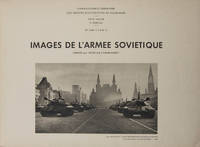
194941912NP: Édition du Service Géographique des T. O. A. 1949. First edition. Hardcover. g- to vg. Oblong folio 11 7/8 x 16 3/4". 50 ie 51 leaves. Original quarter purple cloth over gilt-stamped burgundy paper covered boards with gold lettering to front board.Photo-illustrated title page.<br /> <br /> Edited by the High Command of the French Army in Occupied Germany this work is a pictorial survey of the Red Army from 1941 the beginning of the German invasion to 1949. Includes photographs of the Soviet Military Commanders battle scenes during WWII the political organization weapons and material the satellite armed forces etc.<br /> <br /> Illustrated with no less than 231 photogravures and two b/w illustrations depicting the Order of Lenin and the Soviet Union's coat of arms this book was published as a supplement to "Notes sur l'Armée Russe" also published by the High Command of the French Army in 1949.<br /> <br /> Covers bowed with minor and sporadic soiling. Upper margin of front cover partly creased. Small abrasions to cloth at head of spine. Text and captions in French. Binding in overall good- interior in very good condition. Édition du Service Géographique des T. O. A. hardcover
19053611019Hamburg, 1828/1905. Halbleder/Halbleinwand/Pappbände der Zeit. 4to. (Einbände leicht bestoßen, fehlen 5 Rücken, 5 Rücken Einbandeingerissen. repariert. Teils Stempel auf Titel.
1930WEAU0161Leipzig und Wien, Bibliographisches Institut (ca. 1870-1930). Mischauflage. 8°. braune OLnbde., mit goldener dekorativer Rückenprägung, schwarzer Deckelprägung, marmor. Schnitt, leicht berieben und bestoßen, innen sauber und. sehr gut erhalten. "Unter dem Titel Meyers Klassiker-Ausgaben (zunächst Meyers Klassiker-Ausgaben in 150 Bänden) erschien seit 1870 bis in die 1930er Jahre eine Reihe von Werkausgaben klassischer, hauptsächlich deutschsprachiger Schriftsteller. Das Ziel der Buchreihe war es, die wichtigsten Autoren der neueren deutschen Literatur - mit einzelnen Ergänzungen aus anderssprachigen Literaturen - in repräsentativen Ausgaben zur Verfügung zu stellen. Die Zusammenstellungen sollten den dauerhaft gültigen Werkbestand des jeweiligen Autors umfassen. Die Textdarbietung folgte kritischen Editionsstandards. Alle Bände enthalten Erläuterungen und z.T. sehr umfangreiche, kleingedruckte biographische Einleitungen. Den Schwerpunkt der Sammlung bildet die lyrische und dramatische Dichtung innerhalb des Zeitraumes von 1750 bis 1850. Aufgenommen sind ausschließlich Autoren, die im späten 19. Jahrhundert als "klassisch" galten." Aus Wikip. v. 2.12.15.
1909LCI-6410Munich, Simplicissimus verlag 1909 1 in -4 Cartonnage Editeur avec couverture Estampillée 888 [p.p] RARE VOLUME DE SIMPLICISSIMUS — XIII. JAHRGANG, 1908-1909Cartonnage d’éditeur, couverture estampillée — un vrai bijou de satire politique et d’art allemand du début du XXe siècle.Très bon état : pages propres, reliure solide, couverture intacte — idéal pour collectionneurs, historiens, ou amateurs d’art satirique. Pour ceux qui veulent posséder un morceau d’histoire — où l’humour dérangeait les puissants. “Ce n’est pas qu’un magazine — c’est un miroir de l’Allemagne, avec un sourire acerbe.”
Abteilung 1-45 sowie Registerband (für Abt. 1-38). Zus. ca. 6000 Seiten. Pappbände der Zeit (`Einbände berieben). *Enthält alle Sitzungsprotokolle der ersten Versammlungen der Landstände bzw. deren Gründungsversammlungen im Königreich Württemberg. Beinhaltet alle Protokolle für den gesamten Zeitraum inkl. des Verfassungs-Vertrages 1819. (Die Fortführung erfolgte ab 1820 getrennt in einem Zweikammernsystem der Versammlungen der Abgeordneten bzw. der Kammer der Standesherrn). - Ohne die 4 Beilagenhefte und das Supplementheft. - Bedeutendes Quellenwerk zur neueren Staatsgeschichte Württembergs. Dokumentiert zugleich die gesamte Entstehungsgeschichte der Württembergischen Verfassung. - Nachdem 1800 die altwürttembergische Ständeversammlung aufgelöst und das Herzogtum Württemberg 1806 zum Königreich wurde, berief König Friedrich erst nach der Napoleonischen Zeit 1815 wieder eine neue Ständeversammlung ein. Die Geschichte dieser ersten Jahre liest sich wie ein politischer Kriminalroman: Die Zeit war geprägt von politischen Wirren, Unruhen und heftigen Auseinandersetzungen der Stände mit dem König im Ringen um die neue Verfassung. Im Juni 1817 wurde der Landtag ohne Einigung vom König aufgelöst. Erst nach heftigen Unruhen in der Stadt und nach etlichen Reformen und grundsätzlichen Gesetzänderungen berief König Wilhelm im Juli 1819 die Ständeversammlung wieder ein und die Verfassungs-Urkunde konnte dann im September 1819 beschlossen und verkündet werden. Der Band 45 enthält im Anhang den ersten Druck der Württembergischen Verfassungsurkunde (1819), die für 99 Jahre bis 1918 die staatsrechtliche Grundlage Württembergs bildete. - Diese ersten Jahre der Landstände erfolgten unter der engagierten Teilnahme von so bedeutenden Männern wie dem Verleger Cotta, Ludwig Uhland, von Varnbüler, Graf Wangenheim, Graf von Waldeck u.a. - Siehe hierzu: Grube, Stuttgarter Landtag, S. 489-508. - Adam, Ein Jahrhundert Württ. Verfassung (1919). - Äußerst selten, da wohl nur in kleiner Auflage für die Mitglieder Ständeversammlung und einige Bibliotheken gedruckt. Bücher de
1560901869AG[Um 1560]. Kupferstich Bildgröße mit 4 Reihen Erklärungen 29,5 x 38 cm, Blattgröße 32,5 x 40,5 cm.
183431284Wien, Lechner., 1834. 12°. Mit 19 Tafeln (=komplett). 192 S. 196 S, 196 S., 188 S., 202 S., 1 Bl., Halbleinenbände der Zeit mit Marmorbezugspapier und goldgeprägten Rücken. - Die Tafeln zeigen u.a.: Aggstein, Baden, Zirndorf, Buchfart, Greifenstein (Tirol), Braunsberg, Tautenburg, Gernsteins Rudera, Dunstaffnage. Nebehay/Wagner 124, BLKÖ Bd. II, S. 400). Kleine Fehlstelle im Bezugspapier des 1. Bandes. Sonst sehr schönes, wohlerhaltenes und sauberes Exemplar.
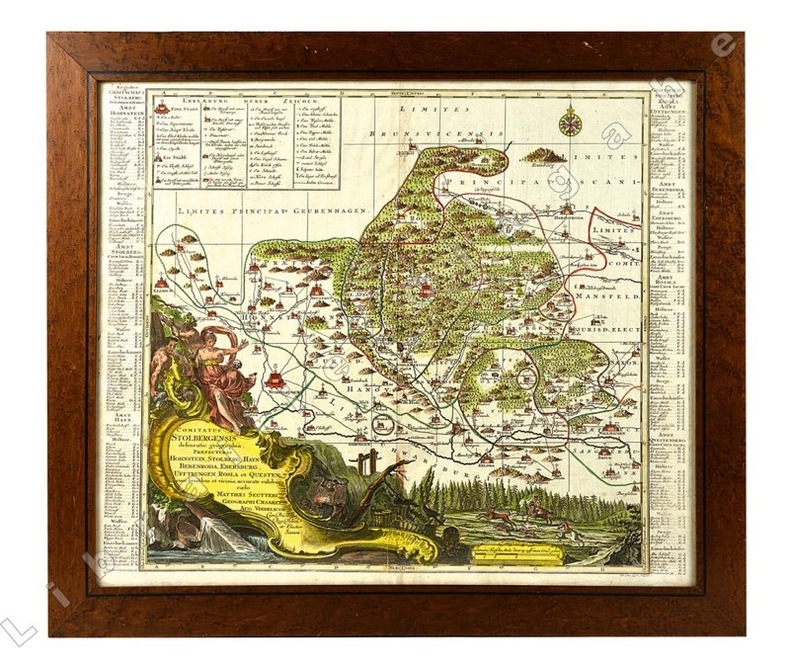
20921Cartouche du titre en bas à gauche avec figures allégoriques, scènes de forge et de chasse à courre. Légende en haut à gauche.
190058847ABZürich, Photoglob, um 1900. 32,5 x 44 cm. Dunkelgrüner Lederband der Zeit mit goldgeprägter Jahreszahl "1903" auf Vorderdeckel, Goldschnitt.
32054o.J.
1598LBW0028bCologne 1598 362 x 495 mm.
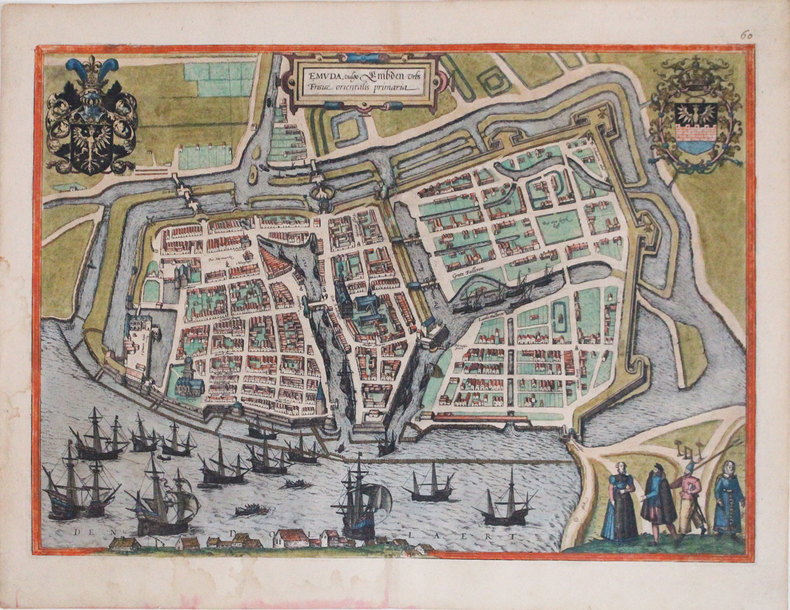
1588LBW-3306[Cologne, 1588]. 347 x 486 mm.
In -4°, pp. (12), 1144, (24); legatura alle armi (famiglia Colonna), piena pergamena, titolo ms al dorso. Difetti alla legatura. La vita della carmelitana genovese Maria Vittoria Centurione (1586-1645, in religione Paola Maria di Gesù), fondatrice dei monasteri delle Carmelitane scalze di Vienna e di Gratz. Di nascita napoletana e famiglia genovese, fu la prima a introdurre in Austria l’ordine teresiano. Oltre a notazioni interessanti sul peso della vita spirituale, si trovano in questo volume considerazioni originali sulla natura umana di Cristo (cfr. Moriones, “Dictionnaire de Spiritualité”, s.v.). The life of Maria Vittoria Centurione (1586-1645, Paola Maria di Gesù as a nun), who established the carmelite monasteries in Wien and Gratz. Beyond interesting notations on the spiritual life, in this book there are original considerations on the human nature of Christ.
18407099Album mit 24 Aquatinta-Ansichten (je 7,5:11 cm). Zürich ca. 1840. Quer-8vo. Lwd.d.Zt.; Rücken mit Leinen überzogen.
1860910531CGLübeck:, D. Brocatto u. Co, [um 1860]. Lithographie 20 x 29,5 cm, Blattgröße 31,5 x 41 cm.
46401761Paris, Aubert, sd (entre 1850 et 1863) ; in-4, percaline verte, titre doré au dos. 23 planches sur 24, manque la planche numéro 7.Album de 23 planches montrant des costumes Espagnols et Portugais d’après Valentin, Portier, etc. Gravées par les meilleurs artistes et soigneusement COLORIÉES À L’AQUARELLE. Conducteur de Marchandises de l’Alentejo - Femme d’Ovar - Mde de poissons de Pardilhé et Murtoja - Blanchisseuse des environs de Lisbonne - Paysan de Murtosa - Environs de Grenade - Lugareña - Pélerin de la vieille Castille - Paysanne des environs de Madrid - Paysan galicien - À Ségovie - Femme de Tolosa - Maragato - La Manola - Femme des environs de Vitoria - Curra de Seville - Femme de Felanix - Paysan de Soller - Paysan de la Navarre - Étudiant de Coimbre - Picador démonté - Femme espagnole de Gibraltar - Alguasil de la place des taureaux.Exemplaire en partie débroché.