1 281 résultats
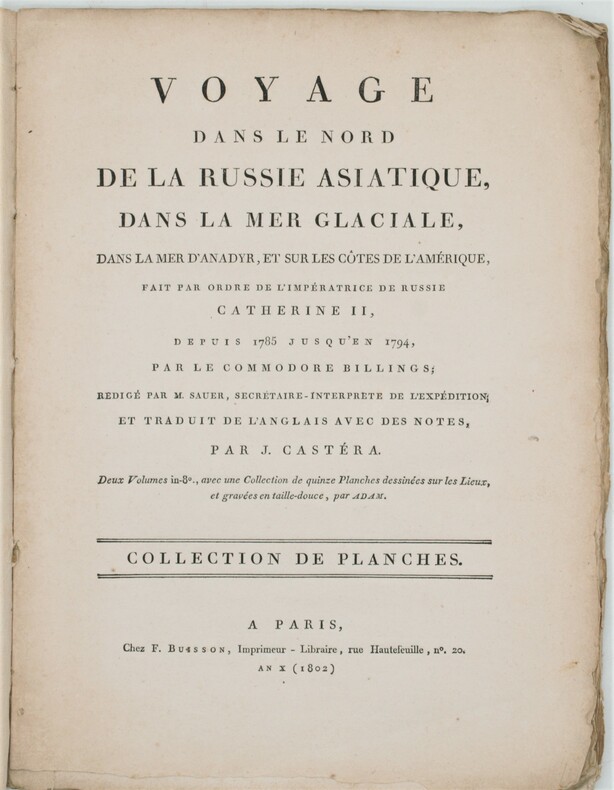
1802PHO-1648Paris, F. Buisson, et Giguen, an X – 1802. 2 volumes de texte in-8° (210x130mm), relié pleine toile époque, dos lisse. XXIV-385pp ; 417pp. et un Atlas In-4, broché, titre sur le plat contenant 14 planches gravées (vues, costumes) et une carte dépliante du détroit qui sépare l'Asie de l'Amérique. Bon exemplaire.
18942889Sitka Ak: August 1 1894. Very good plus. 5pp. Original mailing folds. A historically-illuminating eyewitness account of the burning of Baranof Castle the famous fort built in the New Archangel Sitka by the first governor of Russian America Alexander Baranov. During Russian rule the castle was the administrative center of Russian America. Baranof Castle was the site for both the formal ceremony of the sale of Alaska to the United States and the hoisting of the first American flag in Alaska. The building was continually reconstructed throughout its tenure and fully renovated in 1893. On the night of March 17 1894 the castle caught fire and burned to the ground apparently due to the ignition of oily rags stored there. At the time of the fire the building was used as the office and residence of the U.S. Court Commissioner Robert C. Rogers. Much later in 1962 the site where the castle once stood was declared a National Historic Landmark.<br /> <br /> The author of the present letter Julia E. Haley was the only daughter of Nicholas Haley a Sitka pioneer notable miner and important early landowner with several claims close to Sitka Bay. Born raised and ultimately buried in Sitka Julia Haley owned and operated the well-known curiosity shop the "Old Indian Trading Post" on Lincoln Street in Sitka in the first two decades of the 20th century. Her store offered a variety of local products and artifacts some of which purportedly came from the ashes of Baranof Castle though Haley's account of the fire seems to refute any possibility of relics being found in the ashes. Here Haley writes to a friend identified only as "Miss Young" a schoolteacher in San Francisco. In her letter Haley provides a detailed account of the Baranof Castle fire notes the troubles people have in getting to Sitka due to "much trouble on the railroads" and briefly describes a ball given by local ladies in honor of the Bering Sea Fleet "That is the U.S. Navy ships in harbour - Yorktown Mohican Albatross Ranger Hassler Corwin Adams Bear Rush Pinta and H.M. Ship Pheasant & Areal".<br /> <br /> Haley's description of the fire reads as follows: "I suppose you have heard about the Baranof Castle. It was burnt to the ground. Not even could we have a chip in remembrance. Of it nothing could be saved. It was impossible. Judge Rogers was in the building at the time & it took all they could do to get him out. He was at the windows for 8 hours crying for help. But no one heard him. Every one was asleep. He lost everything. Nothing saved only a long coat he had on. And his poor little dog was in the attic & no one could get near him. It was a beautiful building after it as nearly repaired. So you may tell your friends that the Baranof Castle at Sitka is no more. The ground it stood on is all there. The building after being repaired was going to be occupied by the officials & we miss the view so much. It was a very pretty fire. I wished you could have seen it. The flag pole was the very last to burn. They took several views of it which looks so much like it. Every one felth sic so sorry. All the ladies watched it from one in the morning until four."<br /> <br /> A unique account of one woman's experiences in far-flung Alaska in the last decade of the 19th century with a particularly noteworthy eyewitness account of the last moments of Baranof Castle. August 1 unknown
1900WRCAM54627Seattle; Skagway 1900. Twelve photographs each approximately 4 1/4 x 7 1/2 inches. Overall very good. A collection of photographs taken by Seattle photographer Frank La Roche. La Roche 1853- 1934 a Philadelphia native transplanted to the Northwest established a photography studio in Seattle in 1889. He undertook many trips to Alaska documenting the Klondike Gold Rush at length from 1897 to 1899. This group contains images of Juneau Sitka Fort Wrangell here spelled Wrangle and Taku Glacier. Two images are of Chilkat Tlingit Indians and one photo of the Seymour Rapids in British Columbia is also included. Each is numbered and captioned in manuscript or in print within the negative. Exemplary images from this noted landscape photographer of Alaska and the West. unknown books
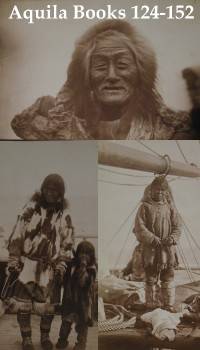
1890124152Alaska c 1890. Undetermined. near fine. Three card mouted 19th century albumen photorgraphs of eskimo from the Kotzebue Sound area of Northwestern Alaska. The images are mounted on black bevel mounts with grey backs 17.5 X 25 CM with the images being 11 X 19.5 cm. The condititon of the photos is excellent with good rich tones and little fading. All are captioned as above in an old hand. Two of the images were taken on the deck of a ship with the third undetermined. near fine Three very attractive images. We were unable to determine who the photographer is but the quality is so good that further research may yet results. 1890 unknown
194463533Hutchinson KS & Kodiak Alaska Territory: Carrie B. Mitchell Woman’s American Baptist Home Mission Society Alaska Steamship Co. 1944-1969. Oblong folio. 11.5 x 17 in. 36 pp unpaginated. on brown sack paper. With over 100 pieces of ephemera neatly affixed with tape including 6 silver gelatin photographs & RPPC’s clippings numerous ALS & TLS on letterhead some preserved in the original envelopes postcards missals programmes and more. Wooden spruce plywood post-binder sewn at gutter margin w/ cord decoupaged front cover w/ pictograms and “Story of Alaska†w/ totem pole motifs leather strap hinges held by brass brads some scuffing edgewear occasional toning scuffing to a few pieces still a VG exemplar. This intriguing scrapbook carefully documents the aspiration of Carrie Mitchell 1890-1979 to travel as a missionary to Kodiak Alaska Territory during World War II where she served as housemother to McWhinnie cottage at the Kodiak Baptist Mission School & Orphanage from 1944-1946. In classical Alutiiq Athabascan and Inupiaq societies orphans were typically adopted into wealthy Indigenous Peoples families as laborers working in return for food clothing and shelter. Often mistreated this would occasionally result in violent revenge against the tribes by the orphans. After 1893 the Kodiak Baptist Mission established their school and cottage system to educate clothe and prepare the orphans or abandoned Alutiiq children for society. Unfortunately the Baptist Mission forbade the Indigenous Peoples spiritual rituals or Russian Orthodoxy -- the predominant religious beliefs of the Kodiak area peoples and forced them to convert to Baptist beliefs. In some cases the children were forcibly removed against the will of their parents and were not orphans to receive vocational instruction and religious training at the Mission. Jan. 25 1944 Alice Crimson Executive Secretary to the W.A.B.H.M.S. wrote to Carrie how she and her staff were wondering if she would be interested “in going to Alaska as Assistant to the missionary in one of our children’s homes. It is not a managing position. It is a position of helping to make a home by assuming a share of the cooking cleaning even the washing as well as the mending of clothes. . . .†Several letters included here pass back and forth discussing Carrie’s interview her need to stay available and not travel to Texas to visit her daughter application for applying for a pass with the Headquarters Alaskan Dept. Base Echelon including fingerprint card and travel instructions. Due to wartime shortages after approval Carrie Mitchell’s travel was delayed after April 1944 because sailing times to Kodiak were curtailed but she would finally reach Kodiak AK in mid-May 1944. The grueling position had been opened because Cecile Tucker who had been housemother to McWhinnie beginning in June 1941 had decided to leave. M. Tucker regularly took care of 12-17 Alutiiq children and before being assigned to Alaska had spent 17 years working the the Mono Indigenous Peoples in the Auberry CA Baptist Mission School. Two original letters from one of Carrie Mitchell’s Indigenous charges George Yosheda 1928-2003 at McWhinnie House writes to her after leaving McWhinnie to attend school in Wrangell AK and she notes on the outside of the envelope that he was “a little homesick I think.†In his second letter from 1945 he writes about how he “can play basketball. . . if I don’t have anything to do I usually go for a walk or play the guitar.†She writes on an ALS from Enid Myers that Enid “gave up the work in Sept. 1944. That left me alone with a houseful of children until the Chandlers came. The other staff members helped me as much as they could.†By March 1946 the workload had worn her down and she wanted to retire from the position. Alice crimson writes her again that “I am very happy that you are staying in Alaska until I can find someone who will go in your place. I realize that it is difficult work physically and I think you would be wise to come out when we can replace you.†Thank you cards notices theatre programmes and several clippings concerning the 1964 Earthquake and Tsunami which struck Alaska appear within the scrapbook. See: Timothy Smith The Evangel Returns to Kodiak for the First 4th of July since Statehood July 1959 Tanignak 2020. Orphan -- Liliya’aq Alutiiq Museum Archaeological Repository 2025. Carrie B. Mitchell, Woman’s American Baptist Home Mission Society, Alaska Steamship Co., hardcover
222 pages including index and glossary. Fold-out map at page 15. Black and white photographic plates. "This book is the outcome of forty years residence amongst the Haidas, and is an accurate description of what I have seen and heard in the villages and homes. Through my knowledge of their language I have been enabled to get all my information regarding their customs, traditions and social organization direct from the principal chiefs, men who at that time were from sixty to eighty years old." - from Preface. Chapters include: Queen Charlotte Islands; Early History; The Haidas; Haida Customs; Births, Marriages, Divorce, Death and Burial Ceremonies; Tools, Ornaments and Ceremonial Masks; Industries and Medicines; The Sa-ag-ga or Shaman; The Haida Pantheon; Haida Legends; The Haida Traditions of Creation; Chief Edenshaw; The Natural History of the Islands; Geology of the Islands and Natural Resources. Appendix lists cranial measurements. Average wear. Binding intact. Red cloth-covered boards. Black lettering and decoration legible upon spine. Prior owner's stamp to bottom edge, front fixed and free endpapers, and title page. Faint bookseller's stamp to back fixed endpaper. A sound copy. Edwards & Lort 1668, Thibault 2,231. Book
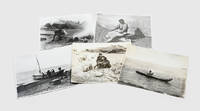
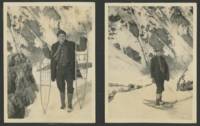
1900177155Early 1900s or slightly later. An evocative group of photographs depicting daily life and seasonal migration among the Iñupiat people. The images are taken around time of the Nome Gold Rush 1899 to 1908 a period that brought a massive influx of prospectors and drastically altered the region's demographics. Nome gained worldwide attention during the gold rush and in its aftermath the Iñupiat people underwent profound cultural and environmental shifts. Increased contact with outsiders the rise of wage labour and the introduction of Western goods by miners missionaries and teachers led to a transition from a semi-nomadic lifestyle to life in permanent villages. After the boom ended Nome's population sharply declined falling from an estimated 20000 in the early 1900s to fewer than 1500 by the 1930s. The photographer George R. King 1866-1951 was widely published with his work appearing in Sierra Club publications and in National Geographic including the 1919 feature Eskimo Life. Despite his visibility little is known about his career. Mautz lists him simply as a photographer from Boston who recorded claims on the Seward Peninsula in 1907 p. 47. King's photographs together with those of Frank H. Nowell the Lomen Brothers and others provide an important visual record during a period of rapid change. One of the images was published in The New America and the Far East 1907-10 with the photographer unidentified. Five gelatin silver prints from 182 x 234 to 197 x 248 mm all with pencillings on verso three with photographer's ink stamp on verso. Two a little yellowed a few small marginal chips tears or creasing minor surface abrasions: a very good collection. Carl Mautz Biographies of Western Photographers 2018. unknown
190170819New York:: Doubleday Page & Company 1901. First edition. publisher's gilt green ribbed cloth t.e.g. in publisher's flexible cloth gilt-lettered wrappers. Engraved bookplates on each pastedown; a beautiful set. 4to. Illustrated throughout from photographs and engravings. Doubleday, Page & Company, hardcover
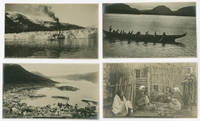
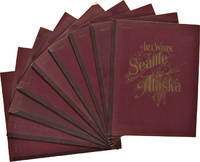
1907WRCAM54859Racine Wi.: W.D. Harney Photogravure Co. 1907. Nine parts each bound separately and uniformly complete with titlepage in first volume. 26pp. of text printed rectos only and eighty photogravure plates. Folio. Publisher's rosewood cloth backstrip and burgundy wrappers front covers gilt. Mild fraying to spine cloth some wear mild chipping and light soiling to covers. Top corner of first few leaves of first volume creased. Internally clean. Overall very good. A substantial production providing a rich photographic tapestry of the Pacific Northwest and Alaska in the early twentieth century. Each volume contains nine photogravure plates with only eight in the eighth volume most full-page but some with more than one image per plate. Each part contains two or three text leaves printed rectos only. Altogether the work is comprised of eighty photogravure plates with tissue guards containing over 100 distinct photographic images. <br> <br> Numerous photogravures depict indigenous Eskimos and other people along with stunning views of rivers mountains mining agriculture landscapes dogsled teams totem poles ships and various aspects of life in the Pacific Northwest. Highlights include the "Largest Fir in Washington" "Bird's-Eye of Nome Alaska" "An Arctic Musher" and the "Eskimo Salmon Dance." The photogravures were taken by a number of prominent western photographers including Frank H. Nowell W.P. Romans Thomas W. Tolman Wylie T. Dennison and Asahel Curtis estranged brother of Edward S. Curtis. The gravures are printed in sepia blue or green tints and retain their clarity and power more than a century after their printing. <br> <br> "A magnificent work relating mostly to Alaska with many fine full-page tinted plates" - Decker. "Contains fine plates of scenery in Seattle and Alaska" - Soliday. DECKER 26:6. SOLIDAY I:1032. WICKERSHAM 412. W.D. Harney Photogravure Co. hardcover books
Features: Steel Bridge Across Chehalis River at Aberdeen Formally Opened - article with photo; The Panama Canal Route for Canadian Northwest Shipping; Photo of Charles M. Hays, president of the Grand Trunk Railway; Address to General Passenger Agents by Howard Elliott, president of the Northern Pacific Railway (four pages); Brief business biography of George W. Hibbard, General Passenger Agent of the C.M. & P.S., with photo; Bernard N. Baker's Steamship Line a Golden Opportunity; Puget Sound Tugboat Co. on the Columbia River; New Boilers for North Vancouver Ferries; Steamer Maunganui Launched; Review of the Charter Market; Casualties to Pacific Coast Shipping; Modern Aids to Navigation Demanded for Alaskan Waters - article including lengthy list of vessels lost; Excellent illustrated centerfold makes the case for lighthouses in Alaskan waters; Review of Marine Insurance and Shipping Law; Address by president of the San Francisco Merchants' Exchange, Robert Dollar, entitled "The American Merchant Marine As It Affects Our Foreign Commerce" - with photo of Dollar; and more. 44 pages including several pages of nostalgic ads, some illustrated in black and white, featuring local marine and rail interests. Printed upon glossy coated stock. Average wear. Binding intact. Few library markings to front cover. A well-preserved copy of this highly-informative memento of Pacific Northwest transportation over a century ago. 12" x 9". Magazine
Features: Reasons Why the Canadian Pacific is So Prosperous; Spokane Rate Decision Eagerly Awaited; Value of Steel Equipment Demonstrated in Wreck of the Crack Milwaukee Train, Columbian on May 30th east of Ralston, WA; Continued Smuggling of Opium into West Coast Ports Aboard Trans-Pacific Steamships; Professional Biography of Joseph H. Young, President of Alaska Steamship Co. - with photo; Contracts Let for Coaling Plants in Seattle and Tacoma - article with two photos; $1 Million Available for Improvements at Moran Shipyards; Record Run Between Puget Sound and Callao by Schooner Wilbert L. Smith; After 20 Years on the Seattle-Tacoma Run, Steamer Flyer is Sold - Feature article with photo; Review of Marine Insurance and Shipping Law; Photo of Steamer Tampico Submerged in Seattle Harbor; Photo of New Boilers for Steamer Charmer built by Commercial Boiler Works of Seattle; Effects of the Panama Canal on Pacific Coast - Oriental Trade; News of Tacoma; Launching of the Titanic - 1/3 page article including photo of the Titanic in drydock with man standing below her massive 100-ton rudder; Charming one-page illustrated ad for The Shasta Limited, "The Finest Train in the West" which connected Seattle with San Francisco; and more. 44 pages including several pages of nostalgic ads, some illustrated in black and white, featuring local marine and rail interests. Printed upon glossy coated stock. Average wear. Binding intact. Few library markings to front cover. A well-preserved copy of this highly-informative memento of Pacific Northwest transportation over a century ago. 12" x 9". Magazine
19441769Amchitka & Anchorage Ak 1944. Overall very good. 111 original photographs measuring from 2.5 x 3.5 to 3.5 x 5 inches. Oblong folio album string-tied; leatherette boards front embossed and color stamped. Manuscript captions on album leaves; photos in corner mounts. A bit of soiling and wear to album leaves fading to some captions and a few images. An album of over 100 striking vernacular photographs taken and compiled by Corporal Herbert Farris of Lexington Kentucky that document his World War II service with the 39th Air Depot in Alaska. The men were involved in the maintenance and repair of Army Air Force aircraft and it appears that Farris operated a refueling truck. The unit was stationed in both Anchorage and in the Aleutian Islands and the album appears to include images from both of these areas. One image depicts the "wind indicator at Amchitka" an island in the far western Aleutians home to an Army Air Force Base constructed during the war. The album also includes many other images showing a remote base with bare bones conditions likely Amchitka or a nearby island. There are photos of the "first mess hall" a tent the "second mess hall" a series of huts a "barber shop" contained in a tent a shower tent a theater quonset hut barracks control tower and wooden walkways. The album also includes many images of aircraft including P-40s B-25 bombers and C-67 transports as well as photos of the refueling truck its operation and its crew. Finally there are images of "training planes" used for practice likely in Anchorage as well as some other images that appear to have been taken in Anchorage such as river gold dredgers and more permanent-looking buildings. A fascinating visual record of this far-flung American military outpost during World War II. unknown books
1917List3507Alaska 1917. Photo album measuring 7 ¼ x 11 ½ inches containing 187 photos 2 unaffixed and five loose real photo postcards with a contemporaneous newspaper clipping. Photos approximately 3 x 4 inches with generally excellent contrast and in Near Fine condition. Overall excellent to Near Fine. A photo album belonging to brothers Ruben 1892–1984 and Daniel 1895–1969 Diener documenting their 1916–1917 journey to the Territory of Alaska. The newspaper clipping reproduces a letter from Dan Diener describing their time there:<br /> <br /> “I went with an old prospector to try and locate a lost mine. We found it but there was not enough gold to pay for mining it so in that respect our trip was a failure. . I lived in a tent with a small sheet iron stove during all this time and strange as it seems it was fairly comfortable. . One day I walked or snowshoed 30 miles for my mail when the thermometer was 58 below. . But the hardships were sweetened at times with the most beautiful scenery man can imagine.†March 1917<br /> <br /> The Dieners’ trip took them to Alaska’s southern coast to Ketchikan Cordova Valdez and Seward. There are some identifiable ships including the Admiral Farragut the Mariposa shortly before its sinking and the wreck of the James Drummond in British Columbia.<br /> <br /> Subjects include Chief Johnson’s totem pole in Ketchikan erected in 1902 in honor of Chief Gut Wain George Johnson; d. 1938 of the Gaanaxadi clan of the Tongass tribe—a real photo postcard from Kasaan shows many brightly colored totem poles along the shore with dilapidated wooden houses behind them—boats filled with fish outside the Carlisle Packing Company in Cordova and a real photo postcard of a man and dog captioned “READY FOR THE SUMMER TRAIL / SEWARD ALASKA†on the back of which Ruben Dieners has written:<br /> <br /> “Oct 9 1916. Here you are. This is Judge Hildreth of whom we have written you. Our best friend here and hereafter. We are going prospecting with him next spring. The dog in the picture carry’s fifty pounds. Brother Ruben.â€<br /> <br /> H.H. Hildreth was a district court commissioner in Seward editor of the Alaskan newspaper in Sitka and The Alaska Prospector in Valdez and secretary of the Matanuska Mining Company. <br /> <br /> The shots of towns show the development of the region: in some an area of forest has been recently cleared and stumps of trees might surround a few small wooden houses or platforms where houses are to be erected; while others show towns with telegraph lines graded dirt roads with sidewalks dense housing and railroad and tram lines. Two shots from Seward show the paved sidewalk of its main street with a hotel and bars and a dog team waiting outside the hardware store. As Dieners wrote they lived in a tent and several photos show the outside of the quarters: two semi-permanent canvas tents next to a wide wooden walkway. Others show men presumably the brothers snowshoeing hiking and riding in a canoe; and of course many are scenery shots of forests waterfalls and snowcapped mountains.<br /> <br /> Of interest to historians of post-gold rush Alaska. unknown
19145195Various locations mostly in Canada and Alaska 1914. Very good plus. 36 leaves illustrated with 147 vernacular photographs and real photo postcards almost all with manuscript captions written in white pencil. Oblong quarto. Contemporary black textured cloth with "Photographs" in gilt on front cover and with handwritten caption in white pencil reading "1914 July 16 August 31." Minor wear to covers. Contents clean with easily-readable captions. A well-annotated vernacular photograph album assembled by F.A. Patterson of Arlington Heights Massachusetts documenting his or her travels through western Canada and Alaska just prior to World War I. The album opens with a small printed map of North America with the route Patterson took from "Boston to Alaska" between July 16 and August 31 1914. The photographs begin with thirteen leaves featuring scenes in Ontario and Alberta including scenes of Lake Huron St. Mary's River Sault Ste. Marie Winnipeg "Ontario farms" Banff the town wildlife mountain scenes and more Lake Minnewanka Lake Louise Laggan Valley of the Ten Peaks Morain Lake and more. The album then moves westward to British Columbia and other points then northwestward to Alaska for most of the remainder of the album. The westward photos open with scenes of the Illecillewaet Glacier Meeting of the Waters Trail Glacier and other locations in British Columbia. Scenes in Victoria picture various gardens Parliament Hotel Empress Chinese Bell and more. The scenes in Alaska begin with views of Taku Glacier and other scenes in and around Juneau. Other Alaskan images feature Lake Bennett several scenes in White Pass a view toward Skagway abandoned buildings Pitchfork Falls Sitka the harbor a "Russian Greek Church" a view of the town "Old Russian Black House" several totem poles including a "Totem Pole Patch" two angles of an "Old Russian Trading Post" and more. A particularly interesting pair of images of two buildings pictures what is left of Bennett Alaska which is captioned: "Formerly 5000 population. Now 4 houses. One occupied. August 5th 1914." The final few pages of Alaskan images features an Indian Village in Killisnoo and another in Hunter Bay as well as a close-up view of a group of indigenous peoples in Hunter Bay. The last five leaves capture scenes in Salt Lake City Utah and Colorado mostly Pike's Peak and Royal Gorge. unknown
19412368Various locations in south-central Alaska 1941. Very good plus. Eighteen photographs each 6 x 8 inches most signed and titled in manuscript by the photographer. Minor wear. A collection of eighteen beautiful photographs taken by noted Alaskan photographer Maurice L. Sharp featuring various subjects and scenes around south-central Alaska in the late-1930s. The photographs were published in various issues of the Alaska Sportsman between 1938 and 1941. Most of the images are signed and titled by Sharp in the bottom margins or on the verso. The photographs feature subjects and scenes such as "Yukon Boys - Alaska" "Mt. McKinley from Wonder Lake" three images "Harbor Anchorage" "Colonist's Home Alaska" two images "Pioneer's Cabin" "Palmer Alaska" "Gulls" "Northern Lights - Anchorage" "'Leader' Alaskan sled dog" "Sunset Tide" "The Old Cache" two images an uncaptioned image of sled dogs and more. A few of the present photographs were printed by Sharp on textured paper to achieve a different more artistic result to his printed images. unknown
19224725Alcova Wy.; Gulham and Achorage Ak 1922. Very good. Eight autograph letters signed totaling approximately 32pp. All in original transmittal envelopes. Old mailing folds minor wear. A small archive of letters documenting brief bouts of time in the life of a young Massachusetts man working in Wyoming and Alaska in the years during and just after World War I. William Sherman Platt 1896-1969 was born in Troy New York. Throughout his life he worked as a shipper at a lumber yard and eventually as the manager and then proprietor of a coal company by 1950. He served in the military during the latter portion of the First World War but apparently did not serve in Europe. Later at the age of 46 he filled out a draft card for World War II but it is unclear whether he served during the war likely not. The present collection of his letters document two brief snapshots of Platt's life as a young man from about ages eighteen to twenty-six.<br /> <br /> Platt wrote his earliest five letters from Gate Ranch in Wyoming to his parents back in Leominster Massachusetts. Platt's earliest letter from Wyoming dated July 4 1914 includes his initial reaction to the place and a stark appraisal of the locals: "I think I will enjoy things here very much indeed when I get accustomed to the place & the people. They are for the most part ignorant animals but they all mean well." In his second letter Platt complains about the slowness of the mail then offers an appraisal of the food in Wyoming: "The food is plain but well cooked and palatable and there is always plenty of it." In his third letter Platt describes the road work he was performing in and around Alcova: "Last week myself and two other fellows went down toward Alcova fixing the road. We were fixing up an old wood road for Mr. Schoolmaker to use as an auto road We camped out cooking out or meals and sleeping in our tents. It was very interesting." He describes some of his other work in his penultimate letter from Wyoming on July 30: "You want to know what I am doing. Well I am working. So far I have worked at carpentering surveying irragating sic road building and fence repairing beside hoeing weeds and helping a little with the chores once in a while. I don't know what I may strike yet. I am very busy but it is not what you would call distinctively Western work. I might do it anywhere. Still it is all right." He then provides another impression of the locals in Wyoming: "I have more fun than a little listening to these fellows around here talk. They are mostly old American stock who think that they are as good as anybody and a little better. They have views on all conceivable subjects which they are glad to air on all occasions aided with a copious flow of profanity. They sure are some fun." Platt writes his last letter from Wyoming on August 2 and reports further on his activities reading helping the cook the food again and also discusses his prospects for college which he apparently meant to start soon. He prefers to attend Clark University in Worcester but also mentions staying on the ranch in Wyoming "to learn something about ranch work" until December and then heading home to Massachusetts after going to see San Francisco.<br /> <br /> Apparently Platt enlisted in the Marines sometime in 1917 as one of his letters is dated September 16 from that year while at Paris Island South Carolina. Platt details his training and "hard labor" in the military. He had apparently left the military for the timber industry in Alaska by 1920 as his final two letters emanate from Chitina Alaska in the Fall of 1920. Platt's first letter is dated October 5 1920 and describes his work in Alaska: "Since I wrote last I have been working in the woods steadily.so long as I stay here. Really the logging here is a joke. The timber is small scattered and almost all rotten at the butt. Today there were 7 of us in the woods and we only got 70 logs short ones at that 12 to 16 ft. I have been climbing the trees all the time and I guess that will be my regular job from now on. It is easy. Most of the limbs are dead and break off." He also describes the short working day his camping rituals his like for malamute dogs and their work eating caribou and more. The present collection also includes two letters from Platt's mother sent to him in Alaska reacting to his activities but largely reporting on events from home. Platt's second and last letter from Alaska dates from January 11 1922 from Anchorage when he writes a friend also named Bill. Platt spends about half of this letter detailing the opportunities for mining in Alaska and describes a trip into the Alaskan interior: "But there is all kinds of mining on all sides of it. For quartz why the Willow Creek District is about the best. There is probably a dozen outfits operating. There is also a few coal mines in operation some at Kenana Healey & Eska Creek and a few other smaller layouts in different places. Summer before last I took a trip in through the Interior but I found it very unsatisfactory. Very expensive to move and the wages wasn't over 5 or 6 dollars a day and board for labor." In addition to his own letters the present group includes a 1917 letter from Platt's grandmother asking him to stay away from the current "awful war" as well as four family letters from the late-19th century. A small but informative group of letters surrounding a young Massachusetts man adventuring in the American West and Alaska in his younger years. unknown
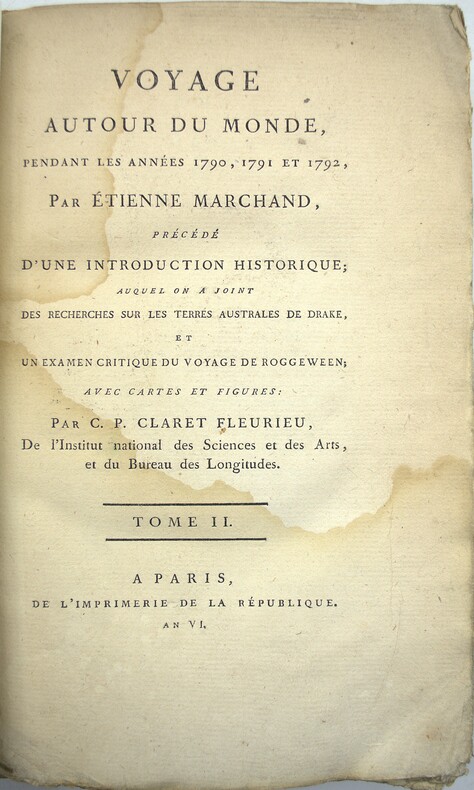
1798PHO-2046Paris, De l’Imprimerie de la République, An VI-An VII [1798-1799]. 5 volumes in-8 (22,5x14cm), 1f.-CCI-1f.-294pp.-1f., VII-529pp. (3 tableaux dépliants), VIII-474pp.1f. (8 tableaux dépliants), VIII-494pp., XII-559pp.-2ff., avec 13 cartes en copies, relié toile moderne, pièce d’auteur, titre et tomaison, non rogné, mouillures.
190375062London: McCorquodale 1903. First edition of this atlas map folio 16 1/4 x 27 1/2 inches. 5 sheets of British Commission maps and index map; 13 sheets of United States Commission maps Alaska boundary atlas and index map. Total of 20 maps 19 folding and 5 in color Maps are 53 x 32 inches. All but the British index map folded and backed in linen. Quarter red morocco over red cloth. Gilt Royal Seal to front board and spine. Maps mounted on linen and sectioned as issued. Portfolio case with moderate rubbing chipping to leather. Does not include the 10 cards to accompany the U.S. Commission maps seems to be common that these smaller ones are missing. Old staining to cloth. Toning and edge wear to British Index map. Slight toning and offsetting to maps. Overall a very good copy; quite scarce. [McCorquodale] hardcover
190455454London: Rowland Ward Ltd. 1904. Tall 8vo. xvi 292 pp. plus 2 pp. publisher’s ads. Photo frontisp. 44 photos and plates 1 large folding map in rear pocket. Green publisher’s cloth gilt lettering front cover & spine simulated Zebra skin endpapers minor bumping to corners edgewear slight spotting on the spine still VG copy. First edition of this excellent early account of hunting on the Kenai Peninsula including descriptions of Alaskan Native Americans salmon cannery operations and more. Radclyffe had acquired a permit from the Bureau of Biological Survey with the USDA in order to collect big game specimens for the British Museum and the account was dedicated to a longtime fellow hunter and friend Theodore Roosevelt. The author details his experiences with hunting Alaskan Brown Bears Grizzly Bears Moose Dall Sheep and running afoul of the zealous US Deputy Marshal Sexton a stickler for the new game regulations instituted on the Kenai in 1903 not to mention destroying the distilling operation of Alaskan hunter & miner Andrew Berg. He managed to survive a charging bear sow after being abandoned by his guide as well as the Alaskan courtroom but his companions were not so lucky as the judge ruled that the permit did not extend to the hunting party. Radclyffe returned later to hunt Alaska on the Kenai in August 1910 employing Andrew Berg as his head guide. See: Catherine Cassidy Alaska’s No. 1 Guide: The History and Journals of Andrew Berg 1869-1939 pp. 28-29 38. Rowland Ward Ltd., hardcover
188076162Washington:: Government Printing Office 1880. Second Edition -- With Charts. publisher's lettered cloth. Cloth worn at the spine and extremities but tight and sound; contents apart from the vertical splits mentioned above fine. . Folio. Four charts in pocket at rear of volume. Printed "Compliments" slip of Sheldon Jackson U. S. General Agent of Education in Alaska tipped onto the title page. The collectors of the materials recorded in the Schedules were E. S. Smith assisted by William J. McDonnell Winter 1892 and 1893. There are Aleutian words and phrases recorded in ms. on dozens of pages; and in addition illustrations of a side view and ground plan of a native Western Alaskan house with detailed description; drawings of characteristic features of Eastern and Western Alaskan natives snowshoes boats paddles etc. Two of these illustrated descriptive pages have neat vertical splits not affecting legibility. Government Printing Office, hardcover
190423751Washington D.C.: Government Printing Office 1904. 47 Colored & black and white maps some double-page. 1 vols. Folio. Bound in quarter calf and pebbled black cloth spine split. Ex Libris of James Wickersham. 47 Colored & black and white maps some double-page. 1 vols. Folio. Government Printing Office unknown books
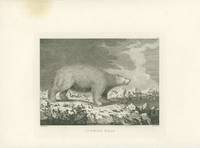
178529434London 1785. Copper engraved images of Alaska & Vancouver Island from the folio atlas of Cook's 3rd voyage Pacific Ocean exploration. The plate numbers included are #40 41 48 49. 52 57 & 73. Two images are of Alaskan natives their boats and huts going about their daily lives. <br /> Sea Horses refers to seals and the white polar bear is majestic. Two with a corner waterstain one with a slight brown circle in the margin one with marginal foxing. <br /> Paper sizes 21.5 x 16.25" and one is 22 7/8 all with wide margins. Some light marginal dusting overall very good condition. unknown
1802PHO-1231Paris, F. Buisson, et Giguen, an X – 1802. In-4, broché ,titre sur le plat Atlas seul contenant 14 planches gravées (vues, costumes) et une carte dépliante du détroit qui sépare l'Asie de l'Amérique. Bon exemplaire.
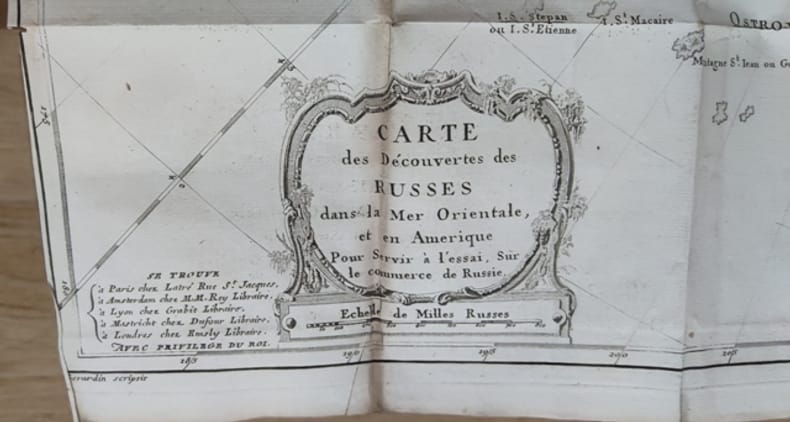
1777Eb911Amsterdam 1777 Amsterdam , 1777 - In8 ( 14x22cm) , demi basane légèrement postérieure , titre doré - 299 pages non rogné - Rousseur éparses .Légère coupure a la carte. Une grande carte dépliante sur les découvertes des Russes dans la Mer Orientale et en Amérique dessinée par Gerardin et gravée par Croisey , représentant les régions du Kamtchatka et de l'Alaska. Par Marbault , d'après Barbier , parfois attribué à Barbé-Marbois ( Grimm, correspondance , 2e partie , IV , pp 185/195) pour ce premier travail sur le commerce en Russie.