1 282 résultats
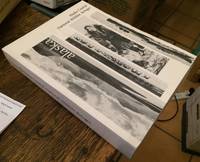
1975006921Washington D.C./Alaska: US Department of the Interior BLM 1975. 1st . Paper Back. Good/No Jacket. 4to - over 9¾" - 12" tall. 678pp.; SC white w/blk.-photo cover; slight rub w/clean pages. Binding is beginning to deteriorate and separate. In-depth description of area's environment . maps photos illus. <br/> <br/> US Department of the Interior (BLM) unknown
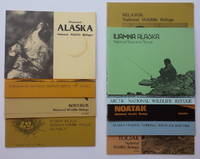
19746343Alaska: Department of the Interior. Very Good with no dust jacket. 1974. Softcover. Included are a booklet providing an overview "Proposed ALASKA National Wildlife Refuges" and nine additional booklets one for each of the areas. The separate booklets are titled "Yukon Delta National Wildlife Refuge: a proposal Koyukuk National Wildlife Refuge: A Proposal Yukon Flats National Wildlife Refuge: A Proposal Selawik National Wildlife Refuge: A Proposal Iliamna National Resource Range: a proposal Arctic National Wildlife Refuge: A Proposal Noatak National Wildlife Refuge: A Proposal Alaska Coastal National Wildlife Refuges: A Proposal and Togiak National Wildlife Refuge: A Proposal.Volumes are uniformly bound in stiff wraps of varying colors and stapled. All are illustrated pages are not numbered eight are dated September 1974 the other two are undated; A letter of transmittal is laid in to the first booklet. ; Oblong 10-1/2" x 8"; "The Secretary of the Interior is recommending nine areas of valuable wildlife habitat in Alaska to be added to the National Wildlife Refuge System. These proposals are the result of studies conducted by the Internior Department under provisions contained in the Alaska Native Claims Settlement Act of 1971." transmittal letter. Somewhat scarce: a few of these booklets can be located in the trade. Sets are not seen. ; The summary booklet has a partal coffee ring on the front cover. Otherwise these have but minor cover wear all are clean and unmarked within. . Department of the Interior paperback
1975001176National Museums of Canada, Ottawa 1975. First Print Broschur Gut
209 pages. Index. Profusely illustrated with black and white photographs. This is a very special copy for two reasons: i. it is signed by the author upon the title page and ii. it bears the presentation bookplate (dated 1960) of the City of Prince Ruppert to Mr. Carl Halverson, "a pioneer of the City". In addition, laid in is a "Pioneers Jubilee Banquet" programme, dated Sept. 7, 1960, which includes the printed name of Mr. Halverson. Binding sound. Moderate wear to unmarked book. Several smallish tears to and chips from dust jacket which is now preserved in glossy new Brodart. A wonderful Prince Ruppert momento. Book
199978CmIndigène Éditions 1999 In12 143 pages - illustrations - broché - bon etat
199978CmIndigène Éditions 1999 In12 143 pages - illustrations - broché - bon etat
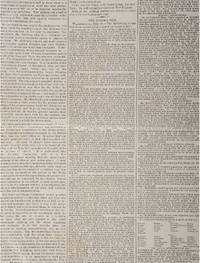
186825042<p>This copy is stamped "THE PRESIDENT" at the top of the front page indicating it belonged to President Andrew Johnson. The President would have read this copy of the act before Congress submitted it to him with some amendments on July 25. The report uses the early variant spelling of "Aliaska" for the territory and peninsula.</p> <b>ALASKA.</b>Newspaper. <i>New-York Tribune</i> July 17 1868. Featuring the terms of the "Aliaska" Bill as passed by the Senate. Copy belonging to President Andrew Johnson. New York: Horace Greeley. 8 pp. 18 x 23¾ in.<p><b><br /></b></p><p><b>Excerpts:</b></p><p>"<i>Be it enacted &c. That the laws of the United States relating to customs commerce and navigation be and the same are hereby extended to and over all the mainland islands and waters of the territory ceded to the United States by the Emperor of Russia.</i>" p1/c2</p><p>"<i>And be it further enacted that all the said territory with its ports harbors bays rivers and waters shall constitute a customs collection district to be called 'The District of Aliaska' for which said district a port of entry shall be established at some convenient point to be designated by the President at or near the town of Sitka or New-Archangel and a Collector of Customs shall be appointed by the President by and with the advice and consent of the Senate who shall reside at said port of entry and who shall receive an annual salary of $2500.</i>" p1/c2</p><p>"<i>That the President shall have the power to restrict and regulate or to prohibit the importation or use of firearms ammunition and distilled spirits into and within said territory.</i>" p1/c2</p><p>"<i>That until otherwise provided by law the Secretary of the Treasury with the approval of the President shall have power to prescribe such rules and regulations as he may deem proper for the preservation of fur-bearing animals from indiscriminate destruction provided that no special permits shall be granted under this act.</i>" p1/c2</p><p><b>Historical Background</b></p><p>After suffering defeat at the hands of the British and the French in the Crimean War of 1853-1856 Russia feared losing the Alaskan territory in some future conflict. In an effort to protect Russian interests Tsar Alexander II 1818-1881 determined to sell Alaska. After offering it in 1859 to the United Kingdom Russia negotiated a sale to the United States finalized in 1867. At the time the territory primarily offered fur trading and some natural resources. Americans generally supported the purchase and believed it enhanced American interests in the Pacific though some critics labeled it "Seward's Folly" after Secretary of State William H. Seward who had negotiated the purchase for the United States. Most newspaper editors especially those in California were enthusiastic about the purchase. Notable among the critics was Horace Greeley the editor of this newspaper and a long-time opponent of Seward. The value of the new territory increased dramatically with the discovery of gold fields in 1896.</p><p>The Senate ratified the Treaty with Russia on April 9 1867 by a vote of 37 to 2. On July 14 1868 the House of Representatives passed a resolution appropriating the $7.2 million necessary to purchase Alaska less than two cents per acre and the Senate approved the resolution with amendments. The House refused the amendments and the resolution went to a committee. The House passed the resolution as revised by the conference committee on July 23 and the Senate passed it the following day.</p><p>Meanwhile on July 15 Senator Zachariah Chandler of Michigan introduced "An Act to extend the Laws of the United States relating to the Customs Commerce and Navigation over the Territory ceded to the United States by Russia to establish a Collection District therein and for other Purposes" and the Senate passed it on July 16. In the House Representative Elihu B. Washburne of Illinois proposed amendments on July 25 and the House agreed to them. The Senate disagreed with the amendments and this bill went also to a conference committee where the Senate receded from its opposition and the bill passed. President Johnson approved and signed both the joint resolution and the act on July 27 1868.</p><p>In 1870 Congress followed up its concerns about preserving fur-bearing animals expressed in this law with "An Act to prevent the Extermination of Fur-bearing Animals in Alaska" aimed directly at regulating the killing of fur-bearing seals on Saint Paul and Saint George Islands off the western coast of Alaska north of the Aleutian Islands.</p><p><b>Additional Content</b></p><p>This issue also includes the Senate confirmation of William M. Evarts 1818-1901 as Attorney General p1/c2 p5/c4; proceedings of Congress including Senate discussion of this bill p1/c3-4; a letter from a special correspondent describing Sitka Alaska p2/c2-3; an editorial nomination of Thomas A. R. Nelson of Tennessee as Secretary of State to succeed William H. Seward "<i>now that Mr. Seward has succeeded in buying Aliaska</i>" p4/c5-6; "base ball" and cricket scores p5/c5; and a report on dozens of deaths from sunstroke during two-week heat wave especially among children p8/c1-3.</p><p><b><i>New-York Tribune</i></b> 1841-1924 was established as a daily newspaper in 1841 by Horace Greeley 1811-1872. By the 1850s it reached a circulation of 200000 copies making it the largest daily newspaper in New York City at the time. Greeley also published weekly and semi-weekly issues of the <i>Tribune</i> through much of his tenure. The <i>New-York Tribune</i>became the dominant Whig and then Republican newspaper in the United States helping to shape public opinion especially as other newspapers often copied its articles and editorials. It was one of the first newspapers in the Union to send reporters and correspondents to cover the military campaigns of the Civil War. Greeley used his newspaper to support many reforms including abolitionism pacifism socialism for a time and feminism. After Greeley's failed campaign as the Liberal Republican candidate for President Whitelaw Reid 1837-1912 assumed control of the <i>Tribune</i> until his death. His son Ogden Mills Reid 1882-1947 acquired the <i>New York Herald</i> and merged the newspapers in 1924.</p><p><b>Condition</b></p><p>Typical folds and light foxing few slight tears at some of the outer margins and appears to have been bound in a book at one point or someone reinforced the outer fold.</p> books
186825042<p>This copy is stamped "THE PRESIDENT" at the top of the front page indicating it belonged to President Andrew Johnson. The President would have read this copy of the act before Congress submitted it to him with some amendments on July 25. The report uses the early variant spelling of "Aliaska" for the territory and peninsula.</p> <b>ALASKA.</b>Newspaper. <i>New-York Tribune</i> July 17 1868. Featuring the terms of the "Aliaska" Bill as passed by the Senate. Copy belonging to President Andrew Johnson. New York: Horace Greeley. 8 pp. 18 x 23¾ in.<p><b><br /></b></p><p><b>Excerpts:</b></p><p>"<i>Be it enacted &c. That the laws of the United States relating to customs commerce and navigation be and the same are hereby extended to and over all the mainland islands and waters of the territory ceded to the United States by the Emperor of Russia.</i>" p1/c2</p><p>"<i>And be it further enacted that all the said territory with its ports harbors bays rivers and waters shall constitute a customs collection district to be called 'The District of Aliaska' for which said district a port of entry shall be established at some convenient point to be designated by the President at or near the town of Sitka or New-Archangel and a Collector of Customs shall be appointed by the President by and with the advice and consent of the Senate who shall reside at said port of entry and who shall receive an annual salary of $2500.</i>" p1/c2</p><p>"<i>That the President shall have the power to restrict and regulate or to prohibit the importation or use of firearms ammunition and distilled spirits into and within said territory.</i>" p1/c2</p><p>"<i>That until otherwise provided by law the Secretary of the Treasury with the approval of the President shall have power to prescribe such rules and regulations as he may deem proper for the preservation of fur-bearing animals from indiscriminate destruction provided that no special permits shall be granted under this act.</i>" p1/c2</p><p><b>Historical Background</b></p><p>After suffering defeat at the hands of the British and the French in the Crimean War of 1853-1856 Russia feared losing the Alaskan territory in some future conflict. In an effort to protect Russian interests Tsar Alexander II 1818-1881 determined to sell Alaska. After offering it in 1859 to the United Kingdom Russia negotiated a sale to the United States finalized in 1867. At the time the territory primarily offered fur trading and some natural resources. Americans generally supported the purchase and believed it enhanced American interests in the Pacific though some critics labeled it "Seward's Folly" after Secretary of State William H. Seward who had negotiated the purchase for the United States. Most newspaper editors especially those in California were enthusiastic about the purchase. Notable among the critics was Horace Greeley the editor of this newspaper and a long-time opponent of Seward. The value of the new territory increased dramatically with the discovery of gold fields in 1896.</p><p>The Senate ratified the Treaty with Russia on April 9 1867 by a vote of 37 to 2. On July 14 1868 the House of Representatives passed a resolution appropriating the $7.2 million necessary to purchase Alaska less than two cents per acre and the Senate approved the resolution with amendments. The House refused the amendments and the resolution went to a committee. The House passed the resolution as revised by the conference committee on July 23 and the Senate passed it the following day.</p><p>Meanwhile on July 15 Senator Zachariah Chandler of Michigan introduced "An Act to extend the Laws of the United States relating to the Customs Commerce and Navigation over the Territory ceded to the United States by Russia to establish a Collection District therein and for other Purposes" and the Senate passed it on July 16. In the House Representative Elihu B. Washburne of Illinois proposed amendments on July 25 and the House agreed to them. The Senate disagreed with the amendments and this bill went also to a conference committee where the Senate receded from its opposition and the bill passed. President Johnson approved and signed both the joint resolution and the act on July 27 1868.</p><p>In 1870 Congress followed up its concerns about preserving fur-bearing animals expressed in this law with "An Act to prevent the Extermination of Fur-bearing Animals in Alaska" aimed directly at regulating the killing of fur-bearing seals on Saint Paul and Saint George Islands off the western coast of Alaska north of the Aleutian Islands.</p><p><b>Additional Content</b></p><p>This issue also includes the Senate confirmation of William M. Evarts 1818-1901 as Attorney General p1/c2 p5/c4; proceedings of Congress including Senate discussion of this bill p1/c3-4; a letter from a special correspondent describing Sitka Alaska p2/c2-3; an editorial nomination of Thomas A. R. Nelson of Tennessee as Secretary of State to succeed William H. Seward "<i>now that Mr. Seward has succeeded in buying Aliaska</i>" p4/c5-6; "base ball" and cricket scores p5/c5; and a report on dozens of deaths from sunstroke during two-week heat wave especially among children p8/c1-3.</p><p><b><i>New-York Tribune</i></b> 1841-1924 was established as a daily newspaper in 1841 by Horace Greeley 1811-1872. By the 1850s it reached a circulation of 200000 copies making it the largest daily newspaper in New York City at the time. Greeley also published weekly and semi-weekly issues of the <i>Tribune</i> through much of his tenure. The <i>New-York Tribune</i>became the dominant Whig and then Republican newspaper in the United States helping to shape public opinion especially as other newspapers often copied its articles and editorials. It was one of the first newspapers in the Union to send reporters and correspondents to cover the military campaigns of the Civil War. Greeley used his newspaper to support many reforms including abolitionism pacifism socialism for a time and feminism. After Greeley's failed campaign as the Liberal Republican candidate for President Whitelaw Reid 1837-1912 assumed control of the <i>Tribune</i> until his death. His son Ogden Mills Reid 1882-1947 acquired the <i>New York Herald</i> and merged the newspapers in 1924.</p><p><b>Condition</b></p><p>Typical folds and light foxing few slight tears at some of the outer margins and appears to have been bound in a book at one point or someone reinforced the outer fold.</p>
190035503526Washington, Government Printing Office, 1900 ; in-8, broché, couv. imprimée. 56 pp. - 3 cartes et 19 planches hors-texte.
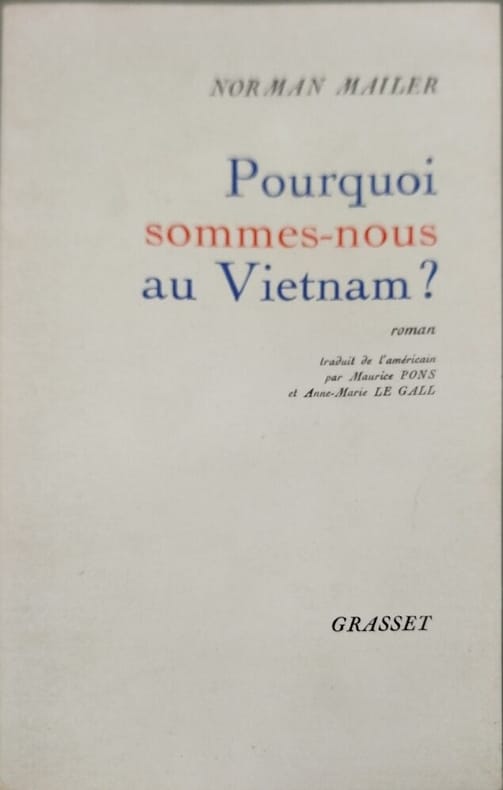
19686903GRASSET 1968 238 pages in8. 1968. broché. 238 pages. Ce roman de Norman Mailer utilise le cadre d'une expédition de chasse violente et obscène en Alaska comme allégorie de la guerre du Vietnam. Il suit un adolescent névrosé et son père représentants de la haute société de Dallas pour dresser un portrait féroce de la société américaine et questionner les raisons de l'engagement américain au Vietnam
1850576031850]. 10 x 10 cm. (Blattgröße 22,5 x 17 cm). Unter Feinkartonpassepartout mit Farblinieneinfassung.
185057677[Ca 1850]. 13 x 10,5cm. (Blattgröße 21 x 16,5 cm.) Unter Feinkartonpassepartout mit Farblinieneinfassung.
18231Washington GPO.1889. Hardcover. 8vo. 22.5cm portfolio containing 12 large folding maps tabbed rebound in black cloth with the original printed cover laid down fine thusads. Washington, GPO.1889 hardcover
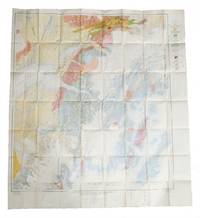
526001940. 3 original colour maps each c. 110 x 110 cm 40 x 45 inches folding to 20 x 12.5 cm. Natural fold creases generally very fresh and clean. Shows anchorage Big delta Blying Sound Circle fairbanks Gulkana Healy Kantishna River Kenai Livengood Mount Hayes Mount McKinley Seldovia Seward Talkeetna Talketna Mountains Tanan Tyonek Valdez etc. 1940 unknown
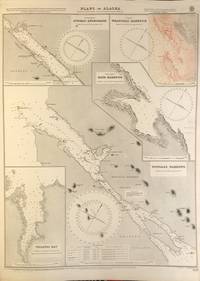
56396London: British Admiralty 1898 1924. . An engraved chart on heavy stock uncolored sheet size 20 x 27.5 inches. Published 22nd March 1898; Small corrections printed to 1924 and mss. to 1927. Unfolded. A nice clean copy. In lower right: "Engraved by Edwd. Weller". Chart number is 1524. Small typed label on verso giving chart & folio info. Published under the Superintendence of Rear Admiral Sir W.J.L. Wharton. Maps of Juneau Anchorage Wrangell Harbour Ratz Harbour Tongass Narrows and Tolstoi Bay. Upper right map Wrangell Harbour is corrected with a paste-over printed in black & red. <br/><br/> London: British Admiralty, 1898 (1924). unknown
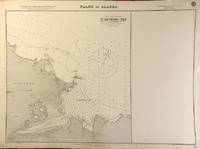
56403London: British Admiralty 1900 1923. . An engraved chart on heavy stock uncolored sheet size 27.5 x 20 inches. Published 10th Aug. 1900; New Edition July 1909; Small corrections printed to 1923. Unfolded. A nice clean copy. In lower right: "Engraved by Davies & Company". Chart number is 3143. Small typed label on verso giving chart & folio info. Published under the Superintendence of Rear Admiral Sir W.J.L. Wharton. One plan only of St. Michael Bay Norton Sound - South Shore St. Michael Island. <br/><br/> London: British Admiralty, 1900 (1923). unknown
1980V6018Rastatt (Moewig) 1980 (= Erste Ausgabe). 8°, Originalkarton mit Originalumschlag
in-8°, 249 pp., illustrations en noir, cartonnage ill. Bel exemplaire (couv. recouverte d'adhesif transparent). [HA-1]
8vo., First Edition, with plates and endpaper maps neat contemporary inscription on half-title; white cloth, gilt back, a very good, bright, clean copy in price-clipped dustwrapper.
1966852071966 Paris, Flammarion (Collection "L'Aventure Vécue"), 1966, in 8°, cartonnage illustré de l'éditeur, 251 pages ; illustrations hors-texte.
0282257195.Gpaperback. Good. Access codes and supplements are not guaranteed with used items. May be an ex-library book. paperback
in-12, 317 pages, broche, couverture illustree. Bel exemplaire, en grande partie non coupe. [GE-3] La vie et l'œuvre des grands pilotes en Alaska.
188848113New York: A. Wittemann The Albertype Co. 58 and 60 Reade Street 1888. Oblong 12mo 7.25 x 5.25 in. 4 pp unpaginated. 12 plates of photo images on thick card stock. Pebbled red cloth decorated gilt lettering & Aurora Borealis motif on front cover black decoration punch sewn at gutter margin by red silk braid minor soiling and spotting to front cover minor edgewear still G copy w/ very nice images former ownership inscription on front pastedown. First edition of this very scarce travel view book of Alaska in the 1880s detailing Sitka the gold mines the natural wealth of the country and the Native American inhabitants including the Tlingit Eskimos in the Aleutians and the stunning totem poles to be found. There are also views of the Muir Glacier Juneau a quartz mill and the Yukon River. Adolph Wittemann and his brother Herman began working as printers in New York in 1867 and first started printing books and postcards under the Albertype name in 1887. Adolph acted not only as agent finding customers for their services but taking photographs across the country to be made into postcards. Worldcat locates 4 copies. A. Wittemann, The Albertype Co., 58 and 60, Reade Street, hardcover
1968161281Aus dem Schwedischen von Bärbel Meyer-Dettum. Wiesbaden, Brockhaus, 1968. 4to. Durchgehend mit farbigen fotografischen Abbildungen. 48 S. Farbiger Or.-Pp.; Kapitale u. Ecken bestoßen. [4 Warenabbildungen]
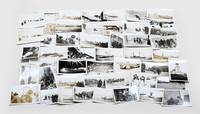
1932177173Alaska: 1932-3. The first Hollywood film to be shot in a Native American language A collection of behind-the-scenes photographs documenting the production of Eskimo 1933. With a mostly Native American cast it was the first feature film shot entirely on location in Alaska and the first to incorporate the Iñupiat language. Produced over a 17-month period it captured scenes of hunting and daily life with documentary realism. The photographs include images of the cast and crew among them the Iñupiaq lead Ray Mala Lotus Long Peter Freuchen and director W. S. Van Dyke as well as indigenous actors in traditional parkas and mukluks. Also shown are scenes of walrus and moose hunts extras posed in igloos animal processing and film equipment in use. Mala accompanied the Danish Arctic explorer Knud Rasmussen on an expedition from 1921 to 1924 collecting and describing Inuit songs and legends. The following year Mala commenced his career in Hollywood where he worked for almost 30 years. Eskimo later re-released as Mala the Magnificent was directed by Van Dyke and adapted from Freuchen's writings. Depicting encounters between Inuit communities and Western traders the film was not a commercial success. Still it was praised for its realism and awarded the inaugural Academy Award for Best Film Editing. Van Dyke known as "One Take Woody" for his efficient work made several other early sound films including Tarzan the Ape Man 1932 The Thin Man 1934 and San Francisco 1936. 48 silver gelatin prints from 64 x 88 to 87 x 105 mm. portrait and landscape format some stamped "Velox" on the verso others with pencilled numbers. A small number are copy prints. Some a little yellowed or with silver mirroring a few minor surface abrasions: a very good collection. Frank Javier Garcia Berumen American Indian Image Makers of Hollywood 2020; R. Bruce Macdonald Sisters of the Ice 2021. unknown