8 985 résultats
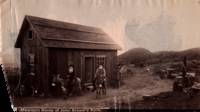
1880List2900Los Angeles California 1880. Two photographs measuring approximately 4 ½ x 7 ½ inches. Pasadena Historical Society stamps verso. One with manuscript caption verso including “Mtn Home of John Brown’s Sons Located just south of Brown’s Peak between Millards Cañon arroyo secoâ€. Wrinkling and marginal tearing with some missing corners. One photograph with tape residue. Very good. Owen Brown 1824–1889 and Jason Brown 1823–1912 were two of abolitionist John Brown’s twenty children. Owen Brown participated in both the Pottawatomie massacre and the Harpers Ferry raid. Following the unsuccessful raid he led the party of escapees to Pennsylvania. He lived in Put-in-Bay Ohio until 1885 when he joined his brother Jason—who was not involved in his father’s activities—in Pasadena. The two lived in poverty in mountain cabins several miles outside the city; offered here are two photographs of the brothers standing outside their cabins. In their time in Pasadena they were described as eccentric and hermetic but were liked and respected by those in town. Several obituaries of Owen Brown describe how witnessing the growing anti-Chinese sentiment in the region the brothers hired two Chinese men from the area to work for them “for the sake of the principle although they had no need†of the workers.1 One of these laborers may be the third man standing behind Jason Brown in the photograph where the brothers are astride donkeys.<br /> <br /> Of interest to scholars of the Brown family and their legacy.<br /> <br /> 1 “The Late Owen Brown. The Peculiar Life of the Son of the Abolitionist Ends in California.†Indianapolis Journal January 13 1889 8. unknown
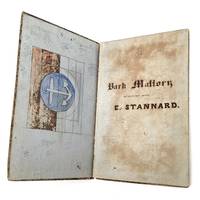
80034A logbook of accounts kept by Captain Elbert Stannard for two of the ships he commanded out of the port of San Francisco in the late 1850s and '60s the Bark Mallory and the Bark Daniel Webster. The latter was sold in 1861 to the government of Japan and became the first warship in the Japanese navy.<br /> <br /> The account book contains 22 pages related to the Bark Mallory and approximately 70 pages of accounts concerning the Daniel Webster. On the first page is written: "Bark Mallory in Account with E. Stannard".<br /> <br /> The blue-lined pages are written on in ink and pencil. Much of the spine has perished the marbled boards are detached and it appears a few pages have been removed from the logbook.<br /> <br /> The accounts concerning the Daniel Webster are dated between 1859 and 1861 and begin with the cost of repairs for its voyage from New York to San Francisco. It then traveled to Victoria and Perth from San Francisco and traveled from San Francisco to Shanghai and Kanagawa Japan and back.<br /> <br /> According to newspaper records Stannard 1828–1907 was in command of the first steamboat to enter Japanese and Chinese waters trading between these ports and San Francisco. He made his home in Westbrook Connecticut.<br /> <br /> Historical records indicate the Bark Mallory had been plying the coastal trade since the 1850s. The ship was hired by Snohomish Mills to transport lumber from Washington to San Francisco since there was not enough demand in the local lumber trade. On one of her voyages the Mallory took on water near Cape Flattery and was beached at Neah Bay. The windfall of lumber wound up in many local buildings.<br /> <br /> The log from 1857 for the Bark Mallory includes a line for payment of “Chinamen pumping†for $18.50. By 1848 when the first Chinese arrived in San Francisco they had already established a pattern of leaving China to work in other parts of the world.<br /> <br /> This logbook also contains an untitled handwritten 2 ½ page poem about mining with no attribution. unknown
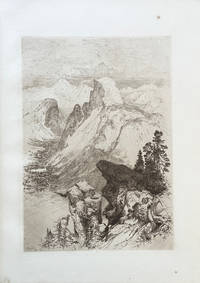
188763320San Francisco & New York: The J.ames Dewing Company Publishers J. Dewing Publshing Co. changeover in 1888 1887-1888 i.e. 1890. Ten vols. Folio. 8 48; 2 49-96; 2 97-144; 2 145-192; 2 193-240; 2 241-288; 2 289-336; 2 337-384; 2 385-432; 2 433-478 8 pp. with titles Div. 1 & end of Div. 10 in red & black. With 120 sepia- and aqua-tinted photogravures and etchings along with illustrated printed tissue guards and 100’s of woodcut engravings etchings and tinted text engravings. Pictorial gray-blue publisher’s cloth cover art illustration of the Sierras and inset California Mission scene Div. 7 w/ ffep. as the original wrappers front & back covers couple minor closed tears to fore-edges minor gouge & chip to fore-edge of front cover Div. 4 occasional closed tears to a few leaves fore-edges occasional minor age toning some soiling & faint tide marks to a couple of the volumes dustsoiling & minor wear to a couple spines still a VG bright set. First edition thus of this version of John Muir’s Picturesque California which was originally issued in 30 monthly parts featuring hundreds of etchings photogravures and wood etchings of California and Western scenery drawing inspiration from Bryant’s Picturesque America. Featuring such authors alongside Muir as Joquin Miller Kate Field George Hamlin Titch Ernest Ingersoll Albert Gray C.C. Goodwin and others this wonderfully illustrated set fulfills “the mission of this work is to make the best possible representation of the marvelous scenery and sublime natural wonders of†California and West. Of additional interest is that this version includes Muir’s article on “Alaska†which appeared in all the 1888 editions but was omitted later in the 1894 printings. The array of artists and their photogravure’s opens with Thomas Moran’s “The Half Dome†and others of his as well as etchings and gravures from art by Keith Julian Rix Frederick Remington Arthir I. Keller John Durkin Frank Tabor Charles Dorman Robinson and more. See: Kimes John Muir: A Reading Bibliography by Kimes 187. The J.[ames] Dewing Company, Publishers, J. Dewing Publshing Co. (changeover in 1888), hardcover
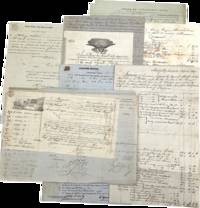
80111A group of 13 Gold Rush-era shipping documents recording the import of international goods to the port of San Francisco between 1849 and 1857.<br /> <br /> The news of gold at Sutter’s Mill in 1847 lured more than 300000 people from the rest of the United States and abroad to San Francisco which then had a population of just 459 residents. These new emigrants brought only small amounts of goods with them and there was little farming in California to support the '49ers. Most American merchants who sold provisions and amenities during the California Gold Rush dealt in imported goods such as dried fish and beef jerky canvas and clothing tools lumber candles coffee and livestock from points abroad.<br /> <br /> One invoice dated May 3 1850 is for 100 tons of coal shipped from Duffryn Steam Coal in Liverpool to G.W. Aspinwall a prominent businessman and co-founder of both the Pacific Mail Steamship Company and Panama Canal Railway companies which revolutionized the migration of goods and people to the West Coast.<br /> <br /> Another four-page handwritten invoice in this group dated September 15 1849 lists sundries shipped on the Steamer Clyde from Jamaica to the merchants Jewett and Melhado in San Francisco. It includes cases of jams jellies pickles Brandy seasoning salt and more. In addition to supplying miners Jewett and Melhado provided monthly reports in the Alta California newspaper on the price and flow of goods in Northern California. Other receipts record everything from the import of cigars to bales of twine and canvas cloth. unknown
1894008457San Francisco: H. S. Crocker 1894 Book. Fine. Hardcover. MIDWINTER FAIR. Oblong quarto. 10x13 inches. Three parts bound together. Illustrated with 8 full-page lithographed color plates by Dickman-Jones Co. of San Francisco plus the full set of 24 full-page lithographed color plates by H. S. Crocker Co. plus over 213 full-page black & white photographs with extensive descriptive text including 13 of 14 double-page panoramas. Publisher's binding of three-quarter brown morocco darker cloth sides gilt lettering and pictorial element on cloth cover gilt-lettered spine. Outer hinges and spine ends rubbed 3 corners show light wear. A fine clean copy. First edition. With the bookplate of Thomas Wayne Norris and included in the famous Norris Catalogue. An incredibly scarce tile with the full complement of 24 full-page color lithographs Series I & II of scenes and buildings at the Midwinter Fair also issued by H. S. Crocker Co. and the addition of the souvenir grouping Glimpses of the Midwinter Fair issued by Dickman-Jones Co. to their customers with 8 full-page color lithographs of the Fair bound in with its original wrappers. Sunset City and Sunset Scenes is usually found only with the Taber black & white reproductions. We have never had a copy bound with the full series of color lithographs although over the years we've seen a few odd plates. The large number of black and white photographic reproductions include a number of views of the buildings and grounds of the Midwinter Fair held in Golden Gate Park; they are interspersed with select views of the natural wonders of the State. Nearly all the photographs are by Isaiah W. Taber official photographer of the Fair. The text for the non-Fair images was written by J. M. Hutchings; the twenty-four lithographs issued by Crocker were drawn by the famous western artist H. W. Hansen. Norris Norris Catalogue this copy: 3493; Rocq Glimpses of the Midwinter Fair: 11355; Rocq Sunset City: 11359; no Auction Records that include the color plates. . H. S. Crocker hardcover
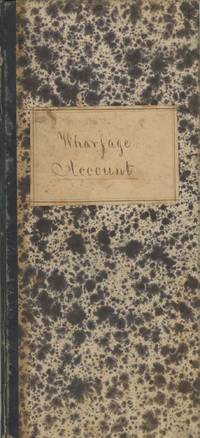
1873List2825Eureka California 1873. Single 5 ½ x 12 inch ledger book with five small pages of notes and one short letter. Forty-two pages of the ledger filled out with many more blank. Some damage to spine on exterior otherwise very good to excellent. Offered here is a wharfage fee account ledger from Eureka California with dates between 1868 and 1873. The first Euro-American settlement at what is now Eureka on the Humboldt Bay was founded in 1850. It became a hub for bringing supplies to the Trinity Klamath and Salmon River mines both by water and over land and a major lumber manufacturing town with seven sawmills by 1858.1 Lumber vessels sent lumber down the Pacific coast as far as Chile. By the 1860s and 70s Eureka’s main exports were lumber and produce including pork and seafood via sailing vessels and there was also regular steamer service taking people and goods between there and San Francisco. Wharfage would have been paid at the port at Eureka for loading or unloading cargo; the ledger tracks ship names alongside either the names of men who loaded the cargo or the cargo type quantities and prices.<br /> <br /> 1 Owen Cochran Coy The Humboldt Bay Region 1850–1875 California State Historical Association 1929. unknown
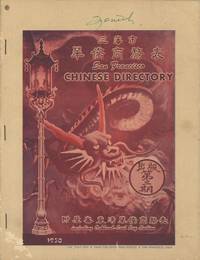
1950List3323San Francisco California: Jimmy Lum Advertising Service 1950. 107 pp directory measuring 8 ½ x 11 inches. Normal wear with some manuscript markings on wraps; contents excellent with some markings and wear. Overall very good to excellent. The 1950 edition of the San Francisco Chinese Directory published by the Jimmy Lum Advertising Service. The directory contains telephone listings of Chinese residents and advertisements for businesses—appliance and furniture stores restaurants clothiers driving schools and more—around the city. The advertisements are mainly in both English and Chinese though some are without English. Not all the businesses are Chinese-owned with the exception of the medical practitioners and vendors. The directory also includes a two-page map of San Francisco’s Chinatown neighborhood between Hyde and Sansome Streets. <br /> <br /> Before World War II the Chinese Exclusion Act and other laws restricting Chinese immigration kept San Francisco’s Chinese population low and majority male with most concentrated in Chinatown. Discrimination and violence further reduced the population into the 1920s. Wartime alliance with China and Chinese Americans’ participation in the war effort began to soften public attitudes and led to the 1943 repeal of the Chinese Exclusion Act; though new quotas following the repeal were extremely strict they allowed families to reunite—or form—and by 1950 people of Chinese descent made up about 3% of the city’s population a significant rebound from previous decades.<br /> <br /> OCLC locates two physical copies of the directory. Jimmy Lum Advertising Service unknown
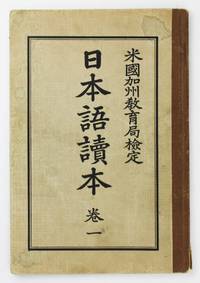
19296347San Francisco & Japan: Aoki Taisei-Do 1929. Very good. 56pp. In Japanese. Original printed stiff wrappers cloth-backed. Minor wear and scattered staining to wraps. Light tanning internally. A fascinating and scarce Japanese-language textbook intended for use by Japanese-American children in California during the late 1920s. The work was published by Aoki Taisei-Do a San Francisco book and stationery store that catered to Japanese immigrants. The inside rear wrapper states that this was was "Approved by the California State Board of Education. August 1923. Published Aoki Taisei-do. San Francisco California. Printed in Japan together with a 1929 date code. The book contains numerous illustrations throughout of young children animals plants and more accompanied by Japanese text and seems to have been a primer for learning to read and write Japanese for children born to immigrants in the United States. A illustration of Santa Claus and one of a English teatime table setting belie a bit of Western influence. Despite the printed discrepancy between approval and publication dates we locate no other editions and only one copy of the present one at the Bancroft. Aoki Taisei-Do unknown
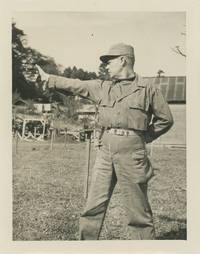
1964List3231United States and Japan 1964. Approximately 143 items: forty-two letters twenty-five in Japanese and seventeen in English; seventy-six photographs with twelve medium-format negatives; eleven pieces of military ephemera; an inscribed handkerchief; and a lacquered wood storage box 8 x 14 x 7 inches with family crest. Letters and ephemera Near Fine photographs curled else excellent; overall excellent to Near Fine. Kiyoshi Tanaka 1914–2001 was born in Sacramento to parents who immigrated from Japan early in the century. In 1943 he and his parents were interned at the Tule Lake War Relocation Center in northern California. Tanaka joined the military in 1949 and served as a Special Agent with the 115th Counter Intelligence Corps Detachment a component of the Far East Command and was stationed in Japan and Korea from 1950 to about 1954. He returned to California and transferred to the Army Reserve in 1956 retiring from the military in 1957.<br /> <br /> Offered here is a collection of Tanaka’s correspondence photographs and military documents mainly from the 1950s. The latter are certificates of appointment and training—Tanaka took courses in counterintelligence and martial law—and transfer and discharge documents. According to his correspondence Tanaka served in both Japan and Korea though he was mainly stationed in Japan and does not seem to have gone to Korea before 1952. Though the US technically no longer occupied Japan after the 1951 Treaty of San Francisco the accompanying Security Treaty allowed the US military to maintain military bases in the country which were critical in the Korean War. Tanaka’s photographs appear to have been taken primarily in Japan and show street scenes target practice and some shots of office work.<br /> <br /> Tanaka does not appear to have discussed details of his work with his family and friends; most of his correspondence consists of reminiscing with friends discussing weather and health with family and reassuring a girlfriend in Japan that his “evils are limited to drinking 2 or 3 beers†May 17 1954; translated. Sometimes friends reflect on current events; one writes:<br /> <br /> “You no doubt have read of strikes and there are still talks of other strikes. We do hope that conditions will become so so that there will be more settlements without walkouts and the like. Yes the higher ups always use the Korea situation as a defense but the people in general do not have that close cooperating spirit as there was during the last war.†February 23 1951<br /> <br /> Also included in the correspondence are several items from attorney Henry Taketa concerning Tanaka’s attempts to get compensation for himself and his mother via the 1948 Japanese American Evacuation Claims Act. The Act was intended to compensate Japanese Americans for losses incurred when they were interned. Tanaka filed and was rejected several times first for over $2000 and then for over $1500; the government countered that Tanaka and his mother were only owed about $90 total. This would have been a typical experience as the Act highly restricted what kinds of losses would be compensated and made the process arduous.<br /> <br /> Of interest to historians of the Japanese American experience after World War II and during the Korean War in particular. unknown
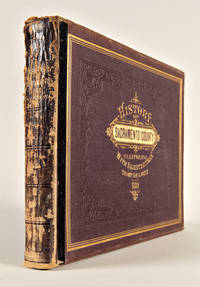
1880WRCAM38805Oakland: Thompson & West 1880. 294pp. plus two colored maps one folding and 216 lithographic plates several with more than one illustration eight of them double-page. Oblong quarto. Original half sheep and cloth stamped in gilt and blind spine stamped in gilt. Spine and hinges rubbed and scuffed boards moderately worn at edges. Long closed tear in folding map and one text leaf else internally very clean and fresh and in near pristine condition. A magnificently illustrated comprehensive history and description of Sacramento. While the text provides a history of the city from its settlement to the date of publication the illustrations provide excellent views of numerous key buildings. Included are the state capitol courthouses the Sacramento Brewery the Arcade Hotel the offices of the Sacramento Bee and other newspapers the Sacramento Seminary cattle ranches farms lumber yards merchants mills Breuner's furniture shop the county hospital and much more. Homes of several prominent citizens are shown including Mrs. E.B. Crocker's mansion her main residence as well as a smaller - yet still grand - home a block away the opulent home of Albert Gallatin and the ranch of cattle baron Frederick Cox. Scores of more modest homes in the city and country are shown as well including the residences of several farmers and ranchers in what was once open countryside but is now part of Sacramento's suburban sprawl. One map is of California and surrounding states while the folding map shows Sacramento County. An exhaustive effort designed to attract additional residents and businesses to California's booming capital and providing an unequalled visual record of Sacramento in the late 19th century. COWAN p.548. HOWES S9 "b." ROCQ 6512. NORRIS CATALOGUE 3351. Thompson & West hardcover books
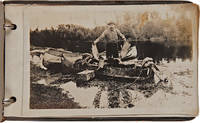
1927WRCAM55131Oakland 1927. Twenty-eight silver gelatin photographs each approximately 4 x 6 1/2 inches. Each photograph backed with canvas and with a detailed typed caption on verso. Oblong octavo. Ring-bound flexible leather boards. Upper 1 1/2-inch portion of spine and front cover chipped away. Covers rubbed crude repairs to spine toning and minor wear to photographs. Very good. In a cloth box. An unusual album featuring boats and canoes manufactured by the King Boat Company of California. Many of the photographs are dated 1927 and the album serves not only as a visual catalogue of various boats available from the King Boat Company but also as a document of water travel in Alaska California and the Pacific Northwest in the 1920s. The canvas backing on the first and last images bears the inkstamped name of F.R. Frederick a distributor based in Boston. Whether this album was prepared by Frederick or by the King Boat Company is unclear. What is clear is that these are very interesting images of various King Boat Company boats and canoes in use. Nine are identified as having been photographed by "Lewis R. Freeman Noted Explorer and Writer for National Geographic Magazine on Thousand Mile Canadian Trip. Summer of 1927"; a tenth is an image of Freeman with an Arrow Boat. Freeman a noted traveler explorer and writer published over twenty books on his travels. Other images reveal "Arrow Model on Heart Lakes in the High Sierra - 11500 Feet Elevation. Colonel H.G. Thompson at the Oars"; "Boat owned by T. Wherry Taxidermist Victoria B.C. was built in 1893 and in service for over 34 years up to November 1927 on display in King Boat Company Factory Oakland California"; a couple images of canoes loaded on pack horses; several of Henry W. Partridge "Noted Packer" navigating the Salmon River in Idaho; images of boats in Alaska and the Yukon; and several others of boats on shore in use as shelters or otherwise employed. hardcover books
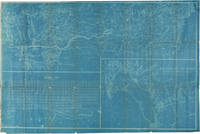
1881WRCAM50288San Diego 1881. Folding map 23 1/2 x 34 3/4 inches folded to 8 1/4 x 4 1/2 inches. Minor separations at crossfolds a couple short fold separations ink stamp on front. Else very good. A rare blueprint map showing the harbor of San Diego along with a scaled map of the U.S. from northern California east to Boston south to Charleston South Carolina and west to Sonora Mexico; with a grid of the property of the San Diego Land & Town Co. in National City a small city within San Diego and including the "Terminal Grounds" of the railroad. Heliographed by O.N. Sanford in San Diego. Frank A. Kimball was the agent for California Southern or the San Diego Land & Town Co. in National City and the front cover bears his ink stamp. Rare with only three copies on OCLC at Yale the University of California San Diego and the Sacramento Public Library. Not in Rocq. OCLC 54146621 35291187 34434276. unknown books
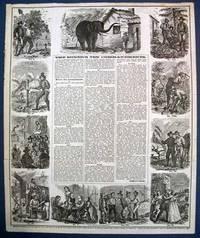
185334042San Francisco: Sun Print 1853. 1st separate issue Baird 167; Clifford 180. Subtle age toning to extremities. Fold lines which are a bit tender & starting at the edges. Still a respectable VG copy. 1 sheet of lined light blue laid paper folded once vertically. Text printed p. 4 in 3 columns with a surrounding border of 11 wood engraved vignettes of mining-camp life as drawn by Harrison Eastman. Eastman's images portray the temptations which the commandments exhort the miners to resist such as gambling drinking staking false claims stealing fighting lying etc. 11-1/4" x 9-1/4" <br/><br/>"Thou shalt have no other claim than one." "Thou shalt not go prospecting before thy claim gives out." "Thou shalt not steal a pick or a shovel or a pan from thy fellow miner; ." "Thou shalt not tell any false tales about 'good diggings in the mountains' to thy neighbor ." "Thou shalt not commit unsuitable matrimony." So declares 'The Miner's Ten Commandments.' These divine rules of the California Gold Rush came about in the early 1850s when keeping the Sabbath became a point of issue in Placerville and other mining regions. Such religious observance was favored by James Hutchings but not so by many other residents. Their lack of spiritual reverence was lampooned along with many other shady miner practices by Hutchings in this famous and subsequently oft-imitated parody of the Ten Commandants. The work was first published 4 June 1853 in the Placerville Herald and this the first separate publication. For more detailed history of this piece see Kruska's HUTCHINGS Chapter 5. Sun Print unknown books
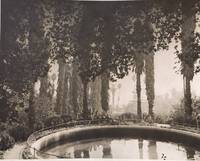
191055644Glendora CA: Putnam & Valentine ca. 1910-1915. Oblong folio. 13.75 x 10.25 in. 28 pp unpaginated. nearly all thick black card stock w/ 53 silver gelatin photographs mounted sized 7.5 x 9.5 in. all with excellent strong contrast. Contemporary Heinn Co. limp textured leather post-binder black screw posts at gutter margin minor chipping head & foot of spine scuffing & wear to covers a couple leaves corners w/ minor chipping still a VG exemplar. This outstanding souvenir album offers an invaluable visual record of the famed Rancho Los Alisos created as a lush landscaped park by Judge Charles Silent 1843-1918 from 1905 when he purchased the property from Jonathan Slauson to his death. Serving as his country estate amidst the orange groves many of which can be seen in the birds-eye photos which open the album Silent contracted with noted Arts & Crafts architects Charles & Henry Greene to create a lush and opulent landscape. These photos depict how the judge sculpted and experimented with palms and other exotic trees through winding paths and roads along with glimpses of the one-story ranch house designed by the Greene’s the waterfall fountain & pool 1 of several reservoirs on the property rustic Arts & Crafts timbered gates pathways and fences. For over twelve years he continued to add land to the properties as he expanded the plantings and placed fairy like settings with rustic stone walls earthen bowls and lavish fern plantings which were open to the public on Sundays with a sign on the front gate reading “Visitors Welcome.†Silent imported the first Copa de Ora vines into California from Hawaii shared many of his prized specimens with Henry Huntington served many years as Los Angeles Park Commissioner laid out Elysian Park made over Pershing Square and started Griffith Park. It proved to be a popular Southern California tourist spot for a time and occasionally Real Photo Postcard images of the Rancho and surrounding area appear on the market but we were unable to find any similar large images to these at auction or in catalogues. The photographers for this album were Arion Putnam 1871-1949 and Carlton Valentine 1871-1970 storied Los Angeles commercial photographers who specialized in landscape photography. Putnam’s father John R. Putnam 1834-1913 had founded the firm originally with Carlton Valentine by the 1880s and Arion who was one of the Southern Pacific’s official photographers as well as a noted California Impressionist plein air painter operated the studio with Valentine and was the active photographer for the firm even before his father’s death. The 295 acre Rancho Los Alisos was purchased in July 1953 by the California Girl Scouts council and established the very popular Camp Aventura which continued to operate until the end of the 1960s. Dating of this album was established as the patent number for the Heinn Co. label indicates ca. 1908 and Putnam & Valentine operated under that name from 1901-1920. See: Paul Spitzzeri La La Landscapes: The Rancho Los Alisos of Judge Charles Silent Glendora The Homestead Blog Creating Advocates for History Through the Stories of Greater Los Angeles May 2019; Camp Aventura Glendora CA 1953 295 Acres Land Purchased from Judge Charles Silent Vintage Girl Scout Museum 2018; Putnam-Valentine Collection ca. 1880s-1930 Seaver Center for Western History Research Natural History Museum of Los Angeles County 2013. Putnam & Valentine, hardcover
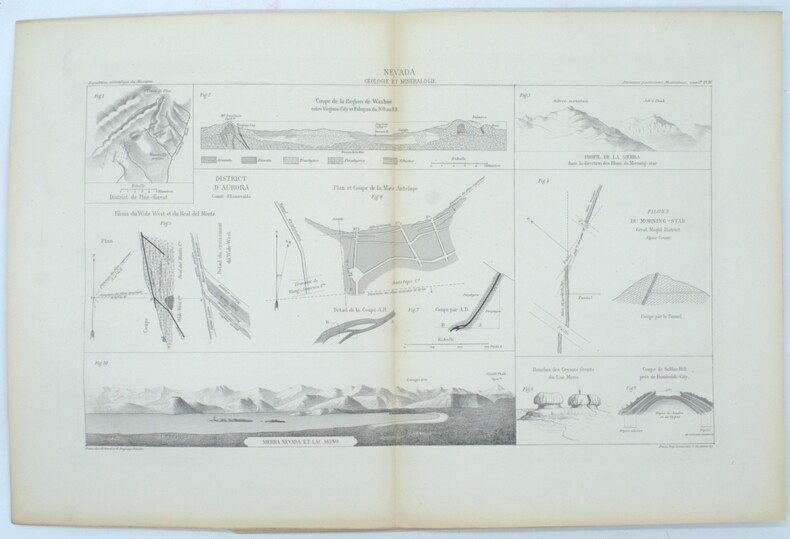
1871PHO-1728Paris, Imprimerie Nationale, 1871, in-folio de 216pp., 19 planches repliées, non relié, sous étui, couverture renforcée, petite mouillure angulaire.
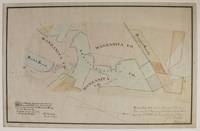
18672904Sweetland Ca 1867. About very good. Hand-colored manuscript map approximately 15 x 21.5 inches. Matted and in corner mounts. Mounted on linen. A few short closed tears and minor chips at edges not entering map area. Horizontal crease across center of map. Light tanning and scattered foxing. A neatly composed and hand-colored manuscript of the Manzanita mine in the Sweetland mining district located in Nevada County California. The settlement of Sweetland was established in 1850 by the Sweetland brothers who operated a trading post there in the early 1850s. The Manzanita mine was one of the largest in the district and the Manzanita Company was listed in the famous 1867 Bean's Directory of Nevada County contemporaneous to the drawing of the present map. It is unclear however whether the company enjoyed much ultimate success. <br /> <br /> Here the claims of the Manzanita Company along with those of the Administration Company and the Rough & Ready and Buck & Breck claims are delineated in black ink and hand shaded in six colors. Claims that were apparently established subsequent to in both pencil and light blue ink and are labeled Tennessee Kentucky Fremont Prospect Riley & Graham and so on. A note at the bottom right corner states that the map composed from a survey completed in November 1867 was "filed Feby 5th 1868 at 3 o'clock P.M. and recorded at the request of H.S. Bradley" the county surveyor. In all a quite attractive and informative manuscript California mining map composed just after the Civil War that evidently does not conform to any printed cartographic examples relating to these claims. unknown
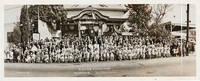
1940WRCAM55967Los Angeles: Japanese Photo Studio Association 1940. Panoramic photograph 10 x 24 3/4 inches. Minor wear vertical crease through image near the right edge. Very good. A striking panoramic photograph picturing the Japanese-American celebrants at the 40th anniversary of the opening of the Buddhist school at the Los Angeles branch of the Higashi Honganji Temple. The photograph is titled and dated in Japanese script; it relates the date of the celebration as the 13th 14th and 15th of September in the year 2600 after the birth of the Emperor Jimmu which is 1940. The photograph pictures a few hundred Issei and Nissei men women and children in a mixture of traditional Japanese gowns and caps and western suits and dresses. There are a few banners in the background relating to the temple and the celebration. The Higashi Honganji Buddhist Temple is still active in Los Angeles. <br> <br> The celebration depicted here came just two short years before the beginning of the Japanese-American internment period which triggered fundamental changes in the practice of the Buddhist faith in America among Japanese-American citizens. As a result of anti-Japanese sentiment in the early 1940s Buddhists sometimes changed the names of their churches to sound more patriotic. They began to meet on Sundays to emulate Christian worship while singing from new hymnals that echoed those found in Christian churches. Sects within the church were forced to worship together. And the swastika - a Buddhist symbol for thousands of years - was replaced by the dharma wheel. <br> <br> In addition to the faith itself Buddhists within the Japanese American community were particularly vulnerable during the internment period. The American government believed that Japanese-American Buddhists were more likely to support Imperial Japan than Japanese-American Christians or those of another faith. Sadly this also represented the majority of Japanese Americans since most were Buddhist in the first place. Further the FBI classified Buddhist priests as "known dangerous Group A1 suspects" and sought them out among the first groups to be imprisoned. Many Buddhist priests were whisked away to relocation centers even before Franklin Roosevelt's issuance of Executive Order 9066. <br> <br> We could locate no other copies of the present panoramic photograph in institutions or auction records. An important photographic record of a portion of the Japanese-American Buddhist community in Los Angeles just a short time before the internment period changed everything. Japanese Photo Studio Association unknown books
212721980. SubcultureMotorcycles Two Mighty Carson Alley Bikers photo albums chronicling the Southern California motorcycle subculture in the 1980s. The albums record custom motorcycle craftsmanship organized rides including the 1985 Yuma Prison Run and the social networks of biker subculture. The images show community among working class motorcycle enthusiasts in Southern California. Handwritten captions throughout the albums preserves how these bikers represented themselves socially in their own words.<br /> <br /> Two brown faux leather photograph albums containing 222 color photographs each measuring approximately 4 x 4 inches or 3.5 x 5 inches inserted in clear plastic sleeves. Albums measure approximately 9.25 x 13 inches. The photographs depict custom Harley Davidson motorcycles consistent with Softail and Shovelhead styles identifiable through extended forks high sissy bars chopper handlebars chrome detailing and stripped-down frames. Several images document garage interiors with tools lumber and partially disassembled machines emphasizing in-group mechanical labor and do-it-yourself construction. One photograph shows a 1970s Lincoln Continental bearing bumper stickers reading "Kill a Biker Go to Jail" and "Bikers Against Manslaughter" along with a personalized California license plate. Group photographs portray men and women wearing leather jackets denim and patch-covered vests with slogans including "Born to Be Wild" alongside custom insignia. Domestic spaces backyard gatherings open-road rides and the documented "Yuma Prison Run '85" situate the album within organized regional biker events.<br /> <br /> During the 1980s biker clubs in California operated within a complex legal and cultural environment shaped by law enforcement scrutiny media sensationalism and internal codes of loyalty and fraternity. This album offers internal documentation rather than journalistic or police-produced imagery preserving a self-authored record of style humor and mechanical identity. Light handling wear to album covers; photographs remain bright with minor corner wear consistent with sleeve insertion; handwritten captions clear and legible; overall very good condition. A substantial record of regional biker life in mid 1980s Southern California. unknown
213401985. Biker Subculture Carson California biker community photo albums documenting motorcycle culture social gatherings and everyday life of a working class Southern California riding club 1985-1986. The albums record the social world of The Backyard Bikers a group centered around custom motorcycles and community rides with captions identifying some dates and locations including "Christmas at PIBBS Dec. 25 '85" and "New Years 1985-86 at PIBBS." One album is dedicated "In memory of Mustash Dave". A single image depicts the assembler of the albums a heavily tattooed man with a long beard and bandana identified in captions as "Horney." The photographs show both men and women participating in rides and social events and several images depict Black and white riders together documenting a racially integrated motorcycle community at a time when such diversity was not widely associated with biker subculture. Handwritten captions throughout the albums add narrative detail and humor including remarks such as "Higher higher/Not the car ME asshole!" and "Where's Paul/Look in the fridge Beers there" providing insight into the group's humor and tight relationships.<br /> <br /> Two spiral bound photograph albums. Carson California 1985 to 1986. Brown leatherette covers with handwritten titles on the front reading "Christmas at PIBBS Dec. 25 '85" "New Years 1985-86 at PIBBS" and "In memory of Mustash Dave." The albums contain 142 color photographs mounted in plastic sleeves most measuring approximately 3.5 x 5 inches. Images document custom Harley Davidson motorcycles garage repair scenes backyard gatherings and group portraits. Several motorcycles are identified in captions including "Paul's" white chopper with gold accents springer front end and rigid frame and "Dug's" metallic gray chopper with elongated forks and hand painted detailing. Numerous photographs show backyard garages converted into improvised mechanical workshops with tools oil stained floors and motorcycles in mid repair. A series of photographs depicts a Lincoln Continental Mark V referred to in captions as "My incognito car" while another sequence documents a restored Ford Model A finished in deep blue with wire wheels and chrome accessories.<br /> <br /> The photographs emphasize both the mechanical culture and the social structure of Southern California's motorcycle community during the 1980s. Custom bikes appear throughout the albums as expressions of personal identity and skill with captions referencing the "Shade Tree Mechanics". Social gatherings are an equally prominent theme including backyard parties shared meals and holiday celebrations around tables covered with beer bottles and cigarette packs. Family members appear alongside riders including an older woman seated beside two bearded members in an affectionate portrait reinforcing the familial structure of the community. The photographs collectively document a social network organized around motorcycles and mechanical craft. Binding intact with mild handling wear photographs with occasional light fading but strong overall clarity very good condition. A detailed and intimate record of a Southern California motorcycle community during the mid 1980s. unknown
Signed and inscribed by Gary Webb upon half-title page. xxviii, 548 pages. Footnotes, glossary and index. "Shows how the L.A. crack market flourished through a breathtaking combination of government negligence, greed, and criminal conduct... Demonstrates that U.S. government agencies, including the CIA, DEA and FBI, were aware of the activities of this well-connected drug network and did little or nothing to stop it. Indeed, in several instances documented here, the Justice Department, the CIA, and the secret National Security Council unit run by Oliver North, took extraordinary steps to protect the ring from public exposure. In the final chapters Webb reveals the conflict that led to his newspaper's stunning repudiation of its own series - and at what cost he stood by his story." - from dust jacket. Webb was found dead in his home in 2004 with two gunshot wounds to his head. Curiously, his death was ruled a suicide. Clean and unmarked with light wear. Dust jacket now in archival-grade mylar. A quality signed copy of this heroic work. Book
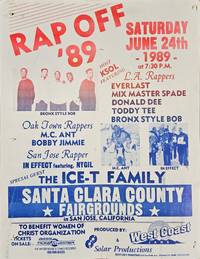
List2880San Jose California 1989. 17 x 22 inch poster on heavy cardstock. Scuffed staple holes with tears at corners and in center; very good minus. Poster for “Rap Off ‘89†a sizable hip-hop festival and possibly as the name suggests rap competition held at the Santa Clara County Fairgrounds in San Jose California. The event features acts from Oakland “Oak Town†San Jose and Los Angeles with the “Ice-T Family†as special guests and benefits the Women of Christ Organization. unknown
229634with 180 photographs laid down on album leaves. Most photos are 3 3/4" x 4 1/2". Album is 6 1/2" x 9 3/4" black flexible cloth. Very good. ca. 1900-1905. Album of photographs from the family of Charles H. Segerstrom mostly capturing family outings get-togethers vacations the scenic spots of California the town of Sonora etc. Included are excursions to the Big Trees climbing on and passing through them; a large group on an open train crossing a trestle evidently on their way to a picnic or similar event; the ornate Victorian Cliff House in San Francisco which burned in 1907 parades in San Francisco; Sonora including its city hall; Golden Gate Park in San Francisco; various picnics outdoor gatherings etc. A very interesting glimpse at the lives and activities of a prominent wealthy family residing in the Sierra foothills and the California which was their playground. There are occasional notes laid in identifying or speculating on subjects and locations. Provenance: from the estate of Charles H. Segerstrom. Soft cover. Very Good/No Jacket. hardcover
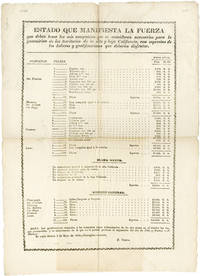
1828WRCAM43468Mexico 1828. Broadside 16 3/4 x 12 1/2 inches. Old folds. Slight wear and a few closed tears at edges. Very good. In a half morocco and marbled boards folding box spine gilt. A scarce broadside enumerating the number of troops and officers which were needed for posts in California. The various posts are listed including San Francisco Monterrey Santa Barbara San Diego and Loreto as well as frontier forces. The number of soldiers called for at each is given as well as physicians and surgeons inspectors etc. The annual budgets for the forces are also provided. Signed in print at the end: "F. Castro." This broadside is sometimes found with an accompanying printed circular announcement not present here. hardcover books
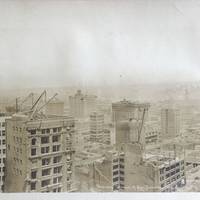
19071270San Francisco: R.J. Waters & Co 1907. Very good. Panoramic photograph 12 x 66.5 inches. Light wear and soiling faint creasing in a few places. Striking large panoramic photograph of San Francisco depicting the heart of the city a year after the Great Earthquake of 1906. Taken from Nob Hill one can see the Call Building in the immediate right foreground cable cars running busily down Market Street in front of it. In the direct center of the photo in the far distance one can see the spire of the Ferry Building with Russian and Telegraph Hills off to the left in the distance. a swathe of ruined landscape greets the viewer though with a number of cranes and buildings under construction. OCLC indicates Yale has a similarly-large panoramic image of San Francisco by Waters taken in 1906 just before to the fire. A handsome view of the city documenting its progress after the earthquake and fire that nearly leveled it. R.J. Waters & Co unknown books
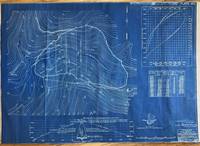
1929651Placerville Ca 1929. Very good. Five blueprints measuring from approximately 24 x 34 to 29 x 41 inches. Tipped onto modern cardboard backing at left edge overlaid with brown paper. Light wear a couple of archival repairs at edges. Contemporary blind stamps. A group five large and fascinating blueprints that delineate proposed modifications to the Weber Dam near Placerville California that were carried out in 1930. The Dam was originally built in 1922 and 1923 without steel reinforcement and as a result improvements have been required periodically from its completion up to the present day. The designs present here outline the first set of such improvements overseen by an engineer named George W. Hawley in 1929 and 1930. These include the construction of new tunnels outlets gates and spillways and also include detailed topographical charts of the area surrounding the dam. The blueprints which were intended to accompany an engineer's report on the project are as follows: 1 Contour Map Showing Plan & Section of Dam and Location of Supply Tunnel & Wasteway. 2 Outlet Structures Showing Tunnel and Shaft Control Works & Appurtenances. 3 Details of Spillway. 4 Details of Tunnel Valves & Controls. 5 Contour Map of Borrow Area for Weber Creek Dam. The dam and the reservoir that it created managed by the El Dorado Irrigation District provide vital power and water services to area agriculture. The present plans comprise an important document of the early upkeep and development of the structure. unknown books