APRÈS DE MANNEVILLETTE (Jean-Baptiste-Nicolas-Denis d').Livre Rare Book

56 429 résultats
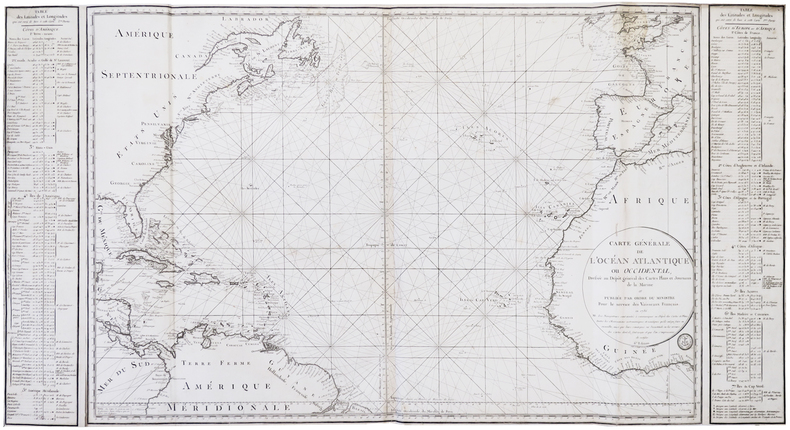
231764Paris, Dezauche, 1775 in-4, [2] ff. n. ch., lviij pp., 574 pp., [7] ff. n. ch., xvj pp., basane fauve marbrée, dos à nerfs cloisonné et fleuronné, pièce de titre cerise, encadrement de double filet doré sur les plats, tranches rouges (reliure de l'époque). Restaurations aux coiffes, charnières et coins, infimes manques de papier au pp. 43-45, avec légère perte de lettre.
240112Imprimé en France, ventôse-1798 3 vol. in-8, LXIII-314 pp., 5 ff. n. ch., planisphère repl. en front., 319 pp., 4 ff. n. ch. et 409 pp., 5 ff. n. ch., veau porphyre, dos lisse orné, triple filet doré en encadrement sur les plats, fleurons aux angles (reliure de l'époque). Qqs mouillures marginales.
1 vol. in-12 reliure demi-basane verte, initiales G. L. (Gustave Labat) au dos en queue, L'Anti-Joseph ou Bien plaisant et Fidèle narré d'un Ministre de la religion prétendue vendu publiquement dans un coffre pour cause de sa lubricité. Réimpression textuelle de l'édition de 1615 avec Notice bibliographique par L.-B. de F., couvertures conservées, Charles Lefebvre, Bordeaux, 1876, VIII-20 pp. et 1 f. blanc [ Avec : ] En Steamer. D'Europe aux Etats-Unis. Histoire, Souvenirs, Impressions de Voyage, couvertures conservées, Imprimerie Lepelletier, Havre, 1867, XV-287 pp. avec 3 cartes dépliantes Très rare exemplaire, provenant de la bibliothèque du grand bibliophile bordelais Philippe Louis de Bordes de Fortages (avec deux ex-libris), de l'édition originale, dédicacée par Ernest Berchon (à un membre de l'Académie de Bordeaux), de son ouvrage "En Steamer". L'ouvrage se décompose en 5 parties : Histoire rétrospective ; Les services transatlantiques ; Le voyage d'Europe à New-York ; Comme on vit à bord ; New-York. On a joint un tirage limité établi par les soins de Bordes de Fortages. Bon état (dos un peu frotté, ex-libris de l'érudit bordelais Gustave Labat, très bon état par ailleurs). Sabin, 4817 Français
17925813Paris, Garnery, Buisson, Desenne, Blanchon, 1792. 1792 1 vol in-8° (205 x 130 mm) de : [2] ff. (titre, table) ; 372 pp. ; 1 planche et 2 cartes dépliantes. (tache brune en partie centrale en pied sur les premiers feuillets, rares salissures). Demi-basane fauve dépoque, plats recouverts de papier marbré rose, dos lisse orné, pièce de titre noire, tranches jaunes. (petit manque à la coiffe supérieure et à la pièce de titre).
in-4 (mm 318x230) pp. 131, (1); pp. 78; leg. mezza pergamena, titolo oro su tassello al dorso. La prima opera è illustrata da 1 carta geografica su doppio foglio "Guerra nel Mar Baltico", 1 "Pianta militare di Cronstadt" e 13 vedute litografiche di V. Stranski: Capo Kullen, Cronstadt, Nuovo Osservatorio di Cronstadt, Cristianstadt, Pietroburgo, Reval, Abo, Abo veduta dal ponte, Isole Aland, Sveaborg, Gustavsvern, Barosund, Nargen. Nella seconda opera sono presenti 2 carte geografiche: "Guerra d'Oriente-Mar Nero" e "Guerra d'Oriente-Crimea"; 1 pianta militare di Sebastopoli e 10 tavole di vedute litografiche: Gallipoli, Varna, Kustungi, Odessa, Batum, Trebisonda, Sinope, Scutari, Sukhum Kalè, Anapa. Prima edizione di questa descrizione delle città che si affacciano sulle coste del Mar Baltico (Finlandia, Svezia, Stati baltici e Russia), pubblicata nel 1854 nel contesto della guerra di Crimea (da ottobre 1853 a febbraio 1856). Tutte le litografie, eccetto la mappa, sono firmate da V. Stranski e stampate da Colombo Coen. Buon esemplare con qualche macchietta rossa e lieve arrossatura. Uncommon set of two historical works related to the war in the Black Sea and in the Baltic Sea. . .
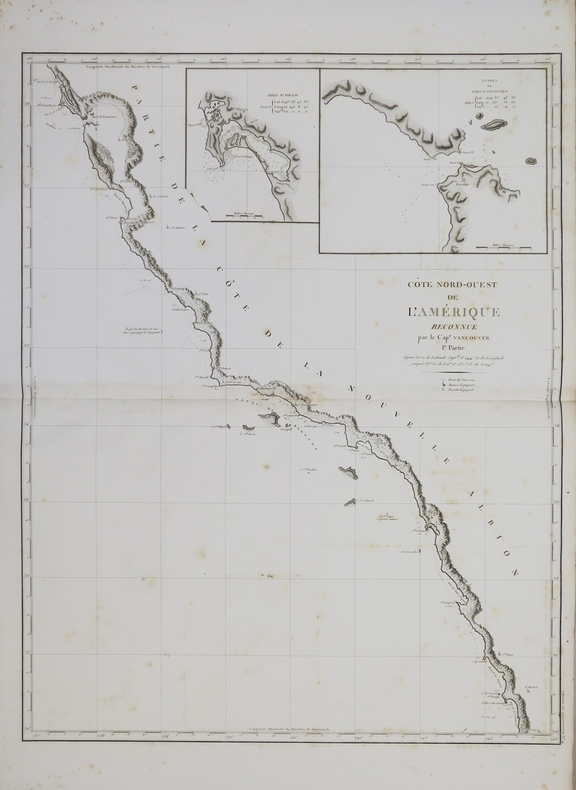
1835bn1889A Paris, chez Arthus Bertrand, libraire, rue Hautefeuille, n°23, Saint-Servan, imprimerie de J.-M. Lebien, rue des Bas-Sablons, Saint-Servan, chez D. Lemarchand, libraire Relié 1835 Un volume relié, in-8° demi-basane, reliure établie à la fin du XX° siècle, couverture en partie conservée, premier plat et quatrième plat, le dos n'a pas pu être sauvé semble-t-il, complet des deux planches présentent dans ce second volume : Vue de l'établissement russe de la Bodega, a la côte de la nouvelle Albion en 1828, Vue du port et de la vallèe de l'Anaroura dans l'ile de Waho. Faux-titre, gravure, titre, puis 438 pages, une feuille d'errata. Ouvrage rarissime, le CCFR ne référence que 3 exemplaires complets qui sont respectivement à Nantes, Bordeaux et Saint-Malo. D'autres exemplaires du volume 1 sont dans quelques bibliothèques. Un libraire américain prétend qu'il ne reste que 12 exemplaires complet dans le monde. Exemplaire relié (sauvé) par un amateur qui habitait le long de la Rance, à quelques encablures de Saint-Malo et donc de Saint-Servan ville où le livre a été publié ; quelques rousseurs, une mouillure en début d'ouvrage jusqu'à la page 60 environ, des rousseurs importantes en fin d'ouvrage dans la table des matières, sinon intérieur frais. Livraison a domicile (La Poste) ou en Mondial Relay sur simple demande.
ORD-19744Paris. Agasse. An 10. - 1802. In-4 (212 x 291 mm) dos lisse basane brune, filets dorés, pièce de titre maroquin rouge, plats marbrés, portrait gravé par Viel d'après Roland en frontispice, VIII pages, 2ff.n.ch. et 67 pages en français et en arabe pour les Traités de Commerce faits par M. Durand, Directeur de la Compagnie du Sénégal avec les Princes maures de la rive droite du Sénégal, 43 planches gravées dont 16 de cartes repliées et 27 planches de vues et d'histoire naturelle. Première édition. Bel exemplaire.
1786LBW-62951786-1792. 0,61 x 1,15 m.
1820LBW-3716[1800-circa 1820]. 765 x 612 mm.
ORD-14811Paris. Gide. (1821). In-8 (180 x 272mm) dos à 5 nerfs et coins maroquin bleu à longs grains, auteur, titre, filets et fleurons or sur le dos, plats et gardes marbrés, texte non paginé, complet des 24 planches couleurs hors texte. Qq. reports de texte sur qq. planches sans gravité. En fait superbe exemplaire dans une fine reliure signée de Carayon.
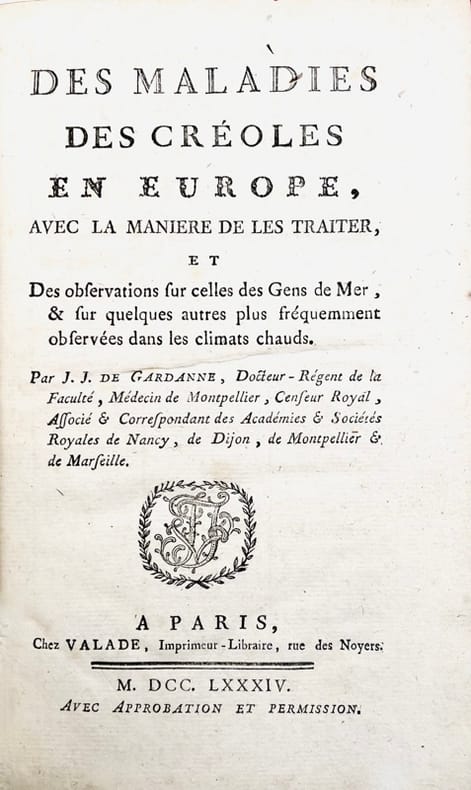
178444382Paris, Valade, 1784. 1 vol. In-8 de XV-(1)-215-(1) pp., veau havane marbré, dos lisse orné, pièce de titre en maroquin rouge, tranches rouges, filet doré sur les coupes, signet de soie verte (reliure de l'époque).
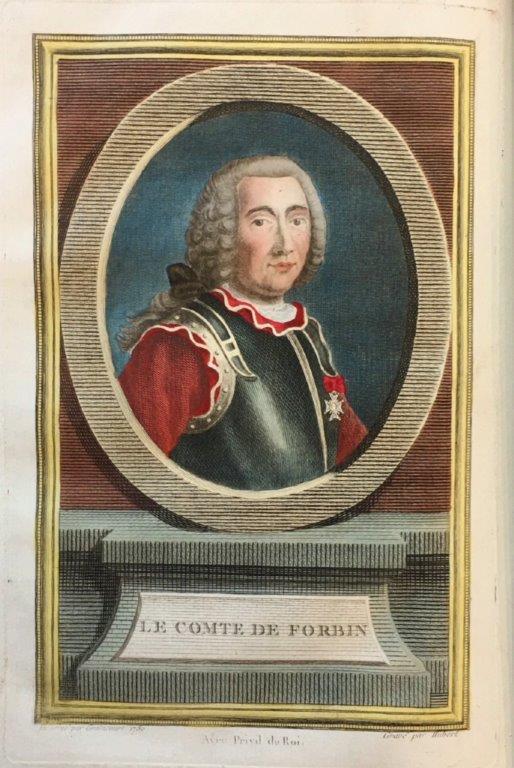
17804296Paris, Jorry Louis, 1780. 1780 1 vol. in-4° (250 x 190 mm) de : 399 pp. et 17 portraits hors texte dessinés par Gaincourt et gravés par Hubert, toutes aquarellées d'époque. Demi-veau à coin XIXe, plats recouverts de papier marbré vert, dos lisse et orné. (Taches et défauts d'usage, intérieur frais).
ORD-5962Exécuté sur la corvette de l'État LA FAVORITE pendant les années 1830, 1831 et 1832 sous le commandement de M. Laplace capitaine de Frégate; Publié par ordre de M. le Vice-Amiral Comte de Rigny ministre de la Marine et des Colonies. Tomes 1, 2, 3 et 4. Paris. Imprimerie Royale. 1833-1835.. 4 volumes in-8 (153 x 233mm) dos chagrin rouge cerise à fx-nerfs, titre or sur le dos, gardes marbrées. Tome 1: 2ff.n.ch., XLI, 558, (1) pages et une grande carte rempliée. Tome 2: 2ff.n.ch. 481 pages, table. Tome 3: 2ff.n.ch., 510 pages, table. Tome 4: 2ff.n.ch., 480 pages (table comprise dans la pagination). Bien complet de la grande carte générale plusieurs fois dépliante à la fin du tome 1. Rousseurs parfois importantes, petits défauts aux reliures, mais exemplaire assez bien conservé. Edition originale.
246-Eo.J. Aquarell, auf Velin, auf Untersatz montiert und mit schwarzer Tuschlinie umrandet. 10,9:14,6 cm.
ORD-8537Sans lieu ni date, ni mention d'éditeur, tirage albuminé ca 1880. Album à l'italienne (225 x 186) percaline rouge ornée sobrement à froid, titre en lettres dorées, page de titre et 45 superbes photos (144 x 104mm) collées sur bristol dans un encadrement doré. Photos non signées mais attribuables à Giogio SOMMER. On y trouve notamment la célèbre photo du chien fossilisé. Très bel exemplaire. Rare.
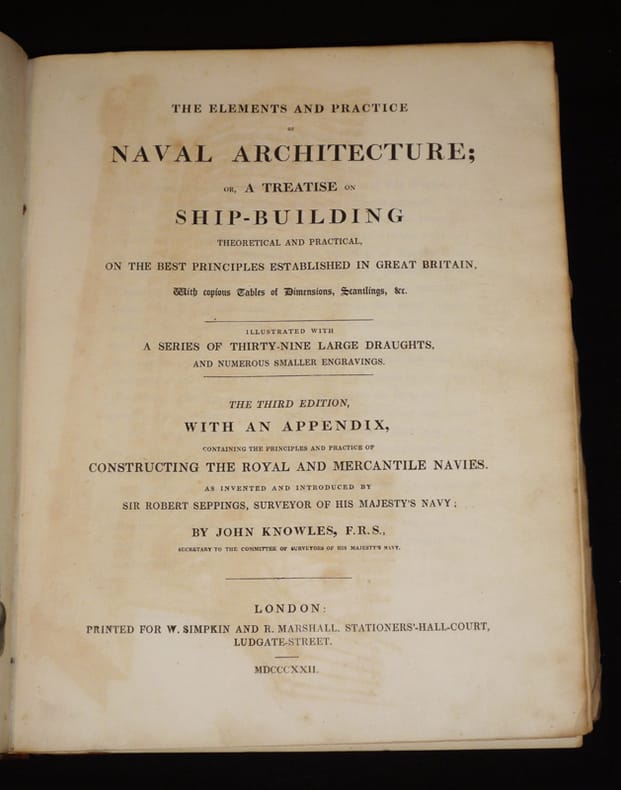
1822rx1144W. Simpkin and R. Marshall Relié 1822 "RARE. In-4 (22,5 x 27 cm), reliure demi-peau à coins, dos à 5 nerfs, texte en anglais, complet des 15 planches hors texte, pagination comme suit : préface et table des matières (xvi pp.), puis 438 pp., ""tables for forming the bodies of ships and vessels of each class, both in the Royal Navy and in the merchant service"" (27 pp.), ""tables of the principal dimensions and scantlings"" (LVIII ff.), ""Forms of a contract, entered into by a merchant-ship builder, for the building of a ship of war for the Royal Navy; including the dimensions &c. of the Raven Brig, of 18 guns, built in the year 1804"" (paginé de lix à lxviii), ""index to the tables of the principal dimensions and scantlings"" (paginé de lxix à lxxvi), ""An Appendix, containing the principles and practice of constructing ships, as invented and introduced by Sir Robert Seppings, surveyor of His Majesty's Navy, by John Knowles, F.R.S."" (62 pp.) ; reliure abîmée (épidermures sur le cuir et le papier reliure, coupes usées un feuillet dérelié au centre du corps d'ouvrage), mouillure sur la première garde, par ailleurs intérieur bien conservé, en l'état, à restaurer. Livraison a domicile (La Poste) ou en Mondial Relay sur simple demande."
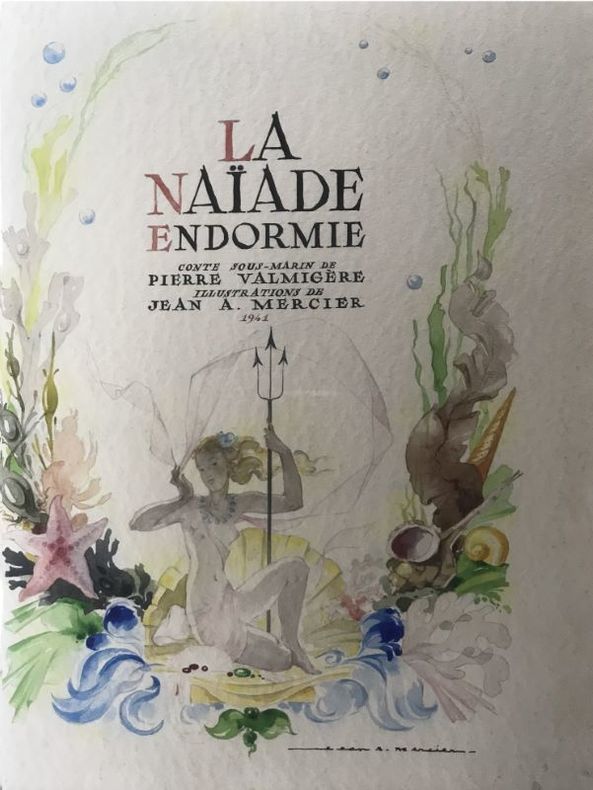
1941231121941 Aquarelle, signée en bas à droite, titrée dans la partie supérieure, 1941, format à vue 31 x 23 cm., cadre Gault, style Louis XIII, patine parisienne.
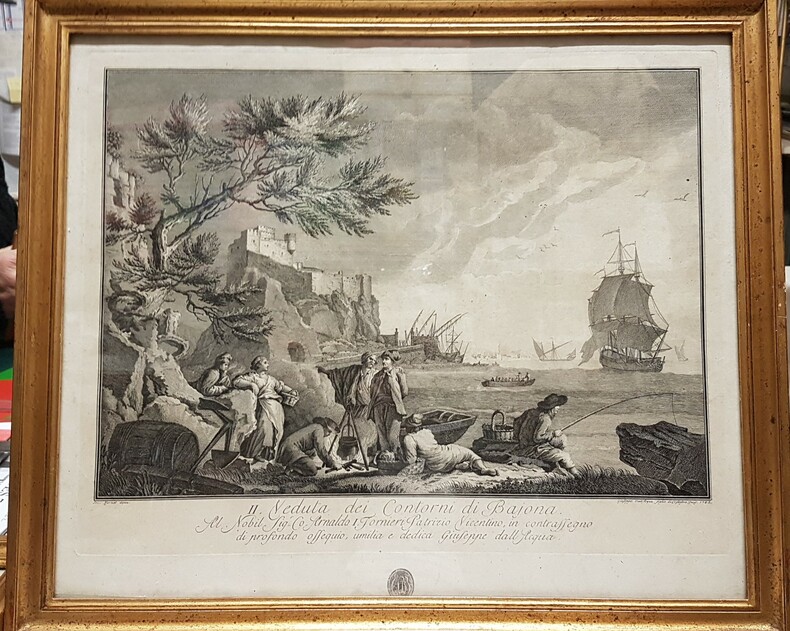
ORD-18352Gravées par Giuseppe Dall'Acqua figlio Di Cristoforo d'après Joseph Vernet. 1782 2 grandes gravures avec encadrement de bois doré, dimensions hors marges 444 x 350 mm, dimensions cadre compris 522 x 406 mm. Menus défauts, très bon état. Photos sur demande.
1935173467東京. Tokyo.: 昭和九・十年度練習艦隊司令部. Shōwa Kyū-Jūnendo Renshū Kantai Shireibu. Showa 10 1935. Colour map two large folding panoramas including a very striking one showing Sydney black and white photographic illustrations with captioned tissue guards in Japanese three full-page colour plates show: a Malay House an Australian rural scene featuring sheep and an Australian couple walking in Sydney's Hyde Park by Minakai. Three tipped-in portrait photographs of the Japanese Royal Princes profusely illustrated throughout with monochrome photographic plates showing the crew and ports of call with accompanying tissue guards titled in Japanese. 210 10pp all edges gilt. <br> <br>Handsome special brown suede binding with yap edges Japanese characters stamped in gilt on upper cover. Suede torn with minor loss at head of spine and upper corner lower hinge opening at lower edge. A particularly good copy in a superior binding suggesting it was issued to a high ranking officer on the occasion of this special Royal cruise. 22 x 30cm. This photographic album was issued to commemorate the Japanese Naval Training Squadron's tour which took place in 1934 and 1935. Two war ships the Yagumo and the Asama cruised around Japan before departing for Korea and China. There they visited Incheon Dalian Qingdao and Shanghai before returning to Japan. They also visited Hsin-King Shinkyo the newly established capital of Manchukuo to met the Manchukuo Emperor where a panorama photograph of the whole group of officers was taken. The ships then set off on their main cruise to Australia and New Zealand visiting Taiwan Hong Kong Manila Bangkok Singapore and Jakarta enroute to Fremantle. A colourful art illustration of a Malay house is a memento of their visit to the area. Hong Kong and Singapore sections have a whole page panorama photograph of the harbour each and two additional pages of photographs of the city. The crew visited a British naval ship in Hong Kong. In Singapore they enjoyed cosmopolitan atmosphere of the city where peoples from different racial backgrounds live together. <br> <br>During their tour of Australia the ships visited Adelaide Melbourne and Sydney and made a courtesy call to Canberra. Their cruise then continued to New Zealand after visiting Wellington and Auckland the ships continued to Fiji and Apia Western Samoa before reaching Honolulu. Finally they headed westward to the Marshal Islands Chuk Saipan and the Bonin Islands before returning to Yokosuka Japan. <br> <br>Australian ports of call were Fremantle Perth Adelaide Melbourne and Sydney where the crew participated in local activities and also held open ship exhibitions where the crew demonstrated Sumo wrestling and Kendo to the local public. In Sydney the ships participated in the silver jubilee celebration of King George V with a light display. A magnificent large panorama of Circular Quay and the newly opened Harbour Bridge through to a view across to the Eastern suburbs is fascinating. The region of Circular Quay is particularly striking for its emptiness! There are many other pages showing photographs of their visit to Sydney and the Blue Mountains. The Commandant with the royal Princes also made a courtesy visit to Canberra and a page of photographs marks this occasion. <br> <br>In New Zealand the Yagumo and the Asama visited Wellington and Auckland. Here the crew had an excursion to Rotorua. The cruise continued on to Hawaii where the Princes were welcomed enthusiastically by the Japanese migrants. On the return trip to Japan the ships called into Micronesia including Chuuk and Saipan. <br> <br>This cruise was of particular importance as three members of the Japanese Royal Family were among the crew. Prince Asa'akira of the Kuninomiya Household was in charge of the artillery on the Yagumo and two young Princes were among the newly graduated naval officers. Their presence probably explains why this album is more substantial than others previously issued - with more panoramic views and photographic illustrations; detailed captions are included on the tissue guards. Also the crew had access to royal members and other dignitaries during the cruise. <br> <br>This interesting album offers an extensive and detailed photographic record of all the places visited during the tour. Some pages are delicately illustrated with local motifs in monochrome. The album also includes photographs of the crew detailing names and positions as well as including information about lives on board. Photographs of local receptions and dignitaries at each port visited are featured. All indications are that the ships were warmly welcomed by the host countries and cities as well as the local Japanese residents. This edition was not circulated widely and is bound with suede leather cover special finish from other copies. It was probably offered to somebody important a memento of the Japanese Naval Training's Squadron's tour with three royal household members. . 昭和九・十年度練習艦隊司令部. [Shōwa K hardcover
196086066Washington DC: United States Navy Bureau of Naval Personnel 1960. First Edition First Printing. Wraps. Good. vi 418 pages. RARE. Illustrations photographs diagrams. Fold-out facing page 158. Bibliography. Index. NOTE: This Naval Training document is believed to be no longer classified under the Atomic Energy Act of 1954. The nuclear weapons information is contained in Chapters 12--The Basic Nuclear Weapon pages 391 to 397 and Chapter 13 The Nuclear Weapons Family pages 398 to 411. An informal review by a former Authorized Derivative Classifier determined that all of the information in Chapter 12 The Basic Nuclear Weapon is now in the public domain. This includes the Introduction discussion of The Gun-Type Weapon The Implosion Type Weapon and the very brief discussion of Other Types of Nuclear Weapons--which only addressed Thermonuclear weapons. The illustrations/ diagrams are of "idealized" weapons and do not represent the design of any then fielded or under development nuclear weapon. Chapter 13 provided an orientation to the nuclear weapons family and addressed nuclear weapons safety. Figure 13A1 depicts the development of the nuclear weapons family and presents external views only which are widely available on-line today. There are additional discussions of weapons using the gun principle and the implosion principle. There are diagrams showing the sequence of operation of the MK 5 and MK 7 which is generic and similar views can be found in the public domain. The discussion of Other Nuclear Weapons shows stockpile items in external view only. There are discussions of logistics and safety. The missile information has long been public. This copy contains printed on the title page as Restricted Data statement and as stamp statement that this document was 'Excluded from automatic downgrading; DOD DIR 5200.10 DOES NOT APPLY. Inside the front cover is a stamp that reads: Return To U.S. Naval Correspondence Course Center Scotia 2 N.Y. While there are no official declassification markings on this copy for the reasons provided above this has been determined to no longer being classified and there is understood to have entered into the secondhand book market sometime in the past before coming into our possession. This was the third volume in a series of three dealing with naval weapons. The other volumes were The Principles of Naval Ordnance and Gunnery and The Principles of Guided Missiles and Nuclear Weapons NavPers 10784 which was issued as an unclassified document. This volume describes specific guided missile and nuclear weapon systems and components in some detail. Emphasis is on functional aspects. However so far as was possible enough description detail was presented to give the student an accurate idea of each system's capabilities and characteristics. The text and illustrations of this book were prepared by the U.S> Navy Training Publication Center and reviewed by the training Division Bureau of Naval Personnel. Because this was formerly a classified document it is understood that most copies were destroyed when the second edition entitled Principles of Guided Missiles and Nuclear Weapons NavPers 10785-A was issued that few copies have survived. A diligent search on the internet identified no other copies offered for sale and no copies listed in libraries or other dispository institutions. United States Navy, Bureau of Naval Personnel paperback
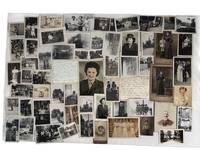
1944213131944. United States Marine Corps Women's Reserve service of Lucille documented in photographs created primarily during the Second World War. The images provide direct visual evidence of women's integration into the United States Marine Corps through the Women's Reserve program established in 1943 which expanded military labor by assigning women to administrative communications and logistical roles that freed male Marines for overseas combat service. Lucille appears repeatedly in uniform as a non-commissioned officer her sleeve chevrons indicating rank within a branch that became one of the most visible examples of women's wartime military participation. The photographs situate her service within a broader life history that includes family life in Chicago and Polish immigrant heritage placing the wartime mobilization of American women within the social networks of ethnic urban communities that supplied many of the nation's wartime workers and service personnel.<br /> <br /> Archive of 168 black and white photographs primarily silver gelatin prints dating from the mid-1930s through the immediate post-war years accompanied by several earlier family portraits including cabinet cards and cartes de visite. The collection centers on Lucille's Marine Corps service and includes a hand colored portrait inscribed "Lucille 1944" depicting her in USMC Women's Reserve dress uniform with jacket tie and rank chevrons visible on the left sleeve. Additional images show her standing at attention on the steps of a large institutional building and posing in formation with fellow servicewomen wearing winter coats and garrison caps scenes consistent with stateside training or official gatherings. Other photographs document civilian life in Chicago including family gatherings wedding celebrations and leisure outings along the Lake Michigan shoreline north of the city. The archive also preserves earlier generational photographs of relatives in traditional Polish dress and an inscribed carte de visite of "Miss Sobaleski" from Włocławek Poland linking the wartime Marine to a late nineteenth century immigrant family network.<br /> <br /> Creation of the United States Marine Corps Women's Reserve marked a significant expansion of women's participation in the armed forces during World War II when more than 20000 women served in the Marine Corps between 1943 and 1945. Photographic documentation of individual service members provides an important record of how women navigated military authority uniformed identity and wartime labor during a period of rapid institutional change within the armed forces. The inclusion of prewar family portraits and Polish immigrant imagery situates Lucille's military service within the longer trajectory of ethnic community life in Chicago one of the largest centers of Polish American settlement in the United States. Together the photographs document the intersection of immigrant family history urban American life and women's wartime military service. Photographs range in size from approximately 2 x 3 inches to cabinet card formats; the archive preserved loose. Minor edge wear and light toning consistent with age; overall very good condition. The breadth of images linking immigrant heritage civilian life and Marine Corps service gives the archive strong documentary value for the study of women in the U.S. military and Polish American community history during the Second World War era. unknown
44154various various. Ca. 1918 - 1936. Most items loose disbound. PARTIAL COLLECTION with at least one element a 1919 diary known to be elsewhere. Two letters quite toned and brittle; evidence of photo album removal to verso of postcards and occasional other items including 6 RPPCs affixed to full leaf; slight mustiness. Some photographs poorly developed and/or lightly soiled. Overall text is clean legible and images are sharp. About Very Good. Total of 83 manuscript and 2 typescript letters plus 1 V-mail comprising 250 pp; of these 54 are from Arthur to various friends etc. 155 pp and 29 are from Arthur's parents and 3 are from others 97 pp. "Notes" folder: 64 ruled leaves 1 blank manuscript text to recto only. Scrapbook album: 46 tan construction paper leaves several blank and/or noticeably missing items. Numerous loose ephemera. Over 250 b/w photographs ranging in size from ~2-1/4" x 1-1/4" to 8" x 10" including many official Navy photos. Also 8 b/w RPPCs 2 half-tones and various negatives color printed certificates postcards etc. Most text on 10-1/2" x 8" leaves. <br/><br/>A collection of material detailing career sailor and struggling writer Arthur Gordon’s attempts to find work in the Merchant Marine during the height of the Great Depression as well as his considerable efforts to set aside time for writing and honing his craft. Gordon served as a lieutenant in the Navy during WWI as Chief Writer on the U.S. Coast and Geodetic Survey Oceanographer during the early 1930s and again as an officer in the U.S. Navy during WWII eventually attaining the rank of commander; his stories of sea life were published in various popular magazines primarily during the 1940s. Gordon is an introspective writer with a good if sometimes uneven sense of how to turn his experiences and thoughts into an often humorous and lightly self-mocking story particularly in "Notes upon leaving the Coast Survey and looking for employment as a Merchant Mate Jan 5 - June 14 1935" a 63 pp autobiography of these experiences written in the third person. "Notes" offers a highly detailed account of Gordon's experiences as an unemployed seaman during the Depression and life aboard an oil tanker when his attempt to gain a position as a 3rd Mate didn't work out: "Las Piedras is an oil tank town with a single narrow dock extending from the shore providing bollards for tying up the ships and supports for the pipe lines. The town is small and I think exists only because of the oil tanks for the location has no charm otherwise. The white oil men live as colonials in an impoverished outpost. They take what stores they need from the steward's supplies aboard ship. Loading is done by gravity since the storage tanks ashore are on the cliff." The letters roughly divided between copies of correspondence sent from Arthur to his friends and letters sent to Arthur from his parents show Gordon to be an enthusiastic and encouraging friend to multiple young men and a few women as well as a dutiful son whose unemployed parents relied heavily on his earnings. Of some note as well are a handful of thoughtful if conflicted references to homosexuality with at least one of Gordon's male friends appearing to have a crush on him and hints that Gordon may have been in gay relationships himself and/or struggled with his sexuality: "…. I quite fully agree with you concerning the chemical make-up of man and the push and pull of attraction or dislike. I have had occasion to study what it is that draws me to which I react most noticeably and I am continually dismayed that usually it is the ‘wrong’ thing. . I’m skeptical of any kind of relation that presupposes permanency. Knowing myself I feel that ‘vows’ would soon be broken. I cannot stand constant association. Routine maddens me. The merest suggestion of ‘chain’ of compulsory anything and I’m off. I don’t think hetero marriages are particularly successful and I don’t think homo are either for almost the same reasons. I don’t mind the companionate idea with women. With men I fight shy. I am getting to the age where in others I condemn homo as degeneracy. I mean that among young people it seems almost natural as a manifestation of excess love as an overflow which can be handled without social consequences. At 45 it’s greasy and quite awful. Consider the advanced homos you know . . . Am I right I am not dictating here; nor dogmatizing. I hope to start a discussion. Homos are interesting to me because I find that along with it is usually an unidentified awareness and an understanding of life unequalled in the stolid conventionites. I do not think they are God’s elected but I don’t think that about any one….” All-in-all in interesting multilayered primary source account of one man's experiences at sea during the Depression and his deep engagement with his correspondents with heavy overtones of a writer's bildungsroman traveling seeking new experiences etc. unknown books
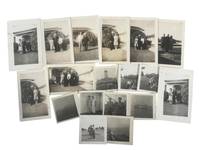
1944218031944. Asian American United States Navy sailor and fellow white serviceman appear throughout this World War II photograph archive documenting naval personnel and their families in domestic settings during the 1940s. Thousands of Chinese Americans enlisted in the U.S. Navy during the war forming one of the largest concentrations of Asian American personnel in a single military branch. Many Chinese American sailors initially served in steward or service ratings before gradually gaining access to other assignments as wartime manpower demands increased. The photographs therefore record Asian American participation in the U.S. military during a period marked by heightened racial scrutiny following the Attack on Pearl Harbor and the subsequent wartime environment that produced both expanded military service and intensified discrimination against Asian communities in the United States.<br /> <br /> Archive of twelve black and white vernacular photographs depicting two U.S. Navy sailors one Asian American and one white American serviceman posed with women identified as Asian American family members or companions along with several older relatives. The photographs present informal outdoor scenes taken in residential settings such as front yards and open lawns. Both sailors appear in standard U.S. Navy enlisted uniforms with white sailor caps in several images while another photograph shows the Asian American sailor wearing a darker Navy service uniform with a peaked cap typically used for more formal duties. The women pictured wear modest wartime clothing including dresses cardigans and heeled shoes. The photographs show the two sailors together repeatedly across the images often standing with family members or seated on lawns suggesting a close personal friendship extending into shared social gatherings with relatives.<br /> <br /> The archive documents domestic and social dimensions of wartime military service within Asian American communities at a moment when racial identity shaped the opportunities and restrictions placed upon service members. While thousands of Chinese Americans served in the Navy during the war Japanese Americans encountered far greater barriers to enlistment following the wartime incarceration policies authorized under Executive Order 9066. The photographs therefore capture a social environment in which Asian American servicemen navigated military duty family life and interracial friendships amid wartime tensions surrounding race and national loyalty. Photographs measure typical small snapshot sizes consistent with mid twentieth century vernacular photography. Minor handling wear and light edge wear visible across several prints. Overall condition very good. unknown
16409World War II Original war time U.S. War and Navy Departments first editionsPocket Guide books for 18 countries. These guidebooks were prepared by the U.S. War and Navy Departments to educate American soldiers stationed overseas during the conflict. It includes points on culture language including slang local history and the military justification for American presence in the area; in this sense these pocket books are a unique distillation of American wartime policy composed by the highest decision-makers in government for the soldiers actually setting foot on foreign soil. These guides provide a concise yet rich example of wartime indoctrination and the resulting cultural associations and relationships formed within the average American by the war.<br/><br/> All 18 guide books are war dated and they include: Alaska 1943; Australia 1944; Egypt 1943; France 1944; Paris and Cities of Northern France 1944; Cities of Southern France 1944; Great Britain 1944; India 1944; Iran 1943; Iraq 1943; Italian Cities 1944; New Caledonia 1944; New Guinea and the Solomons 1944; New Zealand 1943; Northern Ireland 1942; Panama 1943; Syria 1942; West Africa 1943. Washington DC: War and Navy Departments 1942-1944. Stapled bindings. 5.25" x 4.25" inches. All first editions. Written often in a casual approachable way From the Pocket Guide to Iraq: "Herr Hitler knows he's licked if the peoples united against him stand their ground" these guides repeatedly drill in the strategic necessity for Americans to create diplomatic relations wherever they are stationed. For example from the Pocket Guide to New Zealand: "Always remember that it is to our enemies' advantage to sow seeds of discord between us and our allies and it is to our advantage to understand them and to make them our friends." They also illustrate explicit policy motivations as with the Pocket Guide to Iran: "As an American soldier assigned to duty in Iran once called Persia you are undertaking the most important job of your life. There is no other war theater where military success by the United States and her fighting allies will contribute more to final victory over the axis. You've heard a lot of talk in this war about life lines - the sea lanes and land routes by which military supplies flow into the combat zones to be turned against the enemy. Iran is much more that a life line. It is a major source of the power that keeps the United Nations' military machine turning over -- oil. Because of its prime strategic value Iran in the only country in the world where the armies of three of the United Nations -- Great Britain Russia and the United States -- are operating in daily touch with each other . You as an American have a responsibility that goes beyond the ordinary military duties required of you. Your country has a reputation throughout the world for decency and unselfishness in its dealings with other nations. That reputation is a major asset for us in this global war. By your actions you can uphold it or destroy it." Includes period maps of the respective regions as well as cartoon illustrations to accompany the instructional text. Scattered soiling and wear. Altogether very good. unknown books
9950P., Nepveu, 1823. 7 vol. in 8 demi-reliures, chagrin dos lisses ornés.